
The best outdoor curtains for most patios are solution-dyed acrylic or polyester panels in a grommet-top style, hung on a rust-resistant rod or cable track. They hold color for years without fading, resist mold and mildew, dry fast after rain, and stay put in moderate wind better than lighter fabrics. If you need serious privacy or shade, go heavier (300 gsm+ fabric weight).
Best Outdoor Curtains for Patio: Buyer Guide 2026
Lark Perry
18 May 2026
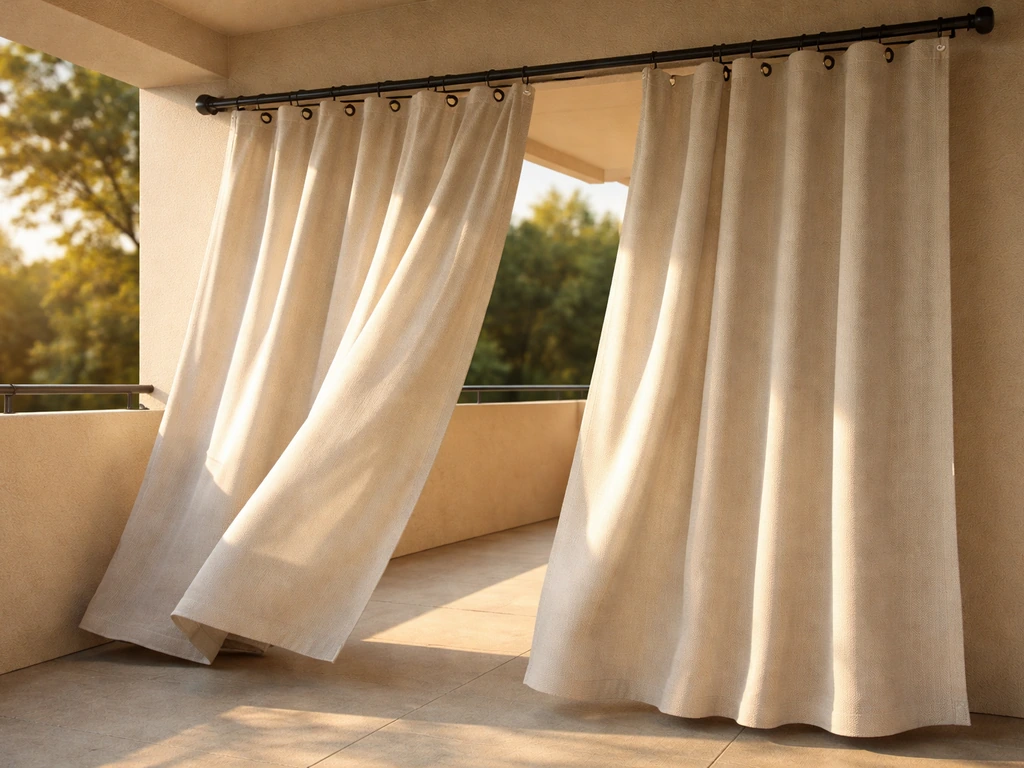
If you want airflow and a breezy look, a lighter weave works fine as long as the grommets or hardware are reinforced. That covers 80% of patios. The rest of this guide helps you dial in the details for your specific setup. For a more focused look at the full setup, you may also want to compare these options with the best outdoor patio drapes for your patio style and sun exposure.
What outdoor patio curtains are actually good for
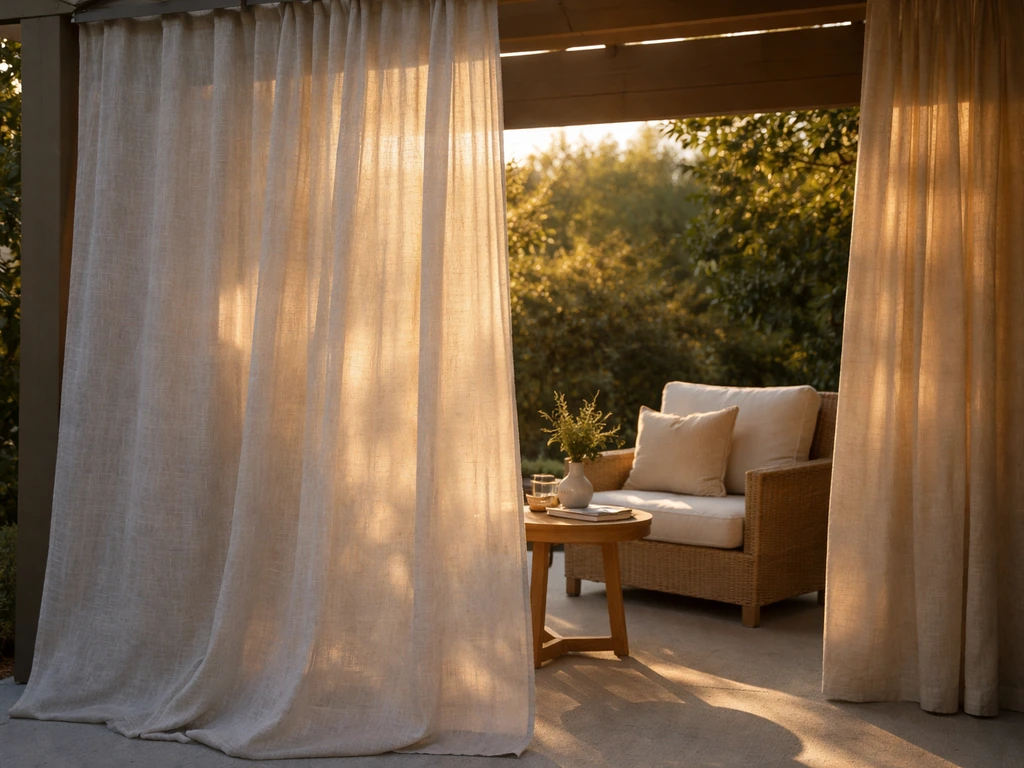
Outdoor curtains do three things well: privacy, shade, and style. The trick is knowing which one you're buying for, because the fabric weight, weave, and color all change depending on your goal.
Privacy is the most common reason people shop for patio curtains. If you're on a tight lot, close to a fence, or have neighbors with a second-story view, a solid, tightly woven panel gives you a visual barrier without building a wall. Darker colors and opaque weaves block sightlines best. Sheer or semi-sheer panels look nice but don't actually give you much privacy, especially at night when interior lighting reverses the effect.
Shade and heat reduction are a bigger deal than most people expect. A properly hung outdoor curtain on a west- or south-facing patio can drop the perceived temperature by 10 to 15 degrees simply by blocking direct afternoon sun. Blackout-style panels do this best, but even a mid-weight solid panel cuts glare and UV significantly. If shade is your priority, look for curtains with a UPF (Ultraviolet Protection Factor) rating of 50+ on the label.
Style and atmosphere matter too, especially if you're creating an outdoor room feel on a pergola or covered patio. Curtains define a space, soften hard lines, and make a patio feel intentional rather than just functional. For purely decorative use you have more flexibility on fabric weight and color, but you still need weather resistance or you'll be replacing panels every season.
Materials and weather resistance: what to look for
The fabric is the most important decision you'll make. Outdoor curtains live in a tough environment: UV rays, humidity, rain, wind, pollen, and temperature swings. Not all outdoor-labeled curtains are built equally for that.
The fabrics worth buying
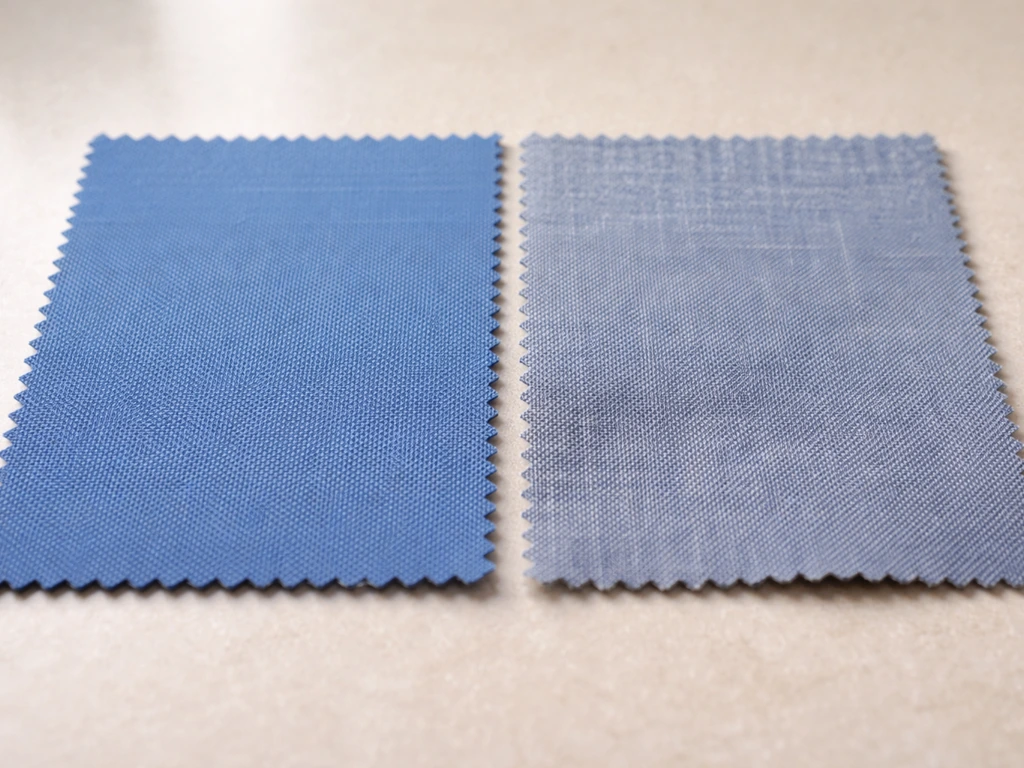
- Solution-dyed acrylic (like Sunbrella brand or similar): The gold standard. The color is baked into the fiber during manufacturing, not printed on top, so it resists fading for years. It's also naturally mold- and mildew-resistant and dries fast. It's the most expensive option but genuinely lasts 5 to 10 years with basic care.
- Solution-dyed polyester: A solid mid-range option. Not quite as fade-resistant as acrylic over a 5-year window, but significantly cheaper and still performs well in most climates. Most curtains in the $30 to $80 per panel range are polyester.
- Olefin/polypropylene: Another synthetic that resists moisture and dries quickly. Often used in budget outdoor textiles. Decent for mild climates but tends to feel stiffer and can fade faster than acrylic.
- Canvas (cotton-polyester blend): Looks great and feels substantial, but requires much more maintenance. Cotton absorbs water, encourages mildew, and fades faster. Avoid unless you're committed to storing panels when it rains and treating them seasonally.
- Sheer polyester voile: Lightweight, breezy, and decorative. Good for low-wind covered patios where aesthetics matter more than privacy or shade. Dries fast but offers minimal weather protection.
Key performance specs to check before you buy
| Performance Factor | What It Means | What to Look For |
|---|---|---|
| Fade resistance | How long color stays vibrant in direct sun | Solution-dyed fiber; UPF 50+ rating; acrylic or polyester |
| Mold/mildew resistance | Whether the fabric grows mold in damp conditions | Synthetic fibers; quick-dry weave; antimicrobial treatment |
| Water resistance | Whether fabric repels or absorbs water | Water-repellent coating (not fully waterproof, but sheds rain) |
| Durability/weight | How well the panel holds shape and resists tearing | 300 gsm or higher fabric weight for high-wind or heavy-use areas |
| Hardware corrosion | Whether grommets, rings, and rods rust outdoors | Stainless steel or rust-coated grommets; powder-coated rods |
One thing that catches people off guard: a curtain can be labeled 'outdoor' and still fade badly within a single summer if the dye is surface-printed rather than solution-dyed. Check product descriptions carefully for the words 'solution-dyed' rather than just 'fade resistant.' The latter is a marketing claim; the former is a manufacturing process with a meaningful difference in longevity.
Sizing and coverage: how to measure your patio correctly
Getting the size right is where most people make mistakes. Outdoor curtains are sized off your rod or track, not the opening you're covering. Here's how to do it step by step.
Measuring length
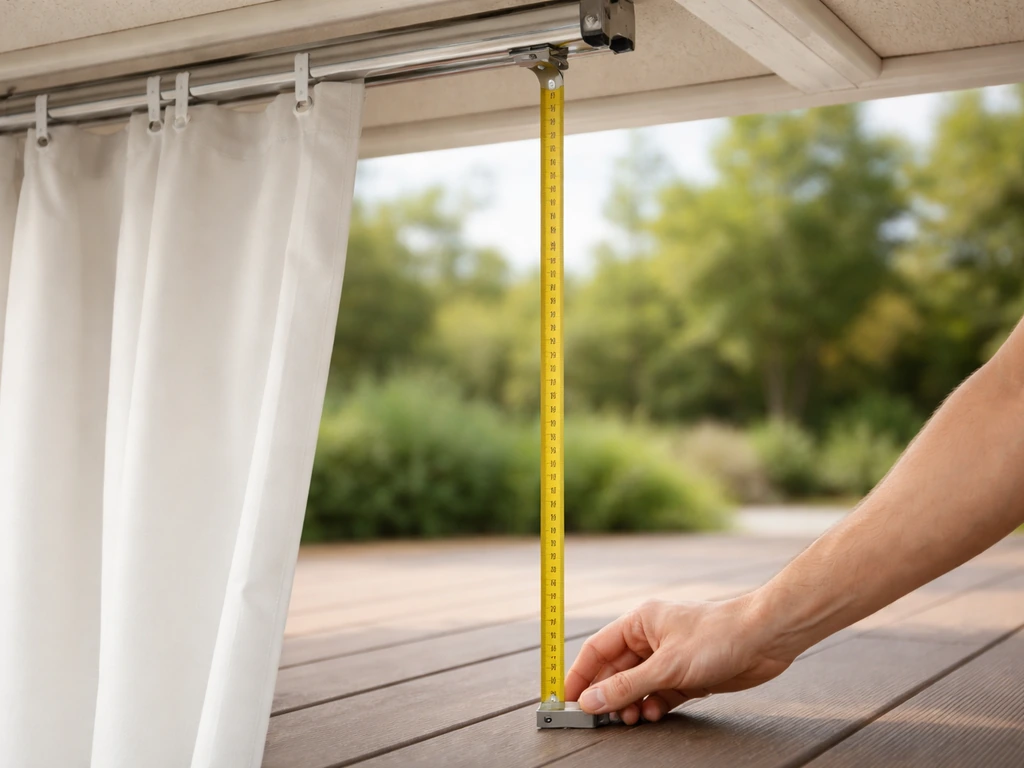
Measure from the underside of your rod or track down to the ground (or deck surface). Then subtract 1 to 2 inches so the fabric doesn't drag and collect dirt. If you're going for a pooling look (fabric that piles on the ground), add 4 to 6 inches instead, but know that pooling fabric outdoors collects debris and moisture fast. For most practical outdoor setups, a clean break just above the ground looks best and holds up longest.
One important note for grommet-top panels: the listed length is the full fabric length, but grommets sit at or just above the rod, so the hanging length is typically 1 to 1.5 inches shorter than the labeled length. Account for that when ordering, especially if you need precise coverage.
Measuring width
Measure the full length of your rod or track, not just the opening. For a full, gathered look, you want the total fabric width to be 1.5 to 2 times the rod width. For outdoor curtains used more for privacy or as dividers (kept mostly closed), 1.25 times the rod width is fine. For curtains that sit mostly open as decorative side panels, you can match the rod width without fullness and it looks intentional.
Also plan for stacking clearance. When panels are open, they stack up on each side of the opening. Budget 6 to 15 inches of stacking space per panel on each side, depending on fabric weight and fullness. Heavier, fuller panels stack wider. If you have a tight pergola post situation, account for this so your open curtains don't block more of the view than you want.
Coverage for common patio setups
- Standard 10-ft pergola bay (roughly 8-10 ft wide): Two panels per bay on a 12-ft rod covers the opening with enough fullness to close for privacy.
- Covered patio with a beam at 9 ft: Order 96-inch (8-ft) length panels for a clean hang with a 1-inch gap at the bottom.
- Attached pergola with 12-ft posts: 120-inch (10-ft) panels are the closest standard length; custom or hem-adjusted panels are needed for a precise fit.
- Freestanding pergola with cable or tension wire: Measure the wire span between posts and allow for slight cable sag (add 2-3 inches to the planned wire height to get your true hanging point).
Windproofing and attachment methods
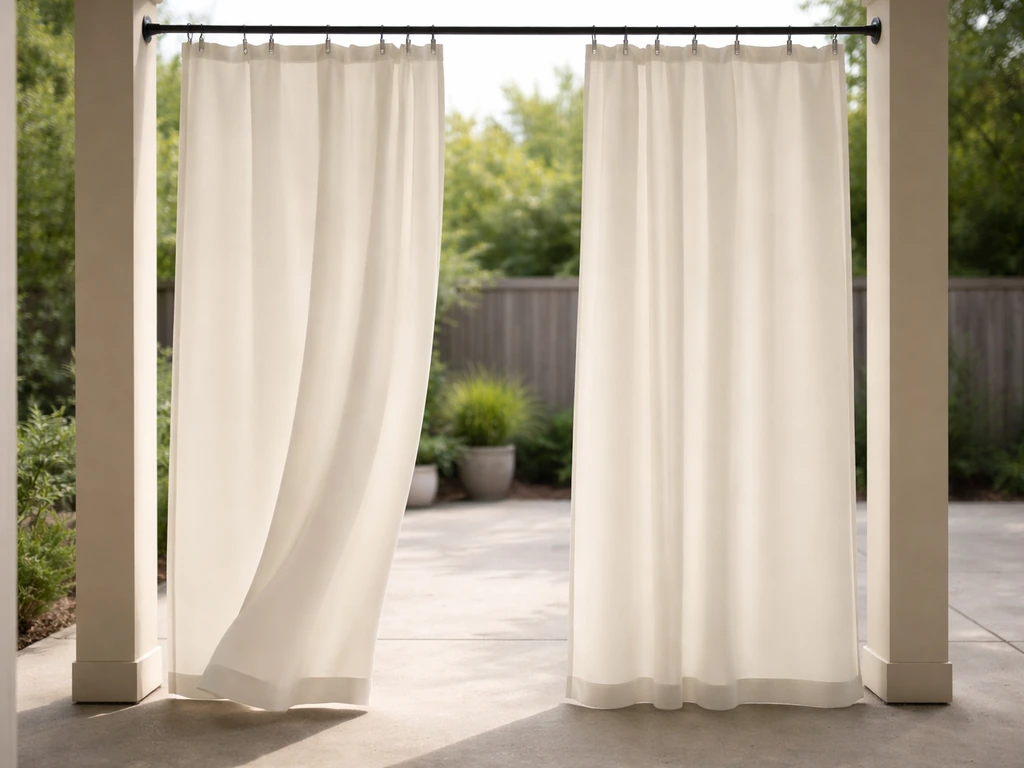
Wind is what makes or breaks an outdoor curtain setup. A curtain that flaps constantly, blows off the rod, or wraps around posts is annoying and damages the fabric over time. Your attachment method is just as important as the curtain itself.
Hardware options and how they perform in wind
| Hardware Type | Wind Performance | Best For | Drawback |
|---|---|---|---|
| Tension cable/wire with grommets | Excellent — cable flexes slightly but holds panels close | Pergolas, between posts, modern look | Requires secure end anchoring; harder to slide panels |
| Curtain rod with grommet-top panels | Good — depends on rod bracket strength | Covered patios, pergola beams | Rod can flex or spin in strong gusts if brackets are weak |
| Track/glider system | Very good — panels stay aligned and tracked | Permanent setups, screened rooms, full enclosures | More expensive and complex to install |
| Tab-top panels on rod | Moderate — tabs can stretch or slip in wind | Low-wind covered patios, decorative use | Tabs can gap and let wind grab the panel edge |
| Tie-top panels with cord/twine | Poor in open exposure — ties loosen over time | Sheltered, low-wind settings only | Not suitable for exposed or windy patios |
Anchoring the bottom of the curtain
The bottom of the curtain is where most wind problems start. A few fixes work well in practice. Curtain weights (small weighted bars sewn into the hem or clipped to the bottom edge) add enough mass to keep panels from billowing. Outdoor curtain tie-backs clipped or tied to a post or anchor point keep the panel held against a surface. For very exposed patios, some people use bungee cords or S-hooks to connect the bottom grommets (if the panel has them) to a ground-level anchor point. Panels with grommets at both top and bottom (sometimes called dual-grommet panels) are specifically designed for this and are worth seeking out if you're in a consistently windy area.
Rod choice also matters more than people think. A thin, 3/4-inch decorative rod that looks great inside will flex and bow under an outdoor curtain load, especially with wind. Go with a 1-inch or 1.25-inch diameter rod in steel or heavy aluminum for outdoor use, and use at least three brackets per rod (including a center support for spans over 6 feet).
Top picks by patio type and budget
Rather than listing specific product names (which change inventory constantly), here's how to match curtain type to your real situation. Think of this as the decision framework, with clear pros, cons, and who each approach is best for.
Budget pick: solution-dyed polyester grommet panels ($25–$50 per panel)
This is the most common and practical choice for most homeowners. Widely available at home improvement stores and major retailers, these panels come in standard lengths (84, 96, 108, 120 inches) and a broad range of colors. Solution-dyed polyester holds up well for 3 to 5 years with basic care. Grommets make them easy to hang and slide. Look for rust-resistant or stainless-steel grommets on the panels and match them with a powder-coated or stainless rod.
- Pros: Affordable, widely available, easy to install, decent weather resistance
- Cons: Won't last as long as acrylic; can fade noticeably by year 3 in full sun climates
- Best for: Budget-conscious buyers, renters, or anyone testing an outdoor curtain setup for the first time
Mid-range pick: heavyweight polyester or olefin panels with reinforced grommets ($50–$100 per panel)
Step up to a heavier fabric (300 gsm or more) and you get noticeably better wind stability, more substantial coverage, and better shade performance. Many panels in this range use a basketweave or textured weave that adds visual interest while the weight helps the panel hang straight. A basketweave grommet-top patio panel is a great option when you want extra texture and wind-stable hanging at the same time basketweave grommet-top patio panels.
Grommet-top styles dominate this category and work well on both rods and cable systems. When you’re shopping for grommet top patio panels, reinforced grommets and rust-resistant hardware are key for staying secure in wind Grommet-top styles dominate this category. Some options in this price range also come with coordinating tie-backs, which is a nice bonus.
- Pros: Better weight and drape, improved wind resistance, more shade/privacy
- Cons: Heavier panels need stronger hardware; some olefin fabrics feel stiff
- Best for: Homeowners wanting a longer-lasting solution without premium pricing; pergola setups with moderate wind
Premium pick: solution-dyed acrylic panels ($100–$200+ per panel)
Solution-dyed acrylic is the fabric used in high-end patio furniture cushions and marine applications because it genuinely handles years of direct sun, rain, and humidity without significant fading or mildew. Panels in this category typically need to be ordered through specialty outdoor fabric retailers or custom curtain makers. The upfront cost is high, but if you're building a permanent outdoor room on a pergola or covered patio, these panels last 8 to 10 years with minimal care and look better doing it.
- Pros: Best fade resistance of any outdoor fabric, true mildew resistance, long lifespan
- Cons: Expensive, often require custom ordering for non-standard sizes
- Best for: Permanent patio installations, high-sun climates, homeowners who don't want to replace curtains every few years
Specialty pick: track-mounted panel systems ($150–$400+ for full system)
If you're enclosing a pergola or large covered patio, a ceiling-mounted track system with glider clips gives you the most professional, functional result. Panels stay aligned, open and close smoothly, and don't shift in wind the way rod-hung panels can. This is more of a project than hanging a rod, but it's the approach that turns a patio into a true outdoor room. Pair with heavy polyester or acrylic panels for best results.
- Pros: Most functional, cleanest look, best wind control
- Cons: Higher cost, more complex installation, less portable if you move
- Best for: Homeowners making a long-term investment in a covered patio or pergola space
Care and maintenance: keeping outdoor curtains in good shape
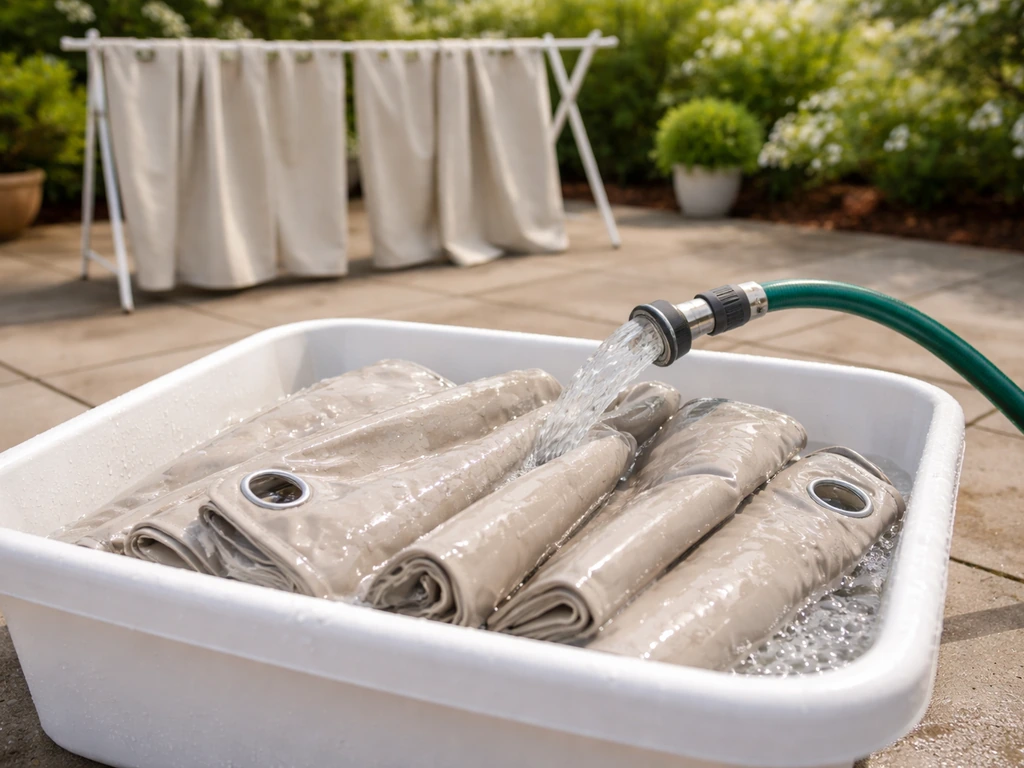
Outdoor curtains need some basic attention to last their full lifespan. The good news is it's not complicated.
Washing
Most polyester and acrylic outdoor curtains can be machine washed on a gentle cycle with cold water and mild detergent. Avoid bleach on colored panels (it accelerates fading) and skip the dryer: line dry or hang them back on the rod to dry in the shade. For large panels that don't fit in a home washer, a quick scrub with a soft brush, mild soap, and a garden hose does the job well. Spot-clean mildew stains with a diluted solution of 1 tablespoon dish soap and 1 tablespoon white vinegar in a cup of warm water, let it sit for a few minutes, then rinse thoroughly.
Mildew prevention
Mildew is the number one killer of outdoor curtains, even on 'mildew-resistant' fabrics. It grows when wet fabric sits folded or bunched without drying out. The simplest prevention: open the panels flat after rain and let them dry completely before closing or storing them. If your patio is in a humid climate, a fabric protector spray (reapplied once or twice a season) adds a water-repellent layer that speeds drying time significantly.
Seasonal storage
If you live somewhere with freezing winters, take the panels down at the end of the season. Wash them first, let them dry completely, then fold loosely (not tightly creased) and store in a breathable cotton or canvas bag rather than a sealed plastic bin. Plastic traps moisture and encourages mold during storage. Leave hardware (rods, tracks, brackets) in place if they're properly coated for outdoor use, but bring in any rods with rubber end caps that can crack in freezing temperatures.
Common mistakes to avoid before you buy
These are the mistakes that show up again and again, and most of them are easy to avoid once you know to watch for them.
- Buying indoor curtains marketed as 'light and breezy for summer.' Regular cotton or linen curtains will fade, mold, and fall apart outdoors within one season. Always verify the fabric is specifically rated for outdoor use.
- Ordering the wrong length because you measured the opening instead of the rod. Always measure from the bottom of the rod hardware to the ground, not from the top of the door frame or post.
- Forgetting grommet adjustment. Grommet-top panels hang 1 to 1.5 inches shorter than their listed length because the grommet sits at the rod. If you need exactly 96 inches of coverage, order 108 inches.
- Using a flimsy indoor curtain rod outdoors. Thin decorative rods bow under heavy panels and can't handle wind load. Use a 1-inch or heavier rod with a center support bracket for any span over 6 feet.
- Not anchoring the bottom in windy areas. Panels that flap constantly stress the grommets and hems and wear out fast. Add curtain weights, tie-downs, or bottom grommets with anchor clips before your first storm.
- Skipping stacking clearance in the measurement. If your panels don't have room to stack when open, they'll block your view or won't open fully. Allow 6 to 15 inches of stacking space per panel on each side of the opening.
- Choosing sheer panels for privacy. Sheers look beautiful but provide almost no visual privacy, especially at night with lighting behind them. If privacy is your goal, go with a solid, opaque weave.
- Storing curtains while still damp. This is the fastest way to create a mildew problem. Always dry completely before folding or storing, even if it means leaving them on the rod for an extra day after rain.
One last thing worth knowing: the style of curtain top (grommet, tab top, track glider) affects both the look and the practical function significantly. Grommet-top panels are the most versatile and wind-stable option for most setups. Tab-top panels have a more casual look but can gap and shift in wind. If you want the easiest everyday look for your outdoor space, tab top outdoor patio curtains are a popular choice for their casual drape tab top panels.
If you want to explore specific top styles, panels with grommets at both top and bottom offer extra anchoring, while track-glider systems give you the smoothest operation for a full enclosure. The right choice depends on how you're mounting, how exposed your patio is, and whether you want the curtains to move frequently or stay mostly in one position.
FAQ
Can I use indoor curtains on a patio as long as they say “outdoor” on the tag?
Not reliably. “Outdoor” can still mean surface-printed color, which can fade quickly. Look specifically for solution-dyed acrylic or polyester and check for rust-resistant hardware (grommets, rings) so the top edges do not corrode and stain over time.
What’s the best fabric weight for a patio that gets heavy afternoon sun but occasional storms?
For most sun-heavy patios with intermittent rain, aim for a mid-weight solid panel around 300 gsm or higher. It blocks more glare and resists billowing when gusts hit after rain, and it tends to stay straighter so water sheds rather than pooling in folds.
How do I prevent curtains from sagging or dragging after months of use?
Confirm the rod or cable is rated for the load and use enough brackets (at least three per rod, with a center support for long spans). Also ensure you ordered the correct hanging length for grommets (grommet-top panels are usually shorter than the listed fabric length) so the hem is not permanently too low.
Do I need curtain weights if I’m already using heavier fabric?
Often, yes, especially on wind-exposed sides or if your panels are mostly open. Heavy fabric improves stability, but dedicated weights in the hem prevent constant flutter, which reduces abrasion at grommets and keeps the bottom edge from wrapping around posts.
What tie-back or anchoring method works best for very windy patios?
Use a bottom anchoring approach: dual-grommet panels connected to a low anchor point (using provided ties or hardware) are usually more dependable than clip-on tie-backs alone. If your panels only have top grommets, rely on post tie-backs at the sides and add hem weights for the bottom hold-down.
Should I size curtains to cover the patio opening or to reach the ground?
Size to your rod or track and your preferred bottom behavior. For a low-maintenance, cleaner look, stop just above the ground by 1 to 2 inches to avoid dirt and debris buildup. If you want pooling fabric, add 4 to 6 inches, but plan on more frequent debris removal and faster moisture retention.
What stack clearance should I plan for if I’m using curtains as side panels that open and close?
Budget more than you think. When panels open, each panel stacks on its own side, and a common starting point is 6 to 15 inches of stacking space per panel side. Heavier and more fully gathered curtains stack wider, which can block views if your posts are close.
How can I tell if my current “fade resistant” curtains will hold color outdoors?
Check the wording. If you only see vague claims like “fade resistant,” you may get shorter lifespan. Product descriptions that explicitly mention solution-dyed construction are a stronger indicator of longer color retention under direct sun.
What’s the safest way to clean mildew stains without damaging outdoor fabric?
Spot-treat with a gentle diluted solution (dish soap plus white vinegar in warm water), let it sit briefly, then rinse thoroughly. After rinsing, open the panels flat to dry completely, because mildew returns when fabric stays folded or bunched while still damp.
Is it better to store curtains flat or folded over winter?
Fold loosely, not tightly creased, after washing and fully drying. Store in a breathable cotton or canvas bag. Avoid sealed plastic bins because they trap moisture and can restart mildew even if the fabric looked clean when packed away.
Can I leave outdoor curtain hardware installed during freezing weather?
Some parts can stay, but protect anything that could crack. Leave properly coated rods or tracks in place if they are rated for outdoor exposure, but remove rods with rubber end caps that may become brittle in freezing temperatures.
What’s the difference in day-to-night privacy for outdoor curtains that are opaque vs sheer?
Sheer or semi-sheer panels can look private in daylight, but at night, interior lights can reverse visibility and make silhouettes show from the outside. If privacy is a primary goal, choose darker, tightly woven opaque panels for better sightline blocking after dark.
Next Articles
Alternative to Patio Cushions: Durable, Stylish Options and DIY
Alternative to patio cushions: durable, weatherproof seating options, pros, DIY tips & buying guide.
Best Color for Outdoor Patio Cushions in 2026
Choose the best cushion color for sun, heat, and fading in 2026, with pairing tips for patio furniture and durability.
Top Rated Patio Cushions: How to Choose Fast and Right
Step-by-step guide to choose top rated patio cushions by fit, materials, weather durability, and easy cleaning for your