
The best outdoor patio drapes for most people are heavyweight, solution-dyed acrylic or performance polyester panels with rust-resistant grommet hardware, sized to 1. If you are browsing options from jcpenney home quinn basketweave grommet top patio panel, focus on the grommet placement and overall panel weight for the best wind performance rust-resistant grommet hardware. 5 to 2 times the width of your opening and hung about half an inch off the ground.
Best Outdoor Patio Drapes Buying Guide for Any Setup

Lark Perry
17 Jun 2026
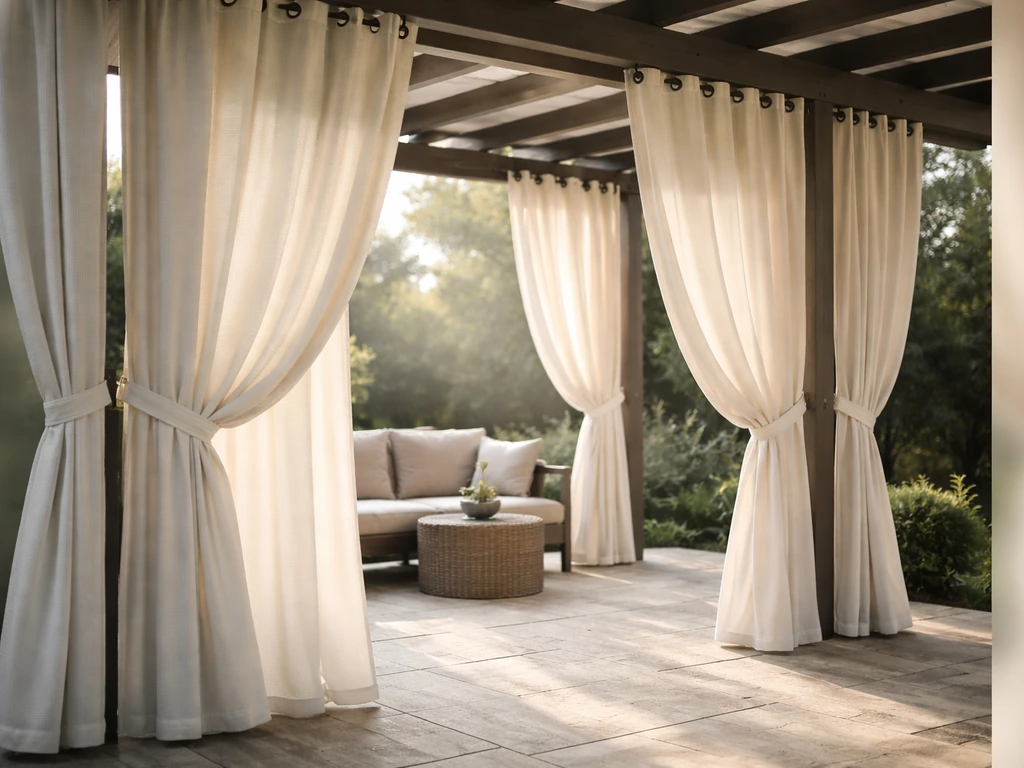
That combination gives you solid UV protection, decent wind stability, water repellency, and privacy without turning into a sail or a mildew farm. But "best" shifts fast depending on whether your patio is covered or exposed, how windy it gets, and what you actually need the drapes to do. This guide walks you through every decision so you can buy with confidence today.
What "best" actually means for patio drapes
Indoor curtains fail outdoors because they were never designed to handle UV exposure, humidity, wind load, or rain. So before you pick a product, you need to define what "best" looks like on your specific patio. There are four real-world performance categories that matter.
- Privacy and light control: Do you need to block a neighbor's sightline, filter afternoon glare, or do both? A solid panel handles both; a sheer or light-filtering panel softens sun without full blackout.
- Sun and UV protection: Fabrics rated to ISO 105-B02 light fastness grades of 7 to 8 are the benchmark for quality outdoor use. That rating means the color won't fade significantly even after extended sun exposure, which also tells you the fabric itself is UV-stable.
- Wind behavior: Heavier panels stay put; lighter sheers flutter, wrap around the rod, and wear out faster at the grommets. If your patio gets consistent wind, panel weight and a double-grommet (top and bottom) design both matter.
- Weather and moisture: "Water-resistant" means the fabric sheds light rain and dries quickly. "Waterproof" (a claim some listings make) usually means a coated fabric that blocks water more aggressively but can trap moisture underneath if not fully exposed to airflow. For most patios, water-resistant is plenty.
Think through these four categories before you read a single product listing. The answer to each one narrows your options fast and prevents you from buying sheer gauze panels for a windy, west-facing deck.
Drape types and materials that actually hold up outside
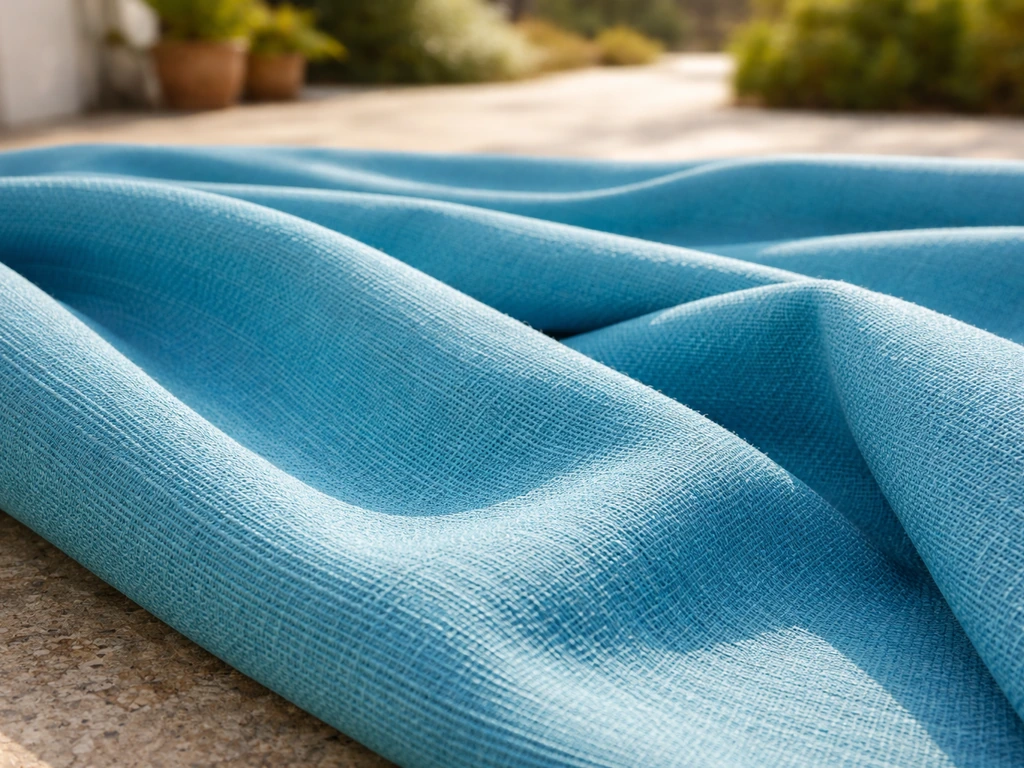
Not all "outdoor" curtains are equally outdoor-worthy. Here's a plain-language breakdown of the main fabric options and what they're genuinely good for.
Solution-dyed acrylic
This is the gold standard for outdoor fabric. Brands like Sunbrella use a process where color pigment is soaked into the acrylic fiber before the fabric is even woven, meaning the color runs all the way through. It doesn't sit on the surface where UV light can strip it away. The result is a fabric that holds color season after season, naturally repels water and stains, and resists mold and mildew. The tradeoff is cost: solution-dyed acrylic panels run meaningfully more expensive than polyester. If you're outfitting a pergola you plan to use for years and your panels will see full sun, this is worth the investment.
Performance polyester
Most mid-range outdoor curtain panels sold at retailers like Home Depot and Wayfair use UV-treated, water-resistant polyester. Products like the Exclusive Home Cabana grommet curtains are made from water-, mildew-, and UV-resistant polyester and are heavy enough to hold their shape in wind. A grommet-top patio panel like the Liz Claiborne Quinn basketweave style is a common option if you want a more secure, wind-resistant hang grommet curtains. The key words to look for on a listing are "solution-dyed" (better) or at minimum "UV-treated" plus "mildew resistant." Avoid anything that just says "water-repellent" with no UV claim; that's usually a surface treatment that wears off.
Vinyl and coated mesh panels
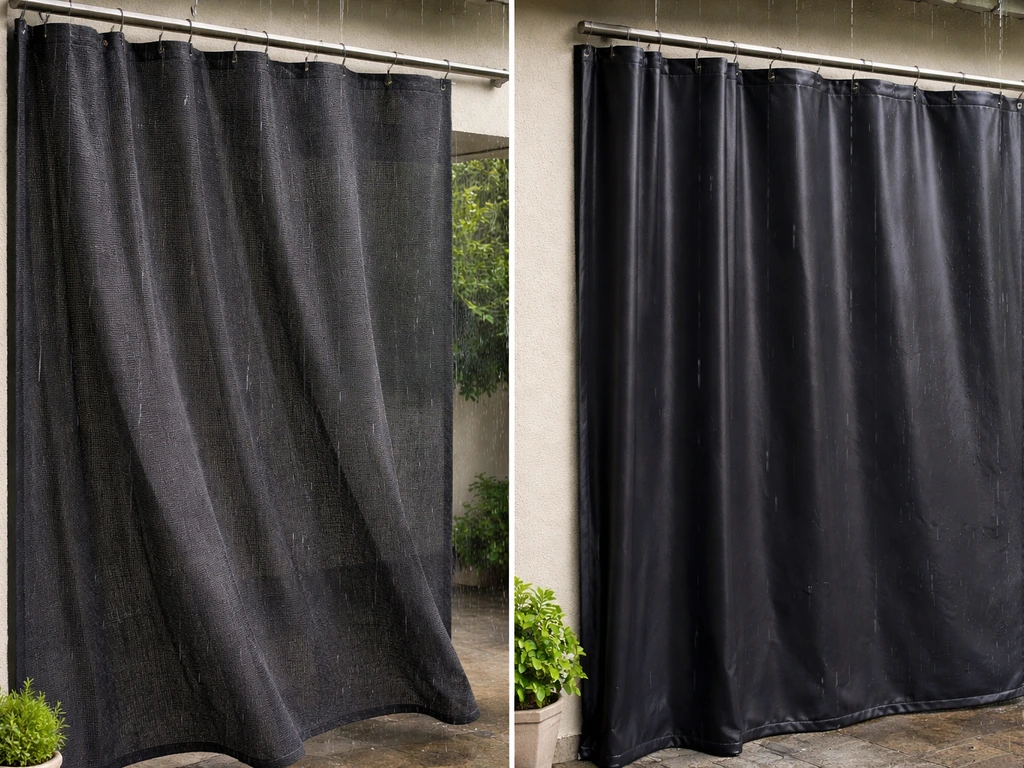
Vinyl panels block wind and rain almost completely and are extremely durable in harsh conditions. They're more common in screen rooms, coastal porches, and commercial patio enclosures than in residential decorative use. They don't move gracefully in a breeze and they look industrial, but if you need a true weather barrier rather than a decorative shade, vinyl or coated mesh is the option. These are typically measured and installed differently than fabric panels, often with top-and-bottom grommet systems or track channels.
Light sheer and gauze panels
Sheer outdoor panels filter sunlight and add a soft, airy look without blocking the view. The honest limitation: they shift constantly in any wind, offer almost no privacy, and the lightweight fabric wears faster at grommet holes. If your patio is sheltered and your main goal is ambiance plus light diffusion, they work beautifully. For a windy, exposed deck, skip them.
| Fabric Type | UV/Fade Resistance | Water Resistance | Wind Stability | Best For | Relative Cost |
|---|---|---|---|---|---|
| Solution-dyed acrylic (e.g., Sunbrella) | Excellent (ISO grade 7-8) | Very good (water-repellent) | Good (heavier weight) | Full-sun pergolas, long-term investment | High |
| Performance polyester (UV-treated) | Good to very good | Good (surface treatment) | Good if heavyweight | Covered patios, everyday use | Mid |
| Vinyl / coated mesh | Excellent | Excellent (waterproof) | Excellent (rigid) | Screen rooms, coastal, heavy weather | Mid to high |
| Light sheer / gauze | Fair (varies) | Poor to fair | Poor | Sheltered, decorative use only | Low to mid |
How to measure so your drapes actually cover the space
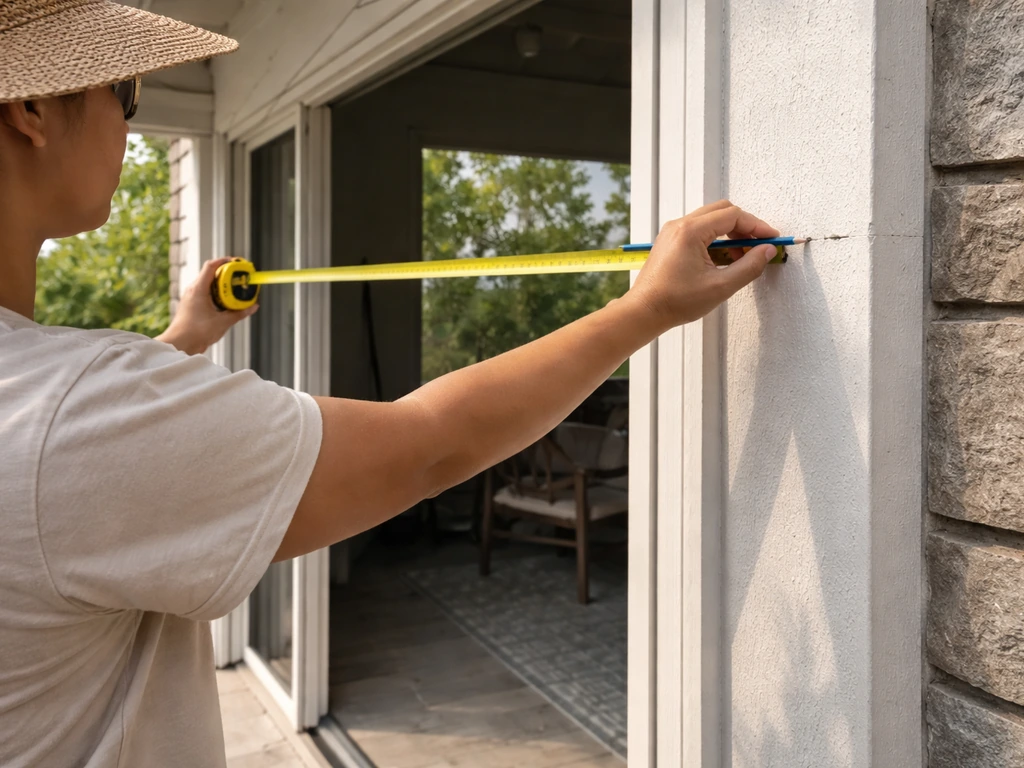
Measuring for outdoor drapes is the step most people rush, and it's the reason panels end up looking skimpy, puddling on the ground, or leaving gaps on the sides. Here's how to do it right.
Width: coverage plus fullness
Measure the full width of the opening you want to cover, then add 4 to 5 inches on each side for overlap (that's 8 to 10 inches total beyond the opening). This prevents light gaps at the edges and gives you real privacy coverage. For a decorative, full look you want the total fabric width across all panels to be 1. 5 to 2 times the rod or track width.
A 120-inch wide pergola opening typically needs at least 180 to 240 inches of flat fabric spread across however many panels you hang. Most panels are sold as single panels with a stated flat width, so divide your total fabric need by the individual panel width to get your panel count. Rod pocket and grommet panels are listed at their flat (unpleated) width, so the math is straightforward.
Length: clearance matters more than aesthetics
For outdoor use, measure from the rod or track down to where you want the bottom of the panel to sit. The practical recommendation is to keep panels half an inch to one inch off the ground, not floor-length like indoor drapes. Panels that rest on or drag along an outdoor surface wick up moisture, get dirty fast, and wear out at the hem. They also catch wind more aggressively.
If you're using a grommet top, account for the roughly 1 to 2 inches of fabric above the grommet hole itself when calculating your finished drop. For a double-grommet panel with grommets both top and bottom, the bottom grommets anchor to a lower rod or cable, so measure the full span between those two anchor points and buy the stated panel length that matches.
- Measure opening width from post to post or wall to wall.
- Add 8 to 10 inches total for side overlap (4 to 5 inches per side).
- Multiply total coverage width by 1.5 to 2 for fabric fullness.
- Divide by your chosen panel's flat width to get panel count.
- Measure drop from rod to desired hem position, keeping hem 0.5 to 1 inch off the ground.
- Subtract 1 to 2 inches from the drop if using grommet top (fabric above the grommet adds to the finished length).
- For double-grommet systems, measure the span between the two anchor rods or cables directly.
Hanging and installation: rods, tracks, and wind solutions
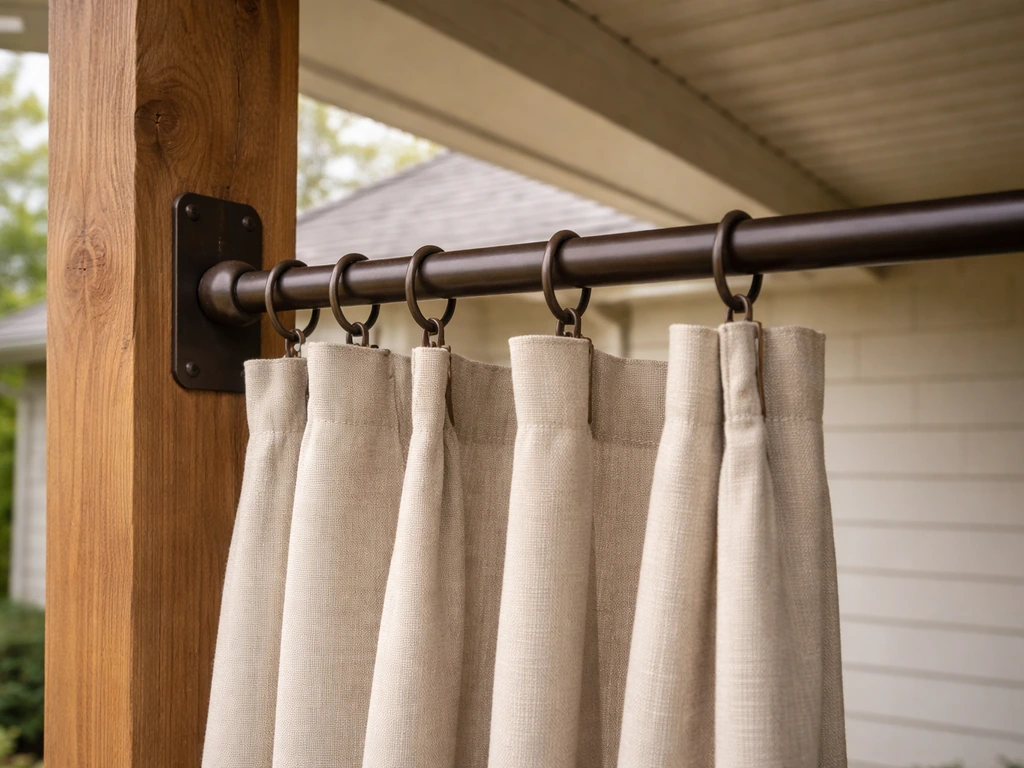
How you hang outdoor drapes affects how they look, how well they stay put in wind, and how easy they are to open and close. The right setup depends on your mounting surface and whether your patio is sheltered or exposed.
Rod systems
A standard outdoor curtain rod mounted to posts, beams, or a wall is the most common and DIY-friendly option. The critical detail: use rust-resistant hardware. Outdoor-rated stainless steel or powder-coated aluminum hardware lasts; standard steel rods rust and stain your fabric within a season. Make sure your mounting brackets are rated for the panel weight and secured into solid material (beam, post, or masonry anchor), not just into drywall or hollow trim. For pergola posts, wraparound post brackets make installation cleaner and more stable.
Track and cable systems
Ceiling-mounted tracks or stainless cable systems work well for covered patios and pergolas where you want smooth, full-width coverage. Tracks allow you to slide panels all the way open or completely closed without gaps. Cable systems threaded through grommet holes are popular on pergolas for a clean, minimal look. Both options require more planning for installation but give you better wind control because the fabric has less free movement at the header.
Managing wind with hardware and panel design
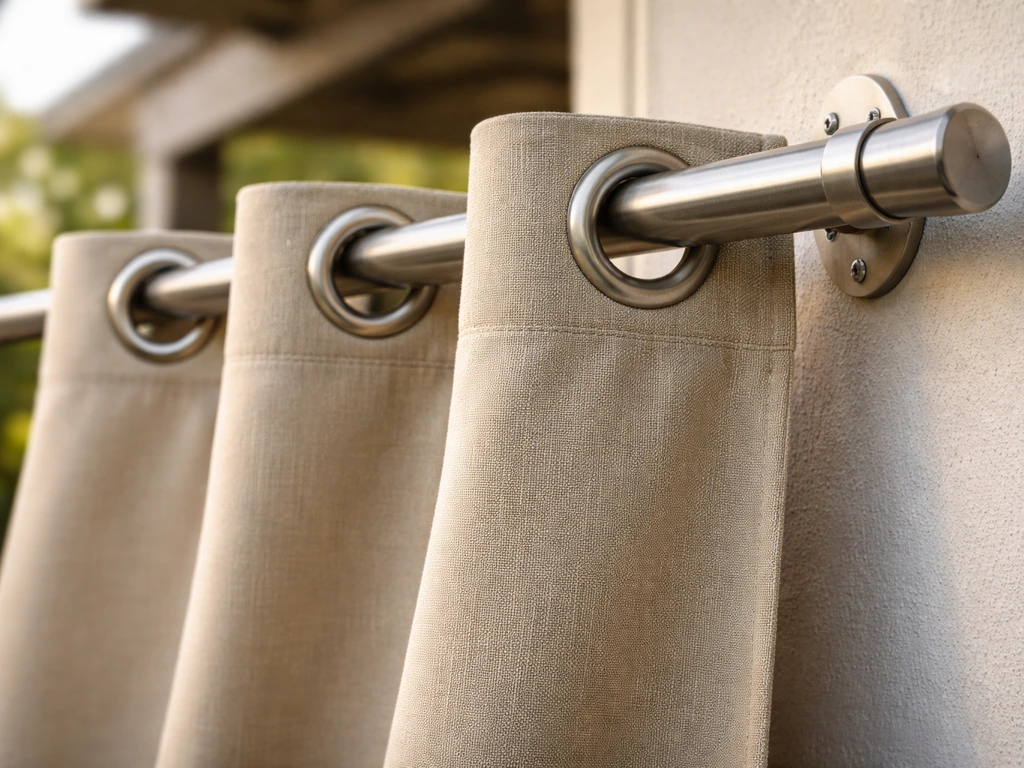
Wind is the biggest enemy of outdoor drapes that aren't designed for it. A few strategies work together: heavier fabric panels are harder for wind to move; double-grommet panels (grommets top and bottom) pin the panel to a lower rod or cable so it can't billow out like a sail; tie-backs or weighted hem inserts keep panels against the post when you want them open.
For genuinely windy areas, a track system that keeps panels under tension beats a free-hanging rod every time. If you're on a budget and using a standard rod, look for panels marketed as "windproof" with top and bottom grommet hardware. Some listings, like the Latitude Run Abba panels, specifically market this wind-control system with thermal and UV protection combined.
Header styles and their trade-offs
Grommet tops thread directly onto a rod and slide easily; they're the most common and the most practical for outdoor use. Rod pocket headers give a gathered, full look but don't slide as easily and can trap moisture at the fold. Tab tops are casual and easy to hang but the tabs stretch and weaken faster outdoors than grommets do. For purely outdoor use, grommets win on durability and ease of maintenance. The grommet top panel category has a lot of variety in quality, so look closely at the grommet material: metal grommets (especially stainless or nickel-finished) outlast plastic ones significantly.
Weatherproofing and performance features worth paying for
Outdoor curtain listings can be confusing because every product claims to be weather-resistant. Here's what to actually look for and what it means in practice.
- UV colorfastness rating: Look for ISO 105-B02 ratings of 7 or 8 if listed, or the explicit phrase "solution-dyed" which implies fiber-level UV stability rather than a surface treatment that wears off.
- Water repellency vs waterproofing: A water-repellent or DWR (durable water repellent) treated fabric sheds rain well and dries fast. True waterproofing (coated or laminated fabrics) blocks water entirely but can trap moisture if airflow is limited. For open-air patios, water-repellent is usually better because it breathes.
- Mold and mildew resistance: This is partly about the fabric construction (solution-dyed acrylic and treated polyester both resist mildew growth) and partly about care and storage habits. Look for an explicit mildew-resistant claim, not just "outdoor use."
- Panel weight: Heavier panels hold their shape and resist wind better. Weight isn't always listed, but a heavier-feeling fabric (200 gsm or above for polyester, for example) performs better than thin, lightweight panels.
- Hardware corrosion resistance: Rust-resistant grommets and rust-resistant rod hardware are non-negotiable for any outdoor install. Anything that rusts will stain the fabric permanently.
One honest limitation worth calling out: no outdoor curtain panel, regardless of the marketing claims, is completely maintenance-free. Even the best Sunbrella fabric benefits from regular cleaning and proper off-season storage. The difference between a quality outdoor fabric and a cheap one isn't that quality fabric never needs attention, it's that quality fabric bounces back from cleaning and survives more seasons of real use.
Cleaning, maintenance, and off-season storage
The most common reason outdoor drapes look bad after one season is neglect, not bad fabric. A simple routine keeps them looking good for years.
Regular cleaning routine
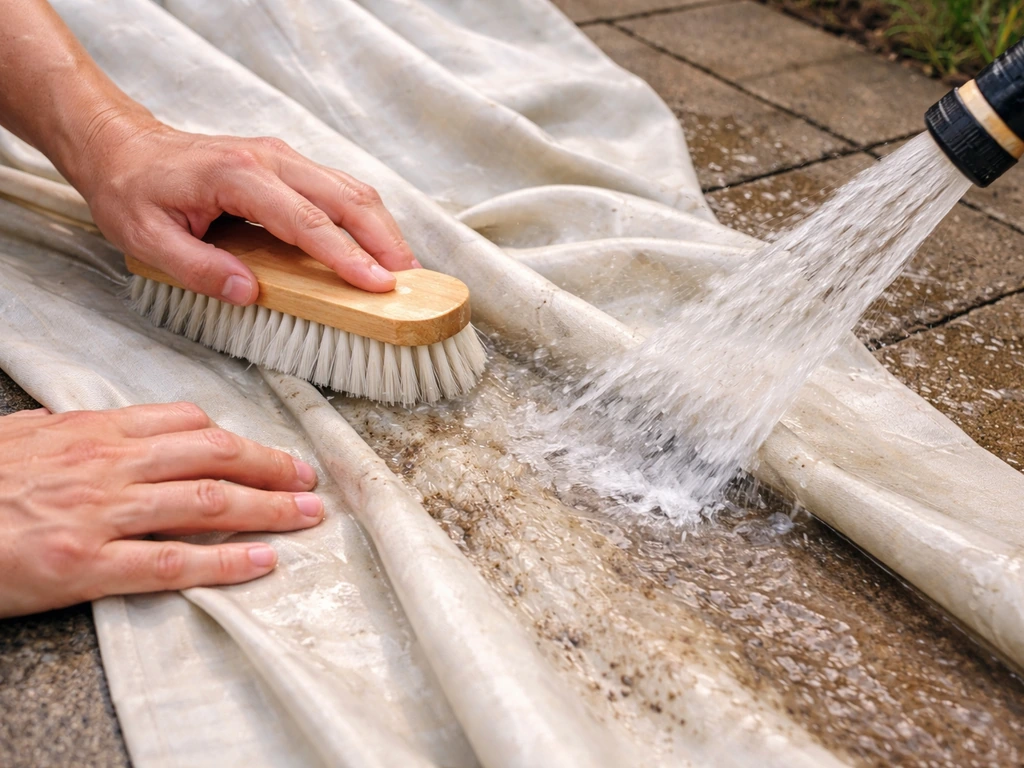
For most outdoor fabrics including performance polyester and acrylic, brush off loose dirt first, then wash with mild soap and lukewarm water using a soft sponge or brush. Rinse thoroughly and let panels air dry completely before closing or storing them. Sunbrella's own care guidance recommends mild soap and water for routine cleaning, with a dedicated mold and mildew stain remover (like Sunbrella Renew) for tougher spots. Outdura recommends against over-relying on aggressive cleaners, noting that some cleaning products can remove the fabric's water and stain resistant properties. The lesson: use the mildest effective cleaner, and rinse well.
Dealing with mildew
Mildew grows on outdoor fabric when moisture gets trapped and airflow is limited. A diluted bleach and mild soap solution (often recommended for Sunbrella and similar fabrics) kills mildew spores effectively, but always test on a hidden area first and rinse completely after treatment. More importantly, prevent mildew by keeping panels open or loosely gathered (not tightly folded against a post) when the patio is wet, and never store damp panels folded up.
Off-season storage
If you live somewhere with a real winter or a harsh storm season, take your panels down and store them indoors. Wash and fully dry them first. Store them loosely rolled rather than tightly folded to avoid permanent crease lines in the fabric. Hardware (rods, brackets, cable tensioners) should be wiped down, dried, and stored or at minimum inspected for rust spots before the next season. Catching a rust spot on a bracket early is much easier than removing a rust stain from a panel later.
Hardware upkeep
Check rod and bracket mounting screws at the start of each season. Wood posts and beams expand and contract seasonally, and mounting hardware can loosen. A loose bracket under a full set of heavy panels is a safety issue and a headache. For cable systems, check cable tension annually, as cables can stretch slightly over time and allow more panel movement than intended.
Best picks by patio situation
Rather than a single ranked list, here are scenario-based recommendations that match the most common patio setups. These reflect the real trade-offs between budget-friendly options that still perform and premium "investment" panels.
Covered patio or pergola with moderate sun
This is the most common setup and the most forgiving. A quality UV-treated performance polyester grommet panel (mid-range, like the Exclusive Home Cabana style or similar heavyweight polyester) works very well and costs significantly less than acrylic. Look for a solid or semi-solid panel, hang at 1.5 times fabric fullness on a rust-resistant rod, and you'll get good privacy and sun control. Grommet top panels in this category are the most practical choice for ease of opening and closing.
Fully exposed patio or deck with full sun
This is where the investment in solution-dyed acrylic pays off. Panels on a south- or west-facing exposed deck are in full UV exposure for hours daily. A cheaper polyester panel will fade noticeably within two seasons. Spend more here on a solution-dyed acrylic panel (Sunbrella-fabric panels are widely available through patio specialty retailers and some department store lines). Pair with heavy-duty ceiling-mounted track hardware if your structure allows it.
Windy area or coastal patio
Prioritize panel weight and a double-grommet system (grommets both top and bottom, anchored to two rods or a rod and a lower cable). Panels marketed specifically as windproof with top-and-bottom grommet hardware are designed exactly for this scenario. Heavier solid panels in performance polyester or acrylic both work; the hardware system matters as much as the fabric here. A ceiling or overhead track system adds even more stability. Tie-backs with enough tension to hold the panel against the post when open are worth adding.
Small patio or balcony on a budget
For a small covered balcony where UV exposure is moderate and wind is limited, a mid-range heavyweight polyester grommet panel is genuinely sufficient and won't break the budget. Focus your spend on quality rust-resistant hardware rather than premium fabric; the hardware is what fails first on cheap outdoor curtain sets. Get the measurement right (fullness of 1.5x minimum), hang with proper clearance from the ground, and clean once a season.
Screen room or three-season enclosure
If you're adding drapes inside a screened enclosure for privacy and insulation rather than direct weather protection, you have more flexibility on fabric choice because the screen does the heavy weather lifting. A heavier indoor-outdoor fabric panel or even a dedicated outdoor sheer can work here. Focus on panel color and light-filtering performance rather than maximum weatherproofing specs.
A quick checklist before you buy
Run through this before you hit the checkout button on any outdoor drape listing.
- Measure your opening width and add 8 to 10 inches for side overlap, then multiply by 1.5 to 2 for fullness. Calculate panel count from there.
- Measure your drop from rod to desired hem, keep hem 0.5 to 1 inch off the ground, and adjust for header type.
- Confirm the fabric says solution-dyed acrylic or UV-treated/mildew-resistant polyester. Avoid anything with only a vague "outdoor use" claim.
- Check that hardware (grommets, rods, brackets) is described as rust-resistant or stainless. This is not optional for outdoor use.
- Match panel weight to your wind exposure: heavier panels for windy spots, lighter only for sheltered, calm patios.
- If wind is a real concern, look specifically for double-grommet (top and bottom) panels or plan a track/cable mounting system.
- Know your mounting surface (wood post, concrete wall, beam) before buying hardware so you have the right anchors.
- Plan your off-season storage before the panels arrive so you're not improvising when the weather changes.
Outdoor patio drapes are genuinely one of the highest-impact, most practical upgrades you can make to a patio. The key is matching the fabric and hardware to your actual conditions rather than buying on looks alone. Get the measurement right, buy hardware you won't regret, and clean them once a season. Done right, a good set of panels will outlast several rounds of cheap alternatives and make your patio feel like a real room.
FAQ
Can I hang outdoor patio drapes on an indoor curtain rod?
You can only if the rod is truly outdoor-rated. Standard steel rods often rust fast, which can stain fabric and shorten grommet life. Use outdoor-rated stainless steel or powder-coated aluminum, and make sure the brackets are anchored into structural material, not just drywall or trim.
What length should I choose for best-looking patio drapes if I do not want them to touch the ground?
Plan for a practical clearance of about 0.5 to 1 inch off the deck surface. If your panel is grommet-top, remember the finished drop is measured from the top mount to the bottom hem, so account for the fabric above the grommet hole when selecting panel length.
How much panel fullness should I aim for on a wide opening?
For privacy and good light control without looking skimpy, target total fabric coverage around 1.5 to 2 times the track or rod width. For single panels, use the stated flat width and divide your total fabric need by that width to get the correct panel count.
Are double-grommet panels always better than single-grommet panels?
Not always, but they are a strong advantage in wind. Single-grommet panels can billow more freely, while double-grommet designs anchor to a lower rod or cable and reduce sail effect. If your patio is exposed or windy, double grommets are usually worth the upgrade.
How do I prevent grommet holes from rusting or damaging over time?
Choose stainless or nickel-finished grommets, and avoid letting the fabric drag on wet surfaces. Regularly wipe down hardware before storage, and if you see early rust at a bracket, remove or replace that hardware promptly to prevent transfer stains to the fabric.
Do tie-backs or weighted hems really help, and when should I use them?
They help when you want panels open but still aligned, especially on breezy patios. Tie-backs with enough tension, or weighted hem inserts, keep fabric against posts and reduce flapping. They are less effective than a track or double-grommet system when winds are strong.
What should I do if my panels still leave light gaps at the sides?
Re-check your overlap. A common fix is adding 4 to 5 inches on each side beyond the opening so the panels cover edges rather than centering them. Also ensure your panel count matches the total width you planned, not just the number that fits the rod.
Can I use outdoor drapes in a coastal or very humid area?
Yes, but prioritize rust-resistant hardware and mildew resistance. Hardware corrosion is the weak point in coastal setups, so stainless or powder-coated components matter. For mildew-prone areas, avoid tightly folding wet panels and store them only after they are fully dry.
What is the safest way to clean outdoor patio drapes without damaging their water and UV performance?
Use the mildest effective cleaner, brush off loose dirt first, then wash with mild soap and lukewarm water using a soft sponge or brush. Rinse thoroughly and air dry completely before closing or storing. Avoid harsh cleaners that can strip water and stain resistance, and test any stain remover on a hidden spot first.
How often should I clean outdoor drapes to prevent mildew?
A light cleaning once per season is usually enough for routine care, plus immediate rinsing if they get soaked in rain. Prevention matters most: keep panels open or loosely gathered when wet, and never store damp fabric folded up.
Should I remove and store patio drapes during winter storms?
If you have real freezing weather or a harsh storm season, take panels down, wash, and fully dry them before indoor storage. Store loosely rolled to reduce permanent creases, and wipe down and inspect hardware for rust or loosened parts before the next season.
What is the biggest mistake people make when buying the best outdoor patio drapes?
Buying based on looks alone and underestimating wind and maintenance. Many panels marketed as “outdoor” are only surface-treated, so they can fade or wear faster under UV and wind. Match fabric type and hardware system to your exposure level, then get measurements and overlap right.
Next Articles
Best Outdoor Curtains for Patio: Buyer Guide 2026
Choose the best outdoor patio curtains for sun, wind, privacy, and mildew resistance with sizing and install tips for 20
Alternative to Patio Cushions: Durable, Stylish Options and DIY
Alternative to patio cushions: durable, weatherproof seating options, pros, DIY tips & buying guide.
Best Color for Outdoor Patio Cushions in 2026
Choose the best cushion color for sun, heat, and fading in 2026, with pairing tips for patio furniture and durability.