
The best patio cushions for you come down to three things: your furniture type, your climate, and how much maintenance you're willing to do. There is no single universal winner. A Sunbrella-covered deep-seat cushion with 4-inch quick-dry foam is the gold standard for most setups, but if you're working with a budget dining set in a mild climate, a solid polyester fill with a removable, machine-washable cover will serve you just as well for a fraction of the cost. This guide walks you through the whole decision so you can stop scrolling and actually buy the right thing.
Top Rated Patio Cushions: How to Choose Fast and Right

Lark Perry
19 Jun 2026
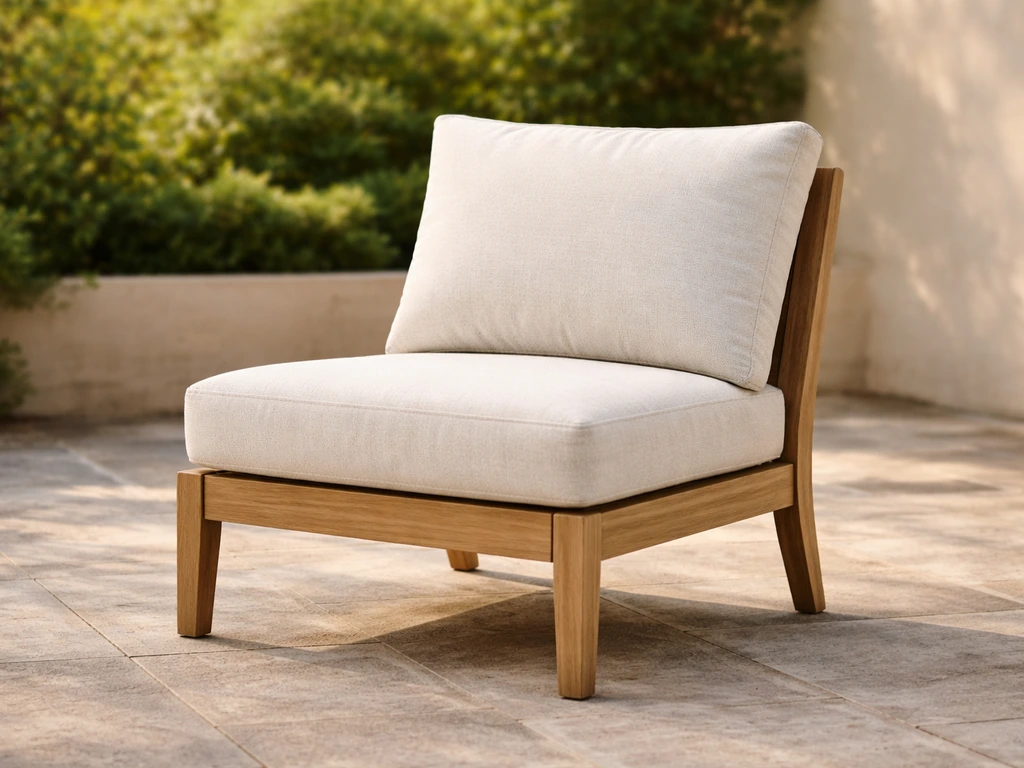
What 'top rated' should actually mean to you
Online ratings are full of noise. A cushion that gets five stars in Seattle might fall apart in Phoenix because reviewers are rating comfort after two months, not UV fade resistance after two summers. When I evaluate patio cushions, I use a tighter set of criteria that reflect real-world outdoor use.
- Fade resistance: The fabric should hold color after hundreds of hours of direct sun. Look for solution-dyed acrylic (Sunbrella being the benchmark) or at minimum a UV-inhibitor rating on polyester.
- Mildew resistance: No fabric is fully mildew-proof, but quality cushions use treated covers and quick-dry foam so moisture doesn't sit long enough to cause problems.
- Water resistance vs. waterproof: Most outdoor cushions are water-resistant, meaning they shed light rain but will absorb a soaking. Truly waterproof cushions exist but are stiffer and less comfortable. Know which you're getting.
- Foam quality and density: Cheap polyester fiberfill flattens within a season. Closed-cell or reticulated foam holds its shape and drains water. Higher-density foam (1.8 lb/cu ft or above) lasts significantly longer.
- Cover construction: Removable, zippered covers mean you can wash just the cover and replace it when it wears out without buying a whole new cushion. This is a bigger deal than most people realize.
- Secure attachment: Ties, straps, or elastic loops keep cushions from blowing off or sliding around. The right system depends on your furniture.
- Fit accuracy: A cushion that's even an inch too wide or too narrow looks sloppy and shifts constantly. Proper measurements are non-negotiable.
If a cushion scores well across all six of these, it earns a 'top rated' label in my book. If it only nails one or two, it's a budget compromise, not a recommendation.
Match your cushions to your furniture and location
Different patio furniture calls for completely different cushion specs. Buying the wrong cushion type is one of the most common mistakes people make, and it usually leads to cushions that look wrong, sit wrong, or wear out fast.
Deep-seat lounge chairs and sectionals
These are the big, wide chairs and modular sofas built for relaxing. They need thick cushions, typically 4 to 5 inches, with a separate seat and back cushion. Favoyard’s outdoor cushion thickness guide also notes that deep-seating lounge furniture commonly calls for about 4 to 5 inches for comfort, with 4 inches discussed as a standard choice.
The seat cushion for a standard deep-seat chair is usually around 23 to 26 inches wide and 23 to 26 inches deep. Home Depot lists a deep-seating lounge cushion cover in the typical deep seating dimensions, including a zipper closure and tie system zipper closure and ties.
Because these cushions are large and sit low to the ground, foam quality matters a lot. Go with at least 4-inch high-density foam or a foam-and-fiber blend. Sunbrella or another solution-dyed acrylic fabric is worth the investment here because these cushions are out every day you're using the patio.
Dining chair cushions
Dining cushions are thinner and smaller, typically 2 to 3 inches thick and roughly 15 to 18 inches square, though sizes vary widely. Because people sit on dining chairs for shorter periods and the chairs themselves usually have some back support, comfort demands are lower. Here you can prioritize easy cleaning over premium foam. A removable, machine-washable cover is more important on dining cushions than anywhere else because food and drink spills are inevitable. A good alternative to patio cushions is to consider outdoor seat pads and weather-resistant upholstery specifically made for outdoor furniture.
Outdoor bench cushions
Bench cushions are the trickiest to buy because bench sizes vary so much. Common thicknesses run 2 to 4 inches for standard benches, and up to 5 inches if you're using the bench as a primary lounge seat or it's sitting on a hard surface with no flex. A 3-inch bench cushion is a solid middle ground for most garden or entryway benches. For porch swings or benches used for long sitting, lean toward 4 inches. Ties are critical on bench cushions since there's nothing to hold them in place otherwise.
Loveseat and outdoor sofa cushions
These follow the same logic as deep-seat lounge cushions but come in longer widths for two- or three-seat pieces. The main pitfall here is buying a cushion set that doesn't match your sofa's arm-to-arm measurement. If you have a standard 52-inch loveseat, you'll need a seat cushion that spans that full width or two separate seat cushions that add up to it. Check whether your sofa needs a bench cushion (one long piece) or individual seat cushions.
Back cushions
Back cushions are typically thinner (2 to 3 inches) and taller, and they almost always need ties or loops to stay attached to chair backs. If your furniture has a slatted or open back, look for cushions with ties that thread through the slats. A back cushion with only bottom ties will sag and rotate on slatted furniture.
How to measure so your cushions actually fit
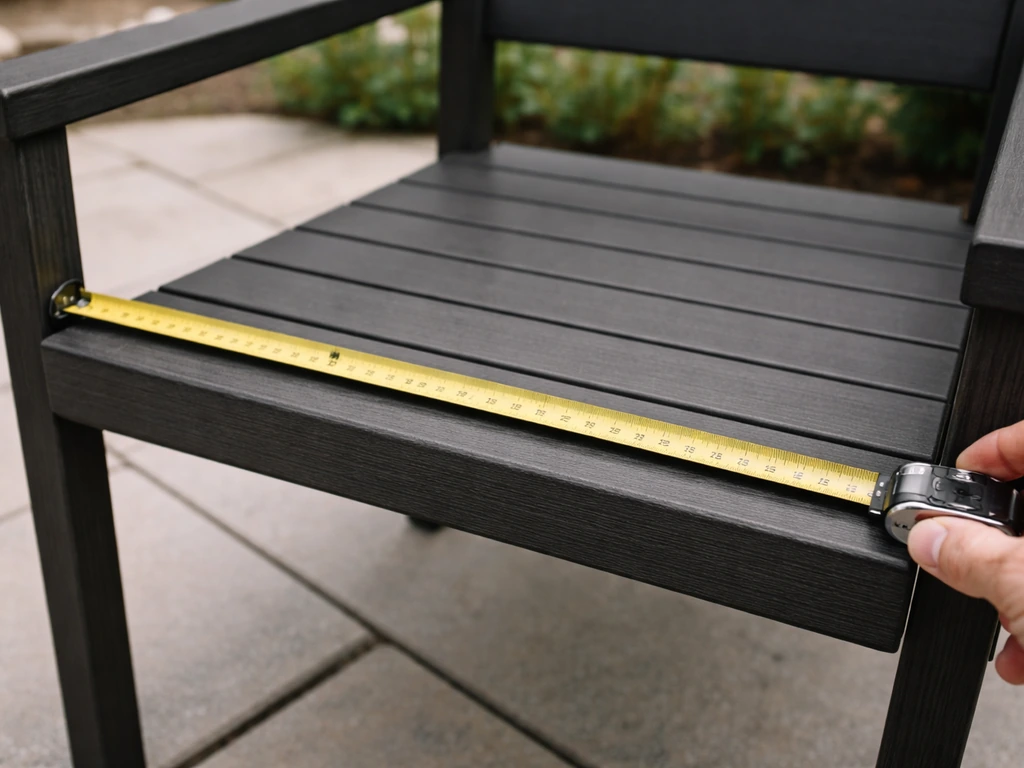
Measuring sounds simple but there are a few consistent mistakes that cause people to buy the wrong size. Here is how to do it correctly.
- Measure the seat pan, not the frame. The seat pan is the flat surface you actually sit on. Measure from the front edge to the back edge (this is your depth) and from side rail to side rail (this is your width). Ignore the outer frame dimensions.
- For bench cushions, measure the full seating surface length, not the bench legs or overall bench width.
- For back cushions, measure from the top of the seat pan to where you want the cushion to end, and measure the interior width of the back frame.
- Write down thickness separately. Decide on your thickness based on your comfort preference and furniture style, not just what fits in the frame.
- Round down, not up. A cushion that is a half-inch smaller than your seat pan sits cleanly. A cushion that is a half-inch too wide bunches against the arms and looks bad.
- Check for arm clearance on chairs with arms. The cushion width needs to clear the inner arm-to-arm distance, not just the seat pan measurement.
- If your furniture is an unusual shape (curved, L-shaped, or tapered), standard off-the-shelf cushions won't fit well. Custom-cut cushion covers are available in almost any shape and size from specialty suppliers, often with YKK zippers and your choice of fabric.
The single most common mistake I see is people measuring arm-to-arm on the outside of the frame, then ordering that exact width, and ending up with a cushion that's an inch or two too wide. Always measure the surface you'll be sitting on.
Materials and construction: what's inside and outside the cushion
Foam types and what they mean for comfort and durability
The fill inside a cushion is what determines long-term comfort and shape retention. Cheap cushions use polyester fiberfill or low-density foam that compresses and stays flat after one season. Good outdoor cushions use one of three better options: open-cell polyurethane foam (soft but absorbs water, so needs a good cover), closed-cell foam (water-resistant but firmer), or reticulated foam (the outdoor gold standard, engineered to drain water quickly while keeping its shape). For any cushion thicker than 3 inches used in a wet climate, reticulated foam is the best choice. If you're in a dry climate and prioritize softness, a foam-and-fiber blend gives you the best of both.
Fabric: what the cover is made of changes everything
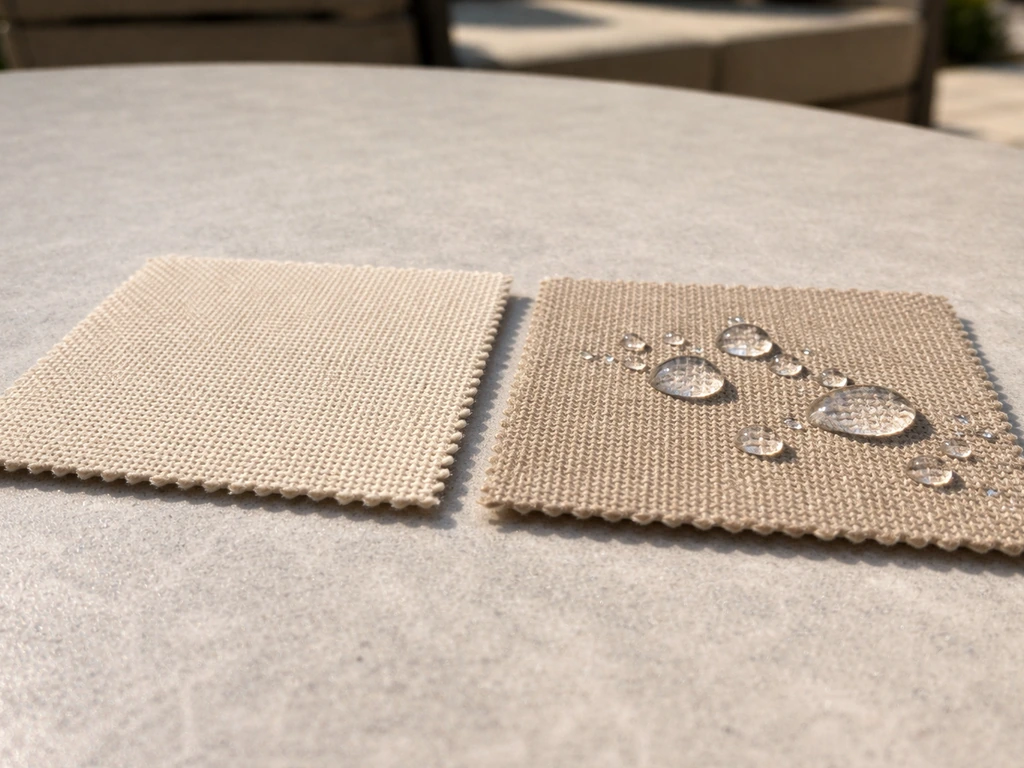
This is where the biggest performance gaps between budget and premium cushions show up. Here's a straightforward breakdown of the main fabric options.
| Fabric Type | UV Resistance | Water Resistance | Mildew Resistance | Cleaning | Cost |
|---|---|---|---|---|---|
| Solution-dyed acrylic (e.g., Sunbrella) | Excellent — color is part of the fiber | Good — sheds water, not waterproof | Good — does not promote mildew growth | Hand wash; no machine wash or dry cleaning | Premium |
| Polyester with UV coating | Moderate — coating fades over time | Moderate | Fair | Often machine washable | Budget to mid-range |
| Olefin (polypropylene) | Good | Good | Good | Hand wash or gentle machine wash | Mid-range |
| Vinyl/PVC | Good | Excellent — nearly waterproof | Excellent | Wipe clean | Mid-range — less comfortable |
| Canvas (treated) | Fair | Fair — fades with UV exposure | Fair | Machine washable (usually) | Budget |
Solution-dyed acrylic like Sunbrella is the benchmark because the color is baked into the fiber itself rather than printed on top, so it resists fading at a level no coated polyester can match. It's also worth knowing that while Sunbrella fabric does not inherently promote mildew growth, mildew can still grow on dirt or debris that builds up on the fabric. Keeping covers clean is what actually prevents mildew, regardless of how good the fabric is.
Removable covers vs. fixed covers
A removable, zippered cover is almost always the smarter buy. You can take it off, clean it separately, and replace it when it wears out without buying a new cushion. Brands like Classic Accessories build their whole system around this idea, selling replacement covers designed to slip over quality foam inserts. If you invest in good foam and a quality insert, swapping covers every few years costs a fraction of buying entirely new cushions. Fixed covers are fine on budget cushions you expect to replace entirely, but on anything you're spending real money on, make sure there's a zipper.
Attachment systems: ties, straps, and elastic
Ties (fabric loops you tie around chair rungs or through slats) are the most common and work well on most patio chairs and benches. Straps with snap buckles are faster and more secure but require furniture with a rail or bar to attach to. Elastic loops or corner bands work well on dining chairs and stools with legs but not much else. Most quality cushions include at least two ties. If you're buying for a bench or swing where wind is a real issue, four ties or straps are better than two.
Weather-specific buying tips
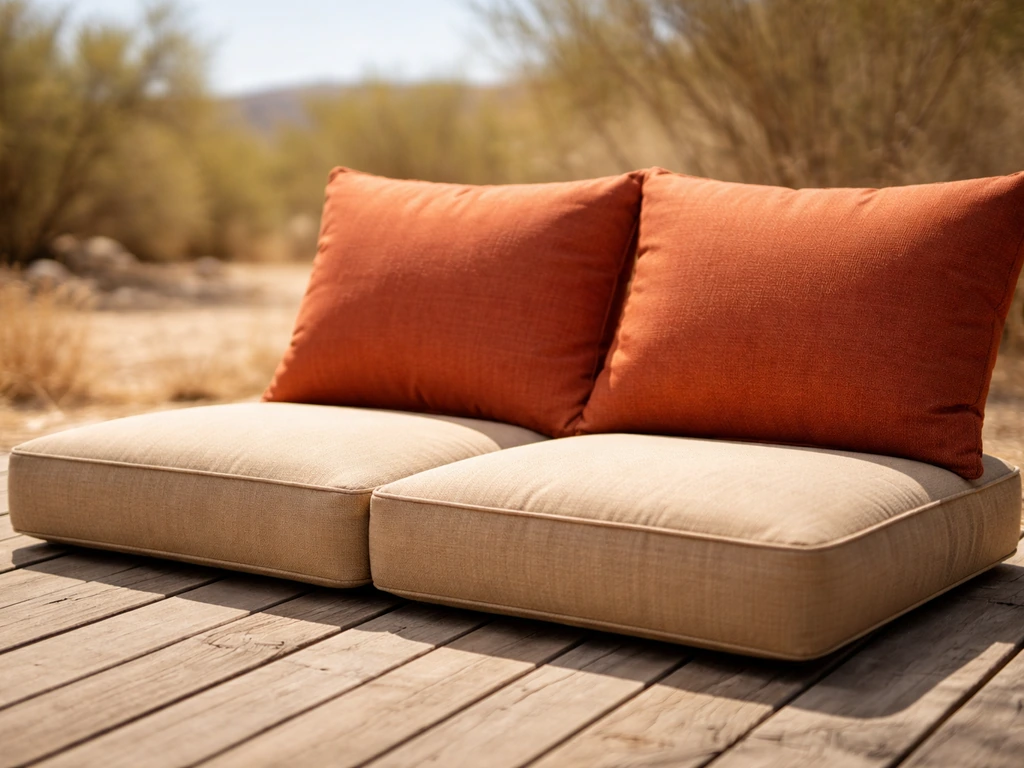
High sun and heat (desert climates, full-sun patios)
UV degradation is your biggest enemy. Avoid polyester with surface-applied UV coatings because the coating breaks down within a season or two under intense sun. Solution-dyed acrylic is the only fabric that genuinely holds color for multiple years in a full-sun patio in a place like Arizona or Southern California. Color plays a big role in how cushions hold up outdoors, including fade resistance and heat absorption color holds color for multiple years. Also pay attention to foam: dark-covered cushions in hot climates can get uncomfortably hot to sit on mid-afternoon. Look for lighter cover colors and foam that doesn't retain heat.
High rain and humidity (Pacific Northwest, Southeast, tropical areas)
In wet climates, quick-dry construction is mandatory. This means reticulated foam (not standard polyurethane), a water-resistant outer cover with minimal seams where water pools, and a storage or drying plan for extended wet periods. Even the best cushions will develop mildew if they sit soaked for days. If you're in a particularly rainy area, buy cushion storage bags or a deck box and make a habit of pulling cushions indoors or under cover during multi-day rain events. It's also worth noting that machine washing outdoor cushion covers may not always be appropriate. Many quality fabrics, Sunbrella included, recommend hand washing to protect the weave and any water-repellency treatment.
Freeze-thaw climates (Midwest, Northeast, mountain areas)
Cushions that freeze when wet and then thaw repeatedly will degrade fast, both the foam and the cover stitching. In these climates, plan to store cushions completely indoors from late fall through early spring. The priority when buying is less about winter performance (because the cushions won't be outside in winter) and more about how easy it is to store them. Thinner cushions (2 to 3 inches) are easier to store stacked. Removable covers mean you can flatten foam inserts and store them more efficiently. Compressible polyester fill can also be a practical choice here since it takes up less storage space than dense foam.
Caring for your cushions so they last more than one season
Regular cleaning (the habit that prevents most problems)
For most outdoor fabrics, a simple routine of brushing off loose debris and hosing down covers every few weeks prevents the buildup that leads to staining and mildew. For deeper cleaning, mix about a quarter cup of mild dish soap per gallon of warm water and scrub with a soft brush. Rinse thoroughly and let the cushion air dry completely, standing it on edge so both sides dry, before putting it back on the chair or stacking it. Do not machine wash unless the manufacturer explicitly says it's okay. For high-quality fabrics like Sunbrella, machine washing is specifically not recommended and can damage the weave and water-repellency treatment.
Tackling mildew and stains
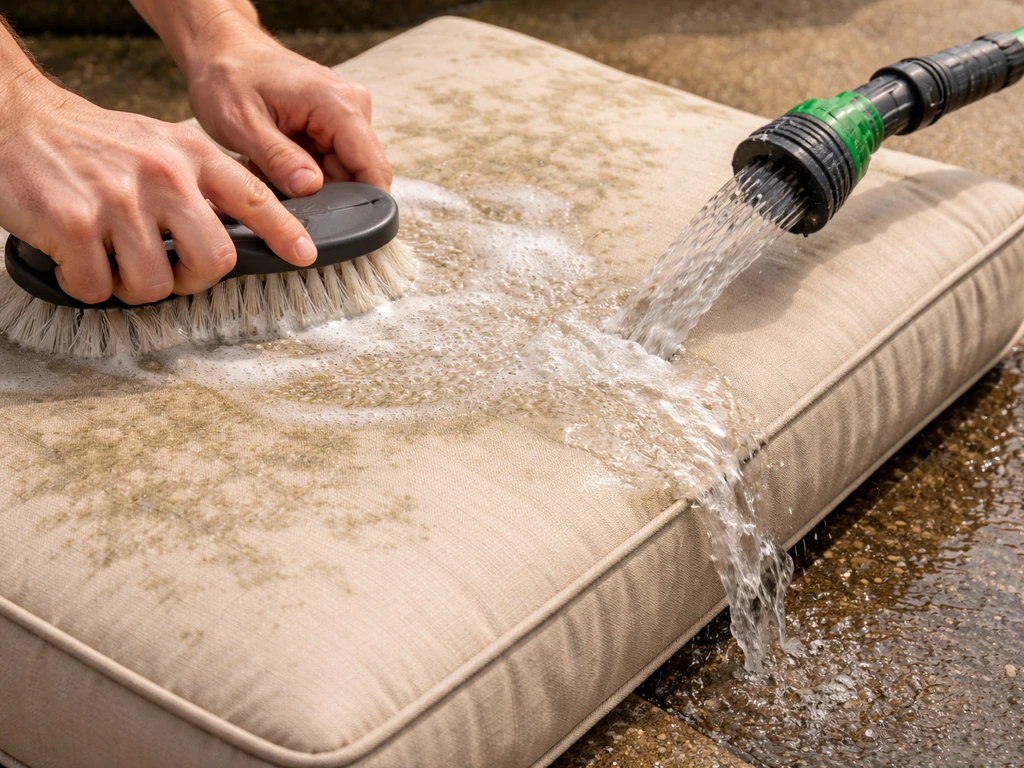
If mildew appears, a diluted bleach solution works well on most outdoor fabrics. A mix of 1 cup of bleach and a quarter cup of mild soap per gallon of water, scrubbed in and rinsed thoroughly, will handle most mildew and heavy staining. The important follow-up step that most people skip: after using any bleach solution, you need to re-treat the fabric to restore water and stain repellency. Products like Sunbrella Restore are made specifically for this. If water no longer beads off your cushion cover after a season or two, it's a sign the repellency treatment has worn down and needs refreshing, even if there's no visible damage.
Drying and storage
Prolonged moisture is the fastest way to ruin outdoor cushions. Get in the habit of standing cushions on edge after rain to let both surfaces dry. For extended periods of non-use (vacations, end of season), move cushions to a cool, dry location. A breathable storage bag or a deck box with ventilation works better than plastic bins, which trap humidity. If you're storing foam inserts separately from removable covers, make sure the foam is bone dry before packing it away. Even a slightly damp foam insert stored in a closed space will grow mildew.
When to replace vs. restore
If the foam is permanently compressed or smells musty even after deep cleaning, replace it. If the cover is faded, torn, or stained but the foam is still good, just replace the cover. This is exactly why buying cushions with removable, zippered covers is worth the extra cost upfront. A good foam insert can last 5 to 8 years with proper care. Covers, especially on sun-exposed chairs, might need replacing every 2 to 4 years depending on fabric quality and climate.
Quick picks by use case and budget
Rather than naming one universal winner, here's how I'd approach the decision based on your specific situation. Once you narrow it down, the best outdoor patio cushions are usually the ones with the right fit, quick-dry materials for your climate, and removable covers for easier cleaning. Think of this as a decision framework rather than a ranked list.
| Your Situation | What to Prioritize | Fabric to Look For | Thickness | Budget Range |
|---|---|---|---|---|
| Deep-seat lounge chair, sunny/hot climate | UV resistance, shape retention, removable cover | Solution-dyed acrylic (Sunbrella or equivalent) | 4–5 inches | Premium ($60–$120+ per cushion set) |
| Dining chairs, any climate | Easy cleaning, good fit, machine-washable cover | Treated polyester or olefin | 2–3 inches | Budget to mid ($15–$45 per cushion) |
| Bench, covered patio or mild climate | Comfort, tie security, correct length | Polyester with UV coating or olefin | 3–4 inches | Mid-range ($30–$80) |
| Any furniture, rainy/humid climate | Quick-dry foam, water-resistant cover, mildew treatment | Solution-dyed acrylic or olefin, reticulated foam | 3–5 inches depending on use | Mid to premium ($40–$120+) |
| Freeze-thaw climate, seasonal use only | Easy storage, lightweight, removable covers | Polyester or olefin (budget fine since UV less critical) | 2–3 inches for easier storage | Budget to mid ($15–$60) |
| Outdoor sofa or loveseat | Correct bench or seat-cushion format, secure ties/straps | Solution-dyed acrylic for primary seating | 4–5 inches seat, 3 inches back | Premium if used heavily ($80–$150+ per set) |
If you're comparing Sunbrella-specific cushion options, that's a deep enough topic to explore on its own since Sunbrella comes in dozens of weaves and collections with different performance profiles. Similarly, if color choice is a factor for you (and it's worth thinking about for heat absorption and fade visibility), color selection for outdoor cushions deserves its own consideration beyond just aesthetics.
Your pre-purchase checklist
Before you click buy, run through these quickly.
- Measure your seat pan width, depth, and back height. Write them down. Do not rely on memory or the furniture's listed dimensions.
- Decide on thickness based on furniture type: 2–3 inches for dining/standard chairs, 3–4 inches for benches, 4–5 inches for deep-seat lounge furniture.
- Identify your climate's main challenge: UV, rain/humidity, or freeze-thaw. That determines whether you need premium UV fabric, quick-dry foam, or just easy-to-store thin cushions.
- Check whether the cushion has a removable, zippered cover. If you're spending more than $40 on a cushion, this should be non-negotiable.
- Confirm the attachment style (ties, straps, or elastic) matches your furniture's structure.
- If your furniture is non-standard in shape or size, look for custom-cut options rather than forcing a standard size to fit.
- Budget for re-treatment product (like Sunbrella Restore) if you're buying premium fabric, so you're ready to restore water repellency after deep cleanings.
The right patio cushion is the one that fits your specific chair, survives your specific weather, and doesn't require more maintenance than you're willing to do. The best outdoor patio cushions balance comfort, weather resistance, and simple cleaning so you can enjoy your patio season after season. Once you've matched those three things, the 'top rated' label will take care of itself.
FAQ
How do I know if I should buy foam inserts or a full cushion set with the cover already attached?
If you want long-term cost control, choose a system with replaceable zippered covers and compatible foam inserts. Measure the insert thickness and check that replacement covers are made for that exact insert size, because covers sized for 4-inch inserts usually will not fit inserts that are 5 inches (or vice versa) without bunching at the corners.
What’s the best way to measure for patio cushions if my furniture has curved arms or unusual shapes?
Measure the seating area where your body contacts the cushion (front edge to back edge of the seating surface), then compare to the cushion’s stated dimensions for the sitting surface, not the overall fabric size. For curved arms, prioritize cushion width that matches the usable flat area, and expect a small gap near the arms rather than ordering for the widest point on the frame.
Can I use the same cushions for both a dining set and a deep-seat lounge chair?
Often no. Dining cushions are typically thinner (2 to 3 inches), while deep-seat setups usually need thicker cushions for comfort and posture support. Using thick deep-seat cushions on dining chairs can feel too tall and may slide, while thin dining cushions on deep seating can lead to bottoming out and faster foam compression.
Why do my cushions still get mildew even when the fabric is “mold resistant”?
Mildew usually comes from moisture trapped in dirt and debris, not from the fabric itself. Even solution-dyed acrylic can develop mildew if grime accumulates and cushions stay damp. The practical fix is frequent debris brushing, rinsing, and making sure cushions dry fully on edge after rain, especially around seams and ties.
Is it safe to machine wash outdoor cushion covers if they are removable and zippered?
Not automatically. Some covers are labeled as machine-washable, many are not, and even “safe” machine cycles can wear water-repellency treatments. If the care label does not explicitly allow machine washing, stick to hand washing with mild soap, then air dry completely before reinstalling.
How can I tell whether I’m getting reticulated foam versus a lower-quality “quick-dry” claim?
Look for specification wording that directly identifies the foam type (reticulated foam) and its thickness, then evaluate whether the cushion design promotes drainage (minimal pooling at seams, water-shedding cover). If a listing only says “quick-dry foam” without naming the foam construction, treat it as a marketing term and expect less reliable water drainage performance.
What tie or strap setup works best for cushions on slatted or open-back furniture?
For slatted backs, you need tie or loop placement that can thread through the slats, not just bottom ties. Bottom-only ties typically allow the cushion to rotate because there is no anti-rotation anchor across the back. If your furniture has widely spaced slats, check tie length and adjustability so the cushion does not ride up.
How many ties should I look for on a bench or swing cushion if it’s exposed to wind?
Aim for four ties or straps for bench and swing cushions when wind is a frequent issue. Two ties can leave too much surface movement, causing corners to lift and the cushion to shift over time, especially on smooth deck boards or outdoor furniture with slick rails.
What cushion colors are safest in hot, sunny climates if I’m worried about heat absorption?
Choose lighter cover colors to reduce heat transfer to the cushion surface, and avoid very dark shades that absorb more solar energy. Even with fade-resistant fabric, heat buildup can make cushions uncomfortable mid-afternoon, so heat management is separate from color-fade performance.
What’s the correct way to dry cushions after heavy rain or a long wet spell?
Remove cushions and stand them on edge so both sides dry thoroughly, including any areas around ties and seams. If possible, dry in airflow (shade with ventilation is fine) and wait until the foam is fully dry before storing. If you store even slightly damp inserts in a closed bag or deck box, mildew growth often starts off-season.
When is it better to replace only the cover instead of the entire cushion?
Replace just the cover when foam still holds shape and feels dry and clean, but the cover is faded, torn, or badly stained. If the foam is permanently compressed or smells musty after deep cleaning, replace the foam insert. This decision is exactly why removable zippered covers typically cost more upfront but reduce replacement costs later.
How do I prevent zipper failures on removable cushion covers?
Use the zipper track gently, keep it free of grit, and avoid stuffing the cover onto inserts while it’s damp. If you see sand or debris near the zipper, brush it out first. Also, align the cover before zipping, because forcing the zipper when the fabric is bunched can stress the track and shorten zipper life.
Next Articles
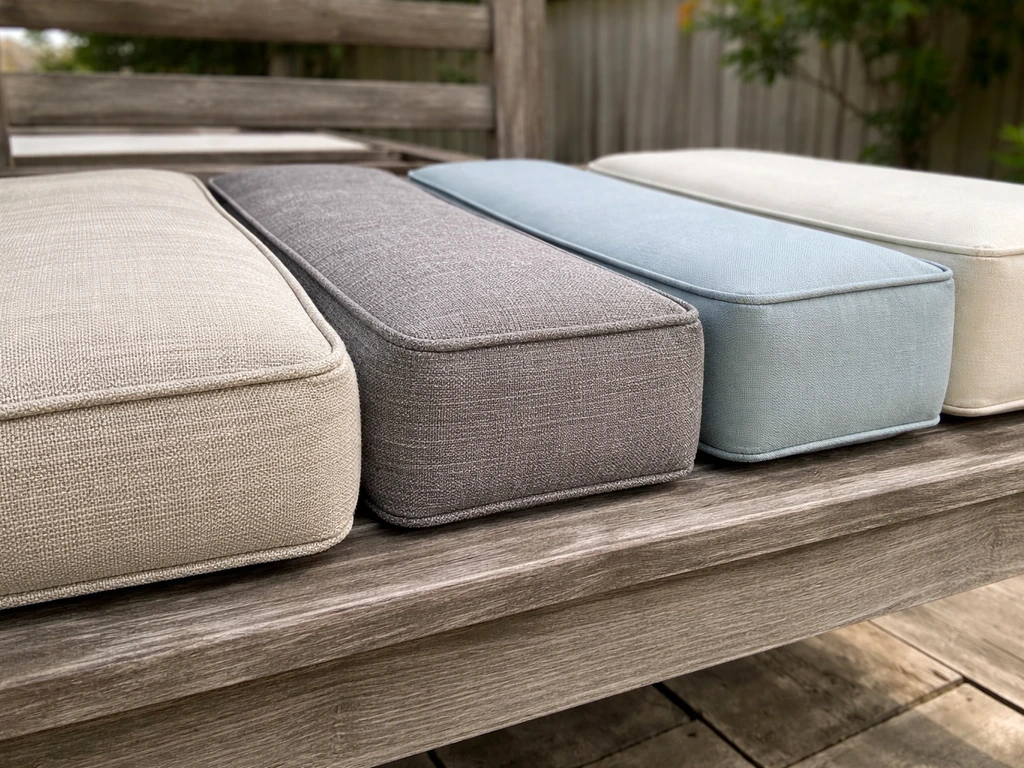
What Are the Best Outdoor Patio Cushions? A Buying Guide
Choose the best outdoor patio cushions with fit tips, weatherproof fabrics, foam comfort, and care for long-lasting comf
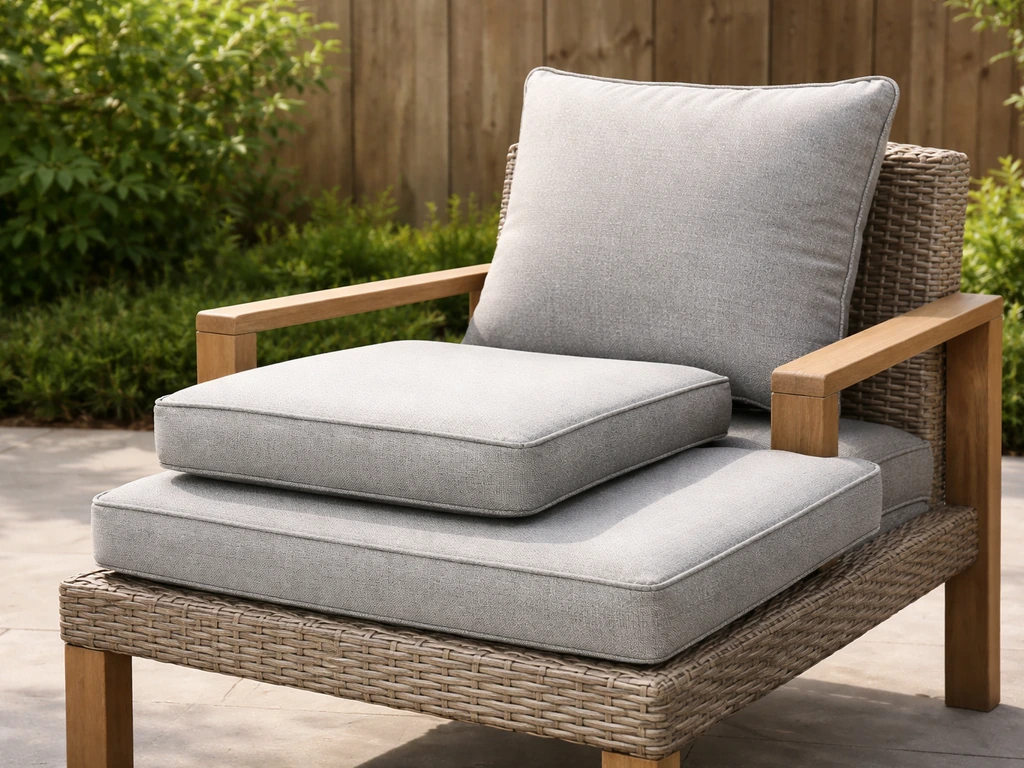
Best Outdoor Patio Cushions: Fit, Comfort, Weatherproof Tips
Choose weatherproof patio chair and seat cushion styles, fit, thickness, foam, covers, and care for lasting comfort.
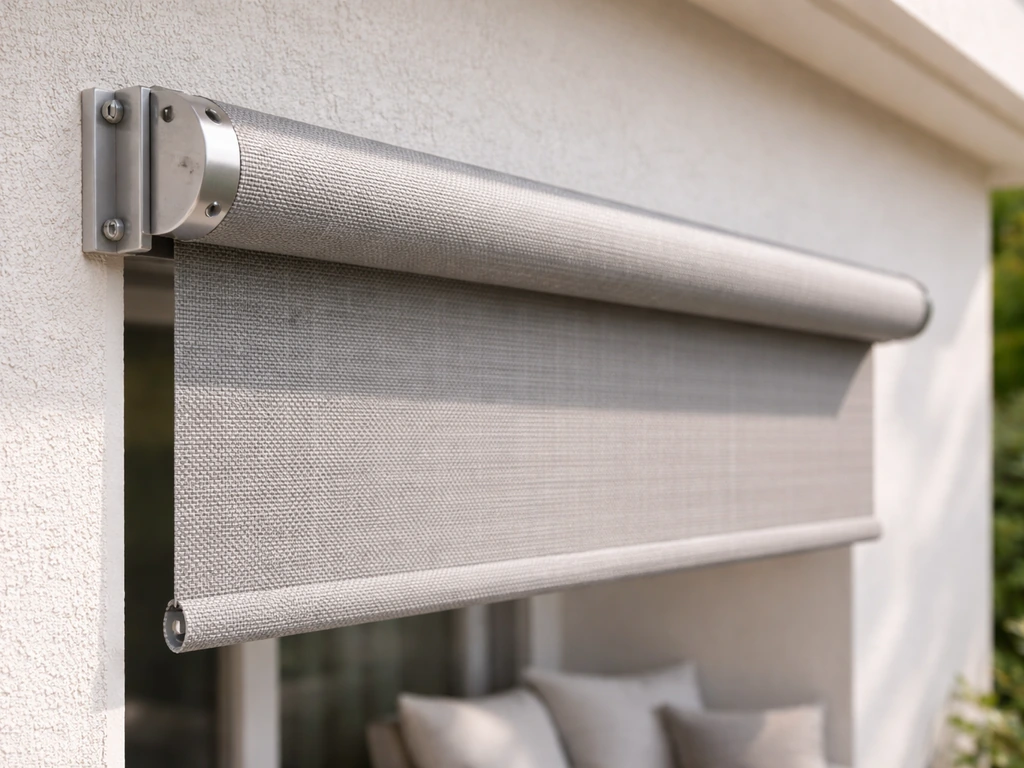
Best Patio Roller Shades Buying Guide: Fit, Mount, Durability
Choose the best patio roller shades with right fit, mounting, UV and water resistance, and manual or motorized options.