
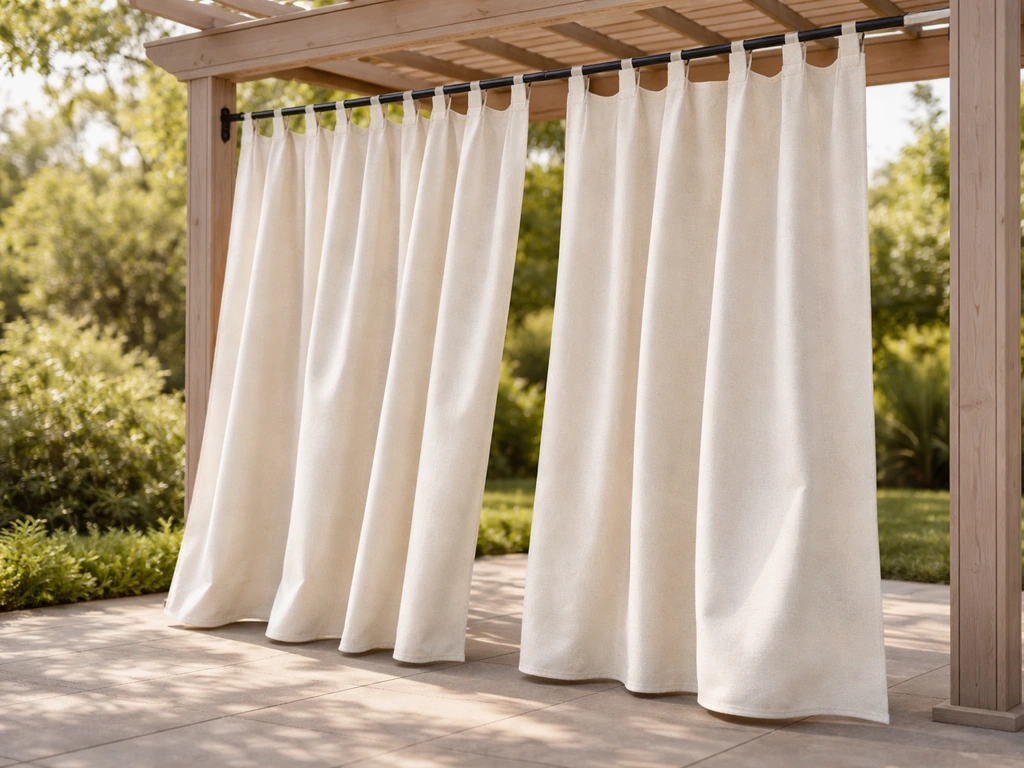
Tab top outdoor patio curtains are fabric panels with sewn loops along the top edge that slide directly onto a curtain rod. They hang cleanly, hold their position better than ring setups in a breeze, and give your patio a relaxed, tailored look. If you want privacy, shade, or a visual boundary around your outdoor space without complicated hardware, they're one of the most practical options available. They are a practical option for patio areas that need privacy, shade, and a finished look without complicated hardware best outdoor patio drapes. The key is matching the right fabric and sizing to your actual outdoor conditions before you buy.
Tab Top Outdoor Patio Curtains: Buying, Sizing, Setup

Lark Perry
6 Jul 2026
What tab top outdoor patio curtains actually are (and when they make sense)
The tab-top header is simple: fabric loops are sewn evenly along the top edge of the panel, and your curtain rod passes through each loop. The rod and tabs are both visible, which creates that casual, laid-back look that works well on pergolas, covered patios, and screened porches. Because the tabs grip the rod directly, the panels don't drift or bunch as freely as rod-pocket styles can.
Tab tops make the most sense when you want curtains that are easy to slide open and closed by hand, where the hardware becomes part of the aesthetic, and where you don't need blackout-level light control. They work especially well on freestanding pergola posts, horizontal beams, and tension rods across open patio openings. Where they're less ideal: very heavy wind exposures where you want the panels locked down completely, or situations where you need the curtain to close tightly to a wall with no gap (rod-pocket styles hug the rod more closely for a tighter seal).
Compared to grommet-top panels, tab tops have a softer, more cottage-style look. Grommets create more uniform, rigid pleating and often handle heavier fabrics a bit better. If you want the look and function of outdoor patio curtains with grommets top and bottom, compare grommet-style panels that have reinforced holes on both the top and bottom hems grommet-top panels. Rod-pocket panels slide less smoothly and are harder to open and close regularly. Rope-tie styles are purely decorative. If you're weighing grommet top patio panels against tab tops, it mostly comes down to aesthetics and how often you plan to push the curtains open and closed.
Picking a fabric that can actually handle the outdoors
This is where a lot of people go wrong. They buy something that looks great in the photos and then watch it fade, mildew, or fall apart after one summer. Outdoor fabrics have to deal with UV rays, moisture, humidity, and wind all at once, and not all materials are built for that.
Solution-dyed acrylic: the gold standard
The best outdoor curtain fabric is solution-dyed acrylic. Brands like Sunbrella and Outdura build it this way: the color is incorporated into the fiber during extrusion, not printed or applied to the surface afterward. That means UV light can't strip the dye out because it's literally part of the fiber. After years of sun exposure, solution-dyed acrylic holds its color in a way that surface-printed polyester simply doesn't. It's also water-repellent, quick-drying, and resistant to mold and mildew.
Outdura explicitly rates their residential fabrics as fade, water, and stain resistant, and bleachable, which matters because mildew removal usually requires a bleach-based cleaning solution. If your fabric can't tolerate bleach, you're limited in how thoroughly you can clean it after a damp season.
Performance polyester: the budget-friendly middle ground
Most of the tab top outdoor patio curtains you'll find at mass retailers are made from solution-dyed or UV-treated polyester. They're more affordable than acrylic and perform reasonably well for two to three seasons, especially in moderate climates. Look specifically for labels like "solution-dyed," "UV-resistant," or "fade-resistant" rather than just "outdoor fabric," which can mean almost anything. Polyester is also lighter, which makes it better for airflow but can mean more flutter in wind.
What to avoid
Avoid untreated cotton, linen blends labeled for outdoor use without specific UV or water-resistance ratings, and any fabric described only as "water-resistant" without quick-dry properties. Water-resistant coatings wear off, and fabrics that stay damp are a guaranteed mildew factory. If the product listing doesn't mention mildew resistance or UV rating, treat that as a red flag.
| Fabric Type | UV/Fade Resistance | Mildew Resistance | Washability | Typical Lifespan | Cost Range |
|---|---|---|---|---|---|
| Solution-dyed acrylic (Sunbrella, Outdura) | Excellent (color in fiber) | Excellent (bleachable) | Spot clean + bleach solution | 5-10+ years | $$-$$$ |
| Solution-dyed polyester | Good | Good | Often machine washable | 2-4 years | $-$$ |
| UV-treated polyester | Moderate (coating fades) | Moderate | Often machine washable | 1-3 years | $ |
| Untreated cotton/linen blend | Poor | Poor | Machine washable (but not for outdoor use) | Less than 1 season | $ |
How to measure correctly for tab top panels
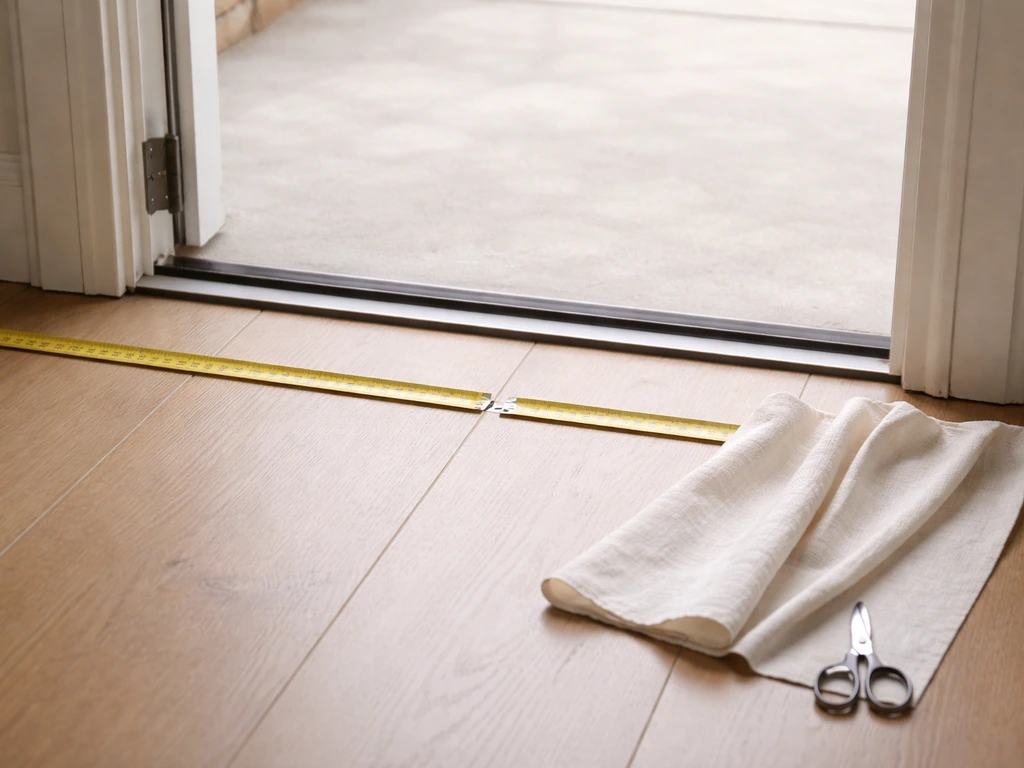
Getting the sizing right is the step most people rush and then regret. There are two measurements that matter: width (for coverage and fullness) and drop length (for look and function).
Width and fullness
For a full, gathered look, you want your total curtain width to be about 2 times the width of your opening. So if your pergola opening is 10 feet wide, you want 20 feet of total panel width across your rod. Most people hang two panels per opening, so each panel would be 10 feet wide in that example. Some retailers recommend a fullness ratio between 1.5x and 2x, and a few go as high as 3x for an ultra-full, luxurious look. At 1.5x the opening width, the curtains will hang with minimal gathering. At 2x, you get a genuinely full, draped look that also provides better privacy coverage when closed.
Drop length: where to measure from
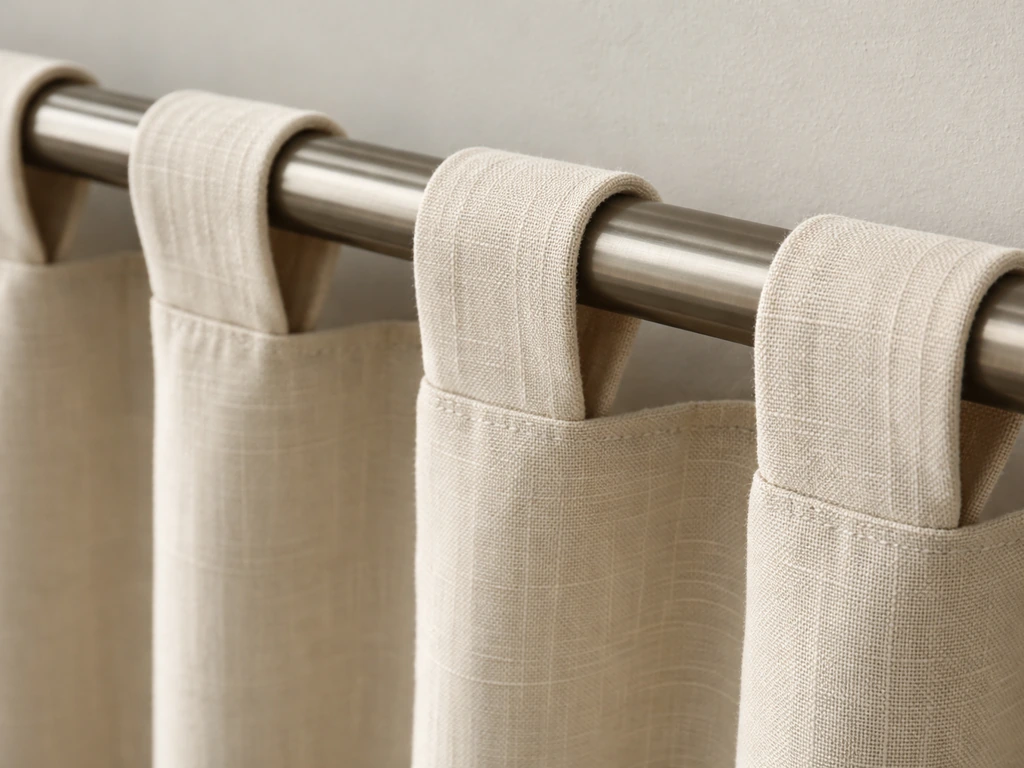
Here's the detail that trips people up with tab tops specifically. Retailers measure the panel length from the top of the tab (or sleeve) to the bottom hem, not from where the rod sits. When you hang the panel, the rod sits above the top of the tab, which adds a few inches. So if you want your curtain to end 1 inch above the ground, you need to account for the tab height plus the distance from the rod to your finished floor or deck surface.
The standard measuring approach from most outdoor curtain retailers: measure from the top of your rod down to where you want the panel to end, then subtract the tab height (usually 2-4 inches depending on the product). That gives you the panel length you need to order. When in doubt, check the product listing for how the length is measured, because some brands measure from the top of the tab and others from the top of the rod.
- Measure the width of your opening (post to post, beam to beam, or rail to rail).
- Multiply by 1.5x for minimal fullness or 2x for a full, gathered look.
- Divide by the number of panels you plan to hang to get the per-panel width.
- Mount your rod at the desired height (usually 6-8 inches above the opening or as high as your structure allows).
- Measure from the top of the rod down to your desired hem height (1 inch above ground, at ground, or pooling slightly).
- Subtract the tab height listed in the product specs to get the panel drop length you need.
Rod diameter and hardware
Tab tops are forgiving when it comes to rod diameter since the loop just needs to be large enough to slide over the rod. Most standard outdoor curtain rods run between 3/4 inch and 1.5 inches in diameter. Just check that the tab opening (listed in the specs) is wider than your rod diameter so the panels slide smoothly. For outdoor use, a tension rod is fine for lightweight panels in sheltered spots, but a proper wall-mounted or post-mounted rod with end brackets is better for anything exposed to regular wind.
Choosing your functional goal: privacy, shade, airflow, or all three
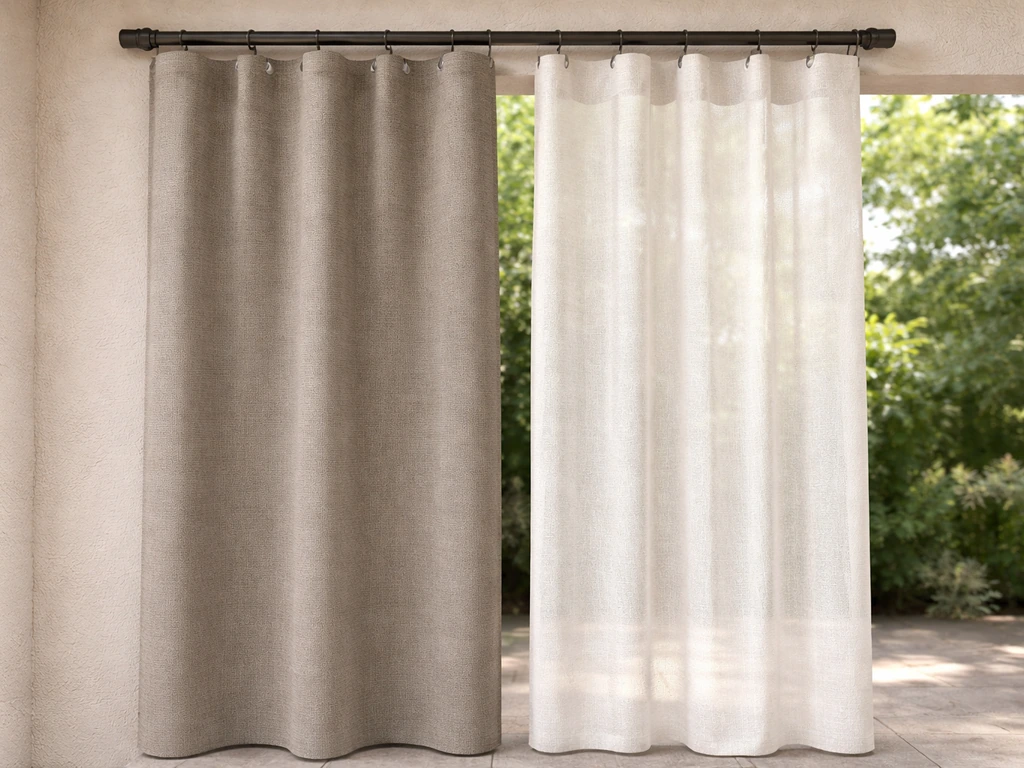
Tab top outdoor patio curtains can serve different purposes depending on the fabric opacity you choose, and it's worth being clear with yourself about what you actually need before buying.
Privacy
For genuine privacy from neighbors or a street view, you need an opaque or near-opaque fabric. Light-filtering sheers give you softened light but offer very little privacy during the day and almost none at night when your lights are on (the silhouette effect is very real). If privacy is the primary goal, look for fabrics rated as opaque or "privacy" grade, and close both panels to overlap slightly in the center to eliminate the gap.
Shade and glare reduction
Light-filtering fabrics in medium to heavy weights will block harsh glare and reduce heat without making your patio feel like a dark room. These light-filtering and blackout opacity categories are commonly grouped for predictable light control, with light-filtering softening sun while blackout blocks visible light Light-filtering fabrics in medium to heavy weights will block harsh glare and reduce heat. This is probably the most popular use case for patio curtains. Solution-dyed acrylic in a medium weight is the sweet spot: good shade, some airflow, holds up to sun exposure, and looks great doing it.
Airflow
If you're in a hot climate and want to keep the breeze moving through, go with a lighter-weight polyester or an open-weave fabric. If you are shopping for a tab top option like the JCPenney Home Quinn Basketweave Grommet Top Patio Panel, double-check the fabric weight and how open the weave is so it matches the airflow and privacy you want lighter-weight polyester. The tradeoff is that looser weaves provide less privacy and less shade. Weather-resistant polyester privacy curtains, even the heavier ones, still allow some air movement when panels are partially open, which is usually the best compromise for outdoor living spaces.
Installing tab top curtains outside: what's different from indoors
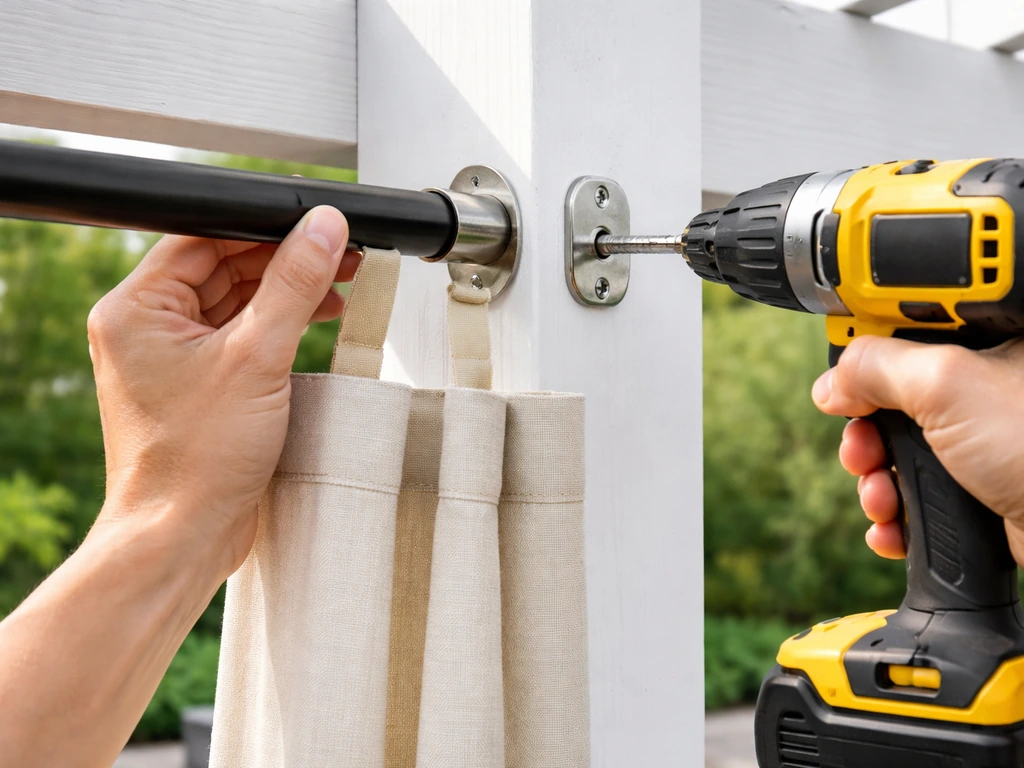
Installation is straightforward, but there are a few outdoor-specific things worth knowing before you start.
- Mount the rod hardware to your structure first. For pergola posts, use stainless steel or powder-coated brackets rated for outdoor use. Rust is the enemy of anything metal outside.
- Thread your rod through each tab before attaching one end bracket, then secure both ends. Don't try to wrestle the rod through all the tabs after both brackets are mounted.
- Space tabs evenly as you go to prevent bunching on one side.
- After hanging, give the panels a gentle shake and space the tabs evenly across the rod. For a crisper look, a light steam from a garment steamer after hanging helps smooth out packaging creases.
- For wind management, add tiebacks or panel weights at the bottom hem. Tiebacks let you keep the panels open during calm evenings without them flapping. In high wind forecasts, take the panels down or tie them tightly to a post rather than letting them flap freely.
Handling wind
Tab tops hold position on the rod better than ring or glider setups because the loop can't slide off the end, but they're not immune to wind issues. For regular breezy conditions, clip-on curtain weights or a weighted hem (some outdoor panels have these built in) keeps the bottom of the panel from billowing. For genuinely windy patios, route a bottom tension rod or bungee cord through the hem if your panels have a bottom rod pocket, or anchor the lower corners to grommets or hooks on your structure. If your panels are finished with grommets, you can also route hardware through the holes for a secure, wind-ready setup.
Cleaning and maintenance that actually works outside
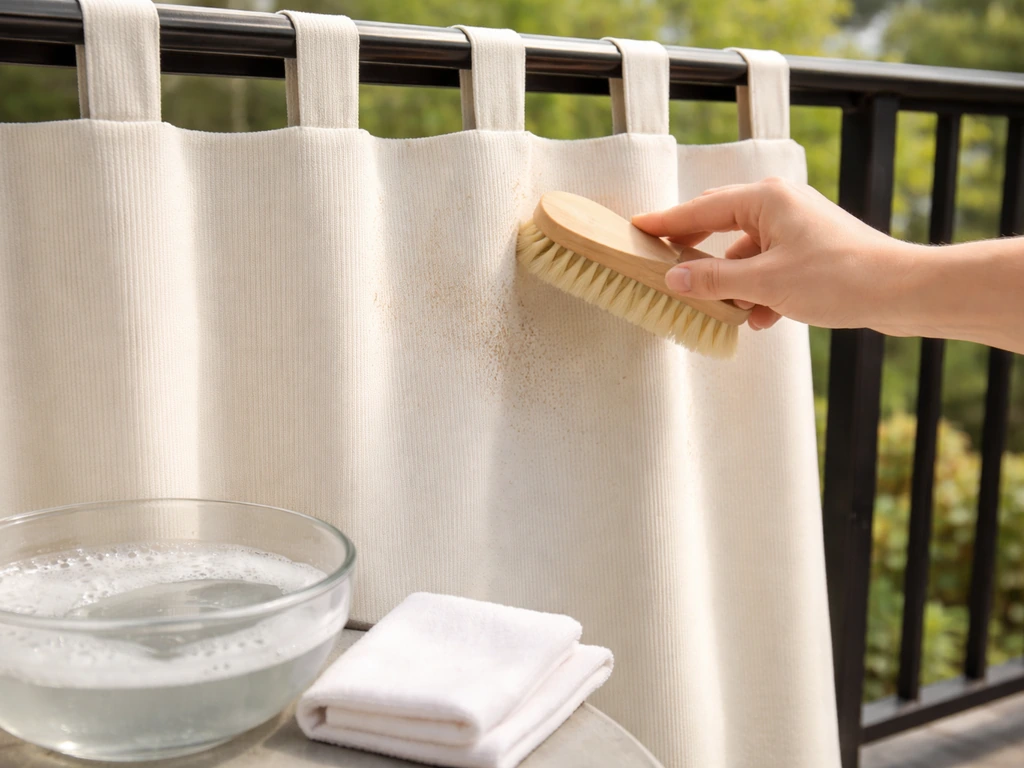
Outdoor curtains need a different approach than indoor ones. The main enemies are mildew (from moisture that doesn't dry fast enough), UV fading, and dirt/pollen accumulation. Regular light maintenance prevents the harder jobs.
Routine care
Every few weeks, brush off dry dirt and debris with a soft brush. When you see staining or feel the fabric starting to look dull, spot clean with a mild soap solution and rinse thoroughly. Always let outdoor curtains air dry completely before pushing them closed against a wall or folding them. Trapped moisture under a bunched-up curtain is how mildew gets started.
Mildew removal
If you're dealing with mildew, the Sunbrella-recommended approach is a diluted bleach-and-soap solution applied to the affected area, allowed to sit briefly, then rinsed thoroughly. The ratio varies by product and severity. For solution-dyed acrylic fabrics specifically, bleach is safe to use because the dye is locked inside the fiber. Products like Sunbrella Renew Mold and Mildew Stain Remover are formulated specifically for this and work well on stubborn staining. Products like Sunbrella Renew™ Mold & Mildew Stain Remover are specifically recommended for removing mold and mildew stains from fabric. For other fabrics, check whether the care label allows bleach before proceeding.
Machine washing
Many outdoor curtain care guides recommend against machine washing, especially for heavier outdoor panels, because the agitation can stress seams, stretch tabs, and damage protective coatings. Check your specific product's care instructions. Some lighter polyester panels can handle a gentle machine cycle in cold water, but most quality outdoor curtains are meant to be spot cleaned and hosed down rather than run through a washer. Never machine dry outdoor curtains.
Off-season storage
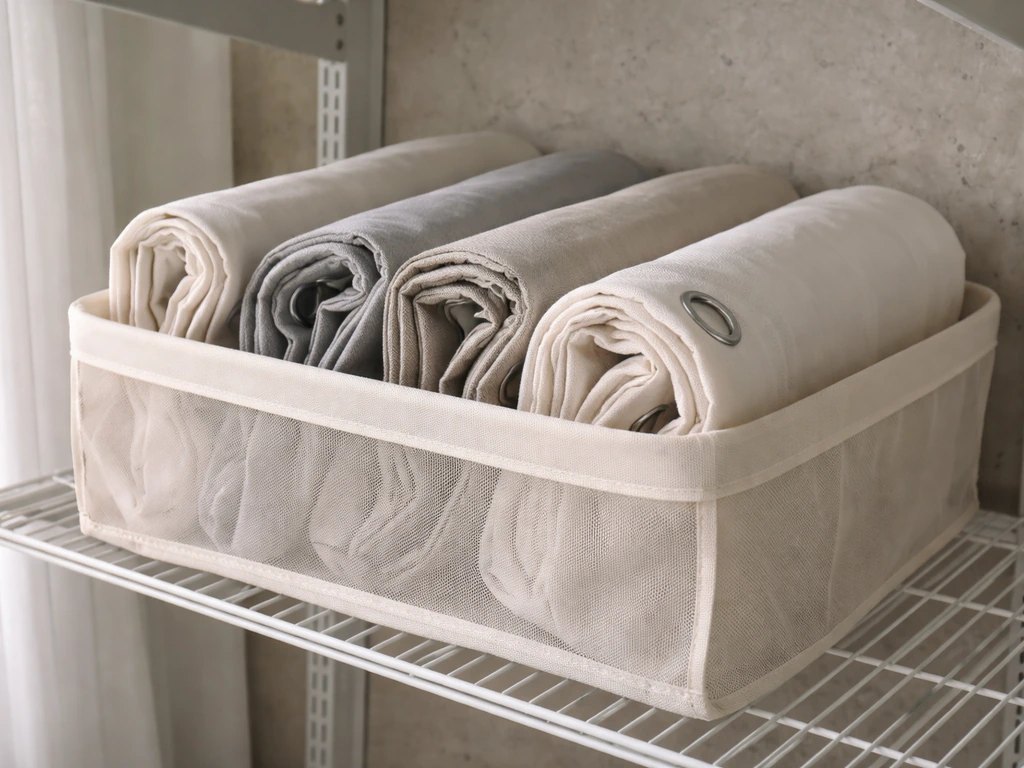
Before storing for winter or a harsh weather period, clean the panels thoroughly, let them dry completely (completely, not just mostly dry), and fold or roll them loosely. Store in a breathable bag or container, not a sealed plastic tote that traps any residual moisture. If tabs or hems start to stretch or sag after a season, that's usually a sign of moisture damage or UV breakdown in the stitching, and it's worth replacing those panels rather than fighting them.
Tab top vs. other hanging styles: which should you choose?
Before committing to tab tops, it's worth a quick honest comparison with the other main hanging styles. Each has a real use case, and the best option depends on your setup.
| Hang Style | Look | Ease of Use | Wind Stability | Light Seal | Best For |
|---|---|---|---|---|---|
| Tab top | Casual, relaxed, visible loops | Easy to slide open/closed | Good (tabs grip rod) | Moderate (gap at top) | Pergolas, open patios, frequent use |
| Grommet top | Structured, modern, uniform folds | Very easy to slide | Good (metal rings on rod) | Moderate | Contemporary spaces, heavier fabrics |
| Rod pocket | Soft, gathered, hidden rod | Harder to slide (rod through fabric) | Moderate (fabric hugs rod) | Better (fabric around rod) | Rarely opened/closed, indoor-outdoor porches |
| Rope/tie top | Decorative, bohemian | Tedious to adjust | Poor (ties loosen) | Poor | Decorative use only, calm sheltered areas |
| Grommets top and bottom | Very secure, flat hang | Limited movement | Excellent | Good | High-wind areas, privacy screens |
If you're leaning toward a more structured look or planning to hang heavier fabric, grommet top patio panels are worth comparing directly. For a setup where the curtains stay mostly closed and you want maximum light seal, rod pocket edges out tab tops. But for the average patio where you open and close curtains regularly depending on sun angle and company, tab tops are the most practical choice.
Your buying checklist: specs that actually matter
When you're comparing specific products, run through this list before clicking buy. Missing even one of these can mean a curtain that underperforms or fails early.
- Fabric type: look for solution-dyed acrylic or solution-dyed polyester, not just "outdoor" or "weather-resistant"
- UV rating or fade resistance: should be explicitly stated, not implied
- Mildew resistance: check whether the fabric is bleachable if you're in a humid climate
- Water repellency or quick-dry: not the same as waterproof, but important for how fast the fabric dries after rain
- Panel length measurement method: confirm whether the listed length is measured from the top of the tab or top of the rod
- Tab height: know this number before calculating the rod-mount-to-hem measurement
- Tab opening size: confirm it's wider than your rod diameter so panels slide smoothly
- Panel width vs. fullness: make sure total panel width equals 1.5x-2x your opening width
- Hem construction: look for weighted hems or bottom rod pockets if your patio gets regular wind
- Care instructions: confirm whether spot-clean only or machine washable, and whether bleach is safe to use
Most of the frustration people have with outdoor curtains comes down to buying something that wasn't actually rated for their conditions, or getting the sizing wrong. If you measure your opening correctly, choose a genuinely outdoor-rated fabric, and account for the tab height in your length calculation, you'll be in good shape. The tab-top style itself is reliable and easy to live with. If you're shopping specifically for the best outdoor curtains for patio privacy and shade, focus on fade-resistant, water-repellent fabrics and the right tab-top size. The fabric and fit are what make or break the installation.
FAQ
Will tab top outdoor patio curtains fit on a standard curtain rod, or do I need a special rod size?
You do not need a special rod, but you should confirm the tab opening width is larger than your rod diameter (many rods fall around 3/4 to 1.5 inches). If the opening is only barely wider, the tabs can slide stiffly, and you will feel that stiffness every time you open and close the panels.
How many panels should I buy for a typical outdoor opening with tab top curtains?
Most people use two panels per opening, mainly because it makes the overlap and fullness easier to manage. If you plan to close both sides for privacy, choose a panel width that still leaves enough coverage to overlap slightly in the center, instead of buying panels that only cover when open.
What does “drop length” mean for tab top curtains, and why do my curtains end too low or too high?
For many brands, the listed length is measured from the top of the tab (or sleeve) to the hem, not from the top of the rod. If you measure from the rod down without subtracting tab height (often 2 to 4 inches), you will typically get panels that hang lower than intended. Always check how the brand defines length in the product specs.
Can I install tab top outdoor patio curtains on a tension rod instead of mounting a permanent rod?
Yes for lightweight panels in sheltered areas, but tension rods are less secure in sustained wind. If your patio gets breezy, a wall or post-mounted rod with end brackets (or a more secure lower anchoring plan) will keep the curtain opening from shifting and reduce constant slipping.
How do I stop tab top curtains from billowing in wind?
Start with a weighted hem (if your panel includes it) or add clip-on curtain weights designed for outdoor use. For heavier wind, consider a bottom tension rod or a bungee routed through the hem area, and if your panels have grommets, anchor lower corners to hooks or tie points to prevent rhythmic flapping.
Are tab top curtains good for full privacy, or will there be gaps?
They can provide strong privacy if the fabric is opaque and the closed panels overlap slightly at the center. If you notice light leakage at the overlap or side edges, it is usually a spacing or width issue, not a tab style issue. Adding a small overlap by increasing total panel width is often the simplest fix.
Do tab top outdoor patio curtains block heat, or just reduce glare?
They reduce glare and can lower perceived heat, especially with medium to heavy opacity fabrics, but they do not create total insulation like indoor window coverings. For more cooling, use a fabric weight and weave that blocks harsh light while still allowing airflow when panels are partially open.
What fabric should I choose if I live in a humid area where mildew is common?
Prioritize solution-dyed acrylic or other outdoor fabrics that explicitly state mildew or mold resistance and quick-dry performance. Avoid fabrics that stay damp after rain or washing, because trapped moisture is the main trigger for mildew, even when the fabric is labeled “outdoor.”
Can I machine wash tab top outdoor patio curtains?
Often no. Many outdoor panels are designed for spot cleaning and hosing because machine agitation can stress seams, stretch tabs, and degrade protective coatings. Only machine wash if the care label explicitly allows it, and never machine dry.
What should I do before storing tab top outdoor patio curtains for winter?
Clean and air-dry completely, then store them loosely (fold or roll) in a breathable container or bag. Do not use a sealed plastic tote if any moisture remains, because that trapped humidity speeds up mildew and can also warp hem areas over time.
If my curtains start to fade unevenly, what’s the likely cause?
Uneven fading usually comes from differential sun exposure, especially if one panel sits flatter or gets more direct UV than the other. It can also indicate a fabric that was surface-printed or not truly UV-resistant. The remedy is choosing fade-resistant solution-dyed acrylic or UV-rated outdoor polyester for consistent performance across seasons.
How do I tell whether bleach is safe for my outdoor curtain fabric?
Only use bleach when the manufacturer or product care guidance explicitly allows it for that fabric type. For solution-dyed acrylic, bleach is typically safe because the dye is embedded in the fiber, but other fabrics may not tolerate it. If the care label does not mention bleach, treat bleach as off-limits.
Next Articles
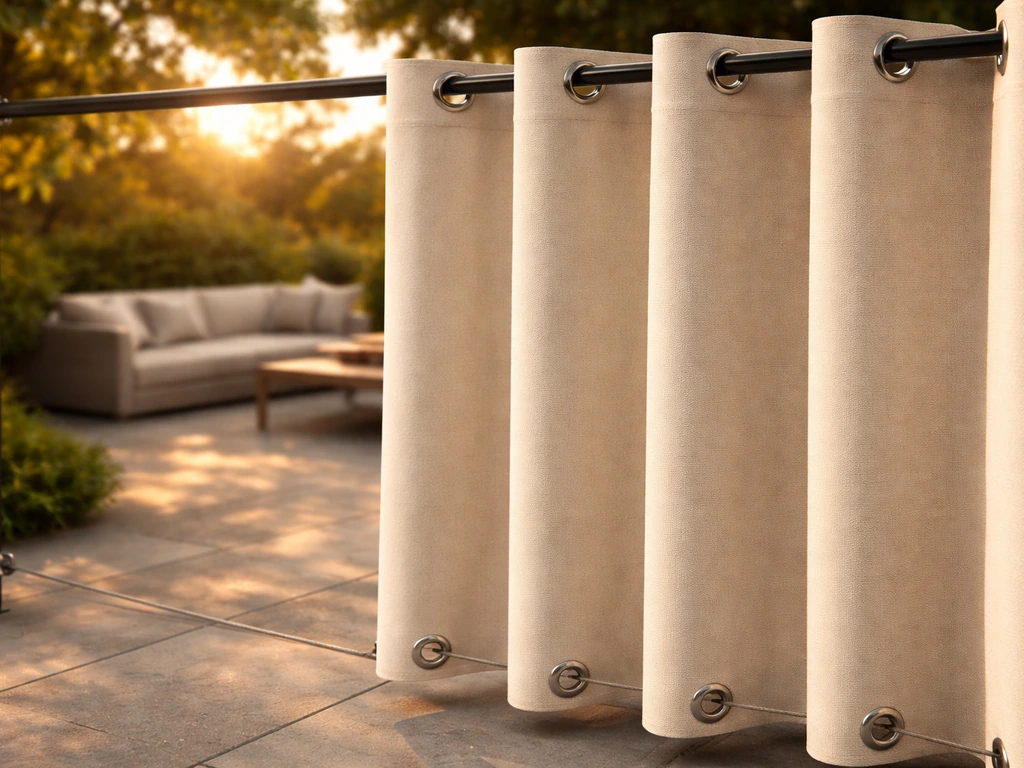
Outdoor Patio Curtains with Grommets Top and Bottom: Guide
Buying guide for outdoor patio curtains with grommets top and bottom, including sizing, installation, weatherproofing, a
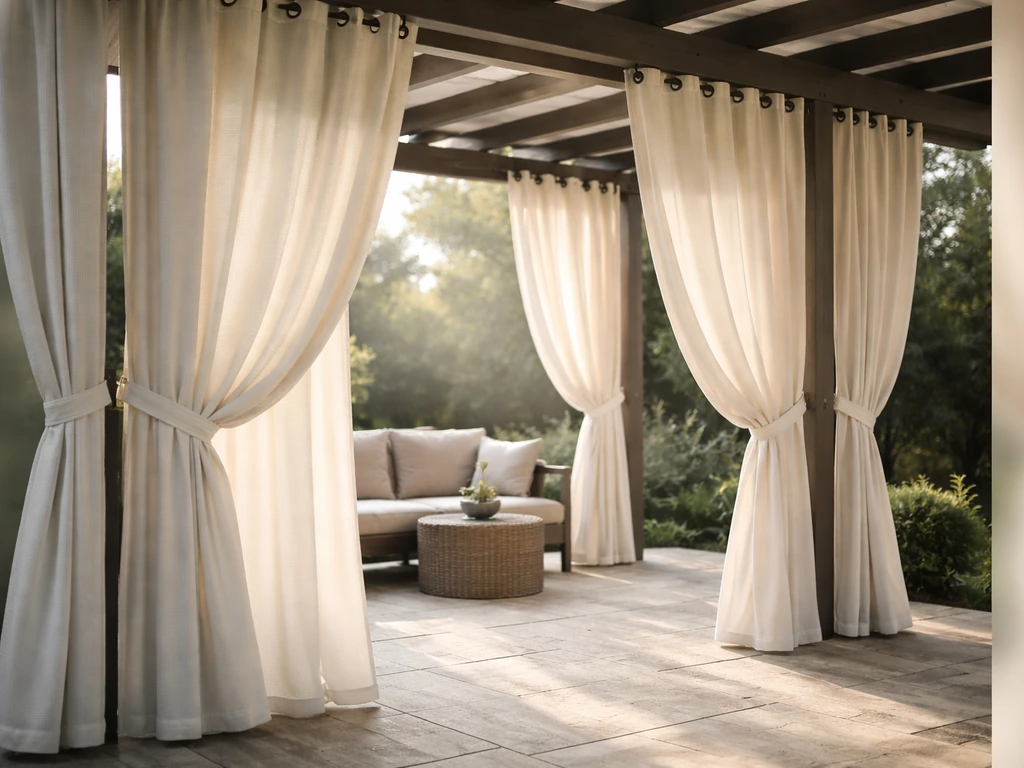
Best Outdoor Patio Drapes Buying Guide for Any Setup
Choose the best outdoor patio drapes with weatherproof fabrics, privacy and wind control, plus size and hanging tips.
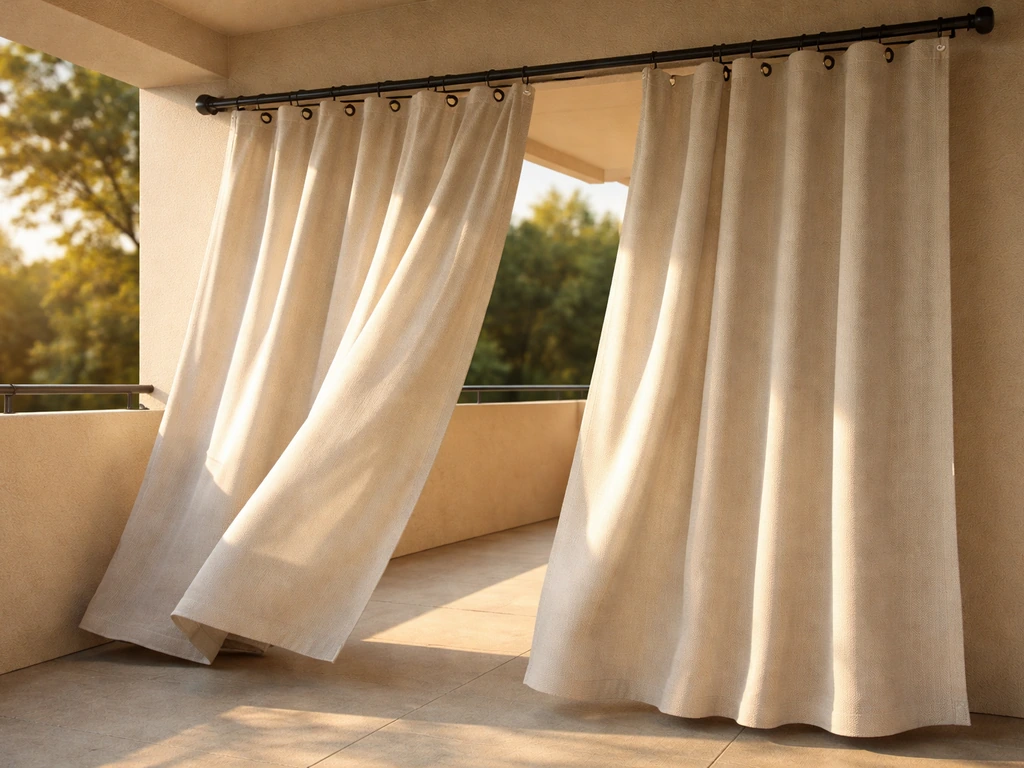
Best Outdoor Curtains for Patio: Buyer Guide 2026
Choose the best outdoor patio curtains for sun, wind, privacy, and mildew resistance with sizing and install tips for 20