
Alumawood is a brand of aluminum patio cover that's engineered to look like real wood but is made entirely from structural-grade aluminum alloy with an embossed wood-grain texture and a factory-applied finish. It gives you the warm, natural aesthetic of a wood patio cover without the rot, cracking, or painting headaches that come with actual timber. The brand is owned by Amerimax Exterior Home Products, and every component carries an "AMERIMAX ALUMAWOOD" ink stamp so you can verify what you're actually getting. If you want to sanity-check what to expect from real installs, look at Alumawood patio cover reviews from homeowners in your region before you commit.
What Is an Alumawood Patio Cover and Is It Worth It?

Lark Perry
6 Jun 2026
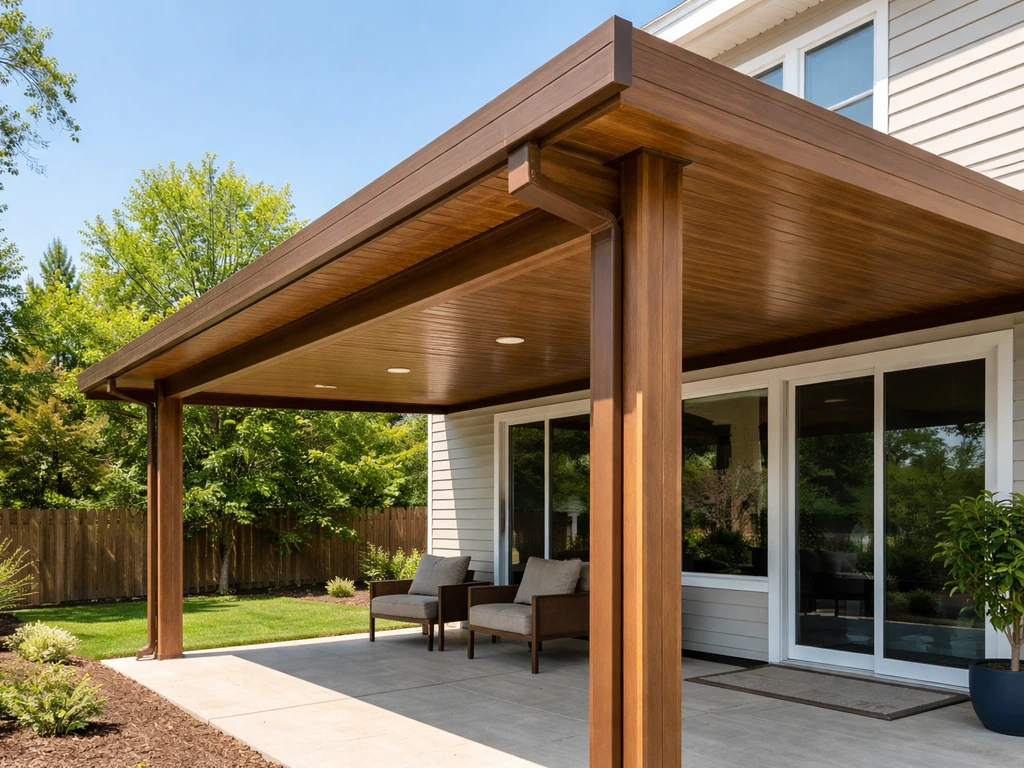
What Alumawood is actually made of
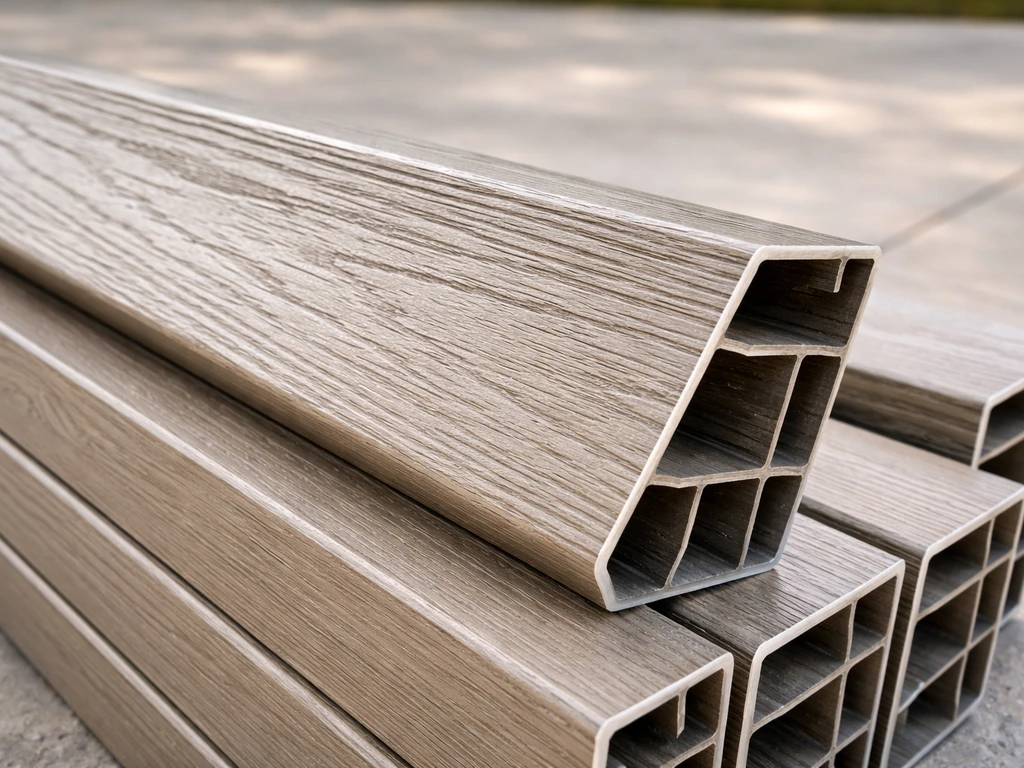
Every Alumawood component starts as structural-grade aluminum alloy, not decorative sheet metal. The extrusions are then embossed with a wood-grain pattern and coated with a factory finish that Amerimax warrants not to chip, peel, flake, or blister under normal wear conditions for the life of the original retail purchaser. That's a meaningful warranty because it means the "wood" appearance is baked into the material rather than painted on as an afterthought.
The finish coating also provides UV resistance, which matters a lot if your patio faces west or south. Because there are no wood fibers involved, the material won't absorb moisture, swell, or rot. What you're getting is essentially a structural aluminum system that imitates wood closely enough that most guests won't notice the difference from a normal viewing distance.
How Alumawood patio covers are built and where they're used
A typical Alumawood patio cover attaches to your house via a ledger board that's fastened directly to the exterior wall. Lightweight aluminum extrusions called rafters run from that ledger board out to a header beam at precise intervals, forming the structural skeleton of the cover. From there, panels or lattice sections drop into the framework to complete the roof. Freestanding versions use posts at both ends instead of relying on the house wall, which makes them a good option for detached patios or pergola-style placements away from the structure.
Alumawood covers are most commonly used over concrete or paver patios, but they also work over decks, carports, and poolside areas. Because the system is engineered (more on that in the cost section), it can be designed to handle substantial wind loads, with engineering tables covering wind speeds up to at least 150 mph depending on the structure type and exposure category. That level of documentation is something most basic shade structures can't match.
Fastener sealing is a critical part of any Alumawood build. Any fastener that penetrates the header beam needs a sealing washer, and caulk goes along the house attachment line and inside gutter splices. These aren't optional finishing touches, they're what keeps water out of your wall and prevents the slow damage that makes cheap installations fail within a few years.
Solid cover, lattice cover, or something in between
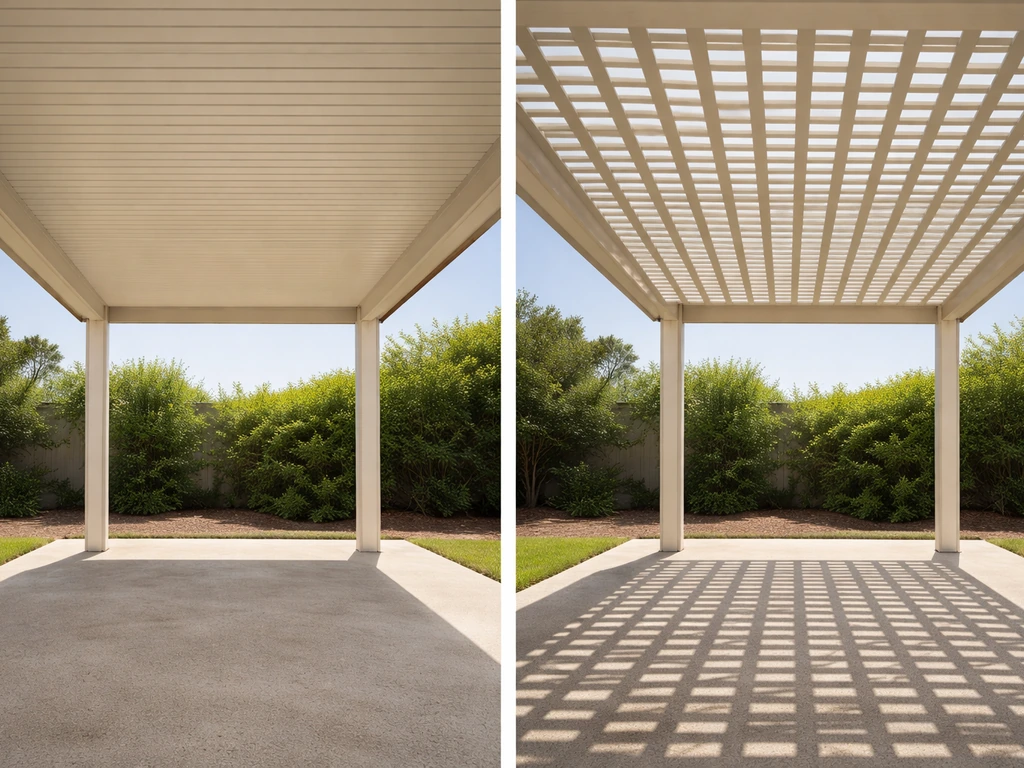
Alumawood comes in two primary roof configurations: solid and lattice. Choosing between them is basically choosing between full weather protection and partial shade with airflow.
Solid patio covers
A solid Alumawood cover uses closed panels across the entire roof span, giving you complete protection from sun, rain, and snow. Think of it as a permanent room extension that stays open to the outdoors on the sides. For most homeowners who want a true outdoor living area they can use in light rain or harsh afternoon sun, solid is the right choice. The trade-off is that a solid cover blocks all natural light from above, which can make the space feel darker, especially if your patio is adjacent to a room with windows that face the covered area.
Lattice patio covers
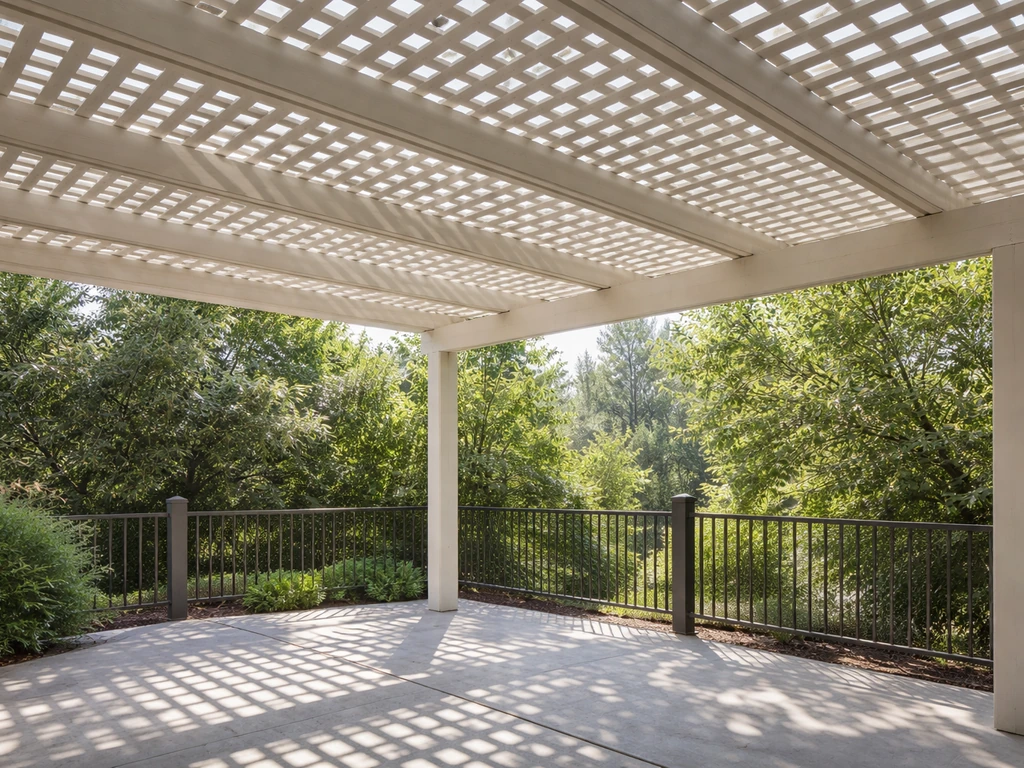
Lattice Alumawood covers use an open grid pattern that filters rather than blocks sunlight. They screen out roughly 40 to 60 percent of UV rays and heat while still letting fresh air flow through freely. They won't protect you from rain, but they create a bright, open feel that many homeowners prefer aesthetically, and they tend to cost slightly less than solid equivalents because there's less panel material involved. If you like the look of a traditional pergola but want aluminum durability, lattice is your closest match.
Durability and maintenance: what to actually expect
Alumawood's biggest practical advantage is how little it demands from you after installation. There's no annual painting, no sealing, no checking for rot or termite damage. A basic rinse with a garden hose handles most cleaning needs, and the factory finish holds up without intervention under normal conditions. If you're also comparing vinyl fence options, deck materials, and patio cover styles, this buyer guide can help you find the best approach for your outdoor space vinyl fence deck & patio covers.
The system is engineered to a minimum uniform live load of 10 psf (pounds per square foot), which covers typical snow and equipment loads in most residential climates. In high-wind areas, the engineering packet for a specific project will determine required metal thickness, footing size, and span limits, so the structure is sized appropriately for local conditions rather than just guessed at.
One honest limitation: if a panel or component gets significantly dented or damaged (from a fallen tree branch, for example), repairs typically go through the dealer or installer rather than being a simple DIY fix. Replacement parts aren't the kind of thing you grab at a hardware store. That's worth factoring in if you're in an area with lots of trees or frequent storm debris.
How Alumawood stacks up against wood, vinyl, metal, and pergolas
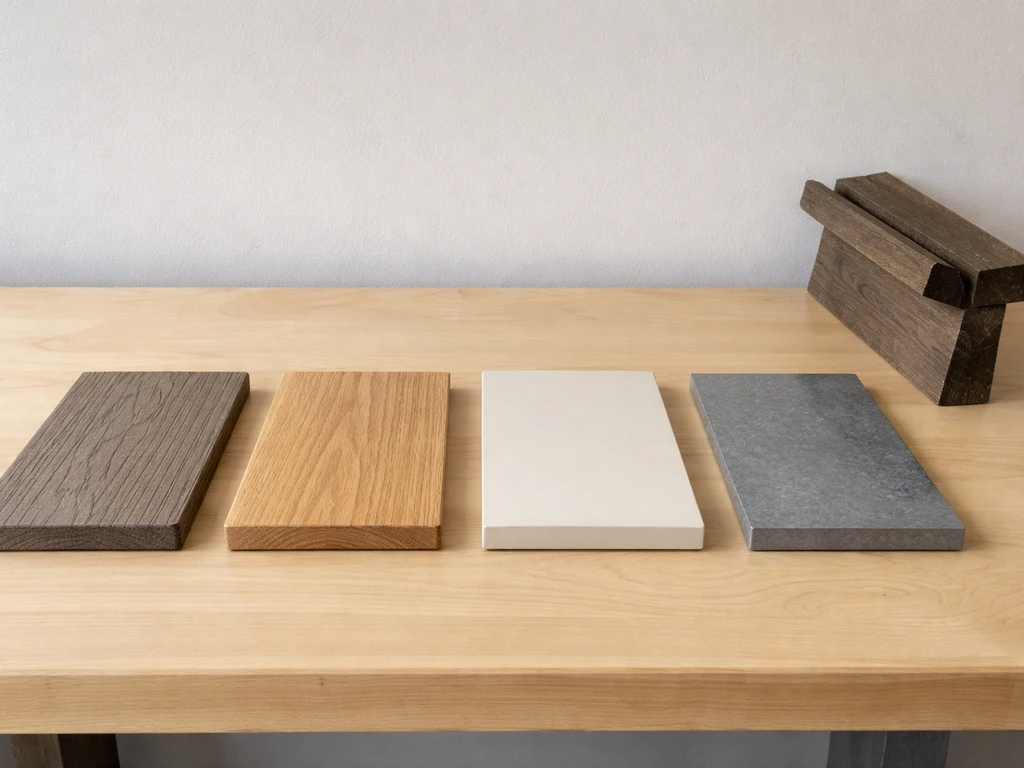
This is where most homeowners spend the most mental energy, so here's a straightforward comparison across the options you're most likely to consider.
| Material | Typical Cost Range | Maintenance Level | Weather Protection | Lifespan | Best For |
|---|---|---|---|---|---|
| Alumawood (aluminum) | $15–$40/sq ft installed | Very low | Full (solid) or partial (lattice) | 30+ years | Low-maintenance, wood-look appeal |
| Real wood | $20–$50/sq ft installed | High (paint, seal, treat) | Full if solid | 15–25 years with upkeep | Custom aesthetics, premium finish |
| Vinyl | $10–$25/sq ft installed | Very low | Full or partial | 20–30 years | Budget-friendly, clean look |
| Standard aluminum/metal | $10–$30/sq ft installed | Very low | Full or partial | 30+ years | Purely functional, no wood look |
| Wood pergola | $8–$30/sq ft installed | Moderate to high | Partial only | 10–20 years | Open shade, natural look |
Real wood looks beautiful and offers custom flexibility that aluminum can't match, but the maintenance cost over 10 to 20 years (repainting, sealing, potential rot repair) often equals or exceeds the higher upfront investment of Alumawood. If you’re weighing Alumawood patio covers pros and cons, the maintenance savings and warranty benefits can be a big upside, but you’ll want to consider the upfront cost and potential replacement-part limitations. Vinyl covers are cheaper upfront and also low-maintenance, but they can look plasticky and may not hold up as well in high UV environments or under heavy snow loads. Standard aluminum covers without the wood-grain finish are functionally similar to Alumawood but lack the aesthetic that makes Alumawood worth the premium for most residential applications.
Pergolas, whether wood or aluminum, are a different category: they're primarily decorative shade structures rather than weather covers. If you want to sit outside during a light rain or need real UV protection, a lattice or solid Alumawood cover is a more practical solution than a pergola. If you're mainly after aesthetics and open-sky ambiance, a pergola might suit you better. The vinyl patio cover and Alumawood comparison is worth digging into further if you're deciding between those two specifically, and the differences between Alumawood and competing aluminum brands like Duralum or Duracool also involve some real performance nuances worth examining.
What drives the cost of an Alumawood cover
Alumawood covers are sold as engineered systems, which means the price isn't just about material square footage. Here are the main variables that move the number up or down:
- Size and span: Wider spans require heavier extrusions and more robust beam sizing, which adds material cost directly.
- Roof style: Solid panel covers cost more than lattice because of the additional panel material and the drainage requirements that come with it.
- Insulated vs. non-insulated panels: Insulated solid panels add thermal comfort and are noticeably more expensive but make the space usable in more extreme heat.
- Engineering packet requirements: In high-wind or high-snow-load areas, required metal thickness, footing depth, and post sizing all increase based on the engineering specs for your specific project.
- Attached vs. freestanding: Freestanding structures require posts and footings on both sides, adding material and labor costs.
- Hardware and drainage: Gutters, downspouts, sealing hardware, and flashing tape add up, especially on larger covered areas.
- Installation labor: Professional installation typically runs $5 to $15 per square foot on top of material costs depending on complexity and region.
If you're getting quotes, ask contractors to separate the material cost from installation so you can compare apples to apples. Some companies price the kit and installation together in ways that obscure whether you're getting a good deal on either component.
How to choose a quality Alumawood system and spot red flags
Because Alumawood is a registered brand, the first verification step is straightforward: look for the "AMERIMAX ALUMAWOOD" ink stamp on the components. If a contractor shows you a product claiming to be Alumawood without that stamp, you're looking at an imitation product, not the warranted system.
Beyond brand verification, here's what to check before committing to a kit or contractor:
- Engineering documentation: A legitimate Alumawood project should include an engineering packet that specifies wind speed exposure category, span limits, required metal thickness, footing sizing, and live load capacity. If a contractor can't provide this or brushes it off, that's a red flag.
- Warranty terms: Amerimax's finish warranty is lifetime for the original purchaser. Make sure the product you're buying is covered under that warranty and that the contractor installs it to manufacturer specifications, because improper installation can void warranty eligibility.
- Slope compliance: Any solid cover must slope a minimum of 1/4 inch per foot for drainage. If a contractor proposes a flat solid roof, walk away.
- Sealing details: Ask specifically how they handle fastener penetrations and the ledger-to-wall connection. Sealing washers on header penetrations and weatherproof caulk or flashing tape at the wall attachment are non-negotiable.
- Local permits: Alumawood covers are engineered structures, which means most jurisdictions require a permit. A contractor who suggests skipping the permit to save time is creating a liability for you, not a convenience.
- Finish color and UV stability: Ask about the specific coating system and whether the color you're choosing has documented UV resistance in your climate zone.
DIY vs. hiring a pro: what's actually realistic
Alumawood kits are sold through dealers and some distributors for DIY installation, and the components are genuinely lighter and easier to work with than wood framing. That said, "DIY-able" and "DIY-advisable" aren't the same thing for every project.
When DIY makes sense
If your project is a smaller attached cover (say, 12 by 16 feet or under), your site is reasonably flat, you're comfortable working from a ladder, and your local permit process doesn't require a licensed contractor to pull the permit, a DIY install is genuinely feasible. The installation instructions are detailed, the components are marked, and the rafter system is designed to go up logically once the ledger is set correctly. You'll want at least one helper for holding beams and rafters in position while you fasten.
When to hire a pro
Larger spans, freestanding structures, high-wind-zone projects requiring engineered footings, or any situation where the ledger attachment goes into stucco, brick, or an unconventional wall assembly are all scenarios where professional installation is worth the money. Mistakes in ledger attachment or footing depth don't show up immediately, they show up in year three during a wind event. Also, if your municipality requires a licensed contractor to pull the permit, you don't have a choice anyway.
Before installation: measurements and site prep
Whether you DIY or hire out, do this groundwork before ordering anything. Measure your patio width and depth carefully, accounting for any obstructions like outdoor electrical outlets, hose bibs, or gas lines on the attachment wall. Confirm your house wall's attachment point is structurally sound (ledger should hit solid framing, not just sheathing). Plan your drainage path for downspouts so water exits onto a surface that drains away from the foundation. And check your local building department's requirements for patio cover permits early, because the engineering packet requirements will affect what you order.
If you're still narrowing down whether Alumawood is the right material for your specific situation, comparing it directly against vinyl and other aluminum alternatives is a smart next step. If you are comparing materials, duracool patio vs alumawood is a useful test for how each option handles maintenance, appearance, and long-term durability.
For many homeowners, the next step is comparing the best vinyl patio covers to see how their material and maintenance compare to an aluminum system like Alumawood. For many homeowners comparing patio setups, choosing the best vinyl fence deck and patio covers comes down to durability, weather resistance, and how the system matches your layout best vinyl fence deck & patio covers.
And if you want a curated look at the top-rated Alumawood systems currently available, the field has a handful of standout options worth evaluating before you commit to a product or installer. For more detailed insights, you can read alumawood patio cover reviews that compare installation quality, panel fit, and long-term performance. For help comparing the best alumawood patio covers for your space, look at factors like roof style, wind load documentation, and finish coverage.
FAQ
So, what is an Alumawood patio cover, is it actually wood?
An Alumawood patio cover is an aluminum patio cover system made by the registered brand Amerimax, it is not real wood. The “wood look” comes from embossed aluminum with a factory finish, so there are no timber fibers to rot or crack like natural wood.
Does an Alumawood patio cover keep rain out, or is it just shade?
Yes, but only with a solid roof style. Solid panels provide weather protection from sun, rain, and snow, while lattice is meant for airflow and shade and typically will not keep rain off.
How can I confirm I’m buying genuine Alumawood?
Look for the “AMERIMAX ALUMAWOOD” ink stamp on the components. If the kit pieces are not stamped, you are likely looking at an imitation aluminum product that may not carry the same warranty coverage as the engineered Amerimax system.
What’s the best way to clean and maintain an Alumawood cover after installation?
For routine cleaning, most owners use a garden hose rinse. Avoid harsh solvents or abrasive scrubbing, because the finish is warranted for chip, peel, flake, and blister under normal wear conditions, and you do not want to accelerate finish damage with cleaners.
If Alumawood requires little maintenance, what should I still inspect over time?
Even though the material does not need painting, you should still periodically inspect high-stress areas, especially where the roof meets the house and where gutter splices are sealed. Re-check caulk lines and sealing washers after major storms to catch small leaks before they become wall damage.
Is Alumawood patio cover installation DIY-friendly, or should I hire a contractor?
DIY is more realistic for smaller attached covers when the site is straightforward and permits do not require a licensed contractor, but ledger attachment is the critical structural step. If the ledger must connect to brick, stucco, or an unusual wall assembly, professional installation is usually the safer choice.
What drainage mistakes cause problems with patio covers, especially for attached Alumawood installations?
Water management is key, because downspouts and runoff should discharge onto surfaces that drain away from the foundation. Before ordering, plan where the water will go and confirm the patio slope and grading will not send water back toward the house.
How do I choose between solid and lattice Alumawood for my specific patio use?
If you plan for open-sky lighting and airflow, lattice is the closer match, but you will not get full rain protection. If you want the space to function like an outdoor room during light rain or harsh sun, choose the solid configuration and consider how you will compensate for reduced overhead light.
What wind or storm conditions is Alumawood designed to handle, and what should I verify?
Alumawood systems include engineering that targets specific loads for your project, including wind exposure categories and span limits. If your area has high wind or frequent debris, confirm the engineering packet and required footing details before committing, because the foundation design is part of what keeps the structure performing.
Can I easily replace a damaged panel or component if something hits the cover?
Repairs after significant damage, like a heavily dented panel from a tree branch, usually go through the dealer or installer for replacement parts and fitting. The practical takeaway is to budget for service rather than assuming you can easily swap parts like standard hardware store materials.
How is an Alumawood patio cover different from a pergola?
There is a difference between a shade pergola and a weather cover. If you need UV filtering plus the ability to shelter from weather, Alumawood solid or lattice is the right category, while a pergola is usually primarily decorative and more open.
When I request quotes, what should I ask to compare pricing fairly?
Get quotes that clearly separate the kit or material price from installation labor. Bundled pricing can hide whether you are paying extra for higher material costs or for unnecessary work, so you can only compare accurately when the components are itemized.
Next Articles
Alternative to Patio Cushions: Durable, Stylish Options and DIY
Alternative to patio cushions: durable, weatherproof seating options, pros, DIY tips & buying guide.
Best Color for Outdoor Patio Cushions in 2026
Choose the best cushion color for sun, heat, and fading in 2026, with pairing tips for patio furniture and durability.
Top Rated Patio Cushions: How to Choose Fast and Right
Step-by-step guide to choose top rated patio cushions by fit, materials, weather durability, and easy cleaning for your