
The best vinyl fence, deck, and patio covers give you a low-maintenance, weather-resistant outdoor structure that won't rot, rust, or need repainting, but not every vinyl product performs the same way, and vinyl isn't automatically the right call over aluminum systems like Alumawood, Duracool, or Duralum. After digging through manufacturer specs, installation manuals, contractor cost data, and trade comparisons, my short answer is this: vinyl fencing is a strong pick for privacy enclosures and decorative rail systems, while vinyl patio covers work best in mild-to-moderate climates where long-span thermal movement won't be an issue. For larger covered patios in hot or cold regions, aluminum-based systems usually outperform vinyl on structural stability and long-term color retention.
Best Vinyl Fence, Deck & Patio Covers: Guide & Top Picks
Who this guide is for
This guide is written for homeowners and renters who want a durable, attractive enclosure or overhead cover for a deck or patio and are trying to figure out whether vinyl is the right material, or whether an aluminum wood-look system makes more sense for their situation. I'll walk you through what vinyl products actually are, how they're built, what they realistically cost in 2026 (installed and DIY), how they stack up against Alumawood-style aluminum covers, and which specific use cases each material wins. I'll also cover the maintenance schedule you should plan for, warranty red flags to watch out for, and the permit and structural load questions that trip up a lot of buyers.
What vinyl fences and vinyl patio covers actually are
Vinyl fencing and patio covers are both made primarily from extruded polyvinyl chloride (PVC), but the formulations and profiles differ meaningfully between products. Knowing which type you're looking at matters because it affects durability, cost, and what you can realistically DIY.
Vinyl fence types
Standard vinyl fences use extruded PVC rails, pickets, and posts. The most widely sold styles are full-privacy panels (solid tongue-and-groove or overlapping pickets), semi-privacy panels, shadowbox, picket, and two- or three-rail ranch styles. The most common privacy panel size you'll find at retail is 6 feet high by 6 or 8 feet wide, those dimensions drive post spacing, panel counts, and your per-linear-foot cost math. Brands like CertainTeed's Bufftech line add steel reinforcement inside some rails to improve rigidity over longer spans. Posts are hollow or foam-filled PVC over a steel or aluminum sleeve, set in concrete footings.
Vinyl patio and deck cover types
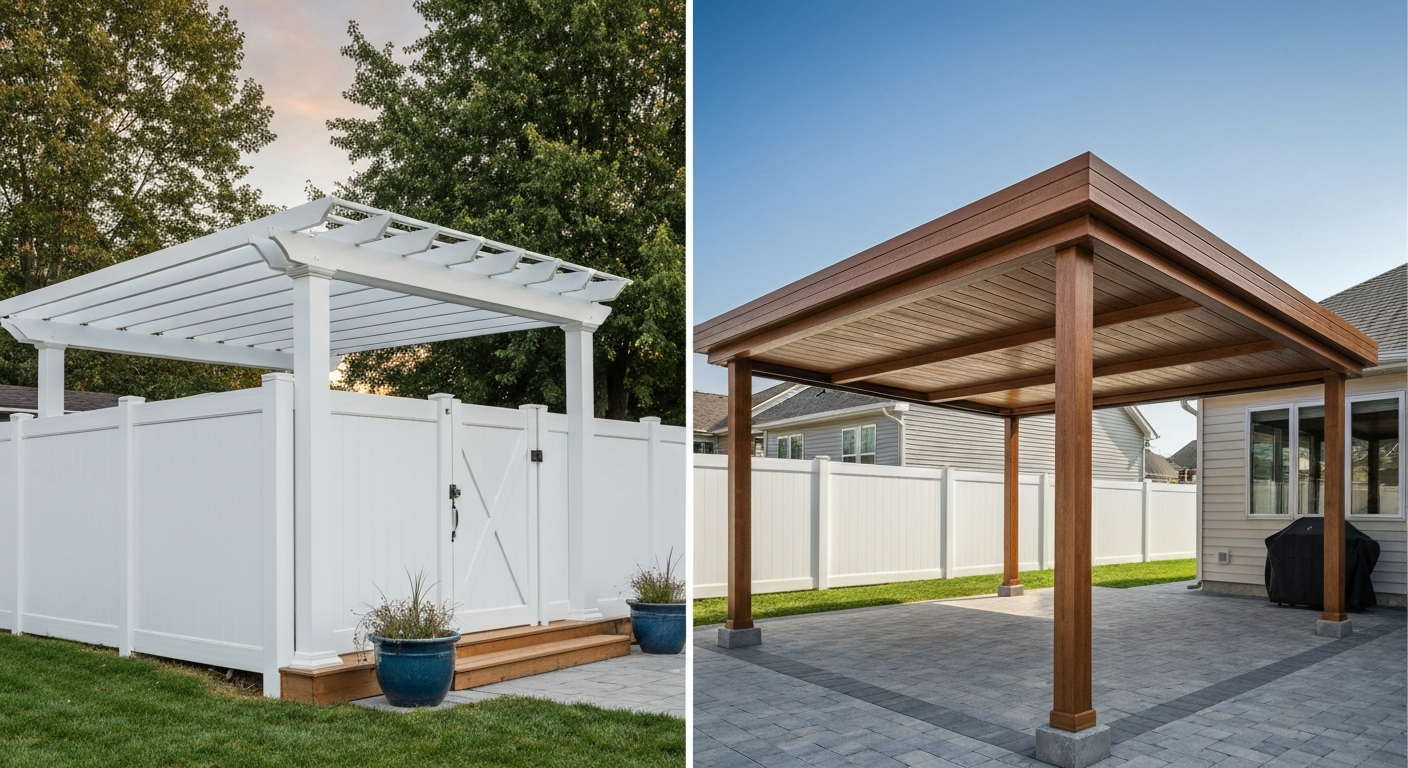
Vinyl patio covers fall into a few distinct categories. Attached solid-roof covers mount to the house fascia and use PVC or cellular PVC panels spanning between aluminum or steel beams. Freestanding vinyl pergolas use PVC posts and beam kits, these are the most popular DIY option and start under $1,000 for smaller kits. Lattice-style vinyl covers use an open grid pattern that filters light without full shade. Cellular PVC trim and panel products (brands like AZEK and Versatex) are sometimes used for the decorative wrap and fascia on more complex covered patios. Cellular PVC is extruded, expanded PVC with a small-cell microstructure; specifications call for a minimum density around 31 lb/ft³, and the material includes UV stabilizers including titanium dioxide and hindered amine light stabilizers (HALS) to prevent yellowing.
How vinyl covers and fences are built
Understanding the construction helps you evaluate quality and spot cheap corners at the hardware store or in contractor bids.
Material and profile basics
PVC fence and cover components are made by pushing molten PVC compound through a shaped die (extrusion), which produces consistent wall thickness and profile. Wall thickness is one of the biggest quality variables, thicker walls resist impact better and last longer. Premium residential fence rails and pickets run 0.100–0.150 inch wall thickness; budget imports are often thinner. For patio cover panels, look for solid or multi-wall extruded PVC with UV-stabilized compound throughout. Single-wall panels that are just surface-coated will fade faster and show scratches more readily.
Key installation components
- Posts: hollow PVC sleeves (usually 4×4 or 5×5 nominal) set over a steel or aluminum inner post; post holes typically go to the frost line or a minimum of 30 inches in most regions, set in concrete
- Rails: horizontal PVC extrusions that snap or screw into routed post slots; some brands (Bufftech) use steel-reinforced rails for spans over 6 feet
- Pickets/panels: vertical or horizontal PVC members that slide into rail channels using insertion clips — no fasteners visible on the fence face
- Caps and trim: PVC post caps, rail caps, and fascia trim pieces lock the assembly together and shed water
- Expansion gaps: critical on every panel run — standard guidance is roughly 1/8 to 1/4 inch per 8-foot panel to allow for thermal movement
Why thermal expansion is the number-one installation concern
Rigid PVC has a coefficient of linear thermal expansion in the range of 50–110 × 10⁻⁶ per °C depending on formulation. Aluminum sits at about 23 × 10⁻⁶ per °C. In plain terms, a 16-foot vinyl panel run can expand or contract nearly 1/2 inch across a 50°F temperature swing, that's enough to buckle panels that were installed without proper gaps. This is the most common field failure I've seen documented in installer guides and consumer reports, and it's entirely preventable if you follow the manufacturer's spacing instructions. Homeland Vinyl Products, FAQ: Allow for thermal expansion (example installation guidance) recommends leaving expansion gaps (typically about 1/8"–1/4" per ~8 ft panel or per manufacturer instructions) to accommodate PVC’s thermal movement blank" rel="noopener noreferrer">Homeland Vinyl Products — FAQ: Allow for thermal expansion (example installation guidance). Alumawood and aluminum cover systems move much less under the same conditions, which is a real structural advantage for overhead covers spanning 12 feet or more. See our guide to the best alumawood patio covers for top-rated systems, installation notes, and when aluminum truly outperforms vinyl. For real-world performance and owner feedback, check recent alumawood patio cover reviews to see how these systems hold up over time.
Vinyl vs. Alumawood, Duracool, and Duralum: how they really compare
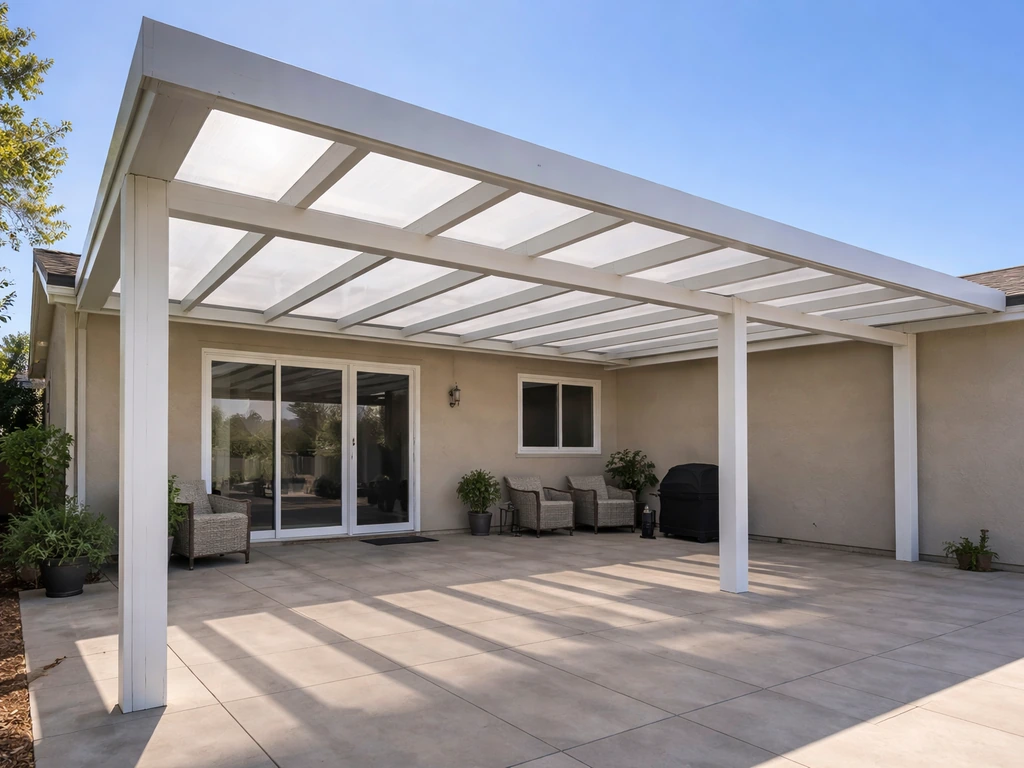
Aluminum wood-look systems, sold under names like Alumawood, Duralum, Duracool, and Four Seasons, are powder-coated, textured aluminum extrusions that mimic the look of painted wood beams. They dominate the installed patio cover market in the Southwest and California. Vinyl covers compete in the DIY pergola and budget-cover segment. Here's how they actually stack up across the dimensions that matter most. For a focused comparison of vinyl vs alumawood patio covers, read the detailed guide. For a side-by-side comparison of Duracool patio vs Alumawood systems, see duracool patio vs alumawood for differences in span capacity, finish durability, and installation requirements.
Durability and structural performance
Aluminum wins on structural rigidity. Alumawood-style systems can span 12–20 feet between posts with engineered beam sizes, and many manufacturers supply engineering letters and Notices of Acceptance (NOAs) for specific wind and snow load ratings. Vinyl pergola kits are generally rated for lighter loads and shorter spans, most freestanding vinyl pergola kits top out around 10–12 feet per bay without additional structural support. For a full patio roof, that matters. Vinyl fencing, on the other hand, is structurally adequate for its intended use (enclosure, not overhead loading), and quality brands like Bufftech use steel post reinforcement to handle wind uplift on tall privacy panels.
Cost
Aluminum/Alumawood patio covers run approximately $18–$55 per square foot installed based on 2026 contractor cost data. Vinyl patio covers come in at roughly $25–$80 per square foot installed, vinyl can actually cost more than aluminum when you factor in the heavier framing needed for wider spans. On the fencing side, vinyl privacy panels in 6×8-foot sections retail at around $12–$25 per linear foot for material only (grade and brand dependent), with installed costs typically running $25–$45 per linear foot depending on your region and post embedment requirements.
Installation
Vinyl fence installation is genuinely DIY-friendly for most homeowners comfortable with post-setting and leveling. Standard Bufftech-style systems use routed posts and snap-together panels with insertion clips, no special tools beyond a post-hole digger, level, and basic carpentry gear. Vinyl pergola kits are similarly straightforward. Full vinyl patio covers (solid roof panels attached to the house) are harder to DIY because they require correct flashing, fascia attachment, and drainage slope, I'd recommend a pro for those. Alumawood systems are almost exclusively contractor-installed because the beam spans, structural fastening, and local code compliance require engineered plans in most jurisdictions.
Maintenance
This is where vinyl wins clearly. A quality vinyl fence or cover needs nothing more than an occasional wash with soap and water, no painting, staining, or sealing ever. Alumawood's powder-coat finish is also very low-maintenance, but the coating can chip at cut edges or fastener holes, which requires touch-up paint to prevent corrosion underneath. If you're comparing to raw wood, both materials are dramatically less work.
Weather resistance
Aluminum doesn't absorb moisture and won't rot or rust (assuming intact coating), and it handles both hot and cold climates without significant material degradation. Vinyl is also moisture-proof and won't rot, but it becomes more brittle in sustained cold below roughly 20°F, which is a concern for northern climates where an impact (say, a falling branch or a snowplow pass) could crack a panel. In high-UV environments like the desert Southwest, cheap vinyl will yellow within a few years; UV-stabilized formulations with titanium dioxide pigment hold up much better, but even premium vinyl doesn't hold color as consistently as a quality powder-coat aluminum finish over 15–20 years.
Aesthetics
Vinyl offers a clean, bright look that suits traditional and cottage-style homes well. Color options beyond white and tan are limited with most fence manufacturers, though some cover pergola kits now come in gray and brown. Alumawood systems offer a more architectural look, the wood-grain texture reads as a real material from a distance and comes in a wider palette of painted finishes. If your priority is matching a craftsman or modern farmhouse aesthetic, aluminum covers tend to look more premium. For a classic white privacy fence, vinyl is hard to beat on appearance.
Side-by-side comparison: vinyl vs. aluminum patio covers and fencing
| Attribute | Vinyl (PVC) | Alumawood / Aluminum (Duracool, Duralum, Four Seasons) |
|---|---|---|
| Primary material | Extruded or cellular PVC with UV stabilizers | Powder-coated, textured aluminum extrusions |
| Typical installed cost (patio cover) | $25–$80 per sq ft | $18–$55 per sq ft |
| Typical material cost (fence, 6' privacy) | $12–$25 per linear ft (material only) | Less common for fencing; aluminum rail fence ~$20–$35/lft |
| Structural span capability | Up to ~12 ft per bay (pergola kits); less for solid roof | 12–20+ ft with engineered beams; NOA-rated for wind/snow |
| Thermal expansion coefficient | ~50–110 × 10⁻⁶ per °C (PVC) | ~23 × 10⁻⁶ per °C (aluminum) |
| DIY friendliness | High for fencing and pergola kits; moderate for solid covers | Low — typically requires contractor and engineered plans |
| Maintenance required | Wash with soap and water; no paint or seal | Minimal; touch-up powder coat at cut edges occasionally |
| Color stability (20 years) | Good with UV stabilizers; can yellow without them | Very good; powder coat holds color well long-term |
| Cold-weather impact resistance | Can become brittle below ~20°F | Stable across wide temp range |
| Moisture/rot resistance | Excellent — 100% moisture-proof | Excellent — will not rot or corrode under intact coating |
| Aesthetic range | White, tan, gray, brown; clean/traditional look | Wood-grain texture; wider painted finish palette |
| Wind/snow load documentation | Limited; most kits are not engineer-rated | Engineering letters and NOAs commonly available |
| Warranty (typical) | Limited lifetime material; 5-year labor (e.g., Bufftech) | Varies by brand; typically 10–20 year finish warranty |
| Notable brands | CertainTeed Bufftech, AZEK, Versatex, Homeland Vinyl | Alumawood (Heartland), Duracool, Duralum, Four Seasons |
Top vinyl fence and cover picks by use case
These recommendations are based on product specifications, manufacturer documentation, and contractor field performance notes, not paid placements. I've organized them by the four most common homeowner use cases.
Best for privacy fencing: CertainTeed Bufftech Chesterfield or Arbor II
Bufftech is the benchmark for residential vinyl privacy fencing in North America. The Chesterfield style is a tongue-and-groove full-privacy panel available in white and several earth tones with CertainTeed's ColorLast fade protection. Rails on the 6-foot models can be ordered with steel reinforcement, which meaningfully reduces flex in wind. Panels come in 6×6 and 6×8-foot sections. Material-only pricing typically falls in the $14–$22 per linear foot range depending on dealer and style. The limited lifetime material warranty with a five-year SureStart labor coverage period is one of the strongest in the category, but read the fine print: normal fading is excluded unless you specify a ColorLast product. Best for: suburban privacy enclosures, pool surrounds, and side-yard boundaries where clean aesthetics and low maintenance are priorities.
Best DIY pergola-style vinyl cover: vinyl pergola kit (freestanding, 10×12 or 12×16)
Freestanding vinyl pergola kits in the 10×12 to 12×16 foot range are the sweet spot for DIY patio coverage. For detailed recommendations and model comparisons, see our guide to the best vinyl patio covers. Most major home improvement retailers carry white and occasionally gray options from brands like Backyard Discovery and New England Arbors. Pricing typically runs $800–$2,500 depending on size and included features (lattice roof, louver options). These kits are not structural covers, they provide shade and a defined outdoor room without full weather protection. Installation is a two-person weekend job with basic tools. Load ratings are limited; don't plan on hanging heavy speakers, fans, or lighting fixtures without consulting the specific kit's specs. Best for: renters or homeowners who want an attractive shade structure without a contractor or permit.
Best attached deck cover: cellular PVC panel system (professional install)
For an attached solid-roof deck cover, cellular PVC panels (AZEK or similar) paired with aluminum or steel structural beams are a practical choice that avoids the thermal-expansion problems of long solid-vinyl roof panels. The cellular PVC handles the visible fascia, soffit, and trim while the framing carries the structural load. Installed cost ranges from $35–$80 per square foot depending on beam span, roofing integration, and local labor rates. You'll almost certainly need a permit for this type of structure, it attaches to the house and may require engineering depending on your jurisdiction. Best for: homeowners who want a finished, weatherproof look that integrates with the house and are prepared to work with a licensed contractor.
Best freestanding vinyl patio cover: vinyl lattice cover or solid-panel canopy
Freestanding vinyl patio cover systems using lattice or solid-panel roofs are available from specialty outdoor cover companies and provide more shade than an open pergola without requiring house attachment. These structures typically span 10–14 feet and are post-mounted with footings. Pricing runs $3,000–$8,000 installed for a 12×16 footprint. They're a good middle ground between a DIY pergola kit and a full Alumawood-style cover if you want an all-vinyl aesthetic. Best for: homeowners with a poured concrete patio who want weather protection without an attached structure or the wood-look aesthetic of aluminum.
Buyer's checklist before you purchase
Before you commit to a product or contractor quote, work through each of these factors. Skipping even one of them is how buyers end up with a cover that fails inspection, buckles in the first summer, or looks wrong on the house.
- Size and span: measure your space exactly and check the product's maximum bay span — vinyl cover kits are usually limited to 10–12 feet per bay without additional support posts
- Load requirements: if you're in a snow climate (over 10 lbs per sq ft ground snow load) or a high-wind zone (90+ mph design wind), get an engineer-rated system; most vinyl kits are not rated for these conditions
- Climate: in climates with sustained temperatures below 20°F, prioritize UV- and cold-impact-stabilized PVC formulations; in high-UV desert climates, look specifically for ColorLast or equivalent UV-inhibitor certification
- Style and color: confirm your color choice is available in a UV-stabilized formulation — budget white vinyl is fine; budget tan or gray vinyl may fade noticeably within 5 years
- Budget: price out material-only vs. installed costs separately; DIY vinyl fencing saves 40–60% over installed prices, but DIY solid patio covers rarely save enough to justify the complexity
- Maintenance expectations: both vinyl and aluminum are low-maintenance, but vinyl will need periodic washing to prevent algae/mildew staining in humid climates — plan one or two cleanings per year
- Local building codes and permits: fence height over 6 feet almost always requires a permit; any structure attached to the house requires a permit in most jurisdictions; freestanding covers over a certain square footage (varies by municipality, often 200 sq ft) may also require permits and structural review
- HOA restrictions: many HOAs restrict fence color, height, and material; confirm before purchasing
- Warranty terms: read the exclusions — confirm whether your specific color and style is covered under the fade-protection warranty, and whether installation by a non-certified contractor voids coverage
When to choose vinyl vs. aluminum: a decision path
Use this flow to cut through the options quickly. Start at the top and follow the path that matches your situation.
- Are you buying a privacy fence (not an overhead cover)? → Vinyl is almost always the better choice. It's lower cost, easier to DIY, and looks great for enclosure purposes. Go with a quality brand like Bufftech and move to Step 7 for sizing and permit checks.
- Are you buying an overhead patio cover? → Continue to Step 3.
- Is your span wider than 12 feet per bay, or are you in a high-wind or snow-load zone? → Choose aluminum (Alumawood, Duracool, Duralum, or similar). These systems have engineered load ratings and handle long spans better than vinyl.
- Is your project DIY, or do you have a strict budget under $5,000 total? → Consider a vinyl pergola kit. They're affordable, permit-free in many areas, and installable by two people in a weekend. Accept the trade-off: they provide shade, not weather protection.
- Do you want a full weather-proof roof attached to the house? → Get contractor bids on both vinyl panel systems and Alumawood. In most regions, the aluminum system will be competitively priced and structurally more reliable. If an all-vinyl aesthetic is important to you, a cellular PVC fascia system over an aluminum frame gives you the best of both.
- Is your climate hot and high-UV (desert Southwest)? → Lean toward aluminum powder-coat. UV-stabilized vinyl holds up, but powder-coat aluminum outperforms it on color stability over 15–20 years.
- Does your project require a permit and engineering sign-off? → Almost certainly go aluminum. Alumawood-style systems have manufacturer-supplied engineering letters and NOAs; vinyl cover kits rarely do.
- Still undecided? → Vinyl wins on: DIY installation, white privacy fencing, pergola aesthetics, and price in smaller spans. Aluminum wins on: large span structural covers, hot/UV climates, engineering documentation, and long-term color stability.
DIY vs. professional installation: real cost breakdown
For vinyl privacy fencing, DIY is genuinely accessible and saves real money. A 150-linear-foot fence using 6×8 panels runs roughly $1,800–$3,750 in material (at $12–$25 per linear foot). The same fence installed by a contractor typically runs $3,750–$6,750 (at $25–$45 per linear foot installed). That $2,000–$3,000 difference is meaningful, and the installation, digging post holes, setting in concrete, and snapping panels, is within reach for most homeowners with a weekend and a rented post-hole digger. For vinyl pergola kits, the math is similar: the kit itself runs $800–$2,500, and most people can install it in a day with a helper and basic tools.
For attached or freestanding vinyl patio covers (solid roof), I'd push back on the DIY route. Getting the slope right for drainage, flashing the house connection correctly, and ensuring you don't void your roof or siding warranty requires experience. The difference between a professionally installed cover and a poorly DIY'd one shows up in the first rainstorm. Budget $35–$80 per square foot installed for solid-roof vinyl covers, and get at least three contractor bids.
Maintenance schedule and warranty expectations
Annual maintenance tasks
- Spring: wash all surfaces with mild soap and water or a diluted white vinegar solution; rinse with a garden hose; inspect for cracked panels or loose post caps
- Summer: check expansion gaps — if you see panels bowing outward between posts, gaps may have been installed too tight; shade structures should be checked for fastener tightness after high winds
- Fall: clear debris from any roof channels or gutters on solid covers; check post bases for water pooling
- As needed: for mildew or algae stains (common in humid climates), a diluted bleach solution (one part bleach to four parts water) works well; avoid pressure washers above 1,500 PSI on vinyl surfaces, which can cause surface damage or force water behind panels
What warranty coverage actually means in practice
Most premium vinyl fence brands (Bufftech is the reference example) offer a limited lifetime material warranty covering manufacturing defects, plus a SureStart period (typically five years) during which they'll cover some labor costs for repair or replacement. The catch: normal fading is excluded unless your specific product line carries a ColorLast or equivalent fade-protection designation. Installation errors, including skipping expansion gaps, will void coverage. Keep your installation manual, purchase receipt, and any warranty registration confirmation in a file. For vinyl patio covers, warranties vary widely: check whether the structural frame and the panel material are covered separately, and whether the warranty transfers to a new owner if you sell the house.
Styling add-ons: screens, lattice, gutters, and lighting
Once your base structure is in place, accessories are where you personalize the space and improve function. On vinyl fencing, lattice extension panels can add another 12–18 inches of height above a standard 6-foot privacy fence for additional screening, these are available from the same fence manufacturers and use the same post-slot system. Decorative post caps (flat, ball, or pyramid styles) are inexpensive finishing touches that also keep water out of hollow posts.
For vinyl patio covers, the most functional upgrades are gutters and downspouts integrated into the cover beam system (keeps water off your guests and off the house foundation), and screen panels or shade cloth that can be attached between posts to block wind or sun from specific angles. Outdoor lighting mounts on vinyl pergola posts are straightforward, most post caps accept standard low-voltage landscape light connections, and pendant lights can be hung from cross beams using code-compliant outdoor-rated fixtures. One caution: check the load rating of any vinyl beam before hanging fans or heavy fixtures; most DIY pergola kit beams are not rated for dynamic (spinning) loads from ceiling fans.
Permits, wind loads, snow loads, and other questions worth answering
Do I need a permit for a vinyl fence?
In most U.S. jurisdictions, fences under 6 feet high don't require a permit, but you should confirm with your local building department before digging any post holes. Fences over 6 feet, or fences within setback distances from property lines, utility easements, or sight-line zones at driveways, almost always require a permit. HOA approval is separate from municipal permits and is required by many communities regardless of height.
Do vinyl patio covers need permits?
Any structure attached to the house almost universally requires a building permit. Many jurisdictions also require permits for freestanding covers above a certain footprint (commonly 120–200 square feet, but this varies). Open pergola kits are sometimes treated as accessory structures exempt from permit in smaller sizes, verify this with your building department before assuming. The penalty for building without a required permit can include forced removal, so this is worth checking upfront.
What wind and snow loads can vinyl handles?
Most vinyl fence systems are designed to withstand standard residential wind loads (up to roughly 90 mph design wind speed) when correctly installed with proper post embedment and concrete footings. Taller panels (over 6 feet) and solid-panel styles present more wind resistance and require deeper or larger-diameter footings, follow the manufacturer's post-embedment chart exactly. For patio covers, vinyl pergola kits are generally not rated for significant snow load (over 10 lbs per square foot) or high wind. If you're in a coastal wind zone or a northern snow belt, aluminum systems with documented engineering ratings are the safer, code-compliant choice.
How long does vinyl fencing or a vinyl cover actually last?
A quality UV-stabilized vinyl privacy fence from a reputable brand realistically lasts 20–30 years with minimal maintenance. The main failure modes documented in field reports are thermal-movement buckling at pinned joints (preventable with correct gaps), yellowing from poor UV stabilization (avoided by buying quality products), and impact damage from vehicles, equipment, or falling branches (vinyl does not self-repair; cracked panels need to be replaced). Vinyl patio covers and pergola kits from reputable manufacturers carry similar material lifespans, though UV exposure on horizontal surfaces is more intense than on vertical fence panels, premium UV-stabilized formulations matter more for covers than for fencing.
Can I customize the color or paint vinyl?
Standard vinyl fence and cover systems are manufactured in their color, the pigment runs through the material, not just the surface. You can paint vinyl with a high-adhesion exterior acrylic latex paint, but paint on vinyl peels faster than on wood and requires careful surface prep (light sanding and a bonding primer). Most vinyl fence manufacturers advise against painting and may void the warranty if you do. A better approach if you want a non-standard color is to choose a manufacturer that offers your target color in a UV-stabilized formulation from the factory.
FAQ
What are the essential definitions and scope to include for an authoritative article on vinyl fences and vinyl deck/patio covers?
Define product categories clearly: extruded solid PVC and cellular PVC (for trim, pergolas), vinyl privacy fences (panel, picket, rail systems), vinyl deck covers (attached roof systems), freestanding vinyl patio covers, and pergola‑style vinyl structures. Explain material construction (extruded vs cellular PVC), typical components (posts, rails, panels, hardware, steel reinforcement), and common product sizes (e.g., 6' H × 6–8' W privacy panels).
Which material properties and test metrics must be reported and sourced?
Report tensile and impact strength (ASTM D638, D256), thermal/linear coefficient of expansion for PVC vs aluminum (cite values or ranges), colorfastness/weathering (ASTM D2244 or accelerated UV tests), density and cell structure for cellular PVC (manufacturer TDS), UV‑/heat‑stabilizer chemistry (TiO2, HALS), and relevant code/CCRR reports for structural components. Cite ASTM standards, manufacturer TDS/SDS, and any CCRR/NOA documents.
Which manufacturer technical documents and vendor sources should be consulted and cited?
Installation manuals, technical data sheets (TDS), and warranties from major manufacturers: CertainTeed/Bufftech, AZEK/TimberTech, major vinyl fence suppliers (Bufftech, AvinylFence), and alumawood/aluminum vendors (Duralum, Duracool). Also use SDS/TDS, CCRR/NOA letters, and brand catalogs for product specs and installation tolerances.
What warranty and reliability information must be collected and explained?
Extract warranty duration and coverage (material lifetime vs limited periods, SureStart-type labor coverage), color‑fade exclusions, required installation compliance for warranty validity, and common warranty exclusions (impact, improper fastening, wind/snow beyond rated capacity). Cite manufacturers’ warranty pages and quote key limitations verbatim where possible.
What comparison metrics should be used for vinyl vs alumawood/aluminum systems?
Compare: durability/impact resistance, coefficient of thermal expansion and resulting movement, wind/snow structural ratings and engineering letters, long‑term color stability/UV performance, maintenance burden (cleaning, repainting not required), installation complexity (expansion gaps, reinforcement), cost (material and installed $/ft²), and aesthetics (available profiles/finish). Use numerical figures where available (e.g., thermal expansion coefficients, installed $/ft² ranges).
What specific cost data and price bands must be researched and presented?
Present typical installed cost ranges (benchmarks): aluminum/alumawood ~$18–$55/ft²; vinyl patio covers ~$25–$80/ft²; small DIY vinyl pergola kits <$1,000 to several thousand installed. Provide per‑panel retail examples for common vinyl privacy panels (~$12–$25/ft² material or per 6'×8' panel examples) and call out regional variation and labor vs material split. Cite trade cost guides (e.g., HomeGuide) and current retail listings for panels.
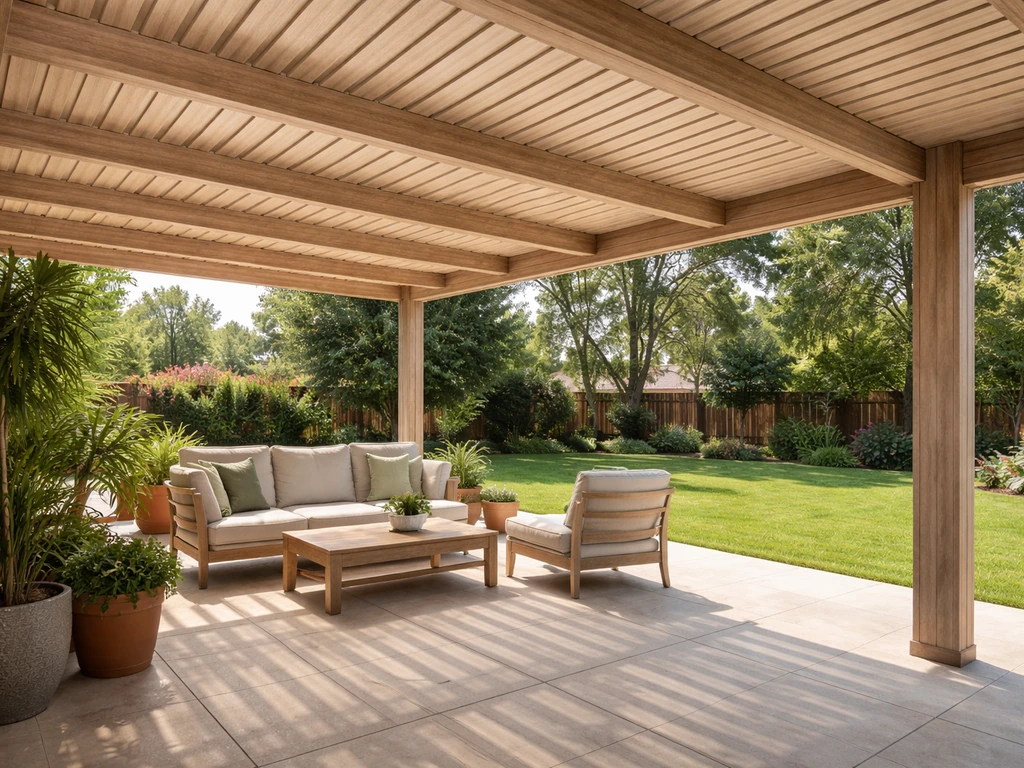
Alumawood patio cover pros and cons, durability, heat and maintenance, costs, and smart when to choose it
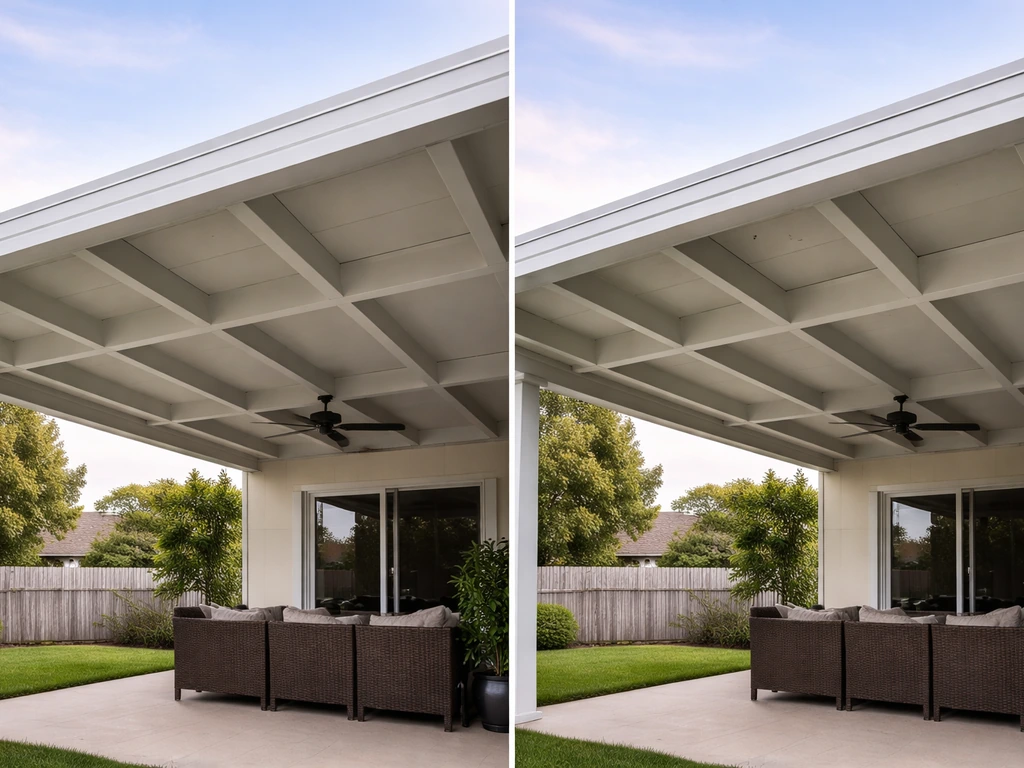
Compare Duralum and Alumawood patio covers on cost, lifespan, insulation, weather performance, maintenance, and install
Buying guide to choose the best alumawood patio covers by size, pitch, wind loads, drainage, costs, install and maintena