The top rated patio sun shades in 2026 are the ones that actually block heat and UV in your specific setup, hold up through wind and rain, and don't become a weekend-long installation project. That means a single "best shade" doesn't exist for every patio. A shade sail rated highly for a small urban balcony will frustrate you in an open backyard with afternoon gusts. A retractable awning that earns five stars for a large covered patio is massive overkill for a renter's apartment terrace. What I'll walk you through here is how to match the right shade type to your actual space, budget, and situation so you end up with something you'll actually use.
Top Rated Sun Shades for Patios: Buyer Guide
Lark Perry
10 Jun 2026
What "top rated" actually means for patio sun shades
Online star ratings for patio shades are notoriously misleading. A product with 4.7 stars and 3,000 reviews might be popular because it's cheap and ships fast, not because it lasts more than two seasons. When I evaluate a shade as "top rated" in a real performance sense, I'm looking at a specific set of criteria that translate directly to how the shade performs on your patio.
- UPF rating: A genuinely protective shade fabric should carry a UPF 50+ rating, meaning it blocks at least 98% of UV radiation. Look for products that reference AATCC TM 183 or AS/NZS 4399 test methods, which are the standards labs actually use to measure UPF in textiles. The ASTM D6603 labeling standard also requires that the UPF shown on a label represent the lowest protection expected during two years of consumer use, so a labeled UPF 50+ product has to maintain that protection over time, not just when it's new.
- Heat reduction: UV blocking and heat reduction aren't the same thing. Dense, tightly woven fabrics reduce radiant heat more effectively than loosely knit shade cloths, even at the same UPF rating.
- Wind resistance: Most residential shade sails and umbrellas are rated for winds up to 25 to 35 mph. Retractable awnings typically retract automatically at around 28 mph if they include a wind sensor. Know your local wind conditions before buying.
- Weather and fade resistance: Solution-dyed acrylic fabrics (like Sunbrella) resist fading far longer than piece-dyed or coated polyester. Look for fabrics rated for 500+ hours of UV exposure in accelerated fade testing.
- Build quality: Frame material (powder-coated steel, aluminum, or fiberglass) and pole gauge matter as much as the fabric. Thin-walled aluminum poles on cheap umbrellas bend in moderate wind.
- Ease of setup and adjustment: A shade you can adjust seasonally or by time of day is worth more than a fixed shade that only works for two hours of afternoon sun.
- Longevity relative to price: A $150 shade sail that lasts two seasons costs more per year than a $400 shade sail that lasts eight.
The main shade types and when each one makes sense
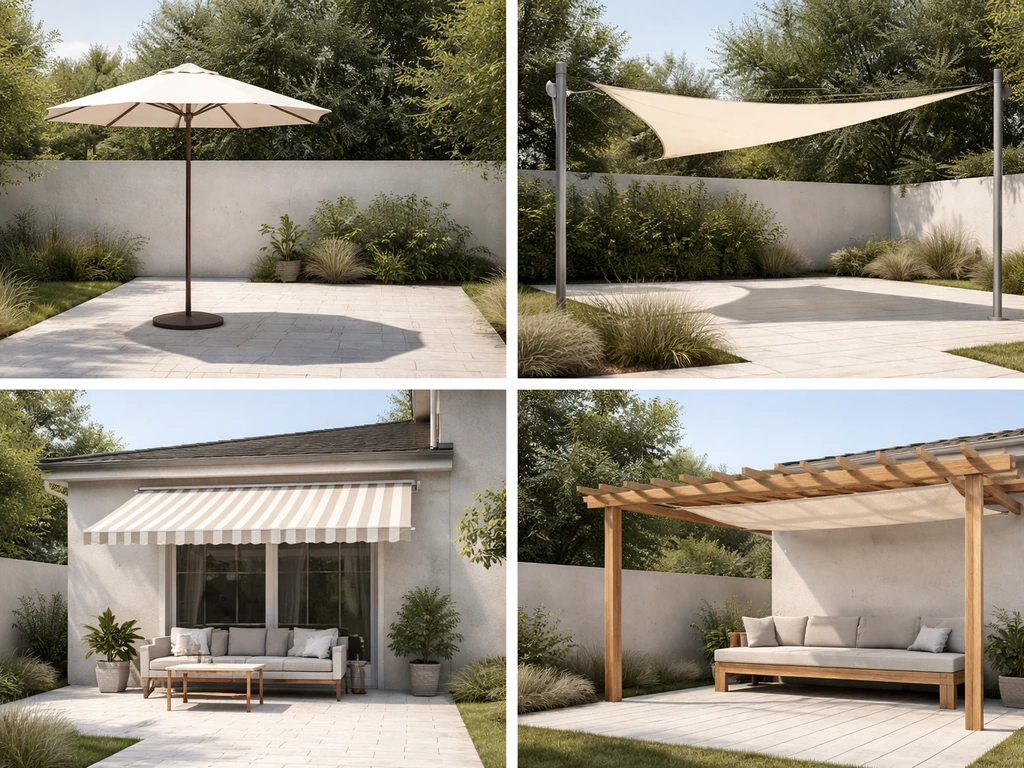
There are four main categories you'll be choosing between: patio umbrellas, shade sails, retractable awnings, and fixed pergola-style covers or shade cloth systems. Each has a distinct use case, and crossing those lines usually leads to buyer regret.
Patio umbrellas
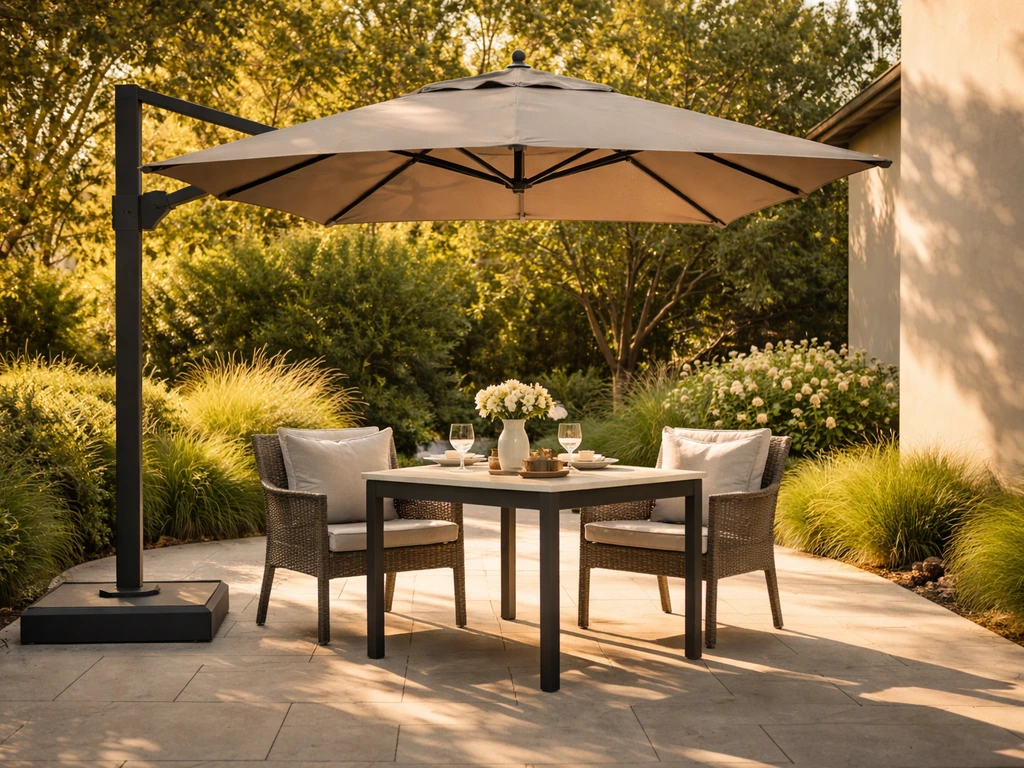
Umbrellas are the most flexible option. A 9-foot market umbrella covers roughly a 6-foot dining table and the chairs around it. Cantilever (offset) umbrellas, which extend from a side pole rather than a center post, can cover seating areas without the pole getting in the way. These are great for small to mid-size patios where you want shade you can reposition or close during bad weather. The trade-off is that even high-end umbrellas need to be lowered or stored when wind picks up above 25 mph, and the weighted bases required to keep them stable can be heavy and awkward. For shade performance, look for canopies rated UPF 50+ with solution-dyed or Olefin fabric.
Shade sails
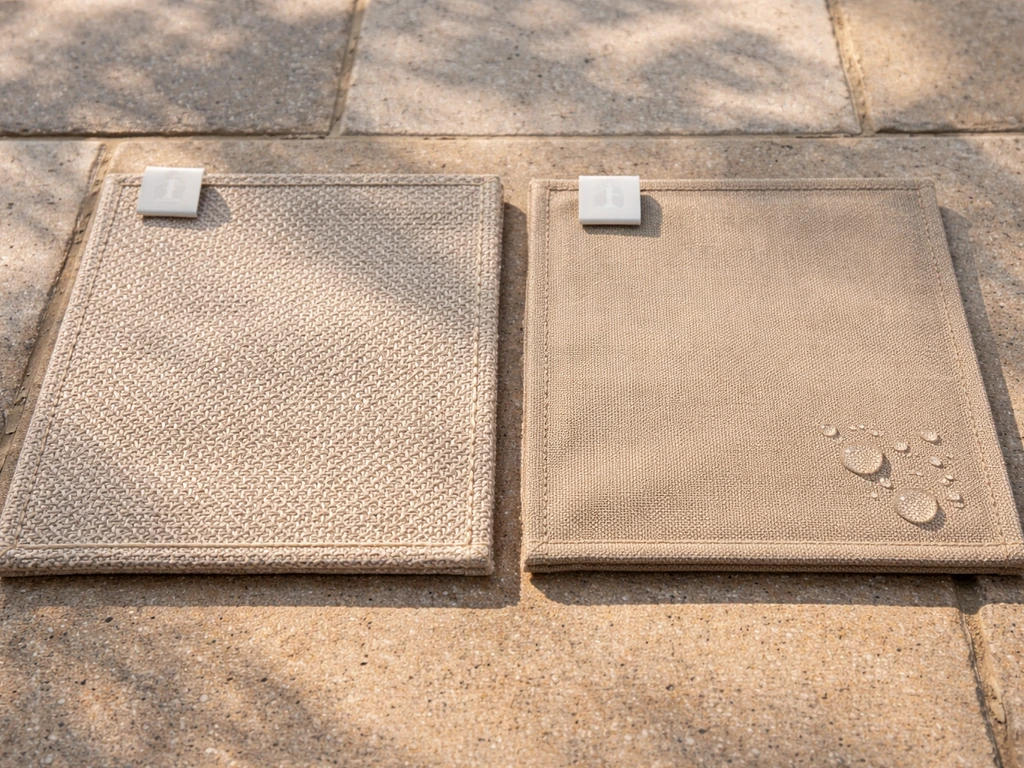
Shade sails are tensioned fabric panels anchored between posts, walls, or trees. They're affordable (quality triangular or square sails run $80 to $300 for residential sizes), visually appealing, and customizable in layout. You can overlap two triangles to cover an irregular space or stack them at different heights for layered shade. The challenge is proper tensioning: a saggy shade sail pools water, loses its shape fast, and flaps in wind instead of staying taut. Good sails use 185 to 220 gsm HDPE fabric with stainless steel D-rings and should be installed at a minimum 20-degree angle off horizontal so water runs off. They're not a good fit for areas with regular heavy rain or snow without removal.
Retractable awnings
Retractable awnings attach to a wall or fascia and extend outward on an arm mechanism, either manually with a hand crank or motorized. Manual sun shades for patio spaces are a solid choice when you want control without electrical installation, especially for medium coverage areas manual awnings or retractable awnings. They can cover widths from 6 feet up to 20+ feet for residential units and project out 8 to 14 feet from the wall. This makes them one of the best options for large patio coverage with a fixed home structure nearby. Motorized versions with wind sensors are especially practical: the awning retracts automatically when wind exceeds the set threshold, typically around 28 mph, which protects both the fabric and the mechanism. The downsides are cost (motorized residential awnings run $1,000 to $4,000+ installed), wall attachment requirements, and the fact that you're shading only the area directly under the extension, not an open yard space.
Pergola covers and shade cloth systems
If you already have a pergola or plan to build a permanent overhead structure, shade cloth panels or polycarbonate roofing panels can be added as a fixed or semi-permanent cover. Shade cloth in 50% to 90% block ratings gives you control over how much light filters through. Polycarbonate panels provide full rain protection while still transmitting diffused light. These systems work best as part of a larger patio structure project rather than a standalone shade solution. They're not easily removed or adjusted seasonally, which is worth noting if you want winter sun or live somewhere with seasonal weather variation.
Sizing and measuring your patio for actual coverage
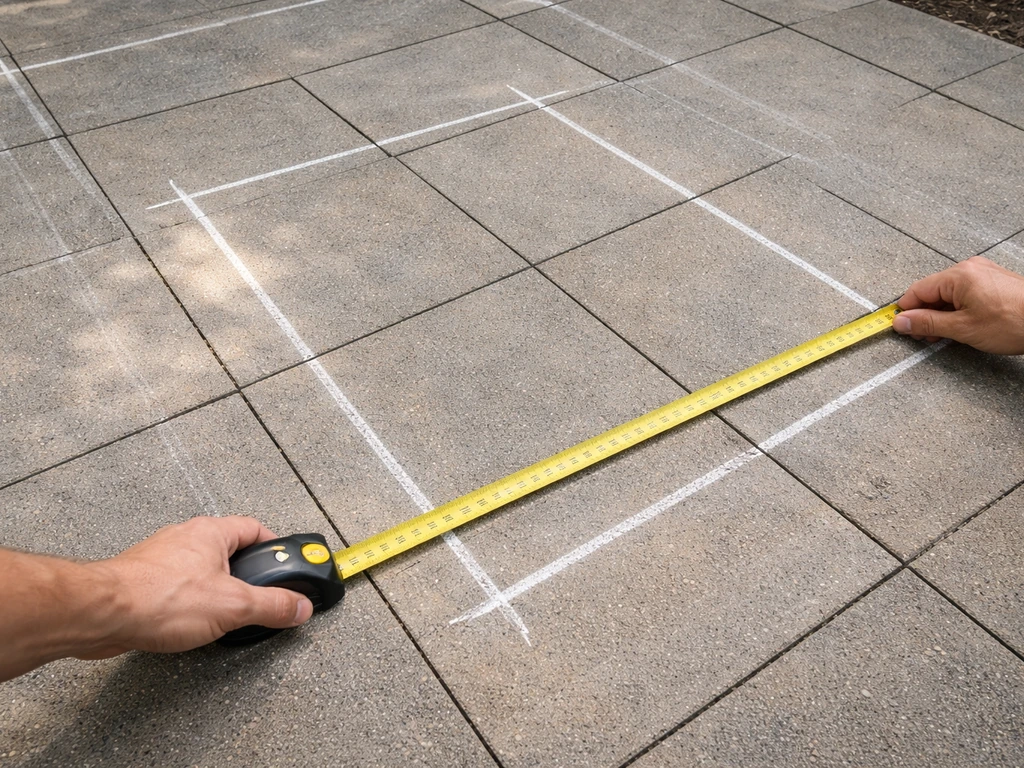
The single most common mistake people make when buying a patio shade is misjudging how much coverage they actually get. A 10-foot shade sail doesn't shade a 10-foot area, and a 9-foot umbrella won't cover a 9-foot dining set from edge to edge once you account for the angle of the sun.
Start by measuring the area you want shaded, not the shade itself. Mark out the seating or activity zone on the ground and add at least 2 feet on each side for effective shade coverage (since the sun is rarely directly overhead). Then match a shade product to that footprint. Here are the practical sizing rules I use:
- Umbrellas: For a round 48-inch dining table with 4 chairs, a 9-foot umbrella covers adequately. For a 6-person rectangular table, step up to an 11-foot cantilever umbrella or use two 9-foot market umbrellas.
- Shade sails: For a square coverage area, buy a sail that's 2 to 3 feet larger on each side than the zone you want shaded. A 14x14 foot square sail realistically shades a 10x10 foot area at peak-sun angles.
- Retractable awnings: Measure wall width and projection depth separately. A 12-foot wide by 10-foot projection awning covers roughly 120 square feet, but the actual shaded zone moves with the sun, so morning sun exposure from the east won't be covered the same way afternoon western sun is.
- Oddly shaped patios: Use multiple overlapping triangular shade sails or combine a fixed pergola cover with a retractable side screen for L-shaped or irregular spaces.
- Sun direction: Track the sun's path across your patio at the times you use it most (typically late morning through afternoon). If your patio faces west, afternoon shade is the priority, and a wall-mounted awning on the west wall works well. East-facing patios often benefit more from overhead coverage.
Materials and durability: what the specs actually tell you
Patio shade fabric falls into a few categories, and the material determines how long the shade lasts and how well it performs in heat, UV, and rain. Here's how the main options compare:
| Material | UV Protection | Water Resistance | Fade Resistance | Durability | Best For |
|---|---|---|---|---|---|
| Solution-dyed acrylic (e.g., Sunbrella) | UPF 50+ | Water-resistant (not waterproof) | Excellent (5-10 years) | Very high | Umbrellas, awnings, high-UV climates |
| HDPE knitted fabric | UPF 50+ at 185-220 gsm | Breathable, not waterproof | Good (3-6 years) | High | Shade sails, shade cloth systems |
| Solution-dyed polyester | UPF 30-50+ | Water-resistant to waterproof | Good (3-5 years) | Moderate to high | Budget umbrellas, retractable awnings |
| Polycarbonate panels | Near-total UV block | Fully waterproof | Good (10+ years) | Very high | Pergola covers, full rain protection |
| Piece-dyed or coated polyester | Variable, often UPF 20-40 | Coating degrades over time | Poor (1-3 years) | Low to moderate | Budget/short-term use only |
The blank" rel="noopener noreferrer">ASTM D6603 standard on UPF labeling requires that the UPF shown on a product label reflect the lowest protection value expected during two years of normal use, not the value of a brand-new sample. That means a product labeled UPF 50+ has been evaluated to maintain that protection level through washing, sun exposure, and typical wear over time. ASTM D6603-19 states that the UPF value placed on a product label needs to be the lowest protection value expected during consumer use over a two-year period blank" rel="noopener noreferrer">UPF 50+. If a product claims UPF 50+ but doesn't reference any recognized test method (AATCC TM 183 or AS/NZS 4399 are the most common), treat that claim skeptically.
For frames and hardware, powder-coated steel is strong but heavier and can rust at chip points over time. Anodized or powder-coated aluminum is the best all-around choice for most residential installations: it's lightweight, corrosion-resistant, and strong enough for typical wind loads. Fiberglass ribs in umbrella canopies flex under wind rather than snapping, which is why premium umbrellas use them over steel ribs.
Installation: what you can DIY and when to call someone
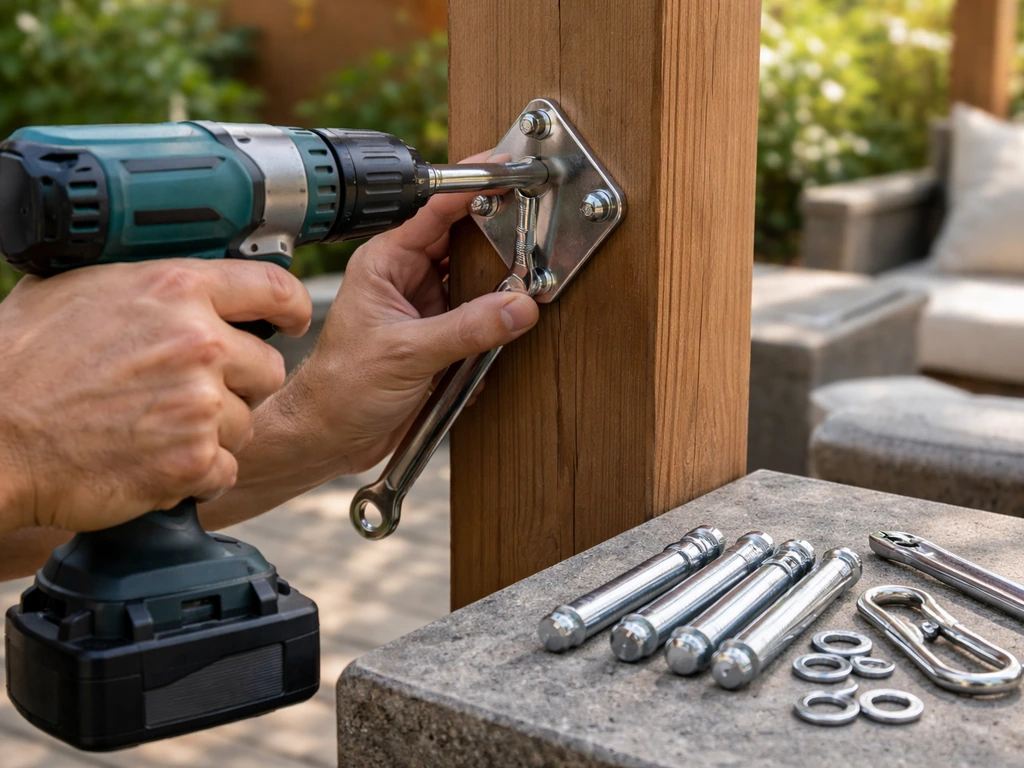
Most patio shade options are realistically DIY-able for someone comfortable with basic tools and measuring. But there are situations where hiring a professional saves you money in the long run, particularly when you're anchoring to a structural wall, pouring concrete footings, or installing a motorized system with electrical requirements.
DIY-friendly options
- Freestanding umbrellas with weighted bases: No tools required, just assemble and position.
- Shade sails between existing posts, trees, or fence posts: Requires measuring, tensioning hardware, and lag bolts into solid wood or masonry. A two-person job, but no special skills needed.
- Manual retractable awnings (wall-mounted): Requires drilling into wall studs or masonry anchors. Follow manufacturer's weight ratings carefully. Most homeowners with basic DIY skills handle this fine.
- Shade cloth over existing pergola: Usually just zip ties or fabric clips. Very easy.
When to hire a pro
- Motorized awnings with 110V or 12V wiring: Electrical hookup requires a licensed electrician in most jurisdictions.
- Shade sail installations that require new concrete anchor posts: Concrete footings for sail posts need to be sized and set correctly or the whole system fails in moderate wind.
- Large awnings over 15 feet wide: The weight and wall-attachment forces exceed what most DIYers can safely manage without structural assessment.
- Any installation on a rented property that requires drilling or structural changes: Get written landlord permission first, or use freestanding systems.
Renter-friendly shade solutions
If you're renting and can't drill into walls or pour footings, your best options are freestanding cantilever umbrellas with heavy weighted bases (50 to 100 lb base for stability), freestanding shade sail kits that come with their own steel posts and weighted bases, or freestanding pergola canopy frames that require no permanent anchoring. These won't be as stable in high wind as anchored systems, but they're entirely portable and leave no marks on the property.
Top picks by real patio situation
Rather than a generic ranked list, here's what I'd actually recommend based on common real-world patio setups. These picks reflect the combination of UV performance, build quality, ease of use, and value that I've found holds up in practice. Using the best sun shades for patio is about matching the right shade type to your specific space, weather, and how you actually use it.
Small patios and balconies (under 100 sq ft)
A 9-foot market umbrella or a compact cantilever umbrella with a 40 to 50 lb base is usually enough. Look for a solution-dyed acrylic canopy with an aluminum pole of at least 1.5-inch diameter and a tilt mechanism so you can follow the sun. Shade sail triangles in the 10 to 12 foot range also work well on small spaces if you have two solid anchor points (wall and fence post, or two beams). For balconies, a fabric privacy and sun screen panel that clips or ties to the railing is a low-hassle alternative.
Large patios (100 to 300+ sq ft)
This is where a motorized retractable awning pays off or where two overlapping shade sails can be layered for full coverage. If you want the best retractable sun shade for patio style coverage on a large seating area, this is the scenario where a motorized retractable awning typically makes the most sense. For a 16x12 foot covered seating and dining area, a 16-foot wide retractable awning with 10 feet of projection and a wind sensor is one of the most practical long-term investments. For shade-first spaces, the best patio covers for shade are the ones matched to your sun angles, weather, and coverage needs. If budget is a constraint, two 16x16 foot square shade sails positioned at offset angles give excellent coverage for under $500 in materials, though installation requires solid anchor points.
Windy areas (coastal, elevated, or open yard locations)
Wind is the single biggest destroyer of patio shades. In consistently windy locations, prioritize low-profile options over tall freestanding umbrellas, which act as sails. A retractable awning with an integrated wind sensor is the most wind-intelligent option since it retracts automatically. For shade sails in windy areas, use a heavier 200+ gsm HDPE fabric, stainless steel hardware throughout, and install at a steep angle with minimal slack. For windy areas, the same HDPE-focused considerations also point you toward the best shade sail for patio options that use heavier fabric, stainless hardware, and proper tensioning. Plan to take sails down during storm season. Avoid cheap, lightweight umbrellas entirely.
High UV and heat exposure (sun-baked patios with no natural shade)
For maximum heat reduction, you want high-density shade cloth (80 to 90% block rating) or a solution-dyed acrylic canopy rated UPF 50+. Lighter-weight shade sails at 50% block are great for filtered light but don't reduce radiant heat as dramatically. If you're in a desert climate or fully exposed south-facing patio, layering shade (overhead sail plus a side screen on the west face) drops the perceived temperature under the shade by 10 to 15 degrees Fahrenheit compared to a single overhead panel.
Privacy needs combined with shade
If privacy from neighbors or a nearby road is part of the equation, shade sails on their own don't help since they're overhead. Add vertical fabric screen panels (also called shade curtains or patio curtains) to a pergola frame or hang them from a tensioned cable system to create both overhead and side shade coverage. Cantilever umbrellas don't provide side privacy at all. A pergola with shade cloth on top plus outdoor curtain panels on the sides is the most effective combined privacy and sun solution.
How to choose the right shade: budget vs. performance checklist
Use this checklist to narrow your choice before you buy. Work through it in order and let your answers eliminate options.
- What's your actual budget for year one? Under $200 points to umbrellas or basic shade sails. $200 to $600 opens up quality shade sails, mid-range cantilever umbrellas, or manual retractable awnings for small spans. Over $600 makes motorized retractable awnings, premium shade sail hardware, or custom pergola covers viable.
- Do you rent or own? If renting, eliminate any option requiring wall drilling or permanent footings. Stick to freestanding systems.
- What are your typical wind conditions? If you regularly see 20+ mph winds, eliminate tall freestanding umbrellas. If you're in a low-wind area, this opens up more options.
- What's your patio footprint? Measure it. If it's under 100 sq ft, an umbrella or single shade sail is sufficient. Over 100 sq ft, consider two sails, a large cantilever umbrella, or a retractable awning.
- Do you need rain protection as well as sun shade? Shade cloth and knitted fabric sails are not waterproof. For rain protection, you need a waterproof awning fabric, polycarbonate panels, or a similar solid cover.
- How much maintenance are you willing to do? Umbrellas need to be closed and stored during storms. Shade sails need seasonal removal in snow climates. Retractable awnings (especially motorized) mostly take care of themselves.
- What's your UPF priority? If you or your family are sun-sensitive, prioritize UPF 50+ products that reference AATCC TM 183 or AS/NZS 4399 testing. Don't trust UPF claims without a recognized test standard behind them.
- Do you need shade for furniture compatibility? Offset cantilever umbrellas work best with furniture where a center pole would get in the way. Match the shade footprint to how you've arranged your outdoor furniture.
Care, maintenance, and knowing when it's time to replace
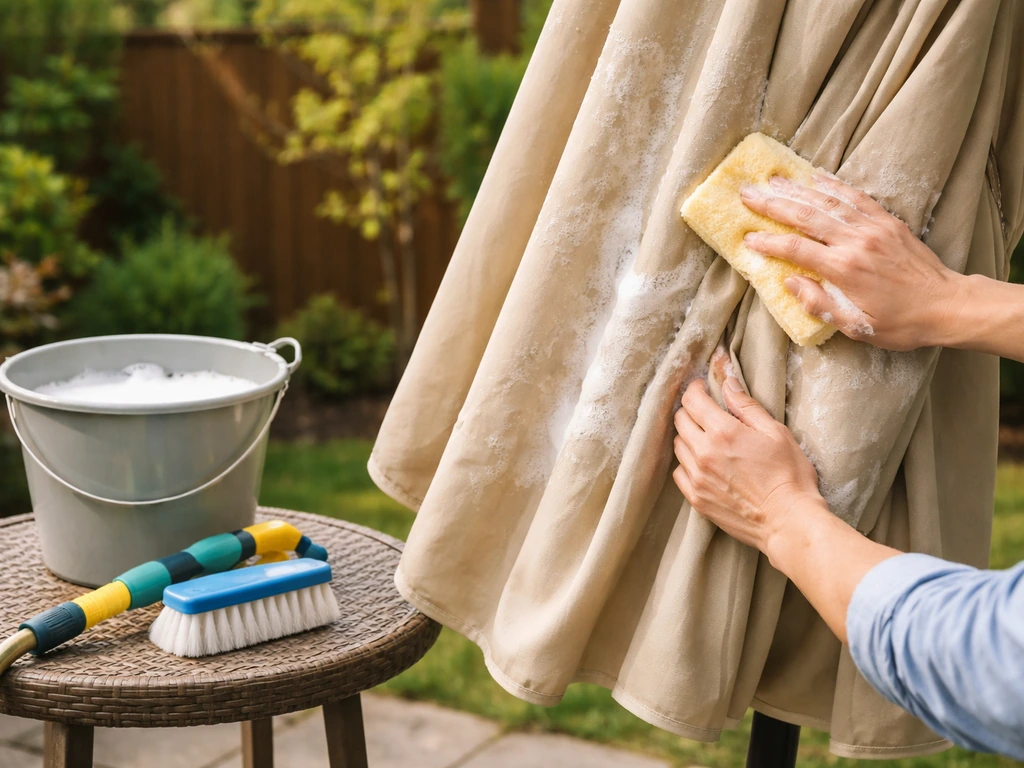
A well-maintained patio shade lasts significantly longer than a neglected one, and most of the maintenance is simple. The biggest factors in premature failure are leaving shades up through storms, not cleaning mildew before it sets in, and ignoring hardware corrosion until it causes structural failure.
Regular maintenance by type
- Umbrellas: Close and lower during any wind over 20 to 25 mph or before leaving home for extended periods. Clean the canopy 2 to 3 times per season with mild soap and water. Store the canopy in a UV-protective cover or indoors over winter. Check ribs and joints for cracks annually.
- Shade sails: Check tension monthly during the season and re-tighten as fabric stretches after the first season. Clean with a mild detergent and soft brush. Take down in winter if you get snow or heavy ice, which causes tears and damaged hardware. Rinse hardware with fresh water if in a coastal environment to prevent corrosion.
- Retractable awnings: Retract during heavy rain and wind above 28 mph (or rely on the wind sensor). Clean fabric once or twice a season. Lubricate the arm pivot points annually with a silicone-based lubricant. Inspect the mounting brackets each spring for any wall movement or loosening.
- Pergola shade cloth: Inspect attachment points seasonally for tears. Clean with a hose and mild detergent. Replace panels when UV degradation becomes visible (fading, brittleness, or tears at grommets).
When to replace rather than repair
Replace your patio shade when you see any of these signs: fabric that's visibly faded through (especially if it started as a dark color and is now noticeably lighter), seam delamination or separation that can't be restitched, corrosion on load-bearing hardware that's progressed to pitting or cracking, or frame components that have bent and been straightened multiple times. Bent aluminum poles lose their structural integrity even if they look functional. A shade that's been structurally compromised is a liability in wind, not just an aesthetic problem.
Most quality shade sails and canopies have a realistic lifespan of 5 to 8 years with proper care. Budget fabric options typically need replacement every 2 to 3 years. Retractable awning mechanisms, if kept clean and lubricated, can outlast the fabric, meaning you may only need a fabric replacement rather than a full unit after 7 to 10 years. When you're comparing the cost of options upfront, factor in this replacement timeline: a $250 shade sail that needs replacing every 3 years costs more over a decade than a $550 sail that goes 8 years without issue. If you're comparing models by budget, the biggest cost drivers are the shade type, fabric quality, coverage size, and whether you need a motor or professional installation.
FAQ
Can I leave patio sun shades up during storms or high wind?
Yes, but only if the product is designed for that load. Patio umbrellas should be closed or lowered when wind climbs above the manufacturer’s limit (the article cites 25 mph as a practical cutoff). For shade sails, use heavier HDPE (200+ gsm for windy areas) and stainless hardware, install with minimal slack, and plan removal during storm season. Retractable awnings with wind sensors add protection by retracting automatically near a set threshold, but you still want a clear drain path and proper wall mounting.
How can I tell if a patio shade’s UPF claim is trustworthy?
Check the UPF test method reference on the label or spec sheet, not only the UPF number. If a shade claims UPF 50+ but does not mention a recognized testing approach (such as AATCC TM 183 or AS/NZS 4399), treat it skeptically. Also remember the ASTM D6603 context is about maintaining protection through two years of normal use, so “new” and “labeled” performance can differ.
Why does my shade sail or umbrella look too small after installation?
Measure and size to your activity zone, then add buffer. The article recommends marking the seating area and adding at least 2 feet on each side because the sun is rarely directly overhead. Also, account for sun angle, so a shade that is “the same size as the table” often still leaves sun hitting the edges at certain times.
What should I prioritize for cooling versus just blocking UV?
Typically, UPF and “heat reduction” are related to density, but not identical. For maximum heat reduction, the article points to high-density shade cloth (80 to 90% block) or solution-dyed acrylic rated UPF 50+. Lighter 50% block sails may filter light well but won’t drop radiant heat as dramatically, especially on a fully exposed south-facing patio.
What are the best options if I cannot anchor to my house?
For renters or anyone who cannot drill into walls or pour footings, choose systems that are truly freestanding. The article suggests heavy weighted cantilever umbrellas (about 50 to 100 lb bases), freestanding shade sail kits with included posts and weighted bases, or freestanding pergola-style frames that leave no permanent anchors. Avoid wall-dependent retractables unless your lease allows drilling and you plan to restore the attachment points.
Which patio sun shades work best if I want shade in summer but sun in winter?
Consider seasonal needs before you buy. Fixed shade cloth or polycarbonate covers are less adjustable, so they can reduce winter sun if you want it. If you have seasonal weather variation, prioritize umbrellas, shade sails with removal plans, or retractable awnings that can retract to let light and sun in when you want it.
Will a shade sail block sight lines from neighbors?
If privacy is a priority, plan on side protection. Overhead-only solutions like shade sails don’t stop neighbors from seeing in. The article recommends vertical shade curtains or patio curtain panels on a pergola frame or a tensioned cable system, and notes cantilever umbrellas do not provide side privacy.
What maintenance steps most extend the life of patio sun shades?
The biggest maintenance triggers are leaving the shade up through storms and letting mildew set before cleaning. In practice, inspect fabric for early fading, check hardware for corrosion, and clean before mold expands. Also lubricate retractable awning mechanisms if you have one, since the article notes that clean and lubricated mechanisms can outlast the fabric.
When is it no longer worth repairing a patio shade?
Replace promptly when structural or load-path damage appears, not just cosmetic issues. The article lists warning signs like fabric fading beyond what you’d expect for wear, seam separation that can’t be reliably repaired, hardware corrosion progressing to pitting or cracking, and bent frame components that have been bent and straightened multiple times. A structurally compromised shade is a wind liability, not an aesthetic problem.
How should I compare prices when different patio shades last different lengths of time?
Compare total cost over the likely service life, not the purchase price. The article highlights realistic lifespans (around 5 to 8 years for many quality sails/canopies, 2 to 3 years for budget fabric, and potentially 7 to 10 years for awning mechanisms with later fabric replacement). A cheaper sail that fails sooner can cost more over a decade.
Can I layer multiple shades to cover a larger patio more effectively?
Yes, but the best approach depends on shape and anchor points. The article notes you can overlap two shade sail triangles to cover irregular areas, and you can layer at different heights. For strong sun, a side screen on the west face combined with an overhead layer can improve perceived temperature reduction versus overhead-only shading.
Are all “UPF 50+” patio shades equally good?
Avoid treating every UPF fabric as equivalent across products. Even if two shades both say UPF 50+, differences in testing legitimacy, fabric composition, and block rating matter. The article suggests solution-dyed acrylic for umbrellas and high-density shade cloth for stronger heat reduction, so confirm both the stated block rating and whether the UPF claim references recognized testing.
Next Articles
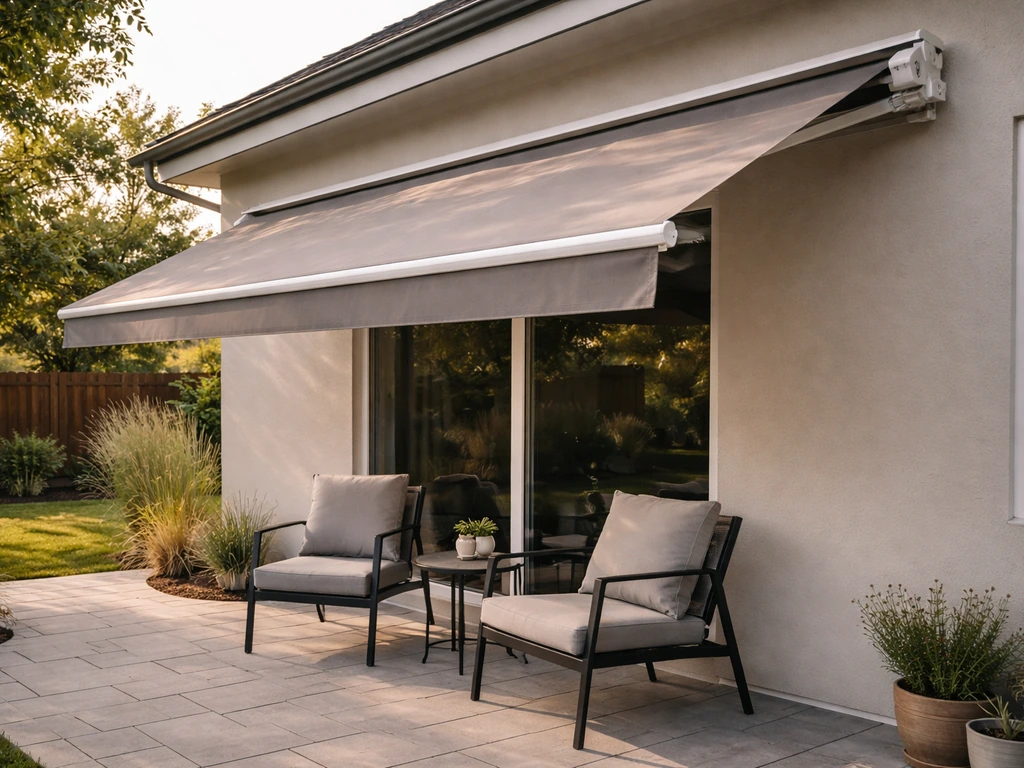
How Much Do Patio Shades Cost All-in Price Guide
All-in cost ranges for patio shades by type, plus DIY vs pro install, upkeep, and a quote checklist.
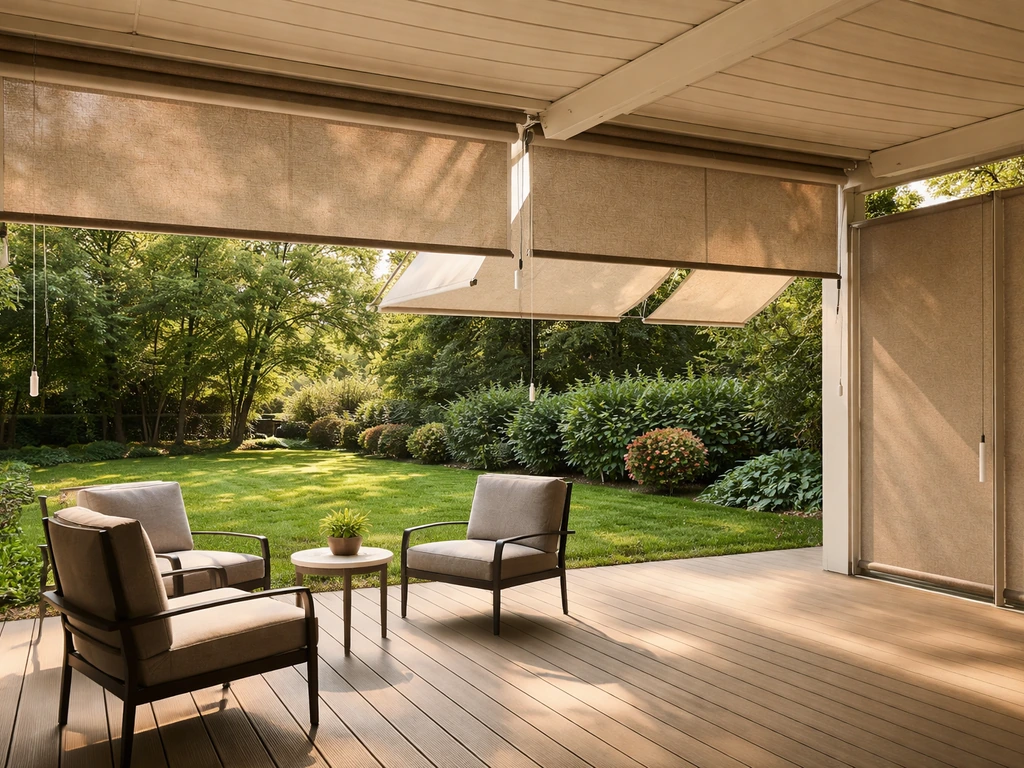
Manual Sun Shades for Patio: Buying, Sizing, and Setup Guide
Manual patio sun shades guide: styles, sizing, mounting, coverage, weather durability, and easy upkeep for DIY.
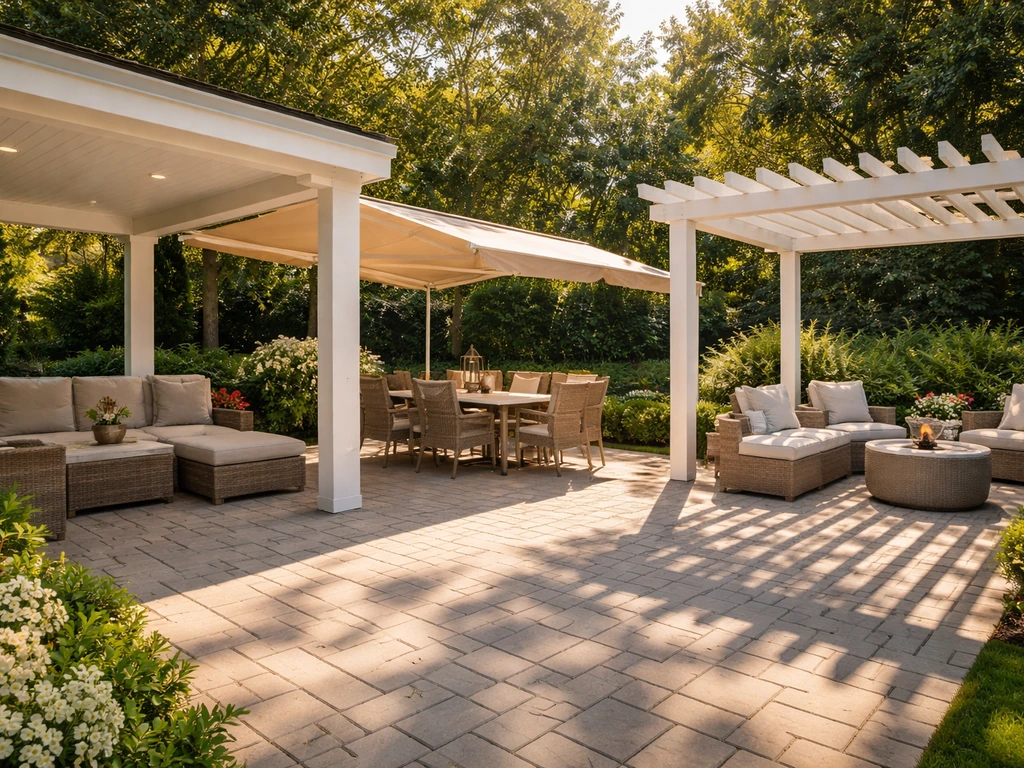
Best Patio Covers for Shade: How to Choose and Buy
Buying guide to choose the best patio covers for shade with solid, retractable, pergola options, fit and specs for your