
Most homeowners spend somewhere between $150 and $5,000 on patio shades, depending on what type they choose. A basic shade sail or umbrella sits at the low end. A motorized retractable awning professionally installed lands in the $2,000–$6,000+ range for a typical 12x10 foot coverage area. Knowing which product category you're shopping in is the single most important thing you can do before comparing prices, because the ranges barely overlap.
How Much Do Patio Shades Cost All-in Price Guide
Lark Perry
29 May 2026
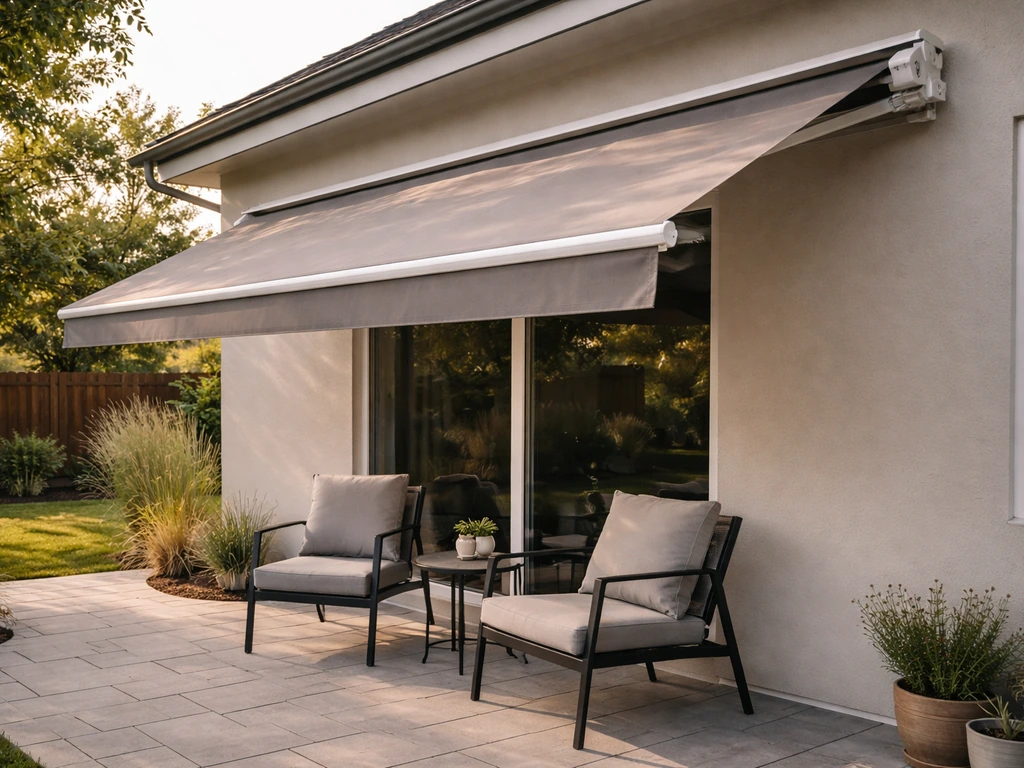
Typical price ranges by patio shade type
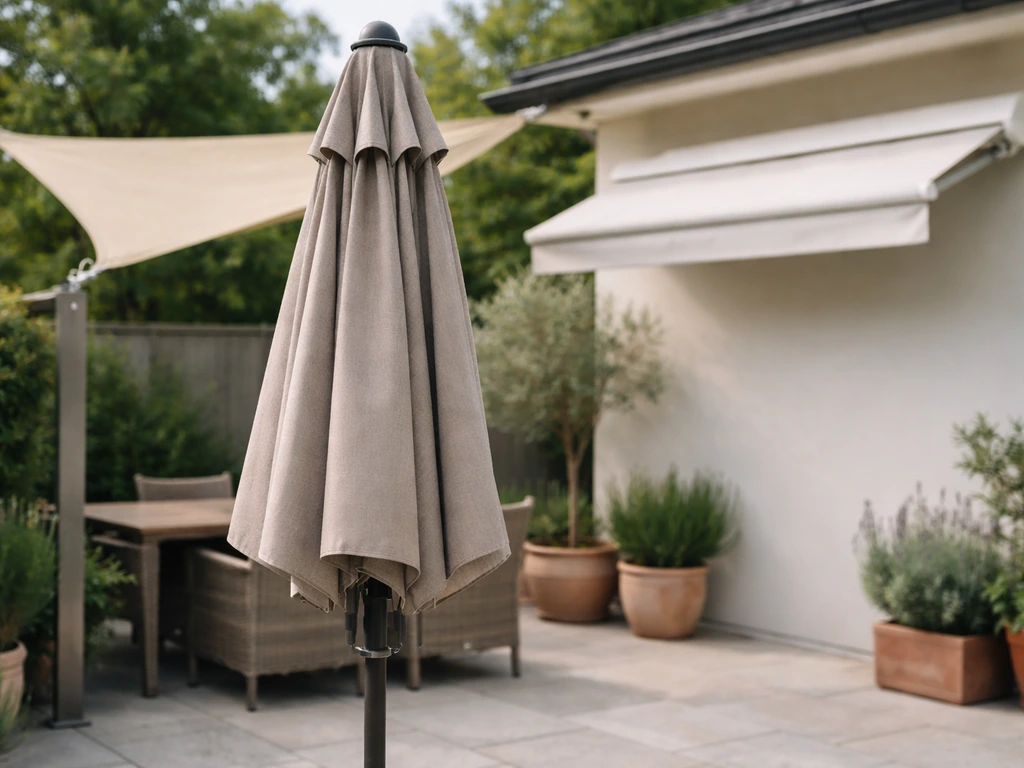
Here's the honest breakdown across the main categories people are actually buying in 2026. These are all-in numbers where installation is relevant, not just sticker prices.
| Shade Type | DIY / Product Cost | Professionally Installed Total | Typical Coverage |
|---|---|---|---|
| Patio umbrella | $50–$500 | No install needed | 7–11 ft diameter |
| Shade sail | $30–$300 | $150–$600 with hardware/posts | 100–400 sq ft |
| Manual retractable awning | $300–$1,200 | $800–$2,500 | 40–150 sq ft |
| Motorized retractable awning | $800–$3,000+ | $2,000–$6,500+ | 59–213 sq ft |
| Pergola shade structure | $500–$2,500 (kit) | $3,000–$15,000+ custom | 100–400+ sq ft |
| Outdoor roller shade / screen | $80–$400 per panel | $300–$1,200 installed | Per opening |
For retractable awnings specifically, the installed price consistently runs about $12.50–$30 per square foot when you factor in both the product and labor. A Sunsetter lateral-arm awning at 8 feet wide covers roughly 59 square feet of fabric area, while a 20-foot-wide model covers around 213 square feet. That scaling matters a lot when you're budgeting, because you're not just paying more for a bigger product, you're paying more per square foot for labor too, since wider spans require more mounting hardware and structural verification.
How material and build quality push the price up or down
Fabric is where budget shades cut corners most aggressively, and it's also where you feel the difference first. Entry-level polyester shade cloth (around 150–185 GSM) fades within two to three seasons in direct sun, loses UV-blocking performance, and tends to stretch or sag when wet. Mid-range solution-dyed acrylic fabrics like Sunbrella hold their color for 5–10 years, resist mildew, and maintain their UV-blocking rating (typically 95–98% UV block) throughout their lifespan. Premium solar screen fabrics add glare reduction on top of that. Expect to pay roughly 30–50% more for a Sunbrella fabric option versus standard polyester on the same frame.
Frame and hardware materials follow a similar pattern. Powder-coated aluminum frames are the sweet spot for most buyers: lightweight, rust-resistant, and durable in most climates. Cheaper galvanized steel frames are heavier and prone to rust at the joints within a few years, especially near the coast. Fiberglass ribs on shade sails and umbrella canopies flex rather than snap in wind, which is worth the upcharge if you're in a gusty area. For motorized awnings, the motor brand matters too. Somfy motors (common on mid-to-high-end awnings) carry better warranty support and quieter operation than generic import motors that often show up on budget units.
What UV rating and wind rating actually cost you
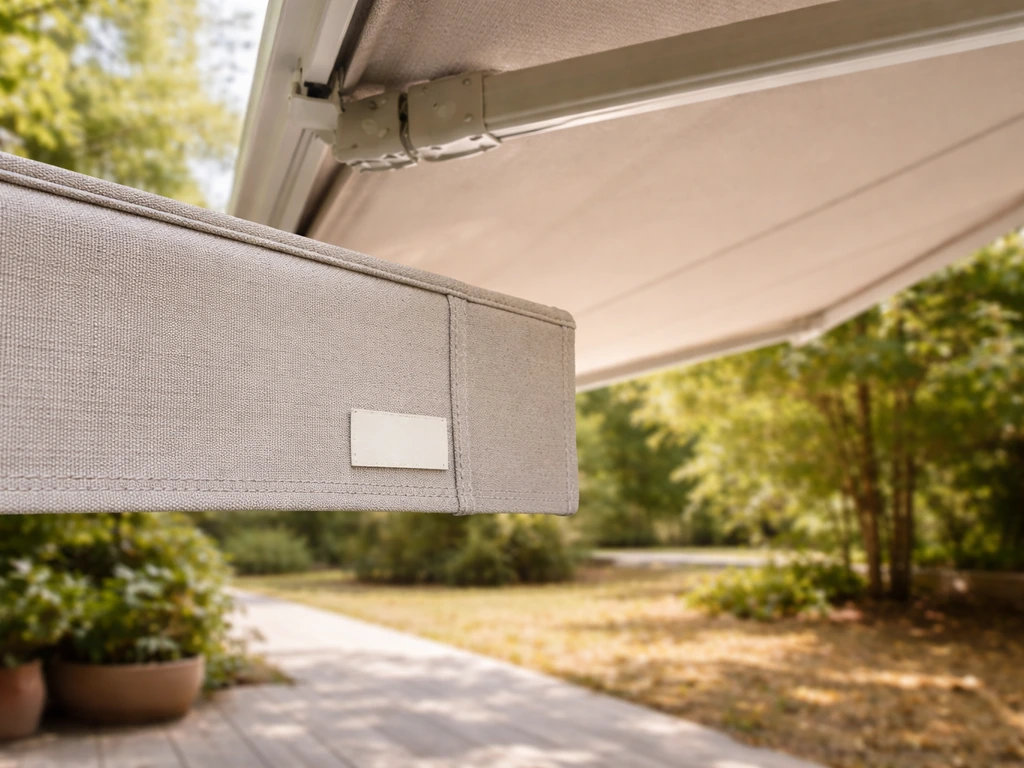
A shade with a certified wind rating (typically 28–45 mph for residential awnings) will cost more upfront but saves you money long-term because you're not retracting it every time a breeze picks up, and you're less likely to deal with a $400–$800 fabric replacement after a storm catches it extended. Wind-rated awnings usually use heavier-gauge arms, reinforced pitch hardware, and stronger fabric attachments. Budget about $200–$500 more for this feature on a manual awning, and $400–$800 more on a motorized unit.
Size, coverage area, and installation factors that change your total
The first thing to do before getting any quotes is measure your actual coverage need. Walk your patio at the time of day you use it most and note where the shadow falls short. Most people underestimate how much coverage they want and buy too small, then either live with a hot patio or buy again. A 10x10 foot patio typically needs at least a 12x12 foot shade to cover it adequately once you account for sun angle.
Installation complexity is the other major cost driver. Mounting a retractable awning to an existing wood or brick wall is straightforward and usually takes two to three hours for a two-person crew. Mounting to stucco, EIFS, or metal framing requires specialized anchors and often longer labor time, adding $100–$300 to the job. If there's no structural wall to attach to at all, you're looking at freestanding posts, which can add $300–$800 to the total depending on how they're anchored. For pergolas and permanent shade structures, permits may be required in most municipalities if the structure exceeds 200 square feet or is considered a permanent fixture, adding $50–$300 in permit fees and potentially a few days of wait time.
- Measure the exact area you want shaded, not just the patio footprint
- Check your wall type before getting quotes (wood framing, brick, stucco, metal)
- Ask whether your municipality requires a permit for the structure you're considering
- Note sun angle: south-facing patios need more coverage than north-facing ones
- Confirm whether electrical wiring is needed for motorized options (adds $200–$500 if not already in place)
DIY vs. professional installation: what to budget for each
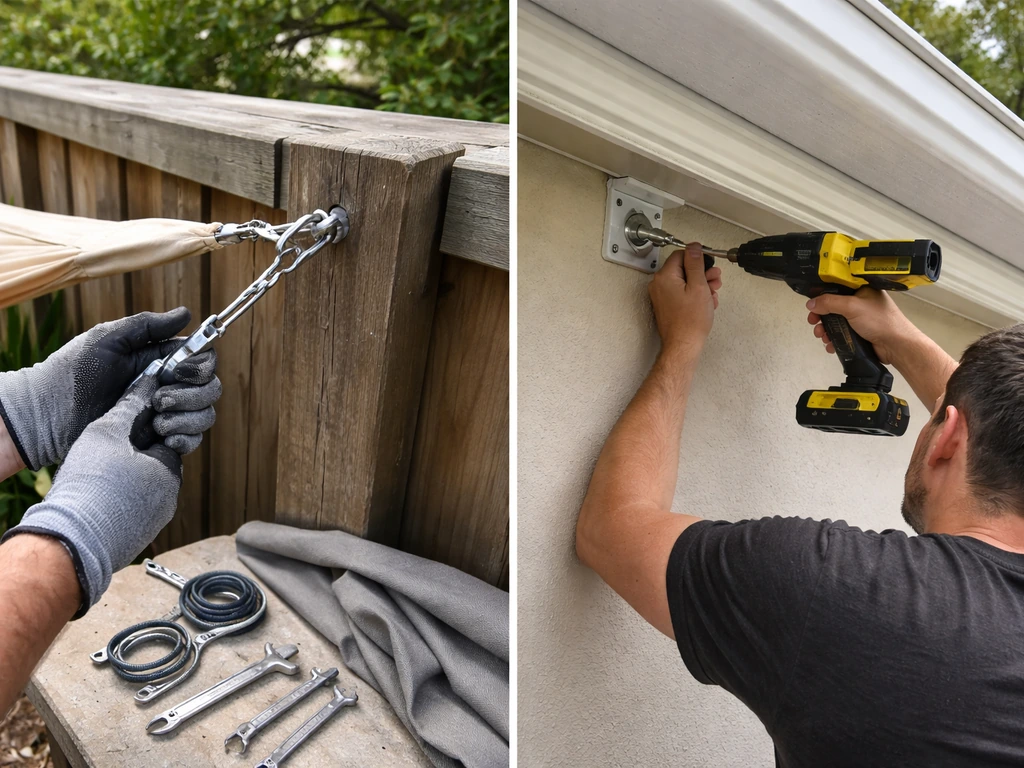
Shade sails and umbrellas are genuinely easy DIY projects. A shade sail with existing attachment points (a fence post, a house overhang, and a tree, for example) takes about two hours to install and costs nothing beyond the product. If you're setting posts in concrete to create those anchor points, add $50–$150 in materials and a few hours of weekend work. Manual roller shades for a covered patio or pergola are similarly manageable for anyone comfortable with a drill and a tape measure.
Retractable awnings are where most people make the mistake of going DIY to save money and end up calling a pro anyway. The mounting hardware has to be level, properly anchored into structural framing or masonry, and capable of holding 200–400+ pounds of dynamic load when the awning is extended in wind. An improperly mounted awning can pull out of the wall and cause serious damage. Professional installation for a mid-size retractable awning typically runs $300–$800 in labor, which is genuinely worth it. Some installers bundle product and labor together, which can obscure the labor cost, always ask for an itemized quote.
For motorized awnings, you'll also need an electrician if there's no outdoor outlet in the right location. Budget $200–$500 for that work depending on how far the circuit needs to run. This cost is often left out of initial quotes, so ask specifically about it upfront.
| Shade Type | DIY Feasibility | Typical Labor Cost if Hired | When to Hire a Pro |
|---|---|---|---|
| Shade sail | High | $100–$300 | Only if posts need to be set in concrete |
| Patio umbrella | Very High | N/A | Never necessary |
| Manual retractable awning | Medium | $300–$600 | If mounting into masonry or non-standard walls |
| Motorized retractable awning | Low | $400–$800 + electrician | Almost always recommended |
| Pergola (kit) | Medium | $1,000–$4,000+ | If custom-built or permit required |
| Outdoor roller shade | Medium–High | $150–$400 per panel | For multiple panels or complex mounting |
Ongoing costs: cleaning, repairs, and replacements
Patio shades are not set-and-forget purchases. Budget a small amount each year for maintenance, and a larger amount every several years for fabric replacement or hardware service.
Fabric cleaning is the most common maintenance task. Most shade fabrics should be cleaned once or twice a year with mild soap and water to prevent mildew buildup and extend fabric life. A bottle of Iosso Mold and Mildew Stain Remover or similar runs $15–$25 and handles most cases. Ignoring this is the fastest way to void your fabric warranty and cut its lifespan in half. If you have a retractable awning, never retract it while the fabric is wet, this is the single most common cause of premature mildew.
Fabric replacement is the biggest long-term cost to plan for. Replacement canopies for shade sails and umbrellas run $30–$200. Replacement fabric for a retractable awning is a bigger expense: figure $300–$800 for the fabric alone on a mid-size awning, plus $150–$300 for professional re-fabrication or installation if you're not doing it yourself. Quality solution-dyed acrylic fabrics like Sunbrella typically last 10–15 years with reasonable care. Budget polyester fabrics may need replacement in 3–5 years.
- Annual cleaning: $15–$50 in supplies, or $75–$150 if professionally cleaned
- Fabric replacement (shade sail or umbrella): $30–$200 every 3–10 years
- Fabric replacement (retractable awning): $300–$1,000 every 5–15 years depending on fabric quality
- Motor service or replacement (motorized awnings): $150–$400 every 8–15 years
- Spring/tension adjustment on manual awnings: $50–$150 per service call
- Hardware replacement (brackets, arms, mounting bolts): $20–$150 in parts
How to choose the right shade for your actual budget
Start by being honest about two things: how much you want to spend all-in, and how permanent you want the solution to be. Those two factors narrow the field faster than anything else. For a quick starting point, use a guide to the best patio covers for shade so you can compare options by coverage and budget. To get the best patio shade for your home, use your budget to narrow down the type, size, and installation approach before comparing prices.
If you're renting or just want to test whether shade actually changes how you use your patio, a quality shade sail (around $80–$200) or a large cantilever umbrella ($150–$400) is a low-risk starting point. If you want the best shade sail for patio, compare size, UV protection, and how the sail anchors to your space before you buy quality shade sail. Both are easy to take down, move, and store seasonally. Shade sails in particular offer excellent coverage per dollar and look clean in most patio settings. If you're researching shade sails specifically, there are dedicated guides covering the best shade sail options worth checking alongside this pricing breakdown.
If you own your home and use your patio regularly from spring through fall, a retractable awning is worth the investment. Manual versions (crank-operated) in the $800–$2,000 installed range are the practical sweet spot for most people. Motorized versions add convenience and, in some cases, wind sensors that auto-retract the awning in gusts, but they also add complexity and long-term maintenance cost.
If you want the full breakdown on retractable options, there are dedicated reviews of the best retractable sun shades for patios that compare specific models side by side. If you want to compare retractable options before you buy, use the best retractable sun shade for patio guide as a related shortlist to narrow models quickly.
If you're comparing options and want to see the most popular picks, check the best sun shades for patio guides alongside these retractable considerations. If you're shopping for the top rated sun shades for patios, compare options by coverage area, material, and how they handle wind.
For larger patios or situations where you want near-total overhead coverage, a pergola with shade cloth or a louvered roof system is the premium answer. When you are comparing options, the best shade cloth for a patio is typically the one that blocks the most UV while still fitting your coverage needs. These are permanent structures that add real value to your home, but the all-in cost typically starts around $3,000 and climbs quickly. Budget patio covers and shade cloth systems are also available in the $500–$2,000 range if you want a middle path between a freestanding umbrella and a full pergola.
| Budget Range | Best Option | What You Get | What You Give Up |
|---|---|---|---|
| Under $200 | Shade sail or basic umbrella | Fast setup, easy to move, decent coverage | Durability, aesthetics, wind performance |
| $200–$800 | Quality cantilever umbrella or premium shade sail with posts | Better materials, more coverage, nicer look | Permanence, full-area coverage |
| $800–$2,500 | Manual retractable awning (installed) | Solid coverage, adjustable pitch, durable | Motorization, widest spans |
| $2,500–$6,500+ | Motorized retractable awning (installed) | Convenience, wind sensors, premium fabric options | Cost, installation complexity |
| $5,000+ | Pergola or louvered roof system | Permanent, high-value, full coverage | Price, permits, timeline |
Where to buy and how to compare quotes without getting burned
For shade sails, umbrellas, and basic roller shades, online retailers like Amazon, Wayfair, and Home Depot are totally fine. You're buying a commodity product, and the price differences between retailers are often small. Read reviews carefully for any fabric product and look for verified buyer photos that show the shade after a season or two of use rather than brand-new unboxing shots.
For retractable awnings, you have three real options: buy online and self-install (highest risk, lowest cost), buy from a big-box store and hire local labor, or buy through a local awning dealer who handles both product and installation. Local dealers typically charge more overall but offer better customization, proper site assessment, and warranty support that actually functions. To narrow down options, compare reviews and rankings when shopping for top rated sun shades for patios. For a permanent installation you're planning to keep for 10+ years, the dealer route is usually worth the premium. For a mid-range motorized awning, expect dealer-installed pricing to run 15–30% higher than buying the same product online and hiring separate labor.
When getting quotes, always ask for itemized breakdowns. A quote that bundles product and labor into one number makes it impossible to compare apples to apples. Here's a simple checklist to run through with any installer or supplier:
- Ask for the product cost and labor cost listed separately
- Confirm what fabric type and weight is included (ask specifically for the GSM and material)
- Ask whether the quote includes mounting hardware and wall anchors or if those are extra
- Confirm whether electrical work is included if it's a motorized system
- Ask about permit requirements in your municipality and who handles the permit filing
- Get the warranty terms in writing: separate warranties for fabric, frame, and motor if applicable
- Ask how long the installation takes and what access to the house is required
- Get at least two or three quotes for anything over $1,000 installed
One last thing: before you finalize anything, measure your coverage area, note your wall type, and photograph the mounting location. Sending those details upfront when requesting quotes saves multiple back-and-forth conversations and usually gets you a more accurate number on the first try. Most people who end up overpaying or getting a bad installation skipped this step and let the contractor eyeball it.
FAQ
Are patio shade prices cheaper if I buy the fabric only, not a full awning?
Often, yes. Shade sail or umbrella canopy replacement is usually far less than replacing the frame, while retractable awning fabric-only replacements still run hundreds for the material plus labor if the roller and attachment parts need adjustment (many installers require a refit even if you supply the fabric).
How much more do patio shades cost if I need custom sizes instead of standard widths?
Custom sizing usually adds cost through extra fabric waste, longer lead times, and more labor for made-to-fit brackets. As a rule of thumb, expect a noticeable jump versus stock sizes for retractable awnings, and verify whether the quote includes patterning and custom mounting hardware.
What patio shade option is most cost-effective for a 10x12 or 12x12 patio?
For full coverage, the common mistake is buying a shade that matches the patio footprint instead of the full “sun angle” area. If you truly need overhead coverage on a 12x12, you typically budget more like a 14x14 or larger coverage pattern, which tends to push retractable awnings into the mid-range installed cost per square foot.
Do I need permits for patio shade structures every time I install one?
Not always, but it depends on permanence and size. Many areas treat fixed pergolas or attached shade systems as permanent when they exceed a threshold (often around 200 sq ft), while freestanding umbrellas and some retractable awnings may be exempt. Check local rules, especially for HOA neighborhoods, because HOA requirements can be stricter than city permits.
How do I compare quotes fairly between contractors for retractable awnings?
Make sure each quote includes the same coverage width, wind rating (if offered), motor brand, fabric type, and the exact mounting method (into studs, masonry anchors, or posts). Also confirm what “installation” includes, such as electrical hookup labor and any wall reinforcement or structural verification.
What’s the typical cost to add a motor to a manual retractable awning later?
Upgrading later is usually close to buying again rather than a simple conversion. Motorized retrofit often requires replacing or reworking the roller, wiring, and control components, so the cost can land in the same range as a new motorized installation, especially if the structure is not already wired appropriately.
Will wind ratings significantly change my cost and is it worth paying for?
Yes. Wind-rated awnings usually include heavier arms and reinforced attachments, which adds upfront cost (often a few hundred on manual units and more on motorized). It is typically worth it if your patio is exposed, gusty, or frequently sees storms, because fabric replacement after wind damage can be much more expensive than the premium.
How much should I budget for electricity and controls with a motorized awning?
If there is no properly located outdoor outlet, electricians typically add several hundred dollars depending on distance and how complex the run is. Also confirm whether the motor supports smart controls, remote options, or wind sensors, because those features can affect both the installed price and long-term maintenance needs.
What maintenance costs should I expect beyond cleaning?
Beyond annual cleaning, plan for hardware checks and possible part replacements. Typical items include roller components, motors or remotes (for motorized systems), and re-tensioning or seal/attachment adjustments, especially after seasonal weather changes.
How do I avoid paying for a fabric replacement sooner than expected?
The biggest preventable issue is storing or retracting while fabric is wet. If your system is retractable, keep it extended long enough to dry before closing, and clean mildew early, because delaying cleaning can reduce fabric life and can interfere with warranty coverage.
Can I DIY shade sails or basic roller shades to save money, and what are the risk points?
Yes for many shade sails and simple roller setups, but the risk is incorrect anchor placement and sag or misalignment. Pre-plan attachment points to hit solid structure, and if you are setting posts in concrete, account for permitting or HOA rules and ensure you match footing depth to your local conditions.
Are there extra “hidden” costs people forget to include in patio shade budgets?
Common add-ons include electrical work for motorization, structural reinforcement for mounting into walls, disposal of old hardware (if replacing), permits for permanent fixtures, and upgraded wind-rated fabric or longer warranty coverage. Always ask for an itemized breakdown so these items do not appear later as change orders.
Next Articles
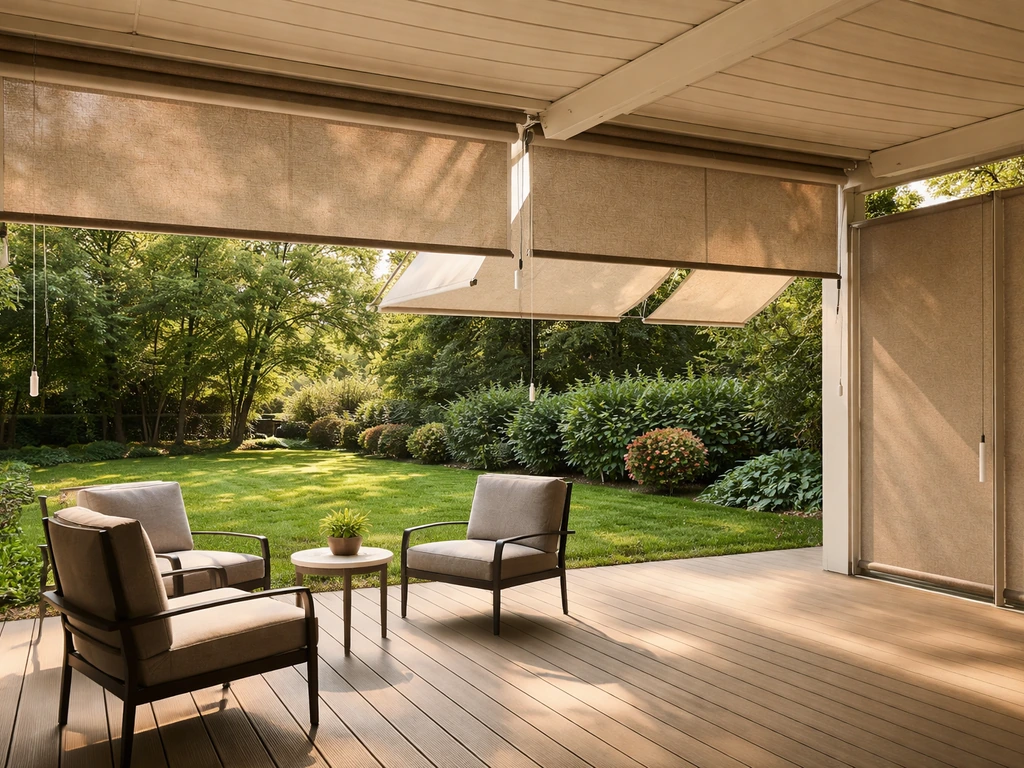
Manual Sun Shades for Patio: Buying, Sizing, and Setup Guide
Manual patio sun shades guide: styles, sizing, mounting, coverage, weather durability, and easy upkeep for DIY.
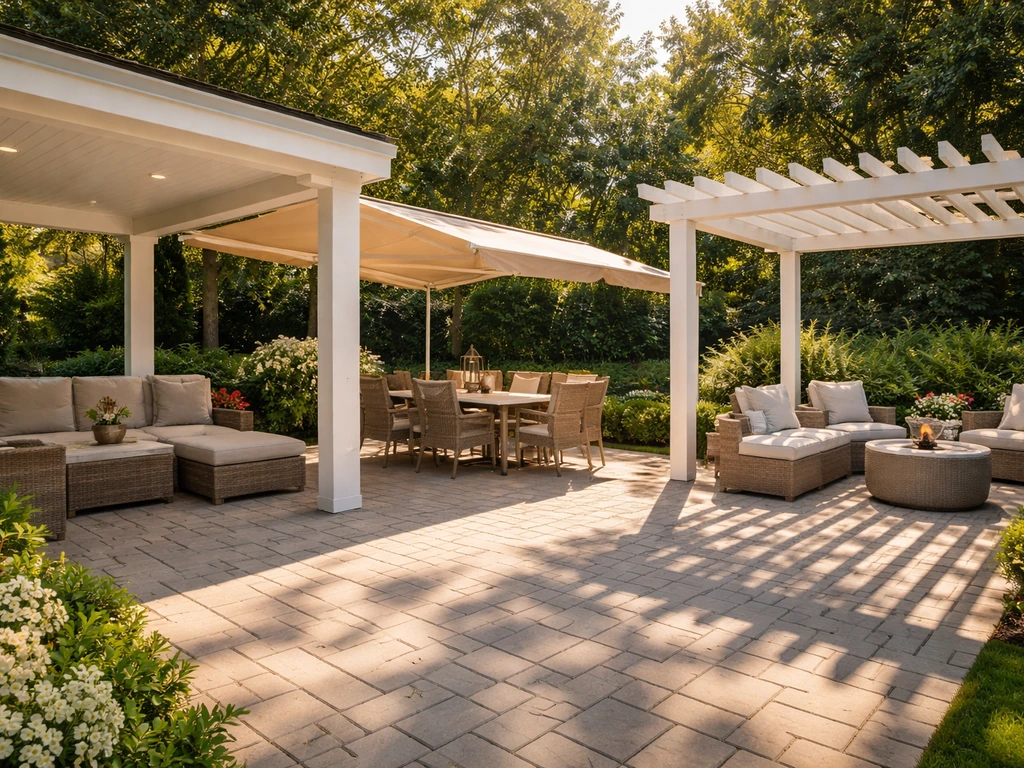
Best Patio Covers for Shade: How to Choose and Buy
Buying guide to choose the best patio covers for shade with solid, retractable, pergola options, fit and specs for your
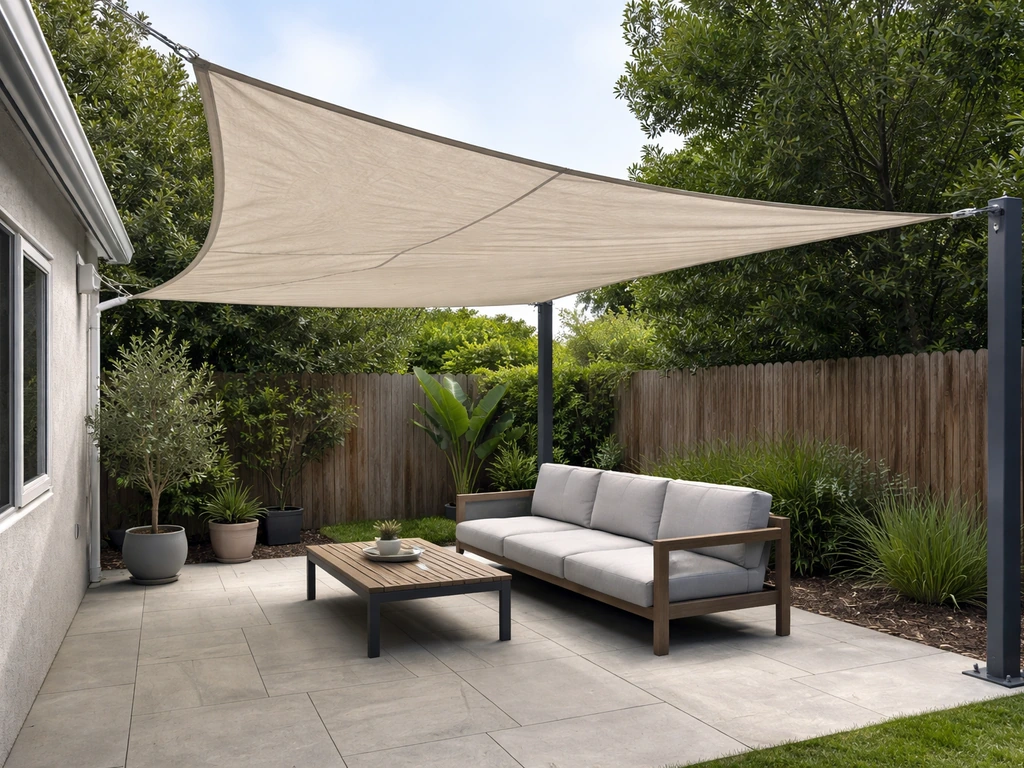
Best Shade Sail for Patio: Sizing, Materials, and Setup
Choose the best shade sail for patio with sizing, UV-ready materials, water shedding, wind setup, and easy installation