
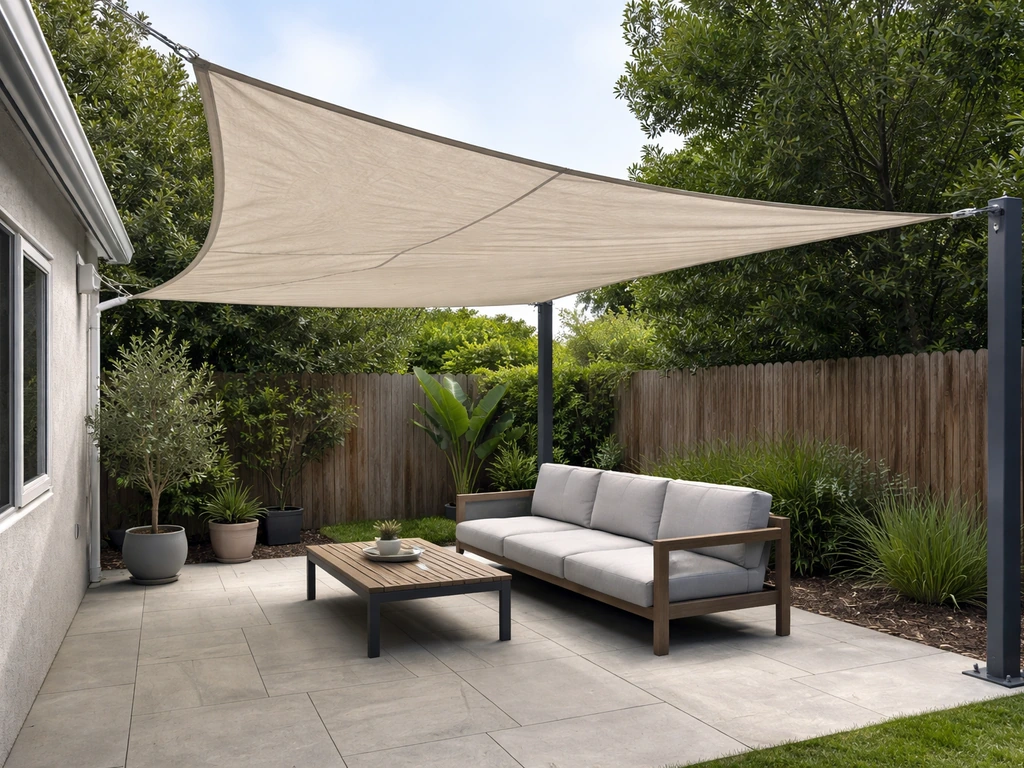
The best shade sail for most patios is a UV-stabilized HDPE mesh sail in a triangle or square shape, sized to cover your actual anchor points (not just your patio footprint), mounted at a minimum 20-degree slope so rain runs off instead of pooling. For a straightforward backyard setup, Coolaroo's ready-to-hang triangle is the easiest starting point, while Tenshon's TS-1217 is worth the higher price if you want a USA-made, complete kit with all hardware included. Custom sails from Shade Sails LLC or Maanta make sense for awkward layouts or large spans where off-the-shelf sizes won't cut it.
Best Shade Sail for Patio: Sizing, Materials, and Setup
Lark Perry
20 May 2026
How to pick the right size and shape for your patio
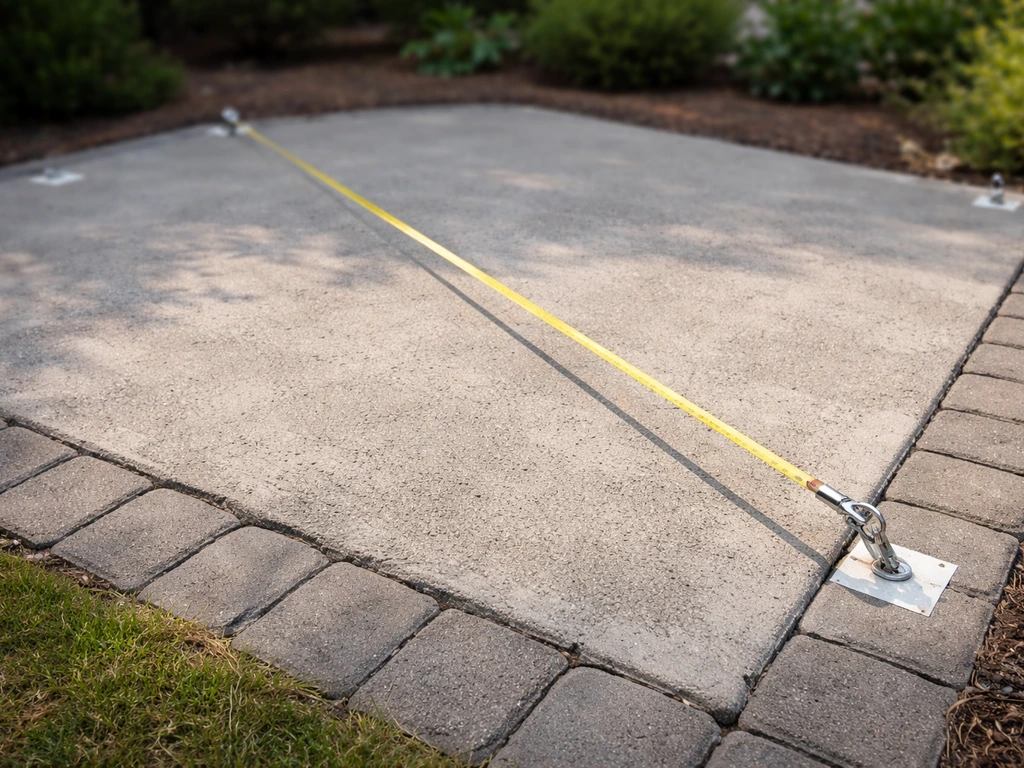
This is where most people get tripped up. You don't measure your patio and then order a matching sail. You measure between your actual anchor points, because that's what determines the sail's shape and how it tensions. The critical number is the diagonal distance between each corner attachment, not just the side lengths. Shade sail manufacturers specifically ask for these diagonals because the fabric is cut and sewn around them. If you skip this step and just estimate from your patio's perimeter, you'll end up with a sail that either doesn't reach, or worse, fits too loosely to tension properly.
Here's the practical approach: mark out where each attachment point will be (wall brackets, posts, or existing structures), then measure the diagonal distance between each pair of corners. If your posts are at different heights, your diagonal measurement will be slightly longer than the horizontal distance, so always measure along the actual line the sail edge will travel. Also account for the hardware. You need several inches at each corner for the D-ring, snap hook, rope, and turnbuckle, so the sail itself should be slightly smaller than the full anchor-to-anchor span.
For shape, triangles are the most popular and easiest to tension, but they cover less area than a square or rectangle of similar span. Squares and rectangles work well for wide open patios where you want maximum shade. Odd or angled layouts, like an L-shaped patio or a space with five fixed walls, usually need a custom-cut sail or multiple overlapping sails rather than one large off-the-shelf shape.
- Measure diagonal distances between anchor points, not just side lengths
- Subtract hardware clearance (usually 6 to 12 inches per corner) from your anchor-to-anchor measurement
- Triangle sails: easier to tension, best for corner-to-corner coverage in tight spaces
- Square/rectangle sails: better for wide patios, more total shade per dollar
- Multiple smaller sails: the right call for irregular or L-shaped layouts
- Plan your anchor point heights before ordering, since uneven heights create the slope you need
Fabric types and what they actually do
Nearly every shade sail you'll find uses one of two fabric types: breathable HDPE mesh or waterproof solid fabric. They behave very differently, and the wrong choice will frustrate you within the first summer.
Breathable HDPE mesh
This is the standard for residential shade sails, and for good reason. The woven mesh lets air pass through, which does two things. First, it dramatically reduces wind loading on the sail, because wind passes through rather than pushing against a solid surface. Second, it keeps the space underneath cooler, since hot air doesn't get trapped. Coolaroo's HDPE sails block up to 95% of UV rays, and their shade cloth products reach 90% UV block. If you are shopping for the best shade cloth for a patio, look for UV-blocking HDPE mesh because it cools the area while letting air pass through best shade cloth for patio. That's enough to prevent sunburn and protect outdoor furniture from fading. The tradeoff is that light rain passes through the fabric, so these sails won't keep you dry in a shower.
Waterproof solid fabric
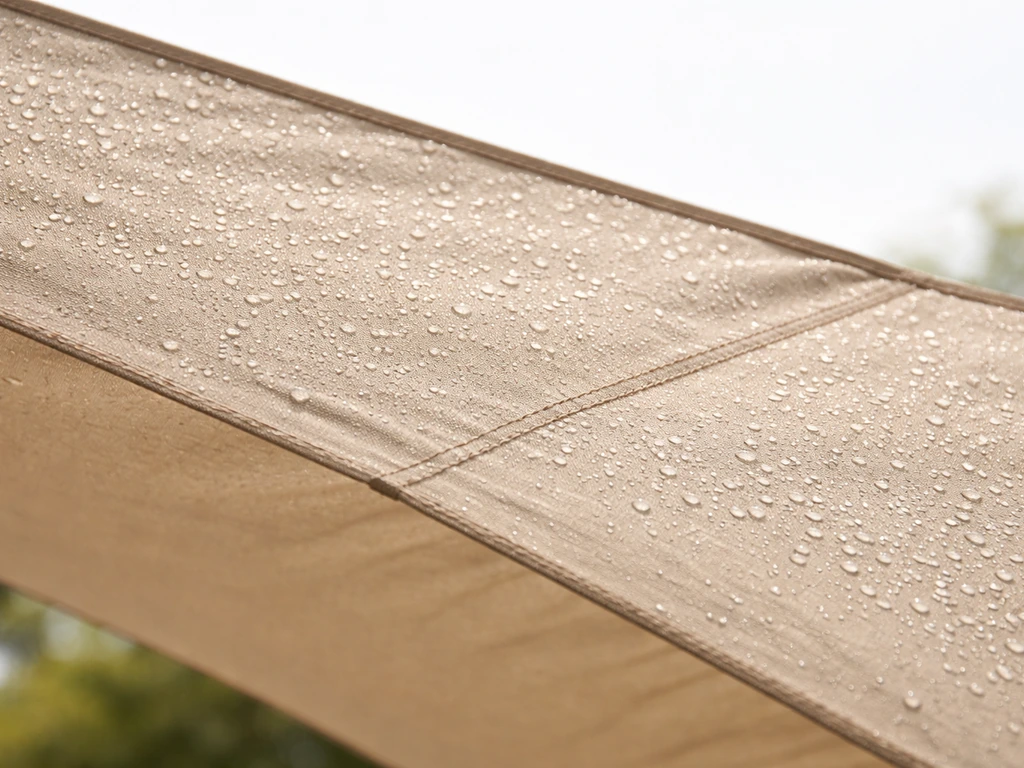
Waterproof sails keep rain out, which sounds like an obvious upgrade, but they come with real downsides. Because wind can't pass through, solid fabric sails experience significantly higher wind loads. They also trap heat underneath and require more precise installation with steeper drainage angles to prevent water from pooling in the center. If you're in a high-wind area, a breathable mesh sail will almost always be the safer and longer-lasting choice. Waterproof sails make most sense for covered dining areas with protected mounting structures in mild-wind climates.
| Feature | Breathable HDPE Mesh | Waterproof Solid Fabric |
|---|---|---|
| UV protection | Up to 90–95% block | High, varies by product |
| Rain protection | Light drizzle only | Full rain protection |
| Wind resistance | Better (air passes through) | Higher wind loading, more stress on hardware |
| Heat underneath | Cooler (airflow) | Can trap heat |
| Drainage risk | Low (drains through fabric) | High if slope is inadequate |
| Best for | Most residential patios | Sheltered dining areas in mild climates |
For most homeowners, breathable HDPE mesh is the right call. It's more forgiving to install, handles wind better, and still delivers serious UV protection. If staying dry is the priority, look into retractable patio covers or permanent patio cover structures, which handle rain more reliably than any shade sail. If you want the most flexibility, compare this option with the best retractable sun shade for patio setups retractable patio covers or permanent patio cover structures.
Mounting options, posts, and getting the tension right
Installation is where shade sails either work beautifully or become a flapping, sagging headache. The two biggest factors are anchor strength and proper slope. Every corner of a shade sail pulls outward with significant force when tensioned correctly, so whatever you're attaching to (wall, post, or fence) needs to handle that load. A toggle-style stainless turnbuckle rated to 5,500 lbs breaking load is typical for residential installs, and your mounting brackets or posts need to match.
Wall and fascia mounting
If you're attaching to a house wall or fascia, use purpose-made shade sail eye bolts or pad eyes rated for the load. Fascia mounting requires specific hardware designed to spread the load without pulling the fascia board away from the house. Don't improvise with general-purpose hooks here. The anchor bolt needs to go into structural framing, not just the cladding.
Freestanding posts
Posts give you the most flexibility, especially if you have no convenient walls. Steel or wood posts set in concrete footings are the standard approach. The posts should lean slightly outward, away from the sail's center, to compensate for the inward pull when the sail is tensioned. Coolaroo's installation guide includes base drainage guidance, recommending gravel at the base of fixed posts to manage water runoff around the footing.
Tensioning and slope
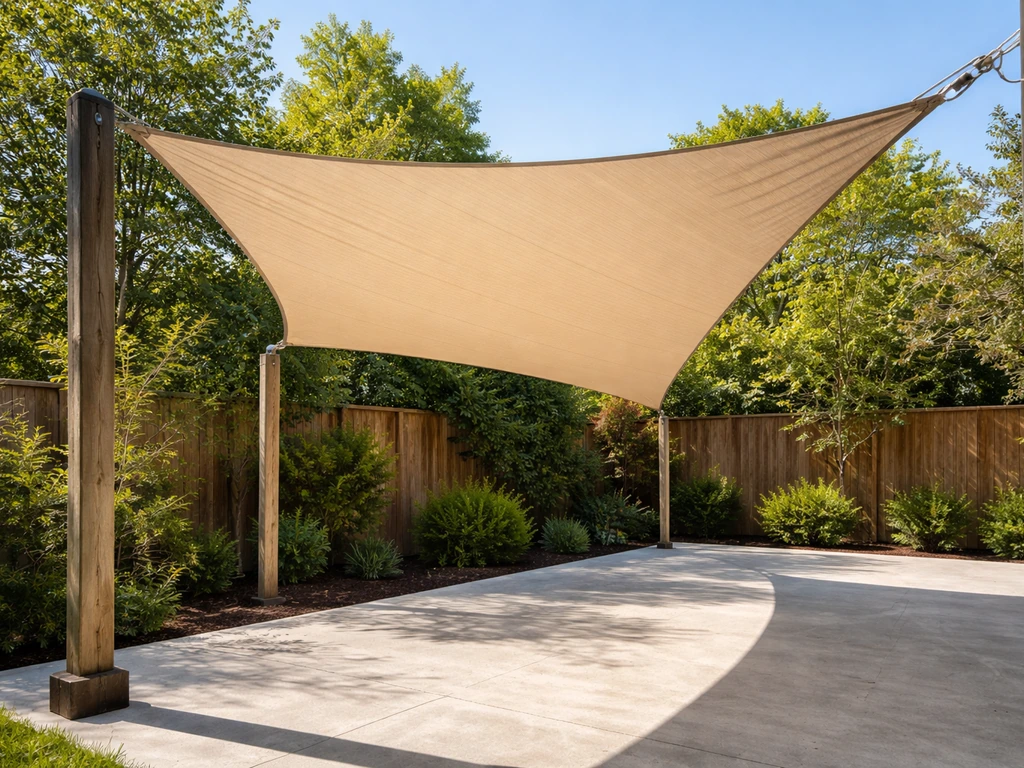
This is the most important installation detail. Every shade sail needs at least one corner positioned higher than the others to create a slope. The minimum recommended slope is 20 degrees, and the preferred range for rain drainage is 20 to 30 degrees. Without adequate slope, water collects in the center, adding weight, stretching the fabric, and putting enormous stress on the attachment points. For triangular sails, the classic setup is one corner at a lower height with the other two higher, which channels rain toward that low corner and off the edge. For square sails, Bob Vila's testing recommends using two snap hooks on one side and two turnbuckles on the opposite side, tightening the turnbuckles gradually and evenly to balance tension across all four corners.
A critical warning: if you need to extend more than one corner with rope or chain to reach your anchor points, be careful. Shade Sails LLC specifically warns that extending two or more corners with cable or rope allows the sail to move excessively in wind, which creates shock loads that shorten the sail's lifespan significantly. Keep extensions minimal and make them rigid where possible.
- Set your anchor points so at least one corner is 20 to 30 degrees lower than the others
- Use load-rated stainless hardware at every corner (snap hooks, D-rings, turnbuckles)
- For triangle sails: one snap hook, two turnbuckles is the standard layout
- For square/rectangle sails: two snap hooks on one side, two turnbuckles on the opposite side
- Tighten turnbuckles gradually, alternating corners, until the fabric is drum-tight with no sag
- Avoid extending more than one corner with rope or chain
Best shade sail picks by patio type
There's no single best shade sail for every situation. Here's how to match the right product to your specific setup.
Small balcony or apartment patio (under 10 x 10 feet)
Budget options in the $29 to $48 range work fine here. A single triangle sail is usually enough coverage and the easiest to tension in a confined space. Coolaroo's 10-foot equilateral triangle ready-to-hang kit is purpose-built for this use case. Keep in mind that most budget sails at this price point don't include hardware, so factor in the cost of eye bolts, snap hooks, and turnbuckles separately. Total installed cost is typically $60 to $100 for a small balcony setup. If you want a quick estimate before shopping, the overall price question of how much do patio shades cost is usually driven by size, fabric type, and whether you buy a kit with hardware included.
Mid-size backyard patio (10 x 10 to 16 x 16 feet)
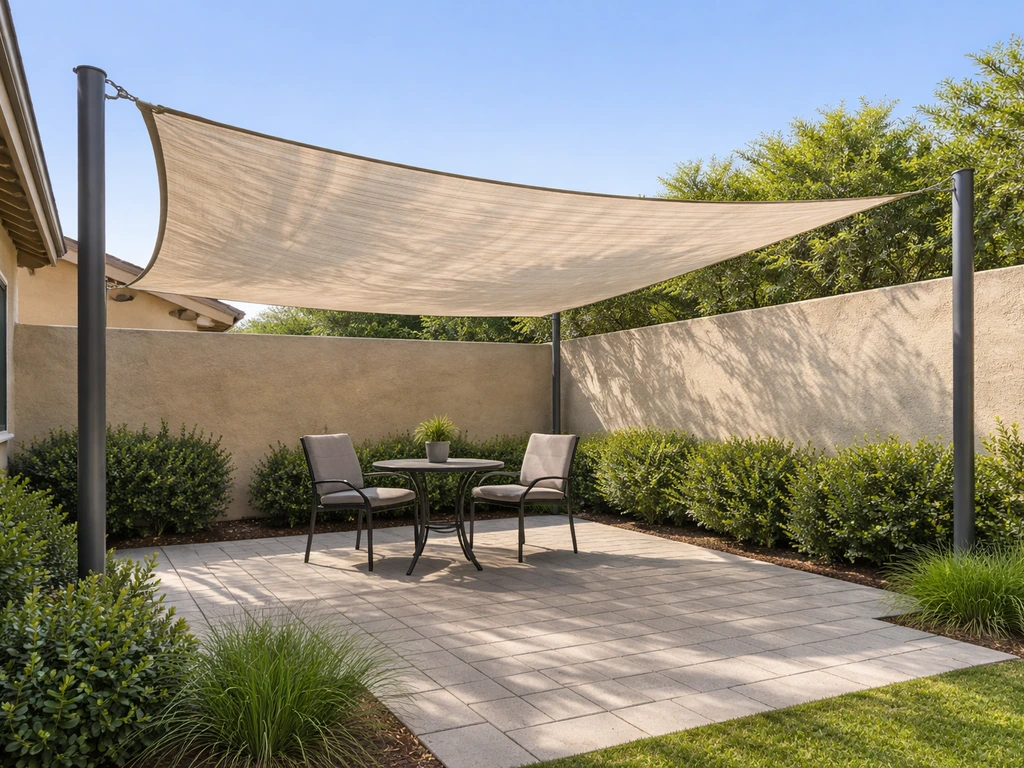
This is the most common scenario, and square or rectangle sails shine here. You get more shade per dollar than triangles, and you have more room to set posts at the right heights. A complete kit like Tenshon's TS-1217 (priced around $545) is worth considering if you want USA-made HDPE fabric with UV-stabilized thread and all hardware included. The all-in-one kit approach eliminates the guesswork of sourcing compatible hardware separately, which matters if you haven't done this before.
Wide open backyard (over 16 feet in any direction)
Large spans need either multiple overlapping sails or custom-fabricated options. Overlapping two or three triangle sails in a staggered arrangement creates good coverage while keeping each individual sail at a manageable tension load. For a cleaner look and better engineering, a custom sail from Shade Sails LLC (rated to handle winds up to 85 mph for their engineered custom products) or a similar custom fabricator gives you precise sizing and proper load calculations for the span.
Angled or irregular layout (L-shaped, multiple walls, odd angles)
Don't try to force a standard shape onto an irregular space. Instead, identify the anchor points you actually have, measure the diagonals carefully, and either order a custom sail cut to those specific diagonal measurements or use multiple smaller standard sails. Maanta's Solaria Breathable is a good option for irregular layouts because its radial-cut design distributes tension more evenly across non-standard geometries, and its adjustable perimeter straps give you some flexibility during final installation.
Heat, glare, wind, and rain: what to expect in real weather
A good shade sail handles everyday sun and moderate wind without drama, but knowing its limits helps you avoid damage and disappointment.
Sun and heat
A quality HDPE mesh sail blocking 90 to 95% of UV creates a noticeably cooler zone underneath, both by blocking direct solar radiation and by allowing airflow. For maximum glare reduction, position the sail so it intercepts the sun during your highest-use hours, typically late morning through mid-afternoon. Think about your sun angle seasonally too, since a sail that works perfectly in summer may let in low-angle winter sun from a different direction. Planning your anchor point heights around your typical sun angle at peak use hours makes a real difference.
Wind
Breathable HDPE mesh handles wind far better than solid fabric because air passes through the weave rather than loading the sail like a parachute. Maanta's Solaria Breathable is rated to 40 mph wind resistance with its radial-cut design. Standard off-the-shelf mesh sails handle normal residential wind conditions well when properly tensioned. If you're in an exposed location with frequent gusts, a radial-cut design with proper tensioning hardware is worth the extra investment. In severe storm conditions, taking the sail down is always the right call.
Rain
Breathable mesh sails drain rain through the fabric itself, which actually makes them low-maintenance in wet weather as long as the slope is right. The 20-degree minimum slope guideline exists precisely for this: without slope, even a mesh sail can hold a temporary puddle in the center after heavy rain, adding load and stress. If you're specifically shopping for the top rated sun shades for patios, focus on UV blocking, wind performance, and the right slope for drainage. Waterproof sails need even more attention to slope because all water has to run off the edges. A 20 to 30 degree slope on a waterproof sail is not optional; it's required for the sail to function safely.
Keeping your shade sail in good shape long-term
A well-installed and maintained shade sail should last 5 to 10 years or more. The fabric degrades from UV exposure over time (even UV-stabilized fabric eventually breaks down), but hardware and tensioning problems are usually what shorten a sail's life prematurely.
Cleaning
Rinse the sail with a garden hose a few times per season to clear dust, pollen, and bird droppings. For deeper cleaning, Coolaroo recommends a solution of mild detergent and water. Don't use bleach or harsh chemicals, which degrade UV inhibitors in the fabric. Let the sail air dry completely before restoring tension, since HDPE can shrink slightly when wet and then relax when dry.
Tensioning checks
Check tension at the start of each season and after any major storm. The warning signs that your sail needs retensioning are visible sag in the center, water pooling after rain, and increased flutter or flapping in light wind. Any of those three means the sail isn't tight enough. Work the turnbuckles gradually, corner by corner, until the sail is taut and the edges are straight. An under-tensioned sail doesn't just look bad; it flaps in wind, which causes fabric fatigue and hardware stress over time.
Hardware inspection
Check every D-ring, snap hook, turnbuckle, and anchor bolt at least once a year. Look for rust, cracking, or any movement at the wall or post anchor. Stainless steel hardware lasts much longer than zinc-coated alternatives in outdoor conditions. Replace any hardware that shows corrosion before it fails under load. If anchor bolts in masonry feel loose, re-anchor them before retensioning the sail.
Seasonal storage
In regions with heavy snow or ice, take the sail down for winter. Snow load on a shade sail, even a breathable mesh, can exceed what the fabric and hardware are rated to handle. Fold the sail loosely, store it in a dry location, and inspect the edges and corner reinforcements before reinstalling in spring. Coolaroo describes their shade sails as intended for semi-permanent use, which means seasonal take-down is part of the expected maintenance cycle, not a workaround.
If you're comparing shade sails to other shading approaches, it's worth knowing where they fit in the wider picture. Shade sails are more flexible and far cheaper than permanent patio covers, but they don't fully replace a solid overhead structure in heavy rain. If you want more control over how much sun your patio gets throughout the day, manual sun shades for patio can be a practical alternative to a fixed shade sail. If you're comparing options, this guide on the best sun shades for patio can help you pick the right type for your space and weather shade sail. For patios where rain protection is a priority alongside UV blocking, exploring the best patio covers for shade or retractable sun shade options might complement or replace a shade sail depending on your climate and budget. If you want the best patio shade, focus on UV coverage plus the right size and slope so it stays taut and effective all season.
FAQ
Can I mount a best shade sail for patio on vinyl siding or other non-structural surfaces?
You should avoid non-structural coverings like vinyl siding, gutters, or thin trim. Even if the bracket seems secure, shade sail corner loads pull outward and can loosen the attachment over time. Use anchors that land in structural framing, or switch to posts or purpose-made mounting brackets designed for that wall type.
What if my diagonal measurements don’t match between corners, can I still use an off-the-shelf shade sail?
If the corner-to-corner diagonals differ from the sail’s sewn dimensions, the sail will either not reach or will not tension evenly. In that case, measure again along the intended sail edge path (including any height differences), then choose a custom sail or use multiple smaller sails so each section matches its own diagonals.
How tight should the sail be when it is tensioned?
Tension until the edges are straight and the fabric looks uniformly taut, but do not overtighten beyond a “no sag” look. Over-tensioning increases peak stress at the D-rings and turnbuckles and can shorten hardware life. Recheck tension after the first rain and after a hot day, since heat cycles can slightly change fabric tension.
Should I use rope, chain, or cable extensions at corner attachments?
Minimize extensions. Extending two or more corners with flexible rope or cable can allow excess movement in wind, creating shock loads and accelerating wear. If you must extend one corner, keep it as short as possible and use more rigid hardware where practical, then verify you still achieve the required 20 to 30 degree slope.
Does a mesh shade sail really let rain through, or will it pool?
Mesh HDPE breathes, so light rain passes through rather than “holding” a blanket of water. If slope is insufficient, even mesh can still hold temporary water in the center after heavier rain, which adds weight and stresses anchors. The fix is correcting slope and ensuring water has a clear runoff path off the sail edges.
What slope angle should I choose if I’m in a rainy climate?
Use at least 20 degrees for drainage, and aim for roughly 20 to 30 degrees for more reliable runoff. If your mounting points force a flatter angle, consider a different solution like a retractable cover or a permanent patio cover, because flatter shade sails are more likely to sag and trap water.
Is it better to buy a complete kit or piece together hardware for the best shade sail for patio?
A kit is usually safer if you are new to installation because the hardware pieces are selected as a compatible set (correct ratings and fit). If you piece it together, you must match the sail’s corner hardware requirements, the turnbuckle load rating, and the anchor type for your mounting surface, otherwise tensioning may fail or corners may not seat correctly.
What hardware rating should I look for on turnbuckles and anchors?
Choose hardware rated for the actual corner loads, and do not rely on generic hooks or low-rated hardware. Many residential installs use stainless turnbuckles with high breaking-load ratings and properly matched mounting brackets or eye bolts rated for load transfer. When in doubt, use manufacturer-rated hardware for your sail and mounting method.
Can I install a shade sail over a deck without damaging the structure?
Yes, but you should avoid attaching to deck boards or railings. Corner loads travel through fasteners into the supporting framing or posts. If you only have railing or fascia as an anchor, consider switching to posts with concrete footings, or use a mounting strategy that reaches structural elements.
How do I clean and maintain a HDPE mesh shade sail without damaging UV protection?
Rinse periodically to remove pollen, dust, and bird debris. For deeper cleaning, use mild detergent and water, then let it fully air dry before retensioning. Avoid bleach or harsh chemicals because they can degrade the UV inhibitors, and always inspect D-rings and stitching at the corners after cleaning.
Do I need to remove my shade sail during winter or heavy storms?
In areas with snow or frequent ice, take it down for the season since snow load can exceed design limits. For severe storms with strong winds, removing it is still the safest choice. For normal winter conditions, seasonal inspection and ensuring proper slack or retension can reduce stress on anchors and hardware.
Why does my sail flutter or sag after installation, what should I check first?
The most common causes are under-tensioned corners, incorrect slope, or a mounting point that has shifted or loosened. Start by checking tension at each turnbuckle, confirm the sail still forms a clear drainage slope, and inspect every D-ring and anchor bolt for movement. Retension gradually and recheck after the first rain or temperature swing.
How long can I expect the best shade sail for patio to last?
Many well-installed shade sails last about 5 to 10 years, with UV exposure being the main fabric-limiting factor and hardware issues being the most common reason for earlier failure. Regular rinsing, annual hardware checks, and retensioning after storms help prevent premature wear at corner points.
Next Articles
Best Retractable Sun Shade for Patio: Manual Guide
Choose the best manual retractable sun shade for your patio with fit, mounting, wind, and maintenance tips plus cost com
Best Patio Shade: Buy, Size, and Choose the Right Option
Find the best patio shade by mapping sun exposure, comparing top options, and getting size, cost, and install tips.
Best Sun Shades for Patio: Buyer Guide by Space
Buyer guide to pick the best sun shades for patio: coverage, materials, wind safety, mounting, costs, and setup tips.