
The best patio cover for shade depends on three things: how much direct sun hits your patio and from which direction, how much weather protection you need beyond just shade, and your budget. For most homeowners, a retractable awning with Sunbrella-grade fabric is the best all-around pick: it handles sun and heat reduction well, folds away when you don't need it, and runs $1,500 to $4,500 installed for a mid-size patio. If you want something more permanent and rain-ready, a solid insulated panel cover or a bioclimatic louvered pergola is worth the higher cost. If budget is tight, a quality shade sail or shade cloth setup can do a solid job for a fraction of the price.
Best Patio Covers for Shade: How to Choose and Buy
Lark Perry
24 May 2026
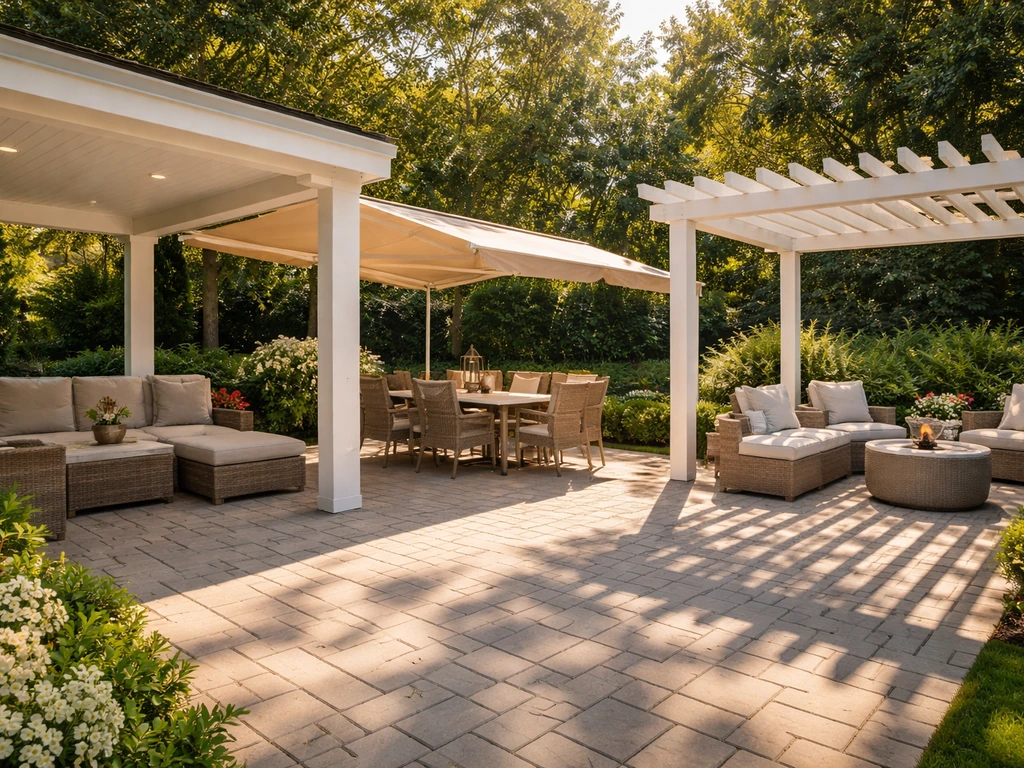
Why you need a patio cover for shade (and what to measure first)
Shade isn't just about comfort. The U.S. Department of Energy has documented that proper shading can cut solar heat gain by up to 65% on south-facing exposures and up to 77% on west-facing ones. That's the difference between a patio you avoid from noon onward and one you actually use through the afternoon. Combined shading and evapotranspiration from nearby trees can drop surrounding air temperatures by as much as 6°F, which means even a modest shade setup meaningfully changes the feel of your outdoor space.
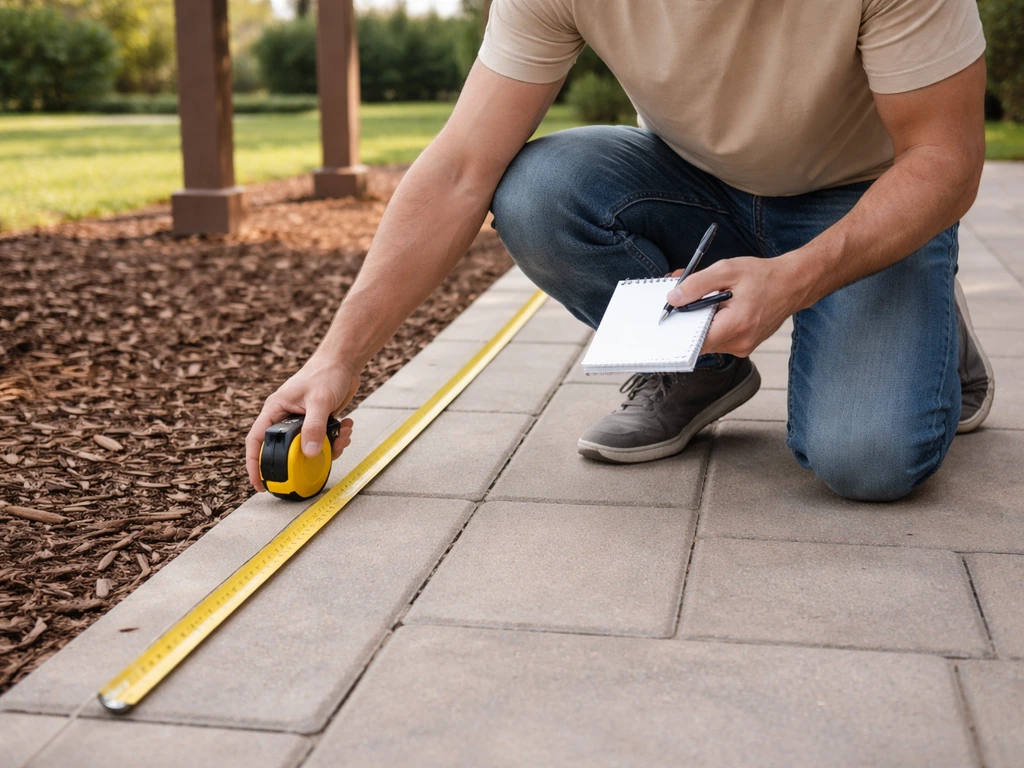
Before you buy anything, measure your patio carefully. The most common mistake people make is sizing a cover to match the exact footprint of their patio and then wondering why half the space is still in direct sun by 3 p.m. Sun angle shifts throughout the day, so your cover needs to extend beyond the edges of what you're actually trying to shade. A good rule: add at least 12 to 18 inches on the sides most exposed to low-angle afternoon sun. You'll also need to know your wall mounting height. Awnings, for example, should be installed so the lowest point clears 7 feet 6 inches from the patio floor for comfortable headroom, and the mounting bracket itself requires 8 to 12 inches of wall space above that. Measure from the mounting surface down to the floor before you order anything.
Also check with your local building department before you commit. Some municipalities regulate patio cover size, placement relative to lot lines, and even freestanding structure dimensions. California, Portland, and many other jurisdictions have specific load requirements for awnings and patio covers (minimum 10 psf vertical live load under the International Residential Code, and up to 15 psf in higher-snow or wind-load areas). For example, the IRC BE1 patio cover design requirements specify that patio covers must sustain dead loads plus a minimum vertical live load of 10 psf, with snow-load exceptions when snow loads exceed that minimum minimum 10 psf vertical live load under the International Residential Code. If you're going with a permanent structure, a permit is almost always required.
Shade coverage options: solid vs open vs adjustable systems
There are three broad categories of patio cover, and they perform very differently when it comes to shade, airflow, rain protection, and flexibility.
Solid/roof-style covers
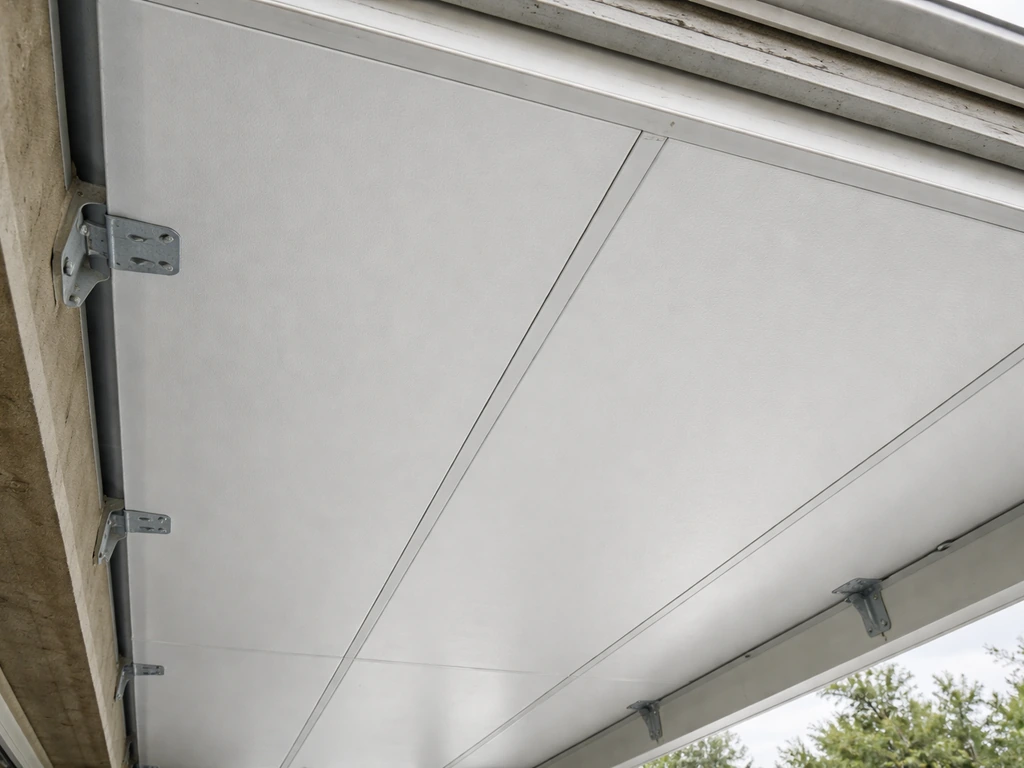
These are permanent structures: insulated aluminum panels, polycarbonate glazing, wood roofs, or patio room enclosures. They provide 100% shade directly underneath and can include meaningful thermal insulation. Insulated panel systems require you to choose panel thickness based on roof projection size, local snow load, and the R-value you need. Polycarbonate panels let in diffused light while still blocking direct solar gain. Solid covers are the most protective option but also the most expensive and least flexible. You can't dial back the shade on a bright spring morning when you actually want sun.
Open and semi-open systems
Traditional pergolas with open slats, shade sails, and shade cloth all fall here. If you are comparing open-slat pergolas with other options, the best shade cloth for patio setups is usually the one that matches your UV and coverage needs. They filter sun rather than block it completely, which keeps airflow up and prevents that closed-in feeling. The actual shade performance depends heavily on material density. A shade cloth with a tight weave can block 70 to 90% of UV, while an open-slat pergola on its own might only block 30 to 50% depending on slat angle and time of day. If you're looking at shade sails or shade cloth specifically, those are worth a deeper look as standalone options.
Adjustable systems: retractable awnings and louvered pergolas
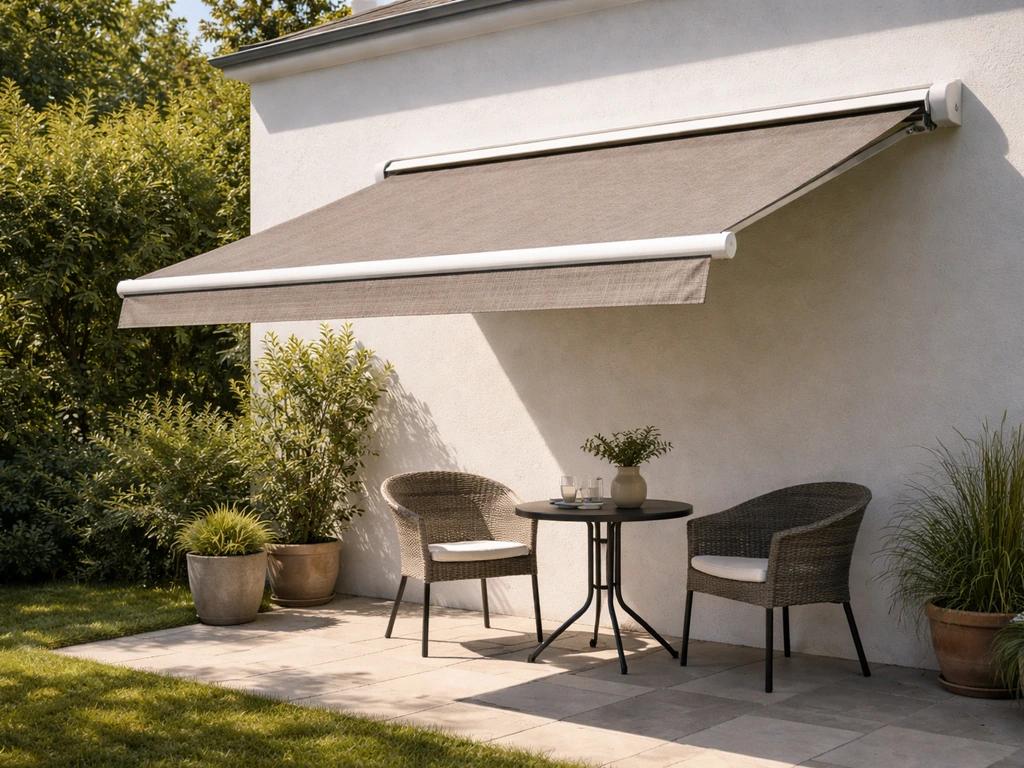
These are the most flexible options and, for most people, the most practical. Retractable awnings extend when you want shade and retract when you don't. Higher-end motorized versions include wind sensors that automatically retract the awning when gusts hit around 25 mph, which protects the fabric and frame. If you are specifically after the best retractable sun shade for patio, pay close attention to wind ratings, projection size, and whether the awning includes automatic sensor retraction. Louvered pergolas use rotating aluminum blades that you control via remote or app. Open the louvers for full airflow and sun, angle them to filter glare, or close them completely for shade. Premium bioclimatic systems like those from LuxaShade rotate up to 115 degrees and interlock when closed to form a watertight roof with integrated drainage channels. That's a fundamentally different product from a basic louvered pergola, which may manage light well but offer limited rain protection. The Sunshadow ES system, for example, explicitly notes it lacks a gutter system for proper water drainage, so not every louvered product delivers the same protection.
| Cover Type | Shade Level | Rain Protection | Flexibility | Relative Cost |
|---|---|---|---|---|
| Solid insulated roof | 100% | Full (weathertight) | None | $$$$ |
| Polycarbonate panel roof | High (diffused light) | Full (weathertight) | None | $$$–$$$$ |
| Bioclimatic louvered pergola | Adjustable 0–100% | Full when closed (with drainage) | High | $$$$ |
| Basic louvered pergola | Adjustable | Partial (no gutters) | High | $$$ |
| Motorized retractable awning | High when extended | Light rain only | High | $$–$$$ |
| Manual retractable awning | High when extended | Light rain only | Medium | $–$$ |
| Shade sail / shade cloth | Medium–High | None | Low–Medium | $ |
Materials that block sun and heat and resist weather
The cover type sets the structure, but the material determines actual shade and heat performance. Here's what matters most for each category.
Fabric awnings
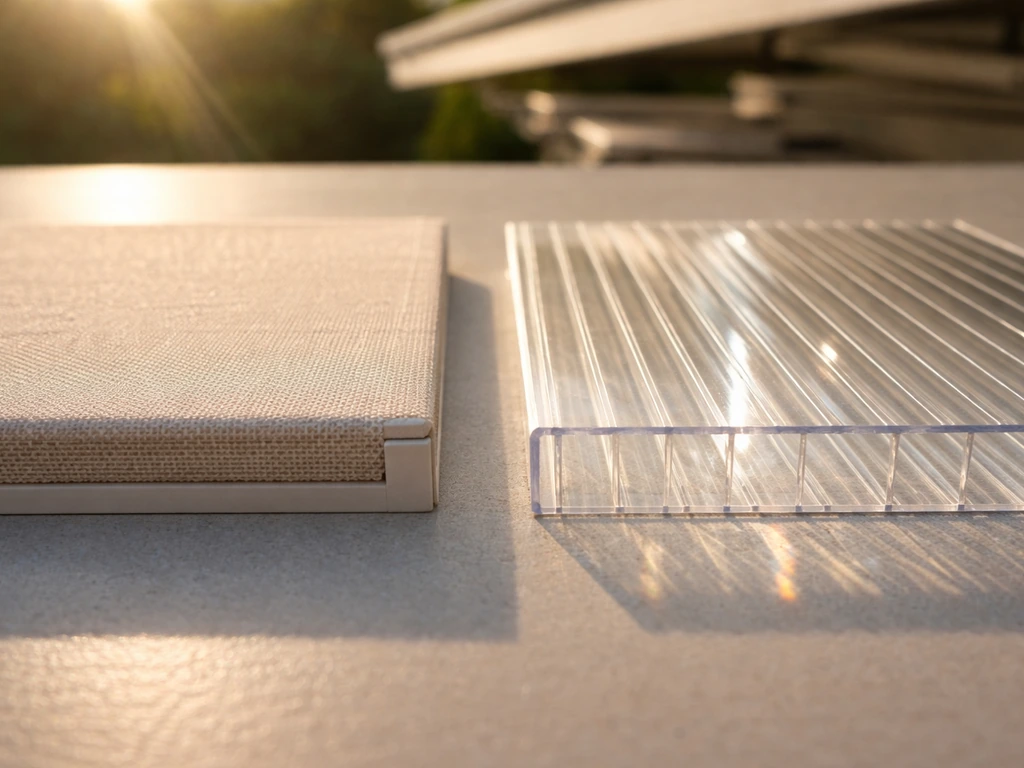
Solution-dyed acrylic (Sunbrella is the most recognized brand) is the gold standard for awning fabric. It's cold-crack tested, UV-resistant, and resists fading and mildew over years of outdoor exposure. Sunbrella backs this with a 10-year limited warranty covering sunlight, mildew, and atmospheric chemical degradation. Budget fabrics use different fiber treatments that degrade much faster under cumulative UV exposure. For UV protection specifically, look for UPF 50+ rated fabric. That rating corresponds to blocking roughly 98% of UV radiation, which is the top tier of sun protection. Some awning fabrics use a woven structure with an "openness factor" (the percentage of the weave that's open air). A 5% openness factor fabric, for instance, allows some airflow while still blocking the vast majority of solar radiation. Tighter weaves block more sun and heat but also reduce airflow.
Aluminum frame and louvered systems
Powder-coated aluminum is the dominant material for louvered pergola frames and insulated panel covers. It's lightweight, rust-resistant, and holds up in most climates without much maintenance. The louver blade thickness, motor quality, and drainage design separate budget louvered systems from premium ones. A bioclimatic pergola with interlocking louvers and integrated gutters is an engineered water management system. A cheaper louvered kit is mostly a sunshade that can rotate. Both are called louvered pergolas, so read the specs carefully.
Polycarbonate and insulated panels
Polycarbonate glazing transmits diffused natural light while blocking direct solar gain. It has measurable thermal performance (U-factor values around 0.264 are typical for quality multiwall panels), meaning it actually insulates the space below. Insulated aluminum sandwich panels go further, with foam cores that significantly raise the R-value. These are the choice if you want a covered patio that stays noticeably cooler than the ambient air temperature, especially in hot climates.
How to choose the right patio cover for your sun exposure and climate
Sun direction and climate should drive your decision more than aesthetics. West-facing patios get the most intense afternoon heat and glare, which is where shading pays off the most. South-facing patios get more consistent sun throughout the day. East-facing patios get morning sun, which is usually gentler and more welcome. If your patio faces west, prioritize a cover with maximum vertical coverage and good side-glare management, not just overhead shade.
For climate, think in terms of what weather you actually get beyond heat and sun. If you live in a high-wind area, wind resistance is critical. Standard retractable awnings typically recommend retraction in winds over 25 mph, and a larger projection (anything over 12 to 14 feet) is particularly vulnerable. Motorized awnings with wind sensors handle this automatically, but manual awnings require you to remember to retract before a storm. If you regularly get winds above that threshold, a solid or louvered structure with a rated aluminum frame is more appropriate.
Rain and snow add another layer. A retractable awning is not designed for sitting under in heavy rain and should never accumulate snow or ice. Solid insulated roofs handle snow loads (with proper engineering for local snow load requirements), and fully waterproof bioclimatic pergolas can stay closed in rain. If rain protection matters to you beyond occasional light drizzle, you need a solid or bioclimatic louvered system. Basic louvered pergolas without integrated drainage are not reliable rain covers. A louvered system that directs water runoff requires careful drainage planning too: water runs in the direction the louvers slope, so drainage direction and flashing placement need to be engineered into the installation.
Top picks by budget and patio type
These are direct recommendations based on common patio situations, not a ranked list of every product on the market.
Best for most people: motorized retractable awning with Sunbrella fabric
If you want shade on demand, a motorized retractable awning with Sunbrella or equivalent solution-dyed acrylic fabric is the sweet spot. It handles daily shade duty well, adjusts as the sun moves, and retracts fully in bad weather. A wind sensor add-on is worth the extra cost, typically $150 to $300. Expect to pay $2,500 to $5,000 installed for a quality motorized setup covering a 12 by 10 foot patio. Manual versions start lower, around $800 to $1,500 installed, and are fine for smaller patios and moderate climates.
Best for rain plus shade: solid insulated panel cover
If your patio is your main outdoor living space and you want to use it even in light-to-moderate rain, a solid insulated aluminum panel cover is the most practical permanent option. These are fully weathertight, thermally efficient, and built to handle snow and wind loads when properly engineered. Average installed costs run $4,500 to $12,000 depending on size, with a national average around $8,500. For a typical 150 to 350 square foot patio, budget $20 to $50 per square foot for professional installation.
Best for maximum flexibility and a premium outdoor room feel: bioclimatic louvered pergola
A high-end bioclimatic pergola lets you go from full open sky to full weathertight cover with a remote. It looks better than a solid panel cover, integrates LED lighting and side screens in most systems, and essentially turns your patio into a usable outdoor room. The trade-off is cost: quality systems typically start at $10,000 to $20,000 installed and go up significantly for larger footprints. Warranties are typically 10 years on the frame and structure.
Best on a tight budget: shade sail or shade cloth with a solid mounting setup
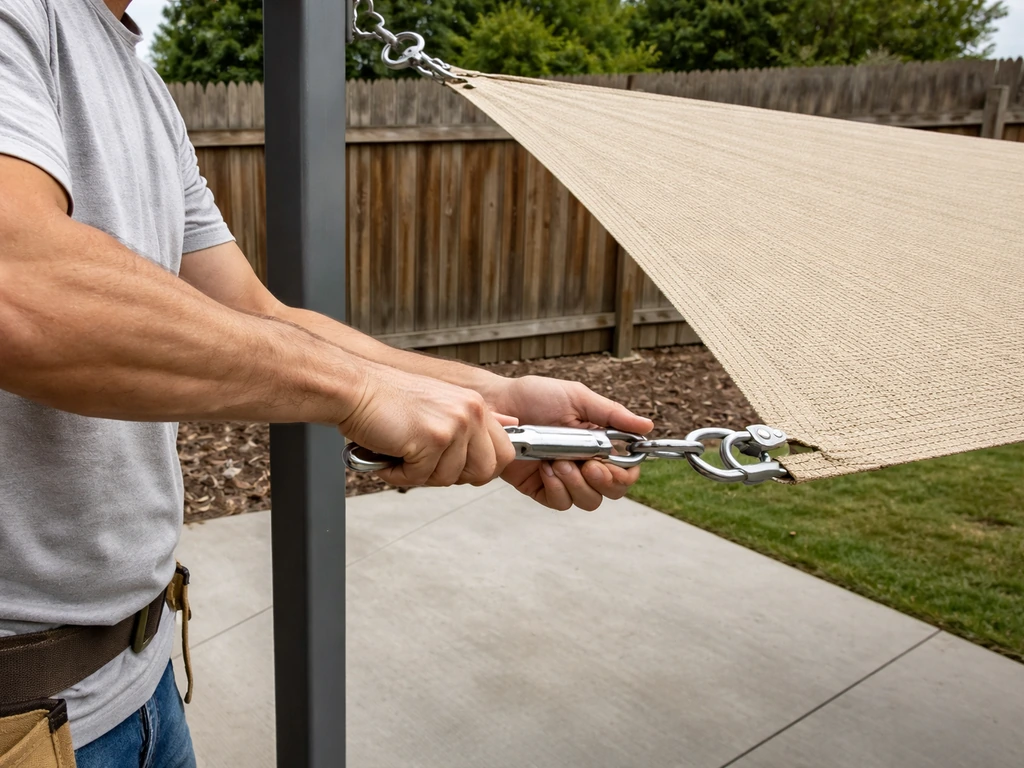
A quality shade sail with a UPF 50+ rating and stainless steel hardware can be installed for under $500 including a few anchor posts, and it blocks 90%+ of UV when properly tensioned and angled. The main limitations are rain (none) and wind (shade sails need to come down in high winds or they'll damage attachment points). But as a pure shade-for-the-money solution, they're hard to beat. If you're shopping for the top rated sun shades for patios, focus on coverage level, wind handling, and how the shade material performs in your local climate. Shade cloth pergola canopies sit in a similar price range and work well as an upgrade layer over an existing pergola frame.
Best for renters or those who want no permanent installation
A freestanding cantilever umbrella (offset arm style) with a weighted base covers a good portion of a seating area and can be repositioned as the sun moves. It's not a patio cover in the structural sense, but it solves the shade problem for small patios and apartment balconies without any wall mounting or permit requirements. Budget $200 to $600 for a quality version.
Installation, maintenance, and warranties: what to expect
Installation complexity varies widely by cover type. A manual retractable awning can be a DIY project for someone comfortable with a drill and a level, but motorized systems and anything structural should be professionally installed. A solid panel cover or louvered pergola involves footings, framing, and sometimes electrical work for motors and lighting. Always get a permit for permanent structures.
Maintenance needs are highest for fabric awnings and lowest for aluminum panel covers. Sunbrella and similar fabrics should be cleaned regularly (brush off debris, rinse with water, and spot clean mildew with a mild soap solution). Motorized awning components, especially the roller bar and motor, require professional servicing when they fail. This isn't a DIY swap for most people, so factor service availability into your brand choice. Aluminum louvered systems need periodic cleaning of the louver blades and drainage channels, and the motor mechanisms should be inspected annually if you use them heavily.
On warranties: Sunbrella fabric carries a 10-year limited warranty. SunSetter's awning line ranges from a 5-year limited warranty on standard models to 10 years on their Platinum Series. Renson and similar premium louvered pergola brands typically offer 10-year structural warranties. When comparing products, check what the warranty actually covers: fabric fading, structural components, and motor/electrical parts are often covered under separate terms with different durations. A 10-year warranty that excludes the motor is not the same as a true 10-year product warranty.
Buying checklist and common mistakes to avoid
Run through this list before you pull the trigger on any patio cover purchase. If you're still comparing options, this guide to the best sun shades for patio can help you match shade style to your space patio cover purchase.
- Measure the actual area you want shaded, then add 12 to 18 inches on the sun-side edges to account for changing sun angles throughout the day.
- Confirm wall mounting height: your cover should clear at least 7 feet 6 inches at its lowest point, and the bracket needs 8 to 12 inches of solid mounting surface above that.
- Identify your primary sun exposure direction (south, west, or both) and choose coverage that addresses your worst-case afternoon sun, not just overhead noon sun.
- Know your local wind and snow load requirements before ordering any structure. Check whether a permit is required and factor that into your timeline.
- For fabric covers, confirm UPF 50+ rating and solution-dyed acrylic construction. Avoid basic polyester fabrics for anything exposed year-round.
- For louvered pergolas, confirm whether the system includes integrated drainage channels and a sealed closed position, or whether it's a sun-filter-only system.
- For retractable awnings in windy areas, choose a motorized system with a wind sensor or plan to retract manually at any forecast over 25 mph.
- Read the warranty terms carefully: check that fabric, frame, and motor/electrical are all covered, and note the exact duration for each.
- Get at least two professional installation quotes for any permanent structure. Cost per square foot varies significantly by region and installer.
Mistakes that cost people money
- Buying a cover sized to the patio footprint instead of the shaded area needed (you'll end up with sun on half your furniture by mid-afternoon).
- Choosing a louvered pergola based on looks without checking whether it actually has rain drainage (many don't).
- Skipping the wind sensor on a motorized awning and then leaving it extended during a storm, which can tear the fabric or bend the frame.
- Assuming a higher price means better shade performance: a $400 shade sail with proper UPF rating can outperform a cheap fabric awning at three times the price.
- Not accounting for drainage direction on louvered systems: water runoff needs a planned exit point or it will cause problems at the edges.
- Ignoring local permit requirements for permanent structures, which can create issues when selling the home.
Once you've narrowed down your cover type, it's worth comparing specific sun shade options, retractable shade systems, and shade sail designs as you get closer to a final decision. The cover type you choose here sets the foundation, but the specific product specs, fabric ratings, and installation details are where the real performance differences show up.
FAQ
How do I choose patio cover coverage if my patio gets sun from multiple sides, not just overhead?
Look at sun entry angles for the worst hours and then check side coverage, not only canopy width. If low-angle afternoon sun hits the open sides, add side extension width (often 12 to 18 inches beyond the area you want shaded) or plan a system with good side-glare control, like a deeper projection awning or integrated side screens.
What’s the difference between UPF 50+ and how much UV I’ll feel blocked in real life?
UPF is a fabric rating, it does not guarantee 100% comfort because heat and glare can still come through gaps, weave openness, and reflected light. A tighter weave and lower openness factor typically feel cooler, but they also reduce airflow, so you should balance UV blocking with ventilation for your climate and how windy your patio area is.
Will a retractable awning work for occasional rain, like light showers, or is it strictly dry-use?
Retractable awnings are mainly for sun. Light drizzle is usually manageable if the fabric stays moving, but they are not designed to hold standing water or handle pooling, and you should never plan on sitting under it during heavy rain. If you want frequent rain use, prioritize a solid or bioclimatic louvered setup that stays closed and directs runoff.
Can I keep a shade sail or shade cloth up year-round in my area’s wind?
Only if your wind conditions are within the product’s rated limits and you have the right installation hardware and tensioning. Shade sails must be removed or reconfigured in high winds to protect anchor points, fabric stretch, and sagging behavior. If you see frequent gusts above your comfort level, choose a system designed for retracting or plan on seasonal take-down.
How do I tell whether a louvered pergola is truly rain-ready or just “water resistant”?
Check for integrated drainage design, flashing details, and how water is captured and routed when louvers close. If the spec does not clearly describe gutters or water management, assume water will run through joints or overflow, making it unreliable in real storms even if it looks like it should block rain.
What headroom should I plan for besides the minimum awning clearance?
The clearance measurement is a starting point, your effective headroom changes with awning drop at different extensions and with how much the fabric sags under load. Measure and plan for the lowest point when extended, and also consider where ceiling fans, string lights, and furniture sit so you avoid awkward clearance on the seating area you actually use.
Do I need permits for all patio covers, or only permanent structures?
Many places require permits for anything that is structurally anchored and has a permanent footprint, even if it is not fully enclosed. The safest approach is to ask your building department what applies to your specific mount type, projection, and size, then confirm electrical permits if you’re adding motors, lighting, or sensors.
What’s the most common installation mistake that ruins shade performance even if the cover is “the right size”?
Underestimating sun angle and leaving too little overhang beyond the target area. Another frequent error is mounting height that is too low, which can force the awning to retract sooner or create glare at seating height. If you can, do a quick check with a cardboard mockup at the planned mounting height for the time of day you care about most.
How should I compare warranty terms between fabric, frame, and motors without getting misled by the headline number?
Read whether the warranty separately covers fabric, structure, and motor or electrical components, and note what “covered” means for each (fading, mildew, tears, corrosion). A long frame warranty with a shorter motor coverage can still mean high replacement costs if the drive system fails, so compare component timelines and exclusions.
What maintenance should I expect for each type, and what can I do to extend service life?
Fabric awnings benefit from regular debris removal and prompt spot cleaning for mildew, then proper drying before storing. Aluminum systems need periodic blade and channel cleaning to keep drainage working, because clogged channels can lead to leaks and corrosion. For motorized options, plan on servicing availability in your area and budget for inspection checks if you use the system heavily each season.
Is a patio cover enough to reduce heat, or do I also need ceiling fans or air movement?
Shade reduces solar heat gain, but comfort also depends on airflow. If you choose tighter fabric weaves or closed-louver positions for maximum coverage, pair it with fans or keep adjustable louvers to prevent stagnant heat buildup. In hot climates, diffused light from polycarbonate or partial airflow shade can feel cooler than fully solid shade because it limits radiant heat and improves ventilation.
Next Articles
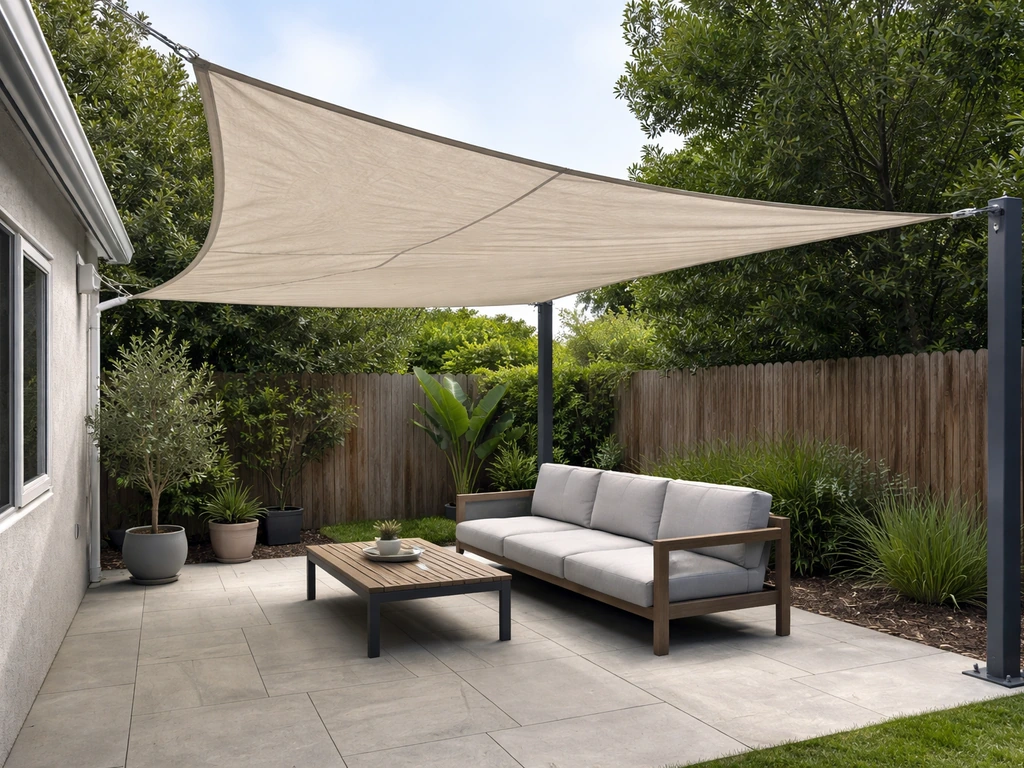
Best Shade Sail for Patio: Sizing, Materials, and Setup
Choose the best shade sail for patio with sizing, UV-ready materials, water shedding, wind setup, and easy installation
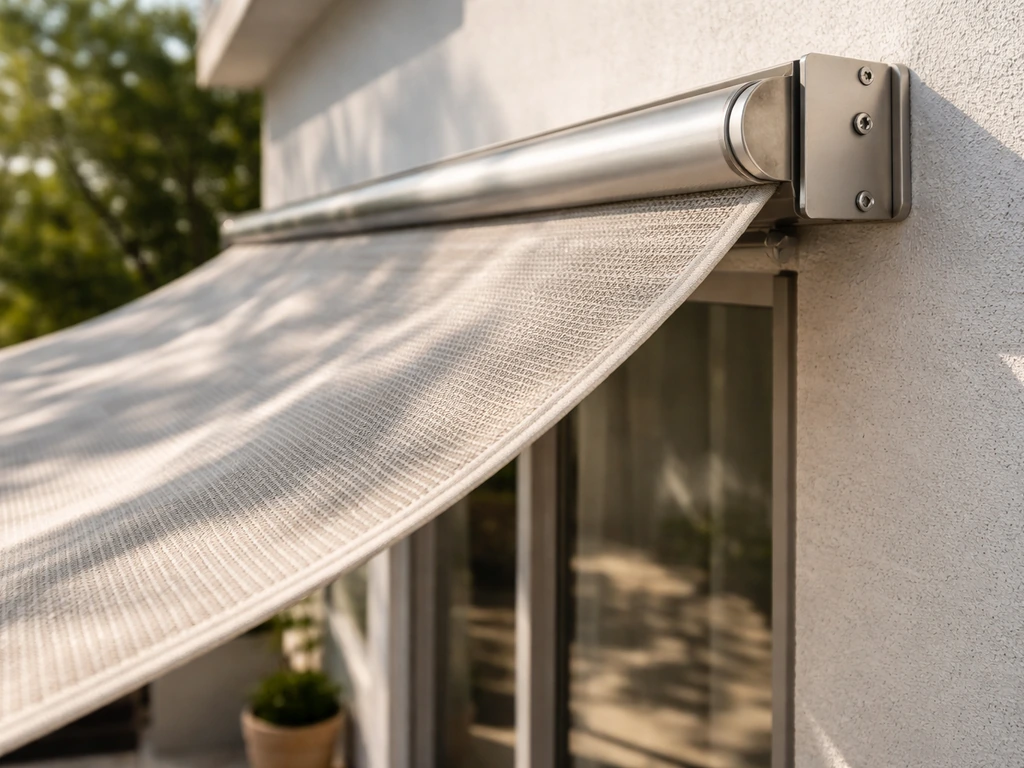
Best Retractable Sun Shade for Patio: Manual Guide
Choose the best manual retractable sun shade for your patio with fit, mounting, wind, and maintenance tips plus cost com
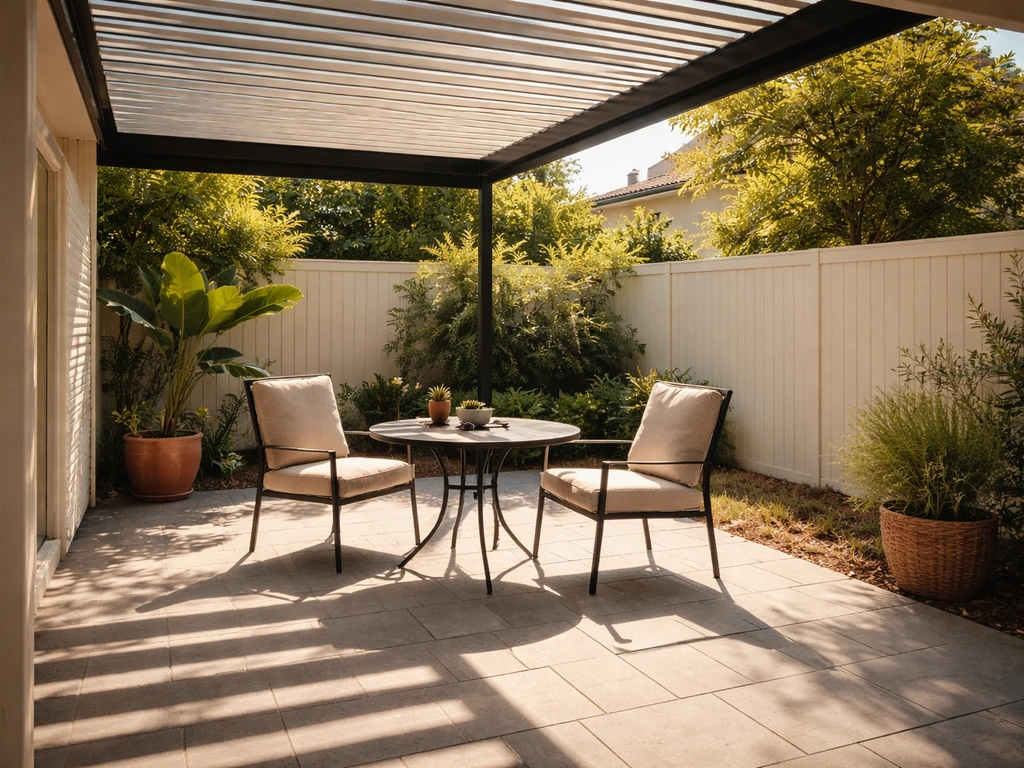
Best Patio Shade: Buy, Size, and Choose the Right Option
Find the best patio shade by mapping sun exposure, comparing top options, and getting size, cost, and install tips.