
If you're trying to decide between a Duracool patio cover and an Alumawood patio cover, here's the honest summary: both are aluminum-based shade systems that perform well in most climates, but Alumawood has wider dealer and DIY availability plus published engineering documentation that makes permitting straightforward, while Duracool (sold under the Duralum umbrella) competes on its insulated panel options and a transferable lifetime warranty. Neither is a runaway winner for every homeowner, and the right call depends on your climate, budget, whether you want a DIY kit or a dealer-installed system, and how much you care about insulation and long-term resale value.
Duracool patio vs Alumawood: Which Hard Patio Roof Is Best

Lark Perry
11 Aug 2026
Who this comparison is for
This article is written for homeowners and renters who are actively shopping for a hard patio cover or shade roof and have landed on aluminum as a material but are now stuck between brand names that sound oddly similar. If you've typed 'Duracool vs Alumawood,' 'Duralum vs Alumawood,' or 'what is an Alumawood patio cover' into a search bar recently, you're in the right place. I'll walk through the name confusion first (because it genuinely trips people up), then cover construction, specs, performance, costs, warranties, fixture compatibility, and a practical checklist you can use before talking to any contractor.
Bottom-line recommendation before you read further
Here's how I'd break it down by homeowner profile. If you're a DIYer or working with a local lumberyard dealer who stocks kit systems, Alumawood is almost certainly the easier path: the engineering documentation (the Amerimax ESR-1398 ICC report) is publicly available, permit submittal is well-tested, and kits ship to your door. If you live in a climate with serious snow loads or you want a thicker insulated panel with documented noise reduction and you're going through a factory-authorized dealer anyway, Duralum's Monterey insulated system in the 4.25-inch or 6-inch panel thickness is worth getting a quote on. Vinyl covers are a budget alternative worth considering only if you're in a mild climate and primarily concerned with cost, not spans or load performance. For anything coastal, double-check both brands' warranty exclusions carefully because saltwater atmospheres void coverage on both systems.
The name confusion: Duracool, Duralum, DurAwood, and Alumawood explained
This is genuinely confusing, and I've seen people on patio forums buy the wrong product because they mixed up these names. Let me untangle it.
Alumawood is a registered trademark owned by Amerimax Exterior Home Products. It refers to a specific line of aluminum patio cover, lattice, carport, and awning systems that are designed to look like wood-framed structures but are made entirely from extruded and roll-formed aluminum. When people say 'Alumawood,' they always mean the Amerimax product line.
Duralum Products, Inc. is a separate manufacturer that makes its own line of aluminum patio cover systems, including the Monterey insulated panel product. Duracool Patios is a brand (operating under the UDPI umbrella) that is closely related to or associated with Duralum and markets patio covers using a proprietary finish system called Duracoat XT40. When you see 'Duracool patio cover,' you are essentially looking at a Duralum-family product sold and installed through Authorized Dealers. DurAwood is yet another name you'll sometimes see in the same orbit, typically used to describe wood-grain-textured aluminum covers from the same manufacturing family. So the short version: Duracool and DurAwood are brand or product names within the Duralum family; Alumawood is an Amerimax product. They are not the same company, not the same product, but they directly compete.
It's also worth noting that 'Duralum vs Alumawood' is a related comparison that deserves its own deep dive, and you'll find a more detailed breakdown elsewhere on this site if you want to go further into the Duralum product family specifically.
What is an Alumawood patio cover?
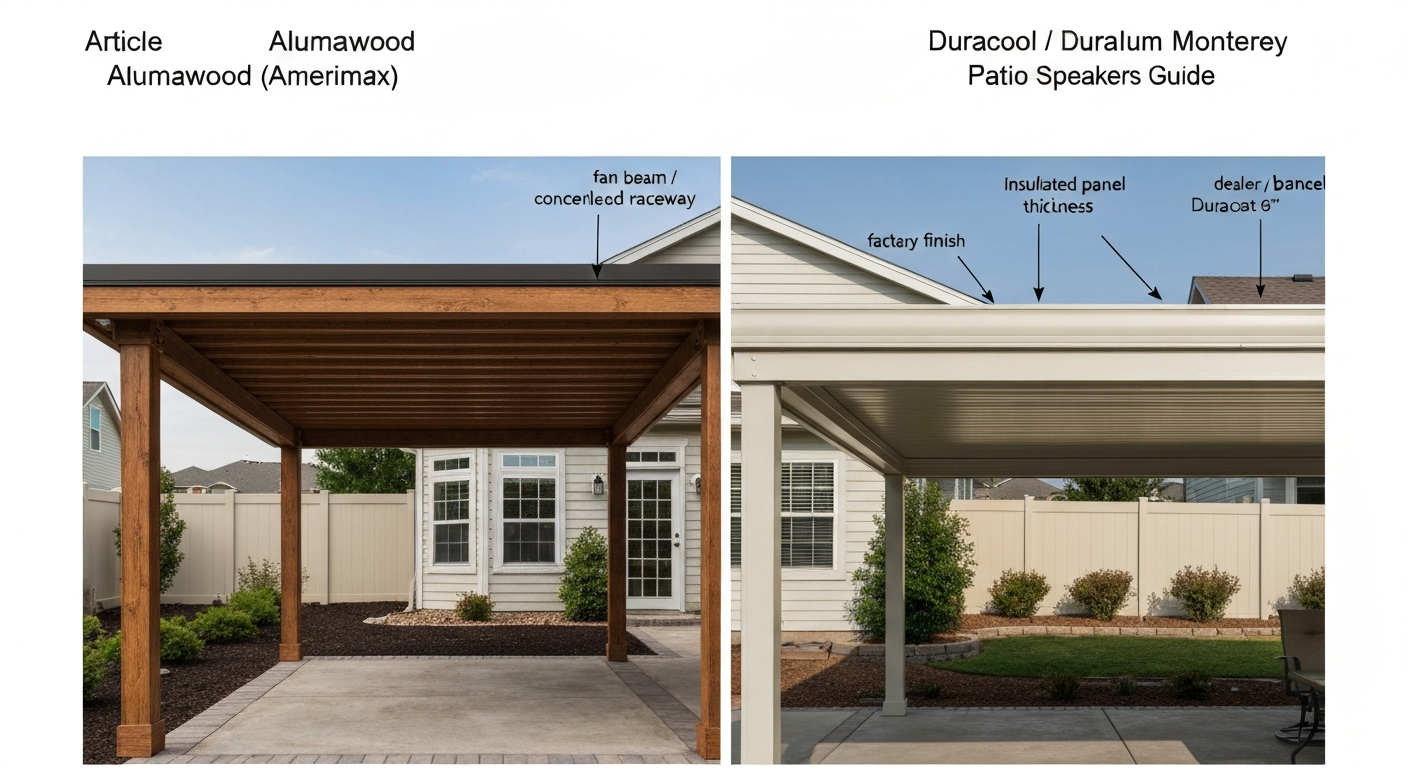
Alumawood covers are built from extruded aluminum components that are shaped, painted, and assembled to closely mimic the appearance of traditional wood-framed patio structures. The system uses aluminum rafters, beams (including an optional 'fan beam,' which is a reinforced channel designed specifically for hanging ceiling fans and light fixtures), posts, and fascia boards. All components arrive factory-finished in Amerimax's Aluma-Shield paint system, which includes a Teflon additive that helps resist dirt, staining, and UV-driven color fade. For a concise definition and overview of specs and installation options, see what is an Alumawood patio cover.
Alumawood comes in two main structural forms: open lattice (which provides partial shade and a classic pergola look) and solid non-insulated covers (which use interlocking solid panels to create a weatherproof roof surface). There is also an insulated panel variant, sometimes marketed as the Alumawood Maxx panel, which uses a 3-inch aluminum-faced foam-core panel. Vendors quote R-values around 13.9 for this panel, though you should confirm with the manufacturer datasheet for your specific product since R-values can vary by foam density and facing configuration.
Panel gauges in the engineering tables range from 0.018 inch to 0.040 inch depending on the component type and load requirements. The structural design is backed by an ICC-ES Engineering Report (ESR-1398), which provides rafter span tables, post and footing tables, fan-beam details, and fastener requirements tied to the 2018 and 2021 IBC/IRC. That report is what makes Alumawood permit-friendly: your building department has likely seen it before, and the span tables let a contractor or homeowner size components without commissioning a custom engineering stamp.
Typical product variants include wood-grain texture finishes and smooth finishes, and color options commonly include white, beige, sandstone, and bronze tones, though the available palette varies by dealer. The fan beam and concealed electrical raceway options mean you can run wiring inside the structure for lights, fans, and outdoor speakers without exposed conduit.
What is Duracool / Duralum? Product family and how it compares
Duralum Products, Inc. manufactures aluminum patio cover systems including solid non-insulated covers and the flagship Monterey insulated patio cover system. Duracool Patios markets and installs these products through a network of Authorized Dealers, and the finish system used is called Duracoat XT40, a factory-applied paint advertised for color retention and durability. The company states its products are manufactured in the United States. Duralum states on its manufacturer site that its patio products are made in the U.S. and are backed by a fully transferable lifetime warranty Duralum Products, Inc. (manufacturer home page & warranty information).
The Monterey insulated system is where Duralum/Duracool differentiates itself most clearly. Panels are available in three thicknesses: 3 inches, 4.25 inches, and 6 inches. Thickness selection is driven by local snow and wind load requirements, with thicker panels providing greater structural rigidity for higher-load climates. The insulated panel construction reduces heat transfer into the living space below and, according to the manufacturer, also reduces outside noise transmission compared with non-insulated covers. The system supports optional hidden internal electrical raceways and is engineered to accept ceiling fans and light fixtures, similar to Alumawood's fan beam approach.
Duracool's warranty is tied to installation by an Authorized Dealer and requires warranty certificate registration. The company provides a lifetime guarantee on the Duracoat XT40 coating and the product when these conditions are met. Duralum's broader product line (Weatherwood and Duralife products) is backed by a fully transferable lifetime warranty according to company literature. One important note: Duracool's warranty explicitly excludes damage from corrosive atmospheres including saltwater and ocean moisture, chemical fumes, and similar environments, so coastal homeowners need to factor that in.
The practical trade-off versus Alumawood is this: Duracool's dealer-install-only model means you won't find DIY kits shipping to your driveway the way you will with Alumawood. That's a real limitation for budget-conscious homeowners. But if you need a thicker insulated panel with greater span capability in a high-load climate, the 4.25-inch or 6-inch Monterey panel fills a gap that Alumawood's 3-inch insulated option does not.
Vinyl patio covers and other common alternatives
Since a lot of people comparing Alumawood and Duracool are also cross-shopping vinyl covers, it's worth a brief primer before the side-by-side table. Vinyl (PVC) patio covers have a lower upfront cost than aluminum systems and don't rust or corrode the way steel does. However, vinyl has meaningful limitations: it expands and contracts significantly with temperature swings, which can stress joints and fasteners over time; it typically offers lower structural spans than aluminum; and it can become brittle in cold climates or fade and chalk in intense UV exposure without a quality UV-stabilized formulation. For light-duty shade in mild climates, a well-made vinyl cover can be a cost-effective choice. For high-wind, high-snow, or extreme-heat climates, aluminum systems consistently outperform vinyl on structural performance and long-term appearance. You'll find detailed reviews of the top vinyl options and comparisons with aluminum covers elsewhere on this site. See our comparison of vinyl vs alumawood patio covers for a direct side-by-side look at costs, spans, and durability. See our roundup of the best vinyl patio covers for top-rated options, costs, and installation tips. See our guide to the best vinyl fence deck & patio covers for detailed reviews and buying advice.
Side-by-side specs and features
| Feature | Alumawood (Amerimax) | Duracool / Duralum Monterey | Vinyl Covers (typical) |
|---|---|---|---|
| Primary material | Extruded/roll-formed aluminum | Aluminum-faced foam-core insulated panels | Extruded PVC / vinyl |
| Panel/thickness options | Solid non-insulated; 3" insulated (Maxx) | 3", 4.25", 6" insulated panels | Typically 1"–3" depending on product |
| Component gauges | 0.018"–0.040" per ESR tables | Not publicly published per panel; contact dealer | Not rated the same way; wall thickness varies |
| Structural spans | Per ICC-ES ESR-1398 span tables (varies by wind/snow load zone) | Span per panel thickness & load zone; 6" for high-load climates | Lower than aluminum; typically shorter spans |
| Approximate panel weight | ~2.8–3.3 lb/ft² for 3" foam-core panels (industry range) | Similar range; heavier for thicker panels | Lighter; typically under 2 lb/ft² |
| Finish/coating system | Aluma-Shield with Teflon® additive (Amerimax) | Duracoat XT40 factory-applied paint (Duracool) | UV-stabilized PVC; quality varies widely |
| Color options | White, beige, sandstone, bronze (varies by dealer) | Multiple; varies by authorized dealer | White, tan, brown; limited palette vs aluminum |
| Fan/light fixture support | Yes — fan beam component + concealed electrical raceway | Yes — hidden internal electrical raceway option | Limited; depends on product; no standard fan beam |
| Gutter compatibility | Yes — standard fascia-integrated gutter options | Yes — manufacturer gutter options | Yes — basic gutter attachments available |
| DIY kit availability | Yes — kits widely available from dealers and online | No — authorized dealer installation required | Yes — kits available at home improvement stores |
| Engineering documentation | ICC-ES ESR-1398 (2018/2021 IBC/IRC) | Manufacturer specs; consult dealer for permit docs | Varies; limited formal engineering in most cases |
| Typical installed cost range | $15–$35/sq ft installed (varies by region, complexity) | $20–$45/sq ft installed (higher for thicker insulated panels) | $10–$25/sq ft installed |
| Warranty | Limited Lifetime (original purchaser); transferable within 10 years | Lifetime (Duracool); fully transferable (Duralum); dealer-install required | Varies; typically 10–25 years; check product |
| Coastal/saltwater suitability | Warranty excludes corrosive/saltwater atmospheres | Warranty excludes corrosive/saltwater atmospheres | PVC does not rust; better coastal corrosion profile but fades |
| Made in USA | Yes (Amerimax, U.S. manufacturer) | Yes (Duralum states U.S. manufacture) | Varies by brand |
Performance comparison: how they actually hold up
Durability and structural performance
Both Alumawood and Duracool/Duralum are aluminum systems, which means they won't rot, splinter, or support insect infestation the way wood does. The structural difference between them shows up mainly in panel thickness options. Alumawood's 3-inch insulated panel is adequate for most residential climates with moderate snow and wind loads, and the ESR-1398 tables let you verify this against your local requirements before you buy. Duralum's Monterey system at 4.25 or 6 inches gives you a meaningful structural advantage in high-load climates (think mountain regions, upper Midwest, or areas with heavy seasonal snow). If you're in a mild climate like the Southwest or Southeast, the 3-inch options from either brand are typically more than sufficient and the difference in thickness becomes about insulation performance rather than structural necessity.
Weather resistance
Aluminum handles rain, heat, and freeze-thaw cycles better than vinyl in almost every scenario. Neither brand rusts (both are aluminum, not steel, though fasteners can be a weak point, and Alumawood's warranty excludes steel rust from its coverage). Neither brand's warranty covers coastal salt-air environments, which is an honest signal that aluminum finish systems in general are not optimized for direct oceanfront exposure without additional maintenance. If you're within a mile or two of the ocean, budget for more frequent cleaning and inspect fasteners annually regardless of which brand you choose.
Heat and UV management
This is where insulated panels genuinely earn their price premium. A solid non-insulated aluminum cover is essentially a hot metal roof on a sunny day; it reflects some radiant heat but conducts thermal energy through the panel. An insulated panel with a foam core creates a thermal break. Alumawood's 3-inch Maxx panel at approximately R-13.9 is a real improvement over bare aluminum. Duralum's 6-inch panel takes that further and is the logical choice if you're building a covered outdoor kitchen or a space where you want to keep temperatures comfortable on a 100-degree afternoon. For UV protection of the structure itself, coating quality matters. Alumawood's Aluma-Shield with Teflon additive and Duracool's Duracoat XT40 are both factory-applied systems designed for long-term UV and color stability. For reference, the highest-performance standard for exterior aluminum coatings is AAMA 2605, which uses PVDF (Kynar/Hylar) resin systems; if either manufacturer publishes compliance data against AAMA 2605 for their specific coating, that's worth asking for before you sign a contract.
Sound and acoustics
Rain noise is the elephant in the room for any metal patio cover. A non-insulated aluminum cover in a heavy rain sounds like a snare drum, and that matters if you're trying to have a conversation or enjoy outdoor speakers underneath it. Insulated panels make a meaningful difference here. Duralum specifically calls out noise reduction as a benefit of the Monterey insulated panel compared with non-insulated covers, and that's consistent with how foam-core sandwich panels behave in practice: the foam absorbs mid-frequency impact noise that bare metal transmits. If you're building a space where outdoor audio matters to you (and given this site's focus, there's a good chance you are), an insulated panel cover is worth the cost delta over a solid non-insulated or lattice cover. Both brands' insulated options support concealed electrical raceways, which means you can route speaker wiring inside the structure cleanly.
Aesthetics and long-term appearance
Alumawood's wood-grain texture profile is its signature aesthetic feature and it does a convincing job at mimicking a painted wood structure from normal viewing distance. Over 10 to 15 years, the Aluma-Shield finish holds color reasonably well with basic cleaning, though like any painted aluminum it will eventually show chalking or fading if not maintained. Duracool/Duralum products also offer texture options and the Duracoat XT40 finish is marketed for similar long-term color retention. Vinyl covers can chalk and discolor faster than painted aluminum under intense UV, particularly in hot-sunny climates like the Southwest, which is one reason aluminum tends to age more gracefully in those environments. Neither aluminum brand is going to look as sharp as the day it was installed after 20 years without occasional cleaning and touch-up of any fastener heads or cut ends, but the overall structure will remain sound. For a focused list of advantages and trade-offs, see our Alumawood patio covers pros and cons.
Costs: what you're actually going to spend
Installed costs for aluminum patio covers vary widely by region, project complexity, permit requirements, and whether you're doing it yourself or hiring a dealer. The ranges in the table above are representative but not guarantees. In general: Alumawood DIY kit costs for materials typically run $8 to $18 per square foot depending on the product type (open lattice being cheaper, insulated panels being more expensive), and professional installation adds $7 to $20 per square foot on top of that in most markets. Duracool/Duralum projects, which require authorized dealer installation, tend to start higher because you're always paying for professional labor, and the thicker insulated panels carry a premium materials cost. Vinyl cover systems have the lowest entry point but also the lowest ceiling: you won't find a vinyl system that competes with a properly engineered aluminum cover for spans over about 12 feet or in snow-load zones above 20 pounds per square foot.
Long-term maintenance costs for both aluminum brands are low: occasional washing with mild soap and water, inspection of fasteners and end caps, and reapplication of touch-up paint on cut ends. Neither system requires staining, sealing, or the kind of periodic refinishing that wood demands. Vinyl requires similar low maintenance in mild climates but may need replacement sooner in harsh environments, which changes the cost math significantly over a 20-year horizon.
Warranties: what's actually covered and what isn't
Both brands offer lifetime warranties but with conditions that matter. Alumawood's Limited Lifetime Material Warranty applies to the original retail purchaser for the life of the structure; if you sell your home, the warranty can transfer to the new owner but only within the first 10 years from installation, after which the transferee has coverage only through year 10. The warranty requires product registration (typically within 30 days of purchase), excludes installation workmanship, excludes steel rust, and has exclusions for corrosive atmospheres and improper installation. For claims made after year 15, Amerimax's warranty language has referenced prorated refund provisions rather than full replacement, so read the actual certificate carefully.
Duracool's lifetime guarantee on the Duracoat XT40 coating and the product is valid only when installed by an Authorized Dealer and when a warranty certificate is registered. Duralum's broader product warranty is described as fully transferable for the lifetime of the product, which is a stronger transferability position than Alumawood's 10-year transfer window if you plan to sell your home. Both brands explicitly exclude saltwater/ocean moisture, chemical fume, and improper-installation scenarios.
Fixture compatibility: fans, lights, gutters, and speakers
Both systems are designed to support ceiling fans, light fixtures, and concealed electrical wiring. Alumawood handles this through the fan beam component, which is a reinforced aluminum channel that replaces a standard rafter at fan or fixture locations, paired with concealed electrical raceways that run inside the structural members. The fan beam and cap details are documented in the ESR engineering package, which is useful if your permit reviewer wants to see load calculations for a heavy fan. Duralum's Monterey system offers hidden internal electrical raceways as a standard option and similarly supports added ceiling fans and lights per the manufacturer's product page.
For outdoor speakers specifically, both systems give you clean routing options for speaker wire through internal channels. If you're planning a full outdoor audio setup with flush-mounted or surface-mounted speakers, the insulated panel systems also give you a more rigid and acoustically stable surface compared with open lattice, which matters for mounting quality. Gutters integrate with the fascia on both systems, and both manufacturers offer gutter accessories as part of their product lines.
DIY vs. professional installation
Alumawood is genuinely DIY-capable if you're comfortable with basic carpentry, can read engineering tables for post and rafter sizing, and are willing to pull a permit. Kits ship with cut lists, component inventories, and installation guides. The ICC-ES ESR-1398 is publicly available and your building department staff will likely recognize it. That said, mistakes in post footings, rafter connections, or fastener selection can compromise structural integrity, and some jurisdictions require a licensed contractor regardless of kit type. If you're not confident doing permit-level structural work, hire a dealer-certified installer even for an Alumawood kit project.
Duracool does not offer DIY kits. You're working through an Authorized Dealer from quote to installation, and the warranty is contingent on that. This isn't necessarily a disadvantage: dealer installation means accountability, and for complex projects with long spans, heavy fixtures, or unusual site conditions, having a trained installer is worth the premium. The fastener requirements in engineered patio cover systems (specific self-drilling or sheet-metal screw types per ICC-ESR criteria, specific connection details for load-rated spans) are not trivial to get right without experience. The ICC‑ES engineering package for Alumawood (ESR‑1398) includes a '7.0 POST AND FASTENER REQUIREMENTS' section that specifies using self‑drilling or sheet‑metal screws meeting referenced ICC‑ESR fastener criteria and the connection details required to achieve the published spans blank" rel="noopener noreferrer">ICC‑ES report (ESR‑1398) details fastener requirements.
Installation and maintenance checklist
- Pull a permit before starting. Both systems require permits in most jurisdictions. Alumawood's ESR-1398 simplifies this; for Duracool ask your dealer to supply the engineering documentation for your permit submittal.
- Verify your local wind and snow load requirements before selecting panel thickness or rafter spans. Don't rely on the minimum product specs if your area has an unusual exposure category.
- Check that post footings meet local frost-depth and soil requirements. The ESR tables specify post and footing details, but your local inspector may require additional depth or diameter.
- Use only the fastener types specified in the engineering documentation (self-drilling or sheet-metal screws per ICC-ESR criteria). Substituting fasteners can void both the warranty and the structural rating.
- Seal all cut aluminum ends with touch-up paint immediately after cutting to prevent long-term oxidation at exposed edges.
- Plan electrical raceways before panel installation. Once panels are in place, running wire through internal channels is much harder.
- Install fan beams at all ceiling fan and heavy fixture locations before covering with panel or rafter caps.
- Register your warranty within the window specified (commonly 30 days for Alumawood; follow Duracool's certificate instructions for their timeline).
- Clean the structure twice a year with mild soap, water, and a soft brush. Rinse thoroughly. Do not use pressure washers at close range on panel seams or fastener heads.
- Inspect fasteners, end caps, and gutter connections annually. Replace any showing rust (commonly steel screws, not the aluminum itself) before corrosion spreads to the paint surface.
- In coastal environments, increase cleaning frequency to quarterly and consider corrosion-inhibiting sprays on exposed fastener heads, noting that both brands' warranties exclude saltwater atmospheric damage.
Practical buyer checklist: which system is right for you
- Do you want a DIY kit option? Choose Alumawood. Duracool requires authorized dealer installation.
- Do you need panels thicker than 3 inches for high snow or wind loads? Look at Duralum Monterey 4.25-inch or 6-inch panels.
- Is resale value and warranty transferability important? Duralum's fully transferable lifetime warranty is stronger on transferability than Alumawood's 10-year transfer window.
- Do you need published engineering documentation for easy permit submittal? Alumawood's ICC-ES ESR-1398 is a significant practical advantage.
- Are you in a mild climate on a tight budget? A quality vinyl cover can work, but plan for shorter spans and more frequent replacements in hot or UV-heavy climates.
- Do you want the best rain-noise reduction for an outdoor audio or living space? Choose insulated panels from either brand over solid non-insulated or lattice options.
- Are you within a mile of the ocean? Budget for more maintenance regardless of brand, and note that both aluminum systems' warranties explicitly exclude saltwater atmospheric damage.
- Are you mounting ceiling fans or heavy lighting? Confirm fan beam availability and load rating before finalizing your product choice and layout.
Where to find reviews, get quotes, and read more
For Alumawood, the Amerimax website is the authoritative source for current product specs, the ESR engineering report, and the warranty PDF. Dealer locators on the site will connect you with installers who can quote your project. For DIY kits, dedicated patio cover kit retailers carry Alumawood and publish detailed R-value, component, and span information alongside kit pricing that gives you a solid baseline before talking to local contractors. For Duracool and Duralum, the manufacturer websites and their authorized dealer network are the right starting point; ask any dealer for the engineering documentation specific to your project before committing. For vinyl alternatives, major home improvement retailers stock entry-level systems and can facilitate installation quotes. This site also covers in-depth reviews of specific Alumawood products, pros and cons breakdowns, and comparisons with vinyl covers across multiple dedicated articles if you want to go deeper on any one of those categories. If you're shopping specifically for the best Alumawood patio covers, see our roundup of top-rated models and buying guidance. See our alumawood patio cover reviews for product-level pros, cons, and buying guidance.
FAQ
What is an Alumawood patio cover and how does it differ from aluminum or vinyl covers?
Alumawood (Amerimax) is a brand‑name system of factory‑finished aluminum patio components styled to look like painted wood. It’s non‑insulated aluminum panels/rafters with proprietary paint (Aluma‑Shield) and engineered connection details (ICC‑ES/ESR documentation) for permit compliance. Compared with plain aluminum covers it emphasizes a wood‑look finish and modular kit approach; compared with vinyl, Alumawood is metal (lighter, more rigid, generally more heat‑reflective and less prone to sag or long‑term creep than vinyl). For exact panel gauges/spans and finish specs refer to manufacturer ESR and product sheets (Amerimax/Alumawood, ICC‑ESR).
What is Duracool (Duralum/Duracool patio) and how is it related to Duralum/Monterey insulated panels?
“Duracool” commonly refers to Duracool Patios (UDPI) product lines built from domestic aluminum with proprietary paint (Duracoat XT40) and dealer warranties. Duralum (a separate manufacturer) sells insulated Monterey panels (3", 4¼", 6") and other aluminum systems — some vendors use similar trade names (Duralum/Duracool/Duralife) which causes confusion. Key difference: Duralum’s Monterey includes factory‑insulated panels and optional hidden electrical raceways; Duracool emphasizes its coating/warranty through authorized dealers. Check each manufacturer’s product pages and spec sheets to confirm panel thickness, insulation, and warranty terms.
Which performs better for heat and UV management: insulated aluminum (Duralum/Monterey / Duracool insulated) or non‑insulated Alumawood?
Insulated aluminum panels (3"+ foam core) typically provide materially lower heat transfer and higher R‑values (vendor R≈10–15 for 3" high‑density foam panels cited by kit suppliers) and reduce radiant heat into the patio compared with non‑insulated single‑skin Alumawood. Alumawood with standard non‑insulated panels will be warmer underneath unless shaded/vented. Finish and color matter for reflectivity; PVDF/AAMA‑2605 class coatings best resist color fade and chalking. Use manufacturer R‑value and sample readings for your climate to quantify differences.
How do durability, weather resistance, and corrosion risk compare between these systems?
All‑aluminum systems resist rot and will not rust like bare steel; durability depends on alloy, gauge, finish and local environment. Manufacturers (Duralum, Duracool, Amerimax) offer long warranties but commonly exclude corrosive atmospheres (coastal salt air, chemical exposures). Higher‑quality fluoropolymer coatings (AAMA‑2605/PVDF) outperform generic paints in UV/salt resistance. For coastal/industrial locales, confirm alloy/finish specs and warranty exclusions; for inland use, standard Alumawood or Duracool systems perform well when installed per ESR/installation guides.
How do they compare for sound (rain/impact) performance?
Solid non‑insulated aluminum panels transmit sound more than insulated foam‑core panels. Insulated panels (Monterey 3"+) dampen rain and impact noise because of the foam core and heavier face weight; single‑skin Alumawood is lighter and will produce a sharper rain sound. If noise reduction is a priority, choose insulated panels or add acoustic underlayers/ceiling finishes as detailed by manufacturers.
What are typical purchase, installation, and long‑term maintenance cost ranges?
Typical ranges (national U.S. ballpark—verify local quotes): - Purchase material only: Alumawood kits $15–40/ft²; insulated aluminum panels $30–75/ft² (panel thickness, finish, and engineering vary). - Installed: simple freestanding or attached Alumawood $30–65/ft²; insulated or higher‑end aluminum systems $60–120+/ft² depending on labor, permit, electrical work, footings and complexity. - Maintenance: aluminum factory‑finished systems need periodic cleaning (low cost) and occasional touch‑up; expect minimal routine maintenance ($50–$300/year for cleaning/inspection vs vinyl repairs or painting for other materials). Sources: manufacturer product pages, local installer quotes, kit retailers—use three local estimates for accuracy.
Next Articles
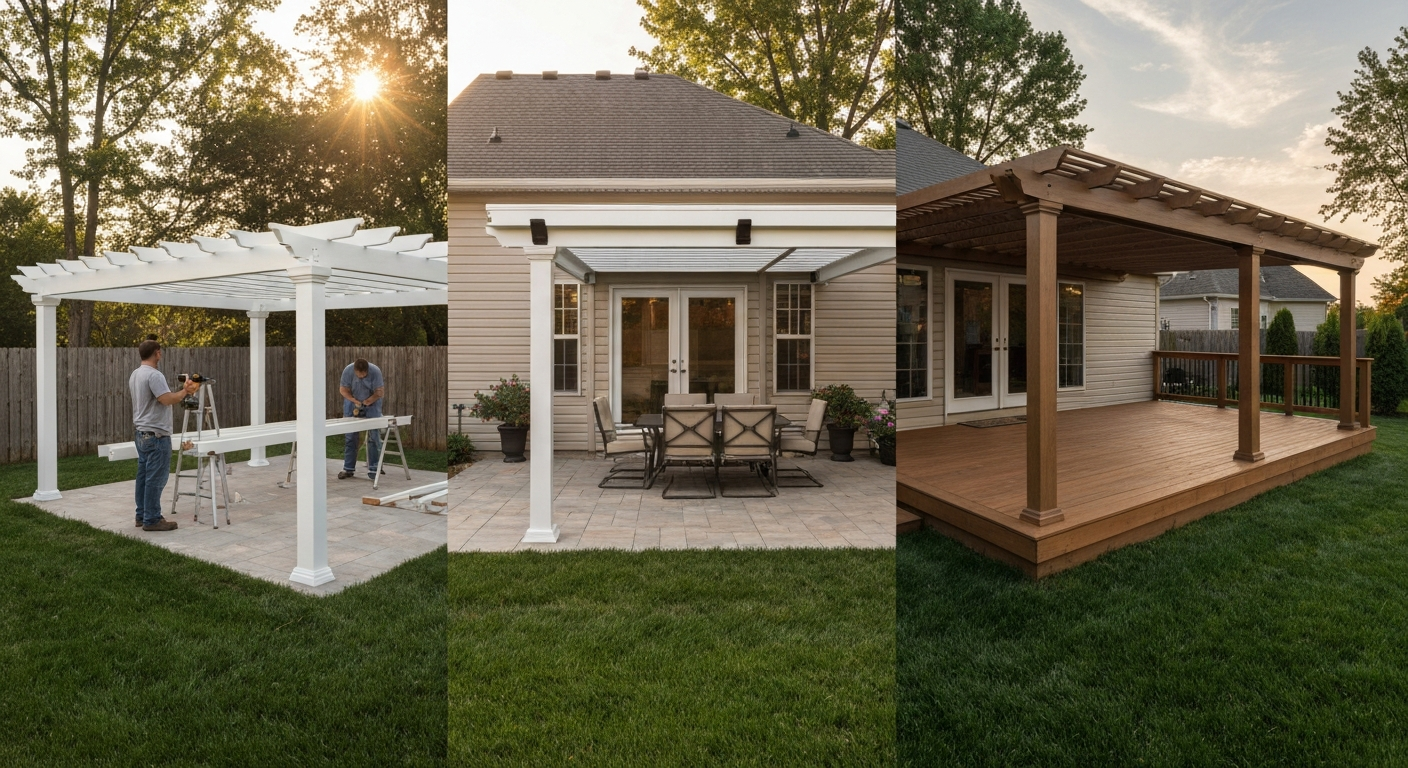
Best Vinyl Patio Covers: 2026 Buyer's Guide & Top Picks
Best vinyl patio covers: top picks, materials, pros/cons, vinyl vs aluminum, buying & install guide.
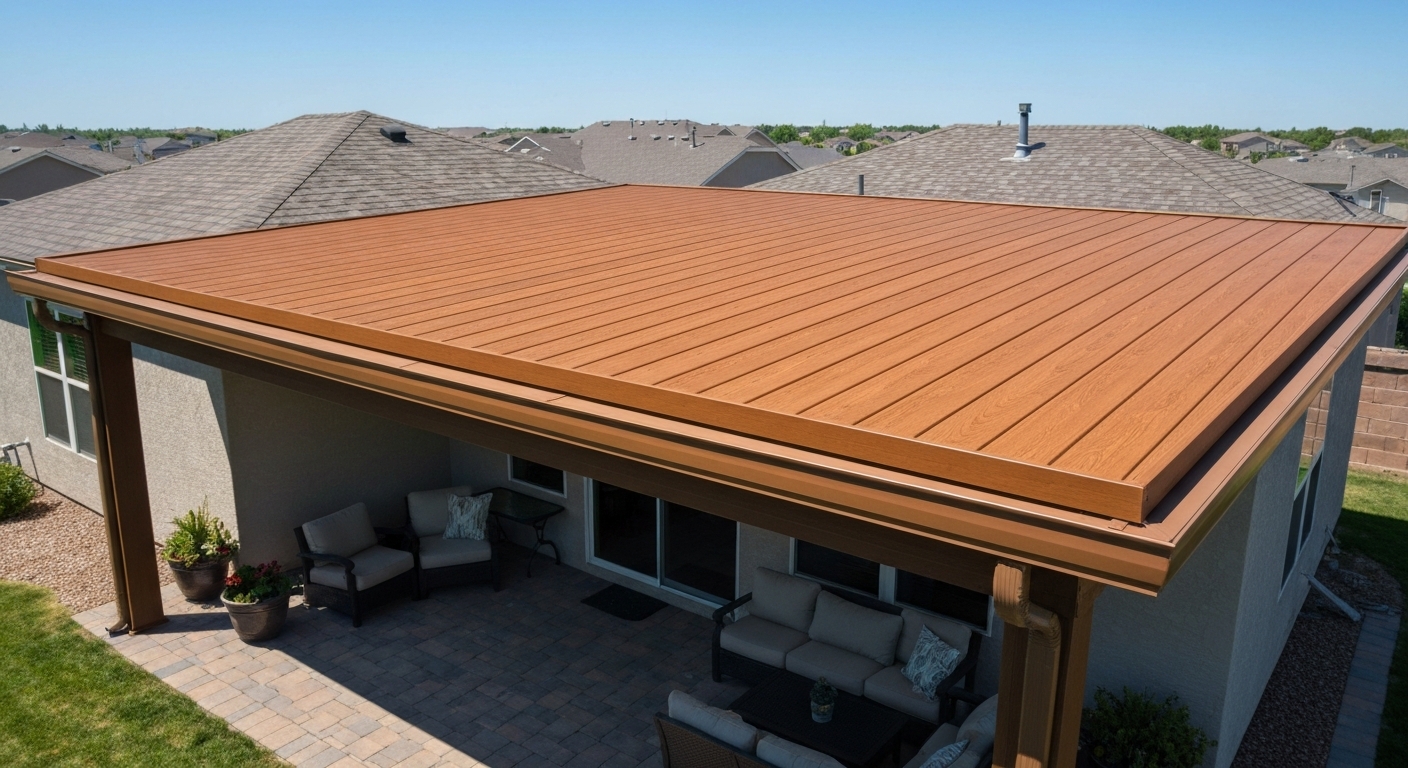
Alumawood Patio Cover Reviews: Top Picks, Costs & Guide
Alumawood patio cover reviews: expert comparisons, top picks, costs, installation tips, and maintenance checklist.
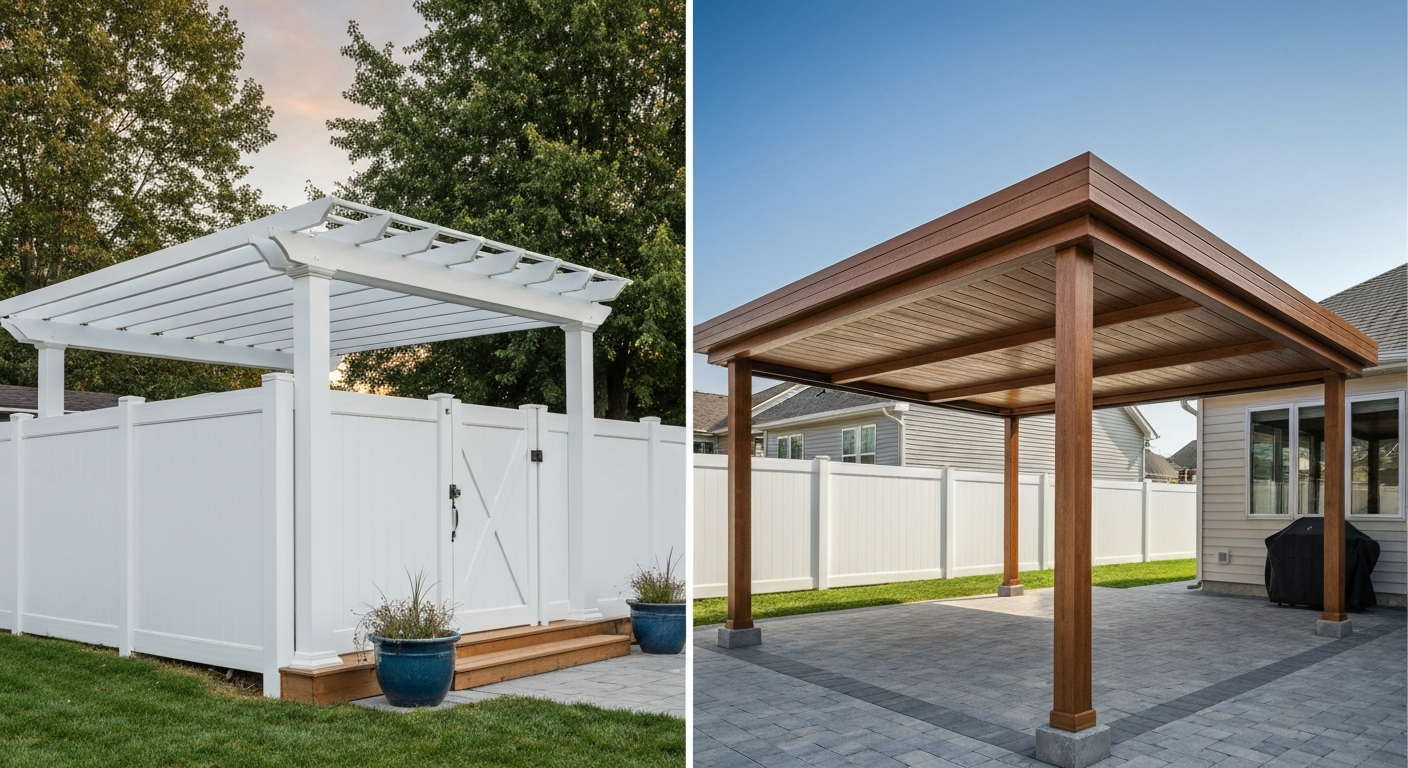
Best Vinyl Fence, Deck & Patio Covers: Guide & Top Picks
Best vinyl fence, deck & patio covers: expert comparisons, top picks, costs, installation & maintenance guide.