
The best vinyl patio covers right now are VITA pergola kits for budget and midrange DIYers, Modern Pergola Kits sold at Lowe's for a step up in warranty coverage, and Sunset Pergolas' aluminum-core vinyl deck systems for anyone wanting premium structural performance. All three use internal steel or aluminum stiffeners inside hollow vinyl profiles, which is the construction detail that separates genuinely durable vinyl covers from the flimsy ones. If you're weighing vinyl against Alumawood, Duracool, or Duralum aluminum systems, the honest answer is that aluminum wins on raw structural performance and longevity, but quality vinyl kits cost far less upfront, require no painting, and look great for 15-plus years with minimal effort, if you buy the right product.
Best Vinyl Patio Covers: 2026 Buyer's Guide & Top Picks

Who this guide is for and how to use it
This guide is written for homeowners and renters who want a permanent or semi-permanent shade and weather-protection solution for a patio or deck, have a budget ranging from around $850 to $18,000-plus, and are trying to figure out whether vinyl is the right material for their situation. It's equally useful if you're a DIYer planning to build over a weekend or someone getting contractor quotes and wanting to understand what you're paying for.
Here's how the article is organized: the quick comparison table up front gives you a side-by-side snapshot of the four categories (budget, midrange, premium, vinyl deck/fence-integrated). After that, each pick gets its own section with real specs, a short table, and an honest take on where it excels and where it falls short. Later sections cover vinyl materials and construction, styles and finishes, structural performance, how vinyl stacks up against aluminum alternatives, installation guidance, maintenance, and a buying checklist. Feel free to jump straight to the comparison table or the section most relevant to your situation.
Top vinyl patio cover picks at a glance
| Category | Representative Product | Approx. Price (12x12) | Warranty | Best For |
|---|---|---|---|---|
| Budget | VITA Venetian VA42022 (Home Depot) | $1,199–$1,450 | 20-year limited | DIY weekend project, open pergola shade |
| Midrange | Modern Pergola Kits at Lowe's (12x12 white vinyl) | $1,800–$2,800 | Lifetime limited (white/sandstone) | Wind-rated coverage, better warranty, semi-permanent |
| Premium | Sunset Pergolas Vinyl Deck Pergola (e.g., 16x24) | $17,879+ (larger sizes) | Lifetime structural | Full solid-cover pergola, deck integration, high load |
| Vinyl Deck/Fence-Integrated | Vinyl Fence Depot custom PVC patio covers | Quote-based (~$30–$60/sq ft installed) | Vendor-specific | Fence-matching systems, custom sizing, solid-cover look |
Budget pick: VITA vinyl pergola kits
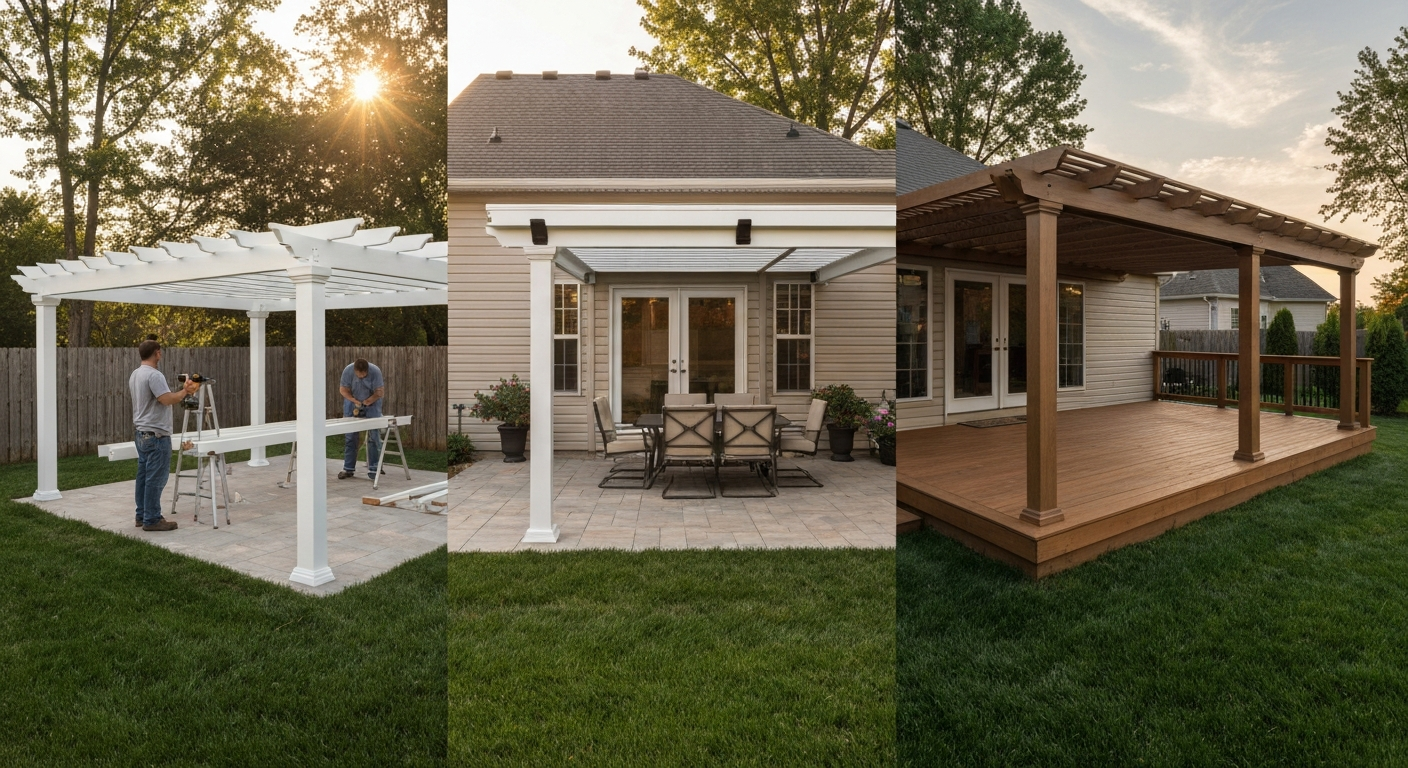
VITA's pergola kits, widely available at Home Depot, are the most accessible entry point into vinyl patio covers. The Venetian (VA42022) is a 12x12-foot open-roof pergola in white vinyl that retails in the $1,200–$1,450 range and weighs around 270 pounds assembled. The posts are 5x5-inch vinyl sleeves designed to slip over pressure-treated 4x4 wood posts or anchor to bolt-down bracket hardware. The main beams and rafters use internal steel stiffener inserts, which is what keeps this from flexing like a cheap lawn ornament, without those inserts, no vinyl pergola at this price point would survive a decent windstorm.
Assembly typically takes two people around 6 to 8 hours using the included stainless-steel and self-tapping fasteners. One important note from VITA's own installation guide: these structures are not rated to carry additional weight loads such as swings, hanging planters, or people climbing on the structure. They're shade structures, not load-bearing roofs. That distinction matters if you're planning a fabric canopy, lights, or a ceiling fan, keep total hanging weight minimal and use dedicated fan-rated junction boxes.
The 20-year limited warranty is solid for this price tier, and the fact that Home Depot stocks these in-store means returns and exchanges are relatively painless. Smaller sizes, like the Alcove VA42034 at 8x8 feet for around $855, are available if you have a tighter space or budget. White is the standard color, if you want something other than white, you'll need to move up in price.
| Spec | VITA Venetian VA42022 |
|---|---|
| Size | 12 ft x 12 ft (100 sq ft) |
| Post Size | 5" x 5" vinyl over 4x4 wood |
| Assembled Weight | ~270 lb |
| Internal Reinforcement | Steel stiffener inserts in beams/rafters |
| DIY Assembly Time | 6–8 hours (2 people) |
| Price Range | $1,199–$1,450 |
| Warranty | 20-year limited |
| Available Colors | White (standard) |
Midrange pick: Modern Pergola Kits at Lowe's
The Modern Pergola Kits sold at Lowe's represent a meaningful step up in both warranty terms and structural capability. The 12x12-foot white vinyl freestanding pergola in this line runs roughly $1,800 to $2,800 depending on configuration, and the warranty is where this product earns its midrange price tag: white and sandstone vinyl colorways carry a limited lifetime warranty on the structure, while black vinyl gets a 10-year limited warranty. That difference in warranty by color is worth paying attention to, it reflects the real difference in UV performance between lighter pigments (which contain titanium dioxide and UV stabilizers) and darker PVC formulations.
What really stands out is the wind warranty. When installed with the included Hurricane Clips per the manufacturer's installation guide, these structures carry a wind limited warranty rated to 150 mph. That's a meaningful number for anyone in a hurricane-prone region or high-wind corridor. The product literature describes the vinyl profiles as having lifetime-warranty aluminum interiors, meaning the metal stiffener system is a first-class component, not an afterthought. This is the same fundamental design as the VITA kits but executed at a higher spec level.
If you're in a region that sees regular 50-plus mph gusts or the occasional tropical storm, the Modern Pergola Kit's documented wind rating gives you something the VITA kits don't: a manufacturer commitment backed by documented engineering. For most homeowners in temperate climates, the VITA budget kit will perform fine, but if weather is a real concern, the extra few hundred dollars here buys real peace of mind.
| Spec | Modern Pergola Kit (Lowe's, 12x12) |
|---|---|
| Size | 12 ft x 12 ft x 10 ft H (common config) |
| Internal Reinforcement | Aluminum stiffeners (manufacturer-listed 'lifetime warranty aluminum interior') |
| Wind Rating (with Hurricane Clips) | Up to 150 mph (per warranty) |
| Price Range | $1,800–$2,800 |
| Warranty (white/sandstone) | Limited lifetime |
| Warranty (black) | 10-year limited |
| Style | Open-roof pergola / freestanding or attached |
Premium pick: Sunset Pergolas vinyl deck systems
Sunset Pergolas operates at a completely different level from the kit products above. Their vinyl deck pergolas use a heavy-duty aluminum internal frame with a premium extruded vinyl exterior, which means you're getting the corrosion resistance and aesthetics of vinyl with the structural integrity of engineered aluminum. A 16x24-foot Vinyl Deck Pergola from Sunset starts at around $17,879, which is a significant jump from the budget and midrange options, but the product is correspondingly more substantial: these are designed for real deck integration, cover larger spans without intermediate posts, and carry a lifetime structural warranty.
The price point puts Sunset's products in direct competition with installed Alumawood systems, which nationally run about $18 to $55 per square foot installed. A 16x24-foot Alumawood cover at even the low end of that range ($18/sq ft) works out to around $6,912 for materials alone, before installation labor, so Sunset's $17,879 for a complete system including delivery is not as far out of line as it first appears, especially when you factor in that aluminum covers almost always require a licensed contractor for installation while vinyl deck pergola kits are designed for DIY-capable homeowners.
The target buyer for Sunset's systems is someone who wants a permanent, architecturally integrated outdoor structure that matches or complements deck railings, fencing, or existing vinyl exterior elements, and who doesn't want to repaint or refinish it every five years. If that's you, this tier makes sense. If you just want shade for a 10x12 concrete patio on a $1,500 budget, go with VITA.
| Spec | Sunset Pergolas Vinyl Deck Pergola (16x24 example) |
|---|---|
| Size (example) | 16 ft x 24 ft (384 sq ft) |
| Internal Frame | Heavy-duty aluminum frame with extruded vinyl exterior |
| Starting Price | ~$17,879 (16x24 on sale pricing) |
| Warranty | Lifetime structural |
| Installation | DIY-capable with instructions; professional install recommended for large spans |
| Best Application | Deck integration, large coverage, architectural match to vinyl exterior elements |
Vinyl deck- and fence-integrated covers
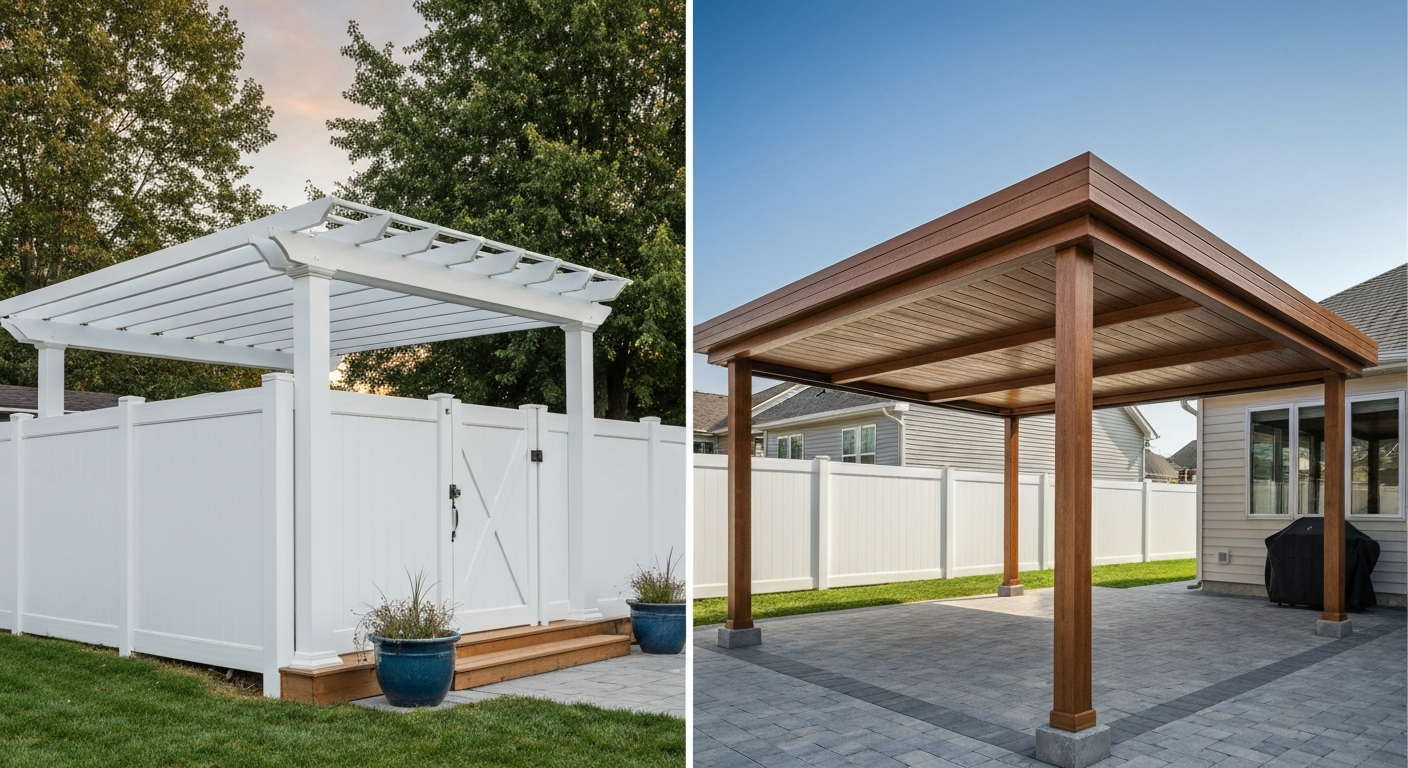
If you have an existing vinyl fence or deck railing system and want your patio cover to match, prefab kits from Home Depot or Lowe's probably won't cut it, they're made to their own profiles, not yours. This is where vendors like Vinyl Fence Depot and regional fabricators (such as VinylPatioKits.com) become relevant. These companies custom-fabricate solid PVC patio covers to your dimensions, often in profiles and colors designed to coordinate with specific fence and railing systems. They're not pergolas; they're solid-cover structures providing actual rain and sun protection rather than filtered shade.
Vinyl Fence Depot's solid PVC covers are formulated with titanium dioxide, UV stabilizers, heat stabilizers, and impact modifiers, and the company claims their engineered products can withstand 110-plus mph winds. These are vendor performance claims, not third-party certified ratings, so take them as directional rather than absolute. Pricing for custom fabricated installed vinyl patio covers typically falls in the $30 to $60 per square foot installed range nationally, which is comparable to or slightly below the installed cost of Alumawood systems in many markets. Lead times for custom orders are typically 3 to 8 weeks depending on the fabricator and region.
The big appeal here is aesthetic cohesion. A vinyl fence deck and patio cover system that matches your fence panels, posts, and cap rail looks intentional and finished in a way that a white pergola kit dropped next to a tan fence simply doesn't. If you've already invested in a vinyl fence or deck surround, this integration option is worth getting quotes on. For more options and comparisons on matching systems, see our guide to the best vinyl fence deck & patio covers.
| Spec | Custom Vinyl Fence/Deck-Integrated Covers (e.g., Vinyl Fence Depot) |
|---|---|
| Construction | Solid extruded PVC with UV/heat stabilizers and impact modifiers; steel or aluminum inserts |
| Cover Type | Solid (full rain protection), not open-roof pergola |
| Wind Claim | 110+ mph (vendor claim; not third-party certified) |
| Pricing | ~$30–$60 per sq ft installed (custom quote-based) |
| Lead Time | 3–8 weeks typical for custom orders |
| Color/Profile Matching | Yes — can match existing fence/deck railing profiles |
| Warranty | Varies by vendor; typically 10–25 years on material |
How vinyl patio covers are actually built
Understanding vinyl construction helps you separate a $900 pergola kit that will still look good in 2040 from one that will be chalky and sagging by 2030. All outdoor vinyl patio products are made from rigid PVC (polyvinyl chloride), but the formulation and profile construction vary significantly by price point. The material quality issues you care about, UV yellowing, cracking, surface chalking, and structural deflection, are almost entirely determined by these construction details.
PVC formulation: what's inside the vinyl
Quality outdoor vinyl profiles are compounded with titanium dioxide (TiO2) as both a pigment and a UV blocker, along with dedicated UV stabilizers (typically hindered amine light stabilizers, or HALS) and heat stabilizers. Some premium products use an ASA (acrylonitrile-styrene-acrylate) capstock layer co-extruded over the PVC core, which dramatically improves UV and color stability versus plain white PVC. Impact modifiers are added to reduce brittleness in cold temperatures. A budget vinyl kit that doesn't disclose its UV stabilizer package or wall thickness is a yellow flag. NIST weathering research confirms that additives like UV stabilizers and pigments materially affect cracking, color change, and service life in high-UV environments like Florida or Arizona, the formulation matters more than the brand name on the box.
Wall thickness and internal reinforcement
Hollow vinyl profiles on their own have limited structural capacity. Every credible vinyl patio cover on this list uses internal steel or aluminum stiffener inserts in load-bearing members. This is not optional, it's what allows beams to span 10 to 12 feet without excessive deflection. VITA's beams and rafters include steel stiffeners. The Lowe's Modern Pergola Kits feature aluminum interior profiles that carry their own lifetime warranty. Sunset Pergolas' premium line uses a full aluminum frame with vinyl cladding over the top. If a vendor doesn't mention internal reinforcement, ask directly before buying. As for wall thickness, thicker PVC walls resist impact and denting better, and good vendors (like Vinyl Fence Depot) compound their PVC to be solid rather than hollow on the cover-panel sections for additional rigidity.
Coatings, capstocks, and color retention
White and light-colored vinyl retains its appearance longest outdoors. This is why the Lowe's Modern Pergola Kit offers a lifetime warranty on white and sandstone but only a 10-year warranty on black. Darker pigments absorb more solar radiation and experience higher surface temperatures, which accelerates oxidative degradation even with stabilizers. Accelerated weathering tests (ASTM D4329, ASTM D4587, ASTM G155) are the industry standard for measuring this, they replicate years of UV exposure in a laboratory cabinet. Reputable vinyl manufacturers use these tests to validate their formulations, and you can ask for test data when evaluating higher-end custom products.
Styles, sizes, and finish options
Vinyl patio covers fall into two broad structural styles: open-roof pergolas (shade slats, lattice, or louvered roof panels that filter light rather than block rain) and solid covers (continuous panels that provide full weather protection). Most kit products at the budget and midrange level are open-roof pergolas. Solid covers are almost exclusively custom-fabricated or come from premium manufacturers like Sunset Pergolas.
- Flat top pergola: horizontal shade slats or a flat louvered panel; clean, modern look; most common kit style
- Gable/peaked roof: a pitched vinyl cover with solid panels; better rain runoff; usually custom or premium
- Venetian/Barcelona style: decorative arched or angled rafter tails for a more traditional aesthetic (VITA product line)
- Louvered roof: adjustable slat panels for variable shade control; available in some premium vinyl kits (VITA Camelot louvered model)
- Attached vs. freestanding: attached pergolas bolt to your home's ledger board and require proper flashing; freestanding versions are simpler to install and more flexible in placement
- Deck-integrated: pergola columns integrated into deck framing or post sleeves over structural deck posts
Standard kit sizes run 8x8, 10x10, 10x12, 12x12, and 12x16 feet for prefab products. Custom fabricators can go larger, Sunset Pergolas' 16x24-foot example spans a full outdoor entertaining area. Color options for kit products are limited: white is universal, sandstone/tan is available from some vendors, and black is an option on the Lowe's Modern Pergola line (with the noted warranty reduction). Custom fabricators offer a broader palette and can match specific fence or trim colors from vinyl siding color families. Textured wood-grain finishes are available from some premium suppliers and look substantially more natural than smooth white PVC.
Structural performance: durability, wind, snow, UV, and heat
Wind and snow loads
Wind load is the structural spec that matters most for most homeowners. The Lowe's Modern Pergola Kit's documented 150-mph wind warranty (with Hurricane Clips installed) is the benchmark in the prefab vinyl category. Vinyl Fence Depot claims 110-plus mph for their solid custom covers. VITA does not publish a specific mph wind rating in the marketing materials I've seen, which doesn't mean the product fails in wind, but it does mean you're relying on the steel stiffeners and your own installation quality rather than an engineered rating. Snow load is a separate concern: open-roof pergolas with shade slats let most snow fall through, so they're generally fine in moderate snow regions. Solid vinyl covers need to be properly engineered for your local ground snow load if you're in a northern climate, ask your fabricator for the design load used in sizing the structure.
UV resistance and long-term color stability
Properly formulated vinyl with titanium dioxide and HALS stabilizers holds up well against UV degradation. The practical expectation for quality white vinyl patio covers is 15 to 25-plus years before significant chalking or color shift, assuming the product uses a quality UV package. This aligns with the 20-year limited warranty on VITA kits and the lifetime warranties on the premium products. In high-UV climates (southern Arizona, south Florida), surface chalking may begin around the 10 to 15-year mark on mid-grade products, a light washing with a vinyl-safe cleaner removes chalk and restores appearance. Lower-grade vinyl without adequate stabilizers can begin yellowing in 3 to 5 years in hot sunny climates, which is exactly the product you're trying to avoid by buying from the vendors listed here.
Thermal performance and comfort below the cover
White vinyl has relatively high solar reflectance, which means it bounces more solar radiation back upward rather than absorbing and re-radiating it as heat. This gives white vinyl a thermal advantage over bare aluminum (which reflects well but has low thermal emissivity and can get extremely hot to the touch). In practice, the space under a white vinyl open-roof pergola on a hot afternoon will feel noticeably cooler than under an uninsulated dark metal roof. If maximum thermal comfort under a solid cover is the goal, insulated aluminum panel systems like Duralum's foam-core insulated patio covers (available in 3-inch, 4.25-inch, and 6-inch thicknesses) will outperform solid vinyl covers, the insulated panel traps heat above and keeps the underside significantly cooler. Duralum, aluminum patio covers, product lines and warranty information (Duralum official site) documents its Weatherwood® Monterey insulated panels in foam‑core 3", 4 1/4", and 6" thickness options and states its patio covers are engineered to meet local codes and backed by a transferable lifetime warranty Duralum — aluminum patio covers, product lines and warranty information (Duralum official site). Vinyl solid covers, by contrast, are a single-layer material with no insulating core, so they transmit more radiant heat through to the space below than a foam-core aluminum panel. For pergolas (open-roof), this is irrelevant.
Vinyl vs. Alumawood, Duracool, and Duralum: the honest comparison
This is the question I get most often, and the answer is genuinely context-dependent. Here's a straightforward comparison across the attributes that matter most for a patio cover purchase decision. For a dedicated comparison of vinyl vs alumawood patio covers, see our in-depth vinyl vs alumawood patio covers guide. For a detailed comparison of Duralum patio covers vs Alumawood, see our in-depth guide. For a direct side-by-side comparison of Duracool and Alumawood, see the Duracool vs. Alumawood comparison for details on warranties, coatings, and performance.
| Attribute | Quality Vinyl (kit or custom) | Alumawood (Amerimax) | Duracool/Duralume | Duralum (insulated aluminum) |
|---|---|---|---|---|
| Material | Rigid PVC with steel/aluminum stiffeners | Aluminum with wood-grain finish | Aluminum with baked-on finish | Aluminum with foam-core insulated panels |
| Typical Installed Cost | $30–$60/sq ft (custom); $1,200–$2,800 for kits | $18–$55/sq ft installed | $20–$50/sq ft installed | $25–$60/sq ft installed |
| Warranty | 20-year to lifetime (varies by product) | Limited lifetime (Amerimax) | Limited lifetime (authorized install required) | Transferable lifetime |
| Maintenance | Very low — wash periodically | Low — touch up scratches, paint if desired | Low — similar to Alumawood | Low — similar to Alumawood |
| Structural Strength | Moderate (steel/Al inserts help); lower than solid aluminum | High — solid aluminum extrusion | High | Very high — engineered panels |
| Thermal/Insulation Performance | Single-layer; limited; white reflects solar heat | Single-layer standard; good solar reflectance | Single-layer or insulated options | Excellent — foam-core insulated panels |
| UV/Color Stability | Excellent (quality formulations) | Excellent (baked enamel finish) | Excellent (baked coating) | Excellent |
| DIY-Friendly | Yes (kits) | No — contractor install standard | No — authorized dealer install | No — contractor install |
| Custom Sizing | Yes (fabricators) | Yes (dealer-fabricated) | Yes | Yes |
| Aesthetic | Clean, modern; limited color range for kits | Natural wood-look in aluminum | Similar to Alumawood | Clean panel; various colors |
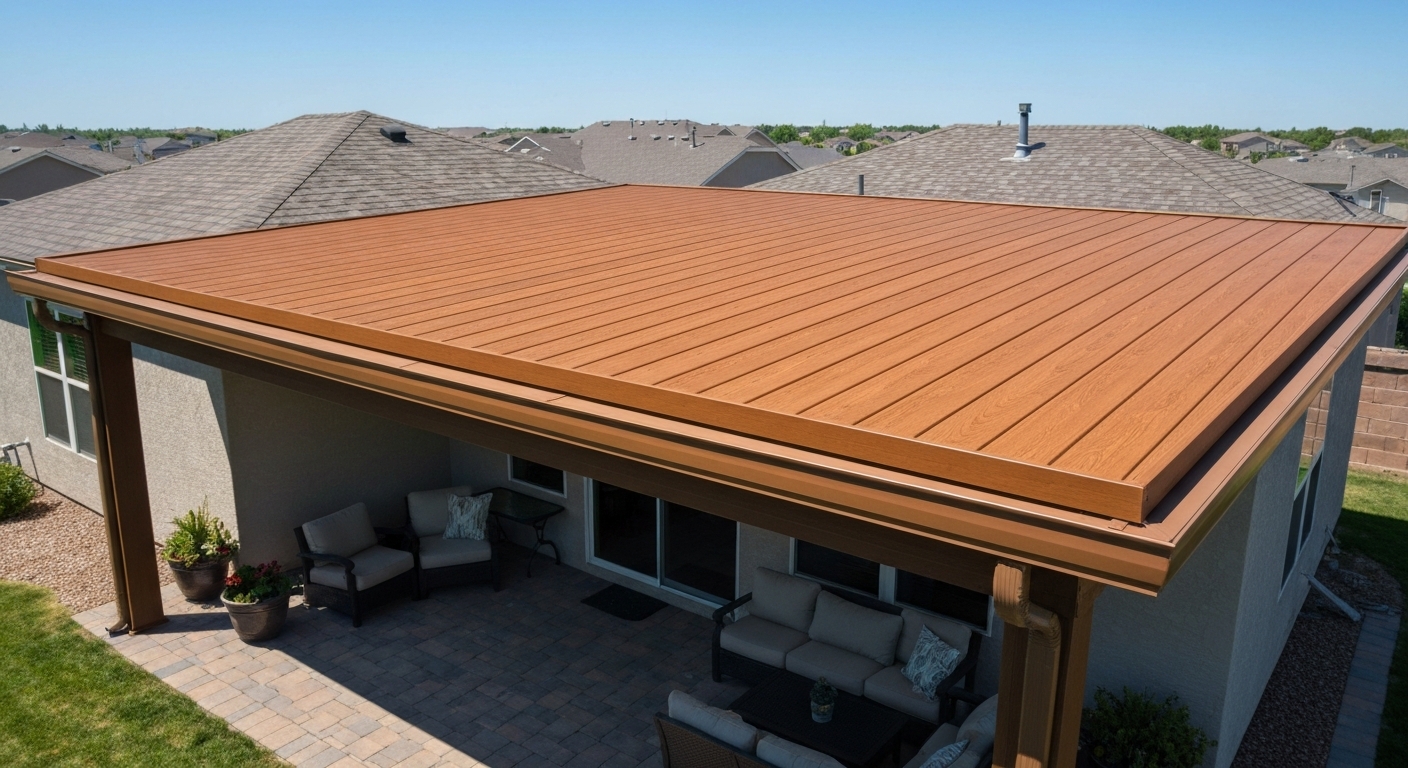
The short version: if your budget is under $3,000 and you want to DIY a 10x12 to 12x12 foot pergola over a weekend, vinyl kits win outright, no aluminum system gives you that option. For options and reviews of the best Alumawood patio covers, see our dedicated buyer's guide comparing finishes, warranties, and installed costs. If you're getting contractor quotes for a fully covered, insulated patio roof on a 200-plus square foot patio, Duralum's insulated panel system or Alumawood's engineered structures will outperform any vinyl cover in structural load capacity and thermal comfort. Duracool sits in a similar performance tier to Alumawood with slightly different warranty language. For deck-integrated or fence-matching custom work in the $30 to $60 per square foot range, vinyl and aluminum are genuinely competitive, and the decision often comes down to what matches your existing exterior finishes. For a focused breakdown of alumawood patio covers pros and cons, see our dedicated guide on alumawood patio covers pros and cons.
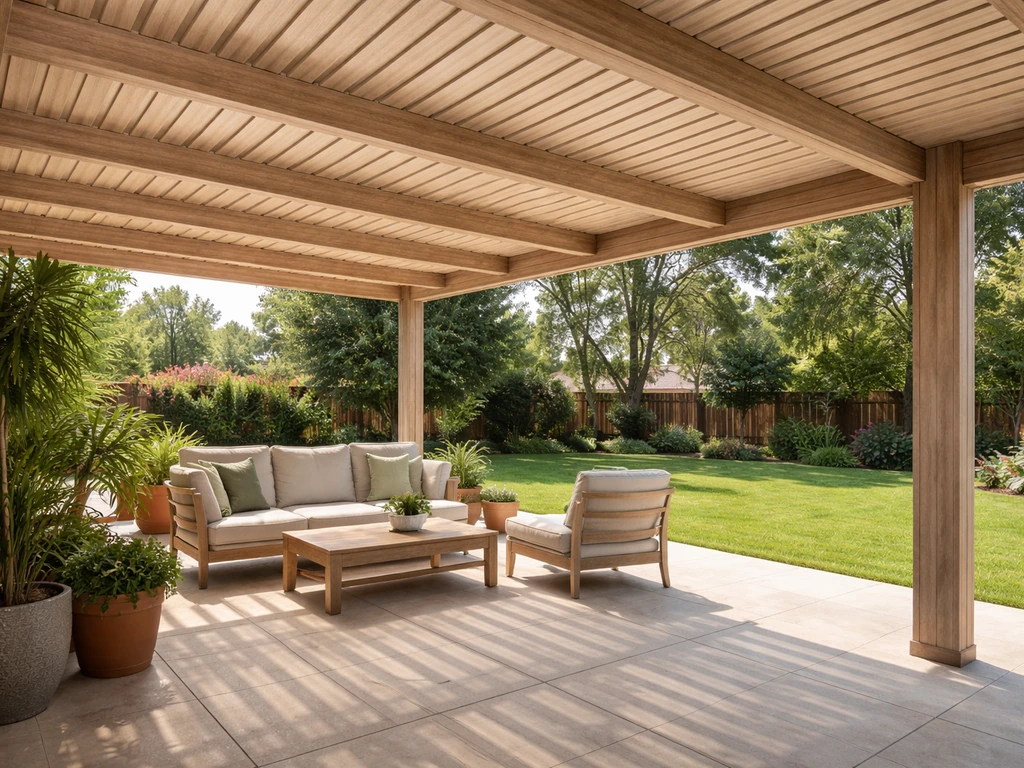
One nuance worth noting: Alumawood's lifetime warranty explicitly covers the finish against chipping, peeling, and splitting. Duracool's warranty covers coating failure under normal atmospheric conditions but requires registration and excludes corrosive environments. Duracool Patios' warranty page states their Duracool/Duralume aluminum patio systems carry a limited lifetime material guarantee when installed by authorized dealers, covering coating failures like peeling, blistering, flaking, chipping, and cracking under normal atmospheric conditions while excluding installation errors, corrosive environments, and acts of God and requiring registration to validate the warranty Warranty — Duracool Patios (manufacturer warranty page). Neither aluminum system requires painting, they're factory-finished. This is comparable to the maintenance experience with quality vinyl. The old assumption that vinyl is lower maintenance than aluminum isn't really true anymore; modern aluminum patio systems and vinyl systems are both extremely low maintenance. The real differences are cost, structural performance, and thermal behavior.
Buying and installation guidance
DIY vs. professional installation
Prefab vinyl pergola kits from Home Depot and Lowe's are designed for DIY assembly by two reasonably handy adults. VITA's 12x12 takes 6 to 8 hours. Larger or more complex structures, attached pergolas (which require proper ledger-board attachment and flashing), and any solid-cover vinyl system with structural footings should involve a contractor, or at minimum a structural engineer review if you're in a high-wind or high-snow zone. Custom fabricated covers from vendors like Vinyl Fence Depot are typically contractor-installed, the fabricator often has preferred installers in your region.
Footings and mounting basics
Freestanding pergola kits can use bolt-down post bracket hardware anchored to an existing concrete patio with wedge anchors, or posts can be set in concrete footings dug to below the frost line for your region. Footing size and depth depend on local soil conditions and wind/snow loads, check your local building department's requirements before digging. For attached pergolas, the ledger board must be bolted through the house sheathing into the rim joist or structural framing, with proper flashing to prevent water intrusion at the wall. Skipping the flashing is the single most common installation mistake and the one most likely to cause expensive damage over time.
Permits, codes, and lead times
Many jurisdictions require a building permit for attached patio covers and for any structure over a certain square footage (commonly 200 sq ft, but this varies widely). Freestanding pergola kits under 200 square feet often fall below the permit threshold, but you should verify with your local building department before starting. Custom fabricated covers typically have lead times of 3 to 8 weeks from order to delivery. Kit products from Home Depot and Lowe's ship within a few days if in stock, or up to 2 to 4 weeks for special-order sizes.
Cost ranges: what you actually spend
- Small budget vinyl pergola kit (8x8 to 10x10): $850–$1,400 retail, DIY labor only
- Midrange vinyl pergola kit (12x12 to 12x16): $1,800–$2,800 retail, DIY or $500–$1,500 for installation labor
- Custom solid vinyl cover (fabricator, contractor-installed): $30–$60 per sq ft installed; a 12x16 cover runs approximately $5,760–$11,520
- Premium vinyl deck pergola system (Sunset Pergolas): starting around $17,879 for a 16x24; smaller configurations cost less
- Alumawood or Duracool installed (for comparison): $18–$55 per sq ft installed; a 12x16 patio runs approximately $3,456–$10,560 depending on style and region
- Duralum insulated aluminum: similar to Alumawood cost range; premium insulated panel systems at the higher end
Maintenance schedule and troubleshooting tips
Vinyl patio covers are genuinely low maintenance, but 'low maintenance' doesn't mean 'no maintenance.' A simple annual routine keeps vinyl looking good for decades.
- Annually: wash all vinyl surfaces with a mild soap (dish soap works fine) and a soft-bristle brush or low-pressure hose. Do not use abrasive cleaners, solvents, or a high-pressure washer on PVC — abrasives scratch the surface and accelerate UV degradation; high pressure can force water into post caps and joints.
- Annually: inspect post base connections, bolt-down brackets, and any ledger-board or flashing attachments for rust, loosening, or water staining. Tighten any fasteners that have worked loose.
- Every 2–3 years (or after a major storm): inspect rafter ends and beam-to-post connections for any cracking, impact damage, or separation. Check internal stiffener ends for signs of rust bleed-through at cut ends — a light application of rust-inhibiting primer on exposed steel stiffener ends during installation prevents this.
- If surface chalking appears: use a vinyl-specific surface cleaner (many car detailing products designed for vinyl trim work well) and a microfiber cloth. Chalking is a normal weathering process in UV-exposed PVC and doesn't mean the material is failing — it just needs cleaning.
- If a panel or rafter cracks from impact: PVC repair kits and color-matched touch-up paint are available from manufacturers. Major cracks in structural members mean the steel stiffener inside may be compromised — replace the member rather than patch it.
How we selected these products
The products in this guide were evaluated against five criteria: documented warranty terms and structural ratings (not just marketing language), verified construction details including internal reinforcement, real-world pricing from current retail listings, availability and purchase accessibility, and the manufacturer's transparency about material specifications. Products that could not confirm internal steel or aluminum reinforcement in load-bearing members were excluded. Wind ratings were weighted by whether they came from a documented warranty (Lowe's Modern Pergola at 150 mph) versus an unverified vendor claim. Thermal and UV performance were assessed against published NIST weathering research and ASTM test standards to provide a grounded basis for comparison rather than relying on marketing claims alone.
Buying checklist before you order
- Measure your patio space carefully and add 1 to 2 feet of clearance beyond the area you want covered — pergola posts take up space inside the footprint.
- Confirm whether you want an open-roof pergola (filtered shade only) or a solid cover (rain protection). Most kit products are open-roof.
- Check your local building permit requirements for the structure size you're considering.
- For attached installations, verify your home's ledger-board framing can support the load and that you have a proper flashing plan.
- Ask any vendor: What type and gauge of internal reinforcement is used? What is the UV stabilizer package in the PVC formulation?
- Read the warranty carefully — note what voids it (installation errors, acts of God, corrosive environments) and whether it requires registration.
- If you're in a high-wind or hurricane zone, prioritize products with documented, warranted wind ratings rather than unverified vendor claims.
- For custom orders, get your quote, confirm the lead time in writing, and ask whether the price includes delivery and installation hardware.
- Compare total cost of ownership: a $1,500 vinyl kit that needs replacing in 12 years is more expensive over 25 years than a $6,000 installed aluminum cover with a lifetime warranty.
- If matching an existing vinyl fence or deck railing, bring a profile sample to a custom fabricator to confirm color and texture compatibility before ordering.
FAQ
Which vinyl patio covers balance durability, low maintenance, weather resistance, cost, and overall value across budget, midrange, premium, and vinyl deck/fence‑integrated categories?
Budget: basic hollow‑profile vinyl pergola kits (typical retailers’ 10'x10'–12'x12' VITA or big‑box models) — lowest upfront cost, easy DIY, 20‑year limited material warranty common, best for mild climates and small patios. Midrange: reinforced hollow vinyl with internal steel/aluminum stiffeners (Modern Pergola style) — better wind/snow capacity, trim‑friendly, often lifetime limited color/structure warranty when properly installed; strong value for homeowners wanting low maintenance plus increased span capability. Premium: heavy extruded vinyl or vinyl‑clad systems with full aluminum/aluminum‑framed cores (Sunset/large direct‑to‑consumer kits) — highest durability, engineered to code, biggest upfront cost but longest service life and best structural capacity for snow/wind. Vinyl deck/fence‑integrated: custom extruded vinyl panels bonded to structural aluminum frames or heavy solid PVC panels made for deck mounting — best for integrated decks/fences, higher cost but clean aesthetic and often engineered for deck attachments. Choice depends on climate, span, and budget: budget kits for shade only; midrange for most homeowners; premium/custom for high wind/snow areas or long spans.
How does vinyl compare to Alumawood and similar aluminum systems (Duracool, Duralum) in real‑world performance and cost?
Durability: aluminum systems (Alumawood/Duracool/Duralum) generally resist UV, cracking and thermal expansion better long‑term and are easily engineered to high wind/snow loads. Vinyl performance depends on formulation and additives; premium vinyl with metal inserts can approach aluminum structural capacity but remains more sensitive to long‑term UV and thermal cycling. Cost: installed Alumawood/aluminum typically runs $18–$55/sq ft; basic vinyl kits can be under $2,000 retail for small units, with installed vinyl projects spanning broadly but often lower than aluminum. Maintenance: vinyl needs minimal painting and resists corrosion; aluminum needs occasional touchups of finish but is less prone to brittle failure. Thermal comfort: light vinyl and coated aluminum can both reflect solar heat — coatings and color matter (see SRI/reflectance). Warranty: aluminum brands often offer transferable limited lifetime finish/material warranties; vinyl warranties vary (20‑year to lifetime) and are formulation/installation dependent. Overall: choose aluminum when maximum engineered strength, long transferable warranties, and thin profile aesthetics are priorities; choose vinyl when low maintenance, lower initial cost, and a softer finish are desired, provided the chosen vinyl system is engineered for local loads.
What are the common vinyl materials and construction types used for patio covers?
Hollow extruded PVC/uPVC profiles — common in budget and midrange kits; often use internal steel/aluminum stiffeners for strength. Solid PVC profiles — thicker, heavier vinyl for higher impact resistance and better structural capacity. Vinyl‑clad aluminum or aluminum internal frame with vinyl exterior — premium option combines aluminum strength with vinyl aesthetics. Additives/formulation: UV stabilizers, titanium dioxide, heat/impact modifiers and specialized pigments improve weathering and color retention. Fasteners/inserts: stainless or zinc‑coated fasteners and engineered stiffener inserts are typical to meet structural requirements.
What styles, sizes, and finish options are available for vinyl patio covers?
Styles: flat roof/solid roof panels, louvered/pergola slatted roofs, gable/truss styles and attached lean‑to designs. Sizes: kit sizes commonly 8'x8' to 12'x24' retail; custom/extruded systems available in large spans (16'x24' and up). Finishes/colors: standard white, sandstone, off‑white and limited darker colors; premium vendors offer custom color matching and faux‑wood grain vinyl claddings. Options: integrated gutters, ceiling panels, built‑in lighting mounts, and venting/insulation in premium panels.
What are the real‑world pros and cons of vinyl patio covers (durability, wind/snow load, UV resistance, thermal performance, aesthetics, maintenance, warranties)?
Pros: low maintenance (no painting), corrosion resistance, good UV formulations available, cost‑effective for many homeowners, lightweight and easy to DIY for kits, pleasant non‑metal appearance. Cons: formulation‑dependent UV/color stability and potential for embrittlement in poor formulations, lower inherent structural strength than aluminum unless reinforced, thermal expansion can cause gaps or warping if not detailed correctly, limited color options compared with coated aluminum, warranties vary widely and often have conditions. Wind/snow: midrange/premium reinforced vinyl can handle moderate loads; heavy snow/wind often favors engineered aluminum. Thermal: light vinyl can reflect heat but thicker/insulated aluminum panels can provide better thermal performance if designed with foam cores.
What objective selection and testing criteria should buyers use when choosing a vinyl patio cover?
Key criteria: engineering/structural ratings (wind and snow load capacities, code compliance), material formulation details (UV stabilizers, TiO2, impact modifiers), presence/type of internal stiffeners (steel vs aluminum), warranty scope and transferability, finish options and UV/color warranties, documented installation method and anchorage details, third‑party testing or compliance with ASTM accelerated weathering standards, and real‑world dealer/installer references. Prioritize systems with published load ratings and installation details for your local code/wind zone.
Alumawood patio cover reviews: expert comparisons, top picks, costs, installation tips, and maintenance checklist.
Best vinyl fence, deck & patio covers: expert comparisons, top picks, costs, installation & maintenance guide.
Alumawood patio cover pros and cons, durability, heat and maintenance, costs, and smart when to choose it