
For most patios, the best outdoor refrigerator is a compressor-based, outdoor-rated unit with an IP rating of at least IP55, an ambient operating range that matches your local climate, and a capacity between 3.2 and 5.5 cubic feet for drinks-focused setups or up to 20 cubic feet for full family entertaining. You need a unit specifically rated for outdoor use, not an indoor fridge moved outside. The difference is significant: outdoor-rated models handle humidity, temperature swings, and UV exposure that would kill a standard kitchen fridge within a season.
Best Outdoor Patio Refrigerator: Buying Guide and Picks

Lark Perry
3 Jul 2026
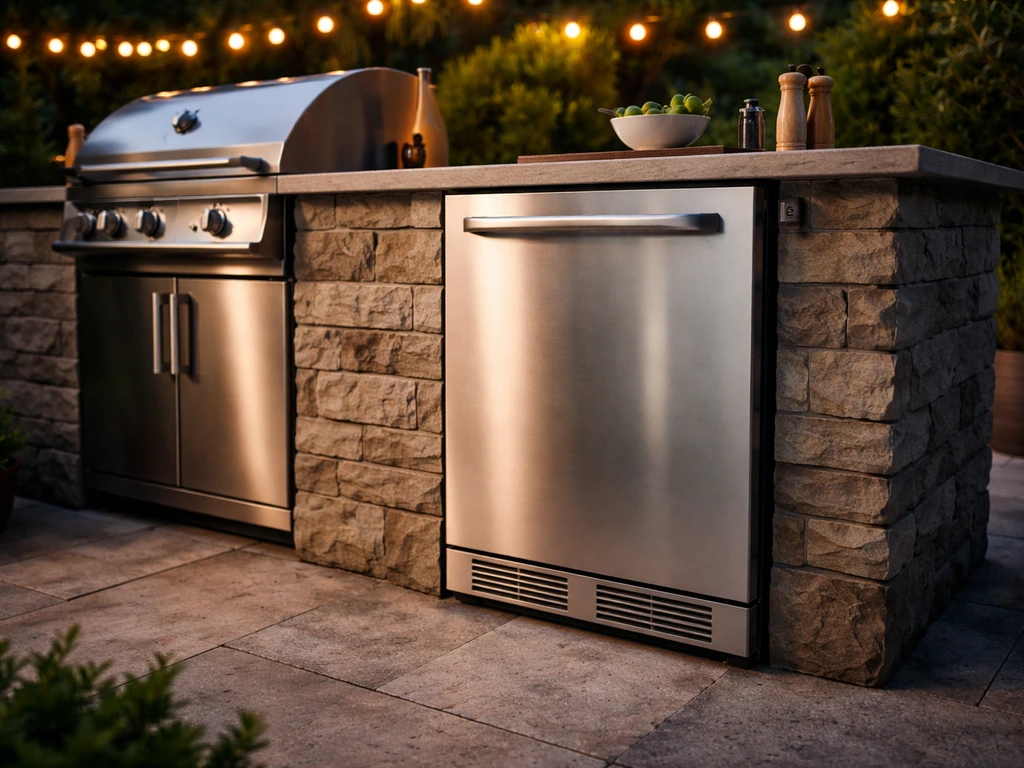
What 'outdoor rated' actually needs to mean for your patio
The phrase 'outdoor refrigerator' gets thrown around loosely, so it helps to know what the certifications and specs actually cover. The most important thing to verify is the ambient operating temperature range. This is the range of outdoor air temperatures within which the unit can still maintain its internal target temperature. A model like the Summit SPR6-OS, for example, is rated for ambient temps between 25°F and 85°F. If you live somewhere that regularly hits 100°F in summer, that fridge will struggle to stay cold when you need it most. Always match the ambient range to your actual climate before anything else.
Beyond temperature range, look at the IP (Ingress Protection) rating. This is an international standard (IEC 60529) that rates how well an enclosure resists dust and water intrusion. The first digit covers solids, the second covers liquids. IP55 means dust-protected and shielded against low-pressure water jets. IP65 steps it up to fully dust-tight with the same water-jet resistance. IP66 handles more forceful water jets. For a covered patio, IP55 is typically sufficient. For an uncovered setup or anywhere that gets heavy rain, aim for IP65 or better. One important caveat: IP ratings are tested with fresh water under specific conditions, so they don't automatically guarantee resistance to cleaning chemicals or saltwater spray near the coast.
Thermoelectric units show up a lot in searches for outdoor fridges, and they're worth understanding so you can rule them out quickly. If you specifically want the best wooden patio cooler option, look for a design that fits your outdoor space and can maintain safe temperatures in your climate. The U.S. Department of Energy notes that blank" rel="noopener noreferrer">thermoelectric coolers can only drop the interior temperature a certain number of degrees below ambient, unlike compressor systems. That means on a 90°F afternoon, a thermoelectric unit might only get your drinks down to 60°F or so, which is not actually cold. For any real outdoor use, you want a compressor-based refrigerator.
The features checklist before you buy anything
Run through this list for any unit you're seriously considering. Each item directly affects real-world performance outdoors. A best rolling patio cooler is a handy alternative when you want portability without committing to a fixed outdoor refrigerator.
- IP rating of IP55 minimum for covered patios, IP65 or higher for exposed or coastal locations
- Ambient temperature operating range that covers your local summer high and winter low, with at least a few degrees of buffer on each end
- Compressor cooling system, not thermoelectric, for reliable performance regardless of outdoor air temperature
- Frost-free or auto-defrost design to prevent ice buildup without manual intervention, especially in humid climates
- Stainless steel exterior or UV-resistant coated finish to resist corrosion and sun damage
- Lockable door, both for security and to prevent children or animals from opening it
- Reversible door hinge so you can orient the door swing to fit your patio layout
- Interior capacity matched to use: roughly 3 to 6 cubic feet for drinks bars, 12 to 20 cubic feet for food storage during parties
- Temperature holding range that gets into the mid-30s°F, Summit's SPR618OSADA holds 36 to 43°F as a reference point
- ENERGY STAR certification as a proxy for efficiency, which matters because outdoor units often run harder in heat
- Back or bottom venting with clearance requirements you can actually meet in your space
Sizing, placement, and power: get this right before you buy
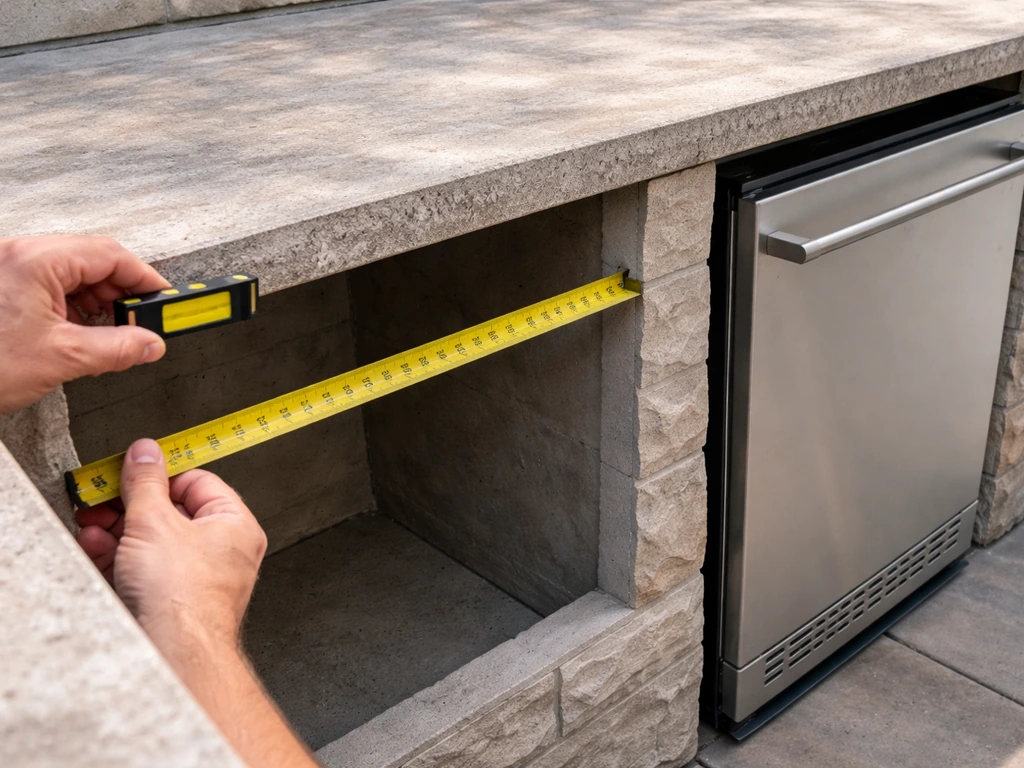
Measure twice, order once
Measure the exact opening or footprint where the unit will live, including height, width, and depth. If you're doing a built-in installation under a counter or inside an outdoor kitchen cabinet, add clearance for ventilation. Summit's guidance for their ADRD18OS built-in model recommends at least 1/4 inch on the top and sides and 2 inches at the rear for airflow. Skimp on rear clearance and you'll see the compressor running constantly, higher energy bills, and a shorter lifespan. Freestanding units that vent at the back need open space behind them, not a wall pressed against the grille.
Sun, shade, and placement strategy
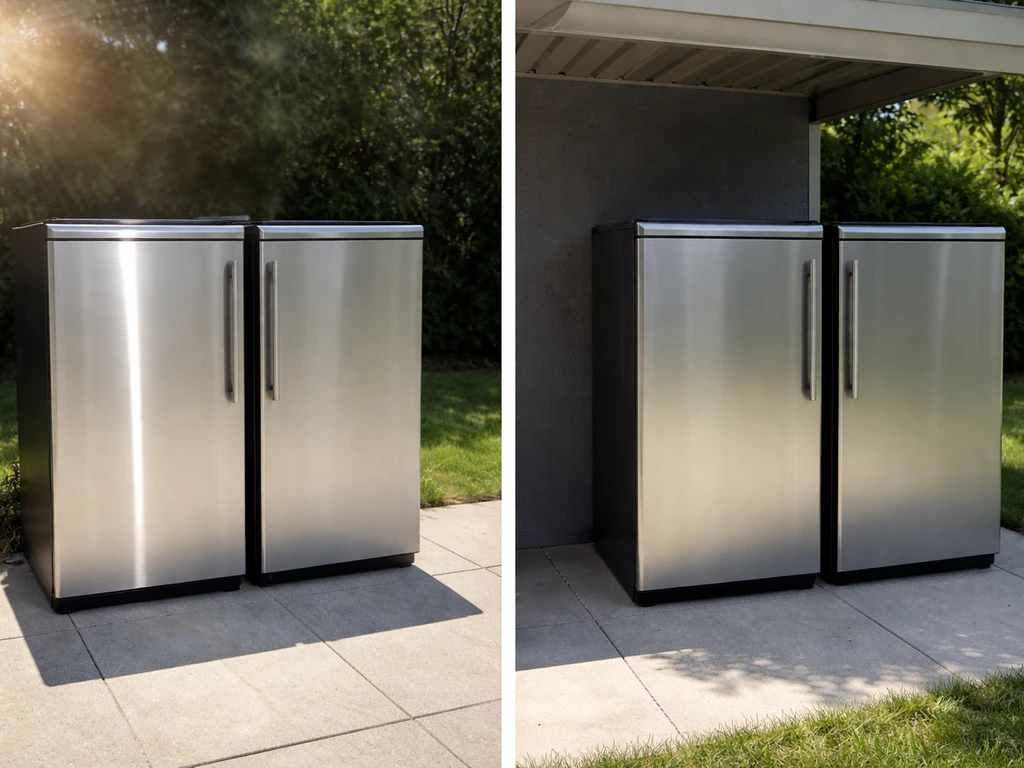
Placement in direct sun is the single biggest performance killer for outdoor fridges. Even a unit rated for an 85°F ambient temperature can exceed that limit if it's sitting in full afternoon sun, where surface temperatures can be 20 to 30°F higher than air temperature. Covered patios or shaded spots aren't just nice to have, they're a real performance factor. If your only option is a sunny location, look for units with a higher ambient ceiling and consider adding a shade structure. This also connects to whether you need a rolling or portable cooler solution for flexibility, especially if you're still finalizing your patio layout. If you want maximum flexibility as your patio layout changes, the best patio cooler on wheels is often the easiest way to move cold drinks where you need them.
Electrical requirements
Outdoor refrigerators typically draw modest current. The Summit SPR6OS, for example, draws 1.3 amps. Most outdoor fridges fall in the 1 to 4 amp range, well within what a standard 15-amp GFCI outdoor outlet can handle. The critical requirement is that outlet: you must use a GFCI (ground fault circuit interrupter) outlet outdoors, full stop. It's both a code requirement in most jurisdictions and a genuine safety necessity. If you don't have a GFCI outlet near your placement spot, hire an electrician to add one. Also verify that the unit comes with or requires an outdoor-rated extension cord if the outlet isn't immediately adjacent. Summit's outdoor use materials specifically call out using outdoor-compatible line cords, not standard indoor extension cords.
Best picks by patio use case and climate
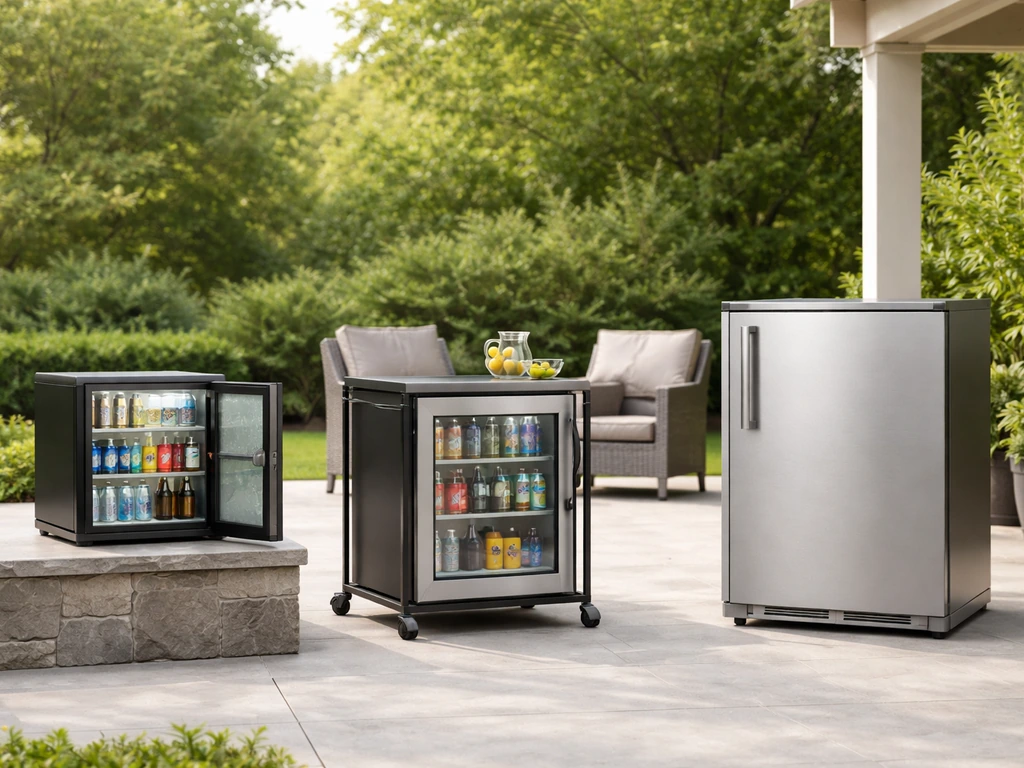
There's no single best outdoor patio refrigerator for everyone, but there's a best one for your specific setup. Here's how to match the unit to the situation.
| Use Case | Best Unit Type | Key Spec to Prioritize | Capacity Sweet Spot |
|---|---|---|---|
| Small patio bar or drinks setup | Undercounter outdoor all-refrigerator | IP65+, compressor, reversible door, lock | 3.2 to 5.5 cu ft |
| Family entertaining, food + drinks | Full-size outdoor refrigerator or outdoor kitchen fridge | Frost-free, high ambient ceiling (90°F+), ENERGY STAR | 14 to 20 cu ft |
| Hot climate (regular 90°F+ summers) | Compressor unit with ambient range extending to 100°F+ | Ambient temp ceiling, heavy insulation, shaded placement | Any, but avoid thermoelectric entirely |
| Humid coastal environment | IP65 or IP66 rated, stainless steel with sealed gaskets | IP rating, corrosion-resistant materials, frost-free | Match to use case above |
| Uncovered or partially covered patio | IP65 minimum, UV-resistant exterior | IP rating, UV finish, ambient range buffer | Smaller is easier to protect or move seasonally |
| Covered outdoor kitchen built-in | Built-in outdoor undercounter unit | Venting clearance compatibility, trim kit options | 15 to 24 inches wide (standard undercounter widths) |
For the small patio bar setup, Summit's SPR series is a solid reference point. If you want a quick recommendation, look for the best outdoor mini fridge for patio setups that match your local heat and ventilation conditions. Models like the SPR6OS and SPR618OSADA offer the outdoor certification, compressor cooling, and lockable reversible doors in a compact form factor. For larger setups and outdoor kitchens, brands like Perlick, True, and Coyote make built-in units with higher ambient ceilings and professional-grade insulation, though at significantly higher price points. If your patio is still evolving or you want flexibility, a high-quality rolling patio cooler can bridge the gap while you finalize your layout, though it obviously won't hold temperature the same way or match a fridge's capacity.
What's worth paying for and what you can skip
Outdoor refrigerators range from around $400 for entry-level compact units to $3,000 or more for professional built-in models. Here's an honest breakdown of where the money matters. If you are mostly shopping for drinks and want the best patio cooler experience, outdoor refrigerator cooling performance and capacity matter, too.
Worth paying more for
- A higher ambient temperature ceiling: if you live somewhere hot, spending an extra $200 to $400 to get a unit rated to 100°F or 110°F instead of 85°F is money well spent because it's the difference between a fridge that works in July and one that doesn't
- Frost-free operation: manual defrost is annoying enough indoors; outdoors, in humidity, it becomes a real maintenance problem and will shorten the unit's life if neglected
- Genuine IP65 or better rating: not a marketing claim but a verified test result listed in the product spec sheet
- Stainless steel exterior with a marine-grade or coated finish if you're near salt air
- ENERGY STAR certification: outdoor units run hard, so efficiency genuinely affects your electricity bill over years of use
Where you can save money
- Smart connectivity features (Wi-Fi temperature alerts and app control): nice to have but adds cost and complexity for minimal practical benefit outdoors
- Interior lighting upgrades beyond a basic LED: you're opening this in bright daylight most of the time
- Premium handle and hardware aesthetics if the unit lives inside a cabinet where it won't be seen
- Matching trim kits if you're building a surround yourself and can cut to fit
The mid-range sweet spot for most homeowners is roughly $600 to $1,200 for a quality outdoor-rated compressor fridge with solid IP certification and frost-free operation. The Summit SPR316OS manual also notes its frost-free (auto defrost) behavior and provides operating notes, including temperature-control details for outdoor use blank" rel="noopener noreferrer">frost-free operation. If you're shopping for hot-weather entertaining, the best patio coolers 2022 list can help you compare capacity, insulation, and weather resistance side by side outdoor-rated compressor fridge. Below $400, you're often getting a unit that either lacks true outdoor certification or uses thermoelectric cooling. Above $1,500, you're paying for professional-grade build quality and aesthetics that matter more for permanent outdoor kitchens than for a covered patio setup.
Keeping an outdoor fridge running year after year
Outdoor refrigerators need more attention than indoor units, but the maintenance routine is straightforward if you stay on top of it. The biggest issues are dust and debris blocking the condenser coils, moisture intrusion around door gaskets, and airflow restriction from things accumulating near the vents.
- Clean the condenser coils every 3 to 6 months by vacuuming or brushing the back and bottom of the unit. Outdoor environments load up the coils with dust, pollen, and debris far faster than indoors, and clogged coils force the compressor to work harder and run hotter.
- Inspect door gaskets every few months, especially after winter. A cracked or warped gasket is the most common cause of an outdoor fridge that runs constantly but never gets cold enough. Clean gaskets with mild soap and water; replace them if they show cracks or don't seal tightly.
- Keep vents clear at all times. The Summit SPR6-OS manual specifically warns that airflow from the rear vents must be unimpeded. Don't stack things against the back of the unit or block the bottom grille.
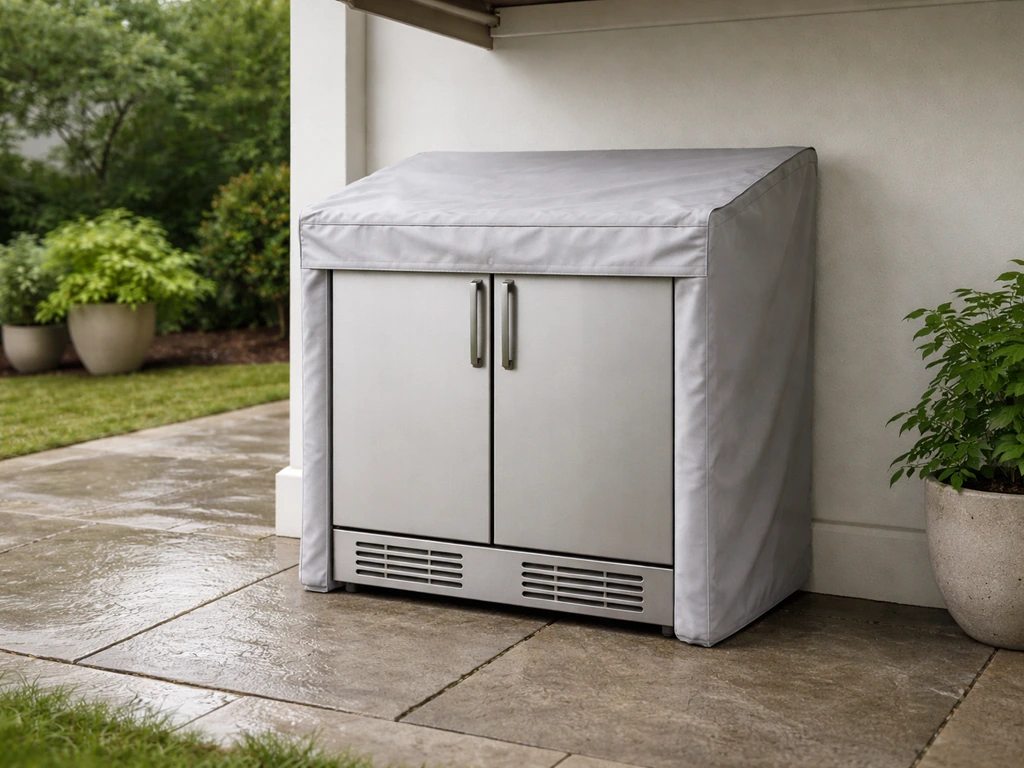
- In climates with freezing winters, consider unplugging and bringing the unit indoors or covering it with a waterproof appliance cover rated for outdoor use if it will sit unused for months. Most outdoor fridges have a lower ambient limit around 25°F, and running below that can damage the compressor.
- If your unit has frost-free operation, monitor it after the first few weeks to confirm the defrost cycle is working correctly. The Summit SPR6-OS, for example, uses a compressor pause with a fan running to remove frost. If you notice ice buildup inside, that's a sign the defrost system needs attention.
- Wipe down the exterior with a stainless steel cleaner or mild soap every month or two to prevent corrosion, especially near coastal areas or anywhere with salt in the air.
Step-by-step: from measuring your space to plugging it in
- Measure your exact space: height, width, and depth of the opening or footprint. For built-in installations, confirm you can meet manufacturer clearance requirements (typically 1/4 inch on sides and top, 2 inches at rear minimum).
- Check your climate extremes: find the average high for your hottest month and average low for your coldest. Match both numbers against the unit's ambient operating range, with a buffer of at least 5°F on each end.
- Verify the IP rating in the product spec sheet, not just the marketing description. The spec sheet should list the actual IEC 60529 rating (e.g., IP55, IP65).
- Confirm your outdoor electrical situation: you need a GFCI outlet within a reasonable distance of the placement spot. If you don't have one, get an electrician to install it before the fridge arrives.
- Check amperage draw in the product specs and confirm your circuit can handle it alongside anything else on that circuit. Most outdoor fridges draw 1.5 to 4 amps, so this is rarely an issue, but verify it.
- Decide on freestanding vs. built-in based on your current patio setup. If your outdoor kitchen is permanent, built-in is cleaner. If your patio layout might change, freestanding gives you flexibility.
- Order with the door hinge orientation in mind. Most outdoor fridges offer reversible doors, but confirm this in the specs and plan which direction works for your traffic flow.
- On delivery, inspect the unit before installation. Check for shipping damage, verify the door seal, and make sure the leveling feet are intact.
- Install with proper clearances, plug into the GFCI outlet, and let the unit run empty for at least 4 hours before loading it with food or drinks to allow it to reach stable operating temperature.
If you're still deciding between a proper outdoor refrigerator and alternatives like a high-end patio cooler or outdoor mini fridge, the choice usually comes down to how permanent your setup is and how often you entertain. A true outdoor-rated refrigerator is the right investment for anyone with a fixed patio bar, outdoor kitchen, or who hosts frequently enough that hauling ice or a portable cooler becomes a hassle. For more casual or flexible setups, a quality outdoor cooler on wheels can handle the job without the electrical requirements or maintenance commitment.
FAQ
Can I use a regular indoor mini fridge outdoors if I keep it under a cover?.
Confirm the refrigerator’s rating is for both outdoor use and the specific climate you’ll run it in, meaning the stated ambient operating temperature and proper ventilation requirements are met. A fridge that is only “water resistant” or “garage rated” may still fail due to heat soak in direct sun or insufficient airflow behind the condenser.
Are built-in outdoor patio refrigerators different from freestanding ones, and can I install one in an outdoor kitchen cabinet?.
Yes, but only if the built-in requirement is compatible with your cabinet layout, especially rear and top clearance for condenser airflow. Many built-in models require dedicated vents, recirculation-free spacing, or a vented access panel, so measure and plan for exhaust pathways before purchasing.
Do outdoor patio refrigerators need to be defrosted, and what should I look for in the specs?.
Look for “frost-free” or “auto-defrost,” and ensure the defrost cycle does not require extra drainage components that aren’t feasible outdoors. Also note that frost-free designs typically perform best when airflow isn’t restricted by stacked items that block vents inside the unit.
How do I choose an outdoor patio refrigerator if I live near the ocean (salt spray and humidity)?.
For coastal areas, prioritize higher IP protection, sealed door gaskets, and models that explicitly address corrosion resistance or are designed for salt-air environments. Also avoid routinely hosing the exterior, instead use gentle cleaning and keep airflow paths clear so moisture doesn’t linger on condenser surfaces.
What packing and loading habits improve cooling performance outdoors?.
Plan to keep the unit stocked but not tightly overpacked. Crowding the shelves can block cold-air movement and cause uneven temperatures, particularly if you’re running the fridge near its maximum ambient limit. If you frequently serve from the fridge, pre-cool items and minimize door-open time.
What’s the safest way to handle power for an outdoor patio refrigerator, especially with extension cords?.
In most outdoor patio fridge setups, you should protect the electrical outlet and cord from water pooling, use an outlet cover rated for outdoor use, and secure the cord so it won’t snag or drag across wet surfaces. Avoid using indoor extension cords even if they physically fit, unless the product instructions explicitly allow a specific outdoor-rated type.
What happens if my patio gets hotter than the fridge’s rated ambient temperature range?.
Yes, but treat it as a performance and warranty concern. If you run the fridge where ambient temperatures exceed the stated limit, the compressor may run continuously, increasing wear and risking temperature instability for drinks. Shading helps, but it does not change the manufacturer’s tested operating envelope.
Can I reverse the door on an outdoor patio refrigerator, and what should I watch out for?.
If your unit uses reversible doors, verify the swing direction relative to door clearance and handle placement, especially if it’s installed under a counter or next to a cabinet corner. Also check that reversing the door does not interfere with gasket alignment or the latch mechanism for a tight seal outdoors.
How often should I clean the condenser coils and what maintenance matters most outdoors?.
Clean condenser coils and the surrounding airflow area on a predictable schedule, such as every few weeks during peak pollen seasons, and sooner if you notice warmer drink temperatures. If your unit has a removable rear access panel, keep it aligned and fully latched after cleaning to maintain correct airflow.
What measurements should I take before buying, beyond height, width, and depth?.
Measure both the exterior dimensions and the service clearance you’ll need, not just the footprint. Pay extra attention if the unit vents at the back or requires top ventilation, because cabinet shelving and countertop overhangs can restrict airflow and push the compressor into constant run cycles.
How cold can I realistically keep drinks when it’s hot outside?.
For drinks-focused use, set realistic expectations: outdoor refrigerators cool to a target internal temperature, but the difference between indoor and ambient matters. Aim to place the fridge in shade and avoid frequent door openings if you want it to maintain colder temperatures during long parties.
Next Articles
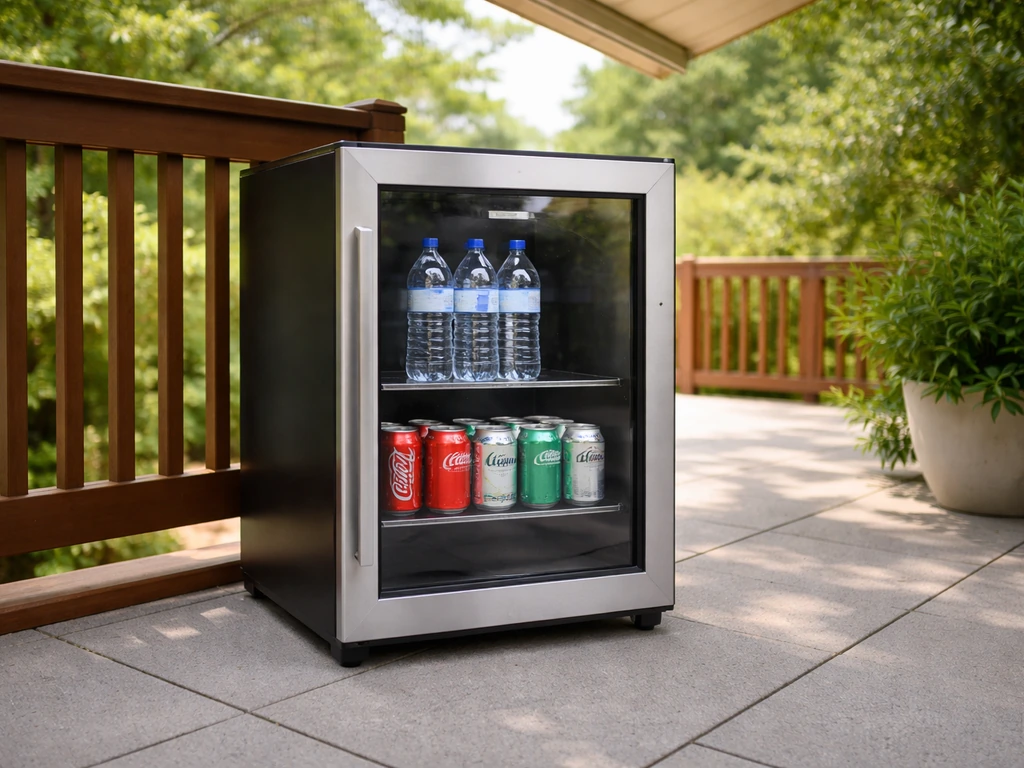
Best Outdoor Mini Fridge for Patio: 2026 Buying Guide
2026 guide to the best outdoor mini fridge for patio. Compare top picks by weather, power, cooling, capacity, and runnin
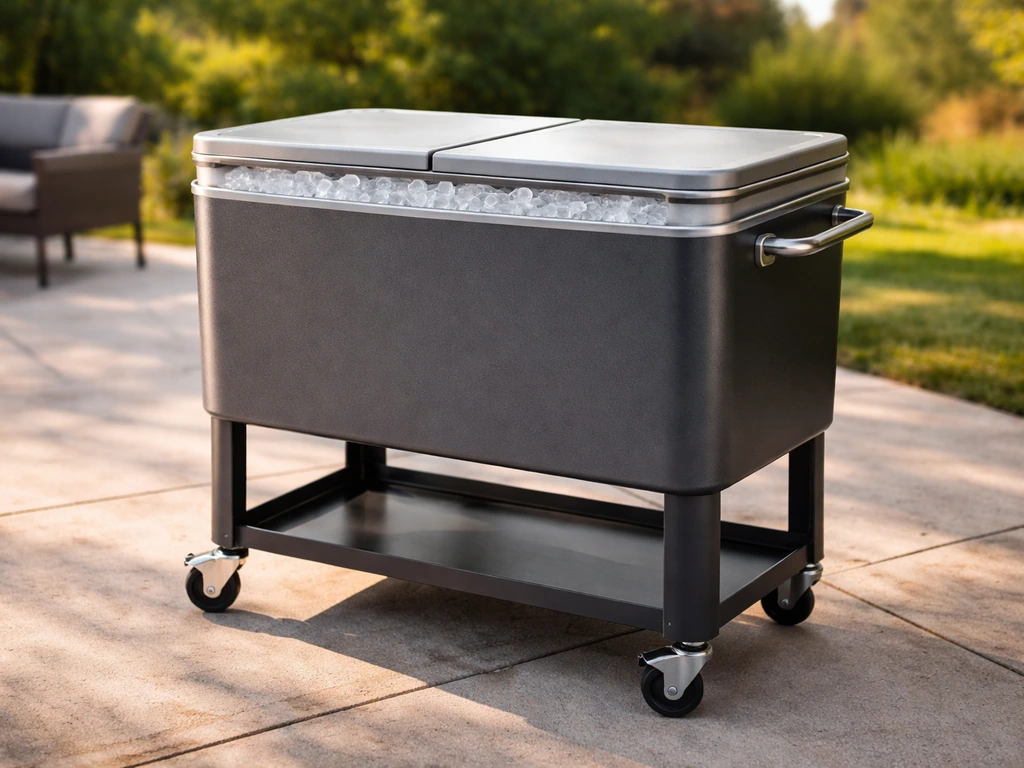
Best Patio Cooler on Wheels: How to Choose and Buy
Pick the best patio cooler on wheels with tips, comparisons, capacity and ice retention, plus quick 5-minute checklist.
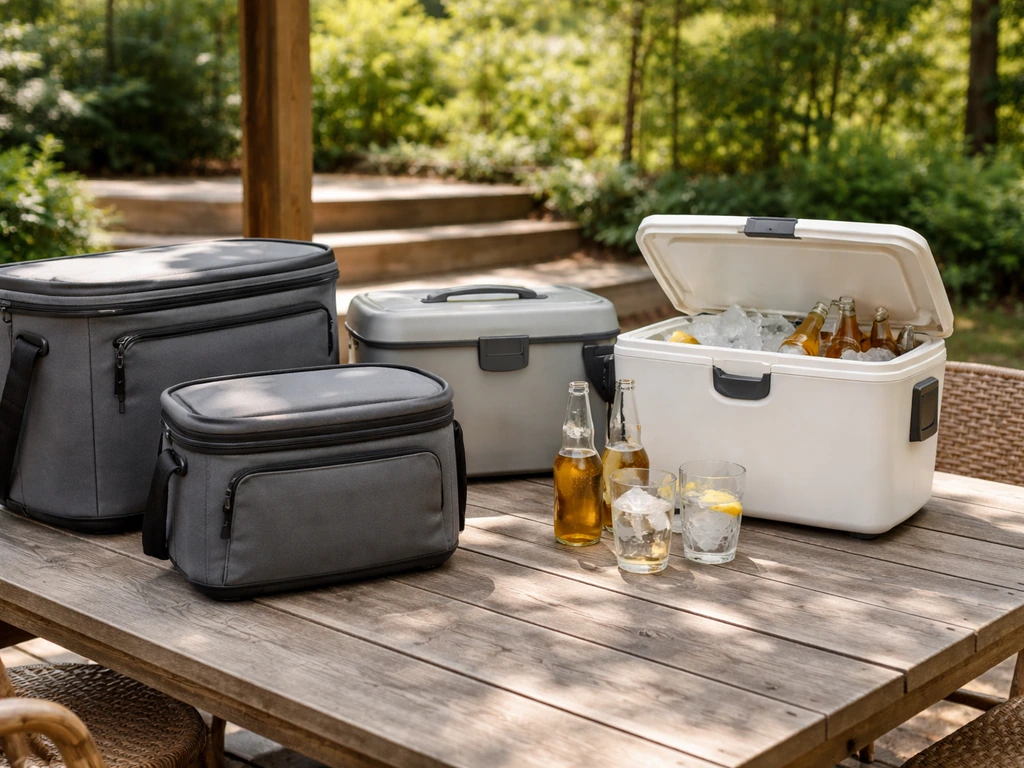
Best Outdoor Patio Coolers: Buying Guide and Top Picks
Find the best outdoor patio coolers: choose by size, ice retention, lid design, wind exposure, and setup tips for longer