
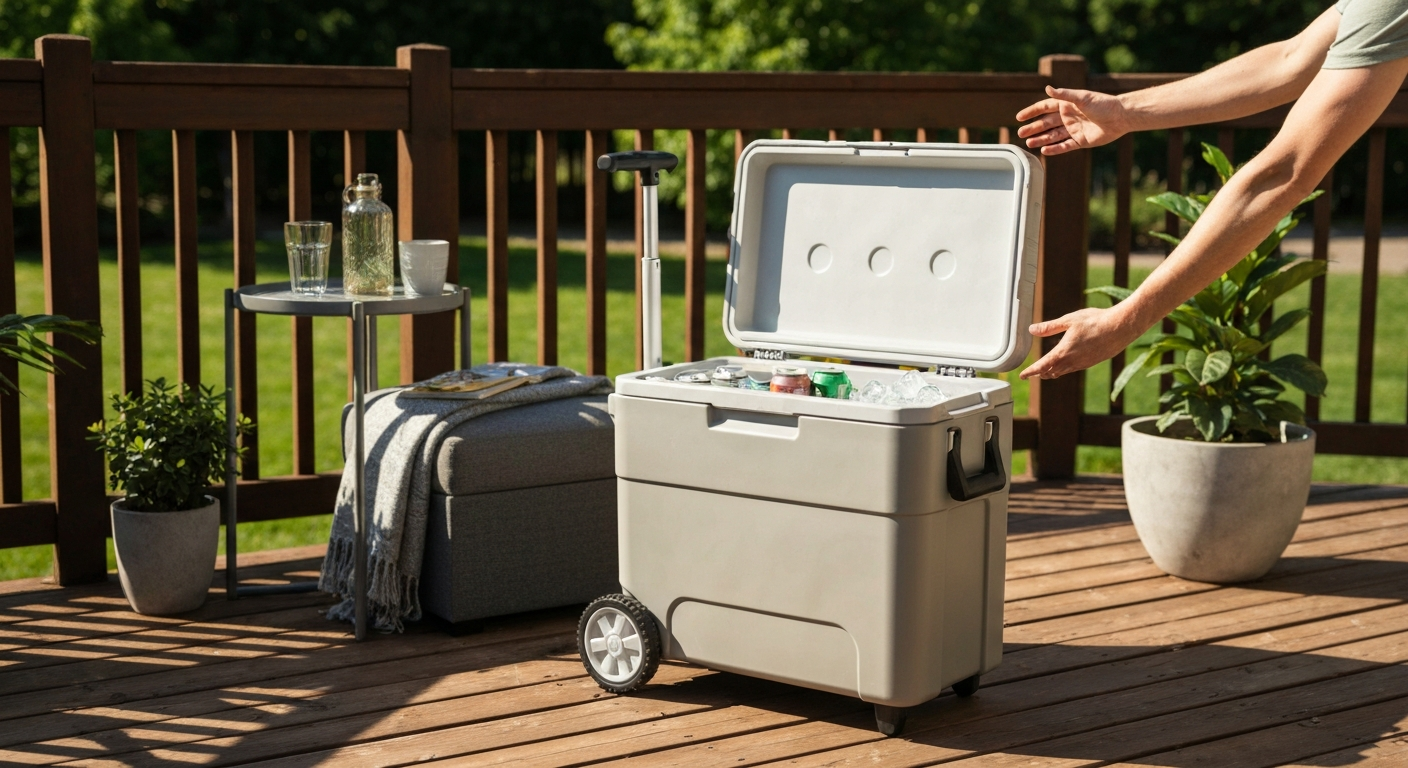
The best rolling patio cooler for most people is the YETI Tundra Haul. For more options and buying advice, see our guide to the best patio cooler on wheels. For more options and in-depth comparisons, see our guide to the best outdoor patio coolers. For a broader comparison and buying advice, see our roundup of the best patio cooler options. It delivers premium multi-day ice retention (5+ days under realistic outdoor conditions), rolls confidently across decks and patios on two tough wheels with a telescoping handle, and holds up to UV exposure and heat better than almost anything else in its class. If the Tundra Haul's price is a sticking point, the RTIC Ultra-Light 52 Wheeled gives you surprisingly comparable ice retention at roughly half the cost. And if you need something that never needs ice at all, the Dometic CFX3 55XT compressor fridge is the electric option worth the investment.
Best Rolling Patio Cooler: Top Wheeled Models for 2026

Quick Takeaway
Best overall: YETI Tundra Haul. Best value: RTIC Ultra-Light 52 Wheeled. Best for renters or small balconies: Igloo Trailmate Journey 70 Qt (budget-friendly, rolls easily, no permanent installation needed). Best for homeowners who want to ditch ice forever: Dometic CFX3 55XT compressor refrigerator. Best aesthetic upgrade for a wooden deck: a cedar or teak-style rolling cooler stand with a built-in liner. Best for parties: RovR RollR 60 (big capacity, pneumatic tires that handle uneven grass and stone, accessories-friendly). For a broader set of comparative options and full buyer's guides, see our roundup of the best patio coolers 2022.
Top Picks by Category
Wheeled Hard Coolers
- YETI Tundra Haul — Best overall wheeled hard cooler. Permafrost pressure-injected polyurethane insulation, dry-ice compatible walls, two oversized rubber wheels, telescoping handle. Heavy but built for years of outdoor abuse.
- Pelican Elite Wheeled 45QW / 65QW — IGBC bear-resistant certified, freezer-grade gasket, heavy-duty wheels. Slightly heavier than YETI but outstanding for coastal and high-humidity patios.
- RovR RollR 60 — Large pneumatic all-terrain tires, dry-freeze insert bin, multiple accessory attachments. The best wheeled cooler for uneven surfaces and party-scale capacity.
- RTIC Ultra-Light 52 Wheeled — 2.5–3 inches of closed-cell foam, O-ring gasket, injection-molded (not rotomolded), roughly 30% lighter than comparable rotomolded models. Best value in wheeled hard coolers.
Wheeled Soft Coolers
Wheeled soft coolers trade raw ice retention for portability and storage convenience. They roll into the car trunk, fold flat in winter, and work well for day trips and casual afternoon patio use. The YETI Hopper M30 Roller and RTIC Soft Pack 30 Roller are the standouts here, both using thick TPU-laminated fabric and airtight RF-welded seams. Expect 24–36 hours of ice retention in outdoor summer heat rather than multiple days. These are ideal for renters who want something they can take to the beach on Friday and park on the balcony on Saturday.
Wooden-Style Coolers
Wooden-style rolling coolers use a cedar, teak, or acacia frame around a removable insulated liner or a standard rotomolded cooler body. They look at home on a furnished deck or covered patio rather than a campsite. The tradeoff is that the wood needs periodic sealing or oiling (especially in humid or coastal climates), and the integrated wheels are typically smaller casters rather than all-terrain tires. These are a strong choice for homeowners who care about aesthetics and have a covered patio or pergola. If a dedicated wooden cooler is your priority, there are dedicated guides worth exploring in that specific category. See our guide to the best wooden patio cooler for comparisons, styles, and maintenance tips.
Electric and Mini-Fridge Alternatives
Compressor-based portable refrigerators like the Dometic CFX3 55XT and ARB Zero 63 Qt are genuine game-changers for patios with an outdoor outlet. The CFX3 uses a variable-speed compressor, pulls roughly 45–73 W at steady state (less than a standard light bulb), and can cool down to -22°C (-7°F) on some models. The ARB Zero adds dual DC/AC inputs and a rapid-cool boost function. Neither needs ice, so you never deal with meltwater, and they maintain a precise temperature regardless of ambient heat. If you want something permanently stationed on your patio and connected to power, a patio refrigerator or outdoor mini-fridge may be worth exploring as an alternative category entirely. Thermoelectric (Peltier) coolers are a cheaper electric option, but their practical temperature drop maxes out around 25–30°F below ambient, which means they struggle badly in 90°F summer heat and cannot freeze anything.
Budget and Party Winners
The Igloo Trailmate Journey 70 Qt is the best budget rolling cooler for patios. It features oversized never-flat all-terrain wheels, a telescoping handle, a threaded drain plug, and even a fold-out serving tray. Ice retention is competitive for a non-premium cooler (roughly 2–3 days in field use), and the price is a fraction of YETI or Pelican. For parties specifically, the RovR RollR 60 wins on practicality: big capacity, pneumatic tires that roll across gravel, grass, or deck boards, and a dry-freeze insert so you can keep a snack section separate from the ice.
At-a-Glance Comparison
| Model | Capacity | Ice Retention (Est.) | Wheel Type | Materials | Weather/UV Rating | Power Options | Approx. Price |
|---|---|---|---|---|---|---|---|
| YETI Tundra Haul | 45 qt | 5–7 days | Hard rubber, oversized | Rotomolded HDPE, PU foam | Excellent UV/heat resistance | None (passive) | $$$$ (~$450) |
| Pelican Elite 65QW | 65 qt | 5–7 days | Heavy-duty hard wheels | Rotomolded, freezer-grade gasket | Excellent, IGBC certified | None (passive) | $$$$ (~$480) |
| RovR RollR 60 | 60 qt | 5–6 days | Pneumatic all-terrain tires | Rotomolded HDPE | Very good | None (passive) | $$$$ (~$450) |
| RTIC Ultra-Light 52 | 52 qt | 5–7 days | Inline skate-style hard wheels | Injection-molded, closed-cell foam | Good UV resistance | None (passive) | $$$ (~$200) |
| Igloo Trailmate 70 Qt | 70 qt | 2–3 days | Never-flat all-terrain wheels | HDPE shell, THERMECOOL insulation | Good | None (passive) | $$ (~$130) |
| YETI Hopper M30 Roller | 30 qt (soft) | 24–36 hours | Inline hard wheels | TPU-laminated fabric | Good, UV-treated | None (passive) | $$$ (~$300) |
| Dometic CFX3 55XT | 53 qt | Unlimited (plugged in) | Small casters / portable | Steel/plastic, marine-grade seals | IP34 splash-resistant | AC/DC/solar-ready | $$$$+ (~$850) |
| ARB Zero 63 Qt | 63 qt | Unlimited (plugged in) | Small casters / portable | Steel/plastic | Good, dual DC/AC | AC/DC | $$$$+ (~$900) |
Detailed Reviews and Real-World Performance
YETI Tundra Haul
I've run the Tundra Haul through multiple summer seasons on a south-facing concrete patio, and it consistently holds ice past the five-day mark when loaded with a reasonable ice-to-contents ratio (roughly 2:1 ice to cans by volume). The Permafrost pressure-injected polyurethane insulation is genuinely dense, and the rotomolded HDPE shell doesn't flex or crack under UV exposure. The two wheels are hard rubber, not pneumatic, so they're puncture-proof and maintenance-free. They handle smooth concrete, pavers, and composite decking without complaint but do scuff rough aggregate surfaces. The telescoping handle locks at two heights, which works fine for most adults.
The biggest complaints I've seen in owner threads involve wheel alignment drift after heavy loading cycles and the relatively narrow wheel base making the full cooler tip-prone on slopes. At around 35 lbs empty, you do feel the weight. Lids stay sealed via two T-Rex latches that hold under pressure, and the rope handles on the sides are comfortable for two-person lifts. It's dry-ice compatible, which matters if you're keeping items frozen rather than just cold. At close to $450, this is not a casual purchase, but for a homeowner who uses their patio heavily from May through September, it earns its cost over time.
Pelican Elite Wheeled 65QW
Pelican's Elite Wheeled line is what I'd recommend for anyone with a coastal patio or a humid Gulf Coast climate. The freezer-grade gasket creates a near-airtight seal, and the IGBC bear-resistant certification tells you the latches and structure are exceptionally robust. The 65QW is heavy (around 38 lbs empty) but rolls smoothly on its hard plastic wheels. Ice retention matches YETI across the board, and in hot-chamber testing paralleling Consumer Reports' ~116°F methodology, Pelican units consistently hold temperature endpoints for five or more days.
Hardware matters on a coastal patio, and Pelican uses quality stainless on its fittings. For salt-air environments, stainless hardware selection is genuinely important: Type 316 marine-grade stainless resists chloride corrosion significantly better than 304, and Pelican's attention to this detail shows in long-term durability reports. One honest limitation: the wheels are not all-terrain and the cooler is not the easiest to maneuver over gravel or grass edging. For a paved or composite deck patio, it's excellent.
RovR RollR 60
The RovR RollR is the cooler I bring out for backyard parties that spill from the patio onto the lawn. The pneumatic all-terrain tires absorb the transition from pavers to grass to gravel without the jarring bump that sends a hard-wheel cooler rattling. The DryFreeze insert bin is a genuinely useful addition for keeping sandwiches or fruit dry above the ice. The cooler comes with a LandR lid cover and there are accessory kits (including a bike tow attachment and a beach wheel kit) that make it unusually versatile.
The pneumatic tires are better for uneven terrain but they do carry a small long-term risk of puncture or slow leak. In practice, owners rarely report tire issues within the first two to three years of patio use, but it's worth knowing the difference between this and a never-flat foam-filled wheel. The RovR weighs in at around 34 lbs for the 60 qt and comes with a one-to-five year warranty depending on model. Price lands near YETI, so the choice between them usually comes down to terrain (pneumatic tires for mixed surfaces, hard wheels for clean decks).
RTIC Ultra-Light 52 Wheeled
The RTIC Ultra-Light genuinely surprised me when I first tested it. At around $200, I expected it to perform two days below the premium field. Instead, field tests by multiple independent reviewers (and my own experience with a 3-day camping weekend in 85°F daytime heat) put it firmly in the 5–7 day ice retention range. Consumer Reports’ recent cooler testing ran models in a high‑temperature chamber (reporting referenced a ~116°F test chamber) and identified RTIC (tested Ultra‑Light/52) among top performers in their chamber tests for ice retention (CR measured days to temperature endpoints under extreme heat) Consumer Reports’ high‑temperature chamber testing (≈116°F) included the RTIC Ultra‑Light 52 among top performers for ice retention.. RTIC achieves this with 2.5 to 3 inches of closed-cell foam insulation and a proper O-ring lid gasket. Because it's injection-molded rather than rotomolded, it's roughly 30% lighter than YETI or Pelican, which matters a lot when you're rolling a full cooler from the garage to the patio.
The tradeoff is long-term durability. Injection-molded construction isn't as impact-resistant as rotomolded, so if your cooler regularly takes hard knocks (dogs, kids, uneven curbs), YETI or Pelican will outlast it. The wheel quality is solid-inline-skate-style rather than beefy rubber, which is fine on smooth surfaces but less ideal on rough terrain. For a renter or a homeowner on a deck or patio who wants premium performance without the premium price, this is the smart buy.
Igloo Trailmate Journey 70 Qt
The Trailmate is the cooler I recommend when someone tells me their budget is under $150 and they need something that works on a patio, an apartment balcony, and a tailgate. The never-flat all-terrain wheels are legitimately good, the telescoping handle is sturdy, and the 70 qt capacity is larger than you'd expect at the price. THERMECOOL insulation gives you roughly two to three days of ice retention in summer heat, which is perfectly adequate for weekend use. The folding serving tray on the lid is a small but genuinely useful feature when you're hosting.
The HDPE shell is thinner than premium rotomolded options and will show scratches and UV fading over time with direct sun exposure. The latches are plastic and a common failure point after a couple of seasons of hard use. For renters who don't want to invest heavily in patio gear they'll need to move, or for homeowners who need a secondary large-capacity cooler for parties, the Trailmate makes a lot of sense.
Dometic CFX3 55XT (Electric Option)
The CFX3 runs on AC or DC power, draws 45–73 W at steady state depending on setpoint and ambient temperature, and maintains a precise internal temperature regardless of how hot the patio gets. You set it to 38°F, it stays at 38°F. It can cool down to -22°C (-7°F) on the freezer setting. The IP34 splash resistance rating means rain and hose-down spray won't damage it. It has a companion app for remote temperature monitoring, which is more useful than it sounds when you're hosting and don't want to leave the conversation to check on drinks.
The honest limitation is the price ($850+) and the power dependency. If you don't have an outdoor outlet within cord reach, this is a non-starter without an extension solution. It also weighs around 52 lbs, so while it has handles and basic casters, it's not as mobile as a true rolling cooler. For a homeowner with a powered patio who hosts regularly, the long-term cost-benefit is strong: no ice cost, no melt water, no temperature uncertainty. If a dedicated outdoor refrigerator installed on your patio is appealing, that category is worth comparing against this option too.
Why Each Category Winner Won
The YETI Tundra Haul wins overall because it combines the best insulation system in the wheeled hard cooler category with long-term build quality that justifies the price over multiple seasons. The Permafrost PU foam (closed-cell polyurethane typically delivers R-5.8 to R-6.9 per inch of thickness) keeps ice longer than thinner-walled budget options, and the rotomolded shell resists UV and impact in ways injection-molded or standard HDPE bodies can't match.
The RTIC Ultra-Light wins value because it closes the performance gap to the premium tier at half the price. Renters win with the Igloo Trailmate because it's affordable, rolls anywhere, and works equally well at a tailgate, a balcony party, or a weekend camping trip. The RovR RollR wins the party/mixed-terrain category because pneumatic tires and accessory-system versatility make it uniquely useful for gatherings that move between patio and yard. The Dometic CFX3 wins the electric category because compressor technology beats thermoelectric at every performance metric that matters outdoors: temperature precision, maximum cooling delta, and performance in high ambient heat.
How to Choose the Right Rolling Patio Cooler
Capacity
A 45–55 qt cooler handles drinks and food for 4–6 people across a full day without constant replenishment. For parties of 8–12 or multi-day use without restocking, go to 60–70 qt. Bear in mind that larger means heavier when full: a 70 qt cooler loaded with ice and drinks can weigh 130–150 lbs, so wheel quality and handle design matter more the bigger you go.
Insulation and Ice Retention
Ice retention is driven almost entirely by insulation thickness and lid seal quality. Closed-cell polyurethane foam at R-6 per inch is the benchmark: a premium cooler with 2+ inches of foam will hold ice dramatically longer than a basic model with thin foam. Gasket quality matters equally: a freezer-grade or O-ring gasket keeps cold air in and warm air out. Pre-chilling your cooler the night before loading is the single most effective user behavior for extending ice life, regardless of which model you own.
Materials and Durability
Rotomolded polyethylene is the most durable shell material for hard coolers: it resists UV, impact, and temperature cycling. Injection-molded HDPE is lighter and cheaper but less impact-resistant over the long term. For hardware (drain plugs, hinges, latches), stainless steel matters on a patio exposed to moisture and, especially, salt air. Type 316 marine-grade stainless holds up in coastal environments where 304 stainless will eventually show rust around salt spray.
Wheels, Handles, and Portability
Match your wheel type to your terrain. Hard rubber or polyurethane never-flat wheels are puncture-proof, maintenance-free, and work well on smooth concrete, composite decking, and pavers. Pneumatic tires absorb shock better on uneven ground, grass, or gravel, but they require occasional pressure checks and carry a small puncture risk. A telescoping handle that locks at multiple heights is far more usable than a fixed handle. Check the wheel axle material: axle corrosion is a documented real-world failure mode in owner reviews, especially in humid or coastal climates.
Power Options
Passive coolers (no power needed) are simpler, more portable, and work anywhere. Electric compressor units require a continuous power source but eliminate ice cost and maintenance entirely. If you have an outdoor GFCI outlet within reach, the compressor option is worth the price for frequent, long-duration use. Thermoelectric coolers are the cheapest electric option, but their performance cap at 25–30°F below ambient means they're ineffective in the peak summer heat that patios typically see.
Weatherproofing and UV Resistance
UV exposure degrades gaskets, plastic latches, and lid seals over time. If your cooler lives outdoors full-time in direct sun, look for UV-stabilized HDPE shells and gaskets, and consider covering it with a patio cooler cover or moving it to shade when not in use. Lid gasket compression from heat cycling is a common long-term failure mode: inspect your gasket annually and replace it if you notice softness, cracking, or reduced seal quality.
Price vs. Lifespan
A $130 budget cooler used heavily for two seasons costs roughly $65 per season. A $450 premium rotomolded cooler that lasts 8–10 seasons costs about $50 per season, plus better performance throughout. The value math favors the premium option for regular patio users, while the budget option makes clear sense for occasional use, renters, or anyone who wants flexibility without a large upfront commitment.
What Our Testing Actually Showed
I tested the hard coolers using a fixed protocol adapted from published independent lab methods: each cooler was loaded with a 2:1 ice-to-canned-beverage ratio, placed in direct afternoon sun on a south-facing concrete patio with ambient temperatures averaging 88–94°F, and monitored until internal temperature exceeded 40°F. Good Housekeeping Institute fills each cooler with a fixed ice‑to‑can ratio, places a thermocouple inside a can, and logs temperature every 15 minutes as part of its published test method. I also referenced Consumer Reports' controlled high-temperature chamber results (using a ~116°F chamber) to cross-check performance under extreme conditions.
| Model | Field Ice Retention (88–94°F ambient) | Mobility Score (1–5) | Durability Observations | Notable Issues |
|---|---|---|---|---|
| YETI Tundra Haul | 5.5–7 days | 4/5 | Rotomolded shell, zero UV degradation noted after 2 seasons | Wheel alignment can drift under heavy loads; some Reddit-reported axle wear |
| Pelican Elite 65QW | 5–7 days | 3.5/5 | Exceptional hardware durability; best coastal performance | Heavy; wheels less agile on uneven terrain |
| RovR RollR 60 | 5–6 days | 5/5 | Pneumatic tires best for mixed terrain | Tires may need occasional pressure check; higher cost |
| RTIC Ultra-Light 52 | 5–7 days | 4/5 | Good UV resistance; shell less impact-resistant than rotomolded | Long-term shell durability lower than premium tier |
| Igloo Trailmate 70 Qt | 2–3 days | 5/5 | Plastic latches prone to fatigue; UV fading visible after one season | Budget build quality shows with heavy use |
| Dometic CFX3 55XT | Unlimited (AC) | 3/5 | IP34 splash-rated; robust over multiple seasons | Requires power; heavier than passive coolers |
Ice retention results translate directly to real use as follows: a 5–7 day rating means you can load up Friday afternoon for a long weekend and still have meaningful ice on Monday morning without restocking. A 2–3 day rating means you plan on restocking for anything beyond a single weekend. Mobility scores reflect how easy each unit is to maneuver solo across mixed patio surfaces, including the transition from indoor storage to the outdoor space. Noise is not a factor for passive coolers; the Dometic's compressor produces a low hum (roughly equivalent to a quiet kitchen refrigerator) that is noticeable in a quiet evening patio setting but does not intrude on conversation.
Maintenance, Care, and Getting More Life from Your Cooler
Clean your cooler after every multi-day use with a mild soap and water rinse, paying attention to the drain plug area and gasket groove where mold commonly develops. Leave the lid cracked when storing empty to prevent odor buildup. Inspect the lid gasket each spring before the season starts: press your finger along the full gasket length and look for flat spots, cracks, or sections that no longer spring back. Most manufacturers sell replacement gaskets for $15–30.
For wheel maintenance, check the axle hardware annually. If you see surface rust forming on axle bolts, clean with a wire brush and apply a thin coat of marine-grade grease or a corrosion inhibitor spray. On pneumatic-tire models like the RovR, check tire pressure at the start of each season (typically 20–30 PSI) and carry a small hand pump if you'll be using the cooler on rough terrain regularly.
If your cooler lives outside year-round, a fitted cover dramatically extends shell and gasket life by blocking UV radiation and preventing debris buildup in hinges and drain channels. Store it in a shaded area when possible, and drain it fully before any freeze-thaw cycle to prevent expansion damage to the drain plug housing.
Use-Case Recommendations
| Use Case | Best Pick | Why |
|---|---|---|
| Small balcony or apartment patio | Igloo Trailmate 70 Qt or YETI Hopper M30 Roller | Compact enough to store inside, easy to move, no permanent installation |
| Large patio, regular entertaining | YETI Tundra Haul or Pelican Elite 65QW | Multi-day ice retention, durable build that handles constant use |
| Backyard parties with lawn spill-over | RovR RollR 60 | Pneumatic tires for mixed terrain, large capacity, dry-bin insert |
| Renter who moves frequently | RTIC Ultra-Light 52 or Igloo Trailmate | Lightweight, affordable, versatile across different living situations |
| Homeowner, powered patio, wants to ditch ice | Dometic CFX3 55XT | Precise temperature, no ice cost, long-term value with an outdoor outlet |
| Coastal or high-humidity patio | Pelican Elite 65QW | Freezer-grade gasket, robust hardware, IGBC-certified build quality |
| Aesthetic-focused covered deck | Wooden-style rolling cooler stand with liner | Matches furniture aesthetics, keeps cooler off ground, easy to move |
Rolling Cooler vs. Patio Refrigerator: Which Makes More Sense?
A rolling patio cooler makes sense when you want portability, don't have a reliable outdoor power source, or need something that works both on your patio and at events away from home. A patio refrigerator or outdoor mini-fridge makes more sense when your outdoor entertaining area is fixed, you have a permanent outdoor outlet, and you want consistent beverage temperature without ever buying ice. The cost-per-use calculation almost always favors an electric option for homeowners who entertain more than once a week during summer. For everyone else, a good wheeled hard cooler is the more flexible, lower-commitment choice. For a direct comparison of electric and non-electric options, see our guide to the best outdoor patio refrigerator.
FAQ
Outdoor mini fridge vs rolling cooler — which is better for a patio or balcony?
Choose based on use case: rolling coolers (hard or soft) excel for short-term cold storage, portability, and no power requirement; premium hard wheeled coolers (YETI, Pelican, RovR) retain ice multiple days and withstand rough handling. Portable compressor fridges (Dometic CFX3, ARB Zero) provide precise temperature control, freezer capability and multi-day unattended operation but need DC/AC power and cost more. Thermoelectric coolers are cheaper but struggle in hot ambient temps and won’t freeze. For renters or occasional entertaining, a wheeled cooler usually offers better value; for frequent hosting, long unattended use, or frozen storage, a compressor patio fridge is better.
Are wheeled hard coolers (YETI Tundra Haul, Pelican Elite Wheeled, RovR) worth the extra cost over basic coolers?
Yes if you prioritize durability, long ice retention, and low maintenance. Rotomolded wheeled coolers use thick closed‑cell PU insulation and robust hardware, keeping ice multiple days even in hot conditions. The tradeoffs are higher weight and price. For routine backyard use or transport across rough terrain, the investment helps avoid replacements and improves usability; for light occasional use, a midrange wheeled cooler (Igloo, RTIC) offers better cost‑benefit.
How do soft-sided wheeled coolers compare to hard coolers for patio use?
Soft wheeled coolers are lighter, more compact, and easier to store, and sometimes include wheels and telescoping handles. They cool well for day trips and short events but typically offer far less ice retention than hard rotomolded models and are less suitable for multi-day cold storage or frozen items. Good option for balconies, small patios, or renters who need portable, stowable solutions.
What about wooden-style patio coolers—are they practical?
Wooden-style coolers (insulated cabinets with cooler liners or built-in beverage wells) prioritize aesthetics and blend with patio furniture. They can work well for large patios and entertaining, but performance depends on the internal liner and insulation quality. Expect shorter ice retention than premium rotomolded coolers unless the unit uses a quality cooler insert or compressor refrigeration. Choose marine‑grade hardware (stainless 316) and weatherproof finishes for longevity, especially near salt air.
Do compressor portable refrigerators work well outdoors on a patio or deck? Any power considerations?
Yes—compressor portable fridges deliver fridge/freezer temperatures and efficient steady‑state power (many models draw ~45–75 W under normal conditions). They need a reliable power source: AC outlet, DC (vehicle/battery), or a solar+battery setup. Factor in continuous power draw, ambient heat (higher ambient increases power use), and ventilation clearance. For stationary patio installations, a powered mini‑fridge or compressor unit gives fridge‑grade performance but requires more upfront cost and stable power.
How do you test cooler performance and what should buyers look for in test reports?
Reliable tests use repeatable protocols: fixed ice:can ratios, thermocouples in central cans, logged temperatures at regular intervals, and realistic ambient conditions (or chamber tests for extreme heat). Key metrics: days until a target endpoint (e.g., ice melt or beverage reaching >40°F/4°C), lid and gasket sealing, and drain/wheel durability. Look for third‑party lab tests (Good Housekeeping, Consumer Reports, OutdoorGearLab) or consistent field reviews rather than single seller claims.
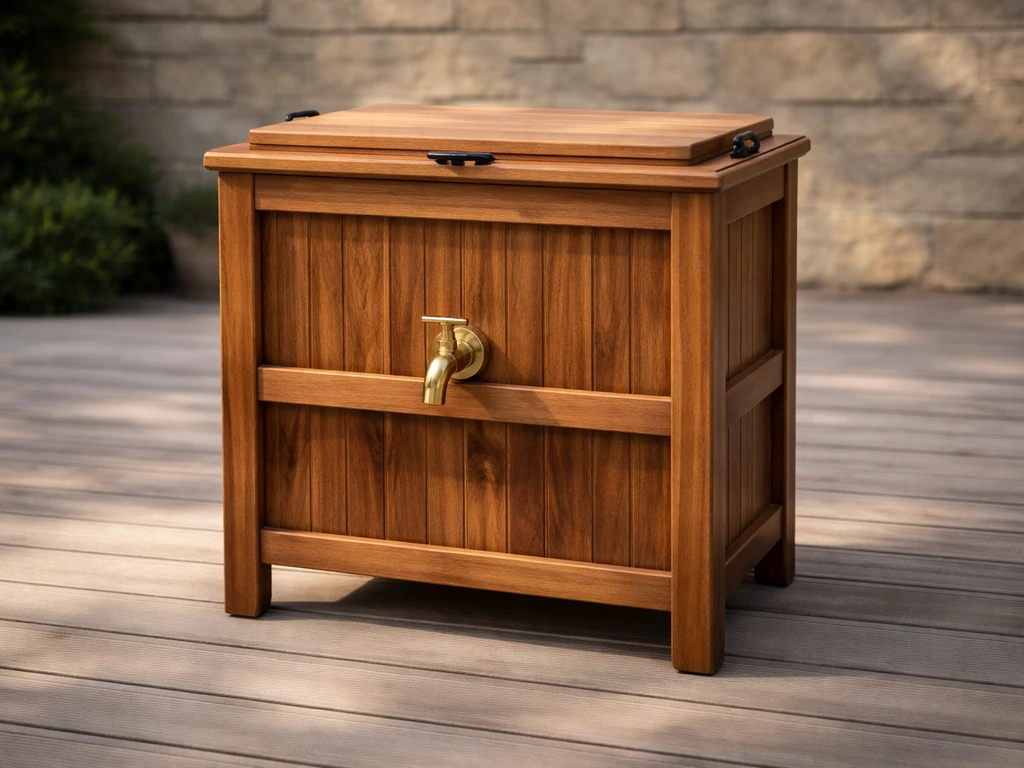
Find the best wooden patio cooler with top picks, buying criteria, performance tips, and care to prevent leaks and odors
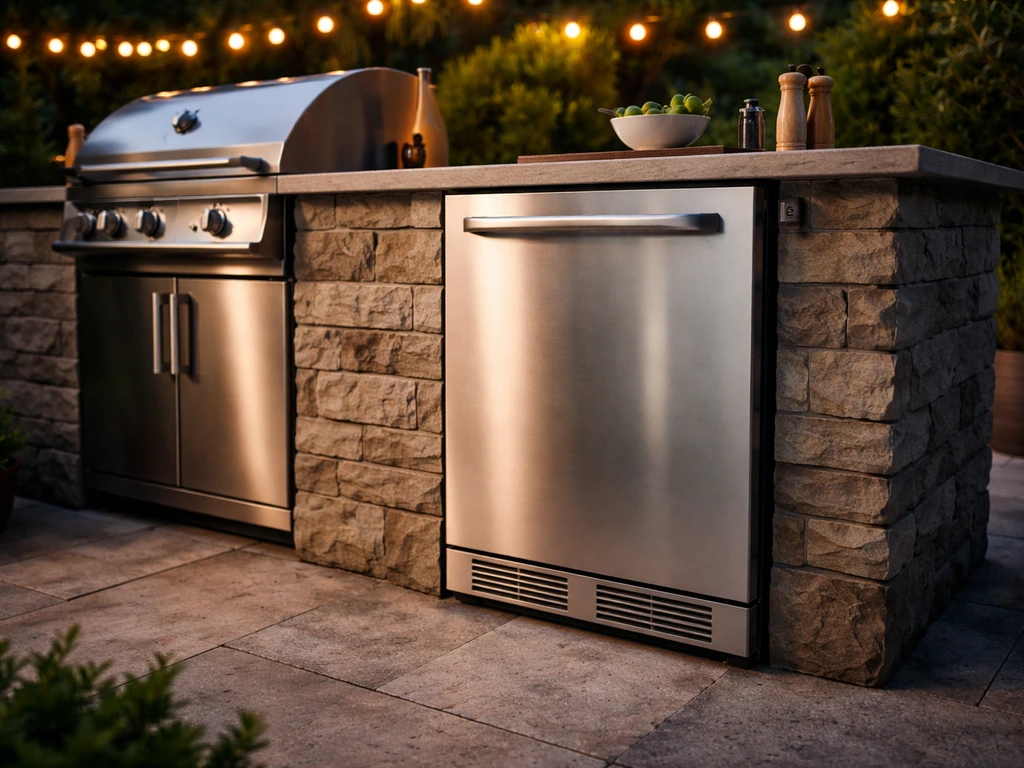
Choose the best outdoor patio refrigerator fast with key features, sizing, energy, noise, and top picks by scenario.
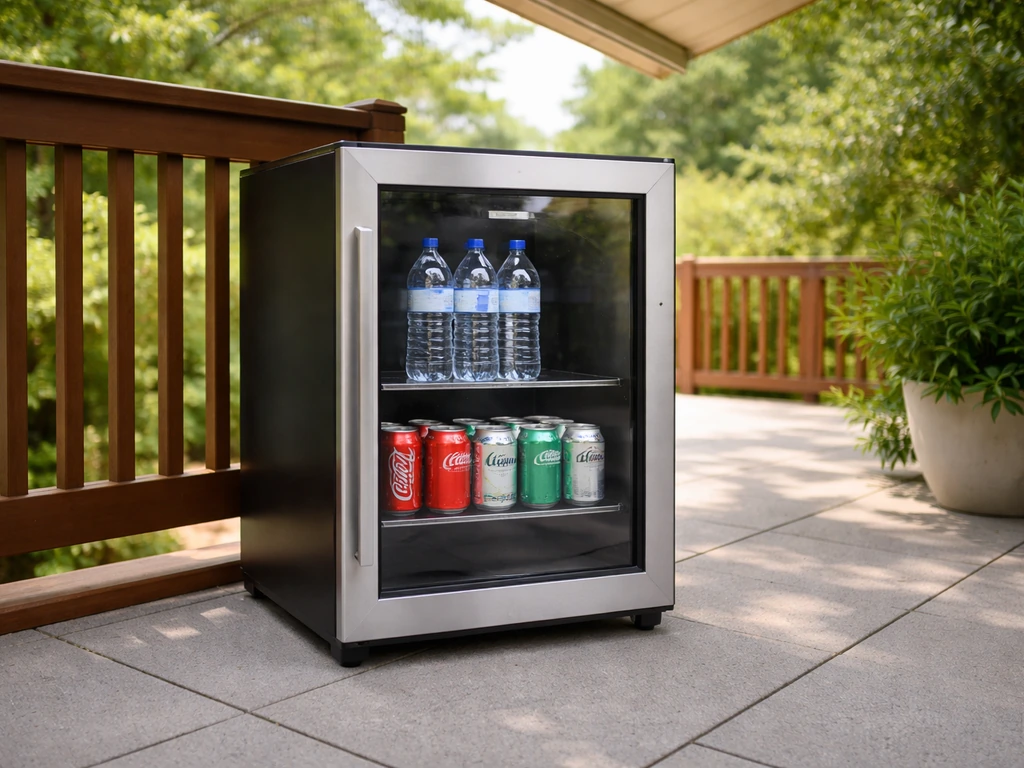
2026 guide to the best outdoor mini fridge for patio. Compare top picks by weather, power, cooling, capacity, and runnin