
For most patios, a weatherproof oscillating pedestal fan in the 2,500–4,700 CFM range is the right call. That means something like the Hunter Oscillating Outdoor Pedestal Fan (which pushes 2,760–4,690 CFM depending on size and speed setting) for mid-sized covered patios, or a higher-output unit like the iLIVING ILG8P30M 30" fan rated at 8,400 CFM for large open decks and pergolas where you need serious airflow.
Best Outdoor Floor Fans for Patios: Top Picks and Buying Guide

Lark Perry
29 May 2026
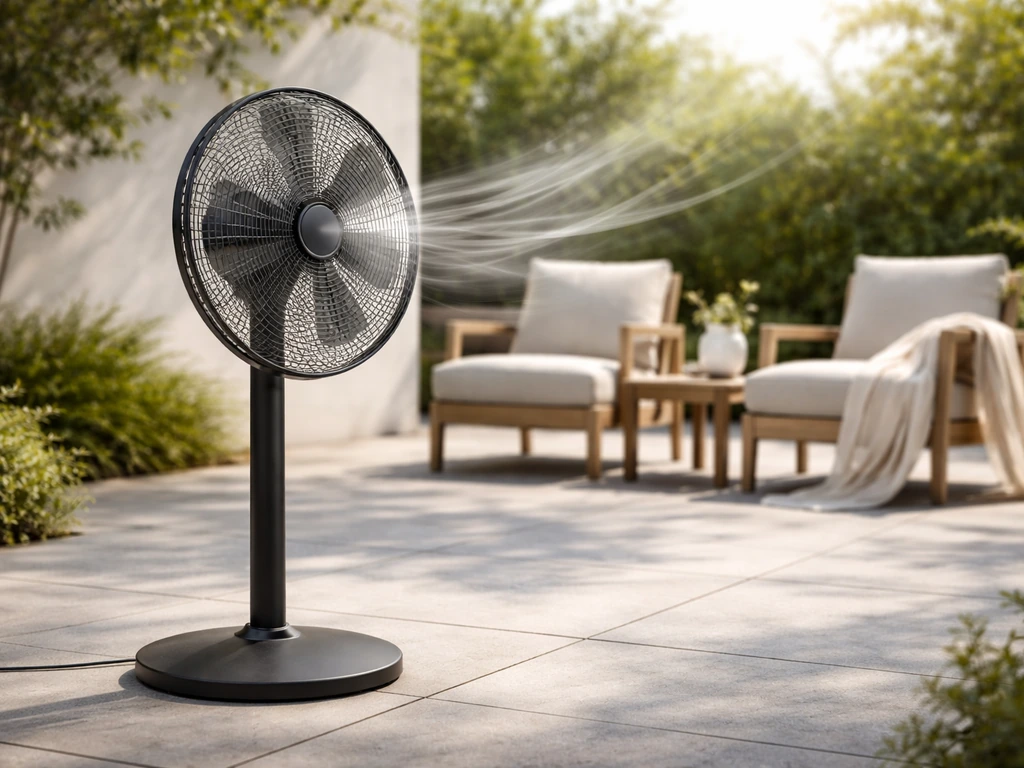
If you also want to cut humidity on a hot day, a fan-and-misting combo like the NewAir 2,800 CFM outdoor misting fan is worth the extra spend. NewAir describes its outdoor misting/pedestal combo as delivering 2,800 CFM of airflow output NewAir 2,800 CFM outdoor misting fan.
The key is matching the fan's airflow rating, weather resistance, and size to your actual patio, not just grabbing whatever has the highest number on the box.
How to choose an outdoor floor fan for your patio
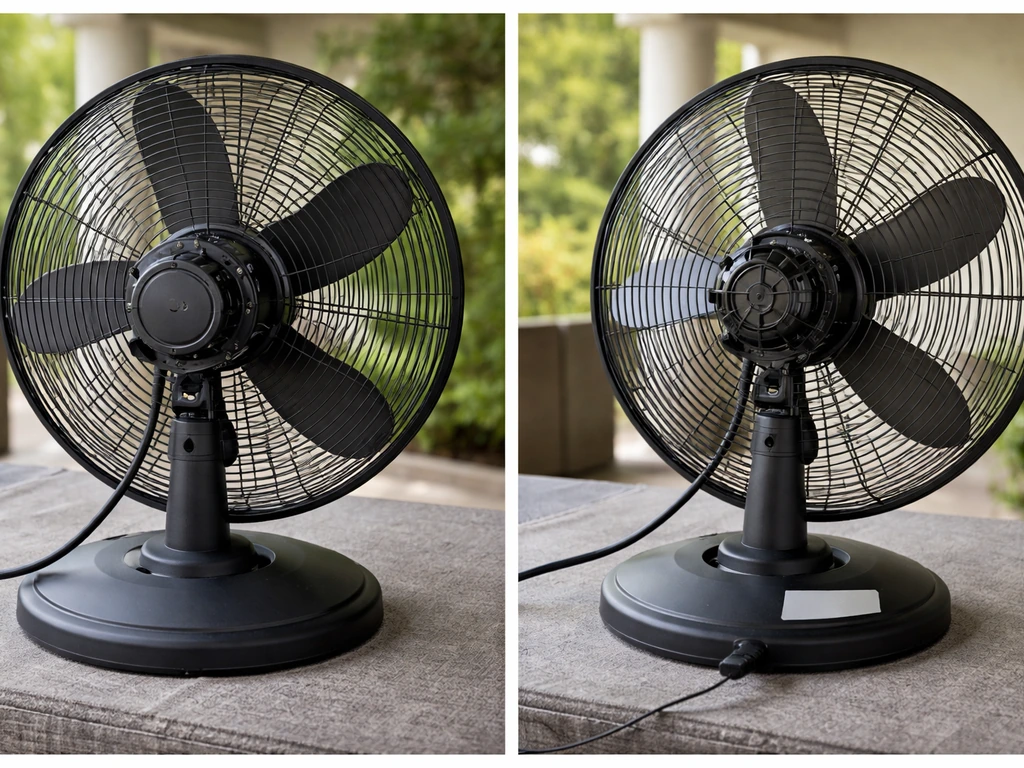
Outdoor floor fans look a lot like their indoor counterparts, but the differences that matter are under the hood, motor sealing, blade material, and electrical ratings. Start by asking yourself three questions: How big is your patio? Is it covered or exposed to rain? And do you need to move the fan around or leave it in one spot? Those answers will narrow your options faster than reading spec sheets.
Patio size and airflow needs
CFM (cubic feet per minute) is the standard measure of a fan's airflow output, and it's the most useful number to compare when you're shopping. For a small patio up to about 150 square feet, you can get away with a fan in the 1,500–2,500 CFM range. For a mid-sized patio (150–400 square feet), aim for 2,500–5,000 CFM. Anything larger, a big open deck, a pool area, a commercial patio, you want 5,000 CFM and up, which is where industrial-style outdoor fans like the 30" iLIVING come in. Keep in mind that CFM is almost always the published maximum; real-world output at low or medium speed will be lower, so buy a size up if you're on the fence.
Fan blade size and design
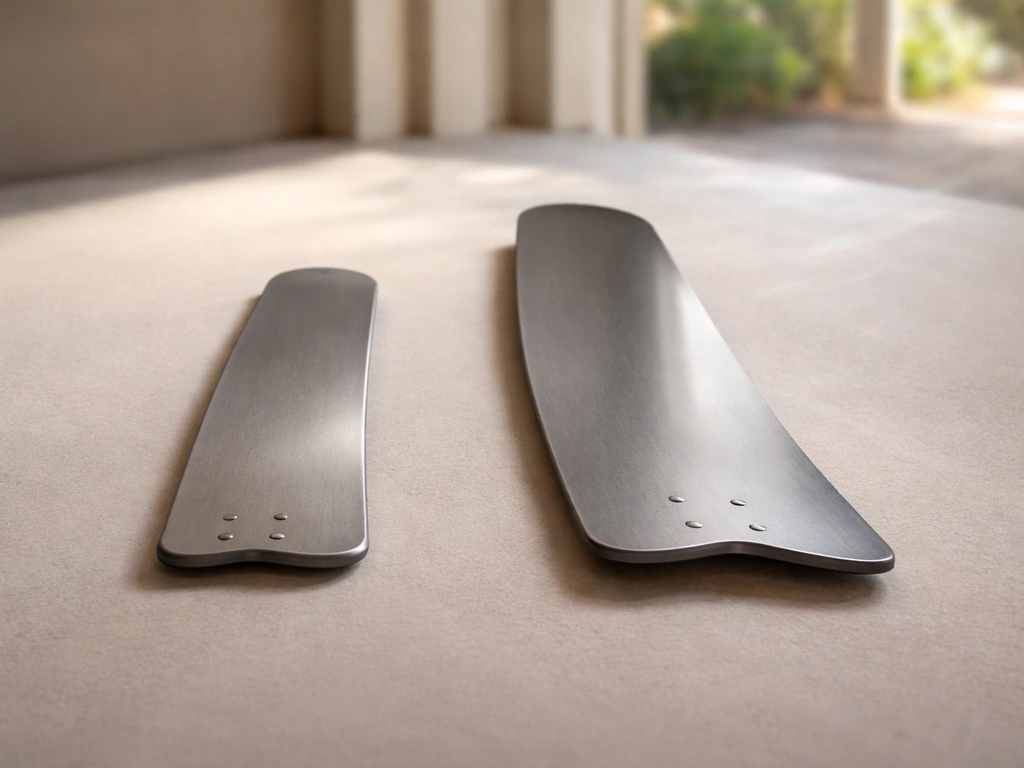
Blade diameter directly affects how much air gets moved per rotation. A 16–18" blade is fine for a small seating area. A 24–30" blade is better suited to larger spaces and open-air environments where you're fighting natural breezes and heat dissipation. For outdoor use specifically, look for blades made from ABS plastic or reinforced composite materials, they resist warping from heat and moisture far better than particleboard or standard plastic.
Covered vs. exposed patios
This is where a lot of buyers go wrong. If your patio has a roof or pergola overhead and the fan won't get rained on directly, a weather-resistant fan (typically rated ETL or UL for damp locations) is sufficient. If your patio is fully exposed, no overhead cover, fan could get hit by rain or sprinklers, you need a wet-rated or waterproof fan. The difference matters both for safety and longevity. Running a damp-rated fan in a wet environment is a real fire and shock hazard over time, and it will kill the motor faster than you'd expect.
Top picks: best outdoor floor fans for patios (by scenario)
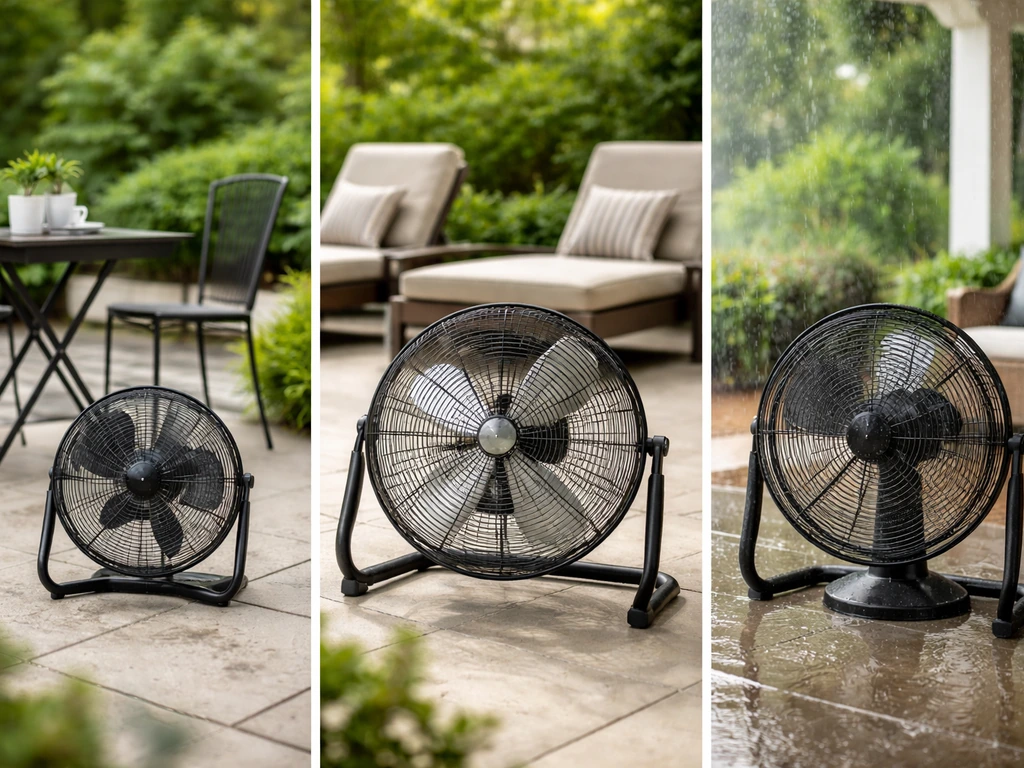
Rather than ranking a single winner, it makes more sense to match the fan to the situation. Here's what I'd actually recommend depending on your setup. If you want the specific best options, check a roundup of the best outdoor patio fans 2021 by scenario and patio size.
| Scenario | Best Pick Type | Key Spec to Prioritize | Why It Works |
|---|---|---|---|
| Small covered patio (under 150 sq ft) | 16–18" oscillating pedestal, damp-rated | 1,500–2,500 CFM, quiet motor | Proportional airflow without overkill; easy to reposition |
| Mid-sized covered patio (150–400 sq ft) | Hunter-style 18–24" outdoor oscillating pedestal | 2,760–4,690 CFM, multi-speed | Solid airflow range, oscillation covers more seating area |
| Large open deck or pool area | 30" high-output pedestal (e.g., iLIVING 30") | 5,000–8,400 CFM, variable speed | Pushes enough air to compete with open-air heat loss |
| Hot and humid climate | Misting + pedestal combo (e.g., NewAir 2,800 CFM) | CFM + misting nozzle count | Evaporative cooling adds real temperature drop in dry heat |
| Exposed patio, rain possible | Wet-rated pedestal with sealed motor | IP44 or higher, GFCI plug | Safe to use in light rain; motor won't corrode |
| Tight budget, occasional use | 18–20" basic outdoor-rated pedestal | Damp or wet rating, 3-speed | Gets the job done without premium features you may not use |
For a straight-up best overall pick for the average homeowner with a covered patio in the 200–350 square foot range: a quality outdoor oscillating pedestal fan in the 18–24" blade size, multi-speed, with an oscillation range of at least 90 degrees, and a damp or wet location rating. That covers the majority of real patio setups and gives you flexibility without overspending.
Feature breakdown: airflow, controls, oscillation, and noise
Airflow (CFM) in plain terms
CFM tells you how much air a fan moves per minute, but on a patio it's less precise than in an enclosed room because air escapes in all directions. A fan rated at 4,000 CFM in an open patio will feel less powerful than the same fan in a screened-in porch. That's why on open patios, you actually need more CFM than you think, aim for at least 30–40% more than you'd calculate for an equivalent indoor room. Also pay attention to whether the spec is at high speed only or across a speed range. The Hunter's 2,760–4,690 CFM range is useful because it tells you both the low and high end, not just the peak.
Speed controls and remote access
At minimum, get a fan with three speed settings. Two-speed fans are frustrating on patios because the weather changes fast and you end up constantly unplugging or living with a setting that doesn't quite fit. If you're placing the fan away from your primary seating area, a remote control is genuinely worth the extra cost, reaching across a patio to adjust a fan is annoying enough that you'll end up just leaving it on one setting. Some newer models offer smart home integration, but for most patio use that's overkill.
Oscillation: worth it or gimmick?
For patios, oscillation is worth it almost every time. A fixed-direction floor fan creates one cold lane of air and leaves the rest of the patio warm. A fan that oscillates 90 degrees or more distributes airflow across a wider seating area, which matters when multiple people are spread around a table or lounge chairs. If you want the best outdoor oscillating fan for a patio, prioritize a wide oscillation range so you cool more of the space at once oscillates 90 degrees or more. Look for fans with a dedicated oscillation on/off switch rather than a setting that forces you to cycle through it, it's a small thing that makes a real difference in day-to-day use.
Noise levels
Outdoor fans tend to run louder than indoor models because they use more powerful motors and aren't designed for bedroom-quiet operation. The iLIVING 30" fan, for example, puts out 67–69 dBA depending on speed, that's roughly the volume of a normal conversation. On a lively patio it's not a problem, but if you're sitting close to the fan during a quiet dinner or while watching TV outside, it can be noticeable. Smaller fans with brushless DC motors tend to run significantly quieter, often in the 50–60 dBA range. If noise is a priority, look specifically for DC motor models and check whether the brand publishes decibel ratings, those that do are usually more confident in their acoustic performance.
Weatherproofing and safety for outdoor use
This is the section most buyers skip and then regret. Outdoor fans have two basic weather ratings you'll see on listings and boxes: damp-rated and wet-rated. Damp-rated means the fan can handle humidity and occasional light moisture but should not be exposed to direct rain. Wet-rated means it can handle direct water contact, including rain and misting systems. If you're not sure which you need, go wet-rated, it covers both scenarios and costs only marginally more.
- Look for ETL or UL listed outdoor ratings on the product label, not just marketing language like 'outdoor use' or 'weather resistant'
- Always plug outdoor fans into a GFCI (ground fault circuit interrupter) outlet—this is code in most areas and genuinely prevents electrocution if moisture gets into the circuit
- Check the IP rating if listed: IP44 means splash-proof from any direction; IP55 means protected against low-pressure water jets; anything above that handles direct rain well
- Never use an extension cord that isn't rated for outdoor use—standard indoor extension cords degrade in UV exposure and can be a shock or fire hazard
- Keep the fan at least 10 feet from pools or hot tubs unless it's explicitly wet-rated and plugged into a GFCI outlet
One thing worth knowing: the motor and electrical components are the vulnerable parts, not the plastic housing. A fan can look perfectly fine on the outside while the motor is corroding internally from moisture intrusion. Fans with sealed motors and corrosion-resistant components last significantly longer outdoors, this is often called out in the product specs as 'sealed motor' or 'rust-resistant components.' It's not always easy to verify before buying, which is why sticking to brands that specialize in outdoor-rated equipment (rather than adapting indoor fans) tends to pay off.
Placement tips for maximum cooling on patios
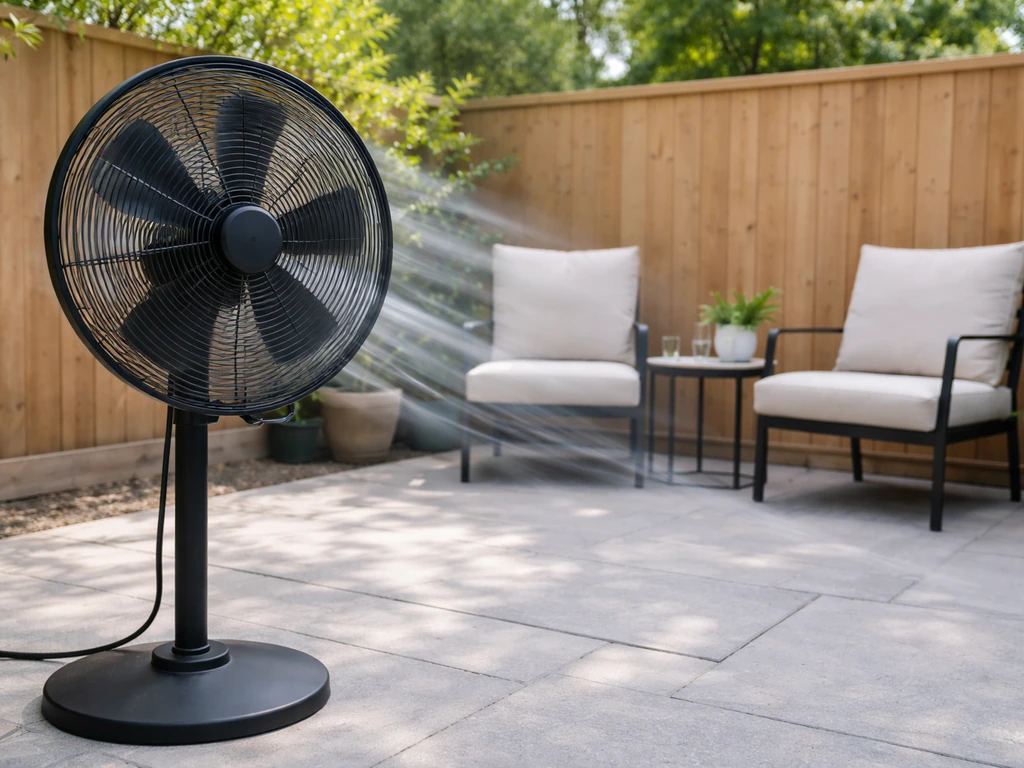
Where you put the fan matters almost as much as which fan you buy. A high-output fan pointed in the wrong direction or placed too far from your seating area wastes most of its airflow. Here's how to get the most out of whatever fan you choose.
- Position the fan upwind of your seating area, not directly to the side. You want it pushing air toward you, not across you—cross-breezes feel weaker and don't cool as effectively as a direct airflow path.
- Raise the fan to roughly seated chest height. Most pedestal fans are height-adjustable; set the blade center at about 4 feet from the ground when your guests will be sitting. Standing height is too high for most patio seating situations.
- On covered patios, angle the fan slightly upward (about 10–15 degrees) to bounce air off the ceiling and create a broader circulation pattern rather than a single concentrated stream.
- Keep at least 3–5 feet between the fan and any wall or fence behind it. Fans need clear intake space on the back side to pull in fresh air efficiently—blocking intake starves the output.
- For cooking areas and grills, position the fan so it's blowing smoke and heat away from the seating zone, not toward it. This usually means placing it perpendicular to the grill, not directly facing your guests.
- If you have a large patio, use two smaller fans in opposing corners angled toward the center rather than one large central fan. This creates better circulation and covers more area without a single dead zone.
- In humid climates, point the fan to maximize air movement across skin, not just around the space. The cooling effect is mostly evaporative—moving air across people is what actually makes them feel cooler.
Maintenance, storage, and long-term care
Outdoor fans get dirty fast. Pollen, dust, grill grease, and moisture all accumulate on the blades and grille, and a dirty fan moves noticeably less air and can overheat if the motor vents get clogged. A quick wipe-down every two to three weeks during heavy use season makes a real difference in both performance and lifespan.
Regular cleaning routine
- Unplug the fan before any cleaning—always
- Wipe blades with a damp cloth (mild soap is fine); avoid high-pressure water unless the fan is IP55 or higher rated
- Use a soft brush or compressed air to clear the motor vents—don't let debris pack in around the motor housing
- Check the grille screws and base hardware every month; vibration loosens fasteners over time and a wobbly fan on a hard surface is both noisy and unsafe
- Lubricate the height-adjustment collar and tilt mechanism once a season if the fan has these moving parts—a small amount of silicone spray works well
End-of-season storage
Even wet-rated fans benefit from being stored indoors during off-season months or extended periods of non-use. UV exposure degrades plastic housing and shortens motor life even on fans rated for full outdoor use. Before storing, clean the fan thoroughly, let it dry completely, and consider a breathable cover or a sealed storage bag to keep pests and dust out. Disassembling the base and pole for flat storage also reduces the chance of warping in cold temperatures. If you're in a climate where temperatures regularly drop below freezing, indoor storage is basically mandatory, the motor insulation and plastic components don't hold up well to repeated freeze-thaw cycles.
Quick buying checklist and decision guide
If you want to cut straight to the decision, run through this checklist before you buy. It covers the factors that actually separate a good patio fan purchase from one you'll regret.
- Measure your patio: under 150 sq ft = 1,500–2,500 CFM; 150–400 sq ft = 2,500–5,000 CFM; 400+ sq ft = 5,000 CFM and above
- Determine your weather exposure: covered patio = damp-rated is fine; exposed to rain or misting = wet-rated required
- Check the blade size relative to the space: 16–18" for small patios, 24–30" for large or open ones
- Confirm it has at least 3 speed settings and an oscillation feature with an on/off toggle
- Verify it has a proper ETL or UL outdoor listing—not just 'outdoor use' marketing language
- Make sure you have a GFCI outlet available, or budget for an outdoor GFCI extension cord if needed
- If noise is a concern, look specifically for DC motor models with published dBA ratings under 60 dBA at low speed
- If you're in a hot and dry climate, consider a misting combo fan—they work well in low-humidity environments but add little cooling benefit in already-humid conditions
- Check the height adjustment range to confirm it reaches your ideal seated chest height (roughly 4 feet)
- Factor in storage: if you can't store it indoors off-season, prioritize a fan with a higher IP rating and UV-resistant housing
One last thing worth mentioning: if you're also considering ceiling-mounted options for a covered patio, outdoor patio ceiling fans with lights solve the airflow problem while freeing up floor space entirely. And if oscillation is your top priority, dedicated outdoor oscillating patio fans are worth comparing side by side against standard floor models, the oscillation arc and pattern differ meaningfully between product lines. But for flexibility, portability, and ease of setup without any electrical work, an outdoor floor fan remains the fastest and most practical upgrade you can make to your patio comfort this season.
FAQ
Do I need more CFM if my patio is enclosed or screened in?
Yes, but the boost is smaller. A screened-in or partially enclosed patio traps airflow better than an open deck, so you can usually aim for the lower end of the article’s CFM guidance. A practical rule is to reduce the “add 30–40%” open-patio buffer to closer to 10–20% when airflow can’t freely escape.
Is an oscillating outdoor fan still useful if I’m mostly cooling one person or a small seating spot?
It can be, but it’s not always necessary. If your seating is tightly grouped and you want maximum breeze on a single chair or lounge, a fixed-direction fan can feel stronger because it concentrates airflow. Choose oscillation when multiple people share a wider area, or when wind shifts make one-direction airflow inconsistent.
Can I use a damp-rated fan on a fully exposed patio during rain?
Avoid it. Damp-rated means humidity and occasional light moisture, not direct rain or sprinkler spray. Even if it seems to survive short storms, moisture can seep into the motor housing over time, leading to internal corrosion and reduced motor life.
What if my patio is under a roof but I get sprinkler overspray?
Treat that as wet exposure. Sprinklers create direct water contact at times, and overspray can repeatedly soak the fan base and grille. In this situation, a wet-rated fan is the safer choice for both electrical safety and long-term performance.
How do I tell whether a fan’s oscillation range is actually wide enough?
Look for the oscillation angle stated in degrees (for example, 90 degrees or more) and confirm whether it’s truly side-to-side. If the listing only says “oscillating” without an angle, you may not get the distribution described in the buying guide. Also check whether the oscillation can be turned off with a dedicated switch, not just cycled through modes.
Will a larger blade fan always outperform a smaller one?
Not necessarily. Blade diameter helps move more air per rotation, but motor efficiency, speed range, and the stated CFM band matter just as much. If the smaller fan’s CFM is strong across low to medium settings, it can feel better on a patio because it’s delivering usable airflow without only performing at maximum speed.
Is it better to buy a fan with high CFM at one speed, or a strong CFM range across speeds?
A speed range is usually more practical. Patio conditions change through the day, and the “maximum only” number often exaggerates how powerful it feels at comfort speeds. Prefer models that publish output at multiple speeds (or at least give a low-to-high CFM range), so you can run it without needing full power all the time.
How loud will the fan feel at typical patio distances?
Decibel ratings can be misleading without distance context, but they still help. If a brand lists dBA, consider using your seating distance as a reality check: fans around the 50–60 dBA range are generally easier for conversations, while higher readings can be noticeable if you sit close. If noise matters, prioritize DC motor models and verify whether decibel ratings are provided for multiple speeds.
Do I need to worry about wind direction and “breezes” when choosing airflow?
Yes, because wind can either help or reduce what the fan needs to overcome. On very breezy open patios, a lower-CFM fan may feel adequate when aligned with the natural airflow. On sheltered patios where wind is inconsistent, prioritize stronger airflow and a wider oscillation angle so the fan keeps working even when the breeze shifts.
What’s the right way to clean an outdoor floor fan without damaging it?
Unplug it first, let it fully dry if it’s been rained on, then wipe the blades and grille with a damp cloth and mild soap. Avoid soaking the motor housing or spraying water into vents. After cleaning, let it dry completely before storing or using again to prevent internal corrosion.
Can I leave an outdoor patio floor fan outside year-round if it’s wet-rated?
Wet-rated improves safety in rain, but it doesn’t make it maintenance-free. UV exposure can degrade plastic and shorten motor life over time, and moisture can still collect in crevices. For most climates, store indoors during off-season months or use a breathable cover, and in freezing climates indoor storage is essentially required.
What accessories make the biggest difference after I buy the fan?
A weather-resistant cover is the top add-on, especially during pollen season and long off-season storage. If you don’t want to walk over to change settings, choose a model with a remote control. For placement, consider using the fan’s base on a stable, level surface to prevent tipping and to keep airflow aimed consistently at seating.
Next Articles
Best Sunbrella Patio Cushions: Top Picks, Guide & Maintenance
Find the best Sunbrella patio cushions: durable, fade‑resistant picks, buying tips, care, and top recommendations.
Alternative to Patio Cushions: Durable, Stylish Options and DIY
Alternative to patio cushions: durable, weatherproof seating options, pros, DIY tips & buying guide.

Best Color for Outdoor Patio Cushions in 2026
Choose the best cushion color for sun, heat, and fading in 2026, with pairing tips for patio furniture and durability.