
For a covered patio, you want a damp-rated or wet-rated ceiling fan with an integrated LED light kit, a blade span matched to your patio's square footage, and airflow above 4,000 CFM for any space larger than about 75 square feet. The Hunter Cypress, Minka-Aire Sleek, and Westinghouse Comet are three well-proven options that cover most patio sizes, but which one fits your situation depends on ceiling height, exposure to rain, and how much ambient light you actually need outdoors.
Best Outdoor Patio Ceiling Fans With Lights: Buyer Guide

Lark Perry
3 Jun 2026
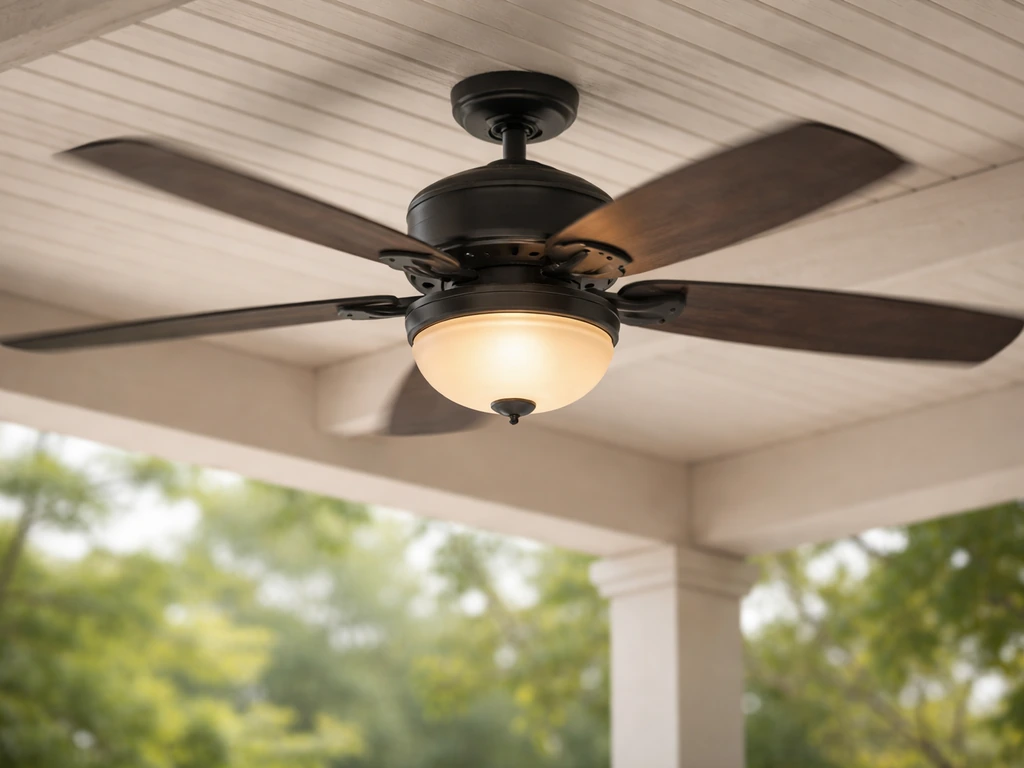
What 'best' actually means for an outdoor patio ceiling fan with lights
The word 'best' gets thrown around loosely, but for outdoor ceiling fans it comes down to five things: weather rating, airflow output, blade design, noise level, and light quality. A fan that excels in a living room will rust, seize, and flicker within one season on a covered patio if it isn't built for humidity. So the baseline requirement before anything else is an outdoor-appropriate UL rating, and everything else is performance on top of that.
Beyond the rating, airflow matters more outdoors than indoors because you're fighting ambient heat rather than recirculating conditioned air. Look for a CFM rating above 4,000 for small patios and above 6,000 for larger spaces. Blade pitch (the angle of the blades, typically between 12 and 15 degrees on good outdoor fans) directly affects how much air the motor actually moves versus just spinning. Low-pitch blades on cheap fans look fine but barely stir the air.
Noise is a real issue on patios where you're trying to have a conversation or enjoy the quiet. Look for a motor labeled 'DC motor' rather than the older AC motor design. DC motors run quieter, use up to 70 percent less energy, and typically offer more speed settings. For the light kit, ENERGY STAR Version 4.0 requires blank" rel="noopener noreferrer">a Color Rendering Index (CRI) of at least 80 with a positive R9 value, which means the light renders colors naturally rather than washing everything in a flat, artificial glow. That matters more outdoors at night than most people expect.
Outdoor safety ratings explained: damp vs. wet, and why it matters
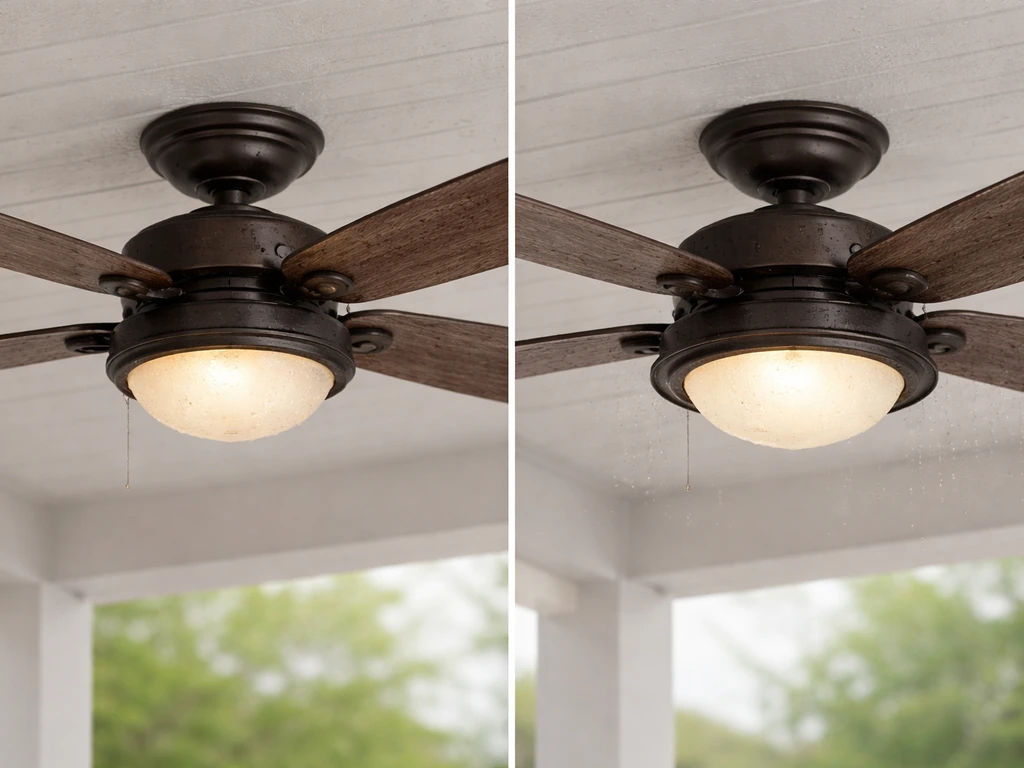
This is the section most buyers skip and then regret. There are two UL outdoor ratings for ceiling fans and light fixtures, and they are not interchangeable.
blank" rel="noopener noreferrer">A damp-rated listing means the product has been evaluated as safe for locations subject to condensation, humidity, and moisture in the air around electrical components. Think of a covered porch with three walls, or a pergola with a solid roof: the fan never gets directly rained on, but it lives in humid air. Most covered patios qualify as damp locations. A wet-rated listing goes further: the product is designed to handle direct water contact on its electrical parts. If your patio has open sides, faces prevailing winds that blow rain under the roof, or sits in a climate where storms regularly drive water sideways, you need wet-rated.
Getting this wrong in the damp-to-wet direction (installing a damp-only fan where water hits it directly) leads to motor failure, rust, and in worst cases, electrical hazards. Getting it wrong in the other direction (buying an expensive wet-rated fan for a fully sheltered porch) just means you overspent. When in doubt, wet-rated is always compatible with damp locations, so it's the safer upgrade if you're not sure about your exposure.
Corrosion resistance is a separate but related concern. Look for blades made from ABS plastic, fiberglass, or treated composite rather than wood or untreated metal. Motor housings in powder-coated steel or cast aluminum hold up far longer in salty coastal air than painted zinc. If you're within a mile of the ocean, prioritize fans marketed specifically for coastal or marine environments, which typically feature sealed motors and stainless-steel hardware.
How to size a ceiling fan for your patio
Measure your patio's length and width in feet, multiply them together to get square footage, and use that number against the chart below. If your patio is long and narrow rather than square, size up by one category, because you need the fan positioned centrally and the airflow to reach more distant corners.
| Patio Square Footage | Recommended Blade Span | Minimum CFM Target |
|---|---|---|
| Up to 75 sq ft | 36 to 42 inches | 2,000 to 3,500 CFM |
| 76 to 150 sq ft | 44 to 50 inches | 4,000 to 5,000 CFM |
| 151 to 300 sq ft | 52 to 56 inches | 5,000 to 7,000 CFM |
| 300+ sq ft | 60 inches or dual fans | 7,000+ CFM or two fans |
Ceiling height also determines the right mounting style. For a standard 8-foot ceiling, flush-mount (hugger) brackets keep the blades at a safe distance from your head while maintaining good airflow. For ceilings 9 feet and above, a short downrod of 3 to 6 inches works well. The rule of thumb is that fan blades should sit roughly 7 to 9 feet above the floor and at least 18 inches from any wall or post. On sloped or vaulted patio ceilings (common on pergola-style builds), you need a fan with an angled mount or a ball-and-socket canopy that can adjust to the slope angle, typically up to 30 or 45 degrees depending on the model.
If your patio is larger than about 300 square feet, two smaller fans positioned one-third of the way in from each end will move air far more effectively than one giant fan in the center. Two 52-inch fans also tend to be quieter than one overworked 60-inch unit.
Getting the light right: brightness, color temperature, and glare outdoors
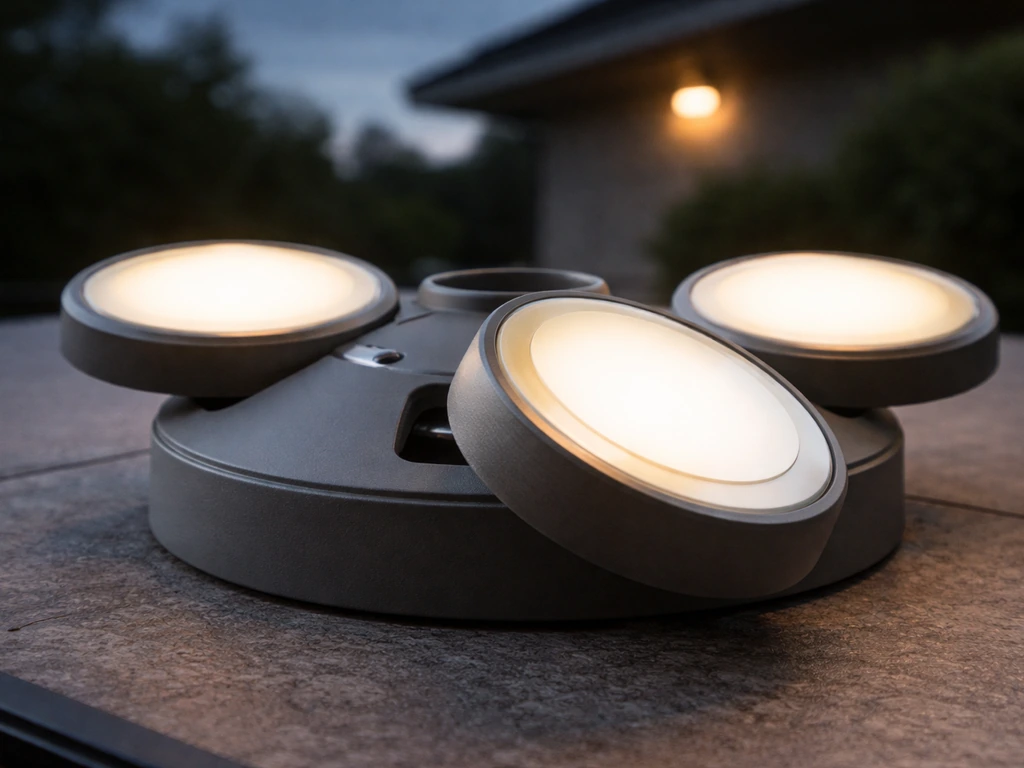
Outdoor lighting behaves differently than indoor lighting, and most people underestimate how much brightness they actually need. Outdoors at night, there's no painted ceiling or wall to bounce light back at you, and any ambient darkness around the edges of your patio makes the contrast sharper. A 1,200-lumen light kit that works fine in a bedroom feels dim on a patio.
Aim for a light kit rated at a minimum of 1,800 lumens for a modest covered patio, and 2,500 lumens or more for anything larger than 150 square feet. If the fan's built-in light isn't enough on its own (which is common), pair it with wall-mounted sconces around the perimeter rather than buying a fan with an oversized light kit that creates glare directly overhead.
Color temperature is a personal preference, but 2,700K to 3,000K (warm white) is the most comfortable range for outdoor evening use. It creates a relaxed, inviting atmosphere rather than the harsh, clinical look of 4,000K or 5,000K light. The CRI should be 80 or above (which aligns with ENERGY STAR's requirement) so that food, plants, and people all look natural rather than washed out. Some premium fans include adjustable color temperature in the light kit, which is genuinely useful if you use the patio for both relaxed evenings and task-oriented activities like cooking.
Glare is the underrated problem. A bare bulb or exposed LED array pointing straight down from an 8-foot ceiling is uncomfortable to look toward, and it creates a hotspot effect that makes the rest of the patio feel darker. Look for fans with frosted glass shades, opal diffusers, or downward-angled fixtures rather than open-bottom designs. If you're specifically shopping for overhead lighting without a fan, a drum-style or globe-style outdoor flush-mount rated for wet or damp use will provide more even, diffused light than most fan-mounted kits.
Installation and controls: what you need to know before you buy
Wiring and electrical requirements
Most ceiling fans require a standard 120V household circuit, but the ceiling box must be fan-rated (not just a standard light box). Fan-rated boxes are braced to handle the dynamic load of a spinning motor, typically rated for 35 to 70 pounds. A regular light box can fail under fan vibration, which is a safety hazard. If there's already a light fixture in the location, swap the box before you install the fan. This is a 20-minute job with the power off and a brace-style retrofit kit from any hardware store.
For outdoor locations, all wiring in conduit or within ceiling cavities exposed to moisture should use wire rated for wet locations, and any outdoor junction boxes should carry a weather-resistant rating. If you're running a new circuit to a patio location, budget for an electrician rather than attempting it yourself unless you have direct experience with exterior wiring.
Switches, remotes, and smart controls
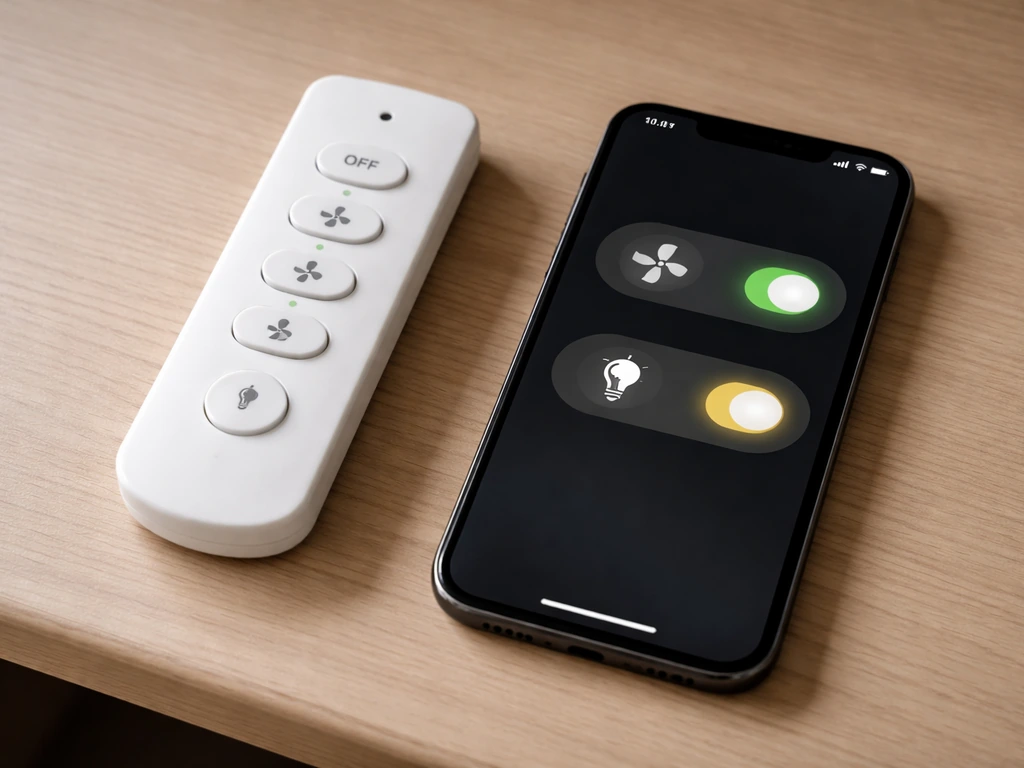
The control setup is where a lot of buyers get tripped up. If you want separate control of the fan and the light (which you almost always do), you either need a double-switch setup with two wires running to the fan, or a fan that includes a receiver for wireless or smart control over a single wire. Most modern outdoor fans with light kits include a remote receiver that handles both functions over a single hot wire, which is much easier to retrofit in existing outdoor wiring that only has one switch leg.
Smart-enabled fans (those compatible with Google Home, Amazon Alexa, or Apple HomeKit) are genuinely useful on patios because you can set schedules, adjust speed without getting up, and automate the fan to run when outdoor temperature sensors hit a threshold. The Minka-Aire and Hunter smart models use their own app-connected receivers and don't require a smart switch on the wall, which matters when you're working with weatherproof wall boxes that have limited space.
Pull chains are the simplest option and the hardest to use: they work without any wiring complications, but they require you to reach up to the fan housing (which isn't practical with an 8-plus-foot ceiling) and they can corrode or become brittle outdoors in UV-heavy environments. If your fan comes with a pull chain as the only control, budget for a compatible wall control kit or aftermarket remote receiver.
Quick installation checklist
- Confirm your ceiling box is fan-rated and properly anchored to framing or a brace kit.
- Turn off the circuit at the breaker and verify with a non-contact voltage tester before touching any wiring.
- Check that the fan's UL rating (damp or wet) matches your actual patio exposure level.
- Measure from the ceiling to the floor and choose the right mounting style: flush mount for under 9 feet, downrod for 9 feet and above.
- Verify the fan's blade clearance from walls (minimum 18 inches on all sides).
- Match the fan's control receiver to your switch wiring: single-wire or two-wire.
- Confirm the light kit is dimmable if you plan to use a dimmer switch or smart dimmer.
- Test all speeds, the light, and any direction-reverse function before sealing up the canopy.
Top outdoor patio ceiling fans with lights: real recommendations
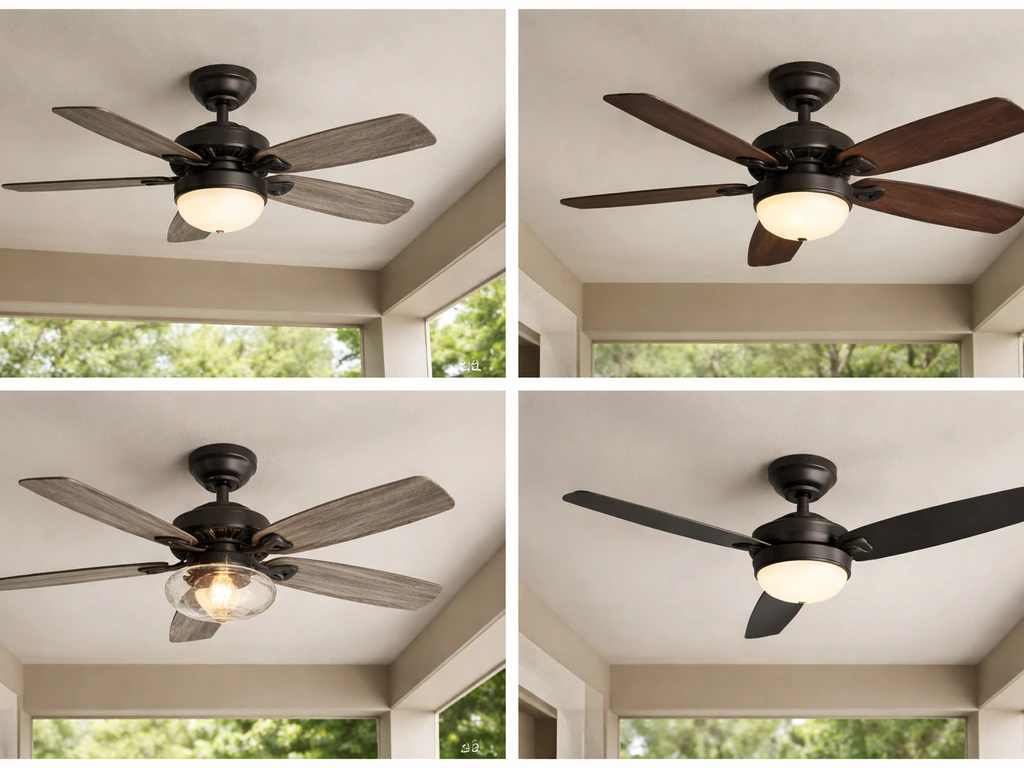
Here are the fans I'd point someone toward today, covering different budgets, sizes, and use cases. These aren't chosen for marketing appeal; they're chosen because they consistently deliver on the specs that actually matter outdoors.
| Fan Model | Blade Span | Rating | Airflow (CFM) | Light Output | Best For | Price Range |
|---|---|---|---|---|---|---|
| Hunter Cypress | 52 or 54 inches | Damp | ~4,600 CFM | LED kit, ~1,600 lm | Mid-size covered patios, value pick | $150 to $200 |
| Minka-Aire Sleek | 60 inches | Wet | ~6,200 CFM (DC motor) | Integrated LED, ~2,200 lm | Large open patios, smart-home users | $350 to $450 |
| Westinghouse Comet | 48 inches | Wet | ~3,500 CFM | LED, ~1,400 lm | Smaller covered patios, budget-friendly | $100 to $140 |
| Kichler Sola | 52 inches | Wet | ~5,000 CFM (DC motor) | Adjustable CCT LED, ~2,000 lm | Coastal/humid climates, style-focused buyers | $300 to $400 |
| Monte Carlo Discus Outdoors | 52 inches | Wet | ~4,800 CFM | LED kit, ~1,800 lm | Modern/minimalist patios, mid-range budget | $250 to $320 |
Which one should you actually buy?
If you have a standard covered porch or patio under 150 square feet with no direct rain exposure, the Hunter Cypress is the easiest recommendation. It's damp-rated, moves enough air for the space, installs quickly, and won't hurt if something goes wrong. If you are searching for the best outdoor patio fans 2021, these damp-rated models are a solid starting point because they handle everyday humidity while delivering usable airflow. For larger or more exposed patios, step up to the Minka-Aire Sleek or the Kichler Sola: both are wet-rated with DC motors and meaningfully better airflow. The Kichler wins on corrosion resistance and is worth the price premium if you're near the coast or in a high-humidity region.
If you don't actually need a fan and just want better overhead lighting for a covered patio, skip the fan entirely. A wet-rated drum flush-mount or a lantern-style outdoor ceiling fixture will give you more even, glare-free light than a fan kit at a lower price. Many of the searches for 'best outdoor patio ceiling lights' come from people who already have a separate portable or floor fan they're happy with and just need ambient overhead light. That's a totally valid setup, and pairing a standalone outdoor ceiling light with a portable fan often outperforms a combo unit at the same budget. For more portable cooling options on patios where ceiling mounting isn't practical, a dedicated outdoor floor fan or a high-output portable fan may serve better alongside a simple ceiling fixture. For more options, check our guide to the best cooling fan for an outdoor patio and how to choose one for your space best cooling fan for outdoor patio. A good place to start is our guide to the best outdoor floor fans for patios, which focuses on weather-ready designs and powerful airflow portable fan.
Your next steps before you buy
- Measure your patio's square footage and ceiling height right now, before you open a product page.
- Walk outside during the next rain and honestly assess whether water reaches your ceiling area (this decides damp vs. wet).
- Check your existing ceiling box: is it fan-rated? If not, add a retrofit brace kit to your cart alongside the fan.
- Count how many wires run to your current ceiling switch: one or two? This determines whether you need a wireless receiver kit.
- Decide if you need smart control, remote-only, or a simple wall switch, and confirm the fan you're buying supports it.
- If light output matters as much as airflow, look at the lumen spec on the light kit first, not just the fan's CFM rating.
Getting these six things sorted before you buy takes about ten minutes and eliminates the most common return reasons: wrong size, wrong rating, and incompatible wiring. Pick the fan that checks the rating, size, and control boxes for your specific patio, and the light kit quality and style can guide the final decision between close options.
FAQ
Do I need a separate switch for the light and the fan, or can I wire them to the same switch?
You can run them on a single switch only if you want the light and fan to always operate together. Most people prefer separate control for comfort and brightness, so look for a fan kit that supports dual-switch wiring or a model with a receiver that allows independent control over one existing hot wire.
What’s the safest ceiling electrical box type for an outdoor patio fan with lights?
Use a fan-rated ceiling box, not just a standard light-rated box. Fan-rated boxes are braced to handle vibration and the dynamic load of a spinning motor, typically rated far higher than light-only housings, and they reduce the risk of loosening over time.
If my patio is covered but the sides are open, should I choose wet-rated or damp-rated?
If the fan can ever see sideways rain driven by wind, wet-rated is the safer choice. Even if the ceiling is covered, open sides and storms can push water into the electrical components, which is exactly where damp-rated units are more likely to fail.
Can I install an outdoor ceiling fan with lights on a standard indoor junction box if I use outdoor wiring?
Not by default. Even with correct wet-rated wire and outdoor-rated junction boxes, a non-fan-rated ceiling box can fail under vibration, so you still need a brace-style fan box or the specific retrofit rated for ceiling fan loads.
How do I choose blade span and fan count if my patio is long and narrow?
For a rectangular layout, size up one category and plan to place the fan more centrally along the longer dimension. If the space is very large, two smaller fans often circulate air more effectively than one larger unit, especially for reaching corners.
What blade pitch should I look for on the best outdoor patio ceiling fans with lights?
Prioritize outdoor fans with a pitch commonly around 12 to 15 degrees. Lower pitch can look similar but tends to move less air in real use, particularly outdoors where airflow performance matters more than gentle circulation.
Why does my fan light look dim outdoors even when the lumens seem high?
Outdoor contrast works against you, there is less surface bounce, and glare can hide useful brightness. If the installed light kit alone does not meet your evening needs, add perimeter wall sconces or choose a fan with a higher lumen-rated light kit rather than relying on a modest integrated kit.
What color temperature and CRI should I target for outdoor patio comfort?
For evening use, warm white around 2,700K to 3,000K is usually the most comfortable. Keep CRI at 80 or higher (and avoid low-CRI “decorative” LEDs) so people, plants, and food look natural instead of washed out.
Do DC motor outdoor fans with lights always run quieter than AC models?
DC motors typically deliver quieter operation and more effective speed control, especially at low-to-medium settings. However, noise can also come from blade balance, mounting tightness, and airflow turbulence, so ensure proper installation and stable mounting.
Will a smart patio ceiling fan need a smart wall switch?
Often no. Many outdoor smart fans include a receiver that controls fan and light using one hot wire, which avoids space constraints in weatherproof wall boxes. If the model uses a receiver, you generally do not need a smart switch, but you do need power wiring done correctly for the receiver’s requirements.
What do I do if I only have pull-chain control on the fan and I have an 8+ foot ceiling?
If reach is impractical, plan for a compatible wall control kit or a remote receiver. Since outdoor chains can also be harder to maintain in UV-heavy conditions, upgrading control is usually worth it before the first season.
Is it okay to mount a fan on a sloped or vaulted patio ceiling, or do I need a specific canopy?
You typically need an angled mount or an adjustable ball-and-socket style canopy that compensates for slope angle. Confirm the model’s listed adjustment range (often up to 30 or 45 degrees depending on the fan) so the blades maintain proper clearance.
How can I reduce glare from the fan’s lights on an outdoor patio?
Choose frosted glass or diffused designs, or fixtures that do not expose a bare LED array directly downward. If you already have a fan with an exposed light, adding dimmable sconces around the patio can improve comfort and reduce the harsh hotspot effect overhead.
How should I handle wiring and junction boxes for a wet exterior patio?
Use wet-location rated wire in any area exposed to moisture and ensure outdoor junction boxes have a weather-resistant rating. If running a new circuit, consider hiring an electrician unless you have direct experience with exterior, wet-rated electrical work and local permitting requirements.
Next Articles
Best Cooling Fan for Outdoor Patio: Buying Guide
Choose the best outdoor patio cooling fan by CFM, size, noise, oscillation, weather rating, power, and mounting for your
Best Outdoor Floor Fans for Patios: Top Picks and Buying Guide
Top outdoor floor fans for patios with buying guide, features, placement tips, and maintenance for lasting cooling.
Best Sunbrella Patio Cushions: Top Picks, Guide & Maintenance
Find the best Sunbrella patio cushions: durable, fade‑resistant picks, buying tips, care, and top recommendations.