
The best cooling fan for an outdoor patio in 2026 depends on three things: how big your space is, whether it's covered or open to the sky, and how you actually use it. For most covered patios up to about 200 square feet, a 48–52 inch outdoor-rated ceiling fan delivering 4,000–5,000 CFM on high is the gold standard.
Best Cooling Fan for Outdoor Patio: Buying Guide

Lark Perry
2 Jun 2026
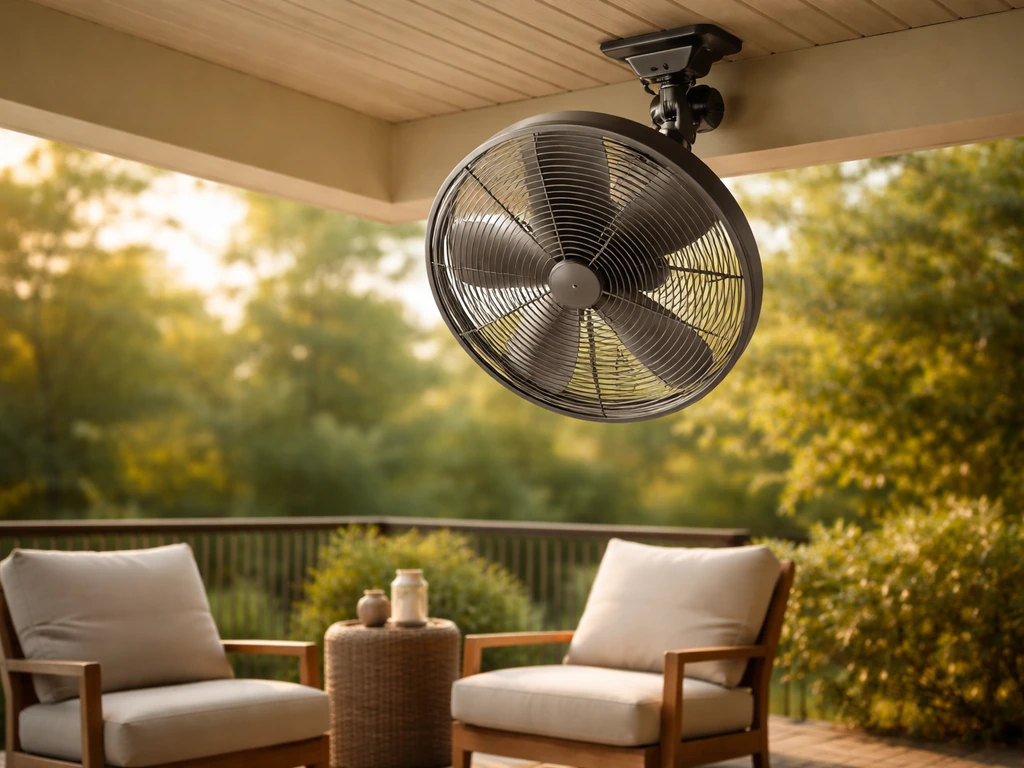
For uncovered or larger spaces, a 24-inch oscillating wall fan (around 6,000+ CFM on high) or a powerful pedestal fan gives you more flexibility. If you want something portable or mist-assisted for serious heat, battery-powered or misting fans fill that gap. Whatever you pick, make sure it carries a UL wet or UL damp rating to match your exposure level, and always plug corded fans into a GFCI-protected outdoor outlet.
If you want the best outdoor patio fans waterproof, double-check the UL wet rating and look for sealed motors and rust-resistant hardware UL wet or UL damp rating.
How patio fans actually cool you (and what they can't do)

Here's the honest truth that most fan listings skip: a fan does not lower the air temperature on your patio. It creates a wind chill effect, meaning it speeds up heat loss from your skin by increasing air movement across it.
The U. S. Department of Energy and ASHRAE Standard 55 both confirm this: what changes is your perceived comfort, not the thermometer reading. Faster-moving air pulls heat away from your body more quickly, which can make an 88°F afternoon feel noticeably more bearable.
That's a real and meaningful effect, but it's driven by airflow over your skin, not by any actual cooling of the surrounding air. National Geographic explains that wind chill calculations estimate how cold it “feels” by combining wind and air temperature, showing how moving air can change perceived thermal comfort.
The only outdoor fan setup that actually drops the air temperature is a misting fan. By atomizing water into fine droplets, misting systems use evaporative cooling to reduce dry-bulb temperature by several degrees in the immediate zone. blank" rel="noopener noreferrer">ASHRAE's evaporative cooling chapter explains this is a wet-bulb/dry-bulb process, and it works best in low-humidity environments. In humid climates (think the Southeast U.S. in July), evaporative cooling loses much of its effectiveness because the air is already saturated. In dry climates like Arizona or Nevada, a misting fan can genuinely drop the zone temperature by 10–15°F. Know your climate before spending extra on a misting setup.
Measure your space and pick the right fan type
Before you shop, step outside and measure your patio. The square footage, ceiling height (if covered), and whether your space is enclosed on one, two, or three sides will directly determine which fan type makes sense. Here's how I break it down:
| Patio Type | Best Fan Type | Target Airflow (CFM) | Notes |
|---|---|---|---|
| Covered, up to 200 sq ft | Ceiling fan (48–52 in) | 4,000–5,500 | Damp-rated minimum; wet-rated if near open sides |
| Covered, 200–400 sq ft | Ceiling fan (52–60 in) or dual ceiling fans | 5,000–7,000+ | Consider two fans for even coverage |
| Uncovered, open-air | Oscillating wall or pedestal fan | 5,000–6,500+ | Must be UL wet-rated; needs secure mounting |
| Small balcony or tight space | Portable or rechargeable pedestal fan | 1,500–3,000 | Flexibility matters more than raw CFM here |
| Large open entertaining area | High-velocity floor or wall fan | 6,000–9,000+ | Multiple units often needed; oscillation helps |
| Dry climate (low humidity) | Misting fan | 1,000+ CFM + mist output | Actual temp drop possible; avoid in humid climates |
Ceiling fans are the top pick for covered patios because they push air straight down over your seating area and don't take up any floor space. Oscillating wall fans are great for covered or semi-covered spaces where you want air movement across a wider arc without a ceiling mount. Pedestal or floor fans give you maximum portability, which matters if your patio layout changes for different occasions. Portable battery or rechargeable fans work well for small balconies or spaces where running an outdoor extension cord isn't practical. For more detail on each type, the guides on outdoor floor fans and outdoor oscillating fans for patios go deeper into those specific categories.
The specs that actually matter when you're shopping
Airflow (CFM)
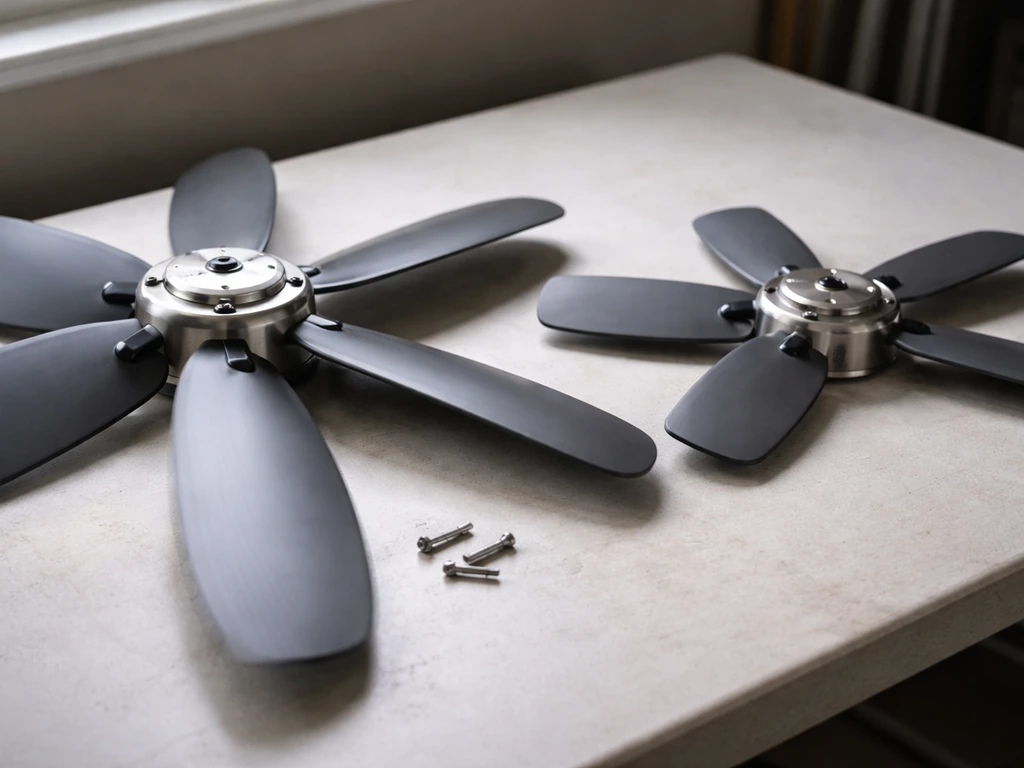
CFM (cubic feet per minute) is the single most important spec on a patio fan. It tells you how much air the fan moves, which directly determines how strong the wind chill effect will be at your seating area. For reference, the Westinghouse Contempra 48-inch outdoor ceiling fan delivers 4,071 CFM on high, and that's a solid benchmark for a covered patio up to about 175–200 square feet. The BILT HARD 24-inch outdoor oscillating wall fan hits 6,300 CFM on high, which is impressive for its size and makes it useful for larger zones. Look for CFM figures that come from standardized testing (AMCA-certified ratings give you third-party assurance those numbers are accurate) rather than just marketing copy.
Fan diameter and blade span
Bigger blades move more air at lower RPM, which generally means quieter operation for the same airflow. For ceiling fans, a 48-inch fan suits spaces up to about 175 square feet, a 52-inch works well up to 225 square feet, and a 60-inch or larger is appropriate for bigger covered areas. For oscillating and floor fans, blade diameter (typically 18–24 inches for residential outdoor use) affects both airflow and how focused versus diffused the air movement is.
Speed settings and oscillation
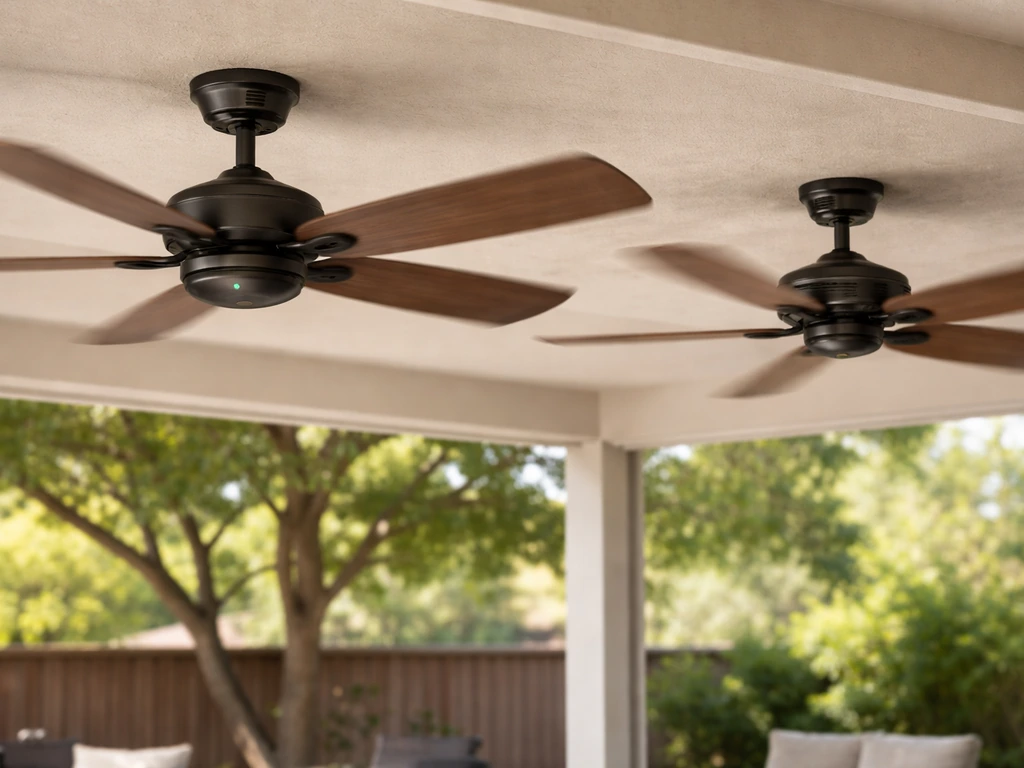
Three speeds are the practical minimum for outdoor use, where conditions change from a calm morning to a hot afternoon. Some premium ceiling fans now offer DC motors with 6-speed or variable-speed controls, which lets you dial in exactly the airflow you want. Oscillation is especially valuable for floor and wall fans because it sweeps air across a wider zone rather than blasting one spot. If you have a long, rectangular patio or a table where people sit on multiple sides, oscillation is worth prioritizing.
Noise level
Noise matters more outdoors than most people expect, especially when you're trying to hold a conversation or enjoy a quiet evening. DC motor fans run significantly quieter than AC motor fans at equivalent airflow, making them worth the price premium for most covered patio setups. For floor and wall fans, look for reviews that specifically mention noise at medium-to-high speeds, since many cheap fans become noticeably loud above the lowest setting. A fan that rattles or hums at speed will get annoying fast.
Outdoor durability and safety: what to actually check
UL damp vs. UL wet: this distinction matters
Every outdoor fan should carry a UL damp or UL wet rating, and the difference is not trivial. UL damp-rated fans are designed for covered outdoor locations where they won't be directly exposed to rain or snow, like a porch or pergola with a solid roof. UL wet-rated fans can handle direct water exposure, including rain splash and open-air environments.
If your patio is uncovered, or your covered patio is near the open edges where rain blows in, you need wet-rated. The Kichler Basics Pro Patio is an example of a damp-rated fan designed for covered areas, while the Honeywell 18-inch outdoor oscillating wall fan is a wet-rated option built for more exposure. The Lumens UL ratings guide and DelMarFans both confirm this: wet-rated for open decks and uncovered patios, damp-rated for fully covered, enclosed porches.
Materials and UV resistance
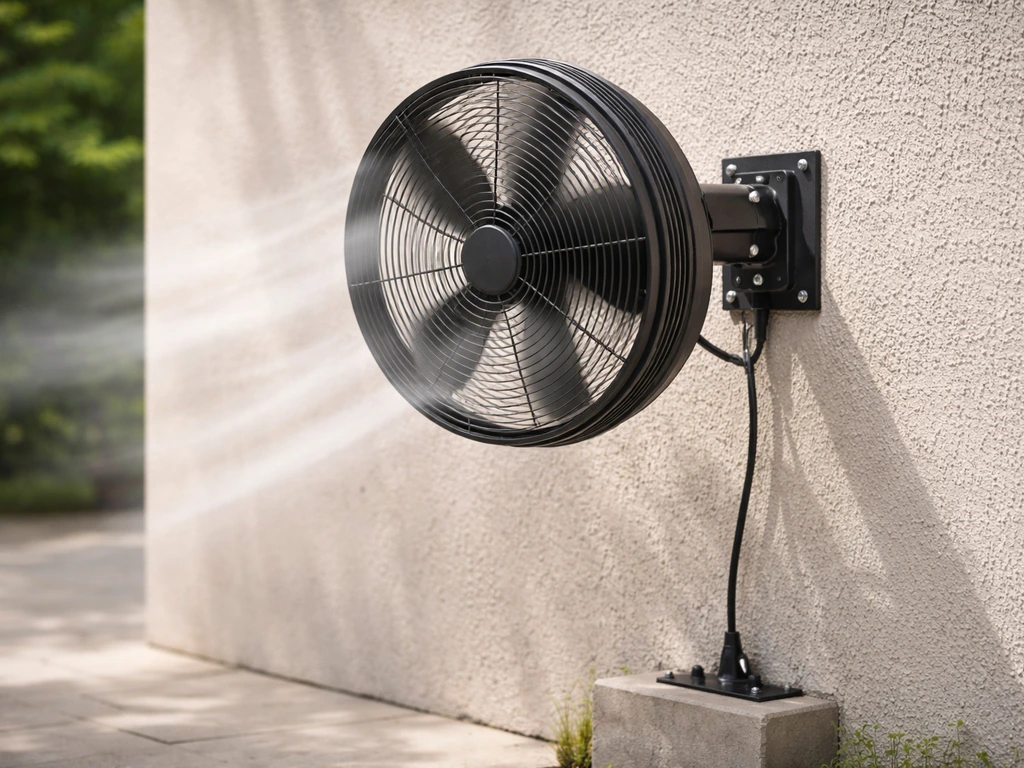
Sun exposure degrades plastic housings and motor windings over time. Look for fans with ABS or reinforced polymer housings, powder-coated or rust-resistant metal parts, and blades made from materials like ABS plastic, composite, or treated aluminum rather than wood (which warps outdoors). UV-stabilized materials extend the life of fans left in direct sun significantly.
Power options and GFCI safety
Most corded patio fans run on standard 120V household current. Under the National Electrical Code (NEC 210. 8), outdoor outlets at dwellings require GFCI (Ground Fault Circuit Interrupter) protection, and this rule exists precisely because water and electricity are a dangerous combination. Before plugging in any fan, verify your outdoor outlet has a GFCI breaker or is a GFCI receptacle (the kind with the TEST and RESET buttons).
If it doesn't, have an electrician add one or use a portable GFCI adapter. Never use a regular indoor extension cord outdoors; use one that's rated for outdoor use with the appropriate gauge for the fan's amperage. Battery-powered and rechargeable fans sidestep the electrical safety issue entirely, though they trade off on runtime and maximum airflow.
Stability and wind resistance
A pedestal fan on an open, windy patio is a tip-over hazard. If your space gets regular wind gusts, either mount the fan to a wall, use a ceiling mount, or choose a floor fan with a wide, weighted base and the option to stake or secure it. Kichler's outdoor ceiling fan manuals include a safety support cable feature to help prevent the fan from falling if the mounting hardware ever fails, which is the kind of detail worth looking for in permanently mounted fans. For high-wind patios, wall and ceiling mounts are always safer than freestanding options.
Top picks for every patio situation
Small covered patio (under 150 sq ft)
A 48-inch damp or wet-rated ceiling fan is the cleanest solution here. The Westinghouse Contempra 48-inch is a solid, proven pick at around 4,071 CFM on high, with efficient airflow (73 CFM per watt) and a price point that doesn't break the budget. If you don't want a ceiling mount, a wet-rated 18-inch oscillating wall fan like the Honeywell outdoor model works well and takes up zero floor space. Budget target: $80–$150 for a wall fan, $100–$200 for a quality ceiling fan at this size.
Large covered patio (200–400 sq ft)
Scale up to a 52–60 inch wet-rated ceiling fan, or consider two 48-inch fans positioned to create overlapping airflow zones. A 24-inch oscillating wall fan like the BILT HARD hitting 6,300 CFM on high is also a strong contender here, especially if ceiling mounting isn't an option. For a premium pick, a DC motor ceiling fan in the 52–60 inch range gives you quieter operation and finer speed control. Budget: $150–$300 for ceiling fans; $100–$200 for quality wall fans.
Uncovered or open-air patio
You need UL wet-rated only here, no exceptions. A high-CFM wet-rated pedestal fan or wall-mount oscillating fan is the practical choice since ceiling mounting isn't an option. Focus on models with sealed motors, weatherproof housings, and rust-resistant hardware. If you're in a low-humidity climate and the heat is serious, this is the scenario where a misting fan (like the XPOWER FM-68 with 1,000 CFM plus mist output) earns its keep by actually dropping the zone temperature rather than just moving hot air around.
Windy or exposed patio
Skip the pedestal fans entirely. Wall-mounted or ceiling-mounted options are far more stable and won't tip over in a gust. Look for fans with locking tilt mechanisms on wall mounts so the angle stays where you set it. If you're on a rooftop deck or coastal property, prioritize corrosion-resistant finishes (stainless hardware, marine-grade powder coat) over raw airflow numbers.
Sheltered patio or tight balcony (budget pick)
A portable rechargeable pedestal fan in the 18–20 inch range with 3 speeds gives you flexibility without the need for a dedicated outlet or permanent install. Airflow will be lower (often 1,500–2,500 CFM), but for a small seating area of one or two people, it's often enough. Look for models with at least 4–6 hours of runtime on medium speed.
Premium whole-patio cooling
If budget isn't the constraint, a pair of 52-inch DC motor wet-rated ceiling fans on a large covered patio, combined with a misting system along the perimeter, delivers the best real-world comfort. This is especially effective in dry climates. Expect to spend $400–$800 for quality ceiling fans at this level, plus installation, plus misting hardware.
Where to put your fan for maximum cooling effect
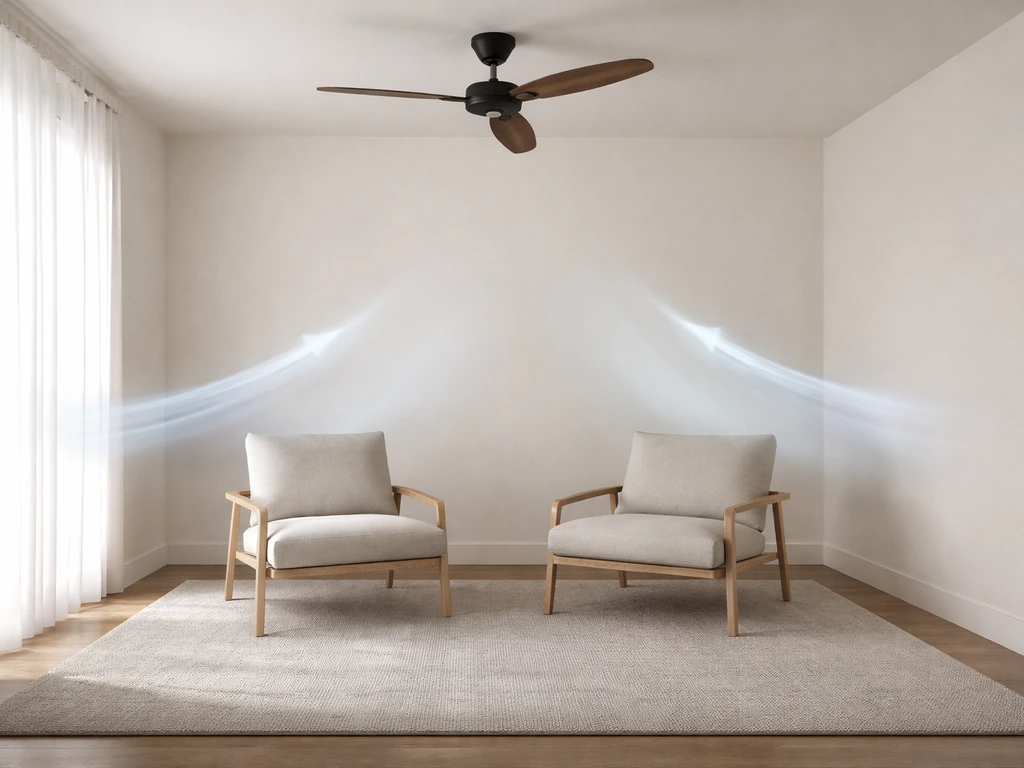
Placement makes or breaks fan performance. A ceiling fan should be centered over your primary seating area, not centered in the room. The sweet spot for ceiling fan height is 7–9 feet from the floor to the blade, and if your ceiling is higher than 10 feet, you'll need a downrod to bring the fan down into the effective airflow zone. Too high and the air movement dissipates before it reaches you.
For floor and wall fans, aim the airflow at seated body height, not straight across the patio at standing height. If you're trying to cool a dining table, aim slightly downward toward the table surface. For a lounge seating area, angle the fan so air sweeps across the seating at chest level. Oscillating fans are particularly effective for larger seating groups because they sweep back and forth rather than creating one high-velocity channel.
Distance from seating matters too. For stand and wall fans, 6–10 feet is typically the effective range for comfortable (not blasting) airflow on medium speed. Beyond 12–15 feet, most residential fans lose meaningful wind chill effect. If your patio is deep (say, 20 feet from front to back), consider two fans at opposite ends aimed inward, or a high-CFM unit on high speed positioned centrally.
One often-missed tip: if your covered patio is semi-enclosed (walls on two or three sides), position the fan to create an airflow path that draws fresh air in from one opening and pushes stale hot air toward another. This cross-ventilation effect amplifies the cooling significantly compared to just blasting air in a closed loop.
Keeping your patio fan performing season after season
Outdoor fans take more abuse than indoor ones, and a little seasonal care extends their life dramatically. Here's what I do each season:
- At the start of each season, wipe down the blades, motor housing, and grille with a damp cloth and mild detergent. Never spray water directly into the motor vents.
- Check all mounting hardware (screws, bolts, ceiling brackets) for corrosion or loosening before first use each year. Tighten anything that's shifted over winter.
- For ceiling fans, use the reverse function in winter to push warm air down, but check that the direction switch is back to summer (counterclockwise from below, pushing air down) before the hot season.
- For misting fans, follow the manufacturer's nozzle care steps: flush the misting lines before use, clean nozzles of mineral deposits, and dry the atomization assembly thoroughly before storage. The XPOWER manual is explicit about drying nozzles before storing to prevent mineral buildup and mold.
- At the end of the season, organize and wrap the power cord and water hose (for misting fans) carefully before storage to prevent kinking or cracking. Store in a dry location away from UV exposure.
- Lubricate bearing points on oscillating stand fans if the manufacturer allows it (check the manual). A grinding sound on oscillation is usually a bearing or pivot issue that caught early can be fixed cheaply.
- For any fan left outdoors year-round, invest in a weatherproof fan cover during off-season months, especially in climates with freezing temperatures or heavy UV.
One thing worth repeating on safety: always disconnect the fan from power before cleaning or doing any maintenance. This applies to both corded and battery models. For ceiling fans, flip the circuit breaker, not just the wall switch, before touching the blades or motor housing.
Quick buyer checklist before you purchase
Run through this before you click Buy. It takes two minutes and prevents the most common return-worthy mistakes: If you're trying to pick the best outdoor patio fans for 2021, focus on high CFM, the right UL wet or damp rating, and safe placement for your layout best outdoor patio fans 2021.
- Is the fan UL wet-rated (uncovered patio) or at minimum UL damp-rated (fully covered patio)?
- Does the CFM on high match your patio size? Aim for at least 4,000 CFM for a 150–200 sq ft covered space, more for larger or open areas.
- Is your outdoor outlet GFCI-protected? If not, add a GFCI adapter or have one installed before plugging in any fan.
- For ceiling fans: do you have a ceiling-rated outdoor junction box installed? A standard light fixture box is not rated for fan weight and torque.
- For pedestal fans on open patios: is the base wide and heavy enough to resist tipping in wind, or can you anchor it?
- Does the fan have at least 3 speeds? DC motor fans are worth the premium for quieter operation.
- For misting fans: is your climate dry enough for evaporative cooling to actually work (generally below 60% relative humidity)?
- If you're in a coastal or corrosive environment, does the fan have stainless hardware and corrosion-resistant finish?
If you want to go deeper on specific subcategories, the guides covering outdoor waterproof patio fans, outdoor patio ceiling fans with lights, and outdoor oscillating fans for patios each break down those narrower choices in more detail. But for most people reading this, the answer comes down to: get the right UL rating for your exposure level, prioritize CFM over brand name, check your electrical setup before anything gets plugged in, and place the fan where people actually sit.
FAQ
Will the best cooling fan for outdoor patio actually lower the temperature?
If a fan is creating noticeable wind chill on your skin, it is effectively cooling you even though the air temperature does not drop. To tell if it will feel strong enough before buying, focus on published CFM at the speed you will use most (often medium or high), and also consider whether oscillation or direction control will move air across your seated group.
What ceiling height range works best for an outdoor patio ceiling fan?
For ceiling fans, height matters more than many specs. Measure from the floor to the blade tip, and target about 7 to 9 feet for typical seating. If your ceiling is higher than 10 feet, you may need a downrod or you will often feel the airflow dissipate before it reaches people.
Are DC or variable-speed outdoor fans worth it for comfort and noise?
Yes, but only if the thermostat-like control is real and usable outdoors. Look for fans with DC motors or variable-speed settings that let you dial airflow down without losing smooth control, and avoid models that only step between a few fixed speeds if you need quiet night operation.
How long do rechargeable outdoor patio fans typically run on medium or high?
Not necessarily. Battery-powered fans can be convenient, but max airflow is commonly lower, and runtime can drop quickly on high. If you want long sessions, prioritize a stated runtime on medium (not just “up to X hours”), and expect you might need a higher-priced model to match corded CFM.
Can I safely use a pedestal fan on a windy open patio?
No, a pedestal fan on an exposed patio is risky in gusts. If you have wind, choose a wall-mount or ceiling-mount unit, or pick a floor fan with a wide weighted base plus a way to secure or stake it. For rooftop or coastal areas, stability and corrosion resistance matter as much as airflow.
Should I prioritize oscillation or direct airflow for my patio layout?
Oscillating fans are best when you need coverage across multiple seats, like a dining table or L-shaped seating. If you mostly cool one focal area, a non-oscillating ceiling fan aimed correctly can be more effective than sweeping air past people and wasting airflow.
How do I compare patio fans when brand listings show different CFM numbers?
Use CFM as the starting point, but also sanity-check that the CFM is tested and stated for a specific speed. If a listing is vague or only provides marketing claims, compare the fan’s size, blade design, and motor type, then confirm with reviews that mention performance at the speed you plan to use.
What’s the practical difference between UL damp and UL wet ratings for patio fans?
Wetting exposure is the deciding factor. If rain can directly hit the fan, you generally want a UL wet rating. If the fan is under a solid roof where it will not get direct rain or snow, a UL damp rating is usually appropriate. When in doubt, choose wet-rated.
How does sun exposure affect outdoor fan lifespan, and what materials help?
Yes, especially when the fan is covered but still in strong sun. Prefer UV-stabilized housings and rust-resistant hardware, and check blade material (treated composite or aluminum rather than wood). Sun-damaged housings can warp or crack, which can increase noise and reduce airflow effectiveness.
Can I use an indoor extension cord for a corded outdoor patio fan?
Avoid using a regular indoor extension cord outdoors. If you must go corded, use an outdoor-rated extension cord with the correct gauge for the fan’s amperage, and route it so it cannot be tripped or dragged across wet surfaces.
Do outdoor patio fans require a GFCI outlet, and what if mine doesn’t have one?
With corded fans, the GFCI part is non-negotiable. Confirm your outdoor outlet is GFCI-protected (look for TEST/RESET buttons), and plug in only to that outlet. If your outlet is not protected, use a portable GFCI adapter or have an electrician add proper protection before use.
What’s the best approach for long patios where one fan doesn’t reach the back seats?
If you’re cooling a deep patio, one centrally placed fan may not reach the far end effectively. A practical approach is to add a second fan to create overlapping airflow zones, or position the main fan and aim it so it targets the seating area rather than the empty space behind it.
When does a misting fan actually make a noticeable difference, and when is it mostly wasted?
If you are in low humidity, misting can create real perceived and sometimes measurable zone temperature relief, because evaporation removes heat. In humid climates, misting often feels wet but not much cooler. Before spending on misting, check your typical humidity and ensure the system is designed for outdoor use.
What seasonal maintenance should I do for outdoor patio fans?
Simple maintenance makes a bigger difference outdoors than people expect. Clean dust and debris from the grille and blades periodically, check for wobble, and inspect mounting hardware after storms. For corded models, also make sure the power connections stay dry and undamaged.
Next Articles
Best Outdoor Floor Fans for Patios: Top Picks and Buying Guide
Top outdoor floor fans for patios with buying guide, features, placement tips, and maintenance for lasting cooling.
Best Sunbrella Patio Cushions: Top Picks, Guide & Maintenance
Find the best Sunbrella patio cushions: durable, fade‑resistant picks, buying tips, care, and top recommendations.
Alternative to Patio Cushions: Durable, Stylish Options and DIY
Alternative to patio cushions: durable, weatherproof seating options, pros, DIY tips & buying guide.