
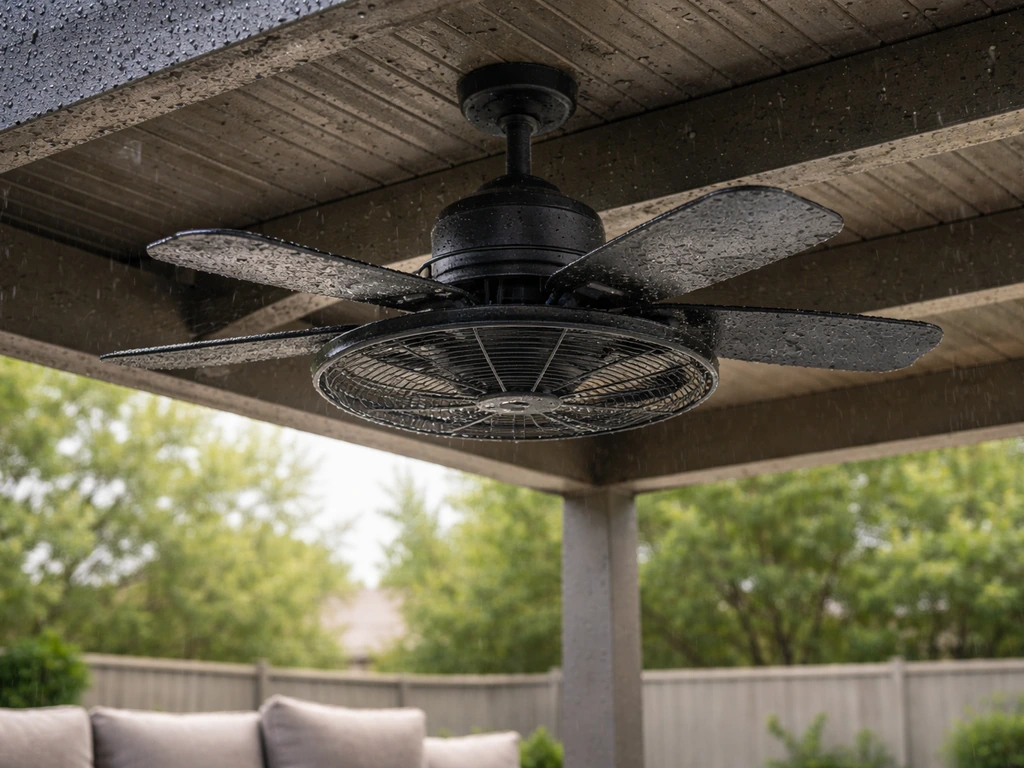
For an outdoor patio fan that will actually survive rain, splashes, and humidity without failing, you need one rated UL Wet Location or at minimum IPX4 or higher. That single spec matters more than brand name, blade count, or price. A fan marketed as 'outdoor' but only rated for damp locations will corrode, trip breakers, or short out after a summer of real weather. Get the wet rating right first, then match airflow and fan type to your patio layout, and you'll have a fan that cools you reliably for years.
Best Waterproof Outdoor Patio Fans: Buying Guide 2026

Lark Perry
4 Jun 2026
What 'waterproof' actually means for patio fans
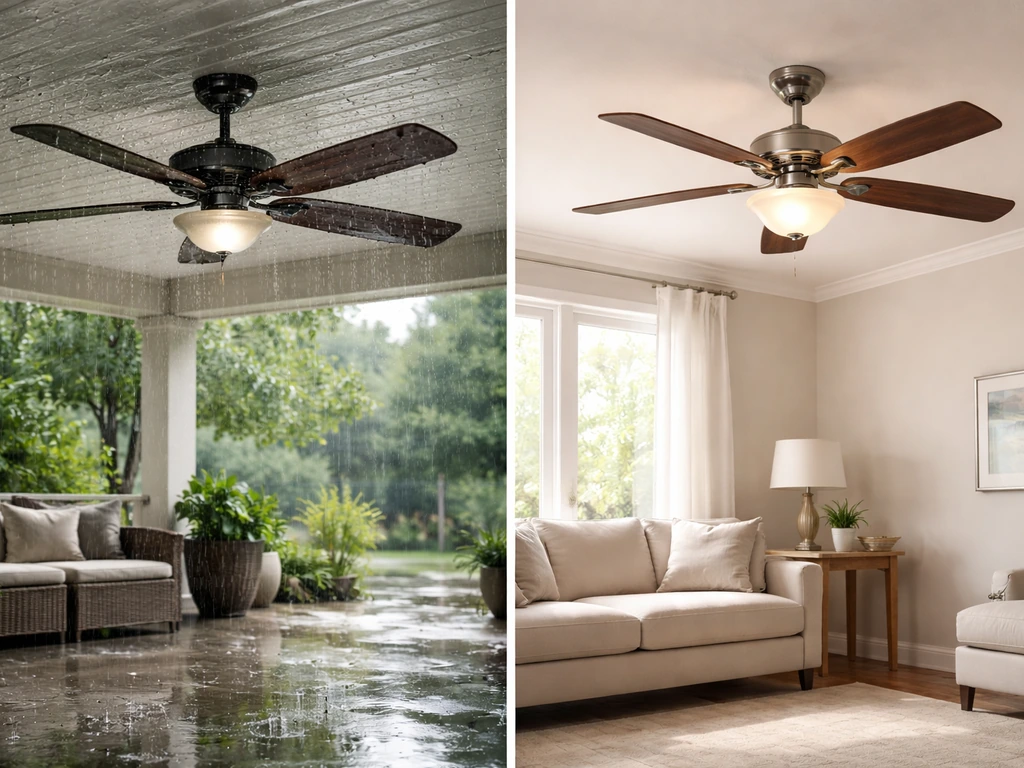
The word 'waterproof' gets thrown around loosely in fan marketing, but there are two real rating systems you should look for: UL location ratings and IP (Ingress Protection) codes. UL defines a wet location as any place where water or other liquids may drip, splash, or flow on or against electrical equipment. That's the standard you want for an exposed or semi-exposed patio. A fan labeled UL Wet Rated has been tested to handle direct water contact, which covers most real patio situations including rain blowing in from the side, misting systems, and hosing down your patio with the fan nearby.
UL also has a 'damp' rating, which applies to humid environments where condensation is the main concern but direct water contact isn't expected. Think of a fully covered porch with no exposure to wind-driven rain. If your patio has any opening to the sky or blowing rain, damp-rated fans aren't enough. University of Florida IFAS extension guidance puts it plainly: if the fan may come into direct contact with water, choose UL wet-rated. For humid but not direct-water areas, damp-rated is acceptable.
IP ratings work differently. They use a two-digit code where the X or first number indicates dust protection and the second number indicates water protection. For patio fans, focus on the water digit. IPX4 means protected against water splashing from any direction.
IPX5 means protected against low-pressure water jets from any angle. Both are legitimate for patio use, with IPX5 being stronger. The Shark FlexBreeze HydroGo carries IPX5 and UV resistance, making it one of the more honestly spec'd portable options on the market. Big Ass Fans' BISON ceiling fan carries IPX4 alongside a full UL Wet rating.
When a product has both an IP rating and a UL Wet rating, that's a good sign the manufacturer took outdoor performance seriously.
| Rating | What it means | Best for |
|---|---|---|
| UL Damp | Handles condensation and humidity, no direct water contact | Fully covered porches, screened enclosures |
| UL Wet | Handles direct splashing, rain, and water flow on components | Open patios, pergolas, semi-exposed decks |
| IPX4 | Protected against splashing water from any direction | Patio use with rain exposure |
| IPX5 | Protected against low-pressure water jets from any angle | More robust patio/poolside use |
| No IP or UL rating | No verified protection | Indoor use only — avoid for patios |
Which fan type actually fits your patio
Not every patio fan type works equally well in every outdoor setup. The right choice depends on how much space you're cooling, whether you have overhead structure, access to power, and how permanent you want the install to be.
Ceiling fans
If you have a covered patio, pergola, or covered deck, a wet-rated ceiling fan is the most efficient option per dollar of cooling. It moves the most air volume per watt, covers the whole seating area, and stays out of the way. The Haiku L outdoor ceiling fan from Big Ass Fans delivers up to 5,204 CFM in outdoor mode, which can cool a large seating area comfortably. The BISON from the same brand runs under 35 dBA at max speed, so it won't drown out conversation. The catch: you need a ceiling structure and an outdoor-rated electrical box. For open patios with no overhead cover, ceiling fans aren't an option.
Pedestal and stand fans
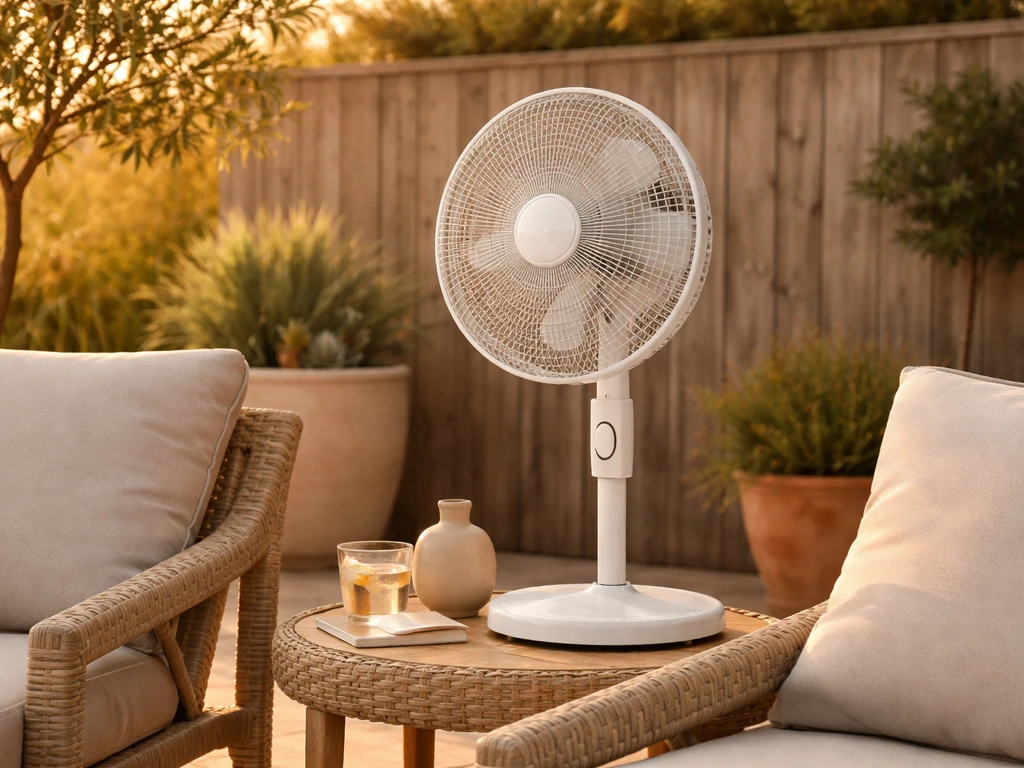
Pedestal fans are the most flexible option for open patios. They're portable, adjustable in height, and some models deliver serious airflow. A 30-inch outdoor-rated oscillating pedestal fan can push up to 8,400 CFM, which is enough to cover a large deck or poolside area. Consumer-grade outdoor pedestal fans like those from Newair typically move around 1,600 CFM, which suits a small to medium patio seating area.
Look for pedestal fans with weighted bases or stake anchors, since wind can tip them over. This category overlaps with what you'd find in a guide focused on the best outdoor floor fans for patios. If you're after the best outdoor floor fans for patios, focus on the wet rating, stable base design, and enough CFM for your deck size.
Tower fans
Outdoor tower fans have a slim profile that works well in tight spaces or along a fence line. They oscillate through a wide arc and tend to be quieter than traditional blade fans. The tradeoff is airflow: most tower fans move less air volume than a comparably priced pedestal fan, so they're better for smaller patios or as a supplement to another cooling method. Look specifically for outdoor-rated tower fans, since many tower fan models on the market are indoor-only designs.
Bladeless and circulator fans
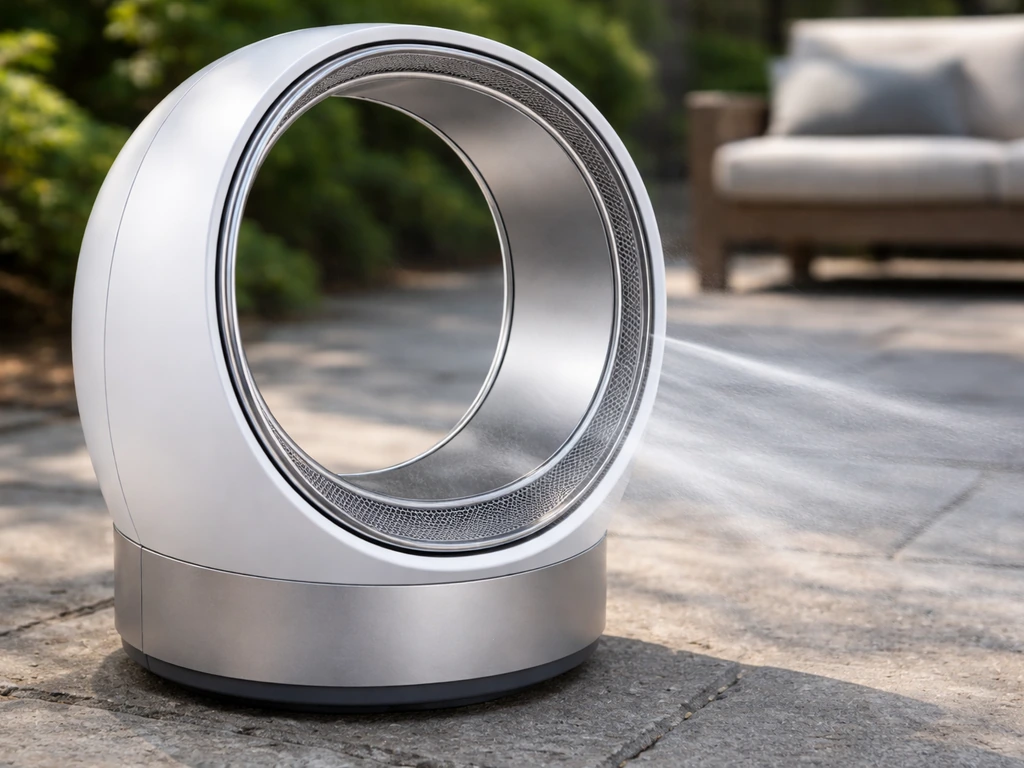
Bladeless fans and outdoor circulators are newer in the patio space. They tend to have better sealed motors (which is good for water resistance), produce very smooth airflow, and often have strong IP ratings. The Shark FlexBreeze HydroGo is a bladeless portable option with IPX5 and UV resistance, and it's been tested to move air up to 70 feet away, which is a real number for an open patio.
The main downside is cost: bladeless designs typically cost more for the same CFM output compared to bladed fans. If you're looking at high-performance cooling fans for larger outdoor areas, the best cooling fan for outdoor patio category covers this in more depth. If you want a clear shortlist for different patio setups and budgets, check our guide to the best cooling fan for outdoor patio.
The performance features that actually make a difference outdoors
Airflow is measured in CFM (cubic feet per minute). For a small covered patio up to about 150 square feet, 1,000 to 2,000 CFM is usually enough to create noticeable airflow. For a mid-size open deck of 200 to 400 square feet, you want 2,500 CFM or more. Large open entertaining areas or poolside decks benefit from fans in the 5,000-plus CFM range, either from a large ceiling fan or a high-output commercial-style pedestal. Outdoor airflow numbers often run higher than indoor figures for the same fan because open-air conditions reduce static pressure. The Haiku L actually delivers more CFM outdoors (5,204) than indoors (4,662) for this reason.
Oscillation matters more outdoors than indoors because you're often cooling a wider zone with multiple people seated in different spots. A fan that only blows straight ahead will cool whoever is directly in front of it. An oscillating fan covers a 90 to 180-degree arc and keeps airflow moving across the whole seating area. If you want to compare specific oscillating fan options, the best outdoor oscillating fan for patio topic goes into more granular detail on oscillation patterns and sweep angles.
Multiple speed settings aren't just a convenience feature outdoors. On hot days you want high output, but in the evening you may want a lower setting that doesn't blow napkins off the table. At least three speed settings is a practical minimum. Noise level also matters more outdoors than you might expect. A loud fan on a covered patio becomes annoying fast. Under 60 dB at max is acceptable for background use; premium fans like the BISON run under 35 dBA, which is nearly silent during normal conversation.
- CFM output: aim for at least 1,500 CFM for small patios, 3,000+ for medium, 5,000+ for large open areas
- Oscillation: wide sweep (90 to 180 degrees) covers more seating area without repositioning
- Speed settings: three or more gives you practical daytime-to-evening flexibility
- Noise level: under 60 dB for comfortable patio use; premium options run under 35 dBA
- Timer function: useful for setting the fan to run through the hottest hours and shut off automatically
- Remote control: a real convenience when the fan is mounted overhead or across the patio
What to actually check for weatherproofing and durability
The IP or UL rating covers the motor and electrical components, but the rest of the fan needs to hold up outdoors too. Corrosion resistance is the biggest practical durability issue for patio fans. Look for ABS plastic housings, powder-coated aluminum, or stainless steel fasteners. Avoid fans with chrome-plated metal parts or unsealed iron components, since these rust fast in humid climates or near coastal air. Check whether the motor housing is fully sealed or just partially covered.
The fan grille or blade guard should have small enough openings to prevent debris and insects from getting inside the motor housing. Outdoor fans in garden or patio settings collect leaves, spider webs, and airborne seed pods faster than indoor fans. A tighter grille spacing reduces how often you need to clean the motor area. Blades on outdoor fan models should be made from materials rated for UV exposure, since standard plastic blades yellow, warp, or crack after a few seasons of direct sun.
For ceiling fans specifically, check the mounting hardware. The suspension system and canopy should be weather-rated, and some manufacturers include language in their warranty documentation requiring periodic inspection of the mounting assembly. Big Ass Fans’ directional fan warranty documentation explains that certain maintenance and installation conditions, including inspection of the mounting assembly, can affect warranty coverage. This isn't excessive caution: outdoor temperature swings, moisture cycling, and wind load stress mounting hardware more than indoor use ever would. Buy a fan where the entire assembly, not just the motor, is rated for outdoor use.
Remote controls and digital control panels on outdoor fans are a corrosion weak point. Buttons, circuit boards, and display screens that are exposed to humidity often fail before the motor does. Look for sealed control panels with a minimum IPX4 rating, or choose fans where the main control unit can be positioned indoors while the fan body sits outside.
Safety, power, and setup basics you shouldn't skip
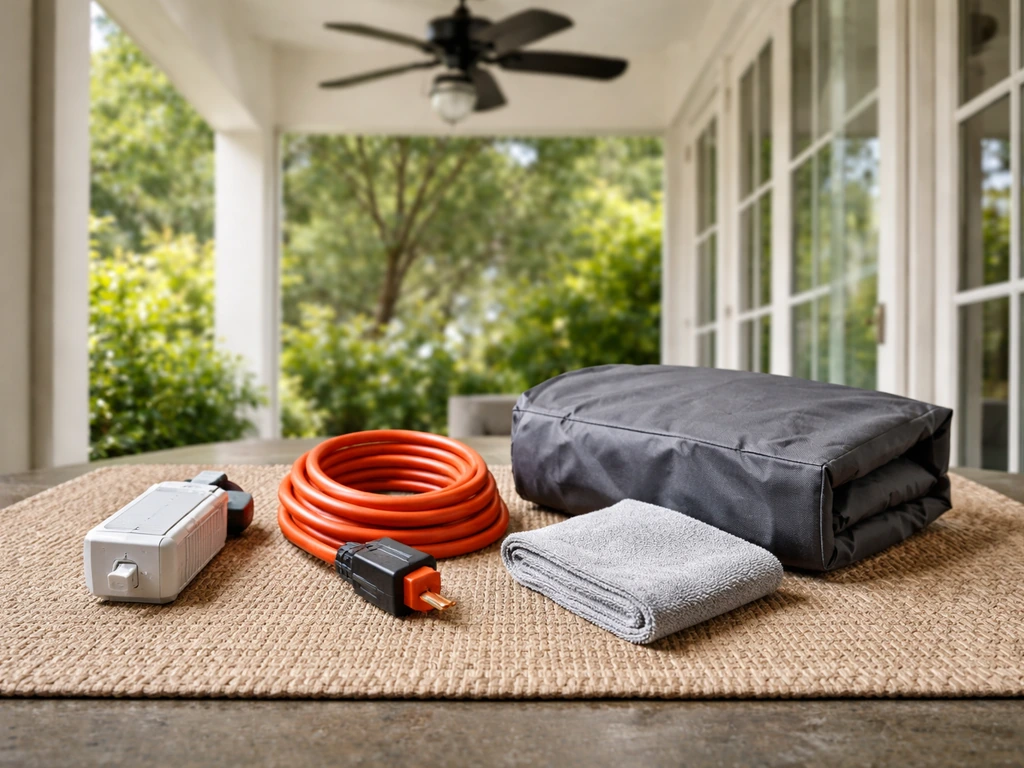
GFCI (ground fault circuit interrupter) protection is not optional for outdoor electrical devices. Any outdoor outlet where you'll plug in a patio fan should be GFCI-protected. Most modern homes built after 1978 have GFCI outlets outdoors, but older homes often don't. You can add a GFCI outlet or use a GFCI outlet adapter as a stopgap. If you're wiring a hardwired ceiling fan outdoors, the circuit must be GFCI-protected at the breaker or the first outlet in the circuit.
Extension cord use with outdoor fans requires some care. Use only outdoor-rated extension cords (look for the letter W in the cord designation, like SJTW or STW), and make sure the cord gauge matches or exceeds the fan's amperage draw. A 12-gauge cord handles up to 20 amps and is appropriate for most heavy-duty outdoor fans. Don't run extension cords through water puddles, bury them under rugs or decking, or connect two cords end-to-end for more length. Keep connectors off the ground and use weatherproof cord covers when the connection point will be exposed to rain.
Placement matters for both airflow effectiveness and physical safety. For pedestal fans, position the fan so it blows across the seating area rather than directly at one person from close range. Angling the fan slightly downward toward the seating level (rather than blowing parallel to the ground) pushes air where people actually are. Keep the base on a flat, stable surface and use a weighted base plate or stake anchor if wind is common in your area. A fan that tips over in a gust not only breaks: it can become a hazard near pool areas or around kids.
For ceiling fans, use a fan-rated outdoor electrical box, not a standard light fixture box. Fan boxes are rated for the weight and torque of a spinning motor. Standard light boxes are not. This is a code requirement in most jurisdictions, and it's also just basic safety.
Best picks by patio type and budget
Rather than a single 'best' pick, the right fan depends almost entirely on your patio layout and how much you want to spend. Here's a practical framework matched to common patio scenarios.
| Patio Type | Best Fan Type | Key Specs to Target | Budget Range |
|---|---|---|---|
| Small covered porch or pergola | UL Wet ceiling fan | 1,500–3,000 CFM, IPX4 or UL Wet, under 45 dB | $80–$250 |
| Large covered patio or entertaining area | Premium UL Wet ceiling fan (e.g., Haiku L, BISON) | 4,000–5,500+ CFM, UL Wet, smart/remote control | $400–$900+ |
| Open deck, no overhead cover | Outdoor-rated oscillating pedestal fan | 2,000–8,400 CFM, IPX5, weighted base, oscillation | $60–$300 |
| Hot and humid climate, poolside | IPX5 pedestal or bladeless fan (e.g., Shark FlexBreeze HydroGo) | IPX5, UV resistance, 1,500+ CFM, misting option | $100–$400 |
| Small balcony or tight patio space | Outdoor tower fan or compact pedestal | Oscillation, IPX4+, low noise, slim profile | $60–$180 |
| Patio near door or window opening | Directional floor circulator (e.g., AIREYE-style) | IPX5, directional airflow, sealed motor, cord management | $150–$350 |
For most homeowners with a covered patio or pergola, a UL Wet rated ceiling fan is the best long-term investment. If you're comparing options for the best outdoor patio fans 2021, start by prioritizing weather ratings like UL Wet and the right airflow for your patio size best long-term investment. It's the most efficient way to cool a fixed seating area and it's out of the way.
If you have an open deck or a patio without ceiling structure, an outdoor-rated oscillating pedestal fan in the 2,000 to 8,400 CFM range gives you flexibility and real airflow. In hot humid climates near a pool or where misting helps, look for IPX5 fans with UV-resistant construction. For tight spaces like balconies, a slim outdoor tower fan or compact pedestal beats trying to make an indoor fan work.
If you're primarily shopping for ceiling fans with lights, that comparison gets its own nuance around fixture ratings and light kit weather resistance. If you're primarily shopping for ceiling fans with lights, that comparison gets its own nuance around fixture ratings and light kit weather resistance best outdoor patio ceiling fans with lights. And if your main goal is raw cooling output rather than weatherproofing, the best cooling fan for outdoor patio angle is worth exploring separately.
How to keep your fan waterproof after you buy it
Buying a wet-rated fan is step one. Keeping it performing after a year or two of outdoor exposure takes a little maintenance. The IP rating and UL listing reflect a new fan tested in controlled conditions. Real outdoor fans deal with dirt, salt air, UV exposure, bird droppings, and seasonal temperature swings that gradually degrade seals and finishes.
Clean the fan blades and grille every few weeks during heavy use seasons. Use a damp cloth and mild soap, not a pressure washer. Even IPX5-rated fans aren't designed for sustained high-pressure water, and forcing water into the motor housing past the rated protection level will shorten its life. Dry the fan after cleaning before running it.
At the end of the outdoor season or when a major storm is coming, cover or store the fan if possible. A fitted weatherproof cover designed for outdoor fans prevents UV degradation of plastic parts and keeps the motor housing dry during extended periods of non-use. Pedestal fans can be stored indoors in a garage or shed. Ceiling fans that stay mounted benefit from a blade cover or a fitted motor housing cover that blocks debris accumulation over winter.
For ceiling fans, inspect the mounting hardware and canopy seal once a year. Some manufacturers include this as a warranty requirement, and it's genuinely useful: outdoor temperature cycling works screws and brackets loose over time. A loose mount is a safety issue and also lets moisture into the wiring connection at the junction box. Tighten mounting screws and check the canopy seal annually, especially after a harsh winter.
If your fan has a remote or digital control, check the battery compartment and any exposed contacts for corrosion every season. A small amount of dielectric grease on metal contacts slows corrosion in humid environments. Replace corroded batteries immediately since battery acid leaks can destroy remote units and occasionally damage the fan's receiver board.
Your next-step checklist before you buy
- Confirm your patio type: covered, semi-covered, or fully open. This determines whether you need a ceiling fan, pedestal, or portable option.
- Check your outlet situation: is there an outdoor GFCI outlet near the planned fan location? If not, budget for adding one or using a GFCI adapter.
- Set your minimum rating: UL Wet for direct rain exposure, UL Damp acceptable only for fully enclosed covered spaces with no wind-driven rain.
- Look for the IP code: IPX4 minimum, IPX5 preferred for any area near a pool, misting system, or frequent rain exposure.
- Match CFM to your patio size: 1,500+ CFM for small spaces, 3,000+ for medium patios, 5,000+ for large open areas.
- Check for oscillation if you're cooling more than one seating zone.
- Verify the full assembly is outdoor-rated: blades, housing, grille, mounting hardware, and any remote control unit.
- Plan for a weatherproof cover or seasonal storage to protect the investment between seasons.
- Read the warranty terms: check whether rain or humidity exposure is covered or excluded, and note any inspection or maintenance requirements to keep coverage valid.
FAQ
What should I choose if a fan says “outdoor” and has an IP rating, but it does not mention UL Wet?
If the patio is exposed to wind-driven rain (rain can blow sideways into the fan), choose UL Wet first. IPX4 is only splash protection, and IPX5 is jet protection, but a fan can still be less reliable if the manufacturer does not also treat the whole outdoor assembly as wet-rated. When in doubt between UL Wet and IP only, UL Wet is the safer decision.
Can I clean a waterproof outdoor patio fan with a pressure washer?
No. UL Wet or IP protection typically covers the electrical internals and motor area, it does not mean the blades and housing are safe for high-pressure washing. Use a damp cloth and mild soap, then dry it before turning it on. Avoid pressure washers and “rinse blasts,” especially around the grille seams and any control panel openings.
Does an IPX5 or UL Wet rating guarantee the fan will stay like-new for many years?
Not exactly. In most real patios, “waterproof” claims are not enough, because corrosion and seal wear are the limiting factors over time. A fan can have an IPX5 motor rating and still degrade faster if its external materials (fasteners, grille, blade polymer, canopy) are not weather-appropriate, especially in coastal or high-UV areas.
What outdoor electrical requirements matter most for a UL Wet rated ceiling patio fan?
For ceiling fans on outdoors-in-use days, you still need a fan-rated outdoor electrical box and a GFCI-protected circuit. Many people check the fan rating but miss the wiring, which is where safety and failure risk often show up first. Also confirm the junction box is rated for the fan’s weight and torque, not just “rated for exterior.”
How should I place an outdoor pedestal patio fan so it cools everyone, not just one spot?
Angle and height change real cooling. For pedestal fans, aim airflow across the seating zone rather than straight at one person, and tilt slightly downward so air reaches people at chair height. Also keep the fan away from direct splashes, like near spray zones from sprinklers or pool returns.
When is a pedestal fan the better choice than a wet-rated outdoor ceiling fan?
If you have a ceiling fan available, it is usually more efficient for a fixed seating area because it distributes air broadly with less setup friction. Choose a pedestal fan when you need mobility across zones (moving between dining and lounging areas) or when you cannot install a ceiling fan. If you have any overhead cover but no safe ceiling structure, use a portable pedestal instead.
What part of an outdoor fan is most likely to fail first, the motor or the controls?
A wet-rated fan can still fail faster if it is left exposed with control electronics in harsh conditions. If the model has a remote or digital panel, look for a sealed or weather-protected control design, or place the main control unit indoors if the product allows it. In humid areas, remotes and exposed contact points corrode before the motor does.
How do I keep an outdoor pedestal fan from tipping over in wind?
Most pedestal fans need a stable base strategy to survive gusts. Use a weighted base or stake anchor (depending on the model) and place the fan on a flat, non-slippery surface. For pool areas, keep it positioned where it cannot be knocked into the water or reached by kids.
Is it okay to use an extension cord with a wet-rated outdoor patio fan?
Yes, but only if the wiring and outlet are correct. Use only outdoor-rated cords (with the W in the designation, such as SJTW or STW), match or exceed the cord gauge to the fan’s amperage draw, and keep connectors off the ground. If your cord will be exposed to rain, use weatherproof cord covers at every connection.
Do I really need oscillation outdoors, or is a non-oscillating fan fine?
Generally, an oscillating fan helps on patios because it sweeps air across a wider seating area, which improves comfort for people not directly in front of the fan. If most people sit in one tight row, a non-oscillating fan can be adequate. For mixed seating zones or larger gatherings, prioritize oscillation with a broad sweep.
Can I install a wet-rated outdoor ceiling fan safely if I live in a rental or cannot modify wiring?
Yes, but plan for the real-world setup cost. You still need an outdoor electrical box and ceiling mounting rated for outdoor use, plus GFCI protection for the circuit feeding it. If you rent or cannot do electrical work, a wet-rated pedestal fan avoids the ceiling installation steps and reduces inspection friction.
How should I maintain a remote-controlled outdoor fan to prevent corrosion problems?
Don’t rely on battery remotes as a long-term fix if the fan’s electronics are exposed to constant humidity. Check the battery compartment and any exposed contacts every season, and replace corroded batteries quickly to prevent leakage damage. If the fan uses a separate control unit, keeping that unit indoors can significantly extend lifespan.
What’s the safe way to handle heavy rain after a storm if my fan got hit by a lot of water?
You should not assume “UL Wet” means it will tolerate immersion or direct hose blasting. Wet-rated is about handling drips, splashes, and water flow against the unit under tested conditions, not continuous high-pressure streams. Clean with damp cloth methods, and dry fully before running, especially after storms.
Next Articles
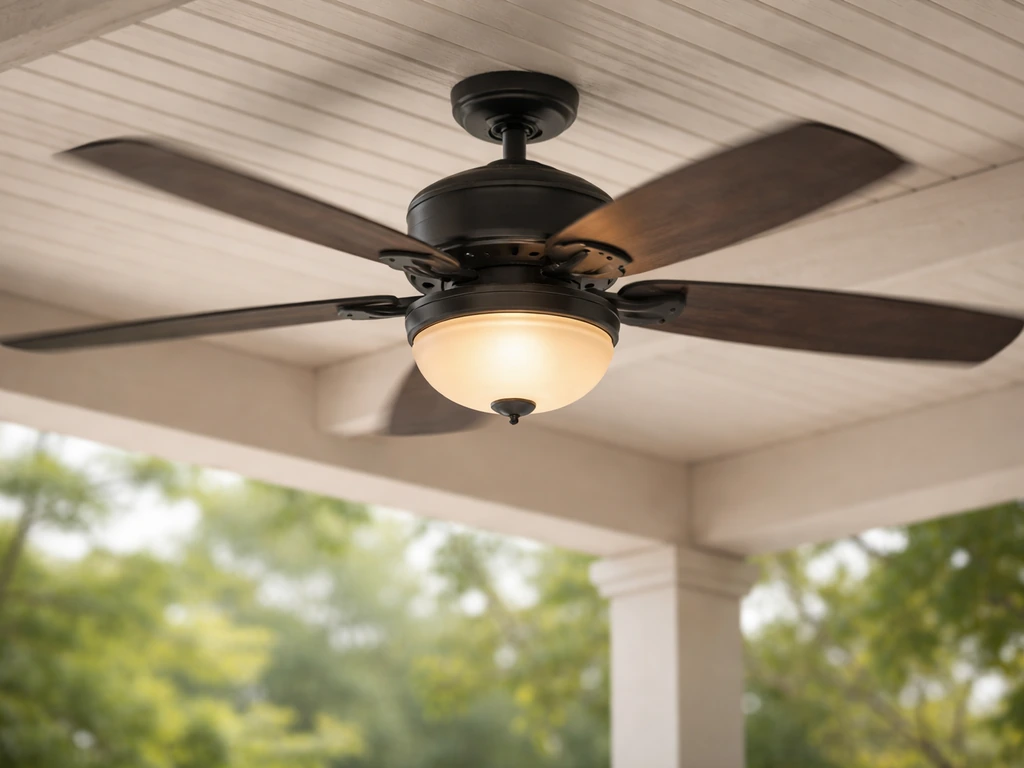
Best Outdoor Patio Ceiling Fans With Lights: Buyer Guide
Choose the best outdoor patio ceiling fans with lights using size, wet rating, airflow, noise, wiring, and dimmable ligh
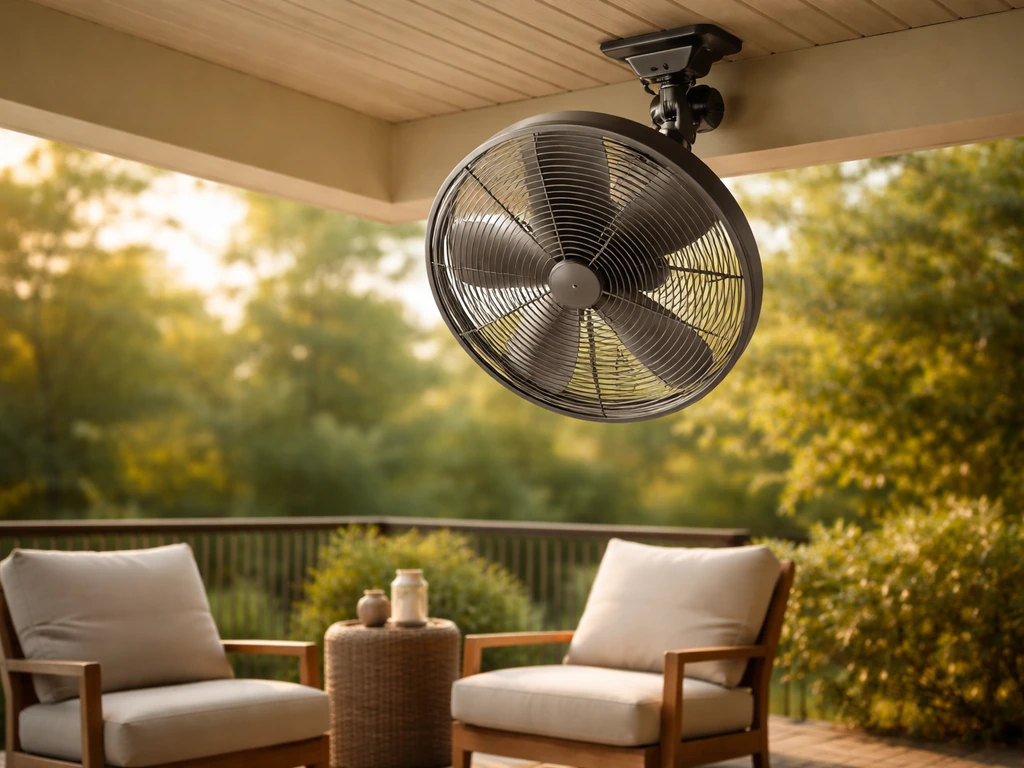
Best Cooling Fan for Outdoor Patio: Buying Guide
Choose the best outdoor patio cooling fan by CFM, size, noise, oscillation, weather rating, power, and mounting for your
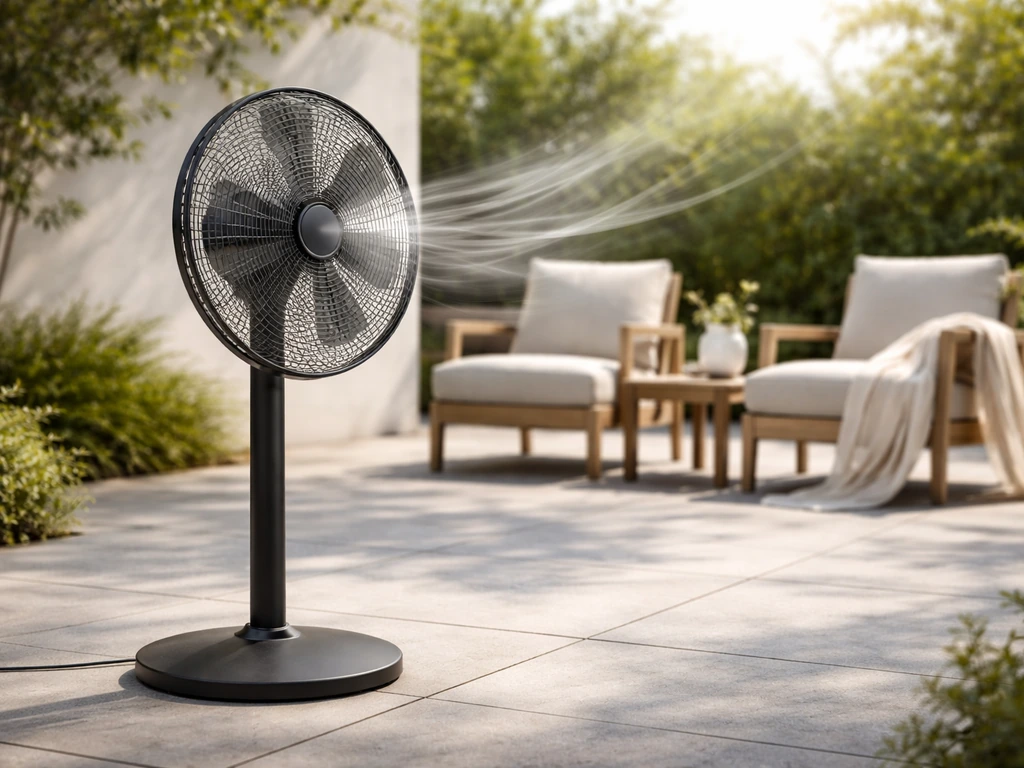
Best Outdoor Floor Fans for Patios: Top Picks and Buying Guide
Top outdoor floor fans for patios with buying guide, features, placement tips, and maintenance for lasting cooling.