
For most patios under 200 square feet, the sweet spot between cost and real-world performance is either a DIY aluminum solid-roof panel cover ($1,500–$4,000 installed yourself) or a knitted HDPE shade sail ($150–$600 for the sail, plus mounting hardware). Shade sails win on price and airflow, solid panel covers win on rain and full-year use. Retractable canopy pergolas land in the middle on both counts.
Affordable Shade Patio Covers Reviews: Best Budget Picks
Lark Perry
23 Jun 2026
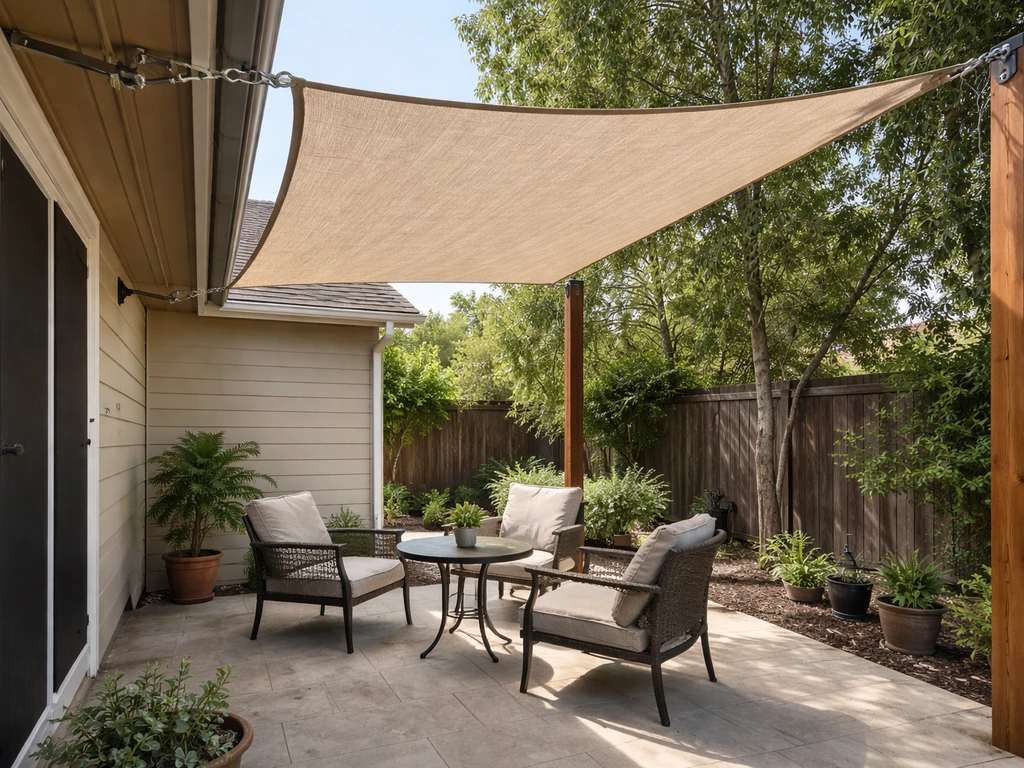
Knowing which one fits your situation comes down to four things: how much rain hits your patio, how handy you are with tools, whether you rent or own, and what total installed cost you can actually stomach. To get the best outdoor patio shade for your setup, start by matching the type to your weather exposure and how you plan to use the space.
What "affordable shade patio covers" actually means
When people search for affordable shade patio covers, they're almost never shopping for just a tarp. The term covers a pretty wide product range: fabric shade sails, freestanding pergola kits with canopy tops, retractable canopy frames, and flat solid-roof panel systems (aluminum or polycarbonate). What makes all of them "affordable" is relative to a custom-built pergola or a full patio enclosure, which can run $10,000 and up with labor.
In the budget tier, you're generally looking at products you can buy from Home Depot, Lowe's, or Amazon and install yourself, or have a handyman do for a few hundred dollars extra. The typical price ceiling most shoppers consider "affordable" lands somewhere around $3,000–$4,000 fully installed, though many options sit well below $1,000.
It's also worth understanding what "shade" means versus "cover" in this context. A shade sail or pergola with an open lattice top filters sunlight and reduces UV exposure but won't keep you dry in a downpour. A solid-panel or polycarbonate roof actually covers you, like a roof. Reviews mix these up constantly, which is part of why people get frustrated. For more detail, check patio shade sail reviews that call out both UV performance and rain behavior Reviews mix these up constantly. A product rated "90% UV blocking" sounds great until you realize it's a knitted fabric that pools rain in the center and needs to come down in heavy wind. More on that in the types section below.
The main types and how they hold up in real life
Shade sails
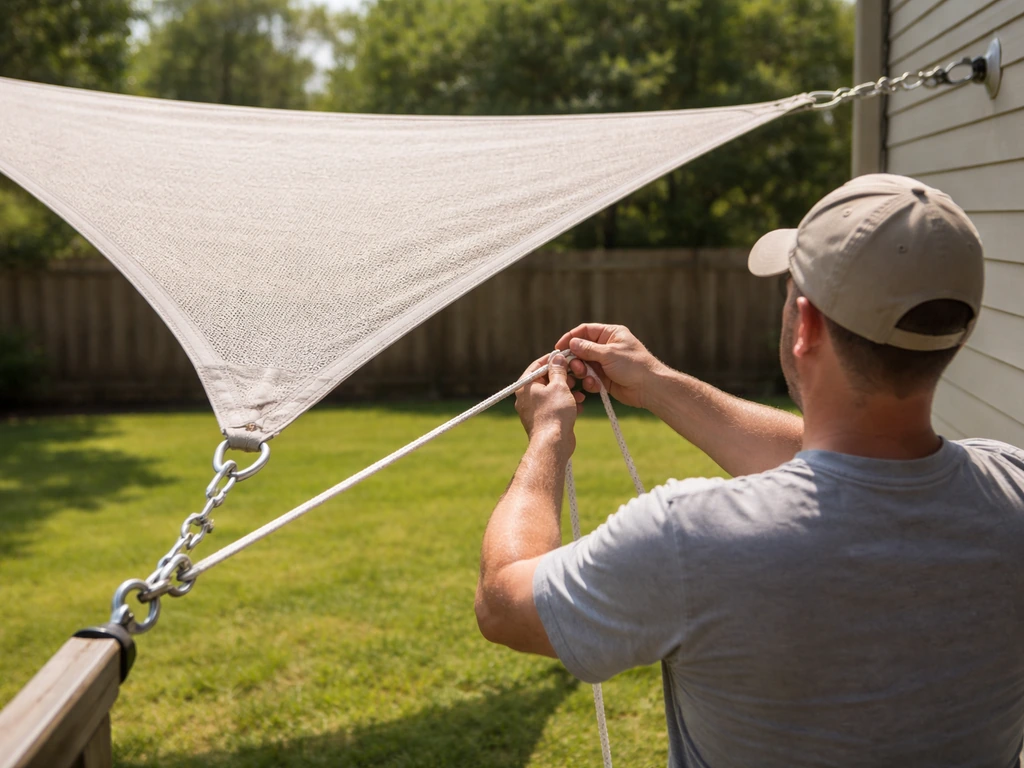
Shade sails are triangular or rectangular panels of knitted HDPE fabric stretched between anchor points. They're the cheapest entry point, the easiest to install temporarily, and the best option for renters with solid fence posts or exterior walls to anchor to. Quality sails from brands like Coolaroo block up to 90–96% UV and are breathable, meaning air moves through them and the space under feels noticeably cooler even on hot afternoons.
Coolaroo’s knitted HDPE shade cloth description also describes its breathability and how that airflow can improve cooling comfort compared with more solid “roof-like” cover materials breathable, meaning air moves through them.
When you compare options, looking for the best patio sails also means checking their UV and wind ratings so they hold up in your conditions. The Coolaroo Coolhaven, for example, is rated to handle wind gusts up to around 30 MPH when properly tensioned.
The trade-offs are real and show up constantly in reviews. Shade sails are not rainproof. Heavy rain pools in the center, stresses the corners, and can rip grommets or tear fabric over time. They also need to be taken down when winds exceed their rated threshold, which varies by product but is typically in the 30–40 MPH range.
If you skip that step, you'll be shopping for a new sail within a season. In humid climates, storing a wet sail without letting it dry first leads to mildew, which is one of the top review complaints for cheap sails that lack UV-stabilized fabric. The cheap trap here is buying a sail without an explicit UV rating or wind rating, then leaving it up through a summer storm season.
Retractable canopy pergolas
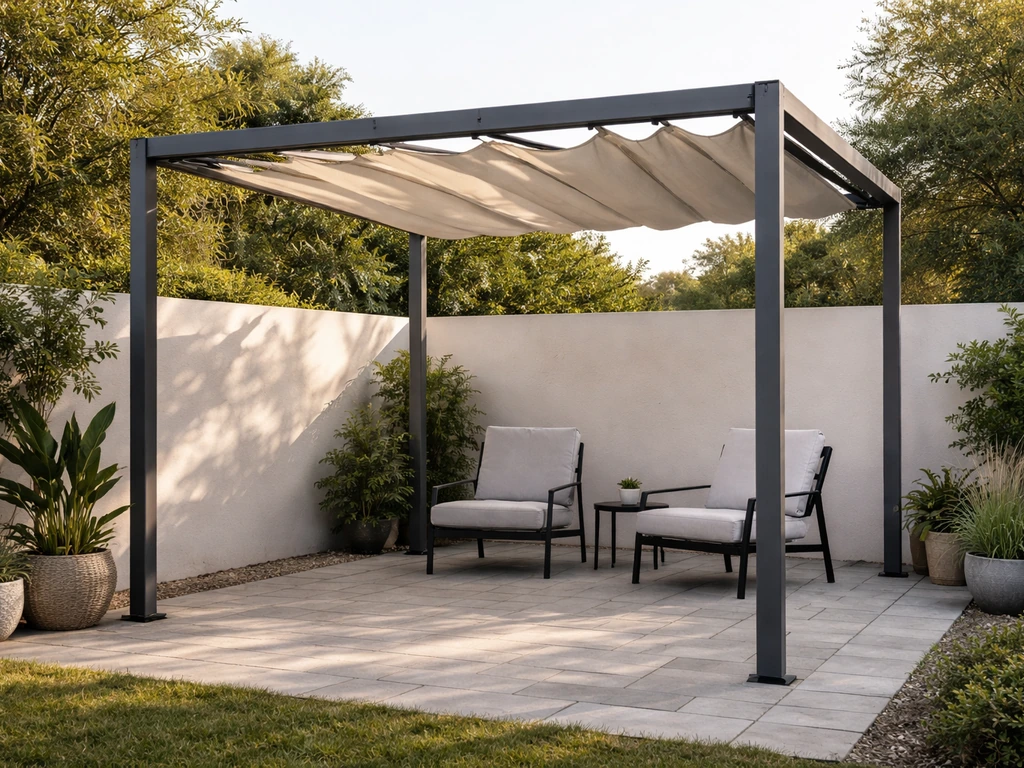
These are freestanding aluminum or steel frame structures, usually 10x10 to 10x13 feet, with a fabric canopy that slides open and closed on rods or tracks. Brands like Outsunny sell these in the $400–$900 range at Home Depot and Amazon. They look great in product photos and work reasonably well in mild conditions.
The problem that shows up in reviews consistently is rain performance: the canopy material often doesn't drain, so water weight after a thunderstorm can cause the cover to sag or rip. One specific Outsunny model has multiple Home Depot reviews describing exactly this failure after moderate rain. Frame rigidity is the other issue: thinner steel rods can bend under wind load, and if the frame isn't rigid enough, the whole structure shifts and pulls the canopy out of its tracks.
Retractable canopies make most sense for mild-climate patios where you want adjustable shade and don't expect heavy rain or sustained wind. If you're in a region with afternoon thunderstorms or strong seasonal wind, plan to retract the canopy manually before weather hits, or look for a model that includes or accepts a wind sensor for automatic retraction. The SunSetter awning line, for example, offers wireless wind sensors as an accessory specifically because wind can exert enough force to damage the canopy if it's left deployed.
Solid panel aluminum patio covers
These are the closest thing to a permanent roof you can get in the affordable category. Aluminum panel kits (brands like Alumashade, Alumi-Kit, or the WeatherStopper line sold through Lowe's) attach to your home's ledger board or sit on freestanding posts. Material cost for a DIY kit covering a 10x12 patio runs roughly $800–$2,500 depending on the panel system and accessories. Professionally installed, expect to add $1,500–$3,000 in labor, putting the total in the $3,000–$7,000 range for a solid attached cover. That's more than a shade sail but a fraction of a custom structure.
Solid panels deliver real weather protection: you stay dry in rain, you get full shade, and the structure is permanent. Reviews for this category are generally positive on durability when installed correctly. The installation is where things go wrong. Slope is critical: panel systems need at least a 1/2-inch drop per foot of roof length for water to drain properly.
Get that wrong and you get pooling, then leaks, then rot or rust at the ledger connection. [Lowe’s installation guidance for the Alpine patio cover kit](https://pdf. lowes. com/installationguides/790780052961_install.
pdf) also emphasizes correct drainage and avoiding ponding around the posts to prevent water-related failures. The other major failure point is flashing. Attaching a ledger to your home without proper flashing behind it routes water behind your siding, which shows up as interior wall damage months later. This is the single most common DIY failure mode in this category, and it's why I'd strongly recommend watching a few install videos specifically about ledger flashing before you touch a drill.
Polycarbonate panel covers
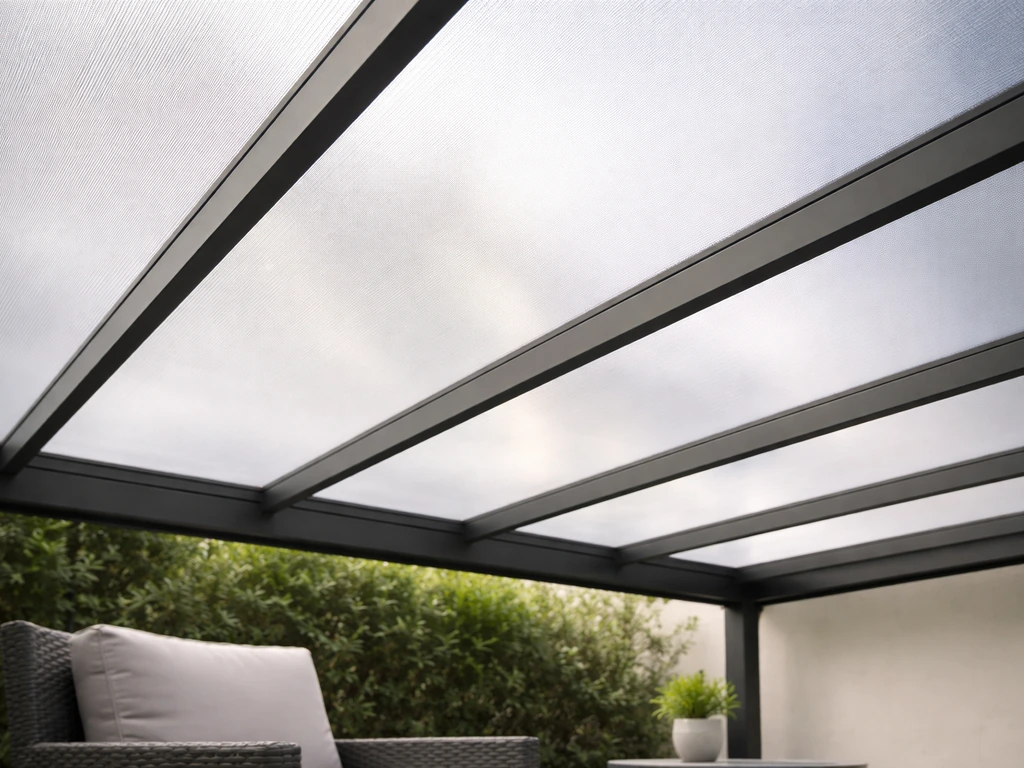
Polycarbonate panels are a middle-ground option: they let diffused light through (giving you that bright, pleasant covered feel) while keeping rain out. They're lighter than aluminum solid panels and often slightly cheaper on materials. The trade-off is heat: a solid polycarbonate roof traps more radiant heat underneath than aluminum panels with ventilation channels or shade sails. In hot climates, this can make the space unusable in peak summer hours unless the pitch allows good airflow underneath. Reviews from warm-climate buyers regularly flag this. If heat retention is a concern, look for twin-wall polycarbonate with UV coating on both sides, and make sure your design allows air to circulate at the eaves.
What to actually look for when reading reviews
Most product reviews for budget patio covers are written by people who installed the thing last weekend and are either excited or frustrated. That's useful, but you have to know how to filter it. Here's what the best review signals actually tell you:
- UV blocking vs shade percentage: These are not the same thing. A knitted HDPE sail rated "90% shade" means it blocks 90% of solar radiation, not necessarily 90% of UV specifically. Look for a UPF rating or an explicit UV protection percentage from the manufacturer. Quality sails from reputable brands cite up to 95–96% UV blocking as a spec, not just a marketing claim.
- Rain performance: The most reliable signal in reviews is whether a canopy or sail survived a thunderstorm without damage. If multiple reviewers mention sagging, ripping, or pooling after rain, take that seriously. For solid panels, look for reviews that mention whether the reviewer checked the slope during install.
- Wind durability: Look for reviews from people in windy areas. Shade sails that sag or flap in normal breezes were installed with too little tension or to inadequate anchor points. Retractable canopies that bend in moderate wind have frame-gauge problems.
- Assembly time and hardware quality: Reviews that mention stripped screws, missing hardware, or instructions written in poor English are warning signs for cheap-trap products. A solid aluminum cover kit should include structural connection specs and fastener requirements.
- Long-term fade and mildew: Check reviews from buyers who have had the product for 1–2 seasons, not just a few weeks. UV-stabilized fabric and powder-coated aluminum hold up significantly better than untreated alternatives, and reviews from a second summer will tell you the truth.
Cost breakdown: DIY vs pro install and what drives price
| Cover Type | DIY Material Cost | Pro-Installed Total | Lifespan (typical) |
|---|---|---|---|
| Shade sail (HDPE fabric) | $150–$600 | $1,500–$4,000 (with posts/anchors) | 3–7 years per sail |
| Retractable canopy pergola | $400–$900 (kit) | $1,200–$2,500 | 3–6 years (canopy fabric) |
| Solid aluminum panel cover | $800–$2,500 (kit) | $3,000–$7,000 | 15–25+ years |
| Polycarbonate panel cover | $600–$2,000 (kit) | $2,500–$6,000 | 10–15 years |
Price drivers in this category are almost always size, attachment complexity, and whether you're doing it yourself. A 10x10 shade sail installed on existing fence posts is a weekend DIY job with a $200 product. That same coverage with installed posts and professional tensioning runs $1,500–$2,500. For solid covers, the jump from DIY to pro is mostly labor: an aluminum cover kit might cost $1,200 in materials but take two people a full weekend and require renting a drill, level, and possibly a circular saw with a metal blade. If you value your weekends, paying a handyman $600–$900 to handle the install on a smaller project often makes sense.
Regional labor rates vary a lot, and so do permit requirements. In some areas, an attached patio cover over a certain size requires a building permit, which adds cost and timeline. Freestanding structures (pergola kits, shade sails on posts) often avoid this requirement, which is one reason they're popular in the budget category. Check with your local building department before you buy materials for anything permanently attached to your home.
Installation, maintenance, and how long these things actually last
Shade sails
Installation takes 2–4 hours if you already have anchor points. If you're setting posts in concrete, add a day for the concrete to cure. The biggest install mistake is not getting the sail tight enough. A loose sail flaps in wind, stresses the grommets, and tears faster.
Tension the corners until the fabric is firm with minimal sag at the center. Maintenance is simple: take the sail down before winter (or before major storms), rinse it with a hose and mild soap, let it air dry completely before folding and storing. Storing it wet is the fastest way to get mildew. A quality HDPE sail from a reputable brand should last 5–7 seasons in moderate climates with this care.
Cheaper sails without UV-stabilized fabric start fading and stiffening in 2–3 years.
Retractable canopy pergolas
Assembly is typically 3–6 hours for two people following the manual. Most kits are designed for level, hard-surface installation (concrete or pavers) and include ground stakes or base plates. Maintenance means cleaning the canopy fabric seasonally, lubricating any sliding tracks, and checking that frame connections haven't worked loose over the season. Retract the canopy before significant wind or rain whenever possible. Frame components on budget models are often thinner steel or light aluminum, so check all bolted connections after the first season. The canopy fabric itself usually needs replacement every 3–5 years depending on sun exposure and weather.
Solid aluminum and polycarbonate panel covers
Once installed correctly, these are genuinely low-maintenance. Powder-coated aluminum frames don't rust and don't need painting. Polycarbonate panels should be cleaned with mild soap and water (avoid abrasive pads that scratch the UV coating). The main maintenance issue over time is checking the flashing and sealant at the ledger connection annually, especially after a harsh winter. If you see water stains on the inside wall below the ledger, the flashing has failed. Catching this early is a $50 sealant fix; catching it after two years of water intrusion is a $2,000 wall repair. Properly installed aluminum covers with good drainage pitch are legitimately 20-year structures.
How to measure and choose the right size and style
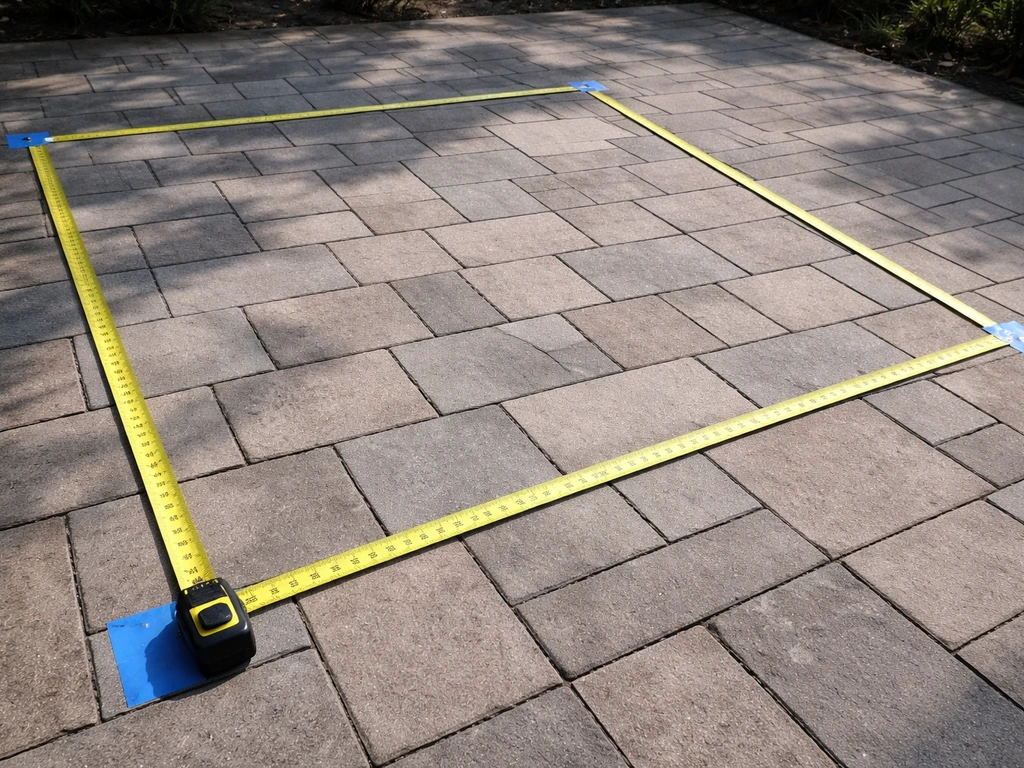
Start with your patio's actual footprint. Measure the length and width, then decide how much of it you want covered. For a dining table, you generally want at least 2 feet of covered overhang on all sides of the table. For a lounging area, full coverage is better. Write down your measurements before you look at any product listing.
- Measure your patio's length and width (in feet). Note whether it's attached to your home on one side or freestanding.
- Identify your anchor points. For shade sails, are there fence posts, exterior walls, or tree trunks within reach? For solid covers, locate the wall studs or ledger attachment point on your home.
- Check your surface. Concrete or paver surfaces are easiest for post installation. Decks require through-bolting to structural members, not just deck boards.
- Decide on your primary use case: full rain cover (solid panel), UV and heat reduction with airflow (shade sail or open pergola), or adjustable shade (retractable canopy).
- Factor in your climate. Heavy rain region: solid panel. High-wind region: shade sail with proper tensioning or a retractable canopy you'll actually retract. Mild-climate region: any of the above.
- Check whether a permit is required for attached structures in your municipality before finalizing your choice.
For shade sail sizing specifically, remember that the sail's listed dimensions are the edge lengths, not the shaded area. A 16x16-foot square sail installed at an angle provides less coverage than a flat overhead installation, and the shaded zone shifts as the sun moves. For best results, orient the sail so the highest attachment point faces the sun's primary angle during your peak-use hours (usually early-to-mid afternoon in summer).
If you're comparing shade solutions in a broader way, shade sails and sun shades are closely related products that overlap in material and use case. Shade sails are typically tensioned diagonally between fixed points, while patio sun shades are often vertical drop screens or attached overhead panels. Both solve the UV-blocking goal, but they serve slightly different spatial configurations. Knowing your space geometry helps clarify which direction to go.
Quick comparison checklist and your next steps
Use this checklist when comparing any two products side by side. If a product listing doesn't answer these questions clearly, that's a red flag.
| Checklist Item | Shade Sail | Retractable Canopy Pergola | Solid Aluminum Panel |
|---|---|---|---|
| UV protection rating (UPF or %) | Look for 90–96% UV block stated explicitly | Varies by canopy fabric; check spec sheet | Full block (solid roof) |
| Rain performance | Not rainproof; pooling risk | Moderate; drain design varies by model | Rainproof if slope is correct (min 1/2" per foot) |
| Wind rating | Check MPH rating; remove above threshold | Retract manually or use wind sensor | Permanent structure; check snow/wind load rating |
| Frame material | Fabric only; check grommet quality | Aluminum or steel; check gauge/thickness | Aluminum; check extrusion thickness |
| Flashing/drainage design | N/A | Check base drainage | Critical: requires proper ledger flashing |
| DIY feasibility | Easy (with existing anchors) | Moderate (2-person assembly) | Moderate-hard (flashing/slope critical) |
| Permit likely required? | Usually no | Usually no (freestanding) | Often yes (attached to home) |
| Maintenance level | Low (seasonal take-down, dry before storage) | Moderate (track lube, fabric replacement) | Low (annual flashing check, panel cleaning) |
| Approx. total DIY cost | $150–$600 | $400–$900 | $800–$2,500 |
Your next steps, in order
- Measure your patio and write down the dimensions before opening any product page.
- Identify your anchor points and surface type to rule out options that won't work structurally.
- Decide your primary goal: UV-only shade, rain cover, or both. This immediately narrows the field to one or two product categories.
- Set your budget including installation. If you're doing DIY, add a 20% buffer for hardware, fasteners, and tools you might need.
- Read reviews specifically from your climate region. Reviews from Arizona buyers tell you almost nothing about rain performance; reviews from Florida or Pacific Northwest buyers are gold.
- For solid panel covers, watch at least one full ledger-board and flashing installation video before buying materials. This one step prevents the most expensive failure mode.
- Check your local permit requirements before purchasing an attached structure.
- Avoid products that don't list explicit UV ratings, wind ratings, or frame material gauge. Vague specs are almost always a sign of a cheap-trap product.
The honest bottom line: if you want the most shade for the least money and don't mind seasonal takedown, a quality HDPE shade sail is the best value in this category. If you want to compare models side by side, start with patio sun shade reviews that call out UV ratings, wind limits, and how well the shade holds up after rain.
If you want a permanent, rain-ready solution and are willing to do a real install (or pay for one), a solid aluminum panel cover is the smart long-term buy. The retractable canopy pergola is a reasonable middle ground for mild climates where you want adjustable shade without a permanent structure, but go in knowing the canopy fabric will need replacement within a few years and that rain management requires you to actually retract it before storms.
Whichever direction you go, getting the installation right matters more than the brand name on the box.
FAQ
What’s the biggest reason “affordable shade patio covers” reviews feel conflicting?
Most reviews mix up shade versus cover. If you want a dry patio, prioritize products that are explicitly described as rain-protective (solid or polycarbonate roofs), and ignore UV-focused numbers alone. For open fabric options, reviews should mention rain pooling, drainage behavior, and what people do after storms.
Are shade sails actually safe to leave up during storms?
Usually no. Even if the sail blocks UV, it is not designed to shed heavy rain and wind loads. Look for explicit wind-gust limits and follow the manual for lowering or taking it down before storms. If your area has frequent afternoon thunderstorms, budget time for retraction or seasonal removal.
How tight should a shade sail be to prevent the common “tears at the corners” problem?
Reviews commonly blame under-tensioning. The goal is firm fabric with minimal center sag and reduced flutter in light wind. If the listing does not provide a tension method or guidance for corner hardware, treat that as a risk and consider installing tensioning hardware you can adjust after the first week.
What size should I buy if I’m using a shade sail over a specific patio area?
Don’t assume the labeled dimensions equal shaded coverage. Listed sizes are edge lengths, and angled or multi-anchor setups can shift the shaded zone as the sun moves. A practical approach is to plan for overlap beyond your target area by adding extra coverage on at least one side where sun hits hardest during your peak hours.
What should I check in retractable canopy reviews besides how it looks?
Filter for rain and wind behavior. Specifically look for mentions of water draining (or sagging after rain), how the tracks handle debris, and whether owners retract before storms. If the model does not mention wind sensor compatibility, you may need to rely on manual retraction every time weather turns.
Do polycarbonate panels trap heat enough to ruin the patio in summer?
It can. Budget reviews often focus on brightness but underplay heat buildup. If your patio gets strong midday sun, prioritize ventilation-friendly designs (air movement at eaves) and consider UV-coated twin-wall panels. Also check whether reviewers describe the covered space as usable during peak afternoons.
How do I avoid the ledger flashing failure that shows up months later?
Expect two separate tasks: correct flashing behind the ledger and correct sealant application at the contact points. Reviews often report interior wall staining long after installation, which indicates water intrusion behind siding. If you cannot confirm the system includes or supports proper flashing details for your siding type, choose a different approach or pay for the install.
What slope is “enough” for solid panel drainage, and what happens if it’s too flat?
The article mentions needing at least a half-inch drop per foot of roof length. If the pitch is too low, pooling water can lead to leaks, and trapped moisture at the ledger can accelerate rot or rust. In reviews, the clearest red flag is repeated “water stains” or “leaks after heavy rain” even when the panels appear intact.
How much should I budget for a DIY solid roof kit once tools and hardware are included?
A common mistake is comparing the kit price only. Many installs require renting a drill, using metal cutting tools (sometimes with specific blade types), and buying fasteners, flashing components, and sealant if not included. If reviews don’t list what tools they used, assume you may need extras, especially for metal panel systems and ledger attachment.
Can I install a freestanding pergola kit on pavers instead of pouring concrete?
Some kits are designed for base plates on hard surfaces, but others assume concrete posts for rigidity. Check reviews for movement or wobble in wind after paver installs. If the kit does not clearly describe anchoring to pavers, add concrete footings or anchoring hardware rather than relying on stakes alone.
Do permits change which “affordable” option is realistic for my home?
Yes. Attached covers often trigger permits once they exceed certain size or attachment criteria, while freestanding options may be exempt. Before buying, confirm your local thresholds for patio covers, solid roofs, and ledger attachments, because permits can add both cost and lead time, which can erase the budget advantage.
How can I tell in reviews whether a product will last 3 to 7 years or closer to 1 to 2?
Look for complaints that repeat across seasons: fabric fading, stiffening, mildew from wet storage, and hardware failure after minor storms. Quality HDPE sail reviews typically mention taking the sail down before winter and air-drying before folding. If reviewers skipped storage steps and still claim problems, that’s a strong reliability signal.
What maintenance should I plan for each season?
For fabric sails, plan to take the sail down before winter or major storm seasons, rinse with mild soap, and store only after it fully air-dries. For retractables and sliding systems, expect seasonal cleaning and checks of track movement and bolted connections. For solid and polycarbonate roofs, plan to inspect seals and flashing near the ledger after harsh weather, because small leaks are easier to fix early.
What’s the quickest way to choose between a shade sail, retractable canopy, and solid panel cover?
Start with your “weather requirement.” If you need dry conditions in rain, choose solid or polycarbonate. If you want the lowest upfront cost and can handle taking it down, choose an HDPE sail. If you need adjustable shade but live in a milder climate, retractables can work, but reviews should confirm owners retract during wind or storms.
Next Articles
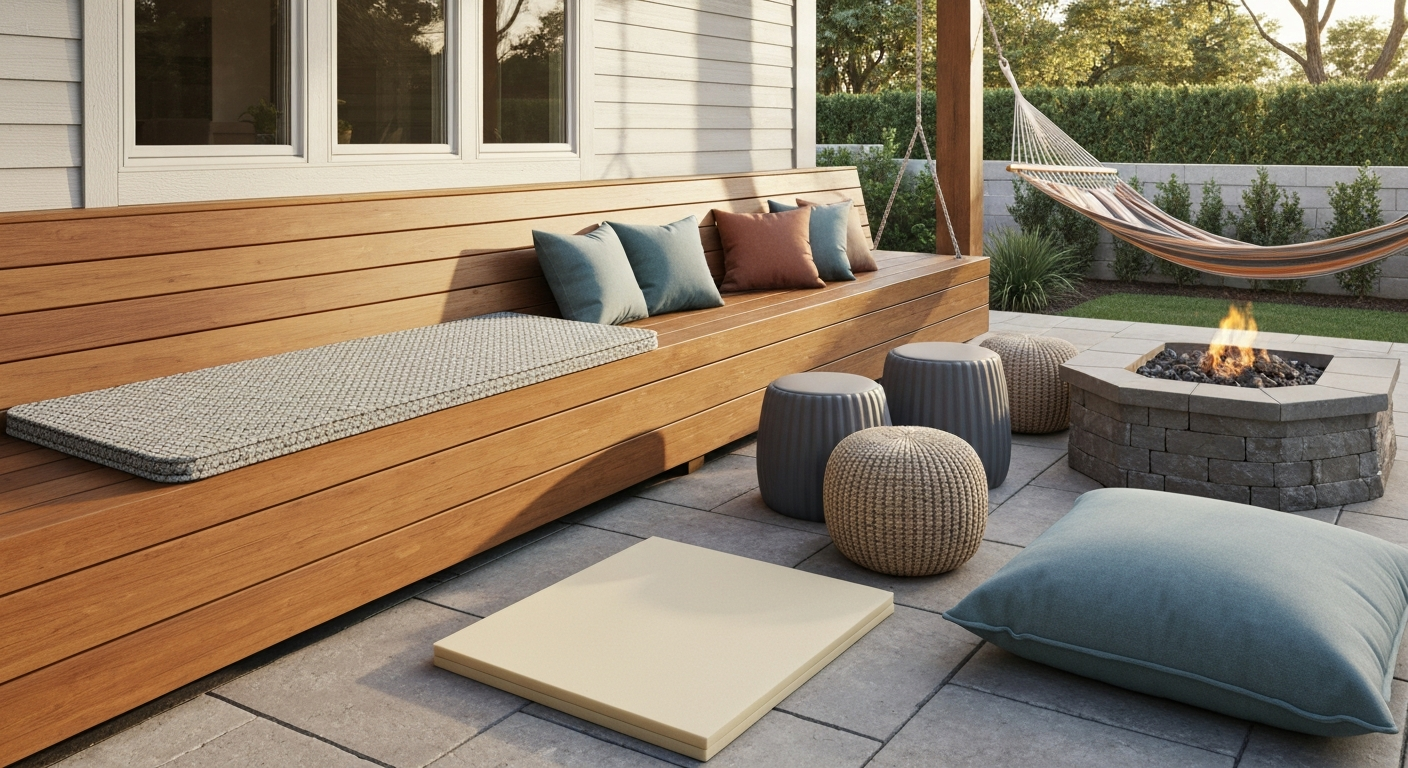
Alternative to Patio Cushions: Durable, Stylish Options and DIY
Alternative to patio cushions: durable, weatherproof seating options, pros, DIY tips & buying guide.
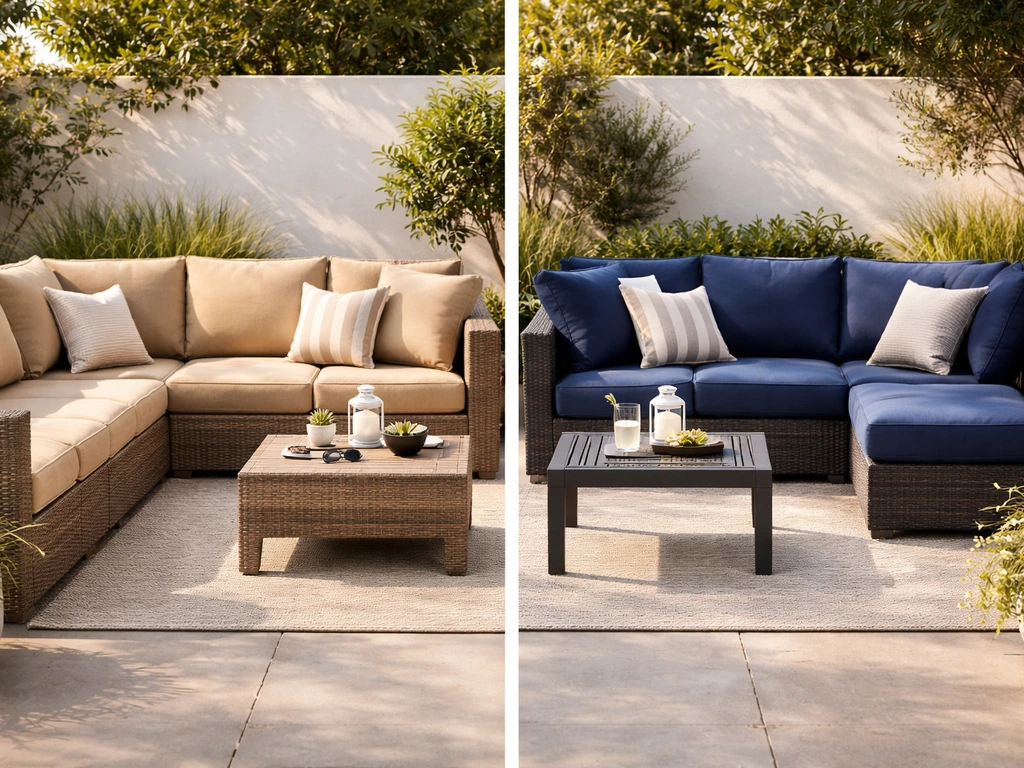
Best Color for Outdoor Patio Cushions in 2026
Choose the best cushion color for sun, heat, and fading in 2026, with pairing tips for patio furniture and durability.
Top Rated Patio Cushions: How to Choose Fast and Right
Step-by-step guide to choose top rated patio cushions by fit, materials, weather durability, and easy cleaning for your