
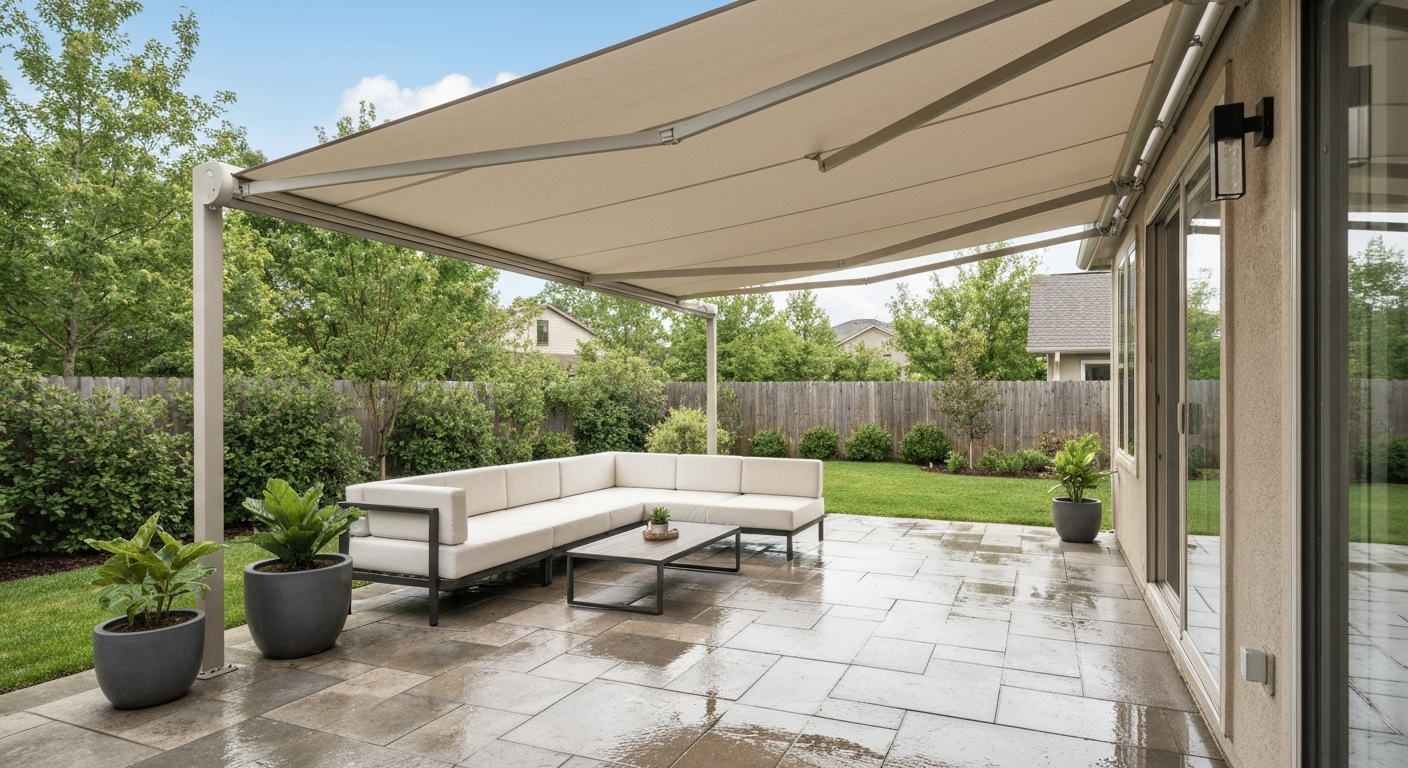
The best overall outdoor patio shade for most homeowners is a motorized retractable awning: it gives you full sun control on demand, handles light-to-moderate rain, and lasts 10-plus years with minimal maintenance. That said, it costs $1,500 to $10,000 installed, so it's not the right call for renters, small budgets, or patios that need a quick weekend fix. If you rent or want to spend under $300, a shade sail or a quality cantilever umbrella will outperform anything else at that price. If you want a permanent outdoor room, a pergola wins on aesthetics and longevity. This guide breaks down every major type so you can match the right shade to your actual situation.
What Is the Best Outdoor Patio Shade: Top Picks & Guide
Lark Perry
13 Jul 2026
Best Outdoor Patio Shade by Common Needs (Quick Picks)
Here are the top recommendations by use case so you can skip straight to what fits your situation. Each pick is explained in detail in the category breakdowns further down.
| Best For | Shade Type | Price Range (USD) | Why It Wins |
|---|---|---|---|
| Best overall (homeowner) | Motorized retractable awning | $1,500 – $10,000 installed | On-demand coverage, rain protection, long warranty |
| Best shade sail | HDPE knitted shade sail | $50 – $400 | Affordable, easy DIY, 85–95% UV block, 10-yr fabric warranty |
| Best umbrella | Cantilever (offset) umbrella | $150 – $1,500 | No center pole, tilts with sun angle, portable |
| Best fixed awning | Aluminum-frame coated polyester awning | $800 – $2,500 installed | Permanent, wind-stable, no moving parts to fail |
| Best retractable awning | Motorized retractable (Sunesta / SunSetter) | $4,000 – $10,000 installed | Custom widths, 10-yr fabric/motor warranty, rain sensor option |
| Best pergola | Aluminum or cedar pergola with shade cloth | $2,200 – $6,400 installed | Permanent structure, aesthetic upgrade, compatible with lighting/speakers |
| Best budget option | HDPE shade sail (triangle or square) | $50 – $150 | Fast setup, no drilling required if trees/posts available |
| Best renter-friendly option | Freestanding cantilever umbrella | $150 – $400 | Zero permanent installation, fully portable, no deposit risk |
How to Use This Guide: Performance, Cost, and Installation Trade-offs
Choosing patio shade is genuinely a trade-off exercise. Every option involves a three-way tension between performance (how well it blocks sun and handles wind/rain), cost (purchase price plus installation), and installation practicality (can you DIY it, do you need permits, will your landlord care). I've organized this guide to walk you through that tension honestly rather than just ranking products by star ratings.
A few questions to anchor your decision before you read further: Do you own or rent your home? How big is your patio in square feet? What's your dominant weather challenge, intense sun, high winds, afternoon rain, or all three? Do you want something you can put up and take down seasonally, or a permanent install? And what's your realistic budget including installation, not just the product price on the shelf? Your answers will steer you toward one or two types and away from the others before you even look at specific products.
One thing I'll flag upfront: the gap between DIY cost and installed cost is enormous for awnings and pergolas. A retractable awning kit might list for $700-$1,500, but professional installation typically adds another $500-$2,500 depending on your wall material and local labor rates. I'll call out those gaps clearly in the cost section so you aren't surprised.
Every Major Patio Shade Type Explained
Shade Sails
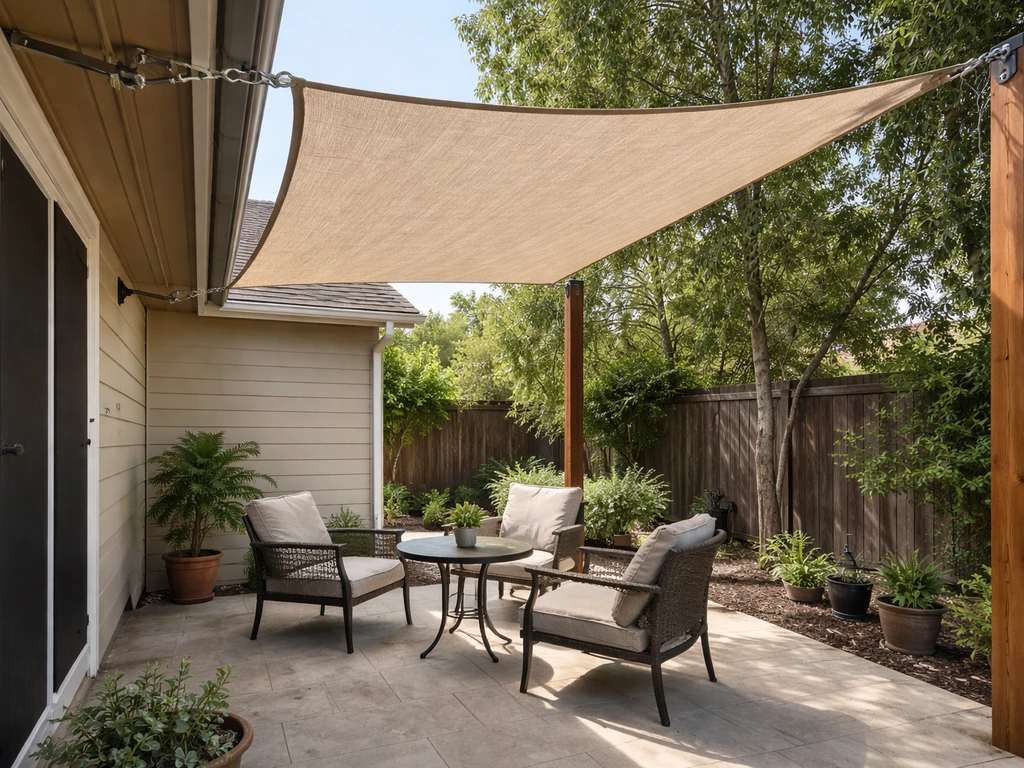
Shade sails are tensioned fabric panels, usually triangular or square, anchored to posts, walls, or trees at three or four corners. The fabric is almost always knitted high-density polyethylene (HDPE), which is intentionally breathable and mesh-like. That permeability is both a strength and a limitation: it lets hot air escape underneath (cooler than solid covers) and handles wind reasonably well, but it will not stop rain. Expect 85-95% UV block depending on the fabric density. Brands like Coolaroo back their HDPE fabric with up to a 10-year warranty against UV degradation. Setup is genuinely DIY-friendly as long as you have solid anchor points.
Patio Umbrellas
Umbrellas split into two categories worth treating separately. Market umbrellas (center-pole) are the classic cafe style, affordable at $50-$150 for entry-level, but require a table with a center hole or a heavy base. Cantilever (offset) umbrellas use a side post and offset arm to eliminate the center pole, which is more practical for seating areas, loungers, or anywhere you want unobstructed space underneath. Mid-range cantilevers run $150-$400; premium large-span models or designer parasols reach $500-$1,500. Both types are the easiest renter solution because they require zero wall or ground anchoring beyond a weighted base.
Fixed Awnings
Fixed awnings are permanently mounted frames, typically aluminum or steel, covered with coated polyester or acrylic fabric. Because they don't retract, they're structurally simpler than retractable awnings and usually less expensive. They provide consistent coverage rain or shine and need no daily operation. The trade-off is that you can't get out of the way of a major storm, and if you want direct sun on your patio at any point (for a winter warm-up, for example), the awning is always there. Installed fixed awnings typically run $800-$2,500 depending on size and frame material.
Retractable Awnings
Retractable awnings are wall-mounted frames that extend a fabric arm over your patio and roll back when not in use. Manual models use a hand crank; motorized models use an electric motor with wall switch or remote control. Top brands like Sunesta and SunSetter offer custom widths up to 20-plus feet and motorized versions with rain/wind sensors that auto-retract. One critical safety point manufacturers are clear about: retractable awnings must be retracted in high winds. Manufacturer test limits commonly top out around 45 mph, and most include explicit language requiring retraction above a threshold. Hardwired motors must comply with the NEC and typically require GFCI protection per manufacturer installation manuals.
Pergolas
A pergola is a freestanding or house-attached structure with posts and an overhead lattice or beam roof. On its own a pergola provides partial shade; combine it with shade cloth, polycarbonate panels, or a louvered roof and you get full coverage. Pergolas are the most expensive option upfront ($2,200-$6,400 installed for wood or aluminum), but they're also permanent infrastructure that adds real property value and serves as a platform for lighting, ceiling fans, outdoor speakers, and other upgrades. If you're building out a full patio room, a pergola is the natural backbone.
Canopies and Pop-Up Shelters
Pop-up canopies are freestanding instant shelters on collapsible aluminum or steel frames, covered with coated polyester panels. They're the fastest temporary solution for events or seasonal use, commonly $100-$400 for residential-grade models. The limitation is durability: the frame hinges are stress points that fail with repeated setup/takedown, and the fabric coatings degrade quickly in continuous UV exposure. Treat them as semi-permanent seasonal solutions or event shelters, not year-round installed shade.
Shade Cloths
Shade cloth is essentially the raw fabric version of a shade sail, sold by the roll or cut to size and typically used to cover pergola roofs, greenhouse frames, or fencing. Same HDPE knitted material as shade sails, same UV-block percentages (50-95% depending on density), same breathable mesh construction. It's the lowest-cost coverage option per square foot and easy to cut and attach with grommets. The aesthetic is utilitarian compared to a finished sail or awning, but for a pergola top-up or a DIY garden shade structure, it's hard to beat on cost.
Side-by-Side Comparison: Pros, Cons, and Ideal Conditions
| Type | Sun Block | Rain Protection | Wind Tolerance | DIY Friendly | Renter Safe | Best Patio Size |
|---|---|---|---|---|---|---|
| Shade sail | 85–95% UV | None (mesh) | Moderate (angle matters) | Yes | Yes (posts/trees needed) | Small to medium |
| Market umbrella | Good (solid fabric) | Light rain only | Low (needs weights) | Yes | Yes | Small (one table) |
| Cantilever umbrella | Good (solid fabric) | Light rain only | Low-moderate (with base weight) | Yes | Yes | Small to medium |
| Fixed awning | Excellent (solid) | Yes (coated fabric) | High (rigid frame) | Moderate | No (wall mount) | Medium to large |
| Retractable awning | Excellent (solid) | Yes (when extended) | Moderate (must retract in storms) | Difficult (wall/motor) | No (wall mount) | Medium to large |
| Pergola | Partial to full (depends on cover) | Only with added panels/cloth | High (structural frame) | No (structural build) | No (permanent) | Large |
| Canopy/pop-up | Good (solid panels) | Light to moderate | Low (must stake/weight) | Yes | Yes | Small to medium |
| Shade cloth | 50–95% UV (variable) | None (mesh) | Moderate (if tensioned) | Yes | Conditional | Any (cut to fit) |
Materials and Performance Metrics Explained
UV Protection: What UPF Actually Means
UPF (Ultraviolet Protection Factor) ratings for shade fabrics are measured under the AS/NZS 4399 standard, the same protocol used for sun-protective clothing. The numbers translate to real UV blockage like this: UPF 15 blocks about 93% of erythemal UV, while UPF 50 (usually labeled UPF 50+) blocks about 98%. Coolibar, Sun Protection FAQs (UPF 50+ explanation) provides a similar UPF-to-UV mapping, noting that UPF 15 blocks about 93% of erythemally effective UV while UPF 50+ blocks approximately 98% Coolibar — Sun Protection FAQs (UPF 50+ explanation). For shade applications, UPF 50+ is the gold standard you want. Most quality HDPE shade sails and solution-dyed acrylic fabrics hit UPF 50+. Cheap polyester canopy fabrics often don't publish UPF ratings at all, which tells you something.
Waterproofing: Hydrostatic Head Ratings Explained Simply
Waterproofing is measured via hydrostatic head (HH) testing under AATCC Test Method 127 or the equivalent ISO 811 standard. The test presses a column of water against the fabric and measures how tall that column gets before water pushes through. In practical terms: fabrics rated around 1,000 mm HH are considered entry-level waterproof (fine for light-to-moderate rain), 1,000-3,000 mm handles sustained rain, and 3,000 mm and above is heavy-weather territory. Coated polyester awning fabrics typically fall in the 1,000-3,000 mm range. HDPE shade cloth and shade sails are mesh and have no meaningful HH rating because they're designed to pass air and water. If rain protection matters to you, you need a solid coated fabric, not a shade sail.
Fabric Types at a Glance
| Fabric Type | UV Block | Waterproof? | Breathability | Typical Warranty | Best Use |
|---|---|---|---|---|---|
| Knitted HDPE (shade sail/cloth) | 85–95% (UPF 50+) | No (mesh) | High | Up to 10 years (UV) | Shade sails, pergola tops |
| Solution-dyed acrylic (Sunbrella) | UPF 50+ | Water-resistant (with treatment) | Moderate | 5 years (finished product) | Awnings, umbrellas, cushions |
| Coated polyester | UPF 50+ (if rated) | Yes (1,000–3,000 mm HH) | Low | 1–3 years typical | Canopies, fixed awnings |
| Vinyl/PVC-coated fabric | Varies | Yes (high HH) | Very low (hot underneath) | 2–5 years | Fixed commercial awnings |
Wind Ratings and What They Mean in Practice
Wind is the failure mode most buyers underestimate. Retractable awnings are the most wind-sensitive category: manufacturers including Sunesta reference test limits around 45 mph and include explicit instructions to retract the awning above a defined wind speed. If you're in a windy coastal or prairie climate, a motorized awning with a wind sensor that auto-retracts is worth the extra cost. Fixed awnings and pergola structures are designed to ASCE 7 wind load standards when professionally engineered and installed, which means they're calculated to survive design-level wind events for your climate zone. Shade sails fall somewhere in between: a properly tensioned sail at the right angle sheds wind reasonably well, but a sail installed flat and slack can generate enormous lift forces and pull its anchors clean out of the ground.
Real-World Durability: What to Expect Over Time
Here's how each category performs over a typical product lifetime based on manufacturer data and real-world use patterns. These aren't worst-case or best-case scenarios. They're what you should reasonably expect if you buy a mid-range product and maintain it properly.
| Shade Type | Expected Lifespan | Biggest Failure Mode | Maintenance Notes |
|---|---|---|---|
| HDPE shade sail | 7–15 years (fabric) | Anchor failure, fabric stretch over time | Re-tension each season, check hardware annually |
| Patio umbrella | 3–8 years | Frame corrosion, fabric fading, tilt mechanism failure | Store indoors off-season, cover when not in use |
| Fixed awning | 10–20 years (frame), 5–10 years (fabric) | Fabric UV degradation, frame rust at fasteners | Clean fabric 1–2x/year, check fasteners annually |
| Retractable awning | 10–20 years (frame), 8–10 years (fabric/motor) | Motor failure, fabric tear in un-retracted storm | Retract in high winds, lubricate arms annually |
| Pergola (wood) | 15–25 years | Rot, insect damage, finish failure | Seal/stain every 2–3 years, inspect joinery |
| Pergola (aluminum) | 25–40+ years | Fastener corrosion, powder coat chips | Low maintenance; wash annually |
| Canopy/pop-up | 2–5 years | Hinge failure, UV fabric degradation | Dry before storing, replace canopy top as needed |
| Shade cloth | 7–12 years | UV degradation at grommet edges, fraying | Trim frayed edges, replace grommets if pulling |
A note on fabric warranties versus product warranties: Coolaroo backs their HDPE fabric for up to 10 years against UV degradation, and Sunbrella covers many finished awning products for 5 years. But those warranties cover the fabric, not the frame or hardware. Always read what's actually covered. A 10-year warranty on HDPE fabric that's anchored to a $15 eye-bolt screwed into rotted fascia board is not a 10-year solution.
Cost Breakdown: What You'll Actually Spend
Prices below reflect the U.S. market as of mid-2026 and include both product and typical installation cost where applicable. DIY costs skip professional labor but may require renting tools or purchasing hardware not included in the kit.
| Shade Type | Budget (DIY/Entry) | Mid-Range | Premium/Installed | Installation Notes |
|---|---|---|---|---|
| Shade sail | $50 – $150 | $150 – $400 | $400 – $800 (with poles/hardware) | DIY-friendly; costs rise if you need to install posts |
| Market umbrella | $50 – $150 | $150 – $300 | $300 – $600+ | No installation cost; base adds $30–$150 |
| Cantilever umbrella | $150 – $300 | $300 – $600 | $600 – $1,500+ | No installation cost; weighted base critical |
| Fixed awning | $300 – $600 (DIY kit) | $800 – $1,500 | $1,500 – $2,500 installed | Wall anchoring typically needs professional for heavy loads |
| Retractable awning (manual) | $700 – $1,500 | $1,500 – $2,500 installed | N/A | DIY possible but wall fastening is load-critical |
| Retractable awning (motorized) | $1,500 – $3,000 (kit) | $3,000 – $5,000 installed | $5,000 – $10,000+ (custom/premium) | Electrician needed for hardwired motor; GFCI required |
| Pergola (wood/cedar) | $1,200 – $2,500 (kit) | $2,500 – $4,500 installed | $4,500 – $8,000+ (custom) | Permit often required; footing depth varies by frost zone |
| Pergola (aluminum) | $1,500 – $3,000 (kit) | $3,000 – $5,500 installed | $5,500 – $10,000+ (custom louvered) | Lower long-term maintenance offsets higher upfront cost |
| Pop-up canopy | $100 – $200 | $200 – $400 | $400 – $700 (commercial grade) | No installation; staking/weights required for wind safety |
| Shade cloth (per roll/cut) | $30 – $80 (small roll) | $80 – $200 (larger coverage) | $200 – $500 (full pergola top) | Attach with zip ties or grommets; no permit needed |
The single biggest cost variable across all categories is professional installation labor, which can easily double the product price for fixed awnings, retractable awnings, and pergolas. If you're getting quotes, ask specifically whether the quote includes wall/structural assessment, hardware, and any electrical rough-in for motor wiring. Those line items are often excluded from the headline number.
Category-Specific Top Picks and Why
Best Shade Sail: Coolaroo Commercial Shade Sail
Coolaroo's commercial-grade HDPE shade sails consistently stand out because the fabric is actually what the company is known for: knitted HDPE backed by a 10-year UV warranty and rated to block up to 90% of UV under AS/NZS 4399 testing. They're available in triangle and rectangle formats from about $60 to $350 depending on size. The stainless-steel D-ring hardware holds up in coastal climates where cheaper zinc rings corrode within a season. For a 12x12-foot patio, a single large triangle sail or two overlapping smaller ones cover the space well without creating a hot trapped-air pocket the way a solid canopy would. If you want a deeper look at specific sail options and rigging approaches, patio shade sail reviews cover several side-by-side comparisons worth reading alongside this guide. For side-by-side comparisons and real-world testing, see our patio shade sail reviews. For a focused comparison of fabric types and sizing, see our roundup of the best patio sails for different budgets and layouts. For price-focused comparisons and buyer-tested recommendations, see affordable shade patio covers reviews.
Best Umbrella: Treasure Garden 11-Foot Cantilever
Treasure Garden's cantilever line in the $400-$700 range represents the best balance of durability and value in the offset umbrella category. The aluminum frame handles wind significantly better than most budget cantilevers, the 360-degree rotation lets you track the sun through the day, and the solution-dyed acrylic canopy resists UV fading far longer than cheap polyester alternatives. At 11 feet of coverage you get enough shade for a 4-6 person seating area without a center post blocking the middle of the space. Pair it with a 50-pound base for anything beyond a sheltered courtyard.
Best Fixed Awning: Advaning A-Series Aluminum Frame Awning
For homeowners who want permanent coverage without the cost and complexity of a retractable system, aluminum-framed fixed awnings with coated polyester fabric hit the right balance. The Advaning A-Series is a good representative: the aluminum frame resists rust, the coated polyester fabric provides meaningful rain protection (typically 1,000-2,000 mm HH range), and the permanently pitched angle sheds water cleanly rather than pooling. Installed cost typically falls in the $1,000-$2,000 range for a standard 10-12 foot width. The obvious limitation is that it's always there, so think carefully about southern or western exposure angles before you commit to a fixed pitch.
Best Retractable Awning: Sunesta or SunSetter Motorized
For motorized retractable awnings, Sunesta and SunSetter are the two most consistently recommended U.S. residential brands, and both publish warranty terms that stand out in the category. Sunesta lists a 10-year fabric and motor warranty alongside lifetime frame coverage. SunSetter offers up to a 10-year limited warranty on select components. Both brands offer custom widths (typically 8-23 feet), multiple fabric colors, and optional wind/rain sensors that auto-retract the awning when conditions spike. Installed cost for a mid-range motorized 12-foot Sunesta or SunSetter system is typically $4,000-$7,000 depending on your region and wall type. Hardwired motors require a qualified electrician and GFCI protection per NEC requirements and manufacturer installation manuals. Budget for that electrical work if you don't have an outdoor circuit nearby.
Best Pergola: Aluminum Louvered Pergola (Palram or Similar)
If you want a full outdoor room and you're willing to invest in it, an aluminum louvered pergola is the most versatile permanent shade structure available for residential use. The louvered roof adjusts from fully open to fully closed, giving you sun, partial shade, or rain coverage depending on the weather. Aluminum frames last decades with minimal maintenance compared to wood, which needs sealing every 2-3 years to prevent rot. Brands like Palram and Pergola Kits offer self-install aluminum systems in the $2,500-$5,000 range for a 10x10 or 10x12 footprint, with installed custom builds running $5,000-$10,000+. A pergola also becomes the anchor point for everything else you want on the patio: ceiling fans, outdoor speakers, lighting, and heaters all integrate naturally into the overhead structure.
Best Budget Option: Triangle HDPE Shade Sail Under $100
If you need shade this weekend for under $150 all-in, a 16-18 foot triangle HDPE shade sail from Coolaroo, Windscreen4less, or similar brands covers most small-to-medium patios and installs in an afternoon. You'll spend $50-$100 on the sail and another $20-$60 on stainless turnbuckles, snap hooks, and eye-bolts if they aren't included. The key to making it work is anchor points: if you don't have solid walls, trees, or existing posts, you'll need to install poles (another $50-$150), which pushes your total closer to $250. But even at $250 all-in, this is the cheapest effective sun-block solution on the market.
Best Renter-Friendly Option: Freestanding Cantilever Umbrella
Renters have one overriding constraint: no permanent installation. A freestanding cantilever umbrella with a weighted base is the most practical shade solution that leaves zero trace when you move out. A mid-range cantilever in the $200-$400 range covers a standard outdoor seating area, rotates to track the sun, and folds flat for storage or transport. The only meaningful limitation is wind: you need a properly weighted base (50 lbs minimum, 75 lbs recommended for larger umbrellas) and common sense about closing it when a storm rolls in. For renters who want to explore sail-style shade without wall anchors, freestanding shade sail poles are a solid middle ground worth comparing in patio sun shade reviews.
Installation Tips: DIY vs. Calling a Pro
Most shade sails, umbrellas, canopies, and shade cloths are genuine DIY projects if you're comfortable with basic hardware and a drill. Retractable awnings mounted to masonry or structural walls are achievable for a confident DIYer, but the load calculations matter: a 12-foot awning extended in the wind exerts significant forces on the mounting bracket bolts, and if those go into rot or hollow brick, the whole thing comes down. When in doubt on wall type, hire a professional for the mounting step even if you do everything else yourself.
Pergolas almost always require permits in jurisdictions that adopt the International Building Code, especially if they're attached to the house. Pull the permit. It protects you at resale, it ensures the footings are inspected, and it verifies the structure meets the wind load requirements under ASCE 7 for your climate zone. Skipping the permit on a $5,000 pergola is a false economy.
- Shade sails: DIY-friendly, but get anchor points professionally assessed if mounting to fascia or old wood
- Umbrellas and canopies: 100% DIY, no permits, no structural work
- Fixed awnings: DIY for lighter kits on solid masonry/stud walls; hire out for heavy loads or unusual wall types
- Retractable awnings (manual): experienced DIY possible; hire a pro for wall assessment and heavy mounting
- Retractable awnings (motorized): hire a licensed electrician for motor wiring; GFCI protection required outdoors
- Pergolas: usually require a permit; foundation/footing depth depends on local frost depth and soil type
- Shade cloth on existing pergola: fully DIY, attach with zip ties or grommet-and-rope kits
Maintenance, Fire Safety, and a Few Easy-to-Miss Considerations
A few practical points that often get overlooked. First, fire safety: if your patio is near a grill or fire pit, check whether your fabric meets NFPA 701 flammability requirements. Commercial awning fabrics used near open flame are commonly required to meet this standard under the International Building Code, and some homeowner associations require it as well. The International Building Code references NFPA 701 for small‑scale flammability testing of fabrics used in awnings, tents, and similar installations The International Building Code references NFPA 701 for small‑scale flammability testing of fabrics used in awnings, tents, and similar installations.. Quality solution-dyed acrylic fabrics like Sunbrella are typically treated for flame resistance; cheap coated polyester canopy tops often are not. Keep open flame at a safe distance from any fabric shade structure regardless.
Second, think about compatibility with your other patio upgrades. If you're running outdoor speakers, patio lighting, or a ceiling fan, a pergola or fixed awning gives you overhead structure to mount hardware cleanly. Retractable awnings are trickier because the moving fabric arm limits where you can attach anything. Shade sails and umbrellas offer no overhead mounting surface at all. If you're building out a full patio system including audio, the shade structure and speaker mounting often need to be planned together rather than separately.
Third, seasonal storage matters more than most buyers plan for. Shade sails and umbrellas stored dry and out of UV during winter last significantly longer than ones left up year-round. Even a $30 umbrella storage bag and a garage corner pays back quickly when it extends your umbrella life by two or three years. For retractable awnings, the main winter task is cleaning the fabric before rolling it closed for extended storage to prevent mildew from forming in the rolled fabric.
Your Buying Checklist Before You Order Anything
- Measure your patio footprint and identify the sun angles you need to block (morning east, afternoon west, or overhead midday)
- Confirm whether you own or rent, and whether wall/ground modification is acceptable
- Identify your strongest weather challenge: intense UV, high wind, afternoon rain, or all three
- Set a realistic total budget including hardware, installation labor, and any electrical work
- Check whether your HOA or local building department requires permits for your shade type
- Assess anchor points: solid masonry, stud walls, mature trees, or do you need to install posts
- Look for UPF 50+ ratings measured under AS/NZS 4399 for UV protection claims
- For rain protection, confirm hydrostatic head rating (at least 1,000 mm HH for solid coated fabrics)
- For retractable awnings in windy areas, specify wind sensor auto-retract as a feature, not an option
- Verify warranty terms separately for fabric, frame, and motor — they're usually different
FAQ
What is the best overall outdoor patio shade for homeowners and renters?
There is no single "best" product for every situation. Best choice depends on patio size, wind/sun/rain exposure, permanence desired, budget, and renter restrictions. Quick guidance: for homeowners who want long‑term, high‑performance coverage with electrical and structural options, a permanently mounted pergola, fixed awning, or high‑quality retractable awning (motorized or manual) is usually best. For renters or low‑commitment needs, umbrellas, pop‑up canopies, and shade sails (tied to removable anchors) offer the best cost‑to‑convenience ratio. Consider wind exposure (retractables/awnings must be stowed in high wind), waterproof needs (coated fabrics or solid pergola roofs), and UV performance (solution‑dyed acrylic or dense HDPE shade cloth rated via AS/NZS 4399).
How do shade types compare on performance, cost, and installation practicality?
High‑level comparisons: - Umbrellas: Low cost ($50–$1,500), renter‑friendly, easy DIY set‑up; low wind tolerance; limited coverage. - Pop‑up canopies: Low cost, portable, fair rain protection if roof is solid; moderate wind vulnerability. - Shade sails/HDPE shade cloth: Affordable to mid‑range, good UV blocking (85–95% depending on density), breathable and wind‑friendly, require anchor points and careful tensioning; removable options for renters. - Retractable awnings (fabric): Mid to high cost ($700–$10,000+ installed), excellent sun control and aesthetics; must retract in high wind; motorized models require electrical work. - Fixed awnings/pergolas (wood, aluminum): Higher cost ($2,000–$10,000+), durable, can integrate lighting/speakers; permanent anchors and often require permits. - Canopies/solid roofs: Best rain/wind protection if structural; highest cost and usually permanent. Choose by budget, permanence, and exposure.
Which fabrics give the best UV protection and how are they rated?
Look for fabrics with an established UPF rating tested to AS/NZS 4399 (commonly cited by manufacturers). Solution‑dyed acrylics (e.g., Sunbrella) and high‑density knitted HDPE shade cloth (Coolaroo, Gale Pacific) are common: solution‑dyed acrylics offer long‑term color/UV stability and manufacturer warranties (multi‑year), while quality HDPE shade cloth can block ~85–95% of UV and is often warranted up to ~10 years. UPF mapping: UPF 15 ≈ 93% UV blocked; UPF 50+ ≈ 98% UV blocked. Verify third‑party or manufacturer test references.
Do shade fabrics keep rain out? Which materials are waterproof?
Not all shade fabrics are waterproof. Knitted HDPE (shade cloth) is intentionally permeable and sheds some rain but is not waterproof. Waterproof performance usually requires coated/laminated fabrics or solid roofs. Hydrostatic head (HH) testing (AATCC 127 / ISO 811) is the standard measure: ~1,000 mm HH is an entry‑level waterproof threshold; 3,000+ mm is heavy‑weather. If rain protection matters, choose coated acrylic/polyester awning fabrics or solid roofing (metal, polycarbonate) and check HH ratings if published.
How should wind tolerance influence my choice?
Wind is a primary limiter: umbrellas, pop‑ups, and extended awnings should be stowed at specified wind thresholds. Manufacturer guidance for retractable awnings often requires retraction above ~20–45 mph; some tested systems reference 45 mph limits. Per ASCE 7/IBC guidance, engineered fixed canopies/pergolas must account for local design wind loads. For windy sites, favor breathable shade sails (properly engineered tensioned systems), fixed solid structures with engineered anchoring, or portable solutions that you can remove. Always follow manufacturer wind‑use instructions.
What are realistic price ranges I should expect?
Ballpark U.S. ranges (varies by size, materials, and installation difficulty): - Entry umbrellas/pop‑up canopies: $50–$400 (retail). - Mid‑range umbrellas/cantilevers: $150–$1,500. - DIY shade sails / HDPE cloth: $100–$800 depending on size and hardware. - DIY/manual retractable awnings: $700–$1,500. - Professionally installed retractable awnings: $1,500–$4,000 mid‑range; premium custom motorized systems $4,000–$10,000+. - Pergolas/solid patio covers (installed): roughly $2,000–$10,000+ depending on materials and scope. Include permit, electrical, and anchoring costs where applicable.
Next Articles
Patio Sun Shade Reviews: Best Options, How to Choose
Compare patio sun shade options with real pros and cons plus tips to choose, install, and avoid common mistakes.
Patio Shade Sail Reviews: What to Buy for Real Coverage
Real patio shade sail reviews: coverage, UV, wind and rain performance, sizing, mounting, durability, value, and setup t
Affordable Shade Patio Covers Reviews: Best Budget Picks
Budget shade patio cover reviews with types, real performance, costs, and a side-by-side checklist to pick the best fit.