
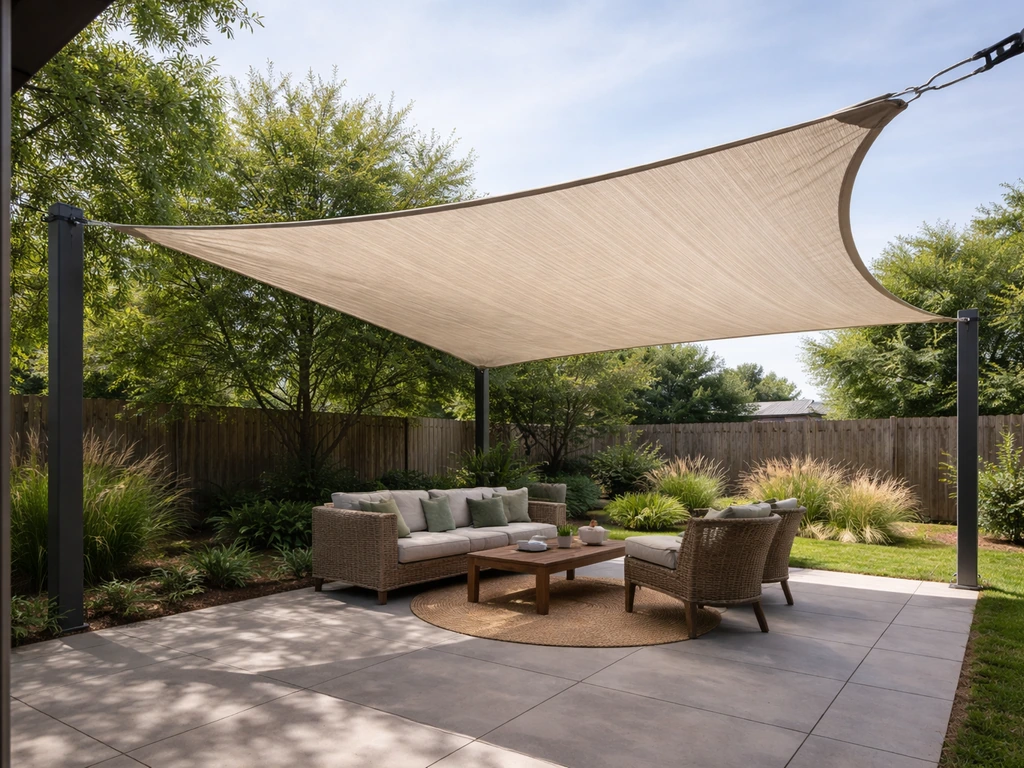
The best patio shade sail for most homeowners is a knitted HDPE mesh sail in the right size for your anchor points, installed at a 15-25 degree angle with stainless steel hardware. For more practical buying guidance on the best patio sails, focus on the fabric type, UV performance, and how the sail is mounted to manage wind and rain best patio shade sail. For a standard 10x12 ft patio, a quality triangle or rectangle in 185-340gsm HDPE will block 90-95% of UV rays, survive 30-40 mph wind gusts when properly tensioned, and last 5-10 years depending on how much care you give it. The details that actually separate a great purchase from a frustrating one come down to measuring correctly, choosing the right fabric for your climate, and not skipping on the hardware.
Patio Shade Sail Reviews: What to Buy for Real Coverage
What shade sail you actually need before you buy anything
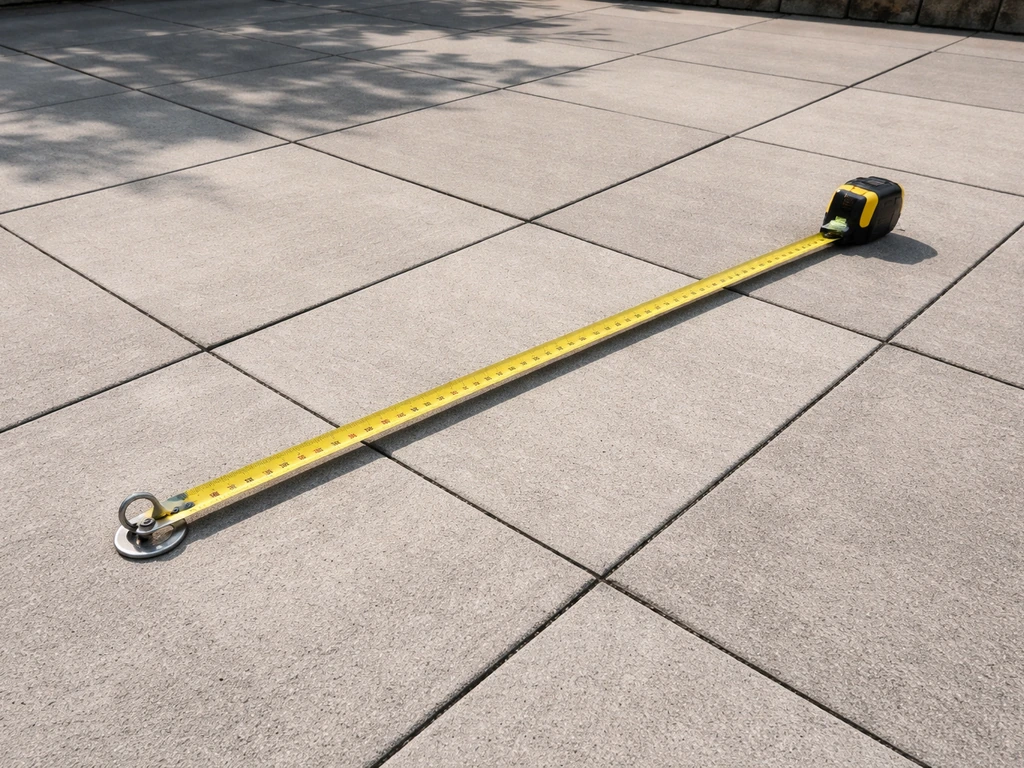
The single biggest mistake people make is measuring their patio slab and ordering a sail that size. That's wrong. You need to measure between your anchor points, not your patio. The sail connects to hardware like pad eyes, wall plates, fascia brackets, or eyebolts, and those are what determine the sail dimensions. Measure to the nearest inch, and if you're ordering a square or rectangular sail, you also need diagonal measurements. For triangles, measure along each edge between the corner rings when the sail is laid flat and not under tension.
Leave about 10-15 inches between each sail corner and its anchor point. That space is for the tensioning hardware: the turnbuckle, shackle, and snap hook. If you don't account for it, the sail will sag no matter how hard you pull. A saggy shade sail isn't just ugly, it pools water and eventually tears at the corners.
Height matters just as much as footprint. You need at least one corner noticeably higher than the others, ideally 15-25 degrees of slope across the sail surface. This is purely for drainage. If all four corners sit at the same height, rain collects in the middle and you'll have a soggy, stretched-out sail after the first storm. Pergola rails are often not engineered to handle sail loads, so if you're mounting to a pergola, check the structure first. Avoid mounting to a single wood post and be cautious about attaching to house fascia unless you've confirmed it can handle the tension load.
Fabric and build quality: what the specs actually mean
There are three main fabric families used in shade sails, and each behaves very differently in real conditions. Here's how they compare side by side:
| Fabric Type | UV Block | Waterproof? | Wind Performance | Breathability | Typical Lifespan |
|---|---|---|---|---|---|
| Knitted HDPE mesh | 90-96% | No (drains through) | Excellent (air passes through) | High | 5-10 years |
| Woven polyester | 85-92% | Yes (coated) | Fair (catches wind) | Low | 3-6 years |
| Sunbrella acrylic | Up to 98% | Near-waterproof | Good with proper tension | Moderate | 7-10+ years |
Knitted HDPE is the most popular choice and for good reason. Brands like Coolaroo use UV-stabilized knitted HDPE that lets air flow through the weave, which means wind pressure passes through rather than building up against the sail like a kite. Coolaroo's Coolhaven line claims up to 95% UV block and backs it with a 7-year warranty on the heavier version versus 3 years on the standard entry-level option. Commercial-grade HDPE fabrics from suppliers like Gale Pacific run around 340gsm and measure approximately 95-96% UV transmittance block in lab testing.
Waterproof polyester sails solve the rain-drip problem, but they create a wind problem. Because air can't pass through, they act more like solid panels in a gust. They need to be very tightly tensioned and installed at a steep angle to shed water quickly. Even then, Coolaroo has noted that no shade sail installation can be guaranteed fully waterproof due to fixing mechanisms and pooling risk at the corners and center. Think of them as heavy-rain resistant, not umbrella-equivalent.
Sunbrella acrylic is the premium choice. It blocks up to 98% UV, resists fading, and is covered by a 10-year limited warranty from Sunbrella against color and strength loss under normal exposure. It costs significantly more than HDPE, and custom fabrication is often required. If you want long-term performance and aesthetics, this is the material to spend up on, but for most patios, a quality HDPE sail in the right size will do the job just as well for UV blocking.
Weight (gsm) is a useful proxy for quality. Entry-level budget sails often run 160-185gsm. A 185gsm HDPE sail will work fine in light use but may degrade faster under constant sun. Mid-range and premium options sit at 250-340gsm and hold their UV-blocking properties longer. When reading reviews on Amazon or Home Depot, check whether the listing even mentions gsm. If it doesn't, that's a yellow flag.
Top picks by use case
Small patios (under 12x12 ft)
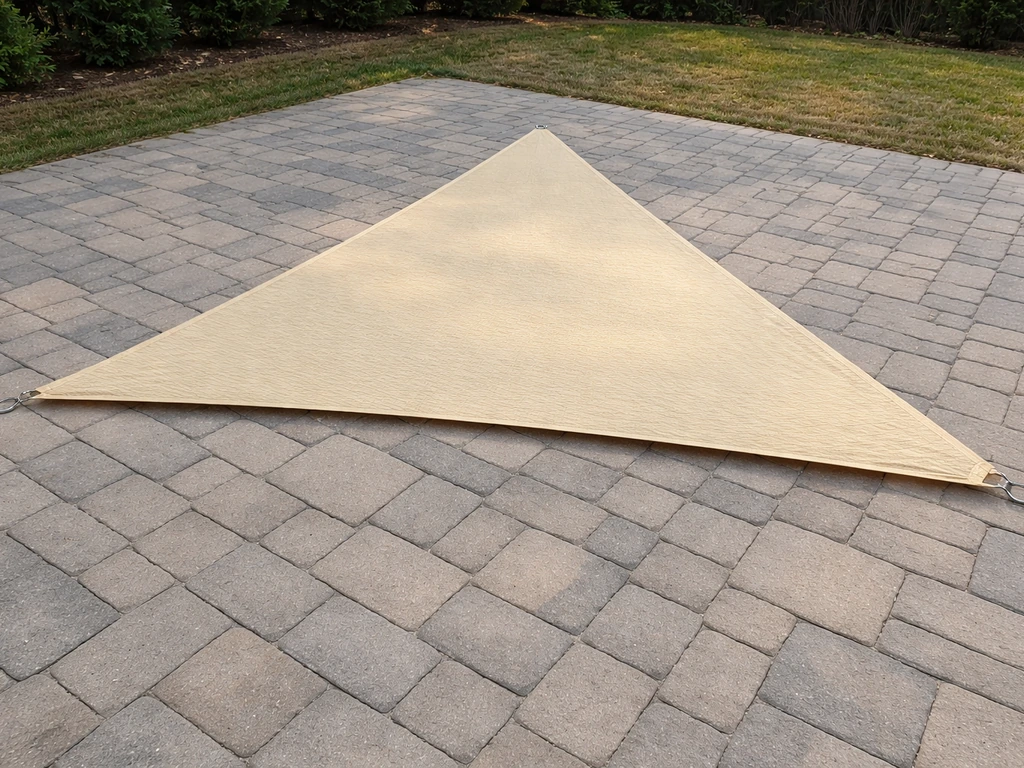
A 10-12 ft equilateral triangle in knitted HDPE is the easiest starting point. It's simple to tension, easy to take down seasonally, and there are solid options from Coolaroo in this size range. The Coolhaven 12 ft equilateral triangle is a consistently well-reviewed option: 95% UV block, knitted HDPE for airflow, and the longer 7-year warranty version. Hardware installation takes about 2-4 hours for a first-timer if your anchor points are already in place. Reviews on The Home Depot site for this model consistently mention the good airflow and shade coverage as highlights.
Larger coverage areas (over 14x14 ft)
For bigger spaces, a rectangle or square sail gives you more coverage per corner than stacking triangles. You'll need more robust anchoring: 4x4 in steel posts set in concrete are the safest bet if you don't have suitable existing structures. At this size, tension matters even more, so plan for heavier-duty turnbuckles (at least 3/8 in stainless) and check that your anchor hardware is rated for the load. Mighty Covers and similar custom fabricators offer commercial 95 mesh fabric around 340gsm with 15-year limited warranty claims. For straight-off-the-shelf options, Coolaroo's commercial range in rectangles is a reasonable benchmark.
Windy climates
If you're in a regularly windy area, go with a breathable knitted HDPE sail and prioritize a radial cut design if you can find one. Radial-cut sails like the Maanta Solaria Breathable (made from Meshnet HDPE 320gsm) are specifically shaped to distribute wind load more evenly across the sail surface. The standard fabric-and-stitching wind rating for residential shade sails is around 30-40 mph. That's not a certified engineered rating, it's just what the materials can handle before stitching or corner rings become the weak point. Above that, take the sail down. Waterproof sails in windy areas are a bad combination unless you're tensioning them extremely tightly and monitoring conditions.
Pergola and post-mounted setups
Mounting to a pergola looks great but comes with caveats. Most residential pergola lumber isn't engineered for the continuous lateral tension a shade sail applies, especially at the corners. Before mounting, check that posts are anchored in concrete footings, not just surface-mounted. Wall-plate brackets attached to structural posts or a masonry wall are better than relying on fascia boards. If your pergola is solid, a rectangle sail that mirrors the pergola's footprint is clean and effective. Use heavy pad eyes at the corners and run your hardware chain (turnbuckle, shackle, snap hook) between the sail ring and the pad eye.
What to look for when reading reviews
Most shade sail reviews on retail sites are written by people who either loved the product or had it fail on them. The failure reviews are usually more useful. Here's what to pay attention to:
- Setup time: A first installation typically takes 2-5 hours including drilling anchor points. Reviews that say 'easy 30-minute install' usually mean the anchor points were pre-existing. If you're starting from scratch, expect a half-day project.
- Hardware included vs. not included: Many budget sails ship without mounting hardware. A deal post I've seen for a ColourTree 185gsm 12x12 sail specifically flagged this as a 'con.' Stainless steel turnbuckles, shackles, and snap hooks can add $30-60 to your total cost. Always check what's in the box.
- Attachment point compatibility: D-rings and corner rings aren't universal. Some budget sails use smaller rings that don't fit standard 3/8 in hardware. Read reviewer comments about hardware fit, not just overall satisfaction scores.
- Tensioning after weathering: Multiple reviews mention sails sagging after 6-12 months. This is normal. You'll need to periodically re-tension the turnbuckles. If a review says 'started sagging after one summer,' that may just mean the owner didn't re-tension.
- Corner tearing: This is the real failure mode. Look for reviews that mention corner ring quality and stitching reinforcement at the edges. Sails with triple-stitched edges and heavy corner patches hold up significantly better than those without.
Weather reality check: wind, rain, and heat
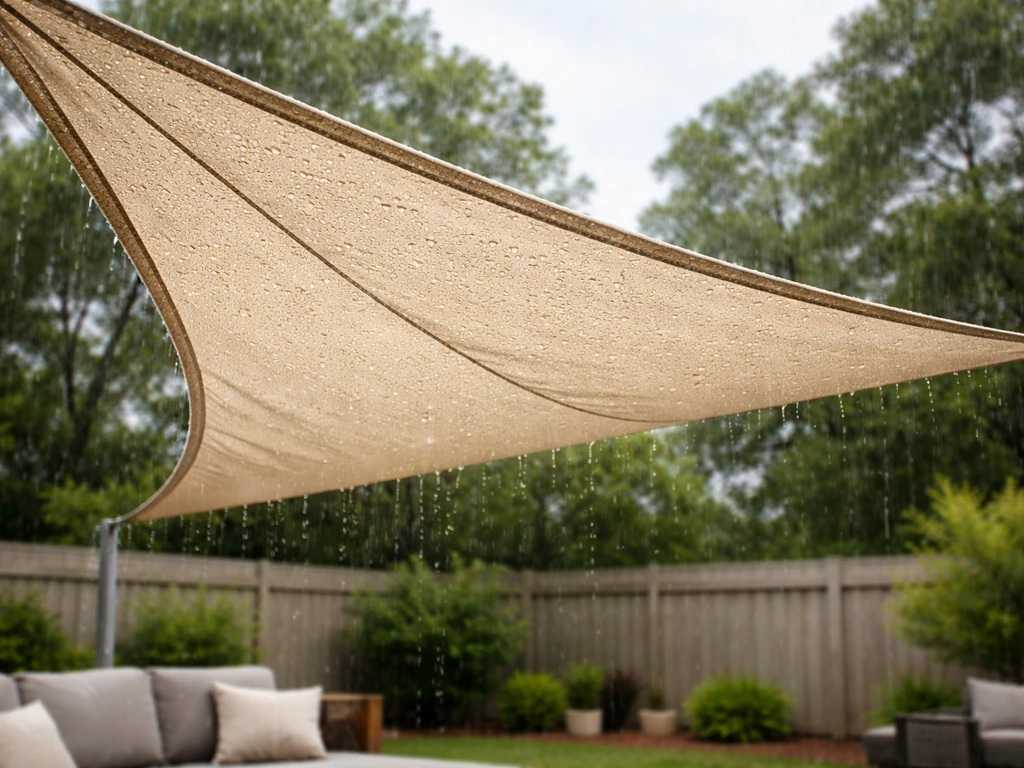
Shade sails are not all-weather structures. They work brilliantly on clear, hot days and hold up fine in light breeze and moderate rain if installed correctly. But they have real limits you should understand before buying.
Wind
Residential shade sails have a fabric-and-stitching wind tolerance of roughly 30-40 mph. Note that this is not an engineered installation rating. The full wind resistance of your setup also depends on anchor strength, post depth, hardware quality, and tension level. In sustained high winds or storm conditions, take the sail down. Coolaroo explicitly advises this in their care documentation. Leaving a sail up through a 60 mph storm is the fastest way to shred it, and it can also damage your anchor points or pull a bracket off your wall.
Rain
Breathable HDPE sails let light rain drip through. They're fine to leave up in a light shower, but they won't keep you dry. Waterproof sails (coated polyester or Maanta's Solaria +Plus, which is marketed as 100% waterproof) will shed rain, but only if tensioned tightly enough and installed at sufficient slope. Coolaroo’s buying guidance also distinguishes between water-resistant sail options and weather-proof fabric, depending on how much rain protection you actually need. Even Coolaroo acknowledges that pooling at fixing points can still occur with waterproof fabric. The slope target is 15-25 degrees minimum. At that angle, water runs off quickly and doesn't sit long enough to cause problems. If you want real rain protection, think of a shade sail as supplemental cover, not a substitute for a pergola roof or awning.
Heat reduction
This is where shade sails genuinely shine. A 90-95% UV-blocking sail makes a dramatic difference in how a patio feels on a hot day. If you’re trying to figure out what is the best outdoor patio shade for hot, sunny days, a high UV-blocking shade sail is often the most noticeable upgrade 90-95% UV-blocking sail. The temperature under the sail isn't just about UV block, it's also about airflow. Breathable HDPE lets the breeze through, which keeps the area cooler than a solid cover would. If you've ever sat under a pergola with a solid polycarbonate roof versus an open-weave shade cloth roof, you'll know the difference immediately. For most people in warm climates, this is the primary reason to buy a shade sail, and it delivers well.
Cost breakdown and long-term value
Here's a realistic look at what you'll spend and what you'll get for it:
| Tier | Sail Cost (typical) | Hardware Cost | UV Block | Expected Lifespan | Warranty |
|---|---|---|---|---|---|
| Budget HDPE (160-185gsm) | $25-60 | $30-60 extra if not included | 85-90% | 2-4 years | 1-3 years |
| Mid-range HDPE (250gsm) | $60-120 | Often included | 90-95% | 4-7 years | 3-5 years |
| Premium HDPE/Coolaroo Coolhaven (340gsm) | $120-200 | Often included | 95% | 7-10 years | 7 years |
| Sunbrella acrylic (custom) | $250-600+ | Not included | Up to 98% | 10-15 years | 10 years |
| Commercial mesh custom (340gsm+) | $300-800+ | Not included | 96-98% | 10-15 years | 15 years |
Budget sails look attractive at $25-40, but if you're replacing them every 2-3 years, you're spending more in the long run and going through the installation effort repeatedly. The sweet spot for most homeowners is a mid-range to premium HDPE sail at $100-200 total. It gets you 5-10 years of performance, usually comes with decent hardware, and the warranty is long enough to matter. If you're setting up a permanent installation with proper posts in concrete, spending up on a commercial-grade or Sunbrella option makes sense because you've already invested in the infrastructure.
One thing that often gets missed in the initial budget: the hardware. Turnbuckles, shackles, snap hooks, and pad eyes in stainless steel (you want stainless, not zinc-plated, which will rust) can run $60-100 on their own for a 3-4 corner installation. Factor that into your total before you compare prices.
How to install and care for your shade sail
Installation steps
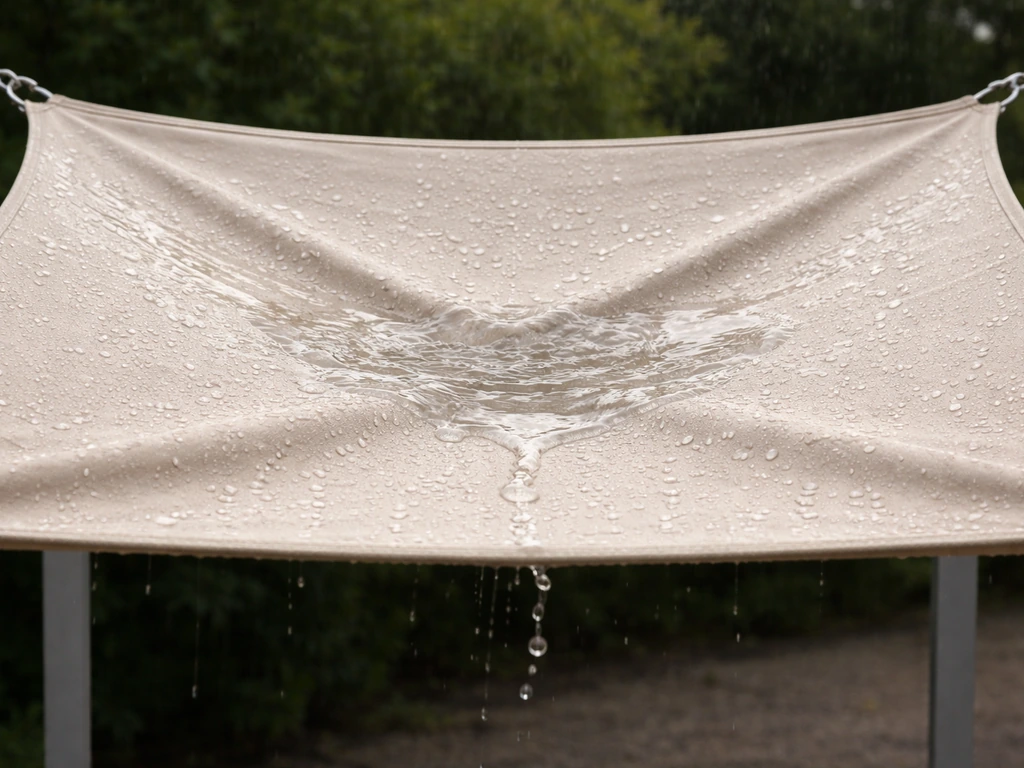
- Plan your anchor points first. Mark where each corner will attach, then verify you have at least 10-15 inches of clearance at each point for hardware. Check that the resulting sail position gives you 15-25 degrees of slope for drainage.
- Install anchor hardware. For masonry or structural posts, use heavy pad eyes or wall plates rated for the sail load. Use concrete anchors in masonry walls. For new posts, set 4x4 steel posts in concrete footings at least 18-24 inches deep.
- Loosely connect the sail. Clip the snap hooks to the corner rings and attach to your anchor points before tightening anything. This lets you check that the geometry works and the slope is correct.
- Tension gradually. Use the turnbuckles to take up slack evenly across all corners. Don't crank one corner fully tight before tensioning the others. Work around the corners progressively until the sail is taut with no visible sag.
- Check for water pooling. Run a hose over the sail or wait for the next rain. Water should run off the low corners within a minute or two. If it pools in the center, you need more slope or tighter tension.
- Re-check tension after the first week. Fabric stretches slightly when first put under load. Go around and tighten each turnbuckle a quarter to half turn after the sail has been up for 5-7 days.
Common installation mistakes
- Installing the sail flat with all corners at the same height. This guarantees pooling.
- Not leaving hardware margin. If there's no room for the turnbuckle between the corner ring and the anchor, the sail can't be tensioned.
- Using zinc-plated hardware outdoors. It rusts within a season in most climates. Use marine-grade stainless steel.
- Mounting to a house fascia without verifying structural capacity. Fascia boards are trim, not structural members.
- Forgetting to re-tension. A sail that looks fine in April may sag by July after fabric has stretched.
Maintenance checklist
- Re-tension turnbuckles at the start of each season and after any significant storm.
- Clean the sail 1-2 times per year with mild soap and water. Rinse thoroughly. For HDPE mesh, a soft brush works well. Avoid pressure washing at close range.
- Inspect corner rings and stitching at the edges annually. Catch small tears early before they spread.
- Take the sail down before major storms, heavy snow, or when you're leaving a property unoccupied for an extended period.
- Store the sail clean and dry when not in use seasonally. Storing a damp sail leads to mildew, which accelerates fabric degradation even in HDPE.
How to use reviews to make a faster decision
When you're reading product reviews on Home Depot, Amazon, or a brand's site, here's the checklist I'd run through before adding anything to the cart. Does the reviewer's patio setup match yours in terms of size and mounting type? Do they mention what hardware they used? Did they have to buy hardware separately? Is the sail still performing well after 2 or more seasons, not just after 2 weeks? Do any negative reviews mention corner tearing or stitching failure, and how does the brand respond? Those data points tell you far more than a star rating.
The core specs to verify on any listing: fabric type and gsm weight, UV block percentage, warranty length, hardware included or not, and whether the listed dimensions are sail-edge measurements or anchor-point measurements. If the listing doesn't clarify which measurement system it uses, that's worth a quick message to the seller before ordering.
If you're comparing shade sails against other patio shade options, the tradeoffs are real. Fixed patio covers and pergola roofs beat shade sails for rain protection and permanence. Retractable awnings beat them for flexibility. But shade sails hit a sweet spot of cost, UV performance, and airflow that nothing else in the category matches at the same price point. For most patios, a well-chosen shade sail installed correctly is the best value shade solution you can buy today. If you are specifically comparing affordable shade patio covers, the review section in this guide can help you judge which options are worth the money affordable shade patio covers reviews.
FAQ
Are patio shade sails actually waterproof in real use?
Yes, but only in a light shower or mist and only with breathable HDPE. A knitted HDPE sail is meant to let some water pass through the weave, and even at the recommended 15 to 25 degree slope, it will not behave like a roof. If you want to leave it up during regular rainstorms, waterproof polyester needs tighter tension and careful slope, and you still may see pooling at corner fixing points.
How can I interpret patio shade sail reviews when brands use different UV and warranty language?
Look for confirmation that the fabric blocks UV at the percentage the brand claims, not just a generic “UV resistant” label. If gsm is listed, higher gsm in the same fabric family usually correlates with better long-term performance in constant sun. Also check whether the warranty covers both color fading and fabric strength, since some warranties mention UV or color but exclude tearing or stitching.
What measurement mistake causes the most saggy patio shade sail installations?
Don’t pick based on patio size alone. Measure between anchor points, then add the 10 to 15 inches of clearance needed around each corner for the tensioning hardware and rings. If you order an “exact patio fit” without accounting for corner hardware space, the sail will end up loose or sagging even if the footprint looks right.
Can I take a patio shade sail down for winter without ruining it?
In most cases, yes, you should be able to remove and reinstall seasonally if you use shackle and snap-hook style connections rather than permanent links. Plan for storing the sail dry and out of direct sun, and inspect the corner rings and stitching before reinstalling. If your fabric is brittle or corner grommets look deformed, replace before the next windy season.
A review says the sail sags after a month, what should I check before buying?
If your review mentions persistent sagging after tensioning, suspect one of three issues: incorrect anchor spacing, insufficient corner clearance for turnbuckles and hooks, or too-shallow slope for drainage. Fixes include re-tensioning to remove slack, adding slope at at least one corner, and verifying that the anchor points are structurally stable enough that they do not shift under load.
Are breathable patio shade sails safer for wind than waterproof ones?
If you live in a frequently windy area, prioritize breathable knitted HDPE and avoid leaving it up when winds approach the sail’s stated tolerance. Even with a breathable sail, sustained gusts can stress stitching and corner rings, so reviews that mention taking it down during storms are useful. If your reviews repeatedly complain about corner tearing, that can indicate weak hardware ratings or insufficient anchoring rather than “bad luck.”
Can I mount a patio shade sail to a pergola or house fascia if the reviews say it works?
Yes, but only if the mounting hardware is rated and the attachment points can handle the lateral tension at the corners. Pergola rails are often not designed for continuous pull, especially on the sides closest to the corner rings. Prefer pad eyes on structural members with solid footings, and avoid relying on fascia-only attachments unless a professional has confirmed load capacity.
What details in patio shade sail reviews should I verify on the product listing before ordering?
Don’t assume the gsm listed in a retail review applies to the exact product. Some listings omit gsm entirely, and some reviewers discuss a different model or weight tier. Verify the product page for fabric type and gsm, confirm UV block percentage, and check whether dimensions are sail-edge measurements or anchor-point measurements to avoid ordering the wrong size.
Why do patio shade sail reviews sometimes blame the “hardware” instead of the fabric?
For most homeowners, stainless steel matters because turnbuckles, shackles, snap hooks, and pad eyes can corrode and weaken over time. Zinc-plated hardware can rust and seize in coastal or wet climates, which then reduces your ability to maintain tension and increases corner stress. If reviews mention “hardware problems” or difficulty adjusting after rain, stainless is a practical upgrade.
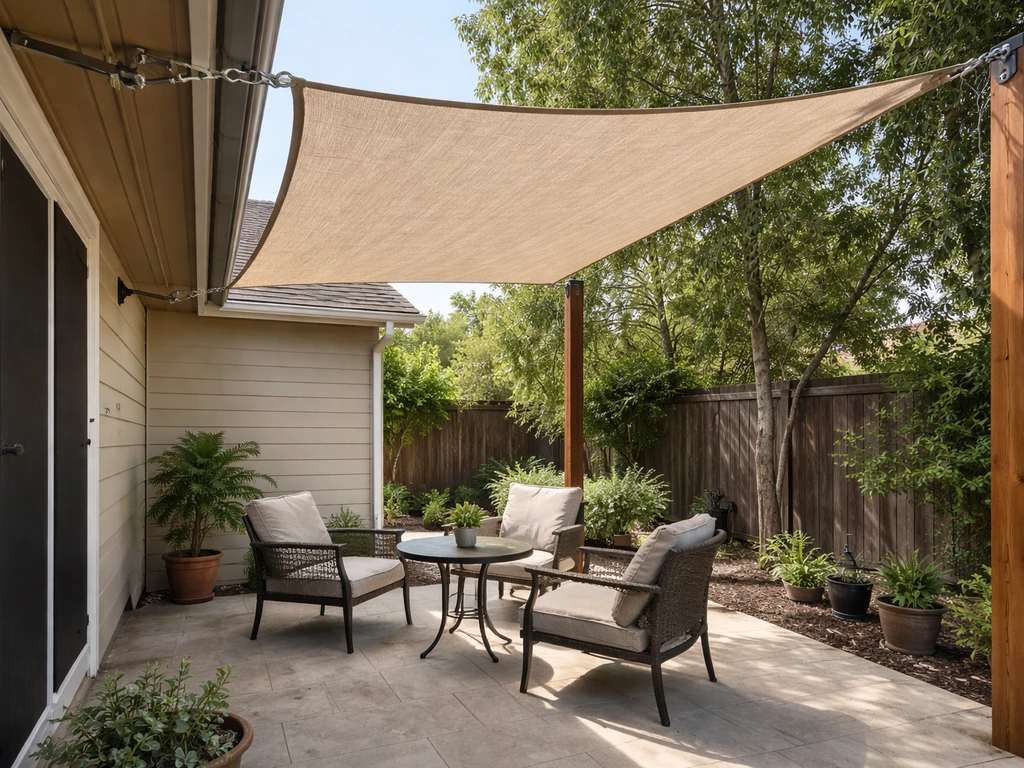
Budget shade patio cover reviews with types, real performance, costs, and a side-by-side checklist to pick the best fit.
Find the best Sunbrella patio cushions: durable, fade‑resistant picks, buying tips, care, and top recommendations.
Alternative to patio cushions: durable, weatherproof seating options, pros, DIY tips & buying guide.