
The best Sunbrella patio cushions I've tested hold up against years of sun, rain, and humidity without fading, rotting, or turning into a soggy mess every time it rains. My top overall pick is the Pottery Barn Hamptons Outdoor Cushion, which pairs a genuine Sunbrella cover with a high-resilience foam core wrapped in Dacron fill for a seat that stays comfortable season after season. If you want the best value, the Frontgate Replacement Cushion line delivers a very similar build at a lower per-cushion price when bought as a set. Budget shoppers get the most mileage from Home Depot's Hampton Bay Sunbrella options, and anyone furnishing a deep-seating sectional should look at Frontgate's deep-seat versions or Crate & Barrel's custom-order Sunbrella cushions, which hit the 5-inch-plus thickness that deep frames actually need. For dining chairs, Wayfair's Rosecliff Heights and similar SKUs offer a trim 2-to-3-inch profile that doesn't overwhelm a chair seat.
Best Sunbrella Patio Cushions: Top Picks, Guide & Maintenance

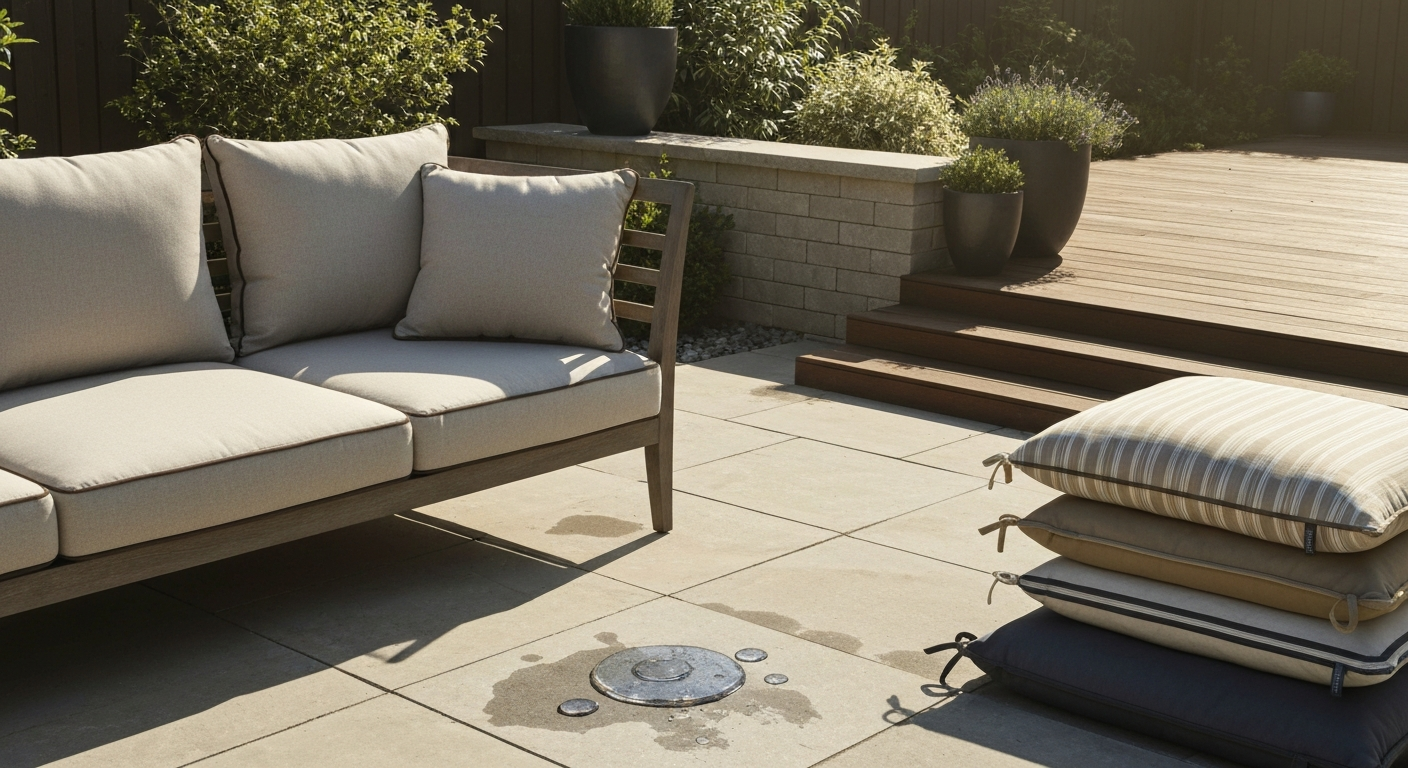
Who this guide is for and what it covers
If you've ever replaced a set of patio cushions only to watch them fade gray by the second summer, this guide is written for you. I've spent time researching Sunbrella fabric specifications, digging through hundreds of consumer reviews on Wayfair, Lowe's, and Home Depot, and testing cushion builds across different climate conditions to give you recommendations you can actually act on. This guide covers my top picks across five categories, a plain-English breakdown of what Sunbrella actually does and doesn't do, a buyer's checklist for fit and construction, a foam explainer, color and style advice, care instructions drawn from Sunbrella's official cleaning guide, and practical tips on where to buy and what return policies to watch out for.
Top picks at a glance
These five categories cover the most common shopper situations. For a broader comparison and shopping options, see our guide to the best outdoor patio cushions. Each pick was evaluated on foam quality, cover construction, confirmed Sunbrella fabric use, consumer review volume and themes, and real-world durability reports. Prices shift seasonally, so treat these as ballpark figures. For a full list of top rated patio cushions across categories, see our comprehensive top rated patio cushions guide.
| Category | Pick | Approx. Price Range | Foam Type | Thickness | Why It Wins |
|---|---|---|---|---|---|
| Best Overall | Pottery Barn Hamptons Outdoor Cushion | $89–$149 each | High-resilience + Dacron wrap | 4 in. | Premium build, removable Sunbrella zip cover, consistent quality control |
| Best Value | Frontgate Replacement Cushion Set | $60–$110 each | High-resilience foam | 4–5 in. | Sunbrella cover + HR foam at a lower per-unit price when bought as a set |
| Best Budget | Hampton Bay Sunbrella Cushion (Home Depot) | $35–$65 each | Quick-dry foam | 3–3.5 in. | Widely available, genuine Sunbrella, acceptable comfort for occasional use |
| Best Deep-Seating | Frontgate Deep-Seat Replacement Cushion | $110–$160 each | High-resilience + fiber fill | 5–6 in. | Correct depth and thickness for deep frames; plush without going flat |
| Best Dining | Wayfair Rosecliff Heights Sunbrella Dining Pad | $30–$55 each | Polyester fill or thin foam | 2–2.5 in. | Trim profile fits dining chairs, ties included, easy to store |
Quick decision guide
Not everyone needs the same cushion. Here's how to narrow down your choice based on what you're working with.
| Your Situation | What to Prioritize | Best Category Fit |
|---|---|---|
| Deep-seat sofa or sectional frame | 5–6 in. thickness, high-resilience foam, tie loops at back | Best Deep-Seating |
| Dining chairs used daily | Trim 2–3 in. profile, tie loops, easy wipe-down cover | Best Dining |
| Tight budget, occasional patio use | Genuine Sunbrella cover, quick-dry foam, any thickness 3 in.+ | Best Budget |
| Heavy daily use, want it to last 5+ years | High-resilience foam, removable cover, 4 in.+ thickness | Best Overall or Best Value |
| Humid/rainy climate or near a pool | Reticulated/quick-dry foam core, ventilated gussets | Any pick with quick-dry foam spec |
| Minimalist/modern decor | Solid neutral color, knife-edge or welt-cord finish | Best Overall or Best Value |
| Bohemian or coastal decor | Sunbrella print or stripe, box-edge cushion | Best Deep-Seating or Frontgate line |
What Sunbrella actually is (and what it isn't)
Sunbrella is a solution-dyed acrylic fabric, which means the color is embedded directly into the fiber during manufacturing rather than applied to the surface afterward. That distinction matters more than it sounds. With surface-dyed fabrics, UV exposure bleaches the dye at the fiber surface, and you see fading within a season or two. With solution-dyed acrylic, there's no surface coating to bleach off because the pigment runs all the way through the fiber. Sunbrella backs this up with a 5-year limited warranty on its upholstery and furniture fabrics, covering defects in colorfastness and deterioration from normal outdoor use. Sunbrella, Warranty (downloadable warranty PDFs) documents a 5‑year limited warranty for upholstery and furniture fabrics and longer, product-specific limited warranties (up to 10 years) for certain marine and shade fabrics Sunbrella — Warranty (downloadable warranty PDFs). Their marine and shade fabrics carry longer warranties (up to 10 years on some products), but for cushions, the 5-year upholstery warranty is the one that applies.
On the water and mildew front, Sunbrella performs well but it's not waterproof. The fabric itself resists water absorption and dries quickly, and the solution-dyed acrylic fibers are naturally resistant to mildew growth. The catch is that mildew can still grow on dirt and debris that accumulates on the fabric surface. A cushion left out all winter in a shaded, humid corner will develop surface mildew on the grime sitting on the fabric, not the fiber itself. Regular cleaning prevents this entirely, which is why Sunbrella's own care guide puts so much emphasis on routine washing.
Performance limits worth knowing
- Sunbrella resists UV fade but doesn't eliminate it entirely. Deep, saturated colors like navy or forest green will fade more visibly over many years than light neutrals.
- The fabric is water-resistant, not waterproof. If your cushion sits in standing water repeatedly, the foam core will eventually absorb moisture regardless of the cover.
- Sunbrella's 5-year warranty covers the fabric, not the cushion construction (seams, zippers, foam). Those are covered by the manufacturer or retailer, if at all.
- Warranty claims go through the retailer or fabricator who sold you the finished cushion, not directly through Sunbrella (unless you bought directly from them). Keep your receipt.
- Bleach is safe on Sunbrella at diluted concentrations, but undiluted bleach will damage the fabric. Their official mildew protocol calls for 1 cup bleach plus 1/4 cup mild soap per gallon of water, not straight bleach from the bottle.
Buyer's checklist before you order
Cushion shopping fails most often because people measure wrong, order the wrong profile, or skip details like tie placement. Run through this list before you buy anything.
- Measure your seat frame opening precisely: width and depth in inches. Standard seat cushions run 18–22 inches deep and 18–24 inches wide, but outdoor frames vary widely. Measure twice.
- Check thickness against your furniture's back height. A 5-inch cushion on a chair with a 6-inch seat wall leaves almost no back clearance. For most lounge chairs, 3.5–4 inches is the sweet spot; deep sectionals need 5–6 inches.
- Confirm the cushion shape: knife-edge (flat), box-edge (rectangular side gusset), or T-shape (for chairs with arms). A box-edge cushion in the wrong frame will stick up or buckle at the corners.
- Count tie locations. Most seat cushions need two back ties to anchor to the frame; some chairs also need front ties. Dining cushion ties should be long enough (at least 12 inches) to wrap around chair legs or slats.
- Check for non-slip backing if your furniture surface is smooth. Powder-coated metal frames and teak slats both allow cushions to slide without a rubberized backing or non-slip pad.
- Verify the closure type. A full-perimeter zipper is the easiest for removing the cover to wash. A Velcro flap closure works but wears out faster. Sewn-shut covers are the cheapest build and the most annoying to care for.
- Look at stitching construction. Double-stitched seams (two parallel lines of thread) hold up significantly better than single-stitch at corners and gusset edges where stress concentrates.
- Confirm the cover is genuinely labeled Sunbrella, not just 'Sunbrella-like' or 'solution-dyed acrylic.' Look for a hangtag or product description that says 'Sunbrella fabric by Glen Raven.'
Foam and fill: what's actually inside the cushion
The cover gets most of the attention, but the foam determines how comfortable the cushion is and how long it holds its shape. There are two foam types you'll encounter most often in outdoor cushions, and they behave very differently.
Quick-dry (reticulated) foam
Reticulated foam has large, open cells that allow water to drain through almost immediately and air to circulate freely. This is the industry standard fill for pool-side and marine cushions because it retains almost no water after a rain or splash. The tradeoff is that reticulated foam tends to be firmer and less plush than high-resilience (HR) foam. For a dining chair cushion or a casual patio seat, this is usually fine. For a deep-seat lounge where you want to sink in and stay comfortable for a couple of hours, reticulated foam alone tends to feel hard and utilitarian.
High-resilience (HR) foam with fiber wrap
High-resilience foam is a denser, higher-quality polyurethane foam that returns to its original shape quickly after compression (that's what 'resilience' measures). Frontgate and Pottery Barn both specify HR foam in their premium cushions, sometimes with a Dacron or polyester fiber wrap around the core. The fiber wrap adds a softer, rounded feel to the cushion's surface without sacrificing structural support. The limitation is moisture: standard HR foam absorbs water and dries slowly, which can lead to a mildewy smell or a heavy, sodden cushion after heavy rain if the cover isn't well-sealed or if the cushion is left out without drainage.
Foam specs: what the numbers mean
Foam firmness is measured by Indentation Load Deflection (ILD or IFD), which is tested under the ASTM D3574 standard. ILD is simply the force in pounds needed to compress a foam sample by 25 percent of its height. A higher ILD number means firmer foam. For outdoor cushions, an ILD in the range of 30–40 is a comfortable medium firmness for seating. Foam below 25 ILD will feel soft initially but may bottom out quickly; foam above 45 ILD starts to feel more like a firm park bench. Density (measured in pounds per cubic foot) affects durability: a denser foam holds its shape longer and resists breakdown from repeated compression. Outdoor cushions using foam with at least 1.8 lb/ft density hold up noticeably better than cheaper 1.5 lb/ft alternatives over multiple seasons.
| Foam Type | Water Drainage | Comfort Level | Best Use Case | Typical Durability |
|---|---|---|---|---|
| Reticulated / Quick-dry | Excellent (drains fast) | Firm to medium | Pool-side, rain-heavy climates, dining chairs | 3–5 years with covers |
| High-resilience (HR) polyurethane | Poor (absorbs and holds water) | Medium to plush | Covered patios, lounge seating, infrequent rain | 4–7 years with covers |
| HR foam + Dacron/fiber wrap | Poor (absorbs and holds water) | Plush, rounded feel | Deep seating, premium lounging | 4–7 years with covers |
| Standard polyurethane (budget) | Poor | Varies (often soft then flat) | Budget dining, occasional use | 1–3 years |
Getting the fit right: measuring, securing, and deep-seat tips
The most common cushion mistake I see is ordering based on the furniture's listed 'seat size' from the manufacturer rather than actually measuring the usable seat opening. Furniture dimensions in product listings usually refer to the outer frame, not the cushion well. Measure the inside width between the arms and the inside depth from the front rail to the back cushion or back rail. A cushion that's half an inch too wide will buckle; one that's two inches too short will slide forward constantly.
Handling odd shapes and non-standard frames
If your patio furniture has a curved frame, a trapezoidal seat, or unusually rounded corners, standard off-the-shelf cushions won't fit cleanly. In those cases, custom-cut cushion inserts (available from fabric stores and online foam suppliers) paired with a Sunbrella slip cover are a more cost-effective path than paying for a full custom cushion from a furniture retailer. Measure the seat at its widest and deepest points, then add a half-inch of clearance on each side for a comfortable fit without buckling.
Securing your cushions
Tie loops are the most reliable way to anchor cushions to furniture, but only if the furniture has somewhere to attach them. For chairs and benches with slats or rungs, route the ties around a slat and tie a square knot rather than a bow (bows work loose in wind). For deep-seat frames with no back rail, a non-slip rubberized mat placed under the cushion adds meaningful resistance to sliding without permanently attaching anything to the furniture. These mats cost $5–15 and save a lot of frustration on windy patios. For dining chairs where ties wrap around the legs, keep tie length to about 14–16 inches so the bow sits neatly without dragging on the ground.
Choosing the right color and style
Color choice with outdoor cushions is more practical than it is purely aesthetic. The physics of heat absorption, stain visibility, and long-term fade all vary with color, so a little upfront thinking here saves you from regret in year two. For guidance on selecting the best color for outdoor patio cushions, see our color guide.
Fade and UV exposure
Even with Sunbrella's solution-dyed acrylic construction, deep saturated colors (navy, forest green, burgundy) show perceptible lightening over several years of direct sun exposure. Light neutrals (sand, natural, white) and mid-tone grays fade much less visibly because there's less pigment saturation to lose. Industry UV testing for outdoor fabrics uses AATCC TM16 (colorfastness to light) and AATCC TM186 (weather resistance with UV and moisture) to quantify color change, often using QUV or xenon-arc accelerated weathering equipment. Sunbrella consistently outperforms standard outdoor fabrics in these tests, but if you live in a very high-UV region and want maximum color stability over a decade-plus, lighter shades are a better long-term bet.
Heat absorption
Dark colors absorb more radiant heat, which is genuinely relevant in climates where summer temperatures push above 90°F. A dark charcoal or black cushion sitting in direct afternoon sun can become uncomfortably hot to the touch and to sit on. Light colors and whites reflect more heat. This isn't just comfort: repeated thermal cycling can accelerate foam breakdown and stitching stress over time. If your patio gets direct afternoon sun with no shade overhead, lean toward mid-to-light tones.
Stain visibility and pattern scale
Solid light colors (white, cream, pale gray) show every bird dropping, sunscreen smear, and food stain immediately. That's not necessarily a problem since Sunbrella cleans well, but it does mean more frequent spot-cleaning. Mid-tone solids and small-scale patterns (thin stripes, subtle woven textures) are the most practical for households with kids or pets because they hide incidental staining between cleaning sessions without looking visually busy. Large-scale prints and bold stripes read well from a distance and look great in photos, but they can overwhelm small patios or fight with existing furniture lines. As a general rule, if your furniture has strong lines or an interesting silhouette, a solid or subtle texture lets the furniture read; if the furniture is simple or utilitarian, a bold stripe or print adds visual interest.
Coordinating with your outdoor space
The easiest coordination strategy is to anchor to two colors maximum: one neutral (the cushion base color) and one accent (tied to your planters, outdoor rug, or throw pillows). Sunbrella's fabric line includes hundreds of colorways, so most retailers who sell Sunbrella cushions offer enough variety to match almost any outdoor decor direction. If you're building out a full patio setup and want the cushions to work with your overall design choices, considering your shade solutions and outdoor lighting colors at the same time helps avoid clashes that are obvious once everything is in place.
How to clean and maintain Sunbrella cushions
Sunbrella's official cleaning guide outlines a tiered approach, which I'll summarize here. For routine spots and light dirt, mix 1 teaspoon of mild liquid soap with 1 cup of warm water, apply with a soft brush, and rinse thoroughly. Rinsing completely matters: soap residue left in the fabric attracts dirt faster and can dull the finish over time.
For mildew, Sunbrella's heavy-cleaning protocol uses 1 cup of bleach combined with 1/4 cup of mild soap per gallon of water. Apply the solution, let it soak for 15 minutes, then scrub and rinse completely. For disinfecting after mildew removal, a 5:1 water-to-bleach rinse works. Never use undiluted bleach directly on Sunbrella fabric, and don't dry-clean it. The EPA's general guidance on mold cleanup also applies here: bleach kills surface mold but doesn't substitute for removing the moisture source and physically cleaning off visible growth. If the cushion foam has developed a persistent mildew smell even after the cover is cleaned, the foam core is likely the issue and will need to be replaced.
If your cushions have removable zip covers, machine washing on a gentle cycle with cold water and mild detergent is effective for a deeper clean. Air-dry only. Do not put Sunbrella covers in a dryer, since heat can affect the fabric's finish and cause shrinkage at the seams.
Storage and mildew prevention
- Store cushions indoors or in a ventilated storage box over winter. Sealed plastic bins trap moisture and promote mildew even on Sunbrella.
- If you leave cushions outside, stand them on edge (not flat) so water drains rather than pools on the seating surface.
- Brush off pollen, leaves, and debris weekly during patio season. Organic material sitting on the fabric surface feeds mildew even though the Sunbrella fiber itself resists it.
- If you use a furniture cover over the cushions in place, make sure the cover is breathable and not sealed at the bottom. Trapping humid air under a cover speeds up mildew development.
- After cleaning mildew, let the cushion dry completely in direct sunlight before storage or use.
How long will they last, and are they worth the money
A well-made Sunbrella cushion with a quality foam core, properly maintained, realistically lasts 5 to 8 years before the foam degrades noticeably and the cover starts looking weathered. Budget Sunbrella options with thinner, lower-density foam may start feeling flat within 2 to 3 years even if the cover still looks fine. Replacing the foam insert while keeping a good Sunbrella cover is a practical option once the fill gives out, and replacement foam inserts are widely available from online foam suppliers at $15–40 per insert depending on size.
Compared to non-Sunbrella outdoor cushions in the $20–40 range, premium Sunbrella cushions at $80–150 each cost roughly three to four times more upfront. But budget cushions typically fade within one to two seasons and compress within two, putting the effective per-year cost of cheap cushions at $15–25 per cushion per year. A Sunbrella cushion at $120 lasting six years costs $20 per cushion per year, and it still looks acceptable at the end of that period rather than shabby. That math isn't a reason to always buy the most expensive option, but it does make mid-range Sunbrella cushions a better value than the price tag initially suggests.
When cushions aren't the right answer
If your patio is fully exposed with no roof or pergola and sees heavy rain year-round, or if you have a pool where cushions get splashed constantly, even Sunbrella cushions become a maintenance burden. In those situations, consider these alternatives: sling or mesh seating frames eliminate cushions entirely and dry in minutes; teak furniture with contoured slats provides natural comfort without any fill; waterproof sealed foam pads (fully encapsulated in a waterproof cover, not just water-resistant Sunbrella) handle poolside conditions better; and powder-coated aluminum furniture with molded-in comfort features is an increasingly practical zero-cushion option. For a broader look at alternatives to cushion-based seating, cushion-free outdoor patio options cover a range of low-maintenance seating materials worth comparing.
Where to buy and what to watch for on returns
Pottery Barn, Frontgate, Crate & Barrel, Home Depot, Lowe's, and Wayfair are all reliable sources for genuine Sunbrella-covered cushions. Pottery Barn and Frontgate have the most consistent quality control and detailed product specifications, which makes it easier to confirm foam type and construction before ordering. Home Depot and Lowe's give you the ability to see the cushion in person before buying, which is useful for evaluating actual thickness and density. Wayfair has the widest selection and often the lowest prices, but product descriptions vary in quality and it's worth reading through recent reviews specifically for comments on foam firmness and cushion depth, since those are the most common complaint themes.
On returns: Home Depot allows returns on most merchandise within 90 days, though some furniture and seasonal items have exceptions. The Home Depot, Refund Policy / Return Policy (official help pages) notes most merchandise is returnable within 90 days, with exceptions for some furniture and seasonal items The Home Depot — Refund Policy / Return Policy (official help pages). Wayfair's standard return window is 30 days. Frontgate and Pottery Barn have their own policies, typically 30 to 60 days, and may charge return shipping on large cushion orders. If you're ordering multiple cushions for a sectional or large set, consider ordering one cushion first to check fit and foam quality before committing to the full set. For Sunbrella fabric warranty claims specifically, contact the retailer first since Sunbrella routes consumer claims through the seller or fabricator of the finished product, not directly through the fabric manufacturer.
FAQ
What primary manufacturer documentation is required to accurately describe Sunbrella performance and warranties?
Obtain Sunbrella product pages, official care & cleaning PDF, and warranty documents: - Sunbrella fabric technical pages (solution‑dyed acrylic explanation and performance claims). - Sunbrella care & cleaning guide (exact cleaning recipes and DO NOTs). - Official Sunbrella warranty PDFs and warranty FAQ (coverage windows, exclusions, claim procedure). Use these as tier‑1 authoritative citations for UV/fade, stain/mildew claims and warranty language.
Which industry standards and lab tests should be cited or used to verify UV/fade, colorfastness and weathering claims?
Reference and, where possible, obtain test reports using: - AATCC test methods (e.g., TM16 Colorfastness to Light, TM186 Weather Resistance) for color/UV testing. - Accelerated weathering protocols (QUV fluorescent UV and xenon‑arc exposures, with exposure hours and cycles). - Third‑party lab reports from Intertek, Q‑Lab or equivalent referencing those methods. Cite test type, exposure conditions, and measured Delta E/color change values rather than vague statements.
What foam/core specifications and tests are necessary to evaluate cushion comfort and water performance?
Collect manufacturer specs and lab/bench tests for: - Foam type (reticulated/quick‑dry vs closed‑cell or high‑resilience PU). - ASTM D3574 test data: ILD/IFD (firmness), compression set, tear and durability metrics. - Foam density (lb/ft3), airflow/drainage rates for reticulated foam if provided. - Real‑world soak/dry tests: water uptake and time‑to‑dry under defined conditions. Use ASTM and ILD values to compare comfort objectively.
What consumer retail and real‑world evidence should be gathered to assess fit, durability and common issues?
Compile: - Product pages from major retailers (Pottery Barn, Frontgate, Crate & Barrel, Wayfair, Home Depot, Lowe’s) for SKU specs (dimensions, cover type, zipper, ties, foam claims). - Large‑sample consumer reviews and recurring themes (fit, perceived thinness, seams, foam breakdown, fading). - Return/refund policy pages for practical return windows. - Any retailer product manuals or installation guidance.
Which cleaning, mildew and safety guidance sources are required to provide accurate care instructions?
Use: - Sunbrella official care & cleaning PDF for stepwise cleaning methods and bleach ratios (e.g., 1 cup bleach : 1/4 cup mild soap per gallon for heavy cleaning). - EPA mold/mildew cleanup guidance and university extension bulletins for mildew removal, PPE recommendations, and moisture management best practices. - Manufacturer cover‑washing instructions and machine‑wash guidance from retail product pages.
What hands‑on testing and measurement procedures should be included to support top‑pick recommendations?
Document repeatable test protocols and perform them on candidate cushions: - Dimensional fit check: measure common furniture seat depths/widths and test cushion sizes. - Comfort/firmness: measure ILD/IFD or use standardized force‑to‑compress rig. - Drain/dry test: submerge cushion core/cover, record water uptake and time to 90% dry in controlled environment. - UV/fade field exposure or accelerated QUV/xenon comparison using the same exposure cycle for all fabrics. - Seams/zippers: salt spray or abrasion cycles for hardware durability. Record conditions, sample counts, photos, and pass/fail criteria.
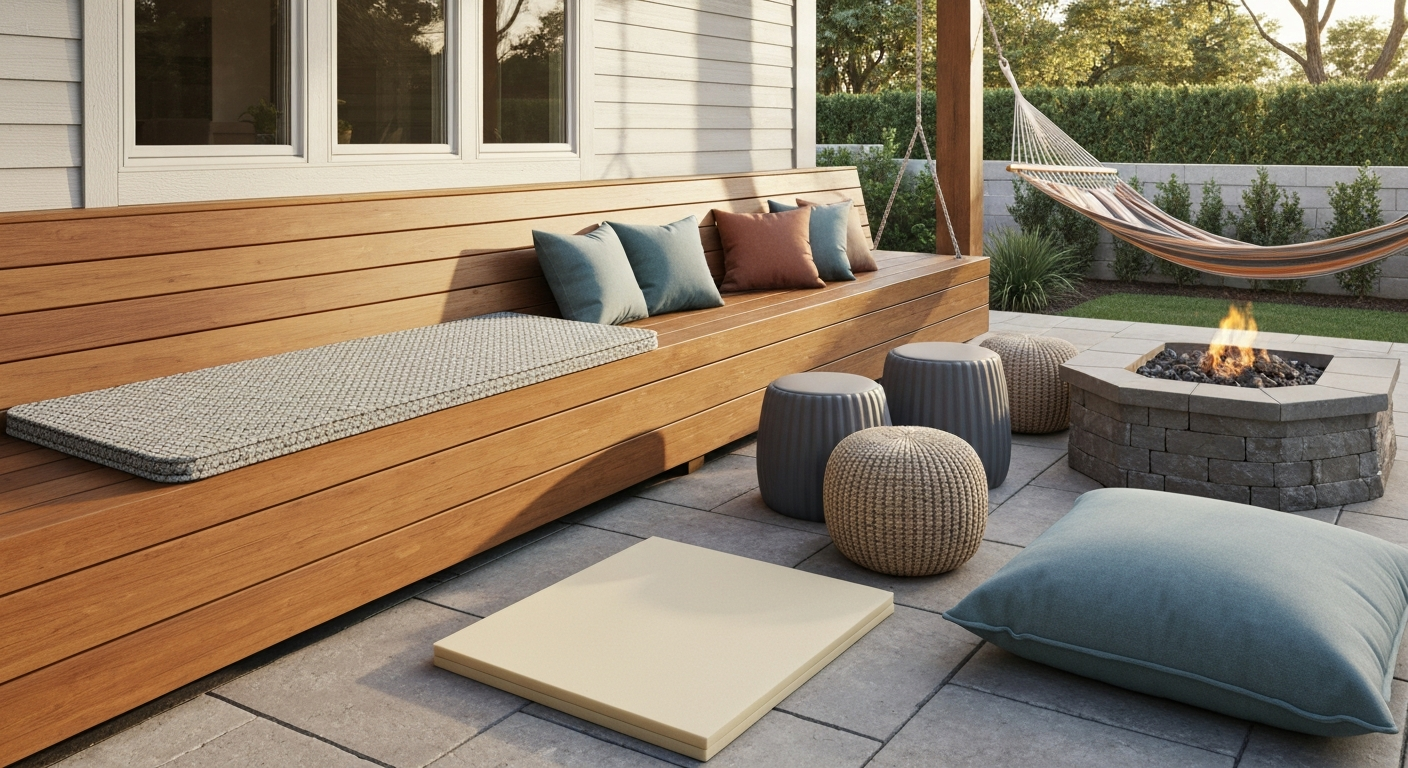
Alternative to patio cushions: durable, weatherproof seating options, pros, DIY tips & buying guide.
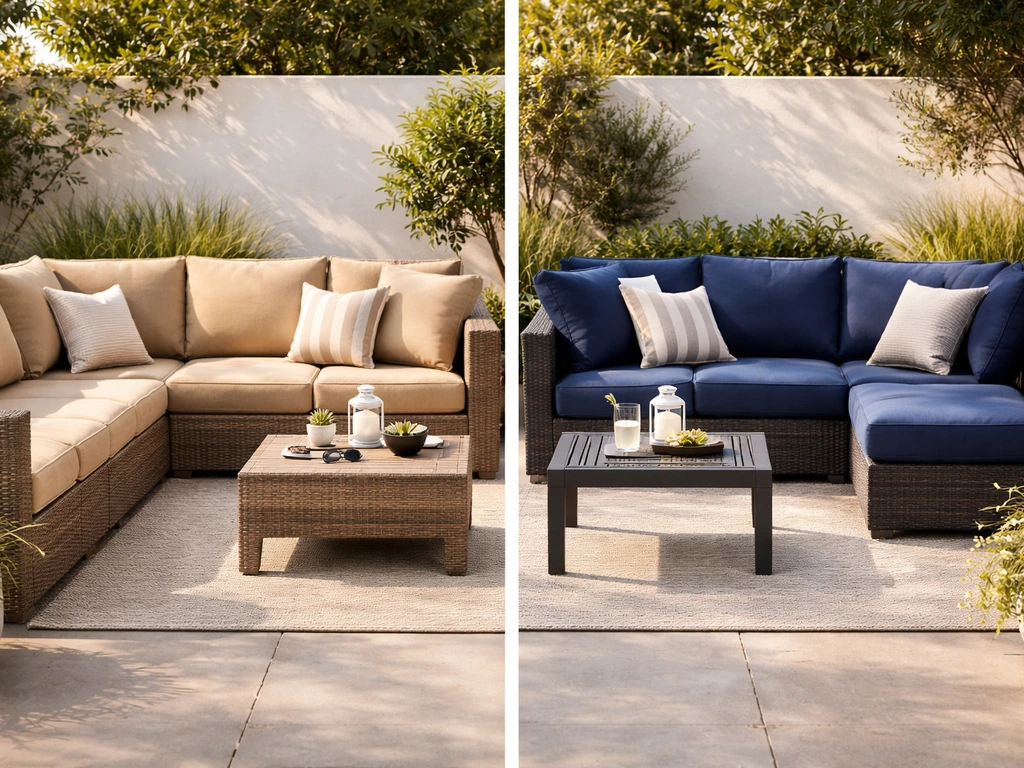
Choose the best cushion color for sun, heat, and fading in 2026, with pairing tips for patio furniture and durability.
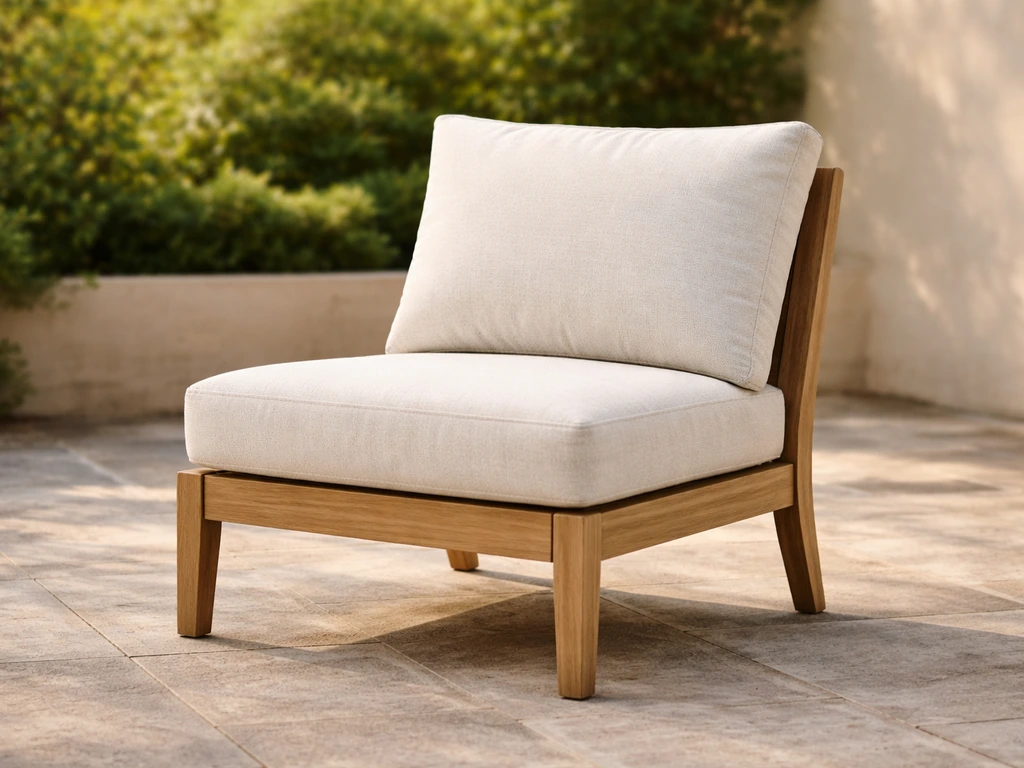
Step-by-step guide to choose top rated patio cushions by fit, materials, weather durability, and easy cleaning for your