
For most covered patios, a purpose-built outdoor TV rated IP55 or better with at least 1,000 nits of brightness is the right buy. If you get direct afternoon sun, push that to 2,000 nits minimum and look at Samsung The Terrace full-sun SKU or a SunBriteTV Pro2. If budget is the real constraint and your TV will live under a solid roof out of rain and direct sun, an indoor TV inside a quality weatherproof enclosure can absolutely work and save you $1,000 or more. The right answer depends on your exact setup, and this guide will walk you through every decision point the same way the best Reddit threads do: practically, with real numbers.
Best TV for Outdoor Patio Reddit: Guide to Picks & Setup
Lark Perry
27 Jul 2026
Two Ways to Do a Patio TV (and the honest pros and cons of each)
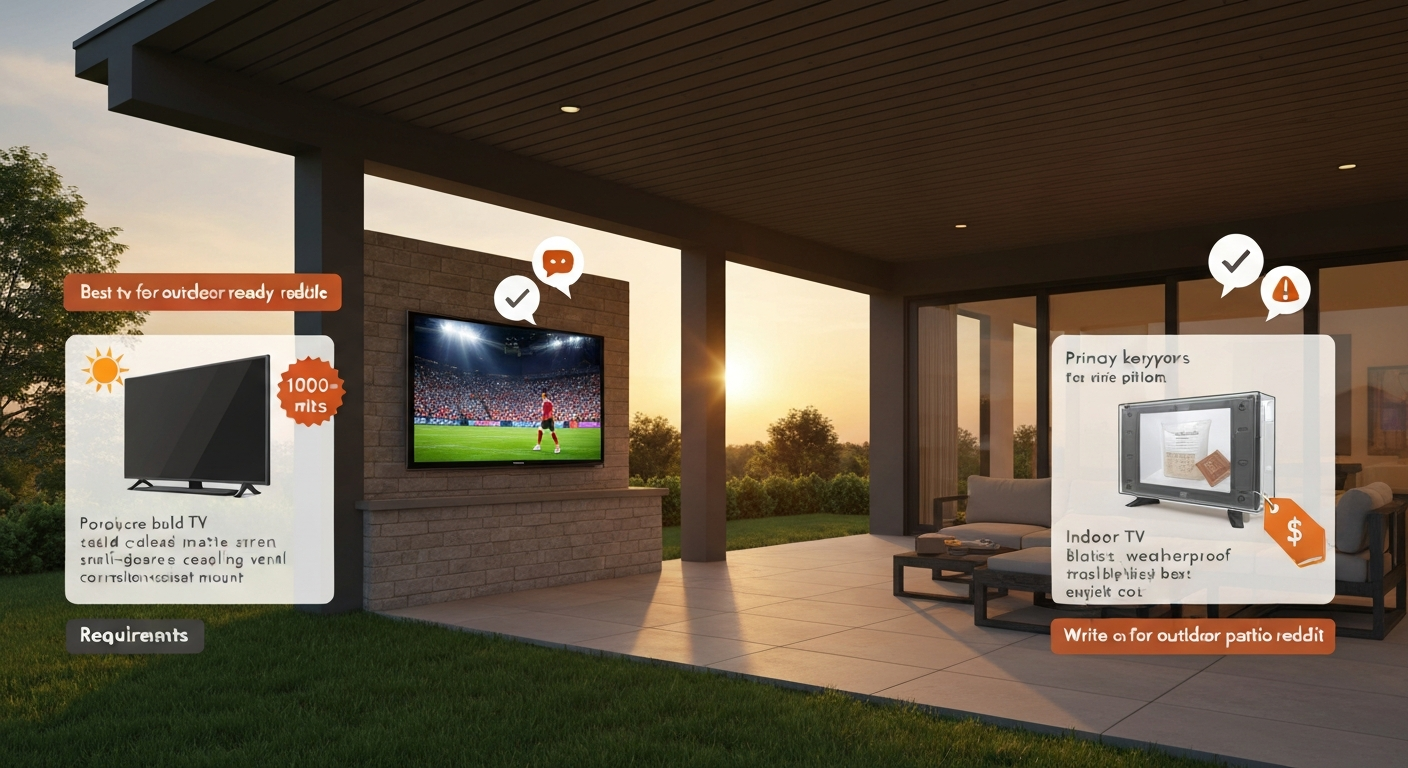
Purpose-built outdoor TVs are engineered from the ground up for outdoor life. They have sealed, gasketed cabinets with rated IP (ingress protection) scores, wide operating temperature ranges (many handle -20°F to 120°F), boosted brightness panels, anti-glare or matte coatings, and corrosion-resistant hardware. Brands like SunBriteTV, Séura, Samsung The Terrace, Sylvox, and Furrion all live in this category. You pay a premium, but you also get a warranty that actually covers outdoor exposure and a panel that was calibrated for high ambient light. The downside is price: entry-level outdoor TVs typically start around $700 to $900 for a 43-inch, and a quality full-sun 65-inch can run $3,000 to $5,000+.
Indoor TVs inside weatherproof enclosures are the DIY route that shows up constantly in Reddit threads. You buy a TV you already own, or a discounted indoor model, and mount it inside a sealed polycarbonate or powder-coated steel enclosure with a built-in vent and desiccant. The enclosure does the weather protection work. The tradeoff: most consumer indoor TVs top out at 400 to 800 nits, which is borderline usable only in shade. The enclosure also adds depth (sometimes 6 to 8 inches), which looks bulkier. But for a covered patio with no direct sun and a modest budget, this approach works well and is widely practiced.
| Factor | Purpose-Built Outdoor TV | Indoor TV + Enclosure |
|---|---|---|
| Typical price (65") | $2,000–$5,000+ | $500–$1,500 (TV + enclosure) |
| Brightness (nits) | 700–4,000 depending on model | 200–800 (limited by indoor panel) |
| IP rating | IP55–IP66 standard | Depends entirely on enclosure quality |
| Operating temp range | Often -22°F to 122°F | TV limits still apply inside enclosure |
| Anti-glare treatment | Purpose-designed matte/AR coating | Enclosure glass may add glare |
| Warranty outdoor coverage | Yes, designed for it | TV warranty void if used outdoors |
| Aesthetics/profile | Slim, clean look | Bulkier, box-like profile |
| Best for | Full-sun or semi-exposed patios | Covered patios, budget-conscious buyers |
What Reddit Threads Actually Ask About Outdoor Patio TVs
Spend an hour reading r/patio, r/OutdoorKitchens, and r/BuyItForLife threads from 2022 through mid-2026 and a few consistent themes jump out immediately. The most common debate is the same one above: spend $3,000 on a real outdoor TV, or buy a $400 indoor TV and replace it every few years when it eventually fails. Real-world posters are split almost evenly on this, with the replace-it-when-it-dies camp winning on covered patios and the purpose-built camp winning whenever direct sun exposure is involved.
Myths that show up repeatedly include the idea that any TV rated 'for outdoor use' will handle full direct sunlight (it won't unless brightness is explicitly rated for full-sun use), and the belief that IP55 means the TV is submersible (it means sustained water jets from any direction won't damage it, not waterproof immersion). A lot of posters also assume 4K resolution matters more outdoors than it does, when in practice brightness and glare handling are what actually determine whether you can see the screen.
Real-world priorities Reddit users actually care about, in order: visibility in bright conditions, durability against moisture and temperature swings, price, and whether the TV needs professional installation or can be DIY'd. Audio quality comes up frequently too, with many posters noting that built-in TV speakers are pointless outdoors and asking what outdoor speaker systems work best alongside a patio TV.
Key Specs Explained in Plain Terms
Brightness (nits) and why it matters more outdoors than any other spec
Nits (cd/m²) measure how much light a display emits. Indoors, 400 to 600 nits is plenty because ambient light is controlled. Outside, you're competing with direct or reflected sunlight that can measure 10,000 to 100,000 lux depending on conditions. Display researchers and digital signage engineers typically recommend 3,000+ nits for unshaded outdoor screens and 500 to 2,000 nits for shaded or covered outdoor viewing, with the exact threshold depending on your surface reflectance, coating, and ambient lux levels. Samsung The Terrace advertises up to 2,000 nits typical brightness (with peak claims up to 4,000 nits on some full-sun SKUs), while SunBriteTV's Pro2 series quotes around 1,500 nits in product specs, though Tom's Guide measured closer to 814 nits on a test unit under sustained load. The gap between advertised and real-world sustained brightness is real and worth researching for any specific model.
Anti-glare coatings and optical bonding
Anti-glare matte coatings diffuse specular reflections so you don't see a mirror-image of your backyard on screen. Optical bonding (where the panel and cover glass are laminated together) eliminates the air gap between layers that causes internal reflections. DisplayMate's analysis shows that optically bonded panels with anti-reflection coatings can reduce display reflectance to as low as 1 to 2%, dramatically lowering the required emitted brightness to achieve readable contrast. This is why a well-coated 1,500-nit outdoor TV can outperform a 2,500-nit indoor TV taken outside: the coating does as much work as the raw brightness.
4K and HDR outdoors: nice but not the priority
HDR (High Dynamic Range) requires both high peak brightness and deep blacks, and outdoor ambient light essentially kills black levels regardless of panel type. OLED's black-level advantage disappears in bright outdoor settings. HDR still helps with highlights if the panel is bright enough, but it's a secondary concern. 4K resolution matters at typical patio viewing distances (10 to 20 feet) only on screens 65 inches and larger. For a 55-inch TV watched from 12 feet, the resolution difference between 4K and 1080p is essentially invisible to most people. Buy 4K because it's standard now and most content is headed that way, not because it'll improve your outdoor viewing experience today.
IP ratings decoded
The IP code is defined by IEC standard 60529 and consists of two digits. The first digit (0–6) rates solid-particle protection (6 = dust-tight). The second digit (0–9K) rates liquid ingress protection (5 = water jets from any direction, 6 = powerful water jets, 7 = temporary immersion). IP55 means dust-protected and water-jet resistant. IP65 means fully dust-tight and water-jet resistant. For a covered patio, IP55 is adequate. For a semi-exposed patio or one that gets rain blowback, IP65 is a safer choice. Anything below IP54 should only be used in a fully protected enclosure or covered area.
Operating temperature and heat tolerance
Consumer indoor TVs are typically rated to operate between 50°F and 104°F. Outdoor TVs usually extend that range significantly, commonly -22°F to 122°F. Direct sun on a dark cabinet can raise surface temperature 30 to 50°F above ambient air temperature, meaning a 95°F day can push cabinet temps to 130°F or more. If you're in a hot climate (Texas, Arizona, Florida), thermal management matters as much as brightness. Look for models with active cooling (fans) or oversized heatsinks. Séura's outdoor manuals document operating temperature ranges specific to each series, and it's worth reading actual product documentation rather than relying on retail listings.
Practical Brightness Targets by Sun Exposure
| Sun Exposure | Ambient Conditions | Minimum Nits | Recommended IP | Recommended Temp Range |
|---|---|---|---|---|
| Full direct sun (afternoon) | Unshaded, south/west-facing | 2,000+ nits | IP65 | -22°F to 122°F |
| Partial sun (morning or dappled shade) | Some direct sun, partial cover | 1,000–2,000 nits | IP55–IP65 | -4°F to 115°F |
| Covered patio (full roof) | No direct sun, reflected ambient light | 500–1,000 nits | IP55 | 32°F to 104°F min |
| Screened porch or indoor/outdoor room | Heavily shaded, rain-protected | 400–700 nits | IP44–IP55 | Standard indoor range |
These ranges reflect industry digital-signage guidance and real-world testing data, not just manufacturer marketing. If a TV's real-world sustained brightness (as measured by RTINGS or similar independent labs) falls below the minimum for your exposure level, no amount of spec sheet brightness will fix the washed-out image you'll see on a bright afternoon. RTINGS, 'How We Test TVs' documents lab methodology and instruments (e.g., Colorimetry Research CR‑100/CR‑250) and publishes lab‑measured sustained brightness, HDR peak luminance, contrast, and uniformity for tested models RTINGS — 'How We Test TVs' (test equipment & brightness measurements)).
What Screen Size to Buy for Your Patio Layout
SMPTE's viewing-angle guidance recommends a minimum horizontal field of view of about 30 degrees for comfortable viewing, which works out to a simple rule: divide your viewing distance in inches by 1.6 to get a recommended TV diagonal in inches. For a 10-foot seating distance (120 inches), that's about 75 inches. For 8 feet (96 inches), that's roughly 60 inches. RTINGS' size-to-distance calculator, which uses SMPTE and THX guidance, reinforces these numbers. For help choosing the best size TV for your outdoor patio, see our guide on best size TV for outdoor patio. The important outdoor adjustment is that brightness and glare impact perceived sharpness, so many outdoor installers go one size class larger than they would indoors to compensate.
| Seating Distance | Minimum Recommended Size | Optimal Outdoor Size |
|---|---|---|
| 6 feet (72") | 43–50" | 50–55" |
| 8 feet (96") | 55–60" | 60–65" |
| 10 feet (120") | 65–70" | 70–75" |
| 12–15 feet (144–180") | 75–85" | 85"+ or projector |
| 15+ feet (patio bar/large deck) | 85"+ or projector | 85"+ or commercial display |
For most patios with a sofa or sectional 8 to 12 feet from the screen, a 65-inch TV is the sweet spot. It's also the most common size in outdoor TV product lines, so availability and pricing are strongest at 65 inches.
Mounting Options for Outdoor Patio TVs
Fixed, tilt, and full-motion mounts
Fixed mounts hold the TV flat against the wall and are the simplest and most rigid option. They work well when the optimal viewing angle from your seating never changes. Tilt mounts let you angle the screen 5 to 15 degrees downward, which is useful when the TV is mounted higher than ideal (common on pergola posts or under a roof line). Full-motion or articulating mounts let you swing the TV out and rotate it, which is great for patios where people watch from multiple angles, like a covered bar or kitchen area. For outdoor use, the mount mechanics matter less than the materials: you need stainless steel or heavily coated hardware, corrosion-resistant fasteners, and a mount that's rated for outdoor exposure.
Recommended brands and features to look for
Peerless-AV makes purpose-built outdoor mounts with electrophoretic (E-coat) corrosion protection, stainless steel fasteners, security/tamper-resistant screws, and documented wind ratings. These are designed for commercial outdoor installations (restaurants, stadiums) and they're what serious outdoor AV installers use. Sanus offers weatherproof tilt and full-motion mounts marketed at the consumer level, with corrosion-resistant finish, stainless hardware, and padlock provisions for theft deterrence. Both brands publish weight ratings and tilt/swivel range specs on their product pages, so check that your TV's VESA pattern and weight fall within the mount's rated capacity. For a 65-inch outdoor TV that may weigh 60 to 90 pounds including a protective enclosure, get a mount rated for at least 125 pounds with a safety margin. For help choosing the best TV mount for outdoor patio setups, see our guide to the best TV mount for outdoor patio that covers materials, wind ratings, and corrosion-resistant options.
Security and anti-theft hardware
Outdoor TVs are expensive and visible. Use Torx or proprietary security bolts rather than Phillips screws on both the mount and TV attachment points. Peerless-AV mounts include security hardware as standard. Some installers also run a security cable through the mount frame. More on theft deterrence in a later section.
Power, Cable Routing, Surge Protection, and Electrical Safety
This is the section most YouTube videos skip and most Reddit posters wish they'd read before starting. Outdoor power runs must use GFCI (Ground Fault Circuit Interrupter) protected outlets, full stop. The NEC (National Electrical Code) requires GFCI protection for all outdoor receptacles, and for good reason: water and electricity near humans is a lethal combination. If your existing outdoor outlet isn't GFCI protected, hire an electrician or install a GFCI outlet yourself (it's a straightforward DIY job but involves live wire work).
For surge protection, outdoor TVs are expensive assets and lightning or utility surges can kill them in an instant. Use a whole-home surge protector at the breaker panel as your first line of defense, and add a point-of-use surge protector rated for outdoor use (or a UPS, which also gives you battery backup) at the TV. Look for a surge protector with a clamping voltage of 400V or lower and a joule rating of 2,000+. A UPS unit also protects against brownouts, which are more common during summer peak demand and can damage power supplies over time.
For cable routing, always run cables inside conduit outdoors. Schedule 40 PVC conduit is inexpensive, easy to work with, and protects cables from UV, moisture, and physical damage. Use outdoor-rated conduit fittings and weatherproof junction boxes. For HDMI runs to the TV, anything over 25 feet benefits from an active HDMI cable or an active HDMI extender. Over 50 feet, use HDBaseT over Cat6 or a fiber optic HDMI extender for reliable signal. For in-wall runs that pass through interior wall sections, use CL2- or CL3-rated HDMI cables (in-wall rated) as required by code. Run larger conduit than you think you need (3/4-inch minimum, 1-inch preferred) so you can pull new cables later without opening walls.
Audio Solutions for Patios: Getting Sound That Matches the Screen
Built-in TV speakers are essentially useless outdoors. Even 20-watt built-in drivers get swallowed by ambient noise the moment you're outside, and most outdoor TVs don't prioritize speaker quality because installers always replace the audio. Your options break into three main approaches: outdoor dedicated speakers, outdoor soundbars, and wireless/Bluetooth systems.
Dedicated outdoor speakers (wired)
Hardwired outdoor speakers driven by an amplifier give you the best sound quality, the most reliable connection, and zero latency. You run speaker wire through conduit to mounted speakers on the patio perimeter and connect everything to a stereo or AV receiver. This is the most involved installation but also the most future-proof. For pairing with a TV, connect your AV receiver or soundbar via optical or HDMI ARC from the TV. HDMI ARC is preferred because it supports higher-quality audio formats and lets the TV remote control volume.
Wireless and Bluetooth speaker systems
Bluetooth speakers are easy to set up but introduce latency. Most Bluetooth audio codecs have 30 to 150ms of delay. Newer aptX Low Latency or aptX Adaptive can reduce this to 30 to 40ms, which is borderline acceptable for TV viewing (most people notice lip-sync issues above 45ms). If you're going wireless, use a system that supports aptX LL or connects via the TV's optical output with a Bluetooth transmitter that includes an aptX LL transmitter. Sonos Amp paired with outdoor speakers (Sonos Era series or compatible third-party outdoor speakers) is a popular high-quality choice that many Reddit users cite positively. See our guide to the best Sonos for outdoor patio for Sonos-specific recommendations and setup tips. Sonos uses its own proprietary wireless protocol rather than Bluetooth, which improves reliability but requires the full Sonos ecosystem. For a full breakdown of the best outdoor speaker options to pair with your TV, including Sonos and Bluetooth systems, the audio side of this setup deserves its own deep dive in our outdoor speaker guides.
Outdoor soundbars
Several brands now make IP-rated soundbars specifically for outdoor TV use. They mount below the TV, connect via HDMI ARC or optical, and provide significantly more output than built-in speakers. They're the simplest upgrade path and work well for covered patios. For fully exposed installations, check the soundbar's IP rating independently since many marketed as 'outdoor' are only splash-resistant, not jet-resistant.
Category-Based Buying Recommendations
Here are the main categories with honest assessments of what Reddit users like and dislike about each approach. Prices reflect mid-2026 market conditions and will shift.
Budget pick: Indoor TV + weatherproof enclosure ($400–$900 total)
A 55- to 65-inch LED TV in the $250 to $500 range plus a quality polycarbonate enclosure ($150 to $400) is the most budget-friendly path. Reddit users in r/patio frequently run this setup under covered patios and report 2 to 4 years of reliable service before the TV needs replacement. The main complaints are bulky appearance, limited brightness in ambient light, and the risk of condensation inside the enclosure if venting and desiccants aren't properly maintained. Best for: fully covered patios, tight budgets, and situations where you can tolerate eventual replacement.
Best value: Sylvox or Furrion outdoor TV ($700–$1,500)
Sylvox and Furrion have carved out a mid-market outdoor TV space with IP55-rated sets in the 700 to 900-nit brightness range. They're genuine outdoor TVs with proper IP ratings and wider temperature tolerances than indoor sets, at prices significantly below SunBrite or Samsung Terrace. Reddit feedback is mixed: posters praise the value proposition and IP credentials but note that picture quality and panel uniformity can be inconsistent across units. For a covered patio that sees moderate ambient light, these are solid performers. Best for: covered to partially covered patios, buyers wanting true outdoor credentials without the premium price.
Brightest for full sun: Samsung The Terrace full-sun or SunBriteTV Pro2 ($2,000–$5,000+)
Samsung The Terrace (LST7/LST9) is the most-cited premium outdoor TV on Reddit and in RTINGS guides. Samsung markets 2,000 nits typical brightness with peak claims up to 4,000 nits on full-sun SKUs, and the IP55 rating has UL verification. RTINGS lists it as a top outdoor pick. The picture quality is genuinely TV-level (not commercial-display level), which matters for watching sports and movies, not just checking game scores. SunBriteTV Pro2 is the other name that comes up constantly for commercial-grade durability, though measured brightness on test units has come in below spec sheet claims. Both brands are expensive, and Reddit threads reliably note this. Best for: full-sun or semi-exposed patios where you'll actually use the TV year-round and want warranty coverage that matches.
Best covered-patio specialist: Séura Shade Series ($1,200–$2,500)
Séura's Shade Series is tuned for covered patio use with about 700 nits of brightness, full IP ratings, and extended operating temps documented in their product manuals. It won't win in full sun but it produces excellent color accuracy and picture quality for shaded use, and the build quality is widely praised by installers. Séura's Full Sun and Ultra Bright series step up to 1,000 to 2,000 nits for more challenging exposures. Best for: high-end covered patios where picture quality and aesthetics matter as much as durability.
RTINGS best outdoor pick: Samsung R95H
RTINGS' updated 2026 guide names the Samsung R95H as their top overall outdoor TV recommendation, citing its brightness performance, anti-glare handling, and outdoor-specific engineering. It sits in a similar price tier to The Terrace. Worth checking RTINGS' current review for the most up-to-date measured numbers before buying.
Before You Buy: A Complete Checklist
- Measure your primary seating distance and use the size guide above to confirm minimum and optimal screen size.
- Identify your sun exposure: full direct sun, partial/morning sun, covered patio, or screened porch.
- Set your minimum brightness requirement based on the exposure table above (400 nits for screened porch up to 2,000+ nits for full sun).
- Confirm the mounting surface: masonry, wood stud, steel column, or pergola post, and check that it can support the TV weight plus mount hardware.
- Locate your nearest outdoor outlet and verify it is GFCI protected. Plan your cable route and measure run lengths.
- Decide on source devices: streaming stick, cable box, AV receiver. Plan where they'll live (in an outdoor-rated cabinet or inside a conditioned space with cable runs).
- Choose your audio approach: wired speakers, outdoor soundbar, or wireless system, and verify connectivity (HDMI ARC, optical, or Bluetooth).
- Confirm IP rating meets your exposure level (IP55 minimum for covered patios exposed to rain, IP65 for semi-exposed).
- Check operating temperature range against your local climate extremes (both summer highs and winter lows).
- Review warranty terms: does it explicitly cover outdoor use? Does it cover water ingress? How long is the term?
- Plan for surge protection: point-of-use surge protector minimum, whole-home surge protector recommended.
- Consider anti-theft measures: security mount hardware, cable lock, and whether the TV will be visible from the street.
Step-by-Step Installation Guide
- Prep the mounting surface: confirm the wall, post, or pergola beam can support the total load (TV + mount + enclosure if applicable). For masonry, use anchor bolts rated for the weight. For wood, locate studs or use through-bolts.
- Install the conduit run first before mounting anything: run Schedule 40 PVC conduit from the power source to the TV location and from the TV location to wherever your source devices will live. Pull a pull string through as you go. Use weatherproof junction boxes and conduit fittings at all entry/exit points.
- Mount the TV bracket to the wall or structure using the outdoor-rated mount hardware. Use stainless or coated hardware throughout. Install security bolts where available. Confirm the mount is level and all fasteners are torqued to spec.
- Pull cables through the conduit: power cord (or hardwired run if permitted by local code), HDMI or HDBaseT cable, and any speaker wire. For runs over 25 feet, use active HDMI or an HDBaseT extender kit.
- Connect and route power: plug into a GFCI-protected outlet or have an electrician install a dedicated outdoor circuit. Connect the surge protector or UPS in line.
- Hang the TV on the mount and secure the TV to the mount with the anti-theft locking mechanism. Route and dress cables into the conduit entry point, using weatherproof cable entry bushings or conduit adapters at the TV cabinet.
- Connect source devices (streaming stick, cable box): install them in a weatherproof outdoor AV cabinet or inside a conditioned space and run video/audio signals through the conduit.
- Connect audio: attach the soundbar or route speaker wire to outdoor speakers. Set up HDMI ARC or optical connection. Test lip-sync and adjust audio delay in the TV's settings if needed.
- Power on and test: check picture quality in daytime ambient light, confirm GFCI trips are not nuisance-tripping, verify all inputs work, and walk through source switching.
- Weatherproof all conduit entry points with outdoor-rated silicone sealant, confirm all conduit fittings and junction box covers are closed, and do a visual inspection for any exposed wire runs.
Your 5-Step Decision Plan
- Determine your sun exposure level (full sun, partial sun, covered, or screened) and use this to set your non-negotiable minimum brightness and IP rating requirements.
- Set your total budget including mount, cables, surge protection, and audio — not just the TV price. Many buyers underestimate the full system cost by 40 to 60%.
- Decide between purpose-built outdoor TV and indoor TV in an enclosure based on your exposure level and budget. Full sun = purpose-built only. Covered patio on a budget = enclosure route is viable.
- Confirm screen size using the seating-distance guide, then verify that size exists in your chosen category at your target budget.
- Choose audio before finalizing the TV purchase, since HDMI ARC availability, optical output, and whether the TV supports eARC affects which soundbar or speaker amp will work seamlessly.
Maintenance, Seasonal Storage, and Cleaning
Even the best outdoor TV lasts longer with basic maintenance. Every few months, wipe the screen with a microfiber cloth slightly dampened with distilled water. Never use glass cleaners with ammonia on anti-glare coatings, they degrade the coating over time. Clean the cabinet vents with a soft brush to prevent dust blocking airflow. Check the gaskets and seals around the cabinet annually; cracked gaskets compromise your IP rating. Inspect all conduit fittings and cable entry points for any signs of water infiltration.
For winter storage in climates with freezing temperatures, check whether your TV's operating temperature range covers your winter lows. Most purpose-built outdoor TVs handle well below 0°F during storage (non-operating), but some lower-cost outdoor sets have narrower storage temp limits. If you're in a climate where temperatures drop below -10°F, consider a TV cover or bringing the TV indoors for winter. TV covers rated for outdoor use (UV-stabilized, waterproof polyester or vinyl with ventilation) can significantly extend TV life and reduce condensation risk during off-season.
Humidity and condensation are the silent killers, especially for indoor TVs in enclosures. If you're using an enclosure, replenish the desiccant packs every 6 months. In coastal environments, salt air attacks any exposed metal, so inspect mount hardware annually for corrosion and replace any carbon steel fasteners with stainless. An anti-corrosion spray on mount hardware each spring is a worthwhile 10-minute job.
Warranty, Insurance, and Theft Protection
Most consumer TV warranties explicitly exclude damage from outdoor use, water exposure, or extreme temperatures. This is a critical point: if you put an indoor TV outside, even in an enclosure, the manufacturer's warranty is typically void. Purpose-built outdoor TVs cover outdoor exposure by design, but read the warranty carefully for what's actually included. Samsung The Terrace's warranty covers outdoor use; SunBriteTV and Séura both offer outdoor-specific warranties, though terms vary by series and region. Register your TV immediately after purchase, many warranty claims are denied because the product wasn't registered.
For insurance, a patio TV permanently mounted and wired is generally covered under your homeowner's or renter's policy as a permanently installed fixture, but portable electronics left outside may not be. Call your insurer and ask explicitly. It's worth a rider or scheduled item coverage for a $2,000 to $5,000 outdoor TV. Document the install with photos and keep the receipt.
For theft deterrence, use security fasteners on both the mount and the TV attachment, add a through-cable security lock looped through the mount frame, and consider a small outdoor security camera with a view of the TV. Some smart TVs also allow you to register the device with the manufacturer and enable an anti-theft lock that renders the TV inoperable if removed without authentication. If your outdoor space is visible from the street or public area, a TV cover when not in use also reduces the visibility that makes a TV a theft target.
How to Actually Read Reddit and Forum Recommendations
Reddit threads are useful but require filtering. The most valuable posts are from people who describe their exact setup (covered patio in Houston, full sun in Arizona, screened porch in Seattle) because environmental conditions determine whether a recommendation translates to your situation. Posts without setup context are almost useless for spec decisions. When a poster says 'my indoor TV has been outside for 3 years fine,' find out whether it was covered, whether they're in a mild climate, and whether they've had issues they haven't mentioned yet.
Watch for brand loyalty posts that are really just sunk-cost justification. Someone who spent $4,000 on an outdoor TV is motivated to say it was worth it. Someone who spent $300 on an indoor TV will emphasize its durability right up until the year it fails. The most balanced posts tend to come from people who've owned multiple setups over time or who are AV installers with commercial experience.
Useful questions to ask in any outdoor TV thread: What's your roof/shade situation? What region/climate are you in? How many hours per day is the TV on? Did you check the measured brightness from an independent review (RTINGS), not just the spec sheet? Have you had any moisture or heat issues after the first summer? Real installation photos are more informative than any text description, look for images that show how cables are routed, how the mount is secured, and what the patio orientation looks like relative to the sun.
Side-by-Side Comparison of Top Outdoor TV Options
| Model / Approach | Approx. Price (65") | Advertised Brightness | IP Rating | Best Use Case | Reddit Sentiment |
|---|---|---|---|---|---|
| Samsung The Terrace (LST9 full-sun) | $3,000–$5,000 | 2,000–4,000 nits (peak) | IP55 (UL verified) | Full sun / semi-exposed | Widely praised; price is the main complaint |
| Samsung R95H (RTINGS top pick) | $2,500–$4,000 | High (see RTINGS review) | IP55 | Full sun to covered | Positive; newer model with strong test scores |
| SunBriteTV Pro2 | $2,000–$3,500 | ~1,500 nits advertised (~814 nits measured) | IP55–IP65 | Full sun / commercial | Praised for durability; some brightness skepticism |
| Séura Shade Series 2 | $1,500–$2,500 | ~700 nits | IP rated | Covered patio / shade | Loved for picture quality; not for full sun |
| Sylvox / Furrion outdoor TV | $700–$1,500 | 700–900 nits | IP55 | Covered to partial sun | Good value; QC consistency concerns |
| Indoor TV + enclosure (DIY) | $400–$900 total | 200–800 nits (TV-limited) | Depends on enclosure | Covered / screened porch | Budget-positive; replace-cycle debate ongoing |
Installation Diagrams and What to Look for in Real Photos
When reviewing installation photos in forums or planning your own setup, look for these indicators of a quality install: conduit running from the bottom of the TV mount down to a weatherproof box at the base rather than cables dangling exposed; cable entry points into the TV or enclosure using weatherproof bushings not bare holes; mount hardware visibly using hex or Torx bolts rather than standard Phillips screws; junction boxes with properly closed weatherproof covers; and a surge protector or UPS visible inside an outdoor AV cabinet. A photo showing cables zip-tied to the outside of a fence post with exposed connectors near the ground is a warning sign about how the rest of the installation was approached.
Related Guides for Completing Your Patio AV Setup
A great patio TV is one part of a larger outdoor entertainment system. To get the full picture, our guides on the best patio speakers (Bluetooth and wireless options), the best TV mount for an outdoor patio, and the best Sonos setup for outdoor patios cover the audio and hardware sides of this setup in the same depth this guide covers the display side. If you're still deciding on the right screen size, our dedicated outdoor patio TV size guide works through the math in more detail. And if you're comparing wired versus wireless speaker options for your patio, the outdoor patio speakers section of the site covers everything from entry-level Bluetooth to hardwired professional systems. See our outdoor patio speakers best buy guide for speaker recommendations and buying tips. For portable audio options, see our guide to the best outdoor radio for patio for battery-powered, weather-resistant radios ideal for outdoor listening (16476416-c3ff-4c9c-a900-56c66b01843e). See our best wireless patio speakers guide for a focused comparison of Bluetooth, aptX LL, Sonos, and other wireless options suited to outdoor use.
Final Recommendations by Scenario
For a covered patio on a tight budget: start with an indoor TV (a 65-inch 4K set in the $300 to $500 range) in a quality polycarbonate enclosure, pair it with an outdoor soundbar, and accept that you'll likely replace the TV in 3 to 5 years. Total cost under $900. For a covered patio with a mid-range budget: step up to a Sylvox or Furrion outdoor TV in the $800 to $1,200 range, which buys you real IP credentials, a wider temperature range, and a warranty that covers outdoor use. For a partially exposed patio or one that sees morning sun: Séura Shade or Ultra Bright series ($1,500 to $2,500) gives you the picture quality of a premium TV with the engineering of a genuine outdoor product. For a full-sun installation where you actually want to watch TV in the afternoon: budget $2,500 to $4,000 for a Samsung The Terrace or R95H and don't compromise on this. Cheap TVs in full sun are invisible, full stop. Whatever you buy, invest in the mount, the conduit run, the GFCI outlet, and the surge protection. The $150 you spend on electrical protection for a $3,000 TV is the best ROI in this entire setup.
- Match brightness to your sun exposure before looking at any other spec: 400–700 nits for screened/covered, 1,000–2,000+ nits for any direct sun.
- IP55 is the minimum for any patio exposed to rain; IP65 for semi-exposed or high-rain environments.
- GFCI outlet and a surge protector (2,000+ joule rating) are non-negotiable electrical requirements.
- Run all cables inside Schedule 40 PVC conduit; use active HDMI or HDBaseT for runs over 25–50 feet.
- Built-in TV speakers are useless outdoors — budget for an outdoor soundbar or speaker system as part of your total cost.
- Read RTINGS measured brightness numbers, not just manufacturer spec sheets, before committing to a model.
- Use security mount hardware and consider a camera or cable lock for any high-value visible outdoor installation.
- Inspect gaskets, conduit fittings, and mount hardware annually; refresh desiccants in enclosures every 6 months.
FAQ
What primary datasets and measurements are needed to make an evidence‑based outdoor‑TV buying guide?
Collect lab measurements (measured peak/steady luminance in nits, HDR peak, contrast ratio, reflectance %, color accuracy delta‑E, uniformity), official IP/ingress ratings and operating‑temperature ranges, manufacturer warranty terms, measured power/heat dissipation, real‑world installer metrics (recommended viewing distances, mount wind ratings), and price history. For empirically tested TVs use RTINGS, DisplayMate, and independent lab reviews; for manufacturer specs use product manuals/tech sheets (Samsung, SunBrite, Séura). Record measurement method and instrument where possible (e.g., RTINGS CR‑100/CR‑250).
Which authoritative sources should be cited and why?
Tier‑1: RTINGS (lab brightness/contrast methodology and model reviews), DisplayMate (optics/reflection/optical bonding), IEC (IEC 60529 IP Code standard), Handbook of Visual Display Technology (ambient vs display luminance theory). Tier‑2/3: manufacturer product manuals (SunBrite, Séura, Samsung) for specs and warranty; Peerless‑AV/Sanus for mount specs; installer guides/NEC/UL references for wiring and in‑wall cable ratings; digital‑signage industry FAQs for outdoor brightness ranges. Include Reddit threads as qualitative user‑experience evidence (r/patio, r/OutdoorKitchens, r/BuyItForLife) and label them as community/opinion tier.
What Reddit research tasks are required to capture forum sentiment and practical tips?
Search and aggregate representative threads (2022–2026) from r/patio, r/OutdoorKitchens, r/BuyItForLife, r/hometheater. Extract anecdotes on: durability failures, sun‑exposure performance, DIY enclosure builds, enclosure models used, preferred brands, price sensitivity, theft incidents, and installation tricks. Quantify sentiment where possible (e.g., percent of threads favoring purpose‑built vs DIY) and save linked examples. Note selection bias and moderation policies; tag user claims as anecdotal and corroborate with lab data when possible.
What technical experiments or measurements should the guide perform or cite?
Measure/display or cite measured: steady and HDR peak luminance (nits) in bright and shaded conditions; screen reflectance (specular and diffuse) to compute effective perceived contrast under given ambient lux; worst‑case operating temps and thermal throttling data; latency for Bluetooth/wireless audio. If possible, test indoor TVs in enclosures to compare measured luminance loss and heat buildup vs open‑air outdoor TVs. Document equipment and test protocols (lux meter, colorimeter, thermal probe).
Which TV specs need clear explanation and how should trade‑offs be presented?
Explain brightness (nits) and mapping to shaded vs full‑sun use; anti‑glare/AR coatings and optical bonding effect on required nits; HDR/4K relevance for daytime viewing; IP ratings (IP55/IP65 etc.) and what ingress tests mean (refer IEC 60529); operating‑temperature ranges and heat tolerance; color/contrast loss in daylight (interaction of ambient lux, reflectance, and display luminance using the visual display framework). Present trade‑offs as: cost vs true outdoor reliability, brightness vs power/heat, AR/bonding vs cost, enclosure complexity vs saved hardware cost.
What size recommendations and how to map them to patio viewing distances?
Use SMPTE/THX guidance and RTINGS size‑to‑distance relationships. Provide concrete mappings: 6 ft (72 in) viewing → ~43–55" diagonal; 8–10 ft → 55–75"; 12–15 ft → 75–100". Note mounting height and seating spread (measure horizontal field‑of‑view ~30°+). Recommend rounding up for outdoor use due to visual clutter and daylight contrast loss; include typical recommended max sizes for safe wind/load mounting and sightlines.
Next Articles
Best Outdoor Radio for Patio: How to Choose and Buy
Top patio outdoor radios: weatherproof picks, sound and power specs, AM/FM and Bluetooth, plus buying and setup tips.
Outdoor Patio Speakers Best Buy: Best Picks and How to Choose
Choose the best-value outdoor patio speakers now with setup tips, weather ratings, wireless vs wired, and top picks by b
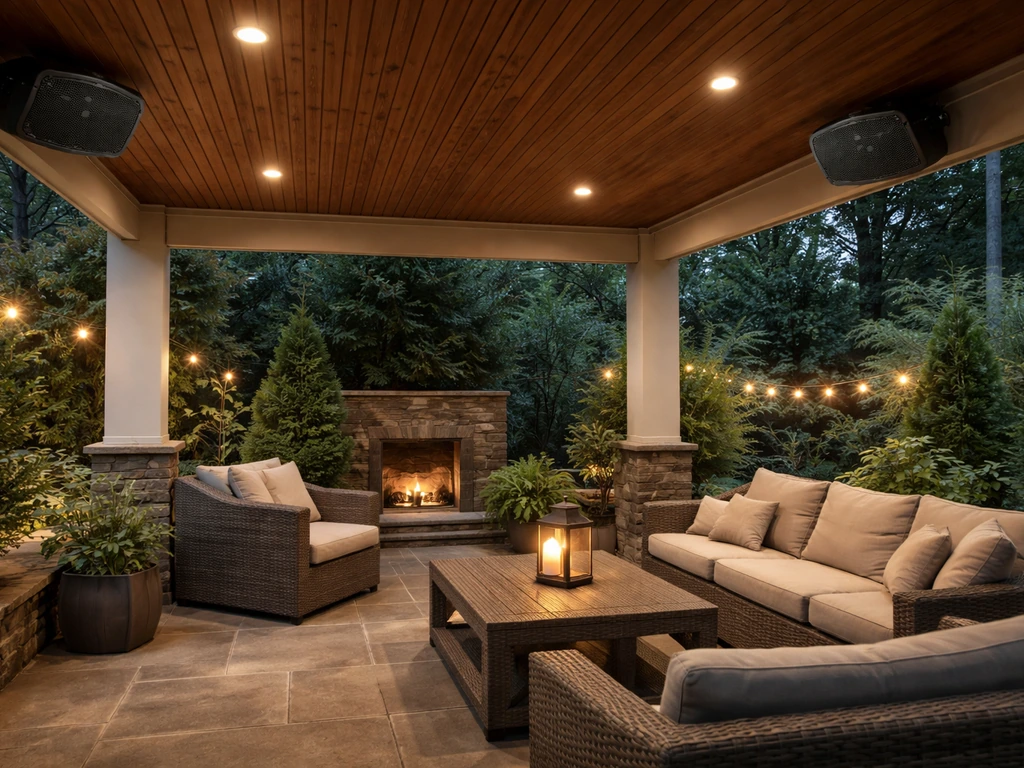
Best Sonos for Outdoor Patio: Pick the Right Model
Compare the best Sonos outdoor patio models, placement, wiring, weather ratings, and setup for single or multi-zone soun