
For most outdoor patios, a 65-inch TV hits the sweet spot. If your seating is 8 to 12 feet from the screen, 65 inches gives you a genuinely cinematic picture without overwhelming a mid-sized space. Closer than 8 feet? A 55-inch works better. Farther than 14 feet, or running a large backyard entertainment area? Step up to 75 or 85 inches. The size question is really a math problem, and once you know your viewing distance, the right screen size practically picks itself.
Best Size TV for Outdoor Patio: Sizing, Brightness, and Fit

Lark Perry
28 Apr 2026
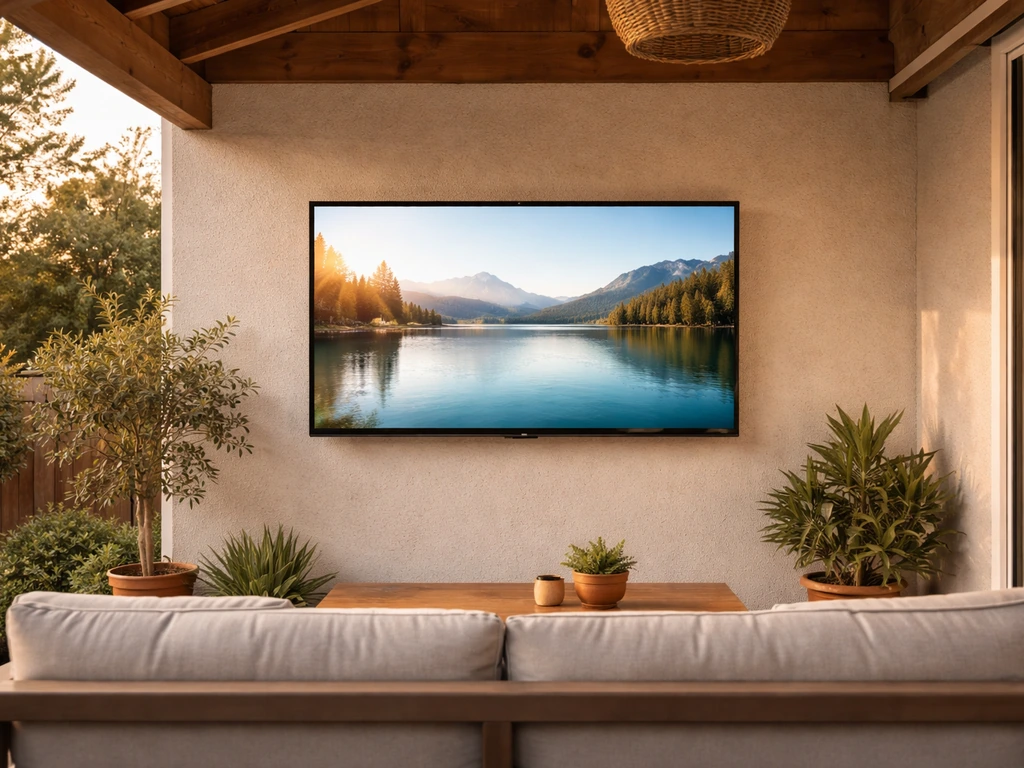
How to Choose the Right Outdoor TV Size (Viewing Distance)
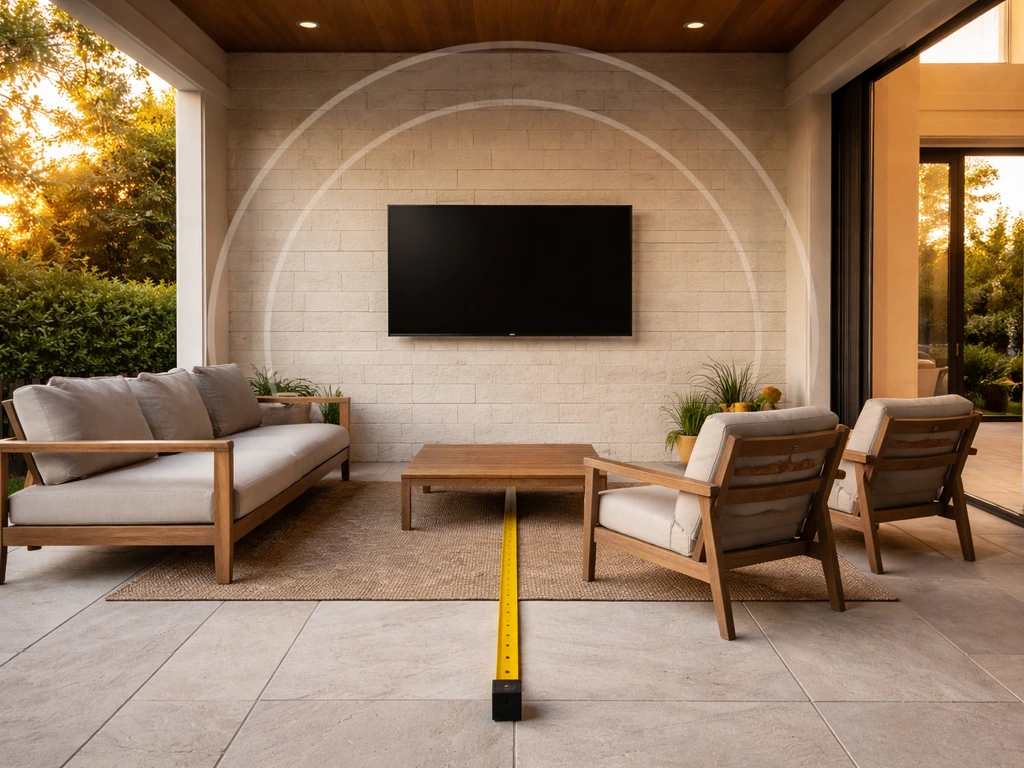
The simplest reliable rule: multiply your viewing distance (in inches) by 0.55 to 0.84 to get the ideal screen diagonal. That range comes from the industry-standard guidance that minimum comfortable viewing distance is about 1.2 times the screen size and maximum is about 1.9 times. Samsung's rule of thumb is even simpler: screen size × 1.2 gives you the recommended minimum distance. Sony targets about 1.5 times the TV's vertical height, which works out similarly in practice.
Translating that into outdoor language: if you're sitting 10 feet (120 inches) from the screen, you want a TV somewhere between 63 and 100 inches diagonally, with around 65 to 75 inches being the practical sweet spot for 4K. At 8 feet, Tailgater Magazine's outdoor-specific guidance lands right at 60 to 65 inches, which matches the math well. At 6 feet, a 55-inch is plenty. At 15 feet or more, 85 inches starts to make sense.
| Viewing Distance | Minimum Screen Size | Recommended Size (4K) |
|---|---|---|
| 6 ft (72 in) | 38 in | 50–55 in |
| 8 ft (96 in) | 51 in | 60–65 in |
| 10 ft (120 in) | 63 in | 65–75 in |
| 12 ft (144 in) | 76 in | 75–85 in |
| 15 ft (180 in) | 95 in | 85–100 in |
One outdoor-specific wrinkle: you're often watching at wider viewing angles than inside, because people spread out on a patio rather than sitting in a neat row facing the TV. Factor in that the person furthest from center-screen might be seated at a 30 to 45-degree angle, which makes sizing up one step smarter than sizing down.
Screen Size vs. Your Patio Layout
Viewing distance is the starting point, but your actual patio layout adds a few more variables. Seating arrangements on a patio tend to be wider and more spread out than a living room sofa. That wider seating arc means off-axis viewers (people sitting to the sides) need a bigger screen to read the image comfortably, or a TV with a genuinely wide viewing angle, which most good outdoor TVs provide.
Wall space and mounting location also constrain your choices. If you're mounting to a pergola post, a small covered porch wall, or a fence, measure the available horizontal width first. A 75-inch TV is roughly 65 inches wide. An 85-inch screen runs about 74 inches across. Make sure you have at least 6 to 8 inches of clearance on each side for cable management, ventilation, and mount hardware.
Small balcony (under 150 sq ft, seating 6 to 8 feet away): A 55-inch TV is the practical ceiling here. A 65-inch can work if the seating is flexible, but can feel overwhelming in a tight space. Medium backyard patio (150 to 400 sq ft, typical seating 10 to 14 feet away): 65 to 75 inches is the right target. Large entertainment patio or poolside setup (400+ sq ft, seating 14 feet or more away): 85 inches is the starting point, and some setups justify a 98-inch screen.
Outdoor Brightness and Screen Technology
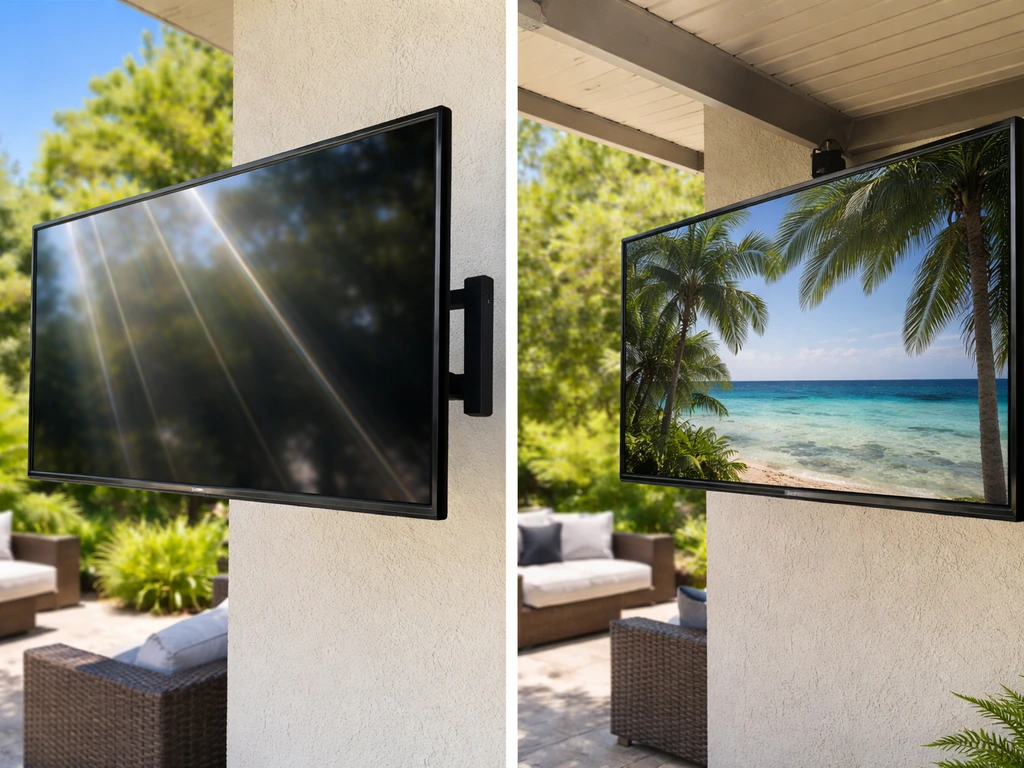
This is where outdoor TV shopping gets genuinely different from buying a living room set. If you want the best tv mount for outdoor patio setups, choose one that tilts for glare and has weather-ready mounting hardware outdoor TV shopping. A standard indoor TV runs around 200 to 400 nits of brightness. In your living room with controlled lighting, that's fine. Outside in afternoon sun, it looks like a grey mirror. Sunlight can hit 10,000 to 15,000 lux of ambient intensity, and overcoming that requires a fundamentally brighter panel.
The practical thresholds work like this: for a covered patio with indirect light, you need at least 700 nits to get a readable, comfortable picture. For partial sun, target 700 to 1,000 nits minimum. For a spot that gets direct afternoon sun, 2,000 nits is the floor for a genuinely watchable image, and some outdoor display experts push the recommendation as high as 5,000 to 8,000 nits for fully exposed direct-sun setups. A Reddit thread on Sylvox discusses that brighter full-sun outdoor TVs, often quoted around blank" rel="noopener noreferrer">2,000+ nits, are better suited for unshaded spaces than lower-brightness models for partial shade. Consumer Reports' testing found that even premium outdoor TVs measured around 640 to 750 nits in standard modes, which underscores why you want a TV specifically rated for your sun exposure level, not just marketed as 'outdoor-capable.'
Anti-glare screen coatings matter just as much as raw nits. A reflective screen at 800 nits can look worse than an anti-glare screen at 600 nits because bright reflected sky eats your contrast. Samsung's The Terrace, for example, combines QLED panel brightness with an anti-glare coating and direct-sun protection technology, specifically because brightness and surface treatment work together. UL now verifies outdoor TV brightness and contrast as measurable performance categories, so look for that verification when shopping.
Which Display Technology Works Best Outside
QLED (quantum dot LED) panels are the dominant technology in purpose-built outdoor TVs right now for good reason: they combine high peak brightness, good color volume, and relatively affordable pricing compared to OLED. OLED panels are stunning indoors but struggle outside because their peak brightness caps out lower and the organic compounds can be affected by extreme heat and UV over time. Standard LED-LCD panels without quantum dot enhancement can work in shaded covered patios but typically fall short in direct sun. For a full-sun setup, a commercial-grade LCD panel with 2,000+ nits is the practical choice.
What 'Outdoor-Ready' Actually Means: Weather Ratings and Enclosures
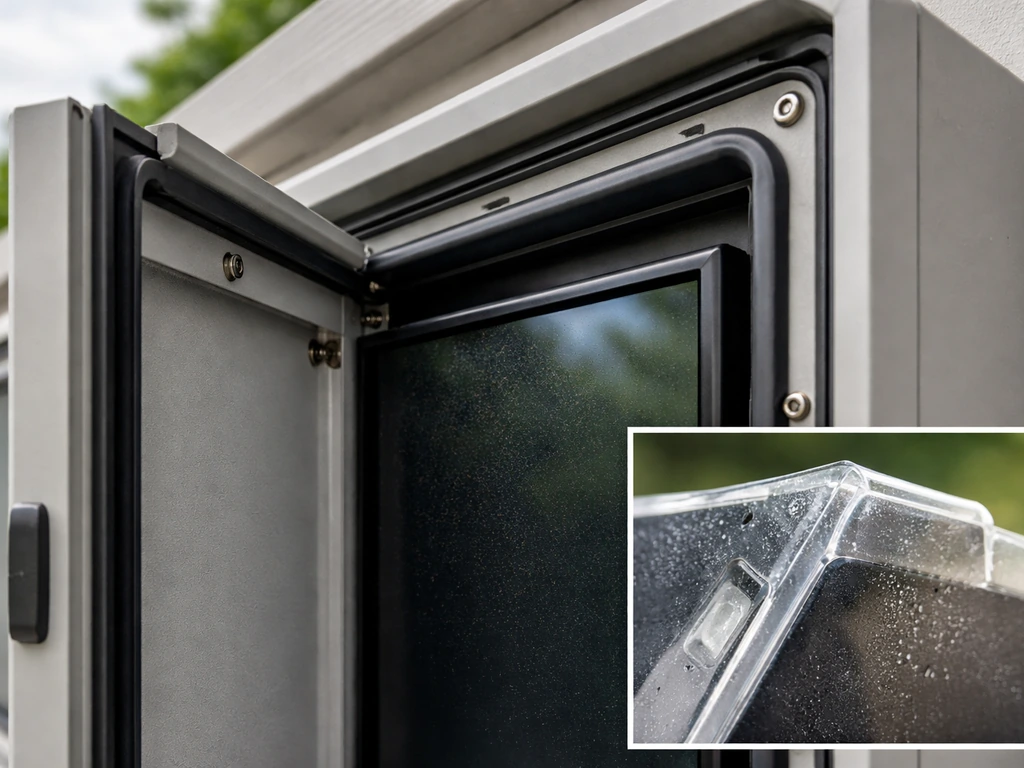
The most important spec to check on any outdoor TV is its IP (Ingress Protection) rating. The two numbers tell you how well sealed it is against solid particles (dust, debris) and liquids (rain, sprinklers). For a patio TV, you want a minimum of IP55. The first '5' means it's dust protected (not fully sealed, but sufficient). The second '5' means it can withstand water jets from any direction. Samsung's The Terrace is rated IP55. SunBrite's Veranda 4 is also IP55. SunBrite's Pro 2 Series runs a wider operating temperature range of -24 to 140°F, which matters if your patio gets extreme summer heat or cold winters.
Operating temperature range is the other spec most buyers overlook. Sylvox outdoor TVs typically operate from -22 to 122°F. Some SunBrite and Sylvox commercial models go as high as 140°F, which is important if your TV is mounted in a spot that traps heat, like an enclosed pergola or a south-facing wall with limited airflow. Samsung's Terrace includes a Cold Weather Mode that manages performance between 32°F and 122°F, giving you some extra operating flexibility.
One honest note on outdoor TV enclosures: they're a legitimate option for protecting a standard indoor TV you already own, but they're not an equal replacement for a purpose-built outdoor TV. A quality enclosure should use UV-resistant polycarbonate or anti-UV treated materials to prevent yellowing and cracking over time. However, most enclosures don't solve the brightness problem. Your indoor TV behind a polycarbonate cover will still wash out in direct afternoon sun. Enclosures make the most sense for covered patios with indirect light, or for protecting a TV you're storing seasonally.
| TV Type | Best For | Typical Brightness | Weather Rating | Price Range |
|---|---|---|---|---|
| Purpose-built outdoor TV (QLED) | Full sun to covered patio | 700–2,000+ nits | IP55 | $1,000–$5,000+ |
| Indoor TV in enclosure | Covered/shaded patio only | 200–400 nits (unchanged) | Varies by enclosure | $300–$1,500 (TV + enclosure) |
| Commercial outdoor display | Full direct sun, commercial use | 2,000–8,000 nits | IP65+ | $3,000–$15,000+ |
Mounting and Setup Essentials
Mount height is where a lot of outdoor TV setups go wrong. The common mistake is mounting the TV too high because the wall space is available, which forces everyone to crank their necks upward for hours. For seated viewers, the center of the screen should be roughly at eye level when seated, which typically means the middle of the screen lands around 42 to 48 inches off the ground. If your seating is lower (like lounge chairs or deep sectionals), aim for the lower end of that range.
A tilting mount is almost mandatory for outdoor installations. Sun angle and overhead sky reflections shift throughout the day, and being able to tilt the screen down 5 to 15 degrees dramatically reduces glare from above. Outvion’s outdoor TV installation guide also recommends using an articulating or tilting VESA mount to angle the screen slightly downward to help manage glare tilt the screen down 5 to 15 degrees dramatically reduces glare from above.. Both Outvion and ThunderTech's installation guidance specifically call out tilting mounts as the primary glare management tool. Samsung's Terrace wall mount supports up to 15 degrees of tilt, which is enough to handle most glare scenarios. A full-motion articulating arm is even better if you have multiple seating areas, since you can angle the screen toward different viewing zones.
Ventilation is a requirement that the specs make clear but buyers often ignore. Samsung's Terrace installation manual requires a gap between the TV and the mounting surface for airflow to regulate operating temperature. Don't mount the TV flush against a solid wall with no spacing, and don't route cables in a way that blocks the rear ventilation area. If you're building a custom outdoor entertainment wall or cabinet, plan ventilation gaps of at least 4 inches around the back and sides.
Cable and power planning deserves attention before you drill anything. Run outdoor-rated conduit for power and any HDMI or ethernet cables. Weatherproof outlet covers and GFCI (ground fault circuit interrupter) outlets are code requirements for outdoor electrical in most jurisdictions. If you're also setting up outdoor audio to pair with the TV, plan your cable routing to include speaker wire or audio output connections. If you want the best Sonos for an outdoor patio, plan your speaker placement and wiring so sound reaches every seating zone outdoor audio. If you want the best sound outdoors, pair your setup with outdoor patio speakers that are easy to power and weatherproof outdoor audio. The mounting and audio decisions often intersect, so it helps to think through both before finalizing the TV location.
Budget Tiers and Practical Recommendations
Under $800 to $1,200: This is the covered-patio, shaded zone. An indoor TV in a quality UV-resistant enclosure, or an entry-level outdoor-rated TV from Sylvox, can work here if direct sun is not a factor. Expect 400 to 700 nits of brightness. Size availability is typically 43 to 55 inches at this budget. Don't push this tier into a full-sun location; it will disappoint you.
$1,200 to $2,500: The practical sweet spot for most homeowners. You're getting purpose-built outdoor TVs like the SunBrite Veranda 4 or mid-tier Sylvox models in 55 to 65-inch sizes, with IP55 ratings and 700 to 1,000+ nits. These handle a covered patio or partially shaded setup well, and the picture quality holds up for evening viewing in any patio environment. This is where most readers shopping for a first real outdoor TV should land.
$2,500 to $5,000+: Samsung's The Terrace series, SunBrite's Pro 2 Series, and premium Sylvox models live here. If you are also researching on Reddit, browsing threads about the best outdoor patio TV for your space can help you shortlist models faster. If you are also researching on Reddit, browsing threads about the best tv for outdoors patio for your space can help you shortlist models faster. You're getting genuine direct-sun performance, anti-glare coatings, wider temperature operating ranges, and full IP55 certification backed by independent verification. Sizes range from 55 to 85 inches. For a backyard entertainment area where you watch afternoon games or run a pool TV year-round, this investment is justified and you'll feel the difference immediately in daytime picture quality.
Above $5,000: Commercial-grade outdoor displays with 2,000 to 8,000 nits, IP65 or higher ratings, and sizes from 75 inches up. This tier is for serious outdoor home theater installs, permanent commercial-style setups, or locations with brutal full-sun exposure all day. Most homeowners don't need this, but it exists and performs accordingly.
Common Mistakes When Buying a Patio TV
- Buying a non-outdoor-rated TV and expecting it to survive: Standard indoor TVs are not sealed against moisture, humidity, insects, or temperature swings. Even a covered patio generates condensation cycles that will corrode an unsealed TV over one or two seasons.
- Oversizing for a small space: A 75-inch screen in an 8-foot seating area creates an uncomfortable, fatiguing viewing experience. Bigger is not always better outdoors; match the size to the distance.
- Undersizing for a large or spread-out patio: Going too small because you're watching a budget leaves viewers straining from 15 feet away. At that distance, 65 inches is already the minimum, not a luxury.
- Underestimating glare and sunlight: Buying a 400-nit TV for a south-facing afternoon sun setup is the single most common disappointment in outdoor TV purchases. Check your TV location's sun exposure at peak hours before selecting a brightness tier.
- Mounting too high: Aiming for a 'theater look' by mounting the TV at 6 or 7 feet center height forces uncomfortable neck angles for seated viewers for every hour of use.
- Skipping a tilt mount: A fixed flat mount locks you into whatever glare angle the sky creates. A tilting or articulating mount costs $50 to $200 more and eliminates most glare problems.
- Ignoring ventilation requirements: Mounting a TV flush against a wall with no airflow gap causes overheating, especially in full sun. Check your TV's manual for minimum clearance specifications.
- Forgetting weatherproof power and cable infrastructure: Running standard indoor extension cords to an outdoor TV is both a safety hazard and a warranty-voiding mistake. Budget for outdoor-rated conduit, GFCI outlets, and weatherproof cable covers as part of the total install cost.
Your Pre-Purchase Checklist
Before you click buy on any outdoor TV, run through these quick checks to make sure you've covered the full decision.
- Measure your actual viewing distance from the primary seating area to the intended screen location.
- Use the sizing formula (distance in inches × 0.55 to 0.84) to confirm your target screen size, then round to the nearest standard size.
- Assess your sun exposure: covered and shaded (700 nits minimum), partial sun (1,000 nits target), or direct full sun (2,000 nits or more required).
- Confirm the TV carries an IP55 rating or better and check the operating temperature range against your local climate extremes.
- Plan your mount: choose a tilting or full-motion mount rated for the TV's weight, and confirm the mounting surface can handle the load.
- Set your screen center height at approximately 44 to 48 inches off the ground for standard patio seating, lower for lounge-style seating.
- Plan your power and cable routing with outdoor-rated materials and GFCI protection before drilling any holes.
- Budget for the full install: TV + mount + outdoor power infrastructure + any audio pairing you want, not just the panel price.
If you're also thinking through how to pair sound with your outdoor TV, the TV location and mount height decisions directly affect where you can run speaker cables or position wireless outdoor speakers, so it's worth thinking about audio at the same time rather than as an afterthought. If you want music while you grill or host guests, consider the best outdoor radio for patio setups so you get reliable sound even without the TV wireless outdoor speakers. If you're shopping for the best patio speakers Bluetooth options, look for models rated for outdoor use and built to deliver clear sound in open-air spaces. If you're shopping for the best wireless patio speakers Bluetooth options, look for models rated for outdoor use and built to deliver clear sound in open-air spaces.
FAQ
What’s the best size tv for outdoor patio if I don’t know my exact viewing distance yet?
Measure from where most people sit to the spot where the TV will be, then use your closest expected seating distance (not your maximum). If you’re between ranges, choose the larger size because outdoor setups often have off-axis viewing and wider seating spread that reduces perceived sharpness.
Is 4K or higher resolution the reason outdoor patio TVs need a bigger screen?
Resolution helps, but screen size is mainly about readability at typical outdoor distances and viewing angles. A larger TV also reduces how noticeable compression artifacts look on a patio when people are farther to the side, even if both TVs are 4K.
If my patio is covered but still bright, should I choose a brightness rating like a partially sunny location?
Yes, treat it based on actual light hitting the screen, not whether the ceiling is overhead. If you can see a distinct reflection of the sky on the TV from seating, bump brightness one tier (for example, partial sun targets rather than indirect-only).
How much tilt should I really use on a tilting mount?
Start with the center of the screen facing slightly below eye level (about a 5 to 10 degree downward tilt). Then adjust after you sit in all primary seats, because glare patterns change throughout the day and the best angle at noon may differ from late afternoon.
What’s the safest mounting height for mixed seating, like chairs and a sofa?
Use the average eye level of the people who will watch most often, then tilt the TV down to cover the lower seating. If you have both high and low seating, a full-motion articulating arm is more practical than trying to compromise with one fixed height.
Do I need a tilting mount if my outdoor TV already has an anti-glare screen?
Anti-glare helps, but it cannot eliminate all glare from overhead reflections. A tilt (or articulating arm) is still important outdoors because sun angle and sky reflections change during the day, and small angle shifts can make a noticeable difference.
Is IP55 enough for sprinklers or frequent misting?
IP55 is a good baseline, it can handle water jets, but it does not mean you can ignore frequent direct spray patterns. If sprinklers can hit the TV regularly, check for higher ratings and plan a splash shield or repositioning so the screen is not repeatedly targeted.
Can I mount the TV flush against a pergola beam or wall to save space?
Avoid it. The rear ventilation gap matters because outdoor TVs produce heat while running at high brightness. If you cannot maintain at least a small airflow clearance, consider a different mount style or create a ventilated spacer, otherwise you may shorten performance or trigger thermal protection.
What cable setup works best for outdoor patio TVs?
Use outdoor-rated conduit where possible and route cables so they stay away from standing water and tight bends. Add slack loops near the TV so vibration from wind or minor movement does not stress connectors over time.
Should I buy an outdoor TV or use an indoor TV in an enclosure?
If the screen will see direct afternoon sun for long stretches, skip the enclosure approach because it usually does not solve brightness and contrast washout. Enclosures can be useful for covered patios with indirect light or for seasonal storage protection, but they are not a substitute for purpose-built direct-sun performance.
How do I choose between 65-inch and 75-inch for outdoor patio use?
If your primary seating is around 10 to 12 feet away, 65 inches is usually the sweet spot. Choose 75 inches if you regularly have multiple seats that are off to the side, or if you want a more immersive look for sports where small text and score overlays need to be readable without leaning.
What’s the biggest mistake people make when buying the best size tv for outdoor patio?
They pick the TV size from wall measurements only, not from viewing geometry. Prioritize distance and off-axis seating, then confirm the screen width will fit with clearance for ventilation and cable management, so you do not end up with a cramped or poorly cooled install.
Will outdoor speakers connect easily if my TV is mounted high?
Mount height affects cable paths and how easily you can place speakers at the correct position. If you want a cleaner look, plan the audio cable route before final mounting, and verify you have enough slack and conduit space to reach speaker locations without running through tight structural areas.
What should I check on the TV’s operating temperature if my patio is extreme?
Confirm the stated operating range matches your coldest winter nights and your hottest summer afternoon conditions at the mounting spot, including any trapped heat behind a pergola or in a corner. If the TV runs near the top end, thermal management may dim brightness even when the panel is bright-capable.
Next Articles
Best Wireless Patio Speakers: Top Outdoor Picks and Buying Guide
Top wireless patio speakers for outdoor use, with Bluetooth range, weatherproofing, setup tips, and category picks.
Best TV for Outdoors Patio: Buy Guide for Covered or Sun
Choose the best outdoor patio TV for sun or covered spaces, with brightness, glare, smart features, size and setup check
Best Patio Speakers Bluetooth: Buyer’s Guide by Patio Size
Compare the best Bluetooth patio speakers by patio size, weather ratings, battery power, range, bass, and multi-speaker