The best Sonos speaker for an outdoor patio is the Sonos Outdoor Speaker Pair by Sonance, used together with the Sonos Amp. It is the only Sonos product genuinely built for permanent outdoor installation, rated IP66 and tested to Military Spec 810 for humidity, salt spray, UV, and temperature. Everything else in the Sonos lineup, including the Roam, is either a portable Bluetooth speaker with an IP rating covering short-term splashes or an indoor speaker that should not live outside year-round. If you want Sonos sound on your patio without compromise, the Outdoor by Sonance pair plus an Amp is the clear answer. The Connect:Amp guide describes the Connect:Amp as an “blank" rel="noopener noreferrer">amplified music streaming upgrade” for indoor or outdoor speakers, including those connected to existing wired speaker infrastructure.
Best Sonos for Outdoor Patio: Pick the Right Model

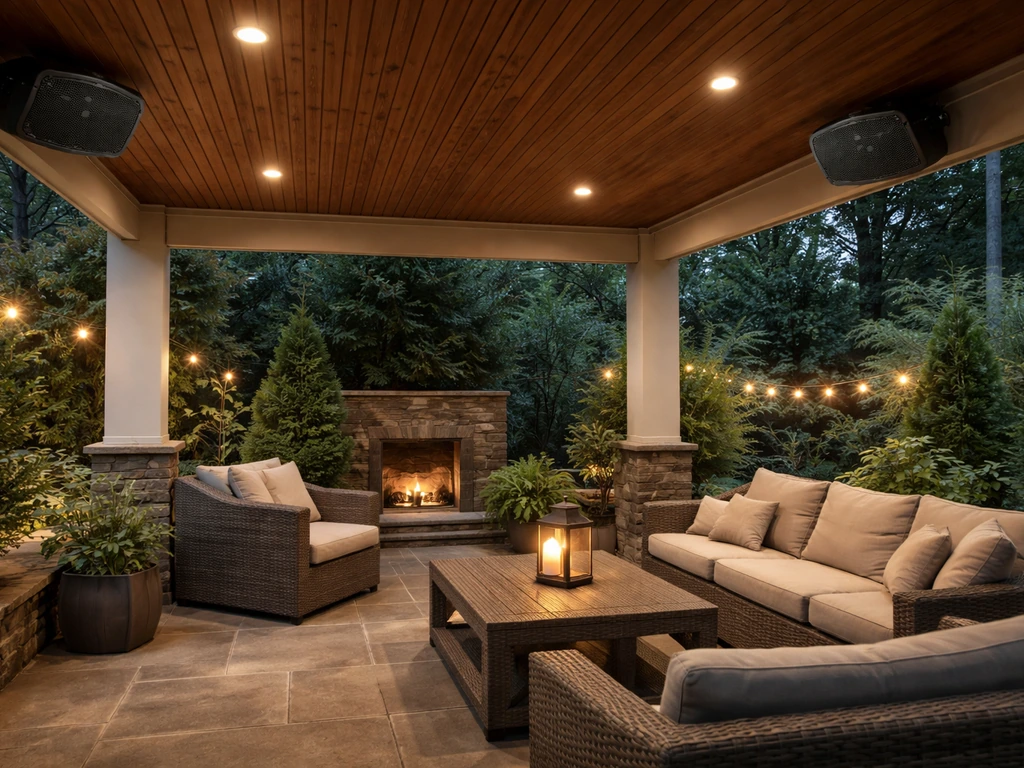
Pick the right Sonos type for true patio outdoor use
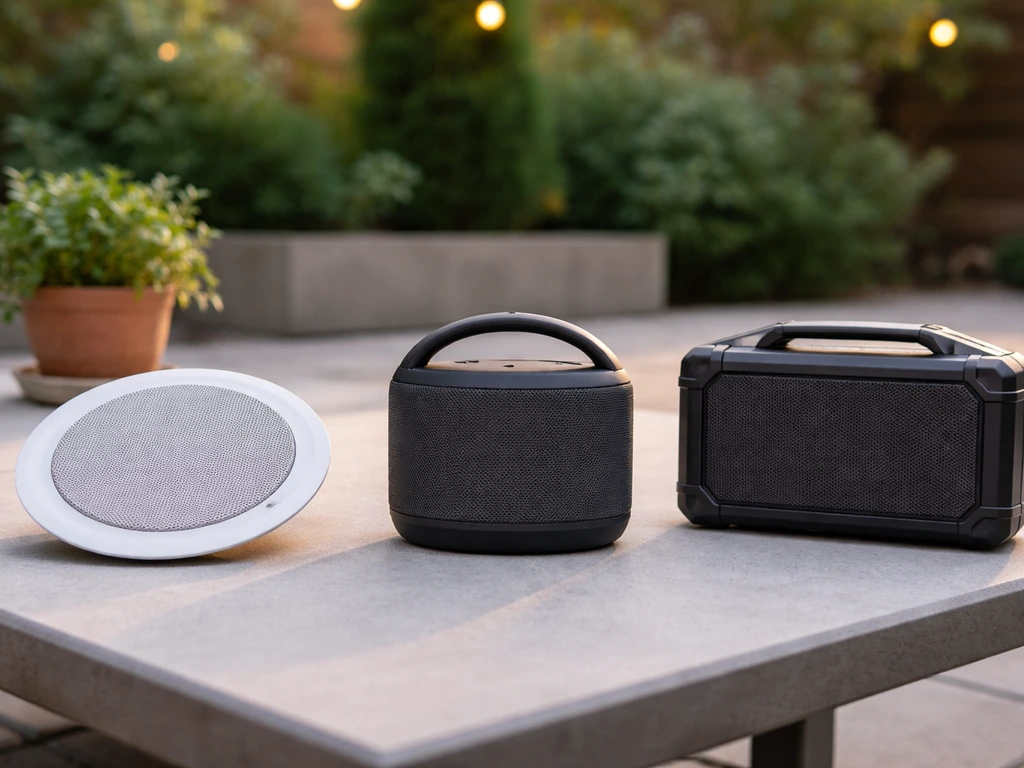
There are really three categories of Sonos products people try to use outdoors, and understanding which is which will save you from a costly mistake.
| Sonos Product | Outdoor Rating | Good for Patio? | Reason |
|---|---|---|---|
| Outdoor Speakers by Sonance (pair) | IP66 + Mil Spec 810 | Yes — permanently | Built specifically for outdoor installation, handles rain, UV, salt, heat |
| Sonos Roam (portable) | IP67 (splash/submersion, short-term) | No — not long-term | Sonos explicitly says it is not rated for long-term outdoor exposure |
| Era 100, Era 300, Five, Move 2 (indoor/portable) | None / limited | No | Indoor electronics; humidity and UV will degrade them quickly |
The Roam's IP67 rating gets misread constantly. IP67 means it can survive being submerged in 1 meter of water for up to 30 minutes, which is great for poolside accidents. But Sonos' own support documentation is explicit: the Roam is not rated for long-term outdoor exposure. Leaving it on a covered patio shelf through a summer of heat, humidity, and UV cycling will eventually kill it. The rating protects against accidents, not seasons.
The Sonos Move 2 is a step up from Roam in size and sound, but it is still a portable device designed to travel between indoors and outdoors temporarily. If you want it outside for an afternoon party, fine. As a permanent fixture, it is not the right tool. The Outdoor by Sonance speakers are the only Sonos option engineered for the job.
Best Sonos models for outdoor patios (by patio size and goals)
Once you know the Outdoor by Sonance pair is your speaker, the real decision is about how many pairs you need and which Amp configuration to use. Here is how to think about it by patio size and listening priority.
Small patios (up to roughly 200 sq ft)
One pair of Outdoor by Sonance speakers driven by a single Sonos Amp is all you need. The speakers are a two-way design with a 6.5-inch polypropylene woofer and a 1-inch soft-dome tweeter, with a rated maximum SPL of 103 dB at 1 meter and an 80-degree horizontal by 90-degree vertical coverage angle. On a small deck or courtyard, one stereo pair mounted at eave height will fill the space comfortably without needing to push the amp hard. Sonos sells this exact combination as a bundled Amp with Outdoor Speakers Set, which is the easiest way to buy. A helpful way to shop is to look for outdoor patio speakers best buy bundle options that pair the Outdoor by Sonance speakers with a Sonos Amp.
Medium patios (200 to 500 sq ft)
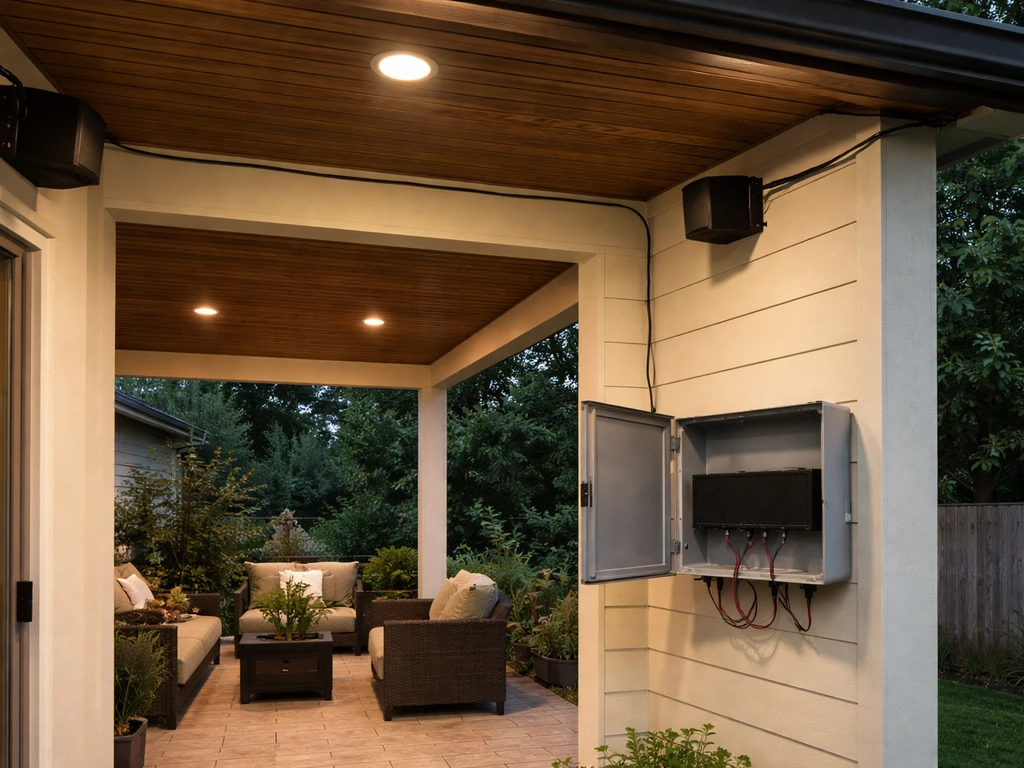
A single pair still works if placement is thoughtful, but you may want to consider two pairs if the space has distinct zones, like a dining area and a lounge area, or if a pergola or roof structure creates acoustic shadows. Two pairs means two Sonos Amps, each running its own stereo zone. You can group them in the Sonos app for synchronized playback or run them independently, which is genuinely useful if people want different volume levels at each end of a large patio.
Large or complex outdoor spaces (500 sq ft and up)
For large L-shaped patios, pool decks, or outdoor kitchen setups, plan for multiple pairs and multiple Amp zones from the start. The Sonos multiroom system makes this straightforward: every Amp becomes its own zone in the app, you can group them all or split them independently. If you want deeper bass for outdoor movie nights or parties, you can add a Sonos Sub to a compatible Amp zone. Just check compatibility first since the Sub 4 has restrictions on which Sonos components it pairs with.
What about the Roam or Move 2 for patio use?
If you genuinely need something portable, the Move 2 is the better patio companion of the two because it is louder and has a longer battery life. Use it for casual afternoons and bring it inside afterward. Think of it as a supplement, not a replacement, for a proper outdoor speaker installation. The Roam works similarly but is smaller and lower output, better suited to a patio table than filling a full outdoor space. Neither replaces the Outdoor by Sonance pair for a permanent patio setup.
Outdoor placement, mounting, and setup essentials
Where you mount the Outdoor by Sonance speakers matters almost as much as which speakers you buy. The speakers are approximately 13 inches tall (329mm) and come with Sonos' FastMount bracket system, which uses a wire entry grommet to keep the speaker wire sealed and the installation clean. You will be running speaker wire from your Sonos Amp to each speaker, so plan the cable route before you start.
Mounting height and angle
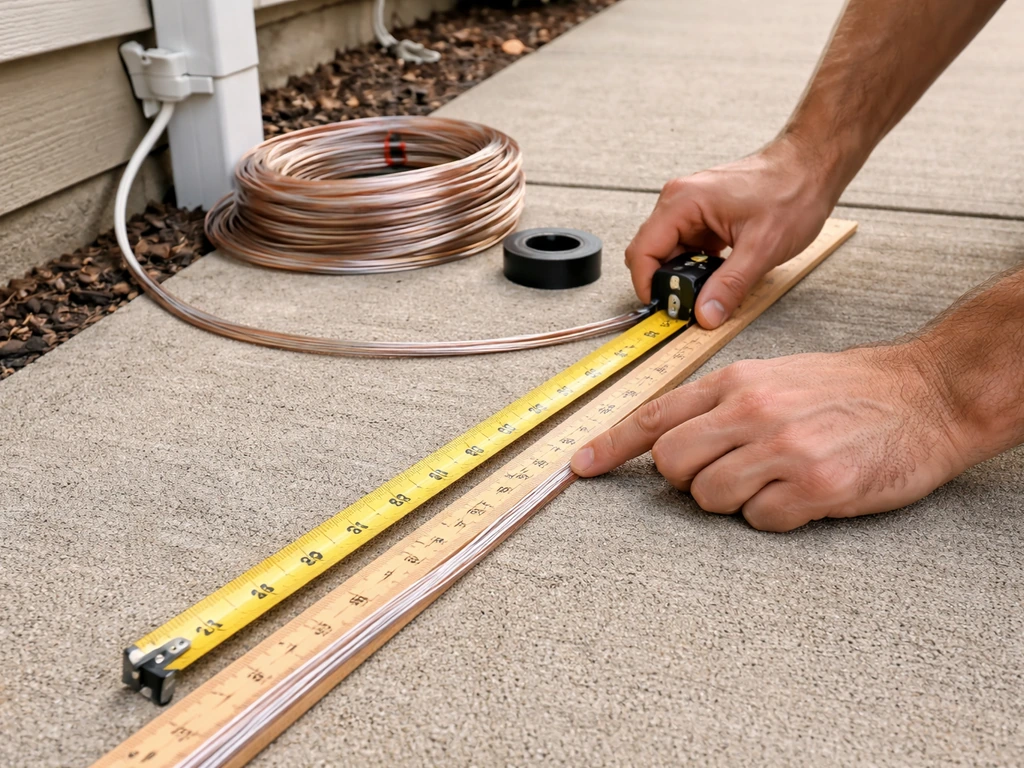
Mount the speakers at eave height, typically 8 to 10 feet off the ground, angled downward toward the listening area. The 90-degree vertical coverage angle gives you flexibility, but tilting the speaker so the tweeter faces the primary seating zone gives the most even stereo image. Avoid mounting them flat against a wall facing horizontally: you will get a lot of early reflection off hard surfaces and lose imaging clarity. A slight downward angle of 15 to 30 degrees is the sweet spot for most patios.
Speaker wire gauge and run distance
This is where a lot of DIY outdoor installs go wrong. The Sonance installation manual includes a wire gauge chart you need to follow based on the distance from your Sonos Amp to each speaker. Use 18-gauge wire for runs up to 100 feet, 16-gauge for runs up to 150 feet, and 14-gauge for runs up to 250 feet. Using wire that is too thin for a long run will reduce power delivery and can cause the amp to run hotter than it should. Always use in-wall or direct-burial rated wire for outdoor runs.
Where to put the Sonos Amp
The Sonos Amp itself is not outdoor-rated and must be installed indoors or in a protected, ventilated enclosure like an AV closet or indoor utility area. Plan your wire run so the Amp lives inside and the wire exits through a sealed penetration in the wall or soffit. Always unplug the Amp from the wall before making speaker wire connections during installation.
Stereo pair setup in the Sonos app
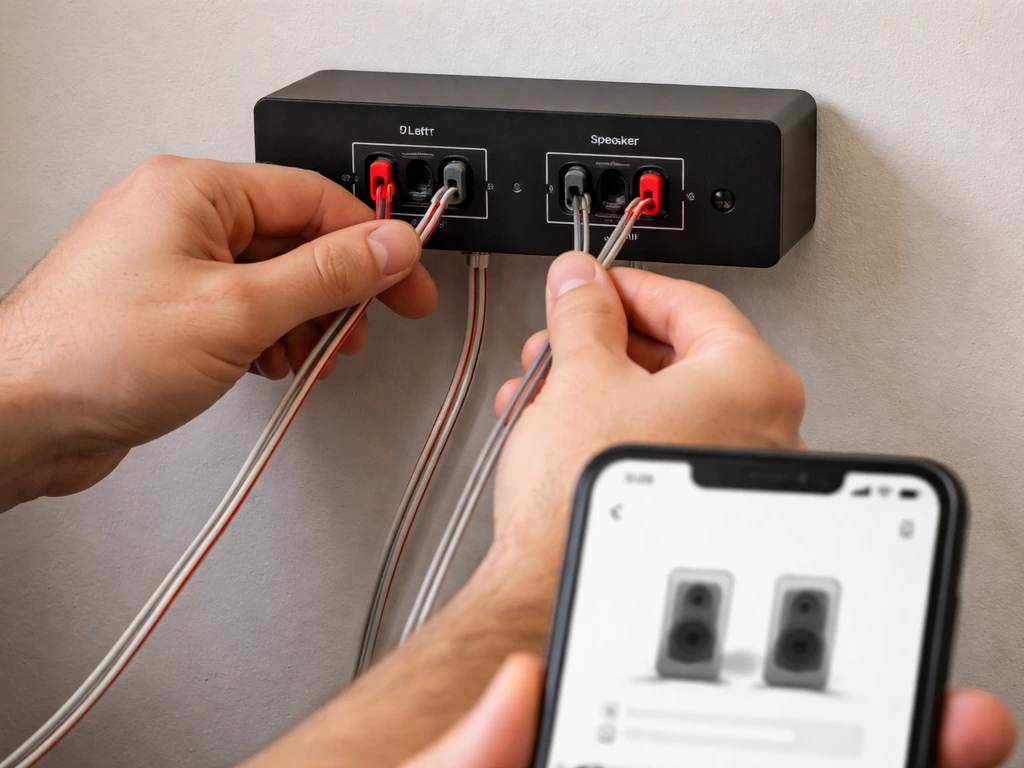
Because the Outdoor by Sonance speakers are passive (they have no electronics of their own), the stereo configuration happens at the Amp, not in software. You wire the left speaker to the left terminals and the right speaker to the right terminals on the Amp. The Sonos app then sees the Amp as a single stereo zone. This is different from how products like the Era 100 pair in software: with passive architectural speakers, the wiring determines the stereo split.
Weatherproofing, IP ratings, and ongoing maintenance
The Outdoor by Sonance speakers are rated IP66, which means they are completely protected against dust ingress and against powerful water jets from any direction. They are also tested to Mil Spec 810 for humidity, salt spray, UV exposure, and temperature extremes. In practical terms: these speakers handle rain, ocean air, direct sun, and winter cold without needing babying.
What IP66 actually means for your patio
IP66 is a strong rating for outdoor speakers. The first 6 means total dust protection. The second 6 means protection against high-pressure water jets, which covers rain, hose spray near the speakers, and most sprinkler overspray. It does not mean you can submerge them (that would require an IP67 or IP68 rating), but for any typical patio or poolside environment where the speakers are mounted overhead, IP66 is more than enough. You do not need to cover these speakers when it rains.
Maintenance and longevity
- Wipe down the grilles once or twice a year with a damp cloth to clear dust and pollen buildup, which can slightly muffle high frequencies over time.
- Inspect the FastMount bracket hardware annually for any signs of corrosion, especially in coastal environments where salt air accelerates oxidation.
- Check that the wire entry grommets are still seated properly after any significant storm or temperature swing.
- Keep the Sonos Amp indoors in a dry, ventilated location. Amp failure is more likely from heat buildup than from anything the speakers face outdoors.
- If you are in a climate with hard freezes, there is no need to remove the speakers, but make sure any water has drained from around mounting hardware before a freeze cycle.
Do not use the Roam, Move 2, or any other non-rated Sonos product as a permanent outdoor fixture and expect it to last. Even under a covered patio, humidity and temperature cycling will degrade indoor electronics over one to two seasons. The upfront investment in the properly rated outdoor pair saves you replacement costs later.
Connectivity options and how to integrate with your Sonos system
The Sonos Amp connects to your home network over Wi-Fi and shows up as a zone in the Sonos app, just like any other Sonos speaker. If your patio is far from your router, you can also connect the Amp via ethernet, which is the more reliable choice for permanent installations. A wired network connection eliminates the risk of Wi-Fi dropouts from thick walls or distance, and for an outdoor speaker that you want to just work every time, ethernet is worth the effort if you can run a cable.
Adding the patio zone to an existing Sonos system
If you already have Sonos speakers indoors, adding the outdoor Amp zone is seamless. Open the Sonos app, tap the plus icon to add a product, and follow the setup flow for the Amp. Once it is on your network, it appears as a new zone called whatever you name it (Patio, Backyard, Pool Deck, etc.). You can then group it with any other Sonos zone for synchronized multiroom playback, or run it independently. The outdoor sell sheet from Sonos specifically highlights this multiroom control as a key feature: manage your whole system from any room, including the patio zone.
Using line-in on the Sonos Amp
The Sonos Amp supports line-in via an analog RCA input or an optical input (with an adapter). This is useful if you want to connect a turntable, a TV audio output, or an outdoor TV audio feed directly to the patio zone. This is why people searching for the best TV for outdoor patio Reddit often look for a line-in path that can feed patio speakers from the TV audio output. If you are shopping specifically for a great option for an outdoor patio, the Outdoor by Sonance pair paired with a Sonos Amp is the best fit for year-round listening outdoor TV audio feed. Once connected, you select the Line-In source in the Sonos app, and you can even broadcast that source to other rooms in your Sonos system. If you have an outdoor TV setup on your patio, this is how you get the audio through your Sonos patio speakers rather than relying on the TV's built-in speakers. If you are shopping for the best TV mount for an outdoor patio, plan the speaker and wiring route around where the TV will sit so audio stays consistent outdoor TV setup.
Expanding with a Sonos Sub or additional zones
If you want more bass for outdoor movies or music, you can add a Sonos Sub to your Amp zone. The Sub connects wirelessly and adds significant low-end weight that passive outdoor speakers alone cannot deliver. Check compatibility before buying: the Sub 4 has specific compatibility restrictions with older Sonos components, so if you are mixing older and newer Sonos hardware, confirm your Amp model supports the Sub you are considering. For a straightforward new setup with a current-generation Amp, compatibility is not an issue.
What about using a Sonos Port instead?
The Sonos Port is a network streamer with a built-in DAC and analog RCA outputs, designed to feed an external amplifier. If you already own a quality outdoor-rated amplifier or an A/V receiver with speaker outputs, you can use a Port to stream Sonos audio to it rather than buying a Sonos Amp. The Port includes RCA inputs for line-in sources as well. This is a niche option, mostly useful if you are integrating with an existing outdoor amp setup rather than building fresh.
Quick buying recommendations and decision checklist
Here is the short version for anyone who just wants to know what to buy and how to buy it confidently.
What to buy based on your situation
| Your situation | What to buy |
|---|---|
| New outdoor patio setup, no existing Sonos | Sonos Amp + Outdoor by Sonance Speaker Pair bundle |
| Already have Sonos indoors, adding patio zone | Sonos Amp + Outdoor by Sonance Speaker Pair (add Amp to existing Sonos system) |
| Large patio with multiple zones | Multiple Sonos Amps + Outdoor by Sonance Pairs (one Amp per stereo zone) |
| Need deeper bass outdoors | Add a Sonos Sub to a compatible Amp zone |
| Temporary outdoor use only (parties, not permanent) | Sonos Move 2 (portable, bring inside after use) |
| Already have an external outdoor amp | Sonos Port to add Sonos streaming to your existing amp |
Before you buy: decision checklist
- Confirm your patio size and how many speaker pairs you need to cover it evenly.
- Identify where the Sonos Amp will live indoors and plan your speaker wire route from that location to each mounting point.
- Choose your wire gauge based on run distance: 18-gauge up to 100 ft, 16-gauge up to 150 ft, 14-gauge up to 250 ft. Use in-wall or direct-burial rated wire for outdoor runs.
- Decide whether to use Wi-Fi or ethernet for the Amp's network connection. Ethernet is more reliable for a permanent installation.
- If you have an existing Sonos system, note the generation of your other components before adding a Sub, to confirm compatibility.
- Check whether you want line-in capability for an outdoor TV or other source — if so, the Sonos Amp supports this natively.
- Buy the Amp with Outdoor Speakers bundle from Sonos if you want the simplest purchase path for a small-to-medium patio.
If you are also exploring non-Sonos options, the broader category of wireless patio speakers and Bluetooth patio speakers offers strong competition at lower price points, though you lose the deep Sonos multiroom integration and the dedicated outdoor engineering of the Sonance-built hardware. Bluetooth patio speakers can be a strong budget choice, but they typically lack the dedicated outdoor engineering and multiroom control you get with a Sonos outdoor setup wireless patio speakers and Bluetooth patio speakers. For anyone already in the Sonos ecosystem or committed to whole-home audio control through a single app, the Outdoor by Sonance pair with a Sonos Amp is the most coherent, highest-performing solution for a permanent patio installation today. If you are also planning an outdoor TV, make sure you choose the best size TV for outdoor patio viewing so the screen is readable at your seating distance.
FAQ
Can I install the Outdoor by Sonance speakers myself, and what wiring mistakes should I avoid?
Yes, but plan it like a structural addition. The speakers are passive, so the stereo separation is created by wiring to the Amp (left to left, right to right). If you swap speaker wires or run a cable through the wrong path, you can end up with a reversed image (vocals and stereo effects shift). Label both ends of every wire before terminating at the Amp.
Do I need a second Sonos Amp if my patio has multiple listening areas?
For a single patio zone, the pairing is straightforward: one stereo Outdoor by Sonance pair needs one Sonos Amp. If you want separate volume per area, you need separate Amp zones, meaning two pairs and two Amps for two independently controlled zones. If you try to mix zones on one Amp, you will lose independent control.
Where should the Sonos Amp be installed, and can it go in a covered outdoor cabinet?
The Amp is not rated for outdoors, so you should treat it like an indoor component. The safest approach is to locate it inside a conditioned space (utility room, AV closet) or in a ventilated enclosure, then run sealed outdoor-rated wiring to the soffit for the speaker connections. If you mount the Amp in a garage that can get very hot or very cold, use a temperature-controlled enclosure plan rather than assuming it will be fine.
Should I connect the Sonos Amp to Wi-Fi or Ethernet for an outdoor patio setup?
If your router is far away or you have frequent Wi-Fi dropouts, use Ethernet to the Amp. Ethernet also stabilizes multiroom grouping, because the Amp stays reliably connected even when the patio has thick walls or long distances. If Ethernet is not possible, plan for stronger Wi-Fi coverage at the Amp location before you install.
How do I decide between one pair and two pairs for my patio size?
Start with volume limits and listening distance. Two pairs on two Amps can also help reduce how loud you need to play in one corner to hear clearly elsewhere, especially on L-shaped or partially shaded patios. A useful rule of thumb is to avoid relying on high volume to compensate for poor placement, because early reflections from nearby hard surfaces will blur imaging.
If my patio gets heavy rain, will IP66 handle it, or do I need extra protection?
IP66 means the speakers handle dust and high-pressure water jets, but it does not equal “submerge.” If your speakers are mounted under a covered soffit at eave height, that is the intended use. Do not plan for direct submersion, frequent rinsing with high-pressure washing, or leaving them exposed to saltwater spray at ground level where they can take sustained direct hits.
Will a Sonos Sub work outdoors with the patio speakers, and what should I check before purchasing?
You can add a Sonos Sub to the Amp zone, but confirm compatibility before buying. Also decide where you can place the Sub for the best bass response, because outdoor bass can sound uneven due to open spaces and furniture placement. Even with the right setup, expect the Sub to add impact most when you have enough headroom on the Amp.
What is the best way to connect a turntable or outdoor TV audio to the Sonos patio speakers?
Yes, line-in can feed sources like a turntable or TV audio output into the patio zone via the Amp, but choose your input type carefully. If you are connecting to a TV, check whether you have optical output available; optical usually avoids some analog noise issues over longer runs. For turntables, make sure the turntable has a built-in phono preamp or use the correct preamp so you do not end up with very low or distorted volume.
How does stereo pairing work for the Outdoor by Sonance speakers in the Sonos app?
You do not need to run the speakers as a “smart” pair in software, because the stereo wiring is what creates the left-right channel. In the Sonos app, the Amp shows as one stereo zone, so you should focus on getting physical wiring and placement correct rather than expecting software settings to fix incorrect speaker orientation.
Can I use Roam or Move 2 on my patio instead of the Outdoor by Sonance pair?
Not usually. If you are building a permanent setup, do not rely on Roam or Move 2 as replacements for the Outdoor by Sonance plus Amp combination. Their outdoor exposure is not meant for year-round conditions, and you will also miss the dedicated installation features, stable multiroom integration, and consistent coverage that the Outdoor by Sonance speakers are engineered for.
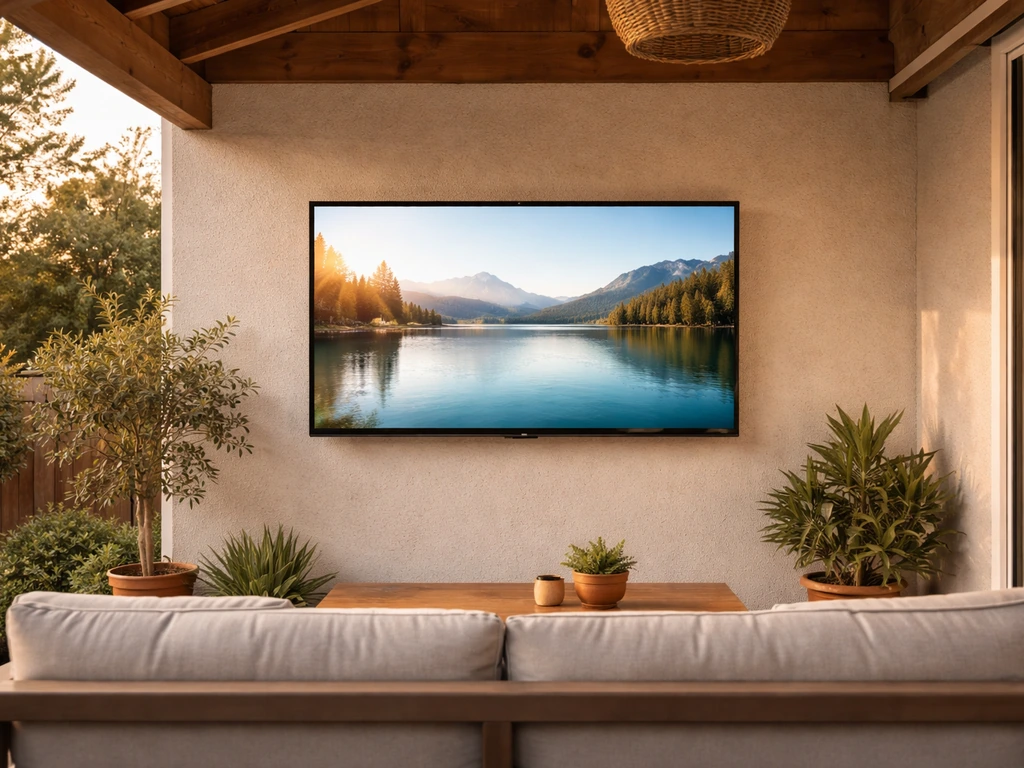
Choose the right outdoor patio TV size with distance math, brightness tips, weather ratings, mounting and glare planning
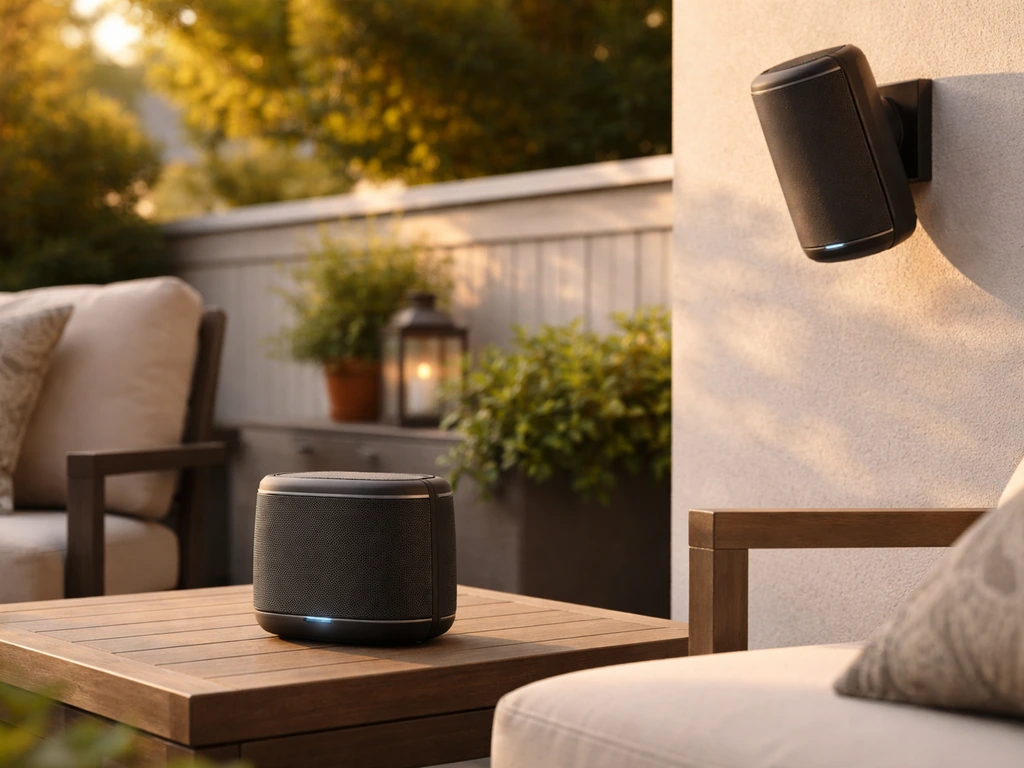
Top wireless patio speakers for outdoor use, with Bluetooth range, weatherproofing, setup tips, and category picks.
Choose the best outdoor patio TV for sun or covered spaces, with brightness, glare, smart features, size and setup check