
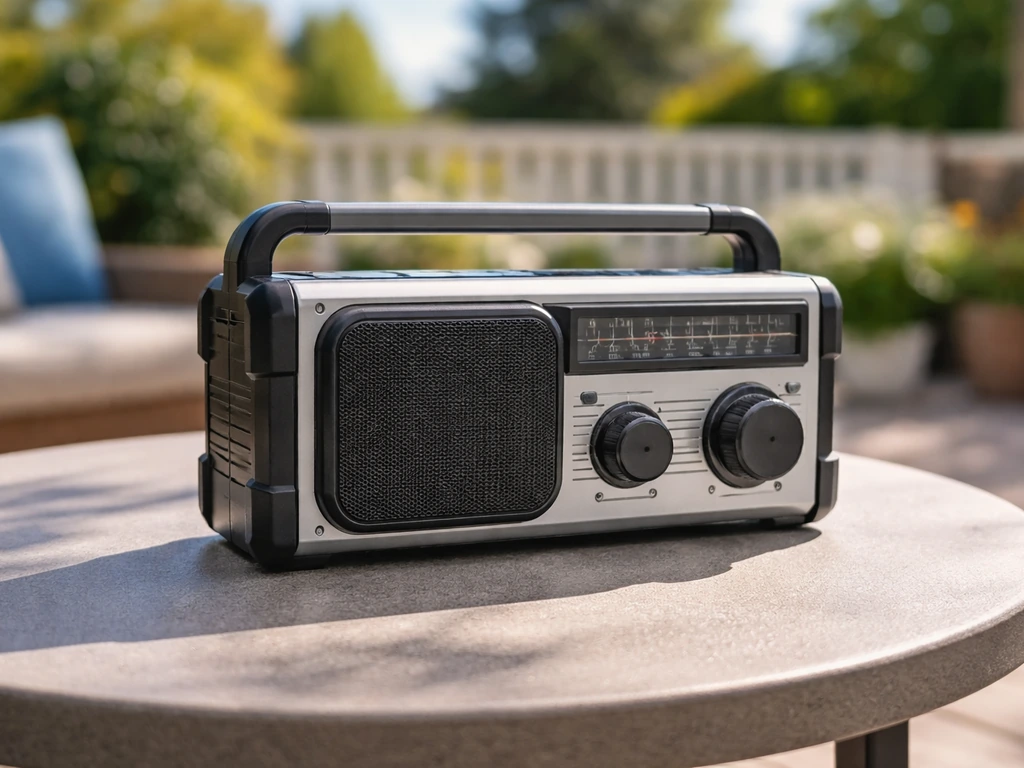
For most patios, the C.Crane CCRadio Solar BT is the best outdoor radio you can buy right now. It handles AM/FM with genuinely good reception, runs up to 50 hours on its internal lithium battery, charges via solar or USB, and adds Bluetooth for streaming. If you want something more party-ready with louder output, the Lenco ODR-160GY delivers 35 watts RMS, IPX5 water resistance, and DAB+/FM plus Bluetooth in one rugged box. For a tight budget or a small sheltered patio where you mostly want background music with FM as a backup, the iLive ISBW240BDL dual-speaker set covers you with about 20 hours of battery life and a built-in solar trickle charger. The right pick depends on your patio's exposure, how loud you need it, and whether you have a nearby outlet, and I'll walk you through all of that below.
Best Outdoor Radio for Patio: How to Choose and Buy

What makes an outdoor patio radio different from a regular one
An outdoor radio isn't just a regular radio with a different color. The casing has to stand up to UV radiation, temperature swings, humidity, and rain, sometimes all in the same afternoon. Indoor radios use plastic and circuitry that can warp, corrode, or short out when moisture gets in. Outdoor-rated units seal those components behind enclosures that have been tested against real water ingress, not just labeled 'splash-proof' as a marketing term.
Beyond weather resistance, open-air listening is acoustically challenging. Sound dissipates fast outdoors, there are no walls to reflect it back at you. So a radio that sounds great in your kitchen at 50% volume might feel thin and quiet on a patio even at full blast. You need more headroom (wattage) and a speaker design tuned for omnidirectional or wide-dispersion output. Controls also matter more outside: large knobs and buttons you can operate with wet hands or gloves beat tiny touchscreens that stop responding when damp. And since you may not always have an outlet handy, power flexibility (battery, solar, or plug-in) becomes a real factor rather than a nice-to-have.
Key specs to check before you buy
Weather rating (IP code)
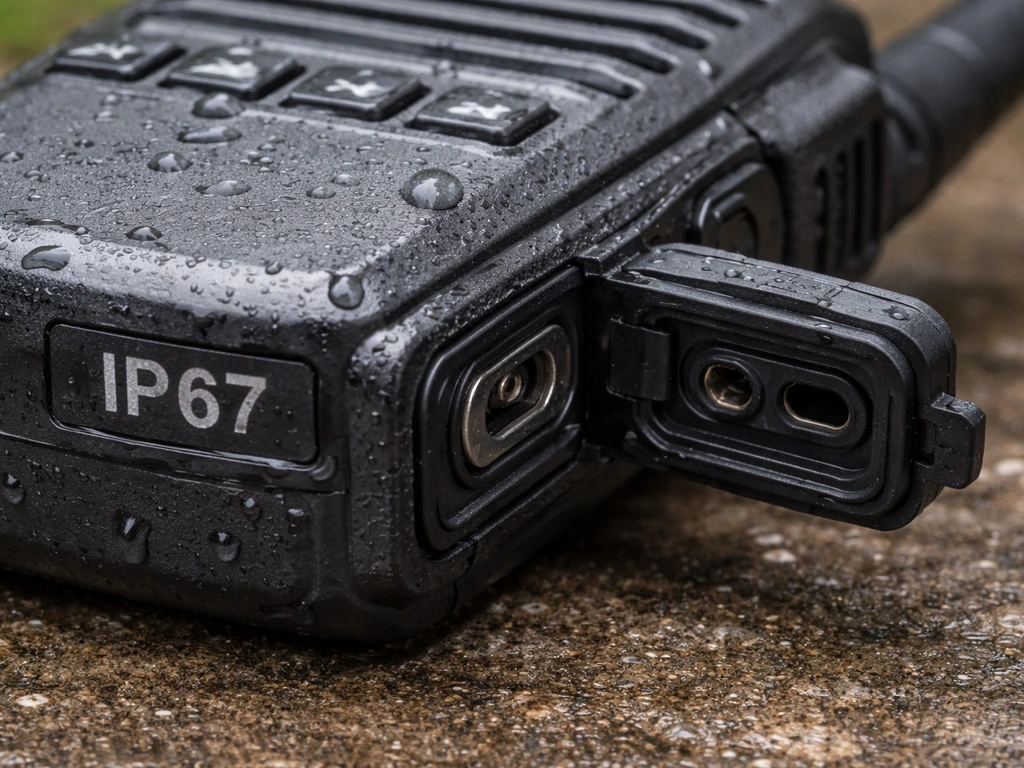
The IP (Ingress Protection) rating is the single most important spec for an outdoor radio, and it's the one most buyers misread. The rating has two digits: the first covers dust protection, the second covers water. IPX4 means it's been tested against water spray from any direction, fine for a covered patio with occasional light rain, but not enough if you're leaving the radio exposed to heavy rain or garden hose spray. As PCWorld notes, IPX4 is tested for water spray from any direction and is not the same as protection against water jets (which is what IPX5 covers) IPX4 means water spray from any direction, not water jets. IPX5 is tested against sustained water jets, which handles most real-world outdoor conditions well. IP67 goes further: dust-tight and protected against temporary submersion up to 1 meter for 30 minutes. For a fully exposed patio where the radio might sit through a downpour, you want at least IPX5. For occasional use on a sheltered porch, IPX4 is workable. Don't trust the word 'waterproof' alone, always check the actual IP number in the spec sheet.
Power output
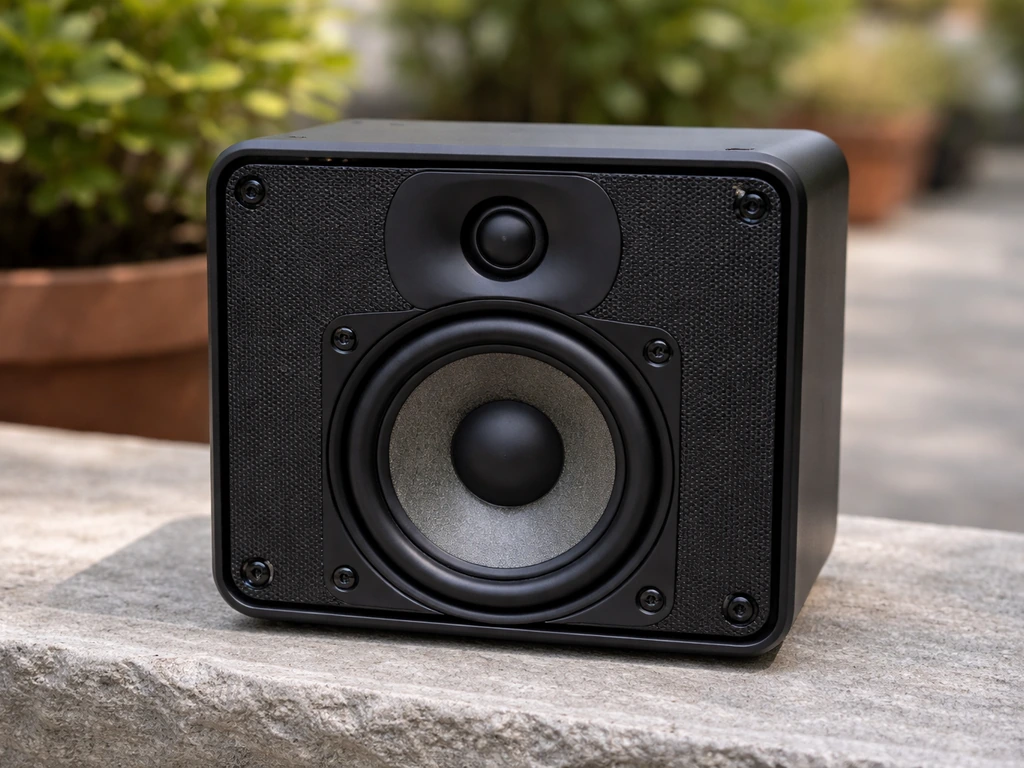
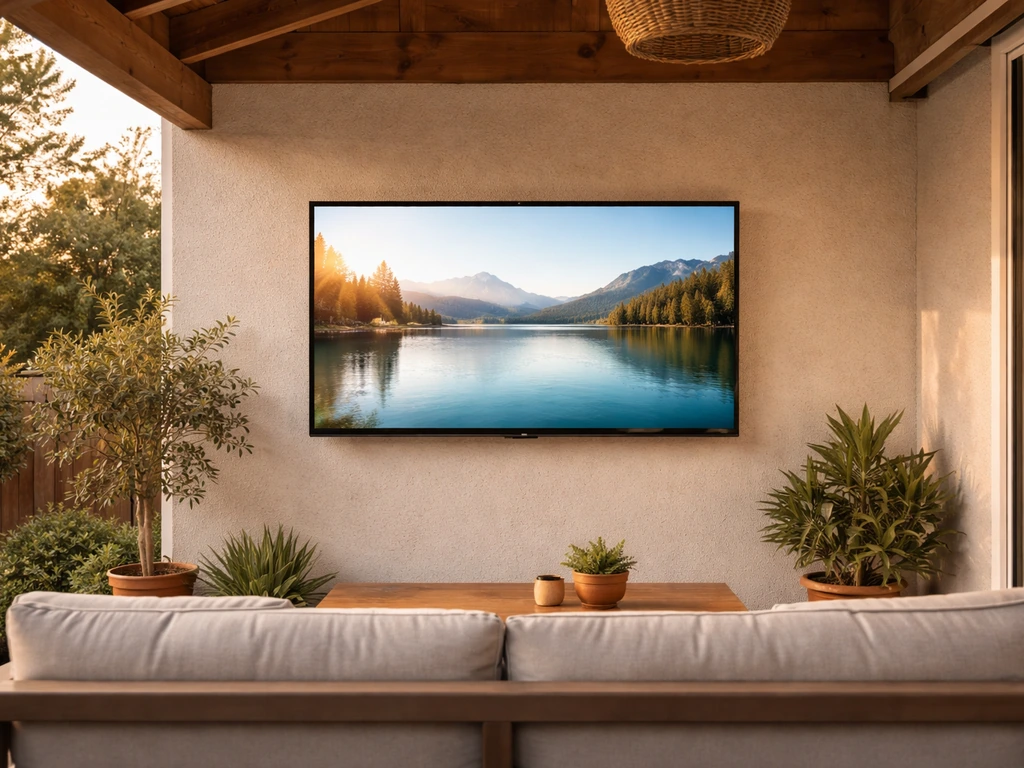
Watts matter outdoors more than indoors. Look for RMS wattage, not peak, peak numbers are inflated and meaningless for comparison. For a small sheltered patio of 100 to 150 square feet with casual background listening, 10 to 15 watts RMS is enough. For a larger open patio of 200 to 400 square feet or for party-level volume, you want 25 to 40 watts RMS minimum. The Lenco ODR-160GY at 35 watts RMS is a good benchmark for a larger space. Speaker size also matters: a 4- or 5-inch woofer will move more air and handle bass better outdoors than a 2-inch driver, regardless of wattage. Speaker size also matters when choosing the best size TV for an outdoor patio, since you want enough screen visibility and comfort for the viewing distance best size TV for outdoor patio.
Audio quality for open-air spaces
Look for radios with at least a two-driver setup (a woofer and a tweeter, or dual full-range drivers) because single-driver units tend to sound thin at higher volumes. Check whether the unit has any bass boost or EQ options, some outdoor radios let you compensate for the natural bass loss that happens when there's no room to build pressure. Wide dispersion is better than a narrow 'beaming' design, since people on a patio are rarely all sitting in one spot directly in front of the speaker.
Controls and usability
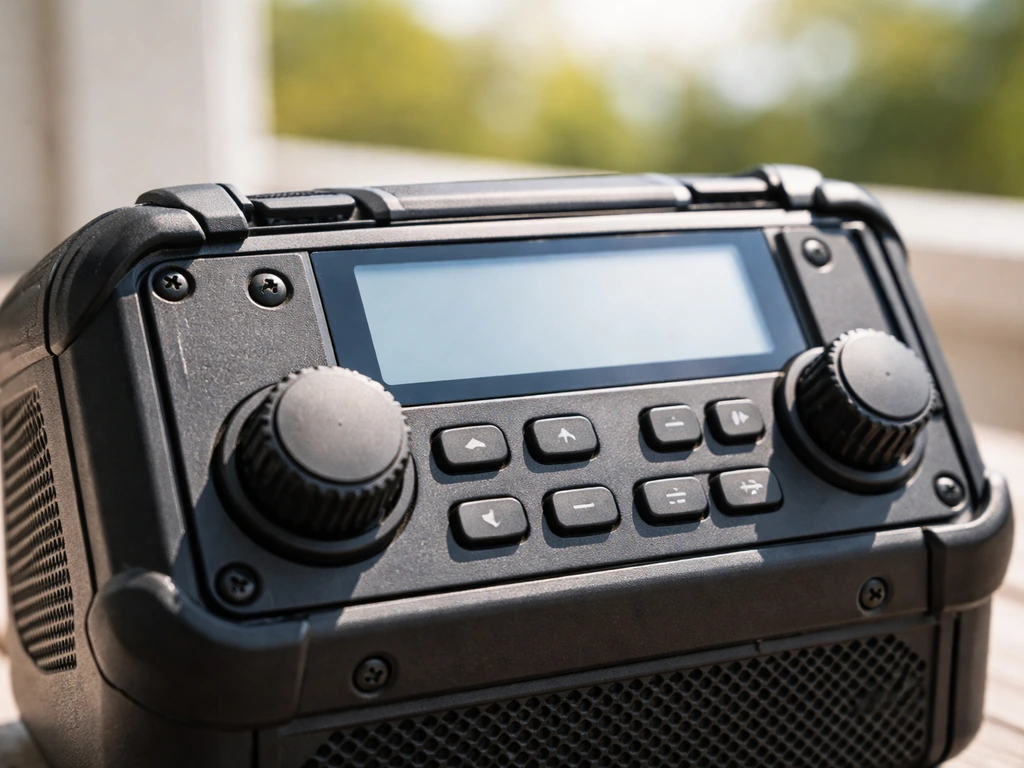
Physical knobs and buttons beat touchscreens outdoors. If the radio has a display, look for high-contrast screens readable in direct sunlight, small backlit LCDs become nearly invisible in bright conditions. Preset station memory, a sleep timer, and an alarm clock function are worth having if the radio will live on your patio permanently. Check that buttons and ports have rubber gaskets or covers; exposed USB or AUX ports are common water-entry points.
Best picks by patio type and use case
| Use Case | Top Pick | Why It Fits |
|---|---|---|
| Best overall (most patios) | C.Crane CCRadio Solar BT | Excellent AM/FM reception, 50-hr battery, solar/USB charging, Bluetooth, rugged build |
| Best for loud/party patio | Lenco ODR-160GY | 35W RMS, IPX5, DAB+/FM, Bluetooth/AUX/USB, handles larger exposed spaces |
| Best for small sheltered patio | iLive ISBW240BDL | ~20-hr battery, solar trickle charge, FM + Bluetooth, dual-speaker setup, budget-friendly |
| Best for exposed/no-outlet patio | Sangean MMR-99-DT | 3-way power (solar/hand crank/battery), AM/FM/Bluetooth, built for tough conditions |
| Best budget pick | iLive ISBW240BDL | Low cost, solar panel, 33ft Bluetooth range, FM + AUX + MicroSD all included |
Small or sheltered patio (casual morning listening)
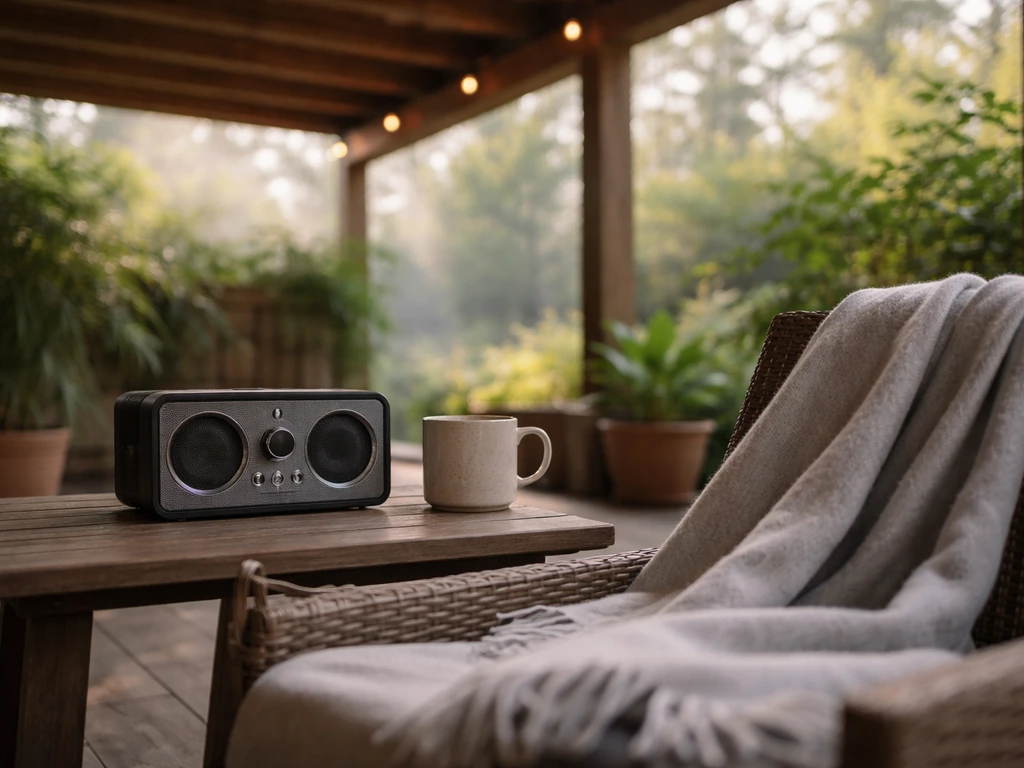
If your patio is covered, under a pergola, or on a shaded balcony, you don't need the highest IP rating or the loudest output. The iLive ISBW240BDL dual-speaker set works well here: it comes with two speakers you can spread apart for wider coverage, runs about 20 hours at 50% volume, and includes FM radio plus Bluetooth 5.0, AUX, and MicroSD. The solar panel won't charge it fast, think of it as a slow top-off between uses, not a full charge source. The 33-foot Bluetooth range is on the shorter side, so keep your phone within easy reach.
Large or exposed patio (party or background for a crowd)
For a bigger open patio, think 250+ square feet with guests spread around, the Lenco ODR-160GY is worth the investment. If you are looking for the best TV for outdoor patio use based on real user discussions, you can also narrow it down by checking what people recommend for brightness, viewing angle, and weather resistance best tv for outdoor patio reddit. At 35 watts RMS with blank" rel="noopener noreferrer">IPX5 protection, it can handle real weather and fill a larger space without straining. It supports DAB+ and FM (useful if DAB is available in your area for cleaner digital signal), plus Bluetooth, AUX, and USB. This is also the one to pick if you want a single unit rather than a speaker pair.
Exposed patio with no nearby outlet
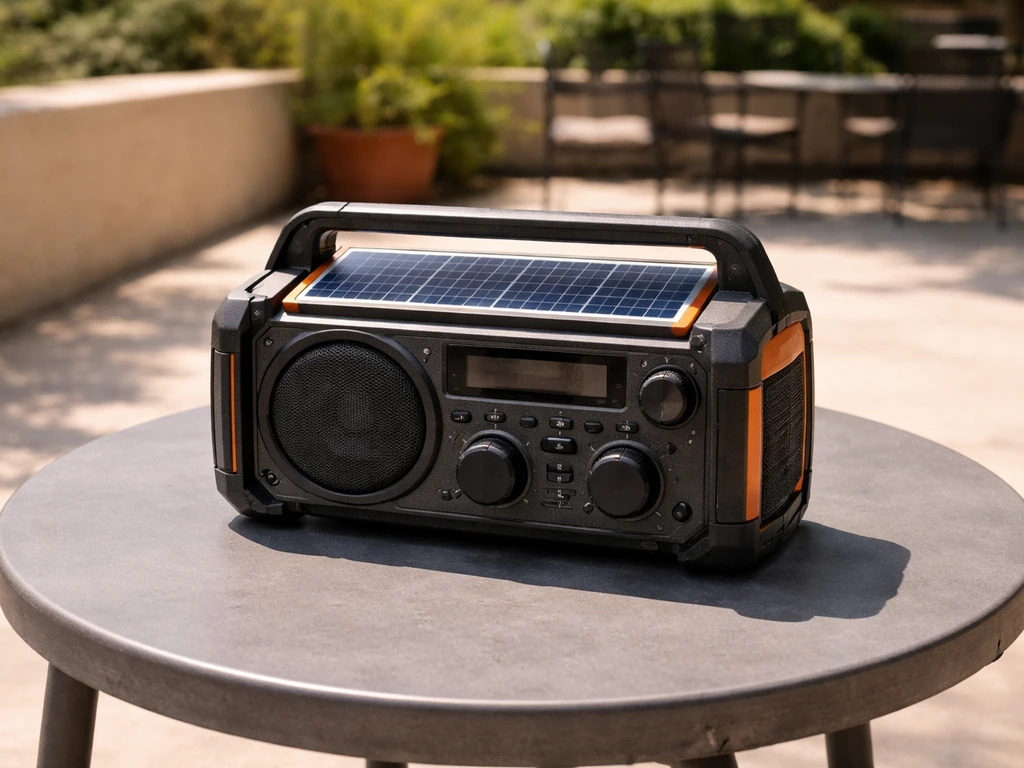
The Sangean MMR-99-DT is the right call when you have no outlet nearby or you want true off-grid reliability. It combines a rechargeable internal battery, a built-in solar panel, and a hand-crank dynamo, so even if the battery runs low on a cloudy day, a few minutes of cranking gets you back up. It covers AM/FM and Bluetooth, which covers most real-world listening scenarios. This is also a solid pick if you live somewhere prone to power outages, since it doubles as an emergency radio.
Connectivity and audio sources
AM/FM is still the baseline for outdoor radios, and it matters more than you might think. Streaming services go down, Bluetooth disconnects, but FM is always there. For AM, the CCRadio Solar BT stands out, C.Crane radios have historically been among the best AM receivers on the market, and that holds outdoors. For digital radio where it's available (primarily UK, Europe, and parts of Australia), DAB+ on the Lenco ODR-160GY gives you cleaner signal with less static than analog FM.
Bluetooth is practically a must-have now. It lets you stream from your phone, tablet, or smart speaker without running cables across the patio. Bluetooth 5.0 (found on the iLive ISBW240BDL) is the current standard and offers more stable connections than older versions. Keep in mind that most outdoor radios have Bluetooth ranges of 30 to 65 feet line-of-sight, walls and interference from other devices can shorten that. If your phone is inside the house and you want stable streaming to the patio, test the range at your actual setup before counting on it.
AUX input (3.5mm) is worth having as a fallback, useful for older devices, wired connections, or when Bluetooth decides to act up. Some units like the Lenco ODR-160GY and iLive ISBW240BDL also include USB for playback from a flash drive, and the iLive adds MicroSD. These aren't essential features, but they're genuinely convenient if you want to leave a curated playlist running without burning through your phone's battery or data.
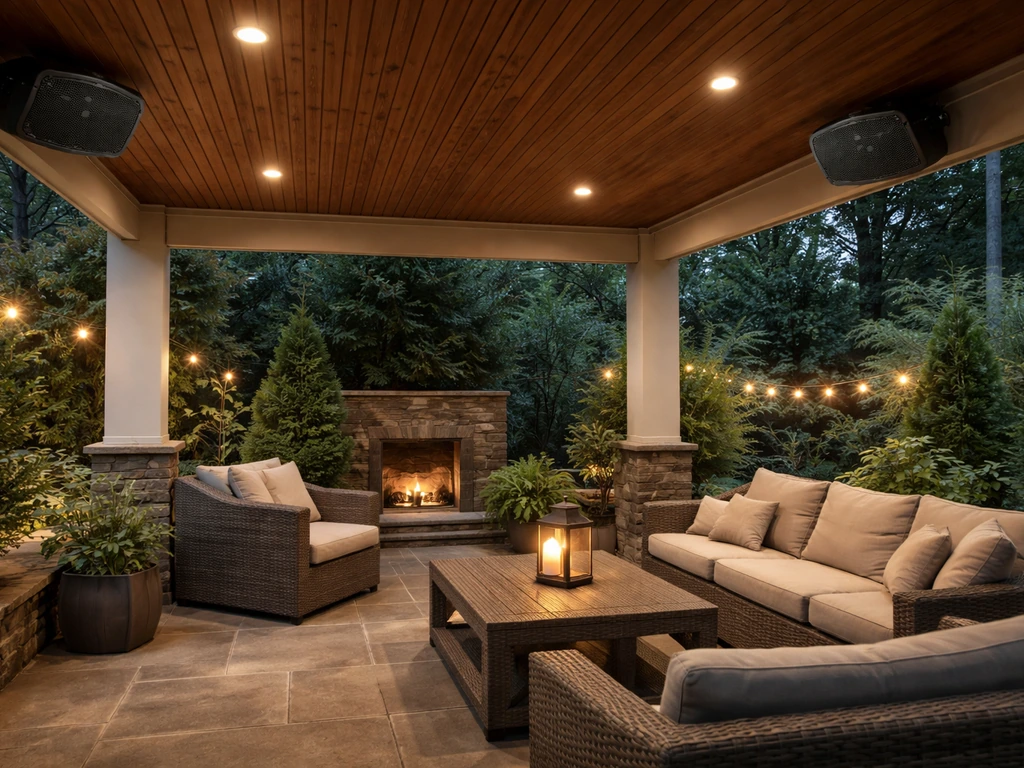
If you're interested in a more dedicated wireless speaker setup for your patio rather than a radio-first device, there are purpose-built options worth comparing, from Bluetooth-only patio speakers to multi-room systems. If you want the best buy for outdoor patio speakers instead, compare speaker sets specifically made for wide dispersion and weatherproofing outdoor patio speakers best buy. For the best wireless patio speakers, look for weatherproof enclosures and enough battery capacity to keep the music going all afternoon dedicated wireless speaker setup. If you prefer a speaker-first setup, the best patio speakers Bluetooth can deliver room-filling sound without needing an outdoor radio tuner. But if you want the AM/FM tuner as part of the package, stick with a proper outdoor radio.
Power options and how long they actually last
Plug-in is the simplest option if you have an outdoor outlet: unlimited runtime, no battery management, and usually the loudest sustained output since you're not limited by battery capacity. The downside is obvious, you're tethered to the outlet, and you need a weatherproof extension cord rated for outdoor use if the outlet isn't right where you want the radio.
Battery-powered units give you placement freedom but require managing runtime expectations. The CCRadio Solar BT gets around 50 hours of play time from its internal lithium battery at typical listening volumes, that's impressive and based on real-world testing, not just spec-sheet claims. Running it louder or using AUX input (which triggers a high-power mode) will drain the battery faster. The unit's manual explicitly notes that external audio via AUX increases current draw, so don't expect 50 hours if you're playing at high volume or driving it hard.
Solar charging on outdoor radios is rarely a full primary charging source, treat it as a supplement. The iLive ISBW240BDL's solar panel is described as a 'slow charger,' suitable for topping off between uses. The CCRadio Solar BT and Sangean MMR-99-DT include solar as part of a multi-source charging approach, not a standalone one. The Sangean's hand-crank dynamo is the real backup ace: even when the battery is dead and there's no sun, you can manually generate charge to keep it going.
| Power Type | Best For | Limitation |
|---|---|---|
| Plug-in (AC) | Permanent patio setups with outlet access | No placement flexibility, needs outdoor-rated cord |
| Lithium battery (rechargeable) | Flexible placement, weekend use, travel | Runtime varies with volume; needs recharging |
| Solar panel | Supplemental top-off in sunny climates | Not fast enough for primary charging alone |
| Hand crank (dynamo) | Emergency backup, off-grid exposed patios | Manual effort; not a comfortable daily-use method |
| AA/AAA batteries | Backup when rechargeable is dead | Ongoing cost; lower runtime than Li-ion |
Where to put it and how to get good reception
Height and positioning
Place the radio at roughly ear height for seated listeners, about 36 to 48 inches from the ground, so sound projects toward where people actually are rather than bouncing off a table surface and getting muffled. For many patios, the best TV mount for outdoor patio setups is one that uses corrosion-resistant hardware and adjusts to the viewing angle you need. Avoid placing it directly on concrete or stone; use a shelf, bracket, or furniture surface to elevate it. This also helps prevent moisture wicking up from the ground into any unsealed ports.
Sheltering from direct exposure
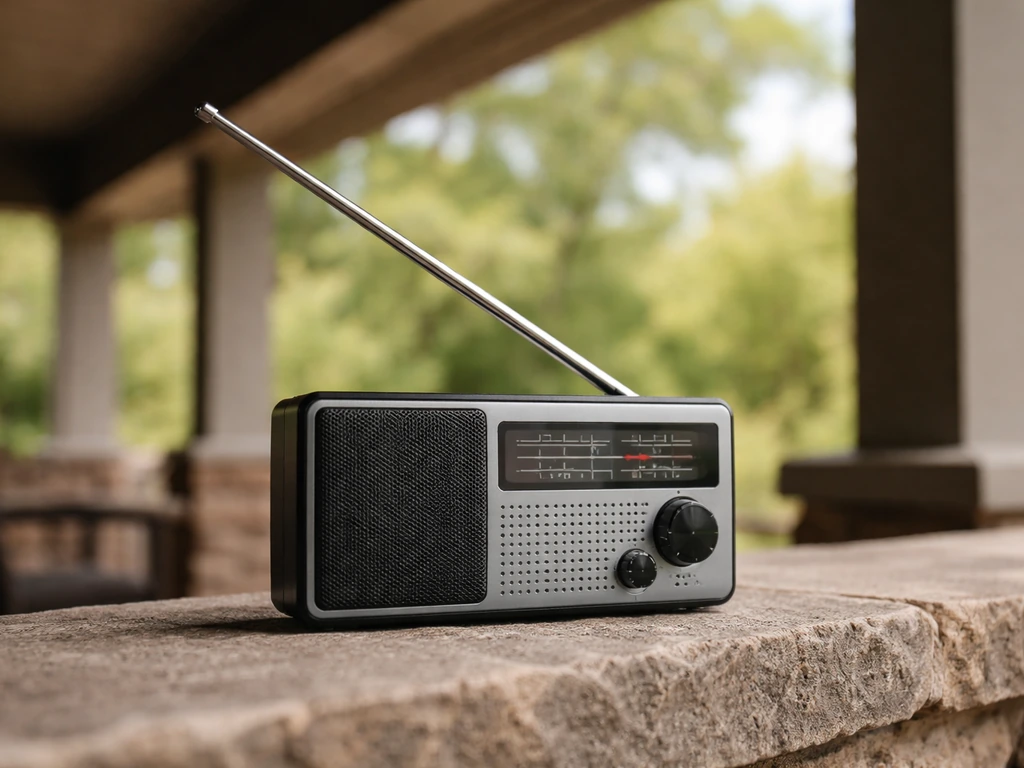
Even a well-rated IPX5 radio benefits from not being hammered with direct sun and rain 24/7. If you have a covered patio, place the radio under the overhang rather than at the edge. UV exposure degrades plastic and rubber gaskets over time even when a radio is rated for outdoor use. A side wall or fence on the windward side reduces the risk of heavy rain being driven directly into the front grille. Direct sun also heats electronics up quickly and affects battery longevity, a little shade goes a long way.
Antenna and reception tips
Most portable outdoor radios use a telescoping antenna for FM and an internal ferrite bar antenna for AM. For FM, fully extend the telescoping antenna and angle it perpendicular to the direction of the broadcast tower, if you're not sure which direction that is, experiment with 45-degree angles until reception improves. For AM, the internal ferrite antenna is directional too: rotate the entire radio body slowly until static drops. Metal furniture, concrete walls, and other electronics nearby can all cause interference, so moving the radio even a foot or two can make a notable difference. Some units support an external antenna connection, which can be a game-changer for weak-signal areas, check the manual for your specific model to see if that's an option.
Mistakes to avoid when placing your radio
- Don't place the radio directly on the ground where puddles can form around it, even if it's IP-rated
- Don't leave ports uncapped — rubber port covers exist for a reason; close them when not in use
- Don't assume Bluetooth will reach reliably through a solid wall or fence; test your specific indoor-to-outdoor path
- Don't point the speaker face directly into a wall; you'll lose volume and clarity from reflections
- Don't rely on a lower IP rating (IPX4 or below) for exposed areas that see real rain — upgrade the rating, not the coverage
Keeping your outdoor radio in good shape
Regular cleaning
Wipe the exterior down monthly with a damp cloth, nothing abrasive, nothing solvent-based. Pollen, dust, and outdoor grime collect in speaker grilles and can gradually affect audio clarity. Use a soft brush or compressed air to clear out grille mesh. If your radio has a display screen, keep it clean with a microfiber cloth to prevent scratching and maintain readability in sunlight.
Storm and off-season storage
Even IP67-rated devices should come inside before a serious storm. Wind-driven debris is a physical damage risk no IP rating protects against. In off-season months, store the radio indoors or in a weatherproof storage box. If the unit uses a lithium battery, store it with a partial charge (around 50%) rather than fully charged or fully depleted, this preserves battery health over winter. For radios that take AA batteries, remove them before storage to prevent corrosion.
Protecting screens, knobs, and ports
Rubber port covers and gaskets are the most vulnerable parts of outdoor radios. Inspect them seasonally for cracking or looseness and replace them if they no longer seat properly, many manufacturers sell replacement gasket kits, or you can use food-grade silicone. For push-button or rotary controls, a light application of silicone-based lubricant on rubber gaskets keeps them pliable in cold weather without damaging plastic. Avoid petroleum-based lubricants, which degrade rubber over time.
Battery maintenance
Fully charge the lithium battery before any long outdoor use session and after storage. Letting a lithium battery sit fully discharged for months is one of the fastest ways to degrade its capacity. If the radio supports solar charging and you're leaving it outside regularly, position it to get a few hours of direct sun between uses, not enough to fully recharge, but enough to keep the battery from dropping too low. The CCRadio Solar BT manual specifically recommends fully charging before first use, and that advice applies to battery longevity in general across all rechargeable outdoor radios.
FAQ
Can I leave the best outdoor radio for patio out in the rain year-round?
Many outdoor radios advertise “waterproof,” but you should choose based on the IP code and how the radio will be exposed. If it will be left uncovered during rain, prioritize IPX5 or better, and add practical protection like placing it under the overhang, using a windward-side fence for splash reduction, and avoiding direct placement at the edge where water runoff hits the front grille.
How reliable is solar charging on an outdoor radio during cloudy weather?
Not always. Solar panels are typically slow top-off systems, not full chargers, so battery runtime can drop during long cloudy stretches or when you frequently use AUX at higher volume. A good decision aid is to plan for plug-in or hand-crank (if available) as the primary fallback, and use solar to reduce how often you recharge.
What’s the real Bluetooth range on a patio, and how can I make sure it won’t disconnect?
Bluetooth range is usually stated as line-of-sight, real-world distance is often shorter due to walls, patio covers, and other wireless devices. Before you buy, test from the exact spot you will use, for example from the house side door or far seating area, and if you need long-distance stability, consider a model with AUX, USB playback, or wired audio instead of relying only on Bluetooth.
Where should I mount or place my outdoor radio for the loudest, clearest sound?
Yes, but it can get worse if you place the radio on a low, hard surface like a table top or directly on the ground. Ear-level placement (about 36 to 48 inches for seated listeners) improves projection and reduces muffling, and elevating on a shelf or bracket also helps prevent moisture wicking into ports.
How many watts RMS do I actually need for my patio size?
It depends on your listening pattern. If you want music as background, look toward 10 to 15 watts RMS for small sheltered patios. If you expect louder “guest-level” volume over a wider area, you generally need higher RMS (often 25 watts and up) and a wider-dispersion speaker design, since outdoors sound disperses quickly.
Do dual-speaker outdoor radios sound noticeably better than single-speaker models?
If a radio has single-driver output, it often sounds thin at higher volumes outdoors because there is less ability to separate bass and highs. Even when you have enough watts, dual-driver designs (woofer plus tweeter, or two full-range drivers) usually maintain clarity better when you turn it up.
Why does my outdoor radio reception change when I move it only a little?
AM and FM reception depends heavily on antenna setup and local signal strength. For FM, fully extend the telescoping antenna and adjust angle in small increments, and for AM, rotate the entire radio slowly to find the null-to-peak direction. Also try repositioning by even a foot or two, since nearby metal furniture, concrete walls, or other electronics can add interference.
Will using AUX or Bluetooth drain my outdoor radio battery faster?
Yes, using AUX or certain playback modes can increase power draw, which shortens runtime compared with FM at moderate volume. If battery life is important, favor Bluetooth streaming at reasonable volume, or plan shorter sessions when using AUX and high volume.
Which outdoor radios are best for power outages, and what charging method matters most?
If you’re buying for emergencies, prioritize a model with multiple charging methods and an actual “standby” survival approach. A hand-crank dynamo can keep it going during long outages, while solar-only models may stall if there is no sun for days. Also verify it supports both AM and FM if you want the widest fallback coverage.
How should I store an outdoor radio in the off-season to preserve battery health?
Battery storage affects long-term capacity. For lithium battery units, store around partial charge (roughly 50%) rather than fully charged or fully depleted, and keep the radio out of freezing conditions if possible. For AA battery models, remove batteries to prevent corrosion inside the compartment.
What parts of an outdoor radio wear out first, and what should I check before the rainy season?
Look for rubber port covers and sealed gaskets, then inspect them seasonally for cracking, looseness, or flattening. If you see exposed ports or the cover no longer snaps tightly, replace the gasket or cover. This small maintenance step often matters as much as the IP rating for real-world water protection.
Is USB or MicroSD playback actually better than Bluetooth for leaving music running?
Some models include USB or MicroSD for playlist playback, which can reduce phone battery drain and data usage. The practical tradeoff is that not all files organize well, and some radios have slower indexing. If you want “set it and forget it,” test a playlist size with your source device before committing to a large library.
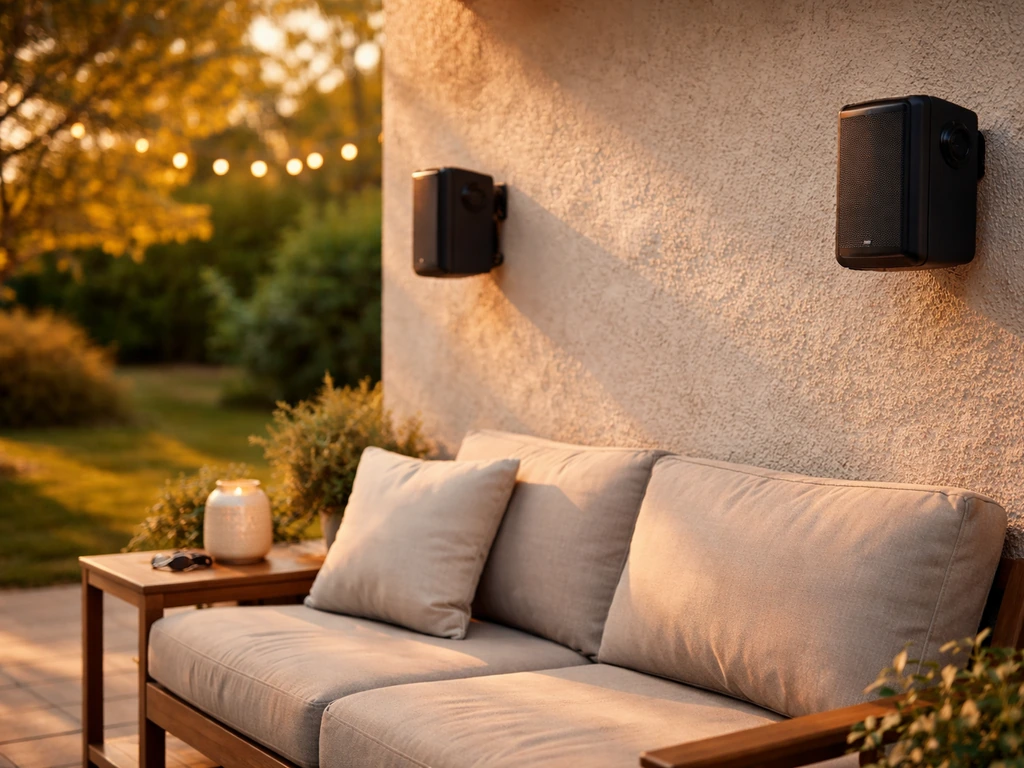
Choose the best-value outdoor patio speakers now with setup tips, weather ratings, wireless vs wired, and top picks by b
Compare the best Sonos outdoor patio models, placement, wiring, weather ratings, and setup for single or multi-zone soun
Choose the right outdoor patio TV size with distance math, brightness tips, weather ratings, mounting and glare planning