The best motorized patio shades for most homeowners are motorized outdoor roller shades with a cassette housing and side tracks, paired with a 15-channel remote and a smart-home hub if you want automation. They block 85 to 95 percent of UV, handle moderate wind, and install cleanly on a covered patio or pergola without an electrician if you go plug-in. That said, the right choice really does depend on your patio size, sun angle, privacy needs, and how much weather exposure you're dealing with, so let me walk you through every decision point before you buy anything.
Best Motorized Patio Shades: Buying Guide 2026
Lark Perry
21 May 2026
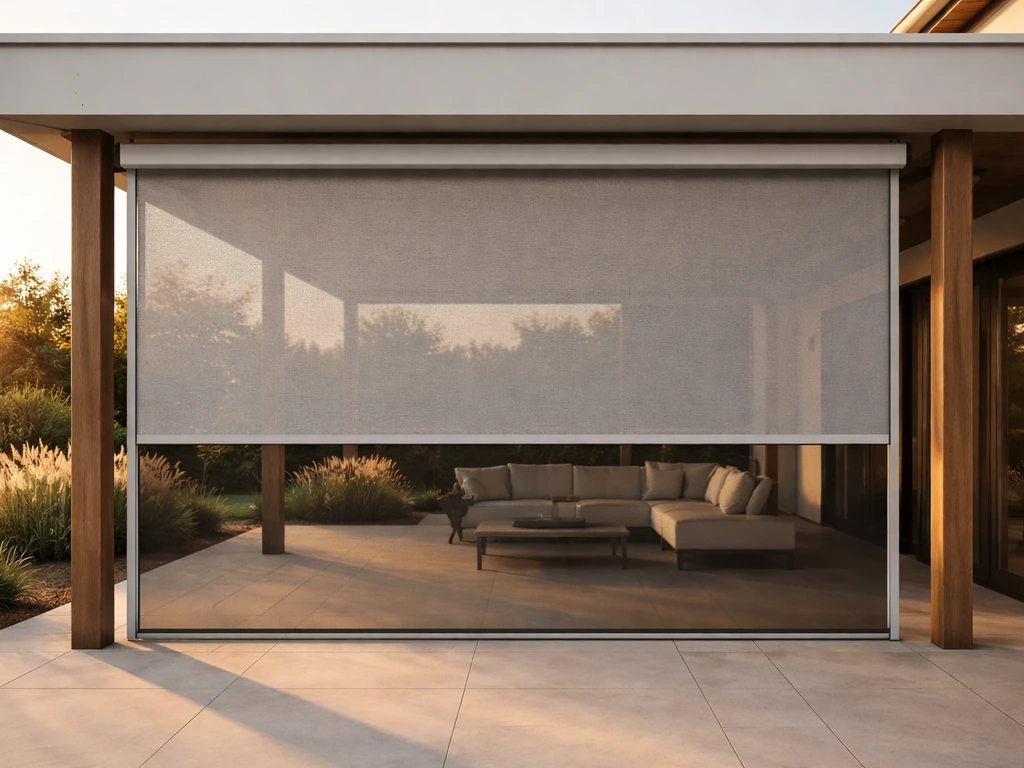
What 'motorized patio shades' actually means (types and mounting options)
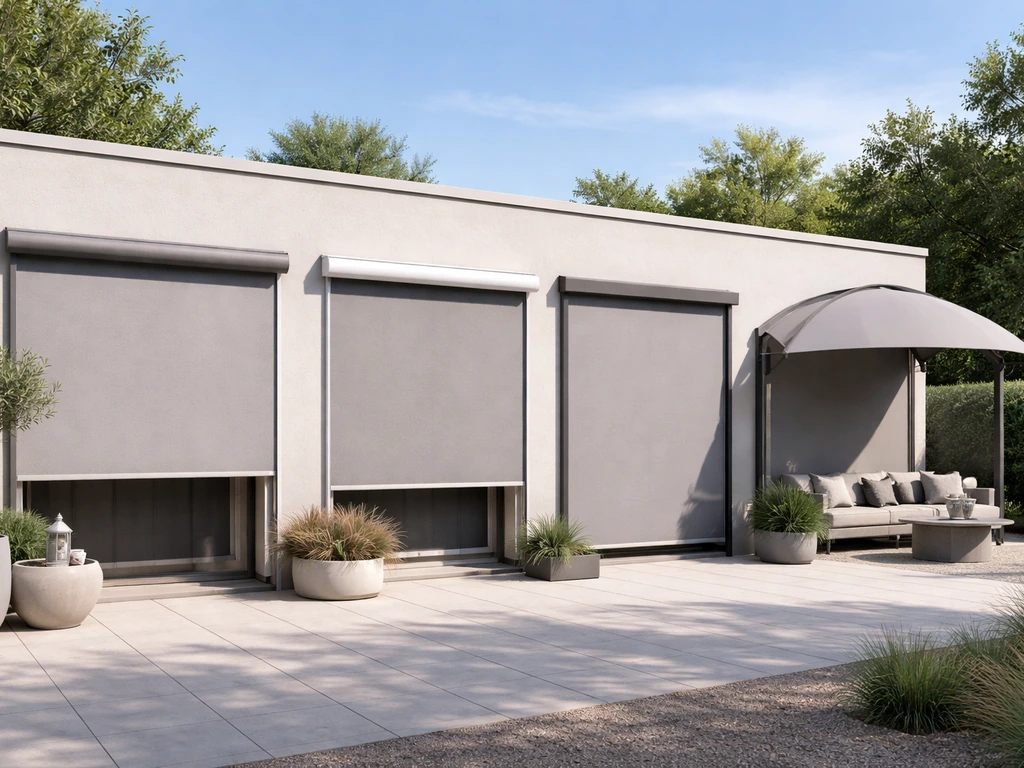
The term covers four distinct product categories, and they behave very differently in real-world use. Knowing which type you're shopping for before you start comparing prices will save you a lot of frustration.
- Motorized roller/retractable shades: fabric rolls up into a cassette tube mounted overhead. This is the most common type for residential patios. The cassette protects the fabric when retracted, which matters a lot for longevity.
- Motorized zip-track or side-track screens: roller fabric with sealed side channels that lock the edges in place when lowered. Brands like Apollo Screen and Insolroll's Oasis 2900 use this approach. The sealed edge dramatically improves privacy, heat reduction, and insect blocking versus a free-hanging shade.
- Motorized retractable awnings: arm-based fabric canopies that extend out from a wall or eave. They cover more horizontal area and provide overhead shade rather than a vertical screen. Best for open decks without an overhead structure.
- Motorized pergola or louvered roof systems: the most expensive category. Motorized fabric roofs or adjustable aluminum louvers that open and close overhead. These are semi-permanent structures, not fabric accessories.
Most people searching for motorized patio shades are looking at the first two categories, and that's where this guide focuses. Mounting options across these types include wall mount (brackets attach to a vertical surface), ceiling or soffit mount (brackets go up into an overhead structure), and under-eave mount. What you can use depends entirely on what structural surfaces are available at your patio. A covered patio with a ceiling gives you the most flexibility. An open deck often means a wall mount or a freestanding post system.
The features that actually determine how well a shade performs
Fabric openness factor and UV rating
Shade fabric is rated by openness factor (OF), which tells you what percentage of light passes through. A 1% OF fabric blocks almost everything and gives you high privacy but reduces airflow. A 10% OF fabric lets in more breeze and visibility but does less for heat and glare. For most patio setups focused on glare and heat control, a 3 to 5% openness factor is the sweet spot.
If you want the best outdoor patio shades overall, start by matching the fabric’s UV rating and openness factor to your glare and privacy goals. Always verify the UV block rating separately because some fabrics have a high openness factor but still carry a 95% or higher UV protection rating due to how the yarns are treated. PVC-coated polyester and solution-dyed acrylic are the two most common fabric types. PVC-coated polyester is more weather-resistant and easier to wipe clean.
Solution-dyed acrylic (like Sunbrella) is softer, breathes better, and resists fading for longer but costs more upfront.
Coverage size and side-channel sealing
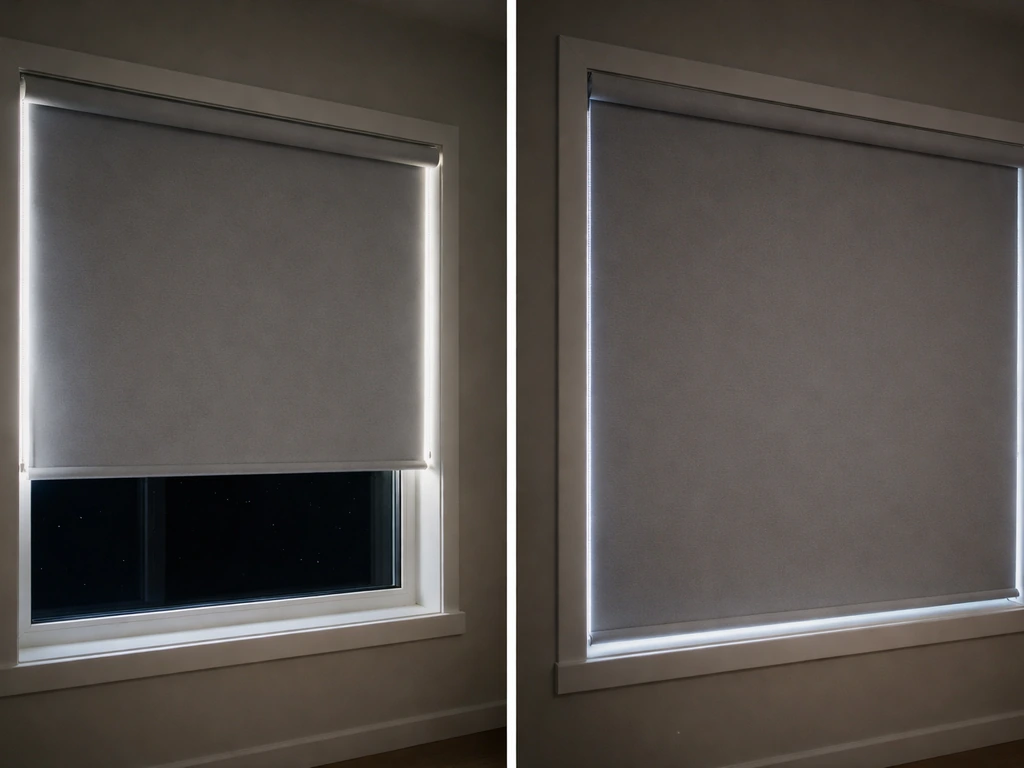
Width and drop matter, but the edge seal matters just as much. A free-hanging roller shade that's 10 feet wide will billow, let insects in from the sides, and do almost nothing for heat at the edges. A zip-track or side-channel system locks the fabric edges into aluminum guide rails so the shade acts more like a wall. If privacy, insect exclusion, or serious heat reduction are priorities, you want tracks. If you just need glare softening over a small seating area, a standard cassette roller shade without tracks is fine and significantly cheaper.
Wind and weather ratings
Most residential motorized shades are rated for light to moderate wind (roughly up to 25 to 35 mph), and most manufacturers strongly recommend retracting before storms. Tracked systems handle wind better than free-hanging shades because the fabric can't catch air from the sides, but they're not designed to stay down in gusts.
Wind sensors (available from brands like Somfy and SunSetter) can automatically trigger retraction when the sensor detects rapid movement or exceeds a wind threshold, which is the most practical solution if your patio is exposed. The Somfy wind sensor integrates with their RTS motors and the TaHoma switch hub to trigger retraction before conditions get dangerous. It's a worthwhile add-on if you live somewhere with afternoon pop-up winds and you're not always home to retract manually.
Smart controls and power: what you need to know before you buy
Control options from basic to full automation
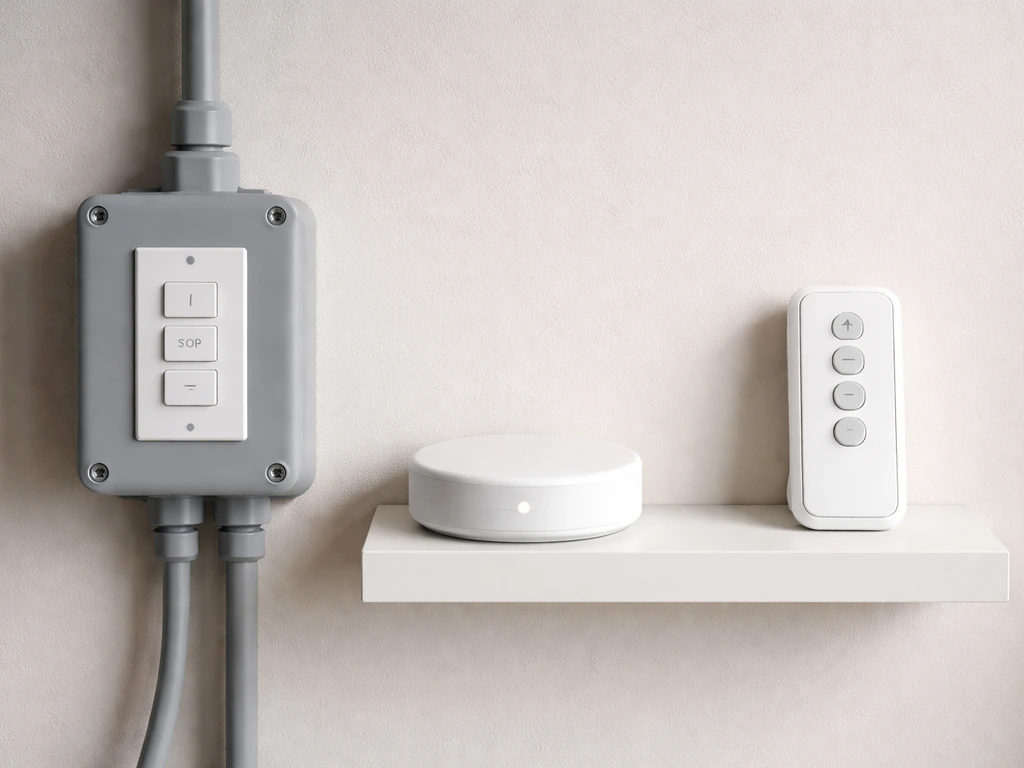
Every motorized shade ships with at least one remote. From there, your upgrade path looks like this: wall switch (hardwired or battery, no app needed, great for renters or shared spaces), multi-channel remote (lets you group multiple shades and control them together), and smart-home integration via a hub. Somfy's TaHoma switch is the most capable hub in this space, supporting RTS, io, and Zigbee 3. 0 protocols and integrating with platforms like SmartThings and Control4.
Apple HomeKit access through Somfy requires both the TaHoma switch and Somfy-compatible Zigbee devices, so verify that before assuming Siri control is included. One important caveat on Zigbee: Somfy notes that third-party Zigbee 3. 0 devices being accepted onto the network doesn't guarantee they'll be manageable in the TaHoma app, so don't assume cross-brand compatibility without checking.
Plug-in vs hardwired power
Plug-in motors (with a standard outdoor-rated cord and plug) are the easiest install and completely reversible, making them a good fit for renters or anyone who wants to avoid electrical work. The downside is that you need an outdoor outlet within reach and the cord is visible unless you conceal it. Hardwired motors hide all the wiring but require an electrician in most jurisdictions, adding $150 to $400 to your install cost depending on your local rates.
Solar-powered motors are a third option for locations without easy outlet access. They work reasonably well in sunny climates but can struggle to charge in shaded or north-facing setups. Battery-powered motors (tubular DC motors with rechargeable battery packs) are increasingly common and genuinely good for spans under 12 feet where you don't want any wiring at all. Expect to recharge every 200 to 400 cycles, roughly one to two times a year for typical use.
Limit settings: the step most people skip
Every motorized shade motor has adjustable travel limits (open and close stop points). Setting these correctly after installation is critical. If your close limit is set too low, the shade hits the floor or a track stop and the motor keeps trying to run. If it's too high, the shade doesn't fully extend and you have a gap at the bottom.
Both SunSetter and Insolroll provide specific limit-setting procedures in their documentation, and Somfy's programming guides walk through end-limit adjustment including small details like removing a protective cap on the motor head before accessing limit buttons. Budget 30 to 60 minutes for this step on a first install. If the shade isn't traveling correctly after that, the most common culprits are [endcaps not fully seated on the roller tube or the tube not centered in its brackets](https://screeninnovations. zendesk.
com/hc/en-us/articles/42287037602835-Support-FAQ-s), both of which Screen Innovations specifically calls out in their support documentation.
How to choose the right shade for your specific patio
Start with your measurements
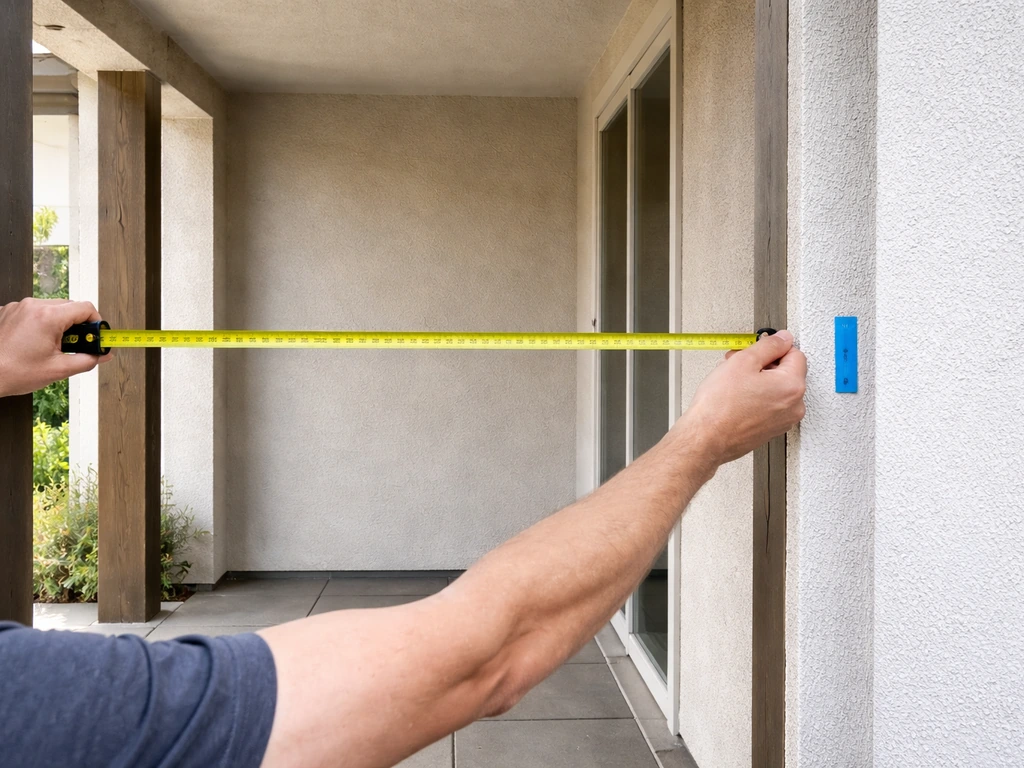
Measure the width of the opening you want to cover, then measure the drop (how far down you need the shade to extend). For inside mounts (shade fits between two walls or posts), measure the exact inside dimension and subtract 1/4 to 1/2 inch per side for clearance. For outside mounts (shade overlaps the opening), add at least 4 to 6 inches per side for coverage and light gap control. Write down your ceiling or header height, because the cassette and motor housing add 4 to 8 inches of depth above the fabric itself, and you need to confirm that fits within your soffit or header without blocking a light fixture or structural beam.
Match the shade type to your patio setup
| Patio Setup | Best Shade Type | Key Consideration |
|---|---|---|
| Covered patio with ceiling | Ceiling-mounted cassette roller shade with or without side tracks | Confirm ceiling structure can support bracket load; check for soffit depth |
| Open pergola | Wall-mounted cassette roller shade on side posts or overhead motorized fabric roof | Sun angle changes seasonally; may need shades on 2 or 3 sides |
| Open deck (no roof) | Motorized retractable awning (wall or eave mount) | Verify wall structure for arm bracket load; add wind sensor if exposed |
| Privacy screen need | Zip-track motorized screen (ceiling/header mount) | Tracks require precise channel alignment; professional install often worth it |
| Pergola with sun overhead | Motorized louvered roof or retractable fabric roof system | Highest cost; requires structural assessment; plan 4 to 8 week lead time |
Think about your sun angle before you order
A shade that covers the right width but doesn't drop low enough to block your afternoon sun angle is useless for glare and heat control. Trace where direct sun hits your patio seating area at 3pm in summer (the peak discomfort window for most west-facing patios). That's the angle you need the shade to block. For low western sun, you often need a drop that's 1.5 to 2 times the width of the opening to get meaningful coverage. If your patio faces south, a horizontal awning extending 8 to 10 feet out may be more effective than a vertical shade. For east-facing morning sun, a shade that rolls down only a few feet is usually sufficient.
Weatherproofing and how these shades hold up over time
Cassette-style systems hold up much better than exposed-roller designs because the fabric stores inside a protective housing when retracted. When the fabric isn't sitting outside in UV, rain, and dust 365 days a year, it lasts significantly longer. Awning-style systems from brands like SunSetter also emphasize cassette protection as a core longevity feature for this exact reason.
Rain handling is where a lot of people get surprised. Most motorized roller shades are water-resistant but not waterproof. They can handle a light drizzle while down, but you should retract before heavy rain. SunSetter's documentation is explicit about this: if you retract the awning while the fabric is wet, open it again as soon as conditions allow and let it fully dry before closing. Storing damp fabric leads to mildew that no amount of cleaning will fully reverse. If you want to stay down during rain, look specifically for waterproof fabric ratings (100% PVC blackout fabric or similar) combined with a zip-track edge seal to prevent water from running in the sides.
For motors, Somfy's IP44 motor rating is a useful baseline to understand: IP44 means the motor is protected against water splashing from any direction and solid objects larger than 1mm. It's adequate for outdoor use but not submersion. Most quality motorized shade motors (Somfy, Rollease Acmeda, Gaposa) meet at least IP44 in their outdoor motor lines. Budget motors often don't specify an IP rating at all, which is a red flag.
Cleaning and maintenance reality
Fabric care is straightforward if you stay on top of it. For PVC-coated polyester, wipe down with mild soap and water once or twice a season. For woven acrylic fabrics, a soft brush with mild detergent and a thorough rinse works well. Don't use bleach on acrylic and don't pressure wash any fabric shade because the force damages the coating. The hardware (brackets, tracks, cassette) should be checked annually for loose fasteners and lubricated at pivot points with a silicone-based lubricant. Avoid petroleum-based products near fabric.
Budget vs premium: what price tiers actually get you
Motorized patio shades span a wide range, and the price jumps aren't always obvious in specs sheets. Here's what the tiers actually mean in practice.
| Price Range (per shade) | What You Get | What You're Giving Up |
|---|---|---|
| $150 to $350 | Basic tubular motor, single remote, no cassette or open-back roller, limited fabric choices, no IP rating listed | Cassette protection, smart-home compatibility, quality fabric, warranty support |
| $350 to $700 | Cassette housing, 3 to 5 fabric openness options, multi-channel remote, plug-in or battery motor, basic track option, 1 to 3 year warranty | Side-track sealing, high-end motor brands, smart-hub integration |
| $700 to $1,500 | Full cassette, zip-track or side-track option, Somfy or Rollease motor, smart-home compatible, broader fabric selection including UV-rated commercial fabrics, 5-year warranty | Whole-system automation (wind/sun sensor bundles often extra) |
| $1,500 and up | Custom sizing, powder-coated aluminum cassette, premium Somfy io or Control4-compatible motors, wind/sun sensor bundle, professional install included or strongly recommended, 5 to 10 year warranty | Nothing significant at this tier if the system is sized and installed correctly |
The most common mistake is buying a budget roller shade and then being frustrated that it billows, lets in bugs, and stops working after 18 months because the motor has no weather protection. If you want the best patio roller shades, focus on weather protection and proper sealing so they don't billow and fail early budget roller shade. If your primary goal is heat reduction, privacy, or insect exclusion, don't go below the $350 to $700 tier, and prioritize tracked systems even if that means buying one well-made shade instead of two cheap ones. If you're trying to find the best outdoor blinds for patio comfort, prioritize coverage, side-channel sealing, and weather-rated materials so they actually hold up to sun and wind.
On the other end, you don't need the top tier for a basic covered patio with a single seating zone and moderate sun exposure. A mid-range cassette shade with a Somfy or Rollease motor, a multi-channel remote, and a quality fabric like Soltis or Phifer SheerWeave will do the job without the custom pricing. Save the premium tier spending for situations that genuinely need it: large spans over 12 feet wide, high-wind exposure, or commercial-adjacent use.
One more thing worth calling out: warranty language matters more than warranty length. Screen Innovations explicitly states that warranty validity depends on operating the product per written instructions, and their standard fixed-screen warranty is just one year. A 10-year warranty from a brand that requires professional install to honor it has very different real-world value than a 3-year warranty from a brand with clear DIY install paths and accessible support. Read the warranty document, not just the number.
Your shortlist checklist and how to finalize a decision
The specs to verify before you buy anything
- Width and drop: measure twice, order once. Confirm whether you're inside or outside mounting and adjust your order width accordingly.
- Fabric openness factor: pick based on your priority. Privacy and heat reduction need 1 to 3%. Glare softening with airflow needs 5 to 10%.
- Motor type and IP rating: confirm the motor is rated for outdoor use (at least IP44). Know whether you need plug-in, hardwired, battery, or solar before ordering.
- Control compatibility: if you want smart-home integration, verify the motor protocol (RTS, io, Zigbee) matches your hub before purchase. Don't assume it works because both brands say 'smart home.'
- Track or no track: decide based on your need for edge sealing. Tracked systems require precise installation and more structural prep.
- Cassette or open-back: cassette is strongly preferred for any application where the shade will be deployed and retracted regularly.
- Warranty terms: read the full document, not just the headline number. Confirm what voids coverage (especially for DIY installs).
- Wind sensor compatibility: if your patio is exposed or you're away frequently, confirm the wind sensor for your motor brand and verify it's supported by your control system.
Three example configurations to help you narrow down
Covered patio, 14 feet wide, afternoon western sun, moderate privacy need: mid-range cassette roller shade with 3% openness fabric, outside mount on the ceiling header, Somfy RTS plug-in motor, single-channel remote, add TaHoma switch later if you want automation. Budget roughly $550 to $850 installed DIY or $900 to $1,200 with professional install.
Open pergola, 10 x 12 foot space, insect control priority, want an 'outdoor room' feel: zip-track motorized screen system ceiling-mounted on all open sides, PVC-coated polyester fabric in 1% openness, Somfy io motor for smart-home integration. This is a professional install job. Budget $2,000 to $4,500 depending on how many sides you're covering and local install rates.
Open deck, no overhead structure, needs overhead shade: motorized retractable awning with a wall-mount arm system, projection of 8 to 10 feet, solution-dyed acrylic fabric, wireless wind sensor included. Verify the wall is structural before ordering. Budget $1,200 to $2,500 for a quality residential awning system installed.
Your next steps right now
- Go outside with a tape measure and record your opening width, ceiling or header height, and how far down you need the shade to drop to block your worst-case sun angle.
- Identify your mounting surface and confirm it's structural (not just drywall or thin fascia board).
- Decide between plug-in, battery, or hardwired power based on outlet availability and whether you're renting or own the space.
- Pick your control tier: basic remote, wall switch, or smart-home hub. If you want automation, confirm motor protocol compatibility with your hub now, not after delivery.
- Set a budget per shade and use the tier table above to calibrate your expectations. If your budget is under $350 per shade, plan for no cassette and limited durability.
- Request fabric samples before finalizing your order. Openness factor looks very different in a photo versus in person on your specific patio.
If you're also considering non-motorized options or want to compare motorized roller shades specifically against other outdoor shade formats like fixed outdoor blinds or manual roller shades, those categories each have their own tradeoffs worth reviewing before you commit to a motor system. Motorized makes the most sense when you're covering a large span, you'll be using the shade daily, or you want automation that responds to sun or wind without manual effort. For smaller spaces or occasional use, the motor premium may not be worth it.
FAQ
How do I choose between a standard cassette roller shade and a tracked (zip-track) system for my patio?
If you need insect exclusion, stronger heat reduction, or privacy, prioritize tracked systems because the fabric edges seal into guide rails. If you only want glare softening for a small seating area and you accept more light gaps at the sides, a plain cassette roller is usually enough and costs less.
What’s the safest way to handle the shade during storms, especially if I’m away from home?
Plan on retracting before storms, tracked shades reduce billowing but still should not be left down in gusts. The practical upgrade is a wind sensor that triggers retraction, and you should set the threshold low enough that it retracts with rapid gusts, not only when wind becomes extreme.
Do I really need a wind sensor if I already have light to moderate wind ratings?
Wind ratings are typically maximum operating conditions, not a risk-management system. A wind sensor helps because gusts can exceed the rating for short periods, and it removes the need to manually retract, which matters if the patio is exposed or you often leave during afternoon weather changes.
Can I mount motorized patio shades on any ceiling or soffit?
Not all overhead surfaces can safely support the load. Verify you have solid framing or structural support where brackets will fasten, and avoid mounting into drywall or trim only. If your patio uses a pergola or open deck, you may need wall mount or a post-based freestanding system because there may be no reliable overhead structure.
How should I set the open and close limits to prevent damage or gaps?
After installation, set close limits so the fabric fully clears the track or stop without pushing hard into the floor or cap. For the open limit, make sure the shade extends far enough to eliminate bottom gaps but not so far that it over-extends. Budget 30 to 60 minutes initially, and recheck limits after the first few cycles once the fabric is seated.
Why does my shade billow or have insects along the sides even when the width seems correct?
A common cause is choosing the wrong edge sealing approach for your needs. Free-hanging designs allow side airflow and edge gaps, which can also let bugs in. Another cause is incorrect side-channel alignment or endcaps not fully seated, which can keep the roller from tracking straight.
What opacity should I pick if I’m balancing privacy with airflow and daytime comfort?
Start with an openness factor around 3 to 5% if glare and heat matter most. If you still want more visibility and airflow, step up openness, but expect less heat and glare control. If absolute privacy and light blocking are your priority, go lower openness, and plan for reduced airflow.
How can I confirm a fabric is truly UV-protective, especially when openness factor is higher?
Don’t judge UV protection by openness alone. Verify the stated UV-block percentage or rating and confirm it matches your goals, because some fabrics can look more see-through yet still provide high UV protection due to yarn treatment.
Are plug-in motors always the best option versus hardwired motors?
Plug-in motors are convenient and reversible, but only if you have an outdoor-rated outlet positioned where the cord can reach without looking messy. Hardwired motors hide wiring but typically require an electrician and higher install cost, and they can be worth it if aesthetics and long-term permanence are priorities.
How often do I need to recharge battery-powered motorized shades?
Recharge frequency depends on how often the shade runs and how far it travels each time, typical guidance is roughly every 200 to 400 cycles, which often lands around once or twice per year for typical use. If you expect daily operation and long seasons, confirm the battery capacity and charging access location before buying.
What should I do if the shade won’t retract smoothly after a few weeks?
First, re-check the end limits and ensure the fabric is rolling evenly, mis-seated endcaps or slight tube centering issues can worsen over time. Next, inspect brackets and tracks for loose fasteners, then clean and lubricate pivot points with a silicone-based lubricant, avoiding petroleum products that can degrade some components.
Can I leave the shade down during rain if it’s water-resistant?
Light drizzle may be manageable, but water-resistant does not mean waterproof. Retract before heavy rain, and if the fabric gets wet and you retract it, open it again when conditions allow and fully dry the fabric before closing to prevent mildew.
What’s the difference between “water-resistant” and “waterproof” fabric for patio shades?
Water-resistant fabrics can handle light moisture exposure but can still trap water and lead to mildew if stored damp. Waterproof options typically rely on higher sealing or specialized fabric ratings and edge sealing like zip-tracks to prevent water from channeling into the sides.
When comparing warranties, what detail should I check beyond the warranty length?
Read the conditions for validity, especially any requirements about operating the product within written instructions and whether installation must be professional to maintain coverage. A long warranty with strict requirements may be less valuable in real-world use than a shorter warranty with clear DIY-friendly procedures and accessible support.
Next Articles
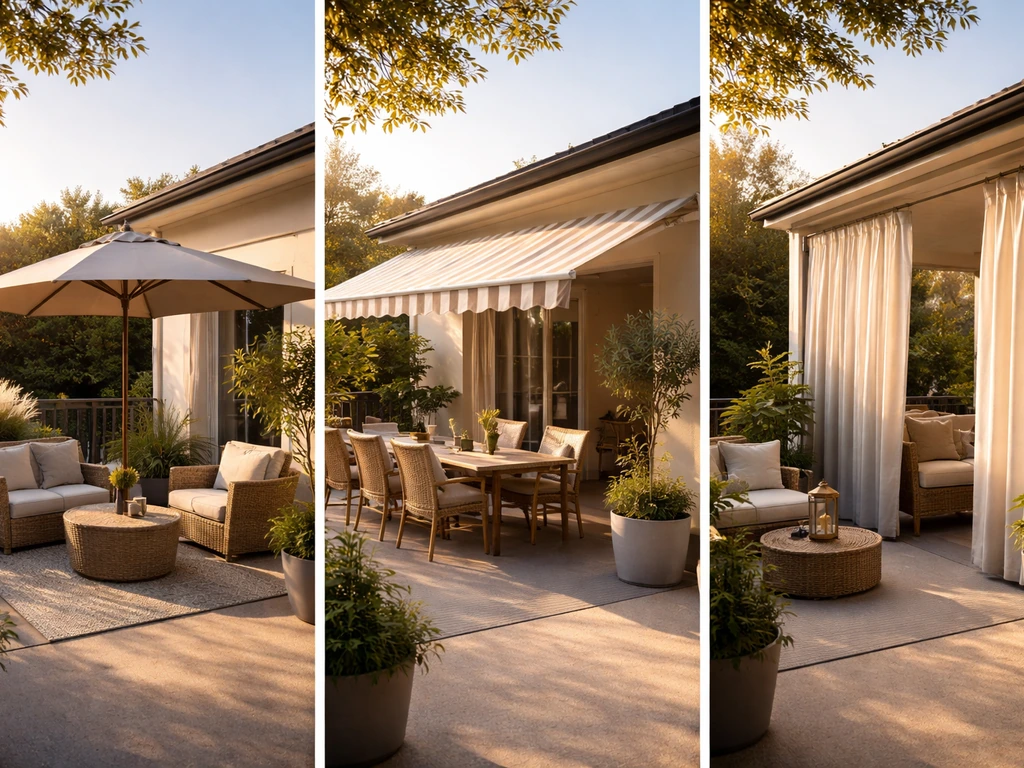
Best Outdoor Patio Shades: How to Choose the Right One
Compare best outdoor patio shades by sun blocking, coverage, wind proofing, privacy, and renter friendly setup to choose
Alternative to Patio Cushions: Durable, Stylish Options and DIY
Alternative to patio cushions: durable, weatherproof seating options, pros, DIY tips & buying guide.
Best Color for Outdoor Patio Cushions in 2026
Choose the best cushion color for sun, heat, and fading in 2026, with pairing tips for patio furniture and durability.