
The best patio roller shades for most people are outside-mount solar/sunscreen fabric shades with a 3% to 5% openness factor, installed on a wall or ceiling above your patio opening. That combo gives you solid glare and UV control, a usable view to the outside, and enough weather resistance to handle everyday sun and rain without babying them. If you need more privacy or you're shading a west-facing patio that gets punishing afternoon sun, drop to a 1% to 3% openness fabric. If you want full darkness for an outdoor movie setup or a covered porch that doubles as a lounge, go with a blackout option. The sections below walk through exactly how to pick the right shade, size it correctly, install it without headaches, and keep it working for years.
Best Patio Roller Shades Buying Guide: Fit, Mount, Durability
What patio roller shades are and how they actually work
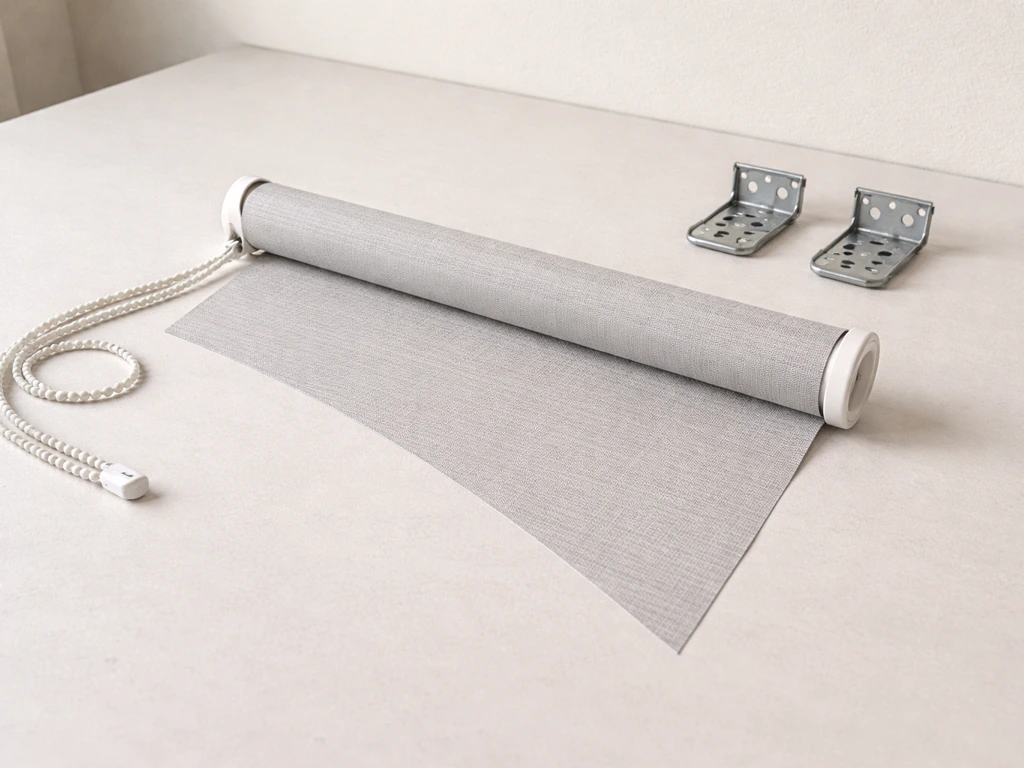
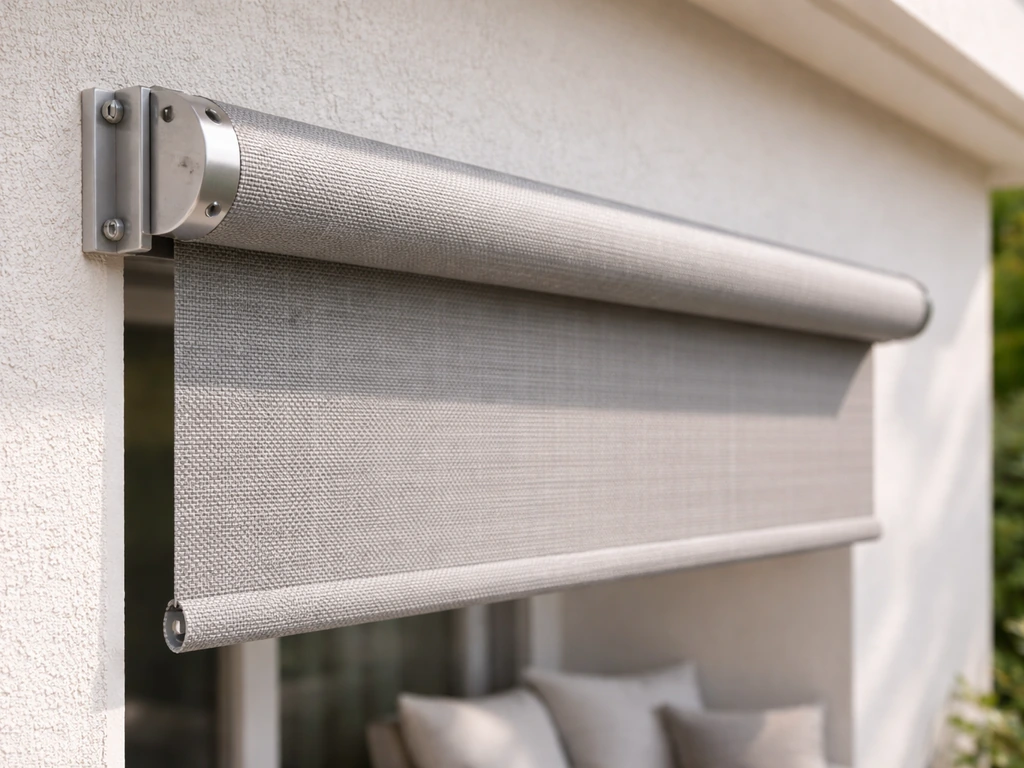
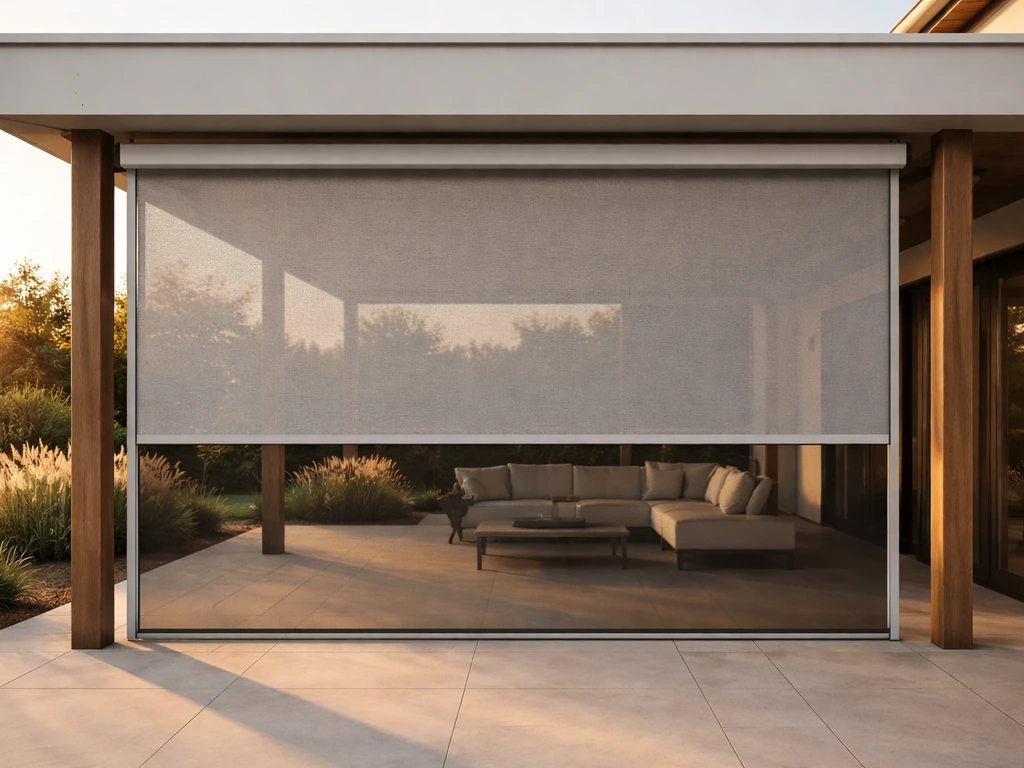
A roller shade is one piece of fabric attached to a roller tube (also called a headrail). When you pull the fabric down or trigger the motor, the tube unrolls the fabric across the opening. Pull it back up, and the fabric coils neatly around the tube again. That's the whole mechanism. The brackets at each end of the tube anchor to your wall, ceiling, or overhead beam, and most systems include a fascia cover that hides the tube for a cleaner look.
For patios specifically, the fabric does a lot of the heavy lifting. Unlike an indoor roller shade that just needs to look nice, an outdoor one has to handle UV radiation, humidity, wind, and occasional rain while still controlling light and privacy. That's why patio roller shades use engineered outdoor fabrics rather than standard window shade materials. If you want the best option for your patio, compare openness factor, fabric weather rating, and mounting fit so you end up with a shade that performs in real sun and rain best outdoor roller shades for patio. The mounting is also different: you're usually anchoring into a wooden stud, a concrete fascia, or an overhead beam instead of a window frame, so structural anchor points matter more than they would indoors.
What actually makes a patio roller shade the "best" for your situation
The word "best" is doing a lot of work here. The best shade for a screened porch that faces north is completely different from the best shade for an open west-facing patio in Phoenix. So before looking at brands or prices, you need to nail down three things: how much light you want to block, how much privacy you need, and how much coverage the shade actually provides. If you want the best results, focus on patio shades designed for outdoor conditions and light control, then choose the openness level that matches your privacy and sun exposure needs best outdoor patio shades.
Openness factor: the number that tells you everything about light control
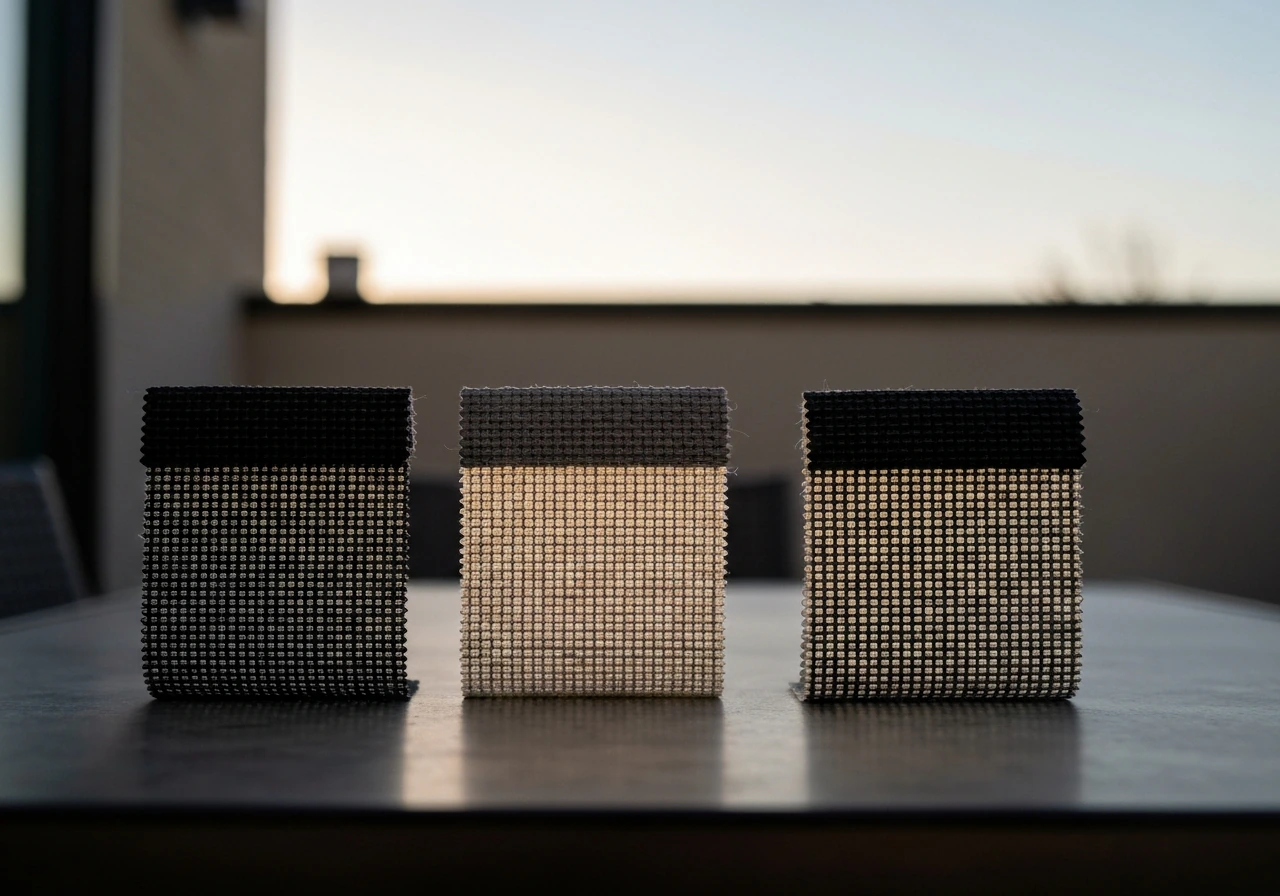
Outdoor solar shades are rated by openness factor, which is simply the percentage of the weave that's open (holes versus solid material). A 5% openness fabric has 5% of its surface as open holes, which means it blocks 95% of visible light. A 3% openness fabric blocks 97%. Both still let you see outside during the day, but a 3% fabric cuts glare dramatically more than a 5% one. For most sunny patios, 3% is the sweet spot: you get a real view, you can have a conversation without squinting, and UV protection is strong. If you want the best outdoor blinds for patio coverage, start with the openness factor and choose a fabric engineered for exterior conditions 3% is the sweet spot. If your patio is already partly shaded or faces north, a 5% or even 10% openness can work fine. For fully exposed south or west-facing patios, drop to 1% to 3%.
Some specs use "Tv%" (light transmission percentage) to describe the same thing from the opposite direction. A fabric with a 3% openness factor and a Tv% of around 3% to 5% are roughly describing the same low-transmission behavior. Commercial spec sheets sometimes list both, along with UV block percentages: a fabric listed as "less than 1% openness / 99% UV block" is essentially a near-blackout solar shade. Keep that in mind when comparing products that use different terminology.
Privacy vs. view: the tradeoff you need to understand
Here's the reality with solar/sunscreen fabrics: you can see out more easily than people can see in, but that dynamic flips at night when interior light is brighter than exterior. If you're using your patio in the evenings and don't want neighbors to see in, a lower openness factor (1% to 3%) helps, but it won't give you true privacy the way a solid fabric would. For real nighttime privacy, you either need a blackout fabric or a separate privacy screen. Blackout roller shades block nearly all visible light through the fabric itself, though inside-mount installations can still let some light leak around the edges where the fabric doesn't meet the frame tightly.
Sizing your patio roller shade correctly
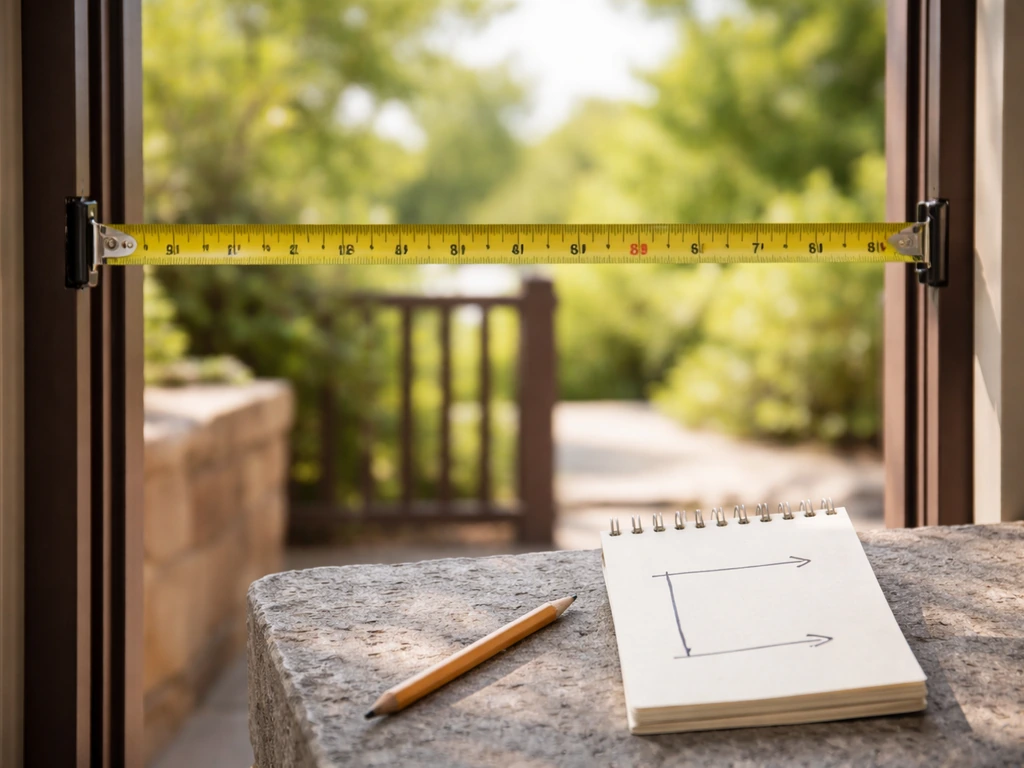
Measuring wrong is the number one mistake people make. Measure to the closest 1/8 inch, and write down width first, then height. Swapping those two numbers when you order is a surprisingly common error that results in a shade that won't fit. Here's how to approach it based on mount type.
Outside mount (the most common for patios)
Outside mount means the shade hangs outside the opening and overlaps the edges. This is the right choice for most patios because it maximizes light blocking and coverage. Measure the full width you want covered, then add at least 1.5 inches on each side (so 3 inches total to your measured width) to ensure you get coverage overlap and minimize light gaps at the edges. For height, measure from where the bracket will sit down to your floor, deck surface, or wherever you want the shade to drop. When you order an outside-mount shade, the manufacturer typically makes it to your exact specified dimensions.
Inside mount
Inside mount fits within a structural recess or frame, like the inside of a pergola post opening. Measure the exact opening width and height. The manufacturer will automatically apply a small deduction to the fabric width so it fits and operates without binding. Note that inside-mount shades often have small light gaps at the edges where the fabric ends just inside the frame. For outdoor use, this is rarely ideal unless your opening has a clean structural frame to mount within.
System width and clearance
Don't forget to account for the total system width, which includes the roller tube, brackets, and any end caps or fascia. That combined measurement needs to fit within your available mounting space. Also plan for at least 2 inches of clearance between the bracket and the wall or ceiling so the shade tube can snap into place during installation. Skipping this step means you'll be reinstalling brackets after the fact.
Mounting types: wall, ceiling, and everything in between
Patio roller shades can mount in three main ways: to a vertical wall above the opening, to an overhead ceiling or beam, or to the inside of a structural frame. Wall mount is the most common and the easiest to install. Ceiling mount (or soffit mount) works well for deep covered patios where the shade drops from overhead rather than from a wall fascia. Both are outside-mount approaches in terms of how they're ordered.
For open or semi-open patios without a solid wall above the opening, a ceiling-mount into a structural beam is usually the most secure option. Always anchor into a structural member (a wood stud, concrete block, or metal beam) rather than drywall or thin cladding. This is especially important for wider shades that carry more wind load when deployed.
Material and weather performance: what to look for outdoors
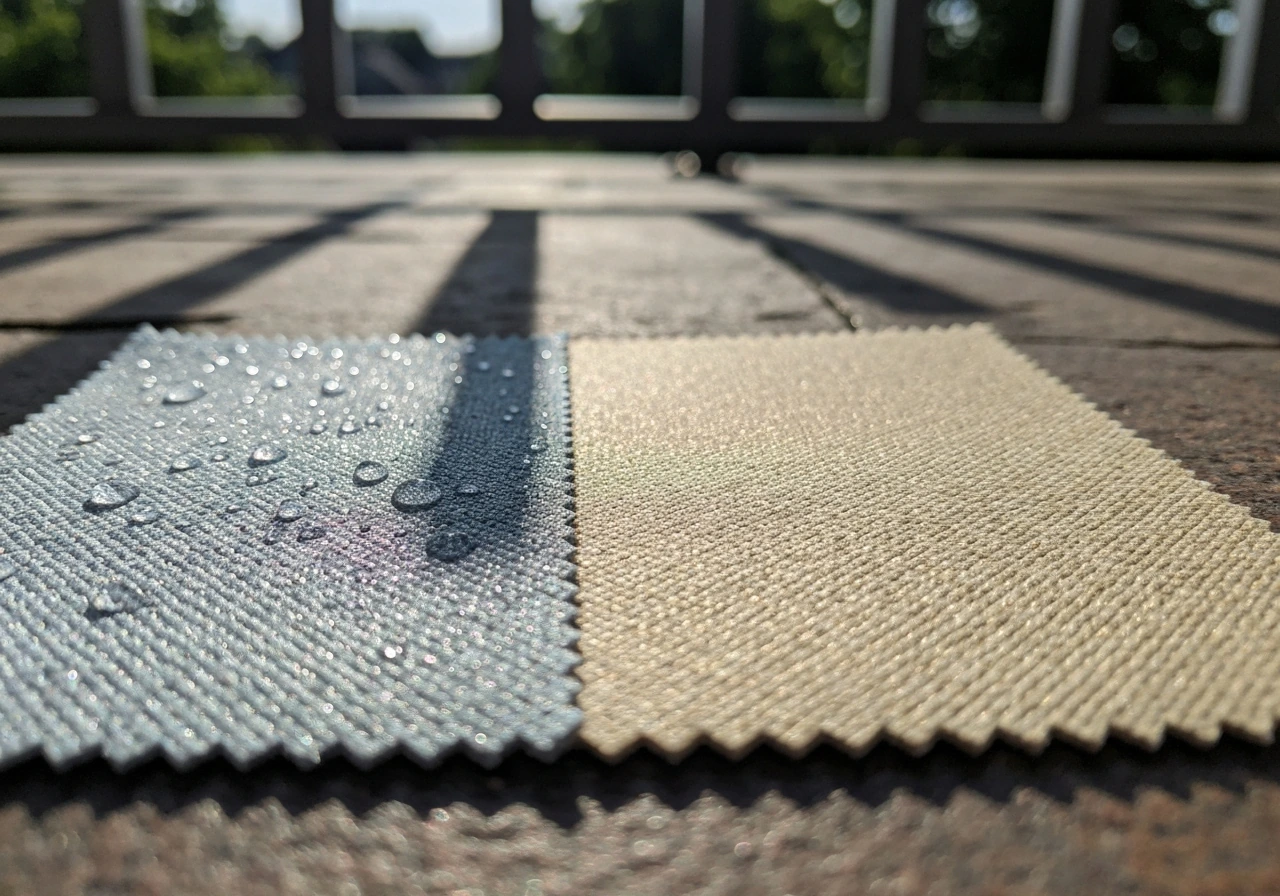
Indoor shade fabrics will fail fast outdoors. For patio use, you need fabric engineered specifically for exterior conditions. Here's what the key specs actually mean in real-world terms.
| Performance Factor | What to Look For | Why It Matters |
|---|---|---|
| UV resistance | 99% UV block or near-zero openness factor; look for ASTM D6544 or AS 4174 tested fabrics | Protects you and your furniture; prevents fabric fading and degradation |
| Color/fade stability | Xenon arc tested (EN ISO 105-B02 or equivalent); solution-dyed yarns | Maintains appearance for years under direct sun exposure |
| Water/rain behavior | Tight weave (low openness factor); look for water-resistant or coated fabric descriptions | Low-openness fabrics shed water better; very open weaves let rain through |
| Mold and mildew resistance | PVC-coated or vinyl-coated yarns; treated outdoor fabrics | Prevents staining and fabric breakdown in humid climates |
| Wind handling | Manufacturer wind-speed ratings; zip-guided or cable-guided systems for exposed areas | Unguided shades can billow, tear, or rip brackets out in high wind |
On rain specifically: a tightly woven fabric (1% to 3% openness) will bead and shed water reasonably well because the small weave gaps limit penetration. Higher openness fabrics (10%+) let rain pass straight through, which means they're not functional as rain shields at all. If you need rain protection, go low openness or consider an awning-style product instead. No standard roller shade is truly waterproof, but a closed-weave solar fabric with a moisture-resistant backing performs well for light rain and drizzle.
For wind: any patio shade deployed in open, exposed conditions needs to be secured at the bottom when down. A bottom bar weight helps, and for high-wind regions, zip-guided or side-cable systems (like those offered by Somfy and similar manufacturers) physically constrain the fabric within a track so it can't billow. These add cost but significantly extend fabric and hardware life in windy areas.
Motorized vs. manual: which one makes sense for you
Manual roller shades use a spring mechanism or a pull cord/chain. They're simpler, cheaper, and have fewer failure points. For a single shade on a covered porch that you raise and lower once or twice a day, manual works perfectly fine. For wide shades (over about 96 inches), very tall drops, or situations where the mounting point is hard to reach, a motor makes daily use much less frustrating.
Motorized options fall into two categories: wired (hardwired to your home's electrical system) and battery/solar-powered. Wired motors are the most reliable but require an electrician if you don't have an existing outlet near the mounting point. Solar-powered motors (a panel charges a built-in battery) are increasingly practical and popular for patios because you don't need wiring runs. Battery-only motors work too, but you'll need to recharge or replace batteries periodically. One early troubleshooting step for any motorized shade that stops responding: check the battery first before assuming the motor has failed.
IP ratings for outdoor motors
If you go motorized, the motor's IP (Ingress Protection) rating tells you how well it's sealed against water and dust. For a fully exposed outdoor patio shade, look for IP65 or higher. For a semi-covered or protected patio (under an eave or pergola roof), IP55 is generally sufficient. Don't just take a product's marketing language at face value here: check the actual datasheet for the motor's IP rating. Outdoor roller shade motors are designed and rated for specific exposure conditions, so you should confirm the full IP rating from the manufacturer’s datasheet instead of relying on marketing claims verify the motor’s full IP rating in the manufacturer datasheet. A motor rated IP44 (which appears on some exterior shade operator specs) is fine for protected installs but not for shades that will be rained on directly. Somfy and similar automation brands offer outdoor-specific tubular motors with appropriate ratings; verify the spec sheet, not just the product page.
Smart controls and sensors
Higher-end motorized systems support sun and rain sensors that automatically lower or raise the shade based on conditions. Rain sensors (typically rated around IP44 themselves) can detect even light rain or heavy mist and retract the shade before wind-driven rain damages it. If you're investing in motorized shades for a large or permanent patio installation, sensors are worth the added cost. They protect the shades themselves as much as they improve convenience. These systems integrate naturally with broader smart home setups if that's a priority for you.
For a more detailed look at the full range of motorized options and control systems, motorized patio shades are worth exploring as a dedicated topic given how much the power and automation options vary. If you are aiming for the best motorized patio shades, focus on openness factor, outdoor fabric specs, and an IP-rated motor matched to how exposed your patio is.
How to install patio roller shades (and the mistakes that cause problems)
Most patio roller shades are DIY-friendly, but a few details separate a clean, long-lasting install from one that binds, wobbles, or pulls out of the wall after a year.
- Confirm your anchor points before anything else. Probe or stud-find to locate wood studs or structural members. Anchoring into drywall alone will fail, especially for wider, heavier outdoor shades subject to wind load.
- Mark a level line across the full width of your mounting location at your desired bracket height. Use a real level, not just eyeballing it. An off-level shade will roll unevenly and can start tracking to one side over time.
- Hold the bracket template (included with most shades) against the wall at your marked line and mark the screw hole positions. Drill pilot holes at each mark before driving screws to avoid splitting wood or cracking stucco.
- Ensure at least 2 inches of clearance between the wall or ceiling surface and the bracket arm so you can snap the roller tube into place after the brackets are secured. Measure this before drilling.
- Mount brackets, then snap or slide the roller tube into position according to the manufacturer's bracket design. Double-check that the tube sits flush and level in both brackets.
- For motorized shades, connect power or confirm solar panel positioning before snapping the tube in. Running wires after the fact is much harder.
- Test the full range of motion (raise and lower completely) before installing any fascia cover. Fix binding or misalignment now, not after the cosmetic cover is on.
The most common mistakes: not finding a stud (leads to bracket pullout), not leveling the brackets (leads to off-track operation and uneven fabric wear), and mounting the brackets too close to the wall without clearance (makes the tube impossible to seat). Also watch the slotted bracket orientation: most roller shade brackets are handed (left and right are different), and installing them backward will cause the shade to roll the wrong direction or not lock into position.
Keeping your patio roller shades working year after year
Routine cleaning
Start with a light dusting or a wipe-down with a dry cloth to remove surface debris before doing any wet cleaning. For actual dirt or grime, mild soap and lukewarm water on a soft brush or sponge is the standard approach. Scrub lightly in the direction of the weave, rinse with clean water, then lower the shade fully and let it air-dry completely before rolling it back up. Drying it fully extended (rather than rolled up while still damp) is important: rolling up a damp shade traps moisture inside the roll and creates ideal conditions for mildew to develop on the fabric. Don't use bleach, solvent-based cleaners, or pressure washers on solar shade fabrics; they'll damage the coating and degrade UV resistance.
Seasonal care and storage
If you live somewhere with harsh winters, rolling your patio shades up and storing them indoors for the off-season extends fabric life significantly. Cold temperatures alone aren't usually the problem, but freezing rain, ice loading, and winter wind can stress the fabric and hardware. If you leave them mounted year-round, roll them up and secure them in the raised position during winter storms or extended periods of non-use. Most roller shade systems have a locking or stopping mechanism to hold the shade up, use it.
Troubleshooting and when to replace
A shade that won't stay up or keep rolling smoothly usually has a spring tension issue (for manual spring-operated shades) or a bracket alignment problem. Try re-seating the tube in the brackets first. If the fabric starts to warp, permanently crease, or show significant fading or brittleness, the UV-resistant coating has degraded and the shade isn't performing anymore. That's a replacement situation, not a repair. For motorized shades, if the motor stops responding, try recharging or replacing the battery before assuming motor failure. Binding during operation (shade catches or drags) often points to a bracket that has shifted slightly out of alignment, re-level and retighten the bracket screws. Visible mold that doesn't respond to cleaning, torn fabric, and broken rollers are all clear replacement indicators.
When upgrading, it's worth reconsidering your fabric choice based on what you learned from the current shade. If you found yourself wanting more privacy or less glare, go down in openness factor. If the shade felt too dark and you lost the view you wanted, go up. And if you've been managing a manual shade on a wide opening and it's become a daily annoyance, that's the moment to upgrade to a motorized system. The installation footprint is usually identical, so swapping in a motorized roller is straightforward.
FAQ
Will the best patio roller shades block light completely at night (for outdoor movies)?
No. Even blackout solar roller shades can leak light around the edges if the fabric doesn't fully meet the sides, or if the shade is mounted with a small gap. For true near-darkness, choose an outdoor fabric with blackout behavior and confirm the install is tight with the correct overlap (outside mount) or a clean structural recess (inside mount), plus keep side light gaps minimal.
Are best patio roller shades private during the day and at night, or only in the daytime?
Yes, but you need to choose for it. If you want views while still cutting glare, stick to the 3% to 5% openness range. If your goal is privacy when neighbors have line of sight, be cautious with any openness higher than 3%, because nighttime privacy is mainly determined by interior light levels and the openness of the fabric.
Do patio roller shades handle heavy rain, or will they get damaged in storms?
For most patio solar roller shades, you should not expect them to act like a waterproof awning. If your region gets steady downpours, choose a low-openness fabric (around 1% to 3%) and consider a product marketed with moisture-resistant backing, then plan for the shade to be retracted during storms. Also note that even well-behaved fabrics can be stressed by wind-driven rain, so sensors or manual retraction are practical risk reducers.
What should I do if my patio is windy, will a standard bottom bar be enough?
In high-wind zones, bottom weights help but may not be enough by themselves for larger deployments. The article’s guidance points to zip-guided or side-cable systems (track constraints) to prevent billowing. If your patio is exposed on multiple sides or the shade will be deployed during windy afternoons, prioritize a system with bottom bar weighting plus side/cable guidance.
How do I avoid having the shade tube not seat properly when installing outside-mount roller shades?
Wrong tube placement can cause binding and premature wear. Before ordering, confirm the bracket hardware and motor headrail length fit your space, then leave the recommended clearance so the tube can seat fully. If your first attempt places brackets too close to the wall, you often end up removing and reinstalling them, so plan the bracket-to-surface gap during measurement.
Can I mount patio roller shades to drywall or siding if I use stronger anchors?
If the bracket screws pull out, mounting strength is usually the cause. Use the structural anchor option that matches your build (wood stud, concrete block, or a real metal beam), and avoid relying on drywall, stucco-only surfaces, or thin cladding. For wide shades (especially over about 96 inches), this becomes more critical because the wind load increases.
What measurement mistakes most often make patio roller shades not fit (and how can I prevent them)?
Yes, the measuring direction matters. Always write width first, then height, and double-check you measured the dimension you actually want the fabric to cover (outside overlap vs inside recess). Also measure to the nearest 1/8 inch because small errors can show up as edge gaps or inadequate overlap, particularly for low-opacity fabrics where gaps are more noticeable.
Do I really need IP65 motors for my patio, or is IP55 usually enough?
It depends on how exposed the patio is. The article’s guidance suggests IP65+ for fully exposed installs where rain hits directly, and IP55 for semi-covered areas. If your patio gets frequent direct splash or driven rain, prioritize the higher IP rating and verify the motor datasheet, not just the product page marketing.
If I buy motorized shades with rain sensors, will that fully protect them in storms?
For motor systems that include rain sensors, check whether the sensor is intended for outdoor use and how it’s rated relative to your local conditions (light mist vs heavier rain). Also plan the placement so it can detect conditions accurately without being blocked by trim. If you frequently have wind-driven storms, sensors add protection, but they may not fully eliminate risk of fabric stress, so retraction strategies still matter.
What’s the safest cleaning and winter storage routine for best patio roller shades?
You can, but keep the shade’s cleaning schedule realistic. Mild soap and lukewarm water with a soft brush is appropriate for most patio fabrics, dry with the shade fully extended, and avoid bleach, solvents, and pressure washing since those can degrade coatings and UV performance. If you store during winter, ensure the fabric is clean and completely dry before rolling it up for indoor storage.
My motorized patio roller shade stopped working, what should I troubleshoot first?
Often it is not the motor. If a motorized shade stops responding, first verify battery level or charge (for solar and battery-powered units) before concluding the motor failed. If the shade drags or binds, the more common cause is bracket misalignment, re-leveling, and re-seating the tube in the brackets.
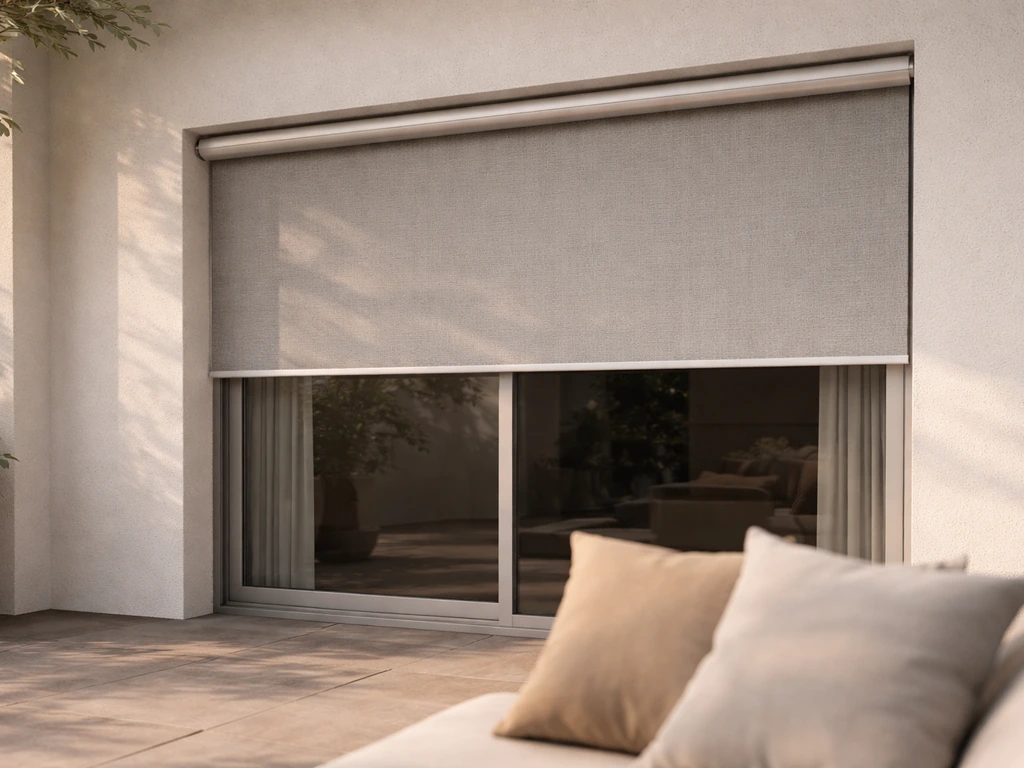
Find the best outdoor roller shades for your patio with weatherproof fabric, size tips, mount options, and model picks.
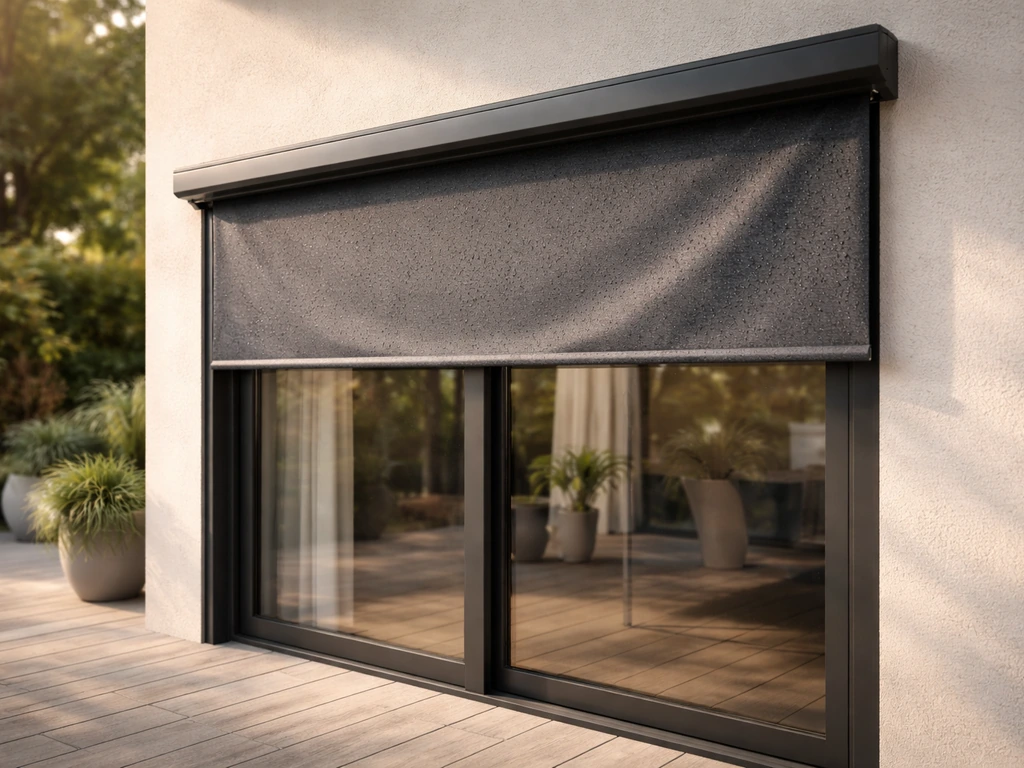
Compare the best outdoor patio blinds by style, fit, weather resistance, wind options, cost, and maintenance tips.
2026 buying guide to the best motorized patio shades with features, pricing, measurements, and installation tips.