
For most patios, outdoor roller shades or retractable blinds made from HDPE mesh or solution-dyed acrylic fabric are your best all-around option. They handle sun, light rain, and wind better than most alternatives, they're easy to operate daily, and they come in enough sizes and openness levels to cover virtually any privacy or light-control need. That said, the "best" outdoor blind for your patio really depends on your exposure conditions, your mounting surface, and how much you want to spend. This guide walks through exactly how to match the right blind type to your specific situation.
Best Outdoor Blinds for Patio: Buyer’s Guide and Picks
Lark Perry
30 May 2026
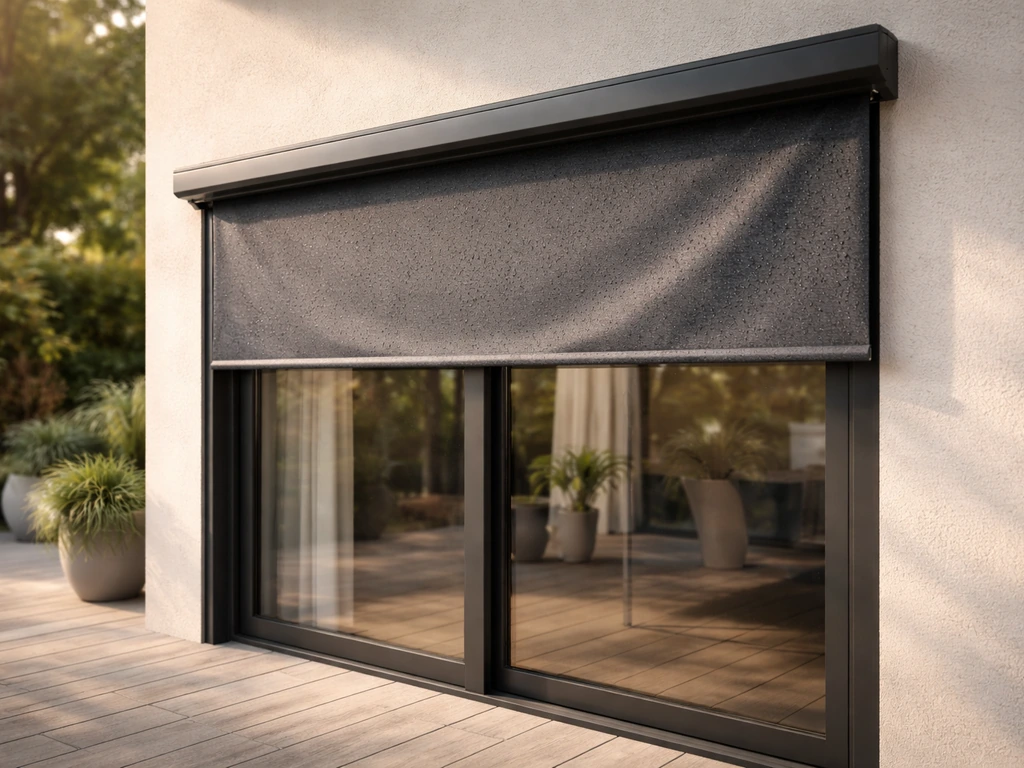
What to look for in outdoor patio blinds
Outdoor blinds are not just indoor blinds moved outside. They face UV radiation, moisture, temperature swings, and wind on a daily basis, and a blind that isn't built for those conditions will warp, fade, or fail within a season or two. Here are the criteria that actually matter when you're shopping.
- Material and UV resistance: Look for solution-dyed acrylic (like Sunbrella) or HDPE mesh fabric. Both resist fading significantly longer than polyester or standard vinyl. Quality HDPE shade fabric can claim up to 95% UV resistance, and solution-dyed fibers hold color because the dye goes all the way through the fiber rather than sitting on the surface.
- Weatherproofing rating: Motors and hardware should carry at least an IP44 protection rating, meaning they're protected against water splashing from any direction. Somfy's ILMO 2 drive, for example, carries IP44 and operates from -20°C to +60°C, which covers virtually every climate in the continental US.
- Wind resistance: This is where many budget blinds fail. Awnings and outdoor blinds are tested to standards like EN 13561, which classifies products by the wind speeds they can withstand before requiring retraction. If you're in a windy location, look for motorized systems that include a wind sensor for automatic retraction.
- Openness factor: The fabric's openness percentage (1%, 3%, 5%, or higher) determines how much light and visibility passes through. Lower openness means more privacy and more solar blockage. Higher openness lets in more breeze and view.
- Mounting compatibility: Check whether your patio has a solid fascia, posts, or a pergola beam to mount to. Your mounting surface determines which blind types are even feasible.
- Operating mechanism: Manual spring-loaded rollers, cord-operated systems, and motorized drives all work, but motorized options add convenience and, with a wind sensor, genuine weather protection automation.
- Warranty coverage: Look for at least 3 years on materials and workmanship. SelectBlinds, for instance, covers defects for up to 3 years as long as installation follows their instructions. Always confirm what voids coverage (most warranties exclude damage from improper installation or solvent cleaning).
The main blind types for patios (and who each one is for)
There are five main categories of outdoor blind that genuinely work for patios. Each has a different strength, and picking the wrong category is the most common mistake people make before they even get to brand or budget decisions.
Outdoor roller shades
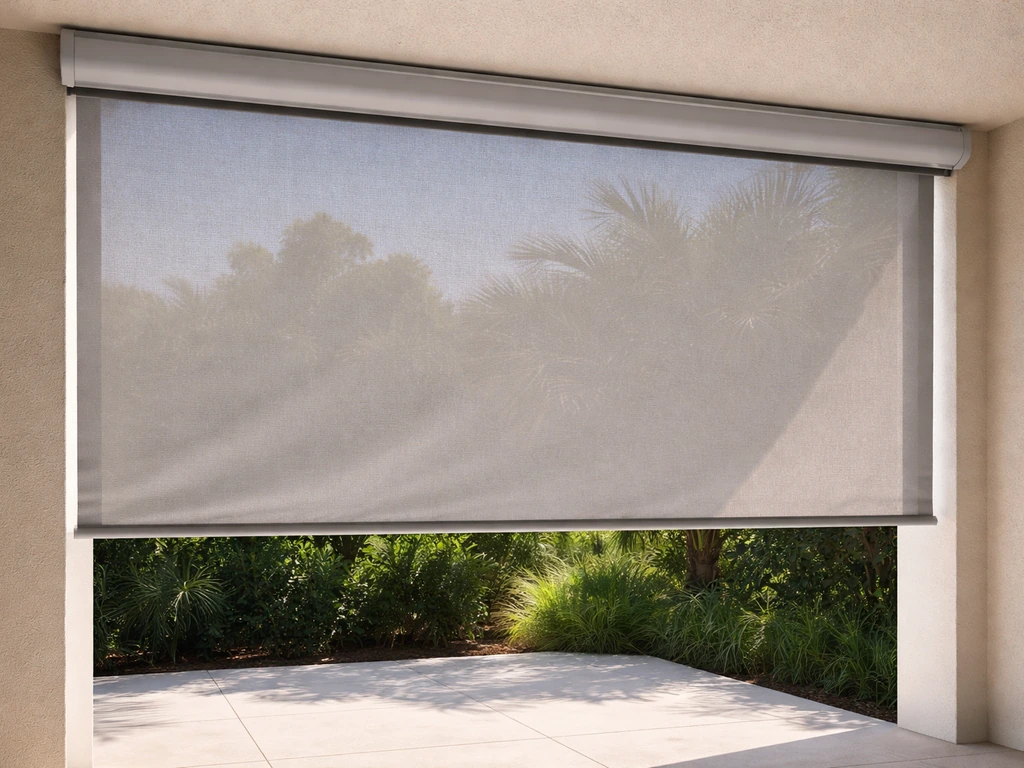
Roller shades are the workhorse of outdoor blinds. They roll up neatly when not in use, come in widths from about 36 inches up to 12 feet or more, and are available in HDPE mesh (Coolaroo is the most recognized brand in this space) or woven solar fabric. They're ideal for covered patios, pergolas, and any structure with a solid overhead beam or fascia to mount to. If you want the best outdoor roller shades for patio use cases like covered porches and pergolas, prioritize durable HDPE mesh or solution-dyed acrylic and choose the right openness for your privacy needs. Spring-operated versions start around $50 to $150 for a standard width; motorized versions jump to $300 and above. The trade-off for the lower-cost manual options is that you're pulling them down and securing them manually every time, which becomes tedious in variable weather.
Retractable blinds and motorized screen systems
Retractable systems are essentially motorized roller shades with more sophisticated housing, side tracks, and often wind-sensor integration. These are the premium end of outdoor blinds. Systems like MagnaTrack-style retractable screens can be rated for winds up to 75 mph, and some coastal-grade motorized screens claim ratings up to 155 mph. If you live somewhere with strong afternoon winds or storm exposure, this is the category worth budgeting for. Expect to pay $800 to $3,000 or more installed, depending on width and motor system. The upside is daily usability: one button press covers or uncovers your entire patio, and the wind sensor handles retraction automatically when conditions get dangerous. For many homeowners, motorized retractable systems are one of the best motorized patio shades options when you want effortless control and weather-responsive operation. These are closely related to motorized patio shades, which follow a similar operating principle with some overlap in how they're specified and installed.
Slatted and Venetian-style outdoor blinds
Slatted outdoor blinds use horizontal or vertical slats, typically made from PVC, aluminum, or bamboo, to give you adjustable angle control over light and airflow. They work well on screened-in patios or enclosed patio rooms where you want to fine-tune light direction. The downside outdoors is that slats catch wind like a sail when open, and even heavier PVC slats can rattle, bend, or warp with sustained exposure. They're better suited for semi-enclosed spaces than fully open patios in windy areas. Budget for $80 to $300 depending on material and size.
Shade sails
Shade sails are tensioned fabric canopies, not blinds in the traditional sense, but they function as an overhead blind alternative for patios without existing overhead structure. Quality HDPE shade sails offer up to 95% UV resistance, and some designs (like Maanta's radial-cut Solaria line) claim wind resistance up to 49 mph. One important clarification: most shade sails are breathable but not waterproof, meaning water will pass through or run off at the edges rather than collecting. If you want rain protection, you need a non-permeable coated sail or a different product category entirely. Shade sails are best for large open patio areas, pool decks, or anywhere you can attach to posts or existing structures at three or more anchor points. Cost ranges from about $50 for basic triangle sails to $300 or more for large, high-quality HDPE versions.
Outdoor curtains and panel drapes
Outdoor curtains are the most visually decorative option and the least practical in anything beyond light breeze. They're made from solution-dyed acrylic or treated polyester and hang from curtain rods or cable systems. They work beautifully for pergolas and covered patios where privacy from a neighbor's sightline is the main goal and wind isn't a major factor. In strong wind they billow, tangle, and can catch enough force to pull hardware from the wall. Use them for ambiance and supplemental privacy, not as your primary sun or weather solution. Cost: $30 to $150 per panel.
Comparing your options side by side
| Blind Type | Best For | Wind Resistance | Rain Protection | Approx. Cost | DIY Friendly? |
|---|---|---|---|---|---|
| Outdoor Roller Shade | Covered patios, pergolas | Moderate (retract in high wind) | Partial (fabric dependent) | $50–$400+ | Yes |
| Motorized Retractable Screen | Open patios, windy or coastal areas | High (up to 75–155 mph with proper system) | Good (with solid fabric) | $800–$3,000+ | Usually professional install |
| Slatted / Venetian | Semi-enclosed or screened patios | Low (slats catch wind) | Minimal | $80–$300 | Yes |
| Shade Sail | Open areas, pool decks, large spaces | Moderate (up to ~49 mph with good design) | Breathable only (not waterproof) | $50–$300+ | Yes (anchor points required) |
| Outdoor Curtains | Pergolas, light privacy needs | Low (billow in wind) | Minimal | $30–$150/panel | Yes |
Weatherproofing and durability: what actually holds up
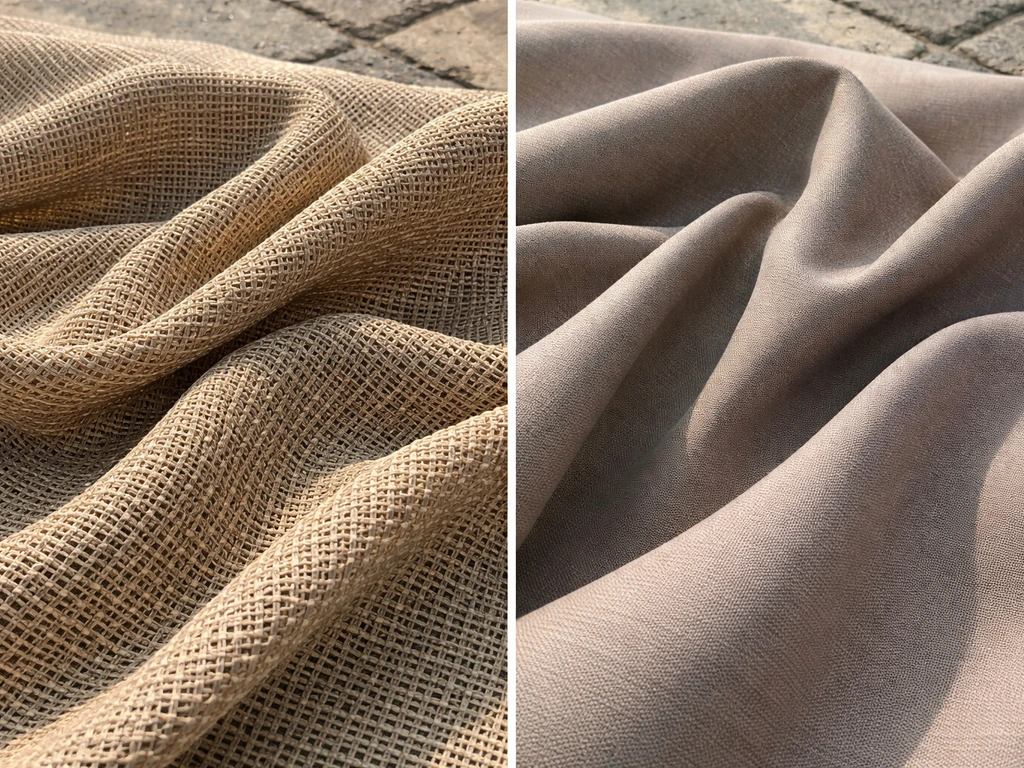
The single biggest durability differentiator is fabric construction. HDPE mesh (like Coolaroo uses) is a synthetic weave that doesn't absorb water, dries quickly, and is naturally mildew resistant because there's nothing for mildew to feed on in the fabric itself. Solution-dyed acrylic (like Sunbrella) takes a similar approach: Sunbrella's own guidance states the fabric does not promote mildew growth, and any mildew that appears is growing on surface dirt, not the fabric. Both are solid choices. Where they differ is feel and application: HDPE mesh tends to be stiffer and more UV-transparent (better airflow), while solution-dyed acrylic is softer, more opaque, and better for full sun blockage.
For hardware and mechanisms, IP44 is the minimum rating you want on any motor or electrical component. That covers splashing water from rain and hose cleaning. If you're in a coastal environment with salt spray, look for corrosion-resistant aluminum or stainless hardware specifically rated for marine or coastal exposure. Standard galvanized steel will rust within a couple of seasons near the ocean.
Wind is the biggest structural threat. Outdoor blinds and awnings are tested under standards like EN 13561, which assigns wind resistance classes based on how much force the product can handle before requiring retraction. Any blind left deployed in winds beyond its rated threshold risks torn fabric, broken hardware, or mounting damage. The rule of thumb: retract everything in sustained winds above 25 to 30 mph unless your system is explicitly rated higher and has the hardware to match.
Privacy and light control: choosing the right openness
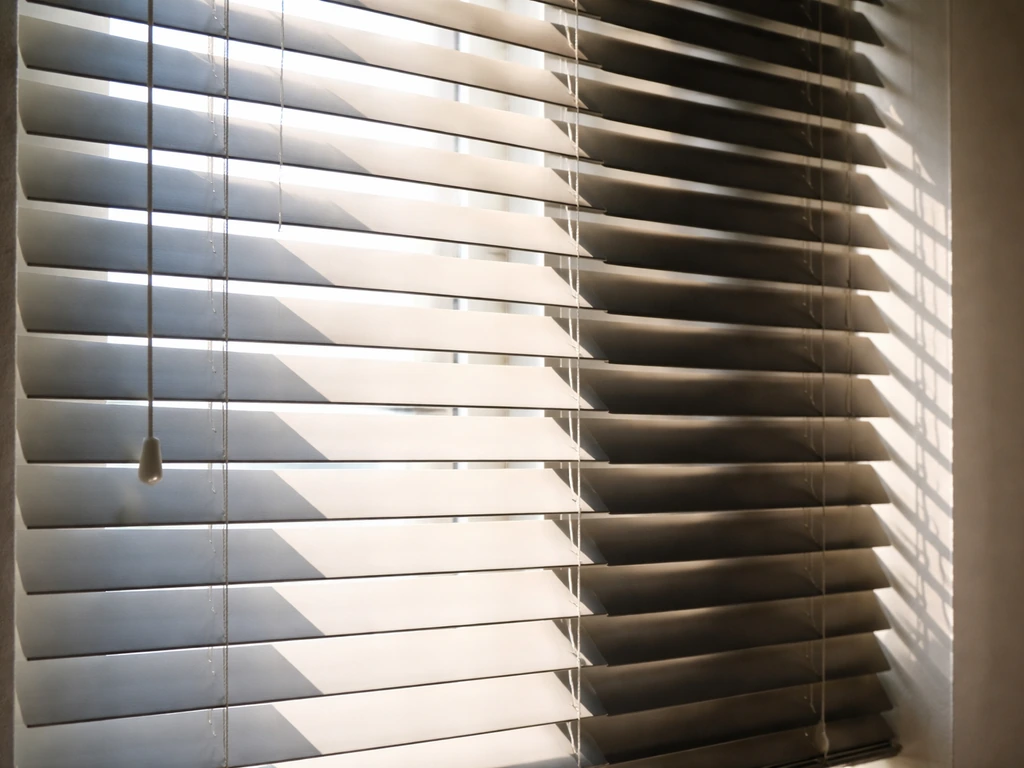
Openness percentage is the number most people overlook, and it has a bigger impact on daily satisfaction than almost any other spec. The openness factor tells you what percentage of the fabric is open weave vs. solid material. Here's how to think about it in practical terms:
- 1% openness: Maximum privacy and solar blockage. From the outside, it's nearly impossible to see through. Best for patios facing a neighbor's window or a busy street. Less airflow.
- 3% openness: The most popular middle ground. Good privacy during the day, significant solar control, still allows some airflow and outward visibility. Most outdoor roller shade product lines center on 3% or 5%.
- 5% openness: You can see out clearly, but daytime privacy from the outside is still reasonable. Best for patios where view is the priority (overlooking a garden or landscape) and neighbors aren't a concern.
- 10%+ openness: Primarily a sun diffuser rather than a privacy screen. More of a glare reducer. Use only where privacy isn't a need.
One thing worth knowing: the privacy equation flips at night. As Hunter Douglas explains in their solar shade guidance, during the day you can see out but people outside can't see in due to the contrast difference. At night, when your interior lights are on, that reverses and people outside can see in more easily regardless of the openness percentage. If nighttime privacy matters, you'll want to combine your outdoor blind with interior window treatments or choose a denser fabric.
Installation: measuring, mounting, and layout
How to measure correctly
For outdoor blinds, you're almost always dealing with an outside mount, meaning the blind mounts to the wall, fascia, or beam above and outside the opening rather than inside it. This is actually better for light control and privacy because the shade overlaps the edges of the opening. When measuring for an outside mount, measure the full width of the area you want covered and add 3 to 6 inches on each side to close the light gaps at the edges. For drop length, measure from your intended mounting point down to where you want the bottom of the shade to fall, then add a few inches for overlap at the bottom if you want complete enclosure.
Bracket installation typically requires about 1/2 inch to 1.5 inches of wall clearance between the bracket and the mounting surface, depending on the hardware. Always check your specific bracket specs before purchasing, because a fascia that's too narrow or a pergola beam that's too shallow can cause fitment problems.
DIY vs. professional installation
Manual roller shades and shade sails are genuinely DIY-friendly as long as you have a solid anchor point and the right hardware for your surface (wood, concrete, and brick all need different fasteners). Spring-operated roller shades from brands like Coolaroo can be hung in an hour or two with basic tools. Motorized retractable systems are a different story. The wiring, motor programming, and track alignment benefit significantly from professional installation, and in most cases, the manufacturer's warranty requires professional installation for the coverage to be valid. If you're spending $1,000 or more on a motorized system, factor in $200 to $500 for professional installation rather than risking warranty issues with a DIY approach.
Layout and spacing tips
For patios with multiple blind panels side by side, plan for panel overlaps of at least 2 inches at the edges where panels meet to eliminate the light gap between them. If you're using shade sails, the attachment points need to be at different heights to create the proper tension angle: sails mounted flat at the same height will sag and pool water. A minimum 20 to 30 degree angle from horizontal is recommended for water runoff and proper tension. Space anchor posts for shade sails no more than 12 to 16 feet apart for standard consumer-grade hardware; beyond that you'll need commercial-grade tensioning hardware.
Best outdoor blinds for different patio setups
Rather than naming individual products that may go out of stock or change spec, here are clear category recommendations for the most common patio situations.
Small covered patio or apartment balcony
A spring-operated HDPE roller shade (Coolaroo's Signature Spring-Operated line is the standard reference here) is the right call. It mounts easily to a fascia or overhead beam, rolls up neatly when not needed, and costs $50 to $150 depending on width. Choose 3% to 5% openness for good light filtering without sacrificing too much airflow in a small space. These work well even for renters because installation is minimal and reversible.
Large open patio with strong afternoon sun
A motorized outdoor roller shade or retractable screen system is worth the investment here. The automation means you'll actually use it daily instead of avoiding the hassle of manually pulling down a large heavy shade. Pair the system with a wind sensor for automatic retraction. Use 1% to 3% openness on the west-facing side where afternoon sun hits hardest, and 5% on other sides for view preservation.
Windy location or coastal patio
Go with a motorized retractable screen system with documented wind ratings and automatic retraction. Don't cheap out here. A torn outdoor roller shade or a shade sail that comes loose in a storm is both a replacement cost and a safety hazard. Look for systems with rated wind resistance and ensure the mounting hardware is stainless steel or marine-grade aluminum. Shade sails are viable only with proper commercial-grade tensioning and anchor hardware.
Pergola or open-frame patio cover
Outdoor roller shades mounted between the pergola posts give you the best combination of coverage and visual appeal. Multiple narrower panels (48 to 72 inches wide) are easier to manage than one very wide single shade. You can also run outdoor curtain panels along the sides for supplemental privacy and ambiance, using the roller shades for the primary sun protection on the most exposed sides.
Screened-in or semi-enclosed patio
For a screened-in patio where wind is already managed, slatted Venetian-style blinds or vertical panel blinds become practical because you get the benefit of adjustable light angle control. PVC slats hold up better than wood or bamboo in humidity. Outdoor roller shades also work well here and give you a cleaner look. This is one of the few situations where slatted blinds make sense outdoors.
Pool deck or large open area without overhead structure
Shade sails are the practical answer when there's no overhead beam or fascia to mount to. Use a large HDPE shade sail (look for 95% UV resistance ratings and a radial-cut design for better wind handling) and set it up with at least three anchor points at different heights. Maanta’s Solaria +Plus Breathable shade sail is claimed to offer wind resistance up to 49 mph, using a radial cut design radial-cut design for better wind handling. For a pool deck, rectangular sails covering 12 x 16 feet or larger are more practical than small triangles. Budget $150 to $300 for a quality sail, plus hardware and post costs if you're setting posts.
Keeping your outdoor blinds in good shape season after season
Routine cleaning
For HDPE fabric (Coolaroo and similar), routine cleaning is simple: brush off loose dirt, then rinse with a garden hose. For more thorough cleaning, use mild soap and water and rinse completely. Coolaroo explicitly warns against solvents and abrasives, which can damage the fabric and void the warranty. For solution-dyed acrylic like Sunbrella, the same approach applies: mild soap (Dawn or Woolite are specifically mentioned in Sunbrella's cleaning guidance) plus water, then a thorough rinse and air dry. Both fabric types are naturally mildew resistant, but if you let dirt accumulate, mildew can grow on the surface dirt. Clean regularly and you won't have that problem.
Dealing with mold and mildew
If you do find mold or mildew spots, Sailrite's cleaning guide for Sunbrella fabric recommends a solution of 1 cup bleach and 1/4 cup mild soap per gallon of water. Apply it, let it soak, scrub lightly, then rinse thoroughly. Sunbrella's own warranty documentation confirms mold and mildew can be removed this way without voiding the warranty, as long as you follow the proper cleaning procedure. Don't use concentrated bleach or harsh chemicals, and always rinse completely so residue doesn't accelerate future degradation.
Seasonal storage and winter prep
For roller shades, roll them up fully in the off-season or during extended periods of bad weather. If they have a cassette housing, the fabric is already protected when rolled up. For shade sails, take them down completely if you live somewhere with harsh winters or frequent high winds. Leaving a shade sail up through winter puts enormous stress on anchor hardware and can cause posts to work loose. Store sails clean and dry to prevent mold during storage.
When to replace
HDPE fabric and solution-dyed acrylic both have long service lives when cared for properly, but there are clear signs it's time to replace: fabric that has become brittle or develops cracks, color fading that cleaning doesn't address, hardware that no longer holds the shade securely at the correct tension, or a motor that's become unreliable. Most quality outdoor blind fabrics will last 5 to 10 years in normal conditions before they need replacement. If you bought a manual roller shade, it's often worth replacing just the fabric tube rather than the entire mounting system when the time comes, since the hardware usually outlasts the fabric. Always check your warranty first: SelectBlinds covers materials and workmanship defects for 3 years if the installation was done correctly, and similar coverage windows exist across major brands.
FAQ
How should I measure my patio openings and drop length for the best outdoor blinds for patio?
Start with an outside-mount rule: cover the entire opening plus add 3 to 6 inches on each side for light gaps, then choose a drop length that overlaps the bottom by a few inches if you want a near-sealed look. If your patio is uneven or the fascia bows, measure in two or three spots and confirm the bracket clearance requirement (commonly about 1/2 to 1.5 inches) so the hardware actually fits without rubbing.
What wind rating should I trust, and when should I retract outdoor blinds?
Wind ratings are only useful if the blind is deployed correctly. If your system is rated for a higher class but the slats, roller, or tracks are not installed square and aligned, performance can drop. Confirm the mounting material and fastener type match the manufacturer guidance, and always retract at or below the conservative threshold (roughly 25 to 30 mph sustained unless the system is explicitly rated and matched) to avoid torn fabric and bent housings.
Will openness percentage affect privacy at night, and how do I adjust for it?
If you want both privacy and airflow, use low openness percentages during the day but plan for night privacy separately, since contrast flips when interior lights turn on. The practical fix is either adding interior shades, choosing a denser fabric, or positioning the outdoor blind to overlap more aggressively at the edges so you reduce side leakage from neighbors.
What’s the safest cleaning approach for HDPE mesh vs solution-dyed acrylic?
For HDPE mesh, avoid solvent-based cleaners and abrasive tools because they can damage the weave and shorten service life, even if the blind still looks intact. For acrylic, stick to mild soap and water with a thorough rinse, because residues can dull color over time. If you are using a hose, rinse from top to bottom and let it air dry completely before rolling or retracting.
How do I remove mold or mildew without damaging the fabric or voiding warranty?
If you get mildew or mold stains, treat the surface rather than scrubbing aggressively. A commonly used approach for solution-dyed acrylic is a diluted bleach plus mild soap solution, then light scrubbing and a full rinse, and the key is not to use concentrated bleach or leave residue. Always test in a small hidden area first because older hardware, chalky dirt, or previous cleaners can change how the stain responds.
What electrical and corrosion ratings matter if I’m buying motorized patio blinds?
Don’t assume every outdoor blind has the same electrical or water protection. For motorized units, look for at least IP44 on electrical components, then consider coastal use where salt spray makes corrosion a bigger issue. If you are near the ocean, prioritize marine-grade aluminum or stainless hardware, and skip standard galvanized steel because it can rust quickly.
Which fabric is better for my patio, HDPE mesh or solution-dyed acrylic?
Choose HDPE mesh when you want maximum airflow and fast dry time, it typically feels stiffer and lets more light pass through while still cutting glare. Choose solution-dyed acrylic when you want a softer feel and better solid coverage, especially for full sun blockage. If your west-facing exposure is harsh, many buyers combine a denser openness on that side with lower openness across the most direct-sun panel.
Should I take outdoor blinds or shade sails down seasonally, and what about winter?
If you live in a place with freeze-thaw or frequent heavy winds, plan a seasonal workflow: fully roll up manual or spring roller shades during prolonged storms and consider taking down shade sails entirely in winter. Leaving a shade sail deployed during harsh weather increases stress on anchor points and can loosen posts over time, even if it looks stable at first.
How can I prevent light gaps when I install multiple blind panels side by side?
For adjacent panels, aim for at least a couple inches of overlap at the meeting edges so you avoid a visible light gap when the breeze shifts. Also confirm the mounting points are level and the roller units retract to the same depth, because slight out-of-square installs can create gaps or uneven tension over time.
Are slatted Venetian-style outdoor blinds a good idea for fully open patios?
In screened-in patios, slatted blinds can work because the enclosure reduces wind load, and you get angle control for light direction. On fully open decks, slats are more likely to rattle or act like a sail when open, so roller or retractable systems usually perform better outdoors. If you choose slats anyway, prioritize materials like PVC over wood or bamboo for humidity resistance.
Can I use shade sails as my main patio sun and privacy solution, even without an overhead beam?
Yes, but only if the attachment method and tensioning match the sail’s size and local wind. Shade sails need multiple anchor points, ideally at different heights to create tension, and flat setups can sag and hold water, which speeds deterioration and stains. If you cannot reliably hit the recommended anchor spacing or have weak mounting surfaces, a retractable roller system is usually the safer alternative.
When should I replace just the fabric tube instead of the whole outdoor roller blind?
Often, yes. With a manual roller, the mounting hardware typically outlasts the fabric, so replacing just the fabric tube can be more cost-effective than swapping the full unit. Before ordering, verify the tube’s compatibility with your existing headrail or cassette, and check the warranty terms, since some warranties only apply if specific parts are replaced using the correct installer approach.
Next Articles
Best Motorized Patio Shades: Buying Guide 2026
2026 buying guide to the best motorized patio shades with features, pricing, measurements, and installation tips.
Best Outdoor Patio Shades: How to Choose the Right One
Compare best outdoor patio shades by sun blocking, coverage, wind proofing, privacy, and renter friendly setup to choose
Alternative to Patio Cushions: Durable, Stylish Options and DIY
Alternative to patio cushions: durable, weatherproof seating options, pros, DIY tips & buying guide.