The best outdoor patio shade for most people in 2026 is a retractable roller shade or a high-tension shade sail, but which one wins depends entirely on your patio's size, sun angle, wind exposure, and whether you're renting or own the place. There's no single product that beats everything else in every situation, so the goal here is to match the right shade type to your specific setup, tell you exactly what features to prioritize, and get you to a confident purchase without wasting money on something that doesn't fit.
Best Outdoor Patio Shades: How to Choose the Right One
Lark Perry
6 May 2026
What 'best patio shade' actually depends on
Before you buy anything, you need to answer four questions honestly: Where does your sun hit? How big is the area you're covering? Do you need privacy or just shade? And what's your wind and rain situation like? Each of these changes the answer significantly.
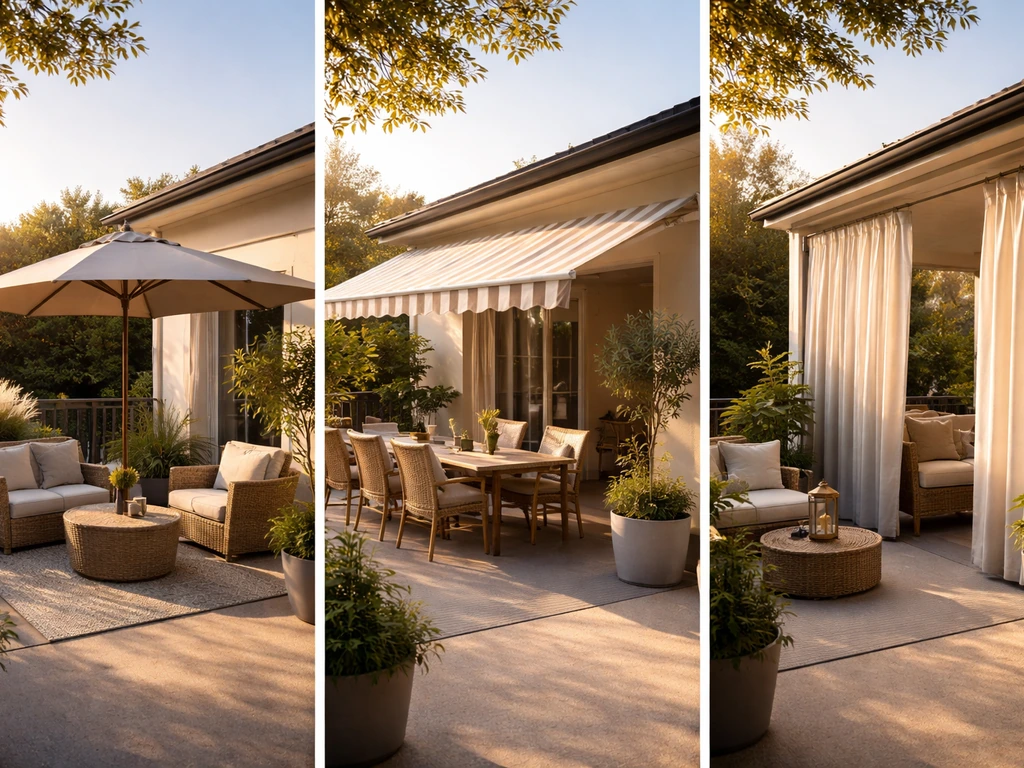
Sun direction and time of day matter more than most people expect. A west-facing patio gets brutal late-afternoon sun that a roof-mounted awning handles perfectly, while a south-facing patio with midday overhead sun is better served by a shade sail or pergola canopy that blocks from above. If you're dealing with low-angle morning or evening sun, vertical solutions like outdoor curtains or roller shades will outperform anything overhead.
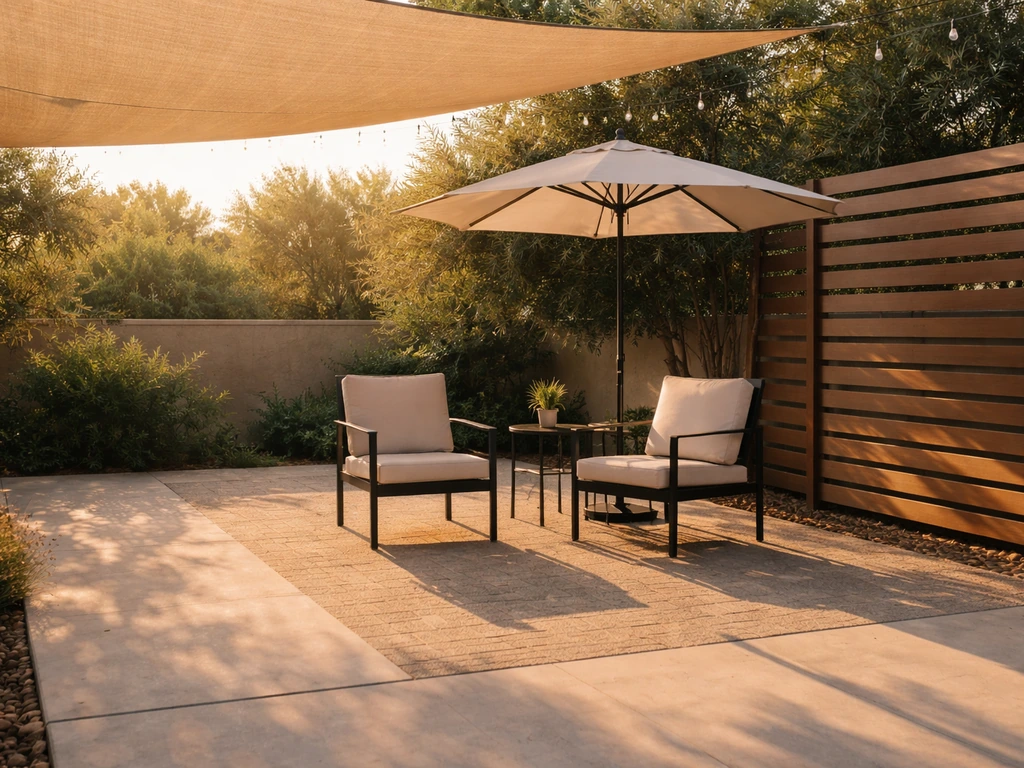
Size is the other big variable. Shade sails can span large irregular spaces that no single umbrella could cover, but they need solid anchor points at multiple corners. Awnings work best on rectangular spaces attached to a wall. Umbrellas and cantilever stands cover small seating zones but fall apart at scale.
Privacy needs push you toward vertical products: outdoor roller shades, curtains, or side screens. A shade sail overhead does nothing for a neighbor who can see directly onto your patio from the side. And if wind is a regular issue in your area, that eliminates or heavily restricts some product types entirely. Retractable awnings, for example, are specifically designed for sun protection, not wind resistance, and most manufacturers recommend retracting them when wind hits around 20 to 25 mph.
Quick picks by patio situation
| Your Situation | Best Shade Type | Why It Works |
|---|---|---|
| Small patio, renter, no drilling | Freestanding cantilever umbrella or weighted base roller shade | No permanent mounting, easy to move or store |
| Wide open patio, homeowner, overhead sun | Shade sail (multi-point) or pergola canopy | Covers large irregular areas, stays overhead |
| Patio attached to house, rectangular, full coverage needed | Retractable awning | Mounts to wall, extends/retracts on demand |
| Side sun or privacy needed | Outdoor roller shades or curtain panels | Vertical coverage, blocks low-angle light and view |
| Full outdoor room setup, year-round use | Motorized retractable with weather-resistant fabric | Convenience, durability, handles varied conditions |
| Budget-focused, flexible setup | Shade sail (basic tensioned) | Low cost, wide coverage, DIY-friendly install |
Every major shade type compared
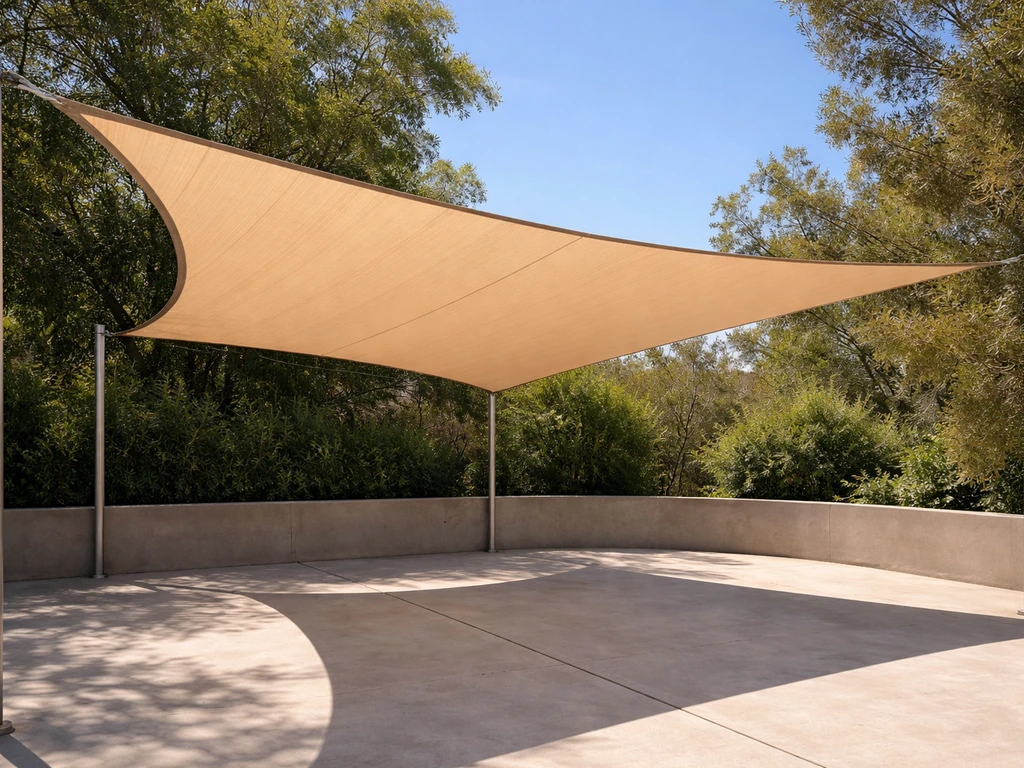
There are six main product categories you'll encounter when shopping for patio shade. Each has a real use case where it excels and real limitations where it fails. Here's the honest breakdown.
Shade sails
Shade sails are tensioned fabric panels anchored at three or four corners between posts, walls, or trees. They're excellent for covering large or oddly shaped areas at a low cost, and a quality sail rated UPF 50+ with 95% UV blockage (which is what you should look for on the spec panel) does a genuinely good job of cutting solar heat. The tradeoff is installation complexity: a 16-foot triangular sail can put several hundred pounds of sustained force on each anchor point in moderate wind. That means anchor quality matters enormously, not just the sail itself. They're also not waterproof unless specifically rated as such, and they need to be installed at an angle of at least 20 to 30 degrees to shed water rather than pool it. UV resistance in the fabric degrades over time, and most manufacturers suggest considering replacement around the 3 to 5 year mark.
Retractable awnings
Retractable awnings mount to your home's exterior wall and extend out over the patio on a folding arm system. They're the cleanest, most convenient option for a house-attached rectangular patio. The manual crank versions are affordable, while motorized versions (which tie into this site's deeper coverage on motorized patio shades) add serious convenience for daily use. The critical limitation: retract them before wind hits 20 to 25 mph, and always retract before a storm. Water can pool on the fabric if the pitch isn't steep enough, stretching it and causing mildew. Rinse and fully dry before retracting if the fabric got wet or dirty. Building permits and structural attachment requirements may apply depending on your local codes.
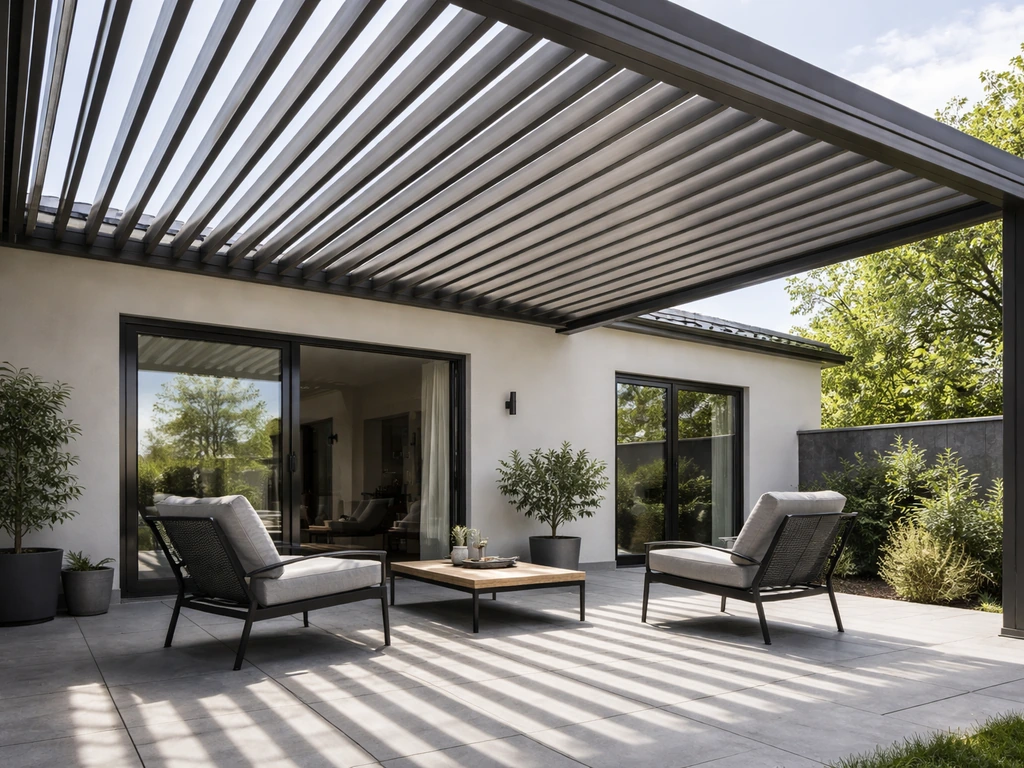
Pergola canopies and covers
If you have a pergola or are building one, a canopy cover or louvered roof system gives you the most complete and permanent overhead shade. Louvered systems let you dial in exactly how much light you want and can handle rain when closed. They're the most expensive option but also the most durable and all-weather capable. Fixed pergola fabric canopies are cheaper but need to be removed or secured in winter in cold climates.
Market umbrellas and cantilever stands
Umbrellas are the easiest solution for a small seating area. A 9-foot market umbrella covers a 4-person table reasonably well, and a cantilever (offset) umbrella lets you position the pole out of the way. They're portable, renter-friendly, and require no installation. The downsides: coverage is limited, they're vulnerable to wind, and they do nothing for side sun or privacy. They work best as a supplement to another shade solution or for truly small patios.
Outdoor roller shades
Roller shades for patios mount horizontally at the top of a pergola beam, porch ceiling, or overhead structure and roll down vertically. They're the go-to for blocking low-angle sun and adding privacy, and the fabric openness factor determines how much light filters through versus how much is blocked. Outdoor roller shades are also one of the most direct ways to achieve the best outdoor blinds for patio results, especially for blocking low-angle sun while adding privacy. A 5% openness fabric means 95% of direct light is blocked, giving you strong shade with minimal glare. blank" rel="noopener noreferrer">Higher openness (10 to 14%) lets in more ambient light but reduces shade density. Roller shades for patios are a closely related category worth digging into on their own if vertical coverage is your primary need. If vertical coverage is your main goal, you’ll want to compare the best outdoor roller shades for patio setups based on openness factor and fabric rating Roller shades for patios are a closely related category worth digging into.
Outdoor curtains and side screens
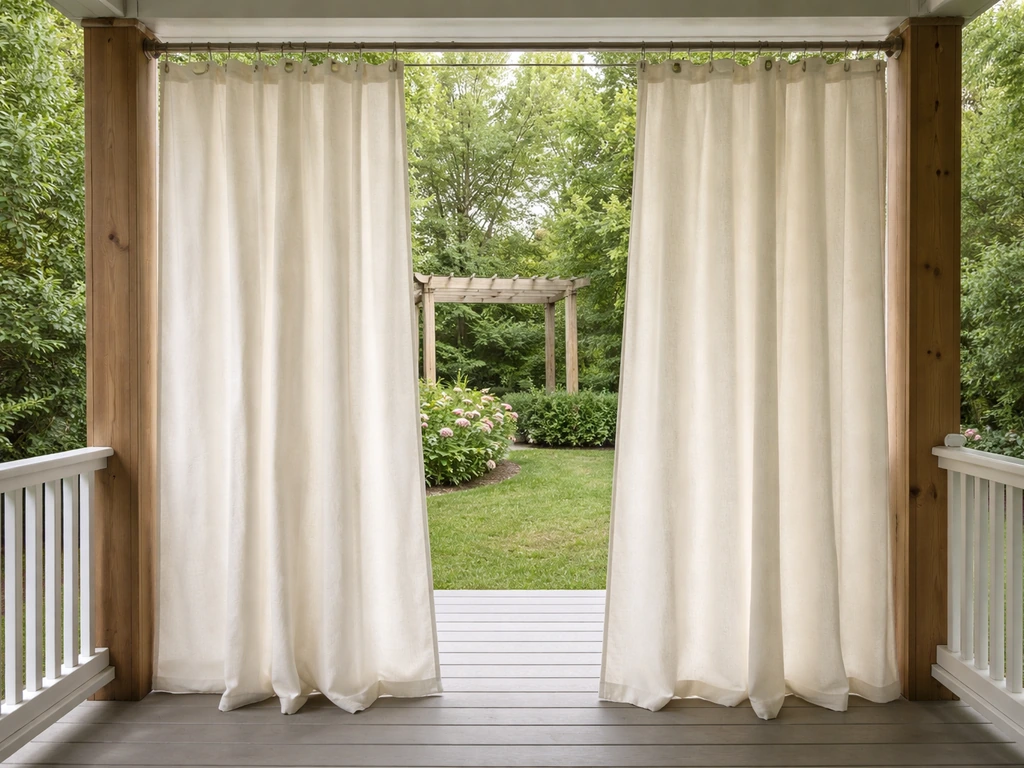
Curtain panels hung on tension rods or curtain wires between porch columns or pergola posts are the most renter-friendly vertical shade solution. They add privacy, soften wind, and can block significant late-afternoon sun when positioned correctly. UV blocking varies a lot by fabric weight, and a fabric you can easily see through when held to light is going to let more UV through too. Look for heavier, tightly woven panels if sun protection is the goal rather than just aesthetics.
| Shade Type | Coverage Area | UV Blocking | Wind Resistance | Renter Friendly | Cost Range | Best For |
|---|---|---|---|---|---|---|
| Shade Sail | Large/flexible | High (UPF 50+) | Moderate (needs good anchors) | Possible with weighted posts | $50–$400+ | Big open patios, overhead sun |
| Retractable Awning | Medium–large rectangular | High | Low (must retract in wind) | No (wall mount) | $500–$4,000+ | House-attached patios |
| Pergola Canopy/Louvered | Full overhead | Very high | High (louvered) | No (permanent) | $300–$10,000+ | Full outdoor room setups |
| Market/Cantilever Umbrella | Small (1 seating area) | Moderate | Low | Yes | $50–$600 | Small patios, renters |
| Outdoor Roller Shades | Vertical panels | High (5% openness) | Moderate | Yes (if post-hung) | $80–$500+ | Privacy + low-angle sun |
| Outdoor Curtains | Vertical/flexible | Low–moderate | Low | Yes | $30–$200 | Privacy, aesthetics, mild sun |
The sun-blocking features that actually matter
UPF is the number you want to look for on any shade product that makes UV protection claims. UPF (Ultraviolet Protection Factor) works like SPF for sunscreen but for fabric: a UPF 30 rating means roughly 1/30th of UV radiation passes through to your skin, and UPF 40 to 50+ is the top tier, blocking well over 95% of UV. On retail spec panels, look for 'UPF 50+' and '90% UV blockage' or higher as your baseline. Anything below UPF 30 is doing relatively little for actual skin protection.
A quick field test: hold the fabric up to a bright light source. If you can see through it easily, UV is getting through more readily than you'd want. Darker colors generally outperform lighter ones on UV blockage, even at the same weight, so if sun protection is the priority, lean toward charcoal, navy, or terra cotta over white or beige.
Openness factor is the other key spec, especially for roller shades and shade sail fabrics. This number represents the percentage of light that passes directly through the weave. A 3% openness fabric blocks most direct sun and glare, a 10% openness fabric lets in noticeably more light and feels more open, and a 14% openness fabric gives you shade without killing ambient brightness. Lower openness also means better heat reduction because you're blocking more of the solar energy hitting the fabric. For a hot, west-facing patio, go 5% or below. For a partially shaded space where you want some brightness, 10 to 14% is fine.
Coverage angle matters too. An overhead shade positioned flat above you blocks midday sun well but does nothing for low-angle morning or evening sun. Shade sails installed at an angle, or vertical panels on the sun-facing side, address this. The best setups combine overhead and vertical coverage for full-day protection.
Renters vs. homeowners: what you can actually install
If you're renting, your options aren't as limited as you might think, but you do need to think differently about installation. Wall-mounted retractable awnings are almost certainly off the table unless your landlord agrees, since they require drilling into the structure and may need a permit. Fixed shade sails with anchor posts set in permanent concrete are also a no-go in most rental situations.
What works for renters: freestanding cantilever umbrellas with weighted bases, shade sails tensioned between freestanding weighted posts (these exist and work reasonably well for smaller sails), outdoor curtains hung on tension rods between columns, and outdoor roller shades mounted to existing overhead structures like porch ceilings or pergola beams using minimal hardware that can be patched when you leave. Some Coolaroo-style shade sails are designed to be taken down and stored when not in use, which actually works well for renters who want to remove the product when they move.
Homeowners have full access to every option but should still think about structural requirements. Retractable awnings attached to a home need to be secured well enough to handle snow and wind load, and some jurisdictions require a building permit. Shade sail anchors set in concrete posts need to handle significant lateral force in wind, so post depth and footing size matter. Don't undersize the hardware to save money on installation.
| Shade Type | Renter Viable? | Installation Complexity | Permit Likely? | Portability |
|---|---|---|---|---|
| Cantilever Umbrella | Yes | None (weighted base) | No | High |
| Freestanding Shade Sail | Yes (with weighted posts) | Low–moderate | No | Moderate |
| Wall-Mounted Shade Sail | Rarely | Moderate–high | Sometimes | Low |
| Retractable Awning | No (usually) | High | Often | None |
| Pergola Canopy | No | High | Often | None |
| Outdoor Roller Shades (porch ceiling mount) | Sometimes | Low | No | Low–moderate |
| Outdoor Curtains (tension rod) | Yes | None | No | High |
How to measure your patio and buy smart
Measuring before you buy sounds obvious, but most mistakes happen here. Get these numbers before you look at a single product listing.
- Measure the total area you want shaded, in feet: length x width. Note whether it's a rectangle, L-shape, or irregular shape.
- Identify your anchor or mounting points: existing walls, columns, beams, or fences. Measure the distance between them.
- Note your overhead clearance: how high above the ground are your mounting points? Shade sails need at least 8 to 9 feet of clearance for comfortable headroom at the lowest point.
- Track your sun path for one day: mark where the sun hits your patio at 9am, noon, 3pm, and 6pm. This tells you whether you need overhead, vertical, or combination coverage.
- Check your wind exposure: are you in an open yard with no windbreaks, or is the patio partially enclosed? More exposure means you need more robust mounting hardware and should lean toward retractable options.
- Measure the wall space if you're considering an awning: projection (how far out it extends) and width are the two key specs, and they must match your patio dimensions closely.
- For roller shades: measure the width of the opening or beam span and the drop height you need. Most outdoor roller shades are custom-cut, so measure twice.
When comparing products, use this checklist to filter your options down to the right one.
- UPF 50+ rating on the fabric (or at minimum UPF 40)
- Openness factor listed on the spec panel (5% or below for strong sun blocking)
- Material type: solution-dyed acrylic (like Sunbrella) handles UV and weather best long-term; polyester is cheaper but degrades faster under sustained sun
- Frame and hardware material: powder-coated aluminum for rust resistance, stainless steel hardware for anchor points
- Wind rating or wind speed guidance from the manufacturer
- Waterproof vs. water-resistant distinction (important if rain is common)
- Warranty length: 3+ years on fabric, 1+ year on hardware is a reasonable baseline
- Installation requirements: does it need professional install or is it genuinely DIY-friendly?
Keeping your shade working year after year
Even the best patio shade fails early if you ignore basic maintenance. The good news is that care routines for all the major shade types are simple if you stay consistent.
Cleaning shade sails and fabric panels
Use a soft brush, mild soap, and warm water. That's it. No abrasive scrubbers, no scouring pads, no high-pressure washing, and no harsh chemicals. Pressure washers and stiff brushes damage the woven structure and, more importantly, attack the UV stabilizers built into the fabric. Some chemical cleaners do the same thing. Rinse thoroughly to remove soap residue and let the sail dry completely before folding or storing it. Storing a damp shade sail leads directly to mold and mildew in the fold lines.
Awning care and operation
Retract your awning any time wind exceeds about 20 mph, and always before thunderstorms. Water pooling on the fabric stretches it and invites mildew, so make sure the pitch is steep enough to shed rain, and rinse the fabric and let it dry fully before retracting it after rain or heavy dew. If you retract a wet awning and leave it rolled up, mildew forms fast and is hard to remove. At the end of the season, do a full cleaning before storing or leaving it in the retracted position for winter.
Seasonal storage and lifespan
For removable shade solutions like freestanding sails, umbrellas, and curtain panels, take them down and store them in a cool, dry place when they're not in use for extended periods, either during off-season or during severe weather stretches. This single habit extends product life significantly. UV degradation is the main killer for shade fabrics: even a high-quality shade sail with strong UV resistance will show meaningful degradation after 3 to 5 years of year-round outdoor exposure. If colors are fading noticeably or the fabric feels brittle, it's time to replace rather than repair. Budget for that cycle when you're making your initial purchase decision.
Hardware and tension checks
Check your anchor points, turnbuckles, and tension cables at the start of every season and after any major wind event. Tension in shade sails loosens over time as fabric stretches slightly, and loose sails flap more in wind, which accelerates wear at the corner attachment points. Re-tension according to the manufacturer's guidance, not by eye. Overtightening is also a real problem: excess tension puts unnecessary stress on anchor points and can cause wall or post damage over time. Check that bolts and carabiners show no signs of corrosion, especially in coastal or humid climates, and replace any hardware that shows rust or deformation before it becomes a structural failure.
FAQ
Can I use patio shades to handle heavy rain, or are they mainly for sun?
Yes, but only if the product is explicitly rated for it. Most shade sails are not waterproof, and even “water-shedding” installations can pool during heavy rain if the angle is too shallow. For louvered pergola roofs, look for a closed position that directs runoff away from seating and check that drainage paths do not dump water near entrances.
What should I prioritize for the hottest part of the day on a west-facing patio?
Choose based on your patio’s “worst-hour” sun exposure, not average comfort. West-facing areas typically need glare reduction and heat blocking in late afternoon, so lower openness (around 5% for roller shades) and fabrics with higher UPF performance matter more than color alone.
Will a shade sail give me privacy from neighbors, especially at the sides?
If side visibility matters, combine an overhead solution with a vertical barrier. A shade sail reduces overhead heat but usually leaves exposed side angles, so plan for outdoor curtains, roller shades on the sun-facing sides, or side screens positioned to block neighbor sightlines during the same hours you want privacy.
Do overhead patio shades block low-angle morning and evening sun?
Not necessarily. Vertical shades are better for low-angle sun because they still block rays when the sun drops, while flat overhead products lose effectiveness. If you experience early morning glare or evening backlighting, prioritize vertical roller shades or outdoor curtains on the east and west sides, and treat overhead shade as supplemental.
What’s the safest way to shop if my patio gets frequent gusty winds?
Begin with a wind plan, then match the shade type to it. Many retractable awnings and some sail setups should be retracted or taken down around the 20 to 25 mph range depending on the product, but umbrellas and freestanding options can also overturn or shift. If you get frequent gusts, consider designs with tension controls, stable weighted bases, or a more permanent louvered/pergola solution.
How do I confirm UV protection if product listings are vague or only mention color?
Go heavier on fabric weight and spec clarity, not just “dark color.” Darker colors generally block more UV at the same weave, but you still want a spec like UPF 40 to 50+ and a UV blockage percentage. Also be careful with “room darkening” language that focuses on visible light rather than UV performance.
Is openness factor the same thing as UV protection?
Openness factor affects glare and direct light, but it does not automatically guarantee UV blocking. Use openness to fine-tune how bright you want the space, then verify UPF and UV blockage claims for actual sun protection. For hot glare conditions, low openness with a verified high UPF spec is the safer pairing.
Can renters install outdoor roller shades without damaging the property?
It depends on how you mount or anchor. Pergola and porch-beam mounted roller shades often can use existing overhead structures, but wall-mounted systems may require drilling. In rentals, confirm whether the mounting points are on load-bearing members, and request landlord approval when the hardware would leave holes or requires structural fasteners.
How can I tell if my setup will pool water even if it’s “outdoor rated”?
Yes, but avoid retrofitting without checking pitch and drainage. Shade sails need a minimum installed angle to shed water, retractable awnings need adequate slant to prevent pooling, and pergola fabric canopies may require winter removal or securement in certain climates. If you regularly see standing water on current coverings, that is a sign your next shade needs different geometry or hardware.
How reliable is the “hold it to a light” test compared to UPF ratings?
If you can’t see through the fabric when held to bright light, that’s a good sign for UV tightness, but the spec panel still matters. Use both checks together: test visibility for practical filtration, then validate UPF 50+ and UV blockage percentage as the real decision metric.
At what point should I replace patio shade fabric instead of repairing it?
It is a practical warning sign. UV degradation typically becomes noticeable as fading and a more brittle feel, and at that point repair attempts usually cost more than replacement because the fabric’s UV stabilizers have worn down. Plan replacement when you notice both visual fading and texture changes, even if the shade still looks structurally intact.
What maintenance mistake shortens the life of outdoor patio shades the fastest?
Reduce damage by removing or securing removable shade during severe weather and storing dry. For canvas-like fabrics, folding while damp leads to mildew in fold lines, and leaving fabric retracted through winter can cause moisture trapping. A simple routine, clean first, fully dry, then store in a cool dry space, tends to extend life the most.
Next Articles
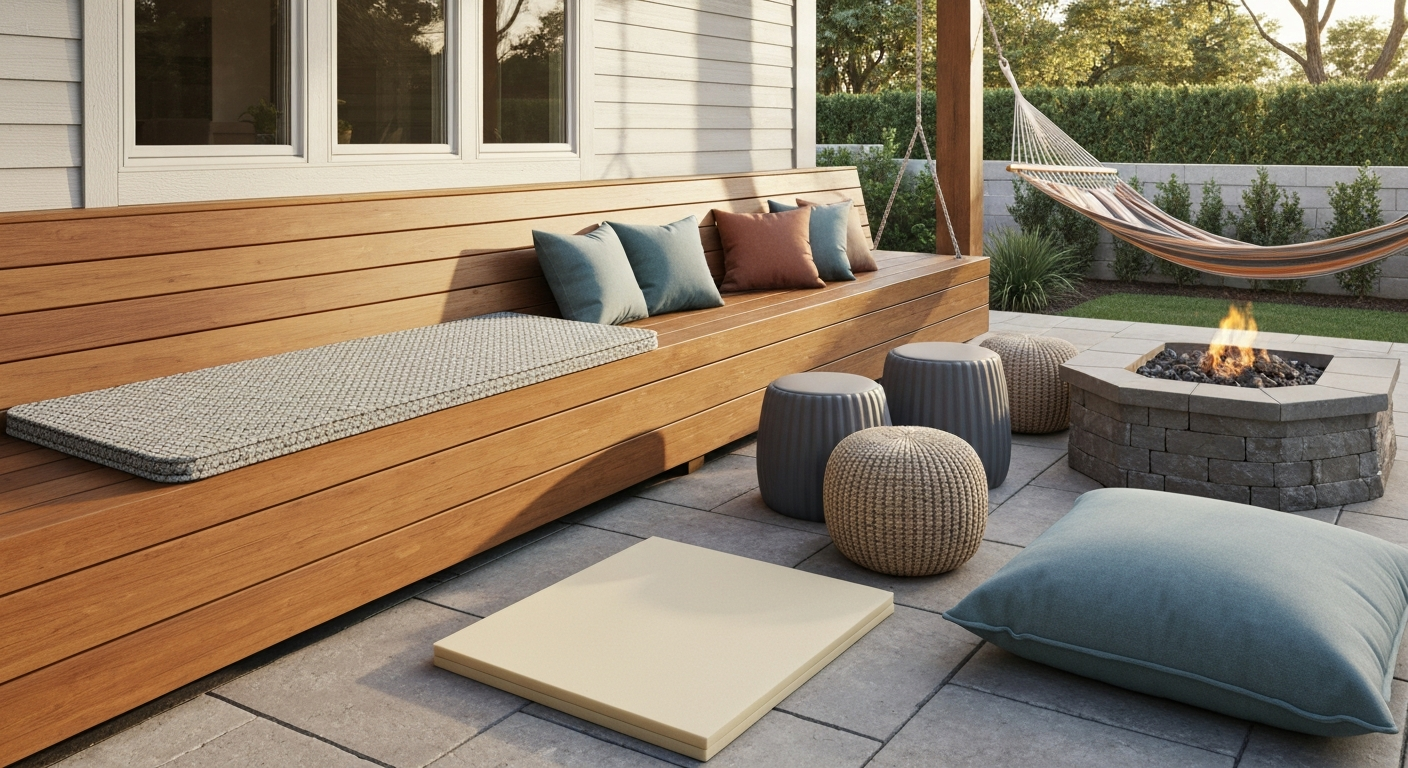
Alternative to Patio Cushions: Durable, Stylish Options and DIY
Alternative to patio cushions: durable, weatherproof seating options, pros, DIY tips & buying guide.
Best Color for Outdoor Patio Cushions in 2026
Choose the best cushion color for sun, heat, and fading in 2026, with pairing tips for patio furniture and durability.
Top Rated Patio Cushions: How to Choose Fast and Right
Step-by-step guide to choose top rated patio cushions by fit, materials, weather durability, and easy cleaning for your