
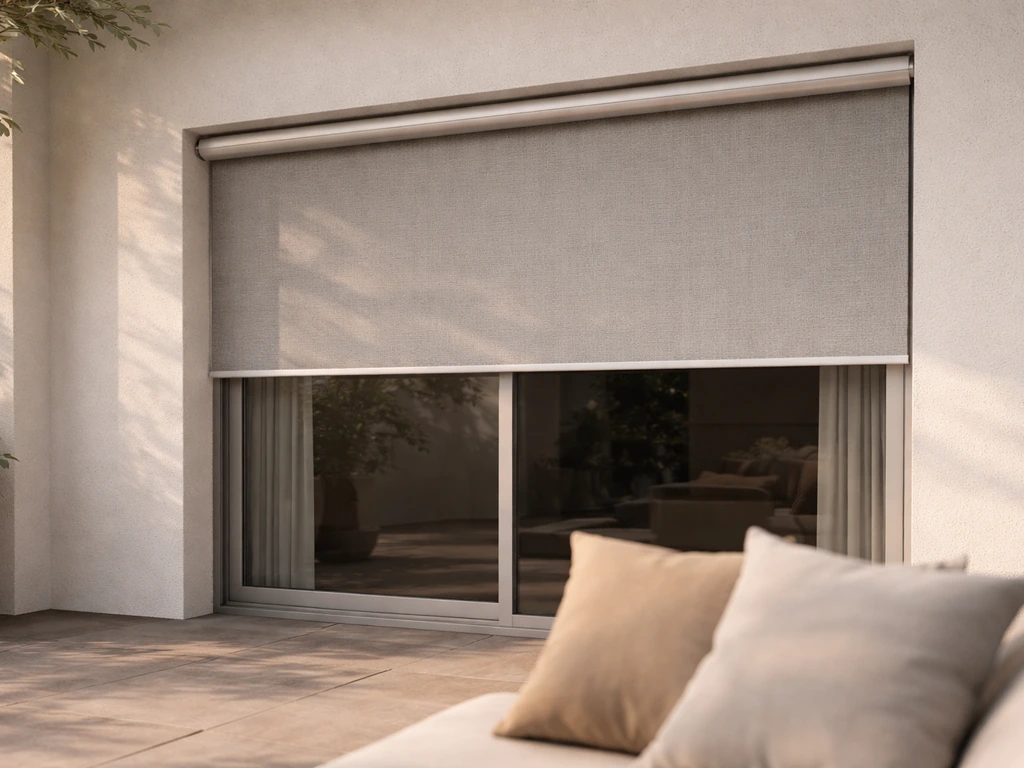
The best outdoor roller shades for most patios in 2026 are solution-dyed acrylic or HDPE mesh shades mounted on corrosion-resistant hardware, sized to overlap your opening by at least 1.5 to 2 inches on each side. If you want a single starting point: Coolaroo's HDPE exterior roller shades handle heat, humidity, and everyday weather well at a reasonable price, while Sunbrella-fabric shades on Somfy motorized systems are the premium choice for larger or more exposed patios. Everything else depends on your specific setup, and that's exactly what this guide will walk you through. For most patios, the best patio roller shades combine outdoor-rated fabrics with corrosion-resistant hardware and a wind-stable mounting system. Once you know your opening and setup, you can choose among the best outdoor patio shades that match your sun, wind, and privacy needs.
Best Outdoor Roller Shades for Patio: Buyer Guide
What actually makes a roller shade "outdoor rated"
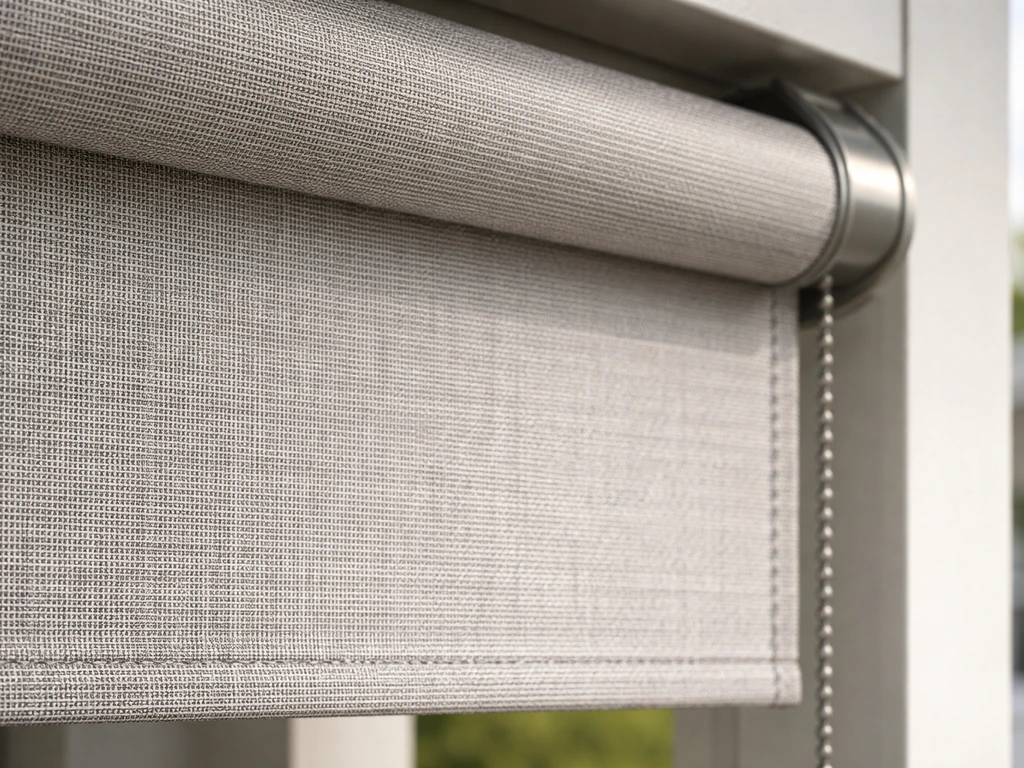
Not every roller shade sold as "outdoor" is built to survive real outdoor conditions. A true outdoor-rated shade system has four things working together: a fabric that resists UV degradation and won't grow mold, hardware that won't rust or corrode when wet, a mounting system that can handle wind load without the shade flapping itself apart, and a roller mechanism that keeps working after repeated cycles of heat and cold. If any one of those four components is under-spec'd for your climate, the whole system underperforms.
On the fabric side, look for solution-dyed construction. Sunbrella, for example, is 100% solution-dyed acrylic, meaning the color runs through the core of each fiber rather than sitting on the surface. That's why it resists fading so well. HDPE mesh fabrics, like those used in Coolaroo's line, are engineered specifically for exterior use and carry warranties against cracking, splitting, or UV-caused tears. Coolaroo backs their custom roller shade fabric for five years from purchase date, which is a meaningful real-world guarantee. On the hardware side, powder-coated aluminum or stainless steel brackets are what you want. Avoid any shade system with bare steel brackets or plastic clips in the mounting hardware if you're in a humid, coastal, or rainy environment.
How to measure your patio opening before you buy
Measuring wrong is the most common and most frustrating mistake people make when buying roller shades. Whether you're mounting inside a pergola beam or outside on a wall or post, the measurement method changes, and getting it wrong means a shade that either gaps on the sides or won't physically fit.
Inside mount
For inside mount, where the shade sits within a defined frame or opening, measure the width in three places (top, middle, bottom) and record the smallest of those three measurements, rounded to the nearest 1/8 inch. Do the same for height. The shade manufacturer will then deduct a small amount for bracket clearance so the shade rolls freely. You also need to account for hem bar clearance: the bottom bar of the shade needs at least 1/4 inch of clearance beyond any obstruction it passes over, so if you have a beam or ledge in the path, factor that in.
Outside mount
Outside mount is more common on patios because you're often covering an open-air space without a defined frame. Here, the shade hangs in front of the opening and overlaps the edges. Plan for about 1.5 to 2 inches of overlap on each side beyond the opening width. The order size for an outside-mounted shade is typically measured from outside bracket to outside bracket, so if your opening is 72 inches wide and you want 1.5 inches of overlap per side, you're ordering a 75-inch shade. For height, measure from the mounting point down to where you want the hem bar to land, and again remember that 1/4 inch minimum clearance if there's anything the hem bar needs to clear near the bottom.
Matching coverage to your patio type
Pergolas and covered patios each present slightly different fitting challenges. On a pergola, you're typically mounting to beams and dealing with irregular spacing. Outside mount almost always makes more sense here. On a covered patio with a defined soffit or fascia, you may have clean inside-mount options, but check whether the fascia depth gives enough room for the roller tube and brackets. For sliding door applications, inside mount works well if the door frame is deep enough; otherwise, outside mount a few inches above the door frame gives better light seal and more flexibility.
Fabric choices: sun, heat, privacy, and what the numbers mean
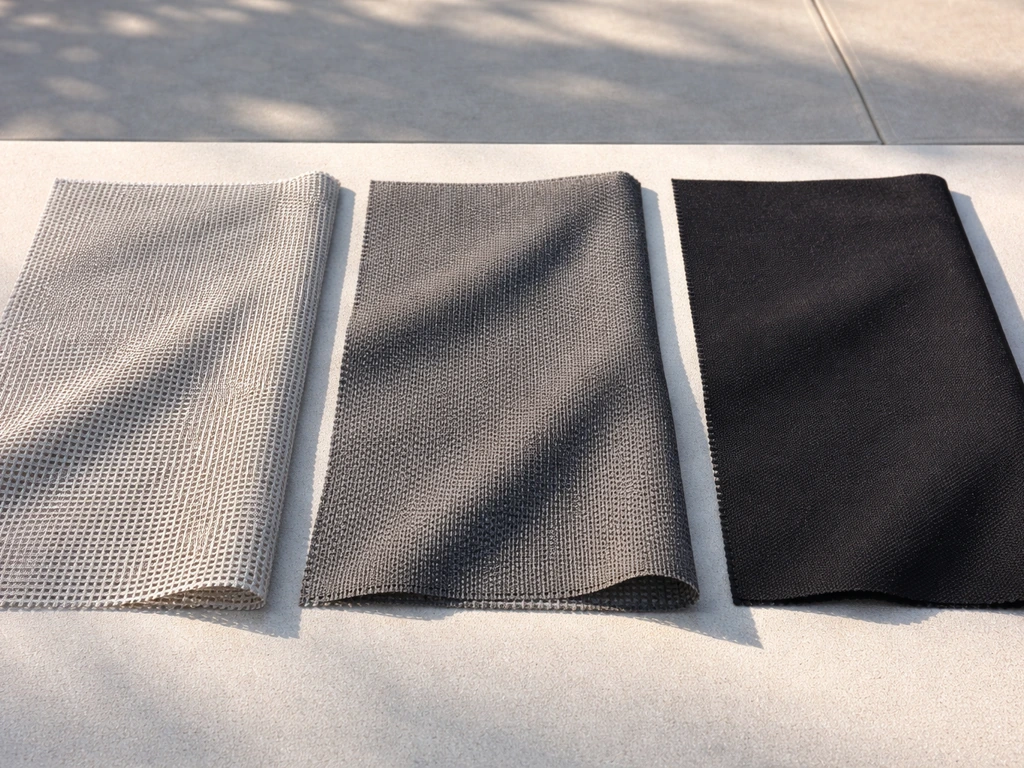
Outdoor roller shade fabrics generally fall into three categories: open-weave mesh (3% to 14% openness), semi-open weave, and solid/blackout. The openness factor is the single most important spec to understand. A 3% openness fabric blocks more light and gives better privacy while still allowing some airflow. A 10% to 14% openness fabric lets in more breeze but less privacy, and it's better suited to situations where you want to reduce glare without making the patio feel dark. For maximum heat reduction, lower openness fabrics combined with a light color on the outward-facing side (white or beige) reflect solar heat most effectively.
Material matters beyond just weave. Solution-dyed acrylic, like Sunbrella, performs best for color retention and has a soft, high-end appearance. HDPE mesh, like Coolaroo uses, is extremely tough, dries fast, and resists mold growing on the surface. Coated polyester fabrics (like those in Top Gun marine lines) are acrylic-coated woven polyester and are excellent for UV performance and water repellency, though they're more commonly found in awning and marine applications than in standard patio roller shades. For most homeowners, HDPE mesh at the value end and solution-dyed acrylic at the premium end cover 90% of use cases.
| Fabric Type | UV Resistance | Privacy | Airflow | Mold Resistance | Best For |
|---|---|---|---|---|---|
| HDPE Mesh (e.g., Coolaroo) | Excellent | Good (3–5% openness models) | Good | Excellent (doesn't support mold growth) | Budget patios, humid climates, everyday durability |
| Solution-Dyed Acrylic (e.g., Sunbrella) | Excellent (1500+ hrs Xenon test) | Good to high | Moderate | Very good | Premium look, color-sensitive installs, long-term investment |
| Coated Polyester (Top Gun-style) | Excellent | High | Low | Very good | High-moisture, marine-adjacent, or heavy-rain environments |
| Standard Polyester (non-solution-dyed) | Moderate | Variable | Variable | Fair | Budget, low-sun-exposure areas only |
Wind, rain, and long-term weather durability
This is where a lot of outdoor roller shades fail, and it's worth being direct: a standard roller shade on basic side channels will flap, bow, and eventually tear in consistent wind. If your patio gets regular wind, you need either a zip-guided or track-guided system, or you need to accept that the shade is for light-wind, fair-weather use and build in a habit of rolling it up when storms approach.
Track-guided systems, like Ziptrak's approach, lock the fabric into side channels so it can't flap or billow. This also means the fabric creates a much better seal against wind-driven rain, dust, and insects. Somfy's zip-guided motor systems work on the same principle and describe the result accurately: a sheltered zone that resists wind and light rain. These systems cost significantly more than basic roller shades, but if you're dealing with coastal wind, exposed hillside patios, or frequent afternoon storms, they're the right answer.
For corrosion resistance, aluminum hardware is the standard recommendation. If you're near salt air, ask specifically whether hardware is powder-coated marine-grade aluminum or includes stainless fasteners. UV degradation is handled at the fabric level, and both HDPE mesh and solution-dyed acrylic perform well here. Sunfield's technical specs show their solution-dyed woven acrylic tested at 1500-plus hours on a Xenon Weather-Ometer with a water column resistance of over 8.8 inches by AATCC127 testing, which is solid performance data for a fabric claim. Always check whether mildew resistance claims are about the fabric surface specifically, since most high-quality outdoor fabrics resist mold growing on the surface rather than being chemically impervious to it.
Manual vs. motorized: which one actually makes sense for your patio
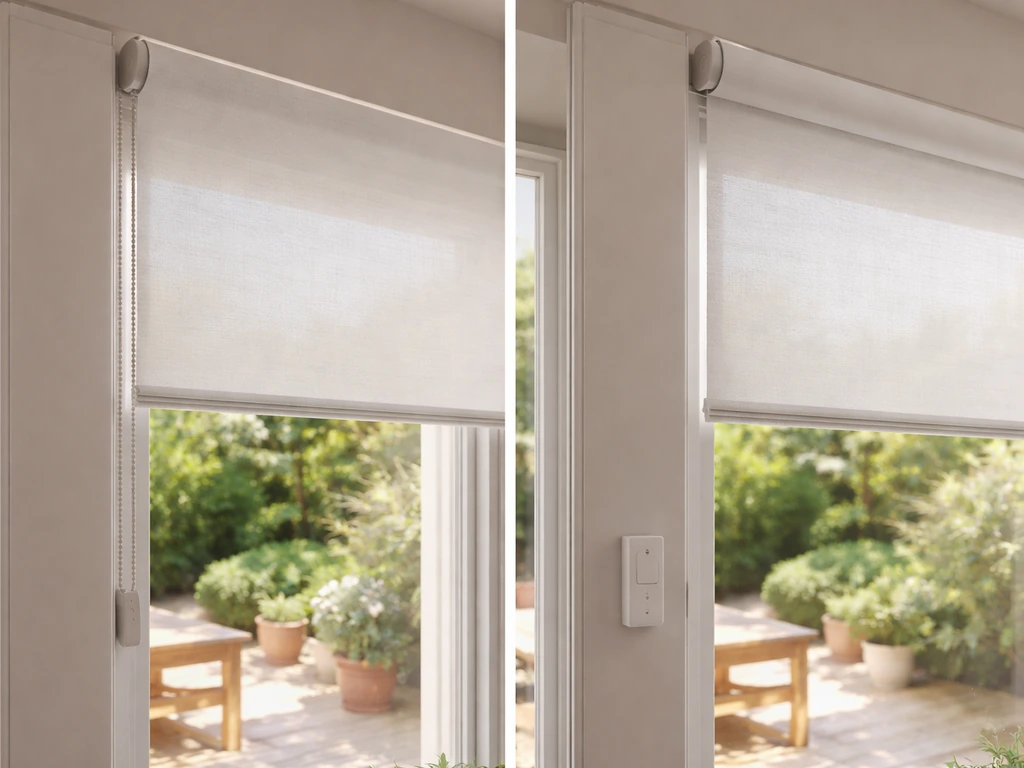
Manual roller shades with a spring mechanism or clutch-and-chain operation are less expensive, simpler to install, and easier to maintain. For a single shade up to about 8 feet wide that you'll operate a few times a day, manual is completely reasonable. The limitation hits when you have multiple shades, shades in hard-to-reach spots (like a 10-foot ceiling on a covered patio), or shades you want to automate based on time of day or weather.
Motorized roller shades are where the real upgrade happens. Somfy's RTS motor ecosystem is the most widely supported in the outdoor shade market, compatible with a range of shade brands and controllable by remote, wall switch, or app. blank" rel="noopener noreferrer">You can add a rain sensor (Somfy's outdoor rain/sun sensors carry an IP55 weatherproof rating) that automatically retracts the shade when rain starts, which is a genuinely useful feature if you're not always home to do it manually. blank" rel="noopener noreferrer">Somfy's systems also support wind sensors that trigger retraction if wind exceeds a set threshold. This kind of integration is particularly valuable for zip-guided outdoor shade systems where you want automation tied to weather conditions.
At the premium end, Lutron's Sivoia QS Triathlon battery-powered shades are app-controlled and cover spans up to 144 inches wide and 144 inches tall, which handles most residential patio openings. Lutron backs their shading solutions with an 8-year limited warranty, which is among the longest in the category. The tradeoff is price: Lutron systems are significantly more expensive than Somfy-based setups. If you're building out a smart home ecosystem or integrating with other Lutron lighting controls, it can be worth it. If you just want reliable motorized shades with weather automation, Somfy is the more practical value.
One practical note on motorized setup: battery-powered motors (like Lutron Triathlon or Somfy's battery RTS motors) are easier to install because they require no wiring, but you'll need to recharge or replace batteries periodically. Hardwired motors are more reliable long-term but require an electrician if you don't have an existing outlet near the mounting point.
Cleaning and maintenance without wrecking the fabric
Outdoor roller shades are low maintenance but not zero maintenance. Dirt, pollen, and bird debris build up on the fabric surface and can degrade materials faster if left untreated. The cleaning rules are consistent across all major fabric types: mild soap and water, applied gently, rinsed thoroughly, and allowed to air dry completely before rolling the shade back up.
What you should never use: bleach, ammonia-based cleaners, solvent-based cleaners, abrasive scrubbing pads, or pressure washers. These don't just remove dirt, they break down the fabric coating, cause color fading, and in the case of pressure washing, can distort or stress the weave in ways that shorten the shade's life significantly. Spot cleaning with a soft brush or cloth and mild dish soap handles most situations. For heavier seasonal cleaning, unroll the shade fully, rinse with a low-pressure garden hose, work in gentle soap with a soft brush, then rinse again from top to bottom. Roll only when fully dry.
Most manufacturer warranties, including Coolaroo's, are void if the product isn't cleaned and maintained according to their specific instructions. So if you're investing in a quality shade system, it's worth reading the care card that comes with it and sticking to those guidelines. Hardware maintenance is simpler: wipe down brackets and rollers with a damp cloth seasonally, and apply a light silicone spray to the roller mechanism if it starts to feel stiff.
Top picks by patio setup and budget
Rather than listing every shade on the market, here's a practical framework: match the pick to your actual situation. A renters' apartment patio with low sun exposure needs something different from a southwest-facing pergola in Phoenix or a windy beachfront deck.
Best budget pick: Coolaroo exterior roller shade
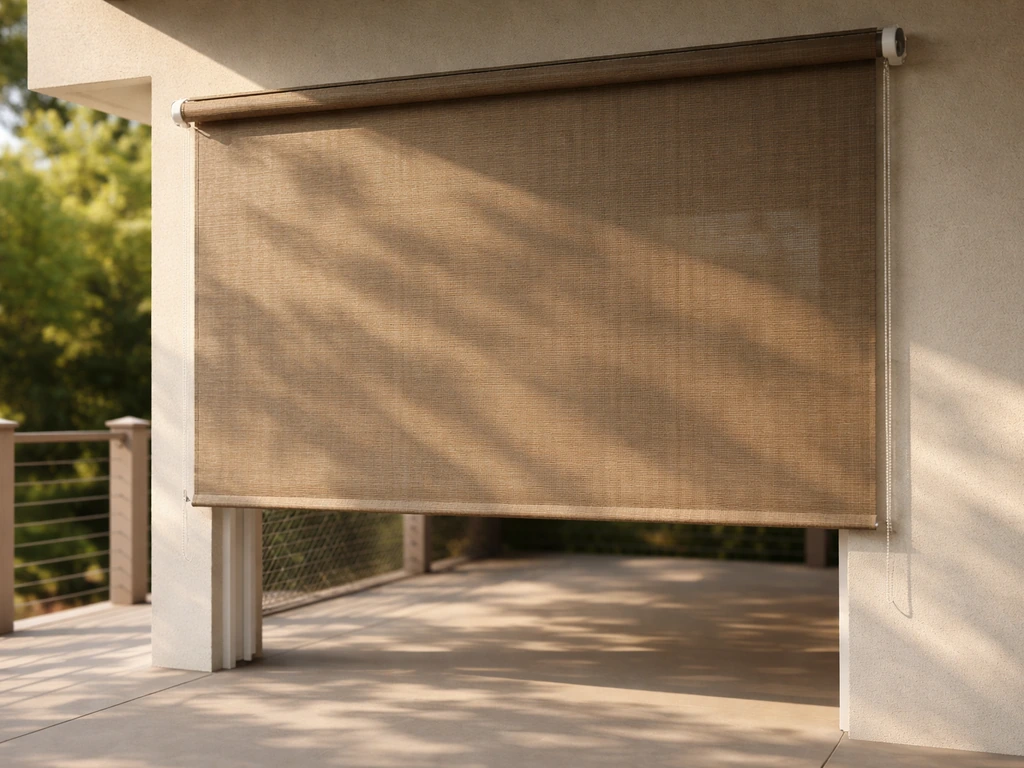
Coolaroo's HDPE mesh exterior roller shades are the best starting point for most homeowners who want reliable outdoor performance without overspending. The fabric is UV-stabilized, doesn't support mold growth on its surface, and holds up through season after season of sun and rain. Coolaroo warranties the fabric on custom roller shades for five years. The spring-operated manual system is simple and works well for single shades up to about 72 inches wide. These are widely available at home improvement stores and online, which makes replacement and sizing easier. If you're on a limited budget or setting up a rental patio, start here.
Best mid-range pick: Sunbrella fabric on manual or motorized hardware
For patios where appearance matters alongside durability, Sunbrella-fabric roller shades offer a meaningful step up in color depth, texture, and longevity. Several shade vendors (including many custom shade shops) offer Sunbrella as a fabric option on their own hardware systems. You're paying a premium for the fabric but getting a product that will look good for years longer than standard polyester. This is the right call for a well-designed outdoor living space where the shade is a visible design element, not just a functional add-on.
Best for wind and weather: zip-guided system with Somfy motor
If wind is a real factor on your patio, a zip-guided shade system paired with Somfy's RTS motorized drive and their IP55-rated rain and wind sensors is the combination that delivers genuine weather protection. The track-guided design eliminates flapping and keeps the fabric under tension in wind, while the sensor automation retracts the shade automatically when conditions exceed safe operating limits. This is a bigger investment, typically installed professionally, but it's the system that actually performs when conditions get rough. If you're comparing options in the motorized category, the best motorized patio shades guide goes deeper on motor specs and control systems. If you want the simplest way to choose the best motorized patio shades, focus on wind and rain sensor automation plus a durable outdoor-rated fabric.
Best premium/smart home pick: Lutron Sivoia QS Triathlon
For homeowners integrating shades into a broader smart home setup, Lutron's Sivoia QS Triathlon battery-powered shades are hard to beat. App control via the Lutron app, spans up to 144 inches wide and tall, and an 8-year limited warranty make this a long-term investment rather than a commodity purchase. The battery-powered design simplifies installation since there's no hardwiring required. The premium price is real, but the warranty, build quality, and ecosystem integration justify it for the right buyer.
| Pick | Best For | Fabric | Operation | Wind/Weather | Approx. Budget Level |
|---|---|---|---|---|---|
| Coolaroo Exterior Roller Shade | Most patios, budget-conscious buyers | HDPE mesh | Manual spring | Good for moderate conditions | Budget ($) |
| Sunbrella-fabric custom shade | Design-forward spaces, color longevity | Solution-dyed acrylic | Manual or motorized | Good, hardware-dependent | Mid-range ($$) |
| Zip-guided system + Somfy RTS | Windy/exposed patios, weather automation | Varies (acrylic or HDPE) | Motorized with sensors | Excellent | Premium ($$$) |
| Lutron Sivoia QS Triathlon | Smart home integration, large openings | Varies by vendor | App-controlled motorized | Good (sensor add-ons available) | Premium–Luxury ($$$$) |
How to shop smart today: your next steps
Before you add anything to a cart, spend 15 minutes with a tape measure. Write down your opening width and height, note whether you're inside or outside mounting, and measure three times in different spots. Decide whether you want inside or outside mount based on your patio structure, then add your overlap (1.5 to 2 inches per side for outside mount). Check whether your mounting surface is wood, aluminum, or masonry, since that affects hardware choices and may require specific anchors.
Then think through your actual conditions: how much direct sun, how much wind, whether privacy from neighbors matters, and how often you'll realistically operate the shade. A single south-facing shade you'd open every morning and close every evening is a great manual shade candidate. Four shades on an exposed pergola that you'd want to retract automatically when wind picks up is a motorized system job. Matching the product to the actual use case, rather than just the price point, is what gets you a shade that's still working well three years from now.
If you're also weighing other shade formats alongside roller shades, it's worth knowing that outdoor blinds and patio shades can overlap considerably in function. To narrow down the best outdoor blinds for patio coverage, focus on outdoor-rated materials, correct overlap, and weather-resistant hardware. The key advantage of roller shades specifically is the clean retraction into a compact roll when not in use, which matters aesthetically and protects the fabric between uses. That's a real practical benefit for patios where appearance and fabric longevity both count.
FAQ
Can I buy an “outdoor” roller shade that uses standard side channels, or do I need zip or track guidance?
If your patio is in a wind corridor, the spec to prioritize is the system style (zip-guided or track-guided) rather than the word “outdoor.” Basic side channels are more likely to billow and fatigue at the roller over time, especially after repeated gusts.
Do outdoor roller shades need to be fully dry before rolling up to keep the warranty valid?
Most outdoor roller shade warranties assume normal retraction and recommended cleaning, so a good rule is to keep the fabric unrolled only long enough for cleaning, then fully dry before rolling. Leaving a wet shade down for long periods increases mildew risk even on surfaces that resist mold growth.
How do I know if I can do an inside mount under a pergola or soffit without tube clearance issues?
Measure with the intended mount type in mind, because beam depth and tube clearance can make an inside mount impossible even when dimensions look close. If you do not have at least enough depth for the roller tube plus bracket clearance, choose outside mount or a different track configuration.
What openness level should I pick for a balance of privacy, glare reduction, and heat control?
On fabric longevity, the openness setting affects heat and glare but not all fabrics age the same. For maximum privacy with less “dark feeling,” a lower openness (around 3% to 5%) with a light outward-facing color usually balances shade and reflected heat better than a very dark solid.
Can I install outdoor roller shades on brick, wood, or stucco myself, or should I assume pro installation?
Yes, but only if the mounting hardware and anchors are rated for exterior use and your substrate. Brick and masonry often need specific anchors, while wood may require through-bolting or rated lag hardware, otherwise wind load can loosen brackets.
What’s the safest way to clean outdoor roller shades after pollen season or bird mess?
Don’t use a pressure washer or harsh solvents, but you can still tackle heavy pollen and dust by rinsing first, then using mild soap and a soft brush. After that, rinse top to bottom and let the shade air dry completely before retracting.
When does manual become impractical, and what’s the real downside of not retracting during weather?
Choose operation method by number and access. If you have multiple shades or hard-to-reach locations, manual operation becomes inconsistent, which matters because retracting during wind and sudden storms protects the fabric.
Is it better to choose battery-powered or hardwired motors for patio roller shades?
If you want automation but hate battery maintenance, look for hardwired motor options where an outlet or wiring path exists. Battery systems are simpler to install (no electrician), but plan for periodic recharging or replacements based on usage frequency.
How should I configure rain and wind sensors so they retract at the right times without nuisance retractions?
For sensor-based systems, confirm the operating thresholds and where the sensor is mounted, because rain sensors can be affected by wind-driven mist. For wind sensing, set thresholds conservatively for coastal or hillside exposure to prevent repeated partial operation cycles.
Will choosing a zip-guided system improve light privacy compared with a basic roller shade of the same fabric openness?
If you need a stronger light seal, prioritize lower openness fabrics plus outside mounting overlap, because gaps at the sides can leak glare and let dust in. Zip-guided systems also improve side sealing compared with basic roller setups.
What routine maintenance prevents the roller mechanism from wearing out early?
If you have nearby trees or seasonal debris, consider scheduling a quick seasonal wipe-down of brackets and a rinse of the fabric. Repeated grit buildup at the roller can increase friction, which leads to earlier wear on the mechanism.
If my patio is inland and not coastal, do I still need corrosion-resistant hardware and UV-stable fabrics?
Yes, but the risk is different from direct rain. Inland areas can still experience high UV exposure and long dry periods, so you still want UV-stable fabric and corrosion-resistant hardware even without coastal moisture.
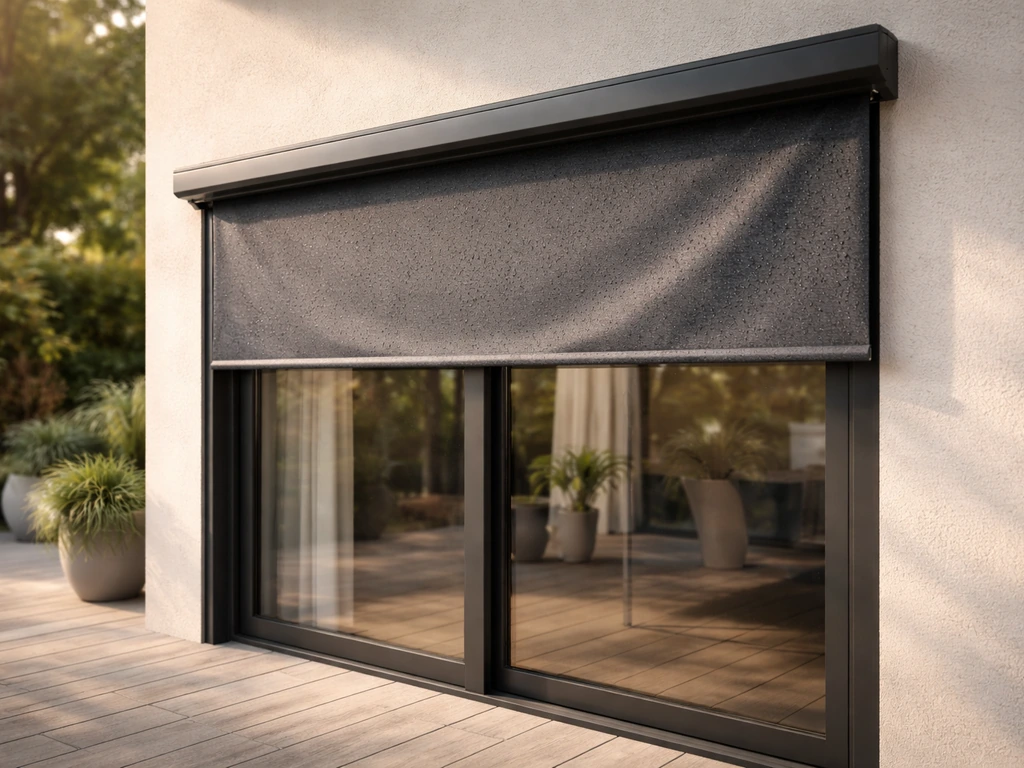
Compare the best outdoor patio blinds by style, fit, weather resistance, wind options, cost, and maintenance tips.
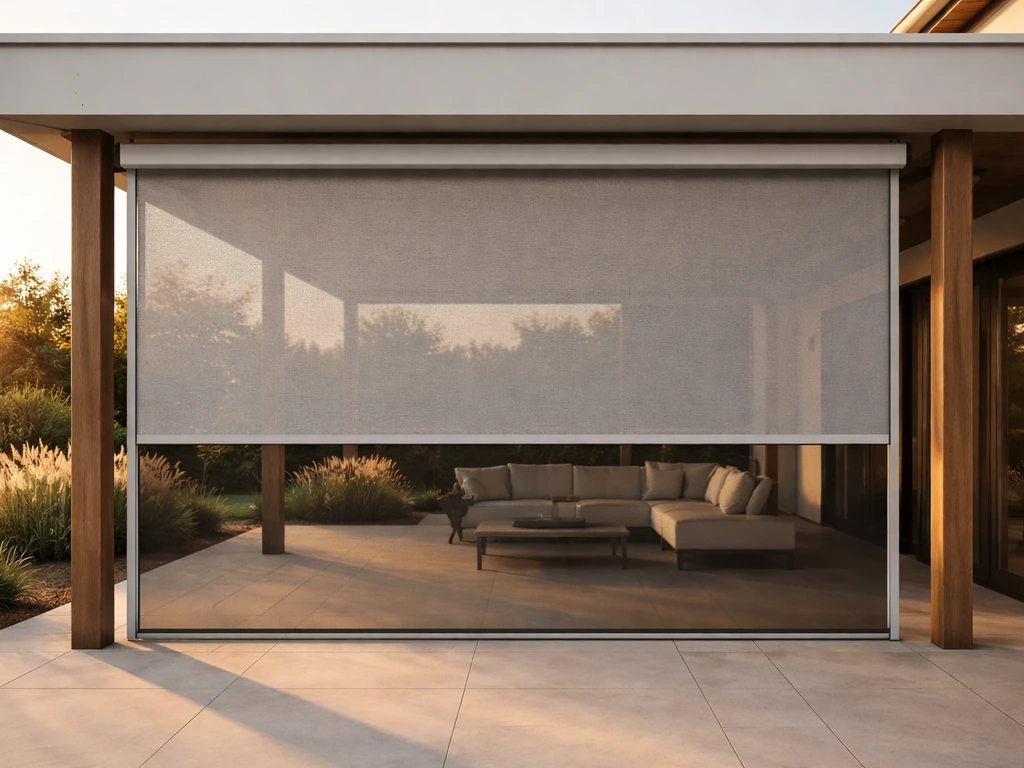
2026 buying guide to the best motorized patio shades with features, pricing, measurements, and installation tips.
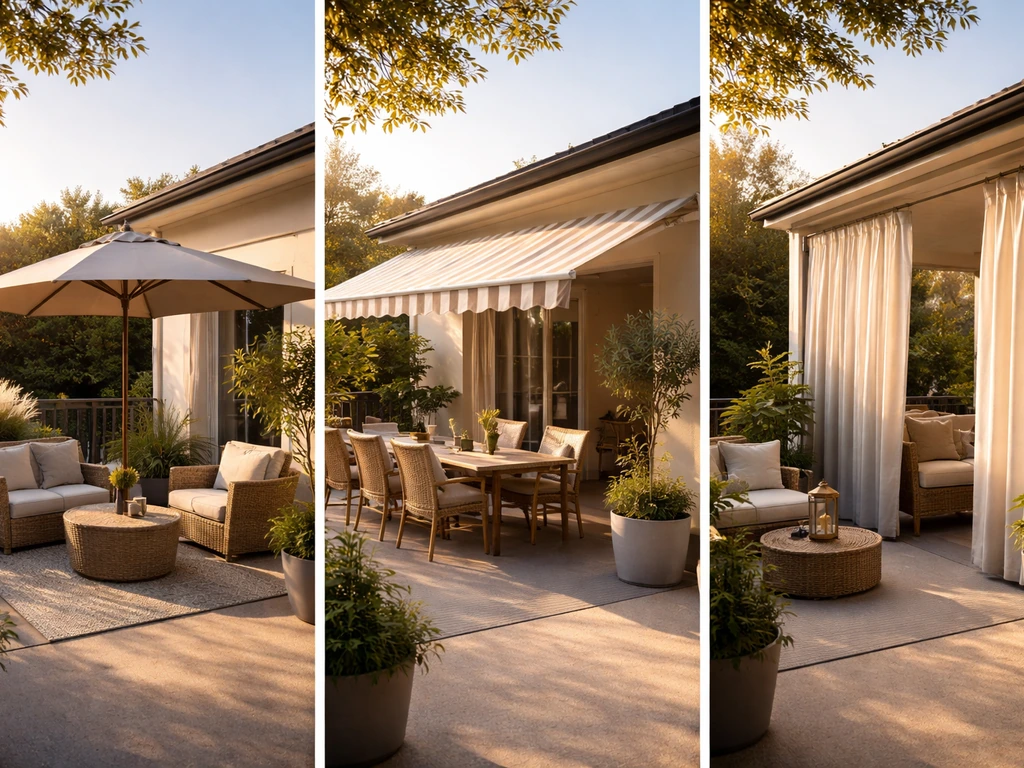
Compare best outdoor patio shades by sun blocking, coverage, wind proofing, privacy, and renter friendly setup to choose