
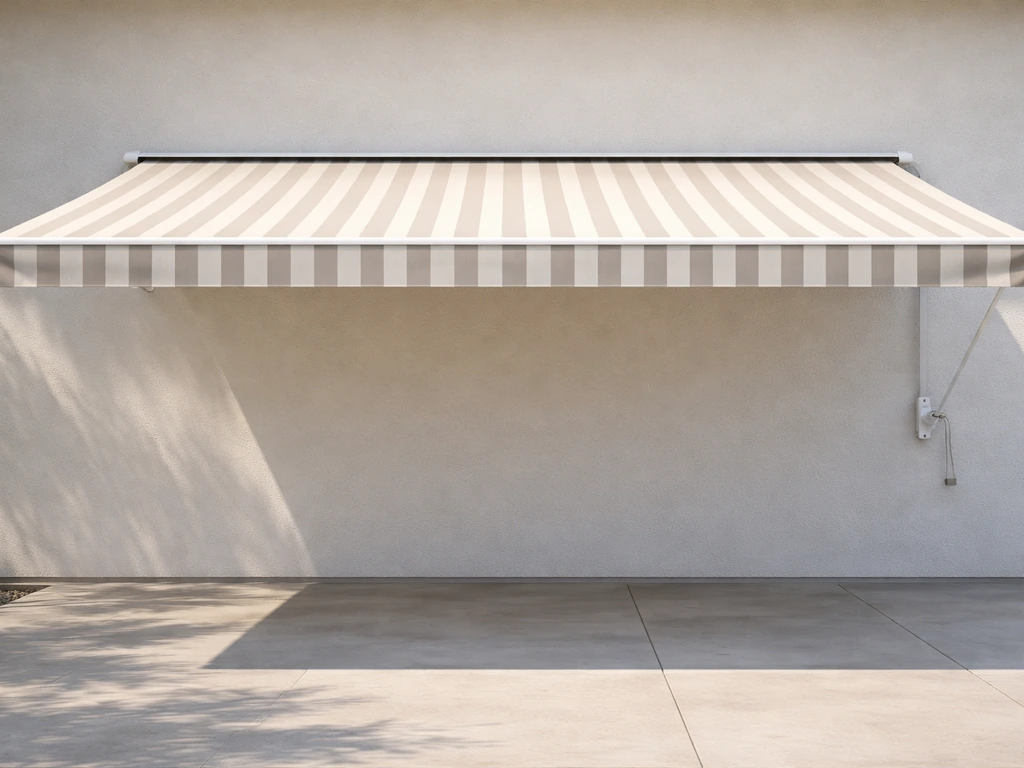
The best manual retractable patio awning for most homeowners right now is a powder-coated aluminum-frame awning with a solution-dyed acrylic or polyester fabric rated at least UPF 50+, a smooth stainless-steel crank mechanism, and a projection between 8 and 10 feet. Brands like Veikous and XTremePowerUS both sit in the budget-to-mid-range category and can work well if you pick the right size and mount it correctly, but the manual mechanism quality and frame construction vary enough between models that it pays to know exactly what to check before you buy. If you're specifically trying to decide which are the best patio awnings for your space and budget, start by matching the awning width, projection, and fabric UV rating to your local sun exposure.
Best Manual Retractable Patio Awning: Buyer Guide for 2026
What a manual retractable awning should actually do for you
Let's set realistic expectations first, because a lot of buyer disappointment comes from misunderstanding what these awnings are designed for. A manual retractable patio awning is a shade solution, not a weatherproofing system. Its job is to block direct sunlight, reduce surface temperature on your patio, and make the space usable during the hottest parts of the day. A quality fabric can cut UV exposure dramatically, UPF 50+ blocks over 98% of UV radiation, and the shade it casts can drop the perceived temperature under the canopy by 10 to 15 degrees Fahrenheit.
What it won't do reliably is keep you dry in heavy rain. Most awning fabrics are water-resistant, not waterproof, which means a light drizzle beads off fine but a downpour will soak through over time. Wind is the bigger concern: most residential manual awnings are rated for light winds up to around 20 to 25 mph.
Prestige Shade notes that for many residential retractable awnings, wind ratings often range roughly from 20 mph (lower end) to 40 mph or higher (premium models) wind ratings often range roughly from 20 mph to 40 mph or higher. Beyond that, you need to retract the awning or risk bent arms and torn fabric.
If you're in a consistently windy location, a manual awning with a cassette-style housing (where the fabric rolls into a protective box when retracted) will protect the material far better than an open-roll design.
How to measure your space before you order anything
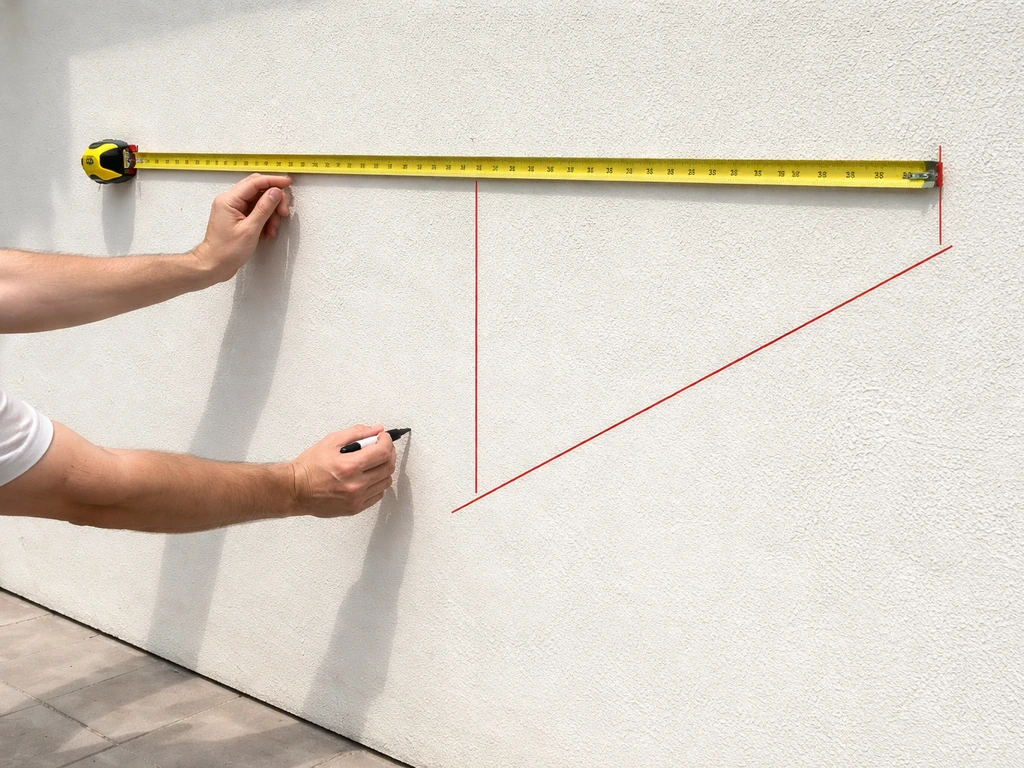
Getting the sizing right is where most people trip up. There are three measurements that matter: width, projection, and mounting height. Width is the horizontal span of the awning along your wall or fascia. Projection is the distance the awning extends outward from the wall, and here's the detail most product listings gloss over: projection is measured along the slope of the fabric, not the flat horizontal distance to the ground.
Projection is measured along the slope of the fabric, and an adjustable pitch or front bar pitch concept in retractable awning measuring guides can help translate that projection into the correct ordering measurements.
Rolltec® notes that awning “projection” is measured from the wall down the fabric slope to the front bar, not the straight horizontal distance projection is measured along the slope of the fabric. So a 10-foot projection on an awning pitched at 15 degrees will cover slightly less horizontal ground than you might expect.
Always account for this when calculating how much of your patio will actually be shaded.
- Measure the width of the area you want to cover. The awning should be equal to or slightly wider than that span. Most residential options run from 8 feet wide up to 20 feet wide.
- Measure the projection you need. Stand at your wall and walk out to where you want shade to reach. A dining table typically needs 8 to 10 feet of projection; a lounge area may need 12 feet or more.
- Measure your mounting height — the distance from the ground to where the awning bracket will attach. You want the front bar to sit at least 7 feet off the ground when the awning is fully extended so no one ducks under it.
- Check wall depth and material. You need a solid structure — masonry, wood stud framing, or a concrete header — to support the load. Verify you have at least 4 inches of clearance above the mount point for the housing bracket.
A practical rule of thumb: for full midday shade coverage, your projection should be at least two-thirds the width of the awning. So a 13-foot-wide awning paired with a 10-foot projection gives solid coverage for a standard 10x12 patio space. If you're between sizes, go wider rather than deeper, extra width covers more of your seating area, while extra projection mostly just extends shade toward the sun-facing edge.
Frame, fabric, and hardware: what to prioritize
Frame and arm construction
The frame is what holds everything together when wind hits it. Look for extruded aluminum arms and a front bar, not rolled steel. Extruded aluminum is lighter, corrosion-resistant, and dimensionally consistent. Rolled steel arms feel heavier but are more vulnerable to rust at any point where the coating chips. Arm thickness matters too: look for lateral (scissor) arms that are at least 1.5 inches wide. Thin arms flex under load and eventually fatigue at the pivot points. The pivot hardware should be zinc alloy or stainless steel castings, not pressed sheet metal brackets.
Fabric ratings
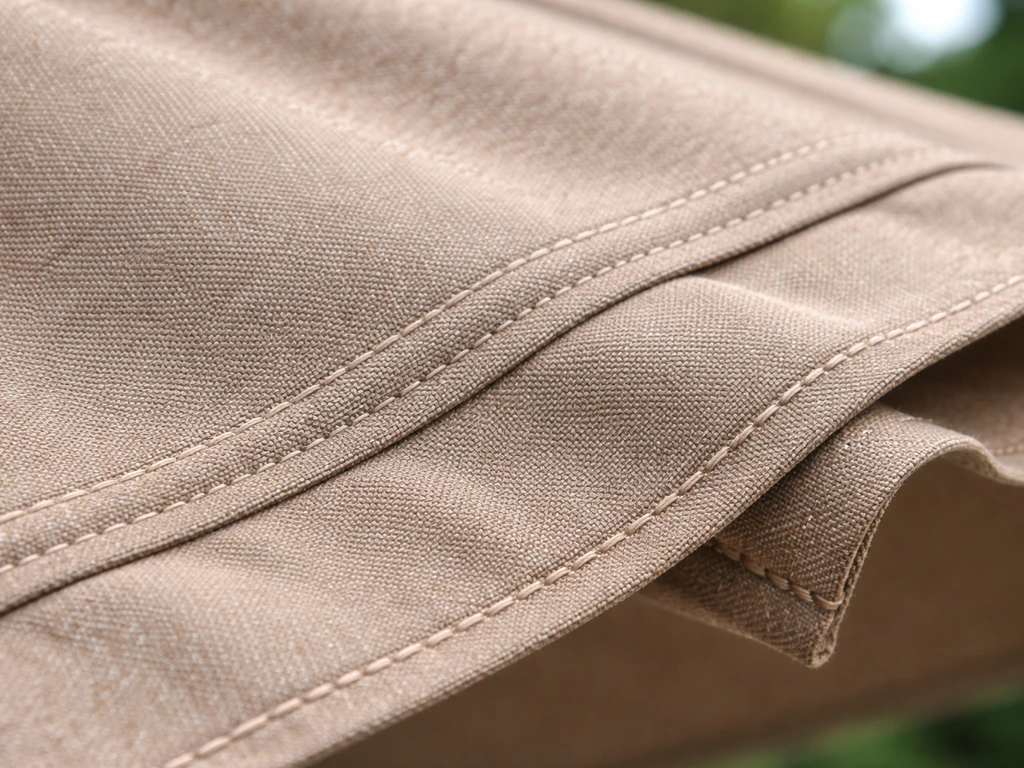
For the fabric, solution-dyed acrylic (think Sunbrella-style weaves) is the gold standard. The pigment is baked into the fiber rather than applied as a surface coating, so it resists fading for years instead of seasons. Polyester with a PVC coating is a common budget alternative, it's more water-resistant than acrylic but fades faster and can crack in cold temperatures after a few years. Whatever fabric you choose, confirm it carries at least a UPF 50 rating and check whether the coating is a factory-applied treatment (which washes off eventually) or an inherent material property.
Corrosion resistance
For hardware and frame finishes, powder coating over aluminum is the minimum standard for outdoor use. If you're within a mile of the coast or in a humid climate, every bolt, screw, and bracket should be stainless steel or marine-grade zinc. A lot of budget awnings use zinc-plated carbon steel fasteners that look fine in the box but start showing rust within a season. This isn't just cosmetic, corroded pivot hardware makes the manual retraction mechanism stiff and eventually seizes up.
Evaluating the manual retraction mechanism
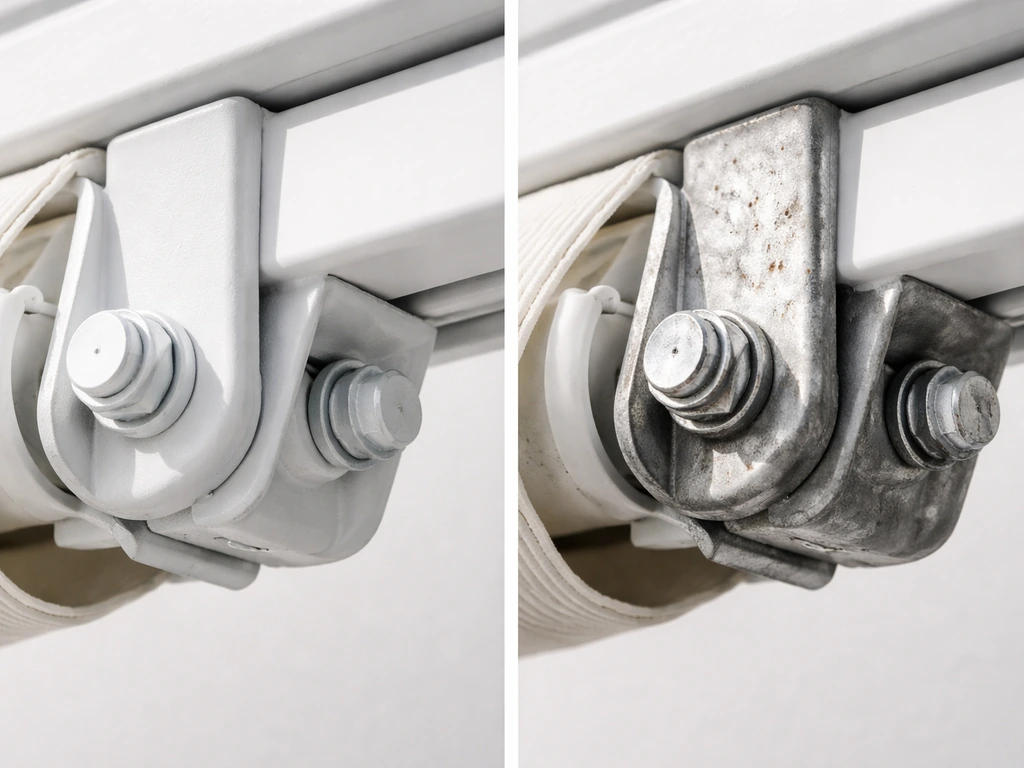
The mechanism is the part you'll interact with every single day, so it deserves more scrutiny than most product listings give it. Manual retractable awnings use either a hand crank (a worm-gear system with a removable rod or handle) or a pull cord/strap system. Crank systems are better for wider awnings, anything over 10 feet wide gets genuinely heavy to extend and retract with a pull cord alone.
When evaluating a crank mechanism, there are four things I look for. First, the gear ratio: a lower gear ratio means more turns to extend the awning, but less force per turn. Higher gear ratios feel faster but require more arm strength on wide awnings. A good mid-range crank takes about 20 to 30 turns to fully extend a 13-foot-wide awning, anything requiring more than 40 turns gets tedious fast.
Second, the smoothness of the roller tube bearing: a cheap flanged bearing will develop a slight wobble over time and create uneven fabric tension. Third, the tension spring quality in the arms: these are what keep the fabric taut when extended, and weak springs mean the fabric sags in the middle within a year. Fourth, whether the mechanism has any kind of self-locking feature so the awning doesn't slowly creep closed on a warm afternoon.
If you can find owner reviews that specifically mention stiffness after one to two seasons, that's a red flag for poor bearing quality or inadequate lubrication access. A well-designed manual awning should have grease fittings or access points so you can service the pivot points annually.
Veikous and XTremePowerUS: where they fit and what to check
Both Veikous and XTremePowerUS occupy the budget-to-mid-range segment, typically selling between $200 and $600 depending on size. They're sold primarily through Amazon and big-box retailers, which means easy returns but variable quality control between production runs. Here's how they compare across the criteria that matter most.
| Criteria | Veikous | XTremePowerUS | What to look for |
|---|---|---|---|
| Frame material | Aluminum frame, powder-coated | Aluminum frame, powder-coated | Confirm arms are extruded, not rolled |
| Fabric type | Polyester with UV coating | Polyester with UV coating | Look for UPF 50+ rating on listing |
| Crank mechanism | Standard worm gear, removable rod | Standard worm gear, removable rod | Check turns-to-extend in reviews |
| Available widths | 8 ft to 13 ft typical | 10 ft to 16 ft typical | Measure your space first |
| Projection depth | 6.5 ft to 8 ft typical | 8 ft to 10 ft typical | Verify listed projection is fabric-slope measurement |
| Corrosion resistance | Powder coat, standard fasteners | Powder coat, standard fasteners | Upgrade fasteners if near coast |
| Wind rating | Not officially stated; treat as 20 mph max | Not officially stated; treat as 20 mph max | Retract in any strong wind |
| Warranty | 1 year typical | 1 year typical | Register immediately after purchase |
| Price range (mid-size) | $250–$400 | $300–$500 | Compare per-square-foot coverage cost |
The honest take on both brands: they're decent value if you size them correctly and understand their limits. Veikous tends to be a better fit for smaller patios (8 to 10 feet wide) where the crank load stays manageable. XTremePowerUS offers slightly wider coverage options and the arm spring tension tends to hold up a bit better in owner reviews over two or more seasons, which suggests marginally better spring quality. Neither brand uses solution-dyed acrylic fabric at their price points, so expect some fading after three to four seasons in full sun, that's the realistic tradeoff for the price.
If your budget stretches to $700 or more, brands like Awntech, SunSetter, or Advaning offer better fabric quality (genuine acrylic options), heavier-gauge aluminum frames, and smoother worm-gear mechanisms. If you're weighing Aleko retractable patio awning options, reading Aleko retractable patio awning reviews can help you spot common differences in fabric fade and retraction feel before you buy. If you're comparing across the full patio awning market, the electric and motorized options also become competitive at that price range, though for pure simplicity and no-electricity-required convenience, a well-built manual crank awning remains the practical choice for most patios. If you decide you want an easier touch-button option, compare electric patio awnings in the UK for runtime, remote controls, and weather ratings before you buy best electric patio awnings uk.
Installation: DIY reality check and common mistakes
Most manual retractable awnings in the 8-to-13-foot width range are genuinely DIY-installable if you're comfortable drilling into masonry or locating wall studs, and if you have one helper. The full installation on a typical two-arm awning takes two to four hours the first time. Wider awnings (16 feet and up) get heavy and awkward fast, I'd recommend professional installation for anything over 14 feet simply because of the overhead weight involved during bracket alignment.
The most common installation mistakes
- Mounting into siding without hitting studs or using proper masonry anchors. The bracket load during wind gusts is significant — inadequate anchoring is the number one cause of awning failures.
- Setting the pitch angle too low. Most awnings should be mounted at a 15 to 30 degree downward pitch. Less than 10 degrees means water pools on the fabric instead of draining off.
- Mounting too low on the wall. If the front bar drops below 6.5 feet when fully extended, it becomes a head hazard. Always calculate the drop before drilling.
- Not checking that the mounting wall is plumb and flat. An uneven surface causes the awning to track crooked when extending, putting uneven stress on the fabric and arms.
- Skipping the level on the bracket installation. Even a small tilt side-to-side causes the fabric to roll unevenly and wear out one edge faster than the other.
- Over-tightening the roller tube tension spring on first setup. Start with the manufacturer's recommended spring tension and adjust incrementally — too much tension cracks the end caps.
For masonry walls, use sleeve anchors or wedge anchors rated for at least 200 pounds of shear load per bracket. Most residential awnings come with lag screws sized for wood framing, if you're going into brick, stucco, or concrete block, you'll need to pick up the correct masonry hardware separately. This is mentioned in almost no awning manual, and it's responsible for a huge number of failed installations.
Keeping your awning working well for years
Maintenance on a manual retractable awning is straightforward but easy to skip until something goes wrong. The fabric needs cleaning two to three times per season: brush off loose debris, then wash with a solution of mild soap and warm water using a soft brush. Avoid bleach-based cleaners on polyester fabric, they degrade the UV coating faster. Rinse thoroughly and let the awning dry fully in the extended position before retracting. Rolling up wet fabric is the fastest way to grow mildew in the fold lines.
The pivot points and roller tube bearing should be lubricated once per season with a silicone-based spray lubricant. Avoid petroleum-based lubricants like WD-40, they attract dust and gum up the mechanism over time. If the crank starts feeling stiff or gritty, that's your cue to service the mechanism before it causes permanent wear on the gear teeth.
Wind is your biggest threat to long-term reliability. Most manual awnings have no automatic wind sensor, so it's purely on you to retract it before conditions get rough. A practical rule: if you're seeing sustained winds that are moving small branches or making it hard to stand comfortably outside, retract the awning. A gust hitting a fully extended 13-foot awning exerts hundreds of pounds of force on the mounting brackets and arm joints. Even if the awning survives the gust intact, repeated stress like that accelerates fatigue at the pivot points. In the off-season or before any storm system, retract and ideally cover the exposed roller tube with a fitted cover if your model doesn't have a cassette housing.
Your buying checklist before you order
- Measure your patio width and the projection you need, accounting for the slope-based measurement method — not just horizontal depth.
- Confirm your mounting wall type (wood stud, masonry, concrete) and buy the correct anchor hardware for that surface.
- Check that the mounting height will keep the front bar at least 7 feet off the ground when fully extended.
- Prioritize a UPF 50+ fabric rating and look for solution-dyed acrylic if your budget allows — otherwise accept that polyester fabric will need replacement sooner.
- For widths over 10 feet, verify the crank mechanism uses a proper worm gear and check owner reviews specifically for comments about stiffness after one to two seasons.
- Choose a cassette-style housing if you're in a dusty, coastal, or high-pollen environment — it protects the rolled fabric when retracted.
- Budget $50 to $100 extra for installation hardware (masonry anchors, silicone lubricant, a quality drill bit set) if it's not included.
- Register the warranty immediately after purchase and keep your installation photos — you'll need them if a bracket fails under warranty.
FAQ
How can I tell if a manual retractable patio awning will creep closed in hot weather?
Check whether your awning includes a built-in self-locking latch or a detent that holds tension when fully extended. If it does not, warm afternoons can slowly relax the tension spring, causing the fabric to “creep” closed. You can reduce the issue by retracting before heat buildup and ensuring the arms are correctly adjusted at installation so the spring sits under proper preload.
Does a UPF 50+ fabric also keep the patio dry during rain?
For manual awnings, “UPF 50+” is about UV blocking, not waterproofing. If you need rain protection, you should plan on retracting in heavy rain. Also look for drain behavior, some fabrics shed light water better when kept taut, but downpours still tend to soak through over time.
Why do awnings with the same listed “projection” shade different amounts of my patio?
Use slope projection when comparing models and then validate with a quick on-site mock-up: measure the actual distance from the wall to where you want the fabric edge to land, then add a few inches for fabric sag when fully extended. If your awning is pitched, the visible canopy edge often covers less ground than the “flat” projection you estimate from photos.
What causes uneven fabric tracking or binding when retracting?
A common mistake is assuming the bracket holes are pre-aligned for every wall type. Confirm you are anchoring into studs for wood framing, or using the correct masonry anchors for brick, stucco, or concrete block. If the brackets land even slightly off level, the crank can bind and the fabric will not track evenly across the roller tube.
What parts of a manual awning should I upgrade for corrosion resistance?
If you live near the coast or in high humidity, prioritize stainless steel or marine-grade zinc for every fastener you can access, not just the visible screws. Corroded pivot hardware increases friction, which makes the manual crank feel harder and can accelerate wear at the gear teeth and bearings.
What is a practical “turns to extend” guideline when comparing manual crank awnings?
If your awning requires more than about 40 turns for a typical width, it will feel tedious and may encourage users to stop mid-travel. Also pay attention to gear ratio and bearing smoothness, an awning that turns but feels gritty usually indicates a bearing issue or insufficient lubrication access.
What lubricant should I use on the crank and pivot points, and what should I avoid?
You do not want to lubricate the mechanism with a penetrating petroleum product. Use a silicone-based spray lubricant on the pivot points and any serviceable bearing interfaces, and then wipe off excess so dust does not build up. If it already feels stiff, service sooner rather than forcing the crank, to prevent permanent wear.
Why do some masonry installs loosen even when the awning seems secure at first?
Most DIY installations fail when the wall anchors are mismatched to the substrate. For masonry, use sleeve anchors or wedge anchors rated for at least about 200 pounds of shear per bracket, and do not rely on lag screws meant for wood. Inadequate anchoring can loosen over time, leading to wobble and fatigue at the arm joints.
What’s the correct cleaning routine for manual retractable awning fabric?
Clean the fabric two to three times per season, brush off debris first, then wash with mild soap and warm water using a soft brush. Avoid bleach-based cleaners on polyester, they can degrade UV protective treatments faster. Always rinse thoroughly and fully dry the fabric while extended before retracting to prevent mildew.
What should I troubleshoot first if the awning becomes stiff after a year?
If you get a crank that becomes stiff or uneven after one to two seasons, look for poor bearing quality, inadequate access to lubrication points, or misalignment from installation. Check that the arms move symmetrically and that the roller tube spins without wobble, then lubricate and adjust rather than waiting until failure.
At what point should I retract my manual patio awning for wind safety?
Most residential manual awnings are only intended for light wind. If you can feel it affecting your ability to stand comfortably or see branches moving, retract it. Repeated gust loads can accelerate fatigue at pivot points even if the fabric never tears.
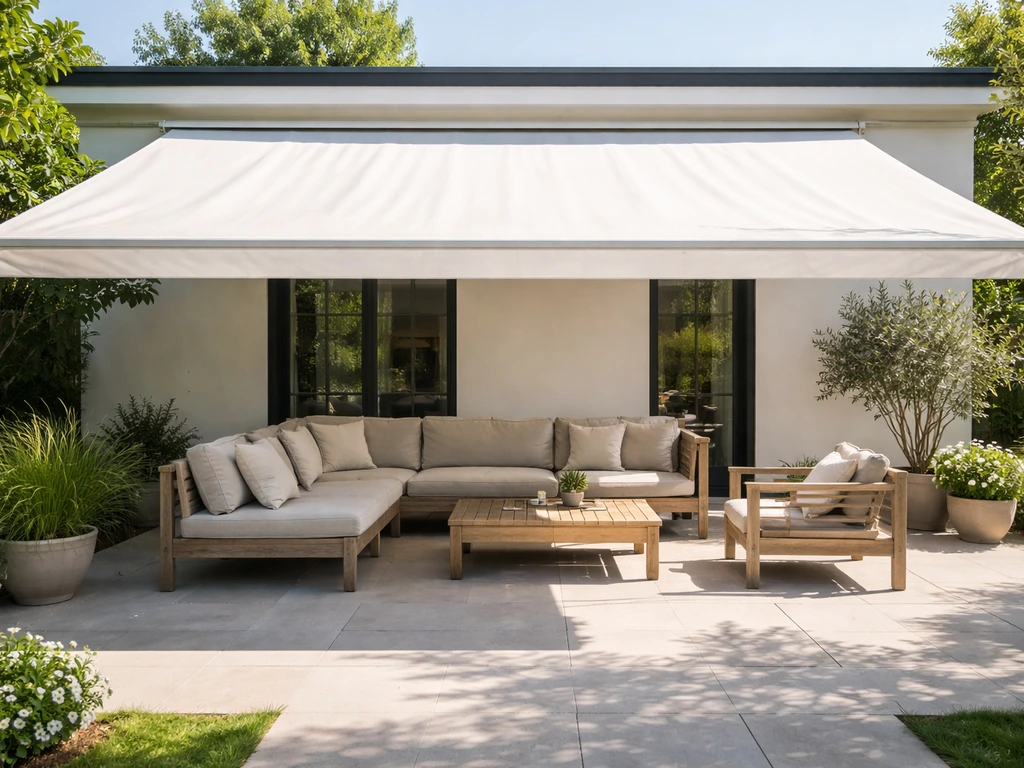
Best patio awning picks by type, size, weather needs, and brands, plus buying, measuring, and maintenance tips.
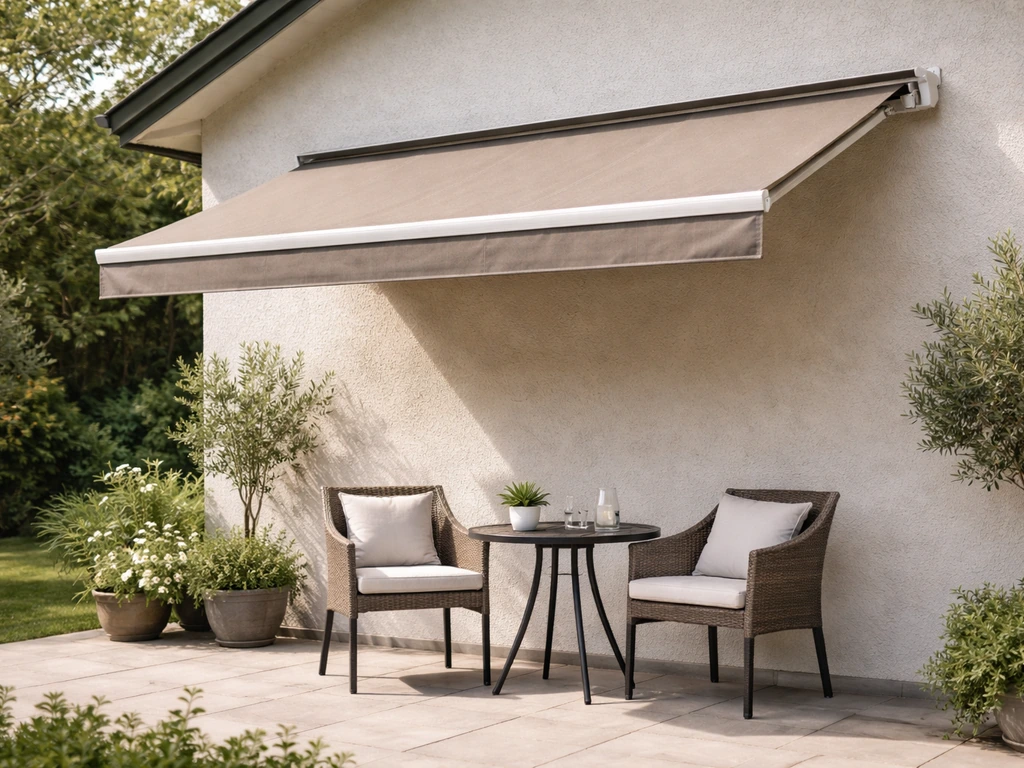
Find the best patio awnings with types, exact measurements, wind and weather material tips, plus maintenance and cost.
Alternative to patio cushions: durable, weatherproof seating options, pros, DIY tips & buying guide.