
The best patio awning for most homeowners is a motorized retractable with a cassette-style housing, solution-dyed acrylic fabric (Sunbrella or equivalent), and a built-in wind sensor. That combination gives you reliable shade, decent weather protection, and a lifespan of 10 to 15 years without constant babysitting. If your budget is tighter or you're renting, a manual retractable or a quality freestanding canopy gets you most of the benefit for a fraction of the cost. If you want a quick way to compare practical options, Aleko retractable patio awning reviews can help you spot which models hold up in real use manual retractable. The right call depends on your patio size, wall structure, and how much you actually want to do to operate and maintain it.
Best Patio Awnings Reviews: Top Picks by Type and Budget
How to choose the best patio awning (size, mount, style)
Before you even look at brands, you need three measurements: width, projection, and mounting height. Get these wrong and nothing else matters.
Width and projection
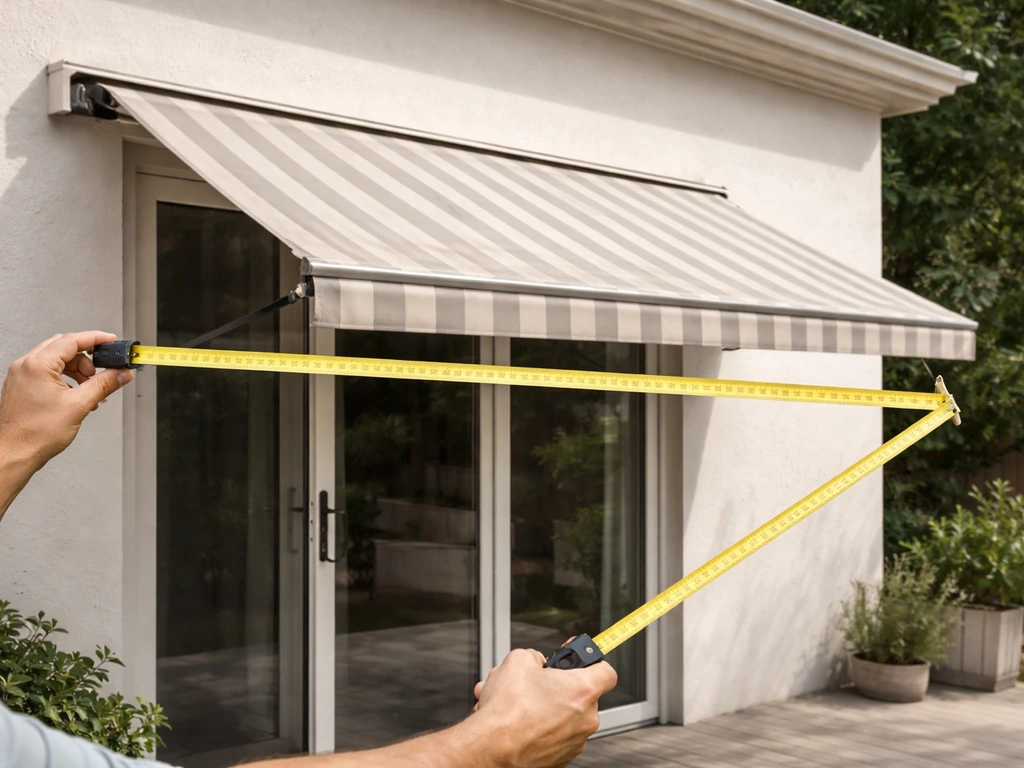
Width is straightforward, but aim to go at least 2 feet wider than the door, window, or zone you want covered. That extra coverage keeps the sun off the edges where people actually sit. For cassette-style awnings, manufacturers measure width from the outside edge to outside edge of the cassette casing, so double-check that spec against your wall space before ordering.
Projection is the distance from the wall down the fabric slope to the front bar, not a straight horizontal measurement. A 10-foot projection awning gives you less than 10 feet of horizontal coverage because of the pitch. Plan accordingly, especially if you're trying to shade a specific seating area at a certain time of day. The sun angle at 2pm in July is very different from the angle at 11am, so think about when you actually use your patio.
Mounting height and clearance
You need at least 7 feet 6 inches of clearance from the deck or patio floor to the bottom of any roof, eave, or overhang above the mounting point. That's the minimum for comfortable head clearance at the front of the awning when it's extended. If you're tight on that measurement, a low-pitch or flush-ceiling mounting setup isn't going to work, and you'll need to look at freestanding alternatives.
Wall mount vs. soffit mount
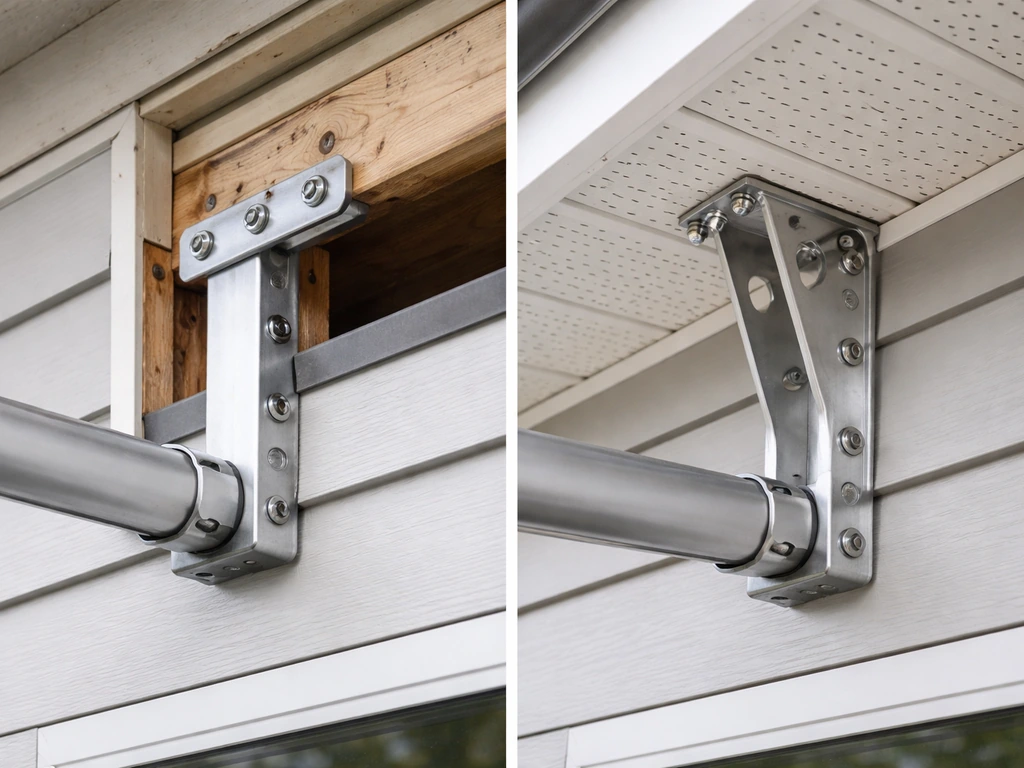
Most awnings install directly to a wall stud using heavy-duty lag screws. Soffit mounting is a separate process with different bracket requirements, and most manufacturer manuals treat it as its own installation path. If you're mounting to a soffit, verify the soffit material can handle the load. Hollow vinyl soffit cannot. You need solid wood or a structural backing. Skipping this step is one of the most common reasons awnings fail or pull away from the house.
Style: retractable vs. fixed vs. freestanding
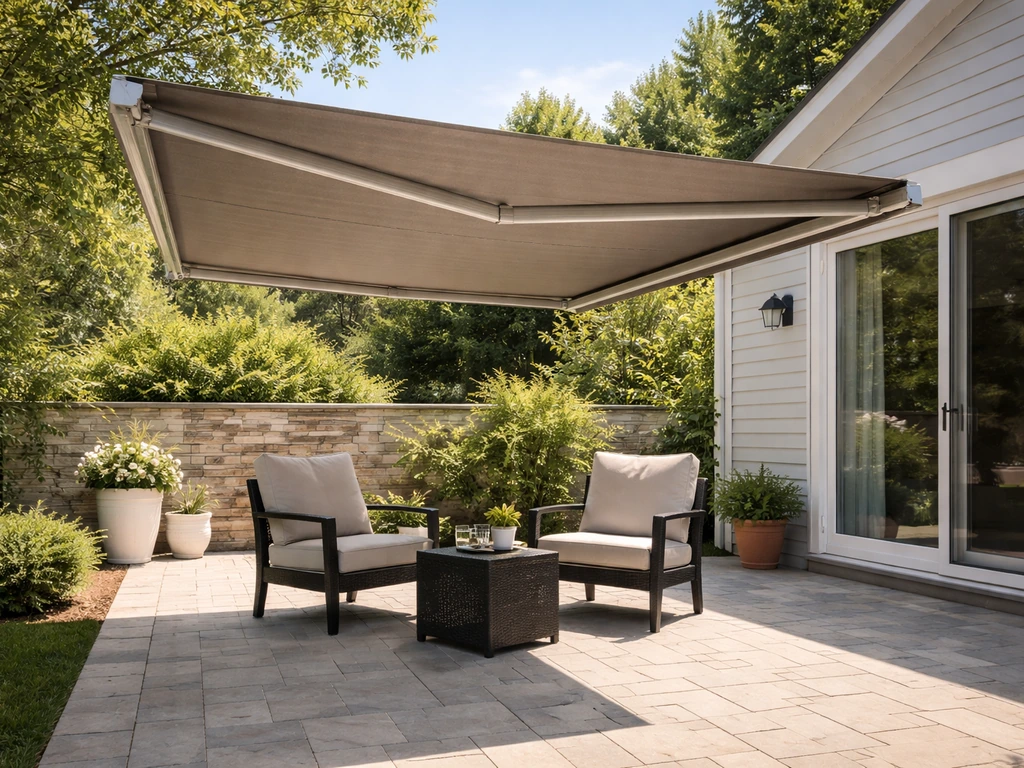
Retractable awnings (manual or motorized) are the most popular choice because they give you flexibility. You extend them when you want shade and retract them when you don't, which also protects the fabric during storms. Fixed or permanent awnings provide constant coverage and are often more structurally robust, but they take more weather exposure year-round and are harder to update or remove. Freestanding canopies and shade sails are the portable option, ideal for renters or anyone who doesn't want to drill into a wall.
Review roundup: the main awning types and what they're actually like to live with
Motorized retractable awnings
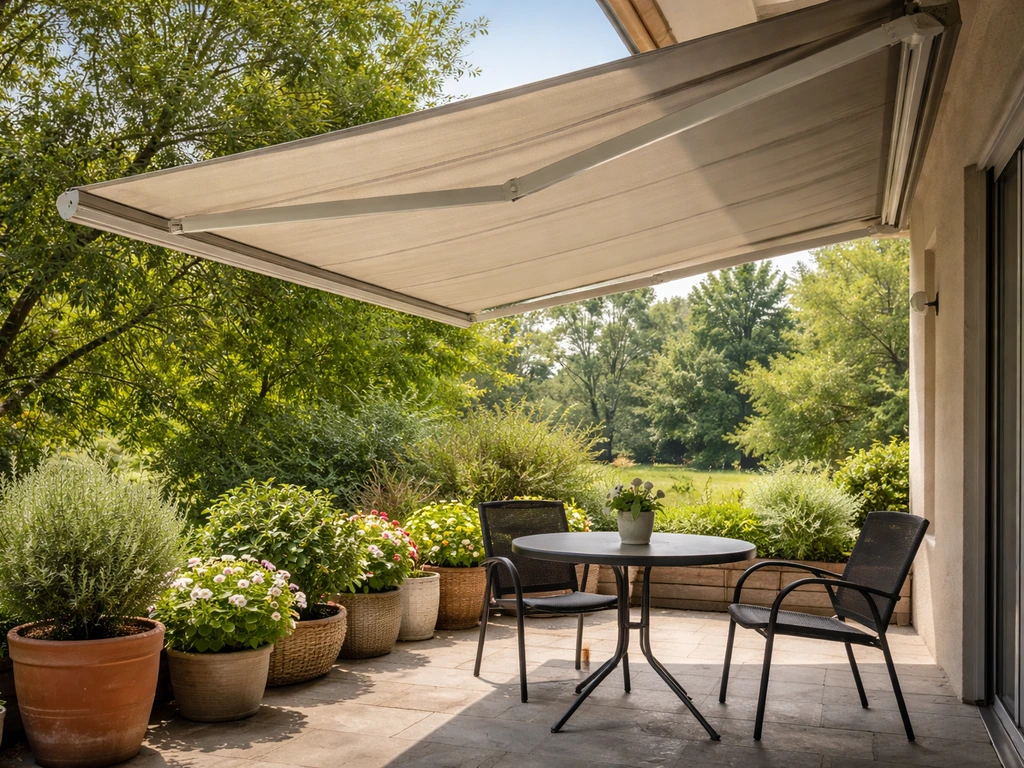
This is the premium category and the most reviewed online for good reason. A motorized retractable with a cassette housing is genuinely convenient: press a button, get shade. The cassette protects the fabric when retracted, which makes a real difference in long-term appearance. Models from SunSetter's Pro and Platinum series, Sunesta, and Solera by Lippert show up consistently in best-of roundups because they combine quality fabric with reliable motors. Expect to pay more, but you're getting a system that can last 10 to 15 years with proper care.
The honest downside: motorized awnings are not storm-proof. Every major manufacturer, including Eclipse, SunSetter, and Sunesta, explicitly warns that awnings should not be left extended during high winds or heavy driving rain. A built-in wind sensor helps by automatically retracting the awning when it detects gusts, but even sensor-equipped models are not rated for extreme conditions. Sunesta has Miami-Dade County approval for wind resistance up to 45 mph when extended, which is better than most, but that's still not a permanent structure. If you're in a storm-prone area, motorized retractable with a cassette and wind sensor is your best bet, but you still need to manage it.
Manual retractable awnings
Manual retractables use a hand crank to extend and retract. They're significantly cheaper than motorized models and mechanically simpler, which means fewer things to break. Brands like VEVOR, Advaning, and Awntech show up alongside premium names in 2026 roundups because they offer solid coverage at budget-friendly prices. The tradeoff is that people end up using them less because the crank is an extra step, and they're more likely to leave the awning extended in weather that damages it. If you're disciplined about retracting it before storms, a manual model is genuinely great value. If you know yourself and you won't do that consistently, spend a bit more for motorized.
Fixed and permanent awnings
Fixed awnings are attached permanently to the house and don't retract. They're common on older homes and commercial buildings. The upside is that they're structural: they can handle more weather, they don't require any operation, and they provide consistent shade and rain runoff protection. The downside is that they block light and views even when you want them, they take the full brunt of every storm season, and they're a bigger installation project. If you have a consistently sunny south or west-facing patio and you know you always want shade there, a fixed awning makes sense. Otherwise, retractable is more versatile.
Freestanding canopies and portable shade
These aren't traditional awnings, but they're part of the same shopping decision for a lot of people. These aren't traditional awnings, but they're part of the same shopping decision for a lot of people best patio awnings. Freestanding pergola-style canopies, pop-up gazebos, and shade sails require no wall attachment, cost much less, and can be moved or taken down seasonally. The coverage is often less precise than a wall-mounted awning and wind resistance is generally lower, but for renters, apartment balconies, or anyone who wants flexibility, they're a practical option worth considering before committing to a wall-mounted install.
Best awning for your specific situation
| Situation | Best Awning Type | Key Reason |
|---|---|---|
| Maximum sun and heat blocking | Motorized retractable with Sunbrella fabric | Blocks up to 98% of UV rays; cassette protects fabric between uses |
| Wind-prone area | Motorized retractable with wind sensor and cassette, or fixed | Auto-retracts before damage; cassette shields fabric when stored |
| Privacy from neighbors or street | Fixed awning or drop-screen/valance add-on | Constant coverage; valances provide side shielding |
| Renter or no-drill situation | Freestanding canopy or shade sail | No wall attachment needed; portable and removable |
| Budget-conscious homeowner | Manual retractable (VEVOR, Advaning, Awntech) | Lower cost, good coverage, simple mechanics |
| Large covered patio or pergola | Fixed or permanent structure with fabric | Handles large spans; more structural integrity |
| All-weather year-round use | Motorized retractable + cassette + wind/rain sensor | Best combination of usability and protection |
If you're mainly worried about afternoon sun on a west-facing deck, a motorized retractable with Sunbrella fabric and a 12 to 14-foot projection will handle most situations well. If privacy is the main goal, look at awnings that offer an integrated valance or pair your awning with retractable side screens. For renters, skip the wall-mount conversation entirely and go freestanding.
Materials and build quality: what actually matters
Fabric: solution-dyed acrylic vs. everything else
The fabric is where quality differences show up most in years 3 to 5. The best awning fabrics, including Sunbrella and comparable performance acrylics, are solution-dyed: the color is added to the fiber in its liquid state before it's even spun into yarn. That means the color goes all the way through the fiber, so it doesn't fade from the surface down. Cheaper fabrics are surface-coated or printed, and they fade and crack noticeably faster under UV exposure. Sunbrella-grade fabric blocks up to 98% of UV rays and is mold, mildew, and rot resistant, but it still needs regular cleaning to stay looking good. If a brand doesn't tell you what type of fabric it uses or just says 'polyester,' that's a yellow flag.
Frame material and corrosion resistance
Frames are typically aluminum or steel. Powder-coated aluminum is the best standard option: it's lightweight, corrosion-resistant, and doesn't rust. Steel frames are heavier and stronger but need quality coating to resist rust, especially in humid or coastal environments. Check that the lateral arms (the folding arms that extend the awning out from the wall) are also made from the same quality material as the main housing, because those take the most stress from wind and extended use. Cheap arms with thin-gauge metal are a common failure point on budget models.
Hardware and water handling
Water pooling on the fabric is a bigger problem than most buyers realize. If rain accumulates in a low-pitch section of the fabric, it stresses the frame and arms and can cause permanent sagging or structural damage. Better awnings pitch slightly forward to encourage runoff, and some have a slight tilt adjustment built in. You should always retract and let the fabric dry fully before rolling it up after rain, and if pooling is a recurring issue, adjusting the pitch angle is usually the fix. A cassette housing helps protect rolled fabric from birds, debris, and UV when the awning is stored.
Installation and day-to-day usability
DIY vs. hiring a pro
Manual retractable awnings are the most DIY-friendly option. If you're comfortable with a drill, a level, and working off a ladder, most manual models can be installed in a few hours with two people. Motorized models add wiring complexity, and if you're not familiar with running electrical or low-voltage wiring, that's where hiring someone pays off. A botched electrical job or a motor mounted out of level will cause problems for years. Most professional awning installers charge separately from the product cost, and installation on a typical motorized retractable runs a few hundred dollars.
The critical thing with any wall-mounted awning is using every bracket supplied by the manufacturer and hitting structural studs or a solid mounting surface with the lag screws. Every bracket matters. Skipping even one puts extra load on the others, and the whole thing can pull away from the wall under wind stress. If your wall surface is stucco, fiber cement, or anything other than wood siding over studs, find your framing before you drill.
Operation and maintenance
Motorized awnings are low-effort day to day: remote or wall switch, sometimes app-controlled. Manual cranks take 30 to 60 seconds for a full extension or retraction. Either way, the core maintenance routine is the same. Clean the fabric two to four times per year with mild soap and water (no harsh detergents or pressure washers), rinse thoroughly, and let it dry completely before retracting. Re-apply a water repellent treatment like 303 Fabric Guard annually to maintain the water-beading performance of the fabric. Inspect the arms, pivot points, and mounting brackets once a season for any loosening or signs of corrosion.
Winter and off-season storage
In climates with snow or ice, retract the awning for winter. Snow load will destroy even a well-built retractable awning. If your awning doesn't have a cassette, consider a weather-resistant cover for the rolled fabric. Fixed awnings need to be inspected after heavy snow seasons for any frame stress or fastener movement. The fabric on any awning lasts noticeably longer if it's not spending six months exposed to freeze-thaw cycles.
Cost vs. value: what you'll actually spend
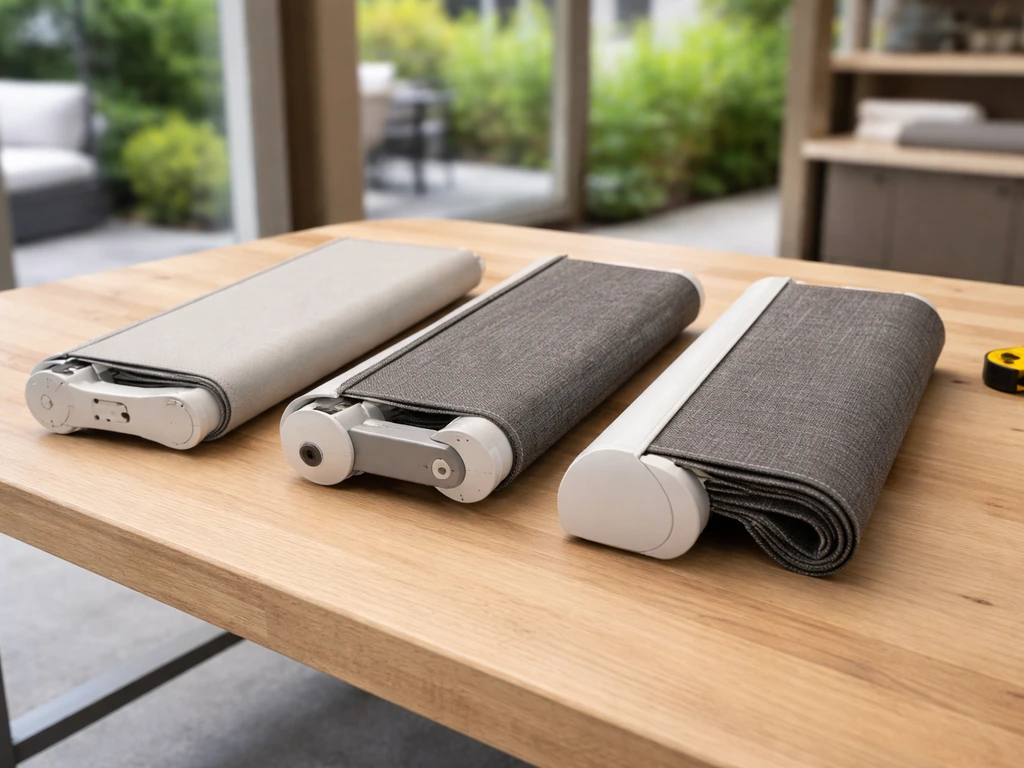
Awning pricing breaks down roughly like this: budget manual retractables start around $200 to $600 for the unit alone. Mid-range motorized models from established brands run $800 to $2,000. Premium motorized cassette awnings from SunSetter, Sunesta, Eclipse, or Solera typically land between $2,000 and $4,500 or more for large widths, before installation. When you factor in professional installation, Angi's 2025 data puts the average total cost of a retractable awning at around $2,700, with a typical range of $1,000 to $3,500. On a per-square-foot basis, expect $12.50 to $27.50 installed for retractable setups.
The honest value question is this: a $600 budget awning with polyester fabric might need replacing in 3 to 5 years. A $2,500 awning with Sunbrella fabric and a solid aluminum frame, properly maintained, should last 10 to 15 years. When you run the math over a decade, the premium option often costs less per year. The warranties reflect this: Solera's Lumina line includes a 10-year warranty on the frame and fabric and a 5-year warranty on the motor. Budget brands often offer 1 to 2 years. Warranty length is usually a decent proxy for how confident the manufacturer is in their own product.
| Tier | Typical Unit Price | Installed Total (est.) | Expected Lifespan | Best For |
|---|---|---|---|---|
| Budget manual | $200–$600 | $400–$900 | 3–5 years | Renters, seasonal use, small patios |
| Mid-range motorized | $800–$2,000 | $1,200–$2,800 | 7–10 years | Homeowners wanting convenience without top-tier spend |
| Premium motorized cassette | $2,000–$4,500+ | $2,500–$6,000+ | 10–15 years | Full-time use, larger patios, long-term value focus |
How to narrow it down: recommendations and a buyer checklist
Here's how to shortlist quickly based on your situation. If you want the best overall performance and can spend $2,500 or more installed, go with a motorized cassette retractable from SunSetter, Sunesta, or Solera with Sunbrella fabric and a wind sensor. If you want solid value at a lower price, a manual retractable from Advaning or a comparable mid-tier brand with acrylic fabric does the job well if you'll actually use the crank consistently. If you want the best manual retractable patio awning, focus on smooth crank operation, durable arms, and fabrics that resist fading. If you're a renter or just want shade without commitment, a freestanding canopy is the practical answer. If you're in the UK or have specific motorized requirements, electric patio awning options have their own category worth exploring separately. If you're looking for the best electric patio awnings uk, focus on weather-proof motors, wind ratings, and quality cassette fabric electric patio awning options.
Before you buy anything, run through this checklist:
- Measure your available wall width and confirm the awning width (outside-to-outside of cassette) fits with clearance on both sides.
- Calculate the projection you need based on where the sun hits your patio at your most-used time of day, remembering projection is measured along the fabric slope, not horizontally.
- Confirm your mounting height clears 7 ft 6 in from the patio floor to the eave or overhang above.
- Identify your wall material and locate studs or solid backing for lag screw mounting, and decide if soffit mounting applies to your setup.
- Decide manual vs. motorized based on your honest assessment of whether you'll crank it every time, or if you want the convenience of a button.
- Check the fabric type: solution-dyed acrylic (Sunbrella or equivalent) is the benchmark for fade resistance and longevity.
- Look at the frame: powder-coated aluminum is the standard for corrosion resistance, especially in humid or coastal climates.
- Consider whether you need a cassette housing for fabric protection when retracted, especially if you're in a climate with heavy pollen, bird activity, or UV exposure.
- If you're in a windy area, prioritize models with a built-in wind sensor and check manufacturer wind ratings.
- Compare warranty terms: 10 years on frame and fabric is the benchmark for premium products; anything under 3 years should be scrutinized.
- Factor in total installed cost, not just unit price, and calculate cost per year over the expected lifespan to compare tiers honestly.
- If you're a renter or can't drill into the wall, remove all wall-mount options from consideration and focus on freestanding solutions.
Patio awning shopping gets a lot easier once you have your measurements locked in and know whether you're a motorized or manual buyer. The fabric and frame quality questions narrow the field further. Most people who end up disappointed with their awning either bought without measuring properly, underestimated the importance of solution-dyed fabric, or skipped the wind sensor and paid for it in the first storm. Avoid those three mistakes and you'll be happy with almost any awning in the mid-to-premium tier.
FAQ
How do I tell if an awning will cover my seating area at the time of day I use it most?
Use the projection, but also confirm the drop angle against where you sit. Measure from the wall to the front bar (the projection), then check whether the extended fabric will shade the far edge of your seating at your typical time (morning versus afternoon sun angle). If you are between sizes, choose the longer projection to avoid a small uncovered “hot stripe” near the back of the seating zone.
What’s the difference between awning width specs for a cassette model versus a non-cassette model?
Cassette-style specs are often given from outside edge to outside edge of the cassette, so the actual fabric travel can effectively feel narrower or wider depending on casing size. Before ordering, compare the cassette width to your available wall space and confirm the fabric width when fully extended, not just the rolled or casing dimension.
Do I need to worry about wind sensor accuracy and what should I do anyway during storms?
A wind sensor can retract automatically, but it is not a guarantee for extreme wind or heavy driving rain. Even sensor-equipped models can be damaged, especially if gusts exceed the manufacturer’s operational limits. Plan to retract manually before severe weather when possible, and keep controls accessible (not buried behind screens or furniture).
Can I leave a retractable awning extended if it starts raining lightly?
Light rain is usually manageable, but the key issue is driving rain and pooling plus higher wind. If rain is likely to increase or gusts pick up, retract to reduce fabric stress and prevent debris buildup in the cassette housing. After rain, the article recommends drying before retracting, which helps prevent sagging and lingering moisture smells.
What should I do if my wall is stucco or siding and there are no obvious studs where the bracket will land?
Do not drill based on guesswork. Find the structural framing behind the surface and ensure the lag screws bite into wood or a structural backing. Hollow or unsupported mounting is a common failure mode, and using only surface anchors can lead to bracket pull-out during wind loads.
How can I reduce water pooling if the patio awning keeps sagging after rain?
First check pitch and make sure the installation hardware is set so the fabric encourages runoff. If pooling repeats in the same spot, adjust the pitch angle (if your model supports it) and confirm arms and pivot points are not loosening. Also retract only after the fabric is fully dry, since trapped water increases sagging over time.
Is solution-dyed acrylic always worth the extra cost over “polyester” or “UV-resistant” claims?
If a brand only says “polyester” or does not specify fabric type (and whether it is solution-dyed), treat it as a risk for faster fading and cracking. Solution-dyed acrylic has color throughout the fiber rather than just on the surface, which is why it typically holds up better through years 3 to 5 and beyond. When comparing models, prioritize fabric identification over vague marketing terms.
What’s the safest way to clean the awning without damaging the fabric or waterproof finish?
Stick to mild soap and water, rinse thoroughly, and avoid pressure washers which can force water and detergents into seams. Do not use harsh detergents, and let the fabric dry completely before retracting. After cleaning, re-apply the recommended water repellent treatment as scheduled to maintain beading performance.
How do I choose between manual and motorized if I’m often away from home or forget to retract?
If you know you will forget or you cannot routinely crank before weather, motorized is safer for day-to-day convenience because retracting can happen automatically with a wind sensor. If you are disciplined about retracting manually before wind and storms, manual can be a better value because it has fewer mechanical failure points. The decision should be based on your real behavior, not best-case intentions.
Can a low-clearance installation work, and what’s the minimum I should plan for?
The minimum head clearance guideline is about 7 feet 6 inches from the deck to the bottom of the overhang at the mounting point, so the awning does not feel cramped when extended. If you cannot reach that, look at freestanding canopies, low-pitch options, or a different mounting strategy, because a low clearance installation can make daily use awkward and increase risk of contact.
What happens if I live where there is snow or frequent freeze-thaw cycles?
Retract the awning for winter if possible, because snow load can destroy retractables even when the frame looks sturdy. If the model lacks a cassette, use a weather-resistant cover for rolled fabric. Also inspect after heavy snow seasons for fastener movement or frame stress, since freeze-thaw accelerates fabric wear when it remains exposed for months.
Are awning warranties a reliable guide to quality, and what should I verify before buying?
Warranty length is a useful proxy for manufacturer confidence, but you should also confirm what is covered, the conditions for coverage, and exclusions related to wind, improper installation, and lack of maintenance. In general, longer frame and fabric warranties plus separate motor coverage (for motorized units) often indicates a more defined system design, not just a “total” warranty.
How do I estimate total cost for “best patio awnings reviews” picks without getting surprised later?
Unit pricing can be misleading because installation often varies by wall type, wiring needs (motorized), and labor complexity. Budget a separate installation amount for motorized models due to electrical and alignment work. Before committing, ask for an installed quote that includes mounting surface evaluation (studs or structural backing), bracket usage, and any necessary wiring materials or permits.
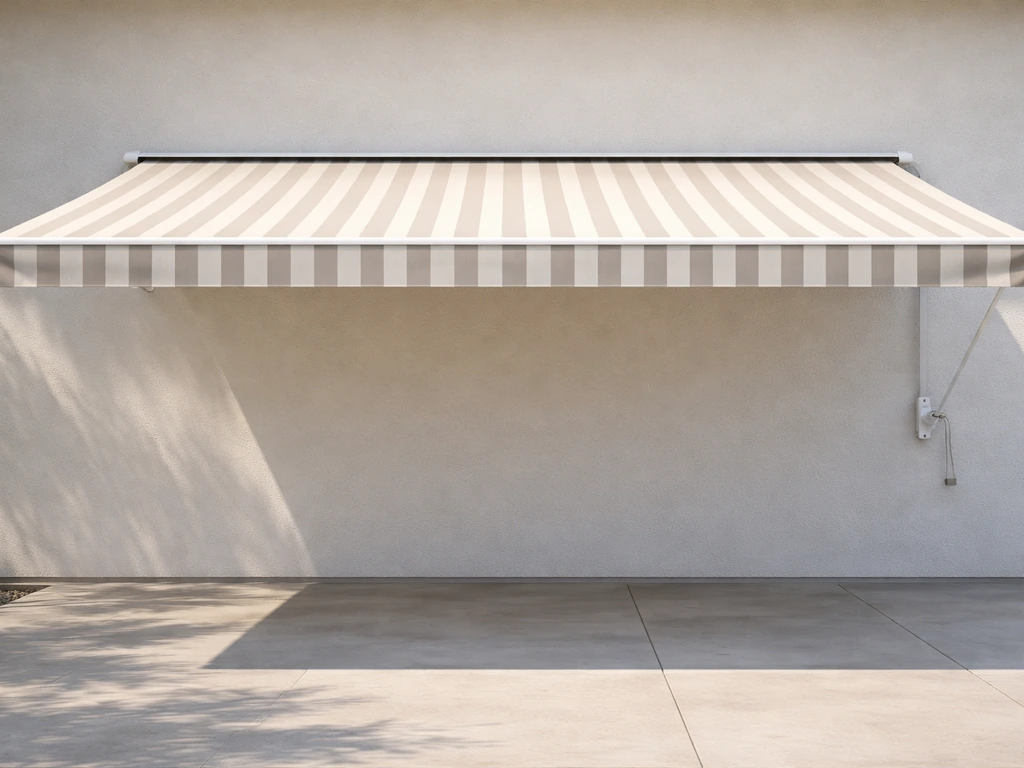
Buyer guide to pick the best manual retractable patio awning for 2026: sizing, mounting, materials, crank feel, and Veik
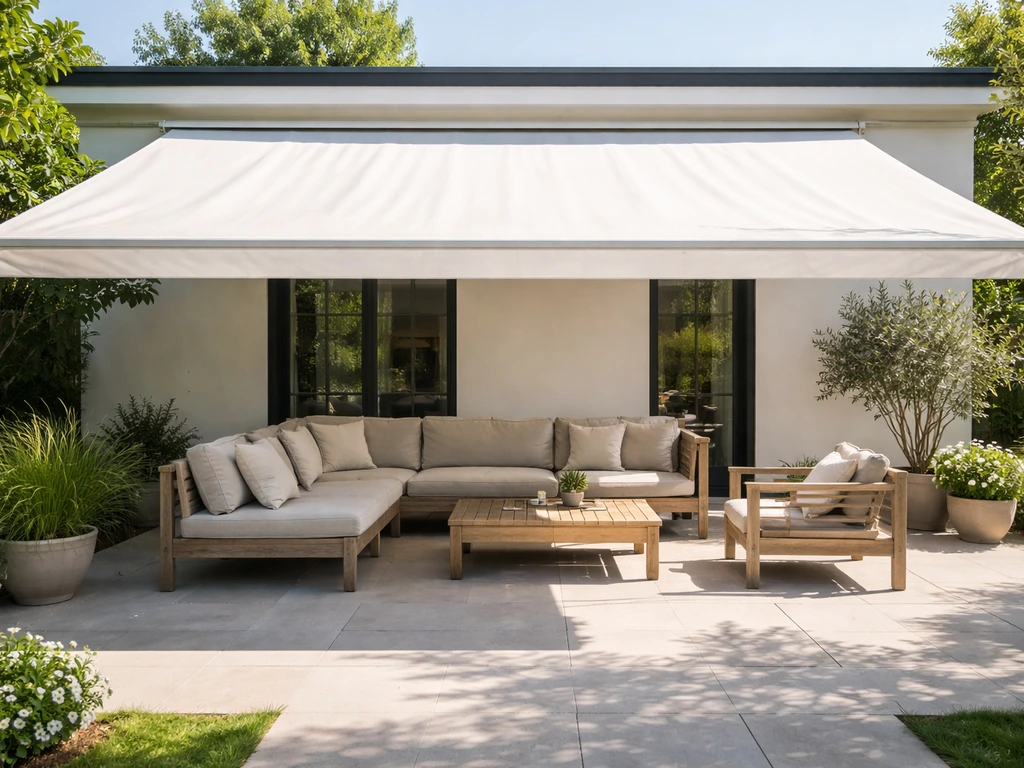
Best patio awning picks by type, size, weather needs, and brands, plus buying, measuring, and maintenance tips.
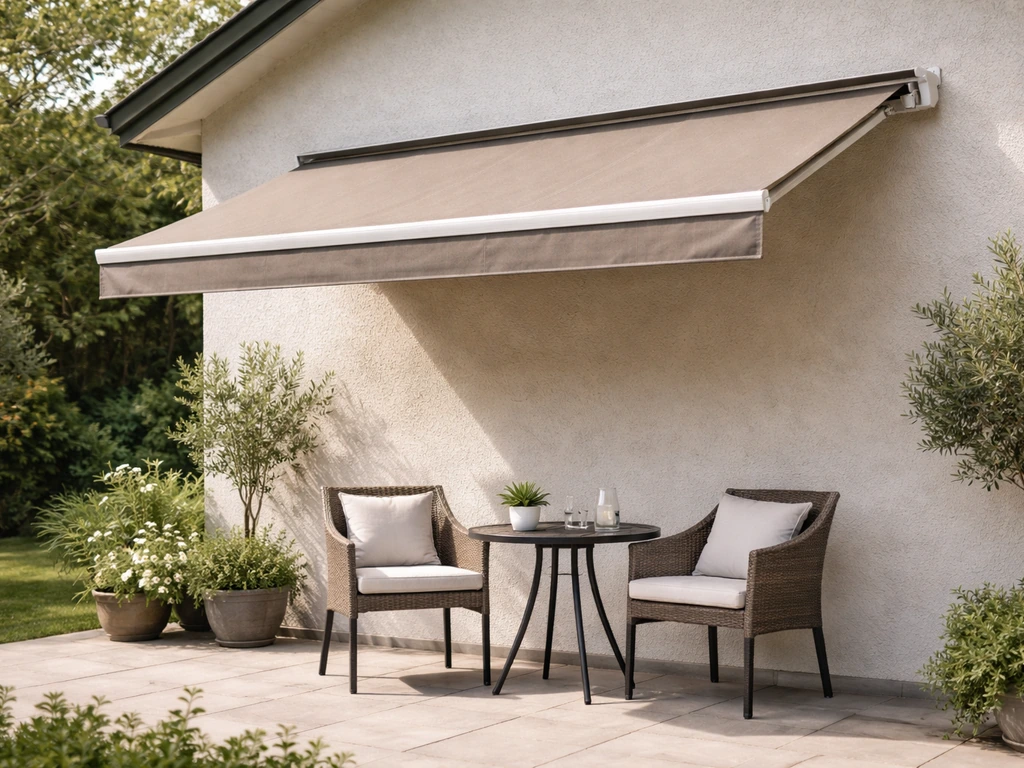
Find the best patio awnings with types, exact measurements, wind and weather material tips, plus maintenance and cost.