
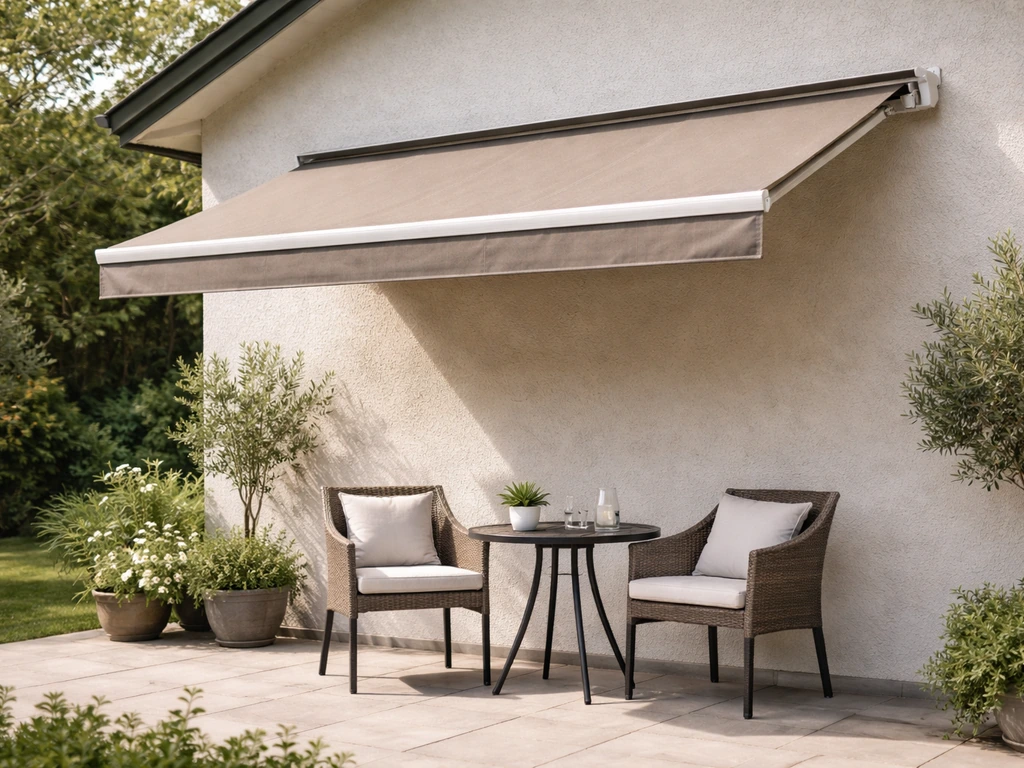
The best patio awning for most homeowners right now is a motorized retractable awning with a full-cassette housing, solution-dyed acrylic fabric, and a rust-resistant aluminum frame. It gives you shade on demand, protects the fabric when not in use, handles UV and light rain well, and lasts 10 to 15 years with basic maintenance. If that's more than your budget allows, a manual retractable with a semi-cassette is a solid second choice. Fixed canopies and freestanding pergola-style awnings make sense in specific situations, but for a standard wall-mounted patio setup, retractable is almost always the smarter long-term buy.
Best Awnings for Patios: How to Choose and Size Right
Lark Perry
3 May 2026
How to Choose the Right Patio Awning Type
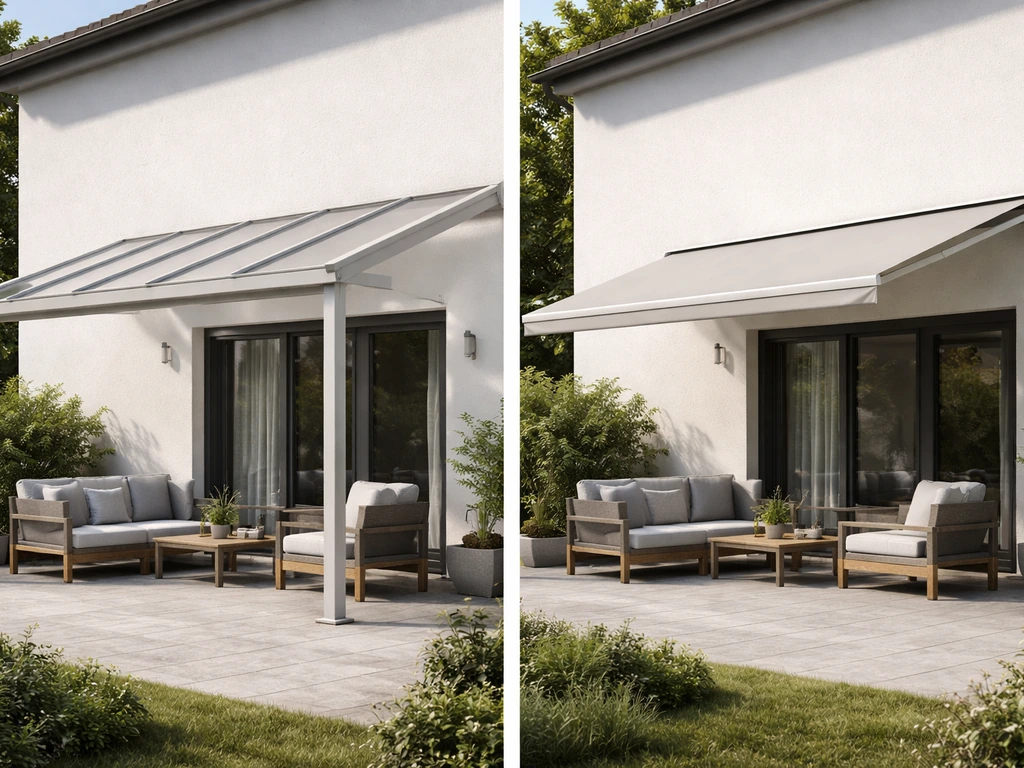
The first decision you need to make is whether you want a retractable or fixed awning. Everything else flows from that. Fixed awnings (think aluminum or polycarbonate canopies bolted permanently over a door or window) are cheaper upfront and dead simple to maintain, but they block light whether you want shade or not, and they can't be retracted before a storm. Retractable awnings cost more but give you control: open them on hot afternoons, close them when the wind picks up, and roll them away in winter.
Within retractable awnings, you have three housing options worth understanding. Open (no cassette) means the fabric sits exposed when rolled up, so dust, birds, and weather hit it constantly. Semi-cassette protects the fabric when retracted but leaves the arms partially exposed. Full-cassette encloses everything: fabric, arms, and front bar. If you're spending real money, go full-cassette. The fabric stays cleaner, dries faster after rain, and lasts noticeably longer. It also looks much better from the street.
Then there's the motorized versus manual question. Manual retractable awnings use a hand crank and cost several hundred dollars less. They work fine for awnings up to about 13 or 14 feet wide. Beyond that, cranking becomes genuinely annoying. Motorized (electric) awnings are smoother, can pair with wind sensors that auto-retract in gusts, and are worth the premium if your awning is wide or you plan to use it daily. If you're specifically comparing manual and electric models side by side, check out the dedicated guides on best manual retractable patio awnings and best electric patio awnings for deeper breakdowns. If you want the convenience of motor control, look at the best electric patio awnings UK options for your space and budget.
Freestanding retractable awnings mount to independent posts rather than a building wall. They're useful when your wall isn't structurally suitable, when you want to shade a detached deck or pool area, or when you're renting and can't drill into the structure. The tradeoff is cost and footprint: posts take up patio space and the whole unit is harder to level correctly on uneven ground.
| Awning Type | Best For | Main Limitation | Rough Cost Range |
|---|---|---|---|
| Fixed canopy | Permanent, set-and-forget shade over a door | No flexibility; blocks light always | $200–$800 installed |
| Manual retractable | Budget-conscious buyers, smaller patios up to ~14 ft | Cranking gets tiresome on wider units | $500–$2,500 installed |
| Motorized retractable | Frequent users, wide patios, convenience priority | Higher upfront cost | $1,500–$6,000+ installed |
| Freestanding retractable | Detached decks, renters, no suitable wall | Takes up floor space, harder to level | $1,000–$4,000+ |
| Pergola-style canopy | Year-round structure, aesthetic focus | Expensive, usually needs permits | $3,000–$15,000+ |
Sizing and Measurements: Get This Right Before You Buy
Measurement mistakes are the most common reason awning installs go wrong. Before you look at a single product listing, you need three numbers: width, projection, and mounting height.
Width
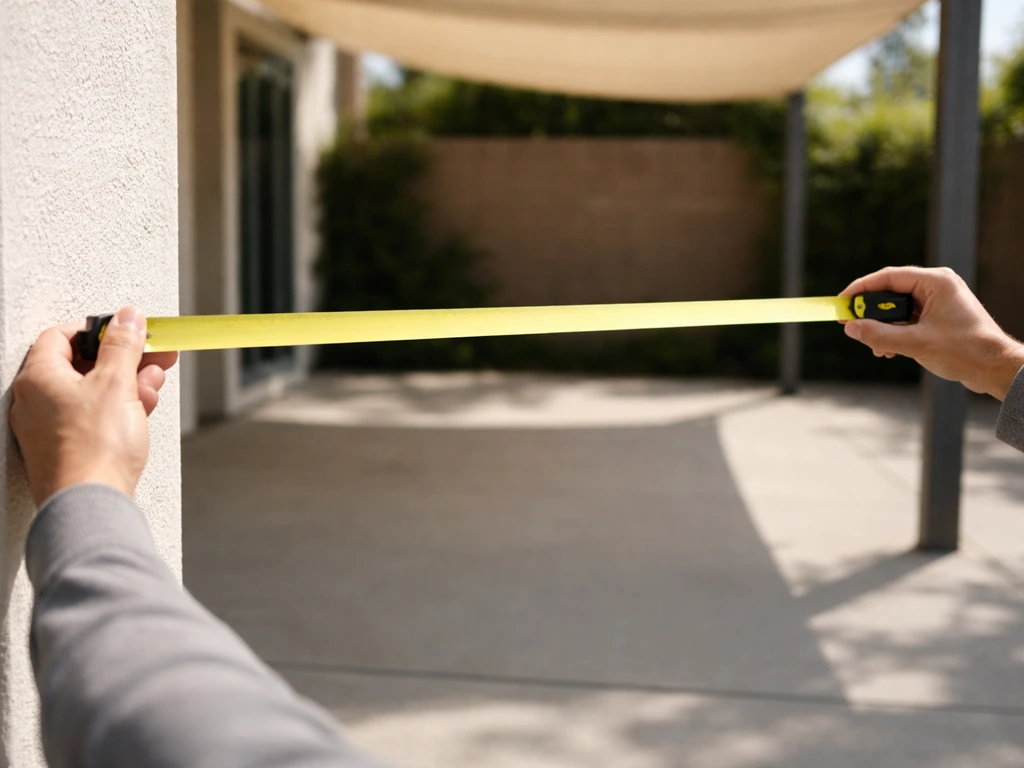
Measure the area you want shaded. For a door or window, start with the opening width, then add 2 to 3 feet on each side to cover the full shaded zone. If your patio is wider than 24 feet, don't try to cover it with one massive awning. It's better to install two separate awnings or size the awning to cover the primary use zone (usually around the seating area or door) rather than stretch to cover every inch. Single awnings above 24 feet wide become structurally tricky and expensive.
Projection
Projection is the distance from the wall, measured along the fabric slope to the front bar, not the flat horizontal distance. This is a detail that trips up a lot of buyers. A retractable awning with 10 feet of projection won't cover exactly 10 horizontal feet because the fabric angles down slightly. Factor in the pitch when planning how far out your shade will actually reach. Most residential awnings offer 8 to 14 feet of projection, which covers a standard patio seating area comfortably.
Mounting Height and Clearance
This is where people run into the biggest problems. Most retractable awnings require a minimum mounting height of 7 feet 6 inches from the deck or patio floor to the bottom of any roof, eave, or overhang above the bracket. blank" rel="noopener noreferrer">SunSetter, for example, specifies exactly this: 7'6" minimum from the deck surface to the underside of whatever's above the bracket. The front bar at full extension will hang lower than the bracket, so SunSetter notes the front bar will sit about 6'6" above the patio at full projection. That's enough headroom for most adults, but measure twice. Angi's installation guidance suggests you need roughly 7. Angi also notes that most retractable awnings require about 7-1/2 to 8 feet of clearance from the deck or patio floor to accommodate a typical unit blank" rel="noopener noreferrer">Angi's installation guidance suggests you need roughly 7.. 5 to 8 feet of total clearance from the deck up to safely accommodate a retractable unit. If your eave or soffit is lower than 7'6", you'll need to look at lower-profile fixed canopy options instead.
To find your bracket positions during planning, measure to the center of your intended installation span, then measure half the awning length in each direction from that center point. That's where your mounting brackets will land. Make sure those points hit solid structural framing: studs, a ledger board, or masonry, not just drywall or stucco.
Best Overall Patio Awnings: Top Picks by Category
Rather than recommending one single product (models change, prices shift), here are the categories and product tiers that consistently deliver the best real-world results. Use these as a shopping framework.
Best Overall: Motorized Full-Cassette Retractable
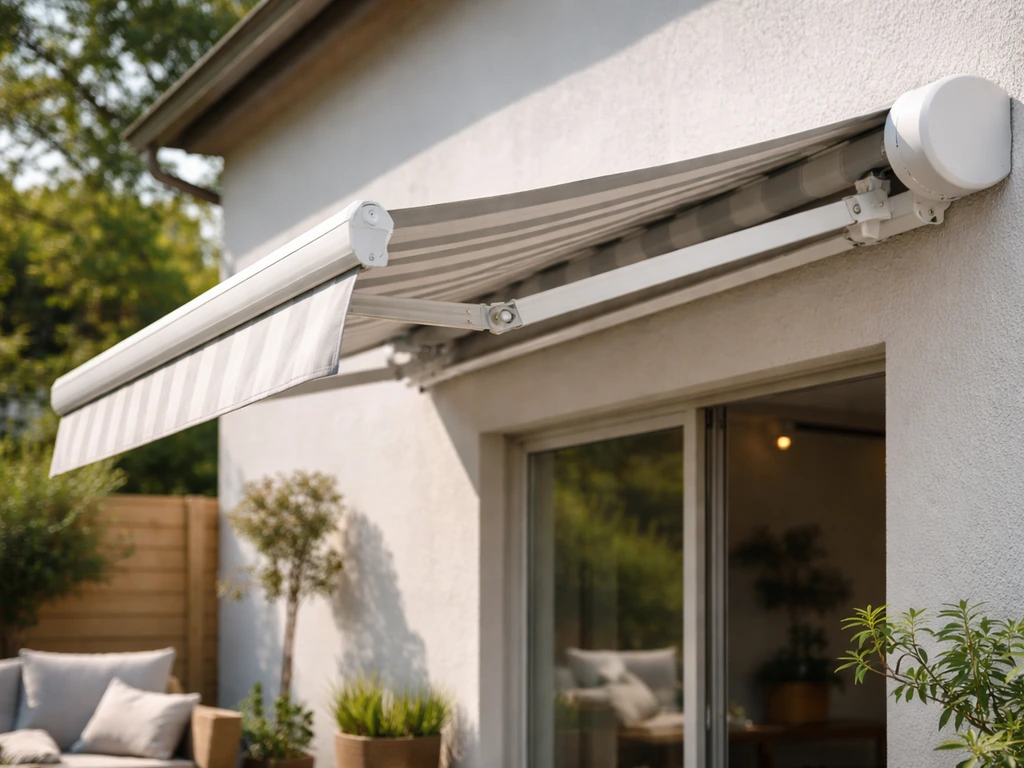
This is the category that wins for most homeowners. Brands like SunSetter (their XL and motorized lines), Sunsetter Pro, and markilux sit at the top of this category. These units come with solution-dyed acrylic fabric, aluminum frames, and full enclosure that protects the mechanism year-round. SunSetter offers limited warranties up to 10 years depending on the model, which is among the best in the consumer market. If you want a vetted review of specific models with side-by-side specs, the best patio awnings reviews guide on this site goes deeper on individual products. If you want a deeper look at the top models in this category, compare the motorized full-cassette options in the best patio awnings reviews best patio awnings reviews guide.
Best Budget Pick: Manual Semi-Cassette Retractable
Brands like ALEKO, Advaning, and Awntech make solid manual retractable awnings in the $400 to $1,200 range (before installation). They're best for patios under 13 feet wide. Don't expect the same wind resistance or fabric longevity as premium units, but for occasional use or a rental property, they do the job. ALEKO in particular is popular, and their retractable models get consistent reviews for value. See the ALEKO retractable patio awning reviews guide for a detailed breakdown of that brand's lineup.
Best for Renters or Detached Spaces: Freestanding Retractable
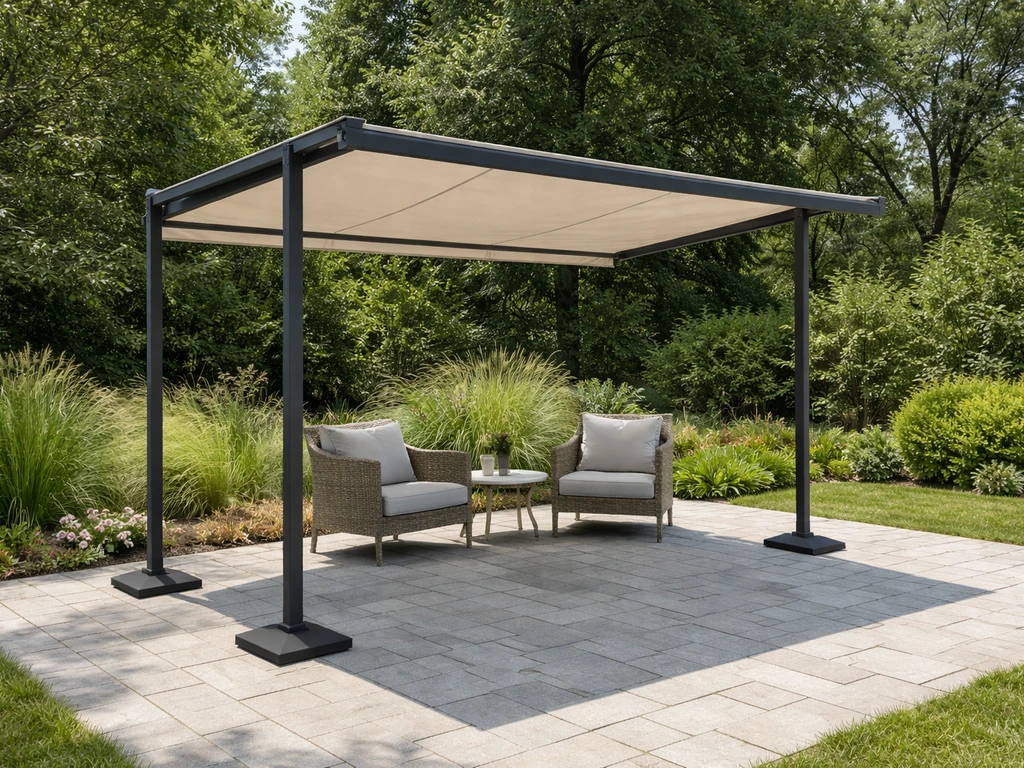
Freestanding units from brands like Sunjoy or Hanover work well when you can't attach to a wall. Set them up on a deck, beside a pool, or on a patio that has no suitable mounting surface. Expect to spend more and allocate extra time for leveling the posts correctly.
Best Permanent Option: Fixed Aluminum Canopy
If you want zero maintenance and permanent shade over a door or small patio section, a powder-coated aluminum fixed canopy is hard to beat. They typically run $200 to $600 for the unit and don't require any operating mechanism. The limitation is obvious: you can't open them up when you want sun.
Best Awning for Your Specific Situation
Best for Sun and UV Protection
Any awning significantly reduces UV exposure, but fabric quality matters here. Look for solution-dyed acrylic fabric with a tight weave and a UPF rating of 50+. These fabrics are UV-stable because the color is locked into the fiber during manufacturing rather than applied as a surface coating. Sunbrella is the most recognized brand in this category and is used by many premium awning manufacturers. Avoid thin polyester fabrics for sun protection: they fade fast and some transmit more UV than you'd expect.
Best for Heat Reduction
The bigger the projection, the more heat you block, both from direct sun hitting the patio and from heat radiating off the house wall. A motorized retractable with 12 to 14 feet of projection will drop the perceived temperature under the awning by 15 to 20 degrees Fahrenheit on a hot day. Lighter fabric colors reflect more heat; darker colors absorb more but can provide denser shade. A balance like a mid-tone stripe is practical for most climates.
Best for Privacy
Standard retractable awnings don't provide much side privacy. For that, look at awnings with optional side screens or valances, or pair your awning with a retractable side screen system. Pergola-style canopies with side curtains are the most effective privacy solution if that's your primary concern. Fixed canopy setups with drop curtains also work and are less expensive than full pergola structures.
Best for Windy Conditions
This is the most misunderstood category. No standard retractable awning is designed to stay open in serious wind. Samson Awnings and markilux both confirm that most folding-arm retractable awnings meet wind resistance class 2, which corresponds to Beaufort scale 5, meaning they can tolerate roughly 17 to 23 mph sustained winds when properly installed. Above that, retract the awning. Period. If your patio is exposed and gusty conditions are common, choose a motorized awning with an integrated wind sensor that auto-retracts at a set wind speed threshold. For truly exposed coastal or hilltop patios, a fixed canopy or a structural pergola with a louvered roof is a safer long-term investment than any retractable fabric awning.
Best for Seasonal or Year-Round Use
If you live somewhere with harsh winters, plan to remove or fully retract and cover your awning from November through March. Full-cassette retractable awnings make this easy because the housing itself protects the fabric when closed. In milder climates, some all-weather awning systems like the Solera Lumina are marketed for year-round use including rain and light snow, but most standard fabric awnings should not be left extended under snow load. When in doubt, retract it.
Materials, Fabric Styles, and Weather Performance
The fabric is the heart of any awning, and it's worth spending a few minutes understanding what you're buying.
Solution-Dyed Acrylic
This is the gold standard for awning fabric. The color is dyed into the fiber during manufacturing, so it doesn't fade from the outside in. The fabric is then coated with an acrylic finish that resists UV light, mildew, and water. Bluegrass Awning confirms these fabrics are genuinely UV-resistant and mildew-resistant, not just water-repellent. Sunbrella and Dickson are the two names you'll see most often on premium awnings. Expect solution-dyed acrylic to last 10 to 15 years with proper care.
Polyester with Vinyl Coating
This is what you find on budget awnings. It's heavier, less breathable, and the vinyl coating will eventually crack and peel, especially in climates with big temperature swings. It's more waterproof upfront than acrylic but degrades faster. Realistic lifespan: 5 to 8 years. Bluegrass Awning's data puts awning fabric lifespans broadly in the 5 to 15-year range depending on fabric type, climate, and care, and polyester/vinyl sits at the low end of that range.
Frame Materials
Aluminum frames are the right choice for most patio awnings. They're lightweight, rust-resistant, and strong enough to handle standard wind loads. Steel frames are heavier and can rust if the powder coat is scratched and left untreated. Avoid any awning with a frame that isn't described as powder-coated or anodized: bare metal won't last more than a couple of seasons in a humid or coastal environment.
Installation: DIY vs. Hiring a Pro
Most retractable awnings in the 10 to 13-foot range can be installed by two competent adults in a few hours. SunSetter notes that dealer or handyman installation for some of their models takes about 2 to 3 hours. The job involves marking bracket positions, drilling into wall framing or masonry, leveling the header bar, hanging the awning body, and routing the electrical connection for motorized units. The drilling and leveling steps require precision, and mounting into the right structural members is non-negotiable for safety.
DIY installation makes sense if you're comfortable with a drill, have a helper, can identify your wall framing or masonry type, and are working on a single-story home where the mounting height is reachable from a standard ladder. It saves you $200 to $600 in labor depending on your region. Use the manufacturer's template (most include one) to mark bracket positions and verify your mounting height meets the minimums (7'6" from the deck floor to the bottom of any overhead obstruction) before you drill a single hole.
Hire a professional if you're mounting on a two-story wall, working with stucco over older lathe (which requires special anchors to avoid cracking), installing a motorized awning that needs a dedicated electrical circuit, or if your patio is over a drop where a ladder setup is unsafe. The cost of a professional install is typically $300 to $700, sometimes more for motorized units requiring electrical work. Angi and local awning dealers can both provide quotes. It's money well spent if the alternative is a bracket that pulls out of the wall on the first windy day.
Cost, Value, and Keeping Your Awning in Shape
What Things Actually Cost
| Category | Unit Cost | Installation | Total Estimate |
|---|---|---|---|
| Budget manual retractable (ALEKO, Awntech) | $400–$900 | $200–$400 | $600–$1,300 |
| Mid-range motorized retractable | $1,200–$2,500 | $300–$600 | $1,500–$3,100 |
| Premium full-cassette motorized (SunSetter, markilux) | $2,500–$5,000+ | $400–$700 | $2,900–$5,700+ |
| Fixed aluminum canopy | $200–$600 | $150–$300 | $350–$900 |
| Freestanding retractable | $800–$3,000 | $200–$500 | $1,000–$3,500 |
The value calculation is straightforward: a premium motorized awning at $4,000 installed that lasts 15 years costs you about $267 per year. A budget manual awning at $900 installed that lasts 7 years costs roughly $129 per year but comes with more hassle, less durability, and no motorized convenience. If you use your patio regularly from May through October, the premium unit often wins on a per-use basis.
Cleaning and Routine Maintenance
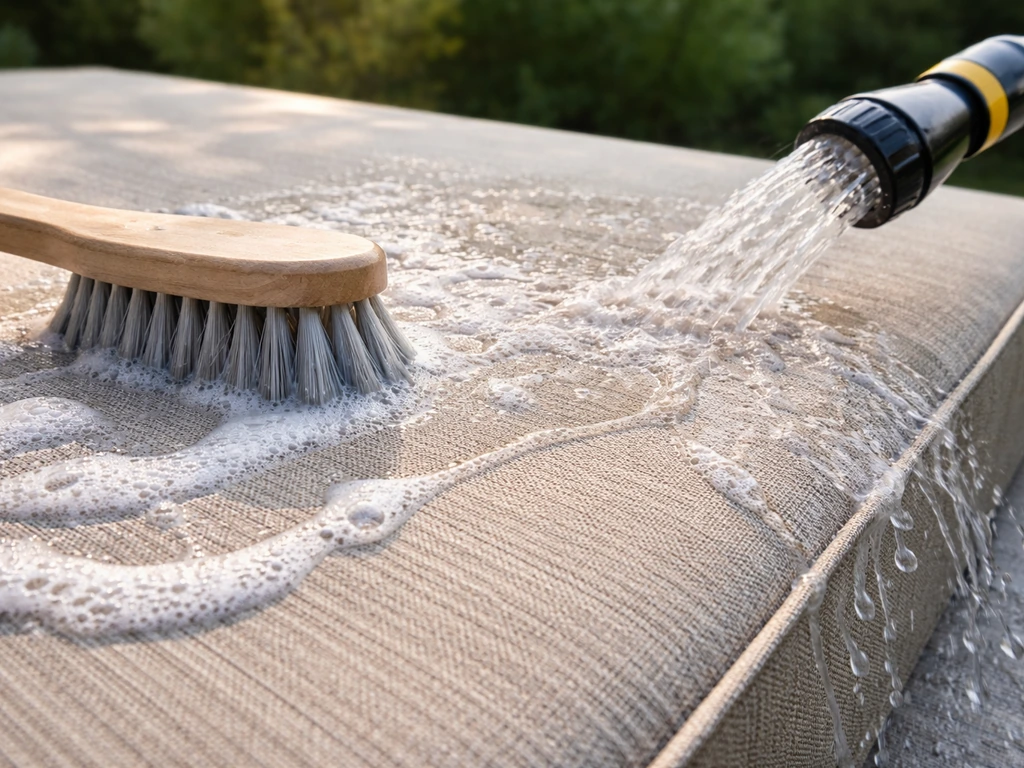
Clean the fabric two or three times per season. Use a soft brush, mild soap (avoid bleach on acrylic, which can break down the weave), and rinse thoroughly with clean water. Let it air-dry fully before retracting. Never retract a wet awning and leave it rolled up. Trapped moisture is the primary cause of mildew, and mildew stains are very hard to remove without damaging the fabric. If you notice bird droppings or pollen buildup, spot-clean immediately rather than waiting for a full cleaning day.
Operating and Protecting a Retractable Awning
The single most important operating rule: retract when wind exceeds about 20 mph or when a storm is approaching. Rollac's owner manual is explicit about this, and so are Samson Awnings and Rollec. Most awning damage happens because someone left it extended through a thunderstorm or unexpected gust. If you have a motorized unit, invest in a wind sensor. They typically cost $100 to $250 and pay for themselves the first time a storm rolls in while you're not home.
Seasonal Storage and Repairs
In climates with freezing winters, retract the awning fully by late October. If you have a full-cassette unit, the closed housing is sufficient protection in most cases. For open or semi-cassette awnings, consider adding a fabric cover or removing the awning entirely and storing it flat in a dry space. Common repairs include fabric tears (most manufacturers sell replacement fabric), broken crank mechanisms on manual units, and motor or remote failures on motorized units. A full fabric replacement on a mid-size awning typically runs $300 to $800, which is far cheaper than replacing the whole unit, so it's worth doing when the fabric fades or tears rather than discarding an otherwise solid frame.
If you're still narrowing down your shortlist or want to compare specific branded products head to head, the best patio awnings reviews section of this site has in-depth model-level testing notes. If you want to see how different models compare, read the best patio awnings reviews for real-world pros and cons best patio awnings reviews section. Buy the right type for your setup first, then choose a product that fits your budget within that category. That order of operations will save you from returning an awning that was the wrong type from the start.
FAQ
Can I install the best awnings for patios over siding, or do I need studs or masonry behind the wall?
You can mount to siding only if it lines up with real structure behind it (studs, a ledger board, or masonry). Siding alone is not structural, so confirm mounting points land in studs or solid framing, then use the manufacturer’s approved fasteners for that wall type.
What clearance do I actually need for a retractable awning, and how do I account for the front bar hanging lower?
Use the minimum mounting height from the deck to the underside of the overhead obstruction, then remember the front bar sits lower at full extension. A practical way to verify is to do a quick “reach test” with a tape measure to the lowest expected point when the awning is fully deployed.
How do I measure projection correctly so my awning covers the seating area, not just the distance from the wall?
Projection is measured along the fabric slope to the front bar, not flat horizontal distance. If you want coverage of a specific horizontal run, add a small buffer (for example 12 to 24 inches depending on pitch) because the awning angles down and changes the effective footprint.
Are two smaller awnings better than one wide one if my patio is wider than 24 feet?
Often yes. Two awnings reduce structural complexity, can cover your primary zones (door plus seating) independently, and make it easier to retract only the section you need during windier conditions.
What wind speed should make me retract, and is the 20 mph rule always safe?
The safest approach is to follow the manufacturer’s guidance, but as a general practice retract when wind is around 20 mph or when gusts feel unpredictable. If your patio is exposed, prioritize a wind sensor with an adjustable threshold, and do not rely on typical retractable wind ratings for “serious wind.”
Should I get side screens or valances for privacy, and will they affect how well the awning works in wind?
Side screens and valances improve privacy and can block low-angle sun, but they add surface area. If you often get breezes, choose systems rated for wind, keep fabric taut, and consider retracting earlier when side panels are deployed.
Do retractable awnings handle light rain, or will water pooling cause problems?
Many retractables handle light rain by letting water run off quickly, but pooling can happen if the pitch is too shallow or the awning is not fully extended. After rain, give it time to dry before retracting to prevent mildew, especially in humid climates.
How should I plan for freezing weather and snow, since some systems are marketed as “all-season”?
Most standard fabric retractables are not meant to remain extended under snow load. If you do not have a truly engineered all-weather system with specs for snow weight, retract and cover by late fall, and store fabric in a dry place if you use open or semi-cassette models.
Can I clean the fabric with bleach or pressure washing to make it look new again?
Avoid bleach on acrylic fabric because it can degrade the weave and shorten lifespan. For pressure washing, use low pressure and keep distance, since aggressive cleaning can damage coating or drive water into seams, especially on solution-dyed acrylic.
How often should I clean my awning, and what’s the best way to prevent mildew?
A practical schedule is two to three cleanings per season, plus immediate spot-cleaning for droppings and pollen. The biggest mildew prevention step is operational: never retract a wet awning, and allow complete air-drying first.
If the fabric wears out, can I replace only the fabric instead of the whole awning?
In many cases, yes. Replacement fabric is often available for mid-size models, which can be far cheaper than replacing the entire unit. Keep your model number handy and check whether the manufacturer sells fabric by size and colorway for your frame.
Is DIY installation a good idea for motorized models, or will I run into electrical issues?
DIY can work for simple manual installs on single-story walls, but motorized awnings often require a dedicated electrical run or compliant connection method. If you are not comfortable with electrical work and local code requirements, hire a pro to reduce risk and avoid a miswired control box or unsafe mounting.
Next Articles
Alternative to Patio Cushions: Durable, Stylish Options and DIY
Alternative to patio cushions: durable, weatherproof seating options, pros, DIY tips & buying guide.
Best Color for Outdoor Patio Cushions in 2026
Choose the best cushion color for sun, heat, and fading in 2026, with pairing tips for patio furniture and durability.
Top Rated Patio Cushions: How to Choose Fast and Right
Step-by-step guide to choose top rated patio cushions by fit, materials, weather durability, and easy cleaning for your