
The best patio awnings right now are retractable models from SunSetter, Sunesta, and Rolltec for most homeowners, with Weinor leading the premium end and Dometic cassette awnings being a strong pick for RV patios or clean-look installs. If you want one recommendation to start with: a motorized retractable cassette awning in the 10–16 ft width range from SunSetter or Sunesta covers the majority of patio setups, handles everyday sun and light rain well, and comes with solid warranties. The rest of this guide helps you figure out which specific type and size fits your space, how much to spend, and what to look for in a brand. If you are looking specifically for aleko retractable patio awning reviews, compare real owner notes on build quality, motor reliability, and how well the fabric holds up after repeated retracts retractable patio awnings.
Which Are the Best Patio Awnings: Types, Picks, Makers

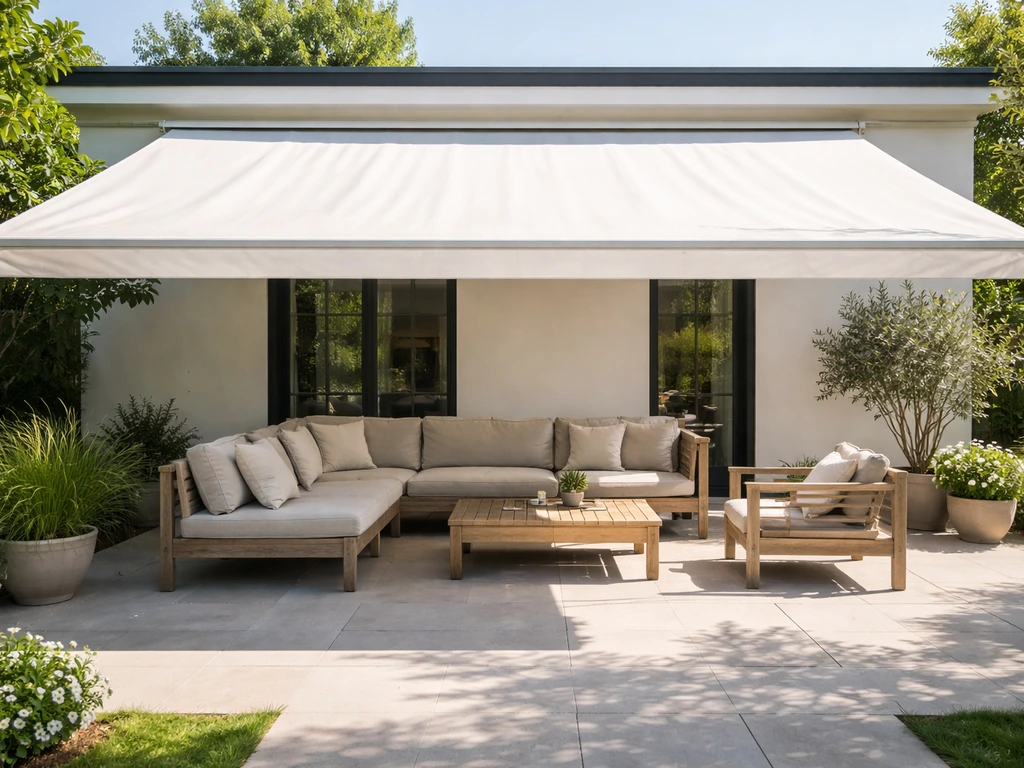
What makes a patio awning actually worth buying
Before diving into types and brands, it helps to know the three things that separate a good awning from one you'll regret. Fit comes first: an awning that's sized wrong for your wall or mounted at the wrong height is a frustration from day one. Durability comes second: the fabric, frame, and hardware all need to hold up through seasons of UV exposure, wind, and occasional rain. Ease of use comes third: if retracting the awning is annoying or the motor control is glitchy, you'll stop using it. Any awning worth recommending passes all three tests.
- Fit: Width and projection should cover your intended area without overhanging beyond your mounting surface or blocking doors. Mounting height matters too — retractable awnings generally need at least 7 ft 6 in of clearance from the deck floor to any overhead obstruction.
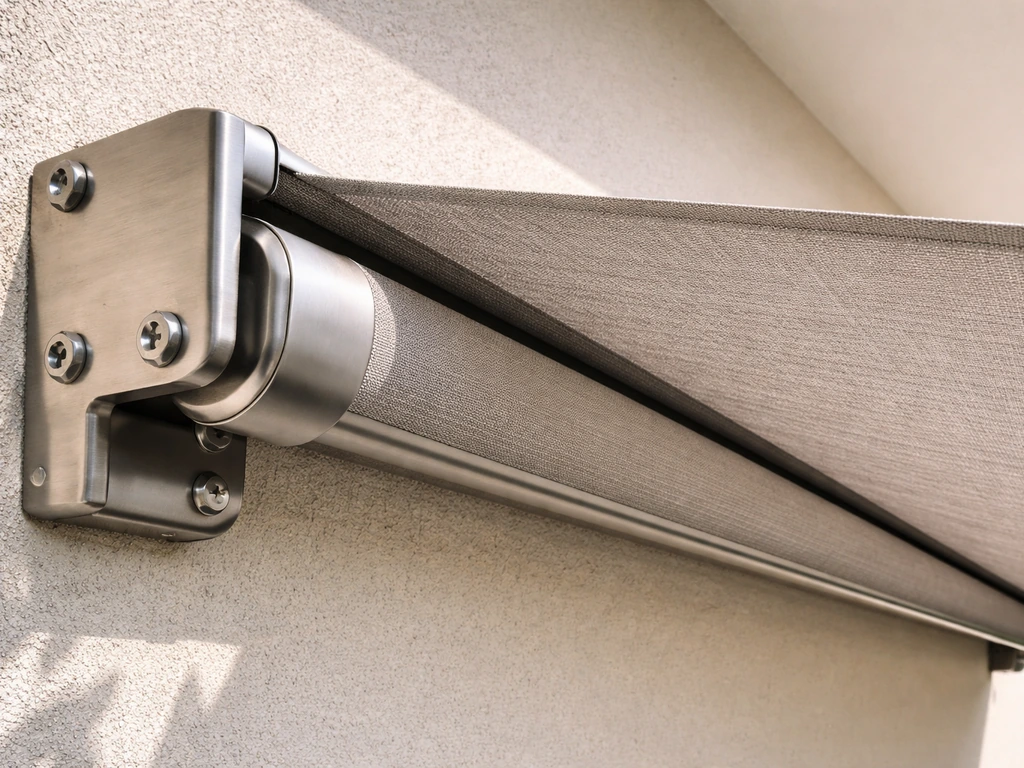
- Durability: Look for powder-coated aluminum frames, solution-dyed acrylic fabric (resists UV fading and mildew), and stainless or galvanized hardware. Cheaper polyester fabrics fade and mold faster.
- Ease of use: Manual crank awnings are fine for smaller widths (under 10 ft). Anything wider, or if you want convenience, a motorized model with a remote or wind sensor is worth the extra cost.
Types of patio awnings and when each one makes sense
The awning market breaks down into four main categories, and picking the right type before worrying about brand or price will save you a lot of second-guessing.
Fixed awnings
Fixed awnings are permanently attached structures, usually with a rigid frame and a fabric or metal cover. They provide constant shade without any mechanism to fail, and they're often cheaper upfront. The tradeoff is zero flexibility: you can't retract them when a storm rolls in, and you can't let sun in on a cool day. They work best over entries, small stoops, or covered walkways where you always want overhead protection. For larger open patios where you want sun sometimes and shade other times, fixed awnings are limiting.
Retractable awnings
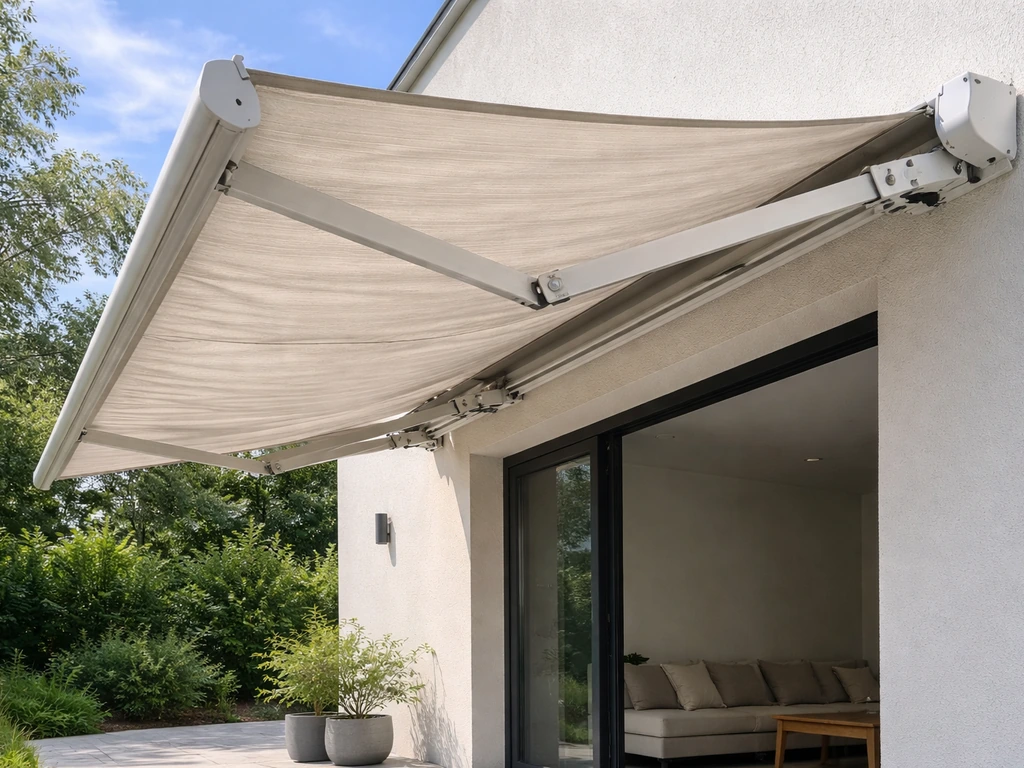
Retractable awnings are the right choice for most homeowners with an open patio. They extend when you need shade and retract when you don't, which also protects the fabric from unnecessary weather exposure. Most quality retractable awnings project 8–14 ft out from the wall and span 6–20+ ft wide. The key rule is to retract during heavy rain, snow, or severe wind, even well-made awnings aren't designed to handle those conditions while extended. Both Rolltec and Shading Direct explicitly state this in their installation and care materials.
Cassette awnings
A cassette awning is a type of retractable awning where the fabric and arms fold completely into a protective housing (the cassette) when retracted. This keeps the fabric clean and protected from UV even when stored, which meaningfully extends fabric life. They look cleaner and more architectural than open-roll retractable models. Cassette awnings cost more, but if your awning will stay extended often and retracted between uses rather than being a set-it-and-forget-it install, the fabric protection is worth it. Dometic's 8500 series is a well-known cassette model in this category.
Manual vs. motorized
Manual retractable awnings use a hand crank and are meaningfully cheaper, usually by $300–$700 compared to a motorized equivalent. They're reliable because there's less to break, and they're a good fit for awnings under 10 ft wide that one person can extend and retract easily. Motorized awnings use an electric motor (usually 110V hardwired, sometimes battery-powered) and can include a wall switch, remote, or smart home integration.
The real upgrade with motorized isn't convenience, it's the ability to add a wireless wind sensor that automatically retracts the awning when wind gusts hit a set threshold. SunSetter and Rolltec both offer this as an add-on, and it's genuinely useful for protecting a wider, heavier awning. If your awning is 12 ft wide or larger, or you're not always around to retract it manually, motorized is worth it.
How to size and mount your awning correctly
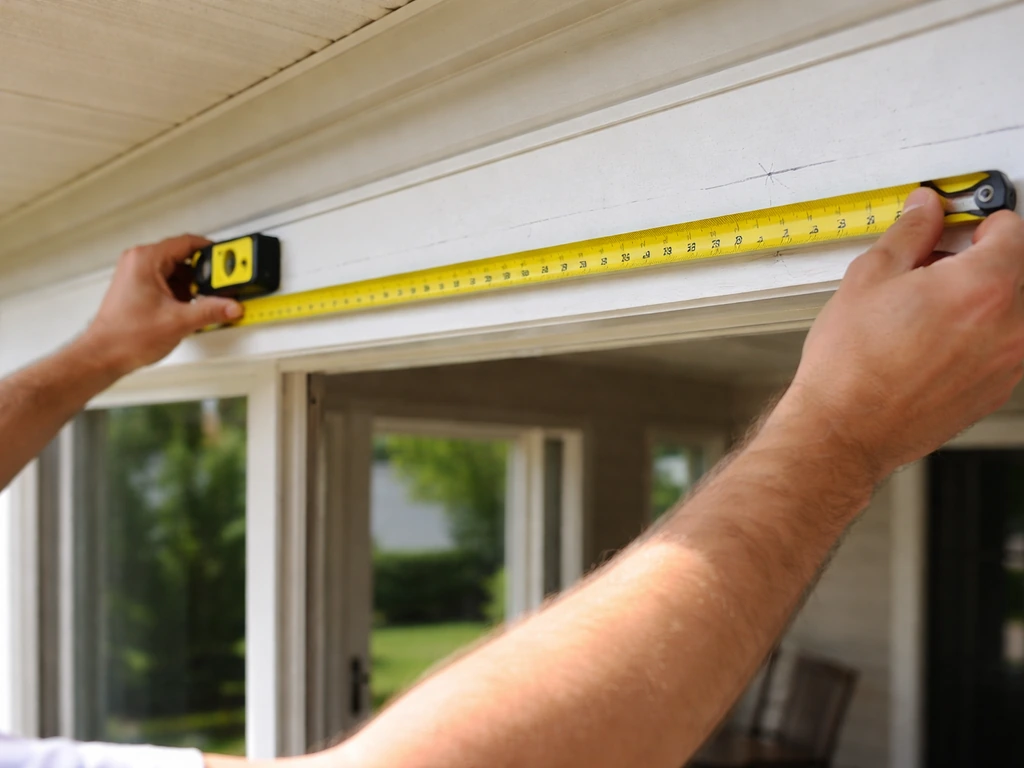
Getting the measurements right before you order is the single most important step. An awning that's too wide won't mount properly, and one that projects too far will hit the yard or droop at an angle that pools water. Here's how to approach it.
Width and projection
Measure the width of the area you want to cover, then subtract 6–12 inches on each side to allow for mounting brackets and arm clearance. Projection (how far the awning extends from the wall) is measured along the fabric slope, not straight out horizontally, Rolltec specifically clarifies this in their measuring guide. A typical residential retractable awning projects 8–12 ft. To figure out how much shade you'll get at a given sun angle, remember that a 10 ft projection at a 20-degree pitch will shade slightly less floor area than the projection distance suggests, plan for roughly 80–85% of the projection as usable ground-level shade on a mid-summer afternoon.
Mounting height and clearance
SunSetter's measuring guide is one of the clearest available on this: you need a minimum of 7 ft 6 in from the deck or patio floor up to the bottom of any roof, eave, or overhang at the intended mounting point. Below that, you'll either clip the arms on extension or have awkward geometry. The mount itself attaches to a structural wall, ledger board, or rafter. If you're mounting to siding (vinyl, aluminum, stucco, or masonry), it's doable, but you need to hit structural members behind it, not just the siding surface. SunSetter makes rafter adapter brackets for situations where standard wall mounting doesn't work, which is worth knowing if your house has unusual geometry.
Pitch angle and wind
Most retractable awnings mount at a pitch between 5 and 35 degrees. Too flat and water pools on the fabric; too steep and you lose shade coverage and put stress on the arms. A 15–25 degree pitch is the sweet spot for most installations: it sheds light rain without pooling and gives good shade depth. On wind: most quality retractable awnings are tested to handle moderate gusts while extended, and Sunesta claims theirs withstand up to 45 mph extended and 150 mph retracted. That said, the consistent guidance from every manufacturer, SunSetter, Rolltec, Polar Shades, Shading Direct, is to retract during any severe wind, heavy rain, hail, or snow. The wind sensor add-on handles this automatically for motorized models.
Best patio awning picks by use case and budget
Here are concrete recommendations for the most common buyer scenarios. If you want to compare options side by side, these best patio awnings reviews break down what performs best in real conditions. Prices are approximate retail and vary by width, most awnings are priced by the foot of coverage.
| Use Case | Pick | Why | Approx. Price Range |
|---|---|---|---|
| Best overall | SunSetter Motorized Retractable (cassette) | Wide availability, solid warranty, multiple fabric options, good DIY install support, motorized option with wind sensor | $1,500–$3,500 installed |
| Best value | SunSetter Manual Retractable | Lower entry price, same frame quality, 5-year warranty, good for widths under 12 ft | $700–$1,800 installed |
| Best premium | Rolltec Adalia Extreme X3M or Weinor Plaza Viva | 10-year warranty on Rolltec, Somfy motor, wind/rain class ratings per DIN EN 13561, high-end fabric and frame | $3,500–$8,000+ installed |
| Best for small patios | Dometic 8500 Manual Cassette | Compact cassette design, clean look, good for 8–10 ft spans, easy manual operation | $800–$1,500 installed |
| Best for large coverage | Sunesta Motorized Retractable | Spans up to 20+ ft wide, lifetime frame warranty, up to 45 mph wind rating extended | $3,000–$6,000 installed |
| Best for renters / simpler install | Manual retractable, non-cassette (SunSetter or Sunsation) | Fewer mounting points, easier to remove, lower cost if you're not keeping it long-term | $500–$1,500 installed |
If you're shopping for a motorized awning specifically, the SunSetter motorized series is the most accessible option for DIYers who want that upgrade. If you are specifically hunting for the best electric patio awnings in the UK, focus on motorized cassette options and brands known for strong weather ratings and servicing best electric patio awnings UK. For the premium motorized segment in the UK or Europe, the best electric patio awning options lean toward Weinor and Markilux, which are engineered to tighter weather-performance standards. If you want the manual retractable category explored in more depth, that's a separate decision tree with its own tradeoffs worth walking through.
Which brands consistently make the best patio awnings
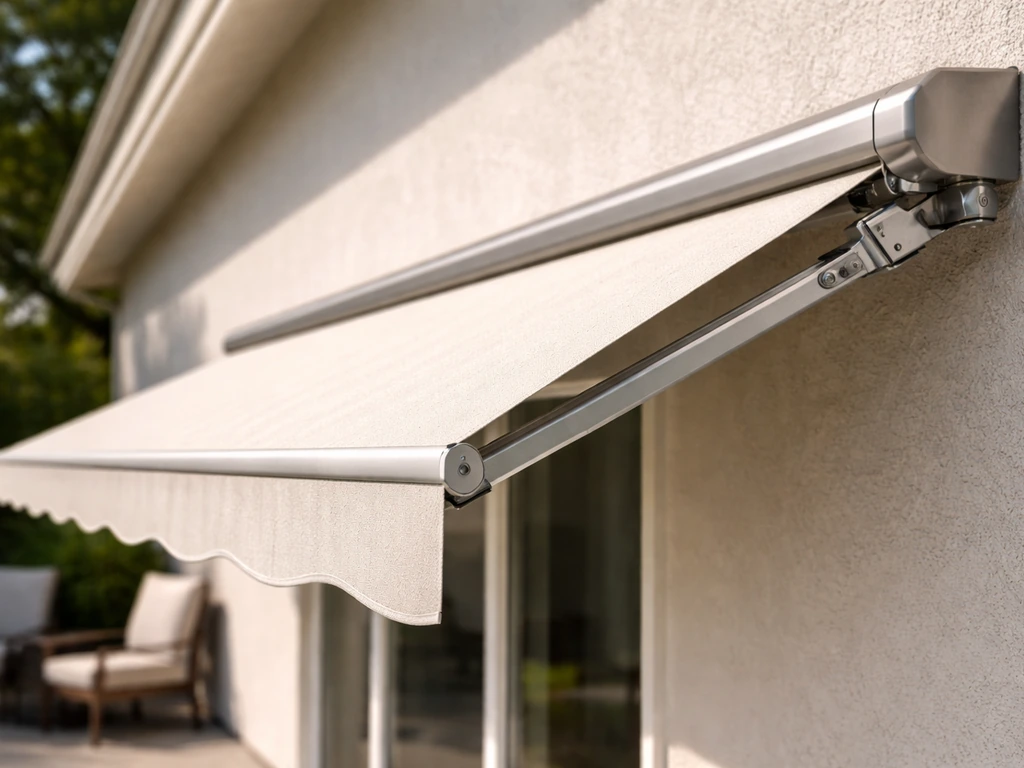
Brand reputation in the awning space comes down to four things: frame and fabric quality, motor reliability (for motorized models), warranty terms, and whether replacement parts are actually available years later. Here's how the main players stack up.
SunSetter
SunSetter is the most recognized name in the US residential awning market, and for good reason. They offer woven acrylic and 100% waterproof laminated fabric options, a powder-coated aluminum frame, and a clear 5-year limited warranty on their standard series. Their DIY install support is the best in the business, detailed measuring guides, video instructions, and a rafter adapter bracket system that handles tricky mounting situations. The tradeoff is that SunSetter is more of a mid-market brand: the frame construction and fabric are good but not as heavy-duty as Rolltec or Weinor at the premium end. For the majority of homeowners, though, they hit the right spot between quality and price.
Sunesta
Sunesta competes directly with SunSetter and edges ahead on warranty: their frame, roller tube, and arms come with a lifetime limited warranty (with specific exclusions, the motor battery isn't covered, for example, so read the fine print). Their extended wind rating of 45 mph is one of the higher claimed figures in the residential segment. Sunesta is typically sold and installed through local dealer networks, which means less DIY flexibility but potentially better professional installation and ongoing service support.
Rolltec
Rolltec is a Canadian manufacturer that punches above its weight in terms of build quality. Their Adalia Extreme X3M is backed by a 10-year warranty and uses a Somfy RTS motor, Somfy is the gold standard for awning motors and is used by many premium European brands. The optional wireless wind sensor integrates directly with the Somfy system for reliable auto-retraction. Rolltec is harder to find through retail channels and is mostly dealer-installed, but if you want something built to last 15+ years with quality hardware throughout, it's worth seeking out.
Weinor
Weinor is a German manufacturer that produces some of the most weather-rated awnings available. Their Plaza Viva textile pergola awning is classified under DIN EN 13561 for both wind resistance and rain performance, this is actual third-party engineering certification, not just a marketing claim. If you're in a climate with regular high winds or you want an awning you can leave extended in light rain without worry, Weinor is the most credible option. The price reflects this: expect to pay significantly more than SunSetter, and installation is exclusively through certified dealers.
Dometic
Dometic is best known for RV awnings but their cassette awning line (including the 8500 series) works well for smaller residential patios and covered areas where a clean, enclosed look matters. They offer both manual and motorized versions, and their Weather Pro series supports wind sensor integration. Dometic is a solid choice for smaller spans and for anyone who wants a polished cassette aesthetic without paying for Rolltec or Weinor pricing.
DIY vs. professional installation: how to decide
Whether you install your awning yourself or hire a pro depends on three factors: the mount surface, the awning weight, and whether it's motorized. Manual retractable awnings under 12 ft wide are genuinely DIY-friendly if you're comfortable with a drill, a level, and reading an installation diagram. SunSetter designs their awnings specifically for DIY and provides detailed bracket guides. Two people are required for any awning installation, the units are heavy and awkward to hold in position while fastening.
Professional installation is worth it in these situations: you're mounting into masonry or stucco (requires proper anchors and a hammer drill), the awning is 14 ft wide or larger and weighs 80+ lbs, you're installing a motorized model that needs hardwired electrical, or the mounting surface isn't a straightforward vertical wall. Sunsation's installation manual includes specific warnings about proper bracket fastening and surface preparation that give a good sense of what's involved in a tricky install. Getting it wrong means the whole thing can pull off the wall under load, not worth the risk if you're uncertain.
Maintenance habits that keep your awning working for years
A well-maintained awning can last 10–15 years. A neglected one develops mold, faded fabric, and bent arms in 3–5 years. The maintenance is straightforward, it just has to actually happen.
- Let the fabric dry completely before retracting. SunSetter specifically flags this: retracting a wet awning and leaving it closed is how mold starts. If it rains and you retract, extend it again once the rain stops and let it air dry before closing.
- Clean the fabric once or twice a season. Use mild soap (like dish soap) and lukewarm water with a soft brush. Rinse thoroughly. Avoid pressure washers, harsh solvents, or abrasive scrubbers — Polar Shades' care guide is explicit about this, and for good reason: they damage the fabric coating.
- Inspect the arms, pivot points, and mounting brackets each spring. Look for loose bolts, corrosion at the bracket, or any bending in the arms. Tighten anything that's moved.
- Lubricate the pivot arms and roller tube annually with a silicone-based lubricant. Avoid WD-40 on fabric-contact areas.
- Retract during any storm, heavy rain, snow, or sustained wind. This is the single most impactful habit. Every manufacturer says it. An awning left extended in a wind storm is the most common cause of frame damage.
- If you're in a region with harsh winters, store the awning retracted and consider a cover for the cassette or roller tube to protect from ice and UV during off-season months.
Replacement parts availability is worth checking before you buy. SunSetter and Sunesta both stock replacement fabric and hardware, which matters when you're 8 years in and need a new fabric panel without buying a whole new awning. Rolltec's Somfy motors are widely serviceable through Somfy's own dealer network. Weinor parts are available through their dealer channel. The brands to be more cautious about are off-brand or import awnings from marketplaces, cheap upfront, but getting a replacement arm or fabric panel two years later is often impossible.
Your next steps before you buy
Before placing an order, work through this short checklist. It'll save you the headache of returns or a mis-sized install.
- Measure your mounting width and confirm the structural surface you're attaching to (wood, masonry, stud-backed siding). Know where your studs or structural members are.
- Check your clearance height from the deck floor to any overhead eave or roof. You need at least 7 ft 6 in for most retractable awnings.
- Decide on manual vs. motorized based on awning width and how often you'll extend/retract it. For anything 12 ft or wider, seriously consider motorized with a wind sensor.
- Choose cassette vs. open-roll based on whether fabric protection during storage matters to you and whether you want the cleaner aesthetic.
- Set your budget range. A quality manual retractable starts around $700–$1,000 installed for smaller sizes. A motorized cassette from a top brand is $2,500–$5,000+ installed.
- Check warranty terms: what's covered, for how long, and whether motor and fabric are included or treated as separate coverage.
- Confirm replacement parts availability before committing to a brand — especially for motors and fabric panels.
For most homeowners with a standard open patio, a motorized retractable cassette awning from SunSetter or Sunesta in the 12–16 ft range is the practical sweet spot, good quality, real warranty backing, DIY-friendly or easy to get professionally installed, and parts you can actually get when you need them. If your budget stretches and you want something built to a higher weather-performance standard, Rolltec and Weinor are the names to research next.
FAQ
Which are the best patio awnings if I want something that looks “built-in” and won’t expose the fabric all the time?
Choose a cassette retractable awning, because the fabric and arms fully stow inside the housing, which keeps UV and rain off the material when it is retracted. If your patio is frequently used on and off throughout the day, prioritize a cassette with robust arm springs and a fully enclosing cassette end caps, since gaps can let wind-driven water still reach the fabric.
How do I know if my patio needs a retractable awning or a fixed awning?
Pick retractable if you ever want sun, need a way to protect the fabric by retracting during storms, or have seasonal usage. Choose fixed mainly when you want constant overhead cover (for an entry or walkway) and you are confident you will not need to retract for hail, heavy rain, or high winds.
What’s the most common mistake when measuring for patio awnings?
Measuring the mounting width without accounting for bracket and arm clearance. The article notes subtracting side clearance, so also double-check that the awning projection you measure is consistent with the manufacturer’s pitch reference, since measuring straight out horizontally can lead to a fabric slope that looks right but shades less (or hits a nearby structure) than expected.
Should I choose 10 ft projection or 12 ft projection for more shade?
12 ft usually increases shade depth, but it also increases the lever load on the arms and makes wind retraction more important. If you are between sizes, consider your pitch angle and placement, because two awnings with the same “projection” can shade different amounts depending on the fabric slope and mounting height.
How much clearance do I need above the patio floor for safe arm movement?
Plan for at least the manufacturer’s minimum mounting height clearance to the underside of any eave or overhang. SunSetter’s guideline of about 7 ft 6 in from the deck to the underside is a good benchmark, and if your clearance is tighter you may end up needing arm extensions or special bracket geometry (which can add cost and complexity).
Is it safe to leave an awning extended in light rain?
For most quality retractable awnings, light rain is often acceptable, but you should still expect to retract for anything heavy, prolonged, or accompanied by wind or hail. Even when a manufacturer quotes an extended wind/rain rating, the safer habit is to retract whenever conditions move toward “severe,” because pooled water, splash-back, and gusts can increase strain on the fabric and arms.
What pitch angle should I aim for, and what happens if it’s too flat?
Most installations land in the 15 to 25 degree “sweet spot.” If the awning is too flat, water is more likely to pool on the fabric, which accelerates sagging and fading and can lead to mildew in humid climates. If it is too steep, you lose usable shade area and add stress to the tensioned components during movement.
Manual vs motorized, how do I choose for an average household?
If you regularly use the awning and you may be away from the patio, motorized is worth it for convenience and for adding an automated wind retraction trigger. If you are smaller-span, often present during the day, and want lower upfront cost, manual can be fine, but factor in that someone must extend and retract it consistently to avoid leaving fabric exposed during storms.
Can I add a wind sensor later to a motorized awning?
Often yes, but confirm compatibility with your exact motor system and controls before buying. If the awning supports the sensor add-on, it is most valuable for larger, heavier awnings where the consequences of forgetting to retract are greater, and it can also help prevent repeated gust impacts while you are inside.
What should I check about electrical setup if I go motorized?
Verify whether the motor requires hardwired power at the install location (and where the wiring will run), and confirm switch placement options (wall switch, remote, or smart control). If your mounting surface is far from an existing outlet or breaker circuit, the “best” awning may become impractical once you price the electrical labor and conduit/waterproofing details.
Do I need professional installation if I’m mounting to siding?
Usually not ideal to mount only to siding. Even when it is “doable,” you must fasten into structural members behind the siding, using the correct anchors and drill technique, because the awning load is dynamic when it extends and retracts. If you cannot clearly hit studs/rafters/ledger structure, plan on professional help or an alternate mounting solution.
How can I tell whether replacement parts will be available later?
Ask the seller or check the brand support policy for fabric replacement panels, arm components, motor serviceability, and cassette housings (if applicable). Brands that provide direct replacement parts allow future repairs without replacing the entire unit, which is especially important if your awning is in active use and fabric wear becomes the most likely failure point.
What maintenance actually prevents early failure?
At minimum, keep the fabric and housing clean, remove debris that can trap moisture in the cassette, and inspect the arms and brackets for looseness at least once or twice per season. If you see persistent water retention, sagging fabric, or unusual motor noise, address it immediately rather than waiting, since small alignment issues tend to worsen after repeated cycles.
If I buy the awning from a marketplace seller, what risks should I watch for?
The main risks are limited warranty coverage, uncertain fabric fade and water performance, and poor parts availability when something breaks after a season or two. If you cannot confirm which official motor model is used (for motorized units) and how replacements are sourced, treat it as a red flag, because arm and motor parts often require matching specific models.
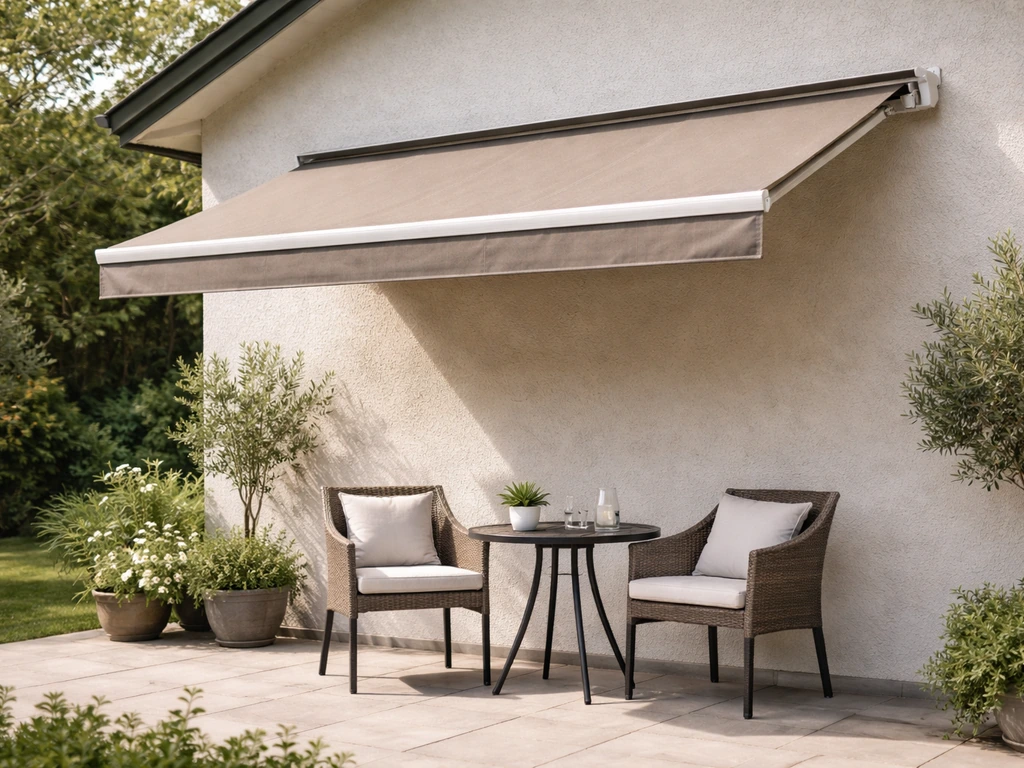
Find the best patio awnings with types, exact measurements, wind and weather material tips, plus maintenance and cost.
Find the best Sunbrella patio cushions: durable, fade‑resistant picks, buying tips, care, and top recommendations.
Alternative to patio cushions: durable, weatherproof seating options, pros, DIY tips & buying guide.