
The best electric patio awning for most UK homes is a full-cassette motorised awning in the 3–4.5 metre width range, fitted with a Somfy or Markilux motor, a wireless remote, and at minimum a wind sensor. That combination covers the vast majority of patios, handles Britain's unpredictable weather without constant manual intervention, and sits in the £800–£2,500 installed range where quality and price align well. If you're on a tighter budget or have a smaller terrace, a semi-cassette or open-arm motorised awning from a reputable UK supplier can do the job for less, but you will make compromises on fabric and weather protection that matter a lot in a wet climate.
Best Electric Patio Awnings UK Buying Guide 2026

Lark Perry
7 Jul 2026
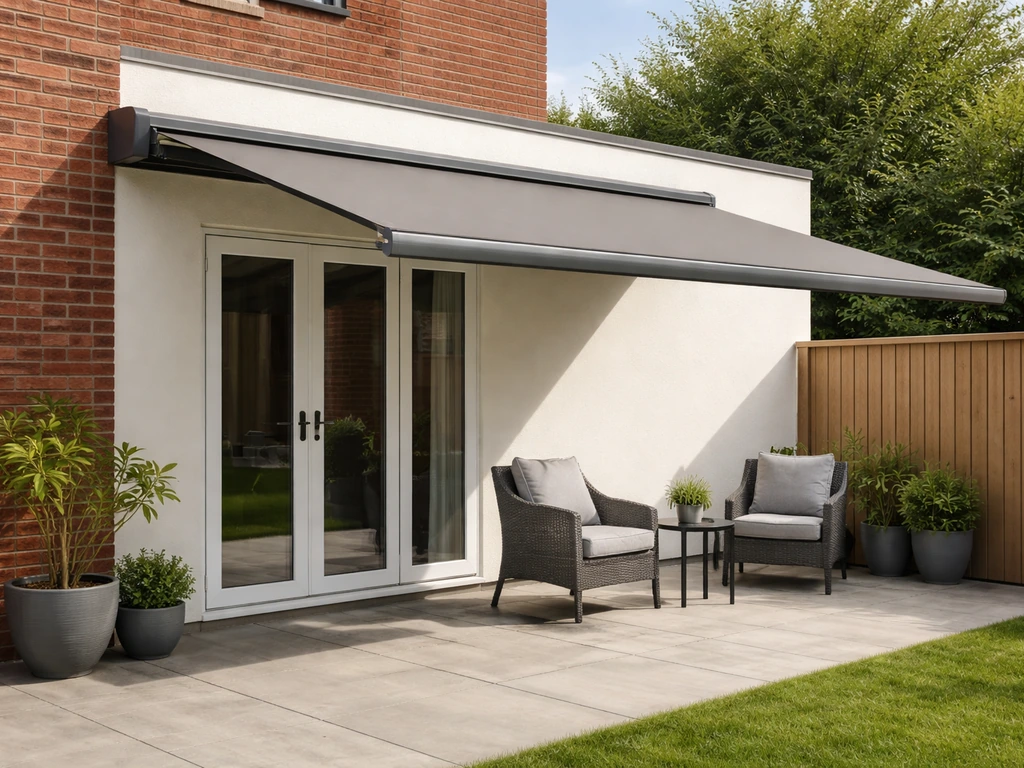
What makes an electric awning the right choice over a manual one
An electric (motorised) patio awning uses a built-in tubular motor to extend and retract the awning at the press of a button. That's the basic definition, but in the UK market 'electric' can mean quite different things depending on the system. At the entry level, you get a motor wired to a simple wall switch. Step up and you get a wireless remote that works from 10–15 metres away. The better systems, using motors from Somfy or equivalents, go further, integrating wind sensors, sun sensors, rain sensors, and even full smart home connectivity through platforms like Somfy's TaHoma. That last bit matters in the UK because you're not always home when the wind picks up.
The practical difference between a manual awning and an electric one isn't just convenience. Manual awnings require you to be physically present and willing to crank or push the awning out every time. Electric awnings mean you actually use the thing, and sensor-equipped models mean the awning protects itself when you forget. For UK patios, where summer storms appear with no warning, that auto-retract feature is worth paying for. It's one of the key reasons to choose electric over manual retractable options.
What to look for in the best electric patio awnings in the UK
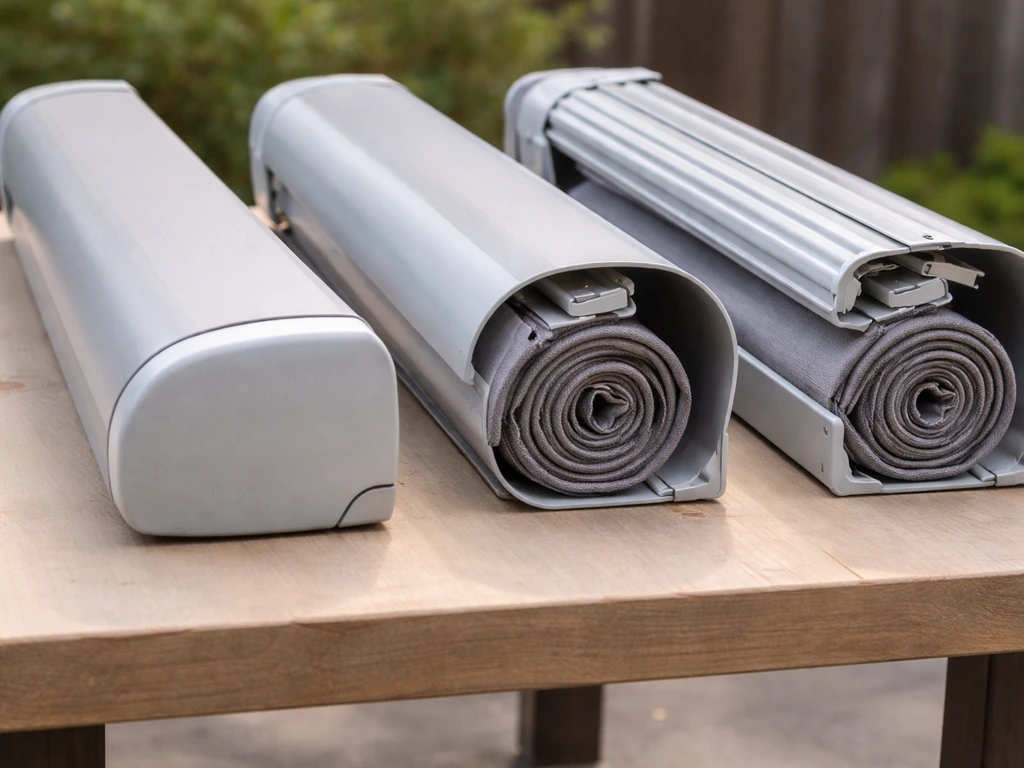
Not every electric awning is built for British conditions. Here's what separates the genuinely good options from the ones that look great in a product photo but disappoint after 18 months of UK weather.
Cassette type: full, semi, or open
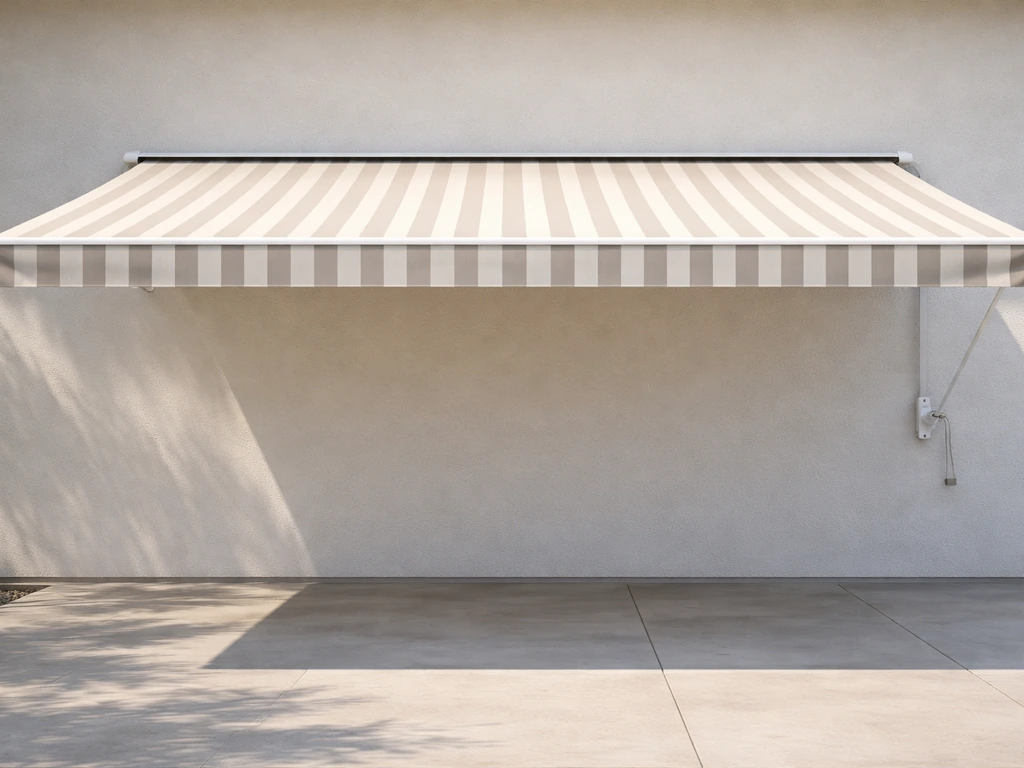
A full cassette encloses the rolled-up fabric and the arms completely inside a protective housing when retracted. This is the best option for the UK because it keeps everything dry and UV-protected when not in use. A semi-cassette protects the fabric roll but leaves the arms exposed. An open cassette gives no protection at all. For British weather and long-term durability, always go full cassette if your budget allows it. The difference in lifespan between a full cassette and an open design in a wet climate is significant.
Motor quality and brand
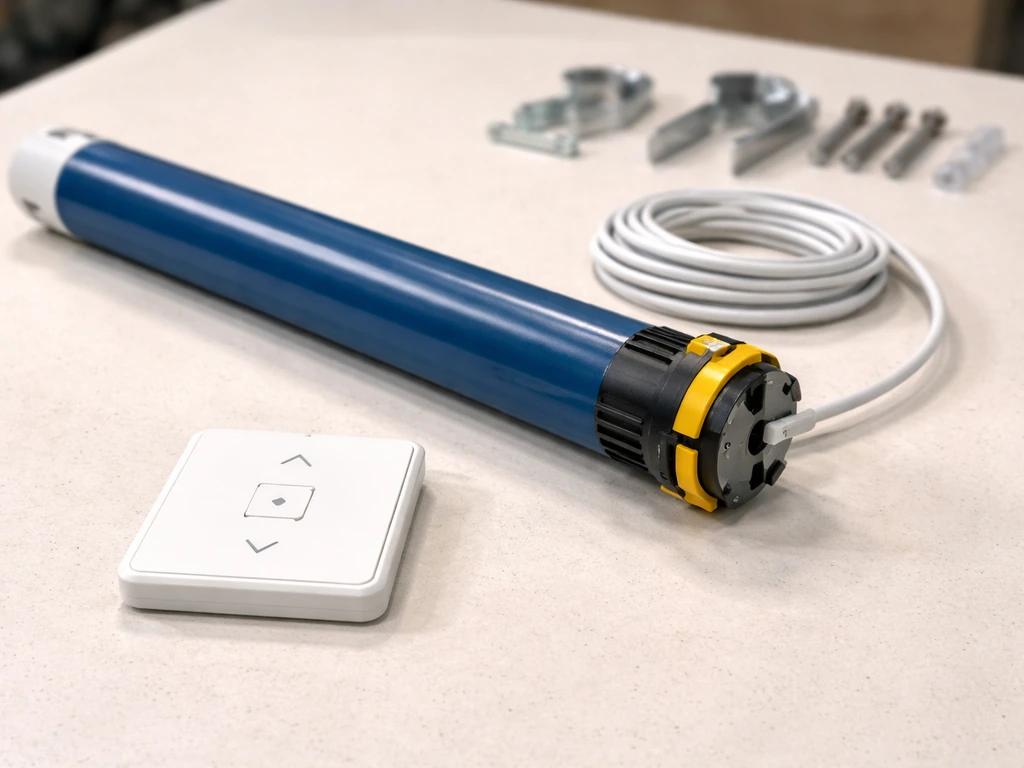
The motor is the part that will either last 15 years or fail in two. Somfy is the most widely used motor brand in the professional UK awning market, and for good reason: the motors are quiet, reliable, and have a wide ecosystem of compatible sensors and controls. Markilux uses their own drive systems and is equally well regarded at the premium end. Budget awnings often use unnamed Chinese motors that work fine initially but lack spare parts and can become noisy within a few years. If a supplier can't tell you the motor brand, that's a red flag.
Fabric quality and UV/water resistance
Awning fabric is rated by its UV protection factor and its ability to handle rain. Most quality acrylic fabrics (such as Sunbrella, Dickson, or similar) offer UPF 50+ and are water-resistant, meaning they shed light rain without soaking through, but they're not waterproof membranes. For extended wet weather, a full cassette enclosure matters more than the fabric rating alone, because it stops the fabric sitting rolled up in standing water. Look for solution-dyed acrylic rather than coated polyester if longevity is the priority.
Manual override
A manual override (typically a crank handle socket built into the cassette) lets you retract the awning if power goes out. Somfy's Sunea RTS, for example, includes a manual crank handle specifically for power loss scenarios. This is a practical feature that often gets overlooked until the moment you actually need it, which in the UK tends to be during a storm that's also knocked out power.
Size, mounting, and measurements for a perfect fit
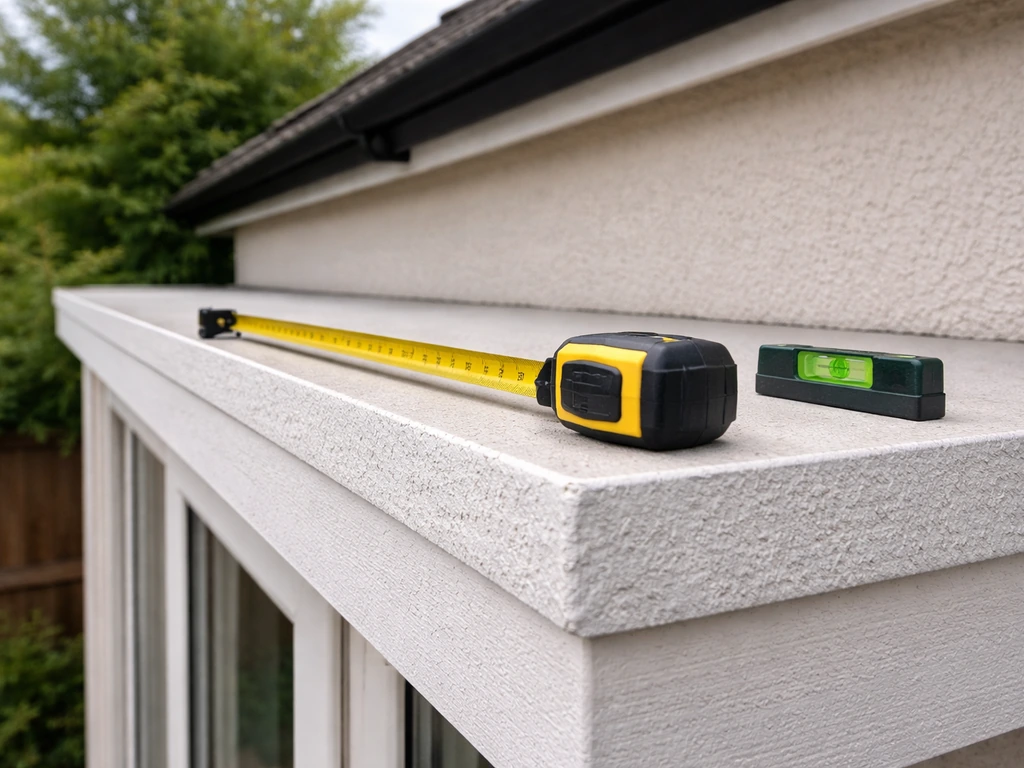
Getting the size right before you order is the most common area where people go wrong. An awning that's too wide won't fit between obstacles, and one that's too narrow doesn't shade the space you actually want to use. Here's how to measure correctly for a UK patio installation.
Width measurement
Measure the clear span you want to cover, typically the width of the patio doors, bi-folds, or the terrace opening. Then check the available wall space either side. The awning cassette will typically be slightly wider than the fabric projection width (usually 50–100mm either side), so you need clearance for mounting brackets at both ends. Always measure the usable wall or fascia width, not just the door opening.
Projection (depth) measurement
Projection is how far the awning extends out from the wall. A 2.5 metre projection covers a reasonably deep seating area. For a dining table and chairs, 3 metres or more is usually needed. Bear in mind that the sun angle in the UK is lower than in Southern Europe, a longer projection does more work at shading the door and keeping glare off interior floors and sofas. Most full-cassette awnings in the UK market offer projections from 1.5 to 3.5 metres.
Mounting height and clearance
The awning needs to be mounted high enough that the front bar (when extended at a pitch angle of 15–30 degrees) clears head height at the outer edge, typically 2 metres minimum at the front. Mounting too low means the awning hangs awkwardly and can hit furniture or people. The ideal mounting height places the cassette at around 2.2–2.5 metres above the patio surface. Also check for gutters, downpipes, and light fittings in the mounting zone before you commit to a position.
Wall mounting vs. fascia vs. ceiling mounting
Most UK electric awnings mount to a wall, either onto brick/blockwork or onto the timber fascia below the soffit. Wall mounting onto solid masonry is the most secure. Fascia mounting is common on newer homes with aluminium or UPVC fascia boards, but check the fascia is structurally capable of holding the load (a 4 metre cassette awning with arms extended can create significant leverage in wind). Ceiling or soffit mounting is possible on some pergola-style setups but requires specialist brackets. If in doubt, have the supplier survey the mounting point before ordering.
Weather performance for UK patios (rain, wind, sun/UV, durability)
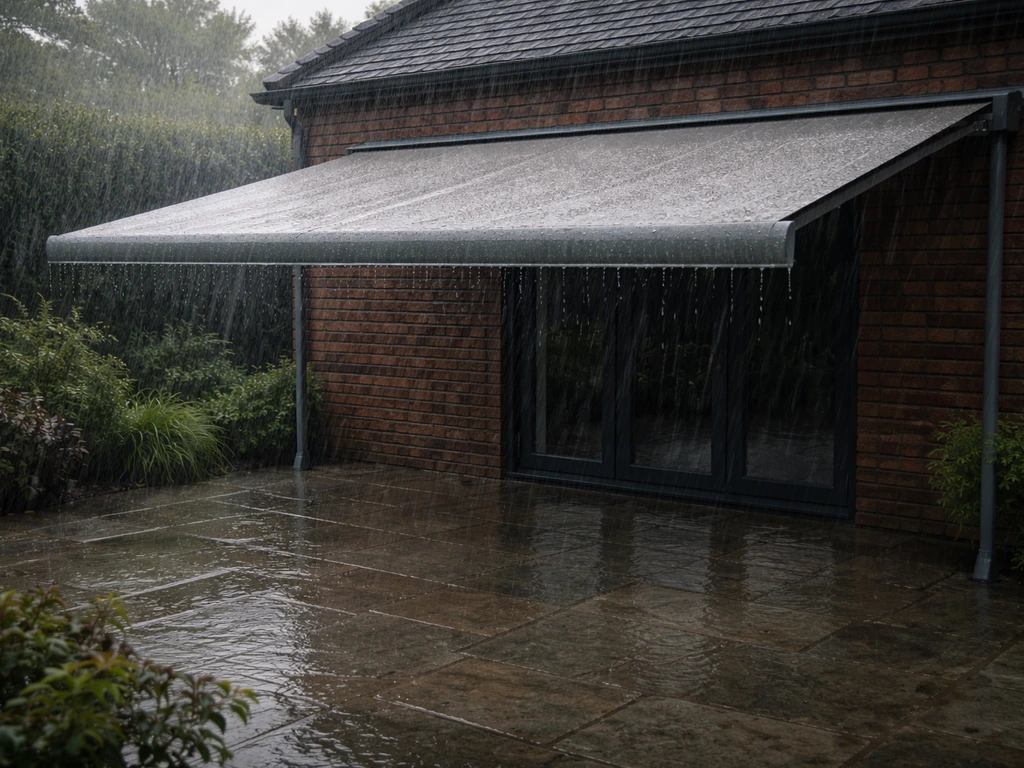
UK weather is the real test of any patio awning, and this is where cheaper imports tend to fail. Here's what you actually need to know about each weather type.
Wind resistance and wind sensors
Wind is the biggest structural risk to a retractable awning. Most quality awnings have a Beaufort wind rating, typically rated safe up to Beaufort 4 or 5 (around 30–40 km/h) when extended. Beyond that, the awning should be retracted. The smarter way to handle this is with an automatic wind sensor. Somfy's Eolis 3D WireFree RTS sensor detects movement/vibration in the awning arms caused by wind and triggers automatic retraction before damage occurs. Markilux offers the Vibrabox wind sensor which works on the same principle. Intelroll's INT500 Full Cassette system can also be paired with a wireless wind sensor. If you're in an exposed location (coastal, hilltop, or open garden with no windbreak), a wind sensor isn't optional, it's essential.
Rain and fabric water resistance
Quality acrylic awning fabric will handle light to moderate rain well, the weave is tight enough to shed water but the fabric itself is not a waterproof membrane like a tent flysheet. In heavy rain, some water will pass through, especially on older or lower-grade fabrics. The pitch angle you set on the arms (steeper = better drainage) helps considerably. A full cassette enclosure is critical for rain performance because it means the rolled-up fabric never sits in pooled water, which would cause mildew and premature fabric degradation.
Sun and UV protection
UV protection is less of a primary concern in the UK than in Spain or Australia, but it still matters for fabric longevity and for blocking glare through patio doors. Good acrylic fabrics achieve UPF 50+. Sun sensors can be fitted (Somfy and Markilux both offer them) to automatically extend the awning when sunlight reaches a set intensity, genuinely useful if you work from home and want consistent light levels in your living space without having to think about it. Somfy also describes using sun sensors with exterior sun blinds to open or extend the blind under suitable conditions Sun sensors can be fitted (Somfy and Markilux both offer them).
Long-term durability in British conditions
The combination of frequent rain, UV cycling (brief intense sun followed by cloud and wet), and winter frost is harder on awning components than a consistently hot or consistently cold climate. Full cassette aluminium housing protects the fabric and arms from frost accumulation. Quality powder-coated aluminium frames resist corrosion well. Stainless steel fixings are worth specifying (not always standard on budget products). For UK conditions, expect a good quality awning to last 10–15+ years with basic annual cleaning and an occasional end-of-season service check.
Controls and installation realities (remote, wall switch, automation, fitting options)
The control system is what makes an electric awning pleasant or frustrating to live with day to day. There's a wider range of options than most buyers realise.
Control options available in the UK
- Wall switch: A hard-wired push-button switch, usually a 1-channel rocker or push-to-open/push-to-close unit. Simple, reliable, no battery to lose.
- Wireless remote: Operates the awning from anywhere in range (typically 10–20 metres). Convenient for use from a chair on the patio or from inside. Can be lost or need battery replacement, but generally very reliable.
- Smart control (smartphone/tablet): Somfy's TaHoma platform and Markilux's smart control systems allow app-based control, scheduling, and integration with other smart home devices. Requires a hub or bridge unit.
- Weather sensor automation: Wind, sun, and rain sensors (wired or wireless) trigger automatic retraction or extension based on real-time conditions. Somfy's Eolis 3D WireFree RTS and Markilux's Vibrabox are the most commonly fitted wind sensors in the UK market.
- Manual override: Crank handle socket for use during power outages. Should be included on any quality motorised awning.
DIY installation vs. professional fitting
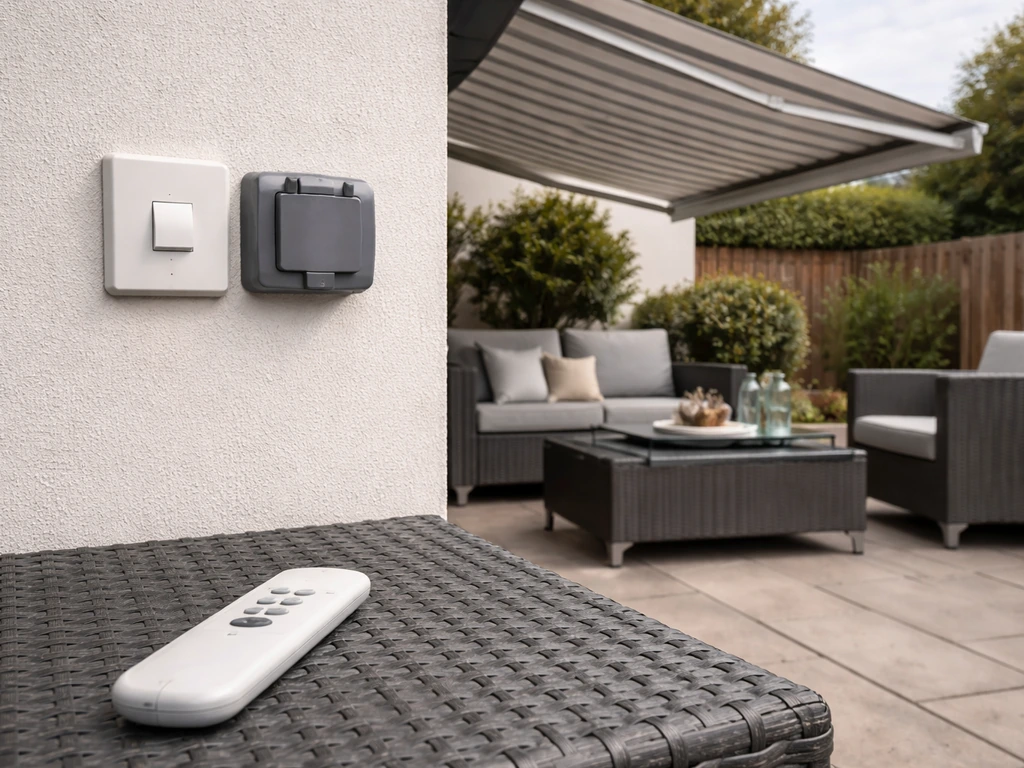
Most reputable UK suppliers strongly recommend professional installation for electric awnings, and for good reason. The electrical connection (typically a spur from the consumer unit or a fused spur from a nearby outlet) should be done by a Part P registered electrician unless you're confident and competent with domestic electrics. The physical mounting requires drilling into masonry with the right fixings for the substrate, getting this wrong on a 4 metre awning can lead to serious structural failure in wind. That said, confident DIYers with masonry experience and basic electrical knowledge do fit these themselves. If you're going DIY, stick to smaller awnings (under 3 metres wide) and always use a qualified electrician for the final connection.
Professional fitting in the UK typically adds £200–£500 to the cost depending on the size of the awning, access difficulty, and whether electrical works are needed. Some suppliers include fitting in the quoted price; others quote supply-only. Always clarify this upfront.
Best electric patio awning picks by patio type and budget
Rather than ranking a single 'number one', it's more useful to match the awning type and budget to your actual situation. Here are the configurations that genuinely work well for different UK patios. If you want quick, practical comparisons, the best patio awnings reviews usually highlight which models perform well in real UK weather and service support best electric patio awning picks.
| Patio type / situation | Recommended awning type | Typical width range | Budget (supply + fit) |
|---|---|---|---|
| Small terrace or narrow bi-fold opening | Full cassette motorised, 2–3m wide | 2–3m | £800–£1,400 |
| Standard patio with 3–4m bi-folds or French doors | Full cassette motorised with wind sensor | 3–4.5m | £1,200–£2,200 |
| Large open terrace (4m+) | Full cassette motorised, Somfy or Markilux, with sensor pack | 4–6m | £2,000–£4,500+ |
| Exposed/coastal/windy location | Full cassette with Somfy Eolis or Markilux Vibrabox wind sensor | Any | Add £150–£350 for sensor |
| Budget-conscious buyer, sheltered garden | Semi-cassette or open-arm motorised | 2.5–4m | £500–£1,000 |
| Smart home / automation user | Somfy TaHoma-compatible full cassette | 3–5m | £1,800–£3,500+ |
| Pergola or overhead structure | Specialist pergola awning with ceiling mount brackets | Varies | £2,500–£6,000+ |
Best single pick for most UK homes
For the majority of UK homeowners with a standard patio behind a 3–4.5 metre set of bi-fold or French doors, a full cassette motorised awning with a Somfy motor, wireless remote, and Eolis wind sensor hits the sweet spot. You get reliable operation, automatic weather protection, a clean cassette look when retracted, and a system that any UK awning specialist can service. Brands like Weinor, Markilux, Luxaflex, and Intelroll all supply this kind of product through UK installers. The branded motor (Somfy is most common) matters more than the awning brand for long-term reliability.
Where budget options fall short
Sub-£500 electric awnings sold through Amazon or general DIY retailers tend to use lightweight aluminium frames, coated polyester fabric rather than solution-dyed acrylic, and unbranded motors. They can work adequately in sheltered gardens for a few seasons, but the fabric fades faster, the motor can become noisy, and spare parts are often unavailable. If your patio is sheltered and you're renting or planning to move, a budget motorised awning might be fine. alekor retractable patio awning reviews aleko retractable patio awning reviews. For a long-term installation on a home you own, the step up to a properly specified system pays off over the lifespan.
Costs, value, and warranty: what you're really paying for
Electric awning pricing in the UK covers a very wide range, and understanding what changes at each price point helps you avoid both overpaying and false economy.
| Price bracket (supply only) | What you typically get | What's usually missing |
|---|---|---|
| £300–£600 | Open or semi-cassette, unbranded motor, basic remote, polyester fabric | Cassette protection, brand motor, wind sensor, long warranty |
| £700–£1,200 | Full cassette, branded or semi-branded motor, remote, acrylic fabric option | Wind sensor (often optional extra), smart integration |
| £1,200–£2,500 | Full cassette, Somfy/Markilux motor, wind sensor, better fabric range, 5yr+ warranty | Premium smart home integration (sometimes extra) |
| £2,500+ | Premium full cassette, Somfy/Markilux top-tier, full sensor pack, smart hub, bespoke RAL colour, extended warranty | Nothing significant — this is the full package |
Warranty: what to look for
A quality electric awning should come with a minimum 2-year warranty on the motor and at least 5 years on the frame. The best suppliers (Markilux, Weinor, Luxaflex) offer 5–10 year frame warranties and have UK service networks. Check whether the warranty covers callout labour or just parts, a 'parts only' warranty on an installed awning can be expensive in practice if something goes wrong in year three. Somfy motors carry their own manufacturer warranty (typically 5 years) which is separate from the awning manufacturer's frame warranty.
Hidden costs to factor in
- Professional installation: £200–£500 depending on size and complexity
- Electrician's spur connection: £80–£200 if not included in fitting quote
- Wind or sun sensor add-ons: £150–£350 fitted
- Smart hub (e.g. Somfy TaHoma bridge): £80–£150
- Annual cleaning kit or professional service: £30–£100 per year
Quick buying checklist and next steps before you order
Before you contact a supplier or click 'add to cart', run through these points. If you want the best awnings for patios, use this checklist to match cassette type, motor quality, and weather protection to your specific patio size and climate. Doing this upfront will save you a lot of back-and-forth and prevent the most common sizing and installation mistakes.
- Measure your clear wall width (the span you want shaded) and the available wall space either side for brackets and cassette overhang.
- Measure the projection depth you want — check that your desired projection doesn't overhang a boundary, pathway, or neighbour's space.
- Check mounting height: measure from the patio surface to where you'd mount the cassette. Make sure the front bar will clear 2 metres at the outer edge when extended at pitch.
- Identify your mounting substrate: solid brick, block, timber fascia, or UPVC fascia. Tell the supplier — it affects fixing specification.
- Check for obstacles in the mounting zone: gutters, downpipes, external lights, soil pipes, or meter boxes that could prevent a clean fit.
- Decide on your control preference: basic wall switch, wireless remote, or smart automation. This affects wiring spec and may affect which motor system you order.
- Confirm whether you need a wind sensor — if your garden is exposed, or you're frequently away from home, this is not optional.
- Ask the supplier for the motor brand, motor warranty length, frame warranty length, and whether installation is included in the quote.
- If ordering from an online supplier without a survey, request a pre-order measurement checklist — reputable suppliers provide one.
- Get at least two quotes for supply and installation: prices vary significantly between local installers and national chains for identical specifications.
Once you've got your measurements and a clear spec, the decision process gets much simpler. You're essentially choosing between suppliers rather than trying to figure out what you need. A good installer will also survey the wall before confirming the order, any supplier who skips this step on a larger awning is worth treating with caution. If you're weighing up electric versus manual options or trying to decide between specific brands, the comparison guides on patio awnings generally and manual retractable awnings specifically cover those trade-offs in more detail. If you're comparing options, this guide to which are the best patio awnings can help you narrow down the right style and specs for your space.
FAQ
Do I need a wind sensor if my patio is sheltered by a house or tall garden fence?
If there is any meaningful exposure to gusts (open side of the garden, coastal air, corner house effects), treat a wind sensor as still strongly recommended. Even sheltered locations can see sudden gusts, and manual “retract when you think about it” tends to fail during storms or power cuts. If you truly have no direct wind paths, you may be able to run without one for a short period, but the risk management changes with full-cassette versus open-arm designs, full cassette still benefits from auto-retraction to avoid repeated overload.
What’s the difference between a wall switch, a wireless remote, and smart home control on electric patio awnings?
A wall switch is the simplest, it can be reliable but it is only convenient when you are near the patio. A wireless remote adds range (typically 10–15 metres) and is usually what most UK buyers start with. Smart home integration is mainly about automation and safety routines, for example linking retraction to wind triggers and scheduling sun-based extension, so the awning responds even when you are away.
How do I know whether my awning is safe to use during strong wind, and what should I do if gusts hit?
Look for a Beaufort wind rating, then follow it as an operating limit, not as a “try it and see” threshold. In practice, if the system has an automatic wind sensor, it should retract before damage, but you should still retract manually if you notice abnormal movement, pooling fabric, or the arms sounding strained. If power is out, confirm your model includes a manual override and that you can physically reach the awning safely.
Can I get an electric awning if my mounting surface is timber fascia or not solid masonry?
Yes, but only if the fascia is structurally capable of taking the leverage forces when the arms are extended. Timber fascia mounting is common on modern homes, but it needs correct bracket design and secure fixings, and it should be assessed before ordering. If you have any doubt about the fascia thickness, rot, or loose boards, a masonry mount (or a specialist bracket solution) is usually the safer decision.
Is the cassette fully waterproof, or will my fabric still get wet in driving rain?
The cassette enclosure keeps the rolled-up fabric and arms largely protected, but the fabric itself is not the same as a waterproof membrane. In heavy rain, water can still penetrate the fabric when it is extended, especially on older or lower-grade materials. The key benefit is that when retracted, the fabric does not sit in standing water, which is what most directly improves mildew risk and long-term fabric condition.
Do solution-dyed acrylic fabrics actually matter compared with coated polyester?
They usually do for longevity in the UK’s repeat wet-dry cycle and UV cycling. Solution-dyed acrylic tends to fade more slowly and maintains color better, whereas coated polyester can look fine initially but often loses vibrancy sooner. If you expect frequent rain and regular summer extension, choosing solution-dyed acrylic is a practical “spend once, keep longer” decision.
What size awning should I choose if my patio opening includes an off-centre door or nearby posts?
Start with the clear span you want to cover, then add allowance for cassette width and mounting brackets on each side (the cassette is commonly wider than the fabric projection). If posts or obstacles reduce usable coverage, measure the clear area the fabric will sweep, not just the door width. When in doubt, request a supplier or installer survey, because a seemingly small 50 to 100 mm error can cause the arms to land where you cannot shade the seating area.
How high should I mount the awning so it clears people and furniture, and what about angled clearance?
A common rule is that the front bar, at a typical operating pitch angle (often around 15–30 degrees), should clear head height at the outer edge, commonly about 2 metres minimum. Mounting too low can create awkward clearance and can hit furniture or people when you retract fully or partially. Also check gutters, downpipes, and external lights in the mounting zone, because these can force you into a lower (less ideal) position.
What should I check in the warranty before buying, especially for installed awnings?
Confirm what the warranty covers for callouts, because “parts only” can cost a lot in labour if a motor or sensor fails in year three. Also note warranty split, for example motor warranty is usually separate from the frame warranty. Aim for at least a motor warranty of around 2 years and longer frame coverage, and verify whether installers have a UK service network for faster troubleshooting.
Is DIY installation a bad idea for a 3 to 4 metre electric awning?
DIY can be workable for experienced masonry users, but it is where mistakes become expensive: correct drilling, correct fixings for the substrate, and correct alignment. For electric connection, a Part P registered electrician is usually the right approach unless you are confident with domestic electrics. If the awning is large (around 3 metres plus) or the access is awkward, professional installation is typically the safer choice.
If I’m renting or might move in a few years, can I choose a cheaper electric awning without regrets?
It can make sense if the location is sheltered, you accept shorter service life, and you value lower upfront cost more than long-term fabric performance and spare-part availability. Budget systems often use unbranded motors and lighter frames, which can become noisy and harder to service. If you may reinstall at a new property, check whether the mounting setup will transfer cleanly, and whether the supplier provides replacement parts for the exact motor model.
Next Articles
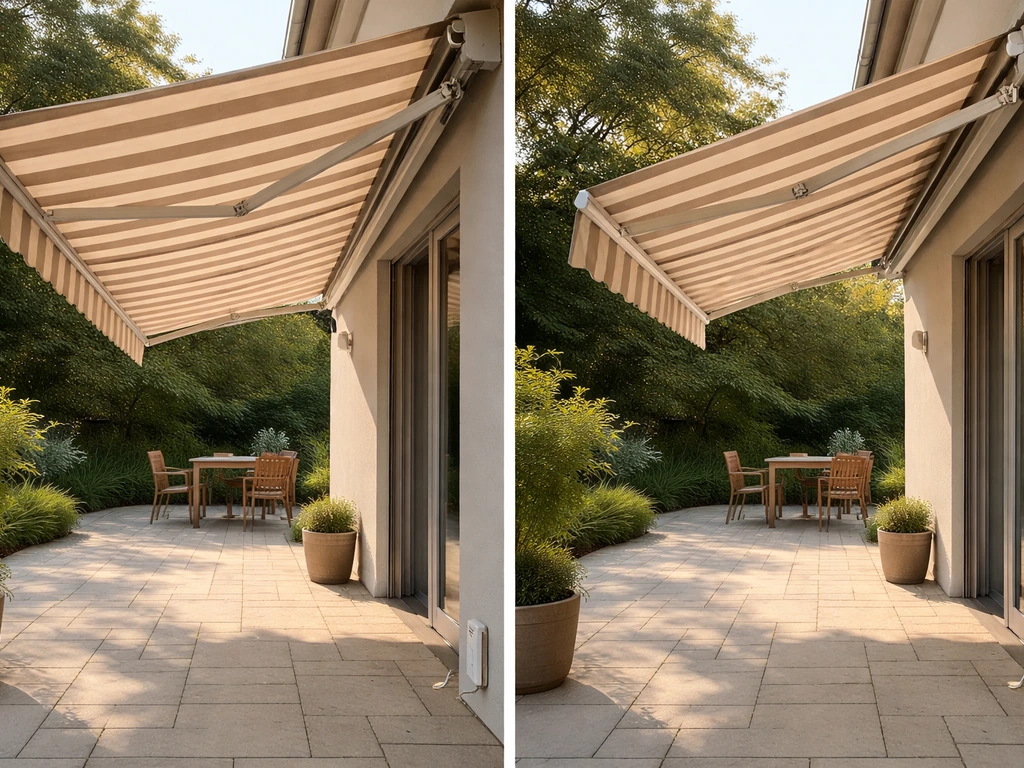
Aleko Retractable Patio Awning Reviews: Manual vs Motorized
ALEKO retractable patio awning reviews comparing manual vs motorized performance, durability, fit, noise, and value.
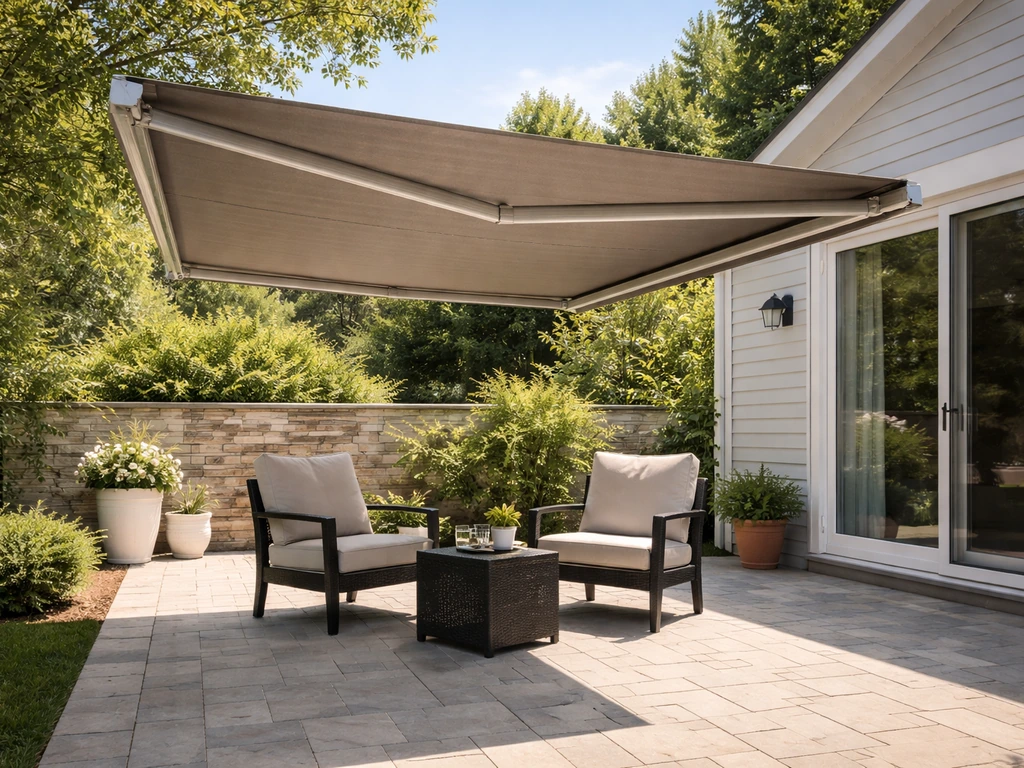
Best Patio Awnings Reviews: Top Picks by Type and Budget
Best patio awning reviews with top picks by type and budget, plus measuring, installation, and maintenance tips.
Best Manual Retractable Patio Awning: Buyer Guide for 2026
Buyer guide to pick the best manual retractable patio awning for 2026: sizing, mounting, materials, crank feel, and Veik