
Yes, aluminum patio covers can be noticeably loud in the rain, but how loud depends almost entirely on how the cover is built and installed. A bare, single-skin aluminum panel acts like a drum: rain hits it, the panel vibrates, and that vibration transfers directly into sound. A well-built insulated aluminum cover with a foam core sandwiched between two aluminum skins is a completely different experience. Some homeowners genuinely enjoy the ambient rain sound on their cover. Others report that even a light drizzle sounds like a downpour indoors. Both reactions are valid, and both are predictable once you understand what's actually driving the noise.
Are Aluminum Patio Covers Loud in the Rain? Noise Fixes

Lark Perry
24 Jun 2026
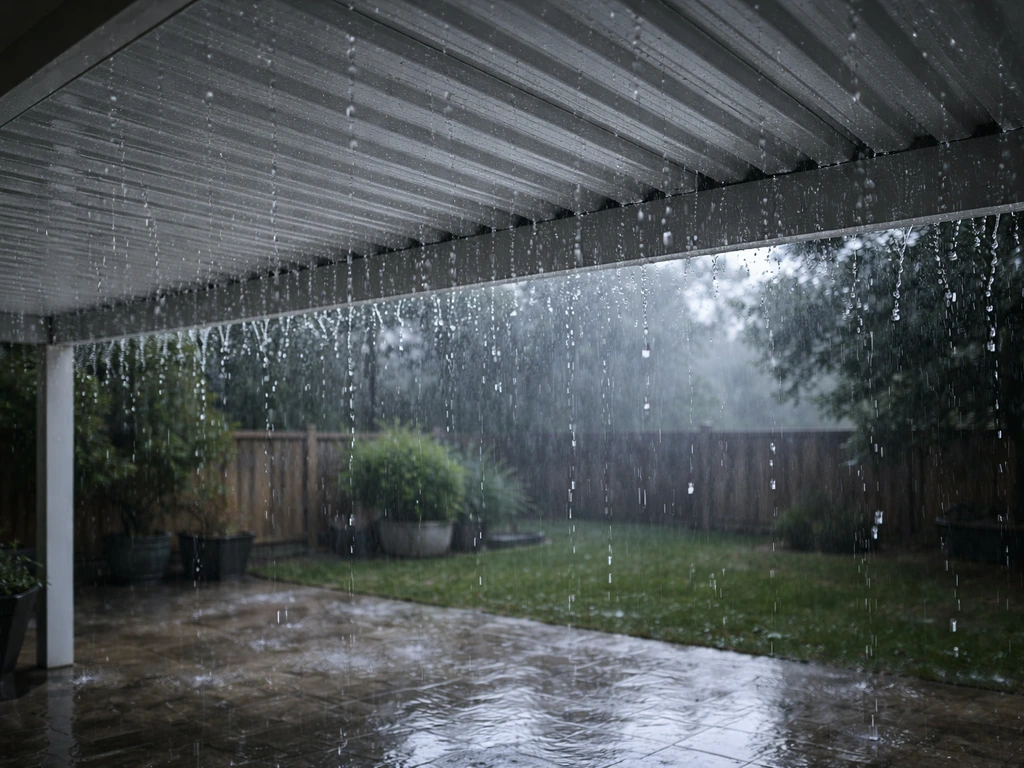
What actually causes the rain noise
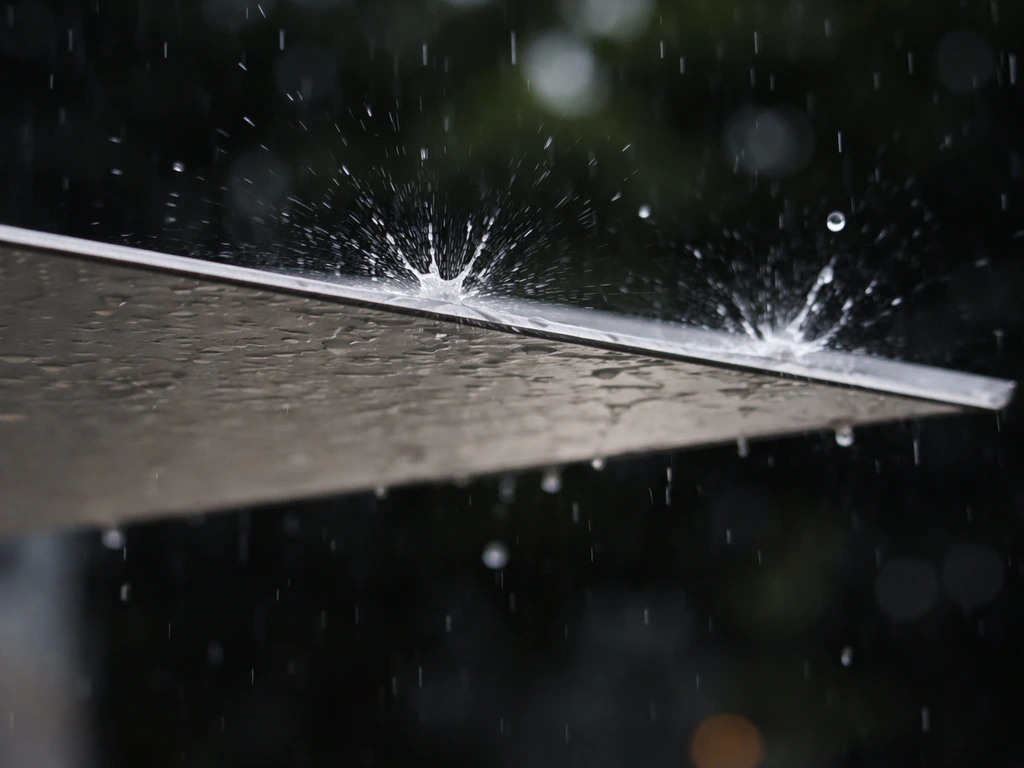
The physics here are straightforward. When a raindrop hits a lightweight metal panel that's suspended over an open air space, the panel flexes and vibrates like a drum skin. That vibration radiates as sound on both sides of the panel. The more the panel can flex, the louder the impact sound. The more air gap beneath it without any damping material, the more that sound resonates and amplifies. This is exactly the same mechanism that makes metal roofs loud when they're installed over skip sheathing with no underlayment and no attic buffer.
Panel type and construction
Single-skin, non-insulated aluminum panels are the loudest option. They're thin, lightweight, and have nothing inside them to absorb vibration. Insulated panels, by contrast, sandwich a high-density EPS (expanded polystyrene) foam core between two aluminum skins. That foam core absorbs vibration energy before it can radiate as sound, and manufacturers like American Eagle Builders explicitly market these as reducing the loud sounds of heavy rain and hail. The thicker the foam core and the heavier the gauge of the aluminum skins, the more damping you get.
Solid vs. vented/open designs
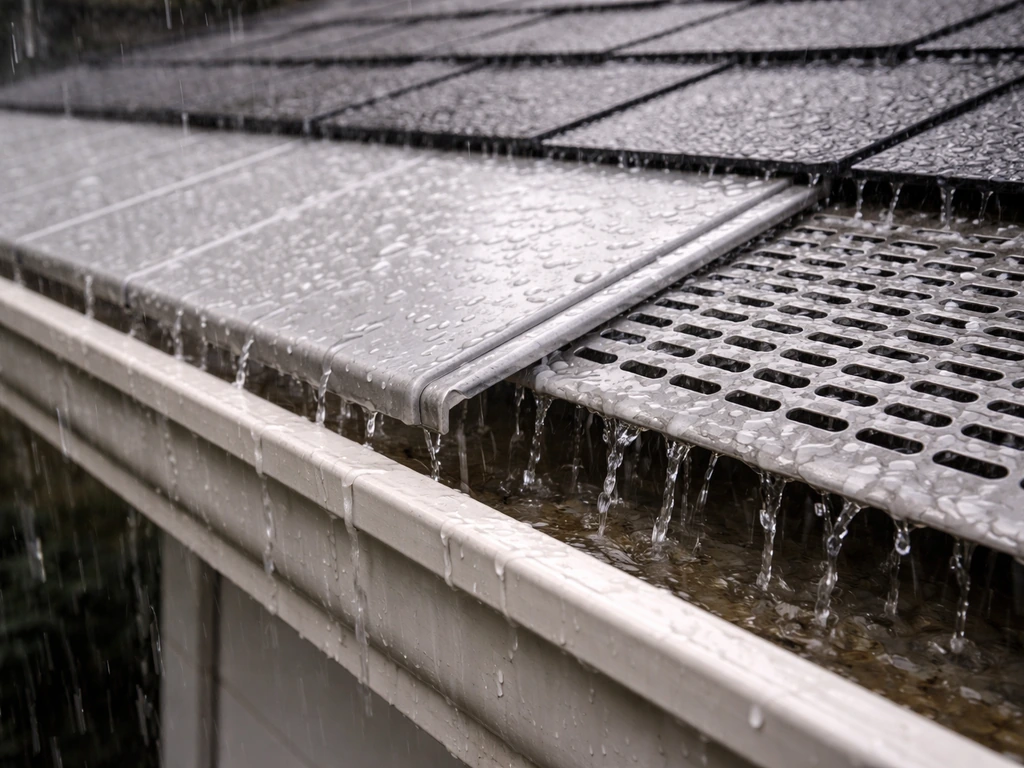
A solid aluminum cover has continuous panels from the house to the outer beam. A vented or open-lattice design has gaps, which means rain physically misses some of the cover material, reducing the total surface area generating noise. Interestingly, some open lattice designs are actually quieter simply because there's less aluminum for rain to hit. That said, they provide less rain protection overall, so it's a real trade-off.
Roof pitch and panel span
A steeper pitch sheds rain faster, which means drops spend less time on the panel and run off rather than pooling or drumming in place. Longer unsupported panel spans also flex more under impact, which increases noise. When local permitting requires roof framing plans with specified member sizes and spacings (as jurisdictions like Richardson, TX do), that's actually relevant to noise: closer rafter spacing means shorter panel spans, less flex, and less sound transmission. Garland, TX’s patio cover permitting guidance requires a building permit for patio and porch covers and restricts certain roof materials, which can affect what cover products you can install locally local permitting requires roof framing plans with specified member sizes and spacings.
Installation quality and fastening
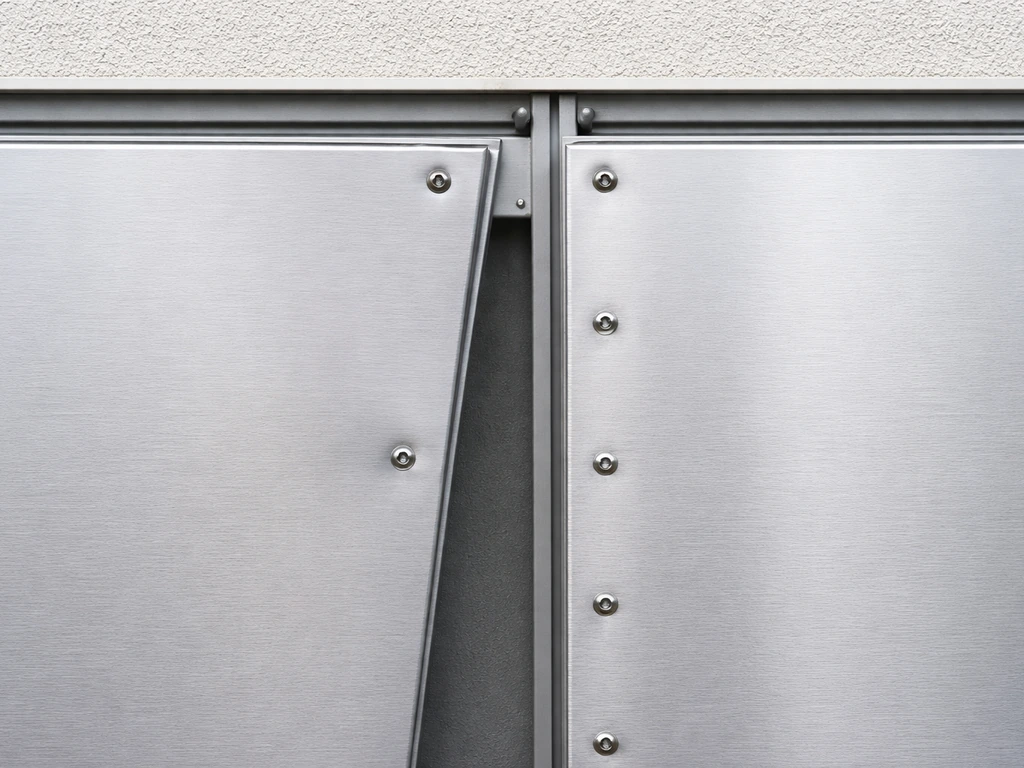
Loose panels rattle. Panels with too few fasteners flex more between attachment points. Installation guides from manufacturers like Madden Metals specify 8 to 10 fasteners per panel for a reason: that fastener density keeps the panel tight against the framing and reduces the freedom of movement that drives both rattling and resonance. Overtightened fasteners that depress into the panel material can also cause problems over time, creating corrosion points and warping that eventually produce noise.
How to tell if your cover is going to be loud (or already is)
There's a difference between a steady drumming sound and a mechanical rattle. A drumming or amplified rain sound usually points to panel resonance: your cover is vibrating and radiating the impact sound. A rattle or creak is usually a fastening or contact issue where something is loose or rubbing. Knowing which problem you have tells you which fix to try first.
Here are some quick checks you can do right now, no special tools needed:
- Press up gently on a panel from below. If it flexes noticeably, it's either unsupported over a long span or not fastened tightly enough, and rain will flex it the same way.
- Look for any panels that sit proud of the framing, or that have gaps at trim edges. Air gaps at the perimeter let sound escape and amplify the resonance chamber effect.
- Check every visible fastener for tightness. A fastener you can move by hand is contributing to rattle noise.
- Run water over the cover with a hose at low pressure during dry weather. You'll hear immediately whether it's a resonance issue (broad drumming) or a specific rattle from a loose contact point.
- Look at your trim and end caps. Trim pieces that have pulled away from the panel or the wall create both resonance chambers and rattle points.
- Determine if your cover is insulated or non-insulated. If you can't find the spec sheet, knock on a panel: a hollow ring means single-skin; a duller thud usually means there's foam inside.
One reliable sign you have a resonance problem rather than a fastening problem: the cover sounds disproportionately loud for the amount of rain actually falling. If a light drizzle sounds like it's pouring, the panel assembly is amplifying impact noise rather than just transmitting it at a normal level. This is a well-documented homeowner complaint with non-insulated aluminum covers specifically.
Ways to quiet an aluminum patio cover
Quick fixes you can do today
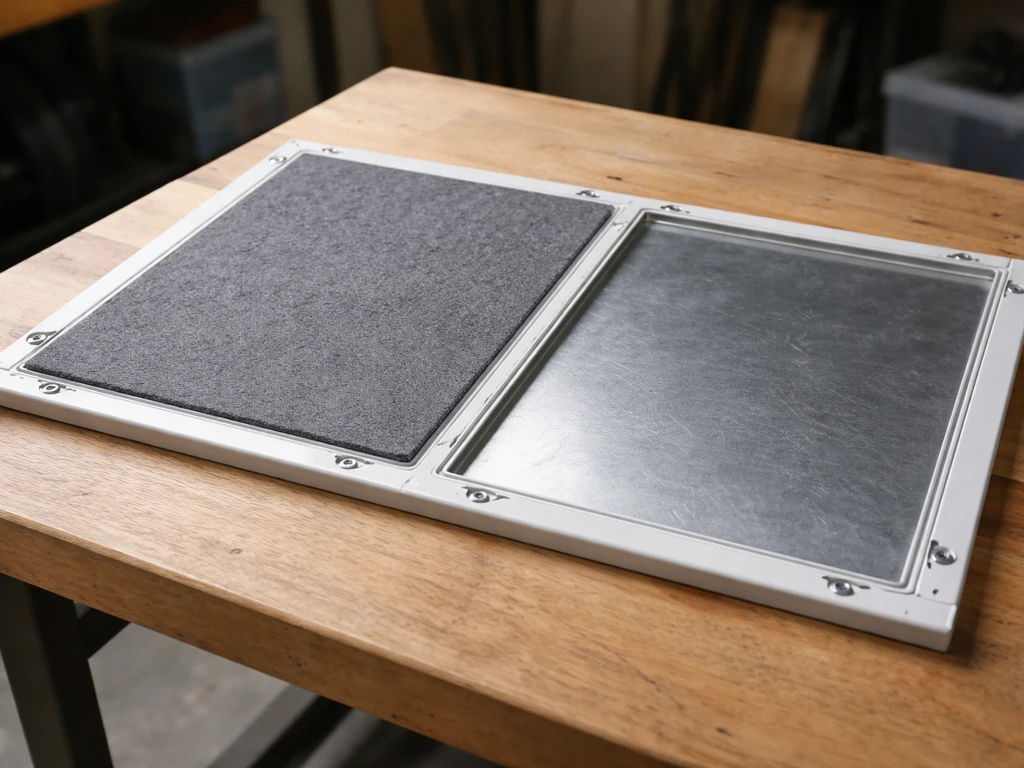
- Tighten all fasteners: Go around every visible screw and fastener and snug them up. Don't overtighten to the point of depressing the panel material, but eliminate any play. This is the cheapest fix and often addresses rattling immediately.
- Re-seal trim and edge caps: Use a compatible exterior sealant or caulk to close any gaps between trim pieces and the panels or wall. This kills resonance chambers at the perimeter and stops water infiltration that can worsen noise over time.
- Add rubber isolation washers: If you're re-fastening or adding fasteners, rubber or neoprene washers between the fastener head and the panel dampen vibration transmission at the attachment point.
- Pad metal-on-metal contact points: Anywhere that two aluminum surfaces touch without isolation (like where a panel rests on a beam), add thin closed-cell foam tape or rubber weatherstripping. This stops the metal-on-metal ringing that's distinct from impact noise.
- Install wind baffles at open ends: Exposed panel edges at the outer beam or open sides can act as resonating surfaces in wind and rain. A proper end cap or wind baffle trim piece closes this off.
Bigger upgrades if quick fixes aren't enough
If the cover is genuinely resonating and the fastening is already solid, you're dealing with a panel-assembly problem and need to add damping mass to the system. The most effective upgrade is adding an acoustic underlayment or rubberized membrane directly to the underside of the panels, or above them if accessible. If you're comparing options for aluminum patio covers in Fort Worth, TX, focus on insulated panels and proper installation to cut down impact noise aluminum patio covers Fort Worth TX. Acoustic membranes work by absorbing vibration energy at the panel surface before it radiates downward as sound. This is the same principle used in commercial metal-deck roof assemblies to address rain impact noise.
If your cover is non-insulated and you're replacing panels anyway, the clear upgrade path is switching to insulated laminated panels. Products using a high-density EPS foam core between two aluminum skins provide built-in damping and are marketed specifically for rain and hail noise reduction. Alumawood also describes how aluminum patio cover products can produce a noticeable rain sound, depending on how the system is made.
If you're also weighing a cost question, insulated laminated Solara patio cover panels tend to be a more premium option than single-skin aluminum, so pricing varies by size and design how much do solara patio covers cost. This is a real structural upgrade, not a marketing claim: the foam core physically absorbs the impact energy that would otherwise make the outer skin ring.
Adding solid sheathing or a plywood deck layer above the existing panels, where the framing allows it, is another option that mimics how properly built metal roofs stay quiet. The solid deck prevents panel flex across spans and introduces mass that dampens vibration. It's a bigger project and adds weight, so verify your framing can support it before going this route.
How aluminum compares to other cover materials for rain noise
Every cover material has a different noise profile in the rain. Here's an honest side-by-side based on real-world performance:
| Material | Rain Noise Level | Why | Best For |
|---|---|---|---|
| Non-insulated aluminum | Loud to very loud | Thin single skin over air gap acts as a drum; minimal damping | Budget installs where noise isn't a concern or some rain sound is desired |
| Insulated aluminum (foam core) | Moderate to quiet | EPS core absorbs impact vibration before it radiates | Homeowners who want aluminum durability without the noise trade-off |
| Polycarbonate | Loud, with echo | Lightweight, relatively flexible panels ring and echo under impact; homeowners report even a light rain sounds amplified | Natural light priority; accept noise or add underlayment |
| Wood | Quiet to moderate | Wood naturally absorbs vibration; solid decking with shingles or sheathing adds further damping | Aesthetics-focused installs; higher maintenance trade-off |
| Vinyl | Moderate | Thicker than aluminum but can still resonate; quality varies significantly by manufacturer and panel thickness | Low-maintenance installs; mid-range noise performance |
| Solid aluminum (no vents) | Moderate to loud | More surface area than vented designs = more rain contact; noise depends heavily on panel gauge and fastening | Full rain protection; noise manageable with good installation |
| Open lattice/vented aluminum | Quieter than solid | Less total panel surface for rain to strike; some rain passes through gaps | Partial shade; trade-off between coverage and noise |
Worth noting: polycarbonate covers are a common recommendation for homeowners who want natural light, but the rain noise on polycarbonate can be just as bad or worse than bare aluminum. If you're considering polycarbonate specifically to avoid the aluminum noise reputation, know that lightweight translucent panels have their own resonance and echo issues. Wood is genuinely the quietest option but comes with maintenance demands (painting, sealing, rot protection) that aluminum avoids entirely. If you want aluminum's durability and low maintenance, insulated panels are the right call.
Buying and installation tips to avoid the noise problem from the start
If you're shopping for a new cover rather than troubleshooting an existing one, here's what to look for and ask about before committing: If you want practical guidance before you buy, check recent aluminum patio covers reviews for real homeowner experiences with different panel styles and insulation.
- Specify insulated panels upfront: Ask your dealer or contractor explicitly whether the panels are insulated (foam core between two aluminum skins) or single-skin. Non-insulated panels are cheaper but louder. If rain noise is a concern, insulated is the only aluminum option worth considering.
- Ask about panel gauge: Heavier-gauge aluminum skins flex less under rain impact. A thicker outer skin on an insulated panel is better than a thin one, even if the foam core is the same.
- Verify fastener schedule: Make sure the installer is following the manufacturer's specified fastener count per panel. Fewer fasteners than spec means more panel flex and more noise long-term.
- Check the framing span: Closer rafter spacing means shorter unsupported panel spans and less flex. If you're having a custom cover built, ask for rafters no more than 24 inches apart if rain noise is a priority.
- Add rubber isolation at all contact points during install: This is easiest to do during initial installation and nearly impossible to retrofit cleanly. Ask your installer to use rubber or neoprene washers on all fasteners and foam isolation tape wherever panels rest on framing.
- Seal all trim and edge caps before you finish: Every open edge is a resonance point. A thorough perimeter seal with exterior caulk during installation is far easier than retrofitting later.
- Check local permit requirements before finalizing your design: Some jurisdictions (like Garland, TX) restrict certain roof materials on patio covers, and framing plan requirements (as in Richardson, TX) may affect your rafter spacing options. Knowing this early prevents redesigns.
One last thing worth considering: if you're evaluating aluminum patio cover brands and systems, noise performance often correlates with overall build quality. If you're also wondering how long aluminum patio covers last, focus on the panel coating, fastener type, and installation quality since those factors influence lifespan in wet weather. A brand that builds heavy-gauge insulated panels with a proper fastener schedule and full trim system is going to outperform a budget kit on every metric, not just rain noise. Cost, durability, and installation quality are all connected, so it's worth looking at full reviews and real-world performance data for any system you're considering, especially if you're in a high-rainfall area.
FAQ
How can I tell if my aluminum patio cover is resonating versus rattling?
If the sound is mostly a steady drumming that tracks with rainfall intensity, it usually points to panel resonance (the panel assembly vibrating). If it sounds like intermittent rattles, ticking, or creaks that happen when raindrops hit specific spots or when wind gusts arrive, it is more often a fastening, contact, or framing clearance issue. A quick way to separate them is to listen during a light steady rain, then during occasional heavier drops, if the noise changes character it often reveals which problem you have first.
Why is my cover loud even during a drizzle, not just heavy storms?
Light rain can be surprisingly loud if your cover has large unsupported spans, minimal under-panel damping, or too few fasteners per panel. Even without a “drum” effect, loose attachment points can create a rattle that becomes noticeable with drizzle because the impacts are frequent. If you notice the noise is worst at the middle of longer runs, that pattern usually indicates resonance from flex rather than a localized loose piece.
Will a noisy patio cover sound louder inside my home, or only on the patio?
Yes. Interior noise depends on what is under the patio cover and how it is connected to your home. If the cover shares structural members with the house, vibrations can transfer into the framing and carry sound indoors. Also, if there is little or no insulation or dead-air space in the ceiling below, you will hear more impact noise. Adding damping on the underside helps most when the sound path to the living space is short.
Are solid aluminum covers always louder than vented or lattice designs?
You should not assume the loudest “look” is the noisiest. Solid covers can be loud if they are single-skin and mounted over open air with no damping. Open-lattice designs may be quieter because less aluminum area is struck, but they can reduce rain protection. The trade-off is that quieter often means more gaps, so confirm whether the design still meets your goal for splash and runoff.
What is the best order of operations for fixing noise, underlayment first or fastener adjustments first?
The fastest and most targeted fixes are those that change how the panel vibrates. For resonance noise, add an acoustic underlayment or rubberized membrane to the underside where possible, or to the top if you can access it safely. For rattle noise, tighten or re-set the fasteners, verify correct spacing, and check for trim pieces rubbing on adjacent members. Try to identify the dominant noise type before you invest in a full panel replacement.
Can too many fasteners, or the wrong fasteners, make the noise worse?
You typically want fasteners that keep the panel tight without crushing the panel material. Under-tightening allows movement, which increases rattling and resonance. Over-tightening can deform panels and create long-term issues at the fastener locations, including accelerated corrosion. If you are replacing any fasteners, match the original fastener type and pattern rather than “upgrading” to a random longer or thicker screw.
Will changing the pitch of the patio cover reduce rain noise enough on its own?
Yes, but only when you address how it affects vibration. A steeper pitch can reduce “drumming time” because drops run off faster, but it does not fix a single-skin panel that is already resonating strongly. If you change pitch or span during construction, it can help, but the most reliable noise reductions still come from damping mass (insulated laminated panels or acoustic membranes) and limiting panel flex.
What acoustic retrofit can I do if I cannot replace the whole cover?
If you have access to the underside, installing a rubberized membrane or acoustic underlayment directly under the aluminum skins is often the most effective retrofit for impact noise. If access is limited, your options narrow, and you may need to rely on laminated insulated panels during replacement. For any retrofit, confirm clearance for drainage and trim, because adding layers that block water paths can create staining or corrosion risks over time.
If my noise is mostly rattling, what should I check first?
Rattles are usually solvable without changing the panel system. Common causes include trim pieces that are contacting the panel, gaps between panel edges and framing, or fasteners that were installed too sparsely along longer runs. Start by reproducing the noise with light impacts (like controlled sprinkling) and identify the exact areas where the sound begins. Then re-seat and secure those specific points, rather than spreading adjustments across the entire assembly.
Is polycarbonate a guaranteed way to avoid rain noise compared with aluminum?
Polycarbonate is not automatically quieter. Because it is lightweight and translucent, it can develop its own resonance and echo-like impact sound, especially when it is installed over an open air space with little damping. If rain noise is your main concern and you want low maintenance, insulated laminated aluminum typically offers a more predictable noise profile than translucent plastics.
Is wood truly the quietest option, and how does it compare in real-world maintenance?
Wood is often perceived as the quietest option because it is heavier and does not behave like a lightweight metal drum. However, wood brings maintenance that aluminum avoids, like sealing, painting, and rot protection. If you want the durability and low upkeep of aluminum, you usually get the best noise reduction by using insulated laminated panels rather than switching materials.
What factors matter most for long-term noise performance in high-rain climates?
Higher rainfall areas tend to expose weak installation details faster, especially issues like long unsupported spans, insufficient fastener schedules, and thin single-skin panels. Even with good panels, poor installation can lead to movement, corrosion at fastener points, and increasing noise over time. When evaluating a system for wet climates, prioritize documented fastener patterning, panel gauge, foam core density, and the completeness of the trim and closure details.
Next Articles
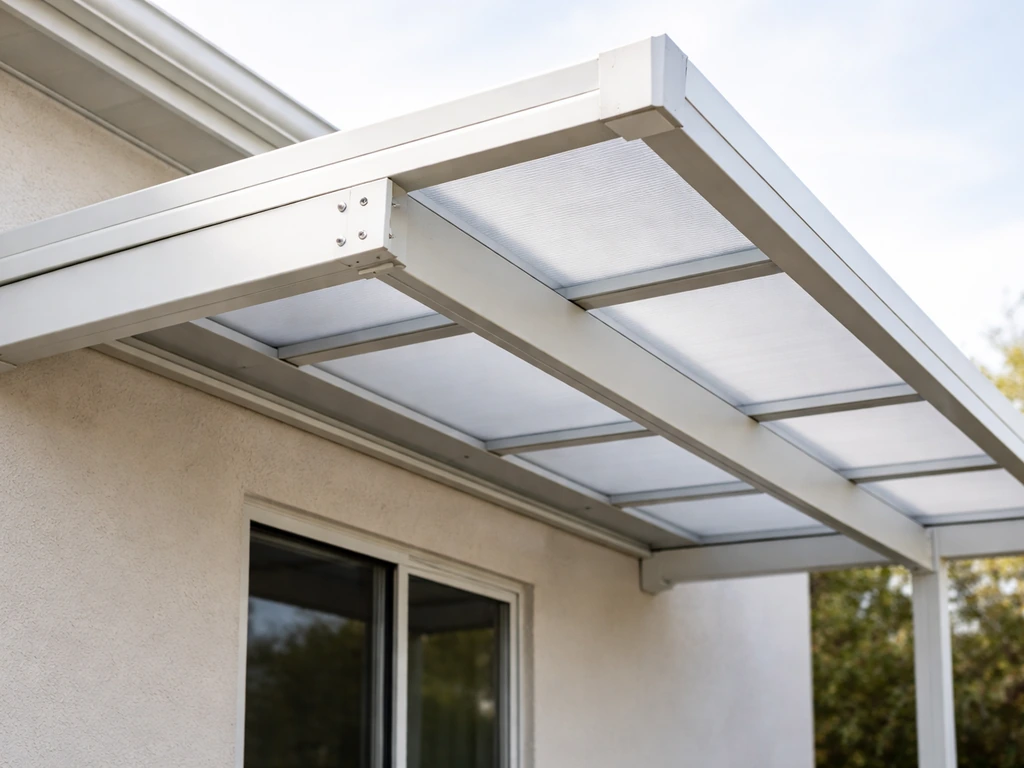
How Long Do Aluminum Patio Covers Last? Lifespan Guide
Realistic lifespan ranges for aluminum patio covers and what affects them, plus maintenance and repair vs replace guidan
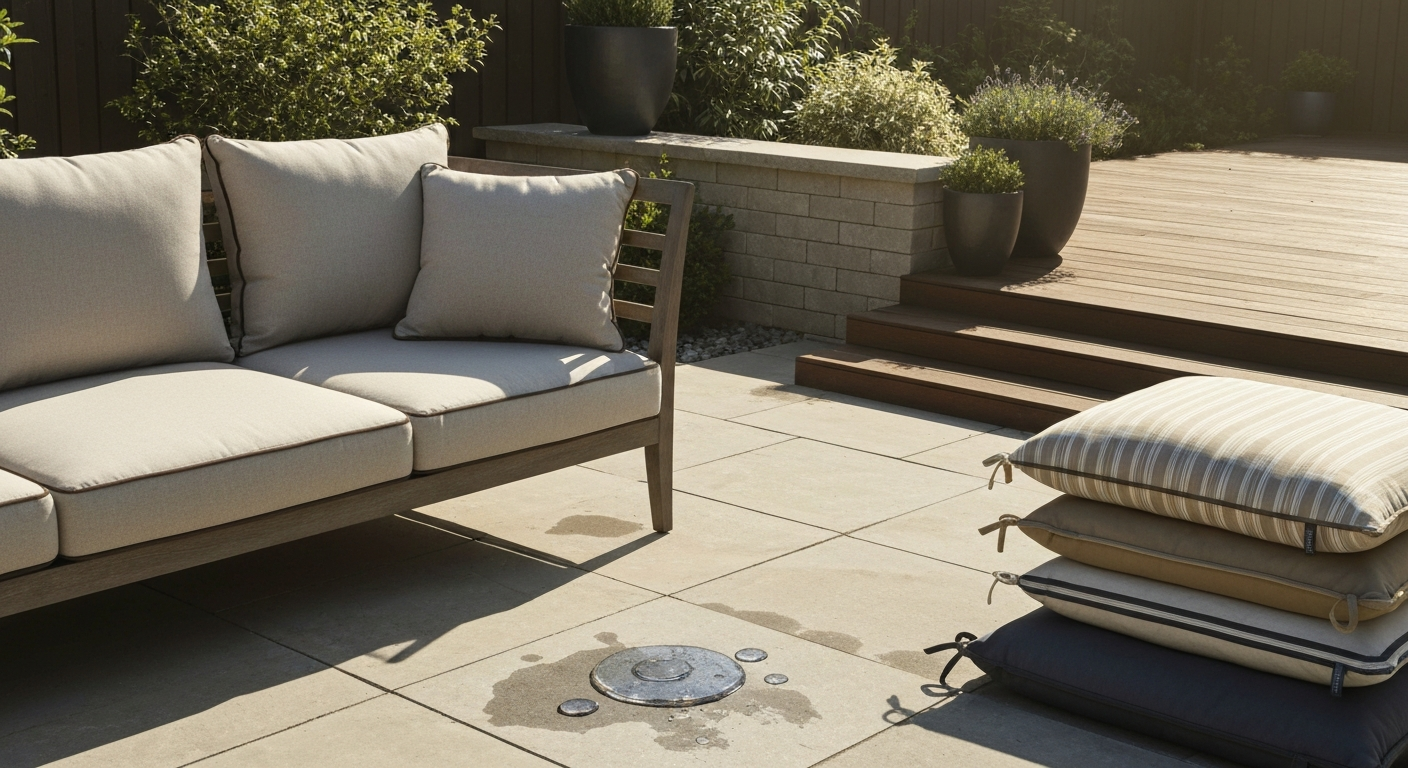
Best Sunbrella Patio Cushions: Top Picks, Guide & Maintenance
Find the best Sunbrella patio cushions: durable, fade‑resistant picks, buying tips, care, and top recommendations.
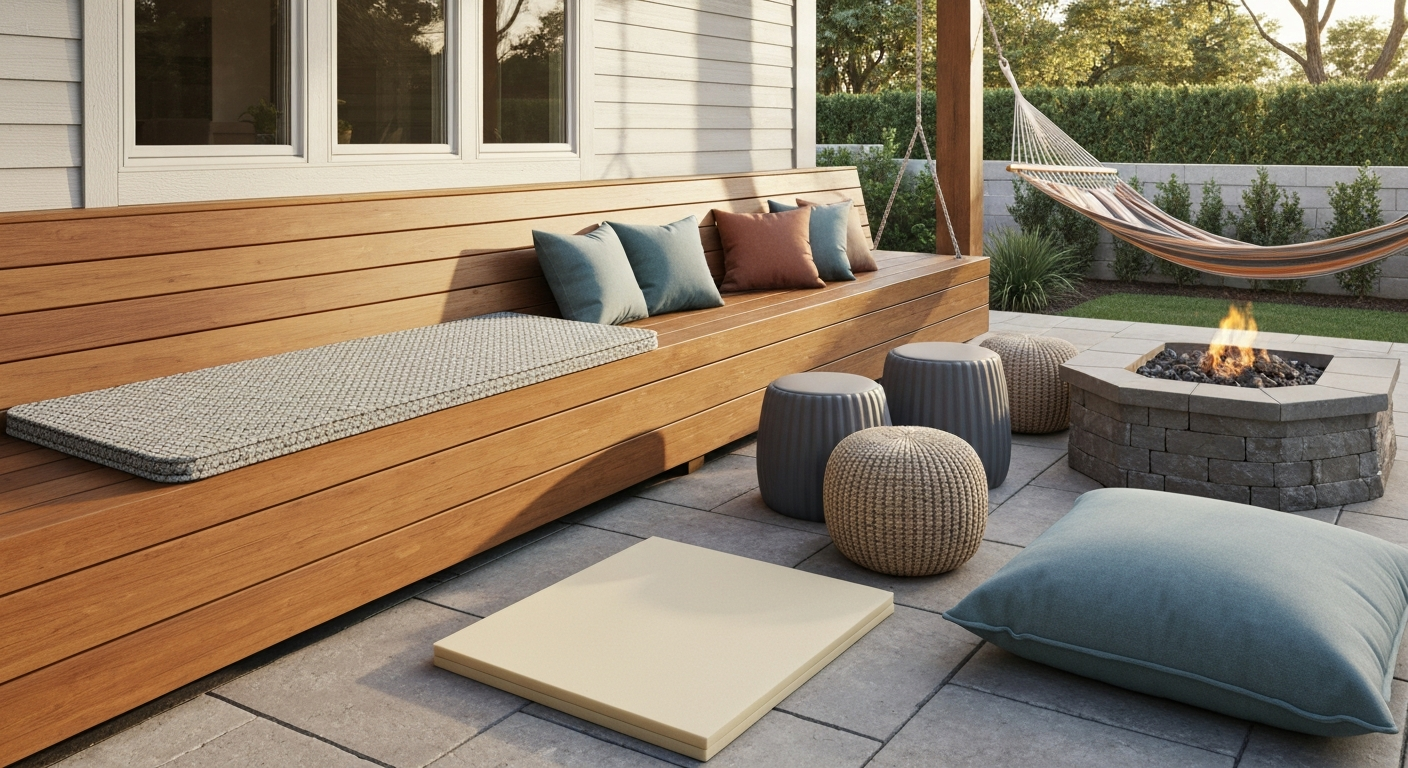
Alternative to Patio Cushions: Durable, Stylish Options and DIY
Alternative to patio cushions: durable, weatherproof seating options, pros, DIY tips & buying guide.