
Most homeowners pay between $6,000 and $18,000 installed for a Solara patio cover, depending on size, system type, and what gets added on. A basic 10x10 attached cover with professional installation typically lands around $6,000–$7,000. A larger 20x20 project with a premium louvered system, upgraded finishes, and drainage work can push past $15,000. Those aren't typos, the range really is that wide, and the factors driving it are very specific and predictable once you know what to look for.
How Much Do Solara Patio Covers Cost? Pricing Guide
Lark Perry
29 Jun 2026
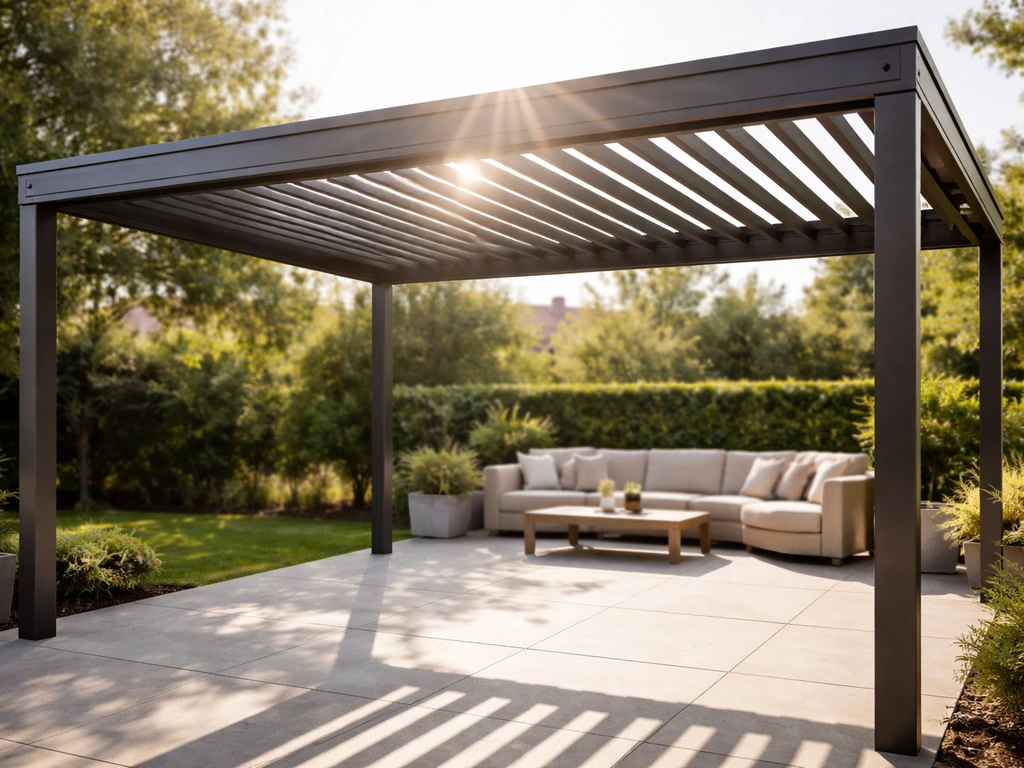
Typical Solara patio cover price ranges
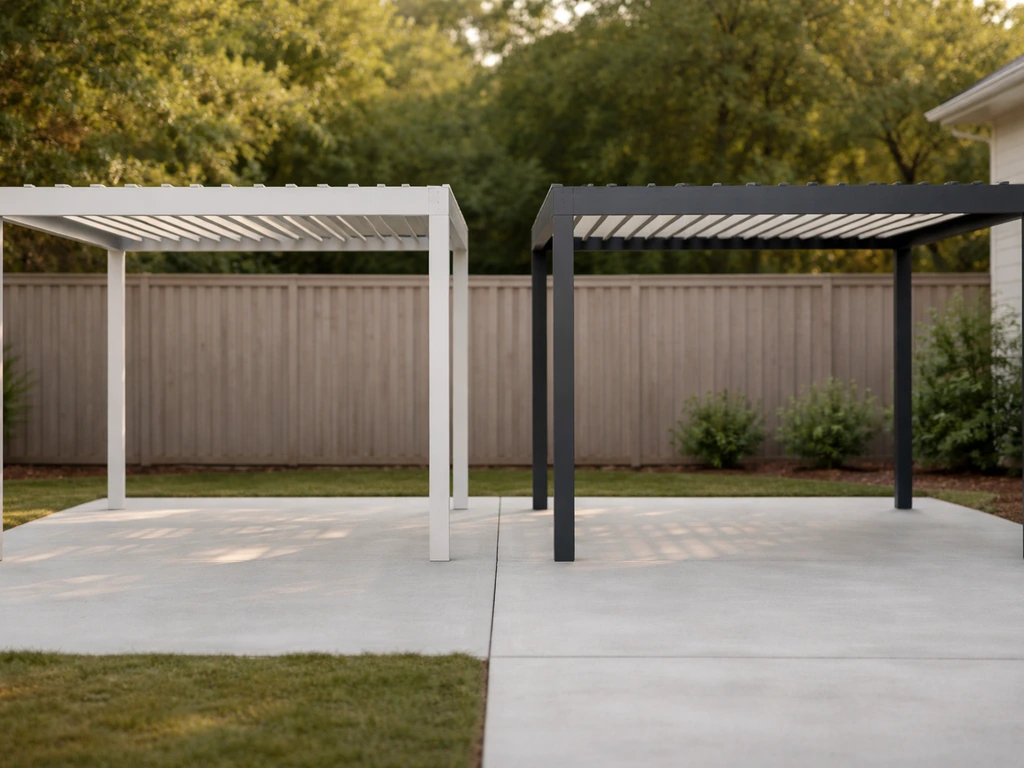
Solara makes adjustable louvered roof systems, and the brand offers two distinct types at two different price points. That matters because there's no single "Solara price", the system configuration you choose is the biggest lever on your quote, even before size or installation complexity come into play.
| Project Size | System Type | Typical Installed Cost |
|---|---|---|
| 10x10 (100 sq ft) | Standard attached, professional install | $6,000–$7,000 |
| 12x12 (144 sq ft) | Standard louvered, mid-spec | $7,500–$10,000 |
| 20x20 (400 sq ft) | Louvered roof, full install | $8,000–$18,000 |
| Any size, per sq ft | General covered patio benchmark | $50–$150 per sq ft |
The per-square-foot range of $50–$150 is a useful sanity check. Solara's roll-formed louvered system tends to sit in the lower-to-mid portion of that range, while extruded/premium configurations push toward the upper end. If a quote comes in below $50 per square foot installed, ask carefully what's being left out (permitting, site prep, footings). If it's above $150, make sure you understand what's being added.
Cost factors that change the final quote
Size is the most obvious driver, but it's not always the biggest one. Here are the specific variables that move the needle most on a Solara quote:
- System type: Solara offers roll-formed and extruded louver options. Roll-formed (louvers 3.41" wide) is the more affordable entry point; extruded systems cost more but offer different performance and appearance characteristics.
- Span and engineering: Longer rafter spans between posts require structural engineering review. Maximum aluminum rafter spans have hard limits based on load requirements, and once your project exceeds standard span thresholds, an engineering package becomes mandatory — adding cost.
- Attached vs. freestanding: Attached covers fasten to the house and require proper flashing and connection hardware. Freestanding covers need their own post footings and sometimes more structural support, which adds material and labor.
- Finish and color: Powder-coat finishes vary in complexity. Custom colors cost more than standard offerings.
- Regional labor rates: Labor in a high-cost metro can run significantly more than the same job in a rural area. Contractor overhead, not just time, drives this.
- Permitting complexity: Some cities charge permit fees by the square foot (Garland, TX, for example, uses $0.52/sq ft with minimums), while others have flat fees. Cities like Denton and Joshua, TX require site plans and sometimes a licensed engineer's stamp for certain conditions.
One thing that catches buyers off guard: the required slope for rain runoff. Solara adjustable covers need a minimum slope of 1/2 inch per foot for proper drainage. If your patio slab or attachment point doesn't naturally accommodate this, the installer has to compensate, which adds labor time and sometimes materials.
Material and style differences: aluminum vs. other options
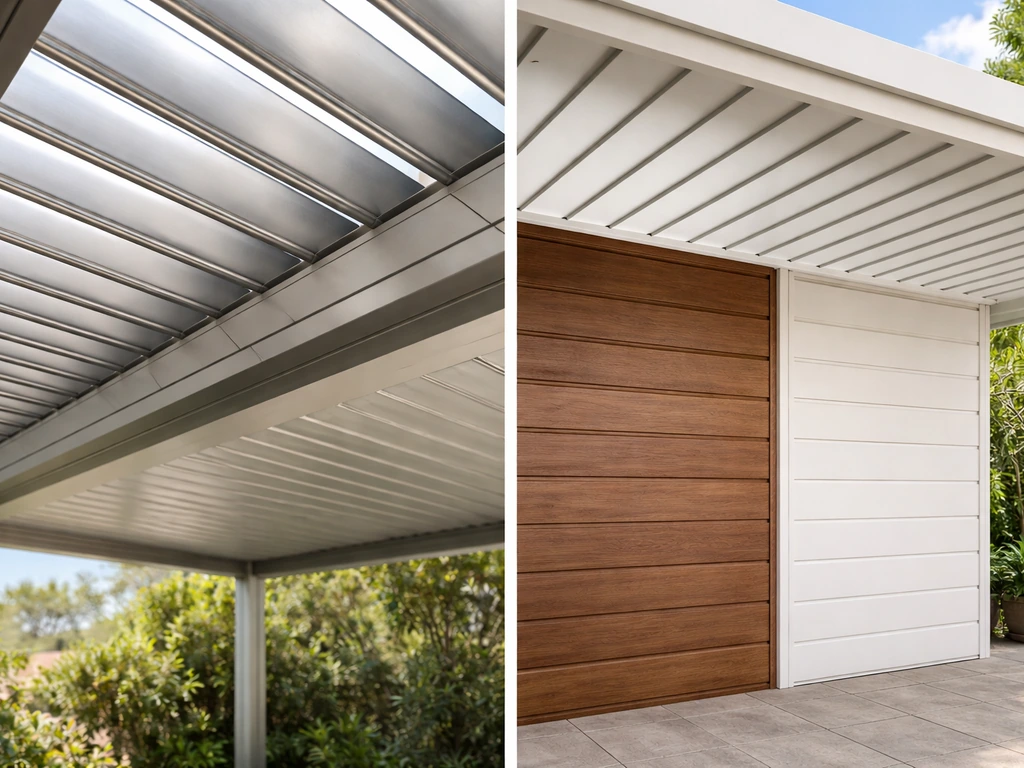
Solara covers are aluminum, fully recyclable, maintenance-free, and designed to handle rain, wind, and sun without rotting, warping, or requiring paint touch-ups. That's a meaningful advantage over wood patio covers, which need regular sealing or painting and can warp in wet climates. Vinyl covers are lower cost but can fade and become brittle over time in UV-heavy environments. Fabric or sail shade systems cost far less upfront but don't offer the same weather protection or the adjustable-louver functionality that makes Solara distinct.
| Material | Typical Installed Cost (20x20) | Maintenance | Adjustability | Longevity |
|---|---|---|---|---|
| Aluminum (Solara louvered) | $8,000–$18,000 | Very low | Yes (adjustable louvers) | 25+ years with proper install |
| Wood patio cover | $6,000–$14,000 | High (paint/seal regularly) | No | 15–20 years with upkeep |
| Vinyl/aluminum solid panel | $5,000–$12,000 | Low | No | 20+ years |
| Fabric/shade sail | $500–$3,000 | Moderate (cleaning, replacement) | Limited | 5–10 years |
The louvered roof is really the key differentiator here. With a Solara system, you can open the louvers for sun and close them during rain, it's not just a shade structure, it's an adjustable outdoor room. That functional difference is why the price is higher than a basic solid-panel aluminum cover and why buyers comparing it to a simple pergola or wood shade structure sometimes get sticker shock. If you want more specific guidance, check out aluminum patio covers reviews to compare real-world experiences with different styles and installers basic solid-panel aluminum cover. You're paying for weather control, not just shade.
Installation costs vs. DIY: what labor actually covers
Real-world contractor quotes often break down roughly 60% materials and 40% labor, though this varies. One Reddit thread showed a contractor splitting a ~$10,000 patio cover project as $6,000 labor and $4,000 materials, a higher-than-typical labor share, likely reflecting a complex layout or regional premium. On simpler attached configurations, some installers report spending as little as 3–5 hours on labor for a basic small cover, but that doesn't account for site prep, permit runs, or inspection time.
DIY installation is technically possible with Solara kits available through resellers like Alumashade, but there are real tradeoffs. The most important one: Solara's load warranty only applies when the cover is installed by an authorized Solara dealer following the official engineering package and local building codes. If you install it yourself or use an unauthorized contractor, you lose manufacturer warranty coverage on structural load performance. For a $6,000–$15,000 investment, that's not a small consideration.
Site prep adds cost that's easy to overlook. If you don't have an existing concrete slab that meets engineering requirements, footings are required, this is spelled out directly in Solara's installation instructions. Footing costs vary by soil type, depth requirements, and local code, but budget at least $500–$1,500 for this if your patio doesn't already have a code-compliant slab.
Permit fees add more: typical residential patio cover permits range from $75 (simple flat-fee jurisdictions) to several hundred dollars in cities with square-footage-based fee schedules. The City of Garland, Texas states that a building permit is required for patio or porch covers, whether attached or freestanding, and it provides permit fee processing details including a fee of $0.
52 per square foot with stated minimums plus a processing fee. The City of Joshua, TX’s patio cover guidance also notes that permits require the patio cover requirement to be “listed,” and the applicant may need to provide a copy of that requirement, with a licensed engineer potentially required for certain conditions patio cover permits.
Accessories and upgrades that add to your quote
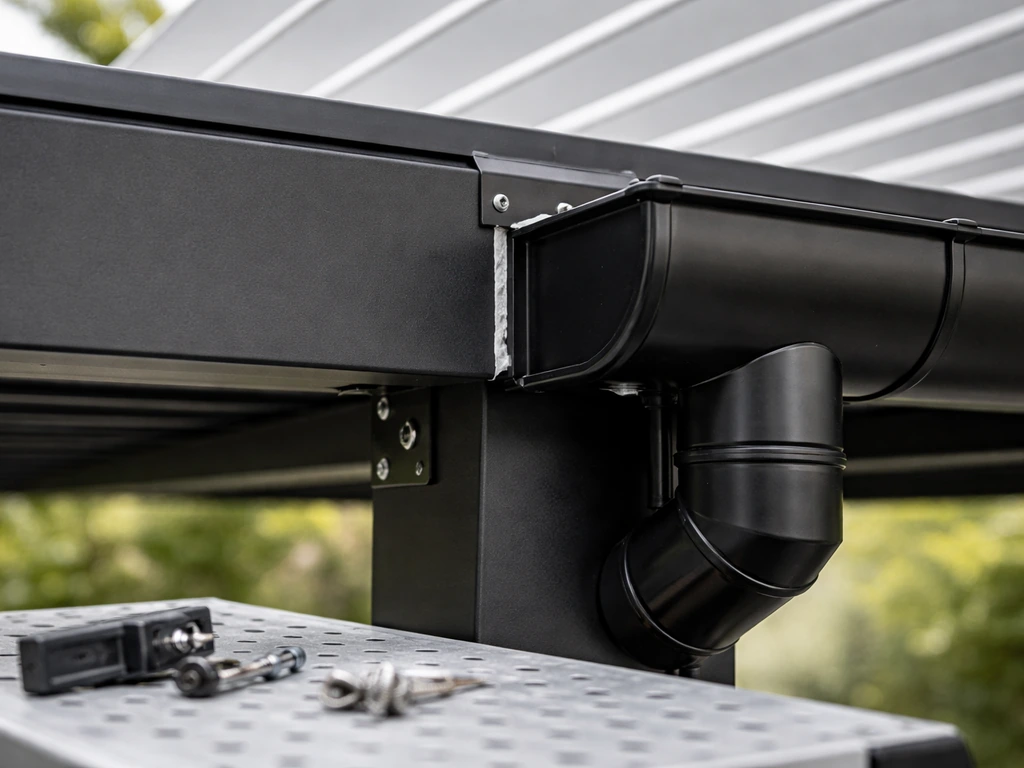
The base Solara system is the louver structure, posts, beams, and rafters. A lot of what people picture in a finished outdoor room is sold separately, and this is where quotes diverge most dramatically between a basic installation and a fully built-out space.
- Gutters and drainage: Standard Solara kits do not include gutters, and flashing is also not part of the base package. Adding gutters requires outside rafter modification. If water management is important to your setup (and it usually is), budget for this separately.
- Motorized louvers: Motors are available as an add-on and come with remote controls included. This is one of the more popular upgrades and meaningfully increases both the comfort and cost of the system.
- Screens and curtains: Retractable screens or privacy curtains can be added to the perimeter, turning an open shade structure into a more enclosed outdoor room.
- Lighting: Recessed or integrated lighting is a common request but adds wiring, fixtures, and electrician labor to the project. Note that ceiling fans and lights are not engineered for all Solara solar cover configurations — some system types have engineering limits here, so confirm compatibility before assuming you can add them.
- Rainwater capture and diversion: Solara's aluminum design naturally channels rain, and some setups include rainwater storage or diversion systems. AlumWorks highlights this as a feature; the actual plumbing or storage component is an add-on cost.
- Finish upgrades: Custom powder-coat colors, anodized finishes, or two-tone options cost more than standard colors.
A realistic tally of common upgrades on a mid-size project: motors ($500–$1,500), gutters and drainage ($300–$800), perimeter screens ($1,000–$3,000), and lighting with electrical ($500–$2,000). It's easy to add $3,000–$5,000 to a quote before you've changed anything about the core structure.
How to get accurate quotes and avoid surprises
The most common reason buyers get surprised by a final bill is that early quotes were light on scope. Either the contractor quoted only materials and rough labor, or the homeowner didn't ask the right questions. Here's how to go in prepared:
- Measure your patio before you call anyone. Width, depth, and the height at both the house attachment point and the outer edge. Note whether there's an existing concrete slab, and if so, its dimensions and approximate age/condition.
- Decide attached or freestanding. This affects footing requirements, permitting, and the structural engineering approach.
- Ask every contractor to break out materials, labor, site prep/footings, permitting, and accessories as separate line items. If they give you one lump number, push for the breakdown. This is how you compare quotes fairly.
- Ask specifically whether the quote includes gutters, flashing, slope adjustment (if needed), permit fees, and final inspection. These are the most commonly omitted items in low quotes.
- Confirm the installer is a Solara authorized dealer if warranty coverage matters to you. Unauthorized installation voids the load warranty.
- Check your local permit requirements before finalizing a budget. Look up your city's building department website — cities like Garland, TX, publish their exact fee schedules online, and some require engineer-stamped drawings for attached covers.
- Ask about design change fees. Some municipalities charge a fee (on top of the original permit) if the project scope changes mid-build. Waco, TX, for example, charges $60 plus 10% of the original permit fee for scope-of-work changes.
Also worth asking: what happens after installation if something goes wrong? Solara's warranty is conditioned on not repairing or altering components without Solara authorization. If you're thinking about DIY modifications down the road (adding a light fixture, adjusting the slope, swapping louver panels), understand what that does to your warranty before you start.
Budgeting and ROI: what different spend levels get you
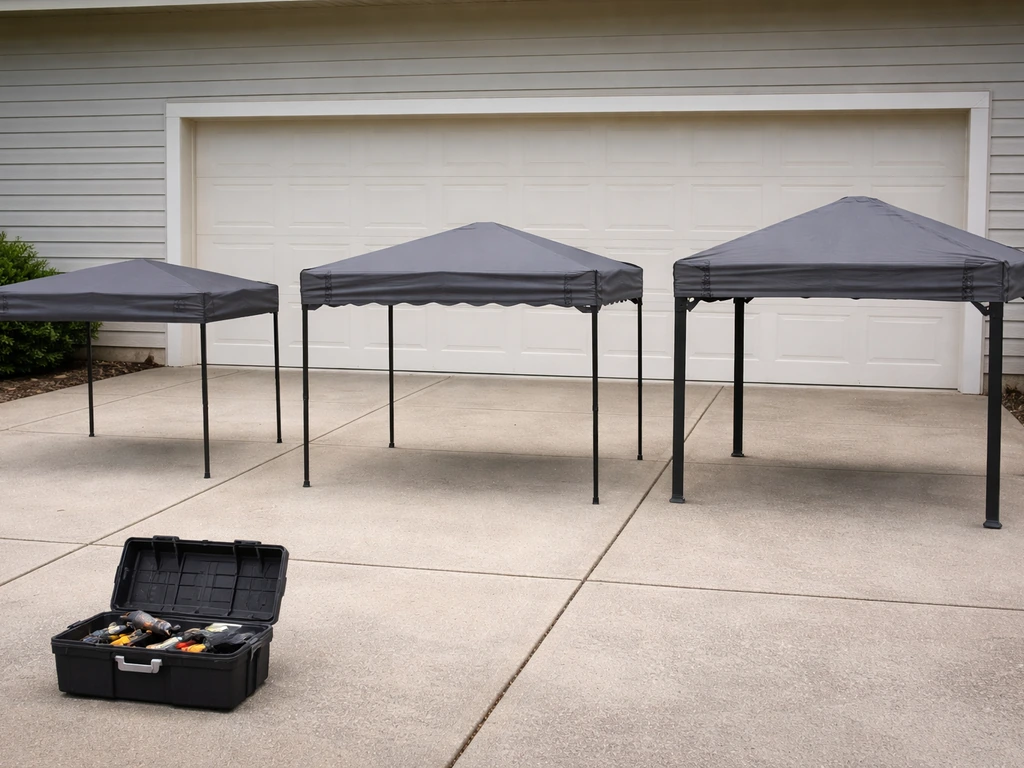
Here's an honest breakdown of what to expect at different budget levels, so you can set realistic expectations before you start calling contractors.
| Budget Range | What You Get | Best For |
|---|---|---|
| $5,000–$8,000 | 10x10–12x12 attached cover, standard roll-formed system, basic finish, no major add-ons, permit included | Small patios, entry-level outdoor shade with adjustable louvers |
| $8,000–$12,000 | 12x16–16x16 cover, mid-spec louvered system, gutters, basic lighting, standard finish | Medium patios, good balance of coverage and features |
| $12,000–$18,000+ | 20x20 or larger, premium extruded system, motorized louvers, screens, drainage, custom finish, full permit/engineering | Serious outdoor room build, maximum weather protection and comfort |
On ROI: a well-installed patio cover adds usable outdoor living space, which consistently improves home resale appeal. Remodeling cost-vs-value data generally puts outdoor living improvements in the 50–80% cost-recovery range depending on region and quality of execution. Aluminum louvered covers like Solara, because they're durable and low-maintenance, tend to hold up well through the home selling process compared to wood covers that show age. If you are comparing aluminum patio covers in Fort Worth, TX, make sure you factor in local permits, drainage needs, and wind-rated installation Aluminum louvered covers. If you're in a hot or rainy climate where outdoor space matters to buyers, the functional value is even higher.
The most important budgeting advice: build in a 10–15% contingency. Footing surprises, slope correction, permit delays, and last-minute accessory additions are the norm, not the exception. If your target is $10,000 all-in, plan to quote for an $8,500–$9,000 base project and hold the rest for the inevitable additions. That way you don't end up cutting something important, like gutters or proper drainage, because the budget ran out.
If you're comparing Solara specifically to other aluminum louvered systems like Equinox, the installed price positioning matters: Solara's roll-formed system is generally the more accessible entry point, while Equinox tends to run higher (roughly $35–$75 per square foot installed range is often cited for Equinox). Durability, long-term performance, and noise considerations, like how the aluminum handles rain, are worth exploring too as you narrow your choice.
FAQ
If my quote says “Solara patio cover,” what exactly should I confirm is included in the price?
Ask for a line-item scope that lists the louver roof system, posts and beams, any required engineering, fasteners, and whether gutters and drainage are included. Also confirm whether the contractor is pricing only attached roofing or also includes electrical, screens, and lighting, since these commonly get added later.
How much more does a freestanding Solara cover usually cost compared to an attached one?
Freestanding layouts typically cost more because they require additional footings and structural support for wind loads. As a practical step, compare the number and spacing of posts and ask whether the quote includes a footing plan, not just the roof frame.
What should I do if my patio does not have a suitable slope for rain runoff?
Tell the installer about your current slab height and where runoff will land. Since Solara requires a minimum 1/2 inch per foot slope, ask how they will achieve it (adjusting beam levels, adding grade corrections, or incorporating drainage). Get the drainage discharge location described in writing to avoid pooling near the house.
Are permits and inspections always included in the installed price?
Not always. Ask whether the contractor includes permit filing, plan submittals if required, and inspection scheduling (including any re-inspections). For budgeting, treat permits and local fees as separate line items, because fee schedules can vary widely by city.
What warranty and load coverage do I get if I hire a non-authorized contractor?
The key caveat is that load warranty coverage is typically tied to installation by an authorized Solara dealer following the engineering package and local code. If the quote is from a contractor you cannot confirm as authorized, ask directly how warranty claims would work and request written confirmation before paying.
What changes the price the most, gutters, screens, or motors?
In many quotes, drainage/gutters affects cost earlier because it can require additional labor and routing changes to meet runoff needs. Motors and electrical are often a smaller line item by themselves, but they can trigger more detailed electrical work (conduit runs, switch placement, and outlet planning) that increases labor.
Why do two quotes with the same square footage end up very different?
Layout complexity can outweigh size. Ask about roof pitch/slope corrections, irregular attachment geometry, number of beams and support posts, wind-rated components, and whether the contractor must add engineering for your site. These factors commonly explain differences even when the footprint looks similar.
How can a quote under $50 per square foot be “missing something”?
Request clarification on what is excluded, especially footings/site prep, permitting, engineering, gutter and drainage, and any electrical allowance for lighting or motorized operation. Also ask whether the quote is for the full installed system or only the louver roof portion.
What is a reasonable contingency to expect, and what items typically trigger it?
A 10 to 15 percent buffer is common. Common triggers include footing or soil surprises, correcting an attachment point to meet slope requirements, schedule delays around permits, and last-minute additions like gutters, screens, or lighting.
Can I DIY parts of the project to reduce the cost without affecting the warranty?
Be careful. If any structural components or warranty-relevant items are altered, or if the system is not installed by the authorized pathway required for load warranty coverage, you may lose protection. If you want to DIY, ask the dealer which tasks are considered non-warranty-sensitive (such as finish trim) and get that in writing.
How do wind rating and local climate affect Solara patio cover pricing?
In areas with higher wind loads, installers may need heavier-duty engineering, stronger post spacing, and additional hardware, which raises materials and labor. Ask whether your quote is built to local wind exposure requirements and whether adjustments were made for your neighborhood’s wind conditions.
What are the most common “hidden” costs homeowners forget to include?
Budget for site prep (grading, demolition, or footing work if needed), permit fees, drainage routing and discharge location, and electrical runs if you plan lighting or motorization. Also consider small but impactful items like gutter placement, downspouts, and screen track details, since these can add up quickly.
Next Articles
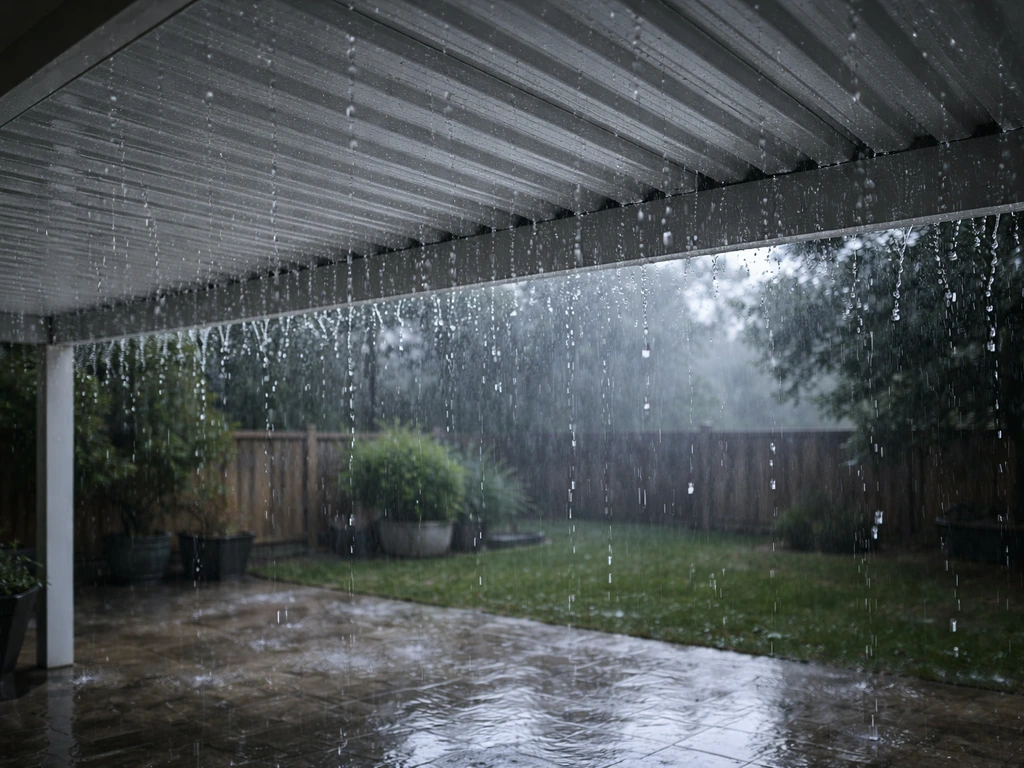
Are Aluminum Patio Covers Loud in the Rain? Noise Fixes
Find out if aluminum patio covers are loud in rain and how to stop rattles with quick fixes and upgrades.
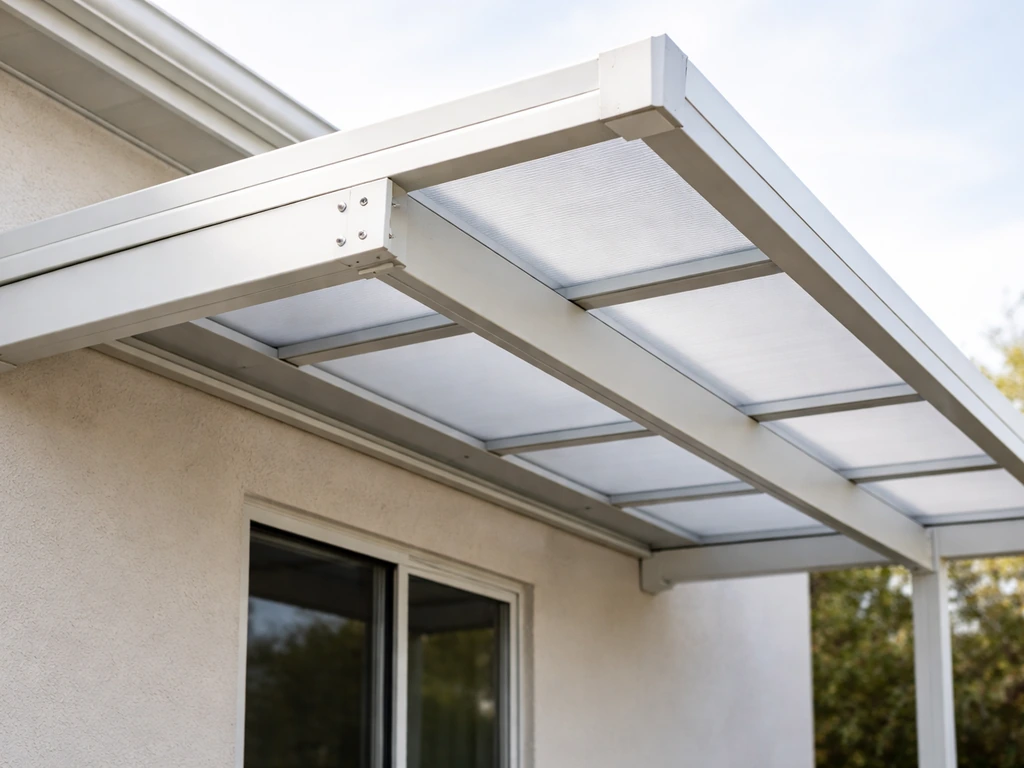
How Long Do Aluminum Patio Covers Last? Lifespan Guide
Realistic lifespan ranges for aluminum patio covers and what affects them, plus maintenance and repair vs replace guidan
Best Sunbrella Patio Cushions: Top Picks, Guide & Maintenance
Find the best Sunbrella patio cushions: durable, fade‑resistant picks, buying tips, care, and top recommendations.