
You need to measure your existing canopy frame carefully, identify how the old canopy attached (clips, straps, grommets, Velcro, or a zip-on system), and then match those dimensions and attachment details before you buy anything. Gazebo Spare Parts notes that you can identify the right replacement canopy using catalog/model/brand identifiers and then take the correct measurements for that frame type. Get those two things right and the replacement drops in without a fight. Skip either step and you'll be returning a canopy that's two inches too short or has the wrong mounting interface entirely.
Replacement Canopy Top for Patio Swing: Find, Measure, Install

Lark Perry
9 Jun 2026
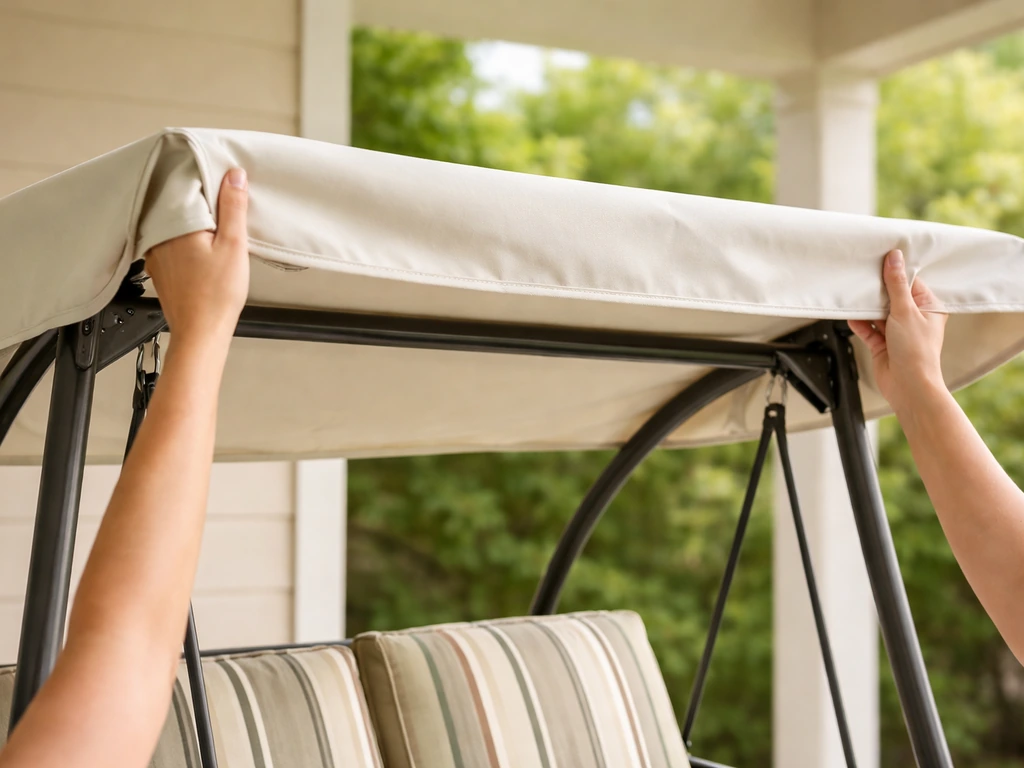
Identify your patio swing and canopy type first
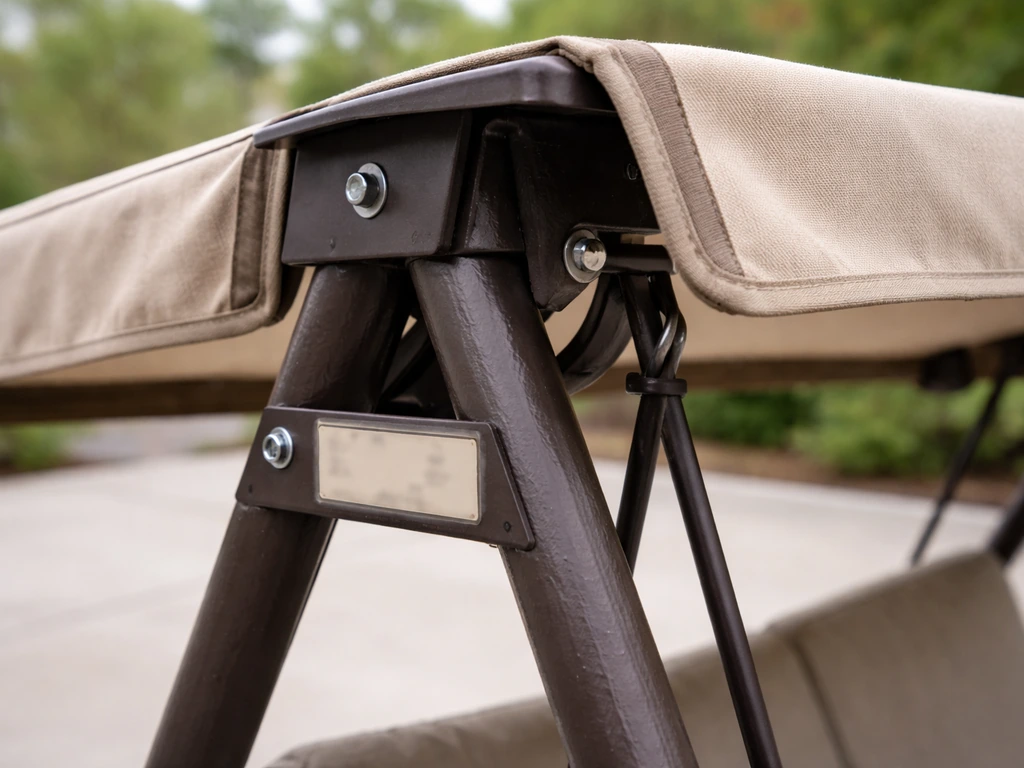
Before you touch a tape measure, figure out exactly what you have. Patio swings come in a few distinct frame styles: basic A-frame swings with a single-arc canopy, glider-style swings with a flat or slightly curved top, and gazebo-top swings where the canopy is almost tent-like and covers a full 3-person frame. The canopy shape and mounting system are completely different between these styles, so knowing which you have narrows the field fast. Choosing the best patio swing with canopy also depends on the canopy style and how it mounts to your specific swing frame.
Look for a brand name and model number on a sticker or tag on the frame, usually on one of the main support legs or underneath the seat frame. Even a partial model number is useful. Brands like Apex Garden, Outsunny, Best Choice Products, and Sunrise Outdoor all sell replacement canopy tops designed specifically for their swing models, and buying the right SKU for your model is more reliable than relying on measurements alone. One Home Depot Q&A thread I came across was very clear on this: even when measurements looked close, the fit verification only worked after confirming the exact swing model number.
If the sticker is gone, check your original receipt, the product manual (often available as a PDF if you search the brand name plus your swing's approximate purchase year), or even your email order history. Narrow it down to the brand and approximate year if you can. If you genuinely can't identify the model, you're looking at a universal replacement, which I'll cover in its own section below.
Also note the canopy's attachment style before removing the old one. The four most common systems are: hook-and-loop (Velcro) straps that wrap around frame poles, zip-on closures where the canopy fabric zips shut around a frame member, grommet-and-lashing setups where cord threads through eyelets and wraps around the frame, and clip or strap systems where fabric straps loop through metal or plastic clips riveted to the frame. Some swings combine methods, like a zip closure along the front edge plus Velcro flaps at the corners. Take a photo of each attachment point before you remove the old canopy.
Take the right measurements today
Measuring a patio swing canopy correctly is a little different from measuring a box. You need several dimensions, and you need to be specific about whether you're measuring the fabric coverage area or the frame member it attaches to, because those numbers are different.
Here's what to measure and record. Keep a notebook or use your phone's notes app as you go:
- Overall canopy length (front to back along the arc or flat top, following the curve of the frame if arched)
- Overall canopy width (side to side, measured at the widest point)
- Inside width and outside width if your frame has a track or rail system (these differ by the width of the rail itself, usually 1–2 inches per side)
- The depth/radius of the arc if your canopy is curved (measure from the highest point straight down to the plane of the front and back rails)
- The diameter or width of each frame pole the canopy slips over or attaches to
- The spacing between attachment points, clips, grommets, or Velcro patches if visible on the old canopy
- Number of canopy panels if your top is multi-paneled (common on gazebo-style swing canopies)
A detail a lot of people miss: measure the frame itself, not just the fabric. Fabric stretches, sags, and shrinks over time. The frame dimensions are fixed and will tell you the actual coverage you need. If you still have the old canopy, measure it flat on the ground in an unstretched state as a cross-check, but trust the frame measurement when there's a conflict.
For grommet-based canopies, count the grommets along each edge and note their spacing in inches. For clip systems, note the clip style (open-hook, spring-loaded, or rivet-on strap type) and measure the strap width if straps are present. Some manufacturers punch holes sized specifically for their own rivet dimensions, around 7/32 to 1/4 inch, so a replacement canopy with differently-spaced or differently-sized grommet holes won't line up.
Choose the right canopy material and features
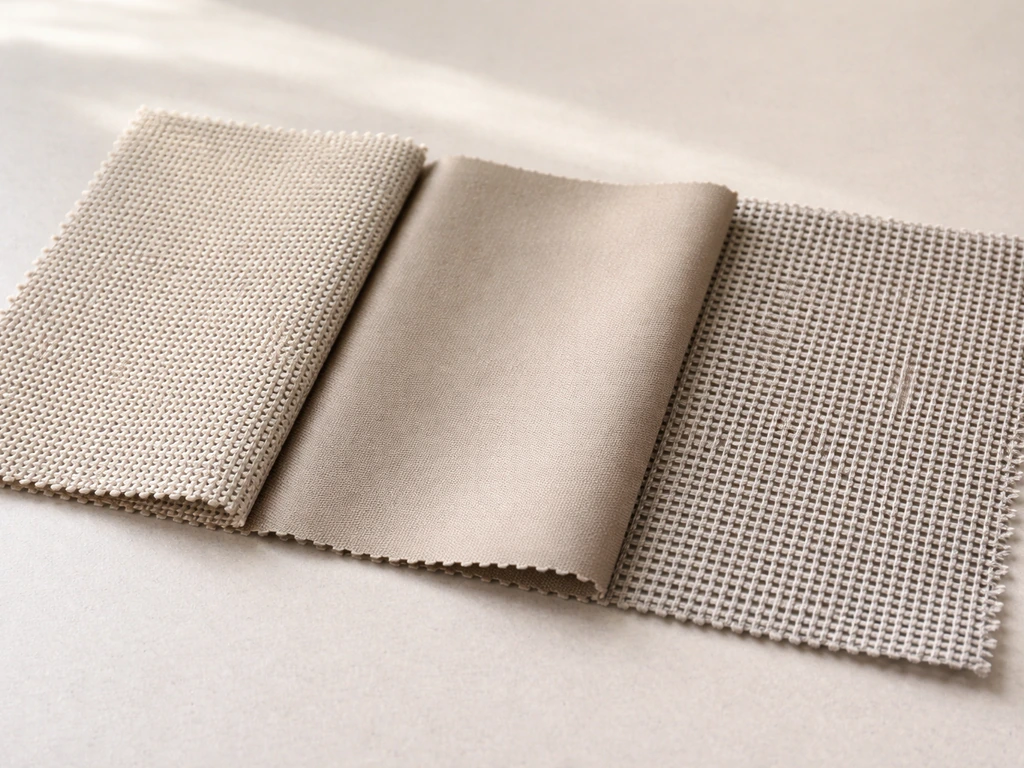
Once you have the fit sorted, material choice determines how long your replacement canopy actually lasts. This is where a lot of people spend the least time and end up replacing the same canopy again two summers later.
The three materials you'll encounter most often in replacement canopy listings are standard polyester, solution-dyed acrylic (Sunbrella is the most widely recognized brand), and vinyl/PVC-coated polyester. Here's how they stack up in real-world use:
| Material | UV/Fade Resistance | Water Resistance | Mold/Mildew Resistance | Expected Lifespan (full sun) | Cost Range |
|---|---|---|---|---|---|
| Standard (dip-dyed) polyester | Poor — fades within 1–2 seasons | Moderate with coating | Low | 1–3 years | Budget ($20–$60) |
| Solution-dyed polyester | Good — dye is in the fiber | Moderate to good | Moderate | 3–5 years | Mid-range ($40–$90) |
| Solution-dyed acrylic (e.g. Sunbrella) | Excellent — 10–15 years in full sun, UPF 50+, blocks 98% UV | Very good — water repellent | Excellent — resists naturally | 10–15 years | Premium ($80–$200+) |
| Vinyl/PVC-coated polyester | Good — coating blocks UV | Excellent — near waterproof | Good with anti-mildew coating | 5–8 years | Mid to high ($50–$120) |
For a patio swing that lives outside all season, solution-dyed acrylic is the clear long-term winner. The color is literally baked into the fiber during manufacturing, not printed or dipped on top, which is why it holds up for a decade in full sun when cheap printed polyester turns pink in two summers. It also breathes, which reduces heat buildup under the canopy on hot days. The trade-off is cost, but given that a premium replacement canopy runs $80 to $150 versus $25 to $50 for a budget one, and lasts three to five times longer, the math favors spending more once.
Vinyl/PVC-coated fabric is worth considering if you're in a very rainy climate and want near-waterproof performance, or if your swing sits under trees where sap and debris accumulate. It's easier to wipe clean but doesn't breathe, so it can feel hotter underneath. Standard cheap polyester is fine as a temporary fix if you're planning to replace the whole swing within a year.
A few features to look for in any replacement listing: a UV protection rating (UPF 50 is the standard to aim for), a stated water-resistance or waterproof level, reinforced edges or hem stitching at the attachment points, and whether any hardware (grommets, straps, clips) is included or sold separately.
Universal vs. brand-specific replacements: what to know before you buy
Brand-specific replacement canopy tops are the more reliable path when you can identify your swing model. Listings from brands like Apex Garden, Outsunny, and Sunrise Outdoor sell canopy replacements keyed to their own swing models, and the fit is engineered to work with the existing frame hardware. If you have a Sunrise Outdoor patio swing, for instance, there are specific replacement tops made for that exact canopy frame. The same goes for Best Choice Products 3-seat swing canopies. These are sold as "top only" (meaning just the fabric canopy, no frame), so compatibility fails if your frame hardware doesn't match what the canopy was designed for.
Universal replacement canopies exist specifically for when you can't identify the model. Sellers like SwingCushionsUSA market canopies for "unknown patio swing models" with sizing based on your measurements. These work reasonably well if you've measured accurately, but you need to be more careful about attachment method compatibility. A universal canopy with Velcro straps won't work on a frame that uses a zip-on or grommet system without modification.
A few things to watch for with either option:
- "Top only" listings are the most common and don't include frame hardware. Check that your existing clips, rivets, or track hardware isn't so corroded or bent that it'll prevent a good fit before you buy.
- If the frame hardware is rusted or broken, factor in whether replacement hardware is available separately or whether you'd need to retrofit the attachment method entirely.
- For curved arc canopies, the radius of the curve matters as much as the overall length. A canopy that's the right length but built for a flatter arc will either buckle in the middle or pull too tight at the ends.
- Multi-panel gazebo-style canopy tops for 3-person steel frame swings (sometimes sold with a gazebo top cover) need to match the specific panel count and frame geometry, not just the overall footprint.
- When buying universal, look for sellers who offer a return or exchange policy based on fit. Fit issues on universal canopies are common enough that reputable sellers expect some returns.
How to install the replacement canopy
Installation varies by attachment type, but the general sequence is the same: start at the fixed or hardest-to-reach attachment point, work outward, and don't fully tighten or lock any single point until you've got the canopy seated on all attachment points. This avoids the frustrating situation where one side is perfectly tensioned and the other side is six inches short.
Zip-on and Velcro canopies
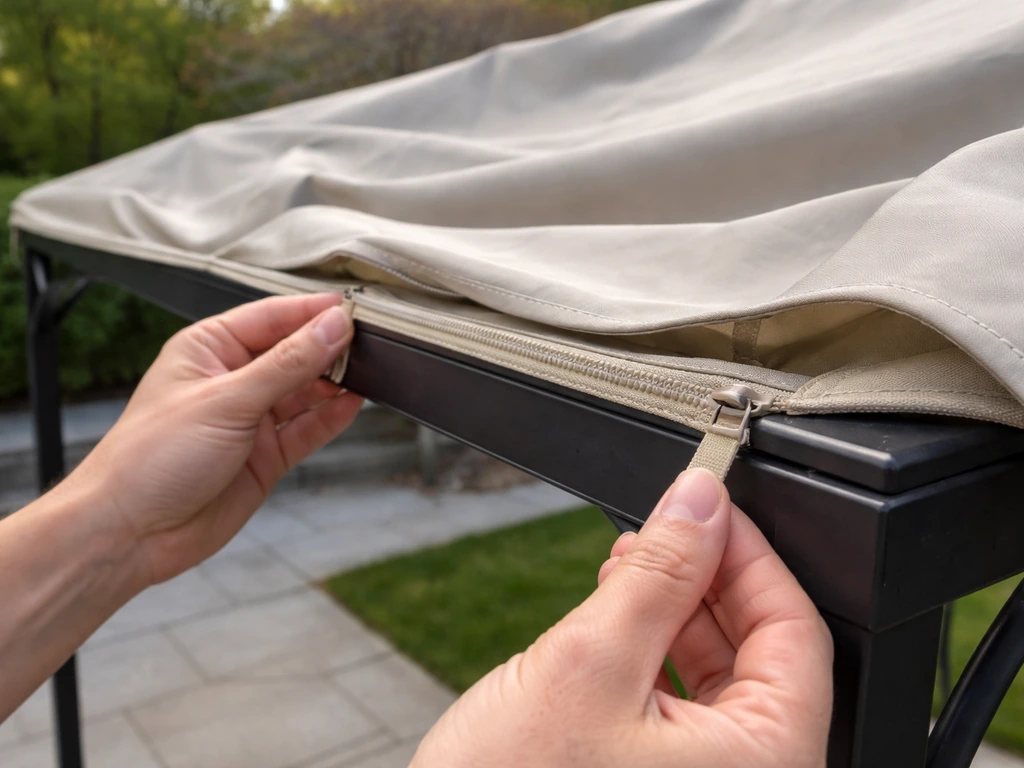
For zip-on canopies, start by laying the canopy fabric over the frame loosely. Work the zipper along the front rail first, then the back rail. Once both main rails are zipped, fold and press the Velcro flaps down at each corner. The instruction sequence that actually works: "Velcro top together first" at each corner, then run the zip. If you zip before positioning the Velcro tabs, the corners pull and you get rippling along the length of the canopy.
Strap and clip canopies
Thread each strap through its corresponding clip or loop on the frame before pulling tension. Attach all straps loosely first. Then go back and tighten starting from the center of each edge and working outward to the corners. This distributes tension evenly and prevents one corner from being overtightened while the opposite side still has slack. If straps feed through a riveted clip system, check that the rivets are still firmly seated before applying load. A loose rivet will pull free under wind stress.
Grommet and lashing canopies
Lay the canopy over the frame and align each grommet with its corresponding frame position. Thread the lashing cord (usually included, or use 3mm bungee cord as a substitute) through the first grommet, wrap it around the frame member twice, then thread to the next grommet. Keep tension consistent as you go. Tie off with a cleat hitch or simple overhand knot at the final grommet. The wrapping pattern matters: two wraps per grommet gives enough friction to hold under wind load without the grommet tearing out over time.
Pole sleeve canopies
Some canopies have fabric channels (sleeves) sewn along the edges that slide over the frame poles. For these, collapse or disassemble the frame partially if possible, slide the sleeve onto the pole, then reassemble. Forcing a sleeve onto an already-assembled frame risks tearing the stitching at the seam. If the frame doesn't disassemble, lubricate the pole lightly with a dry silicone spray and work the sleeve on gradually from one end, bunching the fabric and inching it along.
Tools you may need
- Flathead screwdriver (to pry open stubborn clip systems)
- Needle-nose pliers (for routing lashing cord through tight grommets)
- Dry silicone spray (for pole sleeves and stiff zippers)
- Replacement grommets/eyelet kit if any grommet holes are torn (standard kits from a hardware store or Sailrite work fine)
- Zip ties as a temporary fix if a strap attachment point has failed while you wait for a hardware replacement
Troubleshoot fit and attachment problems
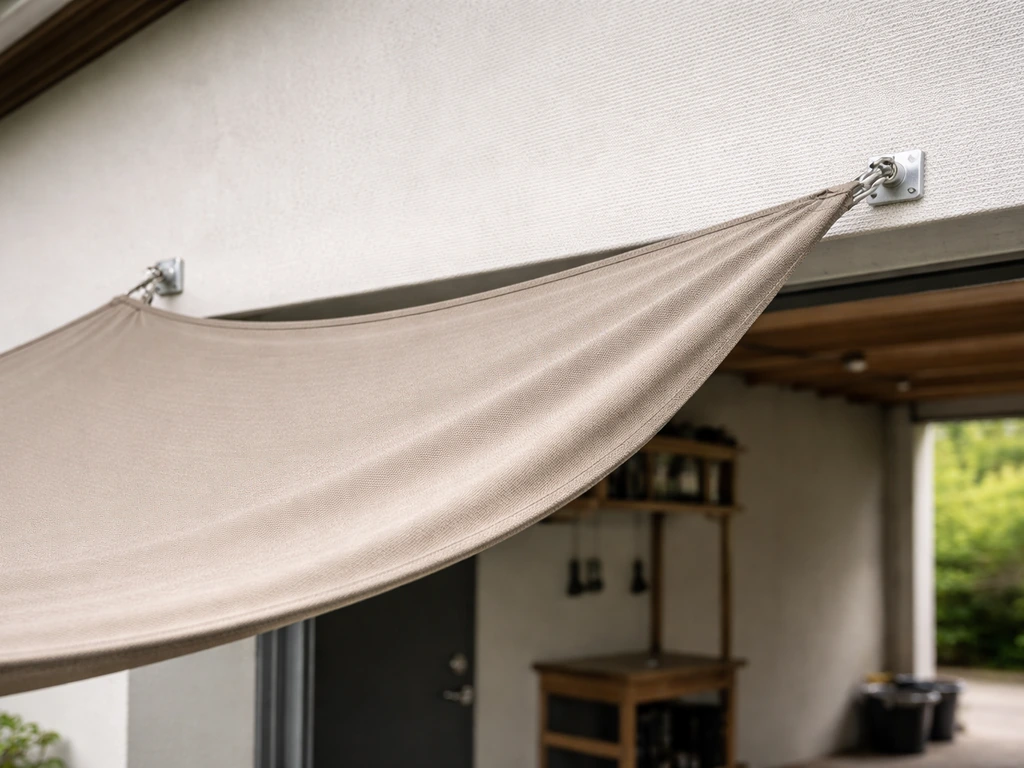
The most common fit problem is a canopy that's the right overall size but doesn't reach the attachment points correctly. Usually this means the arc radius is off. If the canopy sags in the middle on an arched-top swing, the canopy fabric is cut for a shallower arc than your frame. You can sometimes compensate by adjusting the attachment points if they're on adjustable straps, but if the mismatch is more than an inch or two, the canopy needs to be exchanged.
If the canopy is too wide (overhangs excessively on both sides), check whether you measured outside versus inside frame width correctly. Replacement listings are often keyed to inside frame width, meaning the measurement between the inner faces of the side rails, not the outer edge to outer edge. A 2-inch error here is enough to cause a sloppy fit or prevent the attachment hardware from reaching.
Velcro that won't hold is almost always a surface preparation issue. Clean both the hook tape on the canopy and the loop tape on the frame with a lint roller or stiff brush to remove debris before pressing together. If the Velcro itself is worn, it's easy to sew or glue replacement hook-and-loop tape over the old strips. This is a common retrofit fix and works well for extending the life of an otherwise good canopy.
Zippers that jam usually have debris in the track or a slightly bent slider. Run a dry wax candle or zipper lubricant along the teeth and work the slider back and forth gently. If the zipper pull has separated from the fabric tape, that's a structural failure and you'll need to either restitch the tape or accept that attachment point isn't functioning and compensate with zip ties or additional Velcro.
Corroded frame hardware (rusted clips, bent rivet heads, degraded plastic clips) is a real problem with older swings. If the clip system is beyond salvage, the cleanest fix is to replace those attachment points with a Velcro strap retrofit: wrap hook-and-loop straps around the frame at the corresponding positions and sew or glue the matching tape to the canopy edge. It's not elegant but it holds reliably and costs under $10 in materials.
Maintenance, weatherproofing, and when to replace again
A replacement canopy lasts as long as you treat it. Here's what actually makes a difference in practice:
Clean the canopy two or three times per season with a mild soap (dish soap works fine) and a soft brush, then rinse thoroughly. Let it dry completely while still on the frame before folding or storing it. Folding a damp canopy is the single fastest way to cause mildew, even on solution-dyed acrylic, which naturally resists mold. The mildew doesn't destroy the acrylic fiber, but it stains and smells.
Apply a fabric water repellent spray (303 Fabric Guard is a commonly recommended product for outdoor textiles) at the start of each season. Even on already water-resistant canopies, refreshing the DWR (durable water repellent) coating annually extends the effective waterproofing life noticeably, especially on polyester canopies where the factory coating wears off within a season or two.
For seasonal storage, remove the canopy if you live somewhere with heavy snow load or very strong winds. Most patio swing frames are not rated to hold snow accumulation on the canopy. Clean and fully dry the canopy, fold loosely (don't crease), and store in a breathable cotton or canvas bag rather than a sealed plastic bin. A sealed bin traps residual moisture and you'll find mildew in spring.
Small tears under 2 inches can be repaired with a fabric repair patch (iron-on outdoor fabric patches are available at most hardware stores). For larger tears or fraying along the hem near attachment points, the structural integrity is compromised and a patch won't hold under wind load. At that point, replace the canopy rather than repair it.
When to replace vs. repair vs. replace the whole swing
A replacement canopy top typically runs $30 to $150 depending on material and whether it's brand-specific or universal. That's almost always worth it if the frame is solid and the hardware is functional. If the frame has significant rust, bent welds, or broken attachment hardware that can't be sourced separately, factor in the retrofit cost. At the point where you're spending $50 on a canopy plus $40 on replacement hardware plus a few hours of work on a swing that was $150 new, it starts to make more sense to put that money toward a new swing with a quality canopy already fitted. For premium 3-person swings that cost $400 or more, replacing just the canopy is almost always the right call as long as the frame is intact.
The bottom line: get the model number if at all possible, take six measurements before you order anything, and spend a little more on solution-dyed fabric if the swing will stay outside all season. Do those three things and you'll have a canopy that fits right, installs in under an hour, and won't need replacing again for years.
FAQ
How do I tell if my replacement canopy top includes all the mounting hardware or if I’ll reuse my old pieces?
Most replacement listings assume the canopy is “top only,” meaning the fabric and edge hardware are included only if the seller explicitly says so. Before checkout, confirm whether grommets, clips, straps, lashing cord, and zipper components (if it is a zip style) are included, or if you must reuse your existing frame hardware. If your old canopy used grommets and the new one ships without cord and eyelets, installation will not match even when the fabric size is correct.
Can I modify a universal replacement canopy to fit a swing with a different attachment system?
Yes, but only for limited fixes. You can usually replace or add attachment tape (Velcro) if your frame has a Velcro-compatible surface, and you can sometimes add strap extensions to reach slightly short attachment points. If the replacement uses a different attachment system than your frame (for example, a zip-on canopy on a grommet-and-lashing swing), you typically cannot make it fit cleanly without replacing attachment points or using a retrofit strategy.
What measurements matter most when my swing canopy is an arched or curved style?
If the old canopy is still on the frame, take measurements at two states: first, measure the frame inside-to-inside at the rail members, then measure the fabric flat on the ground after removing it. If the fabric dimensions and frame dimensions disagree by more than a small amount, trust the frame measurements for ordering. Also note the canopy’s intended “arc” by measuring how high the canopy sits at the center point when installed, not just the edge-to-edge width.
My Velcro tabs won’t stick, what should I check before assuming the canopy is defective?
Velcro failures are usually not about fabric size. Clean both mating surfaces thoroughly, then test press them together before installing the whole canopy. For a stronger hold, align the hook and loop tapes so they meet squarely on the frame contact zones, not on a curved or dusty surface. If the loop tape on the frame is worn or padded, replacing only the hook side can still leave weak grip.
What should I do if the zipper works during install but jams afterward?
If zippers jam after installation, the cause is often tension mismatch, where one edge is pulled too tight during seating. Loosen all attachments slightly, reseat the canopy so it sits evenly at every attachment point, then retighten starting from the center of each edge. Also inspect the zipper track for pinched fabric or debris, and confirm the zipper slider is not rubbing the canopy seam.
How should I store a replacement canopy to prevent mildew and premature seam wear?
For storage, avoid folding along the exact hem and attachment seams, because those are the first spots to weaken. Let the canopy dry completely while still on the frame, then store it loosely in a breathable bag. If you store it in a sealed plastic bin, even slightly damp fabric can mildew within weeks, and the odor often returns even after re-cleaning.
Is it worth repairing a torn canopy top, and when should I skip repair and replace?
Small tears under about 2 inches can be patched, but you should avoid patches where the fabric is under constant pull at attachment points or where the hemline is fraying. Patch kits with iron-on adhesive can fail outdoors if the canopy is routinely flexed, so for attachment-adjacent tears, a stitch-on outdoor patch is typically more reliable. If the tear is near grommets, replacing is usually the safer choice.
My canopy fits the overall frame but the corners don’t line up, what common measurement mistake causes this?
When a canopy is the right overall width but doesn’t reach the attachment points correctly, check the measurement basis. Many listings use inside frame width, while homeowners measure outer edges. If the attachment hardware is on inside faces, a 1 to 2 inch measurement error can cause the canopy to sit too high or too low, leading to slack at one side. Re-measure inside-to-inside and compare to the listing’s stated dimension.
Why does my canopy sag in the middle even though the edges seem to attach?
If the canopy sags in the middle on an arched-top swing, the arc depth is often wrong for your frame. Minor mismatch can sometimes be corrected with adjustable strap position, but if the canopy edges align while the center droops more than about an inch, it usually indicates the canopy was cut for a shallower arc and won’t tension correctly. In that case, exchanging for the correct arc profile is typically more effective than trying to over-tighten straps.
How should cleaning and water-repellent treatment differ for polyester vs solution-dyed acrylic vs vinyl-coated fabric?
Cleaning can be customized by material. For solution-dyed acrylic, mild soap plus gentle brushing is usually enough, avoid harsh solvents, and rinse thoroughly to prevent residue that reduces water repellency. For vinyl/PVC-coated fabric, do not scrub aggressively near seams and attachment points because it can dull the coating. If you plan to reapply a water repellent, confirm the product is compatible with your canopy material type before using it.
Next Articles
Best Patio Swing with Canopy: Reviews and Buying Guide
Compare top canopy patio swings: frame, coverage, weather resistance, stability, comfort, sizing tips, and maintenance.
Alternative to Patio Cushions: Durable, Stylish Options and DIY
Alternative to patio cushions: durable, weatherproof seating options, pros, DIY tips & buying guide.

Best Color for Outdoor Patio Cushions in 2026
Choose the best cushion color for sun, heat, and fading in 2026, with pairing tips for patio furniture and durability.