
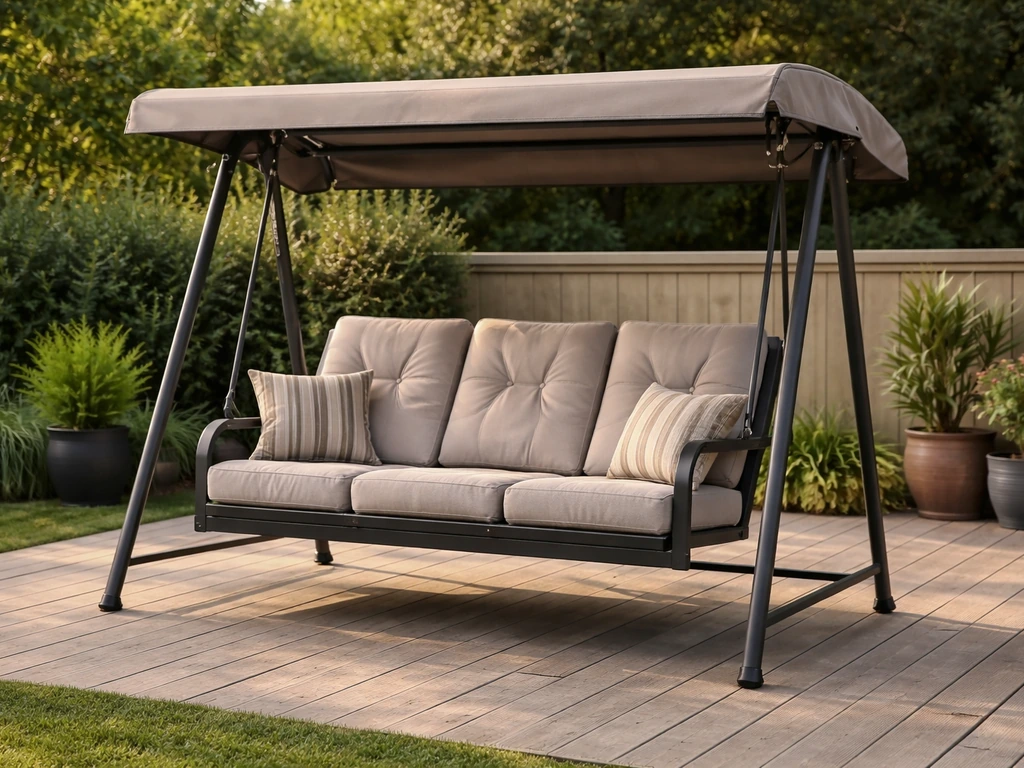
The Best Choice Products 3-seat converting outdoor patio canopy swing fits a 75-inch by 47-inch footprint, holds up to 750 lbs across three seats, and converts between an upright bench and a flat lounger using a simple pull-and-lock mechanism. If you measure your space carefully, assemble it with two people, and do a 90-day bolt check, this swing gives you solid shade and seating for the price. Where it asks for extra attention is drainage, canopy longevity, and the availability of replacement parts down the road.
Best Choice Products 3-Seat Converting Patio Canopy Swing Guide

Lark Perry
11 Jun 2026
What this swing actually is (and how the conversion works)
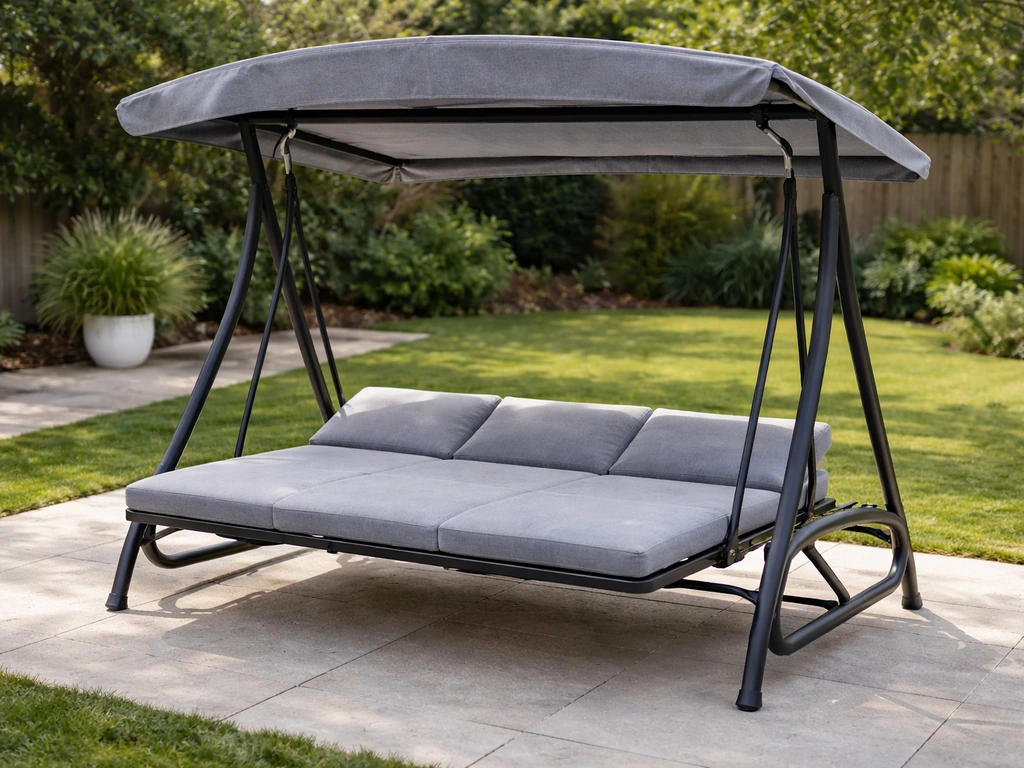
A 3-seat converting patio canopy swing combines three things in one unit: a gliding bench swing, an overhead canopy for shade, and a conversion system that lets you flatten the seat into a daybed-style lounger. The "converting" part is what separates this category from a standard porch swing. Instead of a fixed backrest, the seat on the Best Choice Products model uses a lock-and-release clamp system. You pull the seat up from the clamps on the back swing frame, lay it flat, and slide a support arm into slots on the rear of the swing to hold it in place. That's it. No tools required. It goes from a bench to a flatbed in about 30 seconds once you know the motion.
The canopy itself is a modular fabric-and-frame system, not a single-piece awning. Assembly involves inserting the lower canopy frame into slots, then securing the upper frame inside the canopy fabric, and locking everything down with knobs. Once built, the canopy tilts up to 45 degrees forward or backward using an adjustable tilt system, so you can chase shade as the sun moves throughout the day. The swing glides on a top bar using spring hooks, giving you that classic pendulum motion. The whole unit weighs 82 lbs assembled, which is light enough to be moved but heavy enough to need two people for safe repositioning.
What to check before you buy
Before you order, run through these five checkpoints. They'll save you a return trip or a headache on assembly day.
Frame and structure
The frame is powder-coated steel. That coating is your first line of defense against rust, so inspect it carefully when the box arrives. Look for any chips or scuffs in the coating, especially on welds and joint areas. The product page doesn't specify a steel grade, so you're relying entirely on the powder coat for corrosion resistance. It's worth understanding that going in: this is a budget-to-mid-range product, not commercial-grade steel. If you live in a coastal or very humid climate, extra rust-prevention maintenance is not optional, it's required.
Canopy quality and shade coverage
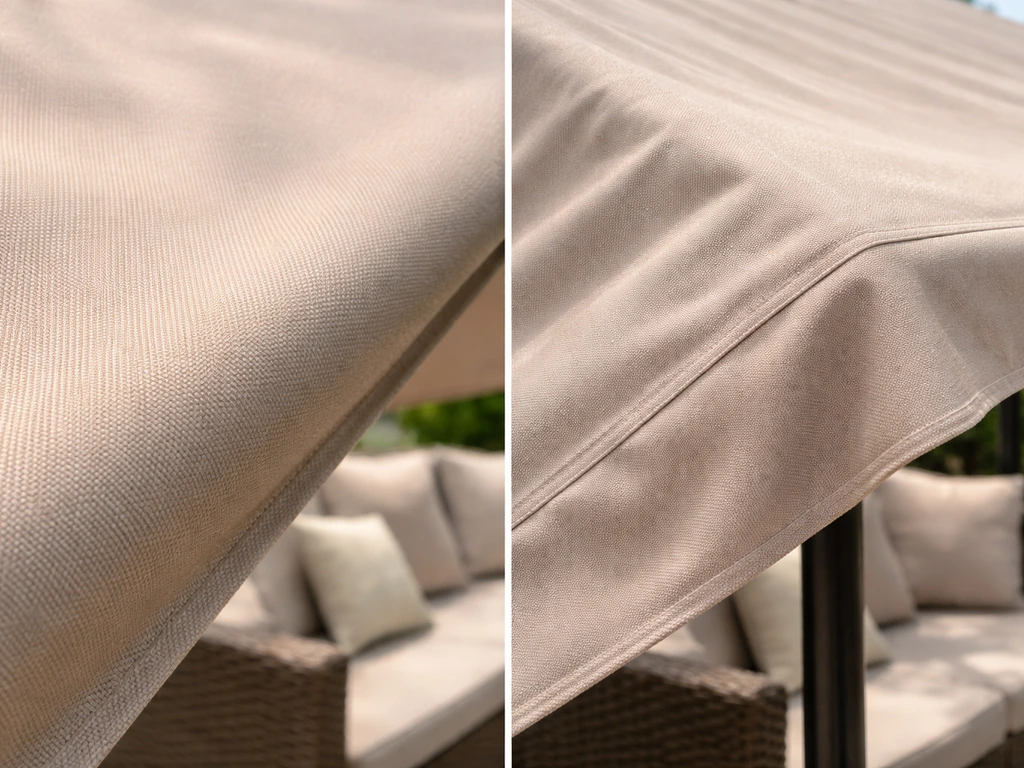
The canopy fabric is weather-resistant polyester. It'll handle light rain and UV exposure reasonably well out of the box, but the product page doesn't list a UPF rating or a specific water-repellency spec. In practical terms, this means the canopy is splash-resistant rather than waterproof, and UV protection will fade over time. The 45-degree tilt range is genuinely useful for adjusting sun angle, but the canopy covers the seat area, not a wide surrounding perimeter. If you want the best patio swing with canopy, focus on shade coverage, tilt adjustability, and how well the canopy sheds water adjusting sun angle. If you're expecting shade for people sitting alongside the swing, you'll want a separate shade sail or umbrella.
Seating dimensions and comfort
The seat is 58 inches wide by 21 inches deep with a seat-to-ground height of 20 inches. That 20-inch height is comfortable for most adults, similar to a standard dining chair. Three adults can share it, though three larger adults will feel the 58-inch width. The three included cushions add comfort but keep in mind they're removable, which is both a pro (you can bring them inside in bad weather) and something to stay on top of. Leaving the cushions out during rain without good drainage nearby accelerates foam degradation.
Conversion mechanism quality
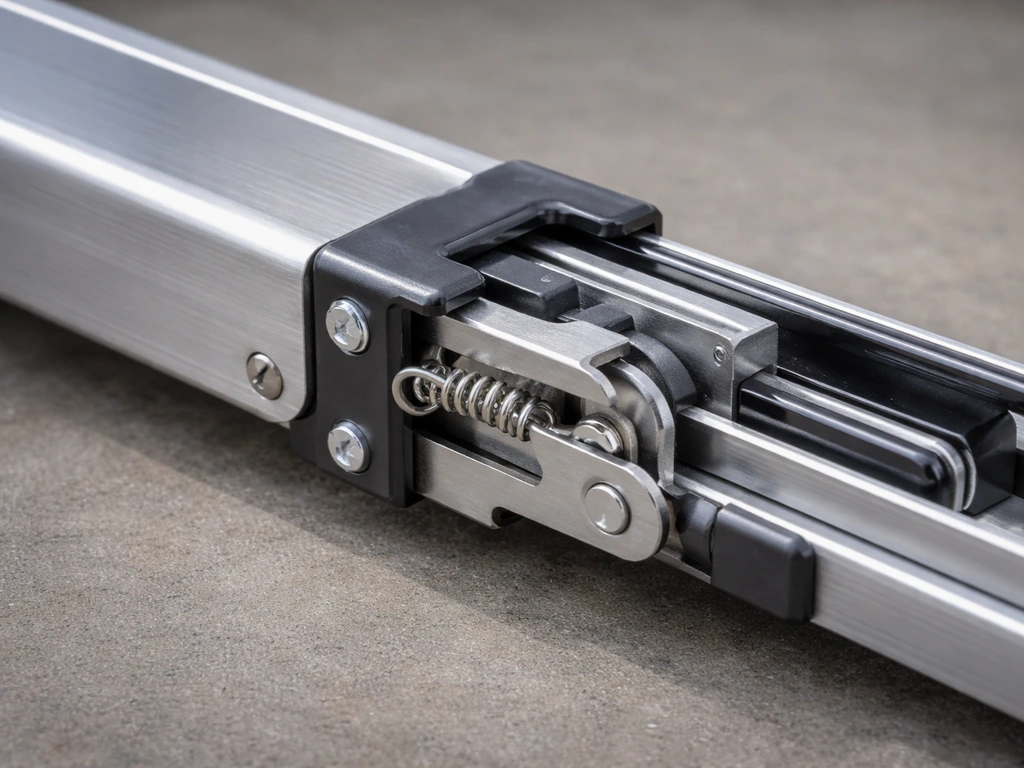
The lock-and-release system is designed for quick operation, and it works as advertised for most users. The key thing to verify during assembly is that the support arm slides fully into the designated slots when converting to flatbed mode. A half-seated support arm is a stability risk. Get in the habit of giving it a firm push and a visual check before anyone lies on it. The clamp system on the back swing frame also needs to be checked periodically since repeated use can cause gradual loosening.
Dimensions and patio fit
The assembled unit is 75 inches long, 47 inches wide, and 69 inches tall. But the dimension that catches people off guard is swing arc clearance. The swing needs room to glide both forward and backward. Plan for at least 24 to 30 inches of clearance in front of and behind the 75-inch length, bringing your total recommended space footprint to roughly 10 to 11 feet long by 4 to 5 feet wide. Measure that out on your patio with tape before ordering. The 69-inch height (about 5 feet 9 inches) also matters for covered patios or pergolas with low crossbeams.
Weather protection and durability: what holds up and what doesn't
The powder-coated steel frame holds up well in moderate climates with basic seasonal care. The coating prevents rust from forming on bare metal, but once the coating chips (from assembly, transportation, or normal use), exposed steel will oxidize. Touch up chips early with rust-inhibiting paint rated for metal, and you'll significantly extend the frame's life.
The canopy and cushion covers are weather-resistant polyester, which means they're designed to repel light moisture and resist some UV degradation. However, real-world reviews flag a consistent issue: water puddles on top of the canopy and around the base rather than draining away cleanly. This matters because standing water on a fabric canopy accelerates mold, mildew, and fabric breakdown. After rain, tilt the canopy to dump pooled water off and dry the cushions before putting them back. It's a small but important habit.
UV fade is the other long-term concern. Polyester canopies in direct sun will start losing color and structural integrity after a couple of seasons of heavy exposure. There's no UPF rating listed for this product, so treat it like a mid-grade outdoor fabric: it'll perform well with care, but it's not rated for continuous harsh sun year-round. Replacement canopy tops are available through third-party vendors like blank" rel="noopener noreferrer">Garden Winds (they make a RipLock 350 version compatible with Best Choice 3-person swing models), so it's worth knowing that option exists before the original fabric gives out. Replacement canopy tops are available for sunrise outdoor patio swing canopy replacement top setups through third-party vendors, so it helps to plan ahead before the original fabric fails.
Safety, stability, and installation
Assembly tips
The manual is clear that this is a two-person assembly job, and that's genuinely good advice. The frame sections are awkward to hold in place solo while also threading bolts. Budget 60 to 90 minutes for assembly if you're doing it for the first time. The assembly sequence matters: don't fully tighten any hardware until the entire frame is loosely assembled and you've confirmed all parts are aligned. Tightening sections out of sequence can pull the frame out of square, which causes wobble and stress on joints.
The canopy assembly adds a few extra steps. You insert the lower canopy frame into the canopy fabric slots first, then secure the upper canopy frame inside the canopy, and finally lock everything with the included knobs. It's modular and intuitive once you see it, but the knobs are the main weak point over time: they loosen with vibration and use, so they need regular checking.
Weight limits and safety rules
The weight capacity is 750 lbs across all three seats, which is generous for a residential swing. However, the manual is explicit: do not exceed the weight limit, and do not use the swing as a step ladder. That second warning is there for a reason. The spring hook connection between the swing and the top bar is designed for controlled swinging load, not point-load climbing weight.
The 90-day maintenance check
The manual specifies that all bolts, screws, and knobs should be firmly secured before first use, and then rechecked every 90 days. That's not boilerplate advice. The spring hooks, the knobs securing the canopy frames, and the bolt sets at the leg joints are the hardware most likely to work loose over a season of regular use. Set a calendar reminder for 90 days after first use, and again at the start of each season. If any part is missing, broken, or visibly worn, the manual says to stop using the swing until it's repaired. That's the right call.
Anchoring and placement
This swing is freestanding; it doesn't mount to a wall or deck. That means placement surface matters. Set it on a flat, level surface. Uneven ground creates rocking and puts uneven stress on the leg frames. If you're placing it on grass or dirt, consider a patio tile base or rubber pads under the legs to keep it from sinking or shifting. The 82-lb weight gives it reasonable footprint stability, but with three adults swinging, it will walk slightly on smooth hard surfaces. Anti-slip leg caps or rubber feet are an inexpensive fix.
Is the Best Choice Products model actually worth it?
Here's an honest take: the Best Choice Products 3-seat converting outdoor patio canopy swing punches at its price point, not above it. For a swing at this price range, the 750-lb capacity is excellent, the conversion mechanism is genuinely useful, and the adjustable canopy tilt is a practical feature that competitors at the same price often skip. The assembly is manageable, the dimensions are well-proportioned for most residential patios, and the three cushions included out of the box add real value.
Where it earns honest caveats: the steel grade is unspecified and relies entirely on the powder coat for corrosion resistance, the canopy has no listed UPF rating and is not waterproof, water drainage around the base requires active management, and replacement parts have been difficult to source through the manufacturer directly. If you're comparing it to higher-end options with thicker steel tubing, marine-grade polyester canopies, or manufacturer-backed parts programs, this swing is an entry-to-mid-range product. For a covered patio or a screened porch where it's not taking the full brunt of weather, it performs very well. For full outdoor year-round exposure in a rainy or humid climate, factor in the extra maintenance effort and the eventual canopy replacement cost.
| Factor | Best Choice Products 3-Seat Converting Swing | Premium Alternatives |
|---|---|---|
| Price range | Budget to mid-range | Mid to high |
| Weight capacity | 750 lbs (excellent for the price) | Varies; often 450-600 lbs at similar price |
| Frame material | Powder-coated steel (grade unspecified) | Often heavier-gauge or stainless steel |
| Canopy type | Adjustable tilt, polyester, no UPF rating listed | Often rated UPF 50+, heavier weave |
| Conversion feature | Bench-to-flatbed via lock-and-release | Less common at this price tier |
| Replacement parts | Limited manufacturer availability; third-party options exist | Better parts support from established brands |
| Best use case | Covered patio, moderate climate, seasonal use | Full outdoor exposure, year-round climates |
If the converting seat feature is the thing drawing you to this category, and you want to compare it against simpler 3-person canopy swings or explore whether a steel gazebo-top swing makes more sense for your setup, those are worthwhile comparisons to make before buying. Gazebo-top models offer more overhead coverage but sacrifice the convertible seat and are typically heavier and harder to move.
Accessories that actually improve this swing
Cushions and padding upgrades
The included cushions are functional but thin by most standards. If you plan to use the swing in flatbed/lounger mode for any length of time, a set of thicker replacement cushions with high-density foam makes a meaningful difference. Look for cushions marketed as patio swing cushions in the 4-inch thickness range with removable, machine-washable covers. Measure the seat (58 inches by 21 inches) before ordering replacements so they fit without bunching.
Patio swing cover
A fitted swing cover is the single most impactful accessory you can add. It solves the drainage and UV fade problems simultaneously by keeping rain, debris, and direct sun off the entire unit when it's not in use. Look for a cover sized for a 3-person patio swing (most are listed by seat count or by footprint dimensions). Oxford polyester or canvas covers with vented panels resist wind lift and don't trap moisture underneath. Given the limited manufacturer replacement parts availability for this model, protecting what's there from the start is the smart play.
Lighting
Solar string lights looped along the canopy frame make evening use genuinely pleasant without running electrical lines. Because the canopy frame is modular with exposed rods, there are natural attachment points for lights without any drilling. Clip-on solar lanterns at the canopy corners are another option that adds ambiance and some practical light for nighttime use.
Anti-rust treatment and leg protection
A can of clear rust-inhibiting spray sealant applied to all metal joints and leg ends at the start of each season is cheap insurance. Rubber leg caps or furniture glides under the four frame feet protect both the frame and your patio surface, and prevent the leg-walking issue on smooth surfaces.
Canopy replacement planning
Third-party vendors including Garden Winds and Walmart marketplace sellers offer replacement canopy tops compatible with Best Choice 3-person swing models. The RipLock 350 material is a common option and is notably more durable than the original fabric. Knowing this replacement path exists before you need it is useful. When the original canopy shows fading, tearing at the seams, or persistent mildew that won't clean out, a replacement top is your most cost-effective fix rather than replacing the whole swing.
Keeping it in good shape: cleaning, rust prevention, and storage
Regular cleaning routine
Wipe down the steel frame monthly with a damp cloth, then dry it thoroughly. Don't let water sit in the leg-to-ground contact points. For the canopy fabric, brush off debris regularly and spot-clean stains with a mild soap and water solution. Rinse thoroughly and let it air dry completely before retilting it closed. Mold and mildew are the main enemies of polyester canopies, and they grow fastest in fabric that stays damp.
Cushion care
Bring the cushions inside or store them in a waterproof bin when rain is expected. The removable covers can typically be machine washed on a gentle cycle, but check the label first. The foam inserts should air dry completely before going back into covers or the moisture will create mold inside the cushion. If you're in a rainy season, leaving them indoors between uses and only bringing them out when you need them significantly extends their life.
The quarterly hardware check
- Check all bolt connections at the leg-to-frame joints and tighten anything that has worked loose.
- Inspect and retighten the canopy knobs securing the upper and lower canopy frames.
- Check the spring hooks connecting the swing to the top bar for any deformation or wear.
- Verify the conversion support arm slides fully into its slots without wobble.
- Look for any chipped or scratched powder coat on the frame and touch up with rust-inhibiting paint.
End-of-season storage
If you're in a climate with a true winter, the best option is to partially disassemble the canopy (the modular frame makes this easy), store the fabric canopy and cushions indoors, and cover the steel frame with a fitted swing cover. If storage space allows, moving the whole unit into a garage or shed is ideal. At the very minimum, cover it completely with a weatherproof swing cover and tie it down against wind. Starting each spring with a full hardware inspection before anyone sits on it is non-negotiable, especially after a winter of temperature cycling, which accelerates hardware loosening.
One final note on parts: given that some owners have reported difficulty getting direct replacement parts from the manufacturer, it's worth sourcing an extra set of canopy knobs and checking third-party canopy replacement options early in your ownership, not after the originals fail. That simple bit of planning is the difference between a swing that lasts three or four seasons and one that gets retired after two.
FAQ
Will the 3-seat converting canopy swing work if my patio has only partial clearance in front or behind it?
It needs room for the full glide arc in both directions, at least about 24 to 30 inches beyond the swing length at the front and back. If you can only clear one side, you may end up with restricted swing travel, which increases stress on the frame joints and reduces canopy tilt usefulness.
How can I tell whether the swing is level enough before first use?
Use a bubble level on the main seat frame area, then re-check after you adjust the leg feet or pads. If the swing rocks by more than a small fraction of a degree, fix the base first (pads or patio tiles). Shimming after tightening bolts can still leave internal stress that shows up as wobble.
Is the canopy waterproof enough for heavy rain or sustained thunderstorms?
No, it is best treated as splash-resistant. With heavy rain, expect pooling and dampness around the base area. To reduce mold risk, tilt the canopy to dump standing water and fully dry cushions before returning them to the seat.
Does the adjustable canopy tilt also shade the sides, or only the seat area?
Primarily it shades the seating zone. If people will be affected by sun on the surrounding patio area, plan an additional shade source (umbrella, shade sail, or a nearby awning) rather than relying on the canopy to cover the perimeter.
What’s the most common conversion mistake people make when switching to the flatbed mode?
Not seating the support arm fully into the slots. A half-engaged support arm reduces stability, so build a habit of a firm push and a visual confirmation before anyone lies down or relaxes in lounger mode.
How often should I tighten hardware beyond the 90-day bolt check?
If you use the swing frequently, on an exposed uncovered patio, or in areas with vibration (near road traffic or on uneven surfaces), do a quicker visual check every month for knobs, spring hooks, and any movement at leg joints. Still keep the official 90-day re-check schedule.
Are replacement canopy parts straightforward to get if a knob or canopy top fails?
Knobs are a known weak point over time, and owners can have trouble obtaining direct parts from the manufacturer. It helps to proactively keep extra canopy knobs on hand and evaluate third-party compatible canopy tops early, not after the original fabric fails.
What can I do about rust if the powder coating gets chipped?
Touch up chips promptly with rust-inhibiting paint made for metal, especially at welds, joint areas, and leg ends. Waiting increases the chance that exposed steel oxidizes and spreads under nearby coating.
Can I leave the cushions outside when it rains, or should they always be brought in?
Bring them in (or store them in a waterproof bin) when rain is expected. Even though covers are removable, leaving foam exposed to moisture and poor drainage accelerates foam degradation and can lead to mildew buildup inside the cushion.
What cushion thickness should I choose if I plan to use the swing in lounger mode often?
Consider thicker replacement cushions around the 4-inch range with removable, machine-washable covers. Lounger use increases pressure and duration, so thin cushions tend to compress faster and feel less comfortable.
Will a fitted swing cover help more with water pooling or with UV fading?
It helps with both. A properly fitted cover keeps rain and debris off the canopy and shields fabric from direct sun when not in use. This directly reduces standing-water time and slows UV color and material degradation.
How should I prepare the swing for winter if I do not have indoor storage?
At minimum, cover the entire unit with a weatherproof swing cover secured against wind, and do a full hardware inspection in spring. If possible, disassemble the canopy fabric for indoor storage, since fabric and cushions are the most likely to trap moisture and encourage mold.
Is it safe to use the swing as a step to reach something (like a roof or storage shelf)?
No. The spring hook connection and overall design are for controlled swinging load, not point-load climbing weight. Use a proper ladder, because misuse can deform components and compromise hinge or hook integrity.
Next Articles
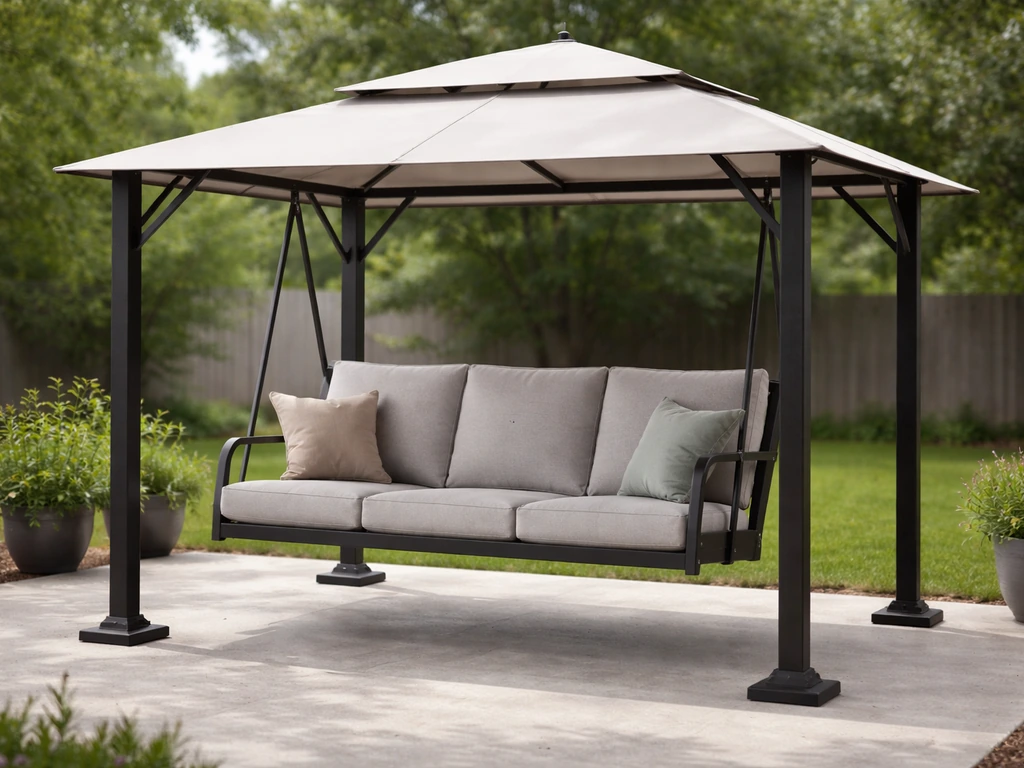
3 Person Steel Patio Swing With Gazebo Top Cover Guide
Buying guide to choose and install a 3-seat steel patio swing with gazebo canopy, covering size, stability, rust, and ma
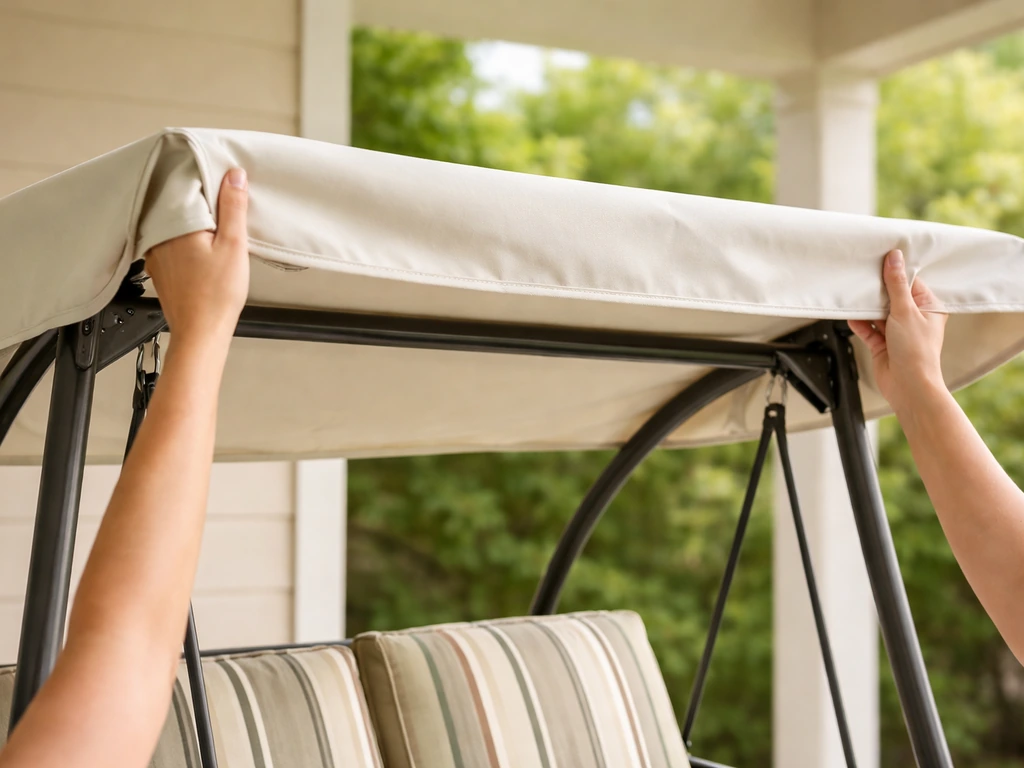
Replacement Canopy Top for Patio Swing: Find, Measure, Install
Step-by-step guide to find, measure, and install the right replacement canopy top for your patio swing.
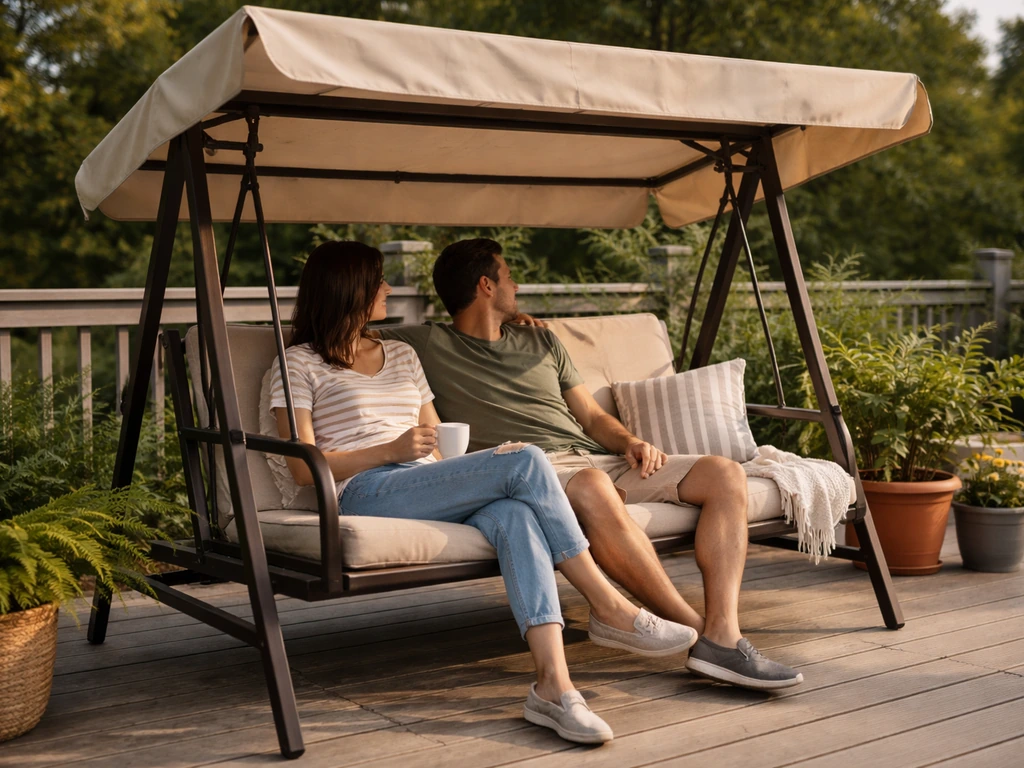
Best Patio Swing with Canopy: Reviews and Buying Guide
Compare top canopy patio swings: frame, coverage, weather resistance, stability, comfort, sizing tips, and maintenance.