
A 3-person steel patio swing with a gazebo-style top cover is one of the most satisfying pieces of outdoor furniture you can own: it seats three adults comfortably, swings gently, and the overhead canopy keeps the afternoon sun off your head and handles light rain without you having to run inside. The best models pair a powder-coated steel frame (look for at least 1.5-inch diameter tubing) with a double-tier or vented canopy, rated for 700 to 800 pounds of total load. Purple Leaf’s user manual for the B08BWPWNWK 3-person patio swing gazebo states a maximum load-bearing capacity of 800 pounds. If you're buying today, prioritize frame thickness, canopy coverage area, and whether the brand sells replacement canopy tops, because that fabric will need swapping every two to three years.
3 Person Steel Patio Swing With Gazebo Top Cover Guide

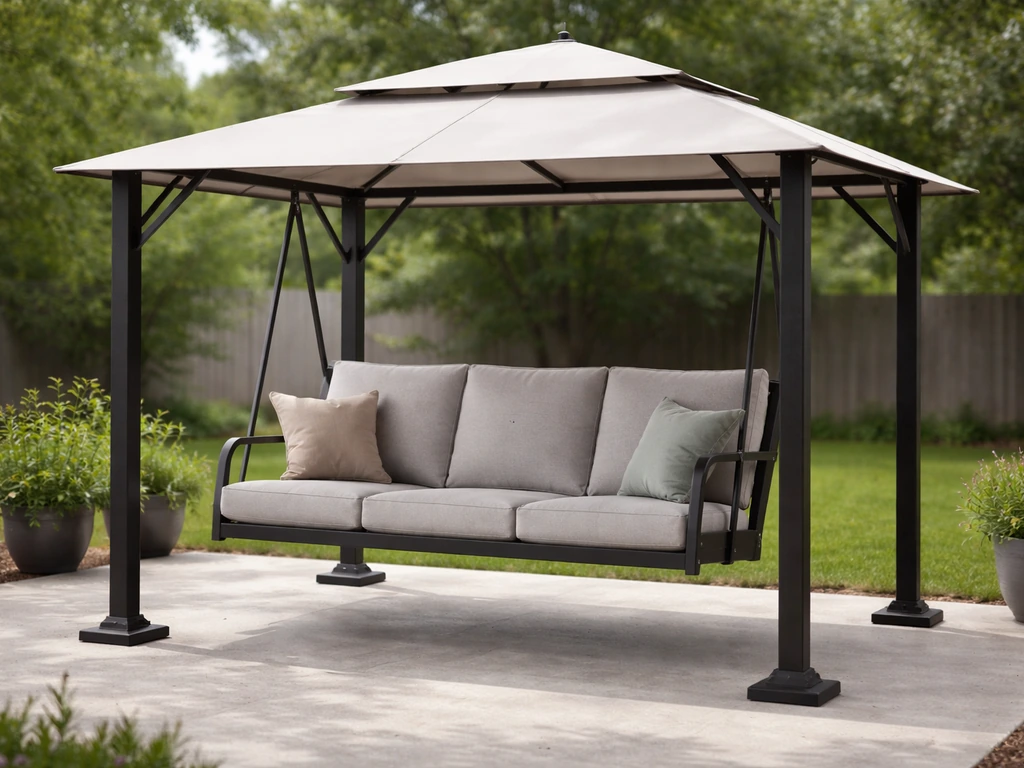
What to look for in a 3-person steel patio swing with a gazebo-style top
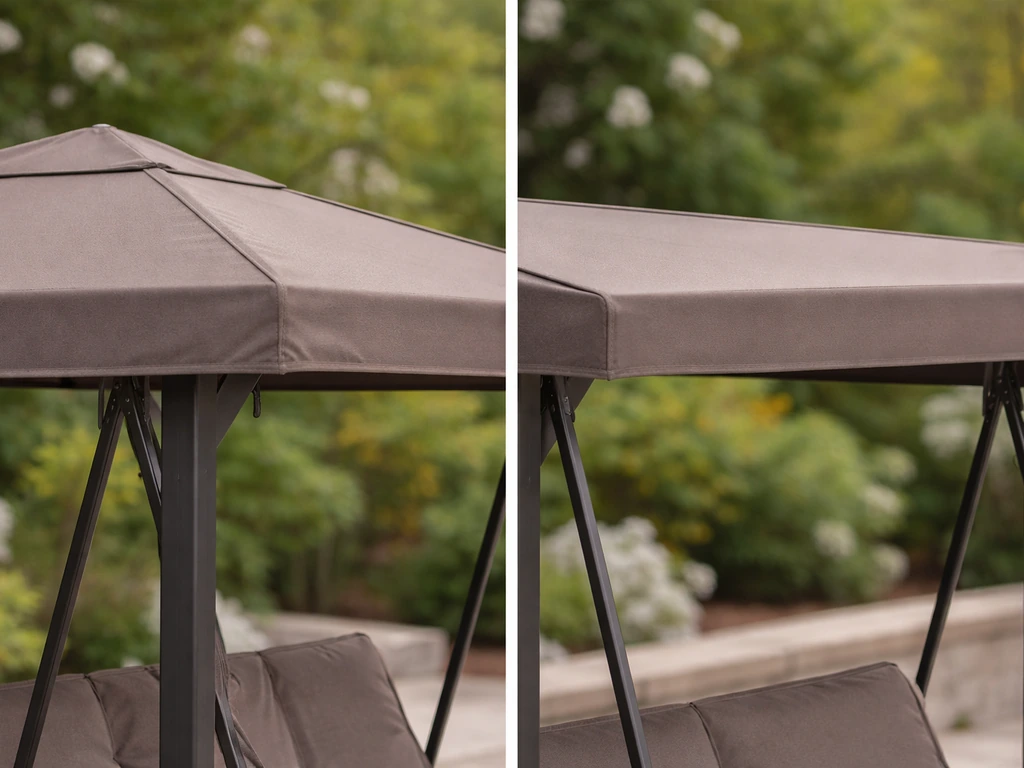
The 'gazebo top' label gets used loosely by sellers, so it helps to know what you're actually comparing. A true gazebo-style canopy on a patio swing has a peaked or hip roof profile with at least two tiers, sometimes a valance border, and often a vented upper section that lets heat escape. The better versions also include side curtains or mosquito netting that can be rolled down. That's very different from a basic flat canopy, which just shades directly overhead and offers almost no weather protection when the sun is at an angle.
Here are the five things worth scrutinizing before you click buy:
- Frame steel gauge and finish: Look for powder-coated steel, which resists rust far better than paint alone. The Purple Leaf swing (model B08BWPWNWK) is a good benchmark: it uses a sturdy steel frame with a powder-coated finish and supports up to 800 pounds. If a product doesn't list its load rating or finish type, treat that as a red flag.
- Canopy fabric weight and UV rating: A 180g to 220g polyester with a UV-protection rating of UPF 50+ will last meaningfully longer than thinner fabrics. Check whether the canopy is water-resistant (sheds light rain) or waterproof (handles sustained downpours), because most are only the former.
- Side netting or curtains: These aren't just aesthetic. Mosquito netting panels add real usability in the evenings, and curtains let you block low-angle sun that the roof panel simply can't reach.
- Replacement part availability: The frame will outlast the canopy. Before buying, search the brand name plus 'replacement canopy' to confirm you can swap it in year two or three without having to buy a whole new swing.
- Warranty terms: A credible brand offers at least a one-year warranty on the frame and 90 days on fabric. Less than that usually signals low-confidence manufacturing.
Sizing, fit, and placement for your patio or deck
Before you order, grab a tape measure. Most 3-person steel swings with gazebo tops run roughly 77 to 84 inches wide and 55 to 65 inches deep at the base, with the canopy extending the footprint by another 6 to 10 inches on each side. The total height typically lands between 70 and 78 inches, so if you have a pergola or low ceiling overhang, measure clearance carefully. The gazebo peak can catch on overhead beams if you're tight on vertical space.
The swing arc is the part people forget to account for. A 3-person swing will travel 12 to 18 inches forward and backward from its resting position at the seat level. That means you need clear space behind and in front of the swing, not just the footprint of the frame itself. On a deck against a wall, position the back legs at least 18 inches from the wall surface so the swing travels freely without the frame grinding into siding.
For ground surface, flat and level is non-negotiable. Even a slight slope causes the swing to drift to one side over time, which accelerates wear on the chain hardware. If you're placing it on grass, consider using 12-inch square concrete pavers under each leg to prevent sinking. On decking, make sure the boards underneath are structurally sound because a full swing with three adults generates real dynamic load with each pass.
Materials and build quality: what the steel and hardware are actually doing
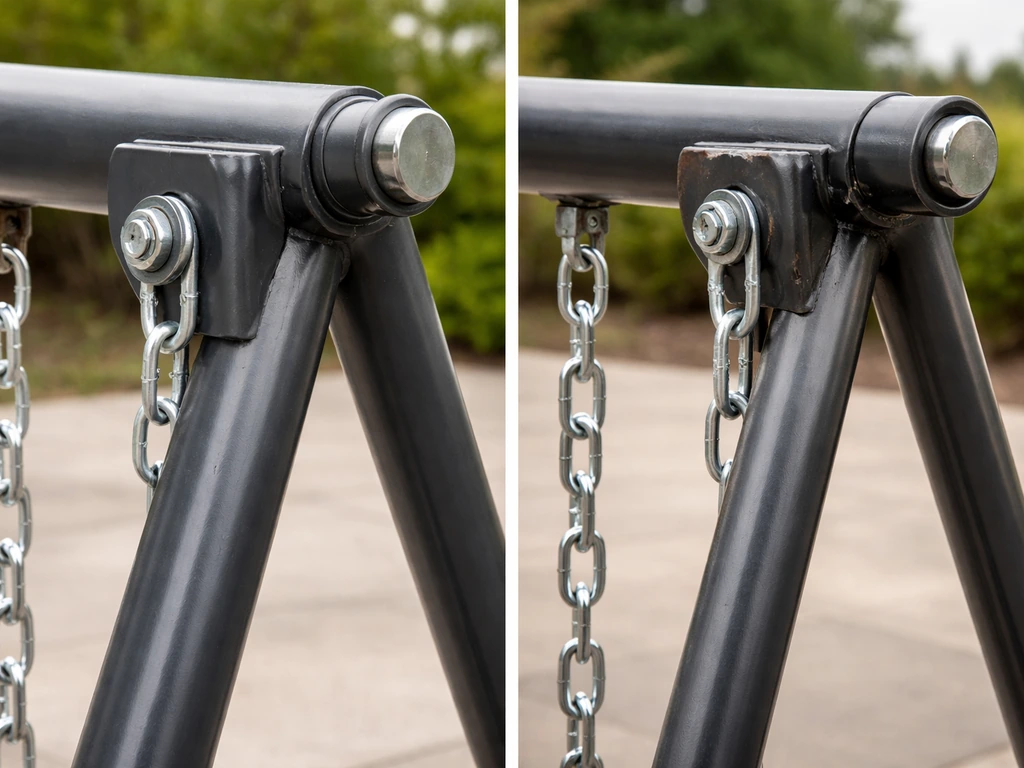
The steel frame is the skeleton of the whole setup, and the quality gap between budget and mid-range models is noticeable in person. Budget swings often use 1.2-inch diameter hollow tubing with a painted finish. Mid-range and premium models step up to 1.5-inch or thicker tubing and use proper powder coating, which is baked on rather than sprayed, giving it genuine corrosion resistance instead of just color. This product page states the swing uses a sturdy steel frame with a powder coated finish and supports up to 800 pounds.
The hardware, meaning the bolts, chain links, and pivot brackets, matters more than most buyers realize. The chain that suspends the seat is the highest-stress point on the whole product. Look for zinc-plated or stainless steel chains rated for at least 300 pounds per link set. Cheap hardware will stretch and develop play over time, which creates squeaks and eventually a wobbly, unsafe seat. If the product listing doesn't mention chain material, look for user reviews that specifically mention squeaking within the first season.
Canopy coverage depends on both the fabric and the frame rods that hold it open. Fiberglass frame rods in the canopy are more flexible and crack-resistant than cheap plastic ones. The canopy itself on a true gazebo-style top should cover the full frame footprint and ideally extend a few inches beyond the seat on the sides. If the canopy only covers the seat area without overhang, it won't protect you from angled rain or low-angle afternoon sun.
Comfort and usability: seat design, swing motion, and anchoring
A 3-person steel frame swing almost always uses either a padded bench seat or a slatted wood-and-steel seat. Padded bench cushions (typically 3 to 4 inches thick) are more comfortable for long sits but require you to bring them inside when rain is coming or they'll absorb water and grow mildew fast. Slatted seats are lower maintenance but harder on the back for extended use. My preference is a slatted seat with a separate cushion you can actually pull off easily, because that gives you both comfort and practical upkeep.
The swing motion quality depends on the pivot design. Ball-bearing pivot hangers create a smoother, quieter glide than simple bolt-through designs. When you're evaluating options, look for the phrase 'ball-bearing' in the hardware description, or at minimum read reviews for comments on how smooth and quiet the swing feels after a few weeks of use. A well-designed swing should maintain its glide without squeaking for at least one full season before needing lubrication.
Anchoring is a question that comes up a lot, and the honest answer is: most steel gazebo swings are heavy enough (often 80 to 120 pounds assembled) that they sit stably on flat ground without anchors in normal conditions. However, if you live somewhere with consistent high winds or you have curious kids who might push the swing to its limits, ground anchors or concrete anchor kits are worth adding. Some models include anchor plates in the box; others don't. It's a $15 to $30 add-on if needed.
Weather protection and canopy care: what it handles and what it doesn't
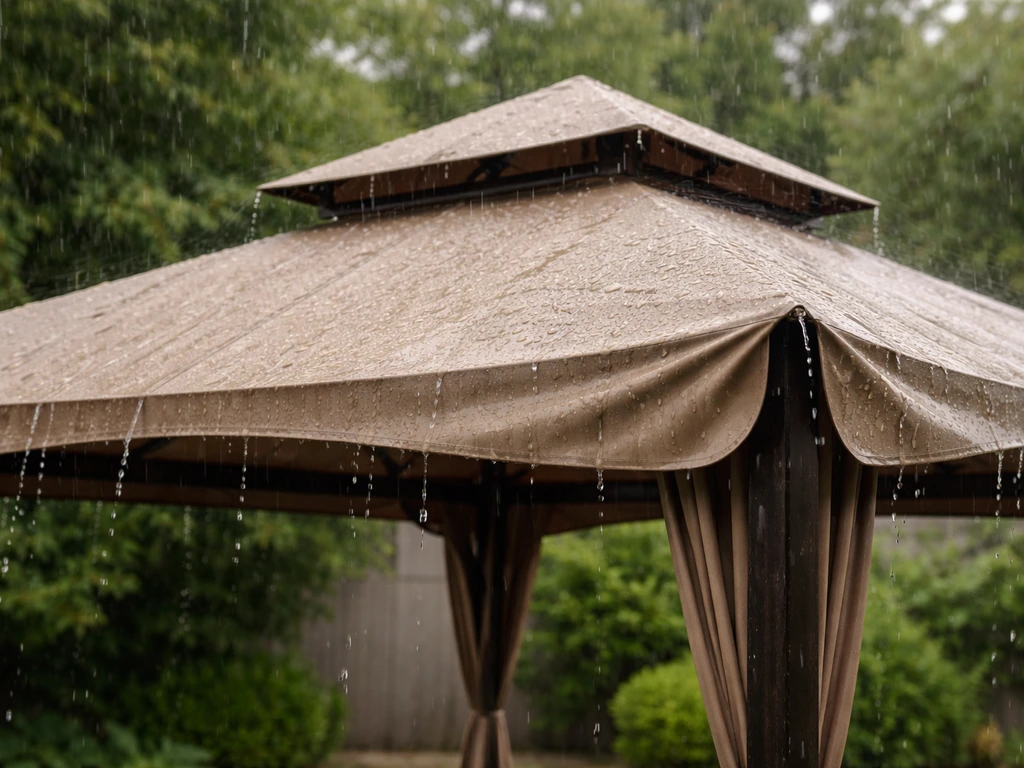
The gazebo-style top will handle light to moderate rain comfortably, especially if the canopy fabric is water-resistant and the peak is high enough to let water run off. What it won't handle well: heavy sustained downpours, standing water that pools in the fabric if you have a flat design, and wind-driven rain that enters from the sides. On really gusty days, the best protection is to use the side curtains if your model has them, or accept that the swing is not a full shelter and move inside.
Wind is the canopy's biggest enemy. The two-tier design helps a lot because the upper vent tier allows air to pass through instead of catching it like a sail. Even so, if sustained winds exceed roughly 25 mph, it's worth either lowering/folding the canopy (if your model allows it) or securing it with additional tie-downs. Leaving the canopy fully extended in a storm is a reliable way to end up with bent frame rods or torn fabric.
For sun protection, a UPF 50+ rated canopy blocks over 98% of UV rays at the seat level directly below. The protection drops off at the edges and sides, which is where the side curtains or netting earn their keep. If you tend to sit in the late afternoon when the sun is low and angled, side curtains are genuinely useful rather than just decorative.
Rust prevention is the other major weather concern. Powder-coated steel resists rust well for the first several years, but once a chip or scratch exposes bare metal, oxidation starts. Every spring, run your hand over the frame and look for any raw spots or bubbling in the coating. Touch those up immediately with rust-inhibiting spray paint matched to your frame color. It takes five minutes and prevents a problem that otherwise spreads under the coating and weakens the tube over time.
Assembly, maintenance, and fixing the issues that always come up
Getting assembly right the first time
Most 3-person steel swings arrive as flat-pack kits with 40 to 80 individual parts. Plan on 60 to 90 minutes with two people. One person can technically do it alone, but holding the frame sections while threading bolts is genuinely frustrating solo. The most useful assembly advice, drawn directly from manuals like the Home Depot YS231146 series, is this: tighten all screws to only about 70% before doing final fastening. This means snugging everything hand-tight first so the frame can self-adjust into alignment, then doing your final torque pass. Jumping straight to fully tight on each bolt as you go causes the frame to rack slightly, which is why some builds end up with a slight lean or a door that won't close flush.
Use the Allen wrench included in the kit rather than an electric drill for most fasteners. A drill makes it easy to over-torque the bolts, which strips threads in the tube walls and creates a wobbly joint you can't fix without replacing the hardware. Hand tools give you more feel. If after assembly the frame isn't sitting flat and stable, the fix is straightforward: loosen all the leg and base bolts, place the whole frame on flat level ground, let it settle naturally, then re-tighten. That single step resolves most wobble issues.
Ongoing maintenance through the season
- Lubricate the chain pivot points and swing hangers with a silicone-based lubricant at the start of each season and again mid-summer if you hear any squeaking. Avoid WD-40 as a primary lubricant since it evaporates quickly and can attract dust.
- Check all bolts and nuts after the first two weeks of use. New assemblies settle with use, and hardware that was snug on day one often needs a half-turn of re-tightening after the first month.
- Clean the canopy fabric every 4 to 6 weeks during use with mild soap and warm water. Avoid bleach-based cleaners, which break down the UV coating. Let it air dry completely before rolling or folding it.
- At season end, either bring the cushions inside or store them in a waterproof outdoor storage box. If you live somewhere with harsh winters, take the canopy off the frame and fold it flat for storage to prevent freeze-thaw damage to the fabric and rods.
- Inspect the chain links annually for any elongation, rust, or cracked links. A chain that has visibly stretched has been stressed past its safe range and should be replaced before use.
Common problems and how to fix them
| Problem | Likely Cause | Fix |
|---|---|---|
| Squeaking during swing | Dry pivot hangers or chain links | Apply silicone lubricant to all pivot and chain contact points |
| Swing drifts to one side | Uneven ground or uneven chain length | Re-level the base and adjust chain length equally on both sides |
| Frame wobble or lean | Bolts assembled in sequence rather than all at 70% first | Loosen base bolts, re-level on flat ground, re-tighten in the correct sequence |
| Canopy sags or pools water | Bent frame rods or loose canopy attachment points | Straighten frame rods, re-attach canopy ties, ensure peak tension is correct |
| Rust spots on frame | Chipped or scratched powder coat exposing bare steel | Sand lightly and apply rust-inhibiting spray paint immediately |
| Canopy tears in wind | Fabric left fully extended in high winds | Fold or lower canopy when wind exceeds 25 mph; add tie-down straps as a precaution |
Choosing the right model: budget vs. features and what to actually compare
At the budget end (roughly $200 to $350), you get a functional steel frame, a basic polyester canopy, and a padded bench seat. The trade-offs are real: thinner tubing, no side curtains or netting, simpler (noisier) pivot hardware, and usually no replacement canopy available. These are fine for occasional use but feel noticeably cheaper after a season.
In the $400 to $700 range, the jump in quality is significant. This is where you find models like the Purple Leaf 3-person gazebo swing, with an 800-pound load capacity, powder-coated steel, and included netting and curtains. Frame tubing is thicker, pivot hardware is smoother, and replacement canopies are actually sold by the brand. For most homeowners who want something that will last three to five seasons with reasonable care, this tier is the sweet spot.
Above $700, you're mostly paying for aesthetic upgrades (teak or hardwood accents, more decorative canopy shapes) and sometimes heavier commercial-grade steel. Worth it if those things matter to you, but the core performance difference over a mid-range model is modest.
Here's a practical comparison checklist to use when you're side-by-side evaluating two models:
| Feature | What to Look For | Red Flag |
|---|---|---|
| Load capacity | 700 lbs minimum, 800 lbs preferred | No load rating listed |
| Frame finish | Powder-coated steel | Painted only, no finish type specified |
| Canopy tiers | Two-tier with vented peak | Single flat panel |
| Side protection | Includes curtains or mosquito netting | No side panels of any kind |
| Pivot hardware | Ball-bearing hangers mentioned | No pivot description; reviews mention squeaking |
| Replacement canopy | Brand sells it separately | No replacement available; full product only |
| Warranty | 1 year frame, 90 days fabric minimum | No warranty stated |
| Assembly | Two-person build, included hardware, Allen key required | No instructions included or listed as 'simple' |
| Weight capacity per instruction clarity | Manual specifies torque sequence and leveling steps | Manual is vague or only available in one language |
If you're weighing the gazebo-top swing against a simpler canopy swing or want to compare specific products in this category, the broader patio swing with canopy market offers useful reference points. Similarly, if you already own a swing and the frame is in good shape, sourcing a replacement canopy top is a smart and much cheaper alternative to buying new. Similarly, if you already own a swing and the frame is in good shape, upgrading to the best patio swing with canopy can be a smart, cheaper way to refresh your outdoor comfort. Those two paths are worth exploring before committing.
One last thing worth saying plainly: the assembly and first-season setup is where most people run into frustration. If you follow the 70% rule on fasteners, level the base before final tightening, lubricate the pivots from the start, and get the canopy properly tensioned at install, the vast majority of the common complaints you'll read in reviews simply won't happen to you. This is a piece of furniture that rewards a careful setup day with years of easy use.
FAQ
How tight should I tension the gazebo canopy when I assemble the swing?
Tension it so there are no major sagging folds, but don’t over-stretch the fabric. If the canopy looks drum-tight right after install, it may lose tension faster when it warms and cools. Check again after the first week of sun exposure and re-adjust if your model uses adjustable straps or tension cords.
Do I need to lubricate the pivot hardware, and what should I use?
Plan on a light lubrication at the start, then once per season as maintenance. Use a dry lubricant or a light machine oil that won’t attract dust, and wipe off excess so it doesn’t drip onto the frame finish. If your model specifies a type of grease for the ball-bearing pivots, follow that to avoid swelling rubber components (if any).
What’s the best way to stop squeaking if it starts after a few months?
First, check whether the seat chains have developed slack, and confirm the pivot bolts are still fully seated. Next, lubricate the pivot points rather than the entire chain, because excess lube on chains attracts grit that increases wear. If squeaking is localized to one side, inspect that side’s link set and replace the chain if the links show visible stretch or uneven length.
Can I leave the canopy fully extended all year outside?
You can, but it shortens canopy life in most climates. Wind and UV exposure are the biggest drivers of failure. If your area has strong gusts or harsh winters, use tie-downs when you must leave it up, otherwise partially fold or cover the canopy and store the side curtains indoors if they’re removable.
Is a 3-person swing safe for children, and what should I watch for?
Treat it as adult seating unless the manufacturer explicitly states child-safe use. Children climbing on and off create side-loads that can loosen hardware faster. Use supervision, keep the area clear of push/pull impacts, and if you have frequent high winds, strongly consider ground anchors or extra tie-downs.
How much clearance do I need from walls or a fence if the swing is on a porch?
Don’t rely on frame footprint clearance only. Because the seat travels 12 to 18 inches forward and backward, you also need space for the canopy ends to move through their arc without brushing walls. A good rule is to leave additional clearance equal to the swing travel distance plus a few extra inches for sway, then confirm the canopy peak won’t hit any overhead beam.
What’s the difference between a “gazebo top” and a flat canopy in real weather terms?
A true gazebo-style design typically sheds rain better because the peaked profile encourages runoff and the vented upper tier reduces wind “sail” effect. A flat canopy mainly shades overhead, and when rain hits at an angle it tends to run toward the sides and enter gaps. If you expect angled sun or wind-driven rain, prioritize a vented, multi-tier profile and side curtains if available.
Do I need to anchor the swing on concrete, or is weight enough?
Concrete usually provides stable footing, so many owners can skip anchoring on normal days. Anchor becomes more important with high sustained winds, uneven slabs, or a household that uses the swing more aggressively (frequent hard pushing). If your model is light for its size or you notice any frame movement during operation, add anchors or at least an anchor kit compatible with your base.
Can I replace just the canopy fabric later, or do I need to buy the whole frame?
If the brand sells replacement canopy tops, you should be able to swap fabric only, which is usually cheaper than replacing the swing. Before buying, confirm the replacement part is sold by model name or SKU, and check whether the canopy uses the same frame rod setup. If replacement parts are not available, the canopy becomes a full replacement trigger once it fails.
What are common installation mistakes that lead to wobble or leaning?
Two big causes are overtightening early (instead of tightening in stages) and assembling on a not-fully-level surface. Also avoid using a power drill to drive fasteners, since it can over-torque and strip threads in tube walls. If the frame ends up tilted, loosen base bolts, set it on flat level ground, let it settle naturally, then re-tighten evenly.
How do I protect the seat and cushions from mildew in wet weather?
For padded cushions, the key is drying. Bring cushions inside when rain is likely or use a breathable storage bag so moisture can escape. Don’t fully seal wet cushions in plastic, because trapped moisture accelerates mildew. Slatted seats need less drying but still benefit from periodic rinsing and drying to remove trapped debris.
What wind speed is too high to safely use the swing canopy?
As a practical threshold, if sustained winds reach roughly 25 mph, plan to secure the canopy or fold it if your model allows. Wind-driven rain also increases side entry, even with a vented canopy. If you see fabric flapping hard or the frame noticeably flexing, stop using it and adjust immediately.
Will a UPF 50+ canopy block sun at the sides and when the sun is low?
UPF 50+ is strongest directly underneath the canopy, protection drops at the edges where the sun can hit from the side or at a low angle. If late afternoon glare is a problem, side curtains or mosquito netting provide the extra barrier. If your model lacks side options, consider adding compatible side panels or repositioning the swing orientation.
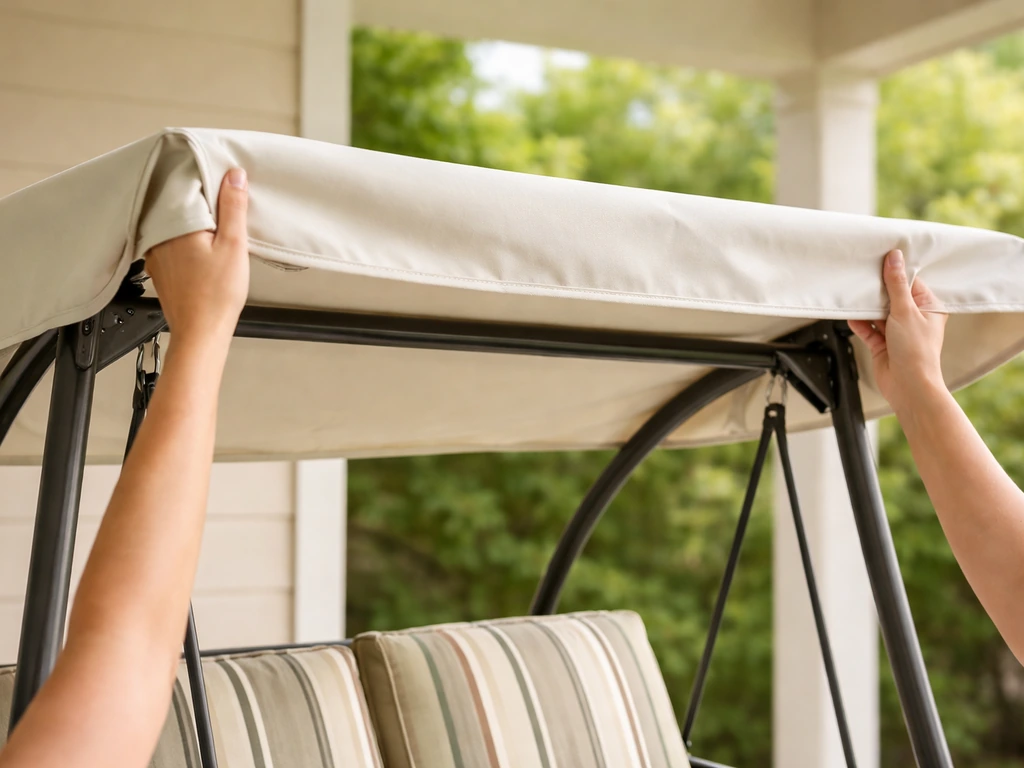
Step-by-step guide to find, measure, and install the right replacement canopy top for your patio swing.
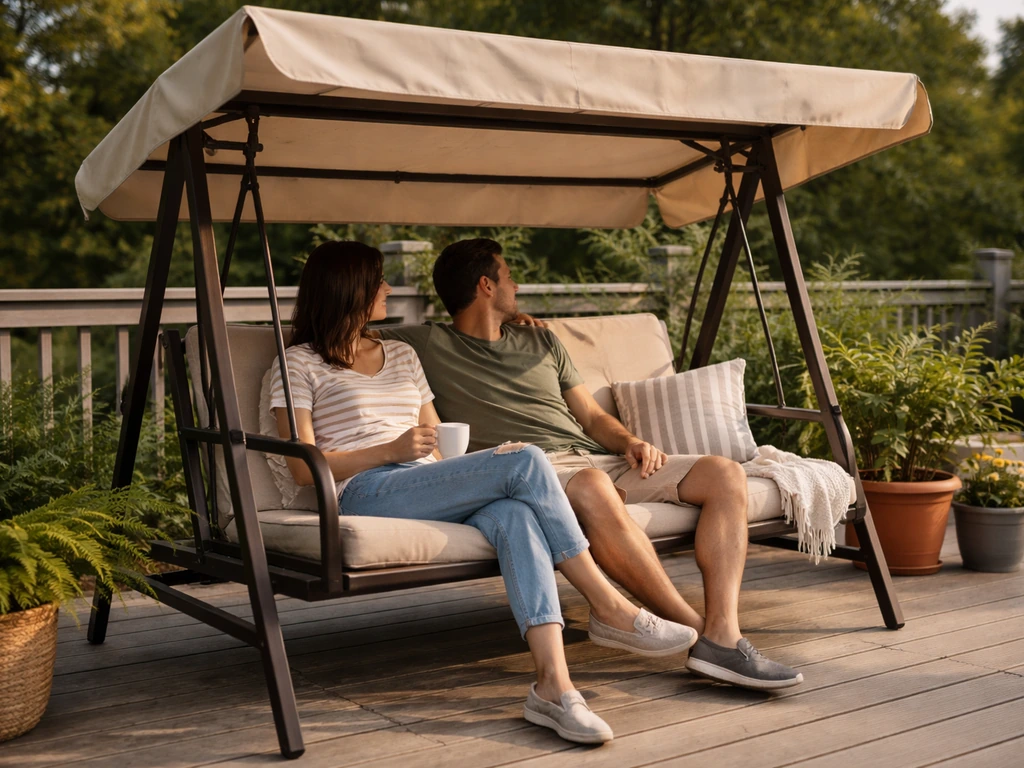
Compare top canopy patio swings: frame, coverage, weather resistance, stability, comfort, sizing tips, and maintenance.
Alternative to patio cushions: durable, weatherproof seating options, pros, DIY tips & buying guide.