
The best patio swing with a canopy for most people is a 3-person steel-frame swing with a powder-coated finish, a tilt-adjustable polyester canopy, and a total weight capacity of at least 750 lbs. That combination gives you solid durability, decent shade coverage, and enough seating for real use without breaking the budget. If you want the short list: look for a swing rated for 750 lbs, a canopy that tilts at least 45 degrees, and a frame with a proper powder-coated or rust-resistant finish. Everything below will help you narrow that down to the exact right pick for your space, weather, and budget.
Best Patio Swing with Canopy: Reviews and Buying Guide

Lark Perry
11 May 2026
What makes a patio swing with canopy worth it (and what to avoid)
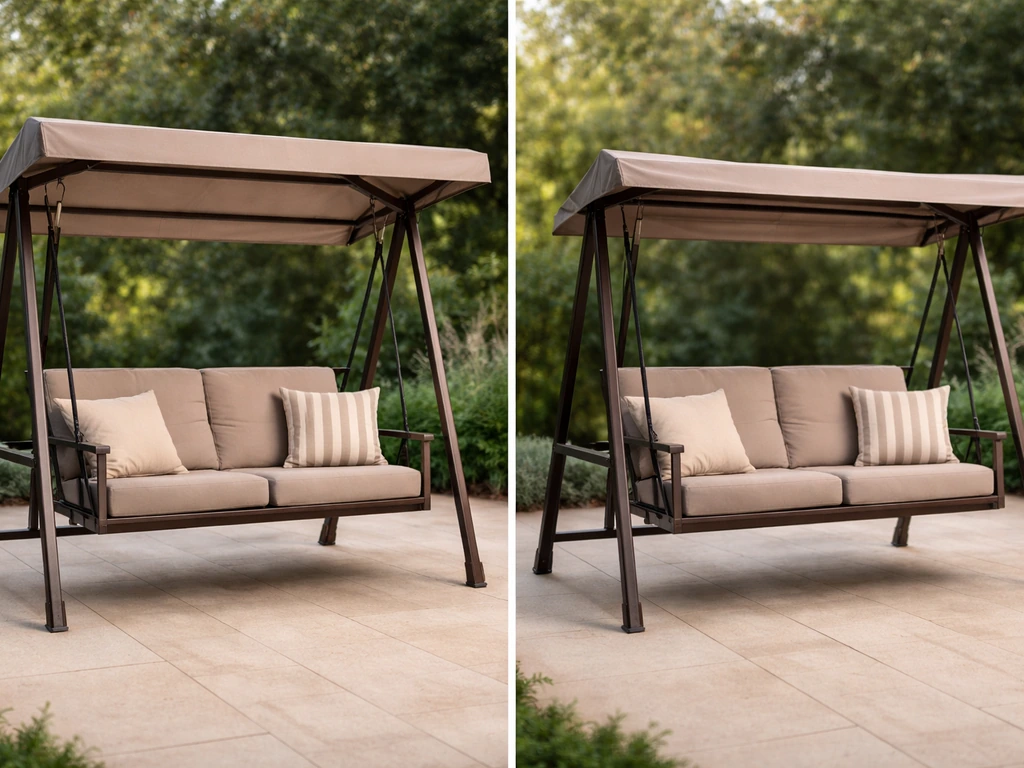
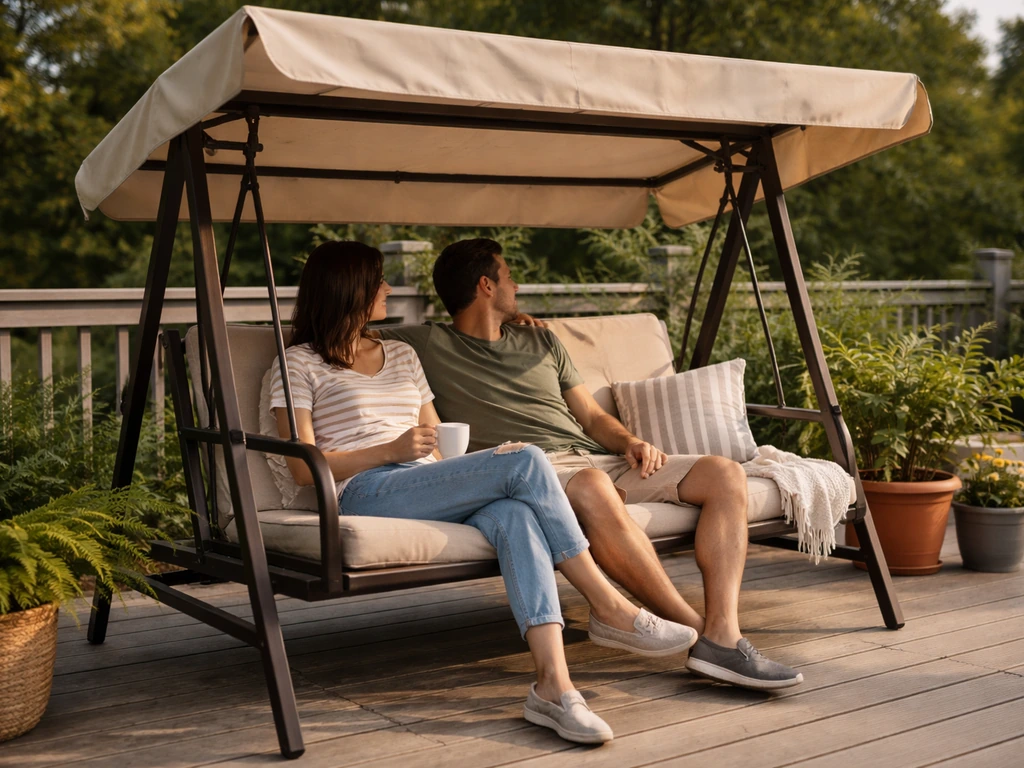
A good canopy swing does two things well: it keeps you comfortable in the sun and holds up through seasons of outdoor exposure. The canopy part matters more than people expect. A fixed, non-adjustable canopy is nearly useless at certain times of day when the sun is at an angle. Tilt-adjustable canopies that move between 0 and 45 degrees are noticeably more practical.
Some entry-level swings advertise a canopy but deliver a thin fabric panel that fades within a single summer. Look for canopy fabric with a PU waterproof coating and a UPF 50+ or 95% UV block rating. Those aren't just marketing numbers: UPF 50+ means the fabric is blocking over 98% of UV radiation, which is the difference between sitting in shade and actually being protected.
The frame is the other place where cheap swings disappoint. Bare steel rusts. Powder-coated steel resists rust significantly longer, especially in humid or coastal climates. A proper black powder-coated steel frame with clean welds is what you want. Avoid frames described only as 'coated' or 'painted' without specifying powder coating. Aluminum frames are lighter and naturally rust-free but often feel less rigid on a swing. Heavy-gauge powder-coated steel is the sweet spot for most patios.
What to avoid: swings with a weight capacity under 500 lbs total, canopies described as 'water resistant' without a PU coating or UV rating, frames with visible thin welds or flimsy cross-bracing, and any swing that ships without assembly hardware (you'll spend hours at the hardware store). Also skip swings with cushions but no replacement cushion availability. Cushions wear out faster than frames, and if the manufacturer has discontinued that model's cushions, you're stuck.
How to measure your space and pick the right size
Before you even look at models, measure your available patio space. A 3-person swing typically runs between 60 and 72 inches wide and needs a footprint of roughly 7 to 8 feet wide including the frame legs. More importantly, you need clearance. POLYWOOD's own assembly guidance calls for at least 3 to 4 feet of clearance in front of and behind the swing seat for safe movement, and 12 to 14 inches on either side. For a freestanding canopy swing on a patio, I'd add a bit more: plan for 5 feet of front and rear clearance if you can manage it, especially if you have kids or pets.
If you're measuring for a replacement canopy top rather than a new swing, the process is different. You measure the existing canopy frame from front to back and side to side along the fabric coverage area, not the outer metal poles. Classic Accessories specifically instructs measuring the actual fabric coverage dimensions, not the frame's overall width, which is a common mistake that leads to ordering the wrong size.
Always check the manufacturer's replacement canopy program before buying a swing: a swing with a supported replacement canopy top program is a better long-term investment. For a sunrise outdoor patio swing canopy replacement top, this program can also help you find the right size and materials so the fit stays secure season after season replacement canopy top program.
If you need a replacement canopy top for patio swing coverage, use those dimensions to choose the correct fabric and rod kit for your model.
| Swing Size | Seating | Typical Frame Width | Min. Recommended Patio Space (W x D) |
|---|---|---|---|
| 2-person / loveseat | 2 adults | 48–54 inches | 9 ft x 8 ft |
| 3-person standard | 3 adults | 60–72 inches | 11 ft x 9 ft |
| 3-person with gazebo top | 3 adults | 65–75 inches | 12 ft x 10 ft |
| Large 4-person | 4 adults | 76–84 inches | 13 ft x 10 ft |
Key features checklist: canopy coverage, materials, stability, comfort
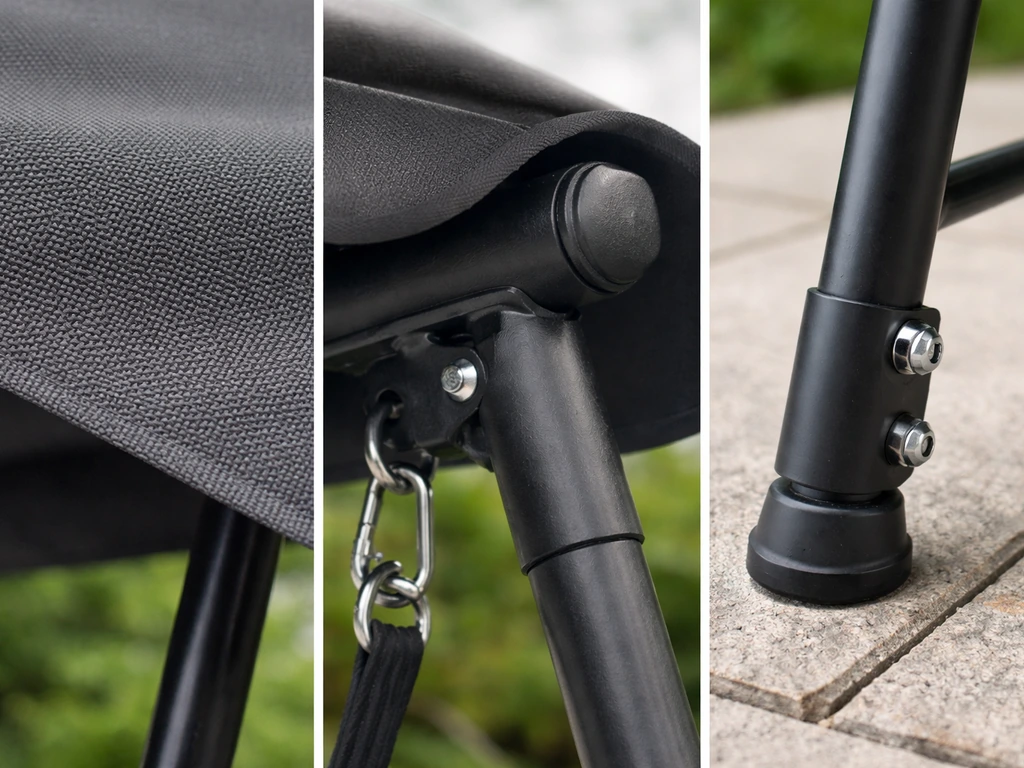
Here's what I actually check when evaluating a canopy swing before recommending it. Go through this list in order because each item affects real-world comfort and how long the swing lasts.
- Canopy fabric rating: Look for 600D Oxford polyester or heavier with a PU waterproof coating and either UPF 50+ or a stated 95% UV block rating. Thinner fabrics fade and degrade within 1 to 2 seasons.
- Canopy adjustability: A tilt range of 0 to 45 degrees is the minimum useful range. Fixed canopies are nearly useless in afternoon sun.
- Frame material and finish: Powder-coated steel is the standard for durability and value. Check that the coating is described specifically as powder-coated, not just painted.
- Weight capacity: For a 3-person swing, a total capacity of 750 lbs (roughly 250 lbs per seat) is the practical floor. Don't go lower.
- Frame footprint vs. your space: Confirm the frame's total footprint, not just the seat width, against your measured patio dimensions.
- Cushion quality and availability: Thick, weather-resistant cushions matter for comfort. Check if replacement cushions are available before buying.
- Hardware quality: Marine-grade stainless steel hardware resists corrosion. Cheap zinc hardware starts rusting at the bolt heads within a season in wet climates.
- Assembly complexity: Count the number of pieces and check if tools are included. Most swings require two people and 1.5 to 2 hours to assemble.
- Canopy replacement availability: A swing with an accessible replacement canopy top extends your total ownership life significantly.
Reviews and comparisons: top picks across common use cases
Rather than listing every swing on the market, here's how the main categories actually perform and who each type suits best.
Best overall: powder-coated steel 3-person swing with tilt canopy
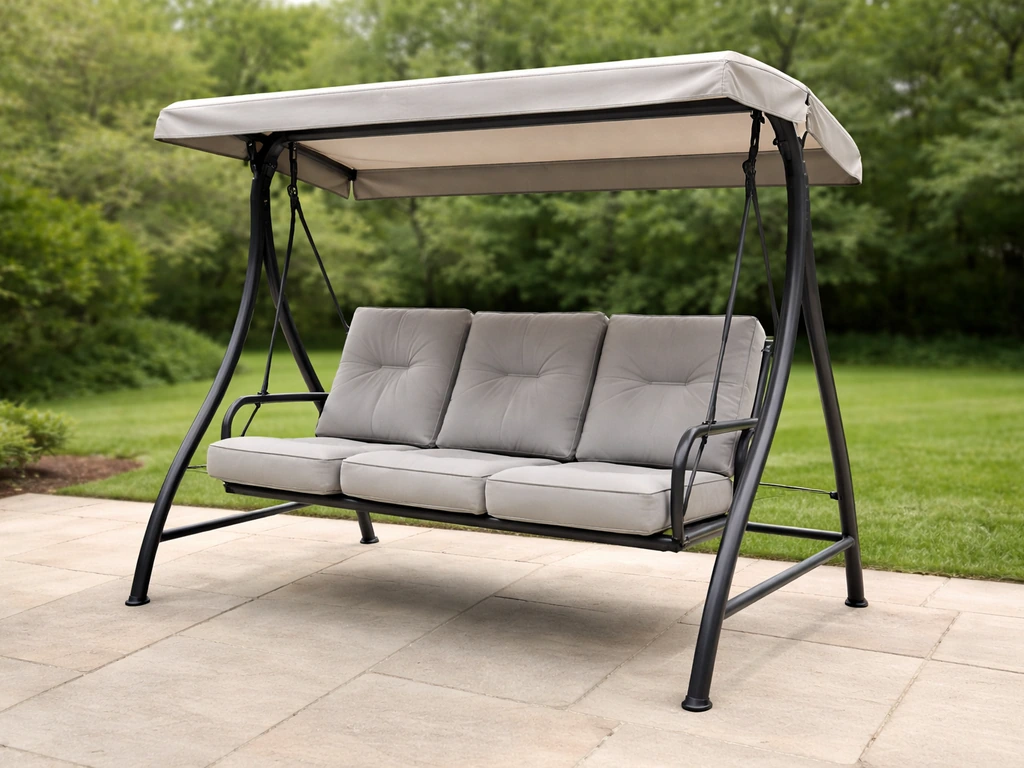
This is the category where you get the most value. The Outdoor Expressions 3-person swing sold at True Value is a solid example of what this category looks like: polyester cushions, a steel frame with black powder-coated finish, and a 750-lb total capacity (250 lbs per seat). Similarly, the Kohl's powder-coated swing with a waterproof Oxford fabric canopy that tilts between 0 and 45 degrees represents what a well-specified swing at the mid-range looks like. These aren't flashy, but they check every practical box: adequate capacity, adjustable canopy, rust-resistant frame, and comfortable cushions. Assembly typically takes 1.5 to 2 hours with two people. If you want one swing to recommend to a neighbor, it's in this category.
Step up: 3-person steel swing with gazebo or full top cover
Swings with a gazebo-style or full-coverage top offer more shade and a more substantial visual presence on the patio. The tradeoff is a larger footprint, higher wind resistance, and slightly more assembly complexity. If you're in a hot, sunny climate, the extra canopy coverage is genuinely worth it. In a windy area, a full gazebo top can act like a sail in storms, and you'll want to either take it down seasonally or verify the frame has strong enough cross-bracing to handle it. Models in this category typically run wider and deeper than standard canopy swings, so measure carefully before ordering.
Budget-friendly option: entry-level steel frame with basic canopy
You can find 3-person canopy swings for under $200, and some are decent for occasional use or covered patios where the canopy takes minimal sun and rain exposure. The honest limitation here is canopy fabric quality: at this price, you're typically getting thin polyester that fades within a season or two. If you go budget, plan to replace the canopy top in year 2 or 3. Buying a swing with a standard canopy size (like a commonly available replacement size) at least gives you an upgrade path. Products like the 600D Oxford replacement canopy tops available at major retailers mean you can refresh a worn swing for $30 to $60 instead of buying a whole new one.
Quick comparison across categories
| Category | Typical Price Range | Frame | Canopy Type | Best For | Main Limitation |
|---|---|---|---|---|---|
| Budget 3-person steel | $150–$250 | Powder-coated steel | Fixed or basic tilt | Occasional use, covered patios | Canopy fabric fades fast |
| Mid-range 3-person (best overall) | $250–$450 | Heavy powder-coated steel | Tilt-adjustable 0–45°, 600D+ fabric | Daily use, sunny climates, families | Assembly takes 2 hrs, needs 2 people |
| Gazebo-top 3-person steel | $400–$700 | Heavy steel with cross-bracing | Full coverage gazebo top | Maximum shade, hot climates | Large footprint, high wind resistance |
| Premium / POLYWOOD-style | $700+ | Marine-grade or recycled materials | Adjustable, UV-rated fabric | Long-term investment, coastal climates | Higher upfront cost |
Best patio swing for your needs: by budget, space, and weather
If budget is the main constraint and you have a covered patio or pergola, an entry-level steel frame swing works fine because the canopy doesn't have to do as much heavy lifting. Spend around $200 to $250, get a decent cushion package, and plan for canopy replacement in a couple of years.
If you have an open patio with full sun exposure, move up to a mid-range swing with a 600D Oxford canopy, PU coating, and UPF 50+ rating. The canopy is your primary sun protection tool here, so don't cheap out on it. Budget $300 to $450 for a good one in this category. The tilt-adjustable canopy is not optional if you're in direct sun.
If you live in a hot, humid, or coastal climate, frame material and hardware quality matter more. Powder coating is the minimum, but for coastal areas, marine-grade stainless steel hardware (the kind POLYWOOD uses on their swings) is genuinely worth paying for. For coastal or high-humidity conditions, Xion Lab specifically contrasts powder-coated steel with 316 marine-grade stainless and says 316 stainless holds up far better, while still requiring care such as rinsing marine-grade stainless steel hardware. Salt air eats regular hardware fast. Consider a swing explicitly rated for high-humidity or coastal use.
If space is tight, a 2-person loveseat swing with a canopy is a real option. The frame footprint is much smaller, and it works well on smaller patios or apartment balconies with a solid load-bearing structure. Just confirm your balcony's weight rating before bringing home a steel-frame swing and two adults.
- Small space or balcony: 2-person loveseat swing, lightweight steel or aluminum frame, compact footprint under 9 feet wide.
- Average suburban patio, sunny climate: Mid-range 3-person steel swing, 600D canopy with tilt, 750-lb capacity, $300–$450.
- Large patio, maximum shade needed: Gazebo-top 3-person swing, heavy steel frame with cross-bracing, $400–$700.
- Coastal or high-humidity climate: Prioritize marine-grade stainless hardware, heavy powder coat, and UV-rated canopy fabric.
- Tight budget, covered patio: Entry-level 3-person steel swing, $150–$250, plan for canopy replacement in 2–3 years.
Installation, anchoring, and setup tips
Most canopy swings are freestanding, which means they don't need to attach to a ceiling or beam. That said, setup still matters a lot for safety and how the swing feels in use. Start by choosing flat, level ground. An uneven surface puts uneven stress on the frame legs and makes the swing feel wobbly. If you're on pavers or concrete, that's fine. Soft grass is the most common surface but also the least stable for heavy swings.
If you're hanging a porch swing from a ceiling rather than using a freestanding frame, POLYWOOD's guidance is specific and worth following: the mounting hardware should be placed about 4 to 6 inches wider than the swing's armrest-to-armrest length. More critically, the beam or joist you're attaching to must be genuinely load-bearing. A decorative ceiling board won't cut it. If you're not sure which beams are structural, have a contractor confirm before drilling. The swing, the hardware, and the people on it all add up fast in weight.
For freestanding swings, follow the clearance guidelines: at minimum 3 to 4 feet of clear space in front and behind the swing seat, and 12 to 14 inches on either side. For households with children, erring toward 5 to 6 feet of front and rear clearance is a better standard. The Consumer Product Safety Commission's general recommendation for swing clearance zones is 6 feet in every direction, which gives you a useful reference point even for adult patio swings.
- Read the full assembly manual before opening bags of hardware. Lay out all parts and verify nothing is missing.
- Assemble on a flat, clean surface. Concrete or a garage floor is much easier than grass.
- Have a second person help: most swings require holding frame sections upright while another person bolts them together.
- Hand-tighten all bolts first, then do a full pass with a wrench once the frame is square and level.
- Check that the swing seat hangs level once assembled. Uneven chain lengths change how the swing moves.
- For hung swings, verify beam load capacity before attaching. When in doubt, use a structural engineer or contractor.
- Place the assembled swing on a level surface with proper clearance on all sides before inviting anyone to sit.
Maintenance and weatherproofing to keep it looking new
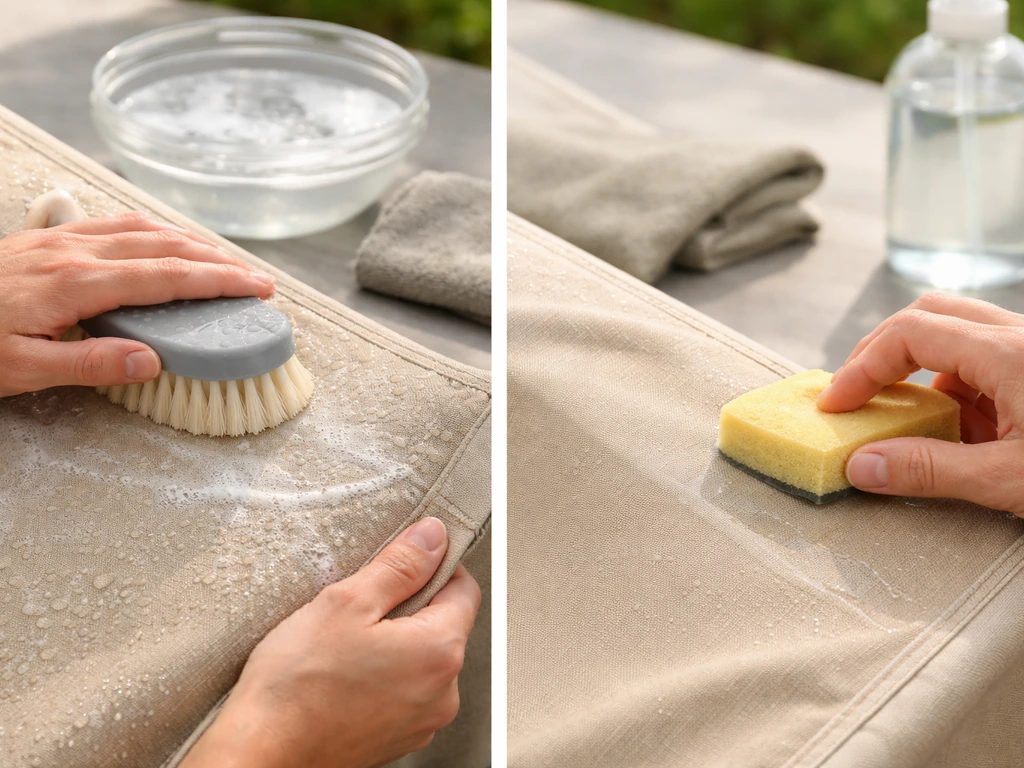
The canopy fabric is the part that degrades fastest and the part most people neglect. For cleaning, use a soft scrub brush and warm water. That's the method Classic Accessories recommends for their outdoor fabrics, and it's good advice for polyester canopy fabric generally. Avoid soap or detergent on canopy fabric unless the manufacturer explicitly says it's fine: some cleaning products strip the UV and waterproofing coatings built into the fabric at the factory, which significantly shortens the canopy's useful life. Certain chemicals can also attack the UV stabilizers woven into canopy fabric, so when in doubt, stick to water and a soft brush.
After cleaning and drying the canopy completely, apply an outdoor fabric protectant spray. POLYWOOD recommends this step for outdoor cushions and fabrics, and it genuinely extends the life of canopy material by repelling water, preventing mildew, and adding a layer of UV resistance on top of whatever rating the fabric already has. Do this at the start of the season and again mid-season if you're in a high-sun or high-humidity climate.
For the steel frame, inspect it once a season for chips or scratches in the powder coating. Touch up any bare metal spots with a rust-inhibiting paint or powder coat touch-up spray. Even small chips can become rust spots quickly in humid weather. Wipe the frame down with a damp cloth at least a few times per season to prevent grime buildup in the joints and welds.
When winter arrives or extended rain is coming, cover the entire swing with a protective patio cover or bring the cushions inside. A properly fitted swing cover protects both the frame and cushions from sustained moisture exposure and dramatically reduces how much cleaning and touching-up you need to do at the start of the next season. If you're in a region with heavy snow, disassembling the canopy top and storing it flat indoors is worth the 20 minutes it takes: the fabric and canopy rods hold up much better without a snow load on them.
Finally, check all bolts and connections annually, ideally at the start of each season. Outdoor furniture hardware loosens with temperature cycling, vibration from use, and wind movement over months. A quick torque check on all major connection points takes about 10 minutes and is the easiest way to keep a canopy swing safe and solid for many years.
FAQ
Is a higher weight capacity than 750 lbs always better for a patio swing with canopy?
Not necessarily. Higher ratings can mean heavier frames and bigger footprints, which can reduce comfort on small patios. Use the required rating plus a safety buffer based on your household, for example add for kids jumping on it, and also check that each seat is individually rated if the product lists per-seat limits.
How can I tell if the canopy tilt is actually useful or just moves a little?
Look for a specified tilt range and confirm the mechanism allows you to reposition while seated, some swings only allow a small angle change or require getting up to adjust. Also check the canopy’s attachment points, if they are only fabric clips, the canopy can sag over time.
What size canopy replacement should I order if my swing has thicker fabric than a standard model?
Measure the fabric coverage area, not the outer metal poles, and match the dimensions to the manufacturer’s replacement program or the specific rod kit for your model. Thicker or longer-stitch fabrics can shift the usable coverage slightly, so don’t rely on the pole-to-pole measurement.
Can I use a canvas or UV cover on top of the swing instead of covering cushions and the canopy?
A full cover helps, but only if it fits tightly enough to reduce wind flapping. Loose covers can rub fabric coatings and wear the canopy faster, so use a cover designed for the swing’s exact footprint and remove it during windy periods.
Is powder-coated steel worth it if I don’t live in a humid or coastal area?
It is still valuable because powder coating protects against normal outdoor wear, sprinkler water, and coastal-free humidity swings. If you choose a coated frame, avoid generic “painted” language and look for powder coating specifically, plus check welds and bracing thickness because those are common rust and wobble points.
What’s the best way to test stability before I assemble the swing on my patio?
Do a dry fit and place the frame on the final surface before fully tightening. If the legs rock on uneven pavers or soft ground, fix the base or use a level pad, because once the canopy and cushions are installed, rocking increases stress on welds and the canopy support bars.
Do I need to disassemble the canopy in winter even if I live somewhere mild?
If you get frequent rain, sleet, or morning freezing and thawing, storing the canopy components flat indoors can prevent coating breakdown. If your region is consistently dry and temperatures stay above freezing, a well-fitted swing cover may be enough, but inspect the fabric for loose stitching or fraying after winter.
How do I clean the canopy if it gets mildew spots?
Use warm water and a soft brush first, then dry thoroughly before applying any fabric protectant. If mildew persists, use only a cleaner the manufacturer approves for the fabric type, because many household detergents strip UV and waterproofing treatments.
Can I replace just the cushions if the frame is still solid?
Often yes, but confirm replacement cushion availability for your exact model and size. The common mistake is buying “similar” cushions, their thickness can change how the seat frames support you and can stress suspension points over time.
What’s the safest way to confirm assembly hardware is complete and correct?
Lay out every bag, compare part numbers to the instruction sheet, and verify hardware types for the canopy arms and swing links before tightening. If any washers or locking nuts are missing, don’t substitute from other furniture sets, mismatched hardware can loosen with wind and vibration.
Is 3 to 4 feet of clearance enough around a canopy swing for small children?
For households with kids, 5 to 6 feet front and rear clearance is a better standard, because kids tend to lean forward, stand up, or move sideways on the swing. Side clearance also matters when the canopy is tilted, the fabric can widen the effective sweep zone.
Can I mount a freestanding canopy swing to a deck or pergola for extra stability?
It’s usually not recommended unless the product is designed for anchoring. Using generic anchors can change the load path and may void warranty, so if anchoring is desired, use the manufacturer’s instructions or choose a model that explicitly supports anchoring points.
Next Articles
Best Sunbrella Patio Cushions: Top Picks, Guide & Maintenance
Find the best Sunbrella patio cushions: durable, fade‑resistant picks, buying tips, care, and top recommendations.
Alternative to Patio Cushions: Durable, Stylish Options and DIY
Alternative to patio cushions: durable, weatherproof seating options, pros, DIY tips & buying guide.
Best Color for Outdoor Patio Cushions in 2026
Choose the best cushion color for sun, heat, and fading in 2026, with pairing tips for patio furniture and durability.