
Natural light patio covers are translucent or semi-translucent roofing panels that let daylight filter into your outdoor space while still blocking rain, cutting harmful UV, and reducing heat gain. They suit homeowners who want a covered patio that doesn't feel like a dark tunnel, renters who want a removable or low-profile shelter solution, and anyone who grows plants, entertains in the daytime, or simply prefers bright, open-air ambiance under a solid roof. The main material options are acrylic sheet, polycarbonate panel, and engineered translucent systems like Duracool, each with measurably different light transmission, heat performance, and long-term durability.
Natural Light Patio Covers Reviews: Top Picks & Buying Guide
Lark Perry
12 Aug 2026
What natural-light patio covers are and who they actually suit
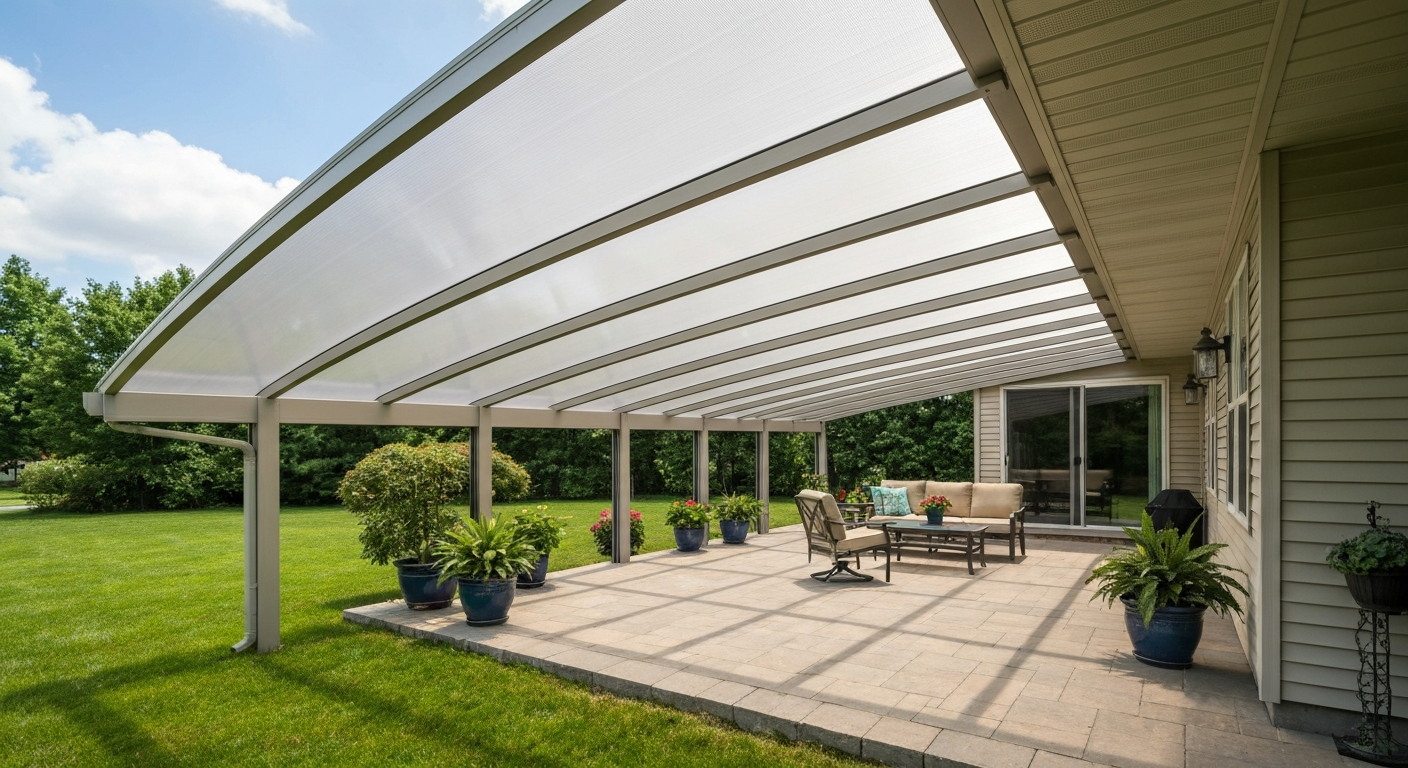
A natural-light patio cover replaces the solid plywood-and-shingle or solid aluminum roof with a glazing-type panel that admits daylight. You keep the structural frame, flashing, and gutters of a conventional cover, but the roof deck itself becomes translucent. That single change transforms how the space feels: midday light reads more like a bright shade garden than a covered porch, and you can use the space without switching on artificial lighting until after sunset.
These covers work best for people who have south- or west-facing patios where deep shade from a solid roof would make the space feel gloomy, gardeners who want a shelter that still supports plant growth, and households that spend the most time outdoors between 9 a.m. and 4 p.m. They are also popular in temperate or coastal climates where UV intensity is moderate. In very hot desert climates, the heat gain trade-off becomes more significant and material choice matters more, as I'll explain below. If full shade is the priority, a solid roof or a rated shade sail is a better starting point.
How translucency, light diffusion, UV control, and heat management actually work
Every translucent cover controls four variables simultaneously: visible light transmission (VLT), solar heat gain, UV transmission, and diffusion quality. These are related but not the same thing, and manufacturers sometimes conflate them in marketing copy, so it's worth separating them.
VLT is the percentage of visible-spectrum light that passes through the panel. A clear polycarbonate panel like Palram's SUNTUF in clear hits around 90% VLT, meaning nearly all visible light gets through. A bronze-tinted SUNTUF panel drops to about 35% VLT. The test method behind these numbers is ASTM E903 (or the international equivalent ISO 9050), which uses a spectrophotometer and integrating sphere to measure transmittance across the solar spectrum. When a manufacturer's data sheet cites a VLT figure, it should be traceable to one of those standards.
UV blocking is a separate channel. Most co-extruded polycarbonate panels, including SUNTUF, carry a UV-protective coating on the exposed (weather-facing) surface that blocks more than 99% of UV-A and UV-B radiation, even when VLT is near 90%. That coating is what stops the panel itself from yellowing over time and protects skin and furnishings below. UV weathering durability is evaluated in labs using ASTM D4329, a fluorescent UV accelerated-exposure test for plastics.
Solar heat gain is driven by the near-infrared portion of the solar spectrum, not the visible portion. A tinted or pigmented panel may admit less visible light but still pass significant infrared unless it has a specific IR-blocking treatment. This is why a dark bronze panel can still feel hot underneath on a summer afternoon. Engineered systems like Duracool address this more aggressively with reflective or multi-layer constructions.
Diffusion quality determines whether sunlight arrives as hard, direct shafts or as soft, even brightness. Opal and white-tint panels scatter incoming light, eliminating hot-spot glare and making the space more comfortable for activities like dining or working outdoors. Clear panels transmit direct beams, which can create glare and uneven heating on surfaces below.
The performance metrics that actually matter when comparing covers
Before you compare specific products, it helps to know which numbers to look for and what test standards back them up. Here are the six criteria I use when evaluating any translucent cover.
| Metric | What it measures | Relevant standard | What to look for |
|---|---|---|---|
| Visible Light Transmission (VLT) | % of visible daylight passing through | ASTM E903 / ISO 9050 | 60–90% for bright feel; 30–50% for glare reduction |
| UV Blocking | % of UV-A/UV-B blocked | ASTM D4329 accelerated UV weathering | >99% for skin/furniture protection |
| Solar Heat Gain | Infrared energy admitted per unit area | ASTM E903 (solar transmittance) | Lower is better in hot climates; matched to climate zone |
| Impact Resistance | Hail and impact tolerance | UL 2218 (Class 1–4) | Class 4 for hail-prone regions; Class 2 minimum elsewhere |
| Surface Burning / Fire Class | Flame spread index and smoke index | ASTM E84 / UL 723 | Class A (FSI ≤25) preferred for code compliance |
| Leak Resistance / Drainage | Water tightness at overlaps and joints | Field installation slope and sealant specs | Minimum 1.5 in. per 12 in. slope; sealed laps |
When reading a product data sheet, insist on seeing the actual test standard cited next to the number. Marketing phrases like 'blocks harmful rays' or 'weather resistant' without a test reference are not verifiable. Palram, for example, publishes downloadable technical guides, ASTM test references, Miami-Dade approvals, and warranty PDFs for its panel lines, which is the level of documentation you want to see from any manufacturer you are seriously considering.
Acrylic panels: performance, pros, cons, and ideal uses
Cast and extruded acrylic sheet (sometimes sold under brand names like Plexiglas or Optix) is the older of the two dominant glazing materials for residential patio covers. It offers excellent optical clarity and a glass-like appearance that many homeowners prefer aesthetically, and clear acrylic typically transmits 92% or more of visible light, slightly above comparable clear polycarbonate.
The core limitation of acrylic is brittleness. It cracks under point impact, which is a real problem in hail-prone areas, and it is more susceptible to stress cracking during thermal expansion and contraction if the panels are fastened too rigidly. Acrylic also yellows over time more noticeably than UV-stabilized polycarbonate, especially in high-UV environments, though premium grades with UV stabilizers perform better than commodity sheet.
- Highest optical clarity of the common glazing options — glass-like appearance
- VLT typically 90–92% in clear grades
- Available in a wide range of tints and opal diffuse finishes
- More susceptible to impact cracking than polycarbonate
- Thermal expansion is significant — requires slotted fastener holes and flexible sealant
- Yellowing over time in unprotected grades; UV-stabilized grades perform better
- Generally costs more per square foot than corrugated polycarbonate at retail
- Best for smaller, sheltered patio covers with minimal hail exposure and a high-aesthetic priority
Acrylic makes the most sense in mild coastal climates, small lean-to covers, and situations where the look of the material is a priority. If you are deciding between acrylic and polycarbonate for a larger patio or a region that sees storms, I'd lean toward polycarbonate for the durability margin. There is a full breakdown of acrylic-specific products and systems in the acrylic patio cover reviews section of this site if you want to go deeper on that material.
Polycarbonate panels: performance, pros, cons, and ideal uses
Polycarbonate is currently the most widely used glazing material for residential patio covers, and for good reason. It is roughly 250 times more impact-resistant than glass and significantly tougher than acrylic, which is why it shows up in both budget corrugated panels and premium multiwall systems. Palram's SUNTUF line is the most visible retail example in the U.S.: the 26-inch-wide corrugated panels are sold at Home Depot, with the clear 12-foot panel running about $50.90 (roughly $1.96 per square foot of material) and the clear 8-foot panel at $33.93. Those are starting-point material costs before framing, fasteners, flashings, or labor.
SUNTUF's clear panels are rated at 90% VLT by Palram, and the UV-protective co-extrusion on the weather face is claimed to block more than 99% of UV. The bronze tint version drops to 35% VLT at a lower price point (approximately $25.66 for a 6-foot panel), demonstrating how color selection directly trades light for solar control. Palram publishes physical properties data sheets and third-party test reports including Miami-Dade NOAs and ASTM E84 Class A surface burning certifications for relevant product lines, so the claims are traceable.
Multiwall polycarbonate (twin-wall, triple-wall, or honeycomb-core) adds an insulating air gap between layers, which reduces solar heat transmission and improves thermal comfort underneath. The trade-off is that thicker multiwall panels diffuse light more and have lower net VLT than single-layer corrugated panels. Twin-wall 8mm panels typically land around 60–70% VLT in clear grades.
- High impact resistance — relevant UL 2218 Class 4 ratings available on structural grades
- Clear corrugated SUNTUF: ~90% VLT, >99% UV blocking per manufacturer data
- Wide tint and opacity range covering 35–90% VLT
- Corrugated material costs approximately $1.93–$1.96 per square foot at retail (clear grade)
- Co-extruded UV layer prevents yellowing better than standard acrylic
- Multiwall variants improve insulation but reduce VLT and increase cost
- Corrugated profiles require a minimum slope of approximately 1.5 inches per 12 inches for proper drainage
- DIY-friendly in corrugated form; multiwall systems benefit from professional installation for proper thermal sealing
For most homeowners building a new patio cover or replacing a worn panel, corrugated polycarbonate in clear or opal white is the practical starting point. It balances cost, durability, and light transmission better than any other single-layer option at this price tier. If you want to see how polycarbonate compares to solid and opaque cover systems, the high quality patio covers guide on this site covers the premium structural end of the market.
Duracool and engineered translucent panel systems: performance and honest limitations
Duracool-branded patio cover systems occupy a different market tier from off-the-shelf corrugated panels. They are typically sold as engineered systems through dealers or direct contractors, combining a structural aluminum extrusion frame with translucent or semi-translucent panel inserts that incorporate multi-layer reflective construction to manage solar heat gain more aggressively than standard single-layer polycarbonate.
The core appeal of Duracool and similar engineered systems is thermal performance. The multi-layer panel construction is designed to reflect infrared radiation before it enters the space beneath, which in a hot southern or desert climate can meaningfully reduce the temperature under the cover compared to a single-layer polycarbonate panel at equivalent VLT. This is a real benefit if your primary complaint about your current cover is that it turns into a radiant heat lamp on summer afternoons.
The honest limitations are cost and installation complexity. Engineered systems like Duracool are significantly more expensive than retail corrugated polycarbonate, typically require dealer or contractor installation, and replacement panels if damaged are sourced through the same dealer channel rather than a local hardware store. Warranty and service terms also vary by dealer rather than being standardized nationally. If you want brand-specific pricing and contractor feedback, the Duracool patio covers reviews article on this site goes into dealer-level detail that is outside the scope of this materials guide.
- Multi-layer construction reduces solar heat gain more aggressively than single-layer polycarbonate
- Aluminum extrusion frame system provides structural rigidity and a finished appearance
- Better thermal comfort in high-heat climates compared to basic corrugated panels
- Higher cost than DIY polycarbonate — typically dealer-installed with custom quotes
- Panel replacement requires dealer sourcing rather than off-the-shelf retail
- Warranty terms and dealer support vary by region and installer
- Limited DIY suitability — frame connections and sealing are system-specific
Adjustable and vented designs: how they control light and heat, and where they fall short
Adjustable patio covers introduce a mechanical element to the light and heat equation. Louvered systems use rotating aluminum blades that can be angled from fully open (maximum airflow and light) to fully closed (full weather protection), with any position in between giving you variable light filtering and ventilation. When the louvers are at 45 degrees, you get partial shade, some breeze, and reasonable rain deflection. Fully closed, the same cover becomes a solid roof.
The strength of an adjustable system is flexibility. On a mild spring morning, you open the louvers completely. On a hot July afternoon, you tilt them to block direct sun. In a thunderstorm, you close them. That adaptability is something no fixed translucent panel can match. The trade-off is cost (motorized louvered systems typically run from $3,000 to $10,000 or more installed depending on size and brand), maintenance of the mechanical tilt system, and the fact that most louvered covers use opaque aluminum blades, not translucent material, so 'natural light' in that context means controlled open-sky light rather than diffused daylight through a glazed panel.
Some manufacturers offer vented or ridge-vent configurations in fixed translucent covers. A vented ridge allows hot air that accumulates under the panels to escape, which noticeably reduces under-cover temperature on sunny days without introducing the cost and mechanical complexity of a motorized louvered system. This is a useful middle-ground option for humid climates where convective heat buildup is the main complaint. The adjustable patio covers reviews article on this site covers specific louvered and vented systems with model-level detail.
A side-by-side comparison of the main material options
| Material / System | Typical VLT range | UV blocking | Heat management | Impact resistance | Approx. material cost | DIY suitability | Best climate fit |
|---|---|---|---|---|---|---|---|
| Clear acrylic sheet | 90–92% | Good (UV-stabilized grades) | Low — single layer, no IR treatment | Moderate — brittle under impact | Moderate–high per sq ft | Moderate — careful fastening required | Mild, low-hail climates |
| Corrugated polycarbonate (e.g., SUNTUF clear) | 90% | >99% UV blocked (co-extruded layer) | Low–moderate — single layer | High — per UL 2218 ratings | ~$1.93–$1.96/sq ft (retail) | High — standard tool installation | Most climates; excellent hail resistance |
| Tinted polycarbonate (e.g., SUNTUF bronze) | 35% | >99% UV blocked | Moderate — reduced solar transmittance | High | Slightly less than clear grade | High | Hot sunny climates needing glare control |
| Multiwall polycarbonate (8mm twin-wall) | 60–70% (clear) | >99% UV blocked | Better — air gap reduces heat gain | High | Higher than corrugated — $3–6/sq ft typical | Moderate — thermal gap sealing needed | Hot or cold climates needing insulation |
| Duracool / engineered translucent system | Varies by panel spec | Manufacturer-specified | High — multi-layer reflective construction | High (aluminum frame system) | Dealer quote — significantly higher | Low — contractor installation | Hot southern/desert climates |
| Motorized louvered cover (opaque blades) | 0–100% (variable) | Full when closed | Excellent — fully adjustable | High (aluminum construction) | $3,000–$10,000+ installed | Low — professional install standard | All climates where flexibility is priority |
Design and integration: flashing, gutters, drainage, and mounting accessories
The panel material is only part of what makes a translucent cover work well. How the cover connects to your house, sheds water, and integrates with accessories like outdoor speakers and lighting determines long-term performance and livability. Here is what I look at on every installation.
Slope, drainage, and leak prevention
Corrugated polycarbonate panels require adequate slope to drain properly. Palram's installation guidance (referenced in Home Depot product Q&A) calls for a minimum of approximately 1.5 inches of rise per 12 inches of run. Flatter installations trap debris and standing water in the corrugations, accelerating degradation at the panel edges and increasing leak risk at lap joints. Where panels overlap, use the manufacturer-specified closure strips and laps (usually 6 to 8 inches for corrugated profile) sealed with compatible sealant, not a generic caulk that may degrade or crack with UV exposure.
Gutters on the low edge of a translucent cover do two useful things: they control where runoff goes (preventing erosion or water intrusion at the foundation), and they keep the wall/house connection dry. Flashing where the cover meets the house wall is non-negotiable. An unsealed step-flashing or counter-flashing joint is the most common source of water intrusion complaints I've seen on DIY patio cover projects.
Integrating speakers, lighting, and other accessories
Outdoor speakers and lighting are commonly integrated into patio cover structures, and a translucent cover introduces a few specific considerations. Because the roof deck is a glazing panel rather than solid framing, you cannot simply lag a speaker bracket into the roof itself. Speaker mounts, downlights, and ceiling fans need to be fastened to the structural rafters or the perimeter beam, not the panels. Mark rafter locations clearly before panel installation and plan accessory mounting points in advance, because drilling through a polycarbonate panel after the fact is workable but requires sealed washers and flexible grommets to prevent cracking and leaking.
For electrical wiring, conduit runs should follow the rafter lines and emerge through pre-planned holes with weatherproof fittings. Translucent panels transmit UV and significant heat variation, so use outdoor-rated wire (sunlight-resistant jacket, typically rated for wet locations, UL listed for direct sunlight exposure) for any runs along the underside of the cover structure. Patio Speakers Guide has dedicated content on speaker placement and wiring for covered outdoor spaces if you want step-by-step guidance on that integration.
Safety considerations
For code compliance, verify the surface burning classification of the panel you choose. ASTM E84 (the Steiner tunnel test) assigns flame spread index and smoke developed index values used to classify materials as Class A, B, or C. Many polycarbonate panel products, including certified Palram lines, carry Class A ratings (flame spread index of 25 or less). Check your local building department's requirements before purchasing, particularly if the cover attaches to the house, as attached structures typically fall under the same permit and code requirements as the main dwelling. For regions prone to severe weather, verify the panel's impact rating against UL 2218, Class 4 is the highest level, appropriate for hail-prone areas. See Roof 101, Insurance Institute for Business & Home Safety (explains UL‑2218 impact classes) for background on the UL 2218 steel‑ball test and the Class 1–4 impact ratings used as a hail benchmark Roof 101 — Insurance Institute for Business & Home Safety (explains UL‑2218 impact classes).
Brand notes: National Patio Covers and what to ask any dealer
National Patio Covers is a contractor-focused brand that offers both solid and translucent panel options as part of complete aluminum-framed patio cover systems. Like Duracool, they sell through a dealer and installation network rather than retail channels, so pricing is quote-based. The national patio covers reviews article on this site includes user feedback and dealer-experience detail from customers across different regions, which is useful context if you are getting quotes from a National-affiliated installer.
When evaluating any dealer-installed system (National, Duracool, or similar), ask for the following before signing anything: the specific panel manufacturer and model, VLT and solar transmittance data from that manufacturer's data sheet, the warranty duration and who backs it (manufacturer vs. dealer vs. installer), whether replacement panels are available through retail channels or only through the dealer, and what permits and structural engineering documentation are included in the installation scope.
Cost reality: what you actually spend from material to finished cover
Corrugated polycarbonate panel material costs are genuinely low at retail: around $1.93 to $1.96 per square foot for clear SUNTUF at Home Depot, based on current panel listings. That is the material cost only. A realistic DIY budget for a 200-square-foot attached patio cover with polycarbonate panels also needs to account for the structural lumber or aluminum rafters, ledger board and flashing hardware, closure strips and ridge cap, gutters, fasteners and sealant, and permit fees if required in your jurisdiction. Depending on design complexity and local material prices, total DIY material costs typically land in the range of $8 to $18 per square foot for a complete structural build.
Professional installation of a contractor-supplied system (framed aluminum with translucent panels, not an engineered system like Duracool) typically runs $20 to $45 per square foot all-in, varying by region and design. Engineered dealer systems like Duracool with aggressive thermal management start higher and are best evaluated on individual quotes. If you are working with a tight budget, corrugated polycarbonate DIY is where the value is strongest. If you are in a high-heat climate or want long-term low maintenance, the price premium for an engineered system or quality multiwall panel is easier to justify.
Maintenance, warranty, and what to expect over time
UV-stabilized polycarbonate panels like SUNTUF carry manufacturer warranties of 10 years (check the current Palram warranty PDF available from their downloads page for terms and exclusions). The UV co-extrusion is designed to prevent yellowing within that window, which is the main failure mode for unprotected polycarbonate. After the warranty period, panels in high-UV climates may show some haze or slight yellowing, particularly at cut edges where the protective coating is absent. Sealing cut edges with appropriate tape or edge caps slows that process.
Annual maintenance for a polycarbonate cover is light: rinse panels with a soft cloth and mild soap to remove pollen and debris (abrasive cleaners scratch the UV coating), inspect lap joints and flashing for sealant degradation, and clear gutters each fall. Acrylic covers follow the same cleaning protocol but are more vulnerable to surface scratches. Engineered systems with aluminum extrusion frames are generally low maintenance on the panel surface but require periodic inspection of the gasket seals at panel edges.
My recommendations by use case
Different patio setups call for different solutions, and there is no single best natural-light cover. Here is how I'd match the options to common situations.
| Use case | Recommended material / system | Key reason |
|---|---|---|
| Bright, comfortable daytime dining patio, mild climate | Opal white corrugated polycarbonate (e.g., SUNTUF white opal) | 90%+ VLT with soft diffuse light; eliminates glare; DIY-friendly at ~$2/sq ft |
| Sun-drenched hot climate, heat comfort priority | Tinted multiwall polycarbonate or Duracool-type engineered system | Reduced infrared gain; air gap in multiwall cuts heat transfer |
| Hail-prone region, weather durability priority | Heavy corrugated or twin-wall polycarbonate, UL 2218 Class 4 rated | Impact resistance far exceeds acrylic; documented test ratings available |
| Aesthetic priority, small sheltered cover | UV-stabilized cast acrylic in clear or tint | Glass-like appearance; best suited where impact risk is low |
| Maximum flexibility, year-round use | Motorized louvered cover | Full open-to-closed range; pairs well with integrated speakers and lighting |
| Budget DIY first cover | Clear corrugated SUNTUF polycarbonate | Lowest cost per sq ft with documented performance data and wide retail availability |
Your pre-purchase checklist
Before you buy panels or sign a contractor agreement, work through this list to make sure you have the information you need.
- Confirm the panel's VLT percentage is cited to ASTM E903 or ISO 9050, not just a marketing description
- Check that UV blocking is documented in the manufacturer's data sheet, not only the retail listing
- Verify the impact rating (UL 2218 class) if you are in a hail-prone area
- Confirm the fire/surface burning classification (ASTM E84 Class A preferred) with your local building department
- Calculate your minimum required slope (1.5 in. per 12 in. for corrugated polycarbonate) and confirm your roof structure meets it
- Identify all accessory mounting points (speakers, lights, fans) before panel installation and mark rafter locations
- Ask your dealer or installer for the warranty document, not just a verbal warranty term
- Confirm whether replacement panels are available at retail or only through a dealer channel
- Get a permit if required — attached patio covers typically require one in most U.S. jurisdictions
FAQ
What primary performance metrics should be collected to evaluate natural‑light patio covers?
Collect Visible Light Transmittance (VLT), total solar transmittance/reflectance, solar heat gain (or solar heat gain coefficient proxy), UV transmittance/UV blocking percentage, impact resistance (UL 2218 class or lab impact energy), thermal/under‑cover surface temperature (IR thermography or spot IR with calibrated emissivity), optical diffusion (haze/clarity measures), leak resistance/water intrusion under standard slope and simulated rain, wind uplift ratings, and measured longevity indicators (accelerated UV weathering per ASTM D4329).
Which standardized lab tests and methods verify those metrics?
Use ASTM E903/ISO 9050 for spectral VLT and solar transmittance; ASTM D4329 for accelerated UV‑weathering; UL 2218 for impact/hail resistance; ASTM E84/UL 723 for surface‑burning classification; ASTM E1933 and thermography best practices for thermal imaging calibration; and industry wind/uplift tests or manufacturer code approvals (e.g., Miami‑Dade NOA) for wind performance.
What manufacturer information and documentation should be obtained and verified?
Request product datasheets with spectral transmittance tables, technical/physical properties sheets, installation guides (slope, flashing, fasteners, spacing), full warranty PDFs (coverage, exclusions, pro‑rated terms, claim process, required maintenance), third‑party test reports and code approvals (E84, NOA, Miami‑Dade), and material safety data sheets. Verify that performance claims on retail pages match datasheet/test reports and check date/version of documents.
How should independent testing and third‑party verification be used in the review?
Prioritize third‑party lab reports (interlaboratory or accredited labs) over manufacturer marketing. Verify test protocol and specimen SKU in reports (e.g., ASTM E903 spectral data for the specific color/tint). If independent consumer test data exists, include it (bench lab, field comparisons). Note absence of independent tests and flag claims based solely on manufacturer data.
What real‑world field measurements are practical for homeowners and reviewers?
Measure VLT with a handheld spectrometer or calibrated lux meter comparisons under the cover vs. open sky; record under‑cover surface temperatures with an IR thermometer/thermography during consistent solar loading; perform small simulated rain tests to check leaks; document perceived glare and daylight quality photographically; and collect installation time/labor data for DIY vs. pro installs.
How should brands and materials (acrylic, polycarbonate, Duracool systems) be compared side‑by‑side?
Compare on the same metrics: VLT and tint options, UV blocking, impact resistance, heat gain/thermal performance, diffusion (glare vs clarity), expected service life/UV‑yellowing resistance, installation complexity (panel handling, support spacing, slope), cost per ft² (material and typical total installed), warranty terms, and real user feedback on leaks/durability. Present pros/cons by use case (max daylight, shading, noise/speaker integration). Use uniform test conditions or normalized manufacturer test data.
Next Articles
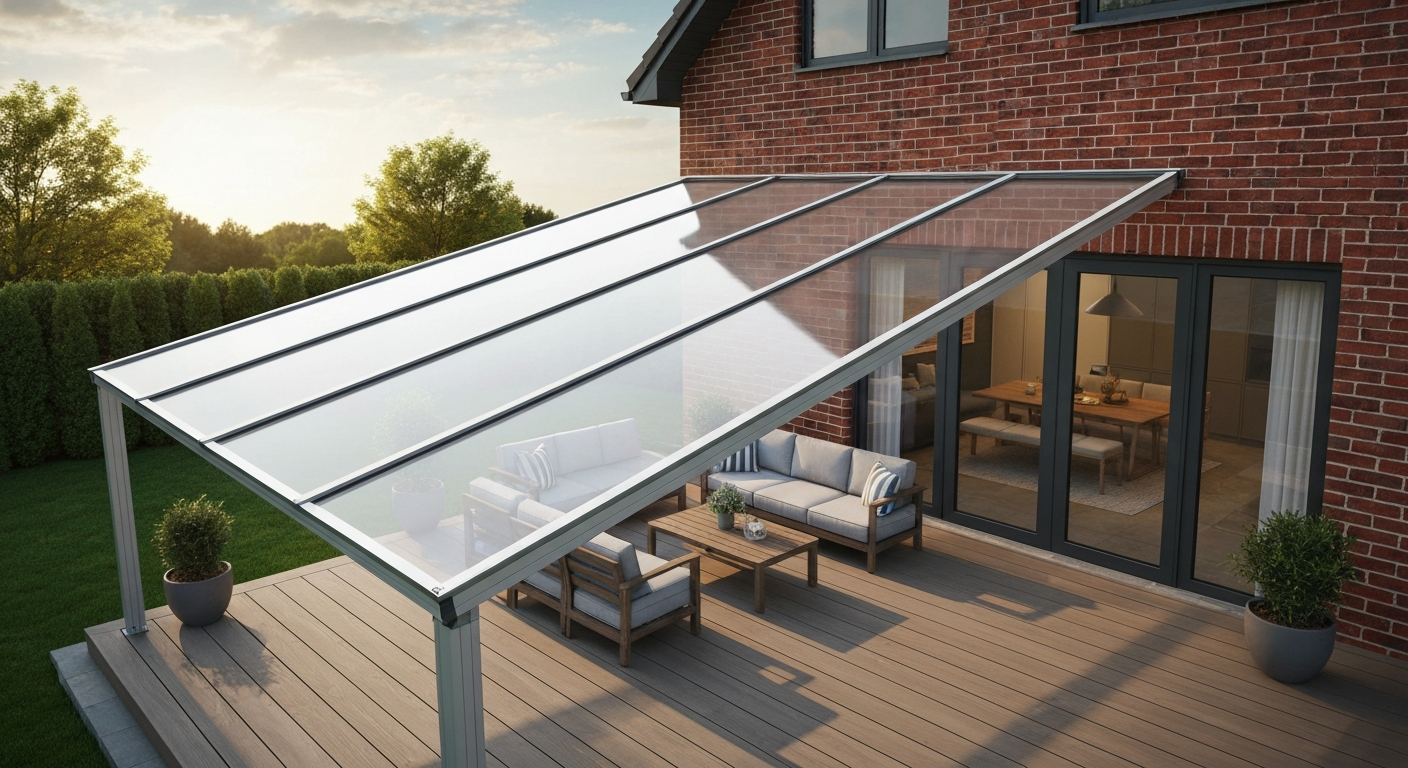
Acrylic Patio Cover Reviews: Top Panels, Systems & Picks
Acrylic patio cover reviews: compare top acrylic panels and systems for UV protection, clarity, cost, and installation.
National Patio Covers Reviews: Complete Buying Guide & Ratings
National Patio Covers reviews, pricing, tests and buying guide, choose the best model for shade, light and durability.
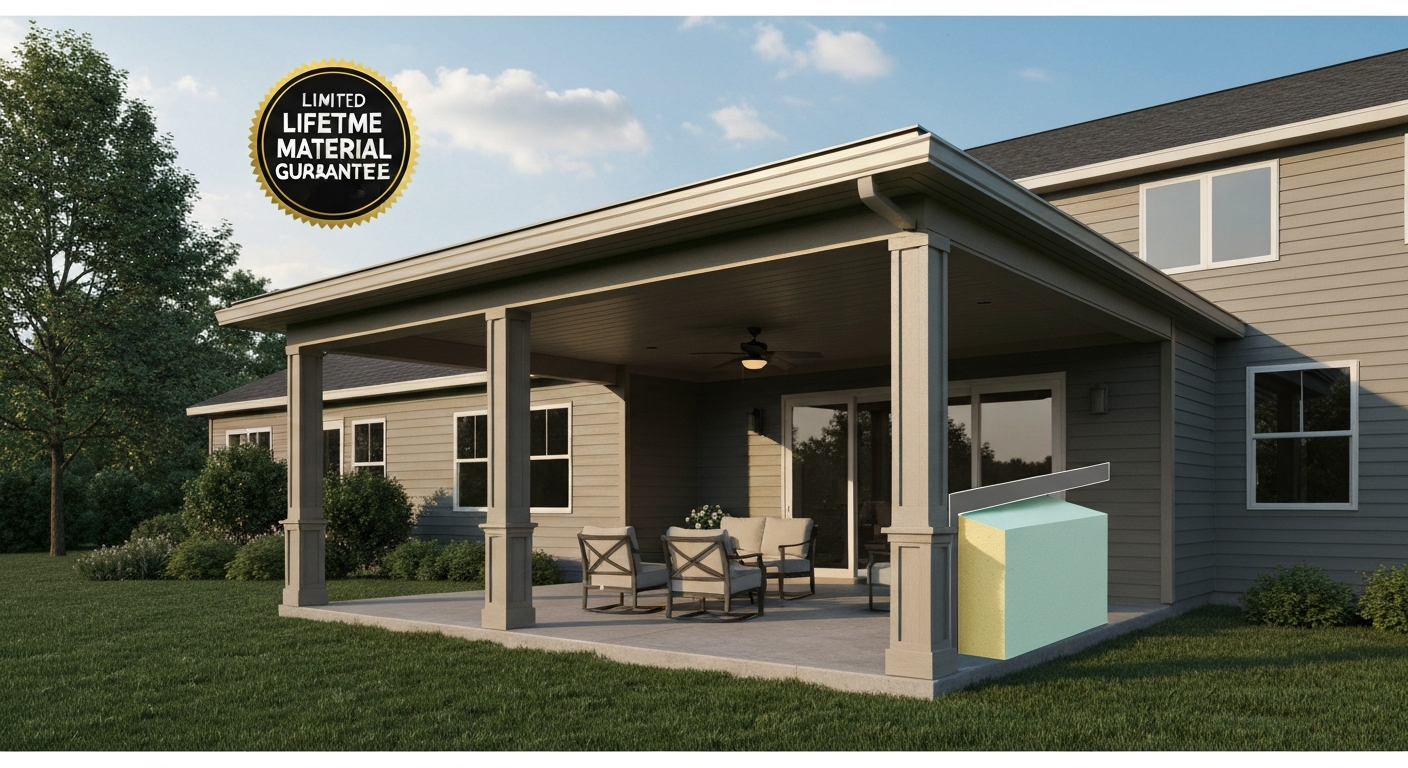
Duracool patio covers reviews: buyer's guide & comparisons
Duracool patio covers reviews: hands-on look at light control, durability, cost, installation, and a clear buying check