
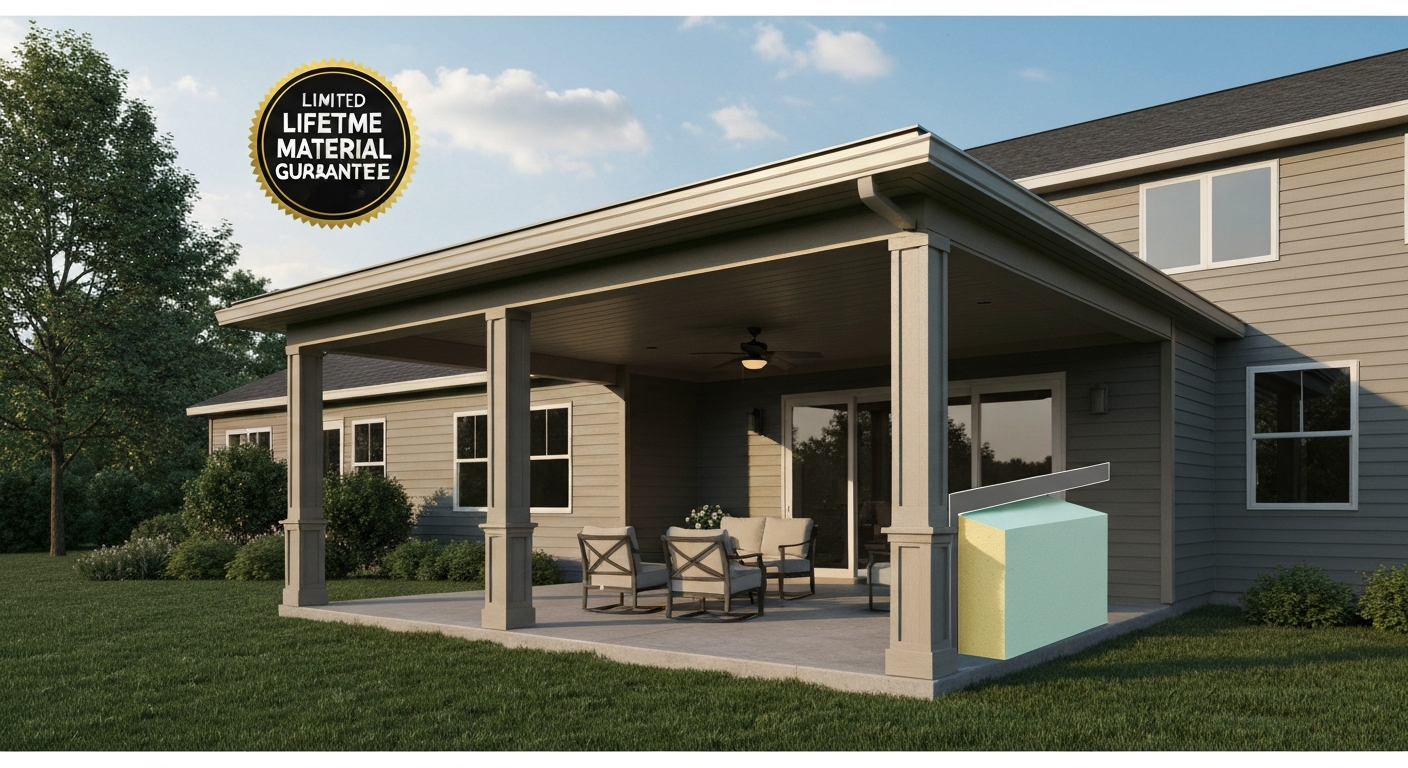
Duracool patio covers are a solid mid-to-premium choice for homeowners who want a U.S.-made aluminum cover with a real structural warranty. The brand sells five distinct styles, ranging from open lattice panels to fully insulated roof panels (IRP), and backs the aluminum components with a Limited Lifetime Material Guarantee when installed by an authorized dealer. For most suburban patios in hot or mixed climates, the insulated IRP option delivers the best measurable heat reduction. That said, Duracool is not the right fit for every budget, every climate, or every DIY comfort level, and this review will walk you through exactly where it performs and where you might be better served by an acrylic, adjustable, or national-brand alternative. For head-to-head comparisons and coverage of national brands, see our national patio covers reviews.
Duracool patio covers reviews: buyer's guide & comparisons
Who Duracool is actually for
Duracool suits homeowners who want a permanent, attached patio cover built from domestic aluminum with verifiable structural credentials (the ICC-ES evaluation report ESR-2676 covers the United Duralume product family). If you are in a hot Sun Belt climate and want measurable thermal performance rather than just shade, the IRP line is worth the extra cost. If you want professional installation with a transferable lifetime warranty on the aluminum material, Duracool's authorized dealer network supports that. Who should look elsewhere: renters and anyone wanting a temporary or seasonal solution; homeowners in heavy snow zones above 30 psf flat-roof live load without a custom engineering plan; anyone who needs translucent panels to flood the space with natural daylight; and buyers on a tight budget who can not stretch to roughly $35 or more per square foot installed.
Duracool product lines: what the brand actually sells
Duracool (operating as United Duralume Products, Inc., or UDPI) builds five cover styles around aluminum extrusions and pans finished in the company's Duracoat XT40 paint system. All panels and frames are marketed as domestically sourced aluminum. Each style sits at a different price and performance point.
| Cover Style | Profile / Structure | Light Transmission | Best Use Case |
|---|---|---|---|
| Lattice | Open grid aluminum; no solid roof | High (open pattern) | Partial shade, aesthetic interest, lower cost |
| Flatpan | Flat aluminum pans, tongue-and-groove interlocked | None (opaque solid) | Full shade, clean modern look |
| W-Pan | Corrugated W-profile aluminum pans | None (opaque solid) | Full shade, traditional look, cost-effective |
| Tri-V | Triple-V corrugated profile pans | None (opaque solid) | Full shade, added rigidity vs. W-Pan |
| IRP (Insulated Roof Panel) | Aluminum skins over high-density foam core | None (opaque solid) | Maximum heat reduction, premium comfort |
Each style shares the same accessory ecosystem: compatible hangers, gutters, fascia boards, posts, and brackets. Color options run across the Duracoat XT40 palette, and color-matched replacement parts are available through patiopart. Duracool Patios – official site (parts / accessories and patiopart link) links directly to patiopart.com for official replacement parts and color‑matched accessories. com, which Duracool officially links to from its own site. That parts-availability chain matters for long-term ownership: if a pan or bracket gets damaged years from now, you are not hunting for a generic aluminum fix.
Key specs to check before you buy
Before committing to any Duracool model, these are the numbers you need to pin down. Some come from third-party sources; some you will need to confirm with your installer.
- Light transmission: Solid pan covers (Flatpan, W-Pan, Tri-V, IRP) transmit zero visible light. Lattice covers allow partial daylight depending on slat spacing. If natural light under the cover matters to you, none of the solid-pan lines will deliver it, and a polycarbonate or acrylic panel system would be a better fit.
- Thermal metrics: Duracool / United Duralume finishes appear on the ENERGY STAR Roof Product List. Measured initial solar reflectance for colored painted metal variants (e.g., Adobe finish) runs approximately 0.55, dropping to about 0.50 at three years. White or lighter lattice finishes are measured closer to 0.70 reflectance. Initial emissivity is listed at approximately 0.83. Higher reflectance and emissivity both reduce heat absorbed and re-radiated into your patio.
- IRP R-value: Three-inch insulated roof panels in aluminum-skin/foam-core systems are commonly rated in the R-12 to R-13.9 range by trade sources, depending on foam type. Duracool does not publish a single branded R-value on its public pages, so ask your installer for the specific foam spec before signing.
- Structural span and load limits: The ICC-ES evaluation report ESR-2676 (United Duralume) sets the minimum residential live load at 10 psf and excludes flat-roof snow loads greater than 30 psf unless addressed in project-specific engineering plans. Panel spans, post spacing, and fastener schedules must be taken from the engineering plans that accompany your permit set, not estimated. Every installed structure must carry a permanent decal stating allowable roof live/snow load and design wind speed.
- Warranty: Limited Lifetime Material Guarantee on aluminum components, but only when installed by an Authorized Dealer, registered within 30 days of installation. The warranty is transferable (with written notification within 30 days of property sale). Exclusions include acts of God, corrosive atmospheres, improper installation, and failure to follow the maintenance protocol.
- Paint warranty / finish durability: Duracoat XT40 is the listed paint system. Independent testing data specific to Duracool's paint life are not publicly available; for comparison, industry-standard PVDF coatings on aluminum typically carry 20-30 year fade/chalk warranties. Ask your dealer for the specific Duracoat XT40 warranty terms in writing.
Real-world natural light: what to expect under a Duracool cover
Here is the honest reality: every solid-pan Duracool cover blocks 100% of direct daylight from above. Under a Flatpan, W-Pan, Tri-V, or IRP cover on a bright afternoon, the ambient light level under the structure comes entirely from the sides and from reflected light off surrounding surfaces. That is fine for most covered patio uses, but if you want a bright, airy feel under your cover, the solid aluminum lines are not the answer.
The Lattice cover is the exception. Open lattice patterns allow dappled light through, and the amount depends on the specific slat configuration your installer chooses. It is not a precision science with Duracool, meaning you do not get a published light transmission percentage the way you would with multiwall polycarbonate (where, for example, 8mm twin-wall polycarbonate delivers roughly 81% PAR transmission, and 16mm triple-wall around 74%). If measured, quantified light transmission under your cover matters, acrylic or polycarbonate panel systems offer more predictable numbers and are worth comparing.
Real-world heat reduction: how much cooler does it actually get?
This is where Duracool's IRP line separates itself from basic shade covers. The combination of a reflective painted aluminum outer skin (initial solar reflectance ~0.55 for mid-tone colors, ~0.70 for lighter finishes) and a foam core rated in the R-12 to R-13.9 range creates a genuine thermal barrier rather than just a shade layer. A basic flat aluminum pan with no insulation core blocks the sun but still conducts heat downward. An IRP panel reflects more solar energy before it enters the panel and insulates against what does get in.
Homeowner and contractor testimonials from Duracool/Duralum installations consistently describe a noticeable temperature difference after installation, with phrases like 'huge difference in how hot the patio gets' appearing in multiple installer case studies. CAT Exteriors' Duracool installer page includes homeowner and contractor testimonials describing significant reductions in patio heat after Duracool/Duralum installations. Those are anecdotal, and I would always caution against treating marketing testimonials as measured data. What the ENERGY STAR numbers do tell you is that a solar reflectance of 0.55 on the painted metal surface means roughly 55% of solar energy is reflected away before it enters the structure. Pair that with R-12 insulation and you have a cover that meaningfully reduces radiant heat load in summer. For a back patio in Phoenix or Dallas, that is genuinely useful. For a shaded patio in Seattle, the IRP premium is harder to justify.
Weather resistance, hail, and how long these covers last
Duracool's aluminum construction gives it a fundamental durability advantage over wood, vinyl, or fiberglass patio covers. Aluminum does not rot, warp, or crack under UV exposure the way wood and some plastics do. The Duracoat XT40 finish is designed to resist fade and chalk, though independent long-term fade data for this specific system are not publicly available.
On hail: aluminum patio covers can dent under large hail strikes, and Duracool's warranty explicitly excludes damage from acts of God, which includes hail events. This is standard across the industry, not unique to Duracool, but it is worth knowing if you are in a hail-prone corridor (Texas, Colorado, the Great Plains). Thicker-gauge aluminum pans and IRP panels with their foam core tend to resist small-to-medium hail better than thin single-wall pans, but no residential patio cover is hail-proof.
On wind and snow loads: the ICC-ES evaluation report ESR-2676 sets the structural framework. The engineering plans accompanying your permit set define the post spacing, tributary widths, and fastener schedules for your specific wind and snow zone. Structures must carry a permanent load rating tag. If you are in a high-wind zone or a region that sees more than 30 psf flat-roof snow load, flag this with your installer before the design is finalized; additional engineering may be required.
Longevity: with proper maintenance and no major weather events, a correctly installed Duracool aluminum cover can realistically last 20 to 30 years or more. The Limited Lifetime Material Guarantee on the aluminum is a meaningful signal of the manufacturer's confidence in the material, provided the warranty conditions (authorized dealer installation, registration, maintenance protocol) are met.
Adjustable options, accessories, and patio gear compatibility
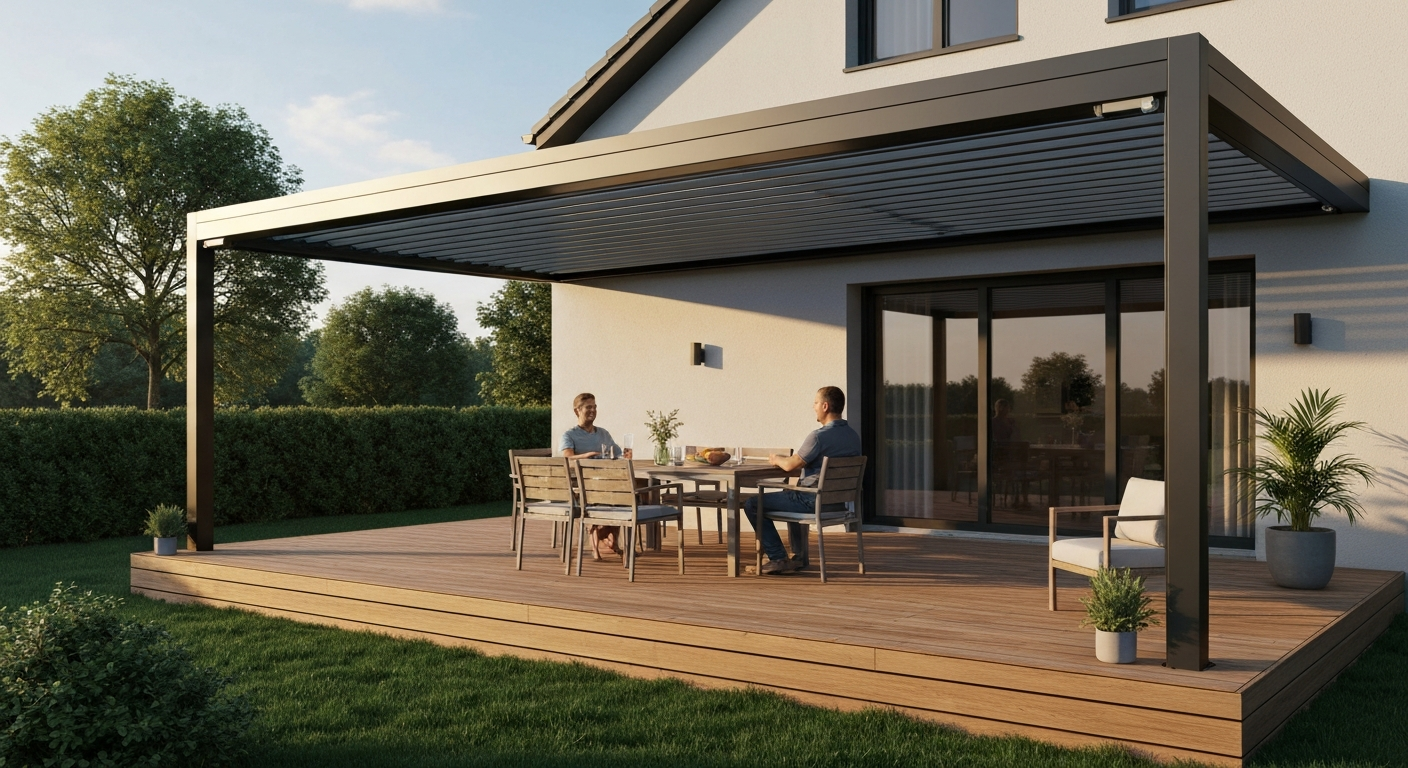
Duracool's five cover styles are fixed-structure systems, not adjustable louver systems. If you want the ability to open and close your cover to control light and airflow on demand, Duracool is not the product for that. Adjustable or operable patio cover systems are a separate category worth considering if flexibility matters more than maximum insulation performance. For comparisons and buyer reviews of adjustable patio covers, see adjustable patio covers reviews.
Within the fixed-cover ecosystem, Duracool does offer accessory attachment points through its standard hanger, gutter, fascia, and post hardware. The aluminum extrusion profile on most pan-style covers provides natural mounting surfaces for ceiling fans, pendant lighting, and patio speakers along the front header or attachment beam. Outdoor speaker systems designed for ceiling or soffit mounting are a natural pairing with a Duracool Flatpan or IRP cover, since the flat underside and structural header give you consistent mounting depths. Surface-mounted track lighting and low-voltage LED strips also attach readily to the fascia or pan underside.
Furniture compatibility is straightforward: because Duracool covers are attached structures with posts, you have flexible furniture placement underneath with no overhead obstruction. The gutters along the perimeter help manage water runoff, which is relevant if you plan to place furniture close to the cover edge. Replacement plastic components (end caps, trim pieces) are available via patiopart.com, and color-matched accessories through LB Structural and PatioAccessoriesDirect give you good options for long-term upkeep.
DIY vs. professional installation: what to realistically expect
Let me be direct: IRP (insulated roof panel) installs are not realistic solo DIY projects. Duralum's installation guidelines explicitly require two people to handle panels and call for adjustable jack stands approximately 10 to 12 feet high to support panels during installation. If you have a helper and are comfortable with structural work, the flatter non-insulated pan covers (Flatpan, W-Pan, Tri-V) are more approachable, but they still require careful attention to the engineering prints for span limits, post placement, and fastener schedules. The ICC-ES evaluation requires that fastener type and spacing follow the engineering plan, not field judgment.
Core installation steps (non-insulated pan covers)
- Mark and install the hanging channel into wall studs using lag screws in the specified V-pattern, with sealant applied before fastening.
- Install flashing over the hanging channel to direct water away from the house wall.
- Set posts at column spacing specified in your engineering prints; do not estimate column spacing.
- Install the front header/gutter across the post tops.
- Insert roof panels into the attachment channel, interlocking tongue-and-groove edges between adjacent panels.
- Apply silicone sealant at panel seams and top junctions per the installation document.
- Secure panels to channels and header with the specified fastener type and spacing (typically #8 x 3/4-inch Tek screws at approximately 12 inches on center for certain profiles, per engineering sheets).
- Attach fascia, end caps, and trim; confirm the load-rating decal is permanently affixed to the structure.
For IRP panels, add jack stand setup and two-person panel handling throughout. Do not drag or jam insulated panels; the foam core can delaminate from the aluminum skin if the panels are forced.
Professional installation through an authorized dealer is strongly recommended if you want the Limited Lifetime Material Guarantee to apply. It is also the practical choice for IRP projects, multi-post layouts, or any installation requiring a building permit (which most attached covers do). Budget roughly $20 to $35 per square foot installed for non-insulated aluminum covers and $35 to $55 per square foot for IRP systems. A typical 12x20-foot patio project lands somewhere in the $10,000 to $22,500 total range depending on style, region, and add-ons. These are 2026 market benchmarks; get at least two local quotes before committing.
How Duracool compares to the alternatives
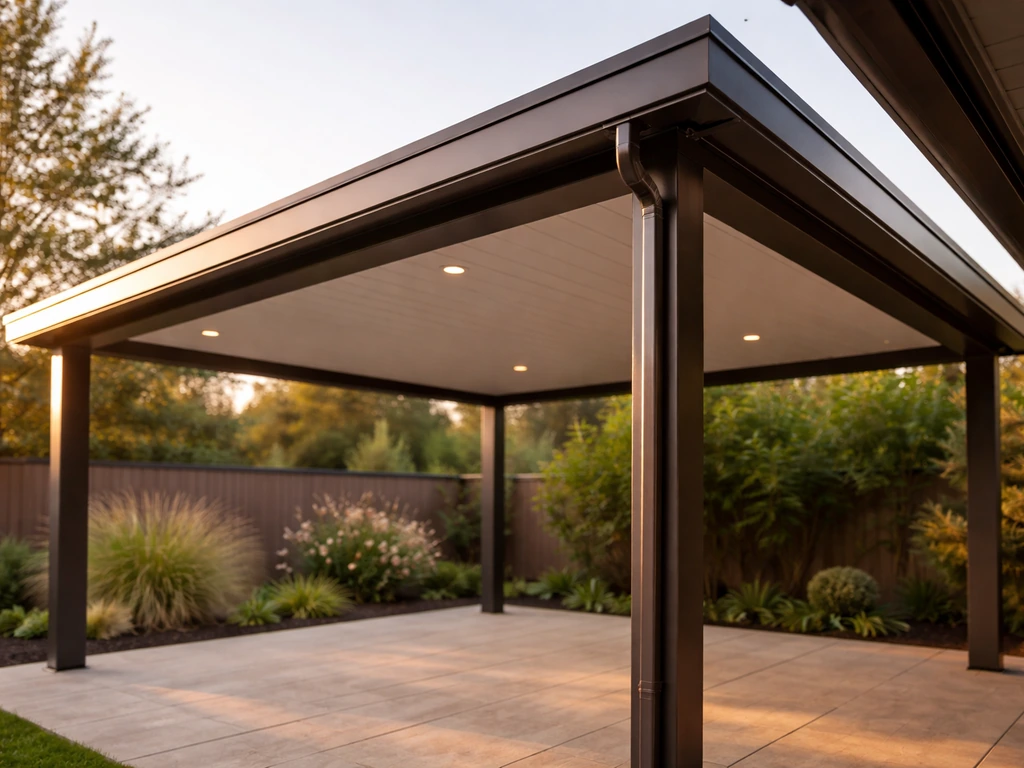
Duracool does not exist in a vacuum. For comparison shopping, also review options for high quality patio covers to see how Duracool stacks up on durability, insulation, and warranty. Here is how the five main cover categories stack up against what Duracool offers, so you can make a direct comparison.
| Cover Type | Light Transmission | Thermal Performance | Adjustability | Typical Installed Cost (sq ft) | Best For |
|---|---|---|---|---|---|
| Duracool Solid Pan (Flatpan/W-Pan/Tri-V) | Zero | Moderate (reflective exterior) | None (fixed) | $20–$35 | Full shade, cost-conscious aluminum buyers |
| Duracool IRP | Zero | High (R-12 to R-13.9 + reflective skin) | None (fixed) | $35–$55 | Hot climates, max thermal comfort |
| Duracool Lattice | Partial (open pattern) | Low | None (fixed) | $15–$30 | Aesthetic, partial shade |
| Acrylic / Polycarbonate panel covers | Moderate to high (up to ~81% PAR) | Low to moderate (depends on tint/coating) | None (fixed) | $25–$50 | Natural light priority, bright covered space |
| Adjustable / operable louver covers | Variable (open to closed) | Moderate when closed | Full (motorized or manual) | $45–$90+ | Flexibility, mixed light/shade use |
| National brand aluminum covers | Varies by style | Varies by style | None to limited | $25–$50 | Wide dealer networks, recognized brand support |
The acrylic and natural-light cover category is the clearest alternative if daylight under the cover is a priority. See our acrylic patio cover reviews for side-by-side comparisons of light transmission and durability. Acrylic panel systems and multiwall polycarbonate glazing both allow measured, predictable light transmission (polycarbonate specs like 81% PAR for 8mm twin-wall are publicly available), which Duracool's solid-pan lines simply cannot match. If you are weighing those options, the trade-off is light versus insulation: polycarbonate admits light but does not insulate like a foam-core IRP panel.
Adjustable louver systems offer the most flexibility but at a significantly higher price point and more complex maintenance. For homeowners who want to sun their patio in the morning and shade it in the afternoon, an operable system is genuinely useful. For anyone who just wants shade from May through September, Duracool's fixed covers are a simpler and cheaper solution.
Maintenance, long-term ownership, and parts availability
Duracool's maintenance requirements are low. Normal rainfall handles most surface cleaning. For dirt buildup or mildew, the manufacturer recommends AlumaShine patio cover cleaner applied with a microfiber mitt. That is a simple, inexpensive routine. Avoid abrasive cleaners or pressure washing at close range, which can damage the Duracoat XT40 finish. Do not use corrosive or solvent-based cleaners; the warranty excludes damage from corrosive atmospheres, and aggressive cleaners fall into that risk zone.
Replacement plastic components (end caps, trim, spacers) are available through patiopart.com, which Duracool officially links to. Metal replacement pans and structural components go through the authorized dealer network. The availability of color-matched parts from a dedicated parts portal is a genuine advantage over some competing brands where discontinued colors or obsolete extrusion profiles make repairs cosmetically awkward after five or ten years.
Pros, cons, and honest limitations
- Pro: U.S.-made aluminum with ICC-ES structural engineering backing (ESR-2676); not just a catalog claim.
- Pro: IRP line delivers meaningful, measurable thermal performance backed by ENERGY STAR solar reflectance data and industry R-value estimates in the R-12 to R-13.9 range.
- Pro: Limited Lifetime Material Guarantee on aluminum components is transferable and one of the stronger warranties in the residential aluminum cover category.
- Pro: Five product lines and a full accessory ecosystem let you match cover style to budget and use case.
- Pro: Parts availability through patiopart.com and authorized dealers supports long-term repairability.
- Con: No adjustable or operable options in the product line; if you want on-demand light/shade control, look at louver systems.
- Con: Solid-pan covers transmit zero natural light; poor fit if a bright, airy space is the goal.
- Con: Warranty requires authorized dealer installation and 30-day registration; DIY installs void the material guarantee.
- Con: IRP installation is not a solo DIY project; requires two people, jack stands, and careful panel handling.
- Con: Snow load exclusion above 30 psf flat-roof means cold-climate buyers need custom engineering plans, adding cost and complexity.
- Con: No independently published R-value or paint warranty data for the Duracool brand specifically; you are relying on trade-standard figures and dealer-provided specs.
Buying checklist before you sign a contract
- Confirm the installer is a Duracool Authorized Dealer so the Limited Lifetime Material Guarantee applies.
- Ask for the engineering plans (ESR-2676 plan set) for your specific span, post spacing, and local wind/snow zone.
- Get the specific Duracoat XT40 finish warranty in writing, not just a verbal assurance.
- If ordering IRP panels, ask for the exact foam core spec and the resulting R-value for your panel thickness.
- Verify the installed structure will carry a permanent load-rating decal as required by ICC-ES.
- Register your warranty within 30 days of installation; note the deadline in your calendar now.
- If you plan to add a ceiling fan, speakers, or lighting, confirm mounting point locations with your installer before pans are set.
- Get at least two local installer quotes; regional labor and material costs vary significantly.
Model and use-case recommendations
For hot-climate patios where summer comfort is the main goal, the IRP cover is the clear choice within Duracool's lineup. The combination of reflective exterior finish and foam core insulation does real work in reducing radiant heat, and the cost premium over a basic pan cover is justifiable for anyone spending significant time outdoors from June through September.
For homeowners primarily focused on aesthetics and shade without a large budget, the W-Pan or Tri-V covers offer a clean aluminum structure at a lower price point. The Flatpan is worth considering if you prefer a modern, flat-ceiling look and plan to mount speakers or fans on the underside.
The Lattice cover makes sense if you want partial shade and prefer a more open, decorative look. It will not give you the measurable light transmission numbers of an acrylic or polycarbonate panel system, but it is the only Duracool option that lets daylight through.
If none of those fit your situation because you need natural light under the cover, you want an operable panel, or you are in a heavy-snow region without a custom engineering plan, Duracool is probably not your best match. An acrylic or polycarbonate panel cover, an adjustable louver system, or a national brand with broader engineering options would serve those needs better.
FAQ
What primary product specifications for Duracool patio covers must be collected for a hands-on buyer review?
Collect model names (Lattice, Flatpan, W‑Pan, Tri‑V, IRP), material specs (aluminum grade/thickness for pans and frame, paint/finish system — e.g., Duracoat XT40), panel types (solid metal vs insulated vs translucent), panel thicknesses (especially for IRP), individual component weights (lb/ft or lb per panel), and available color/finish options. Record published span limits, tributary widths, and maximum post spacing from the engineering prints/ESR tables.
Which measurable thermal and optical metrics are required to evaluate light control and heat reduction?
Require lab or published numbers: solar reflectance (initial and 3‑year where available), emissivity, and R‑value for insulated panels (e.g., 3" IRP ≈ R‑12 to R‑13.9 per industry sources). For light transmission, measure or cite PAR/% visible light transmission for translucent options (e.g., multiwall polycarbonate 8mm ≈ 81% PAR). Include in‑field surface and shaded‑area temperature delta (°F) before/after installation under representative solar conditions.
What structural and safety data are needed to judge durability and code compliance?
Obtain the ICC‑ES evaluation (ESR‑2676) / engineering prints that specify design live loads (minimum 10 psf residential), allowable snow loads, design wind speeds, required fastener sizes and spacing (e.g., #8 x 3/4" Tek screws with ~12" spacing where specified), and required post/column sizes and spacing. Note required permanent decal/tag with allowable roof live/snow load and design wind speed. Verify handling/install constraints (two‑person lift, jack stands for IRP) from installation manuals.
What installation information must be verified and measured for DIY vs professional routes?
Document each model’s recommended crew size, special equipment (jack stands, ladders, lifts), average install hours per 100 sq ft, fastening/sealing steps (sealant at hangers, flashing, screw spacing), and required tools. Compare permit/licensing needs and when engineered plans or site‑specific calculations are mandatory. Collect installer quotes (per sq ft) and a realistic installed price range: national benchmarks show roughly $20–$50/sq ft, with insulated IRP commonly $35–$55/sq ft installed.
Which warranty and maintenance facts must be included and how should they be verified?
Cite the exact warranty text: Duracool/United Duralume’s Limited Lifetime Material Guarantee on aluminum components (requires Authorized Dealer install and registration within 30 days), transferability rules, listed exclusions (acts of God, corrosive atmospheres, improper installation, failure to perform maintenance). Verify maintenance recommendations (normal rainfall, AlumaShine cleaner + microfiber mitt) and availability of replacement parts (patiopart.com). Quote warranty years and required registration actions exactly from the warranty page.
What measurable longevity and weather‑resistance evidence is needed?
Collect lab/third‑party metrics where available (ENERGY STAR solar reflectance/emissivity for painted finishes), corrosion resistance statements (paint system specifications and any accelerated corrosion tests if available), and documented field service life or case studies with years of service. If field data are anecdotal, label as such and supplement with measurable proxies (paint reflectance change over 3 years, warranty claim rates if available, recommended repaint/repair intervals).
adjustable patio covers reviews: expert buyer's guide with top picks, real-world tests, costs, installation tips.
Learn to compare high quality patio covers by materials, design specs, installation checks, costs, and long-term mainten
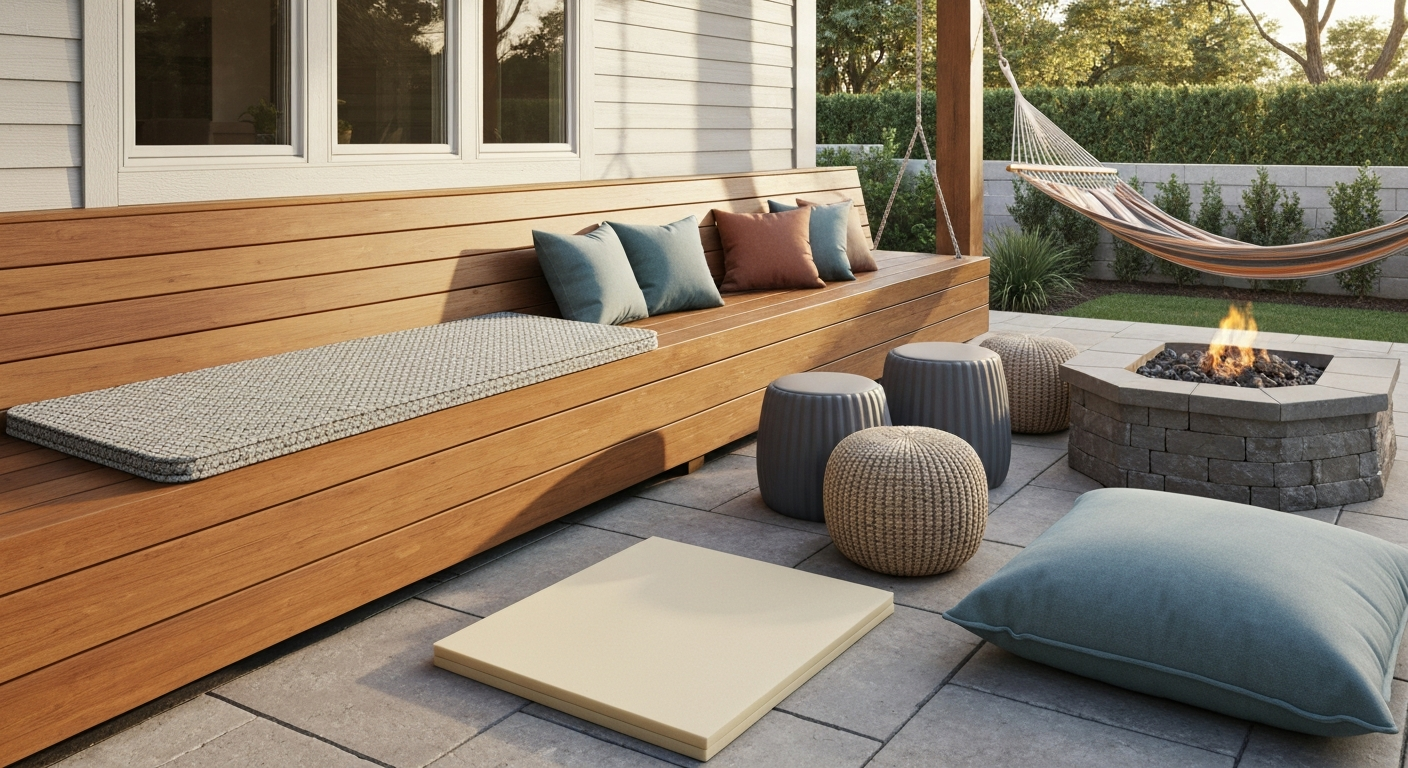
Alternative to patio cushions: durable, weatherproof seating options, pros, DIY tips & buying guide.