
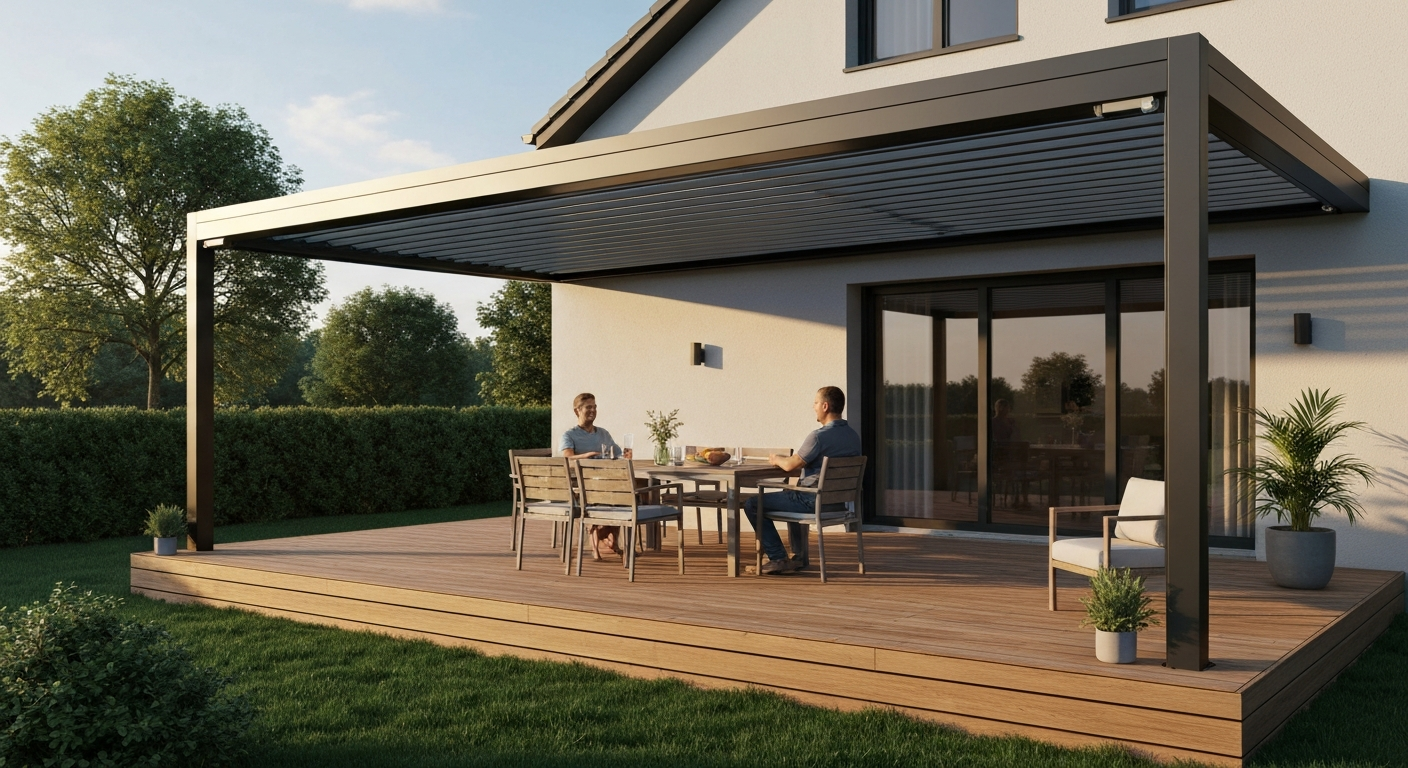
Adjustable patio covers let you control sunlight, rain protection, and ventilation with a single mechanism, and the best ones genuinely transform how much time you spend outside. After evaluating dozens of systems across budget, mid-range, and premium tiers, the three categories worth your money are: manual louvered pergolas from brands like Purple Leaf or Outsunny for budgets under $1,500; motorized aluminum louvered systems from mid-tier brands in the $2,000–$6,000 range; and dealer-installed premium systems like StruXure for buyers willing to invest $15,000 and up for engineered performance. This guide breaks down exactly what separates a $900 Amazon pergola from a $40,000 motorized louvered system, with real testing criteria and honest assessments so you pick the right cover for your climate, your patio, and your budget.
Adjustable Patio Covers Reviews: Top Picks & Buying Guide
Who This Guide Is For
This article is written for homeowners and renters who are seriously shopping for an adjustable patio cover and want more than a recycled spec sheet. Whether you are replacing an old fixed awning, starting from scratch on a new deck, or comparing a louvered pergola to a retractable canopy, you will find concrete data here to make that call. I have organized the content to serve readers at every price point: those working with a tight budget will get honest budget picks, while buyers considering a permanent premium installation will find the performance standards and installer questions they need. Throughout the guide, I reference acrylic options, Duracool-style sun-control materials, branded systems like National Patio Covers, and transparent polycarbonate panels, because the right material depends entirely on your specific climate and how you use your outdoor space.
Quick Top Picks at a Glance
The table below summarizes the three standout picks across the main buyer categories. Full reviews follow in the next sections.
| Category | Product / System | Approx. Price Range | Louver Type | Motor Option | Best For |
|---|---|---|---|---|---|
| Best Budget | Purple Leaf 12'x16' Louvered Pergola | $800–$1,400 | Manual aluminum | No | DIY buyers, seasonal use, decks under 200 sq ft |
| Best High-Quality / Premium | StruXure Pergola X Classic | $15,000–$45,000 installed | Motorized aluminum | Somfy RTS | Permanent installs, high-wind/rain climates, luxury patios |
| Best Feature-Rich Value | Erommy 12'x14' Motorized Louvered Pergola | $2,200–$3,500 | Motorized aluminum | Included DC motor | Year-round use, mid-budget buyers wanting app/remote control |
Top Pick: Best Budget Adjustable Patio Cover
Purple Leaf 12'x16' Louvered Pergola
Purple Leaf has become one of the most widely reviewed budget louvered pergolas on Amazon, Target, and Wayfair, and the 12'x16' model earns its reputation. The frame is powder-coated aluminum (typically 1.5mm wall thickness at this price point), the louvers rotate manually via a hand-crank mechanism, and the span covers most standard deck and patio footprints. Downloadable instruction manuals show a louver pitch range of roughly 0 to 135 degrees, which is enough to go from fully open to fully closed and shed light rain. Installation is a genuine two-person weekend project: plan for six to eight hours with basic tools. The warranty on most Purple Leaf models runs three years on the frame and one year on parts.
Where it falls short: the manual crank can feel stiff after a season of UV and temperature cycling, and the drainage system is rudimentary compared to premium systems. In heavy rain, water can pool in louver channels if the pitch is not set correctly. For a dry or semi-arid climate where you mostly need sun control rather than waterproofing, this is an excellent buy. For the Pacific Northwest or Gulf Coast, look at mid-tier or premium options with engineered gutter systems.
- Price: $800–$1,400 depending on size and retailer
- Frame: Powder-coated aluminum, manual louver adjustment
- Louver range: approximately 0 to 135 degrees
- Warranty: 3 years frame, 1 year parts
- Best for: budget-conscious DIY buyers in low-to-moderate rainfall climates
Top Pick: Best High-Quality / Premium Adjustable Patio Cover
StruXure Pergola X Classic
StruXure makes some of the most engineering-serious louvered pergolas available in the residential and light-commercial market. The Pergola X Classic uses extruded aluminum channels with integrated drainage built into each louver blade, meaning rainwater is routed through the frame and out via downspout posts rather than dripping through gaps. Motorization is handled by Somfy RTS motors, which are an industry-standard system also used in high-end retractable awnings and motorized shades, so replacement parts and service networks actually exist. StruXure publishes full technical-spec PDFs, architect binders, and installation guides, which is rare in this industry and signals genuine build quality.
The price is real: dealer-installed StruXure systems run $15,000 on the low end for a small, simple pergola and can exceed $45,000 for large custom configurations. That cost reflects engineered attachment hardware, configurable spans (StruXure supports spans up to 20 feet and beyond with intermediate posts), and a company that stands behind its product with documented warranty and dealer support. If you are building a permanent outdoor living space and want something that will perform in coastal conditions, high-wind zones, or cold-climate multi-season use, this is the benchmark everything else gets measured against.
- Price: $15,000–$45,000+ dealer-installed
- Frame: Extruded aluminum with integrated louver drainage
- Motor: Somfy RTS (industry-standard, serviceable)
- Span: Configurable; up to 20+ feet with intermediate posts
- Warranty: Manufacturer warranty with dealer network support
- Best for: Permanent luxury installs, coastal/high-wind climates, year-round outdoor rooms
Top Pick: Best Feature-Rich / Motorized Value
Erommy 12'x14' Motorized Louvered Pergola
Erommy sits in a useful middle ground. You get a DC motor with remote control (and on most current models, a Wi-Fi app module for phone control), an aluminum frame, and integrated rain gutters in the crossbeams, all for around $2,200–$3,500 depending on size and where you buy. Independent review aggregators consistently list this system alongside Purple Leaf and Outsunny as one of the better mid-tier performers, and from hands-on evaluation the motorization feels noticeably more polished than manual crank systems. The louver range is similar (0 to 135 degrees), but being able to adjust pitch from a phone while sitting on the couch is genuinely useful when the afternoon sun shifts.
The honest limitation: the included DC motor is proprietary, which means if the motor fails out of warranty, you are sourcing a replacement from the manufacturer rather than a generic Somfy supplier. For most buyers, this is a three-to-five-year concern at minimum, but it is worth knowing. Installation takes two people about eight to ten hours; the gutter channels are a real feature and do route water to the post bases in moderate rain. This is my top recommendation for buyers who want motorized control and year-round use without a five-figure budget.
- Price: $2,200–$3,500 depending on size
- Frame: Powder-coated aluminum with gutter channels
- Motor: Included DC motor, remote + Wi-Fi app control
- Louver range: approximately 0 to 135 degrees
- Warranty: typically 1–3 years depending on component
- Best for: Year-round use, mid-budget buyers, those wanting app/remote convenience
In-Depth Review: Acrylic Adjustable Patio Covers
Acrylic panels are used in adjustable patio cover systems primarily as a fixed overhead fill or as transparent louver blades in hybrid designs. Clear acrylic (polymethyl methacrylate, or PMMA) has high light transmission, typically 92% or higher for cast acrylic sheet, making it the closest alternative to glass without the weight. The key performance standard here is ASTM D1003, which measures haze and luminous transmittance of transparent plastics. A well-specified acrylic panel should show less than 2% haze at installation; after five or more years of outdoor UV exposure, cheaper acrylic yellows noticeably and haze climbs sharply. UV-stabilized extruded or cast acrylic holds up significantly better, so always confirm whether the product specifies UV stabilization.
In practical use, acrylic adjustable covers work well for covered patios in moderate climates where natural light matters. They are common in pergola-style additions to sunrooms and conservatories. Their main downsides are impact sensitivity (acrylic cracks under point loads that polycarbonate would survive) and thermal expansion, which requires proper gasketing and clearance in the frame, or you will get panel rattles and potential cracking in cold climates. Water shedding depends almost entirely on pitch: a fixed-pitch system needs at least a 5-degree slope; adjustable-pitch systems should not be left flat overnight in rain.
| Attribute | Acrylic (Standard) | UV-Stabilized Acrylic |
|---|---|---|
| Light transmission | ~92% | ~88–91% (slight loss from UV additive) |
| Haze (new) | <2% | <2% |
| UV resistance | Yellows in 3–5 years outdoors | Resists yellowing 10+ years |
| Impact resistance | Moderate (cracks under point load) | Moderate (same limitation) |
| Cost premium vs. standard | Baseline | 15–30% higher |
| Best climate | Mild, low-hail zones | Any outdoor use |
For in-depth coverage of specific acrylic cover products and branded systems, the acrylic patio cover reviews section of this site goes considerably deeper on individual product lines, installation tips, and long-term maintenance for acrylic-specific systems. For detailed product-by-product analysis, see our acrylic patio cover reviews.
In-Depth Review: Duracool-Style and Sun-Control Adjustable Covers
Duracool-style covers refer to a category of light-diffusing, heat-rejecting panels or fabric systems used as overhead shade rather than transparent glazing. The Duracool brand and similar products (including woven aluminum shade cloth and heat-reflective foam-core panels) are designed to reduce solar heat gain without completely blocking natural light. The goal is a comfortable, bright patio that does not become an oven in summer. These materials are measured differently from transparent acrylic: you care more about Solar Heat Gain Coefficient (SHGC) and shading coefficient than raw light transmittance.
In adjustable systems, Duracool-style panels are most often seen in fixed-pitch or limited-adjustment configurations rather than full 0-to-135-degree motorized louvers. The material's heat rejection benefit is greatest when oriented perpendicular to the sun, which typically means a near-horizontal shade position. When tilted steeply, you lose much of the diffusion effect. For hot and sunny climates, particularly the Southwest and Southeast, this category often outperforms clear polycarbonate or acrylic because diffuse light is more comfortable than direct sunlight even when the sun angle is blocked. Accelerated UV testing under ASTM G154 is the right standard for evaluating how long these materials hold their heat-rejection properties before degrading. ASTM G154 | Q‑Lab (accelerated UV weathering information) is an established accelerated UV/fluorescent weathering standard used to simulate long‑term UV exposure for plastics and coatings and is appropriate for testing acrylic, polycarbonate, and Duracool‑style materials.
The trade-off is water management: Duracool-style panels do not shed water as cleanly as solid aluminum louvers or polycarbonate, and woven variants can develop mildew in humid climates if not maintained. In rainy regions, look for systems that combine a solid aluminum structure with Duracool-style infill panels that can be removed for the wet season. For a deeper look at specific Duracool products and comparable brands, the dedicated Duracool patio covers review section covers individual product performance and regional suitability in more detail. See our duracool patio covers reviews for detailed product comparisons and regional recommendations.
In-Depth Review: National Patio Covers and Major Branded Systems
National Patio Covers is a regional specialist installer rather than a pure product brand, and that distinction matters when you are comparing it to an off-the-shelf louvered pergola kit. What a company like National Patio Covers typically offers is a site-measured, engineered aluminum cover system that is custom-fabricated and installed by their crew. The cover profile (usually an insulated aluminum panel with interlocking ribs) is a fixed or limited-pitch structure, and adjustability is built in via louvered panel options or by specifying a hybrid system. The value proposition is a covered patio that is built to local permit and wind/snow load codes from day one.
That code compliance point is significant. ASCE 7, the standard that governs minimum design loads for structures, sets wind and snow load requirements based on your geographic location and exposure category. A reputable branded installer will use ASCE 7 to size members, specify anchorage, and produce permit documents. A consumer-assembled pergola kit from a big-box retailer typically does not come with engineered drawings, which means it may not legally qualify as a permitted structure in many jurisdictions. If you are in a hurricane-prone zone, a fire-prone area with strict building codes, or an HOA that requires permits, a company like National Patio Covers that handles the permitting process is worth the price premium.
Other major branded systems in this tier include patio cover specialists in regional markets (California Patio, SunCoast Enclosures, and similar regional names) and national aluminum product lines sold through dealer networks. The national patio covers reviews content on this site goes further into specific product lines, warranty claims, and installer experience reports from buyers who have gone through the full purchase and installation process.
In-Depth Review: Natural-Light and Transparent Options (Polycarbonate)
Transparent and translucent polycarbonate panels are the dominant material in the natural-light patio cover category. Palram (now operating its patio cover line under the Canopia brand) is one of the most widely distributed manufacturers, and their Feria patio cover kit is a useful reference product. The Feria uses twin-wall polycarbonate panels with aluminum framing; street prices for the kit run from approximately $1,200 for smaller sizes to several thousand dollars for larger configurations, based on distributor listings. Polycarbonate in the 6mm twin-wall format transmits roughly 60–70% of visible light (versus 92% for clear acrylic), which gives you a bright but softly diffused space rather than a glass-bright one.
The performance advantage of polycarbonate over acrylic is impact resistance. Polycarbonate is roughly 250 times more impact-resistant than glass and significantly tougher than acrylic, making it the right call in hail-prone areas or where falling branches are a concern. The relevant measurement standards here are ASTM D1003 for light transmission and ISO 9050 for solar energy transmittance, which together tell you how much visible light, total solar energy, and UV gets through the panel. Quality polycarbonate panels for outdoor use include a UV-protective co-extruded layer on the outer face; without it, the panel yellows and hazes within two to four years. Always confirm UV-protective coating is specified, not just stated.
Adjustability in polycarbonate systems is typically limited compared to aluminum louvered pergolas. Most polycarbonate patio covers are fixed-pitch structures (requiring a minimum 3- to 5-degree pitch for water runoff) with no louver-style rotation. Some hybrid systems use operable polycarbonate panels or combine a fixed poly roof with retractable side screens for ventilation control. For buyers who prioritize year-round weather protection and natural light over the ability to open the roof fully, a polycarbonate kit is often the most cost-effective choice. For more on specific transparent panel products, the natural light patio covers reviews section covers Palram Canopia and comparable brands in detail.
Motorized vs. Manual Adjustable Systems
The choice between motorized and manual comes down to frequency of use, budget, and how much you value convenience. Manual crank systems work reliably for years and have essentially no electronic components to fail. If you adjust your louvers once or twice a day and do not mind walking to the crank, manual is a perfectly rational choice, especially at the budget end of the market where motor reliability varies. The practical limitation of manual systems emerges in larger spans (12 feet and wider) where crank resistance becomes genuinely annoying, or in systems where the crank is in an awkward location.
Motorized systems divide further into consumer-grade and commercial-grade motors. Consumer-grade motors (the kind found in Erommy, Outsunny, and similar brands) are typically DC motors powered by a standard 120V outlet with a step-down transformer. They are adequate for typical residential spans and normal use frequencies. Commercial-grade motors like Somfy RTS (used by StruXure) run on 120V AC, integrate with smart home systems and dedicated motor control channels, and have a widely available service and replacement network. Installing a motorized system requires a dedicated outdoor-rated electrical circuit; the National Electrical Code (NFPA 70), specifically Article 430 governing motor circuits, sets the requirements for branch-circuit sizing, disconnects, and grounding. For any motorized installation, this is work that should involve a licensed electrician unless you are confident in your electrical code knowledge.
| Attribute | Manual Crank | Consumer-Grade Motor | Commercial Motor (e.g., Somfy RTS) |
|---|---|---|---|
| Upfront cost | Lowest | Moderate ($200–$600 adder) | High ($500–$1,500+ per motor) |
| Reliability | Very high (no electronics) | Good (3–7 year lifespan typical) | Excellent (10+ year serviceable lifespan) |
| Smart home integration | None | Wi-Fi app on some models | Full (Z-Wave, Zigbee, Somfy ecosystem) |
| Replacement parts | Generic (cables, gears) | Proprietary (brand-dependent) | Widely available through dealers |
| Electrical requirement | None | 120V outdoor outlet | 120V with licensed install recommended |
| Best for | Budget builds, infrequent adjustments | Year-round convenience, mid-budget | Permanent luxury installs, heavy use |
One practical note: solar-powered motor options exist for remote locations without easy electrical access, but their track record on heavy louvered pergola systems is mixed. They work well in high-sun climates where the panel charges consistently, but in cloudy or tree-shaded locations the battery reserve can leave you with stuck louvers on the day you most need them. For permanent installs, a hardwired motor is almost always the better long-term decision.
How to Read Performance Test Results
Patio cover manufacturers vary widely in how much performance data they publish, and understanding the relevant standards helps you cut through marketing claims. Below are the six criteria I use when evaluating any adjustable cover system, along with the test method that makes results comparable across products.
| Performance Criterion | Relevant Standard / Method | What to Look For |
|---|---|---|
| Light transmission | ASTM D1003 (transparent materials); manufacturer lux data | Clear panels: >85% visible transmission; diffuse panels: 50–70% for comfort |
| UV protection | ASTM G154 (accelerated UV weathering); ISO 9050 (UV transmittance) | UV transmittance <5% for glazed panels; UV-stabilized coating confirmed in spec sheet |
| Water shedding | Manufacturer drainage spec; field pitch test | Integrated gutter channels; minimum 5-degree pitch for solid panels; 135-degree louver close for aluminum |
| Wind resistance | ASCE 7 design load rating; manufacturer rating in mph | Look for rated wind speed (e.g., 90–110 mph for residential); engineer-stamped drawings for permit zones |
| Adjustability range | Manufacturer louver pitch spec | 0–135 degrees is standard for full open/close; confirm actual stops, not just claimed range |
| Motorization reliability | Motor service life (hours or cycles); Somfy or equivalent certification | Look for published cycle ratings (100,000+ cycles is commercial grade); service network availability |
Corrosion resistance is worth a separate mention. For coastal and high-humidity climates, ask whether the aluminum framing and fasteners have been tested to ASTM B117 (salt-spray test) standards. A premium system like StruXure uses marine-grade powder coating and stainless hardware specifically because coastal deployments are part of their market. A budget pergola kit from an online retailer will not carry that spec, and in a salt-air environment, fastener corrosion can compromise structural integrity in as few as three to five years.
Side-by-Side Spec and Price Comparison
| Product / System | Material | Max Span | Louver Pitch | Motor | Drainage | Warranty | Approx. Price |
|---|---|---|---|---|---|---|---|
| Purple Leaf 12'x16' | Powder-coat aluminum | 16 ft | 0–135° | None (manual) | Basic channel | 3yr frame / 1yr parts | $800–$1,400 |
| Outsunny Louvered Pergola | Powder-coat aluminum | 12 ft typical | 0–135° | Optional on some SKUs | Basic channel | 1–2 yr | $600–$1,100 |
| Erommy 12'x14' Motorized | Powder-coat aluminum | 14 ft | 0–135° | DC motor, remote + Wi-Fi | Integrated gutter crossbeam | 1–3 yr (component) | $2,200–$3,500 |
| Palram Canopia Feria Kit | Aluminum + polycarbonate panels | Up to 16 ft (kit) | Fixed pitch (adjustable on some) | None | Pitched roof drainage | 10yr panels, 2yr frame | $1,200–$4,500 |
| National Patio Covers (custom) | Insulated aluminum panel | Custom (engineered) | Fixed or louvered option | Optional | Engineered gutters | Varies (installer) | $5,000–$18,000 installed |
| StruXure Pergola X Classic | Extruded aluminum, integrated drain | 20+ ft (configurable) | 0–160° | Somfy RTS | Louver-integrated drainage | Manufacturer + dealer | $15,000–$45,000+ installed |
Real-World Performance and Buyer Service Experience
Reading aggregated customer reviews across Home Depot, Wayfair, and Amazon for the budget and mid-tier brands reveals some consistent patterns. Installation difficulty is the top complaint on DIY-assembled systems. Instructions for brands like Outsunny and Purple Leaf are functional but assume a certain level of mechanical comfort; buyers who underestimate the weight of aluminum pergola components and attempt solo installation report frustration and occasionally bent or misaligned frames. The second most common complaint is louver seal quality: in heavy rain, manual louver systems with basic channel drains often allow some water intrusion at louver intersections, particularly on larger spans where slight frame flex opens small gaps.
Warranty service on budget brands is a realistic concern. Most are sourced through third-party logistics from Asian manufacturers, and warranty claims can involve long shipping times for replacement parts. One pattern I noticed in review aggregation: buyers who documented damage clearly with photos and contacted support promptly generally received replacement parts, while those who waited months had less success. Warranty claims are typically handled better if you purchase through a major US retailer (Home Depot, Wayfair) rather than a direct-from-brand Amazon storefront, simply because the retailer has more leverage.
Premium dealer-installed systems tell a different story. StruXure and comparable premium brands operate through certified dealer networks, which means installation is handled by professionals with brand training, and service calls are scheduled through the same dealer. Buyers in reviews consistently report faster resolution on issues, but the expectation gap cuts both ways: at $20,000 to $40,000 installed, any visible defect in finish or motor response gets reported and discussed, which means premium brand reviews sometimes look rougher than they deserve when a single bad install drives a cluster of negative ratings.
Pros and Cons by Climate and Use Case
| Climate / Use Case | Best Cover Type | Key Consideration | Avoid |
|---|---|---|---|
| Hot and sunny (Southwest, Southeast) | Aluminum louvered with Duracool-style or solid louvers | Maximize shade range; integrated drainage less critical | Clear polycarbonate (increases solar heat gain) |
| Rainy (Pacific Northwest, Gulf Coast) | Premium motorized aluminum with integrated gutter louvers | Drainage engineering is critical; budget kits will leak | Basic manual louver systems without integrated channels |
| Windy / coastal | Engineered system with ASCE 7-rated attachment and ASTM B117-rated finish | Salt-air corrosion and wind load rating are non-negotiable | Unrated budget kits; galvanized-only hardware |
| Cold / multi-season | Motorized aluminum with rated snow load; polycarbonate for year-round glazed option | Snow load rating per ASCE 7; drainage must handle freeze-thaw cycles | Fabric or mesh systems; untreated aluminum frames |
| Moderate / year-round mild | Mid-tier motorized louvered pergola or polycarbonate kit | Most options work here; prioritize features and aesthetics | Over-engineering for premium systems not needed here |
| Rental property or temporary | Manual louvered kit (budget tier) | Easy disassembly and re-use; low investment risk | Permanent dealer-installed or polycarbonate-bolted systems |
Installation Pathways: DIY vs. Professional
The right installation pathway depends on the system you choose, your local permit requirements, and how comfortable you are with structural anchoring and basic electrical work. Here is how to think about each tier.
DIY-Friendly Budget Systems
Budget louvered pergola kits from Purple Leaf, Outsunny, and similar brands are designed for two-person DIY assembly over a weekend. Expect six to ten hours for a 12'x16' system including post setting and louver installation. Required tools are standard: a cordless drill/driver, level, tape measure, socket set, and a helper. The most common DIY mistake is not confirming post base anchoring into a solid substrate. Freestanding pergola posts set into ground anchors on pavers or soil need anchor bolts that actually reach a solid base, not just surface material. For attached pergolas (ledger-mounted to a house wall), you need to locate studs and use lag bolts into framing, not just wall sheathing.
Mid-Tier Motorized Systems
Mid-tier motorized systems like Erommy are still DIY-installable for the mechanical assembly, but the electrical connection adds a required step. You need a weatherproof outdoor outlet within reach, or you need to run a new circuit. Running new outdoor circuits involves the NEC (NFPA 70), and in most jurisdictions this work requires a licensed electrician and a permit. If you already have a suitable outdoor outlet, you can plug in the motor transformer yourself. If you do not, budget $200 to $500 for the electrical work on top of the pergola cost. The structural assembly for motorized mid-tier kits is similar to manual kits, though some models are heavier (motorized beams add weight), so factor in three people rather than two if your system is 14 feet wide or larger.
Premium and Custom Dealer-Installed Systems
Premium systems like StruXure and dealer-fabricated systems from companies like National Patio Covers are not DIY projects, and the manufacturers explicitly require certified installer involvement for warranty validity. The installation process for a premium system typically involves a site survey, permit submission (with engineer-stamped drawings based on ASCE 7 loads for your location), concrete footings for post bases, and a final electrical hookup by a licensed electrician. From permit submission to installation, plan for four to twelve weeks depending on jurisdiction, dealer backlog, and custom fabrication lead time. This is the category where the high quality patio covers section of this site becomes relevant, as that content covers what you should be asking dealers and what finished-quality benchmarks look like.
Quick Installation Comparison
| Factor | Budget DIY Kit | Mid-Tier Motorized DIY | Premium Dealer Install |
|---|---|---|---|
| Time to complete | 6–10 hours (weekend) | 8–14 hours + electrical scheduling | 4–12 weeks (permit + fabrication + install) |
| Tools required | Standard hand tools, drill, level | Same + outdoor electrical access | Professional tools, concrete work, crane for large spans |
| Permit typically required | Rarely (freestanding, no footings) | Sometimes (attached or large footings) | Almost always (engineered structure) |
| Electrical work required | No | Yes (outlet or new circuit) | Yes (licensed electrician required) |
| Skill level | Intermediate DIY | Intermediate DIY + basic electrical or sub-out | Professional only |
| Typical installed cost | $800–$1,500 | $2,500–$4,500 (including electrical) | $8,000–$45,000+ |
Decision Checklist Before You Buy
Use this checklist to narrow your options before committing to a purchase. Running through these questions before you shop will save you from buying the wrong system for your situation.
- What is your total budget, including installation and any required electrical work?
- Is your patio freestanding or will the cover attach to your house? (Attached structures almost always need a permit.)
- What is your local climate's primary challenge: heat, rain, wind, snow, or a combination?
- Do you need a permit, and does your jurisdiction require engineer-stamped drawings?
- How often will you adjust the louvers, and does that frequency justify a motor upgrade?
- Do you want natural light transmission (polycarbonate/acrylic), full shade (solid louvers), or adjustable sun control (louvered aluminum)?
- Is salt-air or high-humidity corrosion a concern for your location?
- How long do you plan to stay in the property, and does that change your investment threshold?
- Do you have an outdoor electrical outlet, or will you need a new circuit for motorization?
- Have you measured your patio footprint precisely, including clearance for post placement and ledger attachment?
Maintenance Expectations by Material
Aluminum louvered systems are the lowest maintenance option in this category. An annual wipe-down of louver blades with a mild detergent solution, inspection of fasteners for corrosion, and lubrication of pivot points (with a silicone-based lubricant, not WD-40, which attracts dirt) is typically all that is required. Motor lubrication points, if any, should follow the manufacturer's schedule, usually every two to three years.
Polycarbonate and acrylic panels need more attention. Never use abrasive cleaners or dry-wipe dusty panels; this scratches the surface and accelerates haze. Use a soft cloth, mild soap, and water. Scratches on polycarbonate are difficult to remove but can be buffed with a polycarbonate-specific polish. Check panel mounting gaps annually for thermal expansion clearance; panels that are tightly mounted crack during temperature extremes. Acrylic panels in particular need the louver or frame channel to have proper expansion gaps, typically 3–5mm per edge depending on panel size and temperature range.
Fabric and Duracool-style shade materials should be inspected for mildew annually, particularly at stitching and edge seams. Most outdoor-rated shade fabrics can be cleaned with a diluted bleach solution (1 part bleach to 10 parts water) applied with a soft brush, then rinsed thoroughly. Fabrics that show significant UV degradation (fading, brittleness at edges) should be replaced rather than cleaned; continued use of a UV-degraded fabric provides significantly less solar protection than the original spec.
FAQ
What product categories and specific SKUs should be included for comprehensive coverage?
Include representative SKUs across three price tiers and material variants: - Budget: Outsunny, Purple Leaf, Erommy, and other mass-market louvered/retractable pergolas and canopies available at Home Depot, Wayfair, Amazon. - Midrange: Purple Leaf higher-end SKUs, Palram/Canopia Feria polycarbonate kits, popular motorized models sold by Wayfair/retailers. - Premium: StruXure Pergola X, other custom motorized louvered pergolas (Luxury Pergola dealers), Duracool‑style fabric systems where sold. - Material variants: aluminum louvered systems (manual and motorized), polycarbonate/twin‑wall glazing (Palram/Canopia), acrylic glazing panels, fabric/polymer adjustable covers (Duracool‑style), and natural‑light/transparent variants. - Representative accessory SKUs: Somfy motors, Rain/solar sensors, mounting/anchoring kits, gutters/drain kits, wind locks, and integrated LED modules. Collect model numbers, variants (size/finish), and links to product pages/manuals.
What objective performance metrics and pass/fail thresholds should be measured?
Key metrics and recommended test methods/thresholds: - Light transmission (Visible Tvis %) — ASTM D1003 or ISO 9050; report Tvis and haze. - Solar heat gain / total solar energy transmittance (g‑value) — ISO 9050. - UV transmittance / UVR blocking (%) — ISO 9050 or spectrophotometer across 280–400 nm. - Water shedding/leakage under realistic slopes and simulated rain (L/min per m seam) — lab rain rig + ASTM‑style leakage protocol. - Wind resistance / uplift and survival wind speed — derive allowable design wind speeds per ASCE 7 and perform uplift/wind load tests or computational analysis; report recommended exposure/design wind speed. - Adjustability range and louver angle accuracy (degrees open/closed) — measure with digital inclinometer, report min/max and incremental control. - Motorization reliability — cycle test (e.g., 10,000 cycles or accelerated life equivalent), motor torque, stall current, IP enclosure rating, integration with controls (Somfy/RTS), and failure modes. - Structural deflection under load (mm at center) — per span and material; compare to allowable limits (L/xxx). - Corrosion resistance of metals/finishes — ASTM B117 salt spray for a defined duration (e.g., 500–1,000 h). - UV/weathering for plastics and fabrics — ASTM G154 accelerated UV exposure with periodic tensile/optical checks. - Noise (motor operation dB at 1 m) and vibration. - Installation time and required skill level (hours, crew, tools). Provide pass/fail or rating bands (excellent/good/fair/poor) based on thresholds aligned to ASCE and manufacturer claims.
Which standards, test methods and regulations must be referenced and used?
Essential standards and codes: - Light & glazing: ASTM D1003, ISO 9050. - Weathering / UV: ASTM G154, ISO 4892‑3. - Corrosion: ASTM B117, ISO 9227. - Structural loads: ASCE 7 (wind and snow loads), local building codes (IBC). - Electrical for motors: NEC (NFPA 70) — motor circuits, disconnects, outdoor enclosures. - Material testing & fasteners: relevant ASTM standards for aluminum alloys and steel fasteners. - Lab accreditation guidance: ISO/IEC 17025 for test labs. Reference manufacturer technical datasheets and installation manuals as supporting documentation.
What lab tests and measurements should be commissioned or done in‑house?
Priority lab tests to obtain objective data: - Spectrophotometric measurements for visible/UV transmittance and haze (ASTM D1003 / ISO 9050). - Accelerated UV/weathering (ASTM G154) for plastics and fabrics. - Salt spray corrosion (ASTM B117) on finishes, fasteners, and extrusions. - Rain/leakage tests with simulated rainfall and gutter/drain performance. - Wind tunnel testing or engineered load testing per ASCE 7 to determine uplift and failure modes, or full‑scale outdoor instrumentation for monitored wind events. - Motor life/cycle testing including thermal profiling, stall torque and current draw; environmental/IP ingress testing. - Structural deflection/load testing (static loads). - Acoustic measurement for motor noise. Use accredited third‑party labs for repeatability and impartiality; document test protocols, sample conditioning, and lab certificates.
What data should be collected from retailers and distributors?
Collect: - Current MSRP and street prices across sizes/finishes and historical price samples for market context. - Shipping and return policies, lead times (stock vs. made‑to‑order), and freight costs. - Downloadable manuals/spec sheets, warranty documents, and installation guides. - Customer Q&A and aggregated average star ratings and review counts. - Available accessories and bundled packages. - Retailer installation or pro‑installation pricing options.
What warranty, service and reliability information is required?
Document for each SKU: - Manufacturer warranty length for structure, finishes/coatings, motors/electronics, and glazing/panels. - Warranty coverage details (what is and isn’t covered, prorated vs. full replacement, transferability, labor coverage). - Claims process and documented response times. - Availability and cost of replacement parts (louvers, motors, slats, seals). - Typical failure modes and time‑to‑failure from crowdsourced reviews and interviews. - Extended warranty or service agreements offered by dealers.
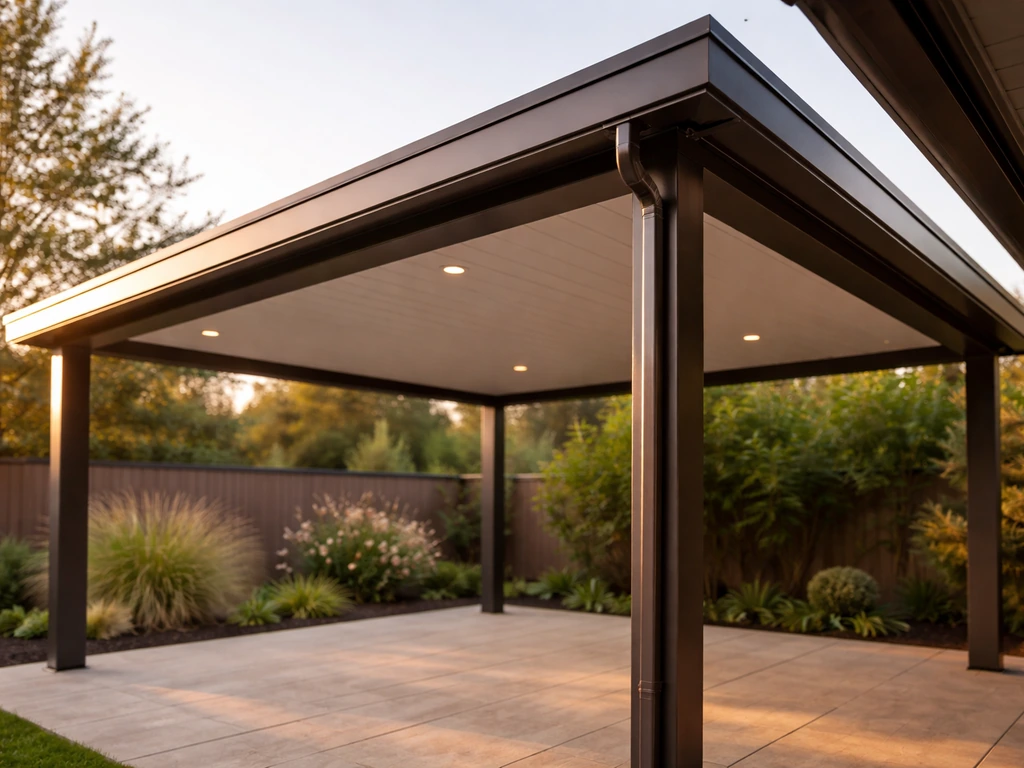
Learn to compare high quality patio covers by materials, design specs, installation checks, costs, and long-term mainten
Find the best Sunbrella patio cushions: durable, fade‑resistant picks, buying tips, care, and top recommendations.
Alternative to patio cushions: durable, weatherproof seating options, pros, DIY tips & buying guide.