
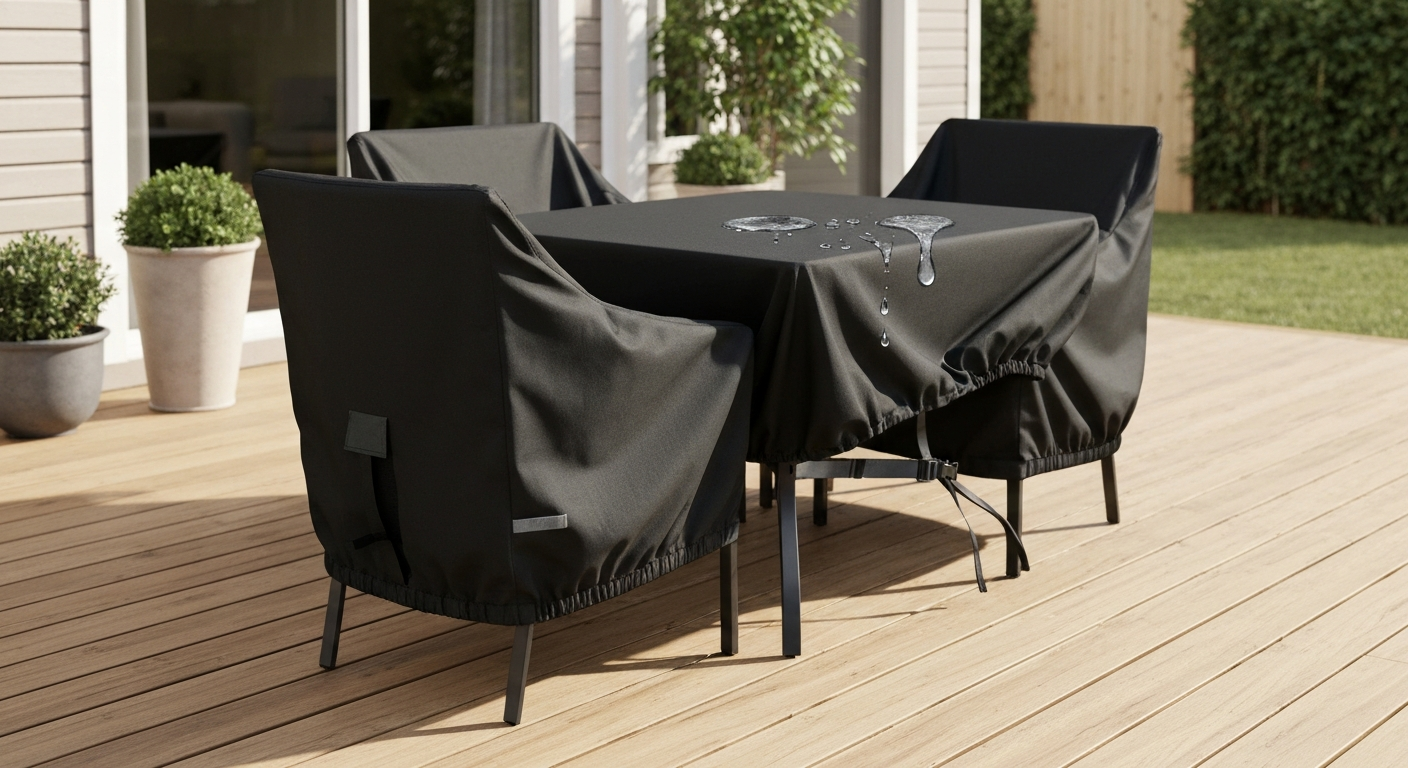
King Do Way patio furniture covers are a solid budget pick if you need basic rain and UV protection for a season or two and you're not expecting them to survive a harsh winter or years of direct sun. They're built from 420D Oxford polyester with a PU coating, come in a decent range of sizes, and sell for well under $30 on Walmart and Newegg. For light-duty use in mild climates, they do the job. If you're dealing with heavy snow loads, sustained UV exposure in a southern climate, or you need a cover that'll last five-plus years without seam failures, you'll want to look at heavier-duty alternatives before committing.
King Do Way Patio Furniture Covers: Value Fit & Alternatives

Lark Perry
24 Jul 2026
Is King Do Way the right cover for you?
King Do Way covers make the most sense for renters, apartment-patio owners, or anyone who wants a cheap, decent-looking cover for a season and doesn't want to spend $60–$120 on a premium brand. The value proposition is real at that price point. You get a cover that resists moderate rain, blocks most UV, and stays put in light wind thanks to the buckled straps. The tradeoff is construction depth: stitched (not welded or taped) seams, a relatively thin PU coating on 420D fabric, and hardware that can degrade after one or two winters.
Where King Do Way starts to struggle is in demanding conditions. If you live somewhere with heavy snowfall, strong sustained wind, or intense sun year-round, the fabric and seams will show wear faster than the marketing photos suggest. Users on deal forums and aggregated review indexes have reported covers leaking through stitched seams after one wet season, straps tearing at stress points, and UV fading within 18–24 months. None of this is surprising at the price, it just means you should buy with realistic expectations.
- Good fit for: renters, mild climates, seasonal use, limited budgets (under $30)
- Good fit for: covering chairs, small dining sets, or solo seating for 1–2 seasons
- Poor fit for: heavy snowfall regions, year-round harsh sun (UV degradation accelerates), commercial or rental property use
- Poor fit for: anyone needing a multi-year cover without replacement costs
- Better alternatives exist if: you need taped/welded seams, 600D+ fabric, or a manufacturer warranty longer than 1 year
Brand overview and common models
King Do Way is a marketplace brand, meaning it shows up across Walmart, Newegg, Wayfair, and Banggood rather than through a dedicated brand storefront or manufacturer website. The product line spans outdoor covers alongside awnings and a few other home/garden accessories. That distribution model is worth knowing upfront: when you buy King Do Way, you're buying from a third-party seller using the brand name, which affects things like return policy consistency, warranty enforcement, and whether the product specs you see on one platform match the unit that shows up at your door.
The cover lineup includes rectangular dining set covers (a commonly listed SKU is 110 inches x 80 inches x 41 inches in black), chair covers sold in 2-packs sized to fit 4–6 chairs, and a handful of other furniture-shape options. The product is listed on Walmart as King Do Way 110" x 80" x 41" Black Rectangle Patio Furniture Set Cover - Walmart.com. Most listed models are black. The 420D Oxford polyester build is the most common construction claim across product pages, though some listings reference 600D depending on the SKU, worth confirming on the specific listing before you buy, since 420D and 600D are meaningfully different in weight and durability.
Materials and construction: what's actually inside a King Do Way cover
The standard King Do Way cover uses 420D Oxford polyester fabric with a PU (polyurethane) coating on the inner face. Oxford weave polyester at 420D sits in the middle of the budget-to-mid range: heavier and more durable than the thin 210D or 300D fabrics you see on the cheapest covers, but lighter than the 600D Oxford or ripstop constructions used in premium covers. The PU coating is what does most of the waterproofing work, it fills the microscopic gaps in the woven fabric to resist water penetration.
Seams on King Do Way covers are stitched, not taped or welded. This matters more than it sounds. A stitched seam creates needle holes in the fabric, and even with tightly wound thread those holes are potential leak points under sustained water pressure. Taped seams apply a waterproof strip over the stitching from the inside; welded seams use heat or ultrasonic bonding to fuse fabric edges entirely. King Do Way's stitched construction is standard for budget covers but it does mean seams are the weak link in wet conditions, especially after the PU coating starts to degrade from UV exposure or repeated folding.
The venting system is a practical design inclusion: air vents (typically one or two on the sides) reduce the pressure differential that causes covers to balloon in wind and also reduce condensation buildup underneath, a real problem with fully sealed covers on humid days. Fastening is handled by elastic hem cords with adjustable toggles plus buckled windproof straps, usually four of them. These are functional but the buckle hardware is plastic, and some users have reported strap breaks at the buckle attachment points after a winter season.
Sizes, fit, and what to measure before you buy
King Do Way lists covers in standard furniture-category sizes rather than custom dimensions. The rectangular dining set cover at 110 x 80 x 41 inches is one of the more common SKUs, and the chair covers are sized to fit groups of 4–6 chairs stacked or lined up. The sizing approach works fine if your furniture matches common dimensions, but if you have a deep sectional, an L-shaped set, or oversized chairs, standard sizes will leave excess fabric pooling at the base or (worse) not reaching far enough to protect legs.
To measure correctly: get the longest length, widest width, and tallest height of your furniture setup (including any cushions you plan to leave on). Add about 2–3 inches to each measurement to get a cover size that drapes properly without being so large it catches wind. For dining sets, measure with chairs pushed under the table since that's how you'll cover them. Canadian buyers should note that sizing is listed in inches on most King Do Way listings, the same dimensions apply regardless of retailer, but double-check the listing since platform-to-platform SKU descriptions don't always match.
- Measure furniture length at the widest point, including any armrests or side tables
- Measure width at the deepest point of the set (front to back)
- Measure height from the ground to the tallest point with cushions in place
- Add 2–3 inches per dimension for a proper drape and coverage of furniture legs
- For chairs, measure a single stacked or grouped chair cluster, not individual pieces
- Compare your measurements to the listed cover dimensions before purchasing — do not assume 'large' or 'XL' matches your set
If your furniture dimensions fall outside standard cover sizes, King Do Way won't have a solution for you, the brand doesn't offer custom sizing. In that case, custom-fit cover options are worth considering. For Canadian buyers specifically, cross-border shipping times and return logistics on marketplace platforms can be a headache if sizing is wrong, so getting measurements right before ordering saves real frustration.
Key features, strengths, and honest limitations
What King Do Way does well
- Waterproofing for moderate rain: the PU coating on 420D fabric resists everyday rain effectively when new
- UV resistance: the Oxford weave and coating offer basic anti-UV protection adequate for seasonal use
- Wind resistance: four buckled straps with elastic hem cord keep the cover secure in light-to-moderate wind
- Breathability: integrated vents reduce condensation and ballooning — a practical advantage over unvented cheaper covers
- Price: consistently priced under $30 for most SKUs, often under $20 on sale
- Convenience: includes a storage bag, ships flat, easy to fold and store off-season
Where it falls short
- Stitched seams (not taped or welded): needle holes are potential leak points under prolonged water exposure or pressure
- PU coating lifespan: PU coatings on budget fabrics typically begin degrading within 1–3 years under UV exposure, causing water resistance to drop
- Snow load performance: 420D fabric and plastic hardware are not rated for snow accumulation — heavy snow can stress seams and bend or break fasteners
- No published warranty: unlike brands such as Classic Accessories (which offer explicit 'Hassle-Free' warranty terms), King Do Way listings do not include a meaningful warranty statement
- Inconsistent specs across platforms: the same brand name appears on listings with different denier ratings (420D vs 600D) depending on the retailer — verify the actual spec on your specific listing
- No custom sizing: standard size range only, which doesn't cover non-standard or oversized furniture
Materials comparison: polyester vs Oxford vs PVC vs vinyl
Cover materials are probably the single biggest factor in how a cover performs over time. There are four main material types you'll encounter across King Do Way and competing covers, and they each make different tradeoffs. Here's how they stack up on the criteria that actually matter in real-world use.
| Material | Waterproofing | UV Resistance | Breathability | Longevity | Weight | Typical Use |
|---|---|---|---|---|---|---|
| 420D Oxford Polyester (PU coated) | Good when new; degrades with UV exposure over 1–3 years | Moderate; fading and coating breakdown after prolonged sun | Moderate; vents help but fabric is not breathable on its own | 1–3 seasons with normal use | Light (approx. 200–280 gsm) | Budget seasonal covers — King Do Way standard |
| 600D Oxford Polyester (PU/PVC coated) | Very good; thicker weave and heavier coating hold up longer | Good; heavier fabric resists UV degradation better | Low to moderate; heavier coating reduces breathability | 3–5 seasons with good care | Medium (approx. 300–380 gsm) | Mid-range covers — Backyard Basics, better Amazon brands |
| PVC-laminated fabric | Excellent; near-impermeable surface | Good with UV stabilizers added to compound | Very low; condensation buildup is a real problem without vents | 5+ years if UV-stabilized | Heavy (400+ gsm depending on gauge) | Heavy-duty covers, fire pit covers, commercial use |
| Vinyl (coated/reinforced) | Excellent; fully waterproof surface | Variable; depends on UV stabilizer quality in compound | Very low; similar condensation issues to PVC | 5–10 years if stabilized; can crack in cold climates | Heavy | Industrial and semi-permanent applications; not ideal for cold climates |
The practical takeaway: for most homeowners using covers seasonally in temperate climates, 600D Oxford with a PU or PVC coating is the sweet spot, noticeably better durability than 420D without the condensation and weight penalties of full PVC or vinyl. If you're in a region with heavy snow or very intense summer sun, step up to PVC-laminated fabric and make sure the cover has vents, because a fully waterproof cover without venting will trap moisture under it and cause mold on your furniture cushions faster than the rain would.
Waterproofing, seam treatment, and venting: what to look for
Waterproofing in patio covers is measured at two levels: the fabric itself and the finished construction. At the fabric level, the AATCC Test Method 127 (Hydrostatic Head test) measures how much water pressure a fabric resists before it leaks through. A higher hydrostatic head rating means better fabric-level waterproofing. Budget covers rarely publish these numbers, but as a frame of reference, outdoor fabric rated at 1,500mm hydrostatic head is considered water-resistant, while 3,000mm+ is genuinely waterproof at the fabric level. King Do Way listings claim 'waterproof' but don't publish a hydrostatic head rating, a common gap in budget cover marketing.
The critical point, though, is that fabric-level waterproofing doesn't guarantee a waterproof finished cover. Seams are where covers leak first. Stitched seams (used by King Do Way) leave needle holes that water can penetrate under sustained rain. Taped seams add a waterproof strip over the stitching from inside the cover, closing those holes. Welded seams use heat or ultrasonic bonding to fuse fabric edges without any needle holes at all, the most robust option. For maximum waterproofness you want taped or welded seams; stitched seams are fine for light rain but show their limits in extended wet conditions. Technical reviews such as Seams for Protective Clothing, overview (research paper) explain differences between stitched, taped, and welded seams and their implications for water ingress and strength blank" rel="noopener noreferrer">Technical reviews such as Seams for Protective Clothing — overview (research paper) explain differences between stitched, taped, and welded seams and their implications for water ingress and strength..
Venting is the other underappreciated construction detail. Covers without vents create a sealed air pocket that acts like a sail in wind and traps humid air underneath, leading to mold and mildew on furniture. King Do Way's integrated side vents address this reasonably well. When shopping for any cover, check that vents are mesh-lined (to block insects) and positioned on the sides rather than the top (where they'd let rain in). At least two vents are better than one for cross-ventilation.
Real-world performance criteria: what actually matters by climate
Lab ratings and marketing claims tell part of the story, but how a cover performs under your specific conditions is what you actually care about. The five performance dimensions worth testing or evaluating before committing to any cover, King Do Way or otherwise, are water resistance, UV durability, wind fastening, snow load handling, and breathability. The right priority order depends entirely on your climate.
| Performance Dimension | What to Test / Look For | King Do Way Performance | Priority By Climate |
|---|---|---|---|
| Water resistance | Pour or hose test: check for seam seepage after 10–15 minutes of sustained water contact | Good in the first season; seam leakage reported by users after 1–2 wet seasons | High priority in rainy/coastal climates |
| UV resistance | Check for fading, coating flaking, or fabric brittleness after one summer season | Moderate; UV fading begins within 18–24 months per aggregated user reports | High priority in sun-belt/southern climates |
| Wind fastening | Test strap tension and buckle security in 20–30 mph gusts | Adequate in light-moderate wind; plastic buckle failures reported in strong or sustained wind | High priority in open, exposed patios and coastal areas |
| Snow load | Check if fabric sags or seams stress under accumulated snow weight | Not recommended for significant snow load; 420D fabric and plastic hardware are not rated for it | High priority in northern US, Canada, mountain regions |
| Breathability / condensation | Check underside of cover and furniture surface after a warm, humid day | Better than fully sealed covers due to vents; condensation still possible in high-humidity climates | High priority in hot, humid climates (southeast US, coastal areas) |
For readers in Canada or northern US states dealing with real winter conditions, King Do Way's 420D construction should be treated as a three-season cover at best. For a curated list focused on northern climates and winter-ready options, see best patio furniture covers Canada for picks rated for cold, snow, and long-term UV exposure. Remove it before sustained snowfall or at the very least brush snow off promptly, pooling snow weight on a budget cover will stress seams and can collapse the cover onto the furniture beneath. In those regions, a heavier 600D cover with reinforced seams, or a breathable custom-fit cover designed for winter use, is a better long-term investment even at double the cost.
How King Do Way compares to top alternatives
King Do Way sits at the budget end of a wide market. To give you a complete picture, here's how it stacks up against the most commonly compared alternatives across the key specs that drive real-world performance.
| Brand / Category | Fabric | Seam Type | Warranty | Price Range | Best For |
|---|---|---|---|---|---|
| King Do Way | 420D Oxford PU-coated polyester | Stitched | None published | $15–$30 | Budget seasonal use, mild climates |
| Backyard Basics | 600 x 300D PVC-coated polyester (select models) | Stitched (reinforced on some models) | Limited (varies by retailer) | $25–$55 | Mid-range durability, widely available at Home Depot / Lowe's |
| Classic Accessories (Veranda line) | Varies; heavier woven polyester with interior-bound seams | Bound/reinforced stitched seams | Hassle-Free warranty (published) | $40–$120 | Longevity, warranty confidence, broad size range |
| Custom-fit covers | Customer-specified (typically 600D+ or marine-grade) | Varies; higher-end custom makers use taped or welded seams | Maker-dependent | $80–$250+ | Non-standard furniture sizes, premium protection, multi-year use |
| Budget generic (Amazon/Walmart unbranded) | 210D–300D polyester | Basic stitched | None | $10–$20 | Absolute lowest cost, single-season throwaway use |
Backyard Basics is the most natural step-up from King Do Way. It's available at major home improvement retailers, the fabric specs are heavier on select models, and the brand has more accountability through established retail return policies. If you want to read through a fuller comparison of the best-rated options on the market, that covers the broader competitive landscape in more depth alongside other top picks. See our guide to the best outdoor patio furniture covers for a full comparison of top-rated options. For buyers specifically hunting for covers that hold up in harsh outdoor conditions year-round, best outdoor patio furniture covers is worth a look as well. For buyers needing tailored dimensions, see our guide to the best custom patio furniture covers. For a curated shortlist, see best rated patio furniture covers for top-performing, weatherproof options across price points. For a broader roundup of top-rated options and buying guidance, see our guide to best covers for patio furniture.
Shortlist: best picks by use case
- Best budget pick: King Do Way 420D — adequate protection for 1–2 seasons, under $30, available on Walmart and Newegg
- Best overall mid-range: Classic Accessories Veranda — published warranty, better seam construction, wide size range, worth the $40–$80 price step-up for most homeowners
- Best for snow: look for 600D+ PVC-laminated covers with reinforced stitching and metal (not plastic) buckle hardware — Backyard Basics' heavier fire-pit and dining covers fit this profile
- Best for sun (UV-heavy climates): solution-dyed acrylic or UV-stabilized PVC-coated 600D fabric; avoid covers that only advertise 'anti-UV' without specifying the coating or testing standard
- Best custom fit: custom-cover specialists using marine-grade fabric — essential if your furniture doesn't match standard dimensions; worth the cost for large sectionals or built-in outdoor kitchens
- Best for Canada: any cover with reinforced seams and rated hardware; factor in cross-border return policy and whether a Canadian retailer carries the brand before ordering — Backyard Basics through Canadian Home Depot/Lowe's locations is a practical option
Installation, care, and storage tips
Getting the most out of any patio cover, King Do Way included, comes down to a few consistent habits. First, never cover wet furniture if you can avoid it. Trapping moisture underneath a cover is how you grow mold in a week, regardless of how breathable the cover is. Wipe down furniture surfaces and let cushions dry before covering. If you live somewhere with afternoon thunderstorms and can't always time this perfectly, at minimum pull cushions inside and cover just the frame.
For installation, thread the elastic hem cord all the way around the base of the furniture before tightening the toggle, this distributes tension evenly and prevents the cover from riding up on one side. Secure buckle straps under the furniture frame, not just the legs, so there's real resistance when wind pulls upward on the cover. On King Do Way covers specifically, check strap attachment points at the start of each season and replace any cracked or brittle buckles before a storm rather than after.
Cleaning is straightforward: mild soap and cool water, applied with a soft brush, then rinsed and air-dried completely before storing. Do not machine wash a patio cover, heat and agitation destroy PU coatings faster than outdoor exposure does. Store the cover in its included bag in a dry location, loosely folded rather than compressed tightly, which reduces crease stress on the coating. If a King Do Way cover starts to show water beading less effectively, a spray-on DWR (durable water repellent) treatment can extend its life for another season at low cost.
Where to buy and what to watch out for
King Do Way covers are most reliably purchased through Walmart's marketplace or Newegg, where product listings include specific dimension data and customer reviews. Wayfair and Banggood also carry the brand but return policies vary more. Avoid buying King Do Way (or any budget cover brand) through third-party Amazon marketplace sellers offering unusually low prices without listing the denier rating, this is where counterfeit or mislabeled products most commonly appear. If a listing says '600D' but the price is $12, it's almost certainly not 600D fabric.
Sizing errors are the single most common return reason for patio covers across all brands. Measure your furniture twice, check the listed cover dimensions against a tape measure before ordering (not just the size label like 'large' or 'XL'), and confirm the retailer's return window before buying. Walmart's standard return policy is more generous than many marketplace sellers, which is one practical advantage of buying King Do Way there over smaller platforms. For Canadian buyers, confirm whether a Canadian fulfillment option exists before ordering from a US marketplace listing, cross-border return shipping for a bulky cover can cost more than the cover itself.
One last thing: regardless of which cover you end up with, a $15–$30 cover that fails after two seasons and gets replaced is still cheaper than a $100 cover that you buy once and keep for six years, but only if you're actually buying it twice and not five times. Honest accounting of replacement frequency is how you make the right call for your situation, and it's worth doing that math before defaulting to the cheapest option every time.
FAQ
What primary product specifications and published claims should I collect for each King Do Way model and competitor cover?
Collect SKU/model name, exact exterior dimensions (L×W×H), listed fabric type and denier (e.g., 420D, 600D Oxford polyester), coating type and thickness (PU, PVC, vinyl and any GSM or micron data), seam construction (stitched, taped, welded), presence of vents, straps/buckles/elastic hems, closure types, claimed waterproof/UV ratings or terminology, listed warranty length and terms, retail price and typical sale price, included accessories (storage bag, tie-downs), and country of sale/retailer. Capture the retailer’s product text verbatim for manufacturer claims.
Which lab tests, standards and technical metrics are essential to verify material and waterproof/UV claims?
Use authoritative test standards: ASTM G154 (accelerated UV/weathering) for UV resistance; AATCC Test Method 127 or ISO 811 (hydrostatic head) for water resistance; AATCC Spray Test for water repellency if available; tensile/tear strength tests from fabric TDS for durability; and salt-spray (ASTM B117) only if coatings may face corrosion concerns on hardware. Record specific numeric results where available (HH mm water column, hours to failure under ASTM G154).
What manufacturer and supplier documents are most reliable for material-level specs?
Technical data sheets (TDS) from fabric suppliers for 420D/600D Oxford polyester and coated fabrics, manufacturer PDFs for coating type/thickness, and support/warranty pages from established cover brands (e.g., Classic Accessories) to benchmark warranty language. Prefer supplier TDS and brand support docs over marketplace product blurbs.
What kinds of real-world user evidence should be gathered, and how should I treat anecdotal reports?
Aggregate retailer reviews (volume, rating distribution, recurring failure themes), review-aggregator summaries, and forum/Reddit threads for user-reported failure modes (seam leaks, UV fading, strap failure). Extract representative quotes, frequencies and times-to-failure when reported (e.g., leaks after X months). Treat anecdotal sources as signals, triangulate across multiple independent channels, and avoid generalizing from single reports.
Which construction features materially affect real-world waterproofness and longevity?
Seam method (welded or taped OR stitched-only), seam reinforcement or binding, coating adhesion and coverage over seams, presence and placement of vents (reduce condensation), fastening systems (buckles/straps + elastic hems reduce wind flap), and hardware quality (plastic vs metal buckles). Note that a high hydrostatic head fabric cannot produce a waterproof finished cover if seams and closures are untreated.
How do materials compare — polyester/Oxford (420D/600D) vs PVC/vinyl — for sun, rain, snow and breathability?
420D/600D PU-coated Oxford polyester: good balance of abrasion resistance, lighter weight, reasonable UV resistance (improved if solution-dyed) and moderate hydrostatic resistance; more breathable than PVC but can delaminate if low-quality coating used. PVC/vinyl: typically higher waterproofness and easier to clean, but heavier, poorer UV long-term performance unless UV-stabilized, and near-zero breathability (raises condensation risk). Higher-denier (600D) generally increases abrasion resistance and lifespan vs 420D but weight/cost also rise. Specify coating type and HH results to quantify claims.
Next Articles
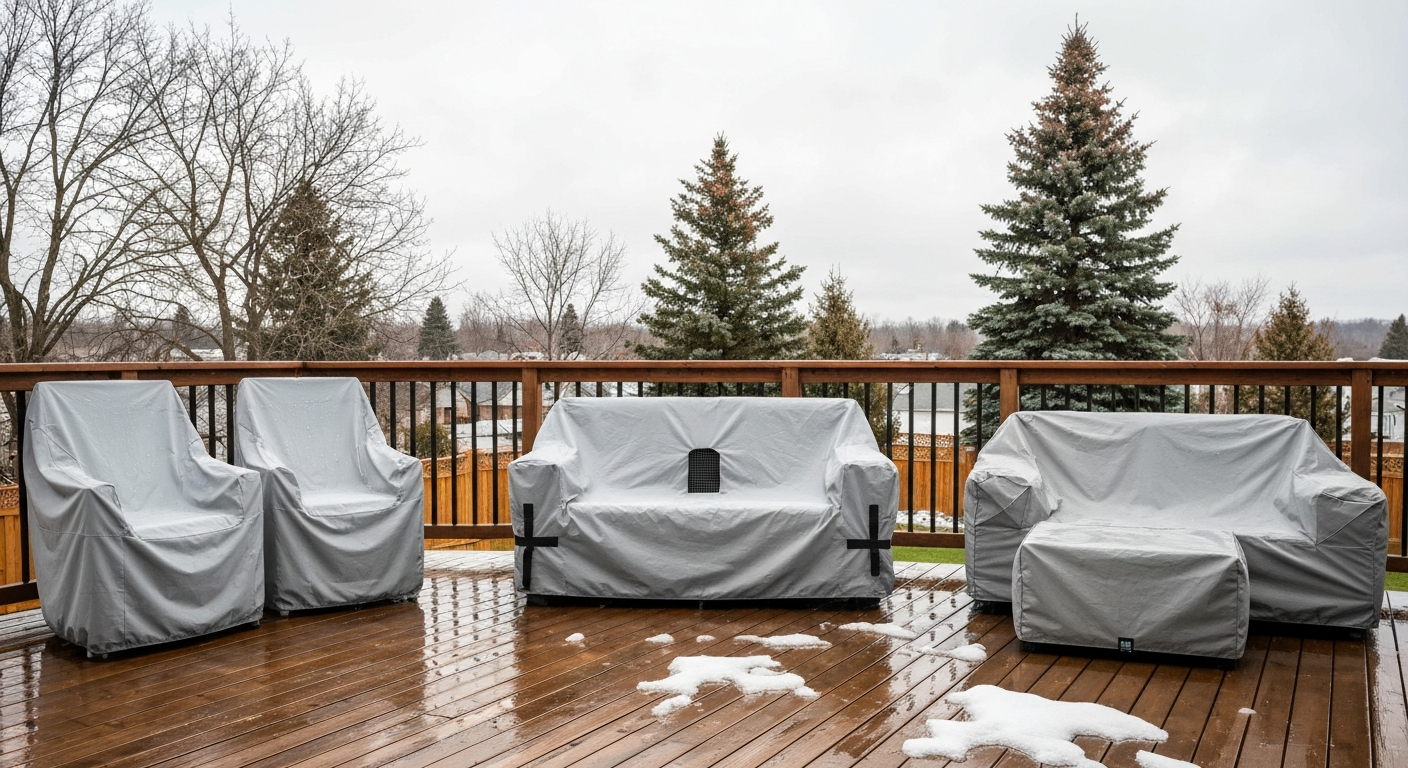
Best Patio Furniture Covers Canada: Top Picks & Buying Guide
Best patio furniture covers Canada: top picks, climate-proof buying guide, measuring, installation, and where to buy.
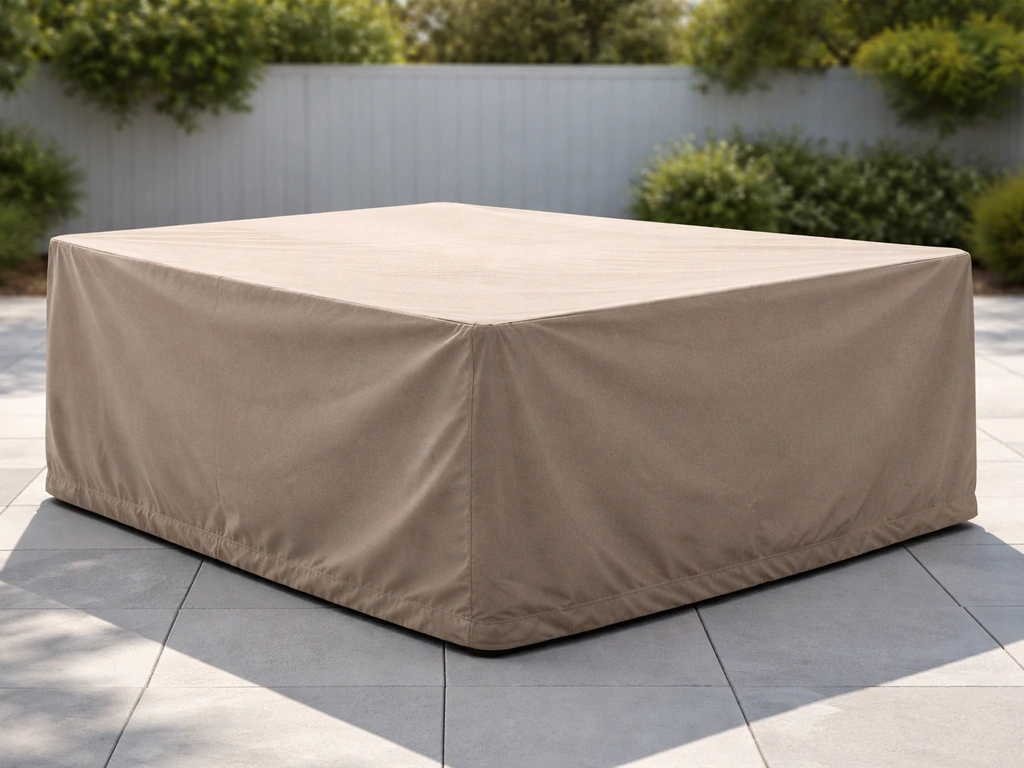
Best Custom Patio Furniture Covers: Fit, Materials, and Care
Measure, choose, and care for custom patio furniture covers with the right fit, materials, and wind and UV protection.
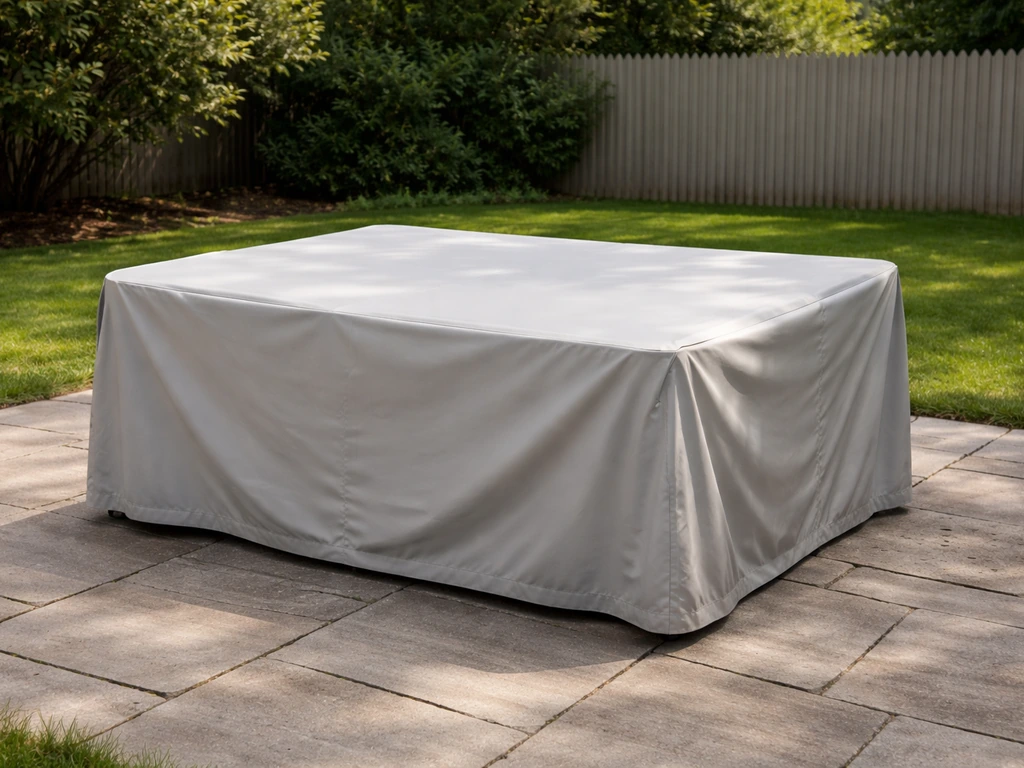
Backyard Basics Patio Furniture Covers: Fit, Material, Wind
Measure, choose materials, and add wind control for patio furniture covers that protect against rain, sun, mildew.