
The best-rated patio furniture covers right now share four non-negotiable traits: a snug, measured fit (not just "small/medium/large"), a material that is genuinely waterproof rather than just water-resistant, reinforced seams and buckle straps that hold through wind gusts, and vented panels that stop condensation from rotting your cushions from the inside. By comparing these traits, you can quickly narrow down the best covers for patio furniture that will hold up in your conditions. Get all four right for your furniture type and your climate, and a good cover will last three to five seasons. Miss one, and you'll be replacing it (and possibly your cushions) every spring.
Best Rated Patio Furniture Covers: Buying Guide and Tips

Lark Perry
30 Apr 2026
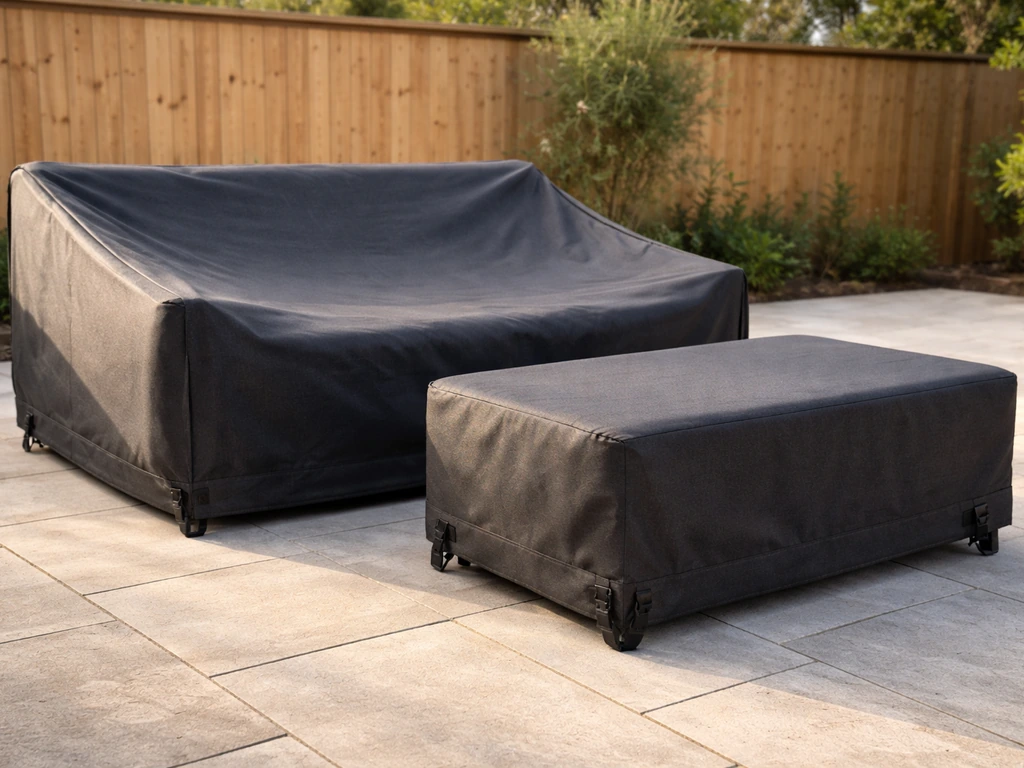
Quick way to choose the right cover size for your patio furniture
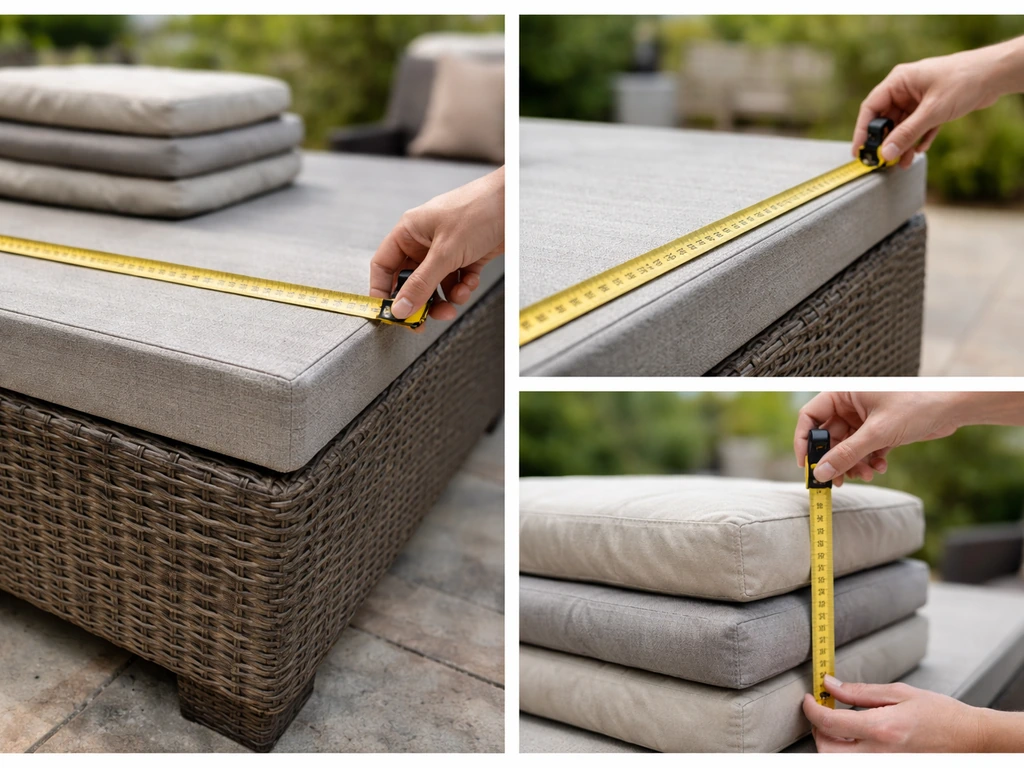
Sizing is where most people go wrong first. Manufacturers like Classic Accessories are clear about this: measure the width and depth of your furniture grouping first, then height. Width and depth are the critical dimensions because they determine whether the cover reaches the ground or leaves a gap where rain and wind can sneak in. Height matters mainly for tall-backed dining chairs or large gas grills, so don't skip it entirely, but don't obsess over it for low lounge sets.
Here's the practical method. Set your furniture in its normal position, including any chairs pulled out slightly as they'd sit after use. Measure the widest point, the deepest point, and the tallest point. Add two inches to each measurement as a buffer. Then match that to the cover's listed dimensions, not the cover's marketing size label. A cover marketed as fitting "a 6-person dining set" might be 96 inches wide at one brand and 110 inches at another.
- Pull all chairs to their natural resting position around the table before measuring
- Measure width at the widest point (usually chair back to chair back across the table)
- Measure depth front to back at the deepest point
- Measure height from the ground to the tallest point (chair back or table umbrella hole)
- Add 2 inches to width and depth as a minimum buffer for easy on/off
- Cross-reference your numbers against the cover's actual listed dimensions, not the size name
For individual pieces like lounge chairs, recliners, or sectional modules, measure each unit separately. Sectional covers are one area where custom or made-for-set covers earn their premium, because the L-shape or U-shape of most sectionals doesn't translate well to rectangular universal covers. If you have an odd layout or want a snug, tailored fit, best custom patio furniture covers are often the best way to reduce gaps where wind and rain can sneak in. If you're shopping for sectionals specifically, it's worth exploring best custom patio furniture covers alongside universal options to compare the tradeoffs. If you need a snug fit for your setup, compare best custom patio furniture covers to universal options before you buy king do way patio furniture covers. If you need a snug fit quickly, backyard basics patio furniture covers can be a practical universal option best custom patio furniture covers.
| Furniture Type | Key Measurement | Common Cover Size Range | Watch Out For |
|---|---|---|---|
| Dining set (4-6 person) | Width x Depth of chairs + table | 72"–120" wide | Chairs pushed out too far, leaving gaps |
| Conversation/lounge set | Width x Depth of full grouping | 80"–110" wide | Curved sofa ends not covered by rectangular covers |
| Sectional | L or U footprint width + depth | Custom or 120"+ wide | Rectangular covers leaving corners exposed |
| Lounge chair / recliner | Chair width x full reclined length | 28"–36" wide, 60"–80" long | Reclined length longer than upright measurement |
| Patio umbrella | Canopy diameter + pole height | Umbrella-specific covers only | Using a general cover that traps the pole wet |
Materials and weather protection that make covers truly top-rated
The material is what separates a cover that lasts five seasons from one that cracks, fades, or soaks through by summer's end. There are three main material families you'll encounter: polyester with PVC or polyurethane coating, solution-dyed acrylic (think Sunbrella-grade fabrics), and polypropylene nonwovens. Each behaves differently in real weather.
Coated polyester: the everyday workhorse
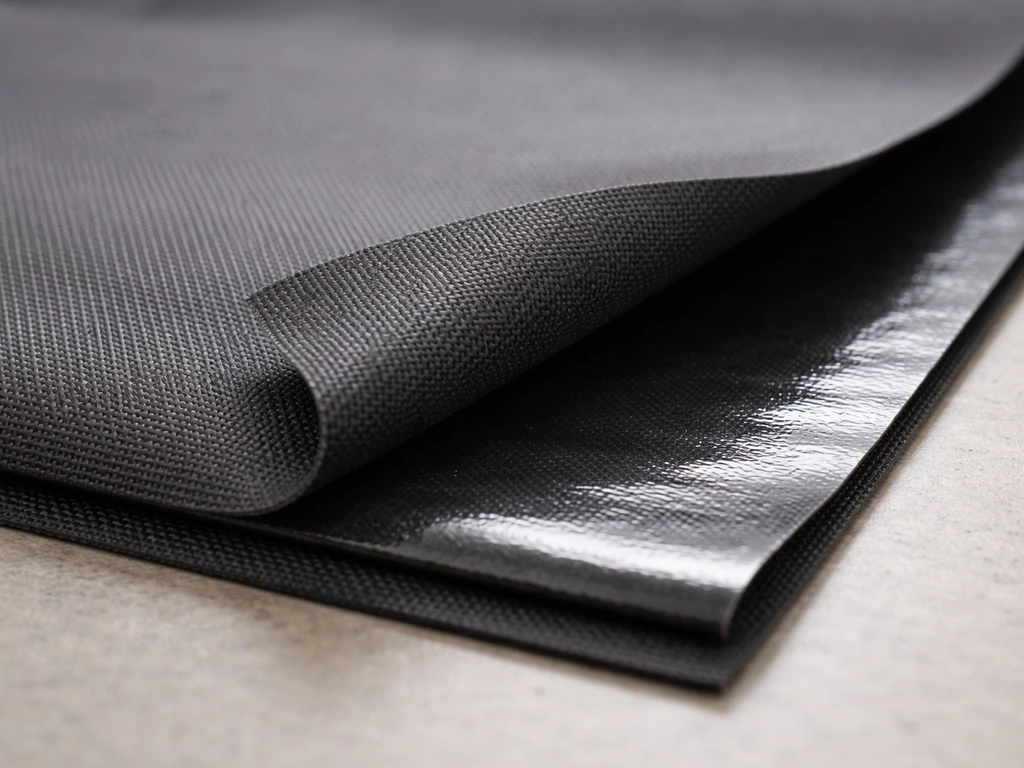
Most covers in the $25 to $80 range are 600D polyester (D stands for denier, a measure of thread thickness) with a PVC or polyurethane undercoating. At 600D or higher, the weave is tight enough to resist tearing on furniture corners. The coating is what makes it waterproof rather than just water-resistant. If a product listing says "water-resistant" only, that coating is likely thin or absent, and heavy rain will soak through in under an hour. Look for the word "waterproof" and, ideally, a blank" rel="noopener noreferrer">hydrostatic head rating of 1,000mm or higher. Anything under that is marketing language, not real waterproofing.
Solution-dyed fabrics: the premium choice for UV and longevity
Solution-dyed acrylic or polyester means the color pigment is baked into the fiber during manufacturing, not printed on top. This is why Sunbrella and comparable solution-dyed covers hold their color for years while cheap printed covers turn chalky gray by their second summer. If you're in a high-UV climate, a solution-dyed fabric cover will outlast a coated polyester cover significantly, even if it costs twice as much upfront. The tradeoff is that solution-dyed fabrics are often water-resistant rather than fully waterproof on their own, so look for ones with a durable water repellent (DWR) finish or a backing layer.
What the stitching and seams tell you
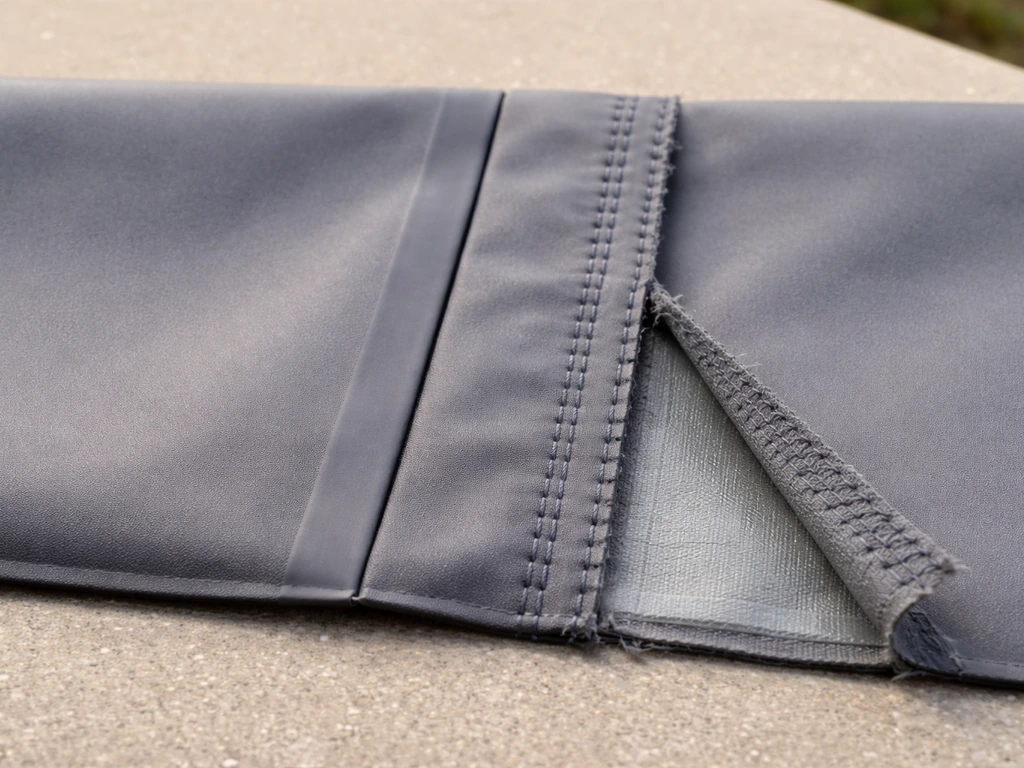
Seams are failure points. The best-rated covers use either heat-welded seams (no needle holes, completely waterproof) or double-stitched seams with a taped interior. Didriksons Support explains that welded seams melt plastic material together at the seam to create a sealed, waterproof joint without holes, which is a more secure approach than taped seams double-stitched seams with a taped interior. If you can see daylight through the seam from the inside, water will eventually find the same path. Check the corner seams especially, since corners take the most stress when wind pulls at the cover.
| Material | Waterproof Level | UV Resistance | Expected Lifespan | Best For |
|---|---|---|---|---|
| 600D coated polyester | Waterproof (if PVC/PU coated) | Moderate | 2–4 seasons | Budget-conscious buyers, mild climates |
| 900D coated polyester | Waterproof | Good | 3–5 seasons | Heavier furniture, windier areas |
| Solution-dyed acrylic | Water-resistant + DWR | Excellent | 5–7 seasons | High-UV, coastal, or hot-dry climates |
| Polypropylene nonwoven | Water-resistant only | Low | 1–2 seasons | Light-duty, temporary, or low-budget use |
Wind resistance and secure-fit features that prevent blow-offs
A cover that blows off in the first storm is worse than no cover at all, because it gives you a false sense of protection. Wind resistance comes from two things working together: how well the cover fits the furniture (a snug fit has less surface area to catch wind than a billowing tent), and how the cover is secured at the bottom.
The best securing systems use adjustable buckle straps with a drawstring hem. The drawstring cinches the hem close to the furniture legs, and the buckle straps clip underneath or around the legs to anchor the cover. Some covers use just a drawstring, which is fine for calm climates but inadequate if you regularly see gusts above 20 mph. Velcro tabs at the hem are a nice extra but shouldn't be the primary fastener, because Velcro loses grip after a season or two of outdoor exposure.
- Adjustable buckle straps (at least 2, ideally 4 on large covers): the strongest system for windy areas
- Drawstring hem: good baseline, essential even if you also have straps
- Tie-down loops or D-rings: useful for tying to deck railings or furniture legs on very exposed patios
- Elastic hem corners: add snugness for individual piece covers like chair covers
- Velcro tabs: useful secondary fastener, not reliable as the sole system
One thing reviewers consistently mention in top-rated cover feedback is cover handles. A sturdy handle on top of the cover, usually built into the center seam, makes it far easier to pull the cover off cleanly without it dragging across the furniture. It sounds minor until you're doing it every time you want to use the patio. Double-stitched fabric handles are better than plastic loops, which crack in cold weather.
Ventilation, moisture control, and mold prevention
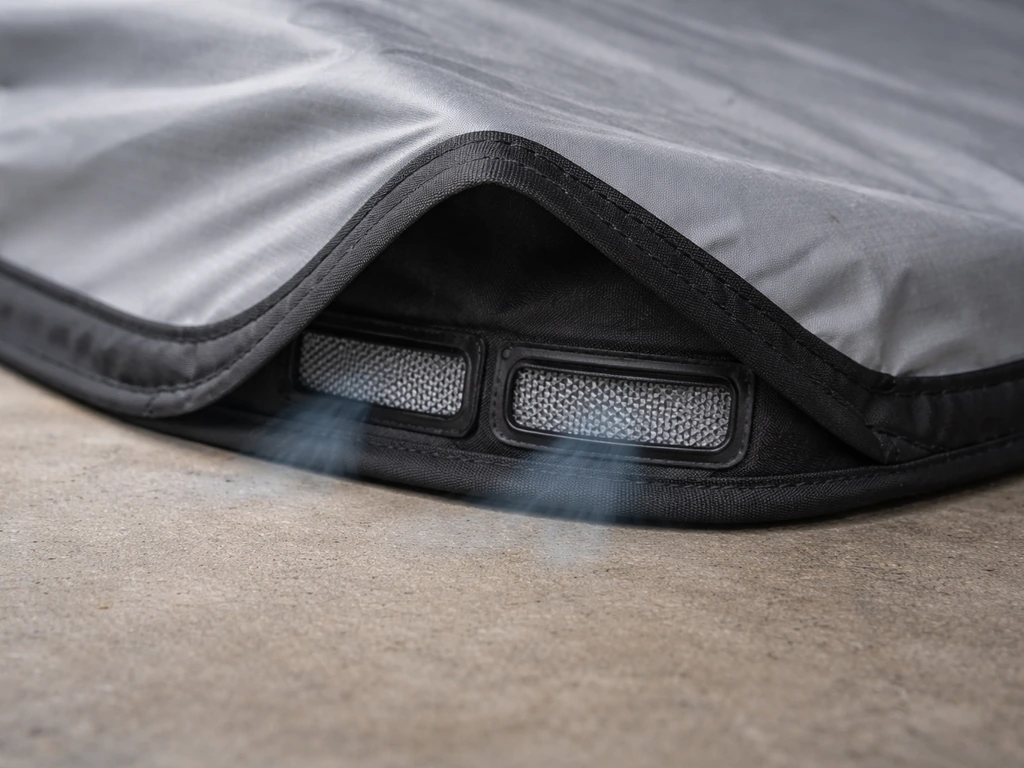
This is the one feature most buyers ignore until they lift the cover and find a mildew colony. Fully sealed waterproof covers trap humidity beneath them, especially overnight when temperatures drop and condensation forms on cold metal furniture. Over weeks, that trapped moisture is enough to grow mold on cushions, rust wrought iron frames, and degrade wicker resin finishes. The solution is air vents, and the best-rated covers all have them.
Look for covers with mesh-backed vents, usually two small openings near the top of the cover on opposite sides. These create passive airflow that equalizes humidity without letting rain in. The mesh backing prevents insects from using the vents as an entry point. Some covers call these "air pockets" or "breathable panels"; what matters is that there is actual airflow, not just a marketing claim.
Beyond vents, fit affects moisture too. If a cover is too long and pools on the ground, it wicks groundwater up into the interior. Keep the hem just clear of the ground surface, or go with a cover that has a hem trim slightly above ground level. If your furniture sits on a wood deck, this is especially important since water trapped between cover and deck accelerates wood staining and rot.
- Choose covers with at least two mesh-backed air vents positioned near the top
- Avoid covers with a hem that touches or drags the ground
- Store cushions inside during extended rainy periods even with a good cover
- If you live in high humidity (coastal Southeast, Pacific Northwest), prioritize ventilation over 100% waterproofing
- Remove covers periodically during long storage periods (every 2 to 4 weeks) to air out the furniture underneath
How to read patio cover ratings and reviews (what matters most)
The overall star rating on a product is nearly useless in isolation. A cover with 4.3 stars from 2,000 reviews might be excellent or might have 1,400 people who bought it, loved the look in the photo, left 5 stars before the first storm, and never came back to update. Here's what to actually look at.
Filter reviews by the lowest ratings first and search for specific terms: "wind," "blow off," "pool," "mold," "mildew," "ripped," and "strap." If you see more than a handful of reviews mentioning the same problem, that problem is real and consistent. Then search the high-rated reviews for the same terms to see how people solved or avoided those issues. That gap tells you whether the problem is design-related (unfixable) or usage-related (fixable with the right technique).
- "Blew off in first storm" or "straps broke" in low reviews: strap/buckle design is weak, avoid
- "Water pools on top" in multiple reviews: the cover lacks support structure or proper drainage slope
- "Mold under cover" from long-term users: no ventilation or poor fit trapping moisture
- "Fits perfectly" with specific dimensions mentioned: useful size confirmation if your measurements match
- "Cracked after one winter": PVC coating is too thin or poor quality, especially relevant for cold climates
- "Easy to put on/take off": handle and drawstring work well, valuable for daily cover/uncover users
- "Faded after one summer": dye is surface-printed, not solution-dyed; skip this cover for sunny climates
Also pay attention to verified purchase labels and review age. Reviews from three or more years ago may describe a product that has since changed its manufacturing. Prioritize reviews from the last 12 to 18 months for accuracy, especially for popular covers where quality can shift after brand acquisition or supply chain changes.
When comparing brands, the best outdoor patio furniture covers consistently earn their ratings through longevity reviews, not just first-impression scores. If a cover shows up repeatedly in "still going strong after 3 seasons" comments, that's more valuable than 500 five-star reviews from first-week buyers.
Climate-based buying checklist (rain, snow, sun, coastal salt air)
Your climate determines which features to prioritize. A cover perfect for Phoenix is mediocre in Seattle and potentially dangerous for furniture in coastal Maine. Here's how to match your shopping list to your actual conditions.
Heavy rain climates (Pacific Northwest, Southeast, Gulf Coast)
- Must-have: true waterproof rating with hydrostatic head of 1,000mm or higher
- Must-have: mesh-backed air vents (at least two) to prevent condensation buildup
- Look for: taped or heat-welded seams, not just stitched
- Avoid: covers with flat tops that allow water pooling; look for slight crown or support frame
- Bonus: covers with integrated drainage corners or a slight peak in the center
Snow and freezing climates (Northeast, Midwest, Mountain West)
- Must-have: 900D or higher denier rating for tear resistance under snow weight
- Must-have: PU coating rather than PVC only (PVC cracks and becomes brittle below 20°F)
- Look for: reinforced corner seams and stitching that won't split under heavy snow load
- Avoid: thin polypropylene covers that shred in ice or crinkle to uselessness in freezing temps
- Consider: removing cushions entirely and storing indoors; covers protect frames, not frozen cushions
Hot, high-UV climates (Southwest, Southern California, Texas)
- Must-have: solution-dyed fabric or at minimum a UV inhibitor rating (UPF 50+ preferred)
- Must-have: fade-resistant finish; test by checking if color is labeled solution-dyed or piece-dyed
- Look for: lighter colors (charcoal, beige, tan) that reflect heat rather than absorbing it
- Avoid: dark colors in intense sun; they absorb heat and accelerate fabric degradation
- Bonus: DWR finish even if your area is dry; monsoon seasons arrive fast
Coastal and salt air environments
- Must-have: rust-resistant hardware on all buckles, snaps, and D-rings (look for stainless steel or marine-grade plastic)
- Must-have: UV and salt-spray resistance in the fabric (solution-dyed acrylic excels here)
- Look for: covers marketed specifically for marine or coastal use
- Avoid: metal buckle hardware labeled only as "rust-resistant"; coastal air defeats most coatings within two seasons
- Rinse covers with fresh water monthly to clear salt crystal buildup from fabric fibers
Windy areas (plains, hilltops, exposed decks)
- Must-have: at least four adjustable buckle straps on large covers, two on individual piece covers
- Must-have: drawstring hem in addition to straps
- Look for: tie-down loops or D-rings for secondary anchoring to furniture or railing
- Consider: weighted hem options (some covers have pockets for small weight bags)
- Avoid: covers with large flat surfaces that act like sails; snug-fitting covers outperform billowy universal covers in wind
Care, cleaning, and storage to extend cover life
Even the best-rated cover will degrade prematurely if you ignore basic maintenance. The good news is that care for patio covers is genuinely simple, and five minutes of attention a couple times per season can double a cover's useful life.
Routine cleaning during the season
Brush off debris like leaves, twigs, and bird droppings as they accumulate rather than letting them sit. Wet debris accelerates mold growth and stains. For actual cleaning, lay the cover flat and scrub with a soft brush, mild soap (dish soap works fine), and cool water. Avoid pressure washers on covers with PVC or PU coatings; the pressure strips the coating over time. Rinse thoroughly, since soap residue left in the fabric attracts more dirt and degrades waterproof coatings. Let the cover air dry completely before putting it back on furniture or storing it.
Dealing with mold and mildew
If you find mildew spots under the cover or on the cover itself, mix one part white vinegar with four parts water and scrub the affected area. For stubborn mold, a diluted solution of oxygen bleach (not chlorine bleach, which degrades coated fabrics) applied for 10 to 15 minutes before rinsing usually clears it. If mold is recurring despite ventilation, something is trapping moisture: either the cover is too large and pooling at the base, the furniture isn't drying before covering, or the cover is going on wet after rain without time to air out first.
End-of-season storage
Before storing covers for winter, clean and fully dry them first. Storing a damp cover folded in a bin is the fastest way to grow mold that's impossible to remove. Fold covers loosely rather than crumpling them into a tight ball, which causes stress cracks in the coating at fold lines. Store in a breathable bag or an open bin, not sealed in plastic, which traps any remaining moisture. If your covers have buckle straps, leave them unclipped and uncoiled so the elastic doesn't set in a compressed position.
Reapplying a DWR spray (like Scotchgard Outdoor or Nikwax Tech Wash) once per season to coated polyester covers can restore the beading effect after washing has stripped some of the original finish. This is especially useful for covers in their third or fourth season that are showing signs of water absorption rather than beading. It takes five minutes and adds another season of life to an otherwise good cover.
When to replace a cover
Replace a cover when the coating delaminates (you'll see white flaking on the underside), when seams split and can't be re-taped, or when the cover no longer repels water even after a DWR treatment. Fading alone isn't a functional failure, but if your cover has faded significantly in under two seasons, that's a sign the UV protection is gone and the fabric itself is degrading. At that point, protecting your furniture becomes more important than getting one more season out of a deteriorating cover.
FAQ
How do I know if a patio furniture cover is truly waterproof enough for heavy rain, not just water-resistant?
Check for an actual hydrostatic head rating (the article mentions 1,000mm or higher) and confirm the seams are heat-welded or have taped interior. If the listing does not explicitly say waterproof, treat it as water-resistant until proven otherwise, especially for corners where wind drives water underneath.
What size patio furniture cover should I buy if my measurements fall between two sizes?
If you are between sizes, choose the larger option only if the hem will still clear the ground and not pool. Pooling wicks moisture upward, so prefer a snug fit that reaches close to the ground without contact rather than extra length that drags or bunches.
Can I use a patio furniture cover year-round, including during winter snow?
Yes if the cover is made for precipitation and you prevent moisture trapping, but you still need periodic checks. In freeze-thaw areas, make sure the cover is not sagging into snow loads (weight can stretch straps and stress seams). Clean and dry before storing or covering for long periods.
Are cover air vents really necessary if the cover is fully waterproof?
Yes, fully sealed waterproof covers can trap humidity as temperatures drop, which can lead to mold and rust over time. The article explains that passive venting equalizes humidity while keeping rain out, usually via mesh-backed vents near the top.
What is the best way to stop a cover from blowing off in wind?
Use both a cinched drawstring hem and adjustable buckle straps, anchored around or under the legs. Also ensure the cover is the correct measured fit, because a billowing fit increases the surface area wind can grab. Avoid relying on Velcro as the primary fastener.
How often should I clean a patio furniture cover to prevent mildew?
At least a couple of times per season, and sooner if you notice debris buildup. Wet debris accelerates mold, and rinsing thoroughly after mild soap prevents residue that attracts dirt and can reduce water repellency over time.
Is it safe to use a pressure washer on patio furniture covers?
No for most coated covers. The article notes that pressure washers can strip PVC or polyurethane coatings, which reduces waterproofing and shortens cover life. Use a soft brush, mild soap, and cool water instead.
If my cover looks fine but the underside is getting mildewy, what should I troubleshoot first?
First verify that the cover is not too large and pooling at the base. Second, ensure furniture is dry before covering, since trapping moisture accelerates mold and rust. Finally, check that vents are not obstructed by furniture placement or the cover riding high off the frame.
Can I re-waterproof my cover, and how do I know when it is time?
For coated polyester covers, reapply DWR about once per season after cleaning, especially when you notice water soaking in instead of beading. Time to replace if coatings delaminate (white flaking), seams fail and cannot be re-taped, or water repellency does not return after DWR treatment.
Should I store patio furniture covers in plastic bins or breathable storage?
Use a breathable bag or an open bin, and store only when fully dry. Sealed plastic can trap residual moisture, which encourages mold. Fold loosely to avoid stress cracks at fold lines, and leave straps unclipped so elastic does not set.
Next Articles
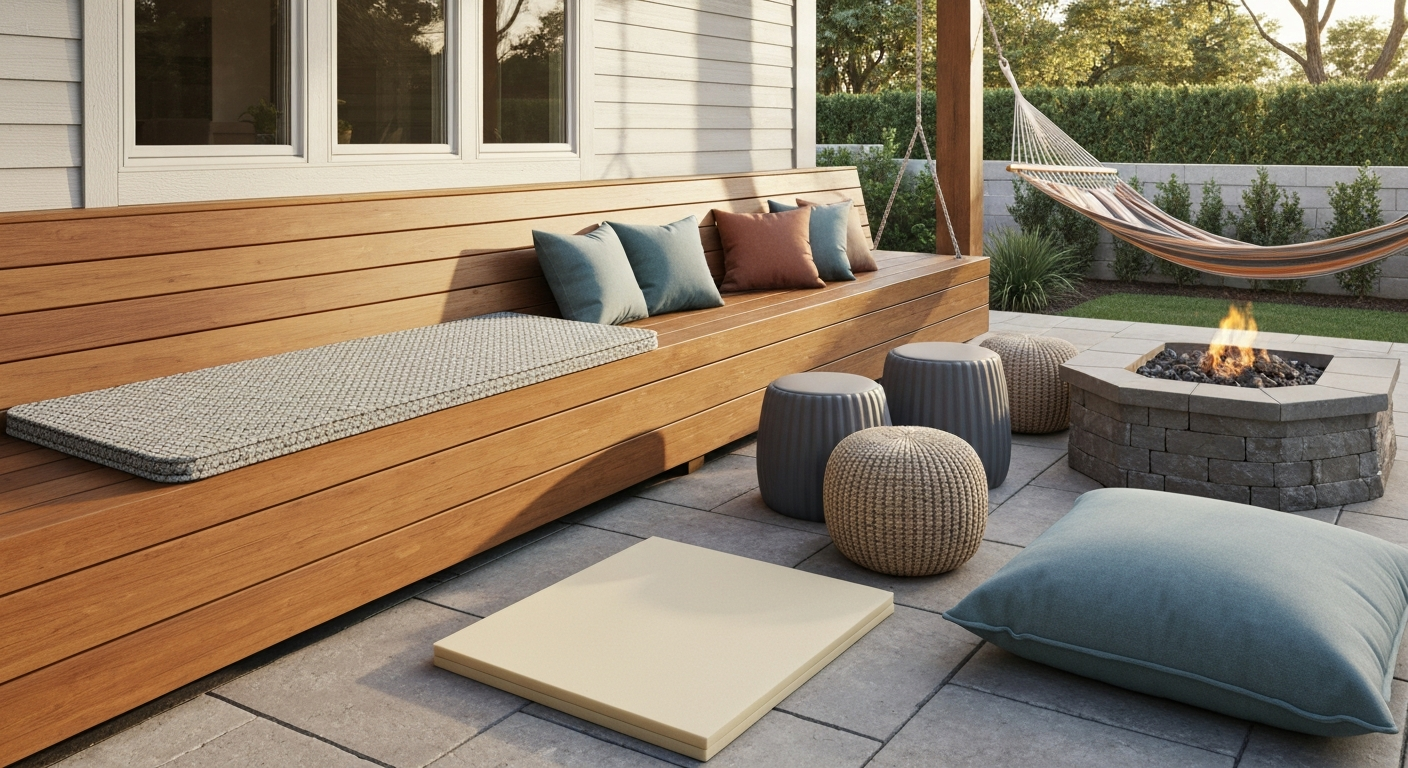
Alternative to Patio Cushions: Durable, Stylish Options and DIY
Alternative to patio cushions: durable, weatherproof seating options, pros, DIY tips & buying guide.
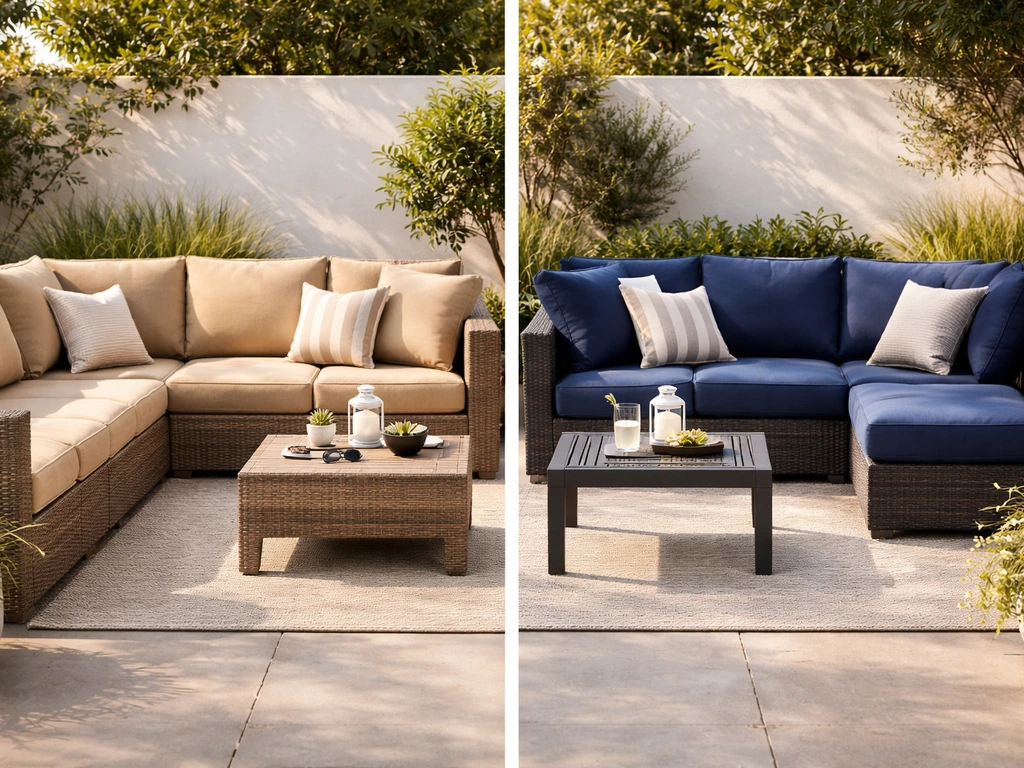
Best Color for Outdoor Patio Cushions in 2026
Choose the best cushion color for sun, heat, and fading in 2026, with pairing tips for patio furniture and durability.
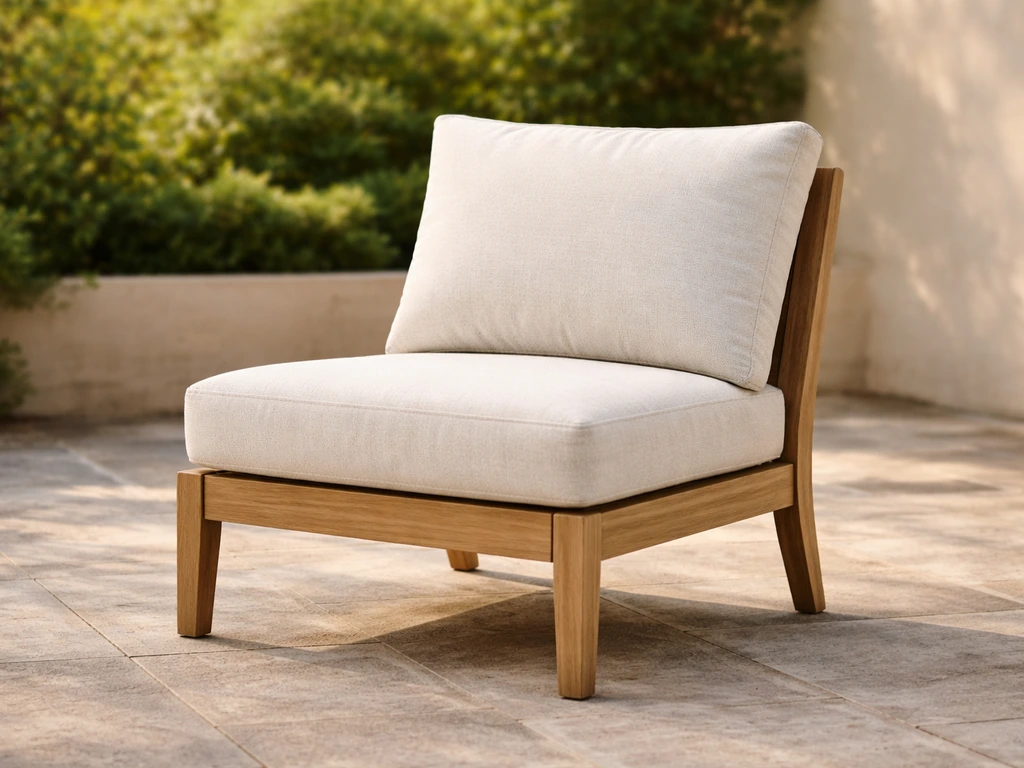
Top Rated Patio Cushions: How to Choose Fast and Right
Step-by-step guide to choose top rated patio cushions by fit, materials, weather durability, and easy cleaning for your