
A patio swing with stand is a freestanding unit that includes its own A-frame or arch-style frame, so you can set it up anywhere on a flat surface without needing a porch ceiling, a tree branch, or any overhead structure. The best one for you depends on three things above all else: how much space you actually have, how many people will use it regularly, and how much weather punishment it needs to survive. For most people shopping right now, a steel-frame loveseat swing with a canopy, a 450 lb weight capacity, and fade-resistant polyester cushions hits the sweet spot between price, comfort, and durability. But the right pick really does vary by situation, and this guide will walk you through every decision point so you can buy with confidence and avoid the wobble, sag, and rust problems that plague cheaper options.
Best Patio Swing With Stand: Buying Guide and Picks

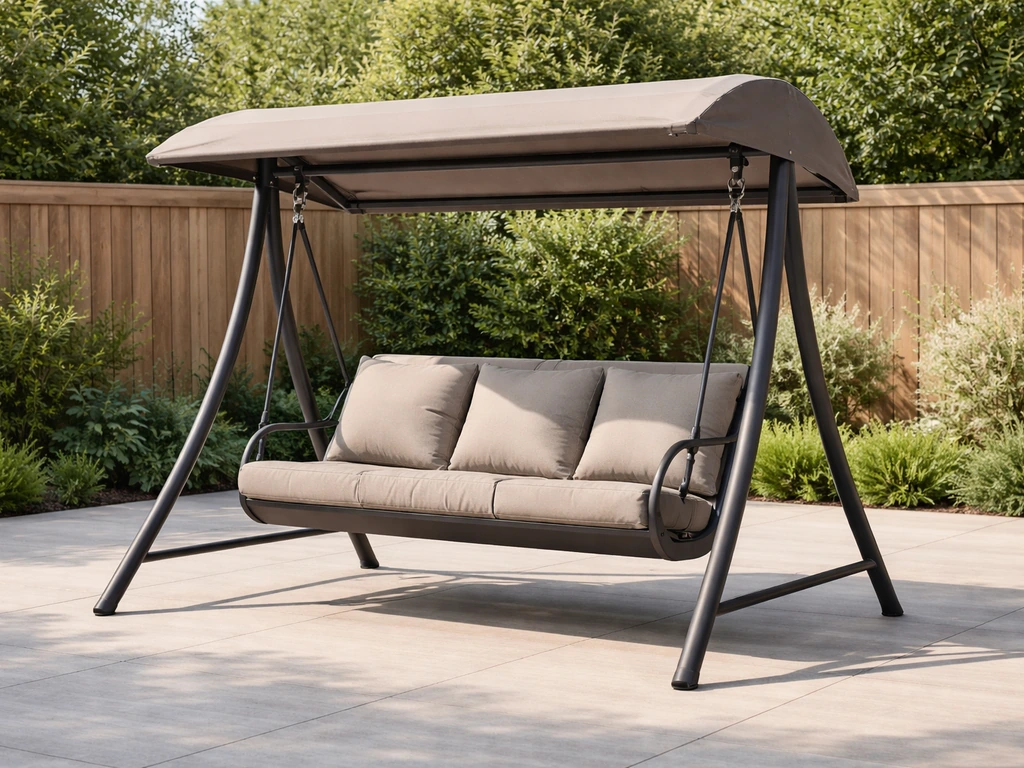
What 'patio swing with stand' really means (and what to avoid)
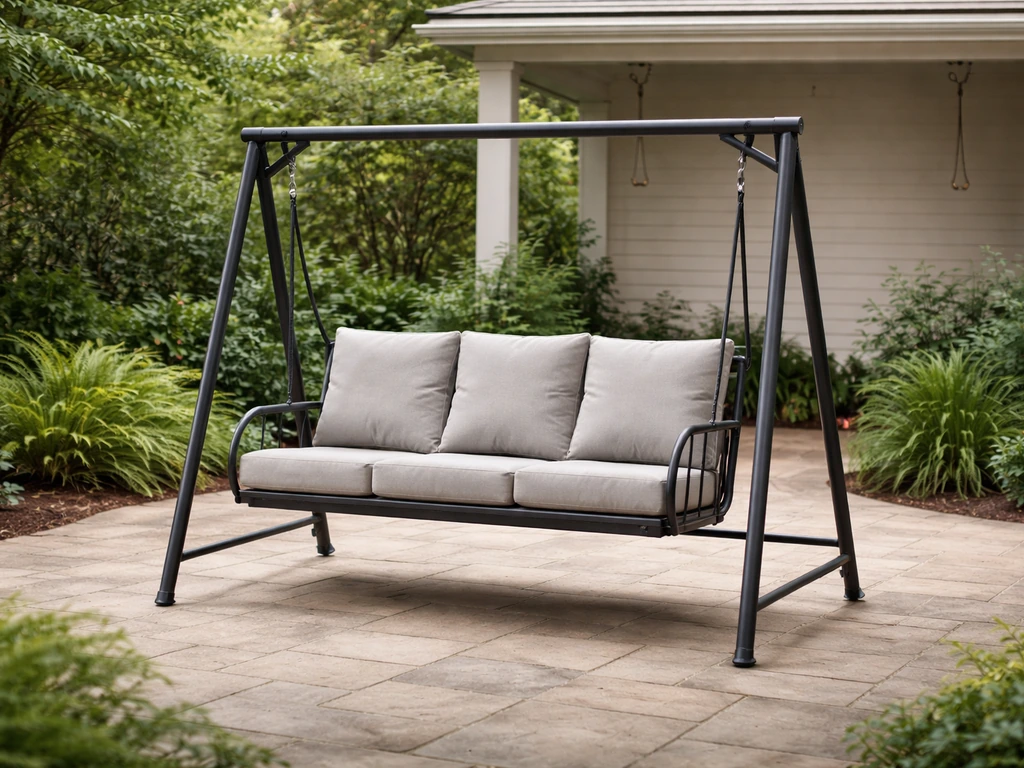
This category specifically means the frame is included. You're not buying a swing seat alone to hang from an existing beam, porch ceiling, or tree. You're buying a complete, self-contained system: the swing seat plus a freestanding stand that holds it up. That distinction matters because a lot of listings blur the line, and you can easily end up buying just a seat when you needed the whole thing.
A hanging swing (sometimes called a suspended porch swing) relies entirely on an overhead support structure like a porch ceiling joist or a pergola beam. If you don't have that, you need a swing with its own stand. Similarly, a patio glider sits on a base and rocks forward and back on a track rather than swinging, so it's a different product even though it solves a similar problem. Patio hammocks are another cousin in this space, but they require either trees or a separate hammock stand. If you're specifically shopping for the best patio hammock, you'll want to compare stand options and clearance needs the same way you would for a stand-supported swing Patio hammocks. Only a patio swing with stand gives you the gentle pendulum-style swing motion in a single, portable package.
What to avoid: listings that say 'swing with stand' but sell the stand separately in an add-on bundle, or products that include a stand rated for a lower capacity than the seat. Always check that the stand and seat are sold together and that the weight rating on the stand matches or exceeds the seat's rating. Some stands have multiple eye bolts and can hold different seat configurations, like the Nags Head Hammocks Double Swing Stand which includes three eye bolts and a 450 lb system capacity, but you still need to confirm the seat you pair with it is rated appropriately.
Measure your space before you buy anything
This step gets skipped constantly and it's the number one reason people return swings. A freestanding patio swing needs significantly more room than the swing's listed dimensions suggest, because the seat needs clearance in front and behind it to arc safely.
POLYWOOD recommends 3 to 4 feet of clearance in front of and behind a porch swing so it swings freely. Apply that same thinking to a freestanding swing: if the stand footprint is 5 feet deep, you need to add roughly 3 to 4 feet in front and 3 to 4 feet behind the seat's resting position. That puts your total depth requirement closer to 11 to 13 feet in many cases. Laterally, aim for at least 12 to 14 inches of clearance on each side of the stand so the swing doesn't brush walls, railings, or furniture.
Most loveseat-style patio swings with stand run about 55 to 65 inches wide at the frame footprint and 50 to 60 inches deep at the base. Three-person models stretch closer to 70 to 80 inches wide. Measure your patio in both directions before you shop, and use painter's tape on the ground to mock up the footprint plus swing clearance. If the space feels tight in your mock-up, it will feel even tighter with real furniture in it.
| Swing Type | Typical Stand Footprint (W x D) | Total Space Needed (with swing arc clearance) |
|---|---|---|
| Single-seat / chair swing | 40–50 in wide, 45–55 in deep | ~7 ft wide, ~10–11 ft deep |
| Loveseat (2-person) | 55–65 in wide, 50–60 in deep | ~8 ft wide, ~11–13 ft deep |
| 3-person / bench swing | 70–80 in wide, 55–65 in deep | ~9–10 ft wide, ~12–14 ft deep |
Key features that determine the 'best' swing
Frame material: steel vs. aluminum vs. wood
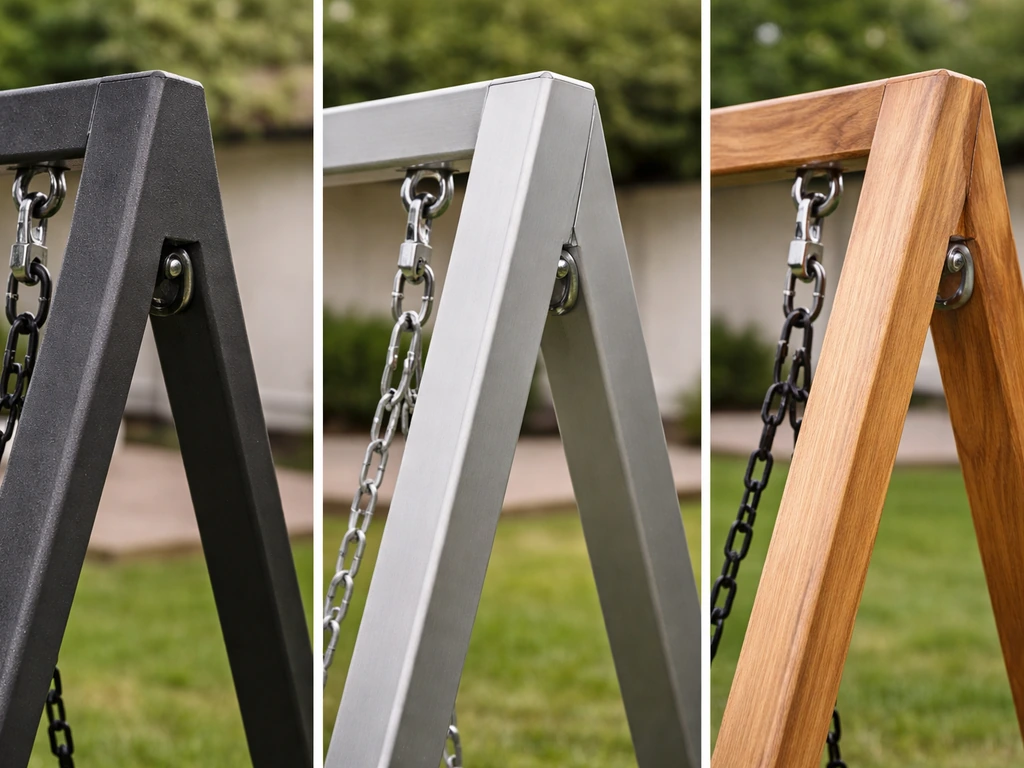
The frame is the backbone of the whole system, and the material choice shapes how much maintenance you'll do for the next several years. Here's the honest comparison:
| Material | Strength & Stability | Rust/Corrosion Risk | Weight | Maintenance | Cost |
|---|---|---|---|---|---|
| Powder-coated steel | High — best for heavy-duty use | Moderate — rusts if coating chips | Heavy (stable in wind) | Annual inspection, touch-up paint | Budget to mid-range |
| Aluminum | Good — slightly less rigid than steel | Low — won't rust, but can pit without coating | Light (can shift in wind) | Occasional cleaning, protective coating | Mid-range |
| Solid wood (cedar, teak) | Good — classic and sturdy | Low rust risk, but can rot/crack if unsealed | Heavy | Annual sealing or staining | Mid to premium |
For most buyers, powder-coated steel is the practical winner: it's the most stable, the most widely available, and the most affordable. The catch is that any chip or scratch in the coating is a rust entry point, so inspect it seasonally. Aluminum won't rust like steel does, but it can develop pitting corrosion without a good protective coating, so it's not completely maintenance-free. Wood frames look beautiful and feel substantial, but they require more consistent upkeep and aren't a great fit for high-humidity or high-rainfall climates without deliberate sealing.
Weight capacity: match it to your real-world use
Weight capacity is one of the specs people routinely underestimate. A single-person swing rated at 250 lbs (a common spec in entry-level models) is only safe for one adult. The moment a second person sits down or a kid jumps on, you're in risky territory. For a two-person loveseat, look for at least 400 lbs. For a three-person bench swing, 440 to 450 lbs is the standard, with the Outsunny 3-person model rated at 440 lbs and some Nags Head Hammocks systems rated at 450 lbs being good real-world benchmarks. Never exceed the stated capacity, not even briefly, because overstress doesn't just break the swing instantly, it gradually weakens welds, bends frame joints, and leads to sagging or sudden failure later.
Frame stability: what keeps it from wobbling
Wobble is the most common complaint in swing reviews. It usually comes from one of three places: undersized cross-bracing at the base, cheap or loose hardware at the joints, or a frame that's too lightweight for the swing seat. Look for wide A-frame bases with cross-bracing on the ground-level bars, and check that the leg tubes are at least 1.5 to 2 inches in diameter. Pre-drilled frames with lag screw connections (like the A-frame stand assembly style common in many mid-range products) are generally more rigid than bolt-through plastic-collar connections.
Comfort and seating options
Single vs. loveseat vs. three-person bench
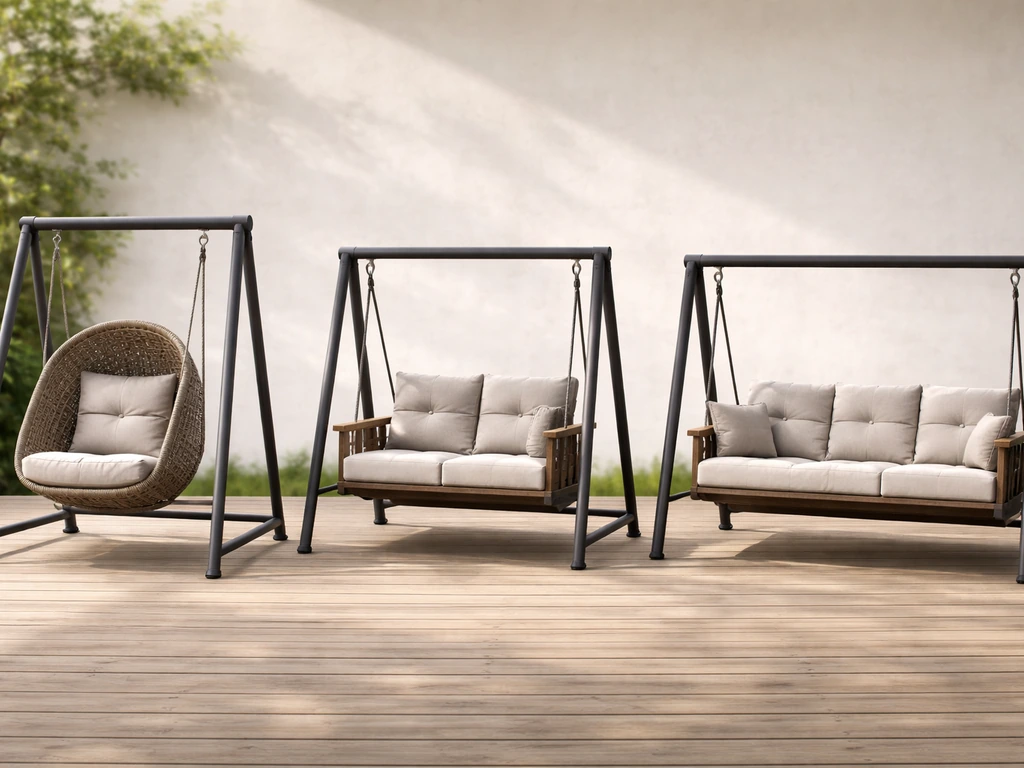
Single-seat or chair-style swings are great for small spaces or solo lounging, but they're less versatile and harder to find with a quality stand. Loveseat swings (two-person) are the most popular format and hit the best balance of space efficiency and shared use. Three-person bench-style swings are the right call for families, but they need a large patio and a strong frame with correspondingly high weight ratings. If you're on the fence between a two and three-person model, go with the three-person if your space allows, you'll almost always want the extra room.
Cushions: what to look for
Cushion quality makes or breaks the comfort experience. The best cushions for a patio swing use high-density foam (not just fiber fill) that holds its shape over a season, wrapped in a fabric that resists both fading and moisture. Polyester with a water-resistant treatment is the standard, and it performs well day-to-day. What it won't do is survive being left out in sustained rain, so builds that include zippered, removable covers are meaningfully better than sewn-on cushions because you can pull the covers off and store them. Avoid any cushion described only as 'soft' without specifying fill density or fabric treatment.
Suspension: chain vs. bar
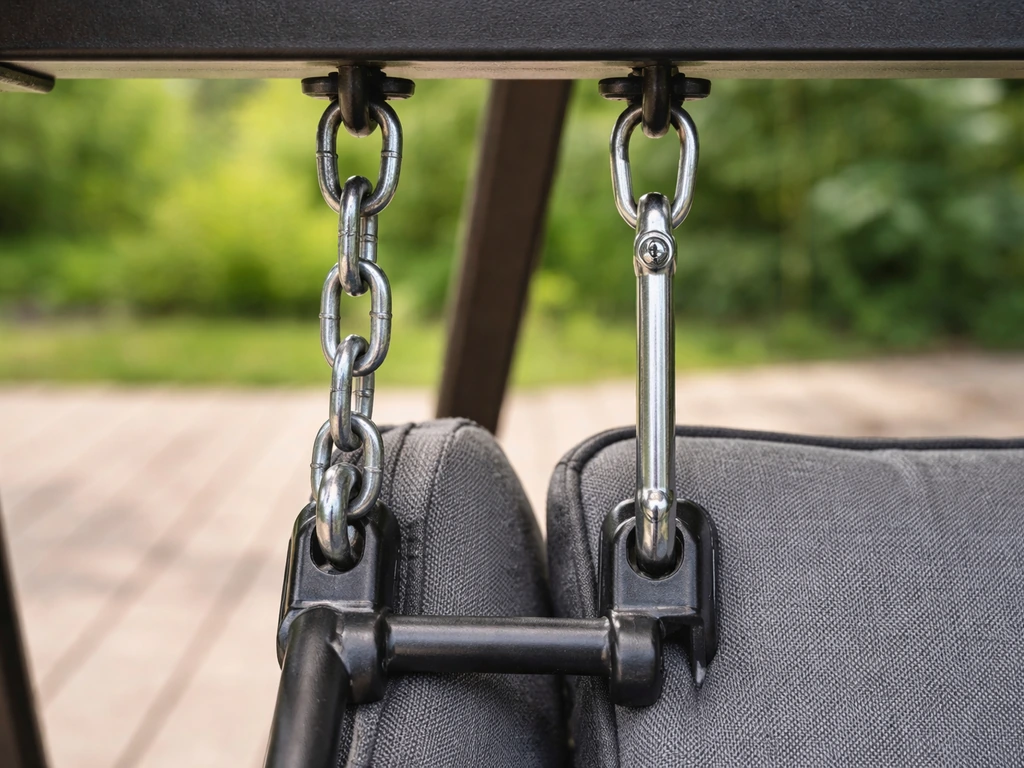
Most patio swings with stand use chain suspension, which allows the seat to hang freely and swing in a natural arc. This feels comfortable and is easy to replace if a link wears out. Some newer designs use a rigid bar or arm suspension, which is more stable and reduces the side-to-side sway that some people find unsettling, but it creates a stiffer, more limited swing motion. For most users, chain suspension with heavy-gauge links is preferable. Check that the suspension hardware matches the frame's weight capacity, flimsy S-hooks on a 400 lb-rated frame are a mismatch waiting to fail.
Canopy and shade: what the specs actually mean
Most patio swings with stand include a canopy, and the marketing language around them can be misleading. Here's how to interpret the common terms:
- Fade-resistant: The fabric color holds up against UV exposure better than untreated polyester, but it's not a guarantee against eventual fading over multiple seasons.
- Water-resistant: Repels light rain and dew, but sustained heavy rain will eventually soak through. This is not the same as waterproof.
- Waterproof with UV30+ (or similar): A step up from water-resistant. Polyester Oxford fabric at around 230g/m² with a UV protection rating is a meaningful indicator of quality. UV30+ blocks roughly 97% of UV rays.
- Not storm-rated: No swing canopy on the market is designed to withstand storms, high winds, or hail. Standard warranty exclusions cover storm damage for a reason. Fold or remove the canopy before severe weather.
A good canopy should also be adjustable in angle, so you can tilt it to block sun as it moves. Look for canopies with two or three adjustment positions. Zippered canopies that can be removed for storage or replacement are much better long-term than sewn-on fixed canopies, since canopy fabric almost always degrades faster than the frame and being able to replace it separately saves you from buying an entirely new swing.
Assembly, anchoring, and renter-friendly setup
Most patio swings with stand arrive partially assembled and pre-drilled, meaning the biggest structural pieces are already joined and you're mainly connecting the base, the arch or A-frame legs, and then hanging the seat. Always follow the swing's included assembly instructions and safety guidance from the Home Depot patio swing manual for proper setup after you assemble it assembly instructions and safety/use guidance. A typical assembly runs 45 minutes to 90 minutes for one person, faster with two. Included hardware quality varies a lot: check reviews specifically for comments about stripped bolts, missing washers, or vague instructions. The better products ship with pre-drilled holes and lag screws for the base cross-bracing, which locks the stand geometry in place much more reliably than just tightening bolts into un-drilled metal.
For renters or anyone who needs mobility, a patio swing with stand is already one of the most renter-friendly outdoor swing options because it doesn't require drilling into any structure. You don't need to anchor it to a deck or concrete for normal use on a flat, level surface. That said, if you live somewhere with regular high winds, or if you're setting it up on a surface where it could tip or slide, you can add weight bags to the base legs or use non-penetrating rubber feet for grip. Some users on wood decks place rubber mats under the base feet to prevent scratching and shifting. Ground anchors that stake into grass or soil are available as accessories and are a good call for backyard grass setups.
One practical tip: assemble the swing in the exact spot where it will live, not in the garage and then carried out. Fully assembled swings with stand are awkward and heavy to move, and repositioning them across a patio is much easier before the seat is hung.
Maintenance and long-term durability
Frame care: preventing rust and corrosion
For steel frames, the powder coat is your first and best defense against rust. Inspect it at the start and end of each season. If you see a chip, scratch, or any orange flaking, treat it immediately: wire-brush the area, apply a rust-inhibiting primer, and touch up with exterior metal paint. Lowe's and other home improvement sources recommend using proper safety gear (gloves, eye protection) when removing rust, and following manufacturer instructions for cleaning products. Aluminum frames won't rust but can develop oxidation pitting if left uncoated for long periods, so a thin application of car wax or aluminum-specific outdoor furniture protector once a season keeps them looking clean and slows surface degradation.
Cushion care: cleaning and storage
Don't machine-wash your swing cushions unless the manufacturer explicitly says you can, which is rare. Most outdoor cushion covers should be cleaned with a mild soap and water solution, scrubbed gently with a soft brush, and left to air dry completely before being put back on or stored. The key word is completely: storing damp cushions invites mold and mildew, which is nearly impossible to fully remove once it sets into foam. If you're not using the swing for more than a week or two, bring the cushions inside or store them in a ventilated storage bin. A swing cover is worth the investment if you want to leave the cushions in place during short absences.
Chain and hardware inspection
Check the suspension chains, S-hooks, and eye bolts at least once a season and after any major storm. Look for rust streaks, stretched links, or any S-hook that's no longer fully closed. Replacing a single chain or a set of S-hooks costs very little and prevents catastrophic failure. Tighten all frame bolts seasonally as well, because vibration from regular swinging gradually loosens hardware over time, and this is the primary cause of developing wobble in an otherwise solid frame.
Canopy longevity
Canopy fabric typically degrades faster than the frame. Most canopies last two to four seasons with proper care, longer if you remove them during winter or heavy weather. When shopping, check whether the manufacturer or third-party sellers offer replacement canopies for your model. Products that use standard sizing (like a 3-seater canopy at common dimensions) have a much better aftermarket replacement selection than proprietary designs. The ability to buy a replacement canopy for under $30 to $50 effectively doubles or triples the useful life of a good frame.
Best picks by scenario
There's no single best patio swing with stand for everyone, but there is a best one for your specific situation. Here's how to match the product type to your scenario:
| Your Situation | What to Prioritize | What to Look For |
|---|---|---|
| Small patio or balcony | Compact footprint, easy mobility | Single or loveseat model with stand under 55 in wide; lightweight aluminum frame; verify total swing-arc clearance fits your space |
| Heavy-duty or larger adults | High weight capacity, rigid frame | Minimum 450 lb rated stand and seat; thick steel tubing; lag-screw base assembly; no plastic collar joints |
| Families with kids | Safety, durability, easy cleaning | Three-person model at 440–450 lb capacity; powder-coated steel; removable/washable cushion covers; ground anchors for grass |
| Comfort-first lounge seating | Cushion depth, back support, smooth swing | High-density foam cushions, minimum 4 in thick; chain suspension with adjustable length; reclining or deep-seat backrest angle |
| Shaded or sunny open patios | UV protection, adjustable canopy | Canopy with UV30+ rating and two or more angle positions; zipper-removable canopy for replacement; water-resistant or waterproof fabric |
| Renters or frequent movers | No-anchor setup, portability, easy disassembly | Pre-drilled frame with numbered hardware; rubber base feet; under 50 lb total weight preferred; compact flat-pack when disassembled |
| Budget buyers | Best value per dollar | Steel frame with powder coat; basic polyester canopy; chain suspension; prioritize weight capacity and frame gauge over cushion extras |
| Premium buyers | Long-term durability and aesthetics | Aluminum or treated hardwood frame; UV-stabilized or Sunbrella-grade cushion fabric; branded warranty of at least 1–2 years on frame |
Quick buying checklist
Before you add anything to your cart, run through this list:
- Measure your patio and verify you have at least 11 to 13 feet of depth and 8 feet of width for a standard loveseat model, accounting for swing arc clearance front and back.
- Confirm the listing includes both the stand and the swing seat as a single unit, not a seat-only or stand-only listing.
- Check the weight capacity of the stand and the seat separately, then use the lower number as your actual limit.
- Identify the frame material and look for powder-coated steel or aluminum with protective coating for outdoor use.
- Read recent reviews specifically for mentions of wobble, stripped bolts, canopy quality, and rust, as these are the most common failure points.
- Check whether replacement canopies and cushion covers are available for the model you're considering.
- Confirm whether the stand requires any anchoring for your surface type (deck, concrete, grass) and whether anchoring hardware is included.
- Verify the return policy and warranty length, with 1 year on the frame being a baseline expectation for a quality product.
If you're also considering options that don't require a stand at all because you have an existing porch or pergola, it's worth looking at patio porch swings designed for ceiling mounting, which can offer a wider range of wood styles and custom sizing that standalone frame swings don't match. And if you're drawn to the rocking motion rather than the pendulum swing, outdoor patio gliders are worth comparing directly since they work well in tighter spaces and often have a lower wobble risk than chain-suspended designs. But if you need the full package, stand and seat, in one purchase, a patio swing with stand is the cleanest, most flexible solution for any outdoor space. To help you narrow down the selection, check our guide to the best outdoor patio swings for the size, comfort, and durability that fit your setup.
FAQ
How can I tell if the stand capacity matches the swing seat rating?
Most stands can support the seat weight, but you still need to confirm two separate ratings: the seat’s maximum occupant weight (for each person/total) and the stand’s system capacity. If the listing only shows one number, look for whether it is for the entire swing or just the frame, then choose the lower of the two as your safe limit.
Can I set a patio swing with stand on grass or a deck, and do I need to anchor it?
If you are on grass or soil, use ground anchors or stake-down kits after the base is positioned, and avoid placing the swing on soft, uneven ground. For decks, rely on grip-only solutions (rubber mats, non-penetrating feet) unless the manufacturer explicitly allows deck anchoring, since the base can shift even when the deck itself is solid.
What should I do if my freestanding swing wobbles after assembly?
Yes, but only if the ground is level and the base footprint is stable. Uneven ground increases frame twist, which shows up as persistent wobble. Use a spirit level on the base feet, and if the swing rocks after assembly, correct the surface or shims under the feet before you add any cushions and invite use.
Is chain suspension or bar suspension better for comfort and stability?
Chain suspension is typically more forgiving when minor side-to-side movement happens, while rigid-bar designs can reduce sway but may feel harder or less “forgiving” if the frame geometry shifts slightly. If you are sensitive to sway, prioritize a rigid or heavier chain setup with tight hardware, then verify the suspension points are correctly installed at the specified angles.
How much clearance do I really need if I have nearby furniture or a walkway?
Choose your clearance based on your arc needs and your furniture layout. If you plan to put chairs, a side table, or a grill near the swing, add extra lateral space beyond the stand width. A good rule is to ensure the swing’s front and back arc clears everything by at least several inches, not just the stand footprint.
How often should I tighten bolts and check the chains and hooks?
You should inspect and re-tighten before the first use of the season, then again after any period of heavy use or storms. Vibration can loosen lag screws and bolts over time, so if you notice new squeaks, a change in swing smoothness, or increased wobble, stop using it and check all joints immediately.
Will a canopy make the swing more wind-resistant, or is it a problem in high winds?
Most canopies are designed for typical wind, but gusts can stress the frame and the fabric. If your area gets frequent high winds, remove or roll up the canopy when not in use (or during storms) if the design allows it, and consider storing it during winter to extend lifespan.
What’s the best frame and cushion approach for wet, humid climates?
For a humid or rainy climate, prioritize powder-coated steel with intact coating and removable, zippered cushion covers. Don’t leave cushions sealed inside the covers if they stay damp, and use breathable storage for off-season. Aluminum may avoid rust, but still needs protective care to prevent pitting.
How do I choose cushions that won’t mildew or lose shape?
Look for removable, zippered covers and cushions made with specified foam density (not just “soft”). If the covers are sewn on, you may have to clean or dry the entire cushion assembly, which increases mold risk. Also verify the fill type is meant for outdoor exposure, then plan to store cushions indoors or in ventilated bins for wet seasons.
Are rubber feet or mats enough to prevent sliding on a deck?
Rubber feet and mats help prevent sliding, but they do not fully replace anchoring when winds are strong or the surface is slick. If your deck is coated or smooth, expect increased slip and consider adding sandbags to the base only if the product instructions allow them, otherwise use approved anchors or move to a grippier location.
What’s the most common measurement mistake when choosing a swing with stand for a small patio?
If you have a small patio, measure twice: the frame footprint is only part of the space. Also consider that guests sit in different positions, and a kid may lean forward, increasing the arc. Use painter’s tape to map the stand plus the full swing clearance, and keep at least one “no-furniture” buffer zone around the arc.
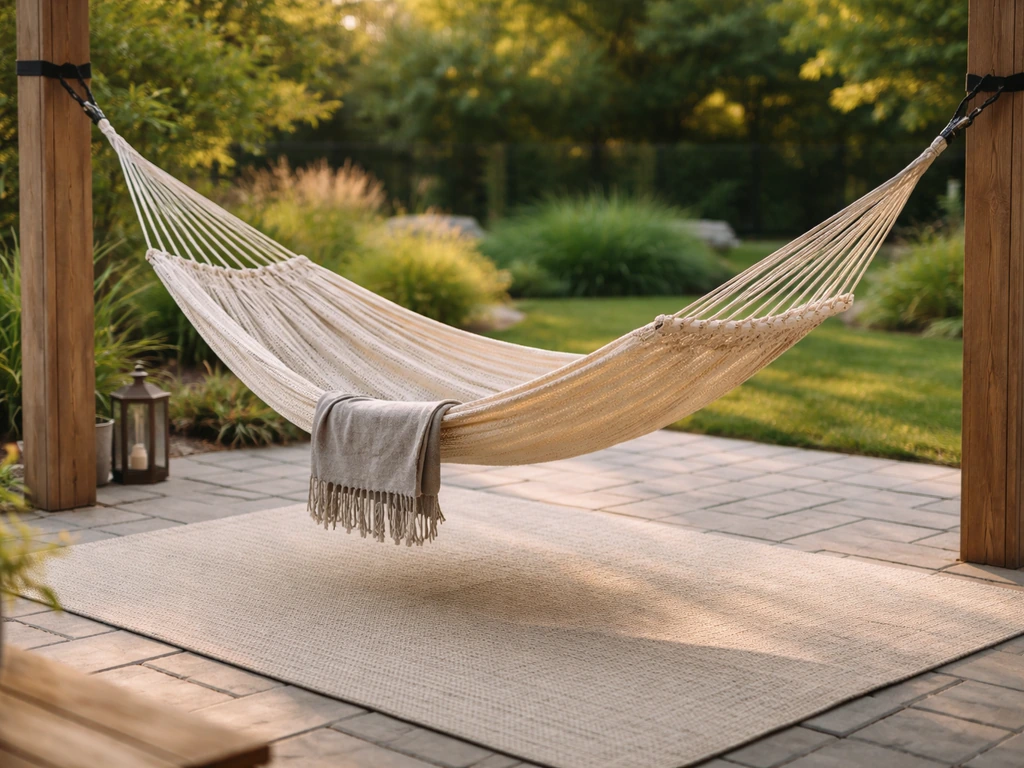
Buying and measuring guide to choose the best patio hammock, from hang vs stand to durable, weatherproof setup and care.
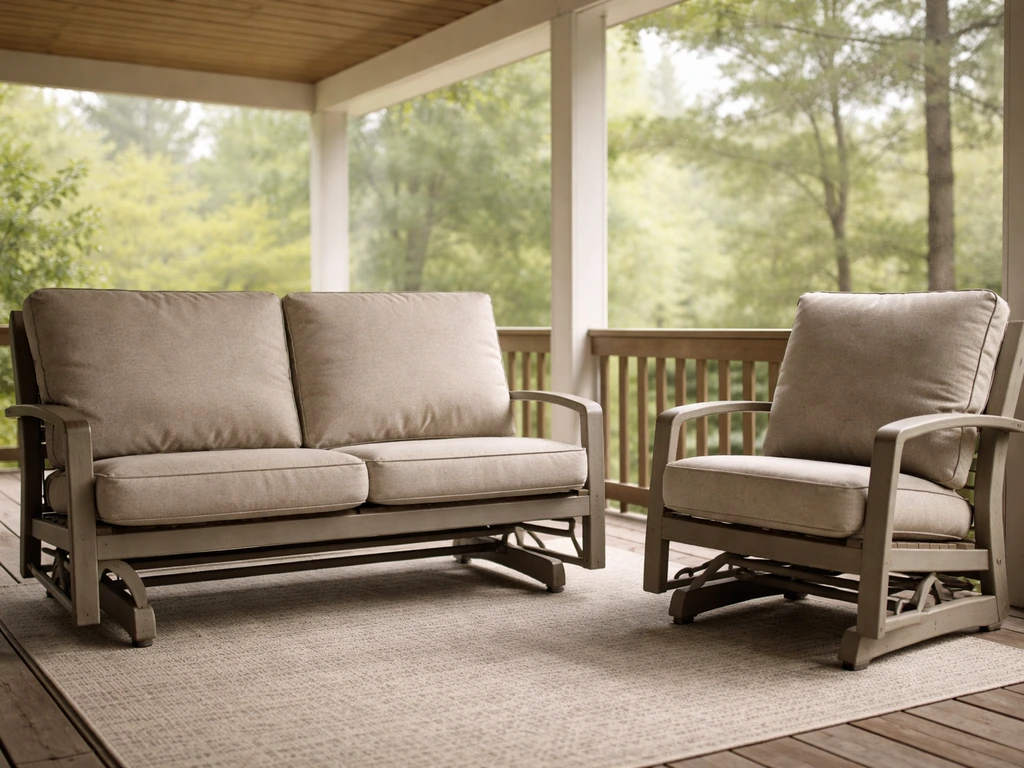
Buyer guide to pick the best patio gliders by comfort, materials, size, weight capacity, and weather durability.
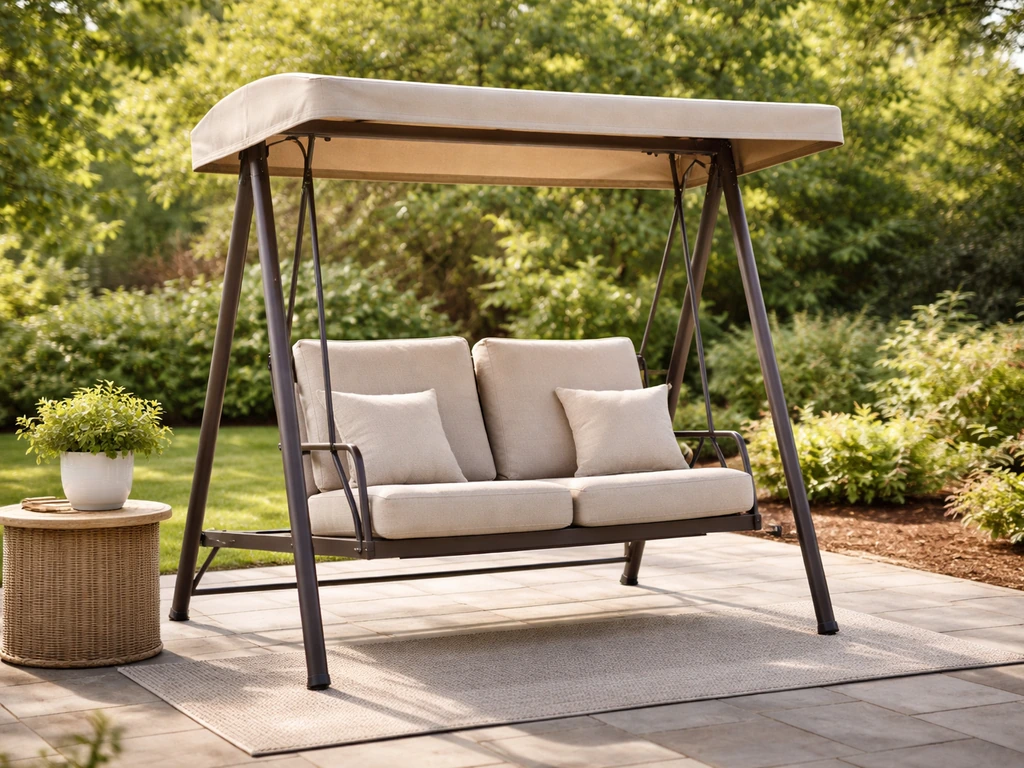
Choose the best outdoor patio swings fast with size, materials, comfort, weatherproofing, safety, and value by style.