
A hammock stand with a 450 lb capacity, a 13-foot arc frame, and a polyester or solution-dyed acrylic fabric bed is the best patio hammock for most people. It needs no drilling, works on concrete or pavers, and you can move it around as the shade shifts. If you have two solid structural posts or a reinforced porch beam at least 13 to 15 feet apart, a hanging rope or fabric hammock is cheaper and feels more 'classic', but the stand version is the safer bet for most patios where load-bearing attachment points are not obvious.
Best Patio Hammock Guide: Choose, Measure, Install

Lark Perry
23 May 2026
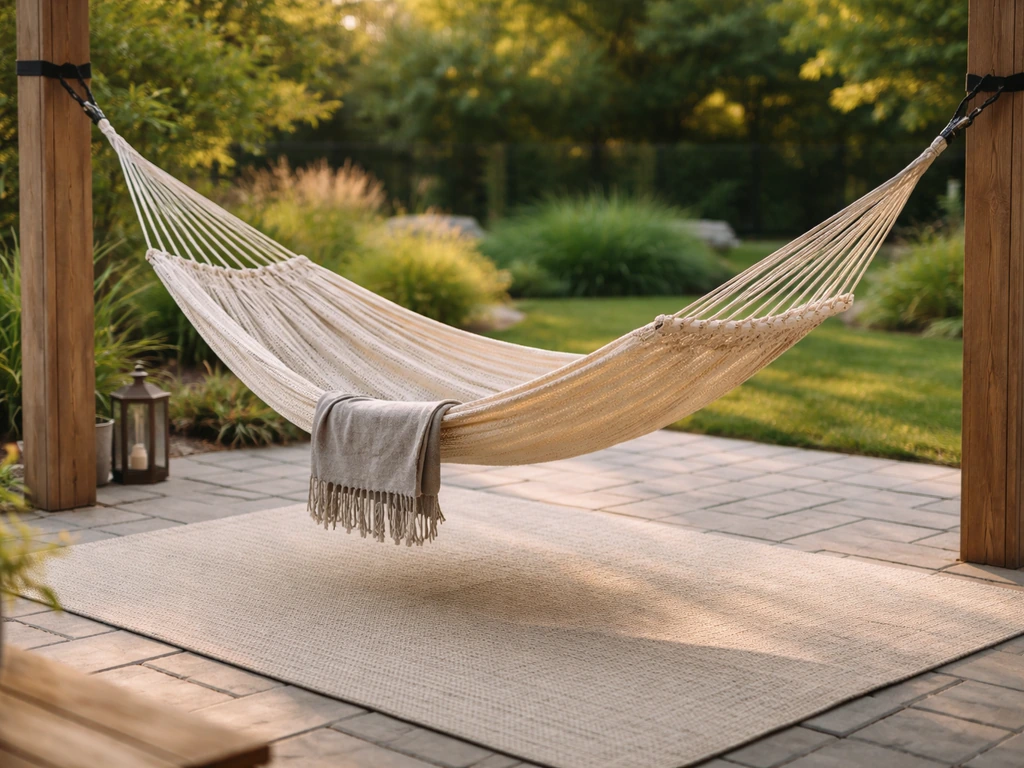
What 'best patio hammock' actually means for a real patio
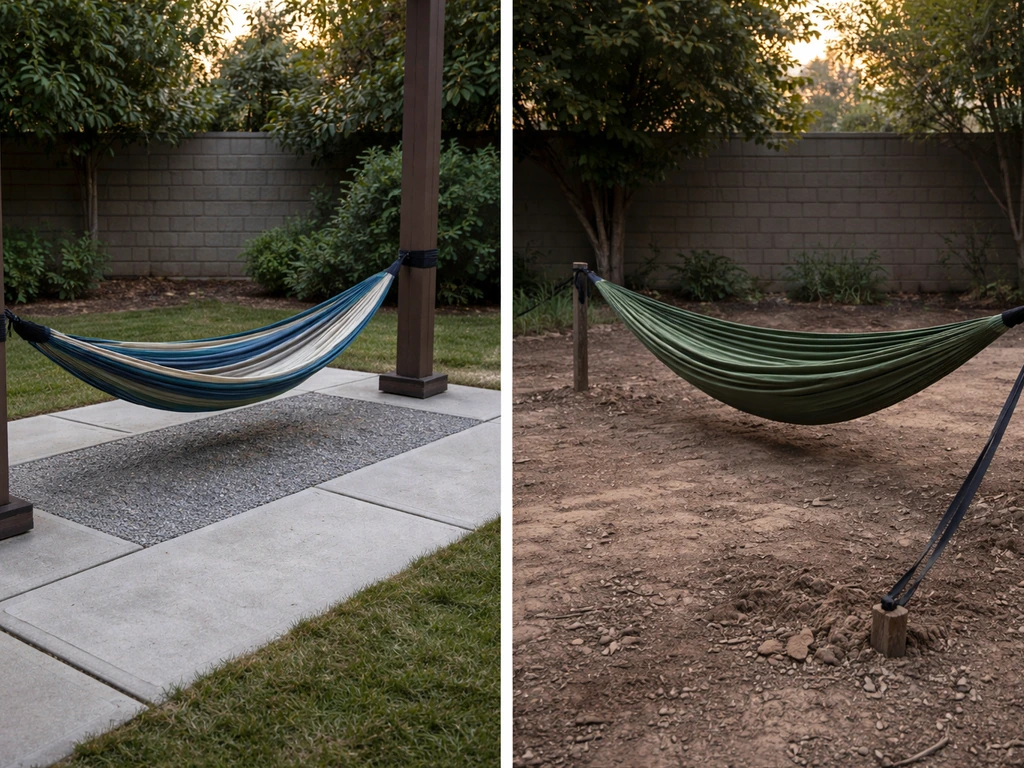
A patio hammock is different from a camping hammock or a backyard tree setup. Your patio is probably a defined, often smaller footprint, maybe concrete, composite decking, or pavers, with fixed furniture, limited overhead clearance, and walls or railings that restrict where you can attach things. That context changes everything about what 'best' looks like.
The best patio hammock for you needs to fit your actual space, attach safely to whatever mounting points you have (or come with its own stand), hold up against sun, rain, and humidity without rotting or fading, and be genuinely easy to get into and out of. Lounging comfort, fabric breathability, and weight capacity all matter too, but none of that helps if the hammock tips, sags to the ground, or mildews after one rainy month.
It is also worth noting that patio hammocks share some DNA with patio swings and gliders, all are relaxation-focused, space-sensitive outdoor furniture. If you want an adjacent, different style of lounging furniture, the best outdoor patio glider is a good comparison point since hammocks, swings, and gliders all target the same relaxation-focused, space-sensitive patio needs. The difference is that hammocks require either a dedicated frame stand or two fixed mounting points, which means your first job before shopping is always measuring your space and figuring out your attachment situation.
Measure your space before you buy anything
Hammock geometry is the part most people skip, and it is the most common reason a new hammock either drags on the ground or pulls its mounting points out of the wall. You need to think about three numbers: hanging distance, hanging height, and ground clearance.
Hanging distance: how far apart your anchor points need to be
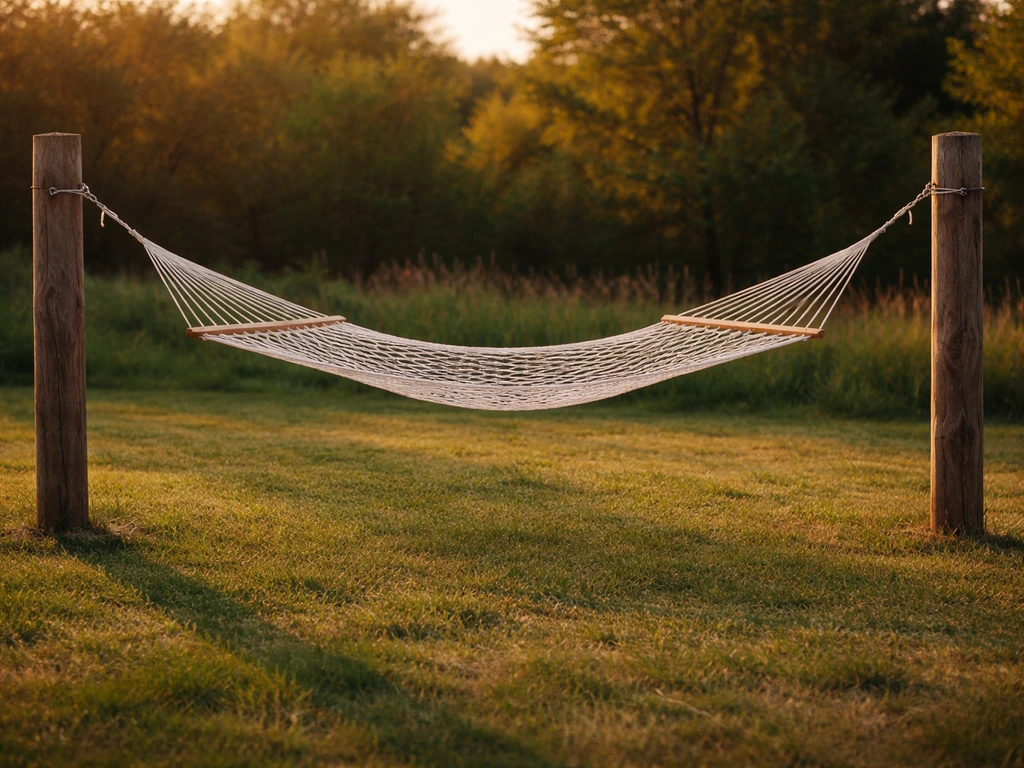
For a standard two-person hammock, you want roughly 13 to 15 feet between your two suspension points. That number shifts slightly depending on whether your hammock has spreader bars (which hold the fabric flat and wide) or is a gathered-end style (which sags into a cocoon shape). Spreader bar hammocks need more horizontal distance to hang correctly without drooping too low. Gathered-end hammocks are more forgiving but need adequate sag to be comfortable, if you pull them too tight, they feel like lying on a board.
Hanging height and ground clearance
Your anchor points (hooks, hardware, or stand attachment points) should be set so the empty hammock bottom sits about 16 to 20 inches off the ground. That gives you a comfortable seat height and lets you get in and out without dropping or climbing. A useful cross-check: aim for 18 to 24 inches between the hammock's lowest point and the ground when it is empty. When you add body weight, it will sag a few more inches, and that buffer keeps it from dragging.
The angle of your hanging straps or chains matters for comfort too. REI recommends aiming for roughly a 30-degree strap angle from horizontal. Too flat and the hammock goes rigid; too steep and it sags too low and puts excessive load on your anchors. For wall or post mounts, NPS guidance and most manufacturers suggest setting hardware at about 80 inches (roughly 6.5 feet) off the ground as a starting reference, then adjusting based on your specific hammock length.
Quick measuring checklist
- Measure the distance between your two posts, beams, or potential anchor points (target: 13–15 ft for most full-size hammocks)
- Check overhead clearance if you have a covered patio roof (you need enough height above the anchors for the hardware and straps)
- Mark where 80 inches off the ground falls on each post or wall—that is your approximate anchor height starting point
- Measure the distance from that height to the ground (should be at least 18–24 inches of clearance to the hammock bottom when hanging empty)
- If using a stand, check the stand's listed span against your patio's available footprint, including at least 2–3 feet of buffer on each end
Choose your hammock type: stand vs. hanging, and style tradeoffs
There are two main setups for patio hammocks: freestanding (stand) and hung (from posts, beams, or wall hardware). Within those, you choose between spreader bar styles and gathered-end styles. Each combination has real tradeoffs.
| Type | Best For | Space Needed | Weight Capacity Range | Main Tradeoff |
|---|---|---|---|---|
| Freestanding stand + spreader bar | Patios without structural anchor points; easy repositioning | ~15 ft long x 5 ft wide footprint | 450 lbs (most popular tier) | Takes up more floor space; heavier to move (stands often ~45 lbs) |
| Freestanding stand + gathered-end | Cocooning comfort; single-person lounging | ~13 ft long x 4 ft wide footprint | 450 lbs | Less entry/exit ease than spreader bar styles |
| Hung from posts/beams, spreader bar | Covered patios with structural columns 13–15 ft apart | Minimal footprint; just two anchor points | 450 lbs (hardware dependent) | Requires confirmed load-bearing attachment points |
| Hung from posts/beams, gathered-end | Porches with solid beams; classic rope hammock feel | 13–15 ft between anchors | 450 lbs (hardware dependent) | Harder to get in and out; swings more |
| Hammock chair (with stand) | Small patios, balconies, tight corners | ~4 ft diameter footprint | 285–500 lbs depending on stand | Single-person only; less full-body stretch |
If you are not 100 percent sure your patio posts or beams are load-bearing, go with a stand. Decorative patio structures, pergola posts that are not anchored into footings, and tree branches are not safe anchor points for a hammock carrying 200 to 450 lbs of dynamic load. A stand-only setup eliminates that risk entirely and gives you flexibility to reposition as your layout changes, something you cannot do with a porch swing or glider once it is installed. If you are specifically shopping for a patio swing instead of a hammock, compare swing styles and load ratings to your available clearance and mounting options.
Hammock chairs are worth calling out separately for balcony or small patio situations. LA SIESTA and similar brands make compact galvanized steel chair stands rated to 285 lbs that fit comfortably in a 4-foot square footprint. If your patio is under 10 feet wide or you just want a corner relaxation spot, a hammock chair with its own stand is a smarter buy than a full hammock you cannot properly hang.
Materials and comfort: what the fabric and frame should actually be
Fabric options compared
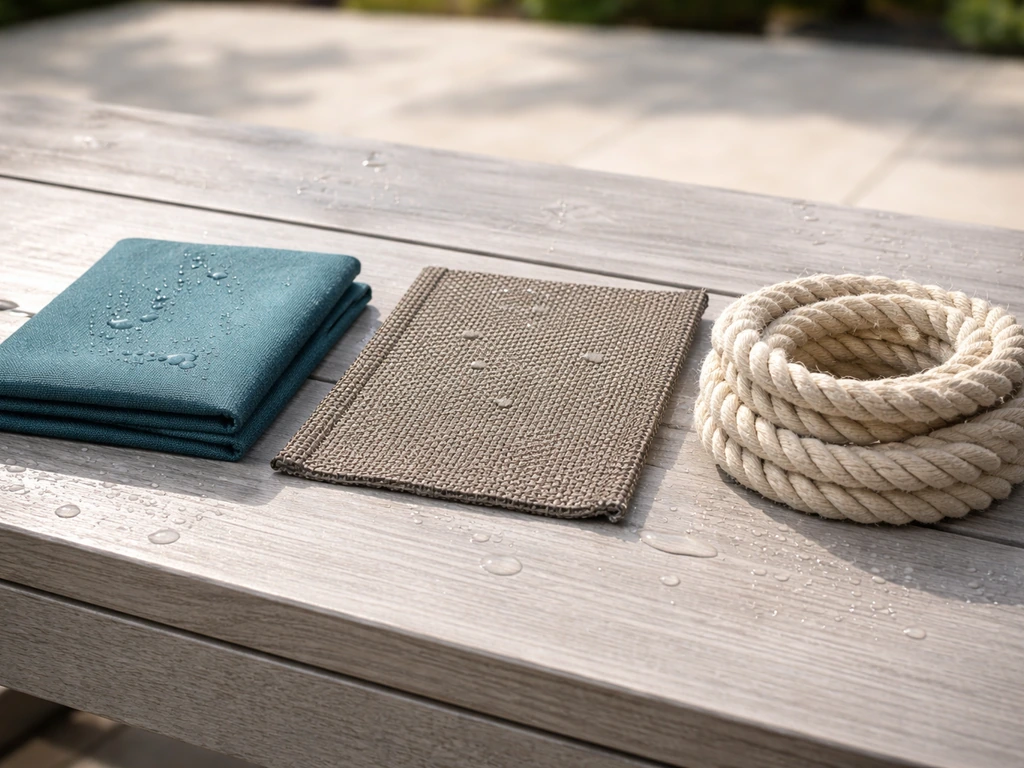
Outdoor patio use narrows your fabric choices pretty quickly. You want something that resists UV fade, handles moisture without rotting, and is comfortable against bare skin on warm days. Here is how the main options stack up.
| Fabric | UV Resistance | Moisture/Mildew Resistance | Breathability | Feel Against Skin | Best For |
|---|---|---|---|---|---|
| Solution-dyed acrylic (e.g., Sunbrella, Outdura) | Excellent (1,500+ hours rated) | Excellent; mold/mildew resistant by design | Good | Soft, similar to canvas | Year-round patio use in humid or sunny climates |
| Polyester (standard) | Good with UV coating | Moderate; needs drying after rain | Moderate | Smooth, slightly stiff | Covered patios with less sun/rain exposure |
| Textilene (PVC-coated mesh) | Good | Excellent; dries instantly | Excellent | Grid texture; cool but firm | Hot, humid patios; no-cushion preference |
| Cotton rope/canvas | Poor without treatment | Poor; absorbs moisture, mildews easily | Excellent | Soft and classic | Covered, dry patios only; needs storage in wet seasons |
| Nylon (camping style) | Moderate | Good; dries fast | Moderate | Slick, not ideal for lounging | Occasional use; not ideal as primary patio furniture |
Solution-dyed acrylic is the clear winner for most patios. Sunbrella and Outdura are the two most widely available brands, and both are rated for UV fade resistance over 1,500 hours, carry mold and mildew resistant certifications, and do not shrink or stretch after washing. The color runs through the fiber rather than sitting on the surface, which is why solution-dyed fabrics hold up so much better than dyed-after-weaving alternatives.
That said, even solution-dyed acrylic can develop mildew growth if dirt or organic material embeds in the weave and the fabric stays wet in humid conditions. The fabric itself resists mildew, but the grime sitting on it does not. That is why cleaning routine matters even with premium fabrics.
Frame and stand materials
For stands, steel is heavier (around 45 lbs for a full arc stand) but more stable on windy days, especially if you leave the hammock out overnight. Hardwood arc stands look better and are lighter, but need seasonal sealing and annual inspection for cracks or splits. Powder-coated steel is the most maintenance-friendly option for most patio situations. Check that any stand you buy is rated to at least 450 lbs, which is the common safety-rated weight limit across major brands including Lazy Daze, Hatteras, and Outer Banks Hammocks.
Weight capacity: what the numbers mean
The 450 lb capacity you see on most quality patio hammock stands is the maximum static load. Dynamic load (jumping in, swinging, two people shifting weight) can spike well above that momentarily, which is why manufacturers set the rated limit conservatively. For a single adult, any 450 lb rated system is fine. For two adults, stick to products explicitly marketed as two-person with a 450 lb stand limit and a fabric rated to match. Hammock chairs have their own ratings: compact chair stands from brands like LA SIESTA cap out around 285 lbs, while larger chair setups can reach 500 lbs per Home Depot hammock chair manual specs.
Weatherproofing and durability: rain, UV, and mildew
Patio hammocks live outdoors, and that means they take constant punishment from sun, humidity, rain, and whatever pollen or debris falls on them. The weatherproofing story breaks down into three threats: UV degradation, moisture damage, and mildew growth.
UV and fade
UV breakdown is cumulative and irreversible. A fabric rated to 1,500 hours of UV resistance (like Outdura and Sunbrella solution-dyed acrylics) will hold its color and structural integrity significantly longer than budget polyester. Budget fabrics often fade visibly within a single season on a south-facing patio. If your patio gets four or more hours of direct sun daily, solution-dyed acrylic or a UV-treated Textilene is the minimum you should consider.
Rain and moisture
Textilene mesh hammocks (PVC-coated polyester grid) dry fastest after rain, minutes rather than hours. Solution-dyed acrylic is water-repellent but not waterproof; it will shed light rain but needs time to dry after a heavy downpour. Cotton rope and canvas absorb water and take a long time to dry, making them the worst choice for an uncovered patio in a humid climate. If your patio is uncovered and you get regular afternoon thunderstorms, either buy a Textilene bed, use a hammock cover, or plan to take the fabric inside after each use.
Mildew and stand placement
Stand placement matters as much as fabric choice. A stand placed in a persistently damp spot (under a dripping overhang, in a low-drainage corner, or next to a water feature) will develop mildew on the metal or wood, and eventually rot or split wood components. Nags Head Hammocks specifically warns against this in their care documentation. Keep stands on well-drained surfaces and inspect the feet or base pads after wet seasons.
Setup in minutes: installation tips and safety checks
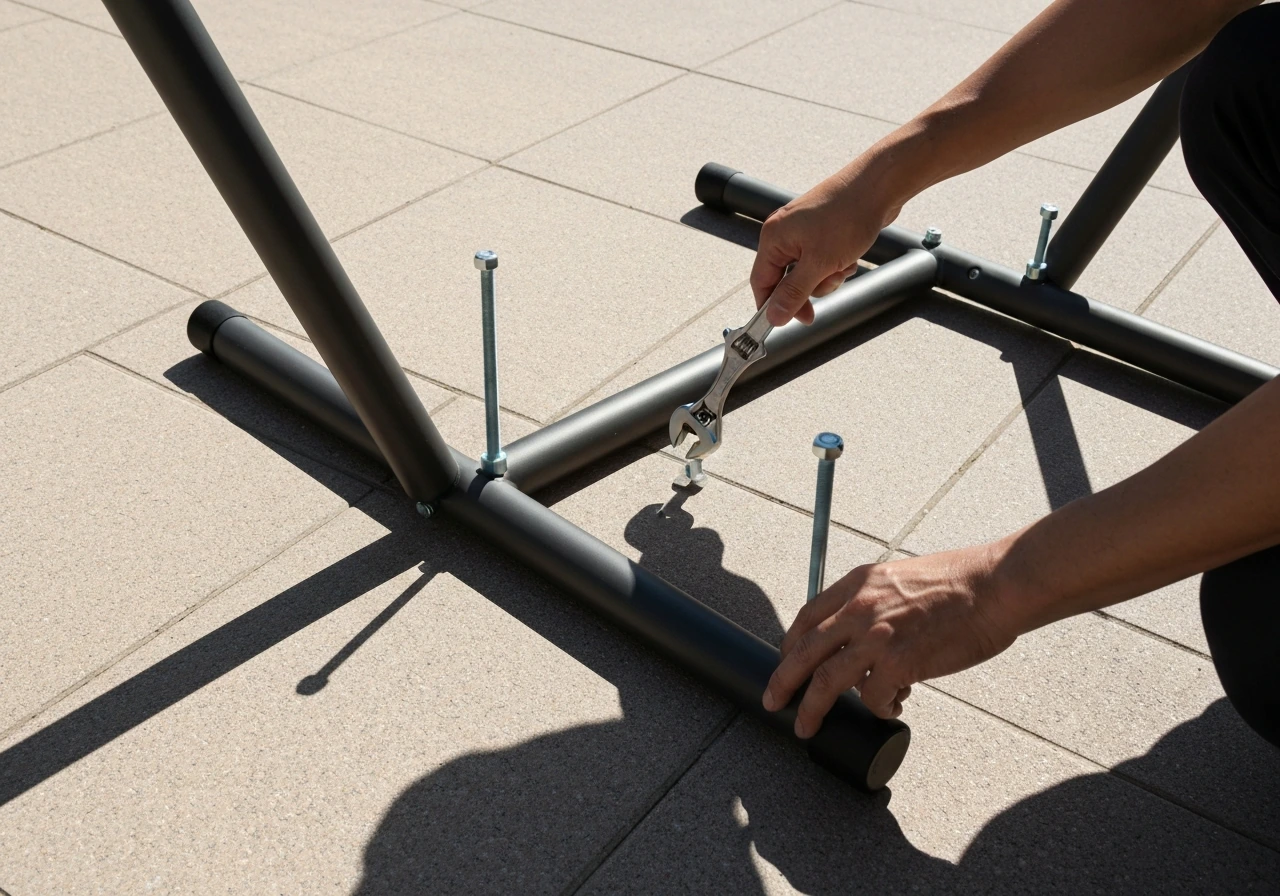
Most hammock stands assemble in 15 to 30 minutes with basic tools (often none at all, just hand-tightening bolts). Here is the sequence that catches the most common mistakes.
- Assemble the stand on a flat surface before placing it where you want it—this makes it easier to level later
- Set the stand so the center of the hammock will sit roughly 16–20 inches off the ground when empty, and confirm there is at least 18–24 inches of clearance at the lowest hanging point
- Attach the hammock end loops or chains to the stand hooks, then step back and check that the hammock sags evenly on both sides—uneven sag usually means one end hook is set at a different height
- For wall or post mounts, use hardware rated to the hammock's maximum load, confirm the posts or beams are structural (not decorative), and set anchors at approximately 80 inches off the ground as a starting height
- Check the strap or chain angle: aim for roughly 30 degrees from horizontal—any flatter and the hammock goes board-stiff, any steeper and it will sag too low and overload the anchors
- Do a solo test sit before letting anyone else use it: lower yourself in slowly, check for any movement in anchor points or stand feet, and adjust chain or strap length one link at a time until the height feels right
- Recheck all bolts, hooks, and hardware connections after the first week of use—new stands often need a light retightening after initial load cycling
For balcony setups, LA SIESTA recommends verifying minimum clearance distances before installing a hammock chair stand, balcony railings and walls can restrict safe swing radius. If you are on a balcony above the first floor, make sure the stand feet are on a solid floor surface (not just decking boards over a gap) and confirm your balcony's load rating can handle the stand weight plus the hammock occupants.
How to maintain and extend the life of your patio hammock
Routine cleaning
For solution-dyed acrylic and polyester fabrics, brush off dry debris first (or vacuum gently), then wash with mild soap and water. For mildew spots, a solution of up to 1 cup of bleach per gallon of water is safe for Sunbrella and most solution-dyed acrylics, test a small spot first, let it sit for 15 minutes, then rinse thoroughly. The key point: rinse until all soap and bleach residue is completely gone, because residue left in the weave attracts dirt faster and can degrade the fabric over time.
Rope hammocks need the most attention. After washing, Hatteras Hammocks specifically instructs letting rope hammocks air-dry completely while lying flat, not hanging. Hanging a wet rope hammock allows it to stretch unevenly and deform over time, which leads to sagging and pressure points that accelerate wear.
Seasonal storage
If you live somewhere with hard winters or a wet rainy season, take the fabric bed off the stand and store it indoors in a dry area. Even the best outdoor fabrics last significantly longer when they are not sitting in snow, freezing rain, or six weeks of gray drizzle. Nags Head Hammocks' care guide makes this a standard recommendation. For the stand itself, wipe down any steel components and apply a light coat of rust-inhibiting spray to exposed hardware before storage, especially around bolts and end caps where water pools.
What to inspect every season
- Check all metal hardware (hooks, S-hooks, chains, bolts) for rust or corrosion—replace any pitted or weakened hardware immediately
- Inspect fabric end loops or rope ties for fraying, cracking, or UV brittleness
- Check wooden stand components for cracks, splits, or soft spots (signs of rot)—pay special attention to any joint where wood meets metal
- Test stand foot caps or rubber pads for cracking; damaged foot caps can let moisture into the stand base and accelerate rust
- Tighten all stand bolts at the start of each season, since thermal expansion and contraction through winter loosens hardware over time
- Look for uneven sag in the fabric bed—a hammock that dips more on one side often means the end loops are stretching unevenly or one suspension point has shifted
Top picks by patio scenario: what to actually buy
Rather than giving you a single 'best' pick, here is a scenario-based breakdown, because the right hammock for a 10-foot balcony is completely different from the right one for a 20-foot covered porch.
Scenario 1: Open patio with no structural anchor points (most common)
Go with a freestanding arc stand rated to 450 lbs paired with a solution-dyed acrylic or Textilene fabric bed. The Lazy Daze Hammocks 13-foot hardwood arc stand is a strong match here, it is explicitly marketed as two-person, rated to 450 lbs, and compatible with both spreader bar and gathered-end hammocks. Pair it with a Sunbrella or Outdura fabric hammock for the best UV and mildew resistance. Total footprint: roughly 15 feet long by 5 feet wide, so confirm you have that clearance before ordering.
Scenario 2: Covered porch with two solid structural columns 13–15 feet apart
This is the ideal hang-it scenario. Use heavy-duty eye bolts rated to your hammock's load limit, installed into the structural wood of the posts (not decorative trim or fascia). A gathered-end rope or Textilene hammock works beautifully here, the covered roof protects it from most rain, which opens up cotton rope as a viable option if you want that classic look. Set hardware at 80 inches off the ground, target 30 degrees of strap angle, and aim for 18 to 24 inches of clearance to the hammock bottom. No stand needed, lower cost, and the hang feels more authentic.
Scenario 3: Small patio or balcony under 12 feet wide
A full hammock is not going to fit safely. A hammock chair with a compact freestanding stand is the right move. LA SIESTA's Fiji galvanized steel stand handles a hammock chair up to 285 lbs in a tight footprint. If you need higher capacity for a larger person, look for hammock chair setups that use bigger base frames, Home Depot stocks hammock chair systems rated up to 500 lbs. The chair-plus-stand combo fits in roughly a 4-foot-diameter circle, making it workable even on apartment balconies.
Scenario 4: Hot, sunny, uncovered patio where comfort and cooling matter most
Go with a Textilene mesh bed on a powder-coated steel stand. Textilene's open grid weave allows airflow underneath you, dries in minutes after a rain shower, and never traps heat the way solid canvas does. It is not as luxurious feeling as acrylic canvas, but on a 90-degree afternoon, that breathability matters more than softness. Pair it with a stand that has at least 1,500-hour UV-rated hardware coatings, and you will get reliable performance through multiple hot seasons.
What to do next
Start by measuring your patio using the checklist above, distance between potential anchor points and available footprint length are the two numbers that determine which type you can even consider. Then match your scenario to the category above. If you are also considering other relaxation-focused patio furniture, patio swings and gliders are worth comparing for situations where you want side-by-side seating or a gentler rocking motion rather than the full hammock experience.
If you're shopping for the best patio gliders, compare style, weight capacity, and how the frame handles sun and moisture patio swings and gliders. If you want a gentler way to swing outdoors, look for the best outdoor patio swings for your space and weight needs patio swings and gliders. If you are choosing between hammock options and the best patio swing for your space, compare load ratings, swing radius, and how it mounts to posts or beams.
But if you want true horizontal lounging and that floating sensation, nothing in the patio furniture category touches a properly hung hammock.
FAQ
If my patio is shorter than 13 feet, can I still buy the best patio hammock size?
Measure your actual clear span, then add slack for setup. If you are near the 13 to 15 foot target, choose a gathered-end hammock (more forgiving to sag) or plan on slightly lower anchor height to preserve ground clearance without pulling anchors too hard.
What does the stand’s 450 lb capacity really mean for real use?
Do not treat the 450 lb rating as a guarantee for jumping. Use the rated system for intended use, keep at least two people out at once unless the product is explicitly marketed for two-person, and avoid rocking vigorously because dynamic loading spikes higher than static limits.
How can I tell whether my porch posts or beam are strong enough for a hanging patio hammock?
If you do not have known structural posts or a reinforced beam, freestanding is the safer choice. If you do have structural framing, use hardware rated for the hammock load (eye bolts, straps, or rated hardware kits), fastened into structure, not decorative boards or fascia.
Why does my hammock hang too low or start sagging after a few weeks?
Target keeping the lowest hammock point above the ground when empty (18 to 24 inches as a cross-check). If it is already close when empty, avoid “tight” hanging because body weight increases sag and turns a comfortable seat into a drag point.
What should I do if my solution-dyed acrylic patio hammock develops mildew stains?
If mildew appears, first remove surface grime with a gentle wash, then disinfect only if the fabric manufacturer allows it. Also improve drying by choosing a drier location and keeping the fabric off the wettest area, because grime trapped in the weave feeds mildew even on mildew-resistant acrylic.
Can I hang-dry a rope patio hammock after cleaning?
For rope hammocks, dry flat after washing. Hanging wet rope can stretch unevenly, leading to pressure points and premature wear, and it can also change the sag geometry you measured during installation.
Are freestanding arc stands still safe in coastal air, high humidity, or rainy climates?
Powder-coated steel stands usually handle coastal humidity better than bare or lightly protected metal. Even so, check and rinse accumulated dirt and pollen, then inspect base pads and weld points after wet seasons, especially if the stand sits near sprinklers or drainage trouble spots.
How do I choose fabric if my patio is uncovered or gets intense afternoon sun?
Pick your fabric based on sun exposure and coverage. If you get 4 or more hours of direct sun daily or your patio is uncovered, choose solution-dyed acrylic or Textilene and plan to use a cover during long off-season storage to reduce UV and dirt buildup.
How much clearance do I need around the stand so the hammock does not hit furniture or walls?
Do not count only overall “footprint length,” include the swing arc and the stand’s placement tolerance. Leave extra room behind the feet for leveling, and keep clearance from walls, railings, and nearby furniture so your body motion does not hit fixed objects when you recline.
Should I leave a patio hammock assembled through winter?
If you have hard winters, remove the fabric bed and store it dry indoors. For the stand, wipe off debris, dry fully before storage, and treat exposed hardware with a light rust-inhibiting spray, then inspect bolts before the next season.
How do I test a newly installed hanging patio hammock for safe sag and stability?
Do a quick weight and movement test with one person first. Sit gently in the center, then shift side to side, and re-check that the hammock still keeps your bottom off the ground at the correct sag. If you feel bottoming out, adjust angle or re-evaluate anchor spacing before using it normally.
Next Articles
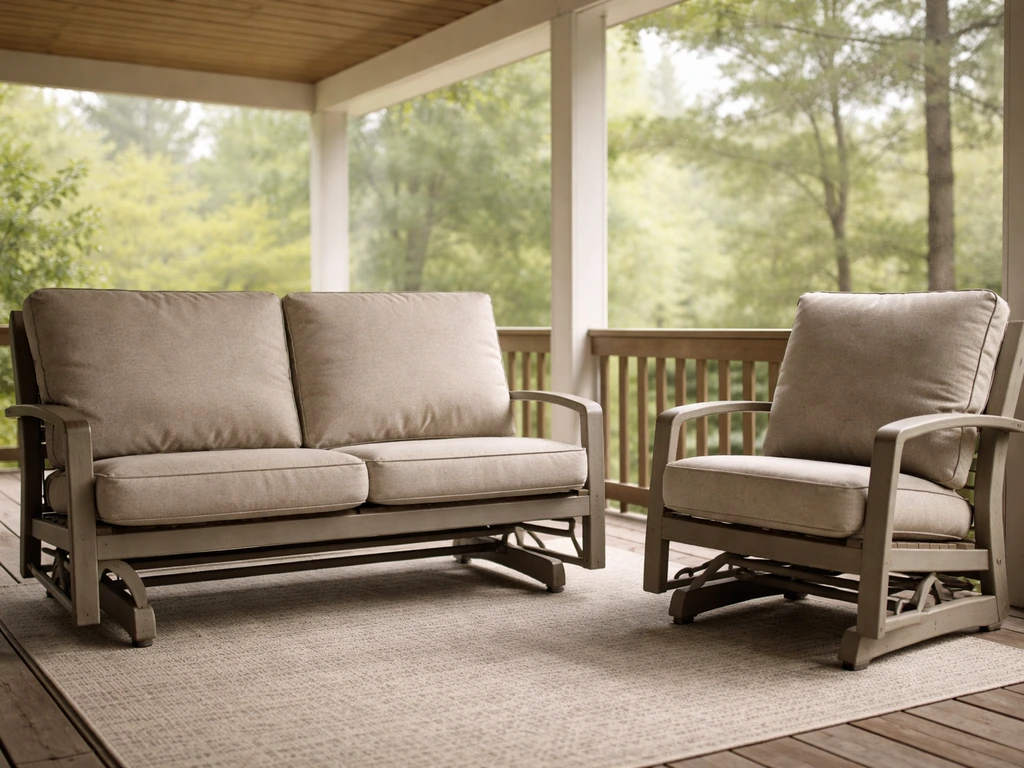
Best Patio Gliders: Buyer Guide and Top Picks by Use Case
Buyer guide to pick the best patio gliders by comfort, materials, size, weight capacity, and weather durability.
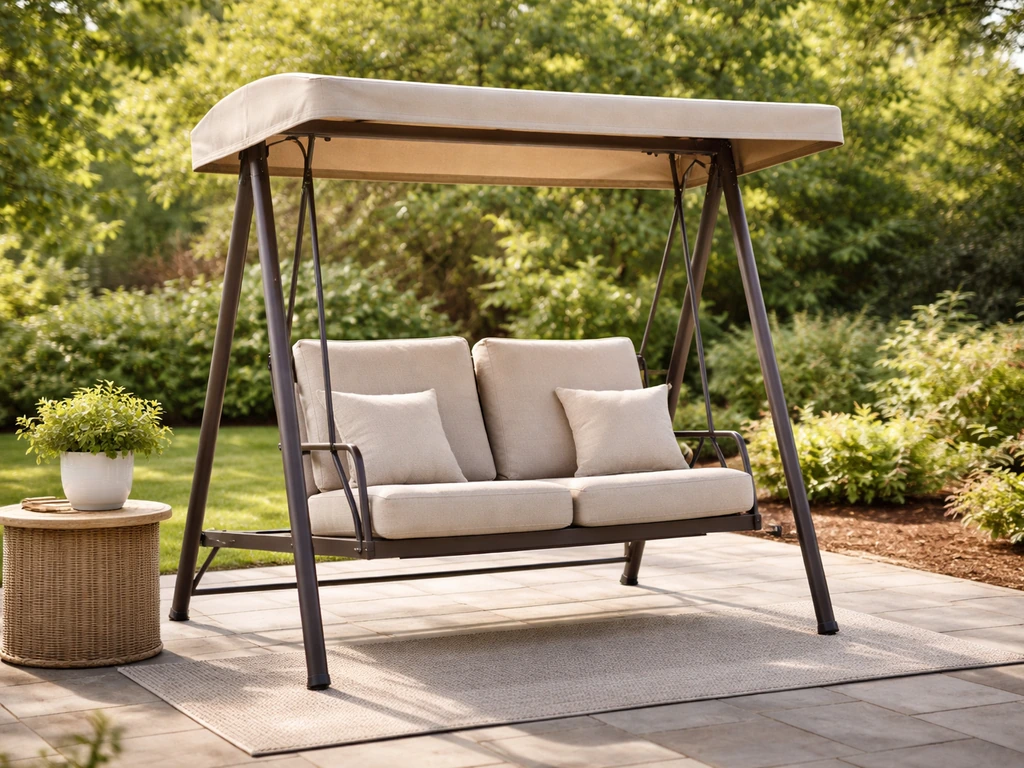
Best Outdoor Patio Swings: How to Choose and Buy
Choose the best outdoor patio swings fast with size, materials, comfort, weatherproofing, safety, and value by style.
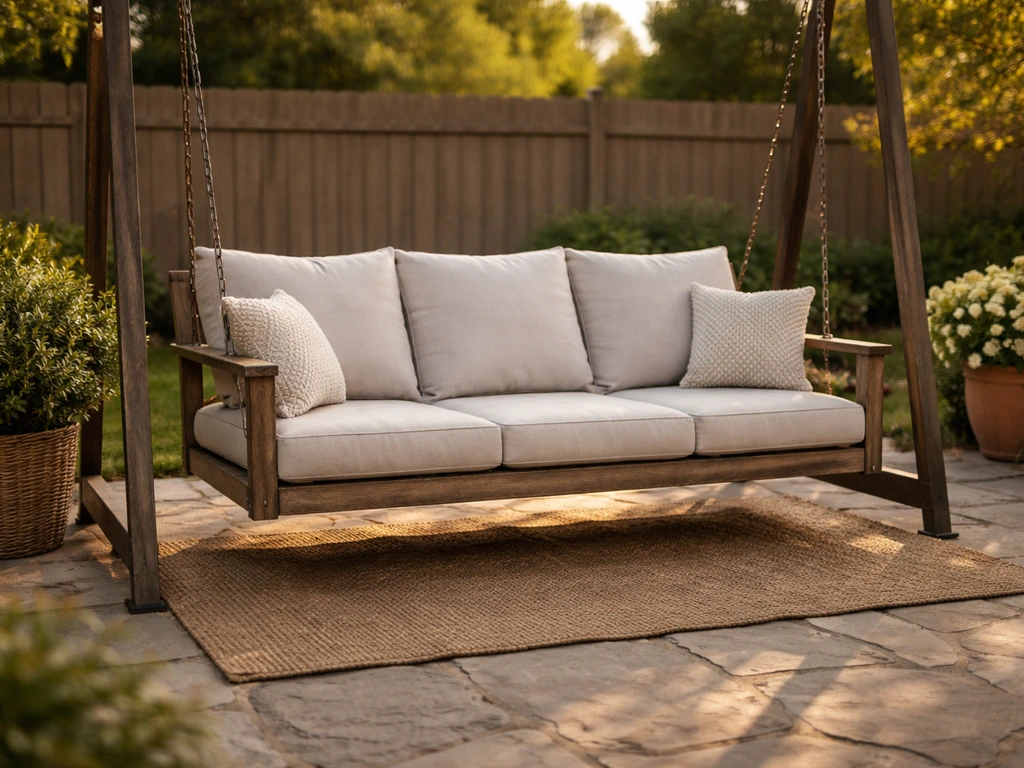
Best Patio Swing Guide: Choose the Right Swing and Set
Pick the best patio swing or swing set with comfort, size, durability, materials, and maintenance tips for every budget.