
The best outdoor patio swing right now depends on three things: how much space you actually have, how many people will use it, and what your local weather throws at it. For most people, a powder-coated steel or POLYWOOD frame swing with a Sunbrella fabric sling or cushion is the sweet spot. It handles rain, UV, and real-world weight loads without demanding much maintenance. If you want a specific starting point, a 2-person freestanding swing with a steel frame, UV-stable sling fabric, and a 400–600 lb weight capacity will handle the majority of patio setups and budgets. The rest of this guide gets into the details so you can match your specific situation to the right type, size, and material.
Best Outdoor Patio Swings: How to Choose and Buy
Lark Perry
3 May 2026
How to Choose the Right Swing for Your Space, Weight, and Use
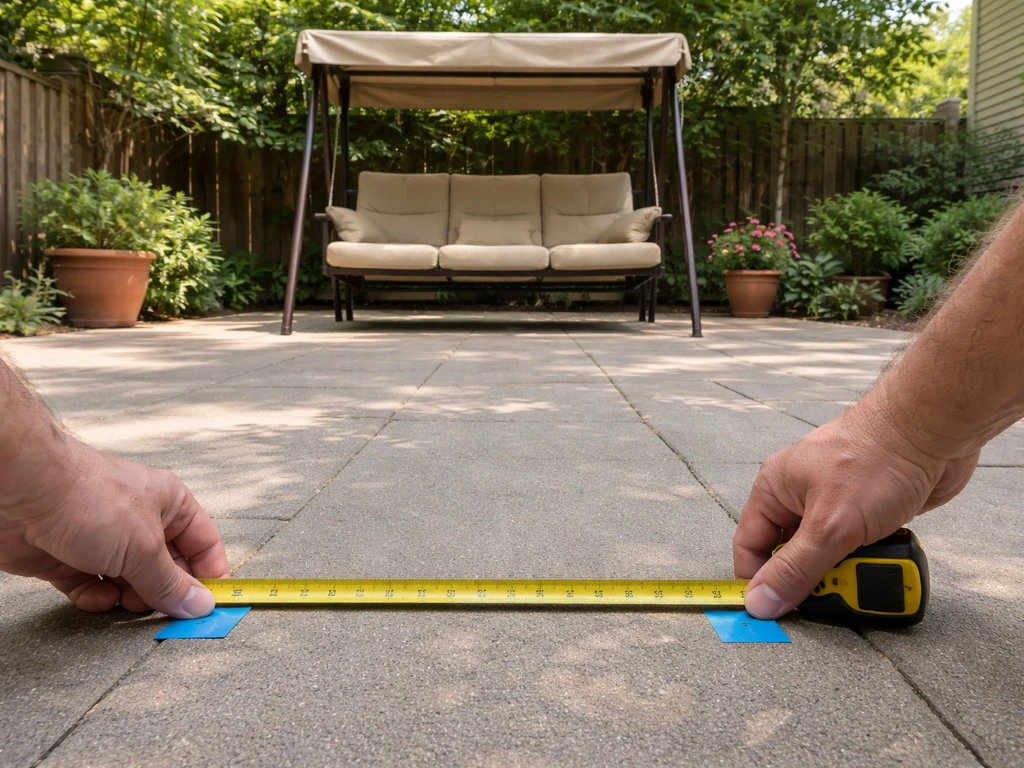
Before you buy anything, measure your patio. Swings need more room than most people expect. A good rule of thumb: plan for at least 3 to 4 feet of clearance in front and behind the swing for safe movement, and at least 12 to 14 inches of clearance on each side. If you're hanging a porch swing from a ceiling or beam, you also need 18 inches of clearance behind the swing and 14 to 16 inches on either side. Ignore this and you'll end up with a swing that bumps the wall or clips the railing every time someone pushes off.
Think about who's using it. A solo lounger needs something very different from a swing meant for two adults plus a kid. Most residential swings are rated for 2 to 3 people. POLYWOOD's two-seat swings, for example, are rated at 300 lb per seat, or 600 lb total. That's a reasonable benchmark for a quality swing. If you're buying for heavy-duty use or larger adults, pay close attention to the weight capacity listed in the specs, and treat anything under 400 lb total with skepticism.
Also think about how you'll use it. A hanging porch swing anchored to a beam is a fundamentally different product from a freestanding swing with its own A-frame stand. If you rent, or if you move regularly, a freestanding swing gives you flexibility. If you have a permanent covered porch with structural beams, hanging swings give a cleaner look and often feel more authentic. And if you're drawn to the cocoon feel of an egg chair swing, those have their own space and anchor requirements.
Frame, Materials, and Build Quality: Wood vs Metal vs Resin
The frame is what makes or breaks an outdoor swing over time. Here's how the three main materials actually perform in real patio conditions.
| Material | Durability | Maintenance Level | Best For | Watch Out For |
|---|---|---|---|---|
| Wood (cedar, teak, pine) | Good to excellent (depends on species) | High — needs sealing/staining every 1–2 years | Classic porch look, covered patios | Rot, cracking if left unsealed or in wet climates |
| Powder-coated steel | Very good — heavy and stable | Low — rinse occasionally | Freestanding swings, high wind areas | Can rust at chips or scratches if coating is damaged |
| Aluminum | Excellent — won't rust | Very low — leave out year-round | Coastal, humid, rainy climates | Lighter, can feel less sturdy than steel |
| HDPE / POLYWOOD resin lumber | Excellent — 20-year warranty against rot, crack, chip | Very low — soap and water | All climates, especially wet or salty air | Higher upfront cost |
| Resin wicker over metal frame | Good — UV-engineered wicker resists fading | Low to moderate | Decorative styles, covered patios | Wicker weave can loosen over time if low quality |
POLYWOOD is worth calling out specifically. Their lumber is made from recycled HDPE plastic and comes with a 20-year residential warranty. They explicitly state it won't splinter, crack, chip, peel, or rot under normal use. That's a real differentiator if you live somewhere with hard winters, constant rain, or salt air. POLYWOOD also states their aluminum furniture can be left outside year-round due to high corrosion resistance, which matters if you hate hauling furniture in every fall.
Wood swings look beautiful, especially cedar and teak, but they require annual maintenance. Skip the sealing one year in a wet climate and you'll start seeing cracks and graying within a season or two. That's not a dealbreaker if you enjoy the upkeep, but be honest with yourself about whether you'll do it.
Seat, Suspension, and Comfort Features
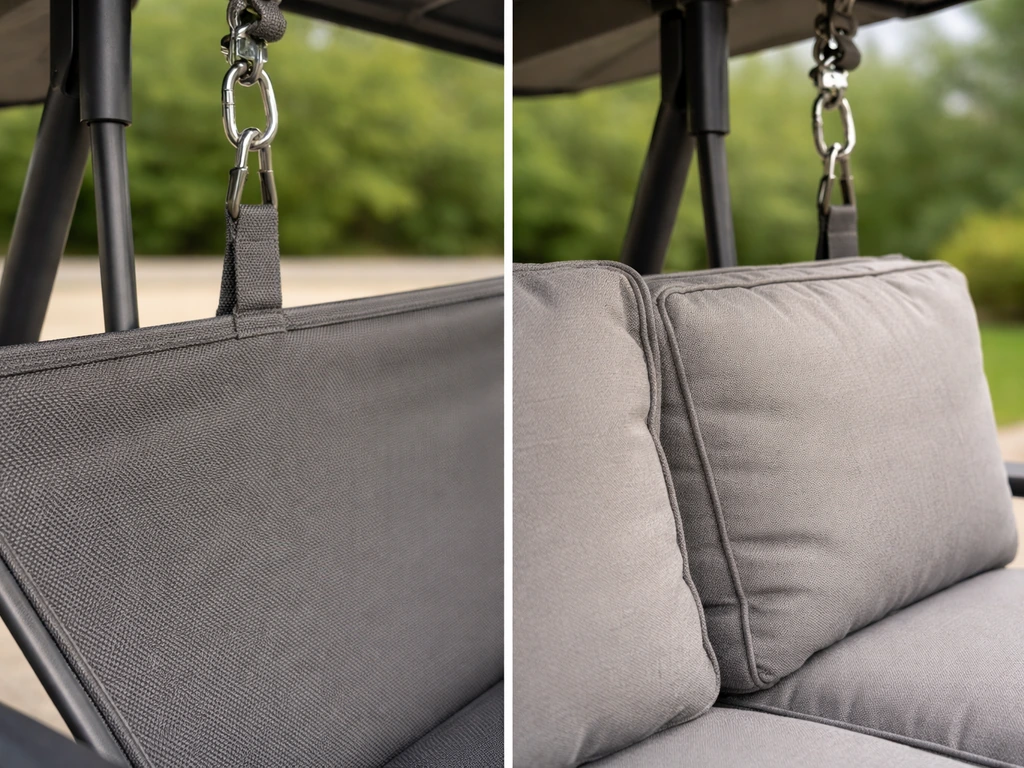
Comfort comes down to three things: the seat material, the suspension system, and whether there's a recline option. Each affects how the swing feels and how long it lasts.
Sling vs Cushion Seats
Sling seats (a taut fabric stretched across the frame) are the lower-maintenance option. They dry fast, don't absorb water, and resist mildew better than cushions. Sunbrella sling fabrics are the gold standard here. They resist weather, mold, mildew, UV, and stains, and come with a 5-year limited warranty. Sunbrella provides a 5-year limited warranty for Sunbrella fabrics, including sling and upholstery materials, according to its warranty page blank" rel="noopener noreferrer">come with a 5-year limited warranty. Cleaning is straightforward: rinse with clean water and air-dry. For mold or mildew, a diluted bleach solution works. POLYWOOD’s sling care guidance calls for 1 tablespoon of dish soap plus 2 tablespoons of bleach per gallon of water, then rinsing thoroughly and air-drying blank" rel="noopener noreferrer">diluted bleach solution works. POLYWOOD's own sling care guidance calls for 1 tablespoon dish soap plus 2 tablespoons bleach per gallon of water, followed by a thorough rinse and air-dry. Slings do feel firmer than cushions, which some people love and others find tiring after an hour.
Cushion seats feel softer and more like indoor furniture, which is why a lot of people prefer them. The tradeoff is maintenance. Even outdoor-rated cushions need to come inside or go under a cover during prolonged rain. Look for cushions filled with quick-dry foam and covered in Sunbrella or equivalent UV-rated fabric. Avoid polyester fill or non-rated fabric covers if your swing will actually live outside.
Suspension and Recline
Most patio swings use chains or ropes for suspension. If your swing uses rope, it should be at least 3/4-inch thick. Chains are generally more durable for outdoor use. Some premium swings include spring-loaded hangers that absorb the jerk of the swing motion, which makes a noticeable difference in feel. Egg chair swings and hanging pod chairs often use a single-point suspension with a swivel, which allows 360-degree rotation and a different kind of movement than a traditional back-and-forth swing. Recline options are mostly limited to egg chairs and canopy swings, where you can shift your body position to lie back. Standard 2-person wooden or sling swings don't recline, but if lounging is your goal, look specifically for swings with an angled back or an adjustable canopy for shade.
Style and Size Options
Patio swings aren't one-size-fits-all. Here are the main types and what each is actually good for.
- Standard 2-person porch swing: The classic. Usually 48 to 60 inches wide, designed to hang from a porch ceiling or freestanding A-frame. Good for conversation and light rocking. Works on covered porches, pergolas, or freestanding frames in the yard.
- 3-person or loveseat swing: Wider (typically 60 to 72 inches), higher weight capacity, suits families or people who like extra room. Needs more clearance on all sides.
- Freestanding swing with A-frame stand: Includes the frame, so you don't need a porch or pergola. More portable. Look for frames with a steel or heavy aluminum construction to avoid wobbling.
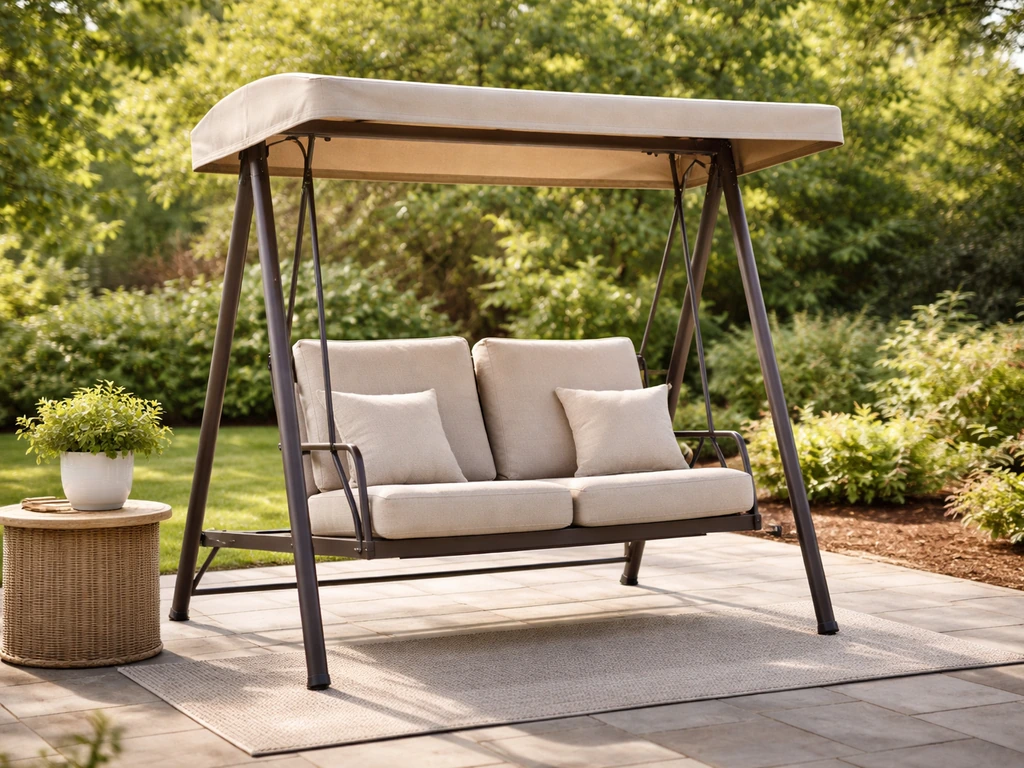
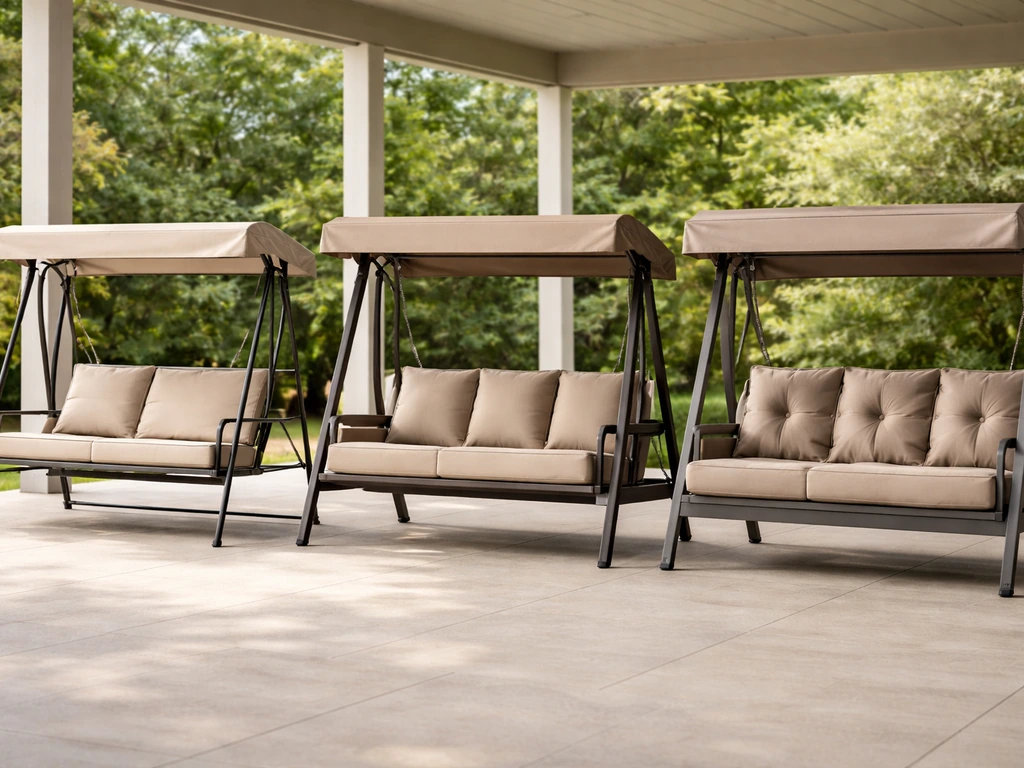
- Canopy swing: A freestanding swing with a built-in fabric canopy for shade. Great for open patios without overhead cover. The canopy fabric is a maintenance point — look for UV-rated or removable canopies.
- Egg chair / hanging pod swing: Single-person cocoon-style chair that hangs from a ceiling hook or its own stand. Very on-trend right now. Takes up less footprint but needs a high-rated single anchor point.
- Patio glider: Looks like a swing but moves on a gliding mechanism rather than hanging chains. Very stable and safe — no chains to adjust, no ceiling needed. Good for smaller spaces. Worth comparing with a traditional swing depending on your setup.
If space is genuinely tight, a glider or a compact egg chair swing are worth considering alongside traditional porch swings. Gliders in particular work well on smaller patios because they don't require the front-and-back clearance of a full hanging swing.
Weather Protection and Maintenance
Outdoor swings fail in predictable ways: rust at the frame, rot at wood joints, UV fading on fabric or resin, and mildew in cushion fills. The good news is that all of these are preventable with the right materials and a little seasonal attention.
Rust and Corrosion
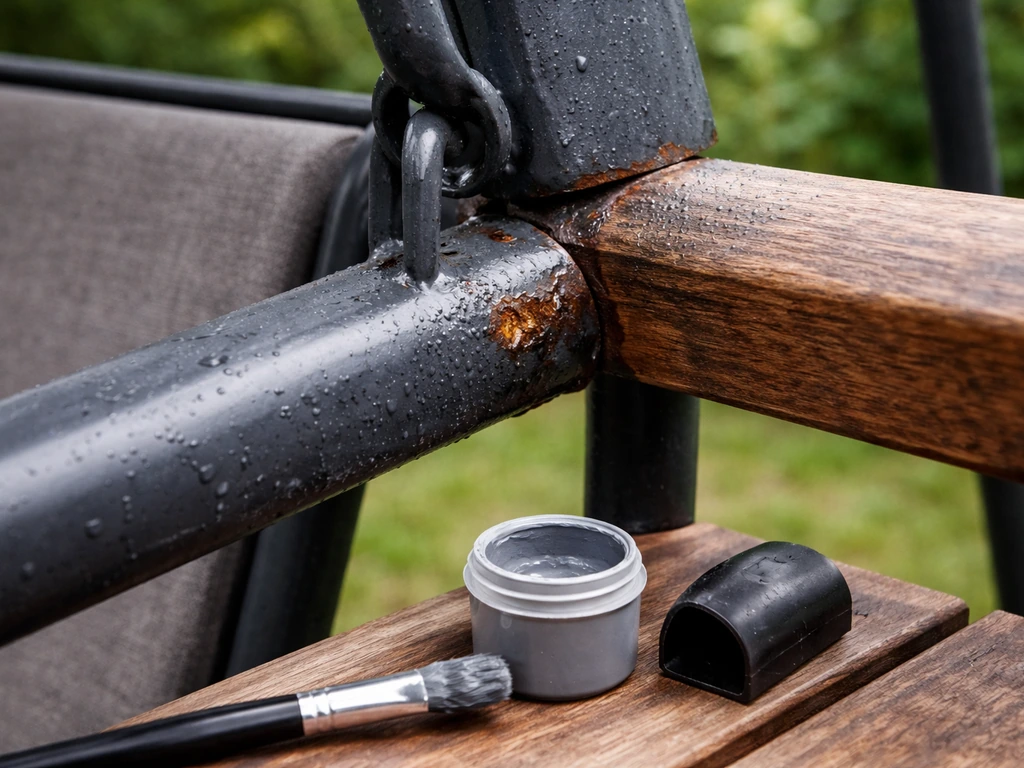
Powder-coated steel is rust-resistant but not rust-proof. Once the coating chips, exposed metal will rust quickly, especially in humid or coastal climates. Touch up chips with metal-rated spray paint immediately. Aluminum frames skip this problem entirely, aluminum doesn't rust, which is why POLYWOOD and similar brands use it for frames meant to live outside year-round. If you live near the ocean or in a perpetually damp climate, aluminum or HDPE frames are genuinely worth the extra cost.
Rot and Wood Degradation
Wood rot happens at joints and end grain first. Teak is naturally rot-resistant and requires less maintenance than cedar or pine, but it costs more. Any wood swing should be sealed before first use and re-sealed every season. Keep cushions off wood during prolonged rain. If you can't cover the swing or bring cushions in during wet stretches, a HDPE lumber or metal swing will give you far less grief.
UV Fading
UV fading is the silent killer of outdoor swing fabric and resin. Even quality materials fade over time. POLYWOOD builds UV stabilizers into their lumber but still notes in their warranty that some color fading is normal after extended sun exposure. Summer Classics backs their N-Dura resin wicker with a 5-year warranty against UV fading, and engineered UV resistance into the material rather than relying on a surface coating. For fabrics, Sunbrella is the benchmark, it resists UV light as part of its core construction and carries a 5-year warranty. If your swing lives in full sun, that warranty and that material spec should matter to your buying decision.
Covers and Seasonal Care
A fitted patio cover extends the life of any swing dramatically. It's especially important for cushion swings and wood frames. For freestanding metal or HDPE swings, a cover is still worth it in winter if you get snow or ice, not because the frame can't handle it, but because covers keep hardware clean and reduce wear on moving parts. Store cushions inside during winter or in a sealed deck box. For sling seats, a rinse and dry before covering for the season is all you need.
Safety Essentials and Installation Tips
This is where a lot of swing setups go wrong, and the consequences can be serious. Follow these numbers.
Hanging Hardware and Mounting
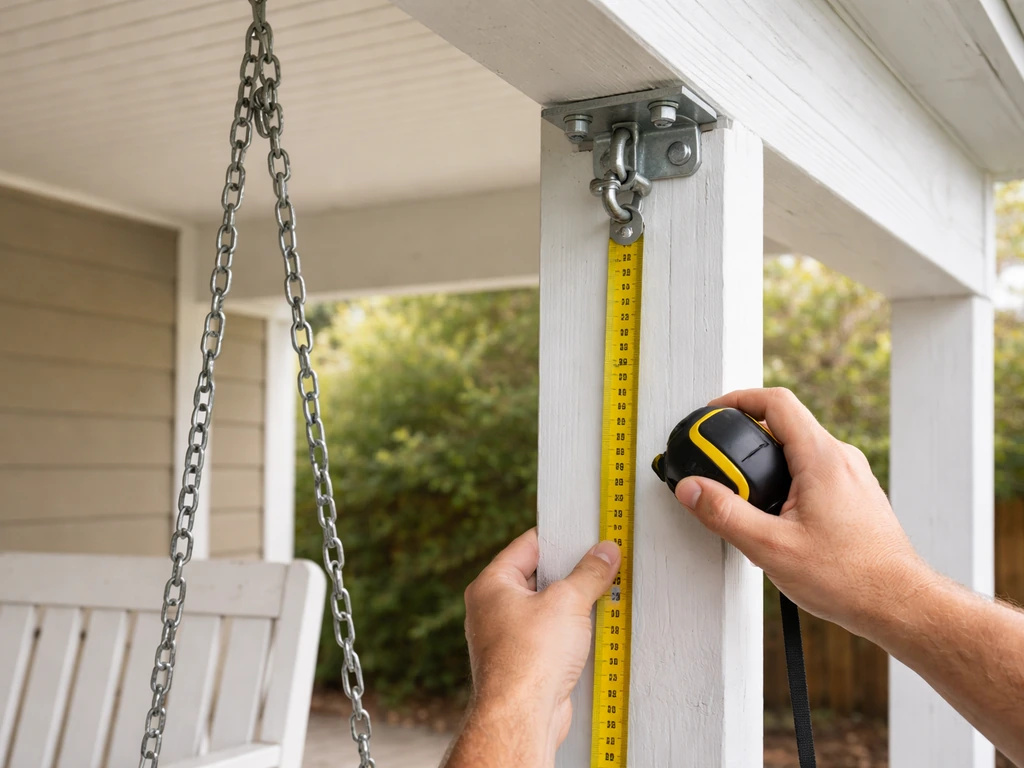
Any hardware used to hang a porch swing should have a working load rating of at least 500 lb. Don't guess at what your ceiling joists can handle, verify that you're anchoring into structural members, not just drywall or thin lumber. Eye bolts, S-hooks, and chains all need to meet that 500 lb threshold individually. Place your mounting hardware 4 to 6 inches wider than the swing's armrest-to-armrest measurement so the swing hangs at the correct angle and doesn't pinch.
Swing Height and Clearance
Start with the seat about 17 inches off the ground, then adjust for the actual height of the people using it. That's a good baseline for average adult height. For clearance, allow at least 18 inches of space behind the swing and 14 to 16 inches on either side. In front and behind, plan on at least 30 inches of clear space to avoid collisions with walls, railings, and people walking by. Some sources recommend even more: POLYWOOD suggests 3 to 4 feet front and back for safe swing movement. Erring toward more space is always safer.
Rope and Chain Standards
If your swing hangs from rope rather than chain, use rope that's at least 3/4 inch in diameter. Thinner rope wears faster and fails under repeated load cycling. Check all chains, ropes, and hooks seasonally for wear, rust, or deformation. Bent S-hooks and corroded chain links are common failure points and easy to miss until something goes wrong.
Freestanding Swing Stability
Freestanding A-frame swings need to be placed on a level surface. On uneven ground, the frame rocks and eventually fatigues at the joints. Some frames include ground anchors or stakes, use them, especially if you have kids using the swing. Before anyone sits down, test the frame by pushing on it from multiple angles and checking that all bolts are tight. Re-check every few weeks during the first season, since bolts loosen as the frame settles.
Budget vs Premium: What You Actually Get at Each Price Point
Here's the honest breakdown of what your money buys in the outdoor patio swing market today.
| Price Range | What You Get | What You're Giving Up |
|---|---|---|
| Under $150 | Basic steel or wood frame, polyester cushion or sling, limited warranty, lower weight capacity (often 250–350 lb total) | Durability — expect 2–4 seasons before rust, fading, or frame fatigue; cushion fabric won't hold up in full sun |
| $150–$350 | Decent powder-coated steel frame, better sling fabric, higher weight capacity, more stable A-frame if freestanding | Premium UV or weather resistance; may still need cushion covers; canopy fabric quality is variable |
| $350–$700 | Solid construction, UV-rated sling or Sunbrella cushions, aluminum or quality steel frame, real weather resistance, better swing hardware | Top-tier material warranties; this range is the sweet spot for most buyers |
| $700–$1,500+ | POLYWOOD or teak frames with long warranties, premium Sunbrella fabric, best hardware, longest service life, best weight ratings | Nothing critical — this is where you get the full package; worth it if you want a 10+ year investment |
The $350 to $700 range is where I'd put most buyers. You get real weather resistance, quality fabric, and a frame that will last if you give it basic seasonal care. Below $150, you're gambling on the next rainy season. Above $700, you're buying peace of mind and longevity, which is genuinely worth it if the swing will be a permanent fixture on your patio and you don't want to think about it again for a decade.
Top Picks by Patio Swing Type
Here's how to match your situation to the right type of swing. These aren't brand-specific ranking picks, they're category winners based on the criteria that actually matter for each use case.
Best Overall: Freestanding 2-Person Swing with UV-Rated Sling and Powder-Coated Steel Frame
For the widest range of patio setups, a freestanding 2-person swing with a Sunbrella or UV-rated sling seat and a heavy-gauge powder-coated steel frame covers the most ground. It installs anywhere without needing a ceiling or beam, the sling seat is low maintenance and fast-drying, and a good steel frame will handle real-world wind and weight loads. Target a weight capacity of at least 400 lb total and a seat width of 50 to 55 inches. Budget $350 to $600 for this category.
Best for Small Spaces: Compact Egg Chair Swing or 2-Person Glider
If your patio is tight, a hanging egg chair or a patio glider takes up far less footprint than a traditional swing. Egg chairs need roughly a 4-foot diameter of open space and one solid anchor point (rated for at least 300 lb). Gliders move on a fixed base, so they need zero front-and-back clearance beyond the chair itself. A best outdoor patio glider is a great pick when you want comfortable lounging without the large clearance needs of a hanging swing. Both work well on small balconies or compact patios where a full A-frame swing simply won't fit. Gliders are a natural alternative to swings in this scenario and worth comparing directly. If you're specifically looking for the best patio gliders, focus on weight capacity, smooth glide quality, and outdoor-rated materials like HDPE or powder-coated steel.
Best for Weather Resistance: HDPE/POLYWOOD Frame with Sunbrella Sling
If you live in a coastal area, a wet climate, or somewhere with harsh UV, go with an HDPE lumber frame (like POLYWOOD) paired with a Sunbrella sling seat. The 20-year no-rot, no-crack warranty on POLYWOOD lumber is real, and Sunbrella's UV and mildew resistance is the best you'll find in fabric. This combo can genuinely live outside year-round in almost any climate with minimal maintenance beyond a seasonal rinse. Expect to spend $600 to $1,200 for this level of durability.
Best for a Classic Porch Look: Painted Wood Swing for a Covered Porch
If you have a covered porch with structural ceiling beams and want the traditional look, a cedar or pine swing with painted or sealed finish is hard to beat aesthetically. Hang it with hardware rated for at least 500 lb, seat it at 17 inches off the ground, and add cushions in Sunbrella fabric. Commit to resealing or repainting every 1 to 2 seasons and this will look great for years. Budget $200 to $500 for the swing itself plus hardware.
Best Value: Mid-Range Steel Frame Canopy Swing
For buyers who want the most features per dollar, a mid-range canopy swing in the $200 to $400 range hits a practical sweet spot. If you want the best patio swing with stand, a canopy swing with a sturdy freestanding frame is often the easiest way to get shade and stability in one setup mid-range canopy swing. You get built-in shade (critical if your patio has no overhead cover), a freestanding frame, and usually a padded sling or cushion seat. The canopy fabric is the first thing to go, so look for a removable canopy you can replace separately. This style also works well for open yards or uncovered patio slabs where a standard hanging swing isn't an option. Check the weight capacity carefully at this price point, aim for at least 400 lb total.
Whatever type you land on, the basics stay the same: verify your clearances before you buy, check the weight capacity against real-world use, match the frame material to your climate, and invest in quality fabric for the seat. Get those four things right and you'll have a swing that actually gets used for years instead of sitting in the corner rusting after season two.
FAQ
Do I need to match the swing’s weight capacity to the heaviest person only, or to total users at once?
Use the total rated load for simultaneous use, because most patio swings are tested with multiple occupants and dynamic motion. If the swing is rated for 400 to 600 lb total, plan around the combined weight of everyone who will be on it at the same time, plus a little buffer if kids jump or swing hard.
Is a freestanding swing still safe on gravel or pavers, or does it need a specific surface?
Freestanding A-frames need a level, stable base to avoid joint fatigue. On pavers or uneven ground, use leveling pads or adjust feet (if the frame supports it), and avoid sinking into soft soil. If your patio is on slopes or soft turf, a level concrete pad or properly set anchors are the safer option.
What’s the easiest way to prevent a chain or rope from wearing out early?
Check contact points every season, especially where chains rub on the frame or where ropes pass through hangers. Lubricate spring-loaded hangers if the manufacturer recommends it, and replace any hardware that shows deformation, flattening, or fraying. Also keep hang points aligned so the swing doesn’t twist under load.
How do I choose between a sling seat and a cushion if my patio gets frequent storms?
For frequent rain, a sling usually wins because it dries quickly and holds less water than typical cushion foam. If you prefer cushions for comfort, plan to cover the swing during prolonged wet spells and store cushions indoors or in a deck box during winter or heavy rain weeks.
Can I leave a swing outside in snow and freezing temperatures without damage?
Yes, but you should still plan for freeze-thaw and wet cycling. Metal and HDPE do well, but any exposed hardware that rusts will worsen in salt or coastal areas. For wood, reseal on schedule and keep cushions protected, because trapped moisture at joints accelerates rot.
What clearance should I use if the swing area is near a walkway or corner, not just open patio space?
In addition to front and rear clearance, consider side clearance relative to foot traffic. If someone will pass close to the swing’s path, aim for more than the minimum side gap and avoid placing planters or furniture where the arms or seat could hit during a wide back swing. When in doubt, leave extra open space at the direction people will push from.
How do I tell if a swing’s height and seat height will work for my family?
Start with the typical seat height baseline around 17 inches, then adjust after testing with the people who will use it. If shorter users will struggle to reach the floor, you may need a slightly higher seat. If taller users feel cramped or their knees hit the frame, lower or re-measure based on clearance from the ground to the seat.
Do I need special covers if I buy an HDPE or aluminum swing frame?
Still consider covering, especially for cushions and any fabric canopy, because UV and dirt buildup affect longevity even if the frame resists weather. For sling seats, a seasonal rinse and full dry before storing is usually enough, but if you cover a damp sling, you can trap moisture and encourage mildew at the fabric.
Is it okay to hang a porch swing with eye bolts and S-hooks, or should I use a specific hardware kit?
It’s safest to use hardware rated for outdoor loads and install into structural members, not just drywall or trim. Eye bolts, S-hooks, chains, and connectors should each meet the required working load rating individually, and you should verify compatibility so links don’t bind or slip under swing motion.
What’s the most common mistake that causes swings to wobble or feel unstable?
Uneven placement and loose hardware. Make sure the frame sits level, tighten bolts after initial settling, and re-check periodically during the first season. Also confirm the swing is aligned so the hang points are symmetrical, because off-center hanging can create persistent twist and reduce stability.
How often should I inspect a swing if it’s used daily?
Do quick checks every few weeks during heavy use, then a fuller inspection at least seasonally. Look for rust spots, bent hooks, stretched or frayed rope, loose fasteners, and any cracks at wood joints. Replace worn parts early, because a minor deformation at a hinge or hanger can become a failure point under repeated cycling.
What should I do if the swing squeaks or makes grinding noise?
Identify whether the noise is from frame-to-hanger contact, a dry joint, or a worn chain link. Don’t ignore persistent grinding, because it can indicate misalignment or hardware wear. Tighten loose connections and inspect for friction points, then replace any component that looks polished, flattened, or bent.
Next Articles
Best Patio Swing Guide: Choose the Right Swing and Set
Pick the best patio swing or swing set with comfort, size, durability, materials, and maintenance tips for every budget.
Alternative to Patio Cushions: Durable, Stylish Options and DIY
Alternative to patio cushions: durable, weatherproof seating options, pros, DIY tips & buying guide.
Best Color for Outdoor Patio Cushions in 2026
Choose the best cushion color for sun, heat, and fading in 2026, with pairing tips for patio furniture and durability.